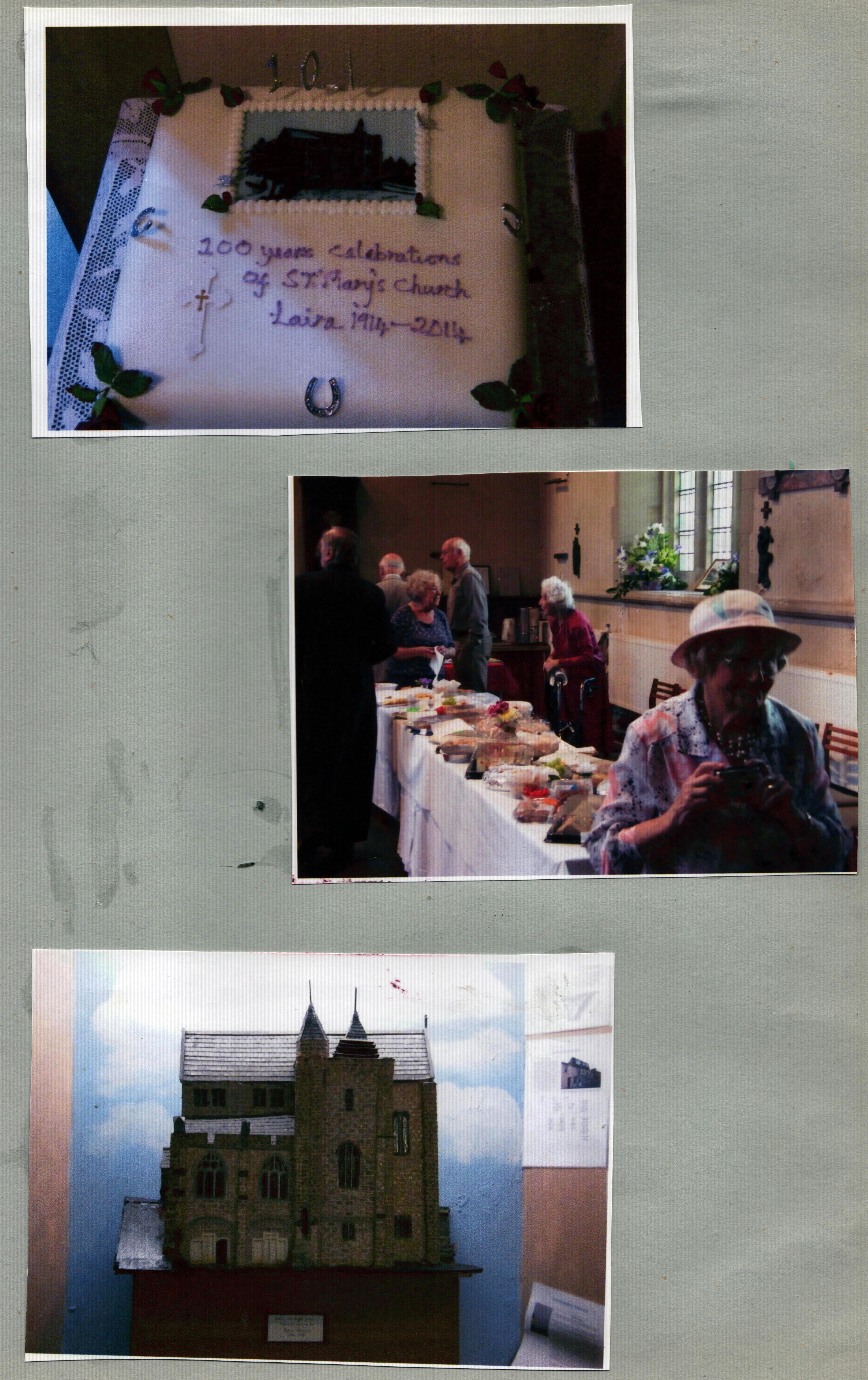
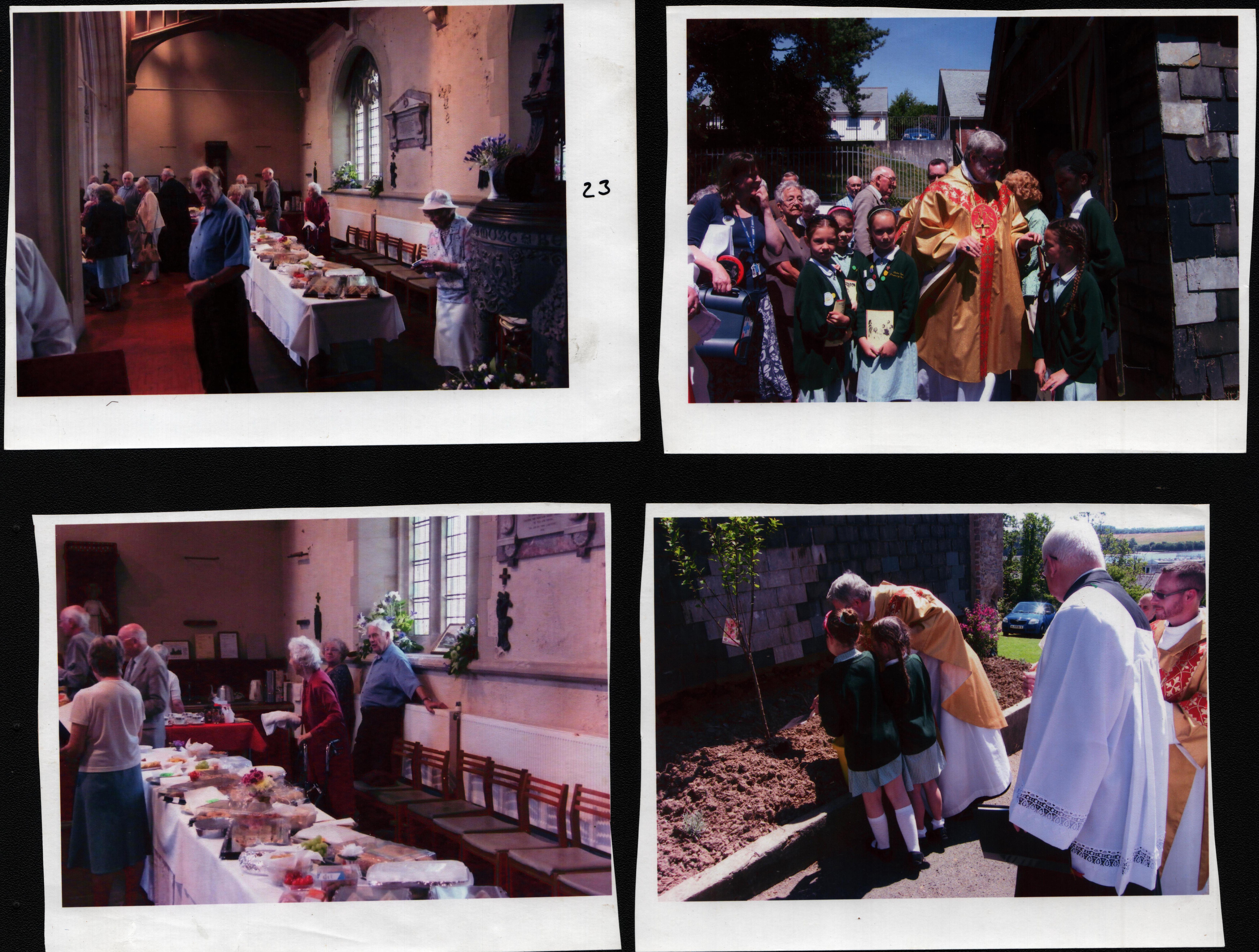
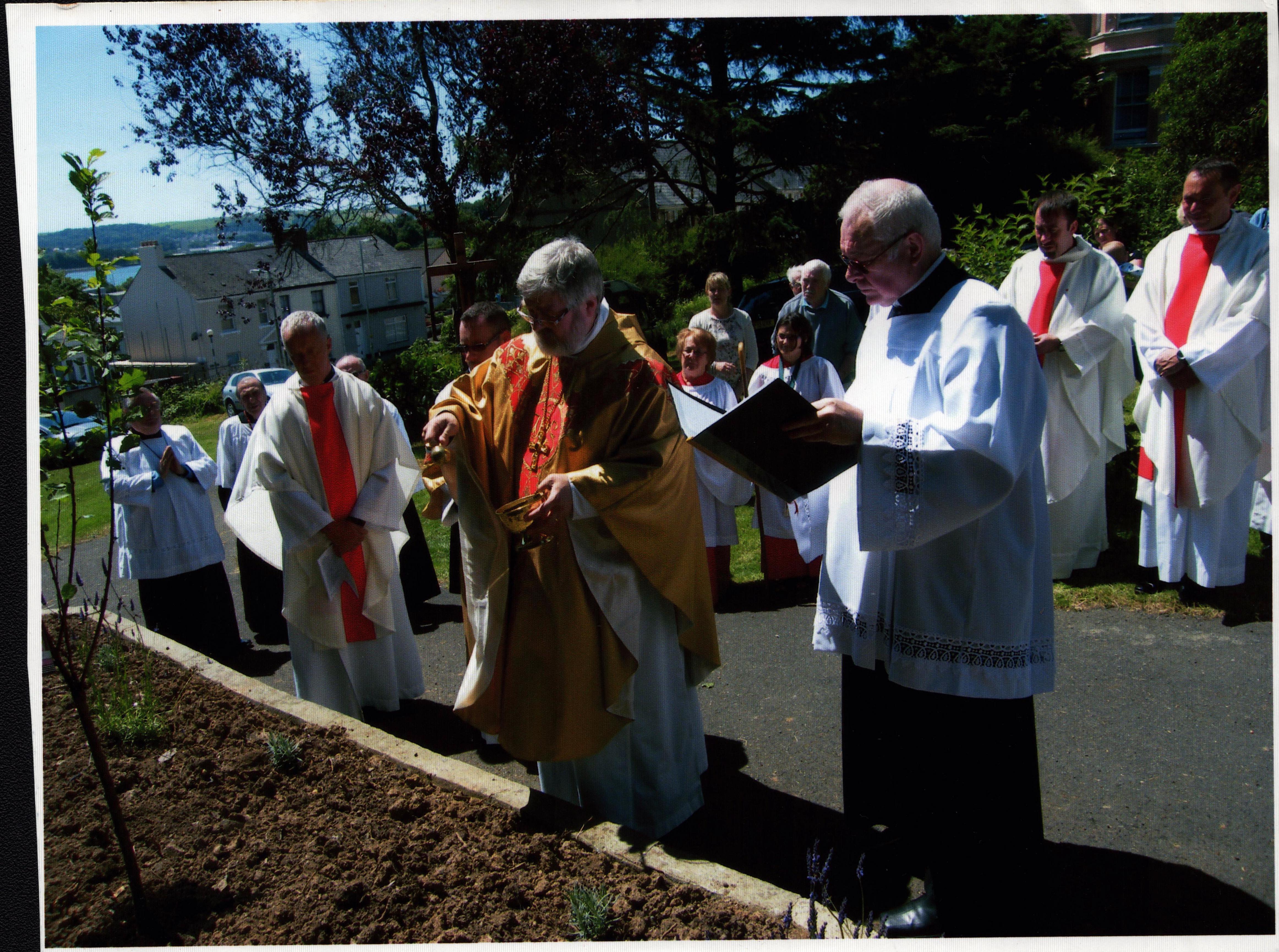
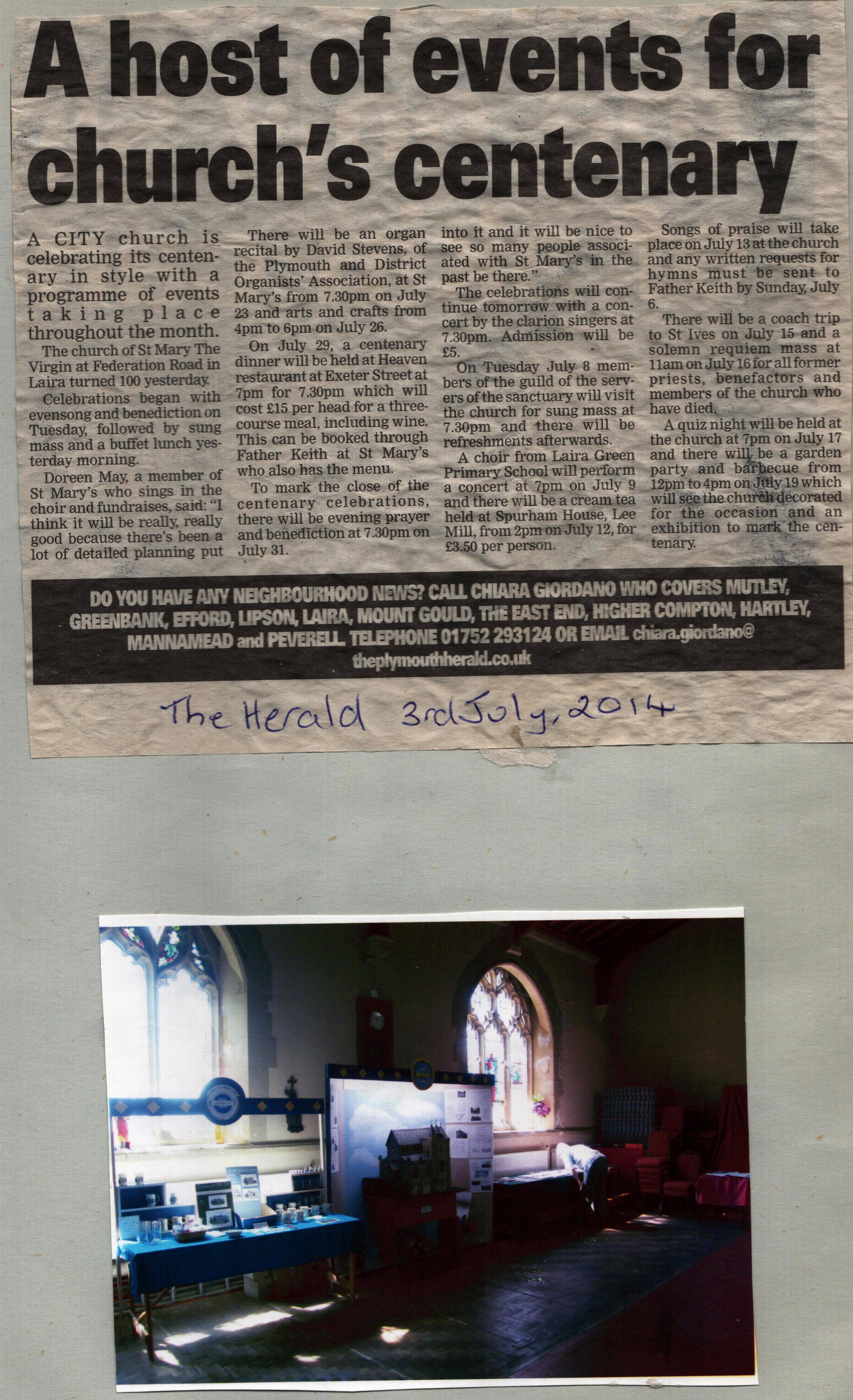
Foundation Service
 |
|
|
 |
|
|
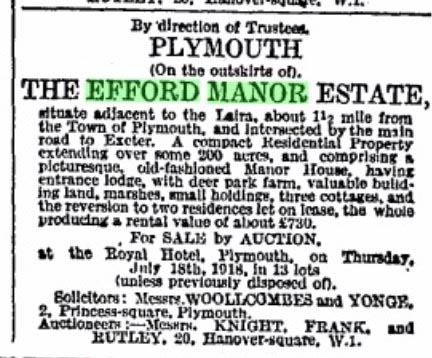
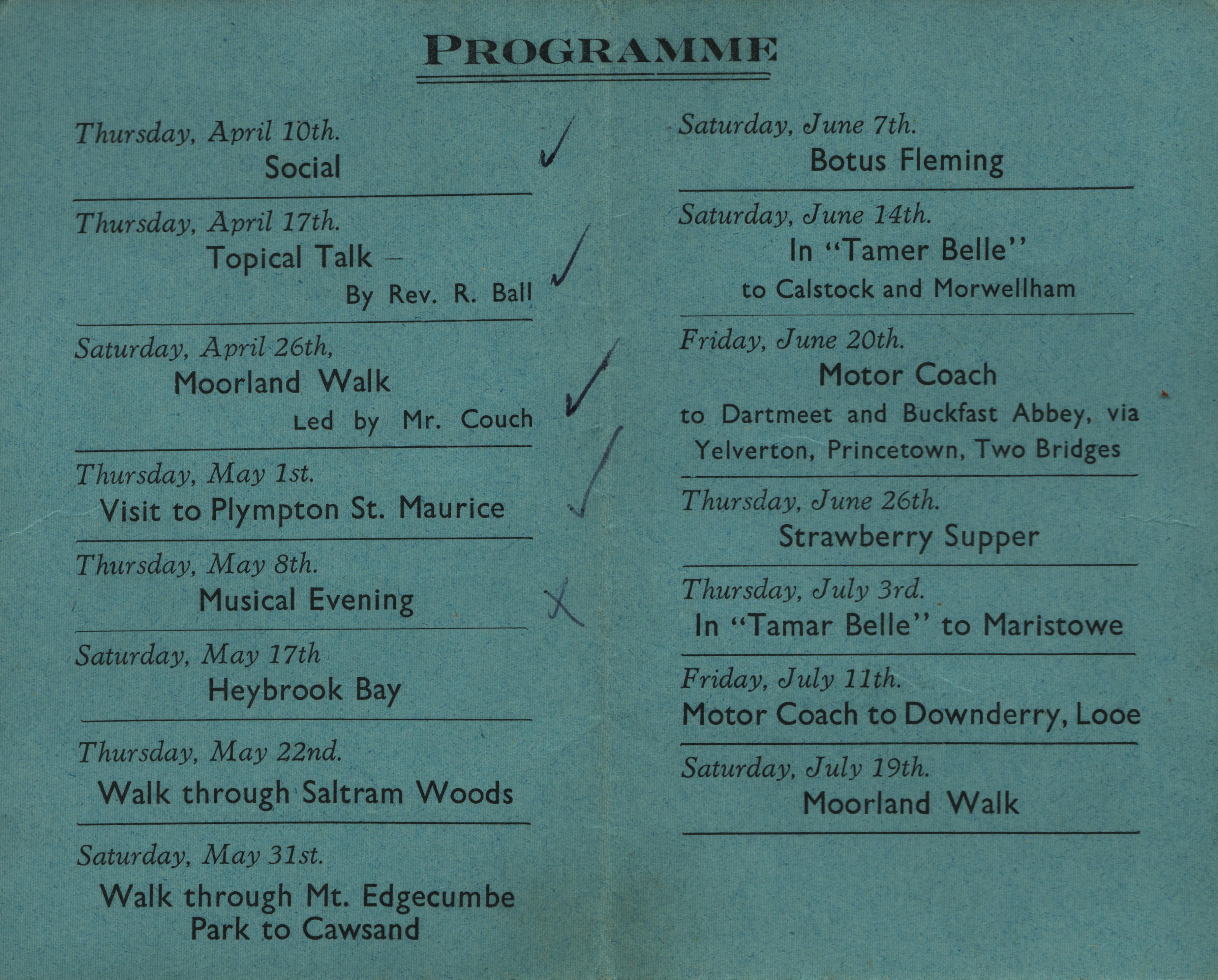
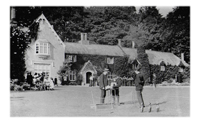
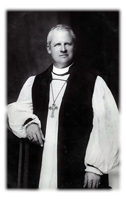
In September 1911, the Foundation Stone of St Mary’s Church in Laira was laid by Mrs Lucy Clark of Efford Manor. The Bishop of Exeter, Archibald Robertson, conducted the ceremony and service. The Clarks of Efford Manor had attended church at St Edward’s in Eggbuckland since at least the eighteenth century, given that the parish stretched all the way to the River Plym. There had been a small mission hall built at Crabtree as the population around Marsh Mills slowly grew, but with the opening of the GWR works in 1901 the population of Laira began to expand rapidly. It was for this reason that Lucy Clark donated some of her land and money towards the building of St Mary’s Church. Additional funds were provided by the Three Towns’ Church Extension Committee, which had been set up by the Exeter Diocese in anticipation of the amalgamation and growth of the three towns. Mrs Clark was very much a High Anglican and requested that the church be built in an Anglo-Catholic Gothic style. A fellow Eggbuckland parishioner, Mr Kitsell, who was an architect, set about designing the church to her preferences. His design was exhibited at the Royal Academy in 1910.
 |
|
|
Lucy Clark had been a widow since her husband died in 1900. Henry Clark had been a barrister and Justice of the Peace. He had been active in the Liberal movement until the subject of Home Rule for Ireland divided the party irrevocably in the 1890s, when he left alongside other Liberal Unionists. He is commemorated in St Edward’s Church in Eggbuckland (as is his wife Lucy, who died in 1916). The Clarks had been the landowners who sold land to the War Department to allow for the building of the Palmerston Fortifications in this area, such as Fort Austin, Fort Efford and Eggbuckland Keep. In keeping with this military connection, their second son, Paul Treby Clark, joined the army and ultimately became Lieutenant Colonel of the 43rd Oxfordshire Light Infantry. The Clarks had four sons who survived: Erving, Paul Treby, Henry and Arthur John; and two daughters who died in childhood: Ethel Mildred and Lucy Henrietta.
 |
|
|
The Bishop of Exeter, Archibald Robertson, also had an intriguing family history in that his son, also called Archibald Robertson, was becoming involved in left-wing politics at this time. He became a civil servant assigned to work in the Admiralty during World War One but grew disillusioned with the war and turned against religion, becoming a devout atheist who penned many books criticising religious dogma. Furthermore, he was encouraged by the Revolution in Russia in 1917 and became an ardent Communist, frequently travelling to the Soviet Union in the interwar period and becoming something of an apologist for the Bolshevik regime. This must have made for some interesting conversations with his Bishop father.
 |
|
|
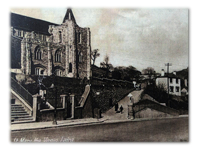
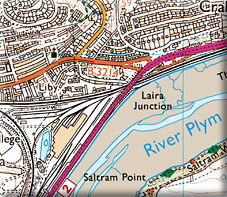
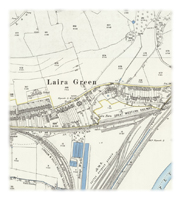
Included to the right is the order of service for the ceremony on September 16th, 1911, when this was still a relatively empty hill. Laira Green School had been built in the 1890s, and the houses on Federation Road were also still relatively new. They had been completed in 1902 by the Plymouth Co-operative Society, which wished to provide affordable housing for local workers. Behind the site where the ceremony was conducted lay nothing but fields and hedgerows. Laira was not yet within the borough limits of Plymouth. It was very much on the outskirts; the building of St Mary’s was in anticipation of the three towns amalgamating and growing, and of the need for a place of worship, christenings, marriages and funerals. Interestingly, there was never a plan for a graveyard at St Mary’s, as Plymouth had opened a new municipal cemetery at the top of the hill just four years earlier, at Efford Cemetery. On the map shown, the service took place where the double “ee” of Laira Green is labelled. Construction would take three years before the church could open to the public.
Consecration Service
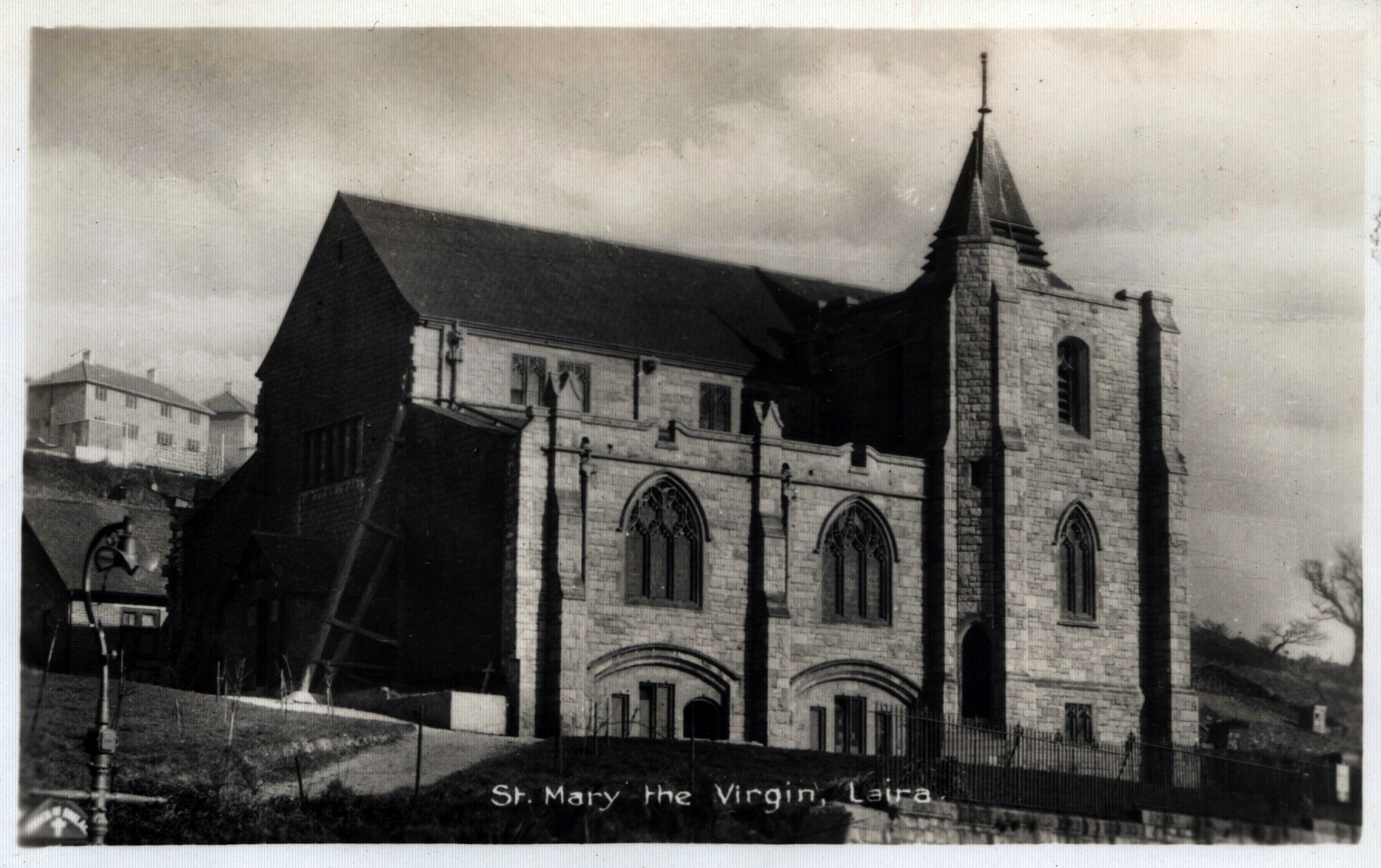
On July 2nd 1914, St Mary’s Anglican Church in Laira was consecrated by the Bishop of Exeter. The foundation stone had been laid three years earlier in 1911 by Mrs Lucy Clark of Efford Manor. Indeed, she had been the one who donated the land for the building of the church as well as some of the funding. It was built as a chapel of ease for the growing community of Laira. The parish overseeing the area was St Edward’s Church in Eggbuckland, but the new GWR Laira train depot had seen Laira increase significantly in population and additional church capacity was required urgently. The church was designed to hold 700 souls for weekly services, which shows just how much demand there was at the time.
 |
|
|
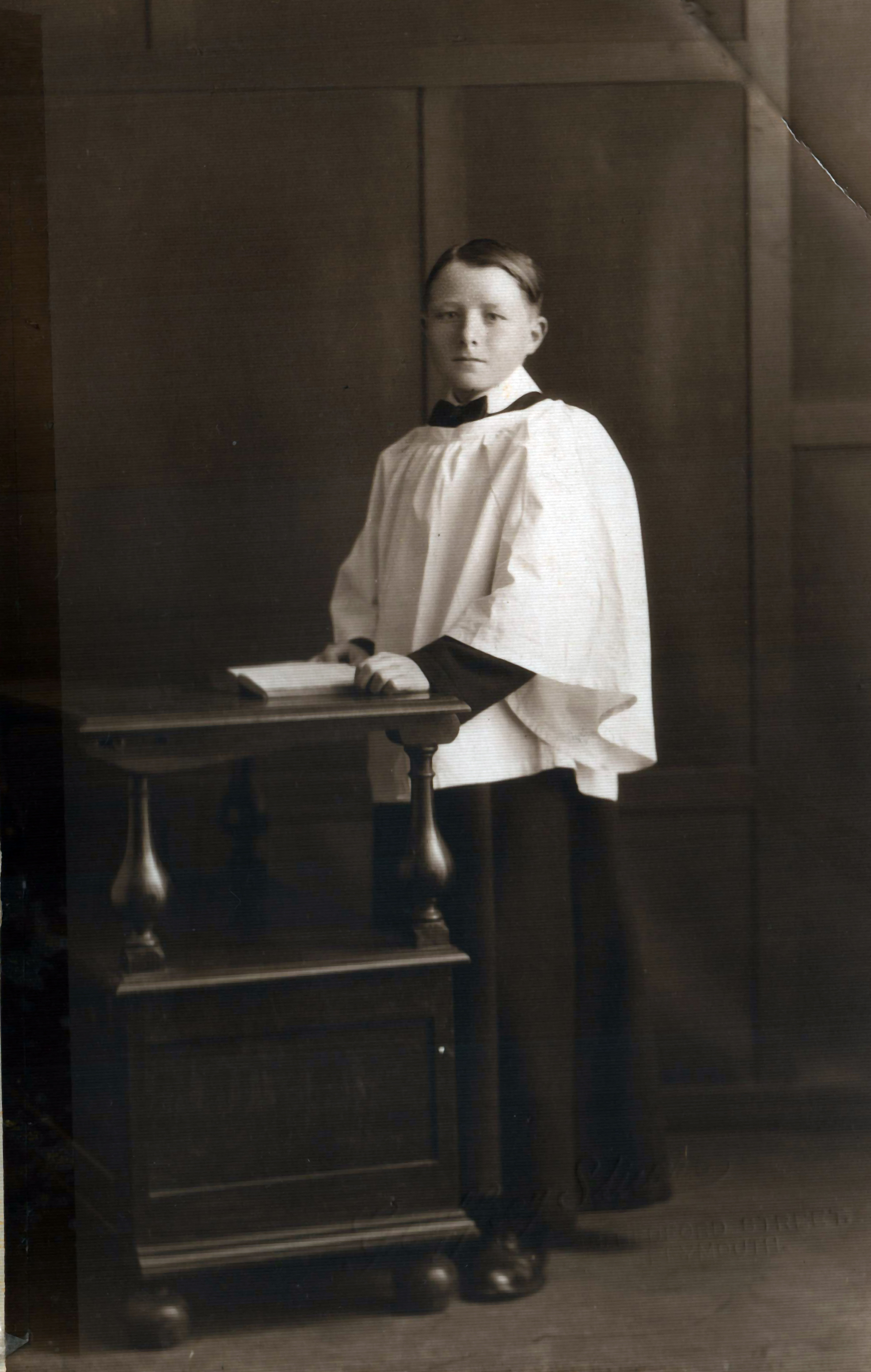
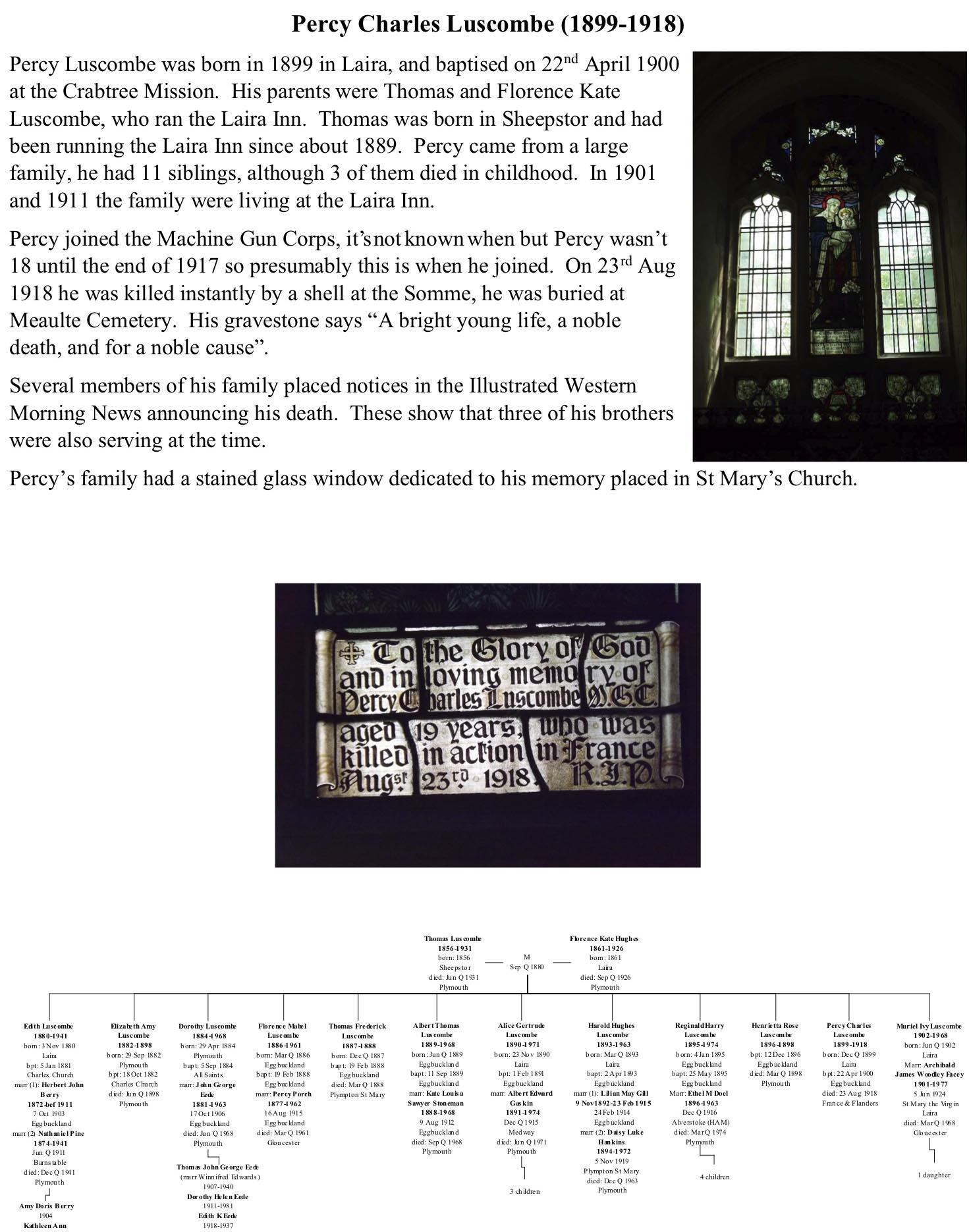
The date is very significant, as just four days prior to this opening ceremony Archduke Franz Ferdinand had been assassinated in Sarajevo. Few people at the consecration could have anticipated what would unfold in the coming weeks and that Britain would be at war with Germany in little over a month’s time. The start of war would also have a profound effect on the construction of the church, as building materials were embargoed and craftsmen and artisans volunteered for the armed forces, taking their valuable skills and knowledge with them—many to be lost for good. The building project had already overrun in costs, and half the nave and the entranceway were yet to be completed at the time of the ceremony. Indeed, the entranceway was never to be fully completed, hence its rather unusual slate appearance on its western side and uncompleted brickwork anticipating an entrance of its own. After four years of warfare, the death of Lucy Clark herself in 1916, and a war-shattered economy, the impetus to complete the church stalled. There was to be one significant addition to the church, though: a stained glass window to commemorate Percy Luscombe, who was killed in 1918 (my great-great-uncle). He had been a choirboy at the church and must have attended the ceremony in 1914 as a 14-year-old, too young to join up until the very last year of the war. He is commemorated alongside many other Laira servicemen who fell in the war on Laira’s very own war memorial along Old Laira Road.
 |
|
|
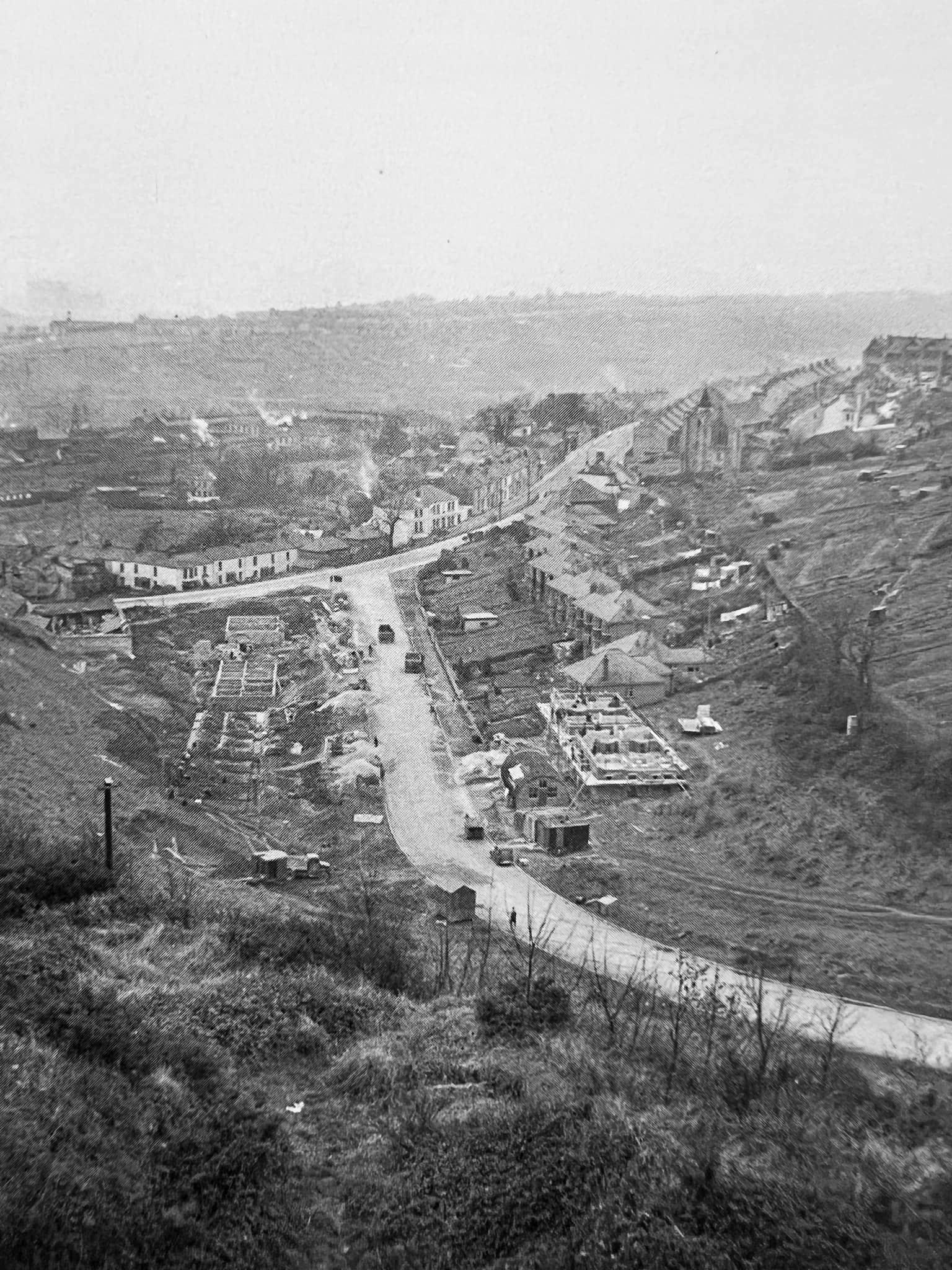
The death of Lucy Clark of Efford Manor allowed the sale of much of the land around St Mary’s Church to be made available for development after the war. Indeed, many of these houses were to be David Lloyd George’s much-vaunted “homes fit for heroes,” where planning restrictions were relaxed and low-price private and council-owned housing was built in order to provide affordable homes for the returning servicemen and their families. Within a very short period of time, there were enough houses built for St Mary’s to be given a parish of its own in 1931.
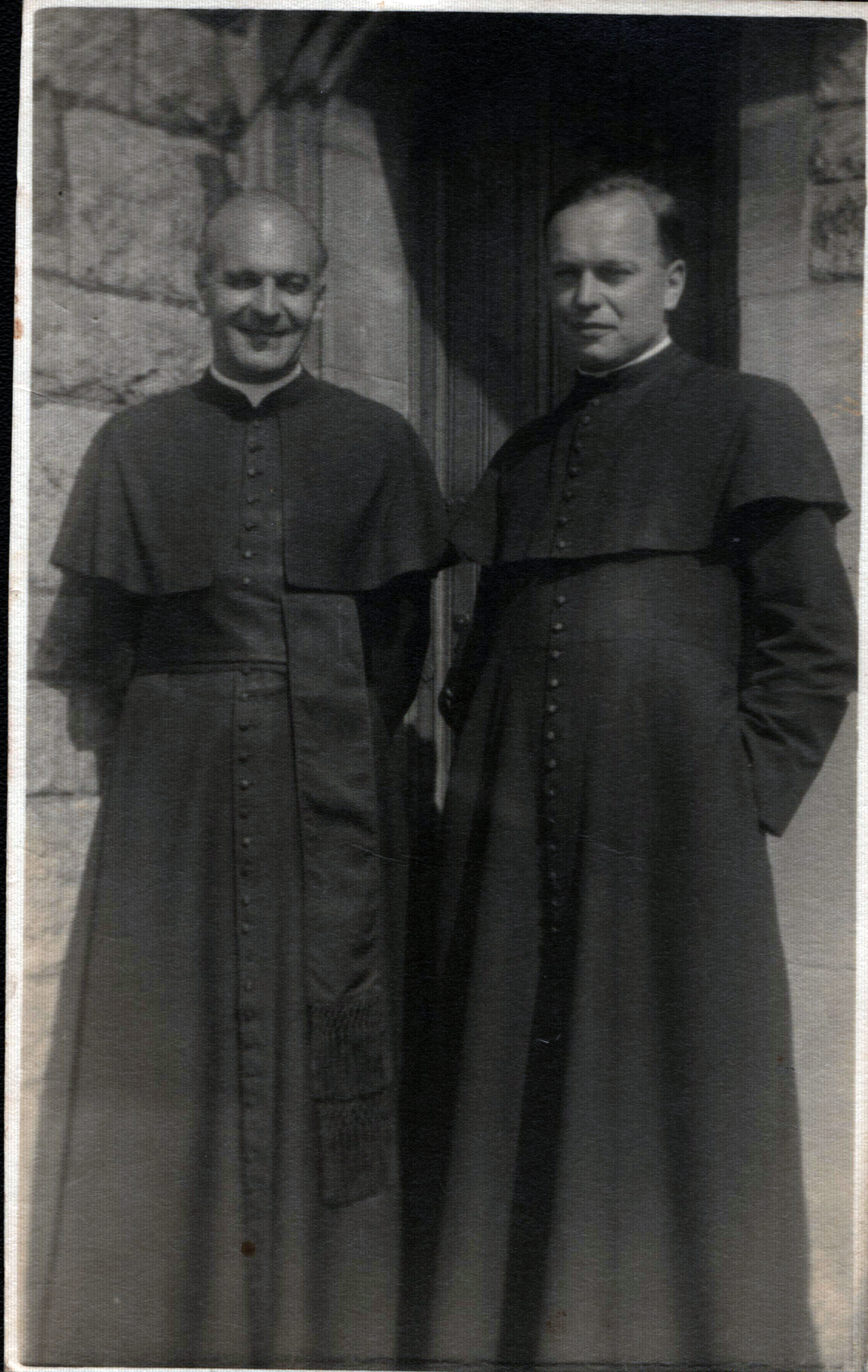
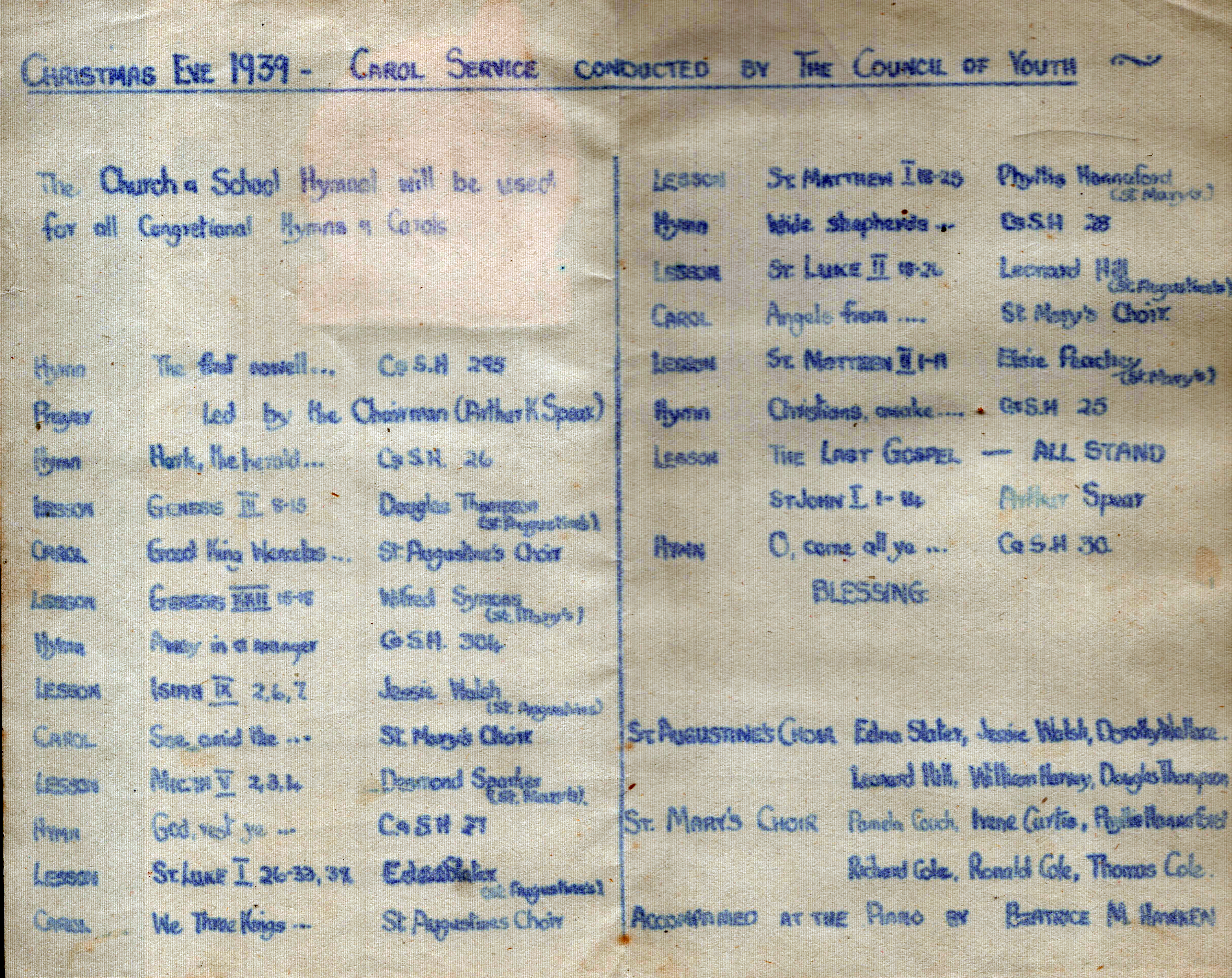
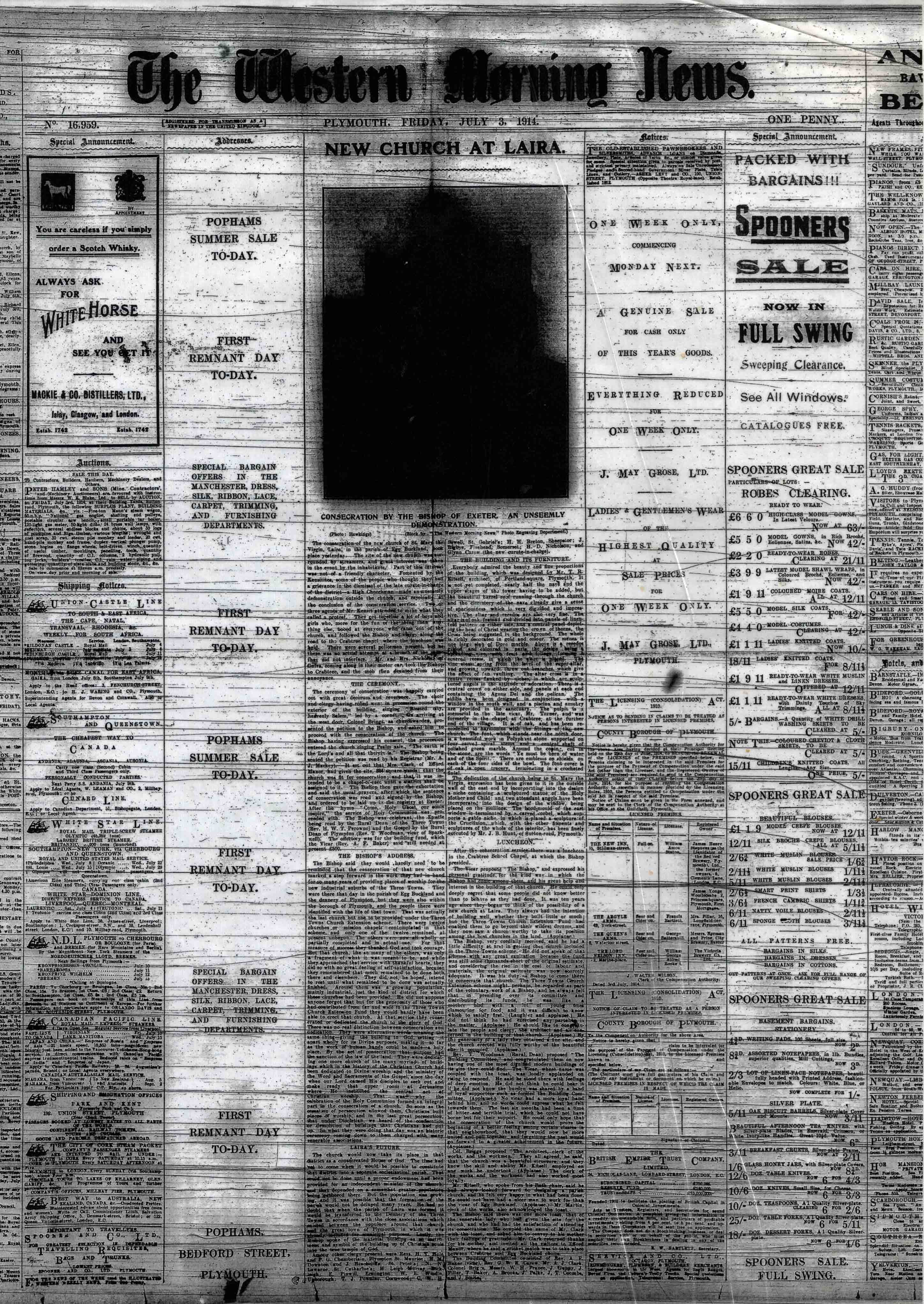
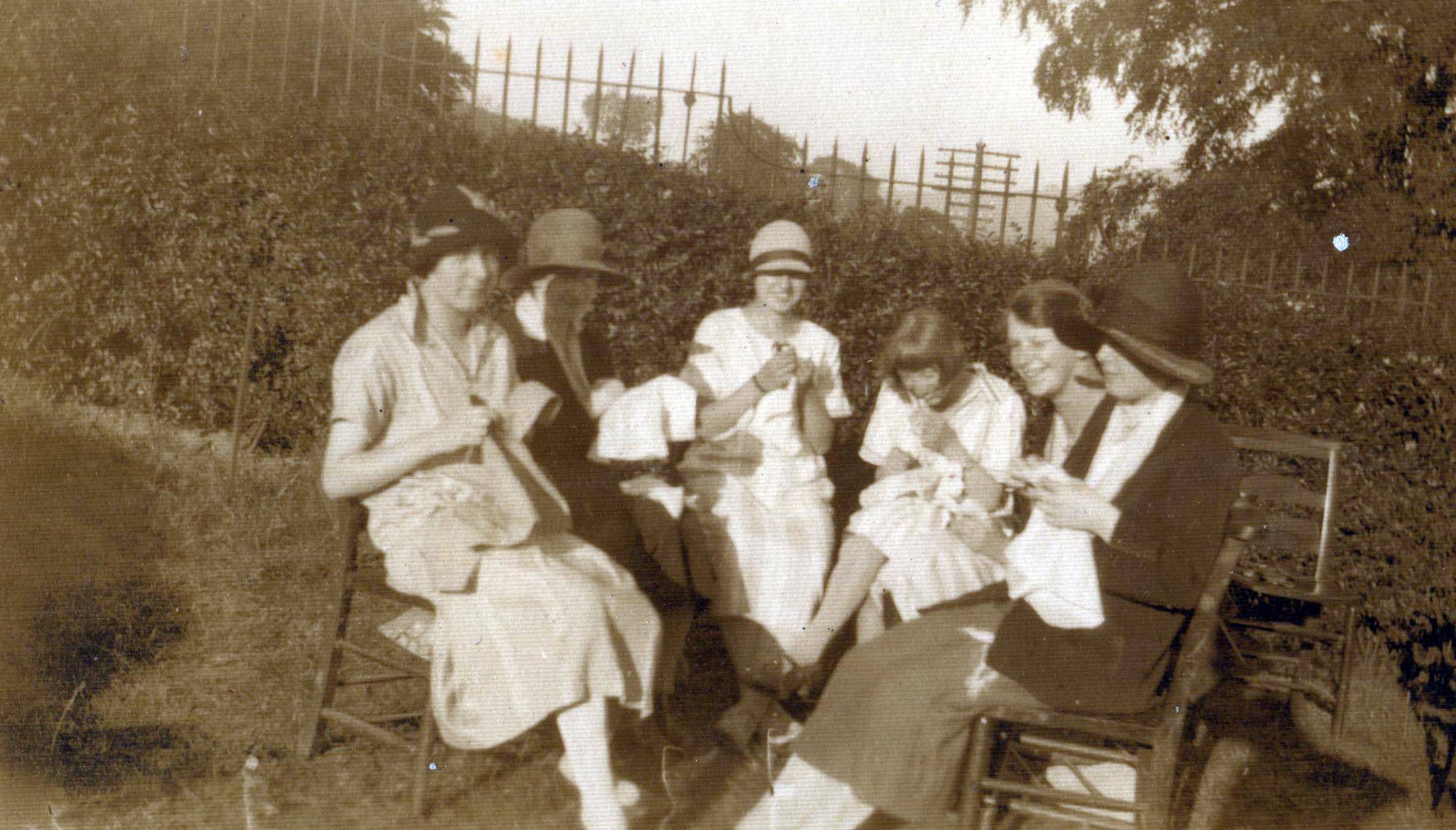
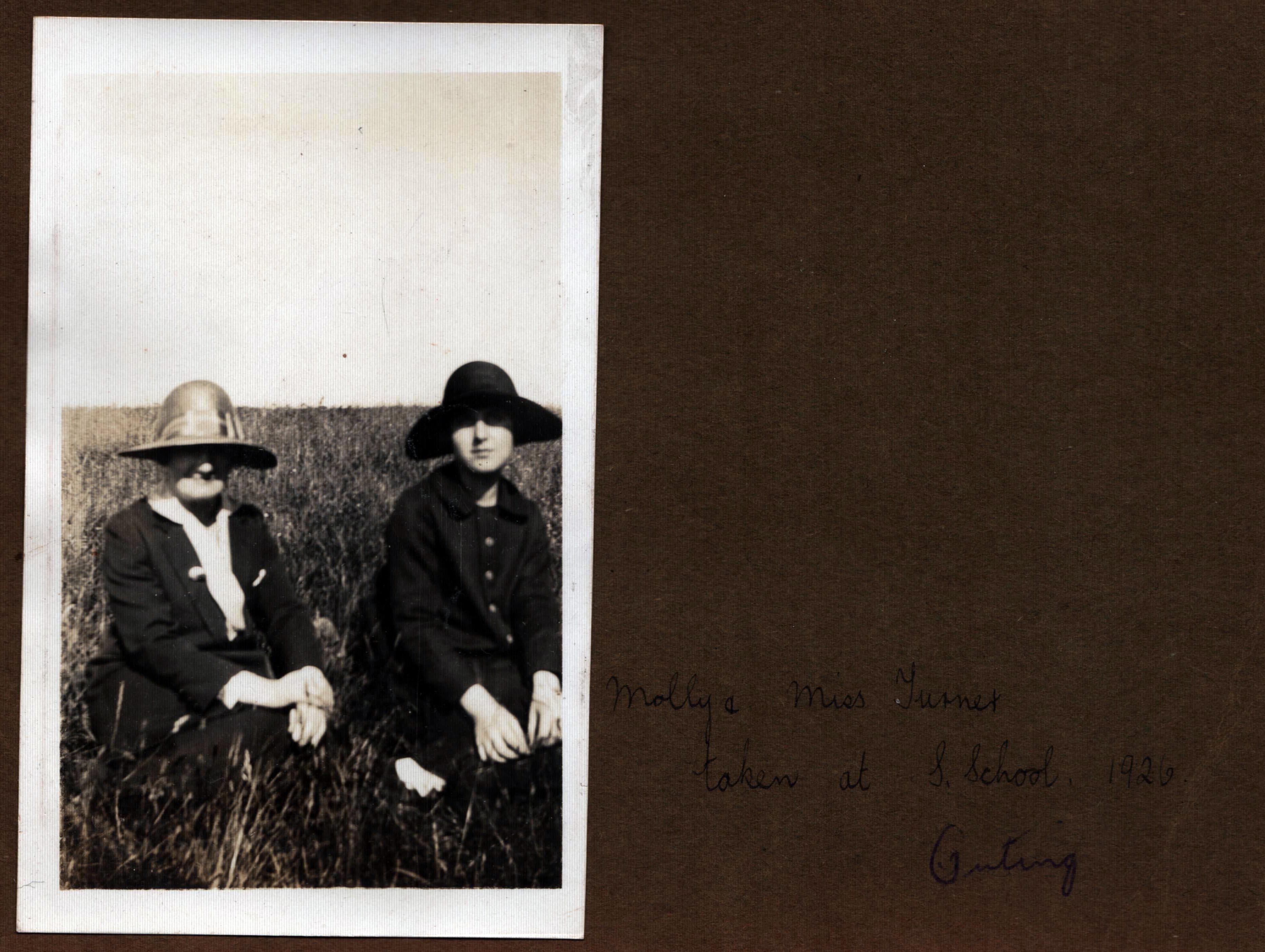
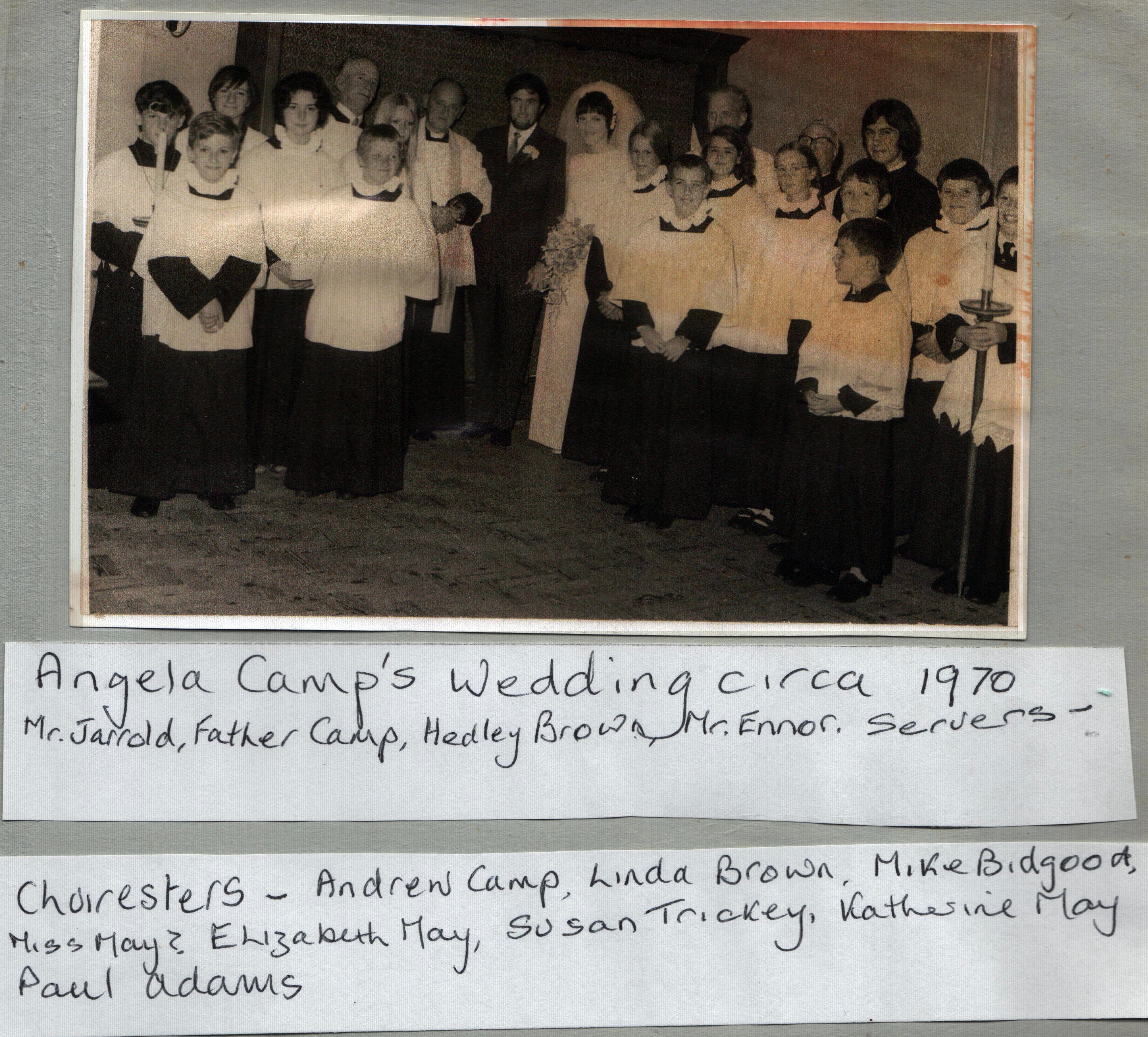
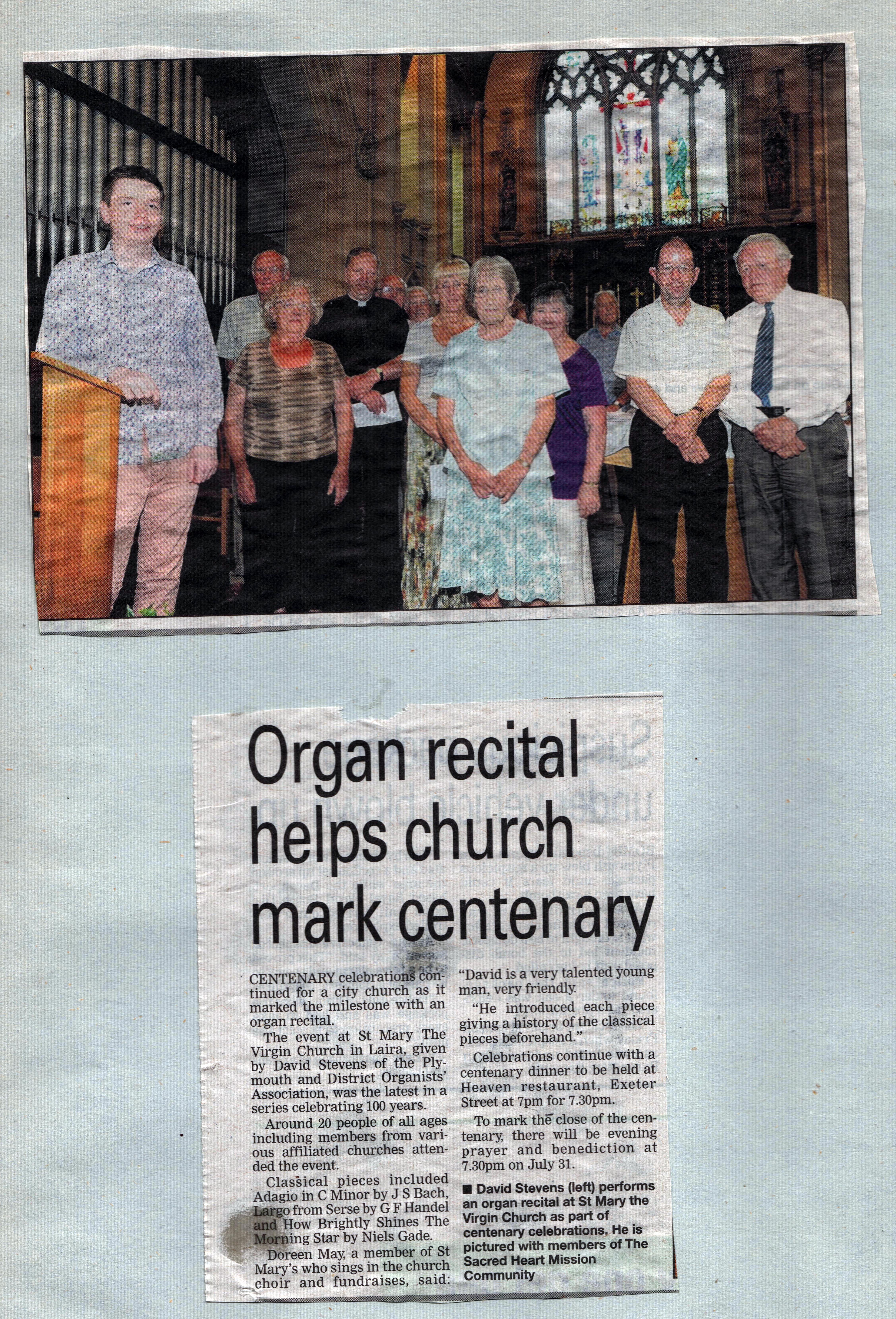
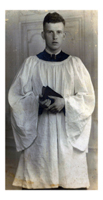
There are some photographs of St Mary’s church personnel in the 1920s. These include Mr Williams, who was the churchwarden from 1924 to 1928. There is also a photograph of a young-looking Ernest Hannaford, who was a chorister at the church c.1925, and of Hedley Brown, who sang in the choir from 1926 until 1930. There are also two pictures from 1926 of an embroidery class run regularly by the church. The church still holds services more than 110 years later, on the first three Sundays of every month from 11 a.m. All are welcome.
Description of the Church
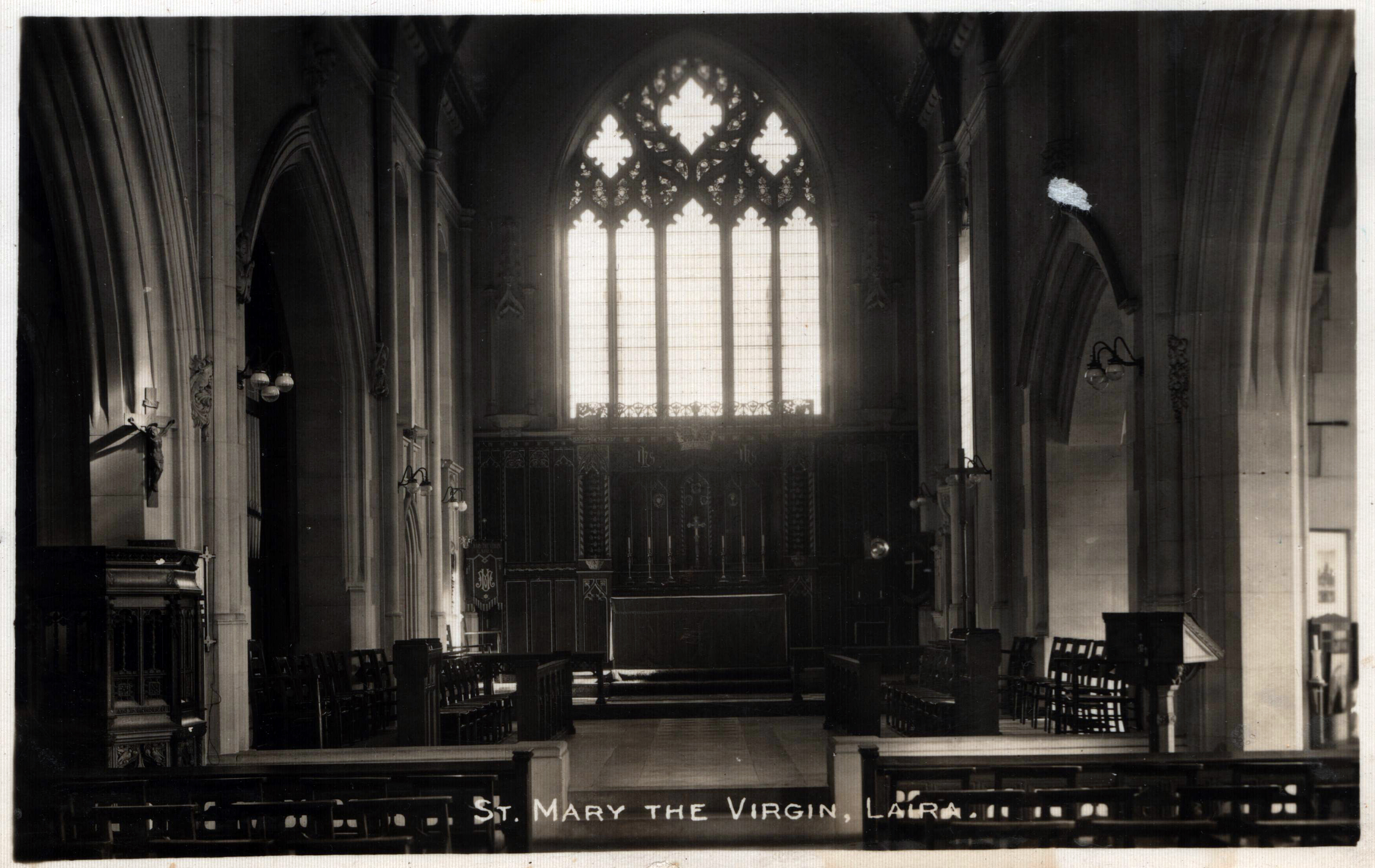
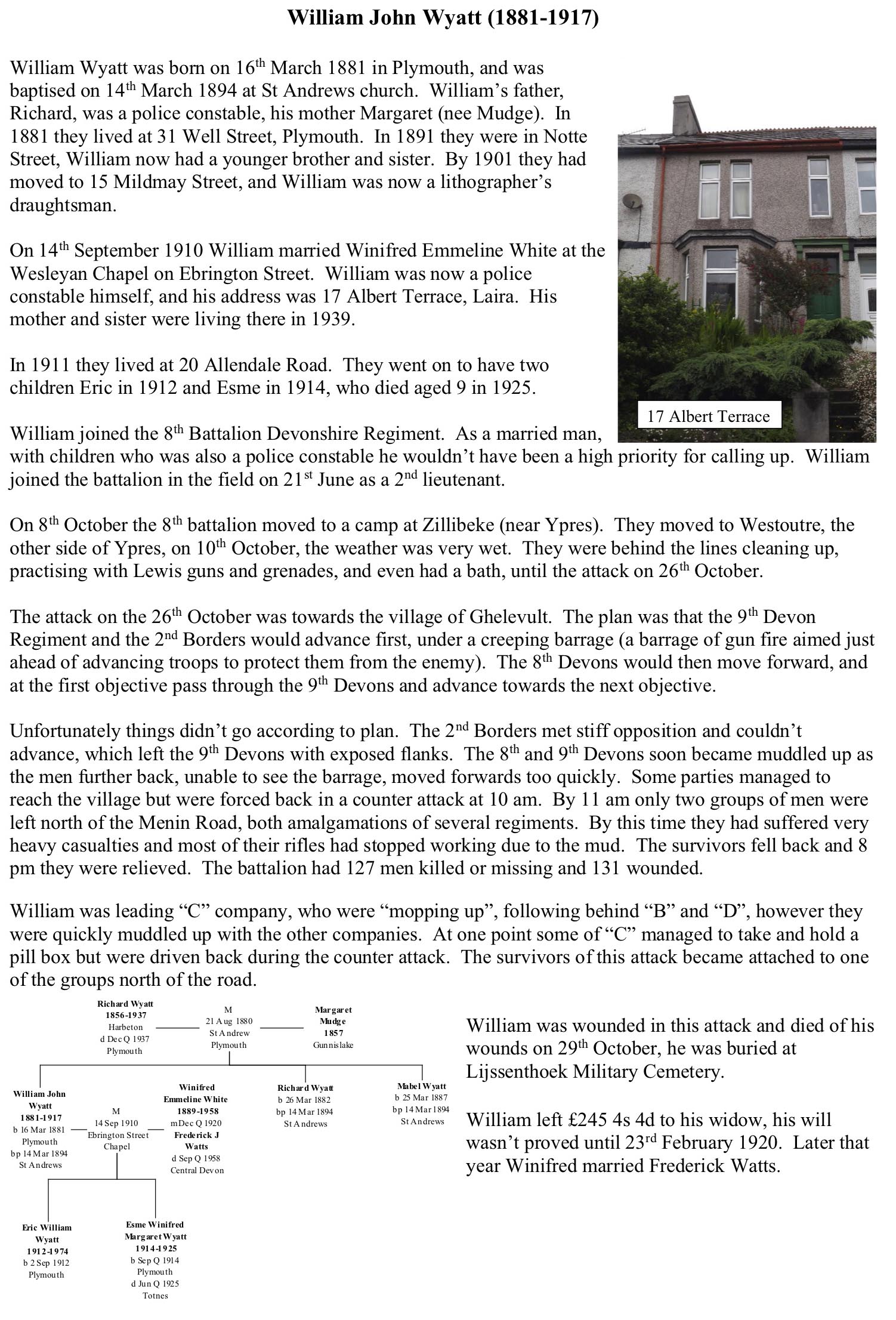
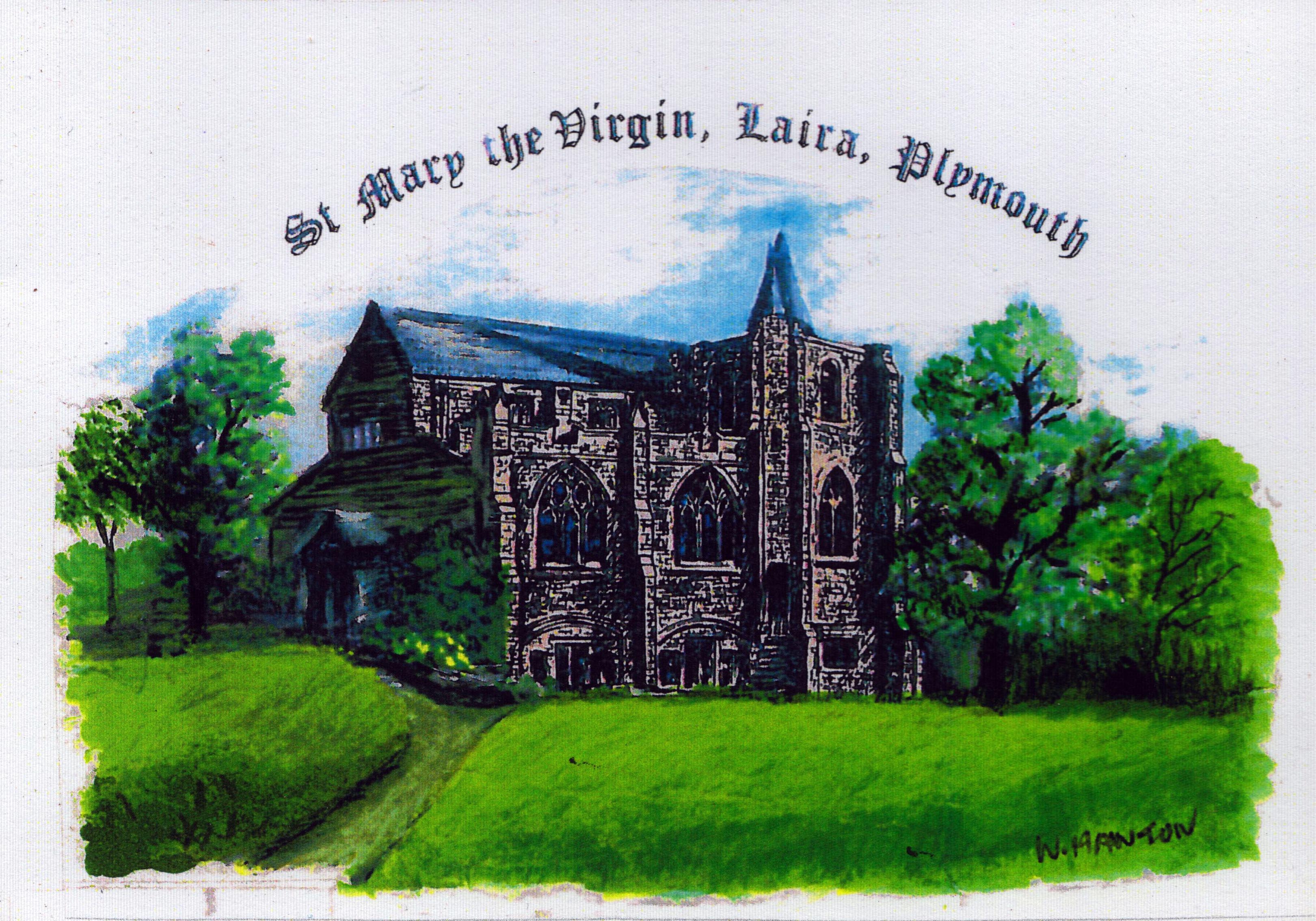
St Mary’s Anglican Church in Laira, consecrated in 1914, was built to replace the earlier mission church that had served the growing community around the Great Western Railway depot. Designed by T. R. Kitsell of Plymouth on land donated by Lucy Clark of Efford Manor, the building reflects both the ambition of its benefactors and the artistry of local craftsmen. Although the west end was never completed as originally conceived, the church remains a striking example of early 20th-century ecclesiastical design.
The roof is barrel-vaulted and made of oak, giving warmth and grandeur to the interior. The piers and all internal features are of Bath stone, while the plain wall surfaces are plastered. The nave and aisle floors are laid with wood block, with passages of small red tiles, while the chancel floor is of marble, arranged in large squares of white and green, with dove marble forming the steps.
On the walls are fourteen Stations of the Cross, guiding worshippers through meditation on Christ’s journey from condemnation before Pilate to his burial in the tomb. These devotional images combine scriptural episodes with traditional legend, offering a spiritual rhythm to the church interior. The north aisle today serves as a social space, where coffee is shared after services and books and leaflets are available.
At the west end stands a statue of Christ as a boy, a reminder of his upbringing in a family home. This work, by Miss Pinwell, commemorates Phyllis Hunt. Nearby is the font, temporarily placed at the east end of the aisle until a baptistery could be built at the west end. Made of Cornish polyphant stone with a polished green marble shaft, it bears the inscription: ‘Ye must be born of water and the Spirit.’ Its oak cover, with open tracery and a crocketed finial, adds further refinement. Beside it stands the Paschal Candle, lit as a symbol of Christ the true light of the world, and at funerals as a reminder of resurrection.
The pulpit, remodelled from the earlier Crabtree Mission, is a memorial to Charles Edgar Turner. At the centre of the church is the High Altar, made of oak and divided into linen-fold panels flanking a central depiction of Christ crowned with thorns. The altar top, or mensa, is a single slab of dove marble. Behind it, the oak reredos is carved as a naturalistic vine spreading fruit and foliage to form a recess. Originally intended to hold sculpted angels, the niches now contain icons of Christ and the Virgin and Child.
Above the altar, the East Window was dedicated in 1953 in memory of Violet Giles. Its artist described the theme as the Triumph of Christ and His Church, depicting the youthful Christ crowned as King, flanked by Saints Peter and Paul. Symbolic references to the Nativity, Baptism, the Mount of Olives, and the institution of the Holy Table are woven into the design. At the apex, the right hand of the Father and the Dove of the Spirit complete the Trinity, while emblems of Baptism and Resurrection frame the composition. Italian wooden statues of Our Lady and Saint John, given in memory of Ernest Hannaford, stand in niches on either side.
Within the chancel, a suspended light signifies the presence of Christ in the Blessed Sacrament, reserved in the Aumbry. In the south aisle lies the Lady Chapel, whose east window was installed in 1922 in memory of Percy Charles Luscombe, a chorister at the Crabtree Mission Church killed in the First World War. It depicts Our Lady and the Holy Child. A sculptured crucifix hangs above the altar, while the reredos, designed by Miss Pinwell, commemorates Cecil Theodore Baker Pike. The altar rails are in memory of Martha Coom, and the carved oak lectern provides the place from which scripture is read.
Above the Lady Chapel is the belfry, which in July 2000 fulfilled the original plan by housing a ring of eight bells known as the Trinity Ring. Each bell is inscribed with lines from the hymn ‘Ye watchers and ye holy ones,’ culminating in the tenor bell’s dedication to ‘God the Spirit. Three in one. Alleluya!’ The original bell, inscribed ‘Adeste Fidelis,’ was sold to a church in Skipton, Yorkshire, where it continues to ring out its message.
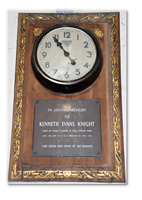
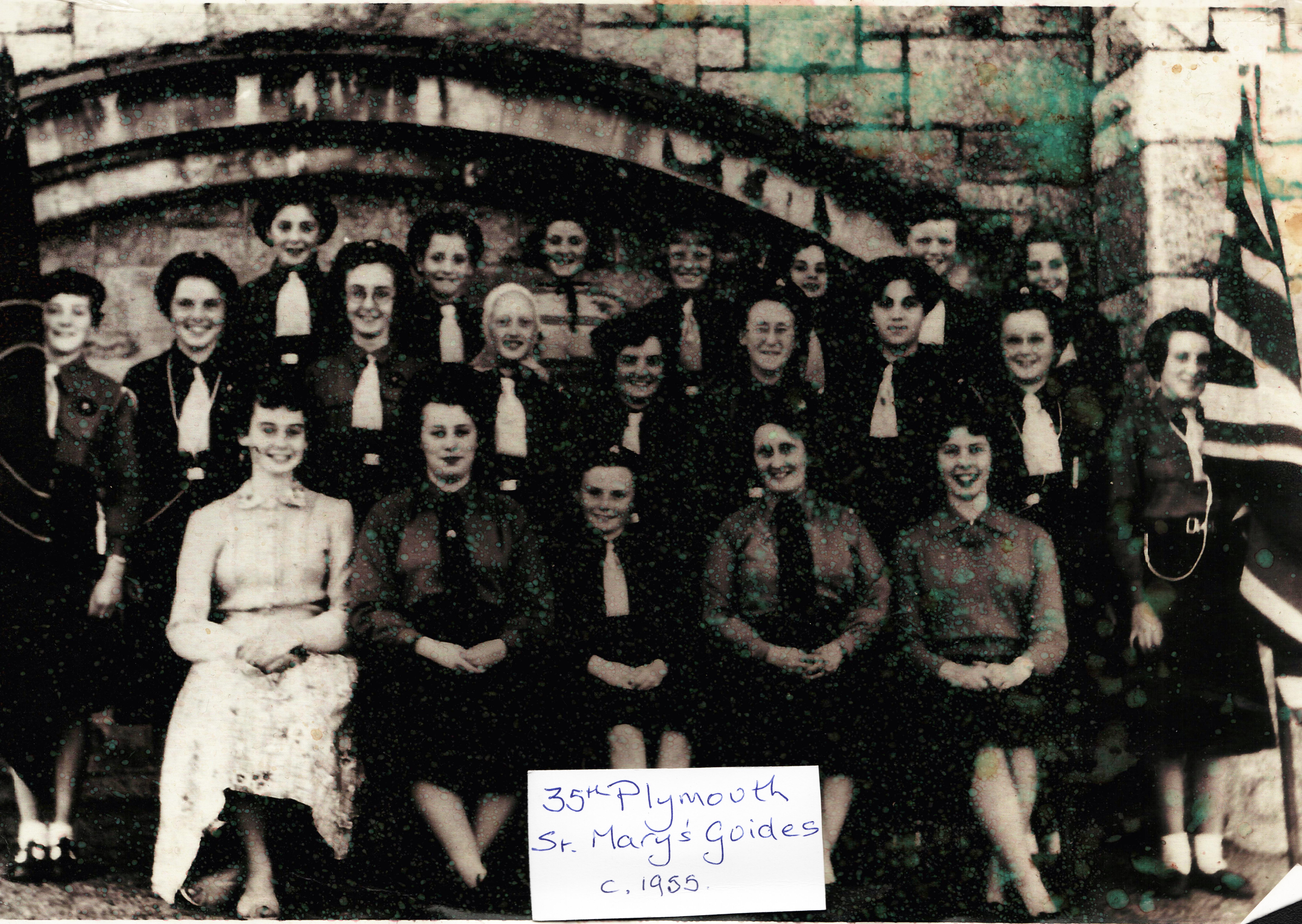
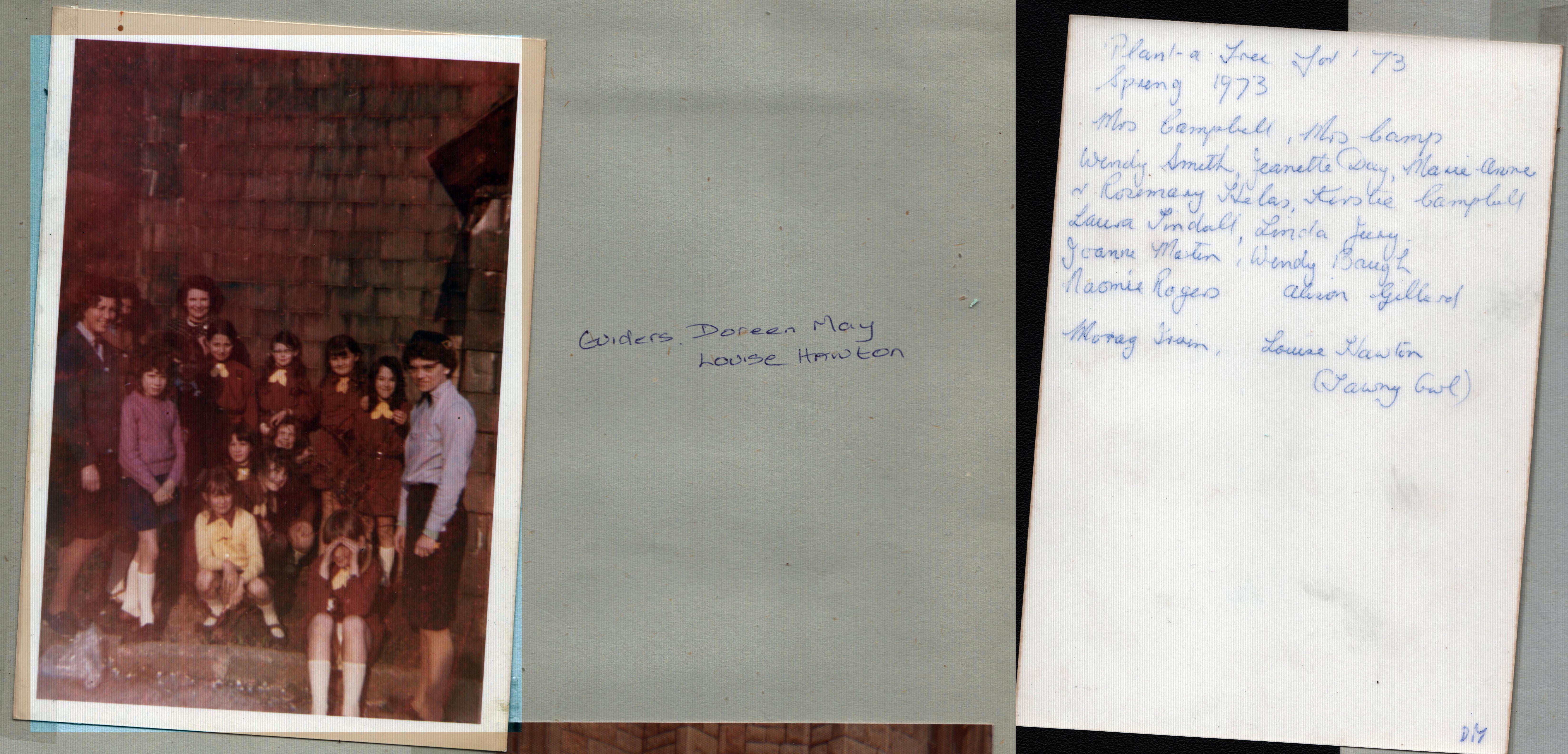
In the west aisle stands a clock donated in 1947 in memory of Kenneth Evans Knight, a server at the church who lost his life aboard H.M.S. Barham on 25th November 1941. The south aisle also contains the ‘Girl Guide’ window, commemorating Florence Annie Tregedeon, leader of St Mary’s Girl Guide Company. Its imagery recalls the vocation and response of the Virgin Mary, encouraging worshippers to imitate her devotion.
St Mary’s Church, Laira, is thus not only a place of worship but a repository of memory and artistry. From its oak vaults and marble floors to its carved reredos and stained glass, every feature tells a story—of benefactors, parishioners, and craftsmen whose lives and faith shaped this community in the 111 years of its existence.
Laira, St Mary's Church and the First World War
The opening of St Mary’s Church in the very week that Archduke Franz Ferdinand was assassinated in June 1914 meant that this growing community was immediately overshadowed by the outbreak of war. Over the next four years many of the congregation, or their family members, would be drawn into the conflict, and Laira was to experience the same anxieties, losses, and upheavals as the rest of the nation.
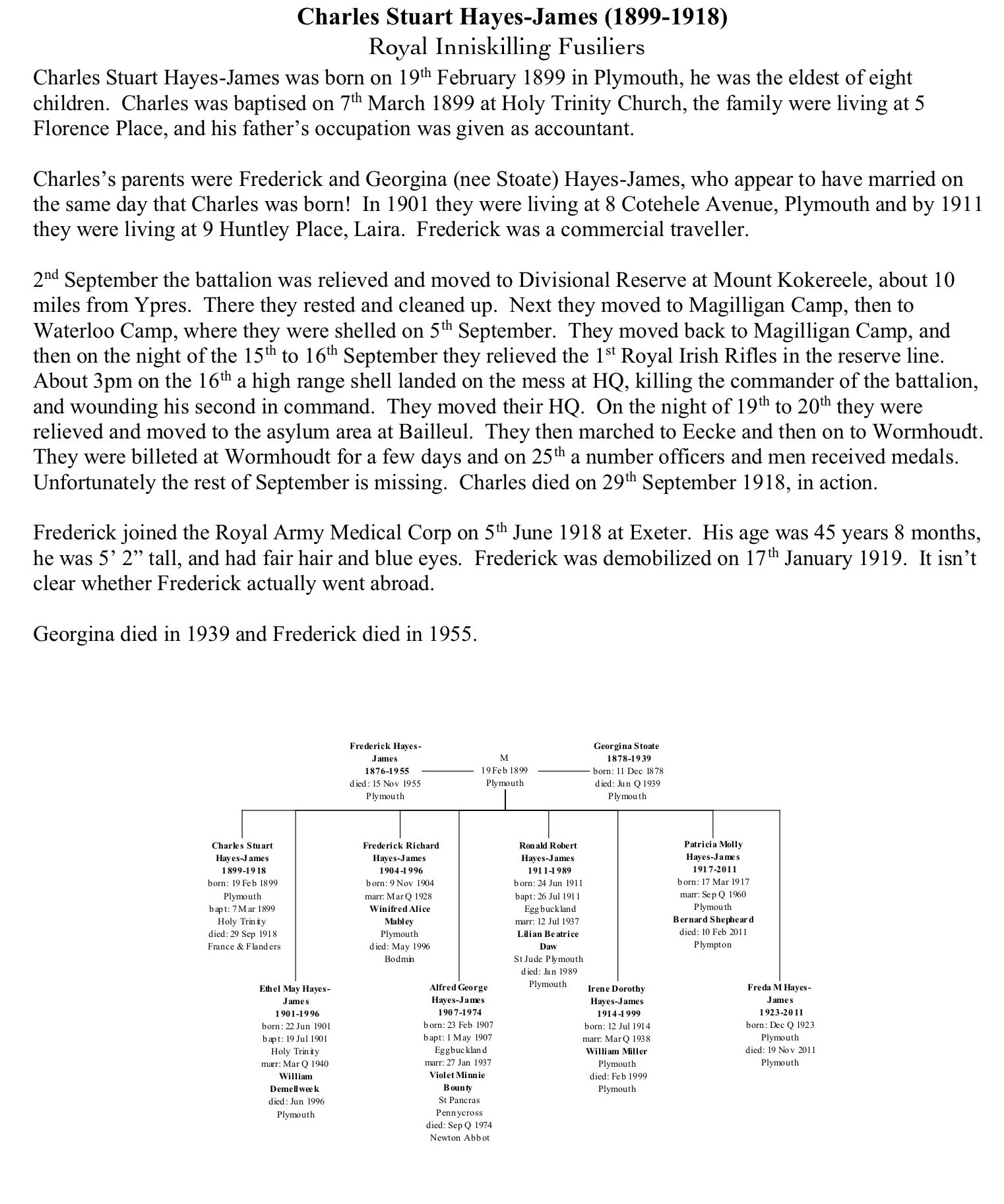
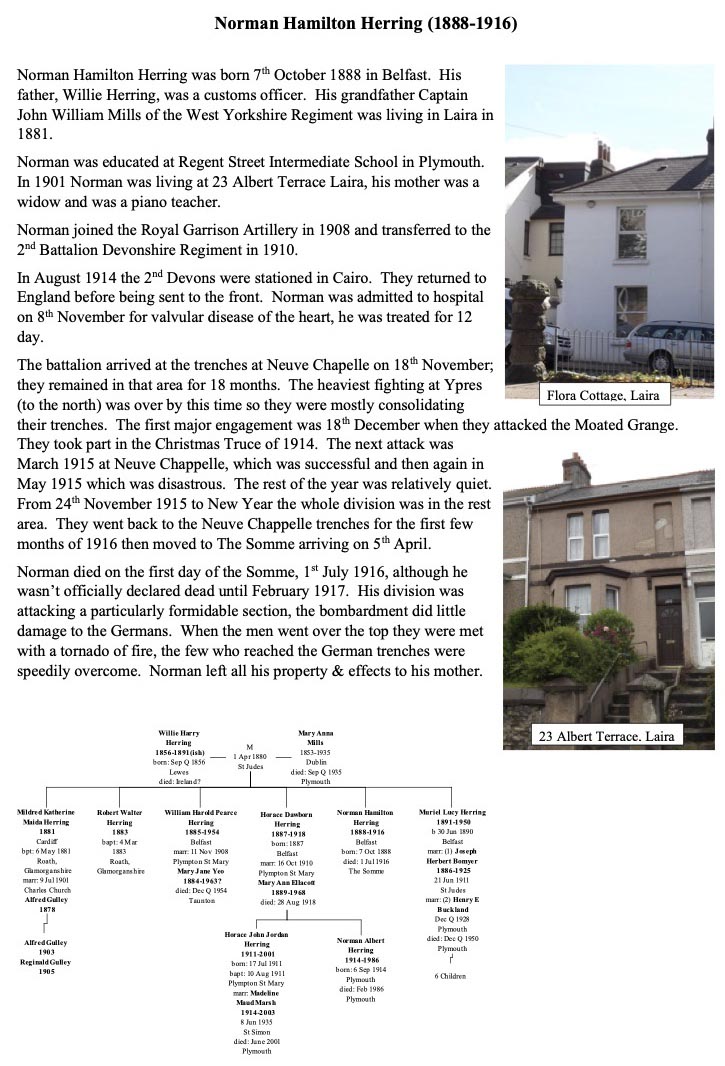
The parish magazines of 1918 and 1919 vividly record how the war touched parishioners and their families. A choirman of St Mary’s wrote home after being wounded in the German spring offensive, describing how he had been hit in the foot by machine‑gun fire and shrapnel, briefly captured, and then escaped amid scenes of devastation. He recalled the cries of the wounded, the bursting shells, and the loss of comrades, memories that haunted him in sleep. Other notes reported that Pte Fred Hurrell of Eggbuckland Choir had been severely wounded but survived thanks to his steel helmet, while another St Mary’s choirman, Walter Hannam, was confirmed as a prisoner in Germany. The roll of honour grew steadily: Quartermaster Sergeant Frederick William Carter, Private Charles Henry Burr of the New Zealand Contingent, Pte Charles Stuart James of Crabtree Mission, Sgt Maj Gallagher, and brothers Norman and Horace Herring were all killed within days of each other. Sydney Richard Winsor, still serving as a choir cross‑bearer when he enlisted, was also reported killed, leaving a widowed mother to mourn. Yet alongside these tragedies, parish notes mention wounded men recovering: L/Cpl Percy Adlard wrote from a London hospital of the care he received, and Pte Richard Pengelley, the sole survivor of a machine‑gun attack, visited the village while convalescing. These reports show how intimately the war was felt in Laira, with choir stalls and mission halls emptied by absence, and families enduring both grief and relief as news arrived from the front.
 |
|
|
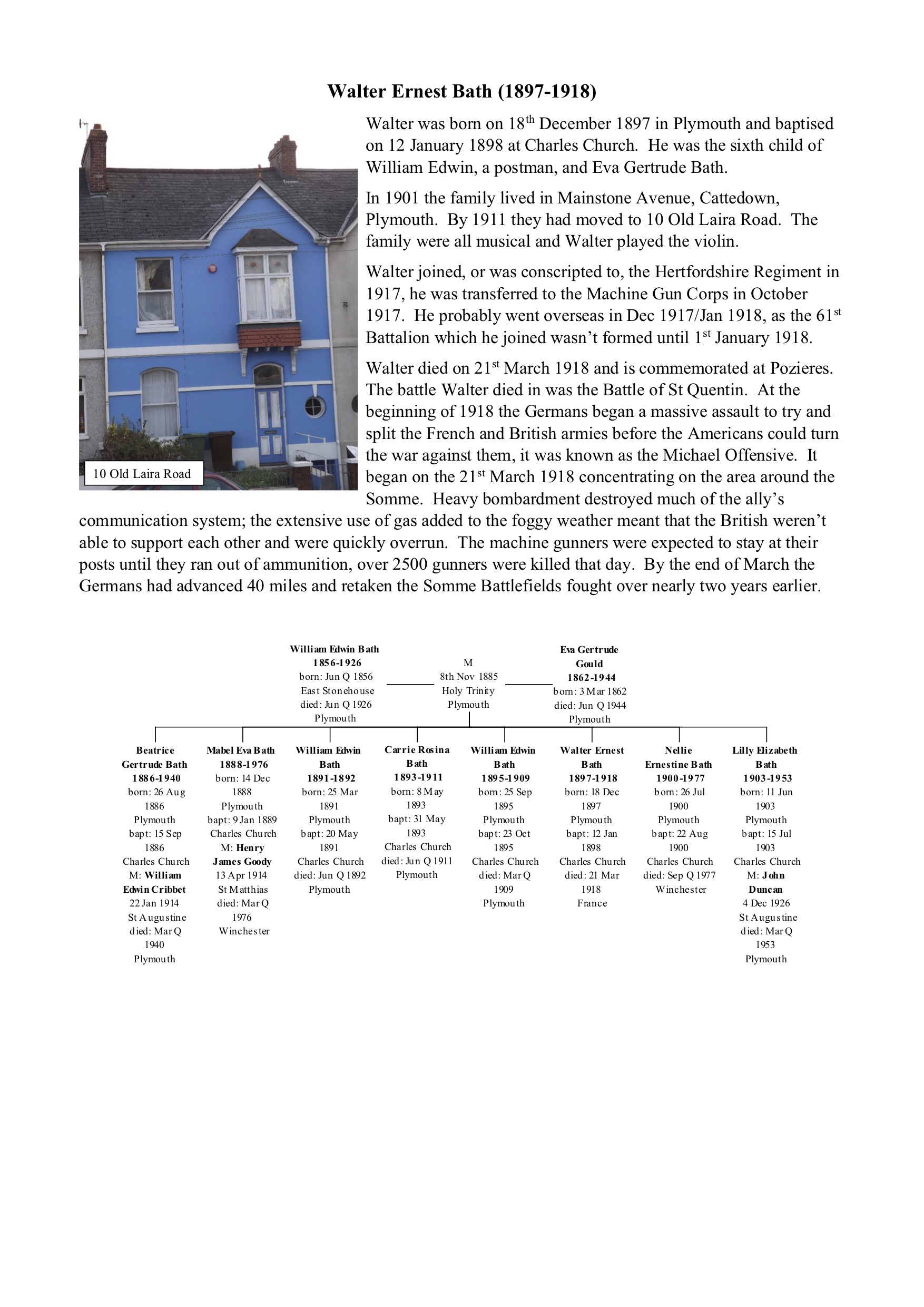
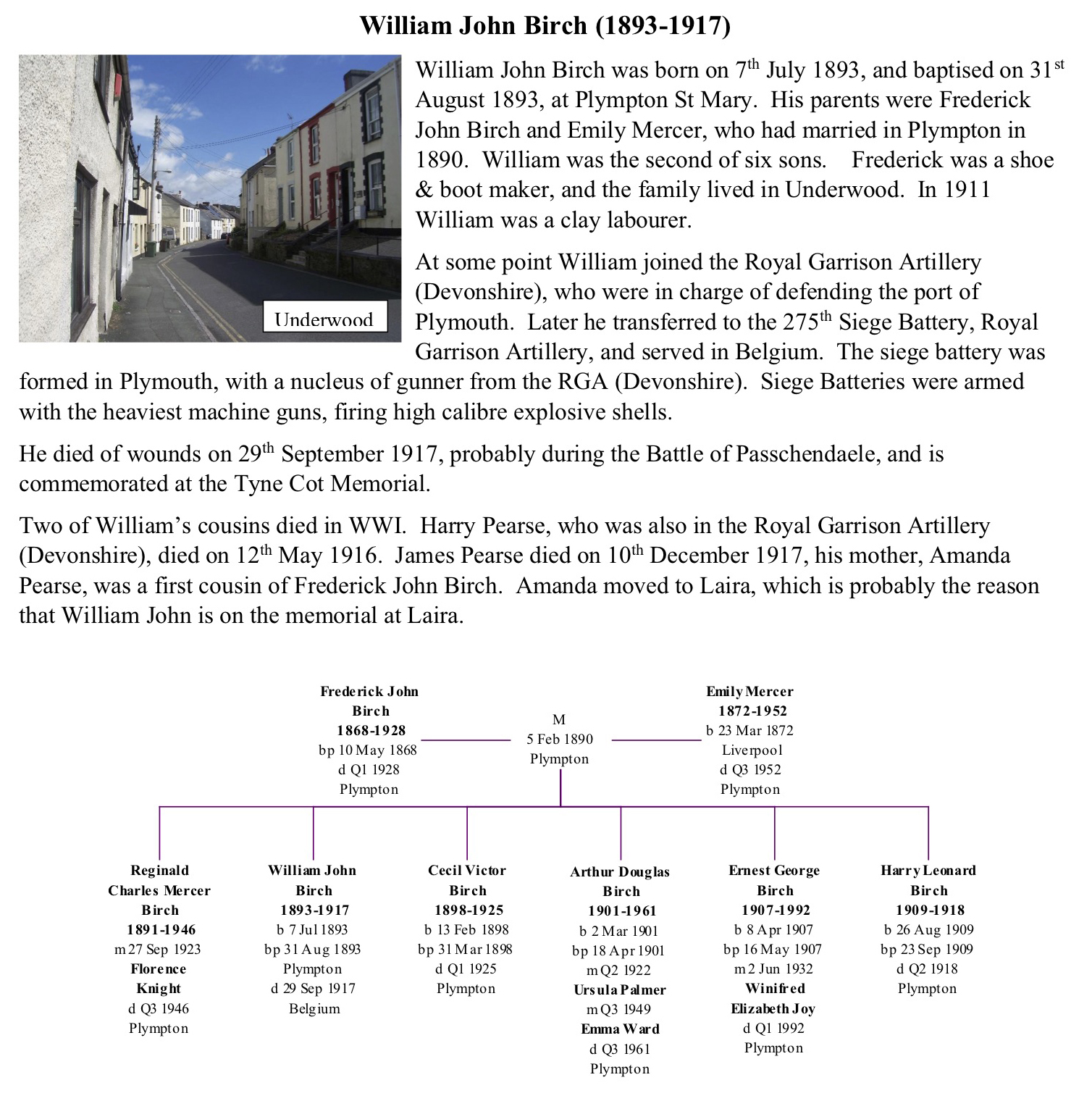
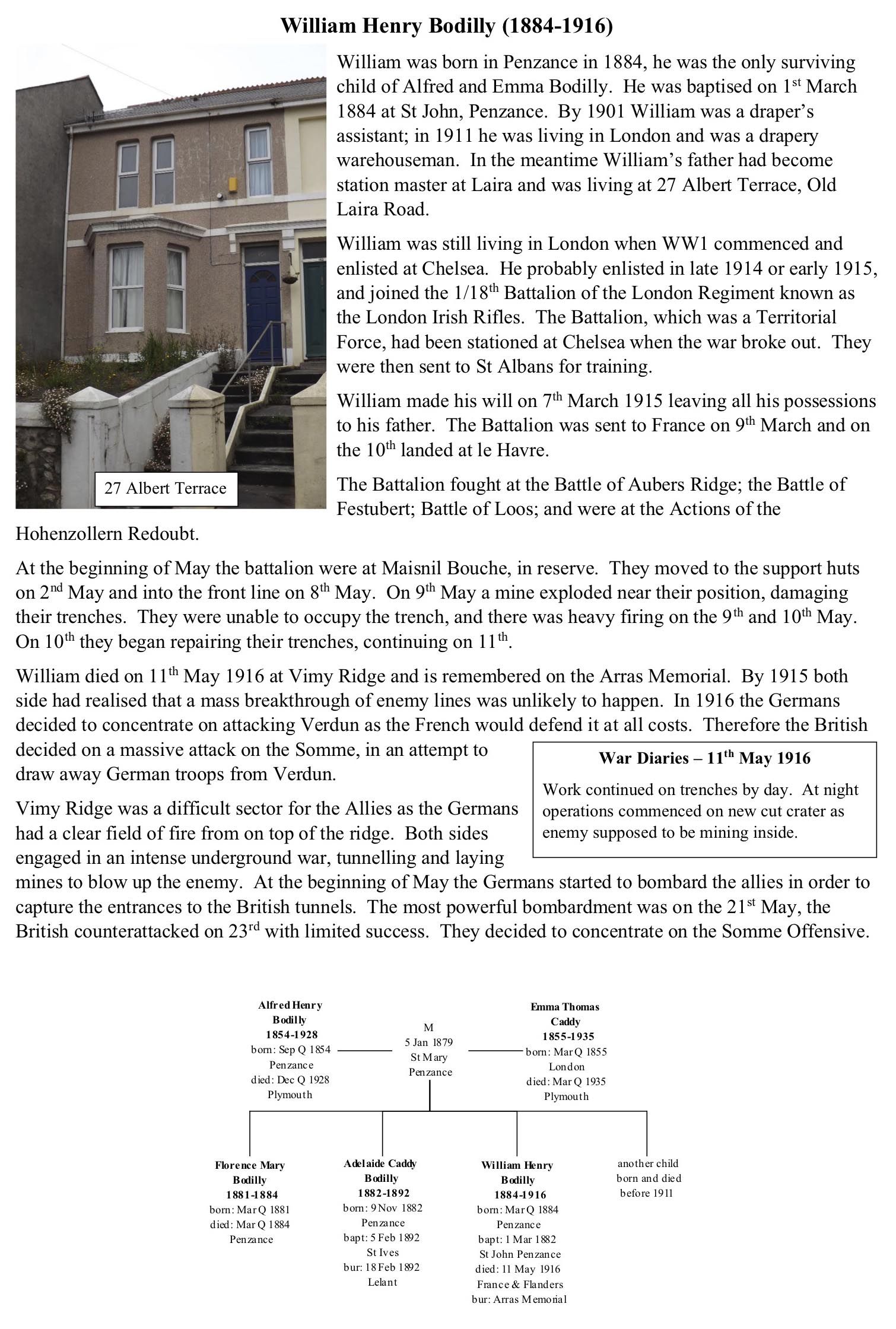
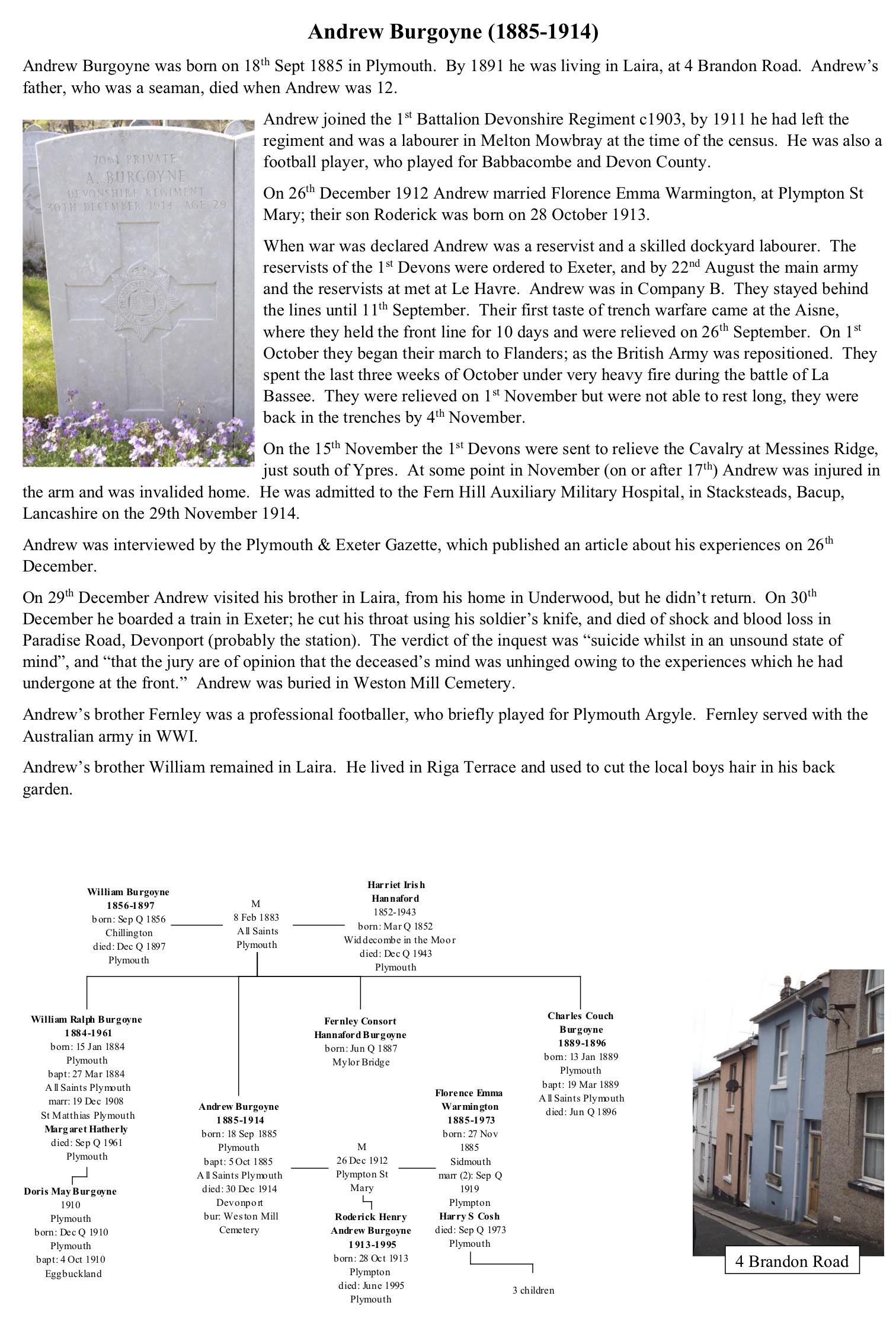
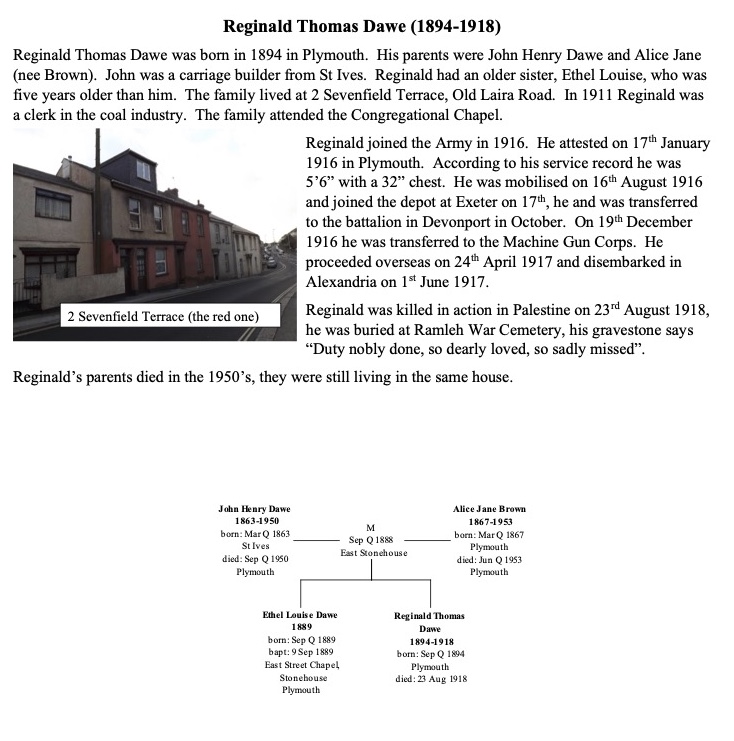
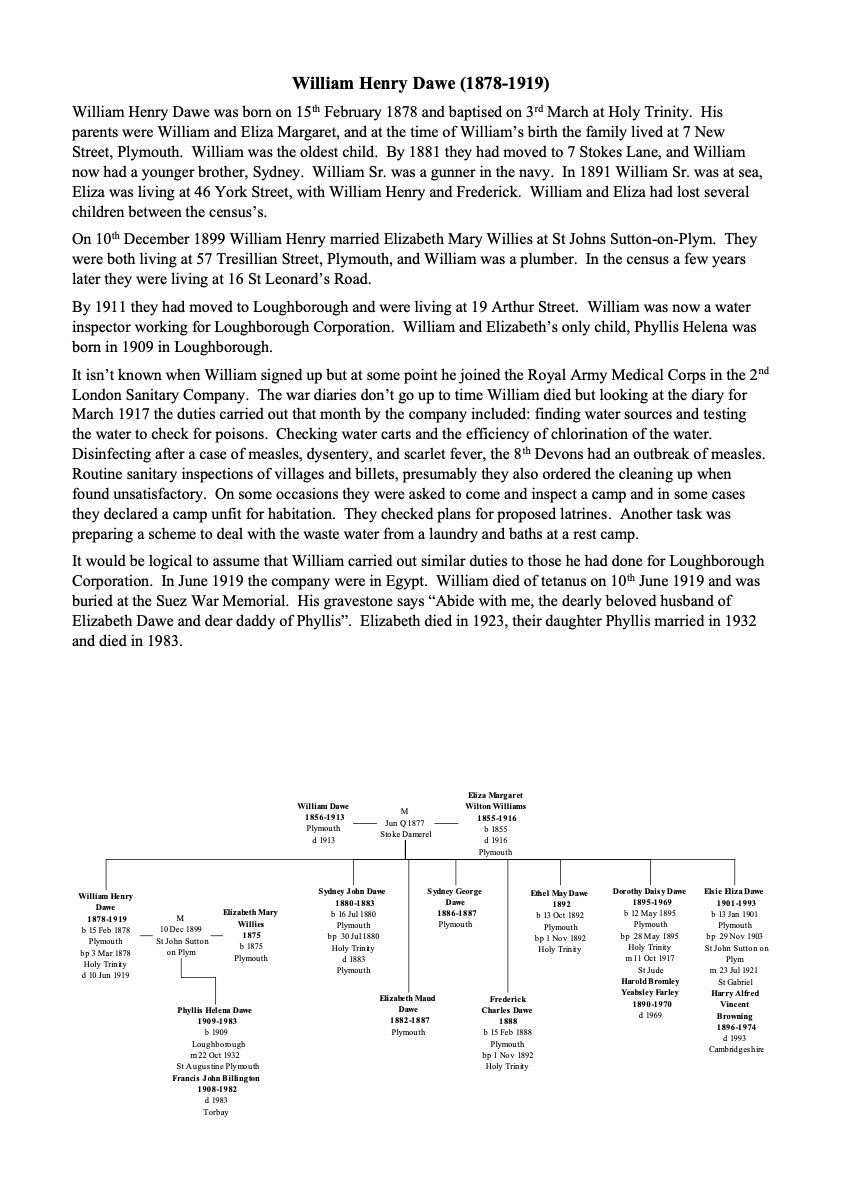
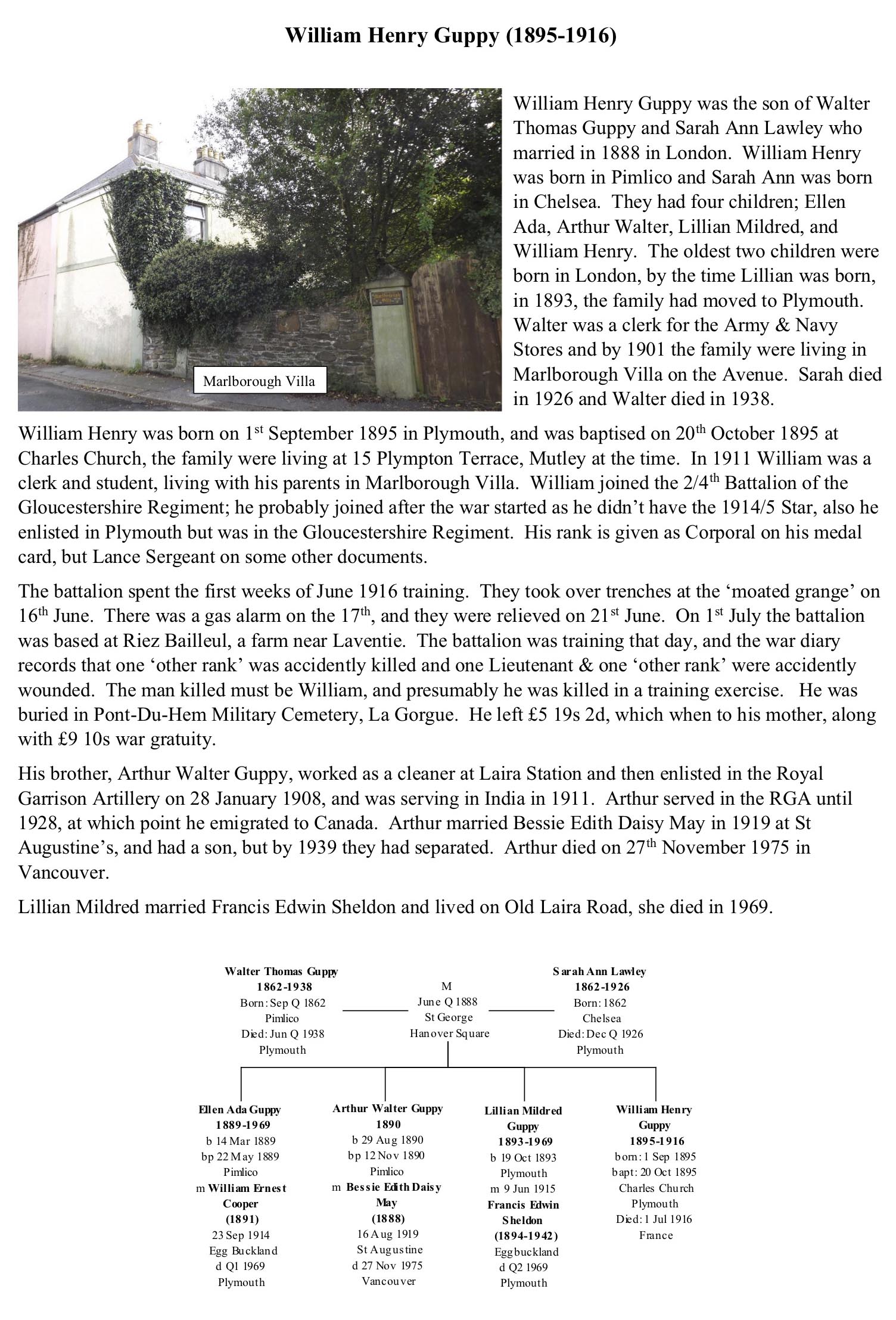
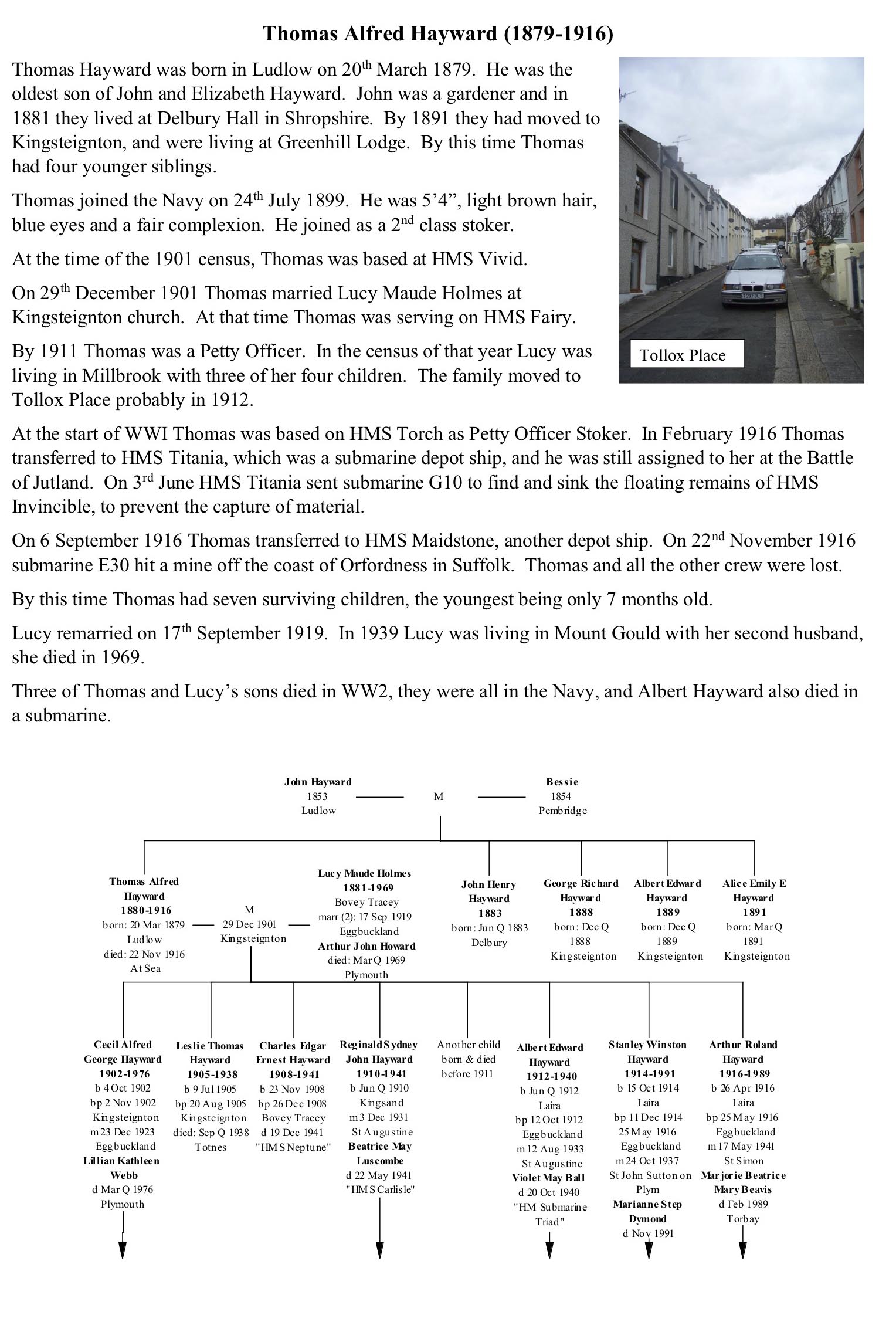
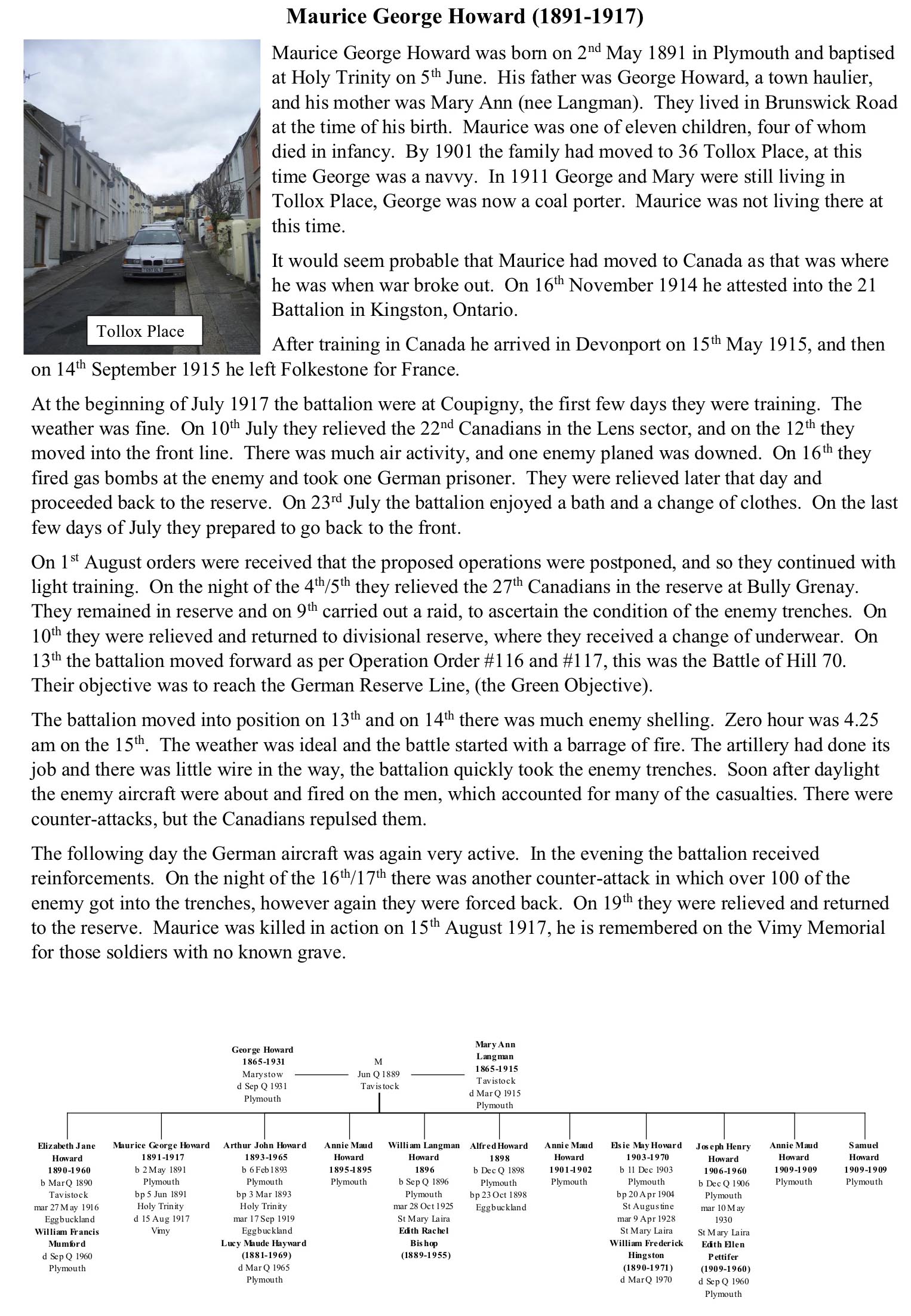
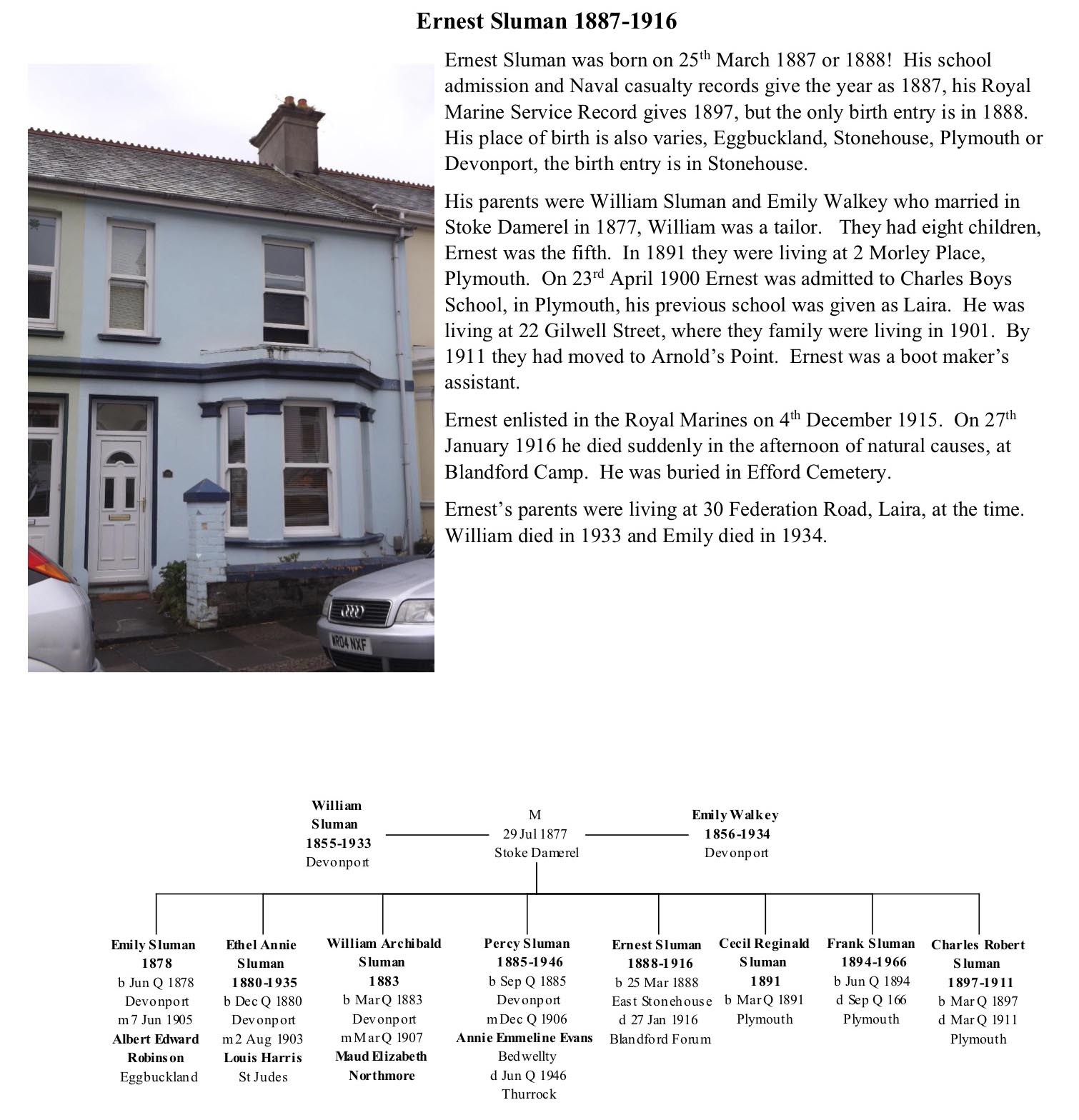
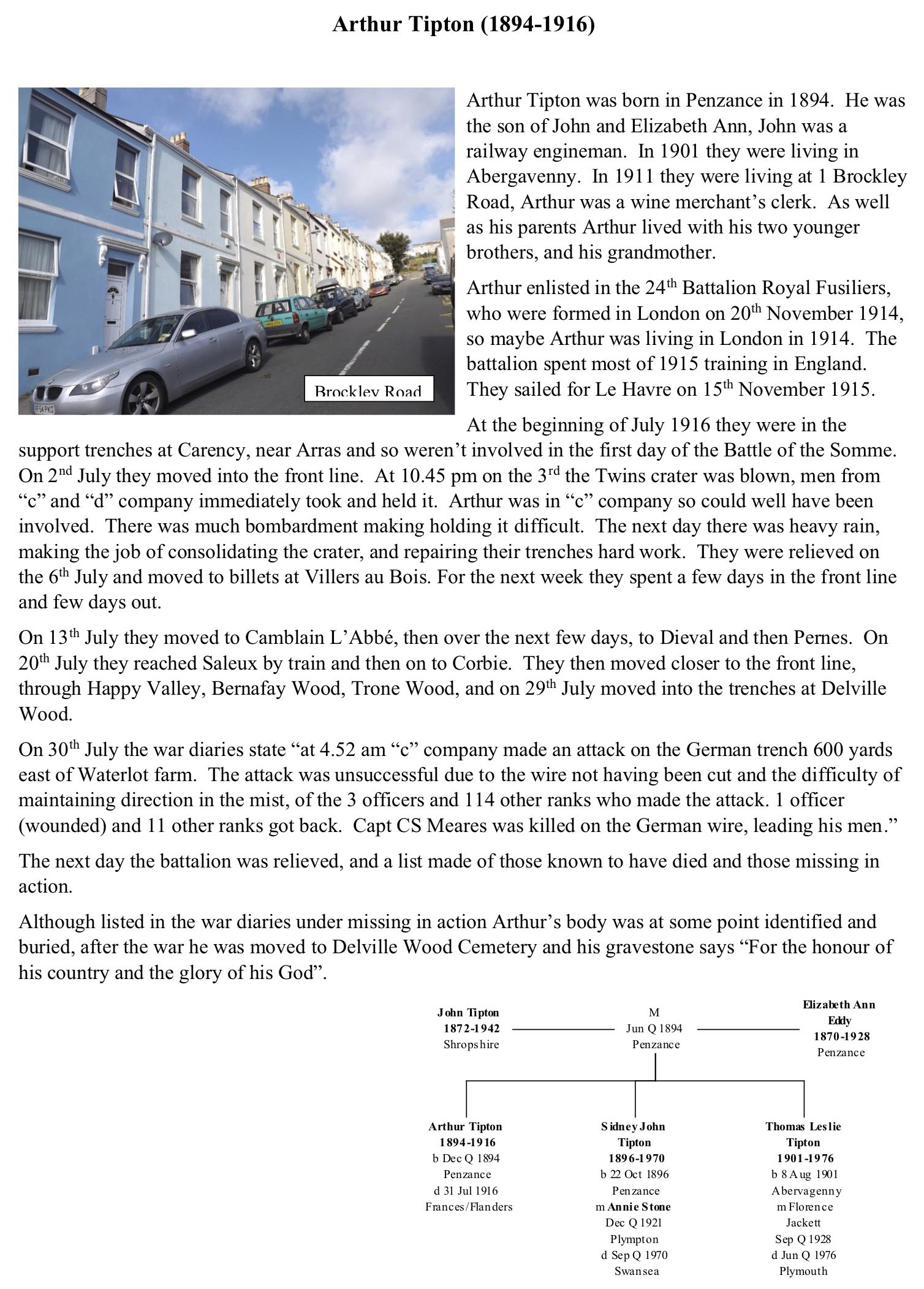
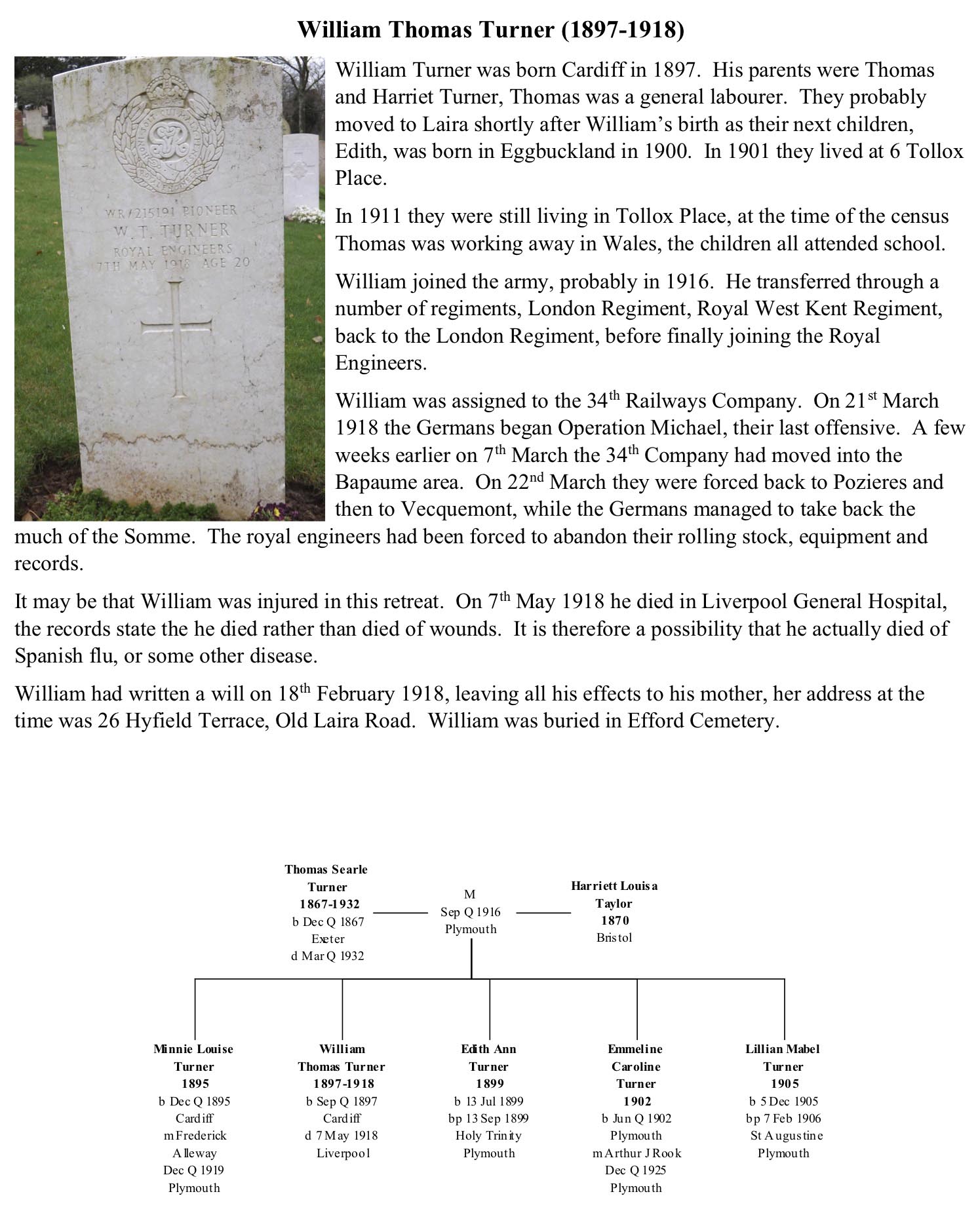
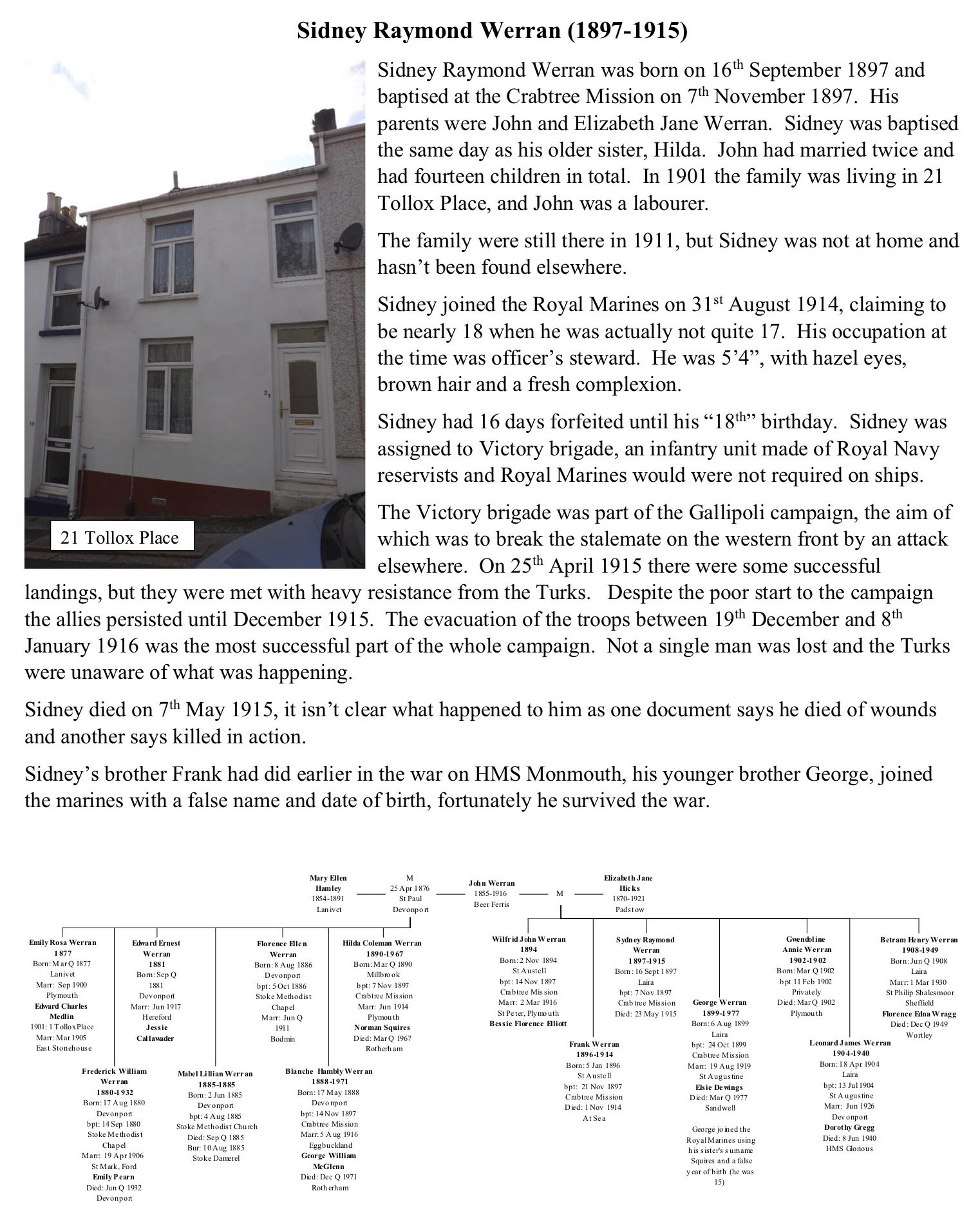
Behind each name later inscribed on the memorial lies a story of local families and sacrifice. Walter Ernest Bath (1897–1918), a violinist from a musical household at 10 Old Laira Road, joined the Hertfordshire Regiment before transferring to the Machine Gun Corps. He was killed on 21 March 1918 during the Battle of St Quentin, part of the German Michael Offensive. William John Birch (1893–1917), a clay labourer from Plympton with family ties to Laira, served with the Royal Garrison Artillery and died of wounds in Belgium, probably during Passchendaele. William Henry Bodilly (1884–1916), son of the Laira station master, enlisted in London with the London Irish Rifles and was killed at Vimy Ridge. George William Brown (1893–1917), a French polisher living at 2 Albert Terrace, disappeared while escorting prisoners in Mesopotamia; his death was recorded on 20 April 1917 and he is commemorated on the Basra Memorial. Andrew Burgoyne (1885–1914), of 4 Brandon Road, fought with the Devonshire Regiment in France before being invalided home; suffering mental collapse, he took his own life in December 1914, his death judged to have been caused by the strain of trench warfare. Albert George Campbell (1898–1917), baptised at Crabtree Mission Chapel and living at 23 Tollox Place, joined the Devonshire Regiment and was wounded at Ypres; he died of his injuries in Dover on 27 August 1917. William Henry Dawe (1878–1919), serving with the Royal Army Medical Corps, died of tetanus in Egypt in June 1919 and was buried at Suez. His relative Reginald Thomas Dawe (1894–1918), of 2 Sevenfield Terrace, Old Laira Road, joined the Machine Gun Corps and was killed in Palestine on 23 August 1918, buried at Ramleh. Walter James Giles (1882–1916), a Royal Artillery officer who lived at Efford Cottages, was killed by shellfire during the Battle of the Somme. Each biography restores individuality to the stark list of surnames, showing the breadth of sacrifice across Laira’s streets and households.
 |
|
|
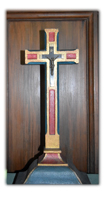
St Mary’s Church also possesses a unique relic of the war. A crucifix belonging to its first vicar, Father Leonard T. Strong, bears an inscription stating that it was used to administer the last rites to over 700 soldiers during the conflict. He had served as a Captain in 1918 in Salonika where he may have been attached to the 10th Battalion of Devons who were fighting there as part of the British Salonika Force. This crucifix was later embedded in a larger wooden cross and now forms the centrepiece of the church’s Remembrance display. It stands as a sacramental witness to battlefield ministry, linking the parish directly to the pastoral care offered amid the chaos of war.
 |
|
|
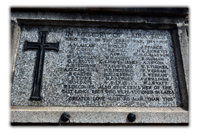
Only after the war’s end did the community turn to permanent commemoration. At the time of the Armistice in 1918, Laira was still outside the municipal boundaries of Plymouth. Its war dead were therefore not included on the city’s main memorial, but instead commemorated locally. The monument on Old Laira Road was erected: a sandstone frame containing a granite tablet and bronze cross. The frame measures 850mm high, 110mm wide, and 60mm deep. Thirty-one names are inscribed, all of men who died in service during the First World War. No survivors are listed. The names are given in alphabetical order, surname only, and the inscription concludes with the words: “Greater love hath no man than this.” The memorial also acknowledges the officers and men of the 5th Battalion Devon Regiment who were stationed in Laira during the war.
Together, the outdoor memorial on Old Laira Road and the crucifix within St Mary’s Church form complementary acts of remembrance: one civic, one sacramental; one public, one intimate. They remind us that Laira, though once outside Plymouth’s borough limits, bore its share of the war’s burden. The thirty-one names, the stories behind them, and the sacred objects preserved in the parish all testify to a community marked by sacrifice, resilience, and memory. In Laira, remembrance is not abstract but rooted in streets, houses, and families — a local inheritance of the Great War that continues to speak across generations.
Text from a booklet on the Church entitled: THE FIRST FIFTY YEARS
When Bishop Archibald Robertson, in his sermon at the consecration of St. Mary's Church, referred to the
"growing population, mainly industrial" of Laira, he cannot have dreamed how prophetic were his words and
how vast would be the growth in the population of the parish, transforming a small village into a busy suburb
of Plymouth. Yet this is indeed the story of the first fifty years.
LAIRA
The name Laira was applied first to the stretch of water running between the Cattewater and Marsh Mills.
Donn's "Map of Devon" (1765) distinguishes the "Upper Lary" and the "Lower Lary," and he appears to show the latter extending as far as Oreston.
The derivation of the name has given rise to considerable speculation. Rowe's "Panorama of Plymouth" (1826)
connects it with "larus," a gull, and therefore gives its meaning as "a place resorted to by gulls."
The English Place Name Society, however, regards it as more likely that the word has a Celtic origin and compares it with the Welsh word "llaeru," meaning "to ebb" or "to grow shallow."
The same authority notes that some scholars have connected it with the Old Norse word "leira," a clayey place, but regards this theory as improbable.
COMMUNICATIONS
It may be said that the gradual improvement of the means of communication between Crabtree and Plympton made for the growth of both Crabtree and Laira.
Before 1758, instead of the raised road that we know as Longbridge there was merely a rough track across the marshes, both the Plym and Tory being crossed by fords.
Pedestrians were often inconvenienced by the tides and vehicular traffic was forced to take the more devious route via Plym Bridge.
In 1758, a Turnpike Trust was proposed for an improved road.
There was a local dispute as to the most desirable route.
One party urged the claims of the old route from Crabtree across to Saltram and Underwood, but the route finally adopted was the present one crossing the Plym a quarter of a mile further north.
The road level across the marshes was raised by an embankment and a new bridge was constructed to carry the road across the river.
This bridge served until 1835, when it was demolished and replaced by a three‑arched bridge, which, widened at its western end, still carries traffic bound to and from Plymouth.
Not less important was the development of the road along the embankment beside the Laira.
In 1802, a company obtained an Act of Parliament for the construction of the embankment and the work was completed in 1811.
The tolls and rights were acquired by the civic authorities in 1900 and tolls were finally abolished in 1924.
LAIRA FORT
Laira appears to have had a fort from the seventeenth century. In 1643, in the accounts of the Sabbath Day Battle during the Civil War, we read of a "worke" at "Leerie Point" with three cannon.
In the mid‑nineteenth century, Laira Fort was strengthened, in common with the other defences of Plymouth.
As will appear, the presence of a fort, with its holding garrison, contributed indirectly to the establishment of a church in Laira.
CRABTREE
Before the Municipal Reform Act of 1835, Crabtree was distinguished by the annual election of a "Mayor."
The electors met at the Lamb Inn, in Treville Street, Plymouth, and, attired in cloaks trimmed with facings of red braid, walked in state to the Crabtree Inn, carrying carved maces with cockle shells on their tops.
The "Town Clerk" bore a large bowl in which the punch was subsequently brewed, and the "Recorder" had a similar vessel.
A form of electing the various officers was duly observed, and it is recorded that "the hospitalities were so prolonged that those who walked out on foot were only too glad to return in a wagon."
THE RAILWAY COMES TO LAIRA
The railway did not reach Plymouth until 1848, although by this time it had become commonplace in most other parts of the country.
Laira achieved a fame, which it has never lost, as the first terminus of the line in Plymouth.
The arrival of the first train was the occasion for great celebration.
The directors of the South Devon Railway breakfasted at Totnes, and their progress towards Laira was watched by considerable crowds.
A contemporary ballad recorded the feelings of the onlookers:
Aw, Johnny, aw Johnny, whatever es that?
A urning along like a hoss upon wheels?
'Tes as bright as yer buttons and black as yer hat,
An' jes hark to en, Johnny, an' yer how a' squeals.
The growth of Laira was nurtured by this "dawn of a new era," as one Plymouth historian described it.
INCORPORATION INTO PLYMOUTH
Plymouth was made a county borough by the Local Government Act of 1888, and, as part of the consequent expansion, the city sought powers in 1896 to include within its boundaries the parishes of Compton, Weston Peverell, and Egg Buckland.
Laira formed a part of the latter parish. After protracted, and sometimes contentious, negotiations, incorporation was achieved.
After acrimonious negotiations, the parishes were incorporated into the city in 1896.
The immediate effect of this upon the inhabitants can be gauged by the fact that the rate increased, between 1893 and 1898, from 3/1 to 7/- in the £.
On the other hand, the subsequent growth of Laira, culminating in the vast post‑war development at Efford, stems from the incorporation,
and the character of Laira today springs from the fact that it is a suburb of Plymouth; although it must be conceded that it has never quite lost its former atmosphere
and many of the older inhabitants still speak of it as "the village."
THE MISSION AT CRABTREE
Until 1931, the districts of Crabtree and Laira were included in the ecclesiastical parish of Egg Buckland and, until 1874, those inhabitants who wished to fulfil their religious duties had to walk the two miles to the parish church.
In that year, Bishop Frederick Temple licensed a newly‑erected school‑chapel at Crabtree for Divine Service.
This building, the total cost of which was about £800, was provided jointly by the War Department, who gave the site and £50, the Church Building Society, who gave £30, and public subscription.
Mr. A. G. Clifton was the architect and Mr. T. Hoskin was the builder.
The building was opened with a service of Holy Communion on Wednesday, November 11th, 1874; at Evensong on the same day Archdeacon Earle, afterwards Bishop of Marlborough and Dean of Exeter, was the preacher.
The War Department were concerned in the project because the chapel was intended to provide ministrations for the military personnel stationed at Efford Fort and their families.
The Licence notes that there were then some 200 souls resident in the district.
In the early years, the Vicar of Egg Buckland, Charles Edgar Turner, and his assistant curates ministered at Crabtree, but, in 1887, John Mackay Hodge, who was a schoolmaster living at Tavistock Place in Plymouth, became curate‑in‑charge.
Mr. Hodge continued in office until 1902, when he was succeeded by John Thomas Marchant, who stayed until the present church was consecrated and subsequently became incumbent of West Down in North Devon.
Mr. Marchant was the first resident priest and with his coming full services were held at Crabtree; hitherto only Evensong had been provided.
Many parishioners still remember with affection the mission at Crabtree, which continued to be used even after the permanent church was built.
The building can still be seen, although, before long, it will be demolished to allow the busy Plymouth road to be widened.
CHURCH EXTENSION IN PLYMOUTH
The rapidly expanding population made it essential that Plymouth should be provided with more churches.
A start was made during the episcopates of Henry Phillpotts and Frederick Temple.
A comprehensive scheme for Church Extension in the Three Towns was inaugurated by Bishop Edward Bickersteth in 1897.
At the initial meeting in Plymouth, the Bishop revealed that the population of the 27 parishes in the Deanery totalled at least 170,000,
but that all the churches, chapels‑of‑ease and licensed mission‑halls would not provide accommodation for 30,000.
It was proposed, at this time, to build six or seven additional churches, but, in the event, Bishop Robertson could report at the consecration of S. Mary’s, seventeen years later,
that eleven churches were completed or in process of construction, and that one more was planned.
The Diocesan Committee for Church Extension in the Three Towns contributed generously to the cost of the Church of S. Mary the Virgin, giving, in all, some £5,350 between 1914 and 1918.
The project owed much to the energy and enthusiasm of Abel Frank Baker, who had succeeded Charles Turner as Vicar of Egg Buckland in 1901.
"LADY" CLARK OF EFFORD
The splendid site for the church was given by Mrs. Lucy Clark of Efford Manor, familiarly and affectionately known to the inhabitants of Laira as "Lady" Clark.
The conveyance of the land, 4,840 square yards in extent, was made to the diocese by Mrs. Clark’s lawyers, under the Church Building Acts 1818–1884, as early as 1906.
Mrs. Clark’s forbears had occupied Efford Manor since 1784, when William Clark of Plymouth bought it from the Reverend Sir Harry Trelawney, Bart.
The Manor was undoubtedly one of the most ancient buildings in this neighbourhood; it is recorded that Robert le Bastard occupied it at the time of the Domesday Survey in 1086.
In later times, it was in the possession successively of the Grenvilles, the Halses and the Trelawneys.
In Mrs. Clark’s time, the grounds were used for all manner of parochial occasions and the family gave valued assistance to the parish in a variety of ways.
THE CONSECRATION OF THE CHURCH
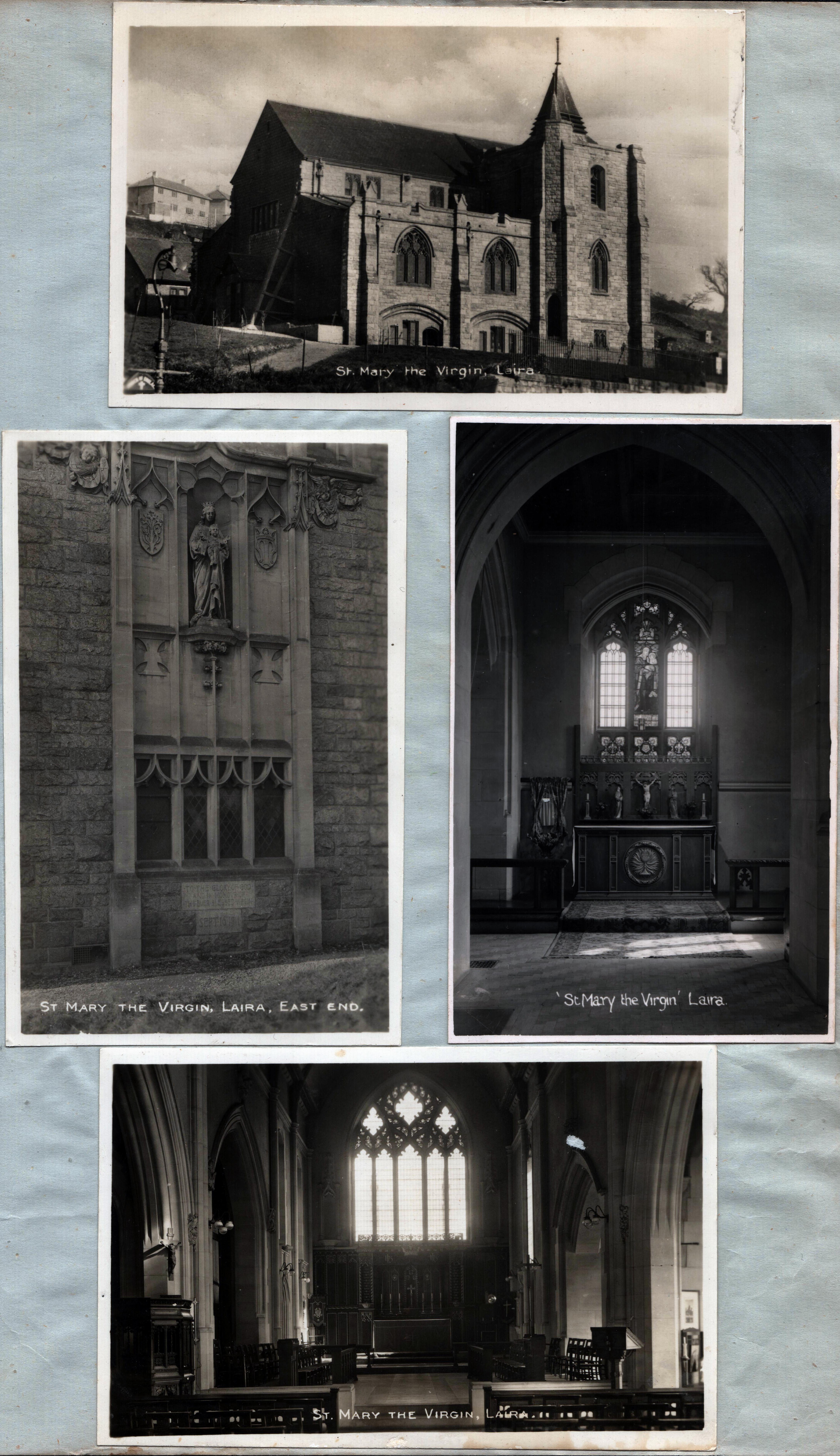
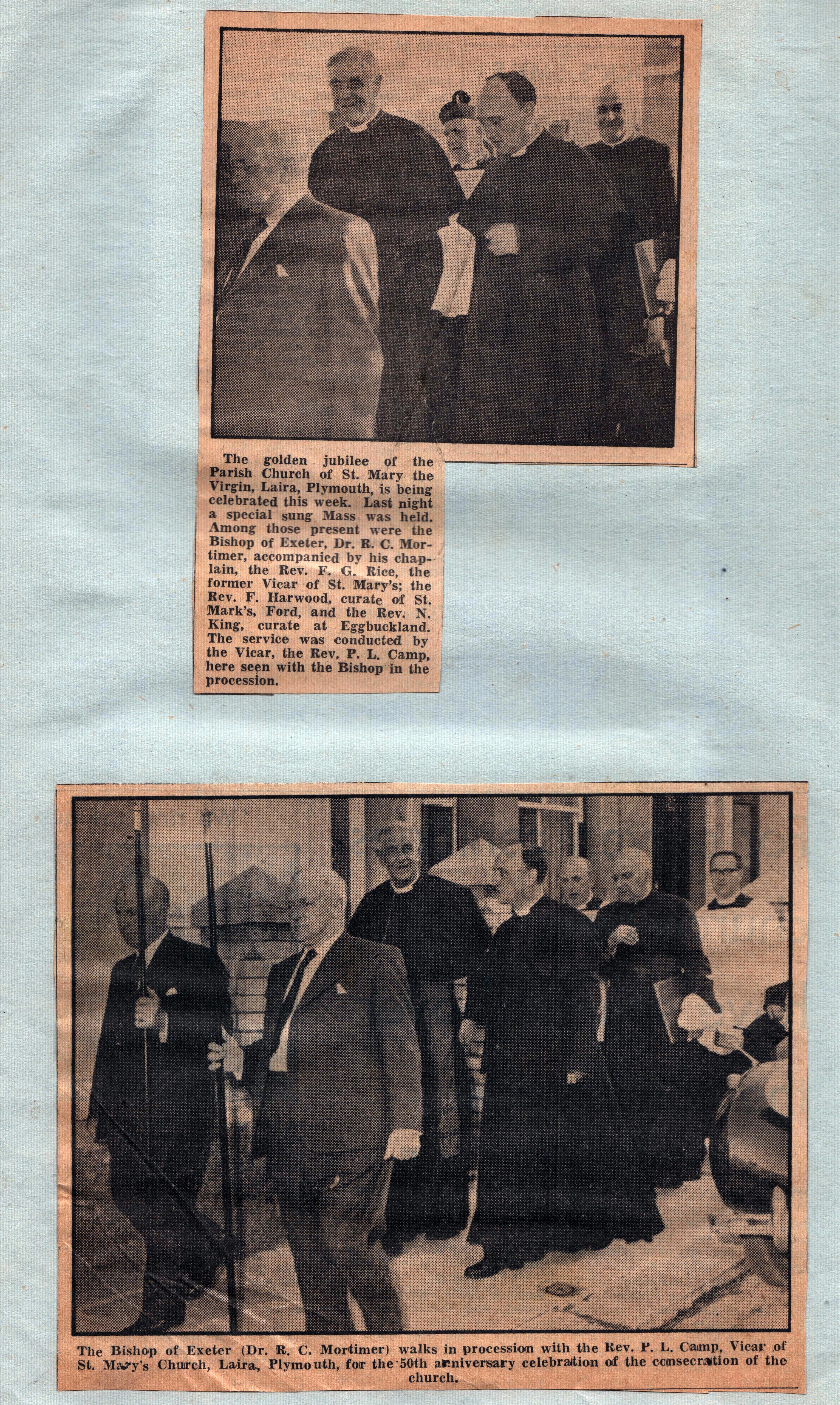
The Church, the foundation stone of which had been laid by Mrs. Clark on September 16th, 1911, was ready for consecration on July 2nd, 1914.
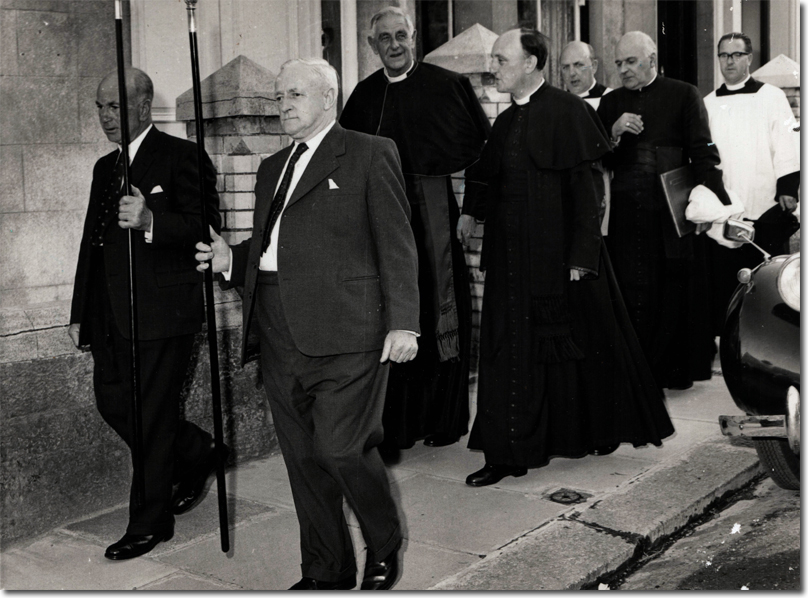
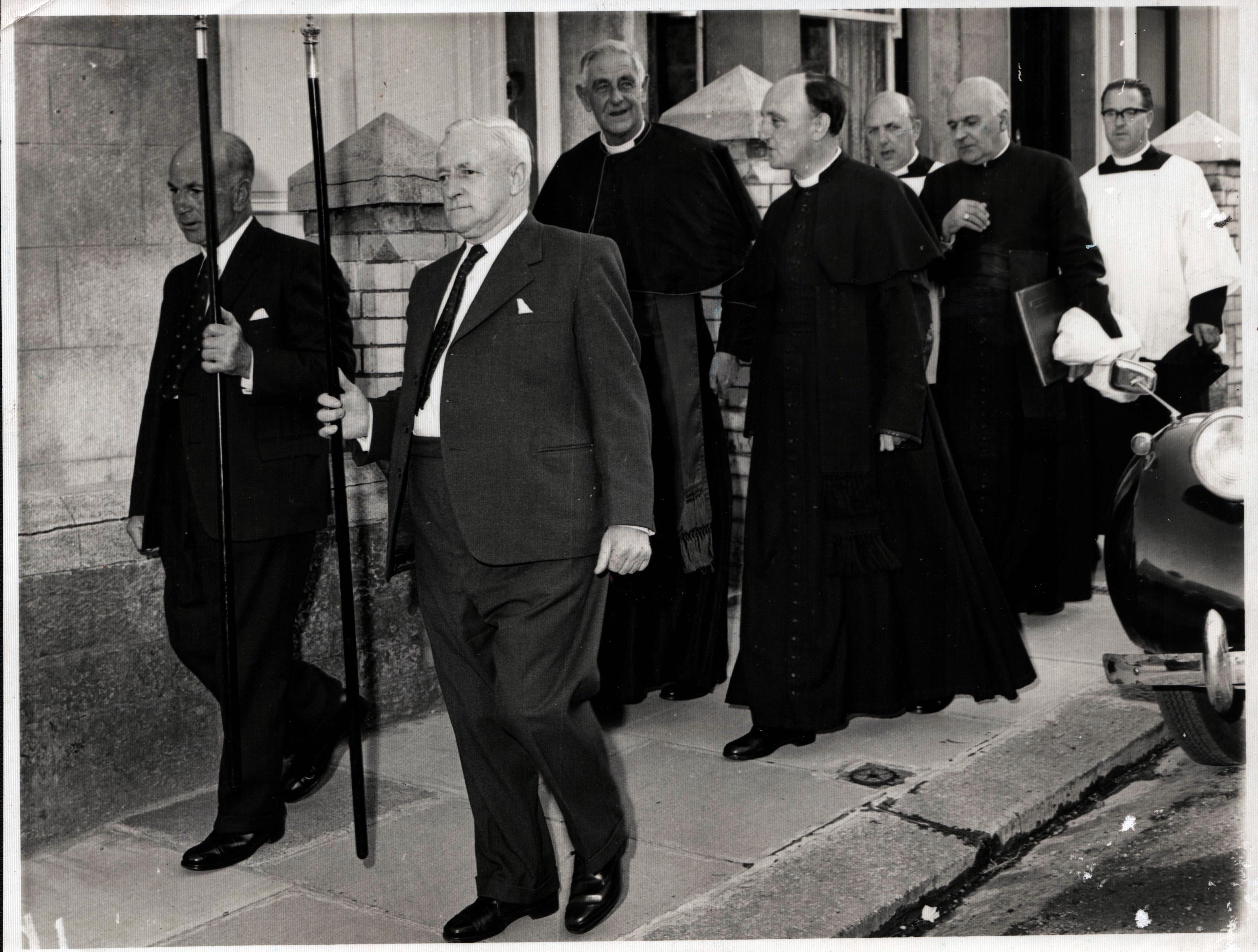
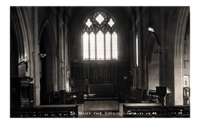
The Bishop of Exeter, Dr. Archibald Robertson, was received at the west door by the clergy and choir.
A procession was formed and a circuit of the church was made, to the singing of the hymn, "Blessed city, heavenly Salem."
The singing was accompanied by a cornet.
When the procession reached the west door again, the Petition for Consecration was presented to the Bishop by Colonel Briggs, churchwarden of Egg Buckland, presented the Petition. The Bishop accepted it and the procession entered the building, singing Psalm 24.
When all was ready for the consecration to proceed, the Diocesan Registrar, Mr. A. J. Mackay, read the Petition.
This detailed the steps that had led to the provision of a church in Laira, proclaimed it to be fit for consecration, and noted that it was intended to be a chapel‑of‑ease to Egg Buckland until a separate district should be assigned to it.
The Bishop then said the prayer of Consecration and the Sentence of Consecration was duly read, signed, and ordered to be “laid up in the Registry among the muniments of the see, and to be registered.”
So the church was “for ever set apart from all profane and common uses, under the name of St. Mary the Virgin and to the glory of the ever‑blessed Trinity, Father, Son and Holy Ghost.”
After the singing of Veni Creator, the Bishop began the celebration of Holy Communion, the Epistle being read by the Rural Dean of the Three Towns, the Reverend H. W. T. Perowne, Vicar of St. Andrew’s, Plymouth, and the Gospel by the Rural Dean of Plympton, the Reverend T. Woodman, Vicar of Sparkwell.
THE BISHOP'S SERMON
 |
|
|
In his sermon, the Bishop remarked that St. Mary’s was the last but one church to be consecrated under the scheme for providing additional churches for the Three Towns.
They came together with thankful hearts for what had already been accomplished, although much still remained to be done.
There must be local effort and local generosity, since the church was only a fragment of what it was meant to be.
He hoped that they would not rest until what remained to be done was actually finished.
It would not be possible to form a parish until a certain sum of money was provided for endowment, but the rapid growth of population made it certain that this could not be long delayed.
He concluded by reminding them that the lesson of dedication and consecration must take root in their individual hearts, and they must remember that they were entrusted with the care of God’s temple both in themselves and in their beautiful house of God.
They must dwell together in unity, peace, and concord.
"NOISES OFF"
The Bishop’s concluding remarks may well have been prompted by the extraordinary scenes that were taking place outside the church.
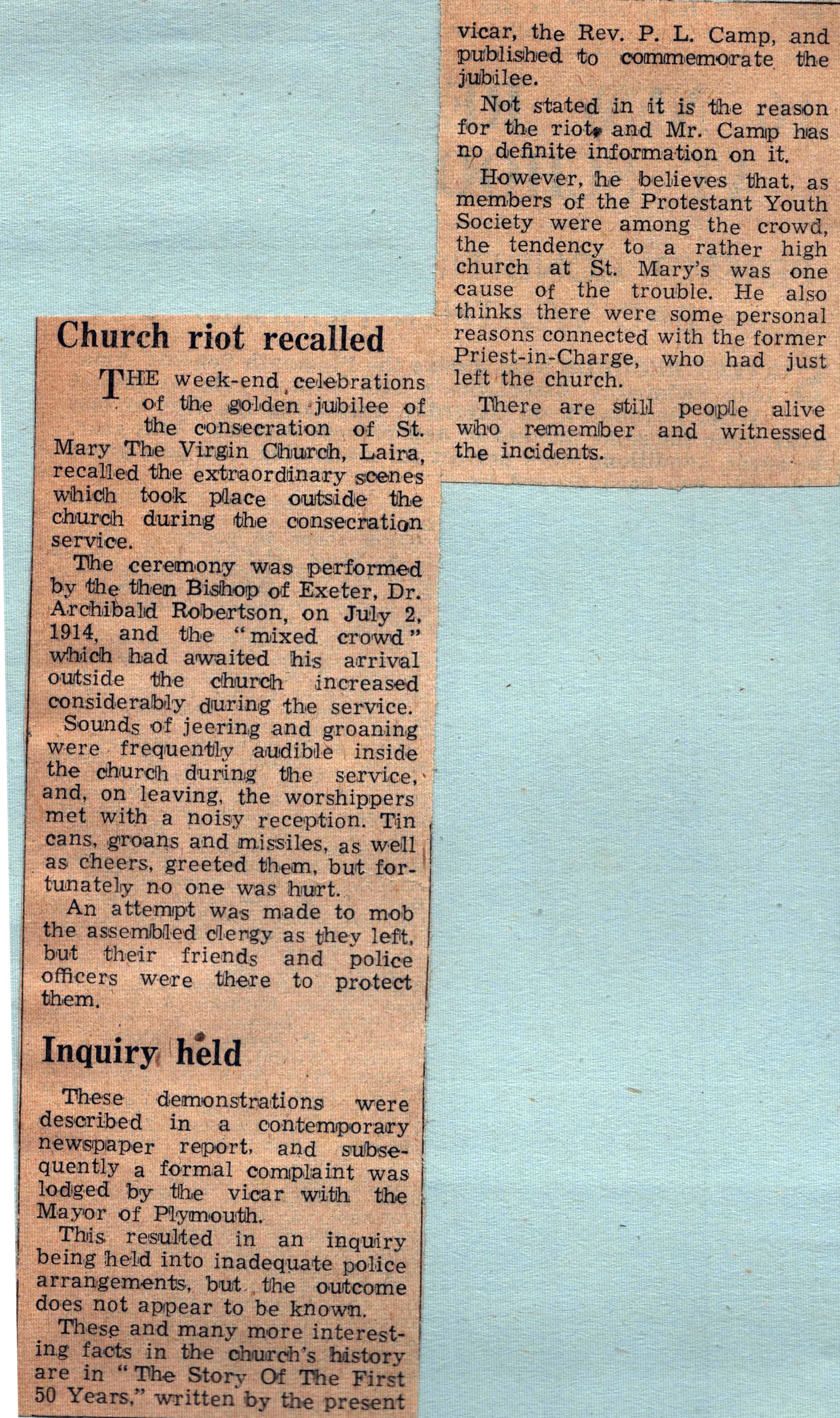
The “mixed crowd” that had awaited the Bishop’s arrival was considerably augmented during the course of the service, and the sound of jeering and groaning was frequently audible inside.
At the conclusion of the service the worshippers met with a noisy reception as they left the church.
Tin cans, cheers, and groans produced an extraordinary accompaniment to such an occasion, whilst a Kensit speaker from the Protestant Truth Society added to the excitement.
The latter made an attempt to address the Bishop, and some missiles were thrown, particularly at the Reverend Mr. Baker, but no‑one was hurt.
The assembled clergy proceeded down the road, and some endeavour was made to mob them, but their own supporters and the police were able to afford sufficient protection until the Bishop accepted the offer of a seat in a motor car, which conveyed him to the Crabtree Mission Hall.
The rest of the party continued their way on foot, whilst the demonstrators gradually tailed off.
These unfortunate demonstrations, thus described in a contemporary newspaper report, seem to have been caused by Mr. Baker’s decision to dispense with the services of Mr. Marchant; although it is difficult to account for the presence of one of the representatives of the Protestant Truth Society on these grounds.
It appears that all means were used to make the demonstration effective.
As a result, the Vicar lodged a formal complaint with the Mayor of Plymouth at the inadequate police arrangements and an enquiry was held.
THE LUNCHEON AT CRABTREE
When all the visitors had been safely escorted to Crabtree, the members of the Building Committee entertained the Bishop, clergy, and members of the congregation at lunch.
There were, in all, 150 guests.
After the meal, Mr. Baker proposed the Bishop’s health.
He expressed gratitude for His Lordship’s presence but regretted the behaviour of some of the people outside the church.
He spoke also of the great help that the Bishop had rendered to the Laira scheme for building a church.
In his reply, the Bishop congratulated the Vicar, the architect, and all others concerned.
He referred also to the generosity of “one known to all here,” which had enabled them to obtain a “beautiful site for the beautiful church they had erected.”
When the Rural Dean had toasted the Building Committee, the Vicar again spoke and again commented on the “time of bitterness and trial through which they had come.”
He hoped that this proud day would see the beginning of a better feeling in the parish.
A vote of thanks to the architect, Mr. T. R. Kitsell, the clerk of works, Mr. Martin, and the workmen was proposed by Colonel Briggs.
The Bishop brought the luncheon to a close by proposing the health of Mrs. Clark, who was present. Her son responded on her behalf.
The day’s proceedings were brought to a close by the singing of Festal Evensong in the church.
The Bishop of Crediton preached at this service.
In the interval between the two services, the first two baptisms in the new font took place, and a cricket match between the choirs of Laira and Egg Buckland “excited great interest.”
Laira were the victors.
 |
|
|
DESCRIPTION OF THE CHURCH
The Church, designed by T. R. Kitsell of Portland Square, Plymouth, was intended, when completed, to accommodate 750 people.
Contemporary descriptions state that the portion then built was capable of seating 450, although it is difficult to discover upon what method of computation this estimate was based.
At present the church contains some 195 chairs; it would seem that the maximum number that could, in fact, be seated would be in the region of 250.
The building comprises two bays of the nave, with north and south aisles, the chancel, the side chapel, the organ chamber, and a sacristy.
The crypt contains a large choir vestry and a clergy vestry, which has a separate approach to the side chapel by means of a stairway.
The architect’s plans indicated that nearly half the nave, the baptistry, and the upper stages of the tower were still to be built.
It was also intended to construct a large church room beneath the completed south aisle.
The walls are faced externally with Dartmoor granite of varying tones, blending well with Bath stone fittings.
The piers and all the internal features are of Bath stone, while the plain wall surfaces are plastered.
The nave and aisle floors are of wood block, with the passages paved in small red tiles laid in a herring‑bone pattern.
The chancel floor is of marble, laid in large squares of white and green, and the steps are of Dove marble.
THE ALTAR
The Altar is of oak, framed and divided into panels of linenfold design on either side of a central panel, depicting the head of Christ in His Passion, wearing the crown of thorns.
The Altar top, or mensa, is one large slab of Dove marble.
The reredos is of oak and is remarkable for the fact that it is a naturalistic representation of a vine, spreading its fruit and foliage over the altar and forming a “coved” recess, in which the altar is placed.
The whole gives an original effect of fan‑vaulting.
The composition is flanked by niches, which were intended to contain sculptured angels in the attitude of adoration.
THE PULPIT
The Pulpit is a memorial to Charles Edgar Turner and was brought from Crabtree and remodelled to fit its present position.
THE FONT
The Font is of Cornish polyphant stone, with a central shaft of polished green marble.
Around the bowl, it bears the inscription: “Ye must be born of water and the Spirit.”
It was placed in its present position temporarily, until the baptistery at the west end of the church should be constructed.
The Font cover is of oak, with open tracery, terminating in a crocheted finial.
THE BELL
The single bell was intended eventually to be one of a peal of eight bells.
It weighs about six hundredweight, was cast by Messrs. Llewellins and James of Bristol, and bears the legend “Adeste Fidelis” (“O Come All Ye Faithful”).
ARCHITECTURAL FEATURES AND LATER ADDITIONS
The roof is barrel‑vaulted and is of oak.
There is one feature of the church which is, unhappily, not as easily seen as it might be: the fine sculptured Crucifixion on the east wall of the church.
With all the other fitments and sculptures of the interior, it is the work of J. B. Hunt of Sutton Road, Plymouth.
The design of the east elevation of the church was exhibited in the Royal Academy of 1910.
It is convenient to detail, at this point, various later additions to the fabric of the church.
The first stained glass window in the church, that in the east window of the side chapel depicting Our Lady and the Holy Child, was placed there in 1919 in memory of Percy Charles Luscombe, a chorister at Crabtree Mission Church.
The reredos in the side chapel, designed and executed by Miss Pinwill, is in memory of Cecil Theodore Baker Pike, and the altar rails are in memory of Martha Coom.
The “Guide” window, in the south aisle, is in memory of Florence Annie Tregedeon.
The Children’s Corner, which commemorates Phyllis Hunt, is also the work of Miss Pinwill.
THE EAST WINDOW
The east window, in memory of Violet Giles, was dedicated by the Bishop of Plymouth in 1953.
The artist described its symbolism as follows:
The main theme of the window embodies the Triumph of Our Saviour and His Church, and depicts the youthful Christ crowned as King and bearing the Orb of temporal power.
To either side are portrayed Saint Peter and Saint Paul as founders of the Church, supported by the Four Gospels, and in the central base is incorporated symbolically the Birth and first Christian morn, the Baptismal Fount, the Lamp on the Mount of Olives, and the institution of the Holy Table, in juxta relation to the corporate design.
To the apex of the window the right hand of the Father, and the Dove of the Spirit, complete the tenet of the Holy Trinity, and to either side the emblems of Baptism and Resurrection are shown as being the first and last meanings of the Christian Life.
PROBLEMS IN BUILDING
St. Mary’s was not built without considerable trouble and anxiety for the Building Committee.
A definite decision to proceed with the work was taken as early as 1907, but both the method of building and the raising of funds presented many difficulties.
It was natural that Mr. Kitsell, a member of the Egg Buckland congregation, should be chosen as architect.
He drew sketch plans of a noble edifice, but it was soon discovered that the complete structure would cost between £10,000 and £13,000.
It was, therefore, clear that only part of the project could be undertaken as a first step.
It was thought that the crypt could be constructed, leaving the whole superstructure until later.
When this was found to be unsatisfactory, it was suggested that a separate Church House, to be used temporarily as a place of worship and permanently for social purposes, should be provided.
But, finally, it became apparent that the best solution was to build a portion of the building as a first instalment.
The lowest tender, given by Messrs. Pethick Bros., was accepted on September 15th, 1909.
Side by side with the negotiations about the building, Mr. Baker was making continuous appeals for the necessary funds for the venture.
He met with limited success As far as Laira itself was concerned, a house‑to‑house canvass was made, but it was reported that the expected general interest in the scheme was not forthcoming.
Help came from outside the parish. The neighbouring parish of Plympton St. Maurice gave two concerts of Songs of the West, in costume, in Plympton Guildhall, with the famous Rector of Lew Trenchard, the Reverend S. Baring‑Gould, as compère.
However, by 1911, the Building Fund had reached a total of £3,673, and it was felt that a start could be made.
There was great jubilation when the Foundation Stone was laid, but it soon became apparent that the work was progressing very slowly.
The Vicar found it necessary to deny, in the Parish Magazine, that the reason for the delay was that the contractor had not been paid sums due to him.
At length, on September 29th, 1913, the Building Committee took the unusual course of taking possession of the building and all plant and materials, under clause 26 of the contract, with a view to the Committee carrying on the work themselves, by direct labour, under the guidance of the architect and the Clerk of Works.
Splendid progress was made and the building grew rapidly. The Vicar was able to write of an opening date in the “near and assignable future.”
The first hint of trouble did not come until September 1915, when the Vicar announced in the Parish Magazine that writs had been served against the members of the Building Committee who had signed the contract, for damages through taking the work out of the hands of Messrs. Pethick Bros.
It appears that the original firm had been taken over by another company and they brought the action.
The case was heard at the Western Law Courts, Plymouth, before the Public Referee, on April 11th, 12th and 13th, 1916, and was then adjourned until May 1st in London.
The decision was given against the Committee and heavy costs were incurred.
 |
|
|
The total original cost of £7,235 18s. 10d. had been reduced to £368 11s. 5½d. by May 1916.
Now the Judge held that the Committee still owed the builders £816 11s. 11d. and awarded costs against them which, with their own costs, amounted to £1,318 9s. 8d.
This meant that the Building Fund was again in debt to the tune of some £2,500.
From this time, until his death in Scarborough on October 25th, 1921, Mr. Baker bent every energy towards the alleviation of this debt.
At the time of his death, only £263 12s. 7d. remained to be found.
THE EARLY YEARS
After Mr. Marchant’s departure, the Reverend G. R. W. Carew came in July 1914 to take charge of St. Mary’s.
He stayed until February 1915. His departure was the result of his introducing wafers for the Communion of the people.
Mr. Baker remarked, in a letter to Mr. Carew: “Certainly I shall never allow you or anyone else to dictate either word or act what the use at St. Mary’s shall be.”
It is ironical that we find the Vicar announcing, in May 1917: “Owing to the impossibility of purchasing pure wheaten bread in these days, and the certainty that bread will be even still further adulterated in the near future, the Vicar has decided to use at once Wafer Bread for the Holy Eucharist.”
During 1915 and 1916, the Reverends W. Drew, Stuart Hall, and R. Bevis Thompson, Chaplain to the 3rd East Lancashires stationed at Laira, kept the services going at St. Mary’s.
On September 24th, Edmund William Dawson Dennehy was ordained Deacon by the Bishop of Exeter, on a title to the parish of Egg Buckland, and was placed in charge of St. Mary’s, a position which he held until 1922.
In that year James Charles Lockhart Johnstone became Vicar of Egg Buckland, and he brought Leonard Thomas Strong to Laira.
HOME RULE
From the beginning, there had always been an intention to make Laira a separate parish as soon as conditions should be favourable.
In 1923, the Bishop licensed the church for marriages.
In 1925, a plot of land to the east of the church was purchased as a site for a parsonage house.
Finally, in 1931, the separation of the parish was announced in the London Gazette of Tuesday, December 18th.
The appointment of the first Vicar was in the hands of the Vicar of Egg Buckland, and thereafter was vested in the Lord Bishop of the Diocese.
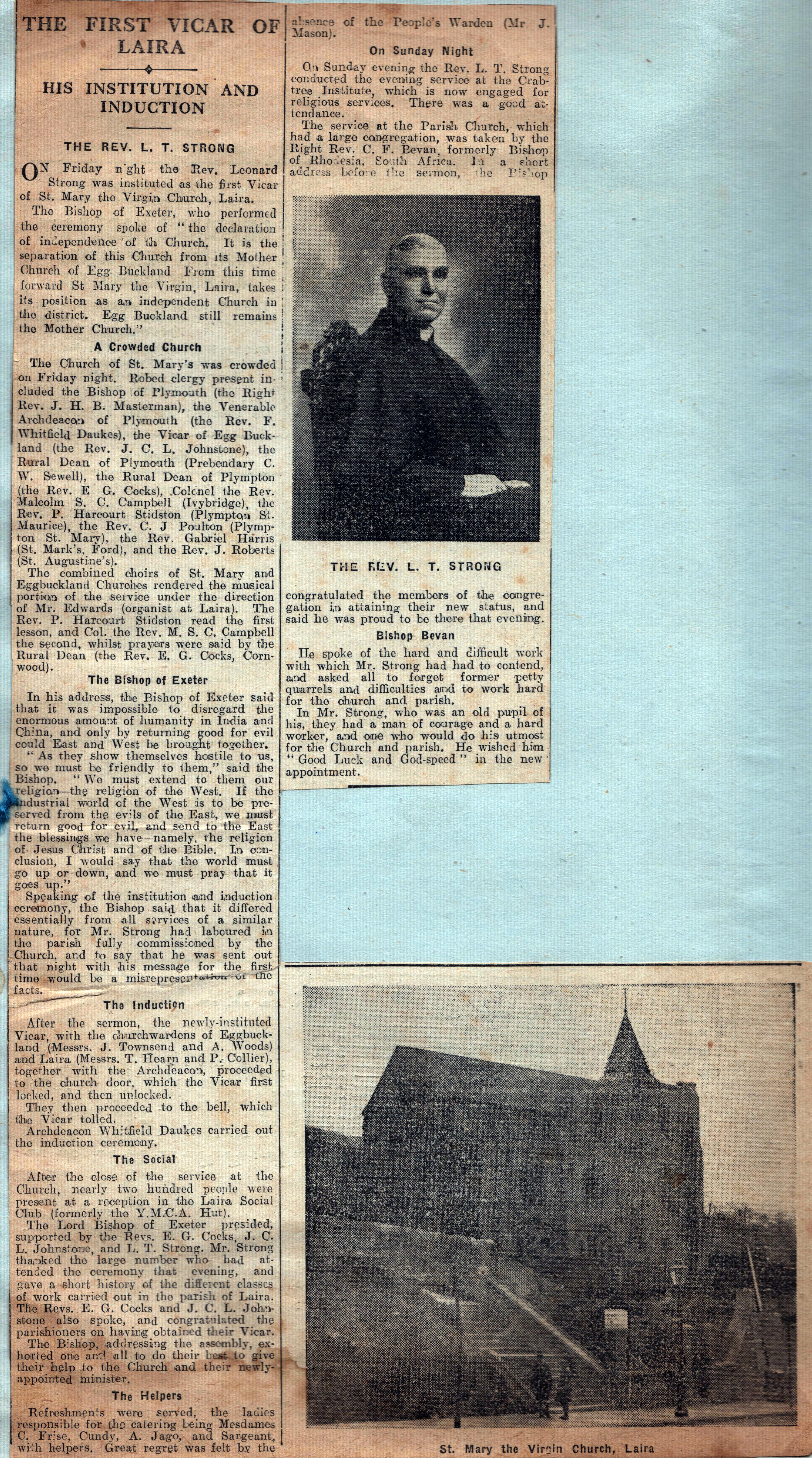
Father Strong was chosen as first Vicar and was instituted by the Bishop on Friday, February 27th, 1932.
THE CHURCH HALL
One of the early aims of the parish was the provision of a Church Hall, to accommodate the social activities of the parish.
A site was available on the north side of the churchyard and permission was obtained for the building to be erected on this site from the heirs of the donor.
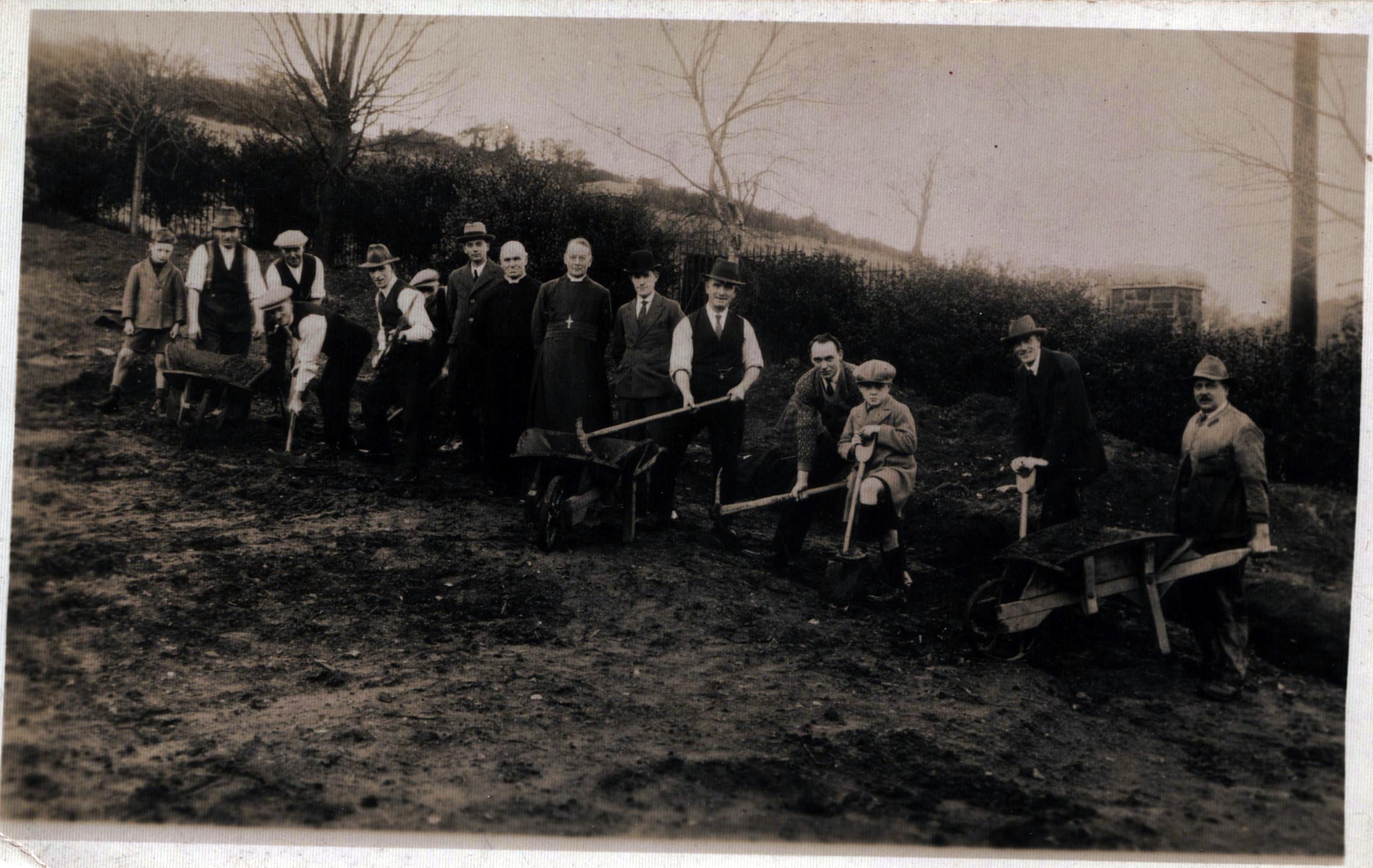
Mr. J. Blatchford of Laira was appointed contractor, and the men of the parish helped with the excavations for the foundations.
In all, the Hall cost some £992.
It was opened on Thursday, October 20th, 1932.
THE SECOND WORLD WAR AND AFTER
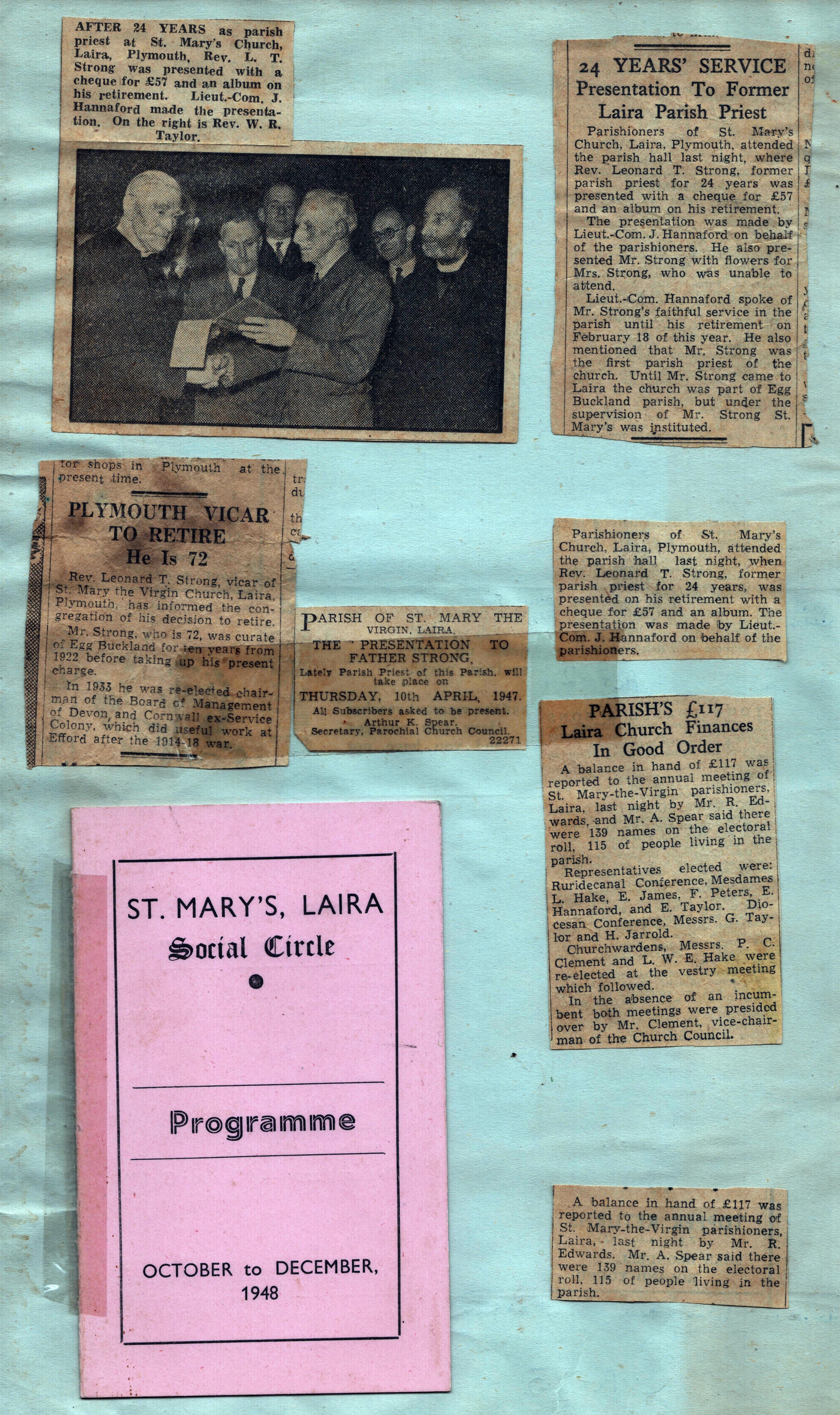
The Second World War brought considerable changes to the parish. Father Strong remained at Laira until 1947.
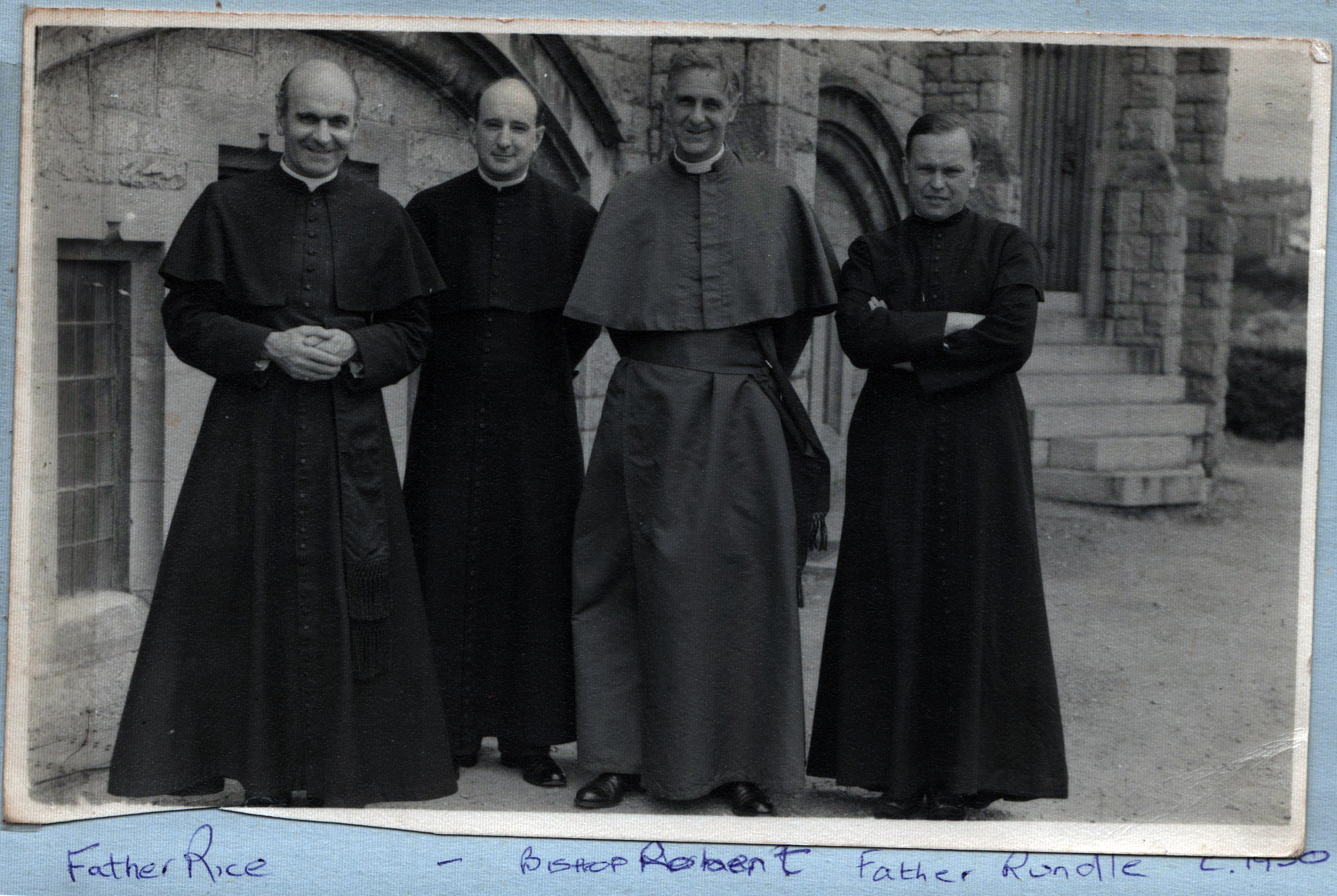
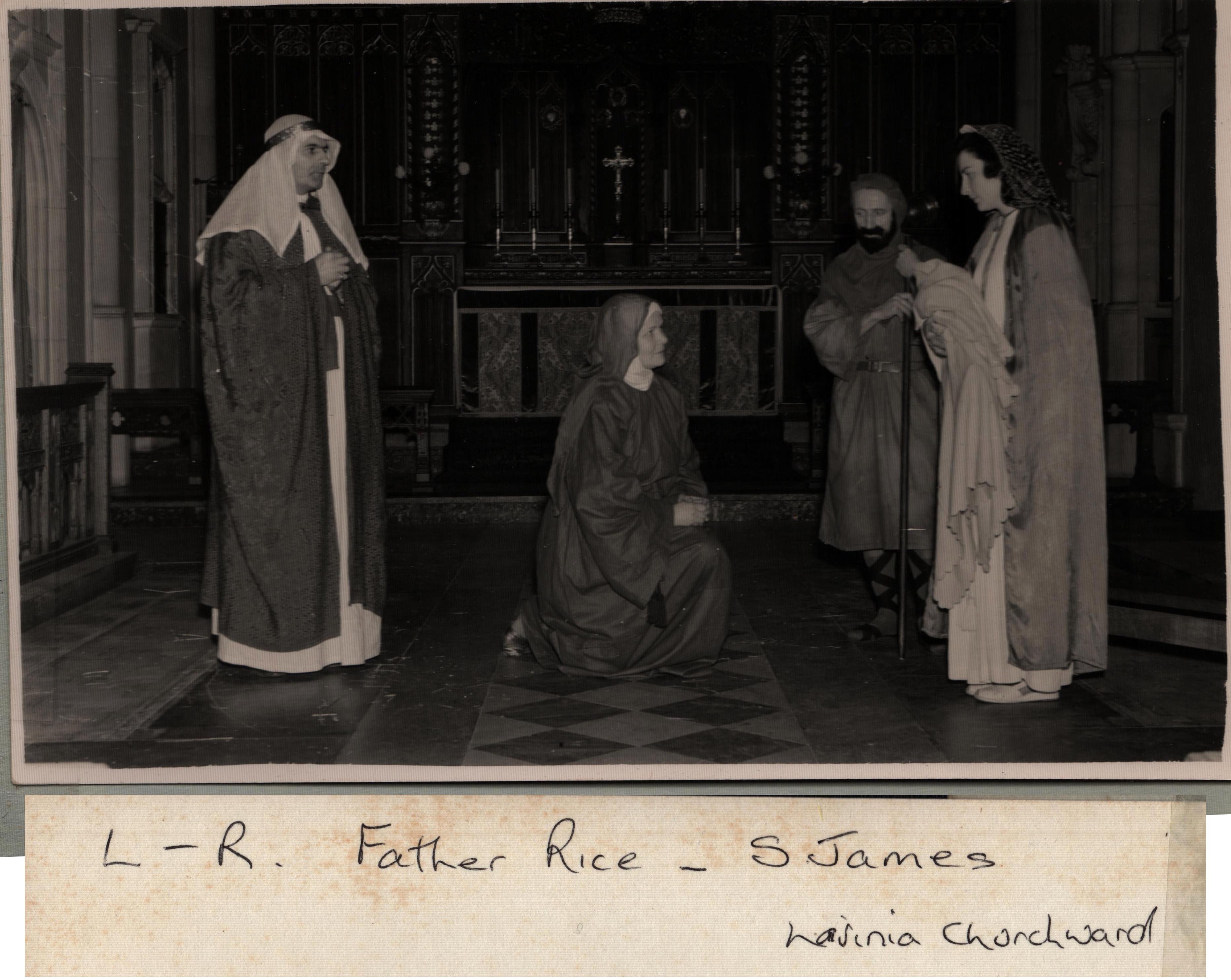
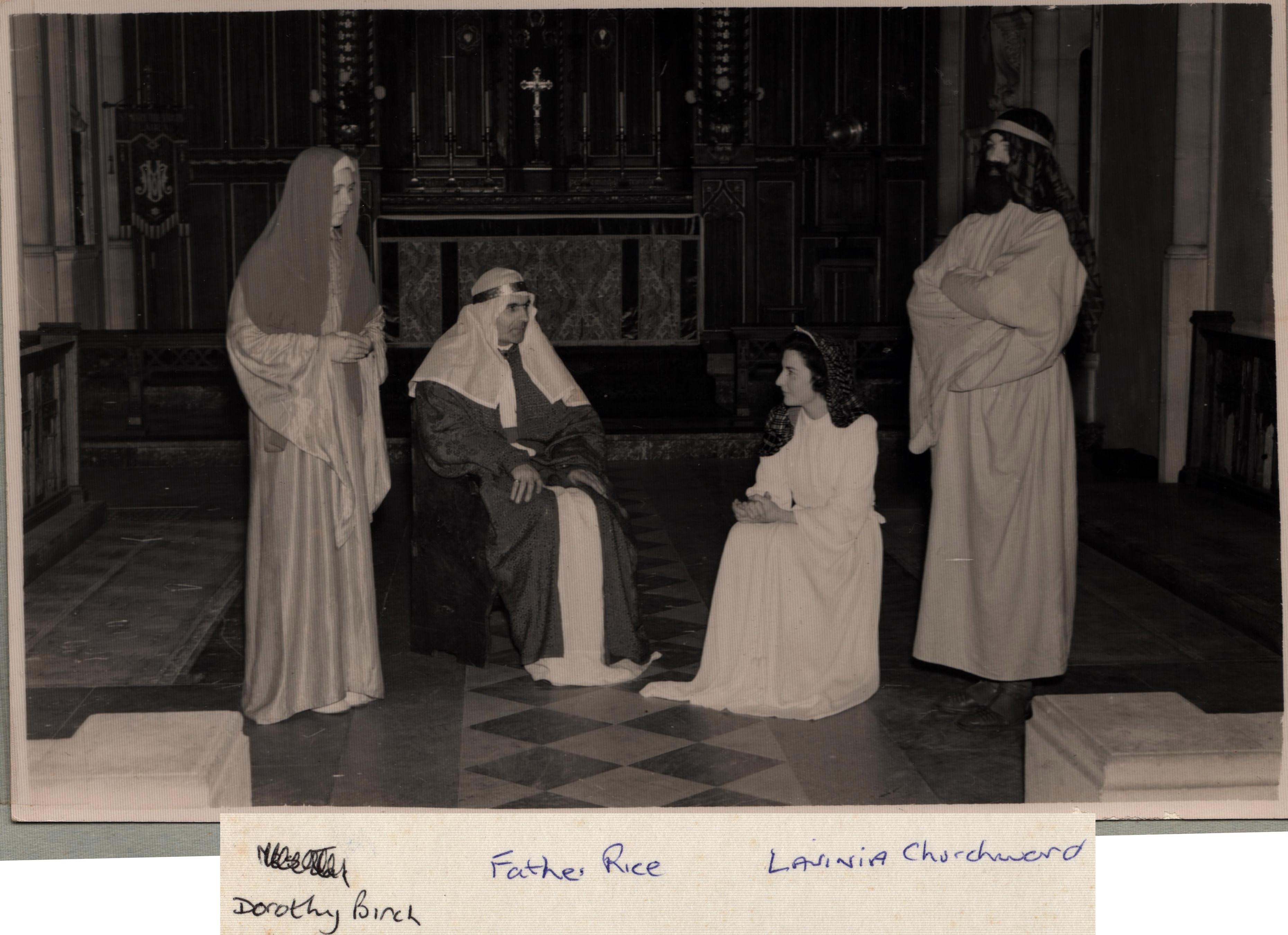
He was succeeded by Francis George Rice, who remained until his appointment to St. David with St. Michael, Exeter, in 1953.
Peter Charles Clynick, at that time Priest‑in‑charge of St. Michael’s, Torquay, followed Father Rice and was at Laira until he became Priest‑in‑charge of St. Mary’s, Johnson Street, Stepney, in the Diocese of London, in 1958.
During these years, the parish grew and assumed its present form and size.
The vast post‑war housing development at Efford has, it is true to say, made Laira into a suburban parish of some 6,000 souls.
In 1954, the parish was transferred, by an Order in Council, from the deanery of Plympton to the deanery of Plymouth, and some small adjustments were made to its boundaries.
This was the fulfilment of Bishop Robertson’s prophecy at the consecration of the church, that Laira would, one day, become part of the deanery of the Three Towns.
There remained the task of building a vicarage for the benefice. For some years, Father Strong lived at Mutley, before moving to 58 Federation Road, which he rented.
This house was bought by the parish as a parsonage house in 1948, and so continued until, in 1961, it became possible to build a new vicarage.
The site chosen was in the north‑western corner of the churchyard, since it was discovered that the site previously earmarked for a vicarage presented difficulties in matters of access and main drainage.
The new house, whose architects were Messrs. Body, Son, and Fleury of Lockyer Street, Plymouth, was blessed by the Bishop of Plymouth in July 1962.
THE NEXT FIFTY YEARS
In the first fifty years of its history, the church of St. Mary the Virgin has seen much change and not a little unrest.
The demonstrations on the day of the consecration were the forerunners of difficulties and frictions which were to mark many of the early years.
The rapid growth of the parish from a village to a busy suburb has brought many problems and tensions.
But, through it all, the foundations have been well and truly laid by a succession of faithful priests and people.
On those foundations, we, in the next fifty years, must strive to build, no less faithfully than they built.
|