

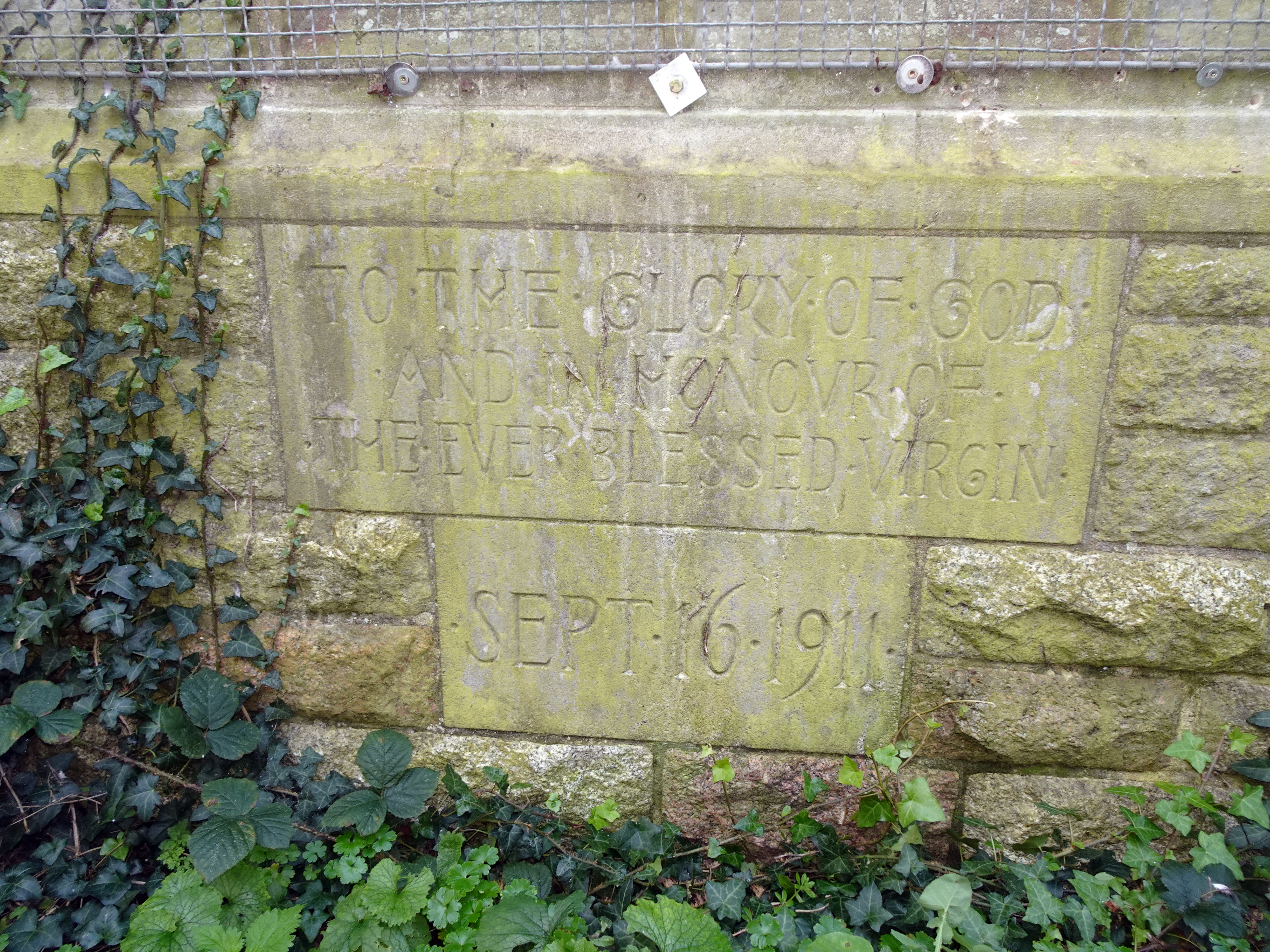
Wandering through the quiet lanes of Laira on a crisp September morning, one might not suspect the fervour that once stirred beneath its soil. Yet in 1911, this modest corner of Plymouth bore witness to a moment of ecclesiastical ambition and personal devotion. The Foundation Stone of St Mary’s Church was laid with solemn ceremony by Mrs Lucy Clark of Efford Manor—a woman whose legacy is etched not only in granite but in the very shape of the community. Though Efford Manor itself no longer stands, its influence lingers in the stones and stories of the parish.
The Bishop of Exeter, Archibald Robertson, presided over the service, his robes catching the light as he blessed the ground where Gothic arches would soon rise. The Clarks, long-time parishioners of St Edward’s in Eggbuckland, had watched the landscape change. Their spiritual home had once served a parish stretching to the River Plym, but the tide of industry was shifting. With the opening of the Great Western Railway works in 1901, Laira’s population surged, and the modest mission hall at Crabtree could no longer contain the growing flock.
It was Lucy Clark—widowed since 1900, her husband Henry a barrister and Justice of the Peace—who stepped forward. She offered both land and funds, her High Anglican sensibilities guiding the vision for a church in the Anglo-Catholic Gothic style. Architect Mr Kitsell, a fellow Eggbuckland parishioner, took up the challenge. His design, a symphony of pointed arches and ecclesiastical elegance, was exhibited at the Royal Academy in 1910.
St Mary’s Church officially opened in late June 1914, just four days after the assassination of Archduke Franz Ferdinand. The timing was ominous. Within weeks, Europe was on the brink of war, and the prosaic concerns of parish architecture gave way to national mobilisation. The church was never completed as originally conceived—the entrance, planned with grandeur, was never added. Resources and attention were swiftly redirected to the military effort, and the unfinished façade became a quiet testament to the upheaval of the age.
As I stood before the church’s weathered exterior, I imagined Lucy’s quiet determination. Her family had shaped the very contours of this region—selling land for the Palmerston Fortifications, commemorated in the stone of Fort Austin and Eggbuckland Keep. Her second son, Paul Treby Clark, would rise to Lieutenant Colonel in the 43rd Oxfordshire Light Infantry, a martial echo of the family's ties to defence and duty. Four sons survived her—Erving, Paul, Henry, and Arthur John—while two daughters, Ethel Mildred and Lucy Henrietta, were lost in childhood, their names now whispers in the churchyard breeze.
Inside St Mary’s, the air holds stories. The Bishop who blessed its foundation had his own tale: Archibald Robertson, a man of faith, father to a son of fierce conviction and with the same name. Young Archibald, once a civil servant in the Admiralty, grew disillusioned with war and religion alike. He turned to atheism, to Marxism, to the Soviet Union itself—penning critiques of dogma and defending the Bolshevik regime. One wonders what passed between father and son across the dinner table, between vestments and manifestos.
Leaving St Mary’s, the path winds back toward where Efford Manor once stood, its foundations now lost to time. Yet the church she helped build still stands, a testament not only to faith but to the layered lives that shaped this corner of Devon. And in its stones, one finds not just history—but the heartbeat of a community, rising with the morning light.

