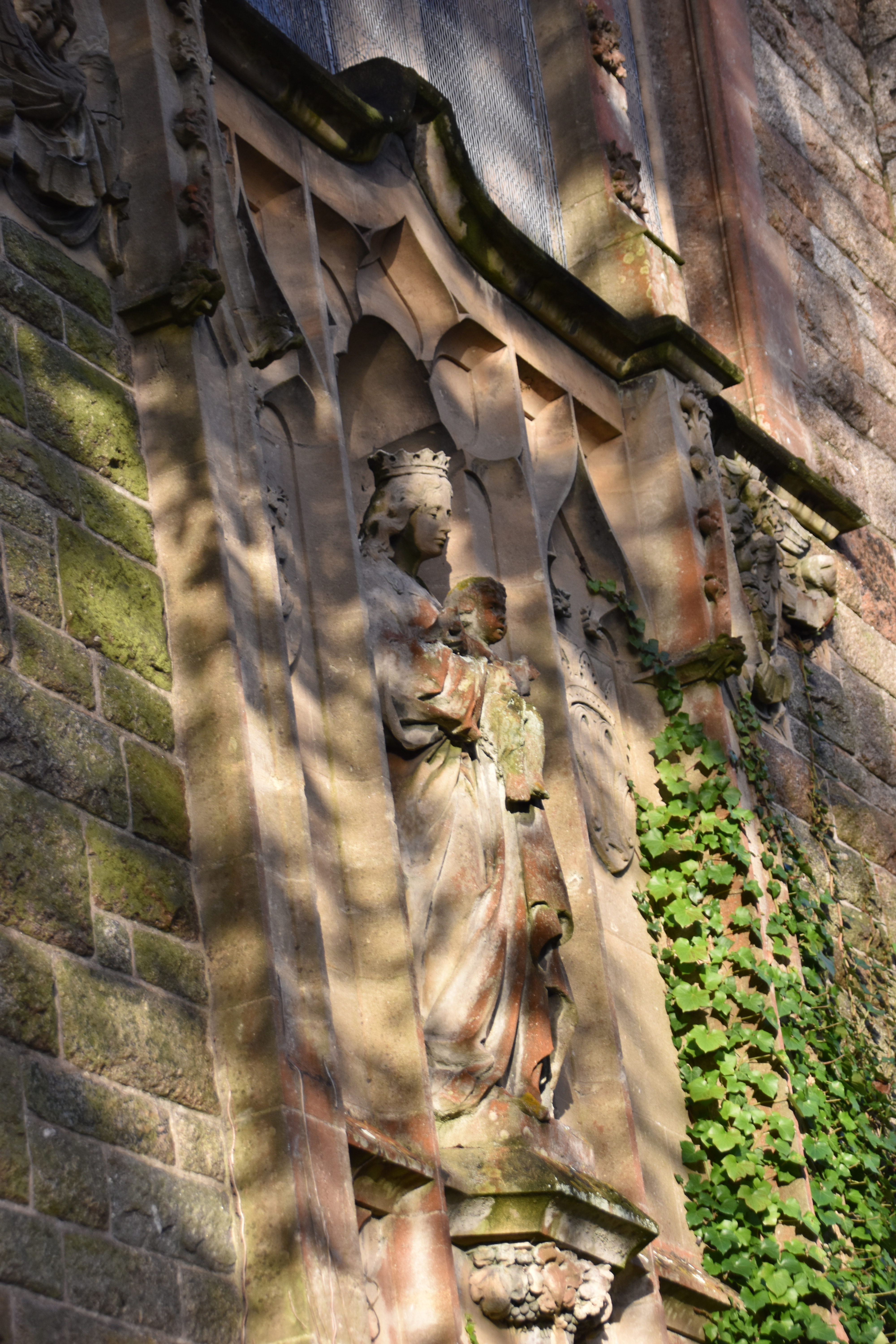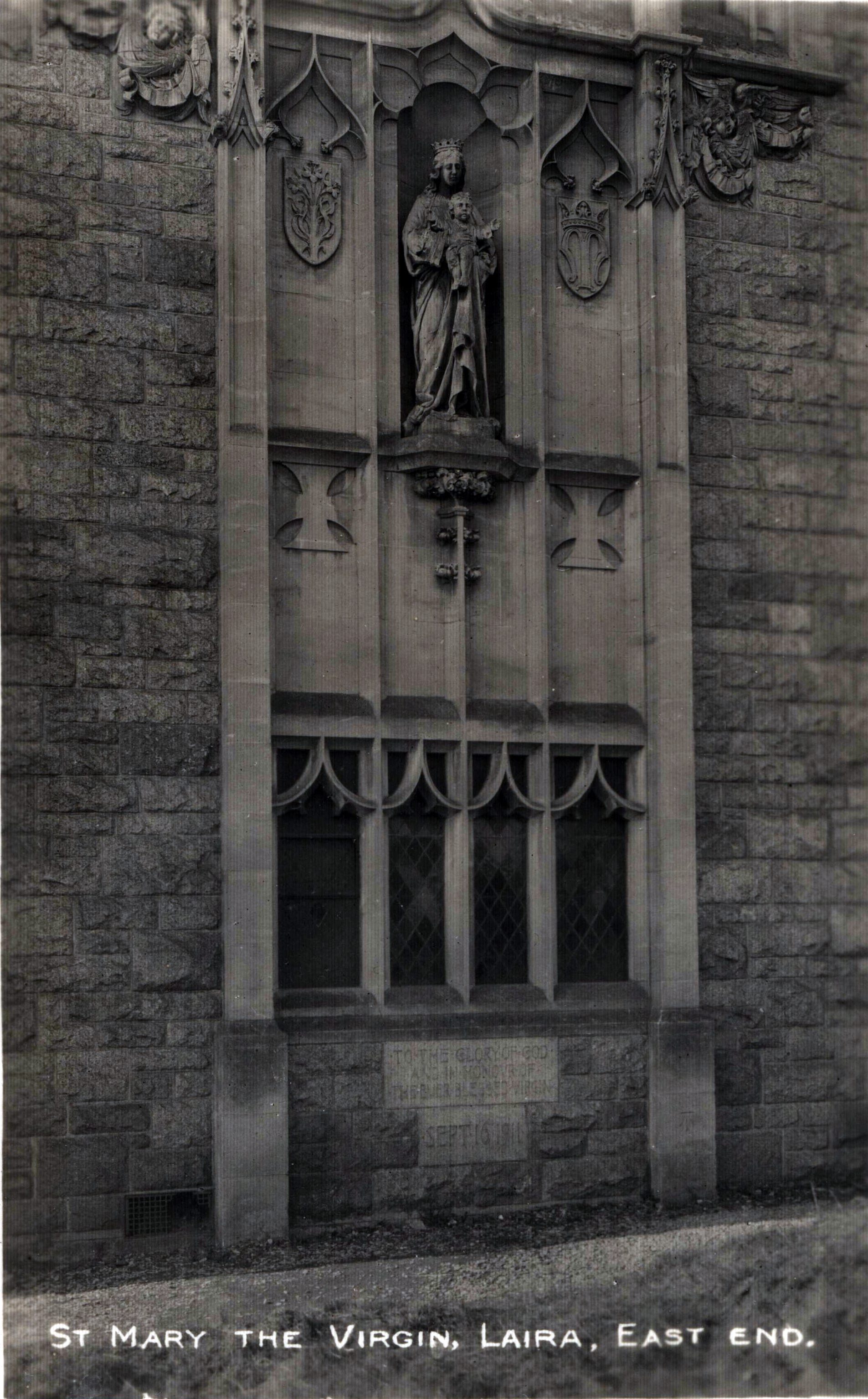
One of the most distinctive features of St Mary’s Church, Laira, is its east elevation. At the centre of this wall is a fine sculptured Crucifixion, a work not easily seen from the ground but of great artistic importance. With the other interior fitments and carvings, it was created by J. B. Hunt of Sutton Road, Plymouth, a local craftsman whose work connected the parish to the city’s wider tradition of ecclesiastical art.
Hunt’s contribution to St Mary’s was more than local decoration. The design of the east elevation was exhibited at the Royal Academy in 1910, placing the church within a national context of architectural and artistic recognition. For a parish on the edge of Plymouth, this was a remarkable achievement, showing that its building was considered of merit beyond the city itself.
The Crucifixion sculpture, together with Hunt’s other carvings, reflects the Edwardian era’s blend of craftsmanship and devotion. Plymouth at the time had a thriving community of builders, masons, and sculptors, and Hunt’s workshop on Sutton Road was part of this tradition. His work at St Mary’s stands as a reminder that parish churches were shaped not only by architects and benefactors but also by the skill of local artisans whose names deserve to be remembered.
Today, the east elevation of St Mary’s continues to bear witness to this collaboration of local talent and national recognition. Though not easily visible, the Crucifixion carving remains a powerful symbol of faith and artistry, linking the parish to both its Plymouth roots and the wider story of church design in early twentieth‑century Britain.