British Empire Title

The Westcountry Walker: Hiking Through History

Pixies, Poets and Parish Splendour: Ottery St. Mary


Ottery St. Mary Mill

This walk encompassed Poets, Pixies and the most stunning parish church in Devon. As someone who has visited more parish churches than most people, I honestly would say that if you had to choose one church in Devon that epitomises the wealth of our forefathers, the beauty of our craftsmen and layers of history, then it would have to be St Mary’s in the very appropriately named Ottery St Mary!

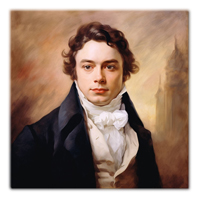
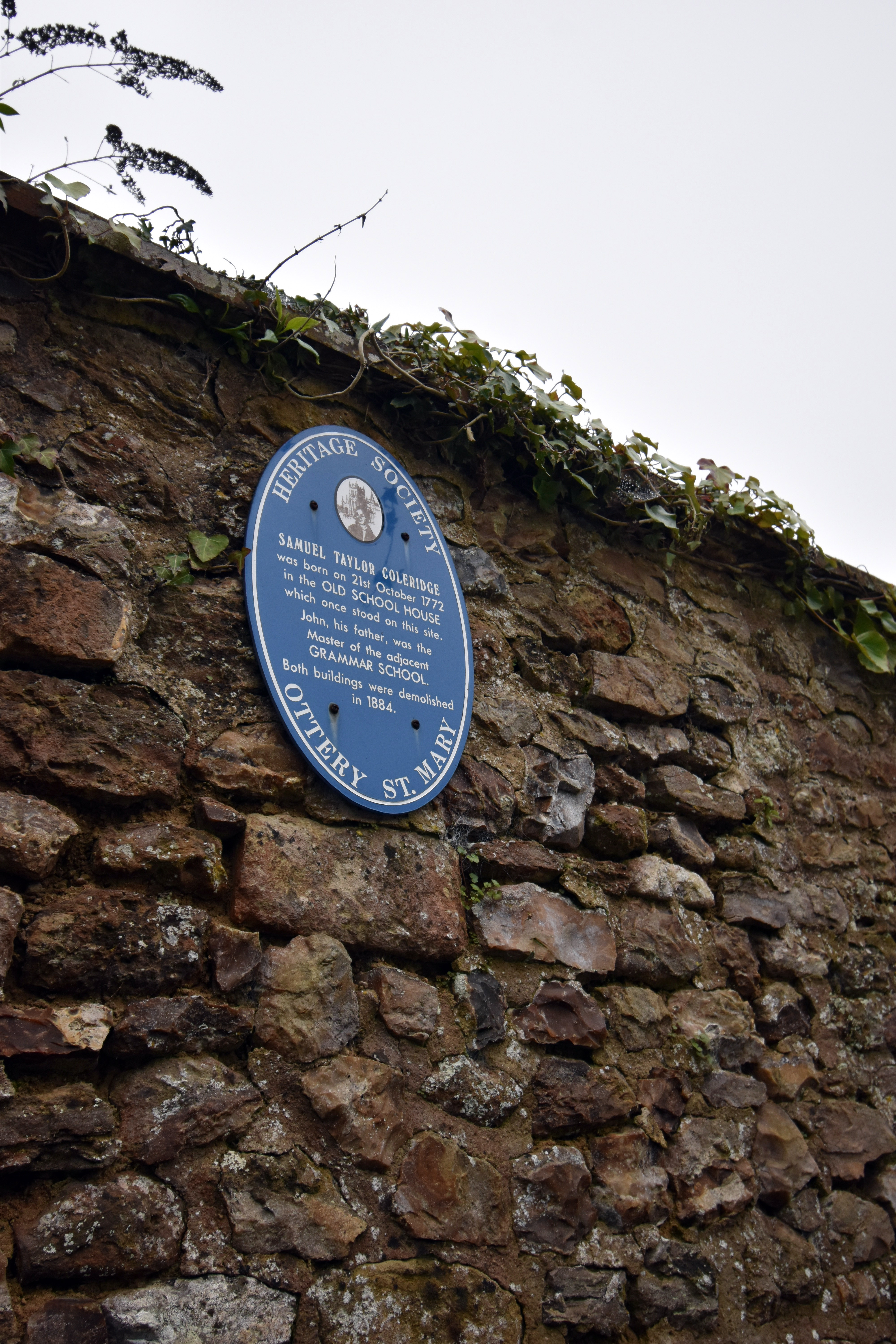
Parking next to the Land of Canaan (it really is called that) which was bought by a local Victorian philanthropist to provide a recreation area for the people of Ottery St Mary, we headed south in search of Pixies! Ottery St Mary’s most famous son is the poet Samuel Taylor Coleridge who was born in a vicarage opposite the beautiful two‑towered St Mary’s Church where his father was the vicar and also headmaster of the local school. Sadly the vicarage where he was born no longer stands but there is a blue plaque that marks its location at least.

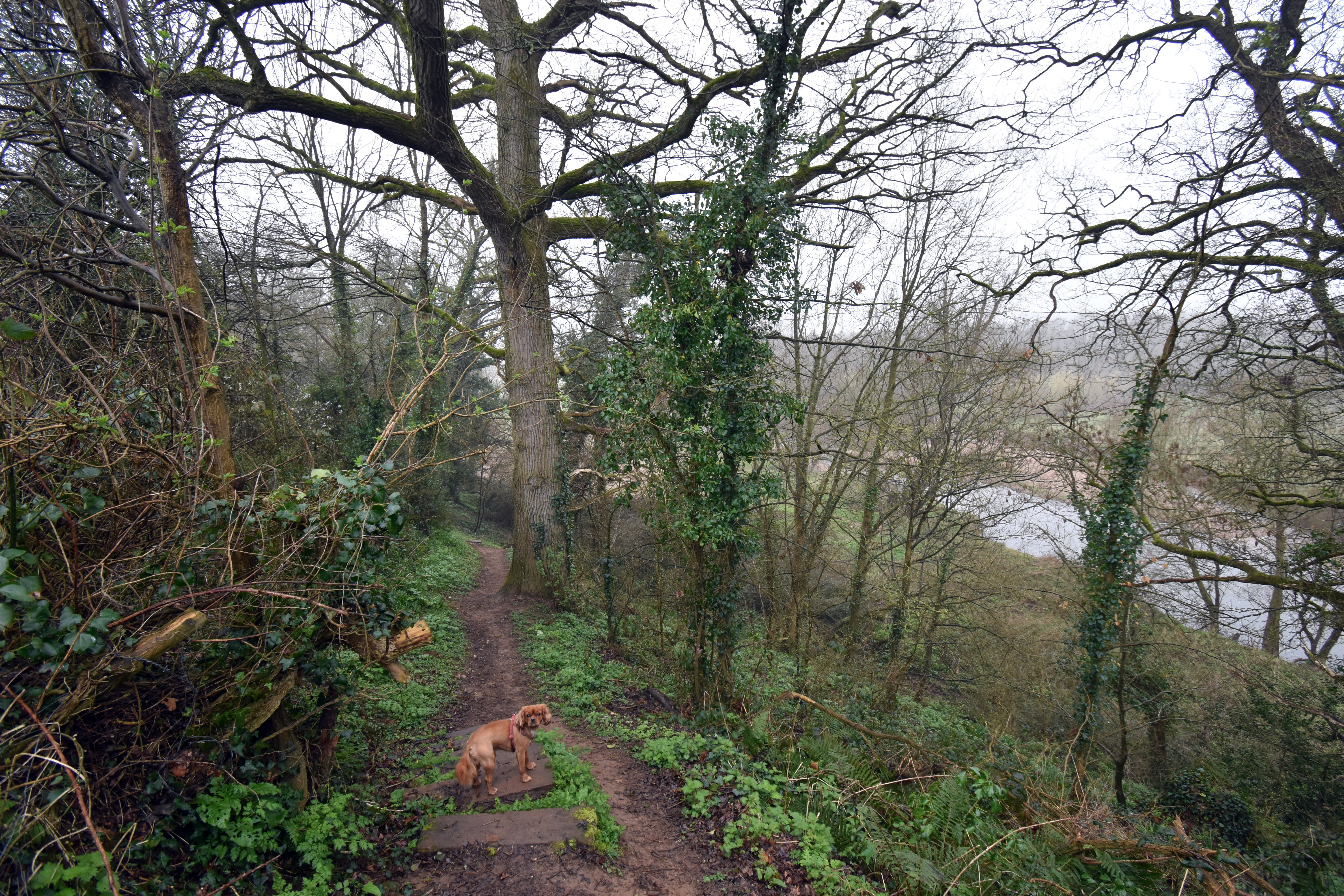
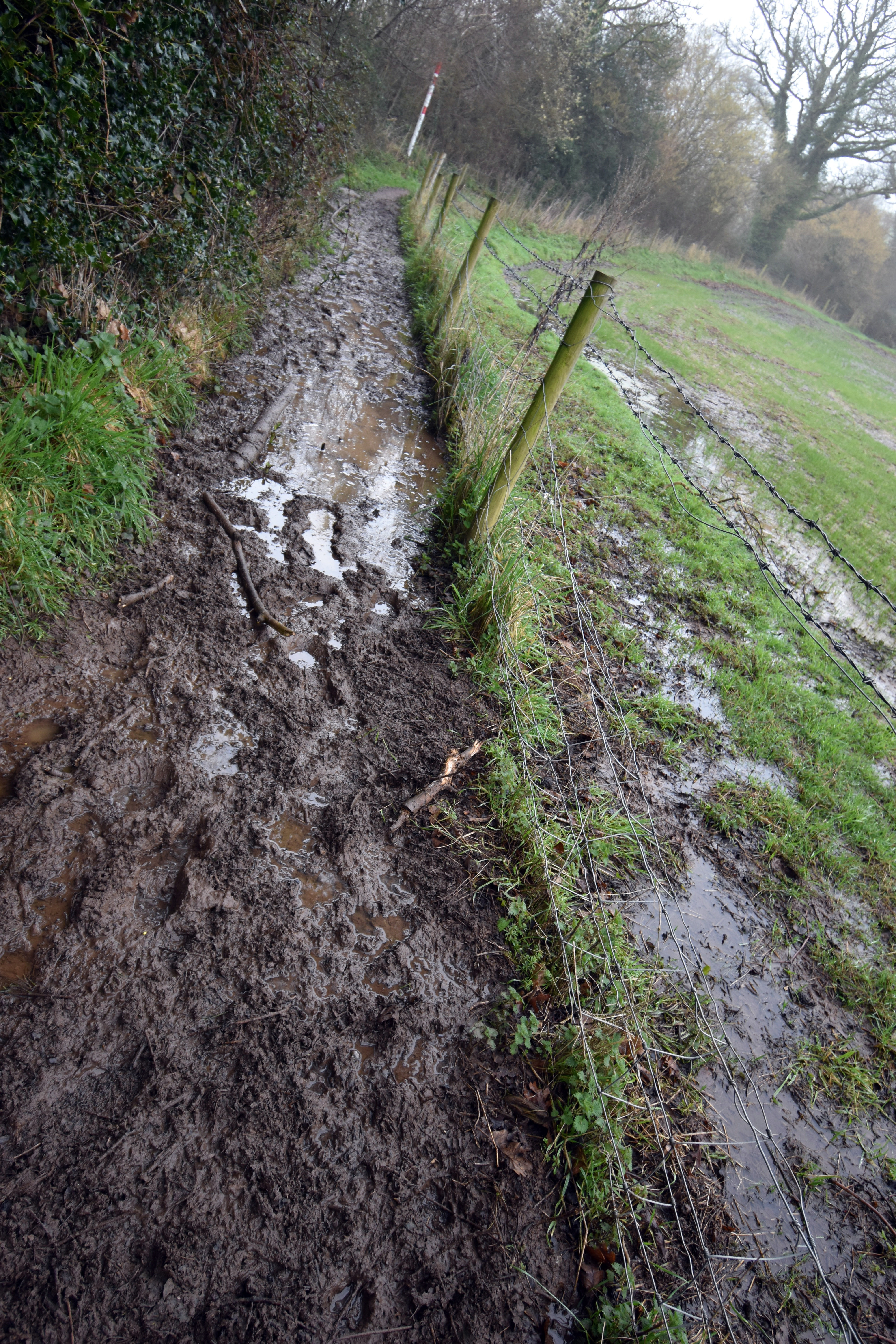
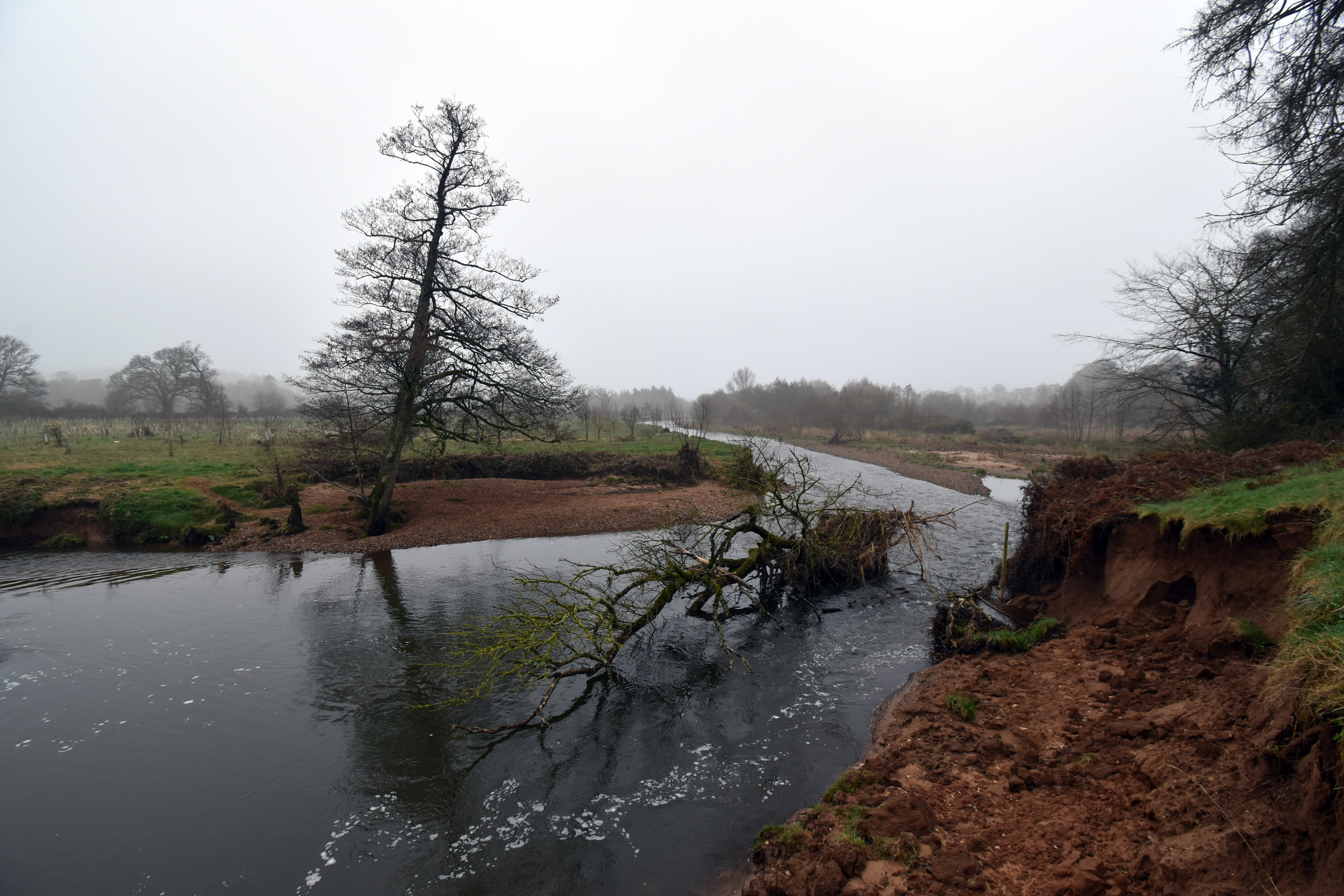
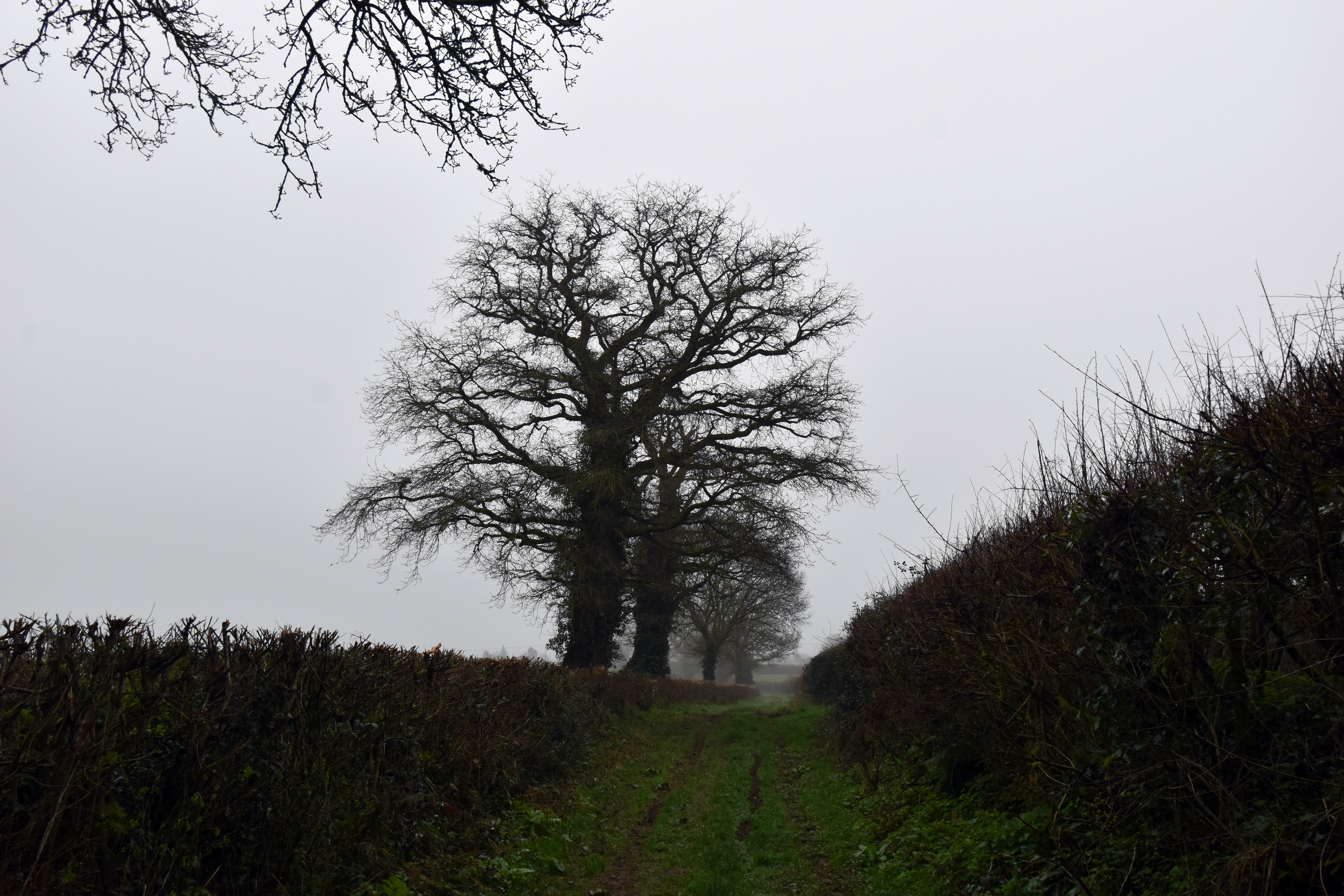
The weather all day was what the Germans call Dunkelflaute – basically no sun, no wind, and thick mist blanketing the area all day. It actually made it all very atmospheric and despite the look it was not cold in the slightest. Once again, though, the recent heavy rains made the ground in places very boggy and on more than one occasion we had to amend our route to avoid particularly muddy conditions. And the River Otter was definitely higher and faster than usual.

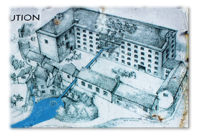
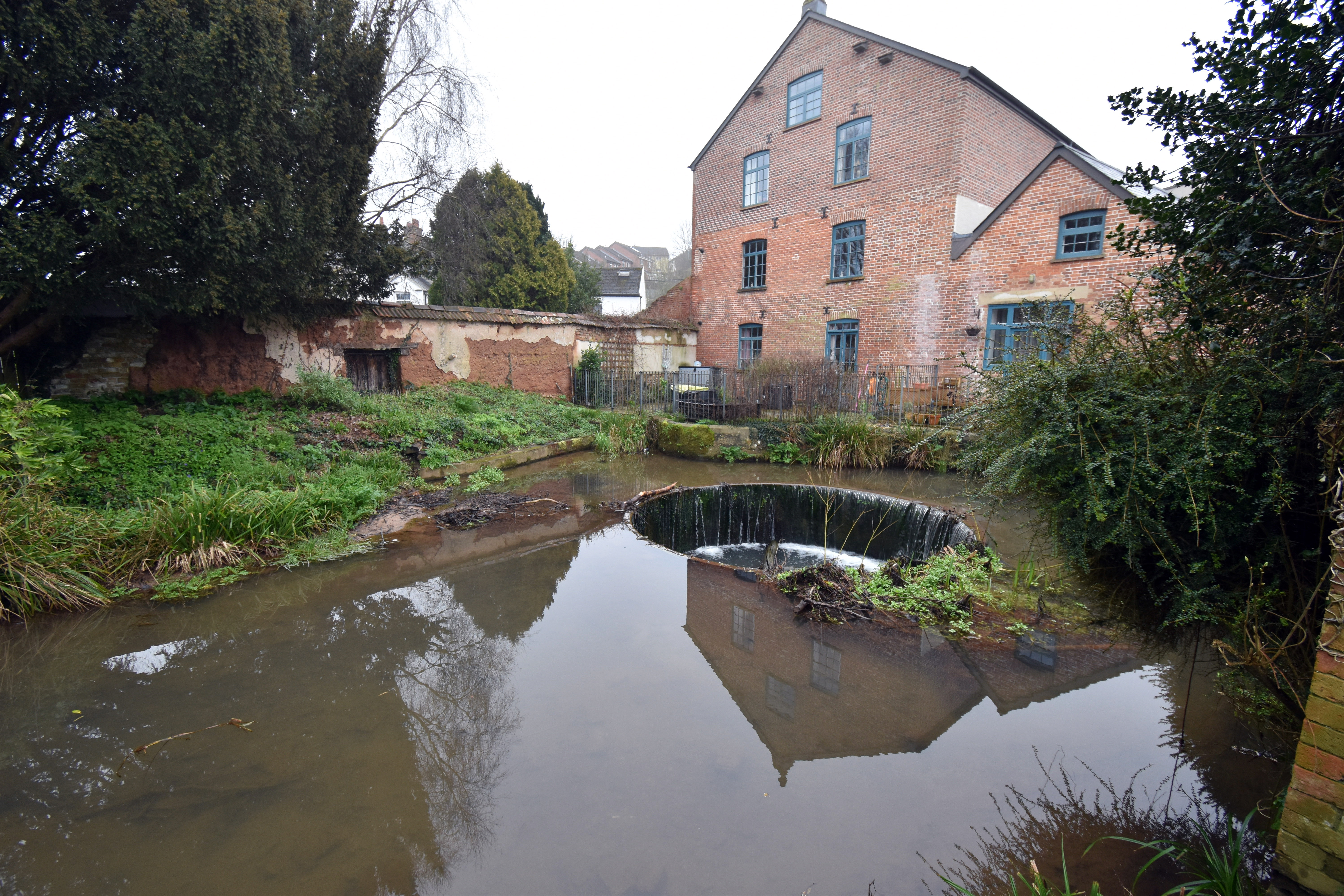
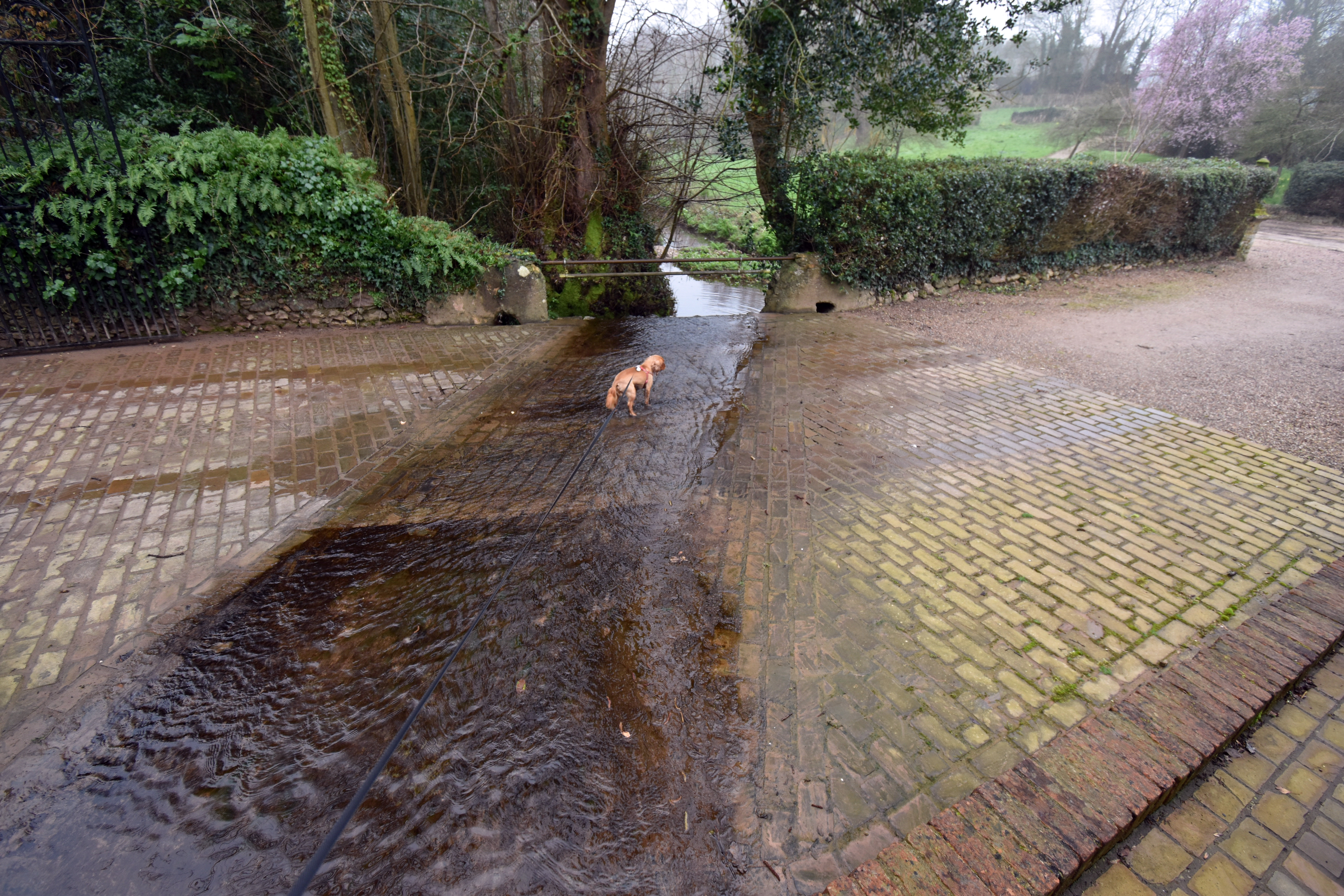
We headed south towards the Tumbling Weir. This unusually shaped weir reveals that even rural areas like Ottery St Mary could be swept up into the Industrial Revolution. Naturally there had long been a corn mill serving the farmers of this area but in 1788 a wool mill was created to process wool. A new leat had to be built at a higher angle to create the force to power various machines operating at up to 30 horsepower. The Tumbling Weir was the means of removing excess water into the river so that the water wheels didn’t go too fast! There was some very impressive mathematics and engineering at work. In the 19th century the wool mill was converted into a silk mill. You can still see the old mill building, but it is now flats.

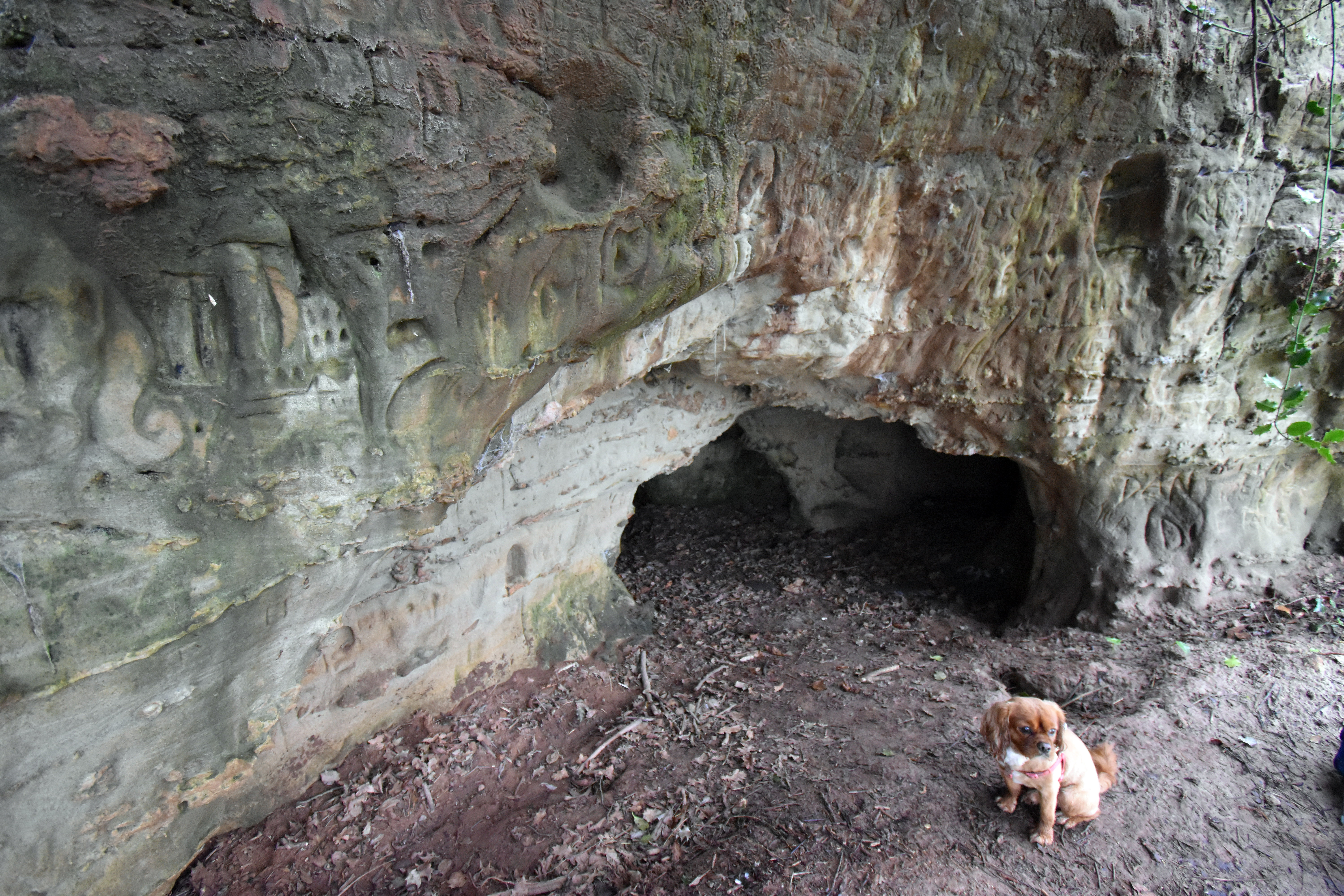
We carried on following the River Otter downstream looking for pixies… in particular the Pixies' Parlour. This is a cave overlooking the River Otter with a story that goes back to the earliest days of Christianity. The legend tells of local pixies, fearing that the arrival of Christian church bells would end their rule over the land, trying to prevent the arrival of church bells from Wales by enchanting the escorting monks and leading them toward the cliffs at Sidmouth. The spell was accidentally broken when a monk cried out after stubbing his toe on a cliff edge. This allowed them to return to Ottery, install the bells and signify the end of pixie rule. Yet the legend claims the magic was never fully dispelled: each year the pixies re‑emerge, capture the town’s bell‑ringers, and imprison them in the Pixies’ Parlour until the Vicar rescues them. Every June the story is re‑enacted by Ottery’s Cubs and Brownies.

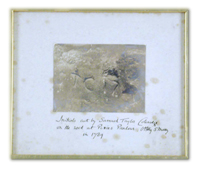
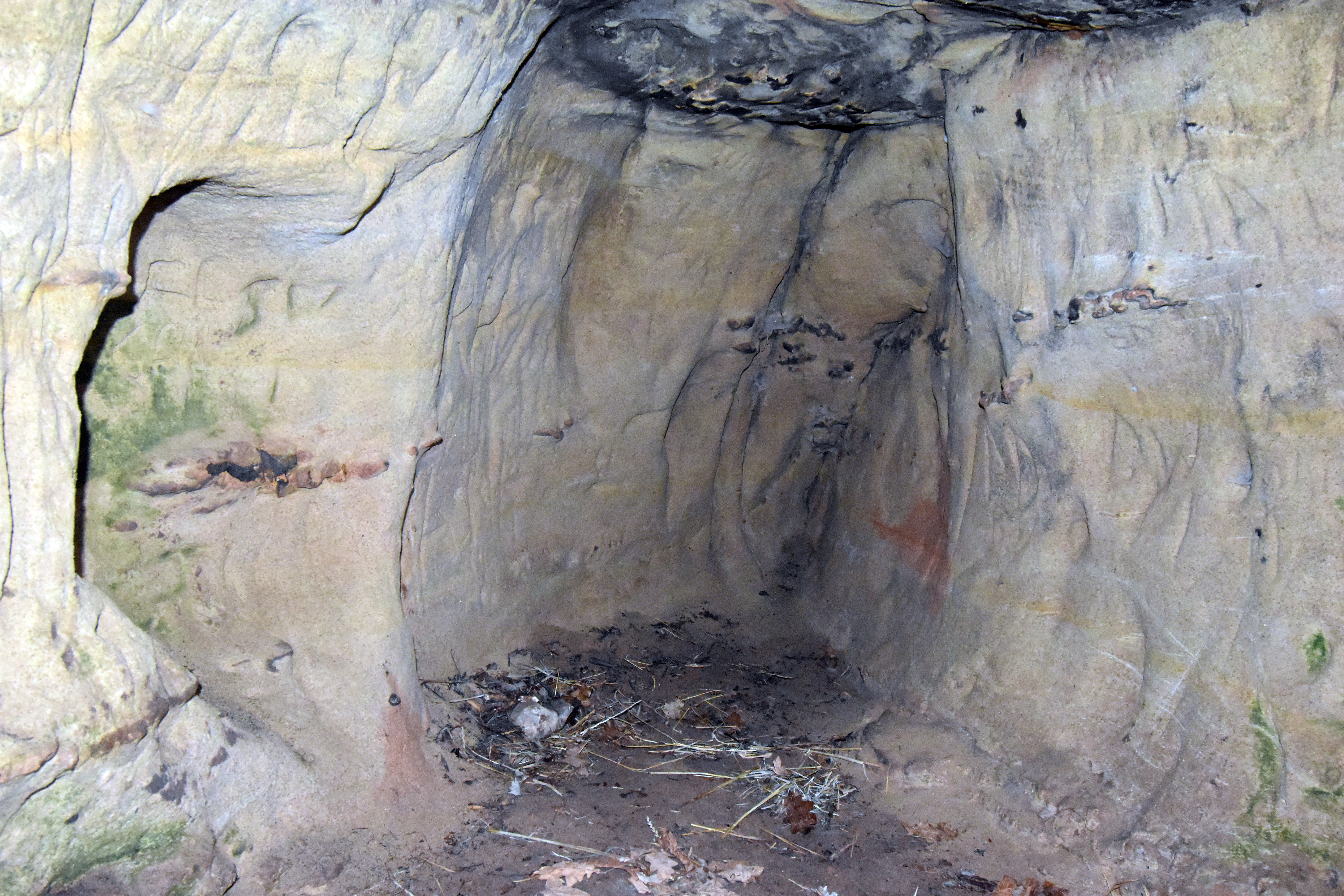
But actually there is an even more interesting connection with Samuel Taylor Coleridge to these caves. You will notice that a lot of people have carved their names in the sandstone walls of the caves including Samuel Taylor Coleridge himself – STC 1789 – proving that this was a favourite location of his. In 1793 as a 21‑year‑old he returned to these caves with a company of young women. On that occasion he composed the “Song of the Pixies” for his audience of young ladies including the verse:

Pixies' Parlour
Welcome, Ladies! to the cell
    Where the blameless Pixies dwell:
But thou, sweet Nymph! proclaimed our Faery Queen,
      With what obeisance meet
      Thy presence shall we greet?
For lo! attendant on thy steps are seen
      Graceful Ease in artless stole,
      And white-robed Purity of soul,
        With Honour's softer mien;
Mirth of the loosely-flowing hair,
And meek-eyed Pity eloquently fair,
Whose tearful cheeks are lovely to the view,
        As snow-drop wet with dew.
  
To the River Otter

Standing at the cave entrance looking out over the River Otter (to which the poet also wrote a poem: To the River Otter), you can really imagine a youthful Samuel Taylor Coleridge smiling and cavorting with his companions and playfully composing his poem to impress his lady friends. From here everything would have looked identical to how it looked in 1793 when he entertained his entourage.

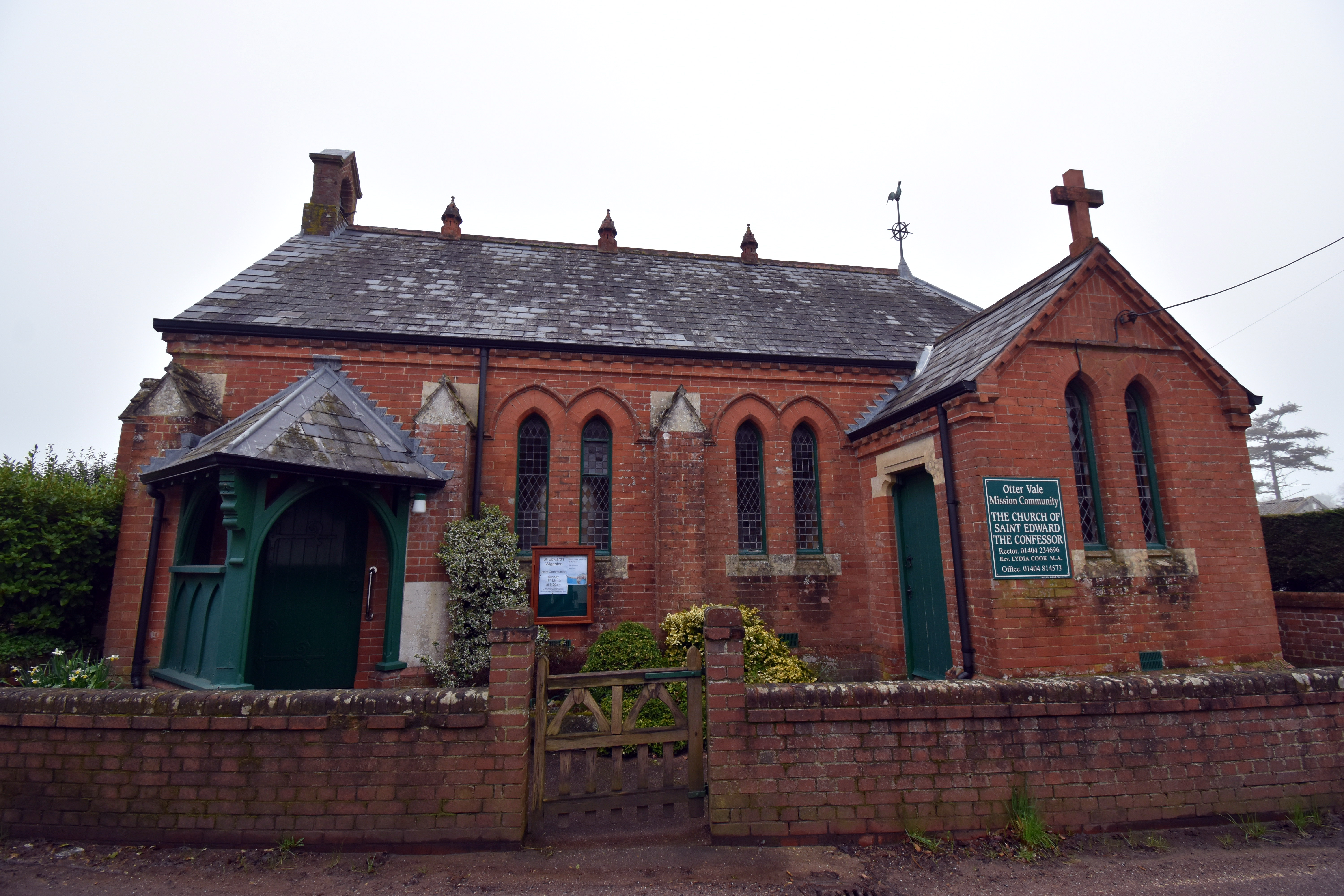
From here we had to negotiate some muddy but beautiful riverside paths heading towards Wiggaton, all made more atmospheric by those Dunkelflaute conditions. We had hoped to take a look at the late Victorian St Edward the Confessor Church but sadly it was locked. Our hearts always sink when we find locked churches – especially on a Sunday! So we had decided to visit the nearby manor of Knightstone.

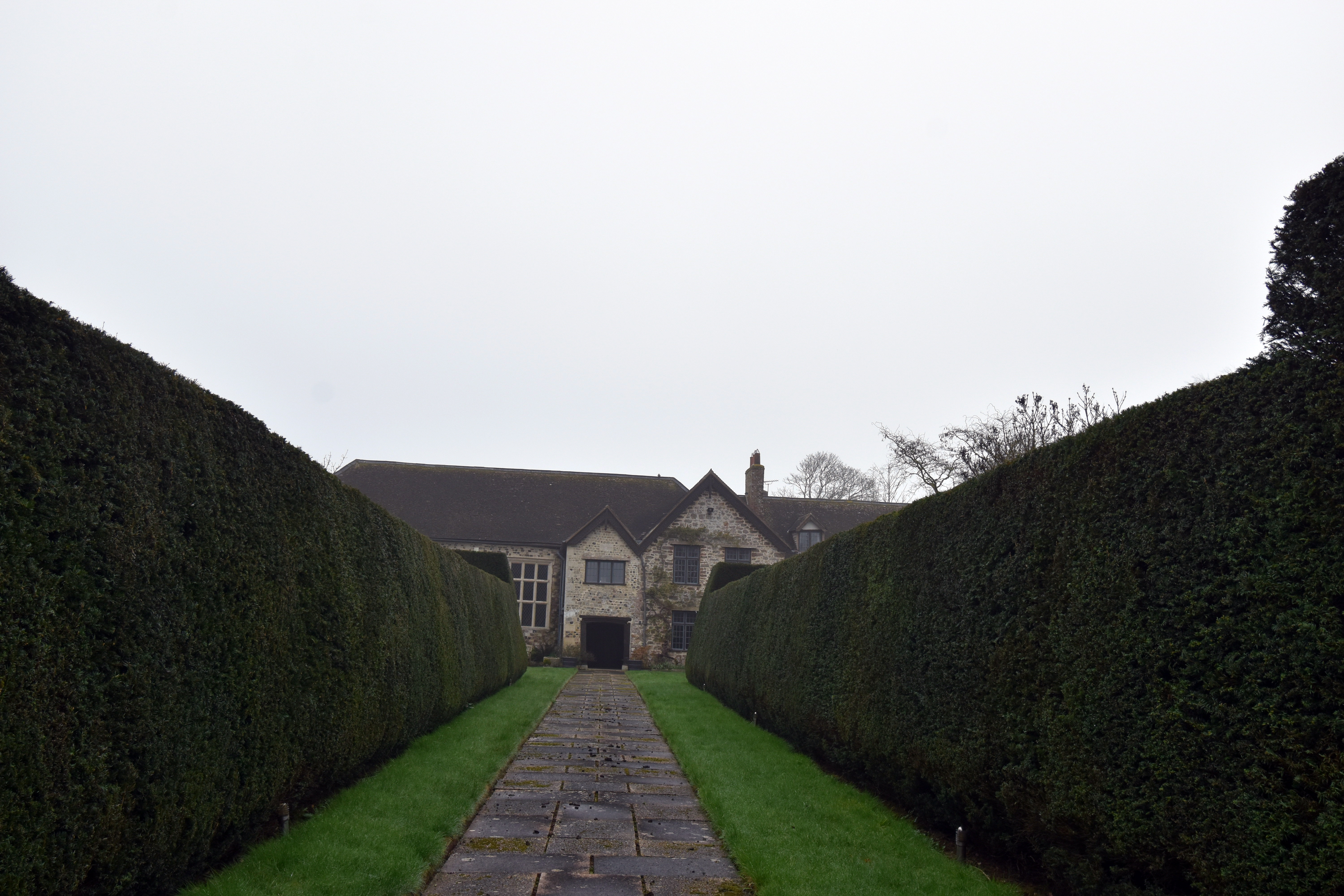
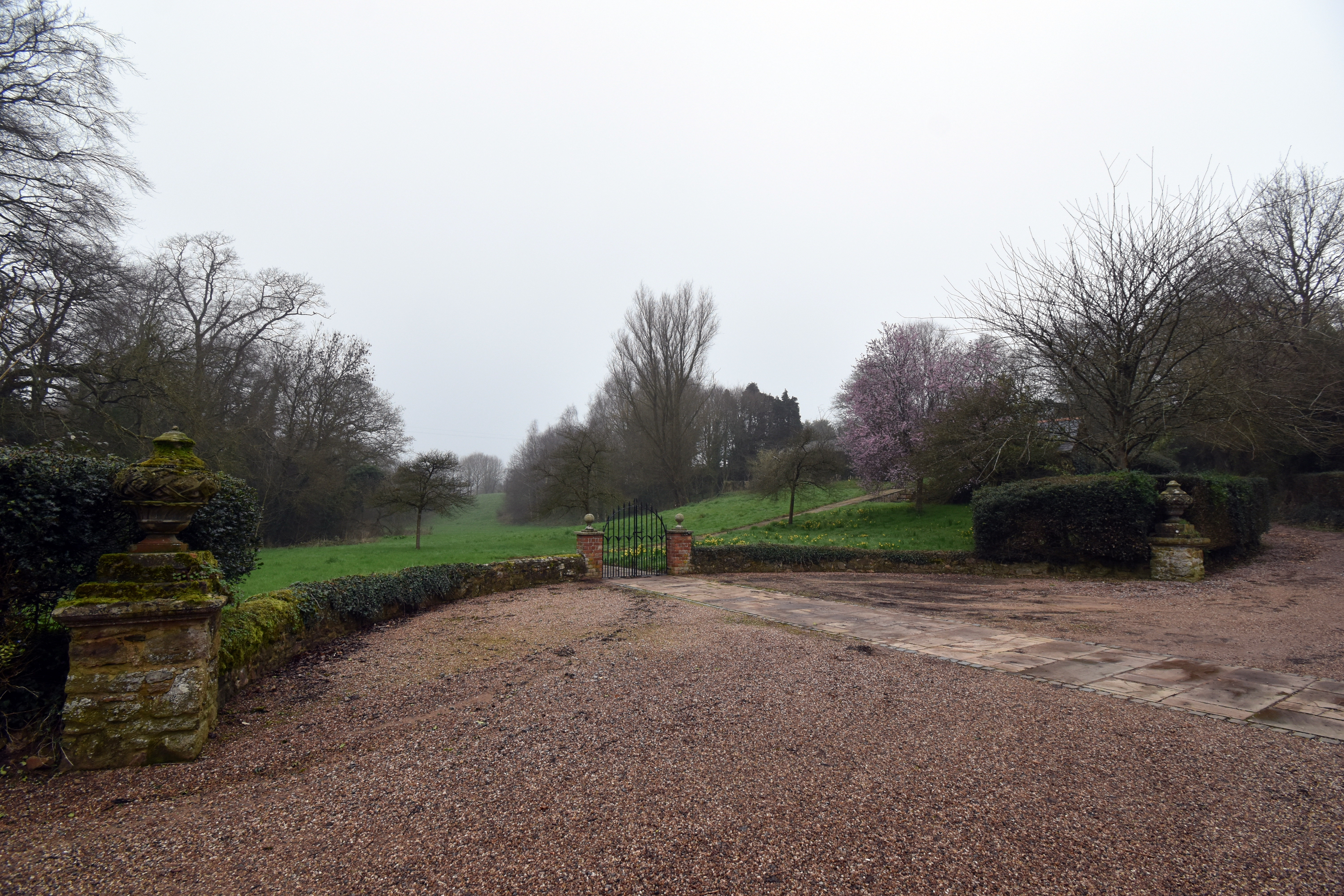
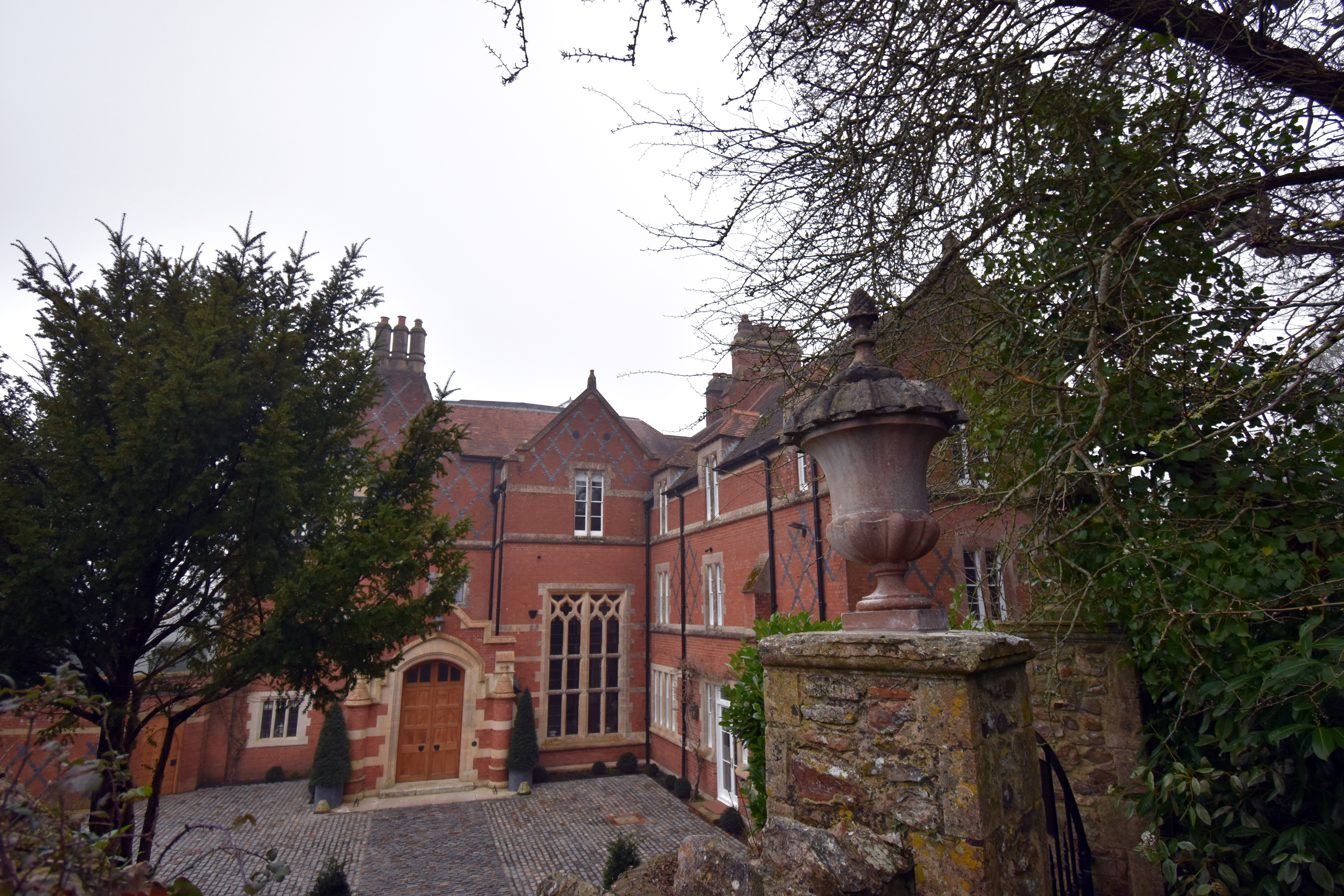
Knightstone Manor is now a private residence but from the bridle path you can catch a glimpse of what is one of the best‑preserved medieval manors in the country. It was originally built by Richard de Knightstone who sold it on to the Bittlesgate family who held it for over a century. Sadly the last of the Bittlesgates died without an heir so the land passed to Lady Cecily Bonville (yes, the Bonvilles of Shute Manor who had fought against the Courtenays for supremacy in Devon during the Wars of the Roses). She married into the Grey family who were descendants of Elizabeth Woodville (The White Queen) who, as a commoner, had controversially married Edward IV. This royal connection was to have tragic consequences for the Greys (and for the ownership of Knightstone Manor). Lady Cecily and her husband used their wealth to add a significant aisle to St Mary’s Church known as the Dorset Aisle in honour of their title of Marquess and Marchioness of Dorset.

Lady Cecily and Thomas Grey’s son was Henry Grey who married into the Royal Family himself with the hand of Frances Tudor – her father had been Henry VIII’s good friend Charles Brandon (played by Henry Cavill in The Tudors) and her mother was Mary Tudor, Henry VIII’s sister. With these two royal connections, the Protestant Henry Grey (better known as the Duke of Suffolk) tried to frustrate the accession of the Catholic Mary on the death of Edward VI in 1553. His plan consisted of putting his 15‑year‑old daughter Lady Jane Grey on the throne with her two royal connections. Her unhappy reign lasted just nine days as the army stayed loyal to Henry VIII’s daughter Mary. Father and daughter were imprisoned in the Tower of London where they might have stayed had not widespread rebellions broken out the year later, and both were beheaded. Their lands and, needless to say, their properties like Knightstone Manor became forfeit. The house was sold by the government to the Sherman family who married into the Drakes of Ashe (near to Axminster) and related to Sir Francis Drake. It was renovated in the 1940s by the son of a wealthy tea merchant called Colonel Reginald Cooper who took delight in buying run‑down historical properties and returning them to something of their former glory. So it is particularly nice to see such a historic house still very much in good condition and obviously cherished by its current owners.
St Mary's Church

From here we headed north to return to Ottery St Mary to make sure we could get to the church whilst it was still open. Ottery St Mary really has kept much of its charm, especially in the centre with old coaching inns, Victorian buildings and of course its magnificent 14th‑century church.

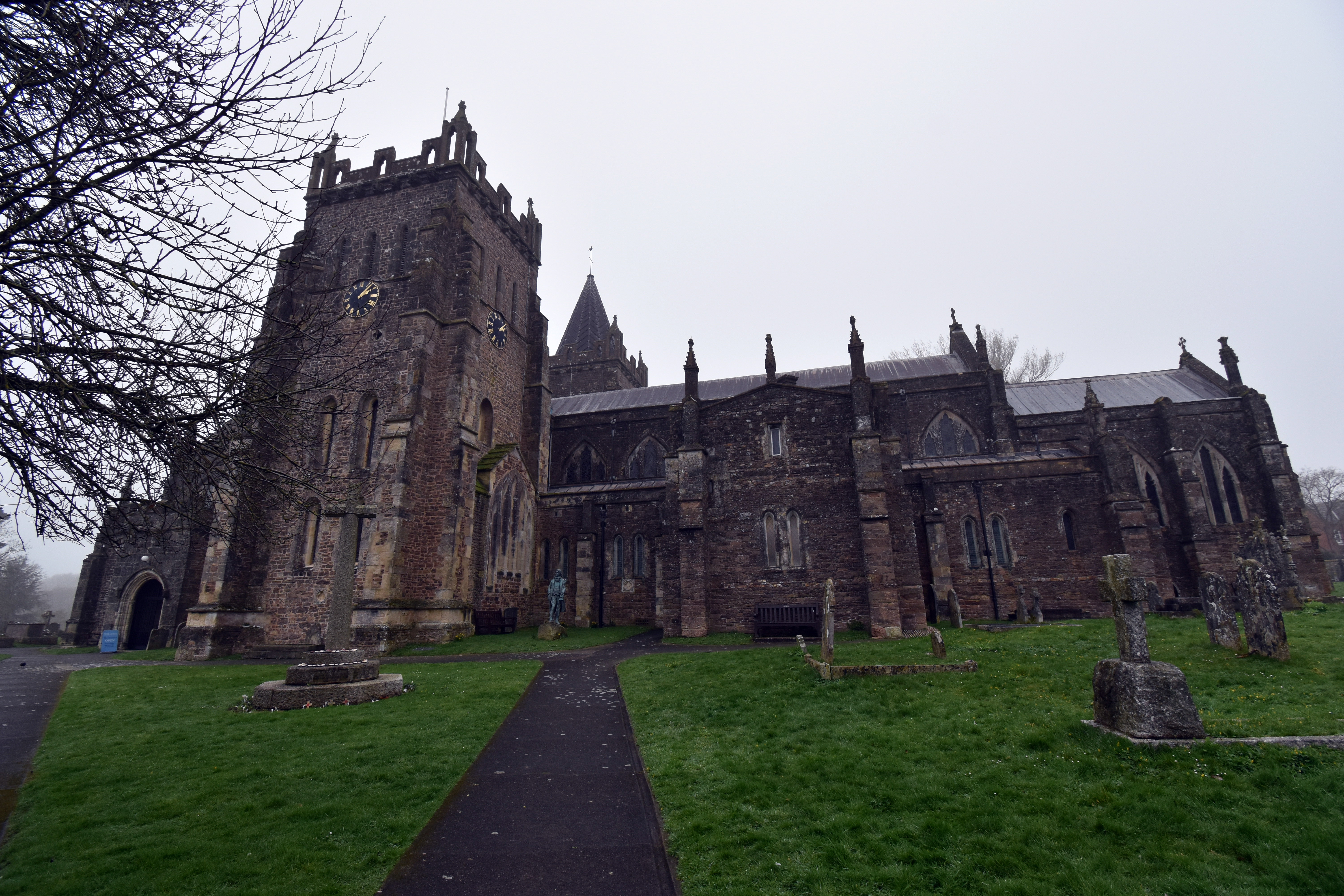
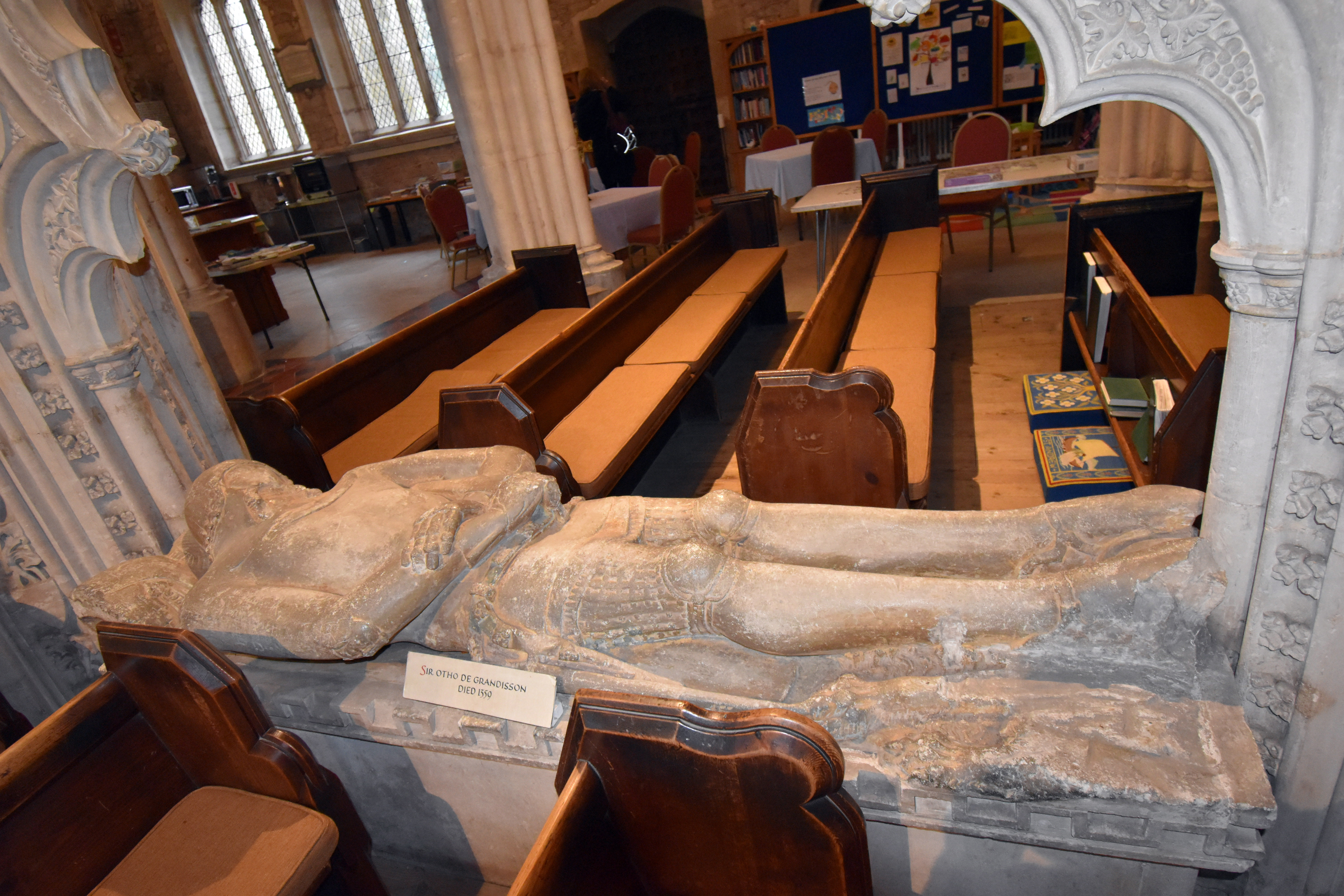
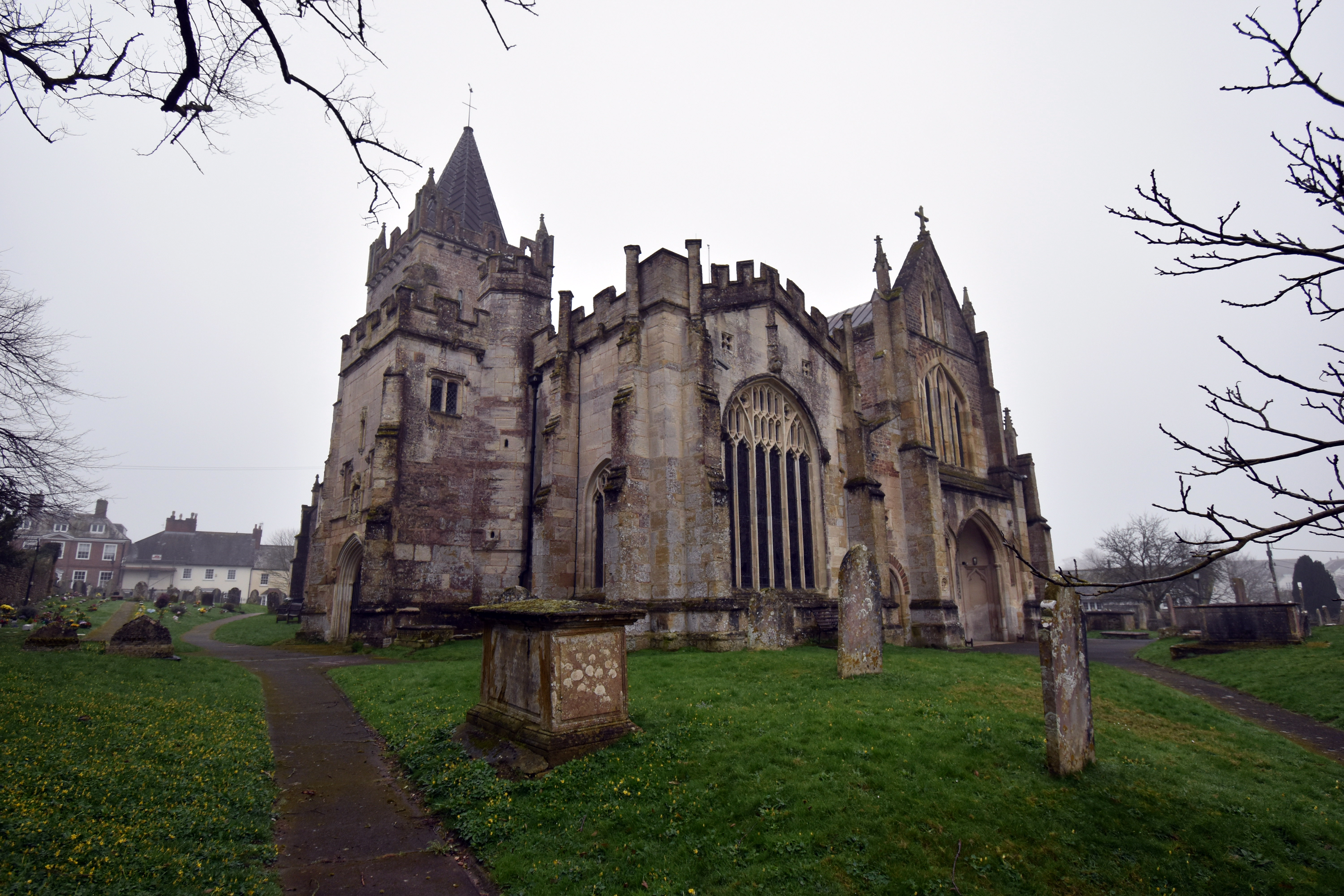
St Mary’s Church is very unusual in that it has not one but two towers! It was renovated at the behest of the Bishop of Exeter John Grandisson in the 14th century, something in the manner of Exeter Cathedral itself. In fact it is often referred to as a miniature Exeter Cathedral. The reason for this design was because it was supposed to be more than just a parish church; it was to be a church for a college built next door to train parish priests throughout the Bishopric of Exeter. This was obviously a personal project for the Grandisson family as a whole, as the effigy of his brother Otto and his wife lies within the church. As Bishop, John was buried within the walls of Exeter Cathedral. It should be said that one of the Grandisson descendants was Lady Cecily Bonville of Knightstone Manor which perhaps explains why she added a wing to the already substantial church in 1520. Sadly there is no trace of the college as they also got swept away in the Reformation, mainly on the basis that many of the priests were involved in chantry prayers for wealthy patrons.
Elephant in St Mary's Church

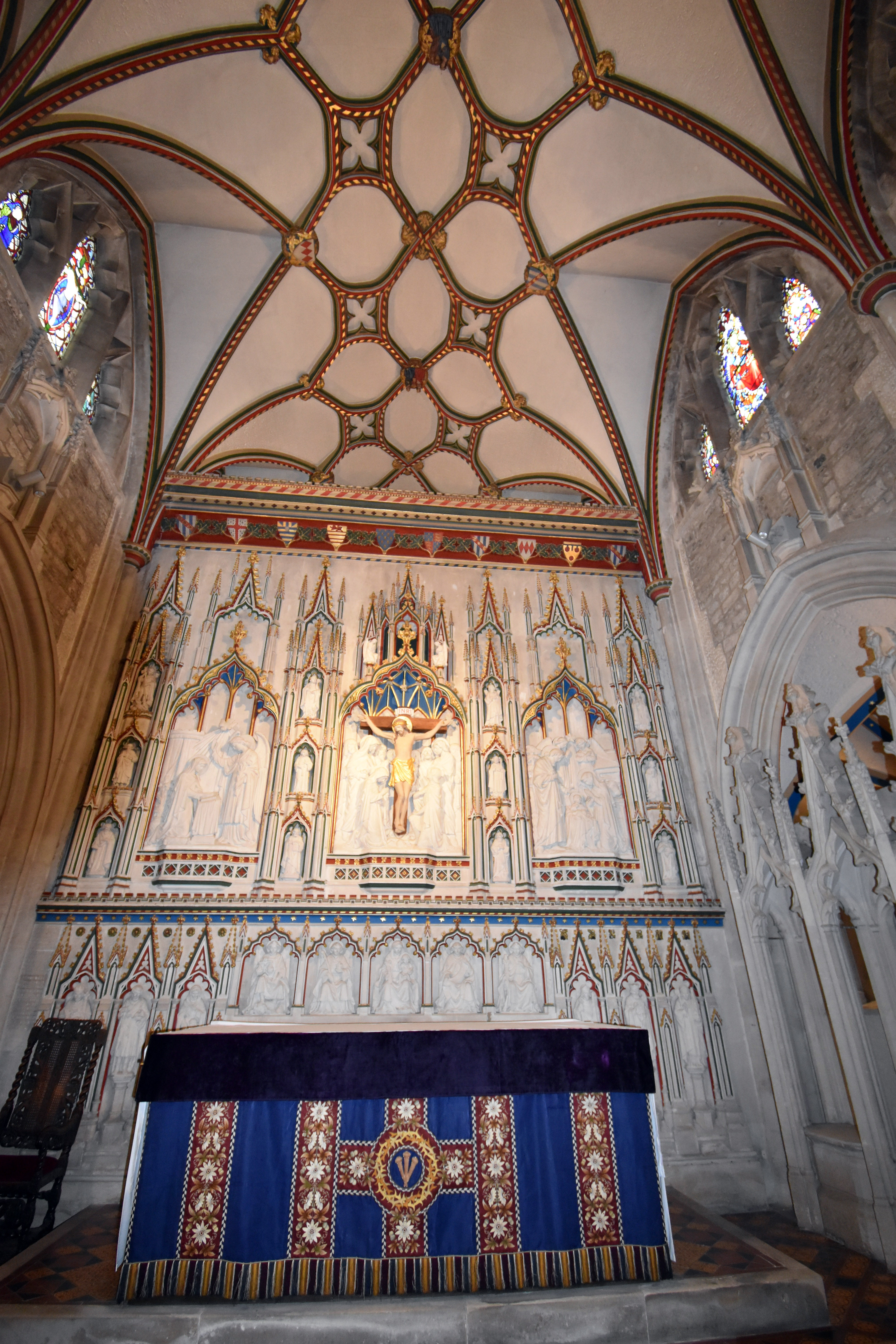
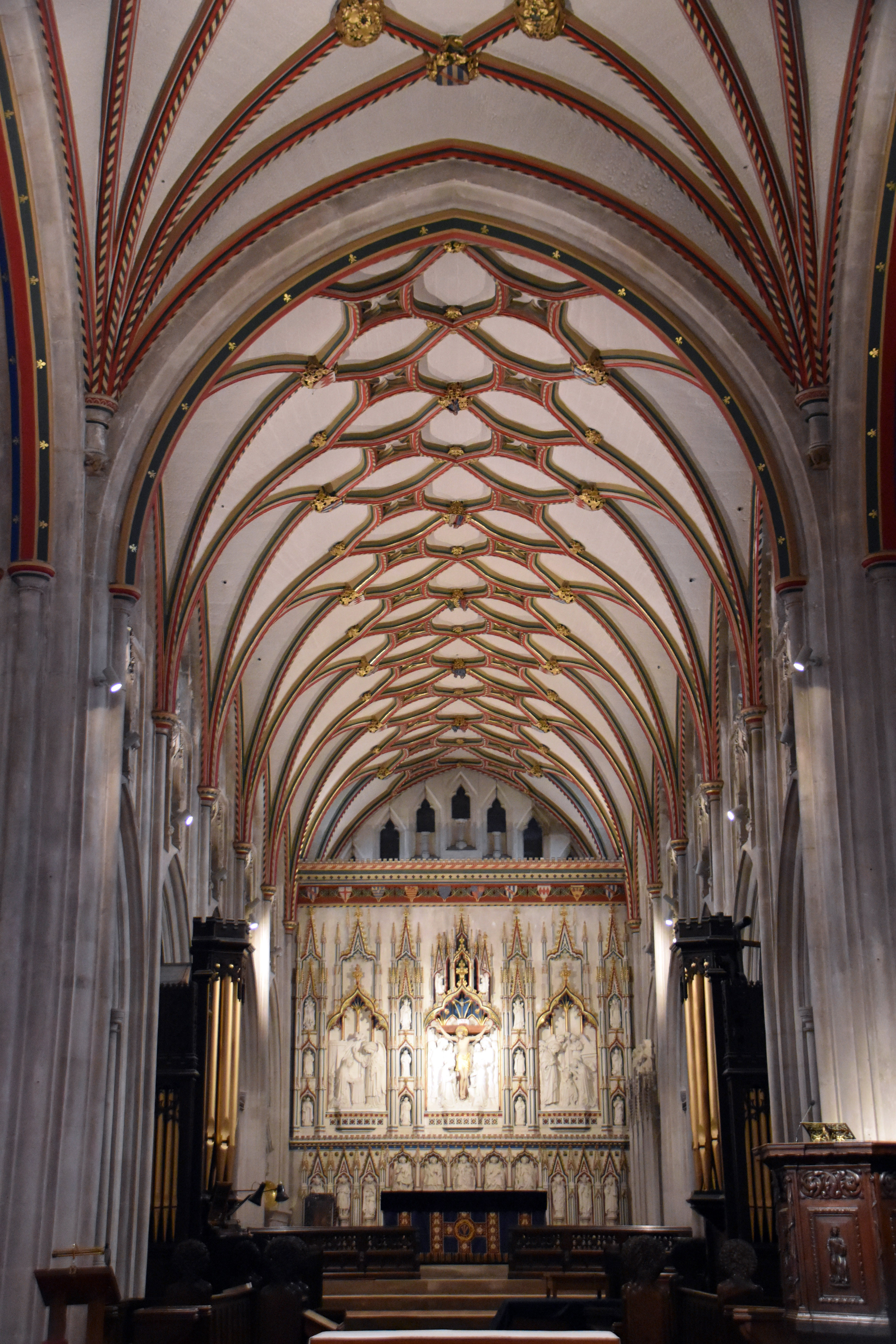
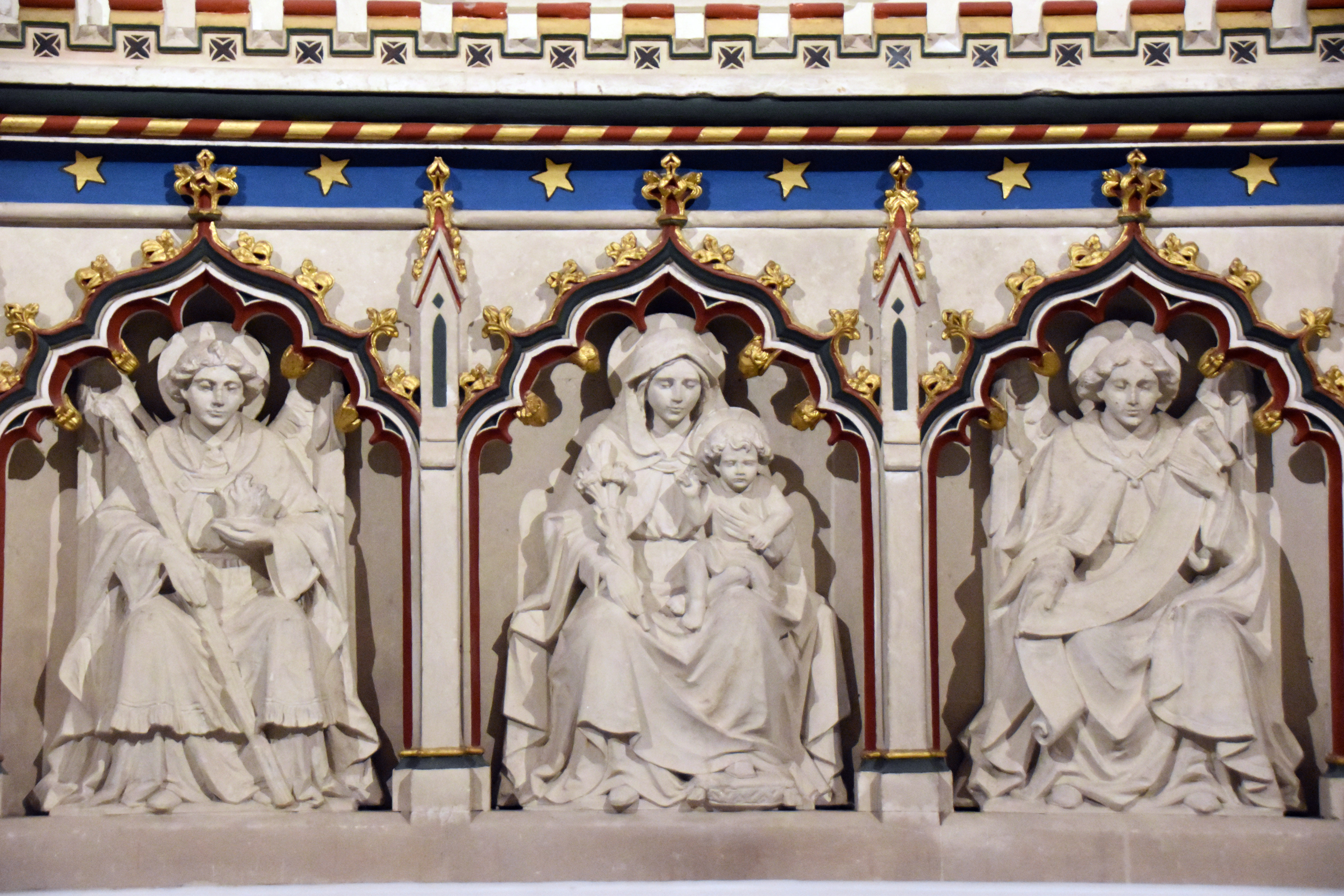
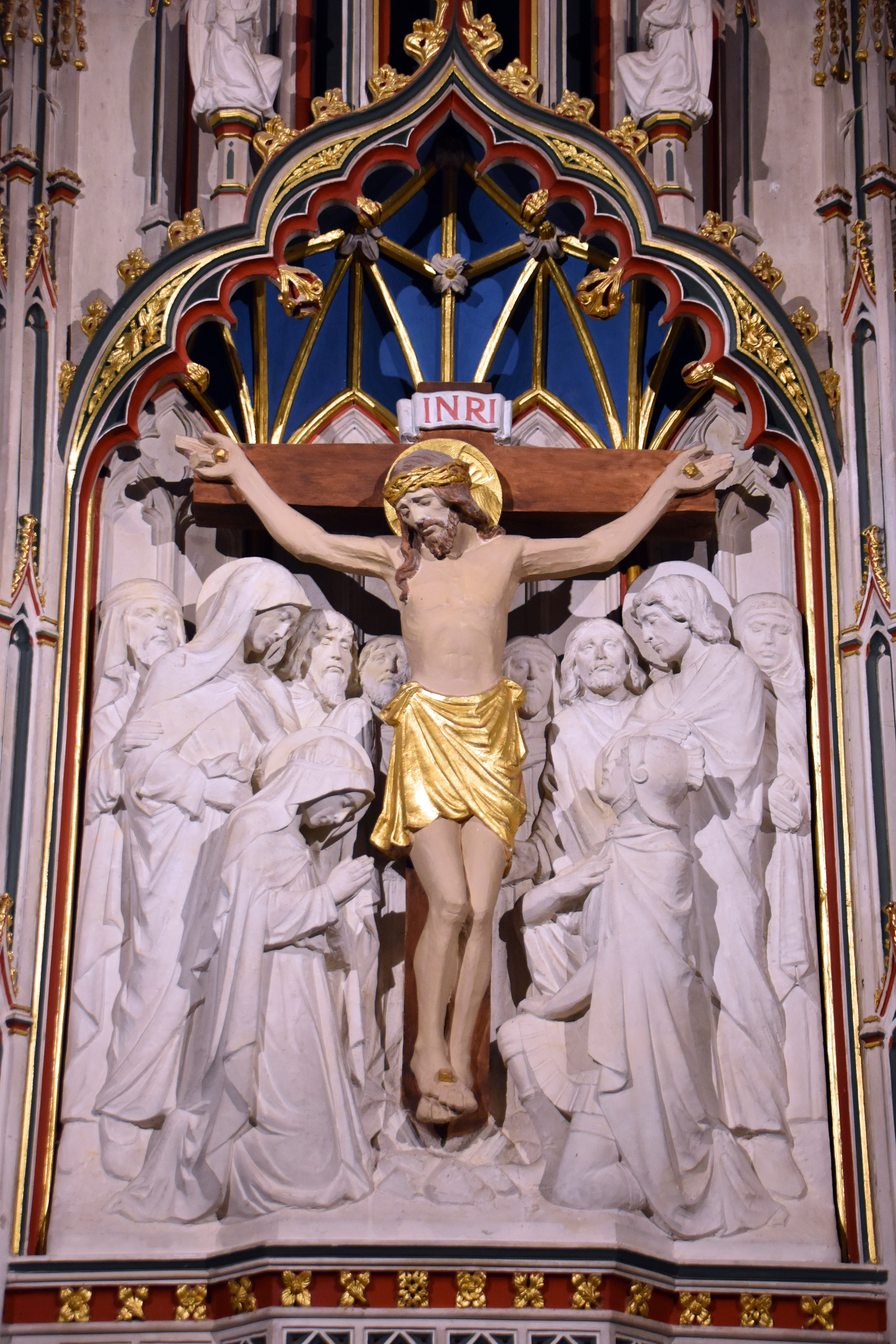
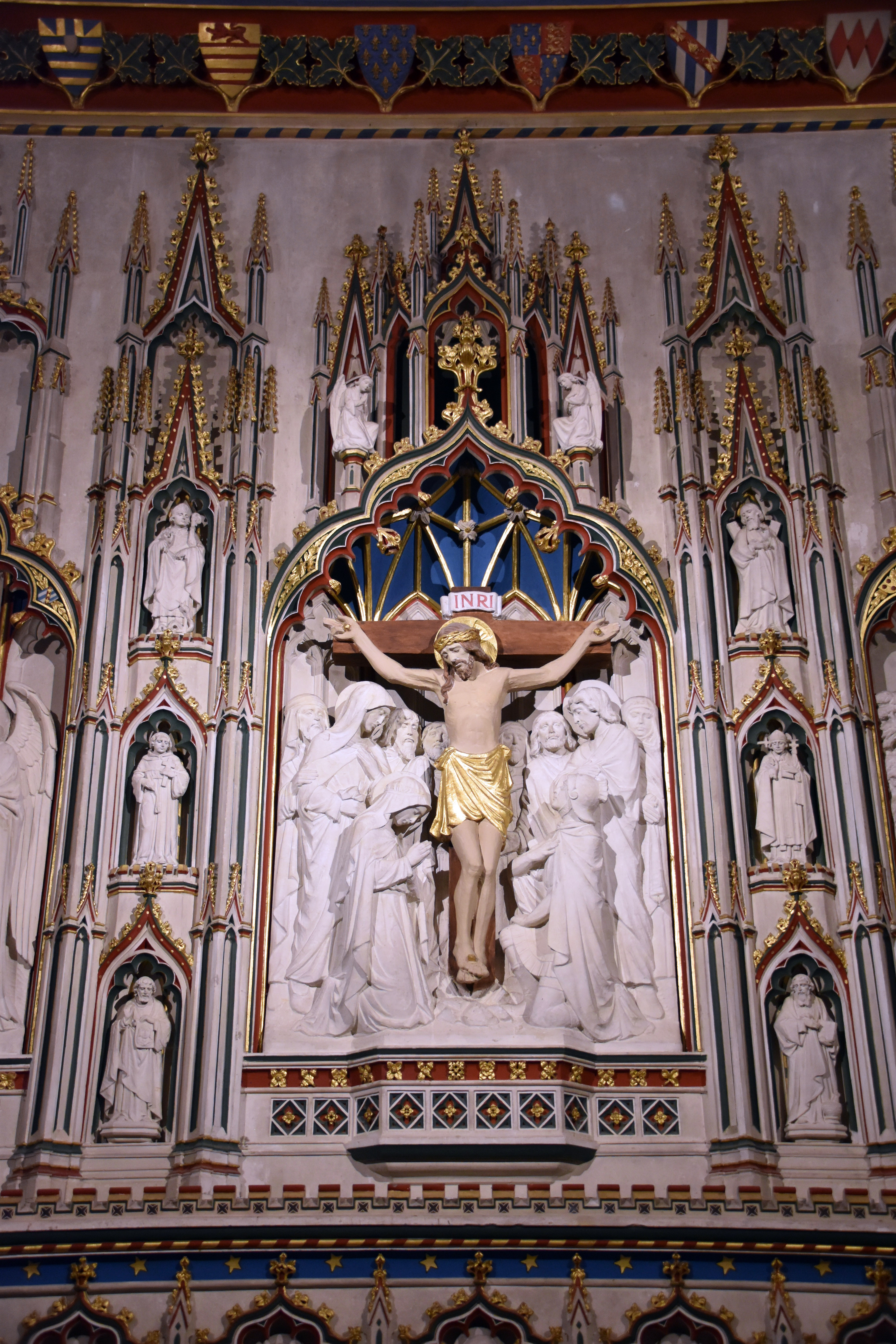
Looking at the altar screen, you might think that the church survived the worst ravages of the Reformation but you would be wrong. All those statues had originally been hacked out, many of the beautiful paintings were whitewashed over and there is no sign of a rood screen remaining. The statues you see today on the altar were only added in the 1930s by Herbert Read from Exeter – and they were only painted in the 1970s!

Nativity Stamp from St Mary's Church

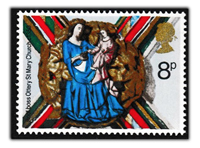
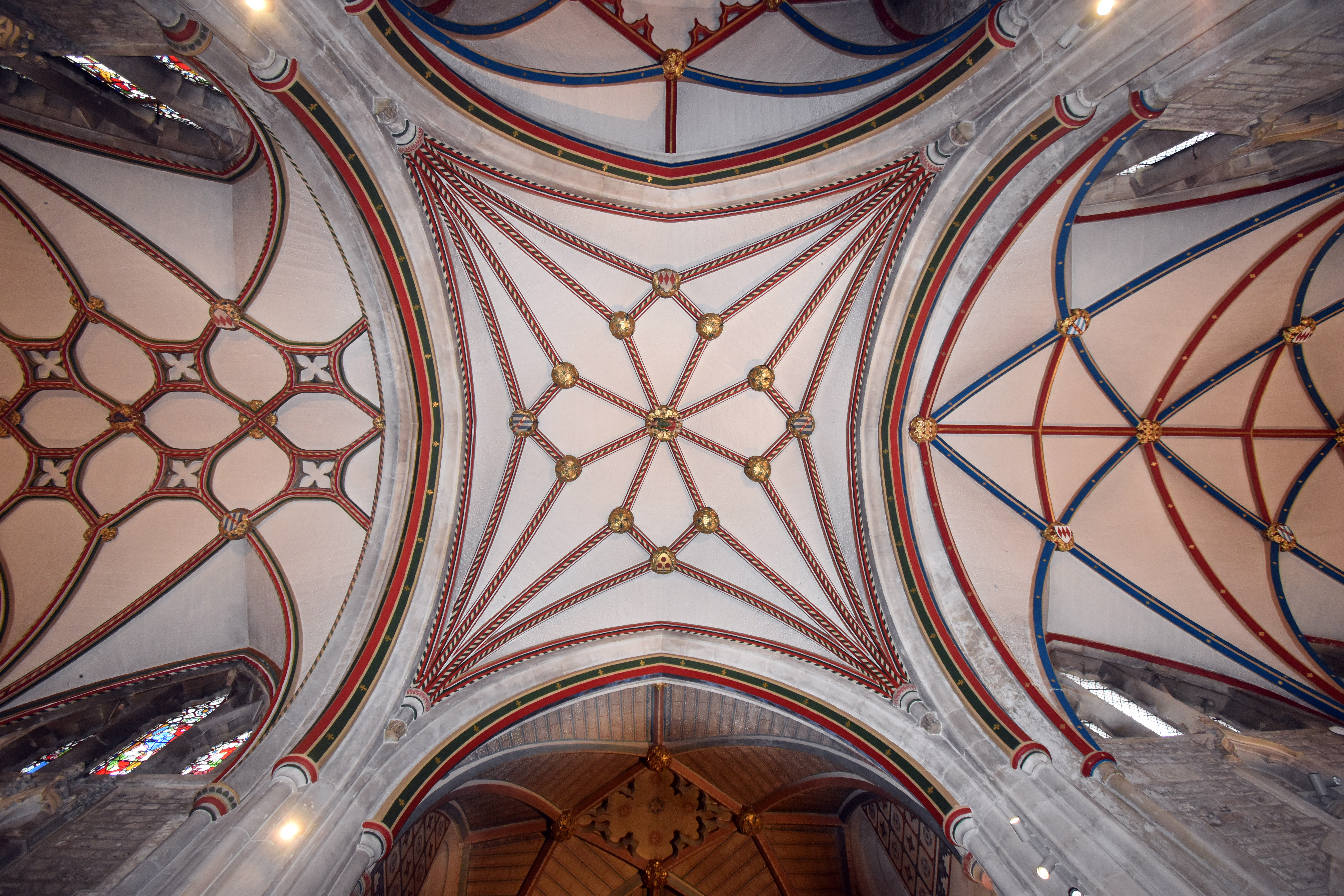
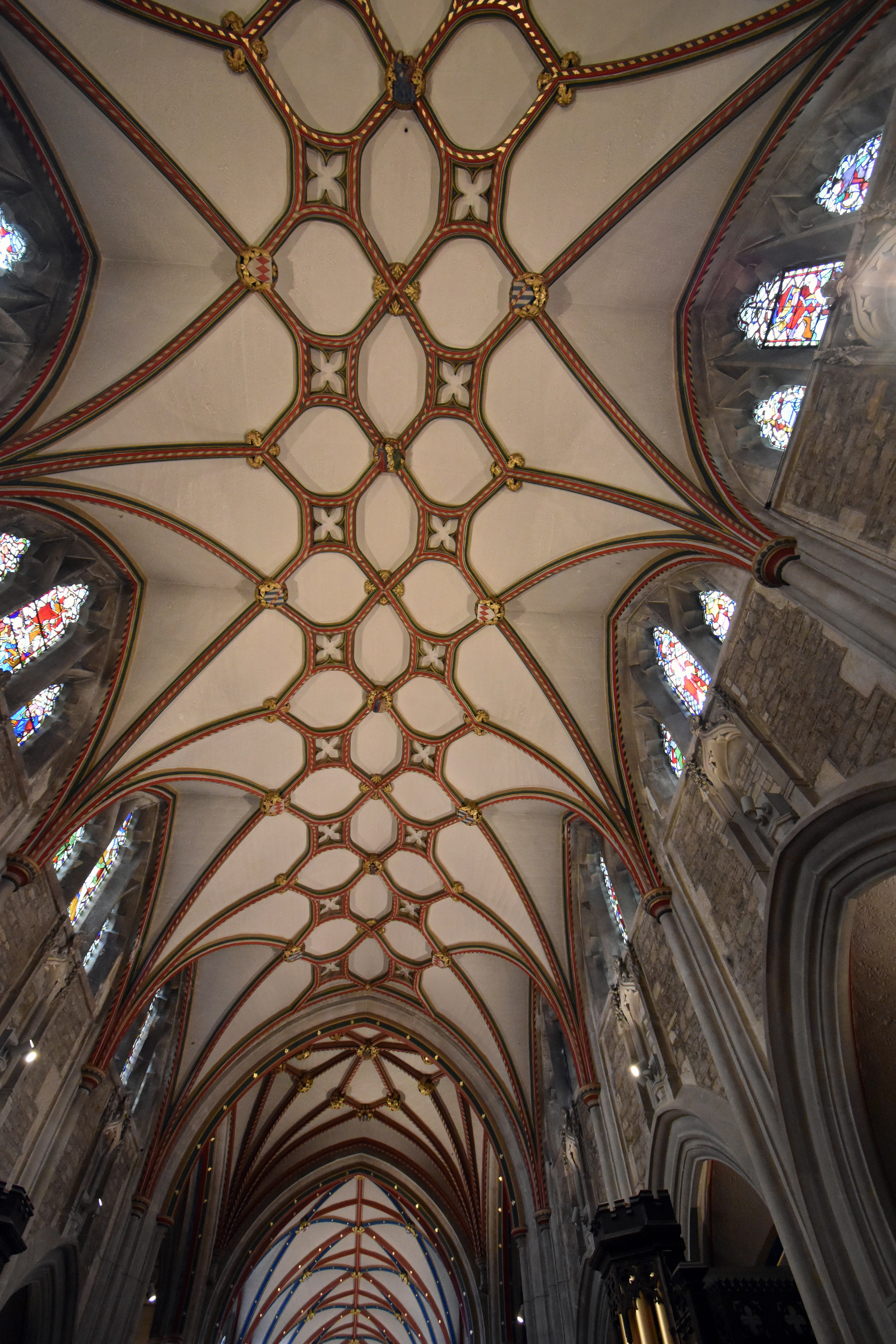
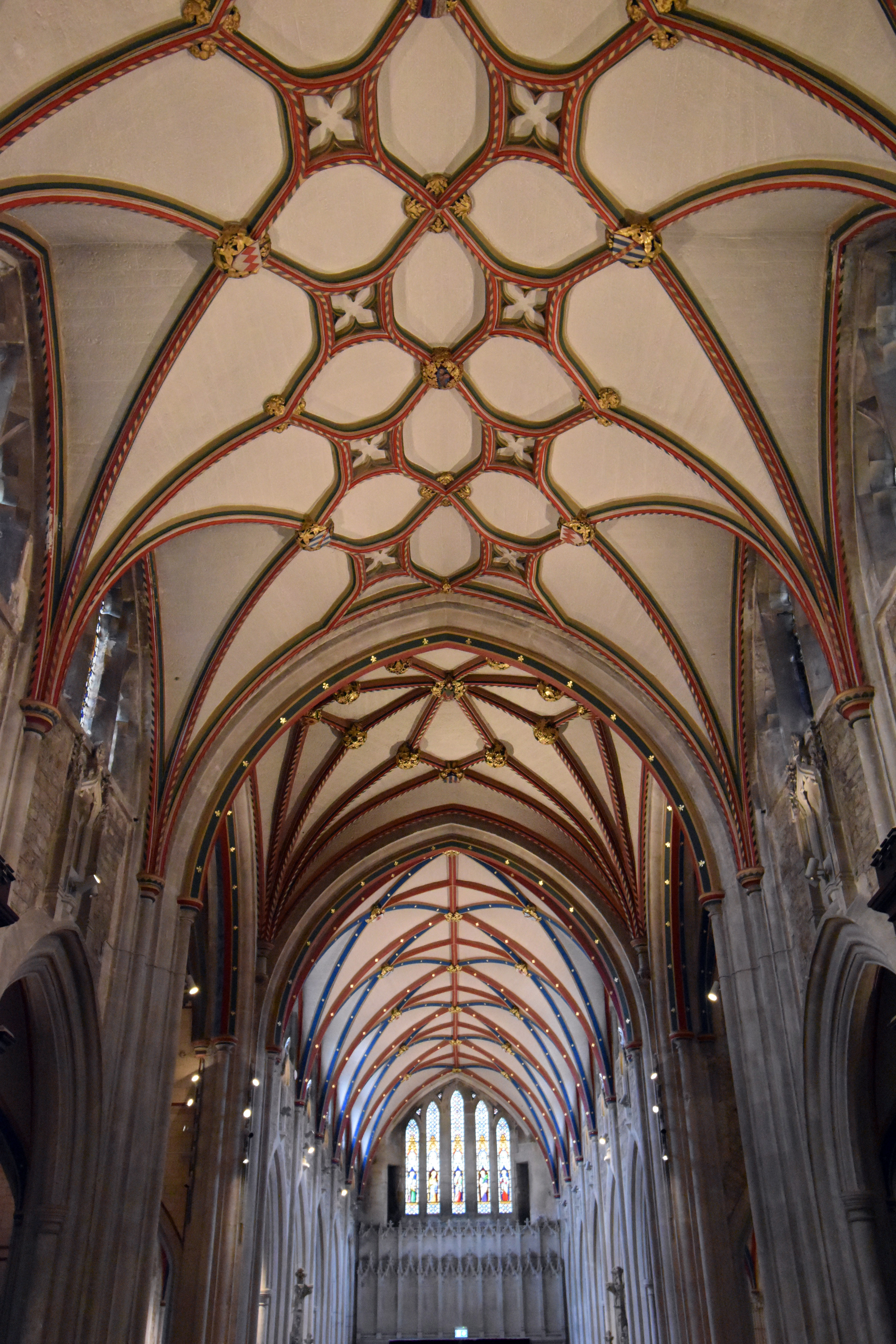
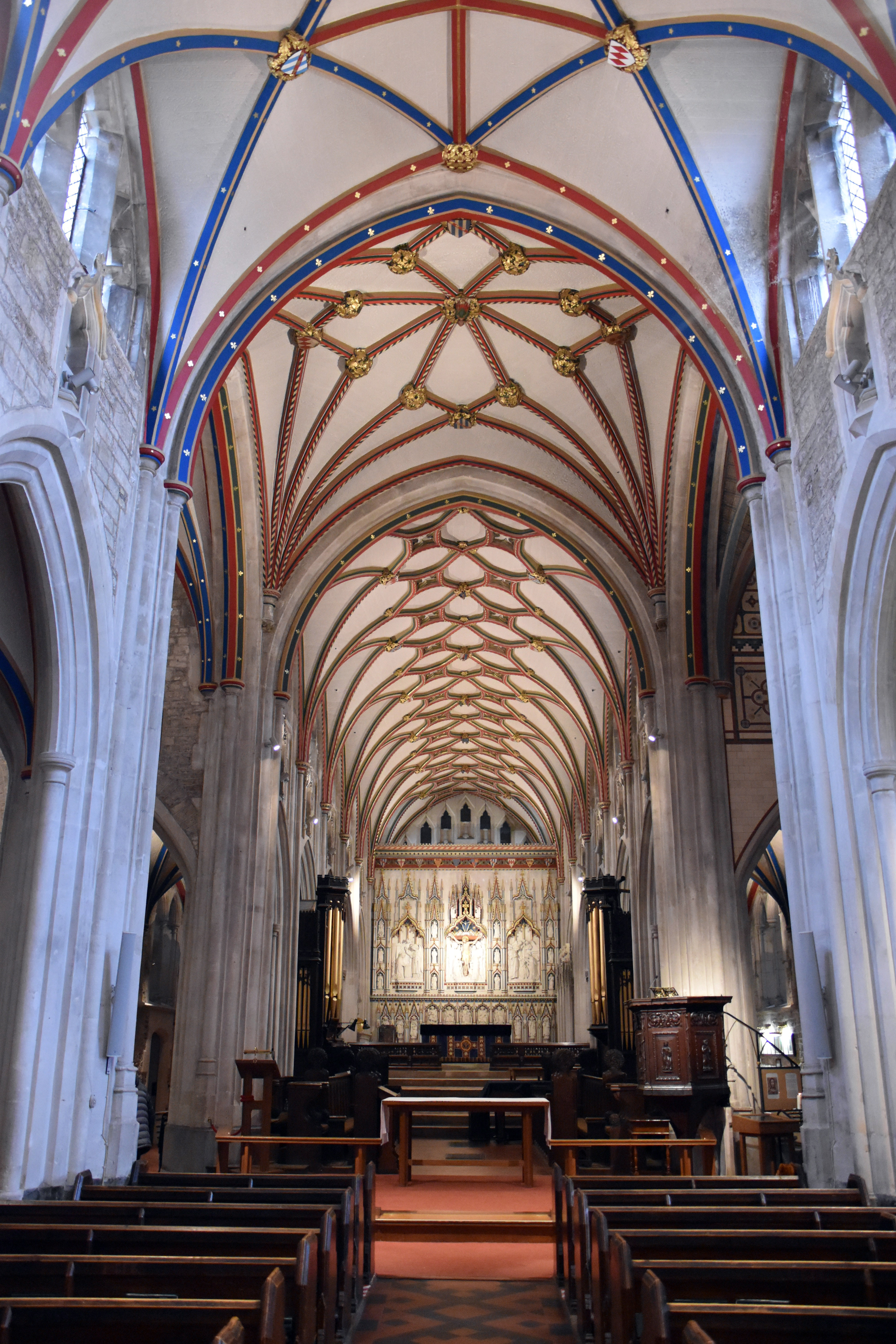
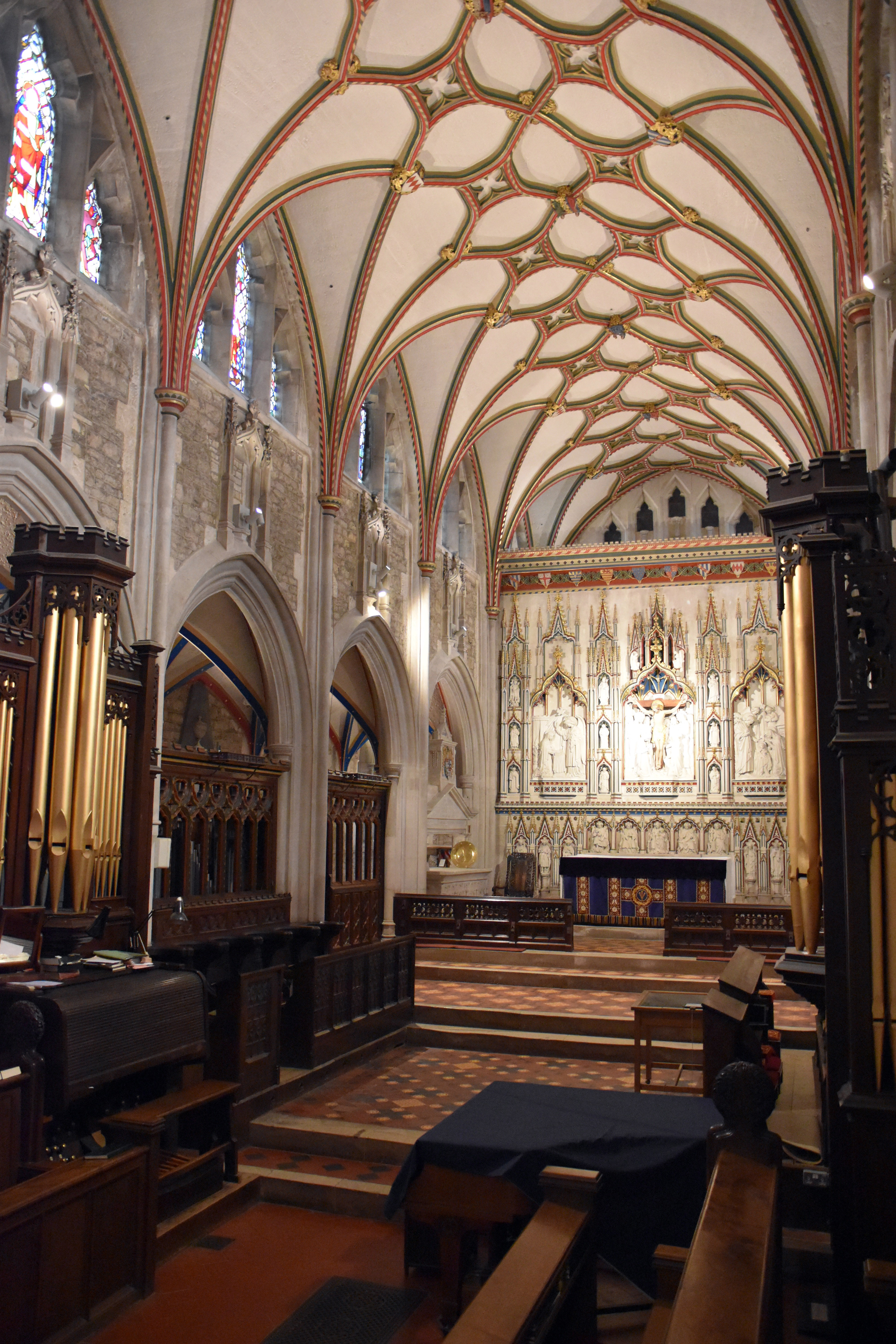
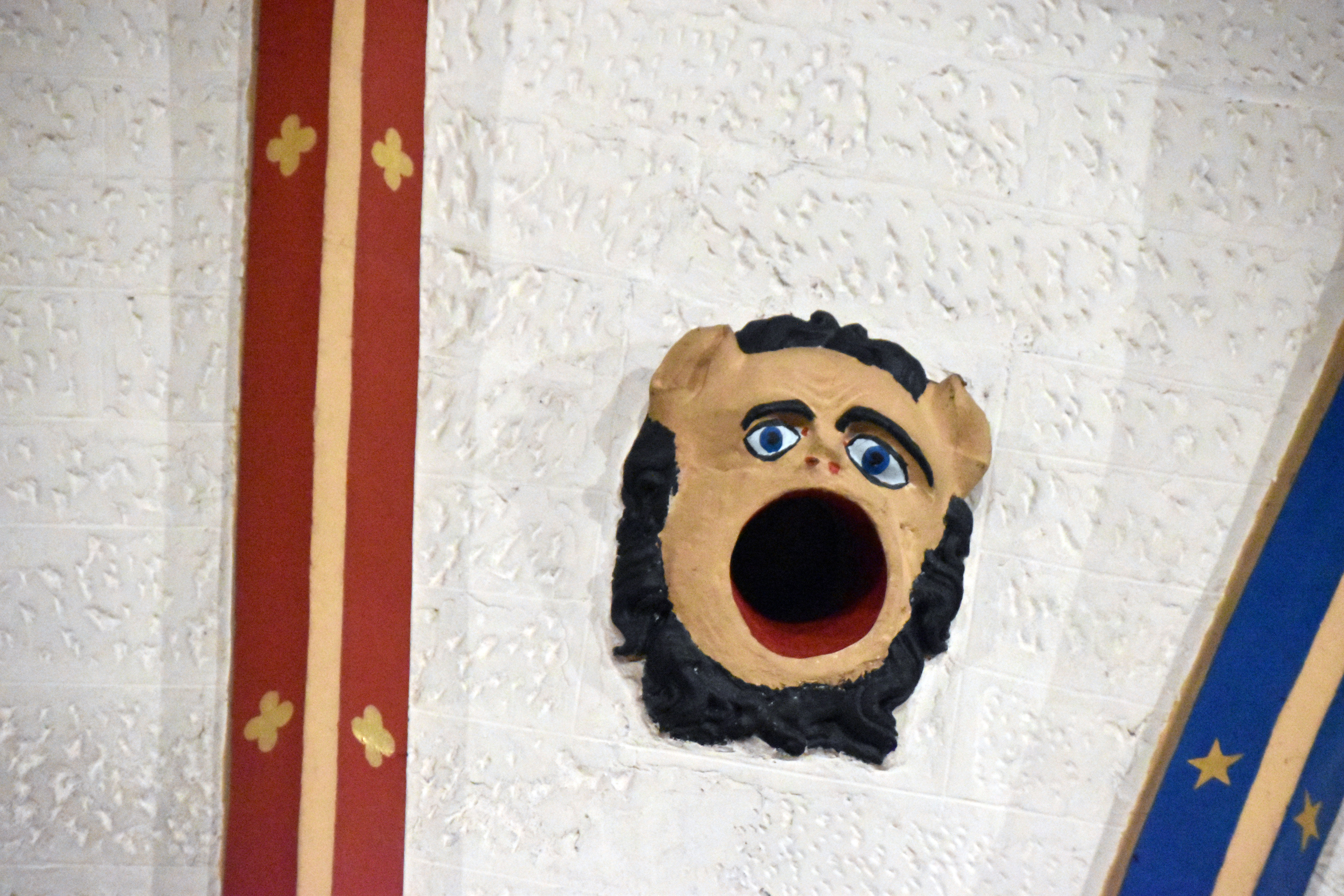
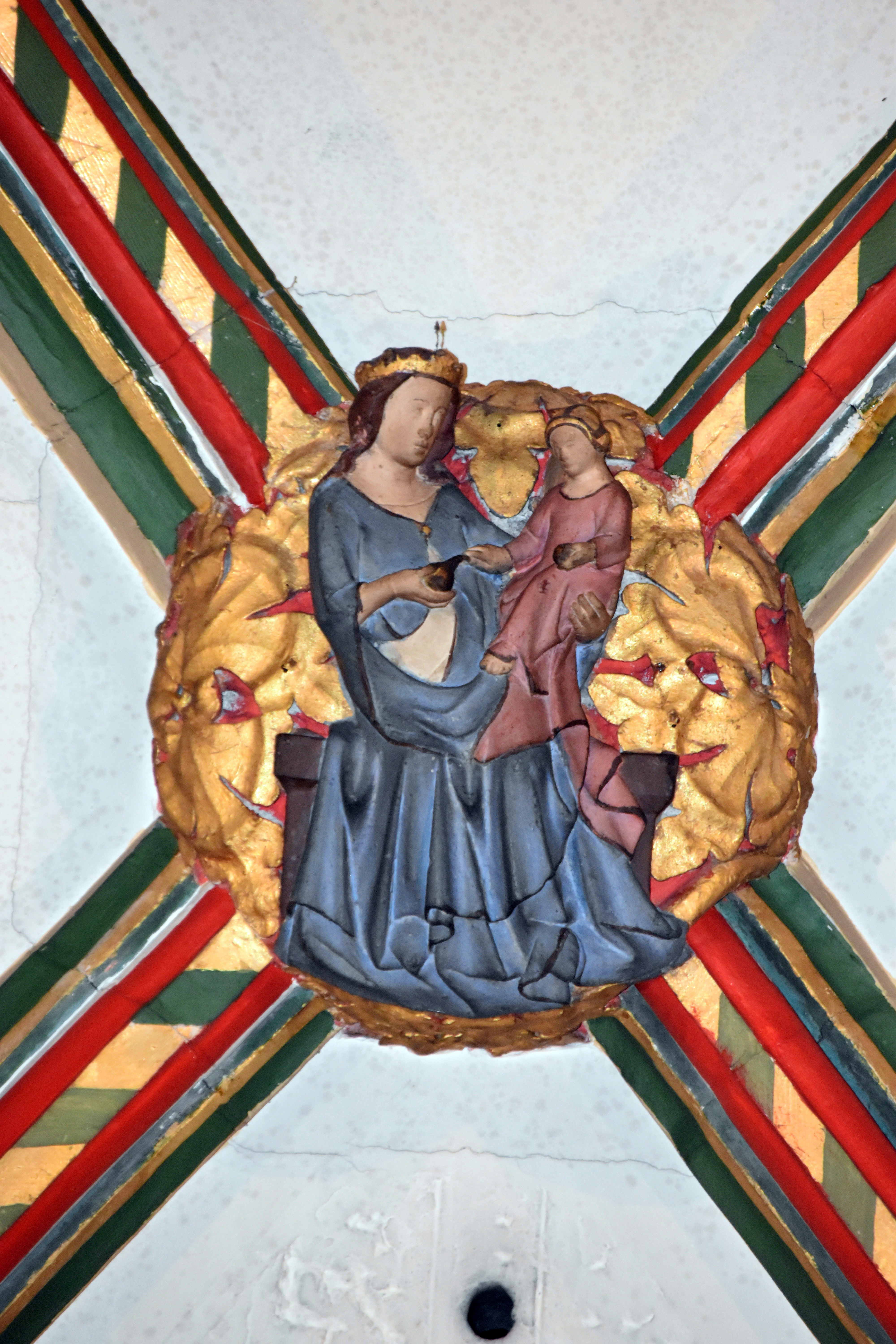
A quick glance at the magnificent ceilings immediately evokes a cathedral’s interior. They really are stunning and in a variety of styles. Interesting that one of the bosses on the ceiling was used by the Royal Mail as the basis of a nativity stamp once back in 1974. But on the west aisle there are some bizarre faces with big mouths staring down at you. What might they be? Well apparently they were originally for bell ropes to hang down through. Makes perfect sense when you think about it, but obviously whoever carved them had something of a sense of humour!

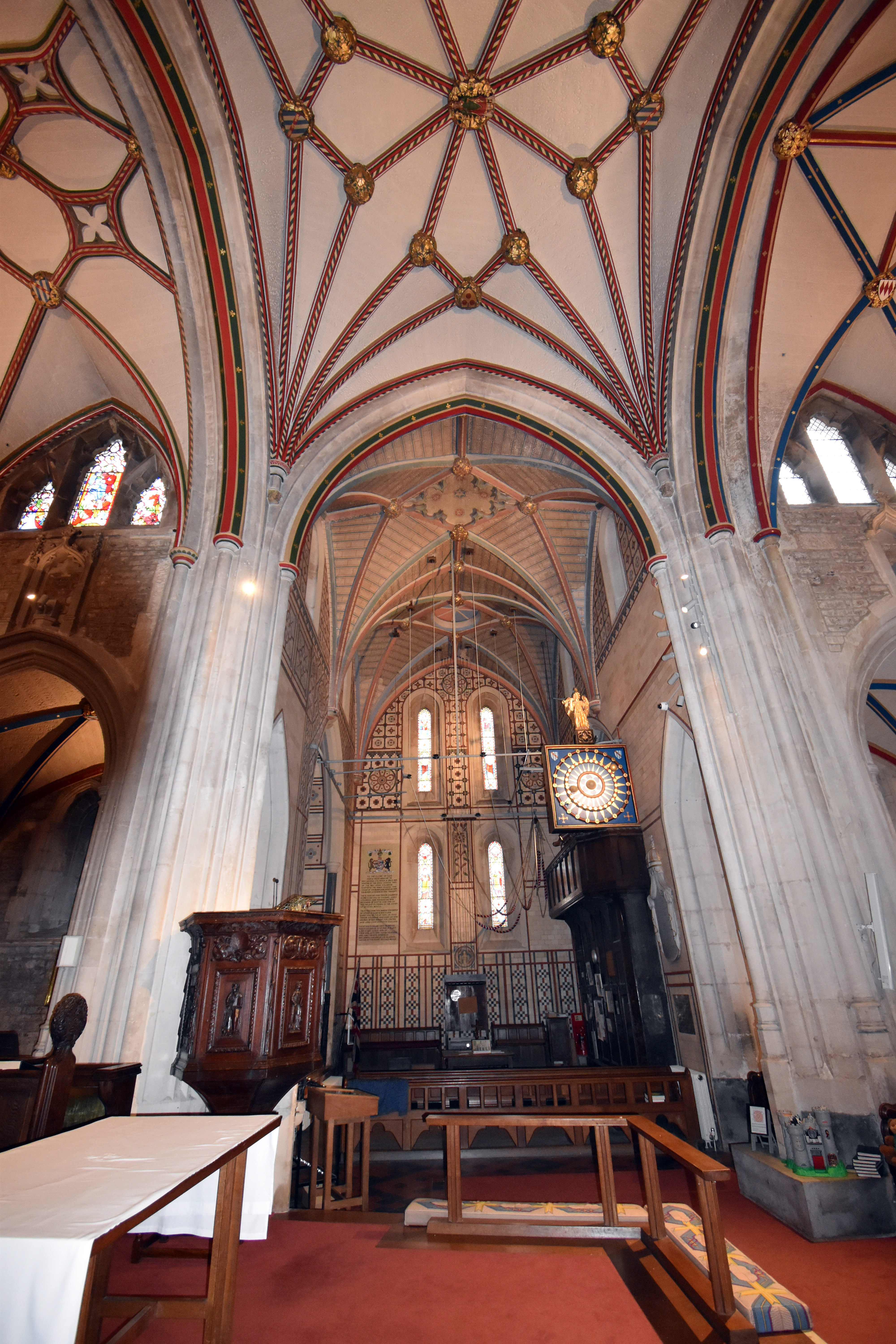
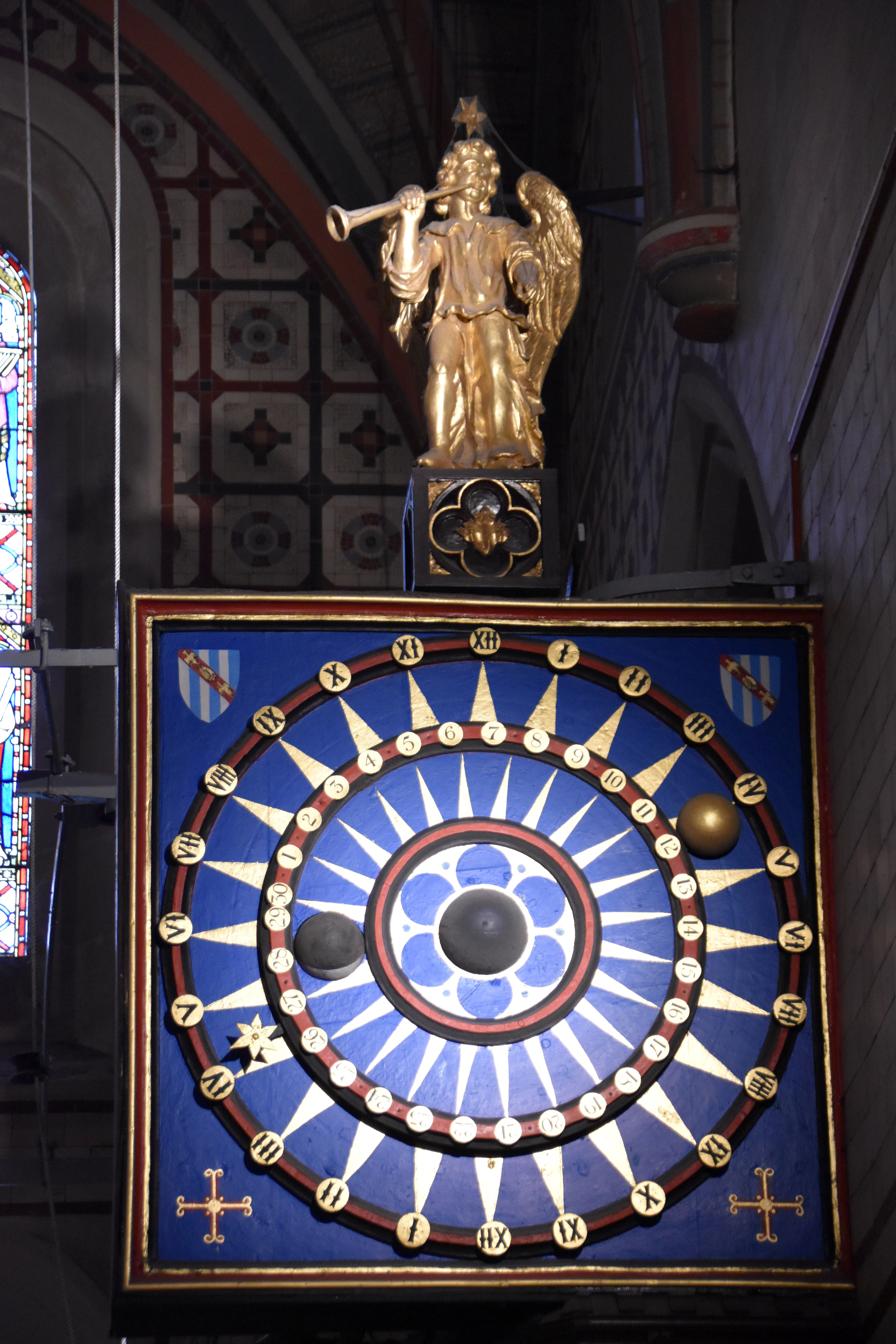
St Mary’s is one of the few churches to have an astronomical clock showing the relative positions of the sun and the moon – and one of the oldest surviving mechanical clocks in the country. You can tell its antiquity in that it shows the earth at the centre of the solar system. It shows yet another connection to its inspiration, the Cathedral of Exeter, which has its own astronomical clock.
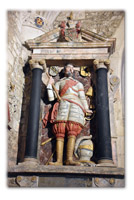
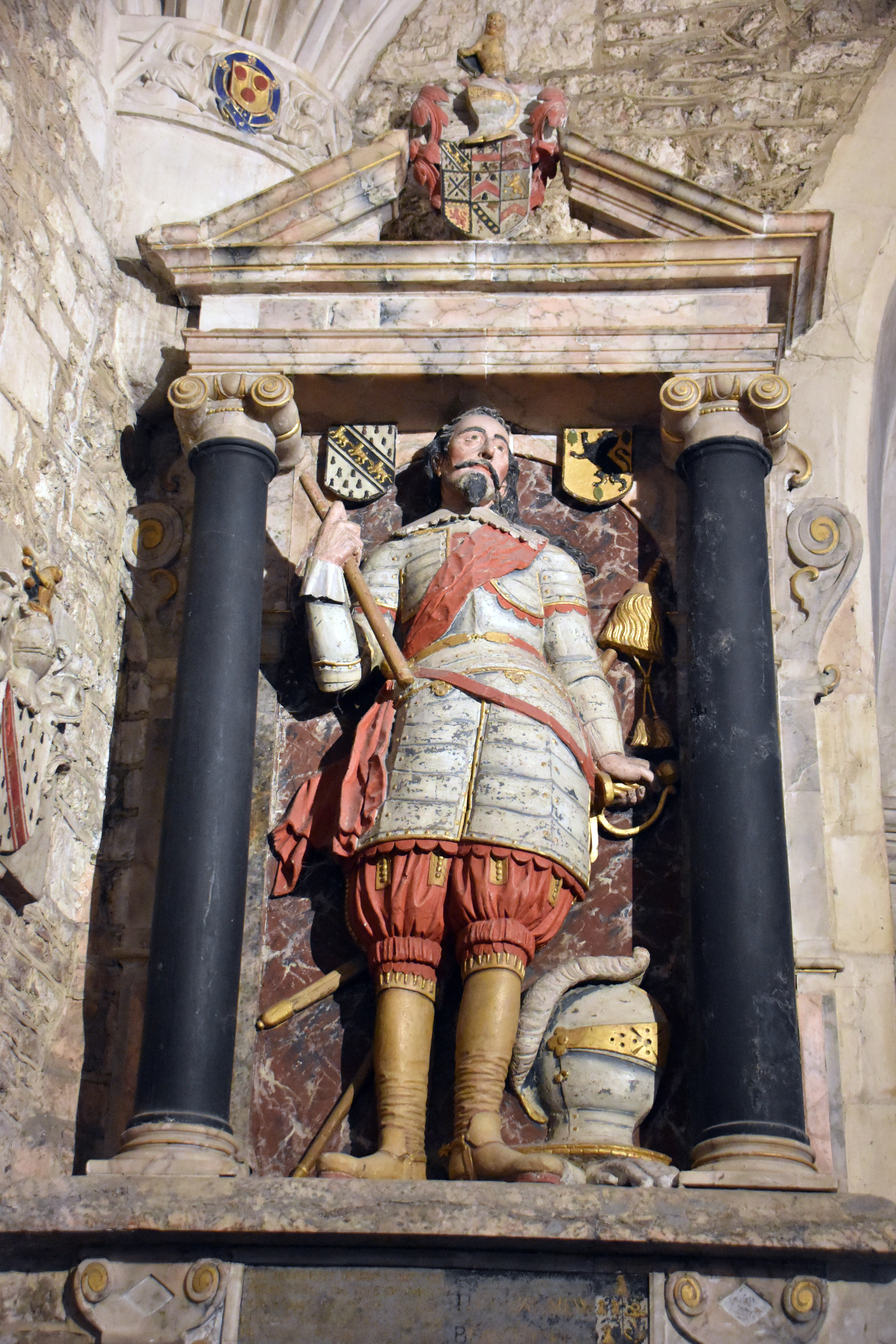
John Coke in St Mary's Church

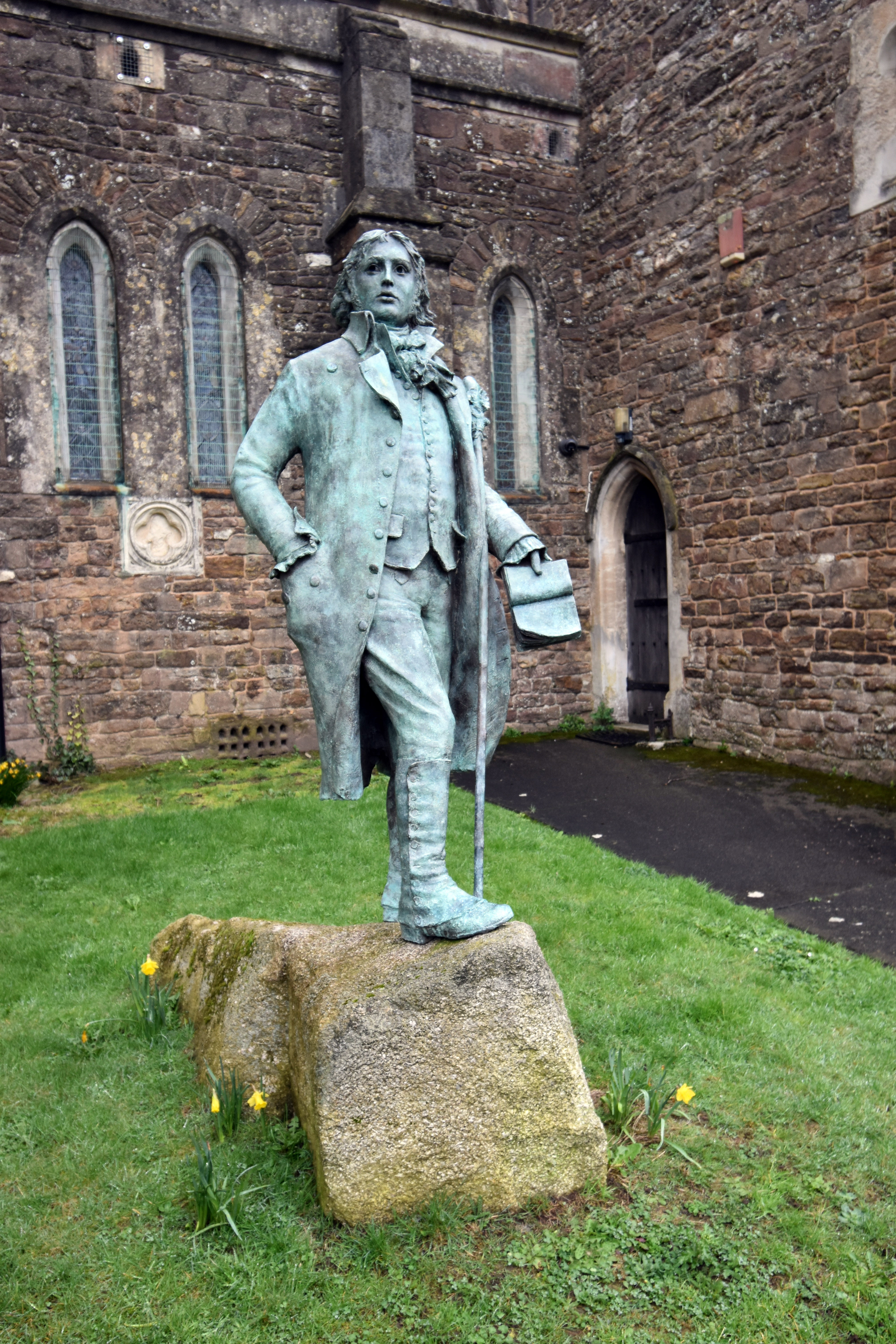
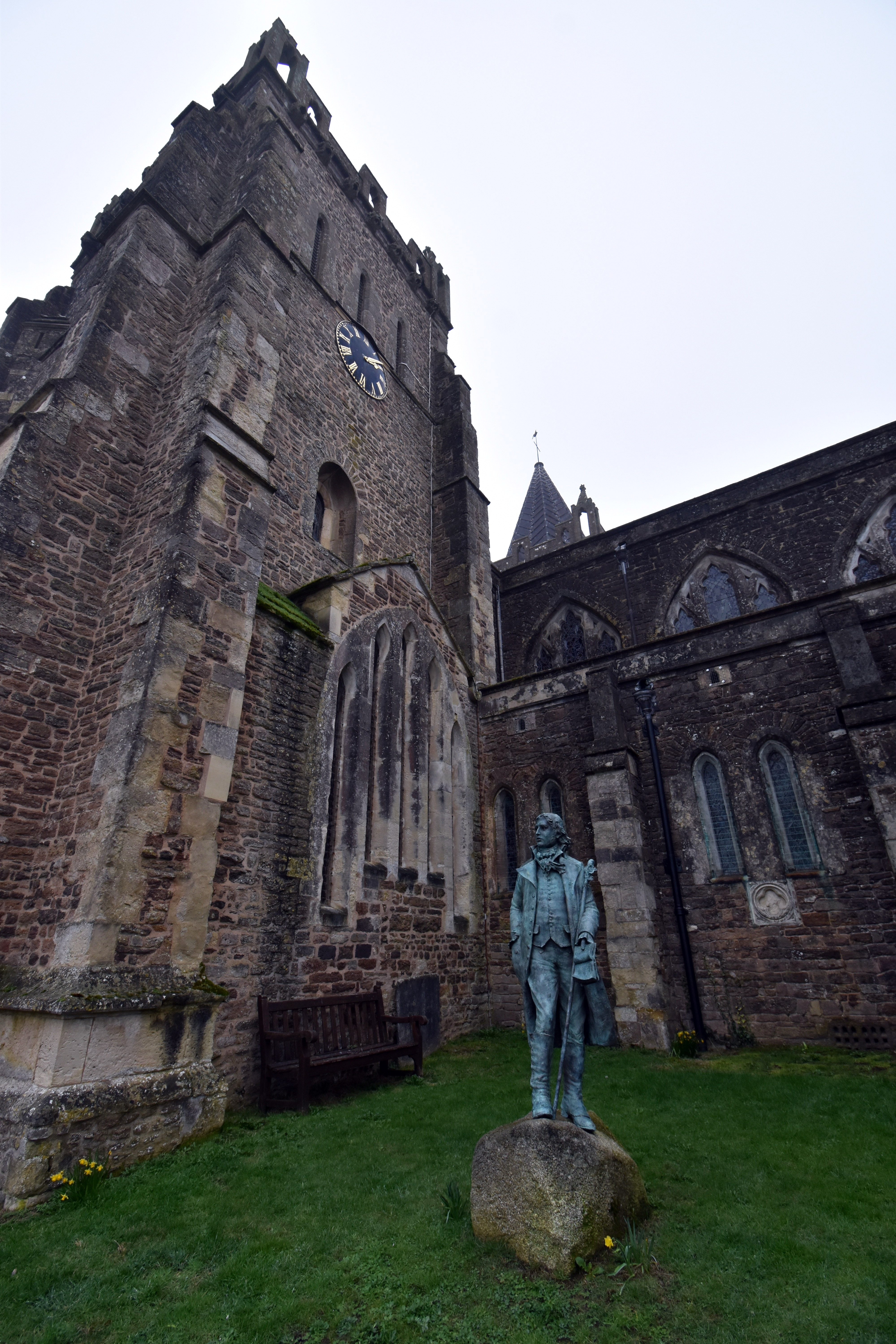
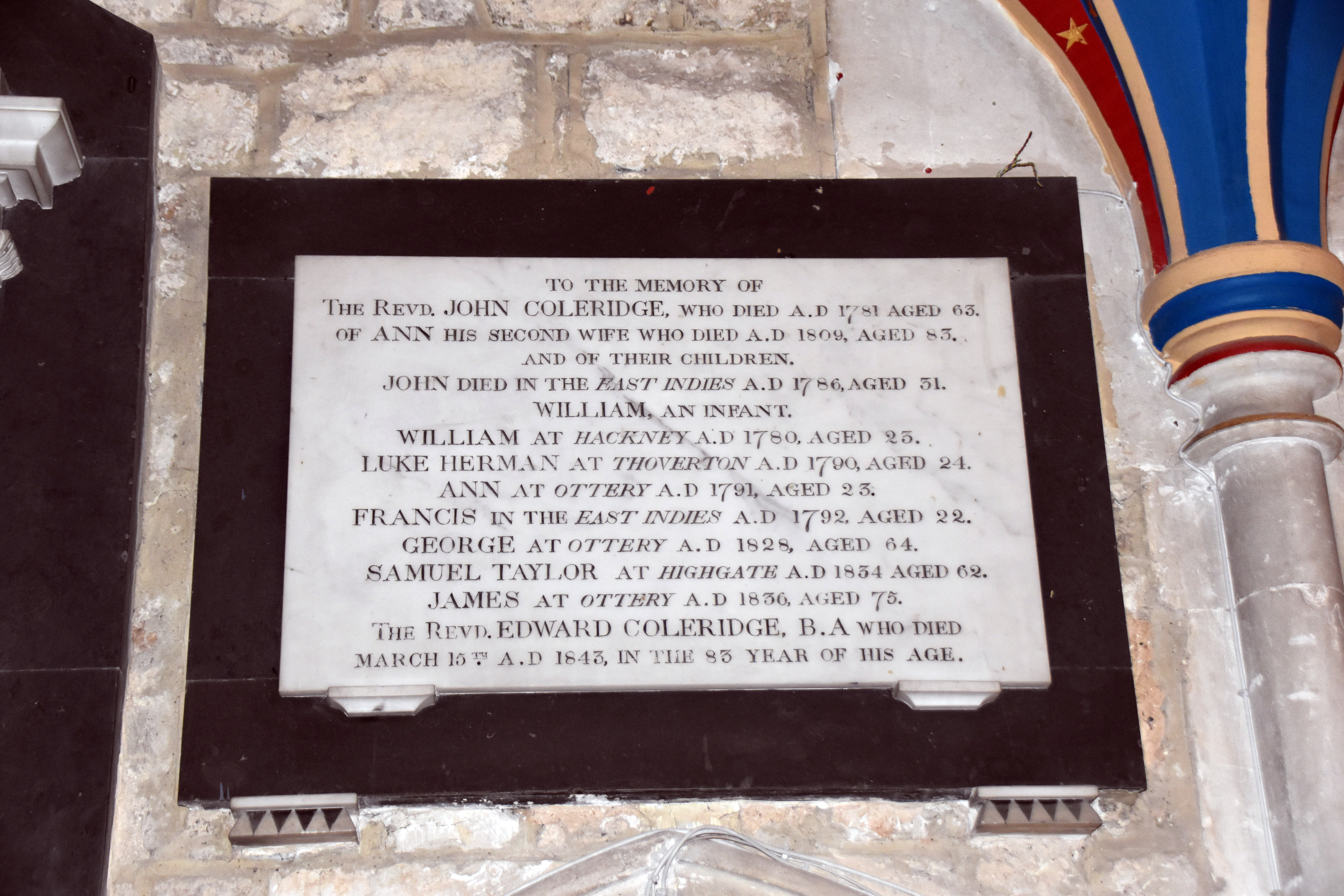
But as always we like to look out for interesting memorials and this church has more than most. Of course, the connection to the Coleridge family is very obvious – and not just to Samuel Taylor Coleridge who has a statue to greet you outside, but also to his father who was a vicar here and also to the Duke Coleridges, which include the Lord Chief John Duke Coleridge who built the Patteson Cross at Fenny Bridges we visited the week before. A private memorial to the Coleridge‑Taylors shows that they had 10 children, many of whom died young. Samuel did better than most, living to the age of 62. I was more surprised to find that he lost not one but two brothers out in the East Indies, one at the age of 22 and the other at 31. Many of the Coleridges are buried in the graveyard outside but not Samuel Taylor who, as the memorial makes clear, is buried at Highgate in London.
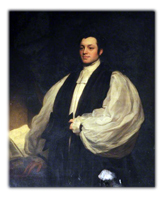
Bishop William Coleridge

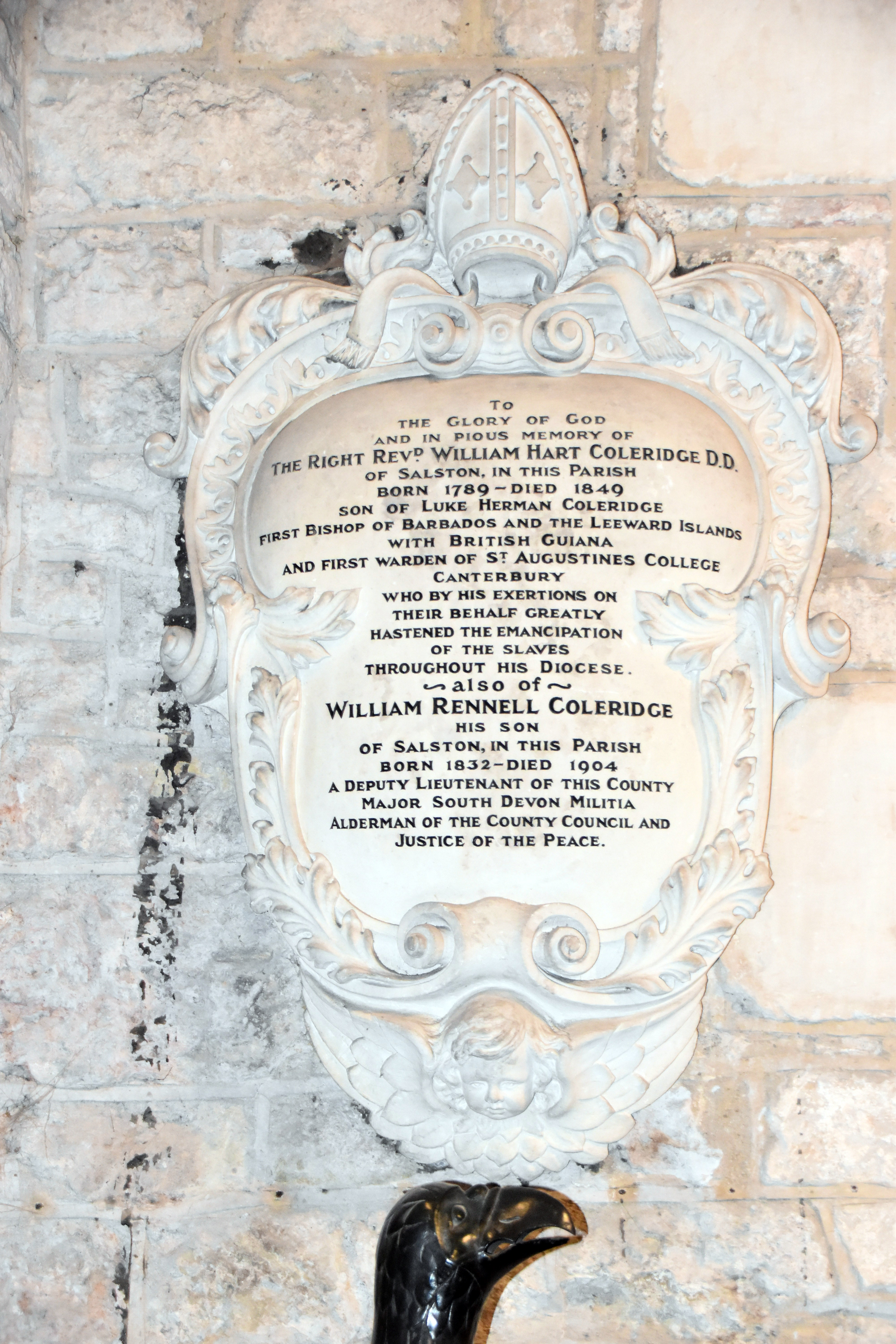
There is a fascinating memorial to the Right Reverend William Hart Coleridge – nephew of Samuel Taylor. He went on to become the first Bishop of Barbados, Leeward Islands and British Guiana from 1824 to 1842. Now this was a critical period in Caribbean history when slavery was abolished throughout the British Empire in 1834 but which had greater impact on the sugar islands than anywhere else. The memorial proudly proclaims that ‘by his exertions on their behalf greatly hastened the emancipation of the slaves throughout his diocese.’ And indeed the church provided intense moral pressure on the first Whig government in a generation to free the slaves. One wonders if his example perhaps inspired that other famous John Patteson Coleridge at nearby Feniton to agree to become a missionary to the Pacific which was similarly blighted by the slavery tactics of ‘blackbirders’ which ultimately cost John Patteson Coleridge his life!

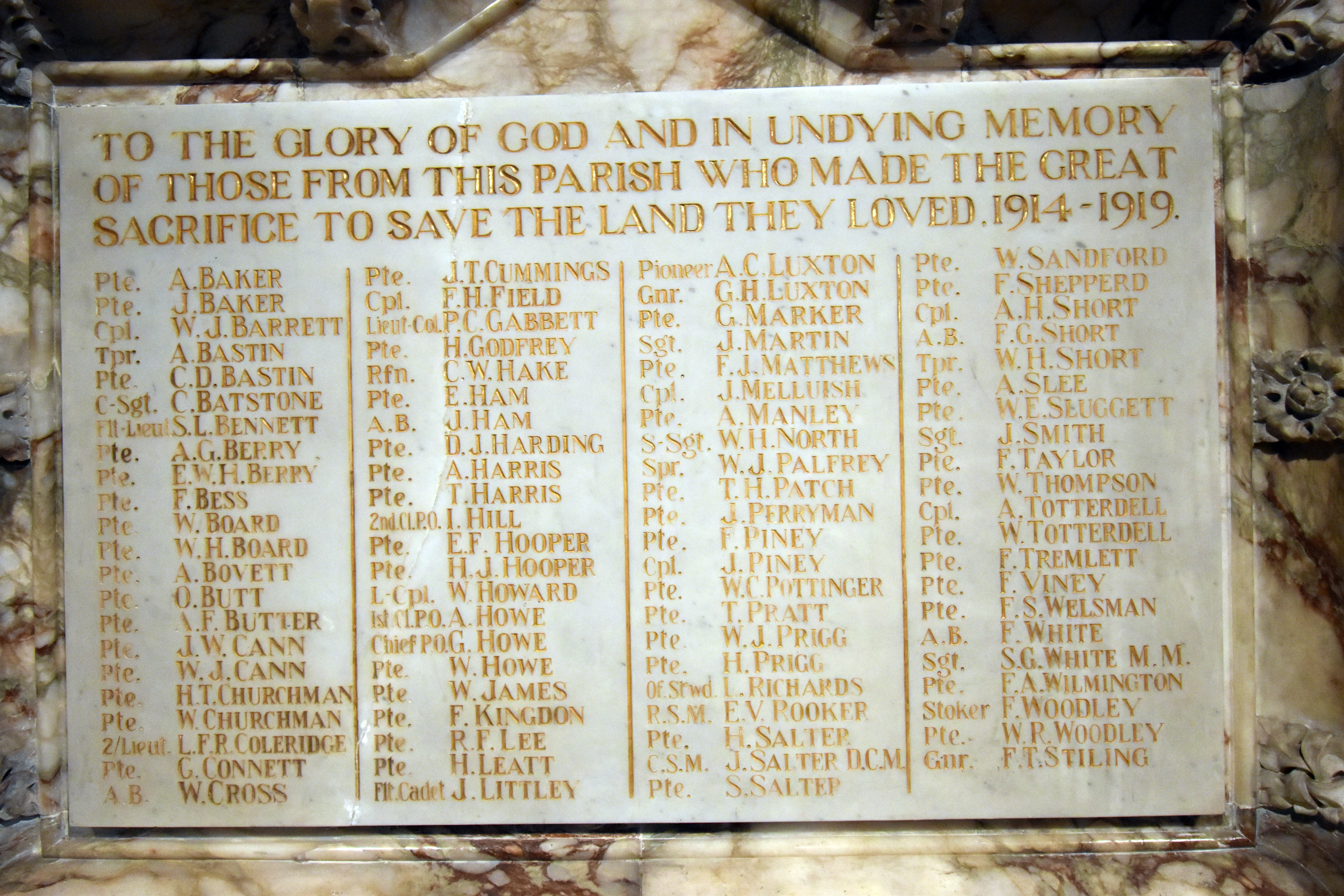
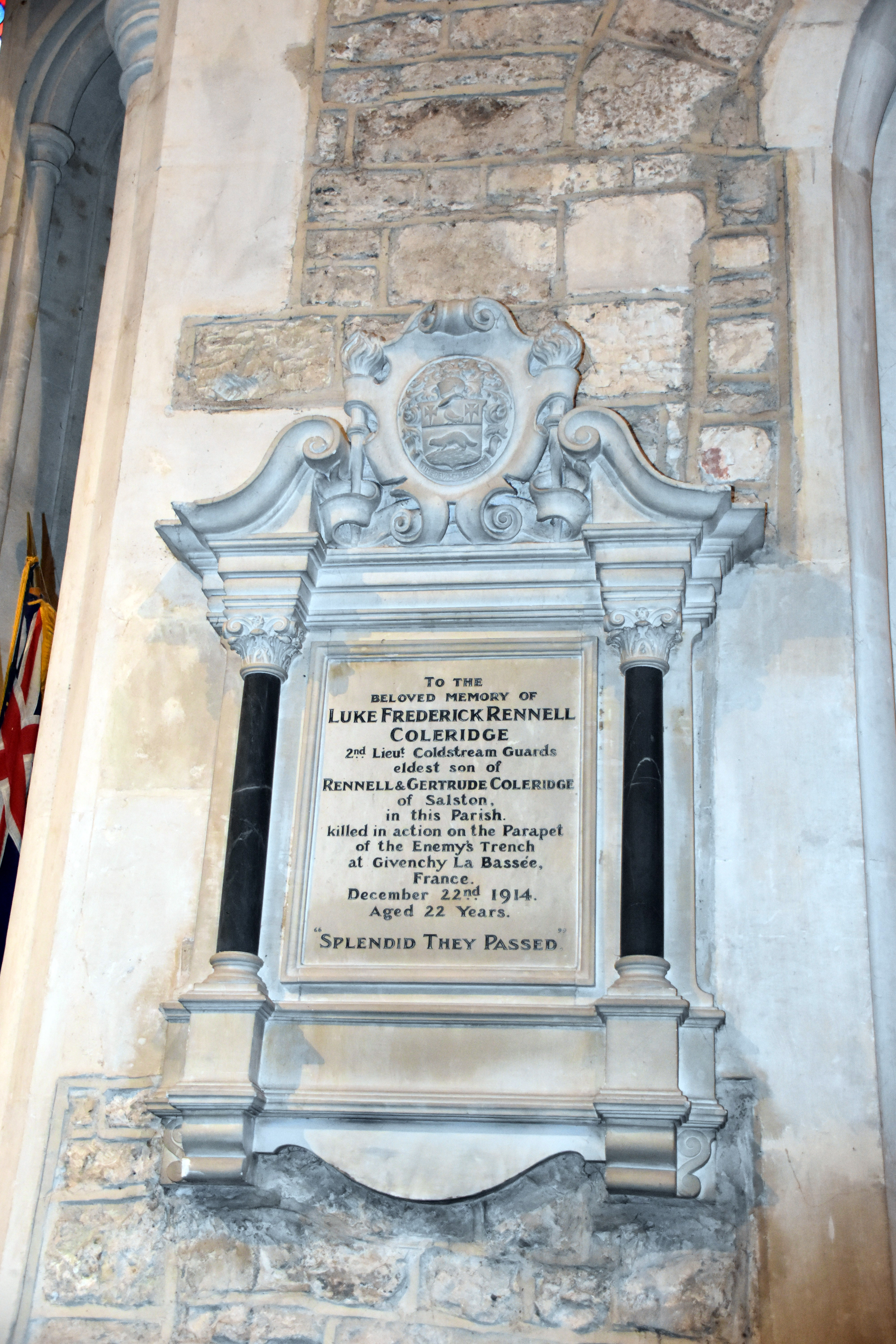
One more Coleridge memorial that stood out was that of Lieutenant Luke Frederick Rennell Coleridge whose memorial says he was killed ‘on the parapet of the Enemy’s Trench at Givenchy La Bassée in 1914.’ This is actually one of those pre‑Imperial War Graves Commission war memorials which the great and good could afford and which the authorities realised that many common soldiers could not. Also its wording suggests an early‑war heroic view of the war before the attritional nature of trench warfare sapped that enthusiasm. Even its epitaph ‘Splendid They Passed’ evokes a Victorian or Edwardian view of war rather than the more cynical 20th‑century view that would develop in its place.
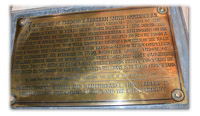
Commander Frederick Abraham Smith

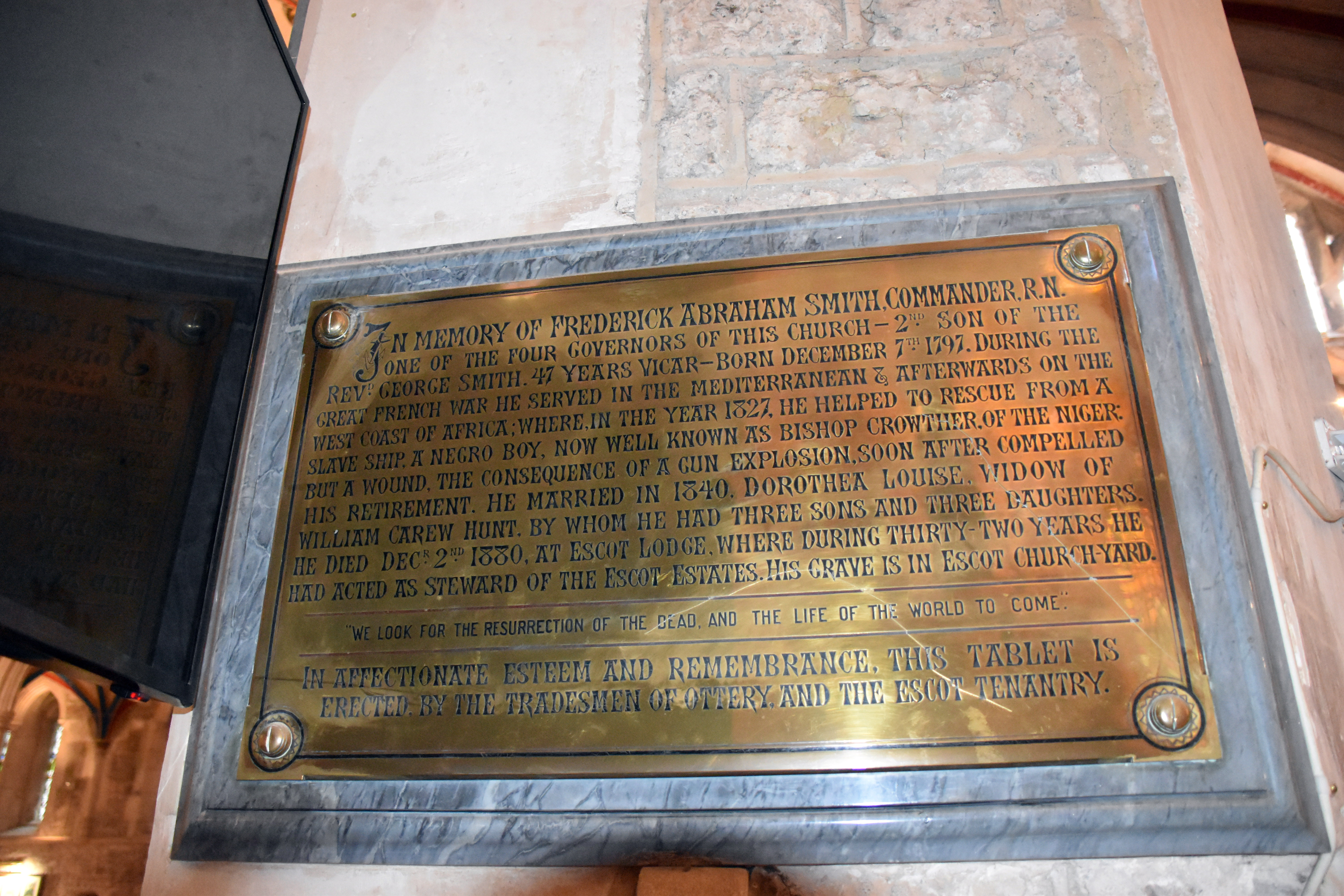
Another fascinating anti‑slavery memorial was that of Commander Frederick Abraham Smith who had served in the Royal Navy throughout the Napoleonic Wars (or the Great French War as his memorial refers to it) and then on the West Africa Squadron which attempted to suppress the slave trade after it was outlawed throughout the British Empire in 1807. His memorial goes on to say with some pride that he helped save one particular “negro boy, now well known as Bishop Crowther of the Niger.” And indeed Bishop Crowther was a household name in the Victorian era as the very first black Anglican Bishop anywhere in the world. He was rescued as a 12‑year‑old slave in a remarkable assault on the slave towns of Rio Pongo where the Royal Navy and Marines showed outstanding bravery to release slaves awaiting transportation to the Americas. Sadly in the process an explosion saw Commander Smith lose an eye and this would afflict him for the rest of his life, but as this memorial makes clear, he was undoubtedly proud of losing it in such a good cause.

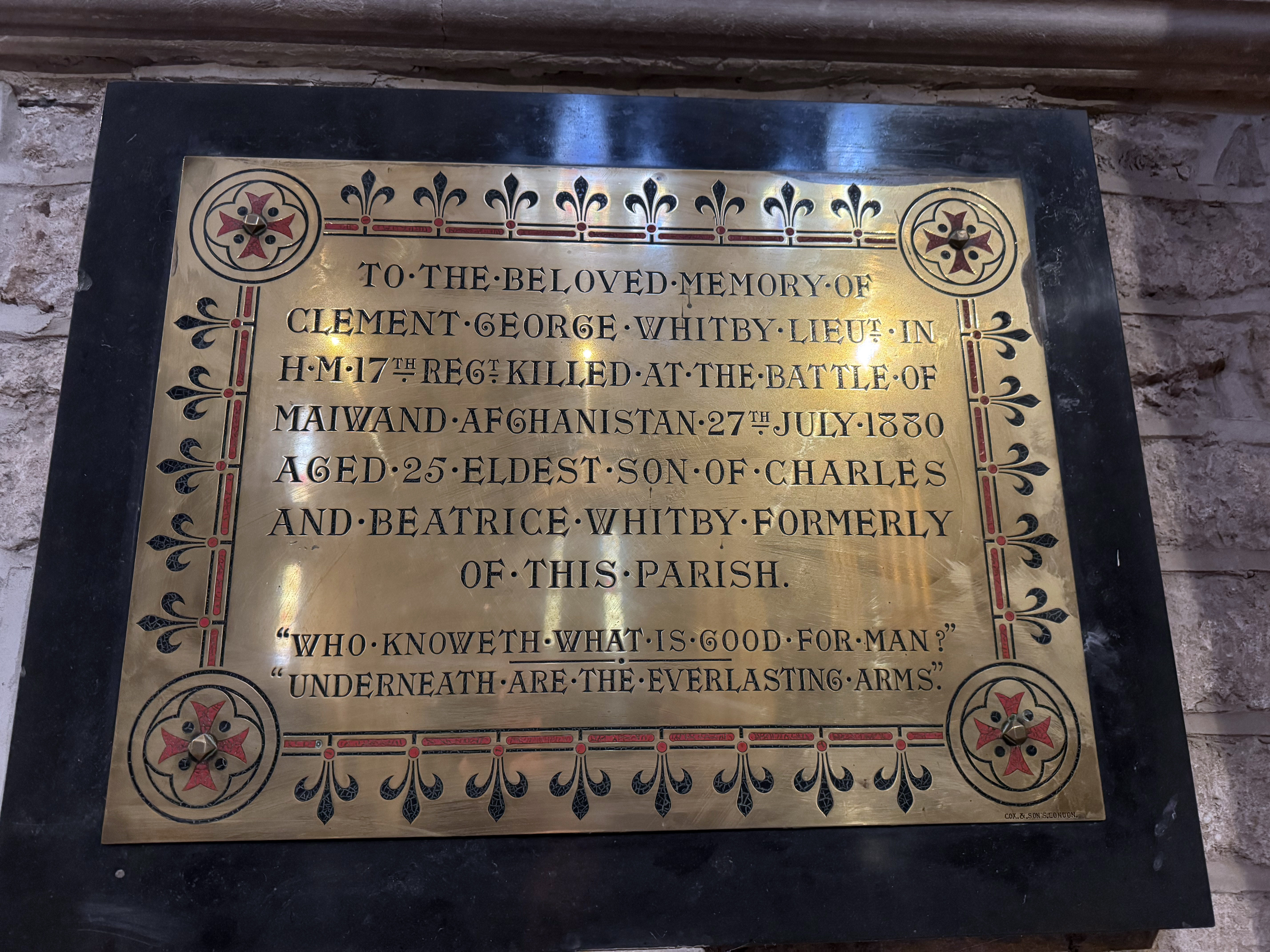
Another interesting memorial was to Lieutenant Clement George Whitby of the 17th Regiment of Foot who was killed at the Battle of Maiwand in Afghanistan in 1880. This was one of the catastrophic defeats of the British Army (not long after the defeat at Isandlwana by the Zulus in 1879) and it reinforced the doubts already felt by many Victorians about the wisdom of intervening in distant conflicts, and would see the pro‑Imperial policies of Disraeli replaced by the more cautious approach of Gladstone - which, ironically, would soon lead to another imperial disaster with Gordon at Khartoum. In India he had transferred to the Bombay Staff Corps and was attached to the 4th Bombay N.I. He had founded the Kandahar News to keep the soldiers in touch with events in and around the occupation of Afghanistan, back in India and even back at home. Many of his stories were published in the Times of India too. He had been given command of the baggage guard at Maiwand and after fighting off two assaults he joined the survivors of the battle returning to Kandahar. Sadly, within sight of the walls of safety, he was shot in the head and killed.
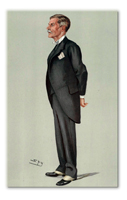
Sir Ernest Mason Satow

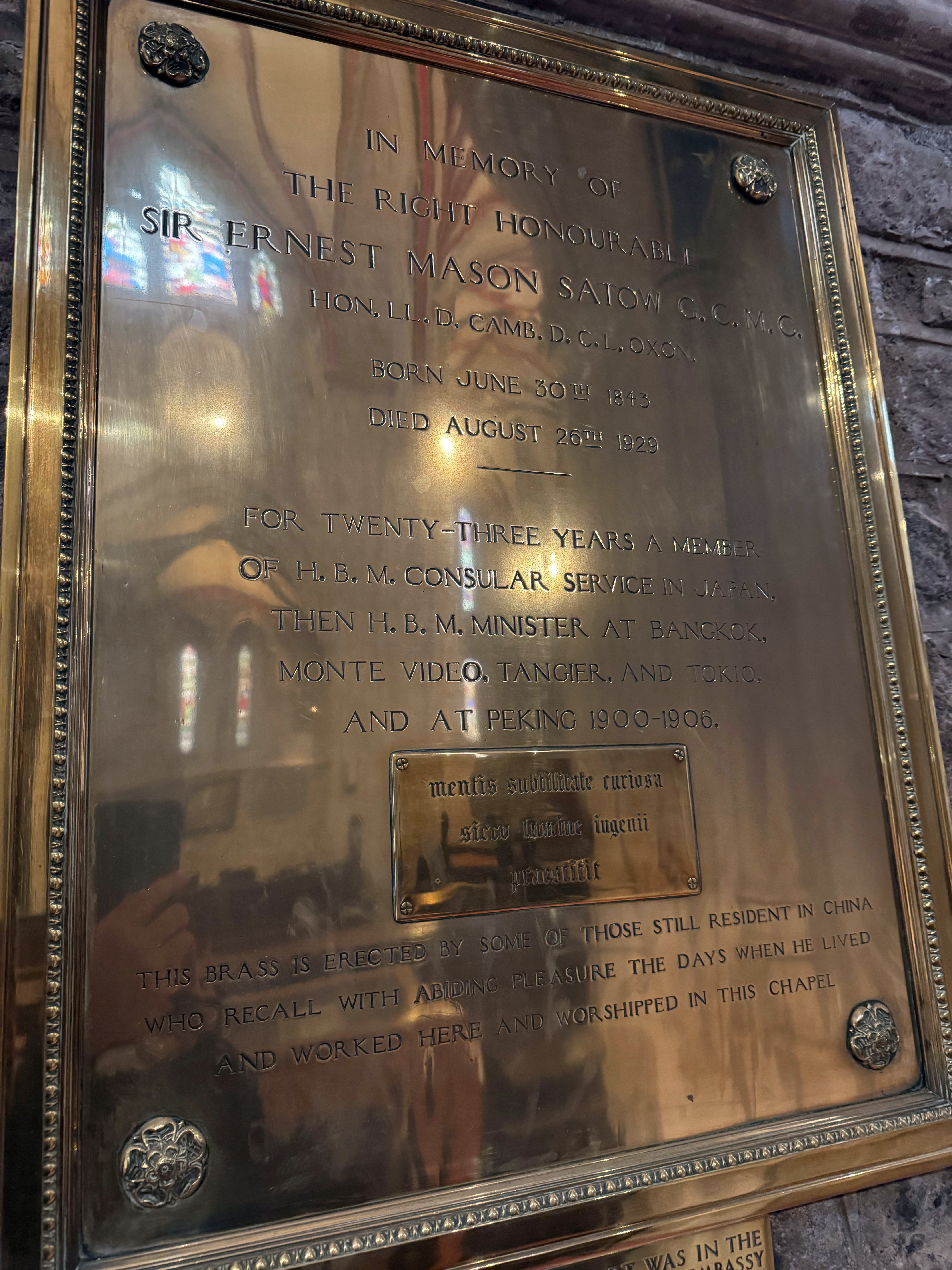
And one more interesting memorial was that to Sir Ernest Mason Satow G.C.M.G. Now as someone who lived and worked in Japan I was particularly interested to find this memorial. Originally it hung in the British Embassy in Peking (as it was called then) until the Communist Chinese took it over unceremoniously in 1949. He was one of the very first British diplomats involved in Japan as it opened up to the West in the 1860s. He wrote a famous book called A Diplomat in Japan where he details his remarkable career. Within days of arriving in Japan in 1862 as a 19‑year‑old interpreter, a British merchant was killed on the Tōkaidō road, an incident that soon escalated into the Anglo‑Satsuma War of 1863 — one of the early shocks that exposed the deep tensions within late‑Tokugawa Japan and later inspired elements of The Last Samurai. The British found themselves drawn into the complex struggle between the Shogunate and powerful domains such as Satsuma and Chōshū, and Satow quickly became indispensable as an interpreter, being one of the few Englishmen who could speak Japanese with real proficiency. He would play a similar role during the Meiji Restoration of 1868, when Japan finally overthrew the Shogunate and embarked on a determined programme of modernisation in which Britain was particularly influential. Satow would go on to serve in Siam, Uruguay and Morocco before returning to Japan in 1895 until the Boxer Rebellion of 1900. Indeed he played a role in encouraging the Japanese to despatch their forces to help the European legations who were besieged in various cities and ports across China, realising that Japanese troops could get to China far faster than Europeans could manage it. He was then transferred to China to help with the negotiations to end that conflict. In fact it was his signature that was added to represent Britain in the Boxer Protocols which affixed the compensation claims in the aftermath of the war. He was also important in promoting the Anglo‑Japanese Alliance of 1902 and watched first‑hand from China the defeat of Russia at the hands of the Japanese who felt secure with their British alliance to be able to wage war with the Russians. He was quite a remarkable man and is regarded as one of the most important observers of this critical period in Japanese history.
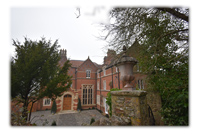
Chanters House, Ottery St. Mary

Ottery St Mary really does show how these small Devon towns could have connections across the world and through literature and poetry even. Samuel Taylor Coleridge can definitely lay claim to being the father of English Romanticism alongside his good friend William Wordsworth and surely much of that inspiration for the love of nature and beauty is from his formative years here in Ottery St Mary and in his father’s church over the road from his house! I cannot recommend Ottery St Mary as a whole and St Mary’s Church in particular highly enough. They offer the perfect mix of beauty – be it natural or man‑made – and layer upon layer of history. You have to love Devon.

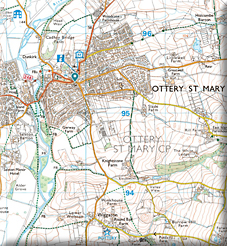
Location of Walk

Click for OS Map of Area

Links

Samuel Taylor Coleridge – “Songs of the Pixies”
Full text of Coleridge’s early poem inspired by the Pixies’ Parlour

Knightstone Manor – Historical Overview
Detailed history of Knightstone Manor and its medieval origins

Great English Churches – Ottery St Mary
Architectural and historical guide to St Mary’s Church

Historic England – Church of St Mary, Ottery St Mary
Grade I listing entry for the parish church

Historic England – Tumbling Weir, Ottery St Mary
Listing entry for the unique circular weir on the River Otter

Ottery St Mary Heritage Society
Local history group with full PDF library of their findings and articles over the years

Devon Churchland – St Edward the Confessor, Wiggaton
Overview of the late Victorian church near Ottery St Mary

West Country Voices – A Walk with Coleridge in Ottery St Mary
A modern exploration of Coleridge’s early life and landscapes around Ottery St Mary

Suggested Reading

Cherry, Bridget & Pevsner, Nikolaus – The Buildings of England: Devon
Yale University Press, 2004

Coleridge, Samuel Taylor – Poems
Various editions; includes “Songs of the Pixies” and early Ottery works

Coleridge, Samuel Taylor – Biographia Literaria
His major autobiographical and critical work

Holmes, Richard – Coleridge: Early Visions
The definitive biography of Coleridge’s youth

Hoskins, W. G. – Devon
A classic county history by England’s great landscape historian

Jansen, Marius B. – The Making of Modern Japan
A major scholarly history of the era Satow witnessed first‑hand

Satow, Ernest Mason – A Diplomat in Japan
Satow’s classic account of Japan’s opening and the Meiji Restoration

Satow, Ernest Mason – Guide to Diplomatic Practice
His foundational manual of diplomacy, still influential today

Wordsworth, William & Coleridge, Samuel Taylor – Lyrical Ballads
The foundational text of English Romanticism

More Walks

Walks by the Westcountry Walker

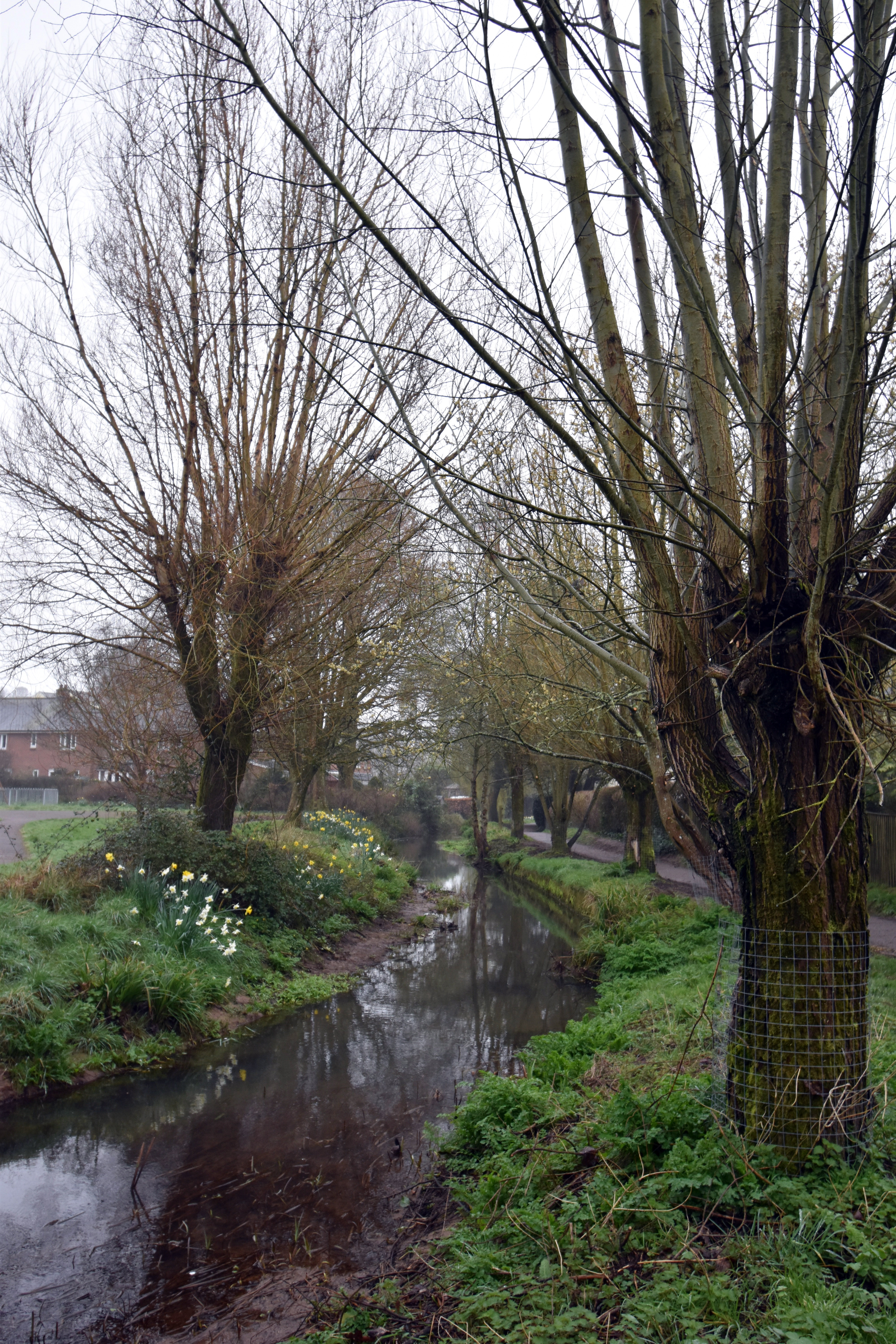
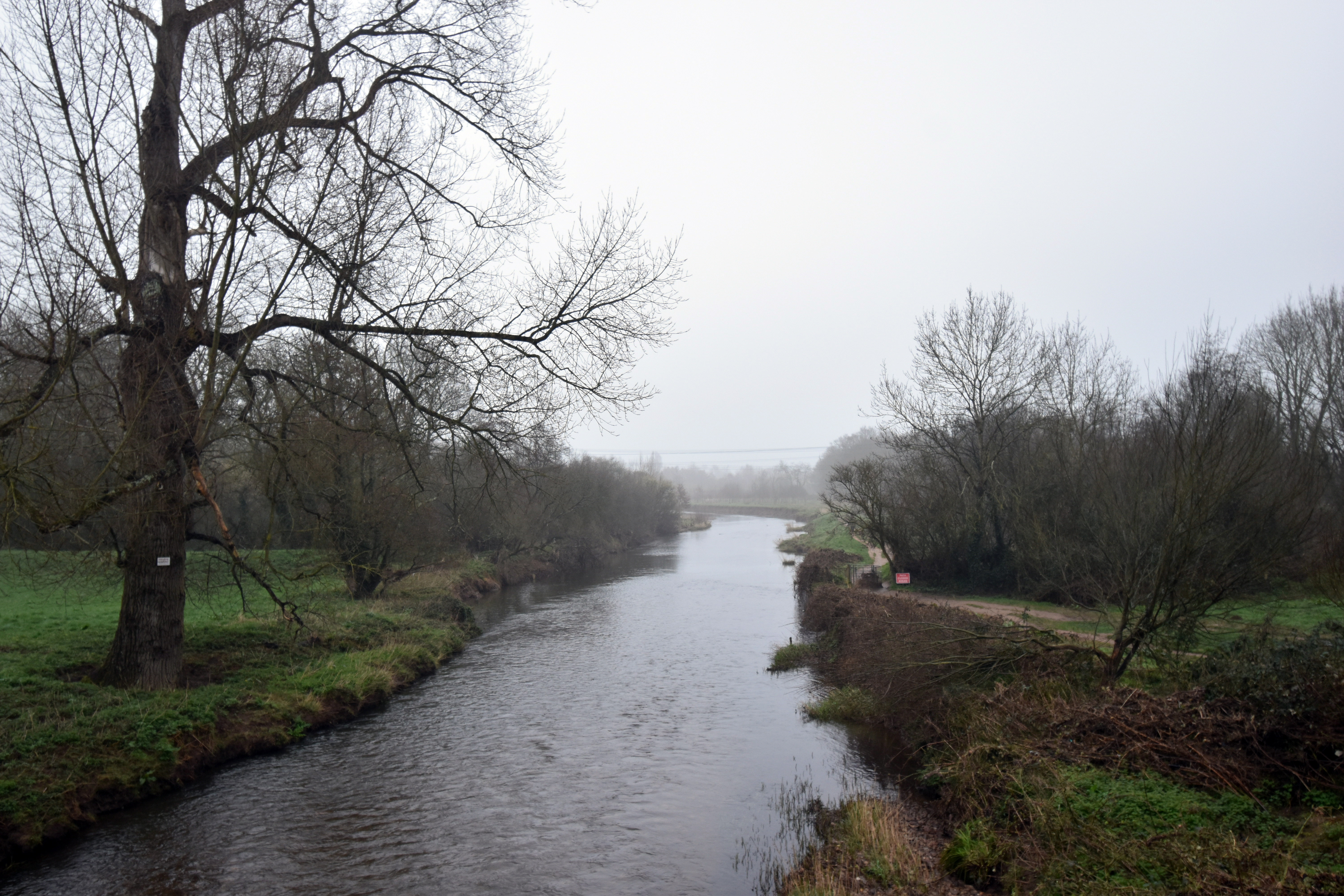
Land of Canaan park donated by Edward Manley The Tumbling Weir beside the old wool and silk mill River Otter from the 1851 St Saviour’s Iron Bridge Rupert on the muddy path down to the Pixies’ Parlour
The Land of Canaan park — gifted to the town by Victorian philanthropist Edward Manley as a public recreation space. The Tumbling Weir — an ingenious circular overflow beside the former wool (later silk) mill, a reminder of Ottery’s industrial past. The River Otter seen from the 1851 St Saviour’s Iron Bridge — a peaceful stretch of river with echoes of Coleridge’s childhood. Rupert negotiating the muddy riverside path leading down toward the Pixies’ Parlour cave.
Inside the Pixies’ Parlour showing historic graffiti Rupert examining the entrance to the Pixies’ Parlour A very muddy path heading south from the caves Rupert running up the steps as we climb for a view of the Otter
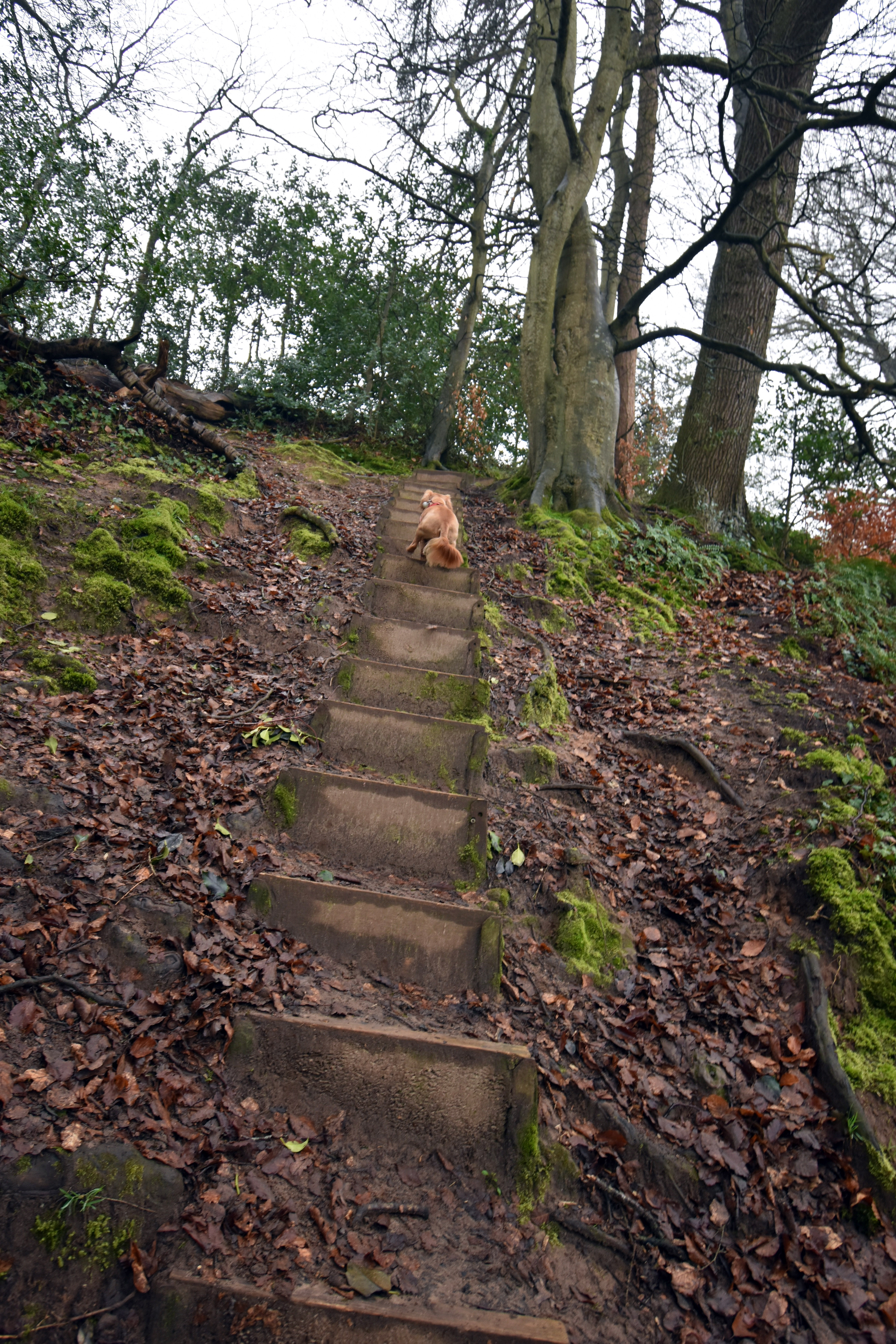
Inside the Pixies’ Parlour — the sandstone walls covered in generations of carved names and graffiti, a reminder of centuries of local folklore. Rupert inspecting the entrance to the Pixies’ Parlour — the moment he pauses before deciding whether the pixies are at home. The extremely muddy path heading south — one of several stretches where recent rains made progress “interesting”. Rupert bounding up the woodland steps as we climb away from the caves to gain a fine view over the River Otter.
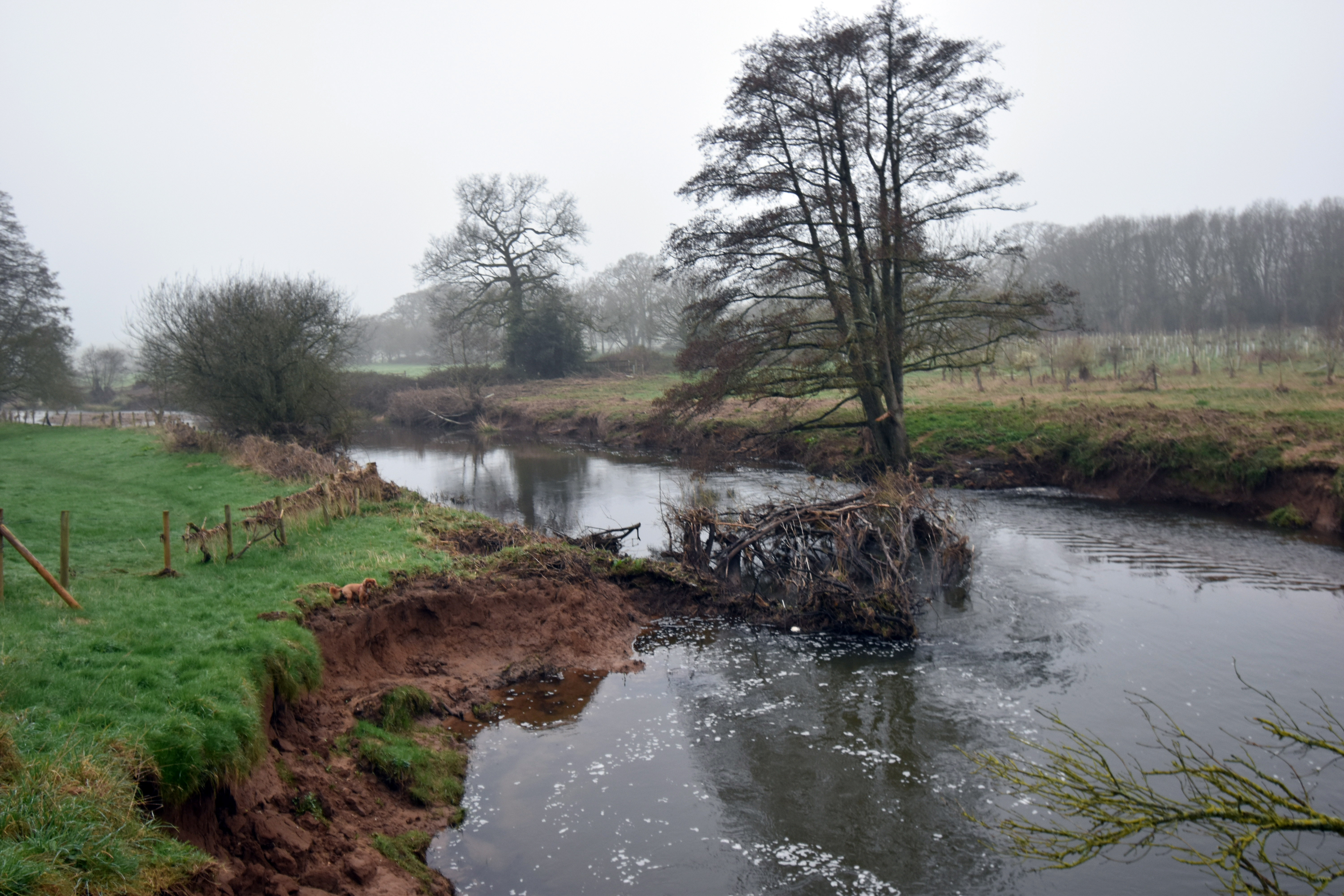
Rupert waiting at the top of the hill Very wet conditions on the River Otter flood plain River Otter in full flow, eroding the banks Tree washed into the river by erosion
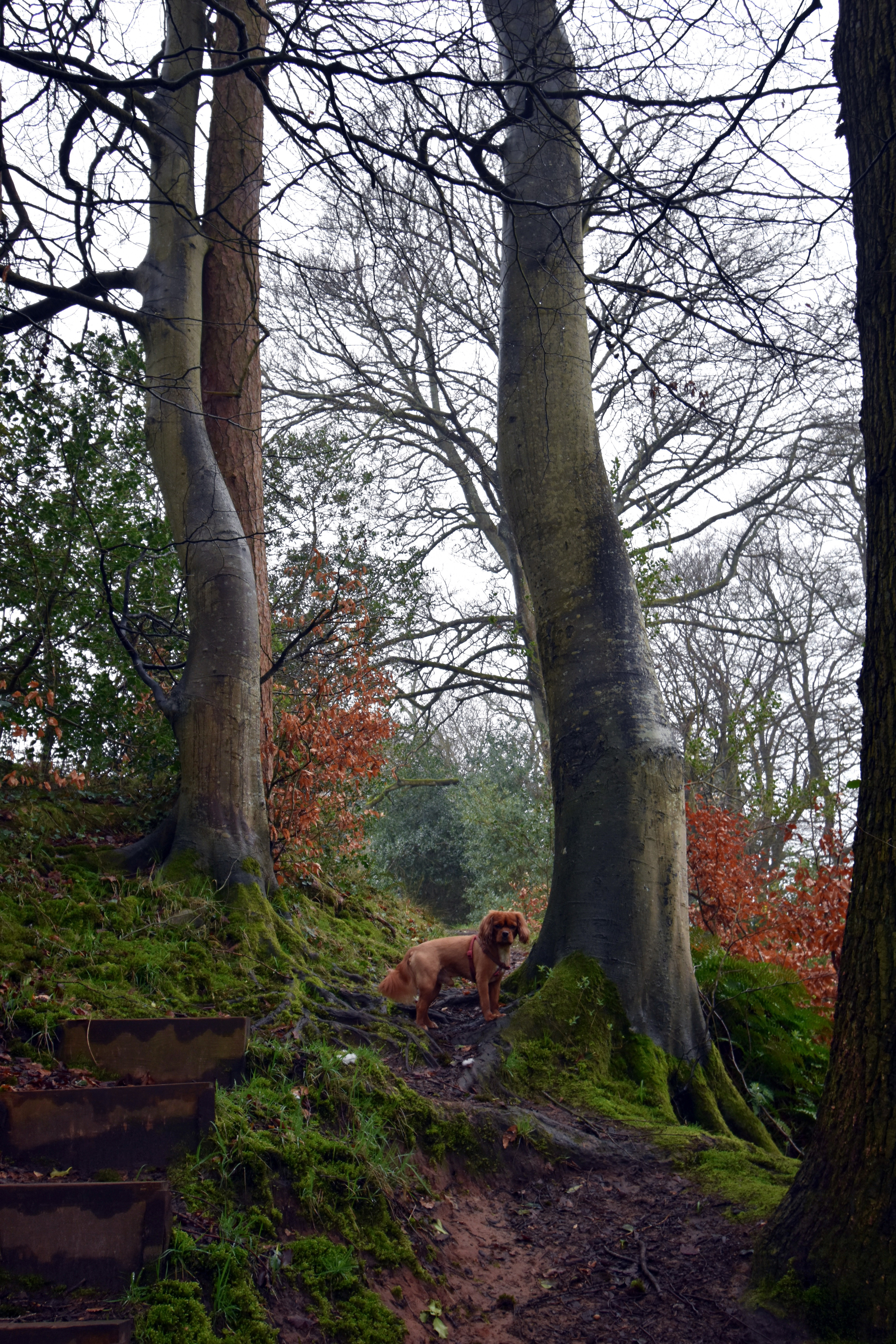
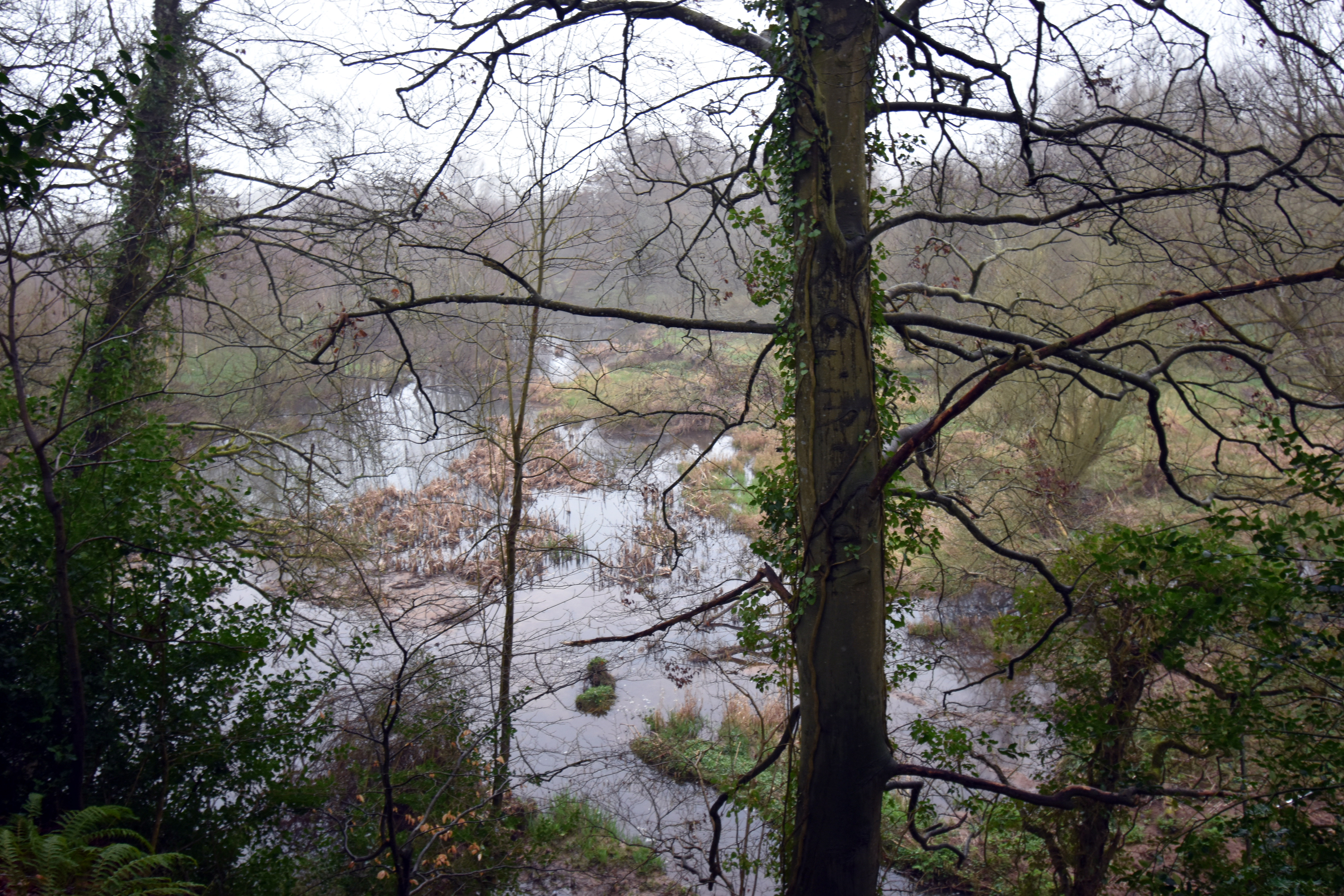
Rupert waiting patiently at the top of the hill — the moment he realises I’m slower than he is. The River Otter flood plain — saturated after days of rain, with standing water across the meadows. The River Otter in full flow — the swollen current actively eating away at the soft banks. A tree washed into the river by erosion — a stark reminder of how dynamic the Otter’s course can be.
Trees in the misty conditions near Wiggaton Locked Wiggaton Church of St Edward the Confessor Thatched cottage in Wiggaton with unusual Tudor window Rupert on the drive to Knightstone Manor
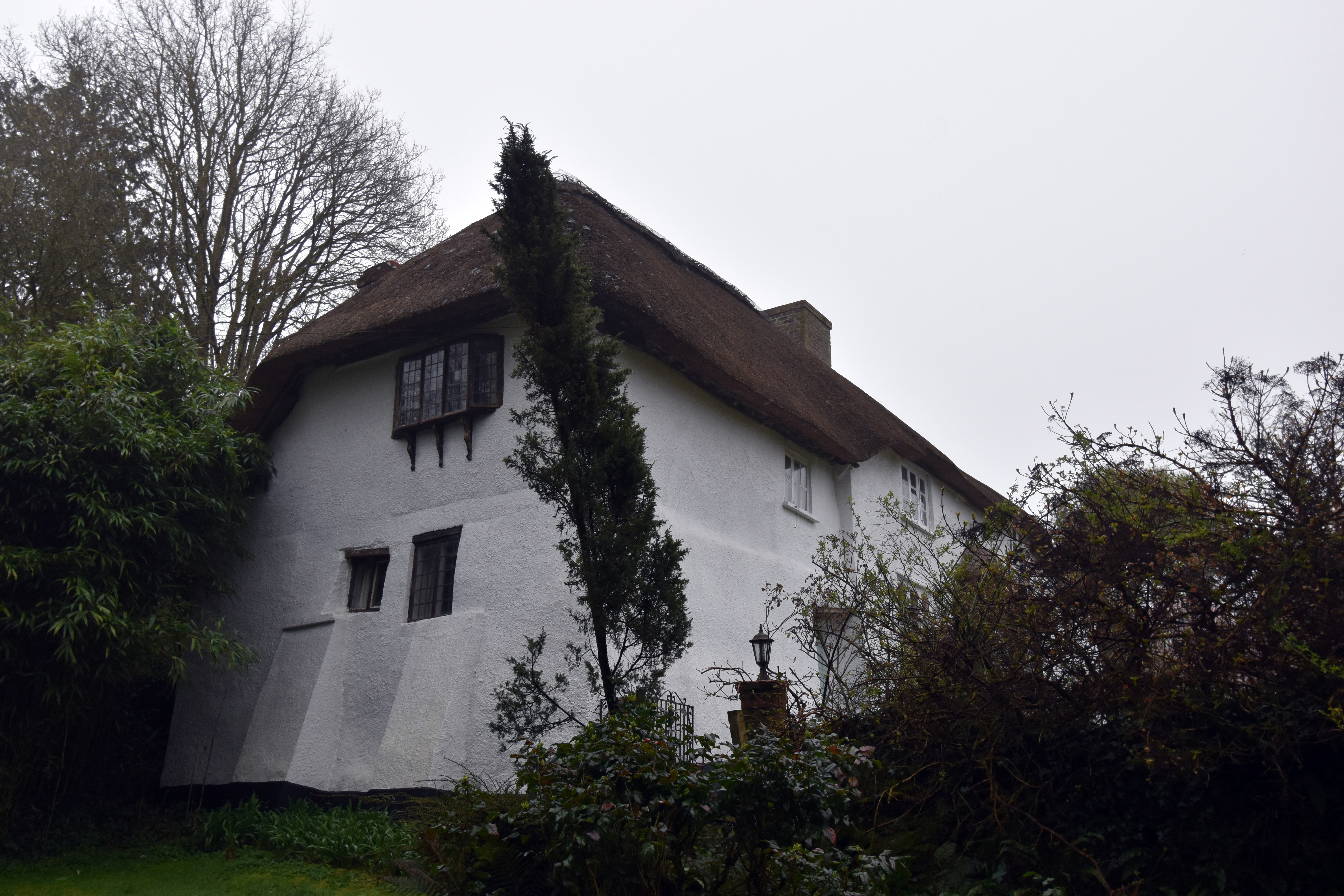
Trees looming through the Dunkelflaute mist — the soft, atmospheric light that defined much of the walk. The locked Church of St Edward the Confessor at Wiggaton — a disappointment on a Sunday, but still a charming sight. A thatched cottage in Wiggaton featuring a striking and unusual Tudor window — a real architectural curiosity. Rupert trotting confidently along the drive toward Knightstone Manor — eager to see what lies ahead.
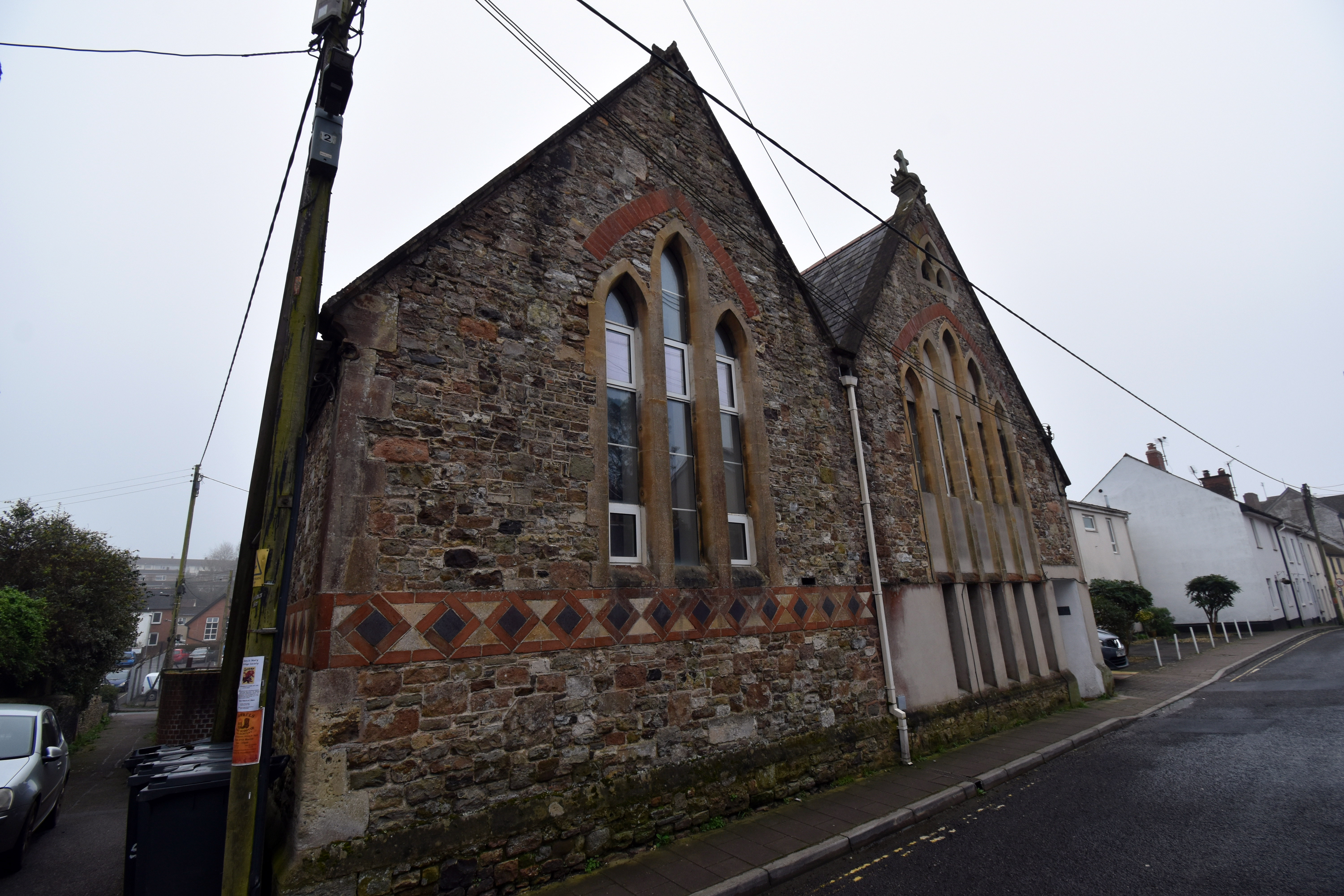
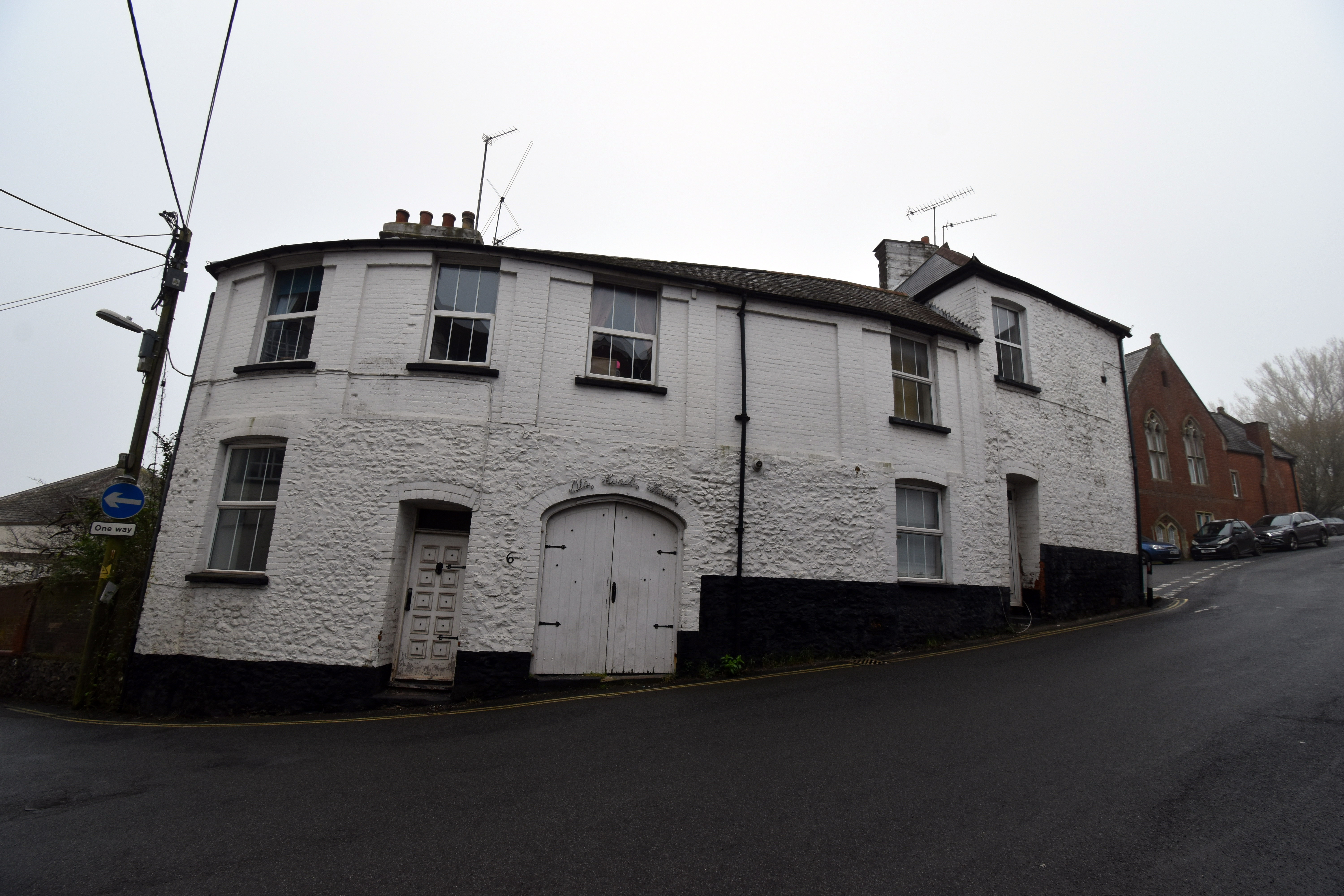
View through the formal gardens toward Knightstone Manor View looking back from the Knightstone Manor entrance Typical buildings in Ottery St Mary Old Methodist Chapel in Ottery St Mary
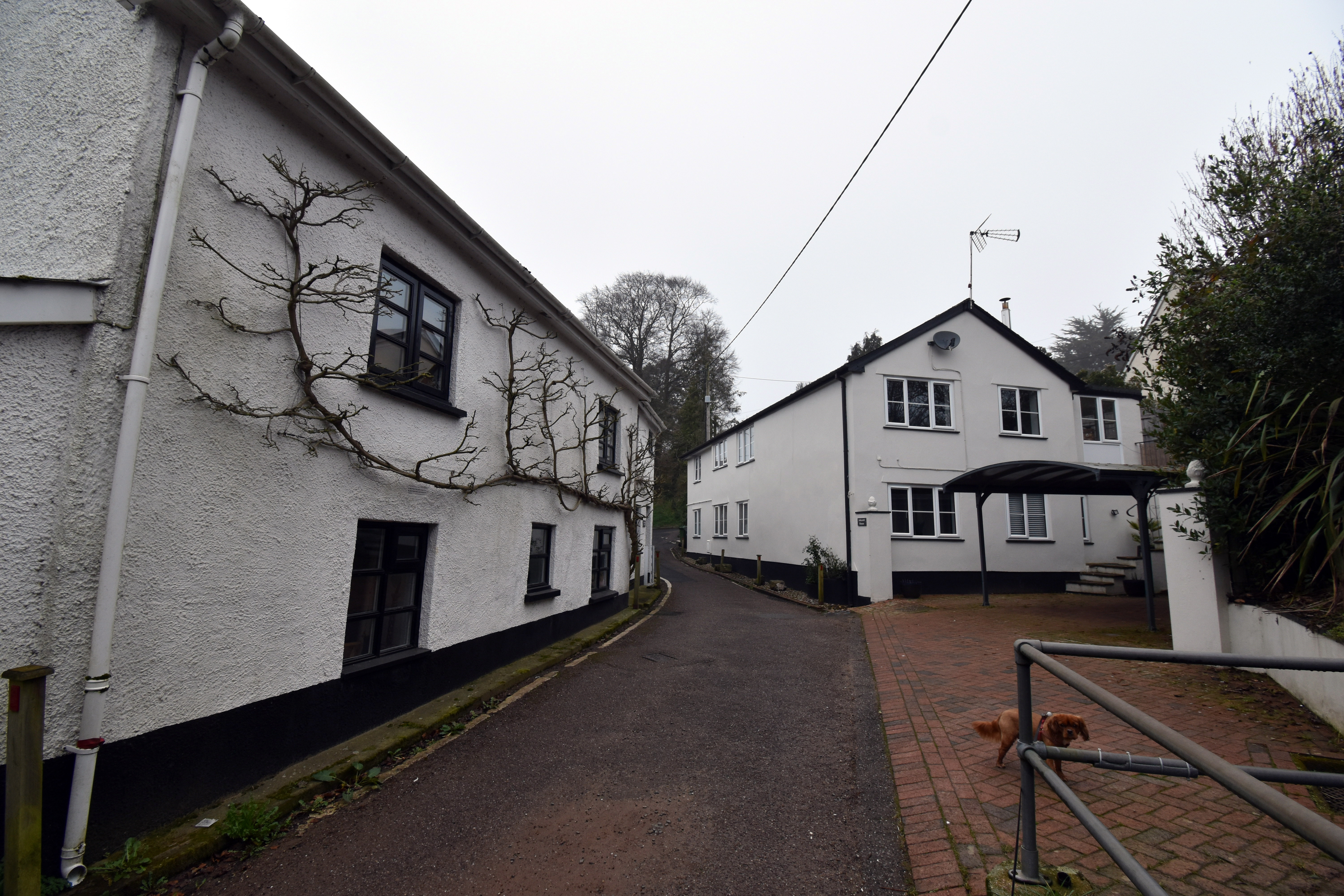
The formal garden path leading toward Knightstone Manor — a straight, enclosed approach framed by tall hedges. Looking back from the entrance to Knightstone Manor — the same path viewed in the opposite direction. A typical example of the domestic architecture in Ottery St Mary, showing the character of the town centre. The old Methodist Chapel in Ottery St Mary — simple but distinctive surviving 19th‑century non-conformist architecture.
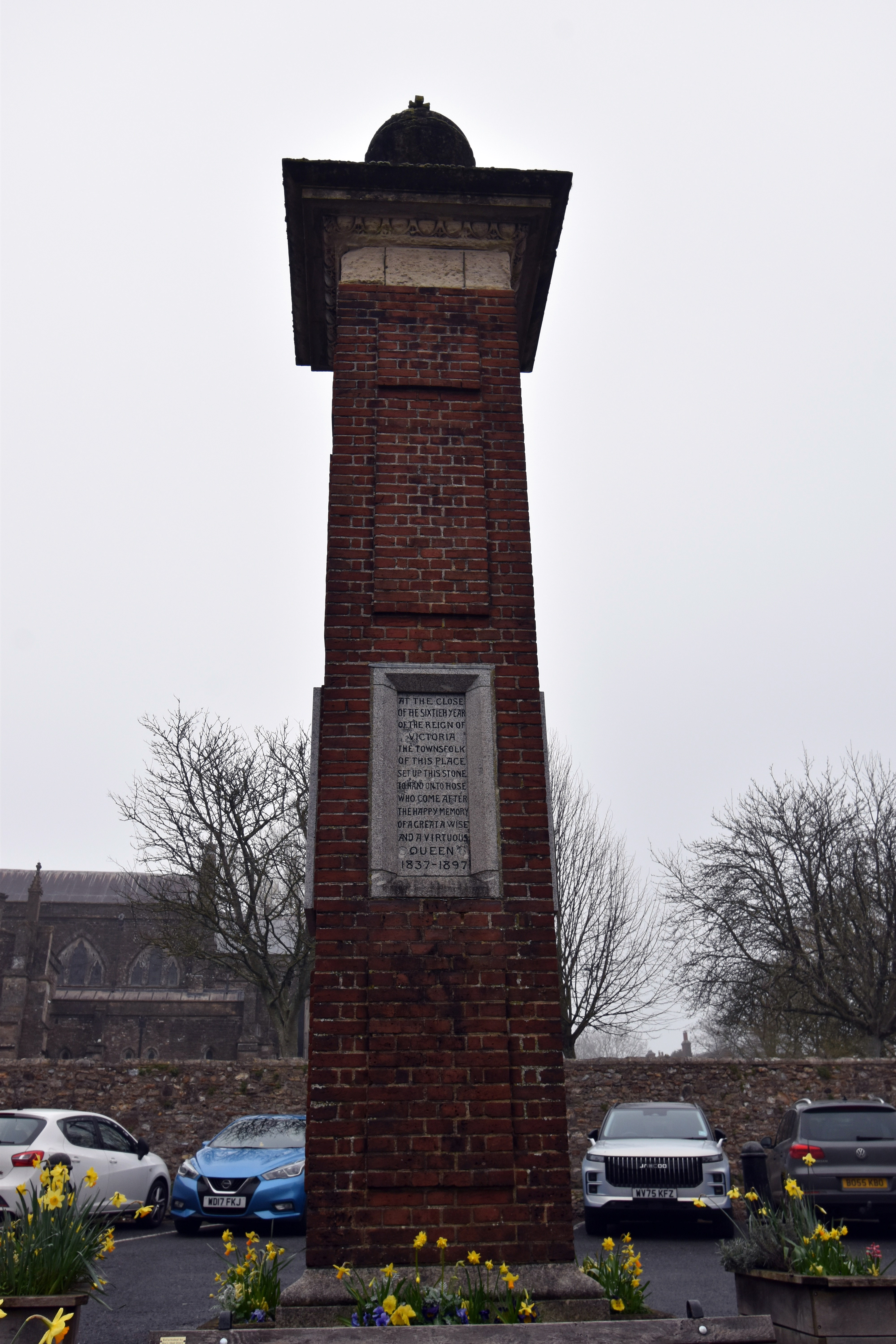
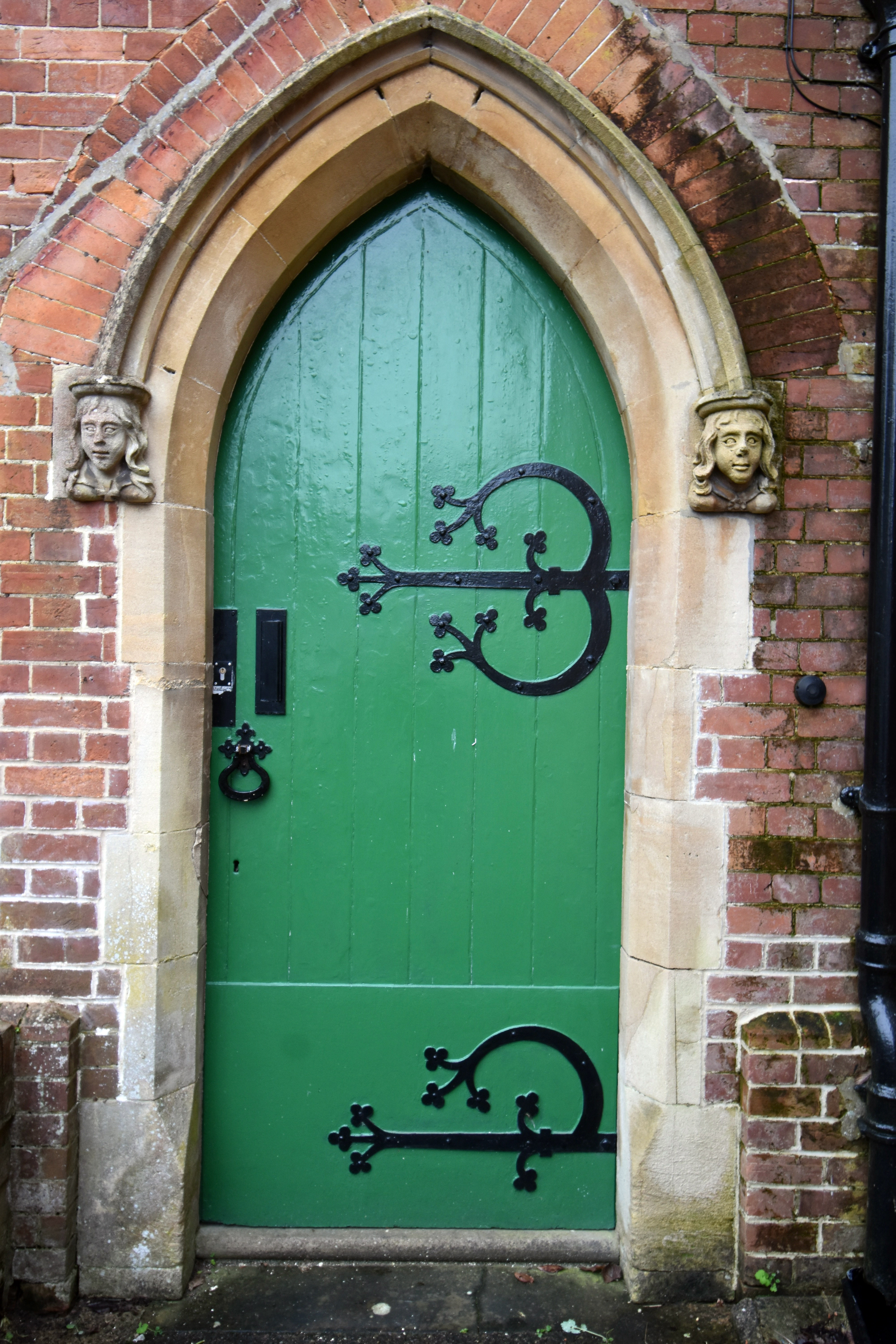
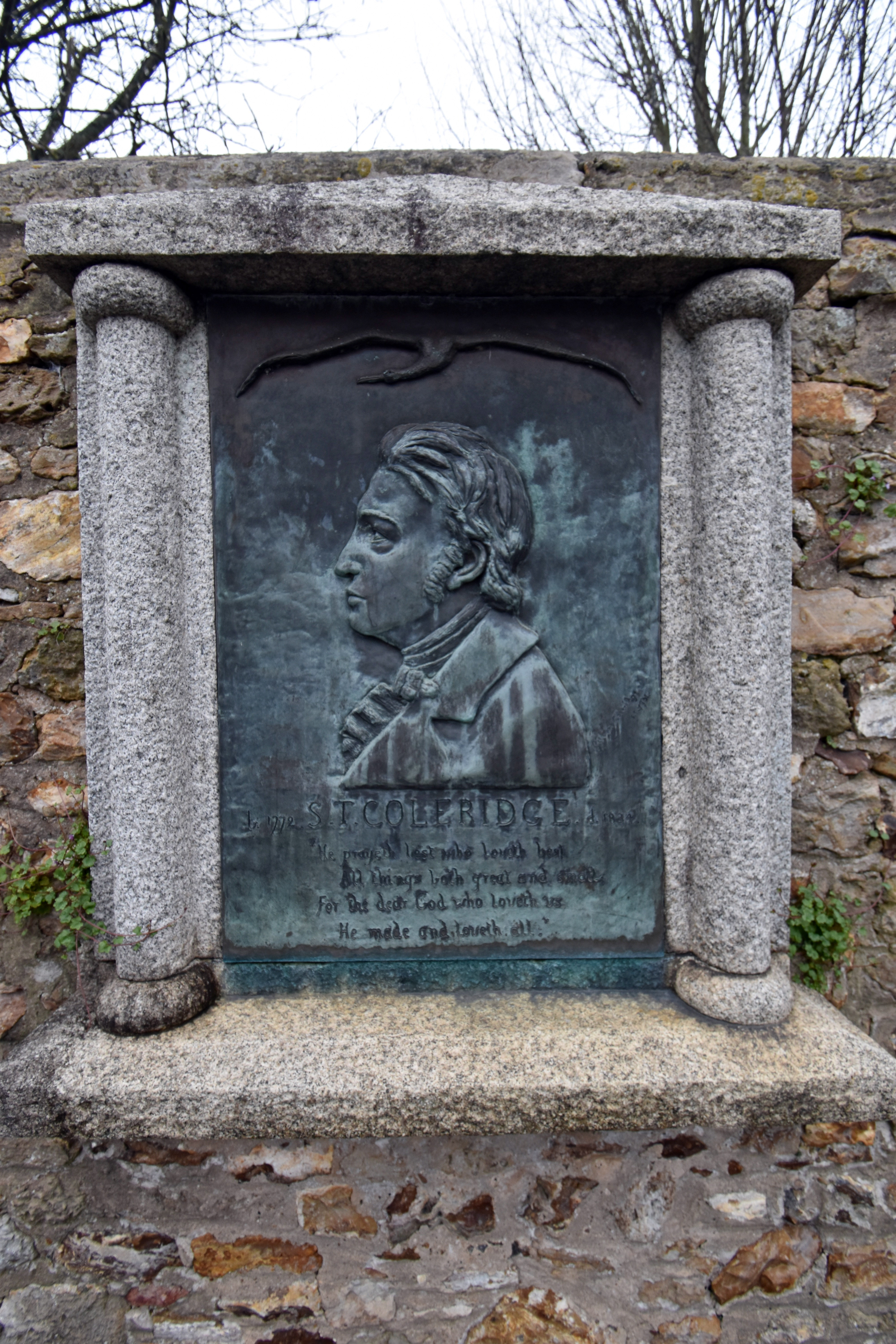
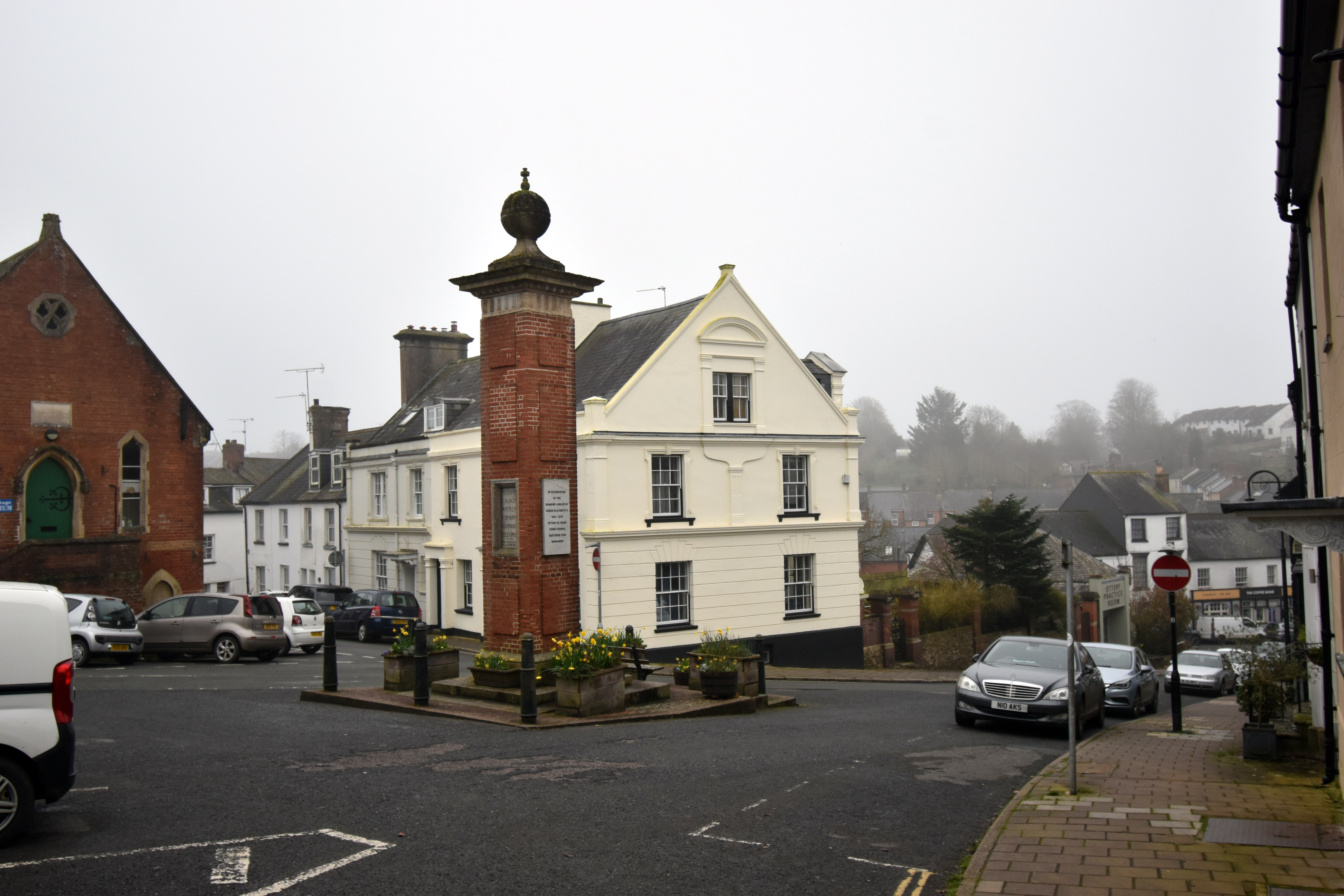
Old coaching inn now isolated on a traffic island in front of the church Diamond Jubilee memorial to Queen Victoria Doorway of the old 1859 town hall, now the heritage museum Profile memorial of Samuel Taylor Coleridge on the wall of St Mary’s Church
The former coaching inn now marooned on a traffic island in front of St Mary’s — a reminder of Ottery’s coaching‑route past. The Diamond Jubilee memorial marking the “wise and virtuous queen” — set up by the townspeople in 1897. The doorway of the old town hall, built in 1859 — now home to Ottery’s heritage museum. The profile of Samuel Taylor Coleridge on the exterior of St Mary’s Church — a simple memorial to the town’s most famous son.
St Mary’s Church viewed from the south Statue of Samuel Taylor Coleridge outside St Mary’s Church Coleridge statue with more of St Mary’s architecture behind One of the exterior consecration crosses on St Mary’s Church
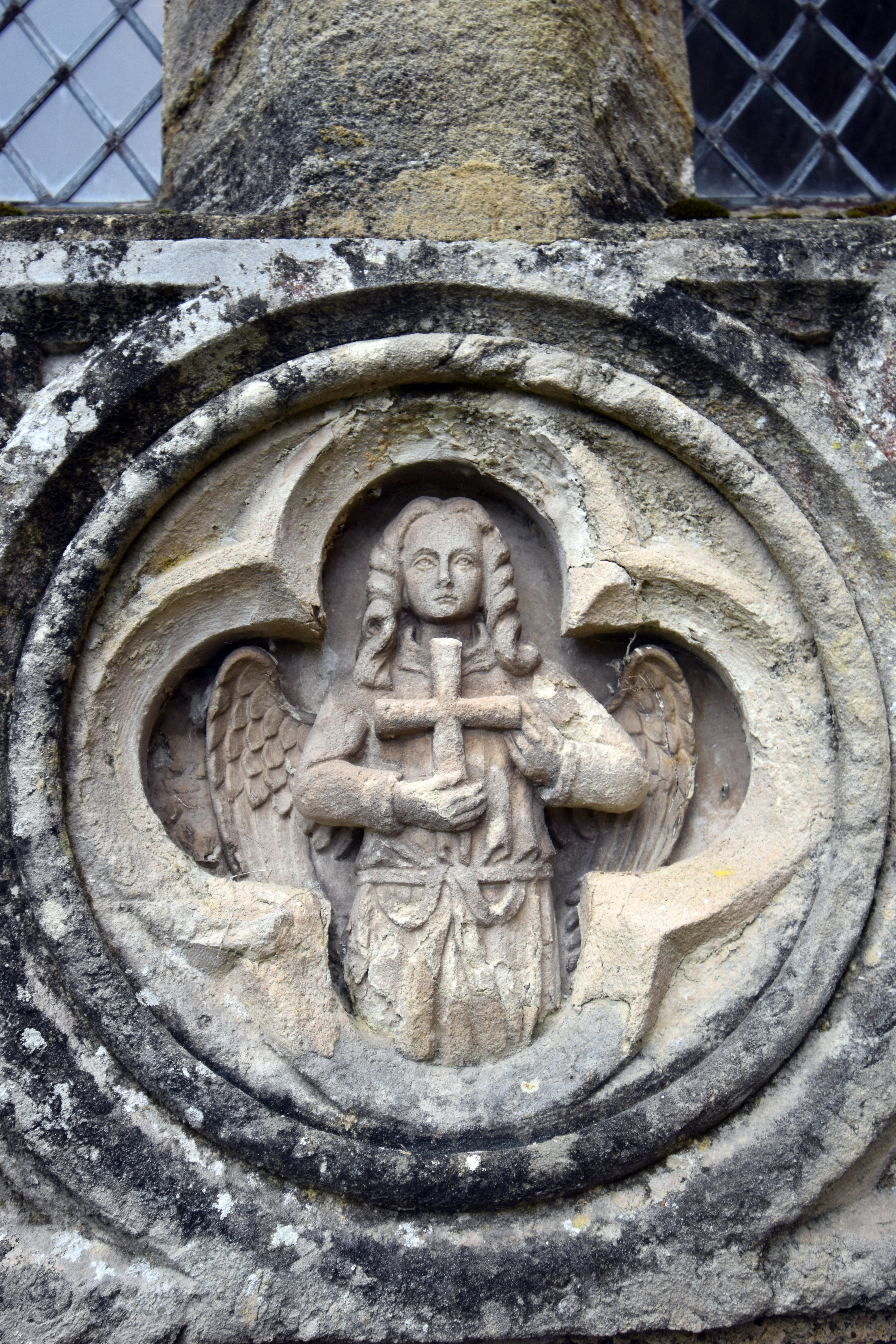
St Mary’s from the south — showing the twin‑towered west front and the scale of the church often described as a “miniature Exeter Cathedral”. The statue of Samuel Taylor Coleridge outside St Mary’s — a reminder of the poet’s early life in Ottery and his family’s long association with the church. The Coleridge statue with more of St Mary’s behind — giving a clearer view of the 14th‑century fabric remodelled by Bishop John Grandisson. One of the twenty‑four exterior consecration crosses — marking where the bishop anointed the walls when the church was dedicated.
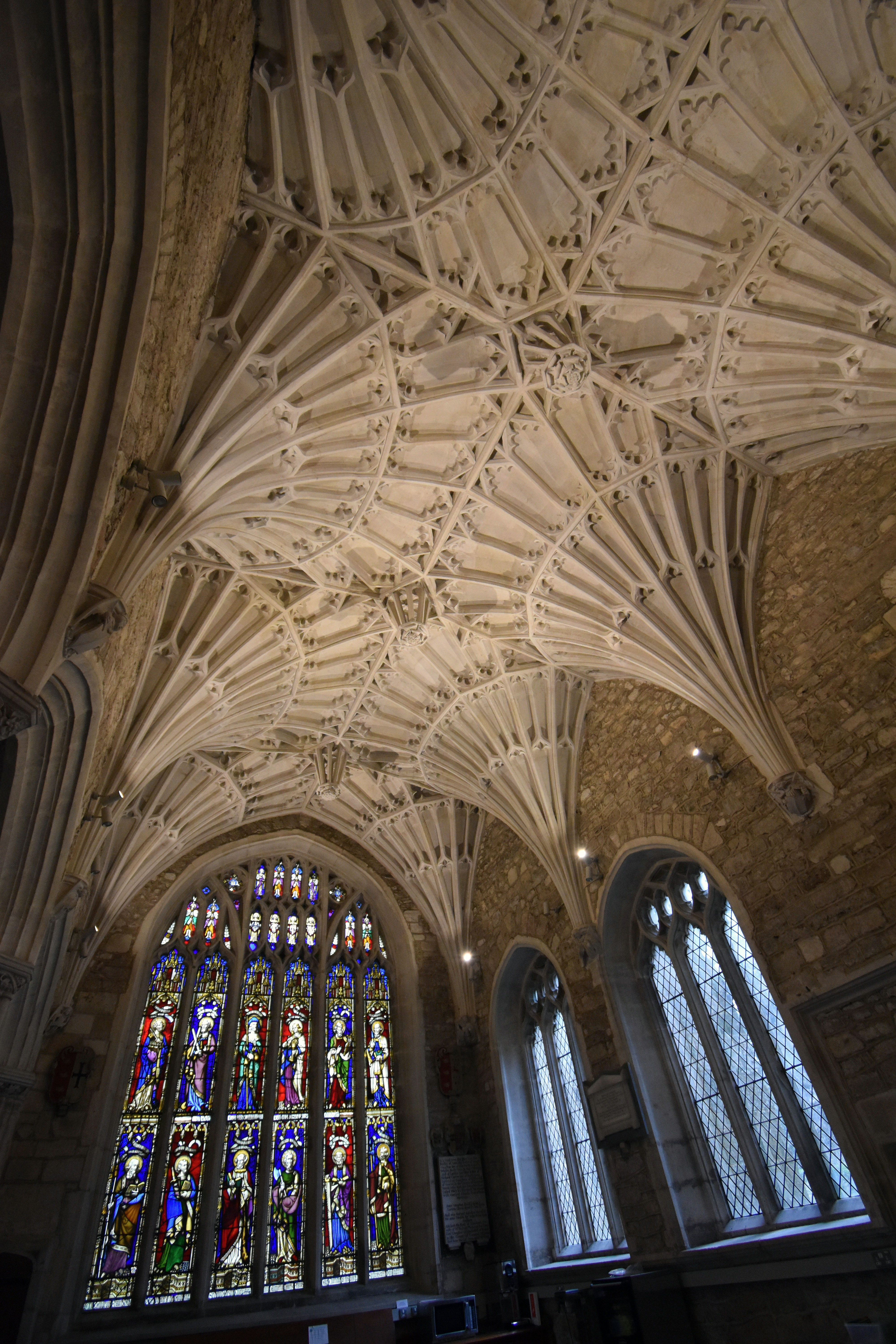
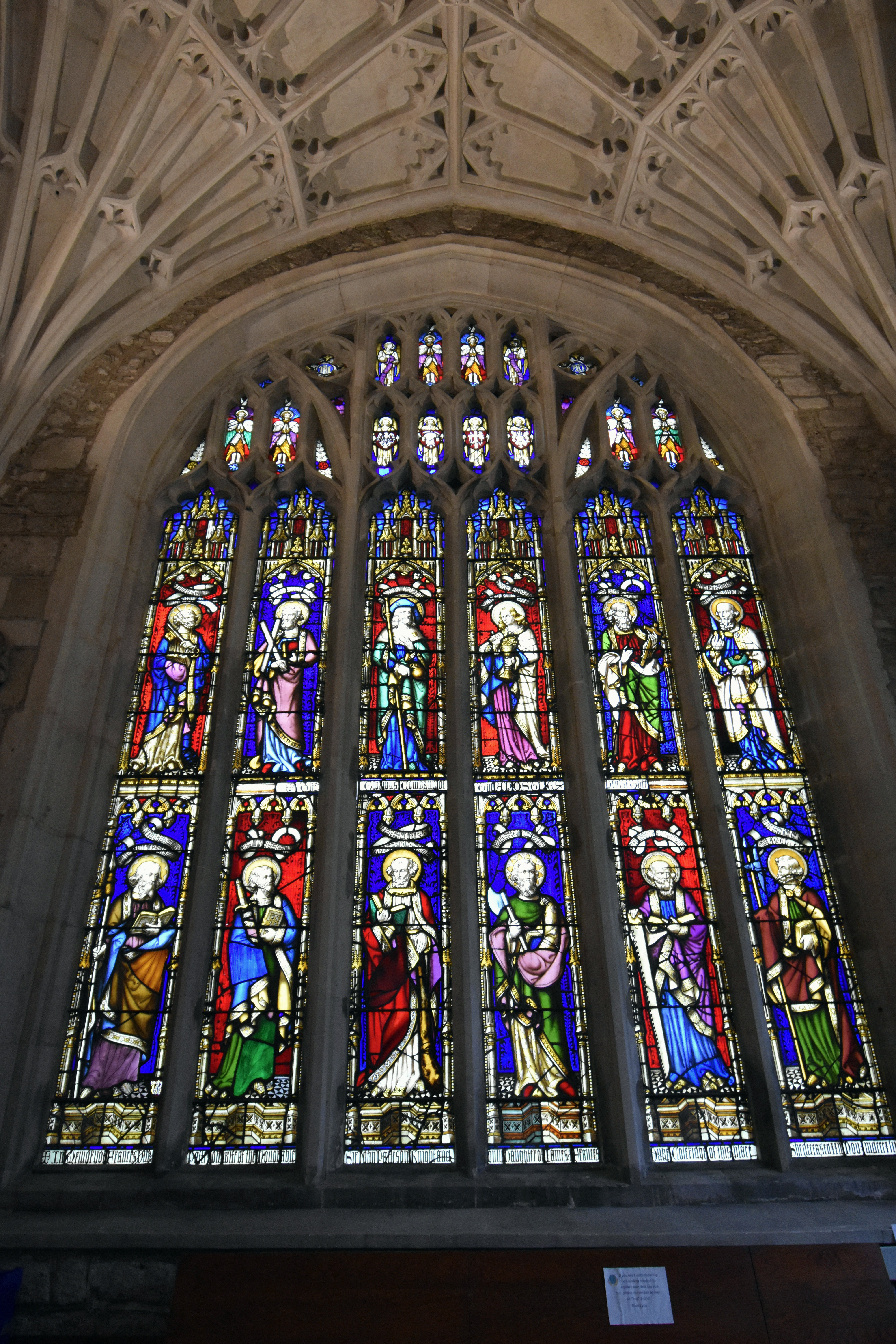
Maiwand memorial to Lieutenant Clement George Whitby Stained glass window at the west end of the Dorset Aisle Memorial to Anne Vaughan and Laetitia Carew Vaulted ceiling of the Dorset Aisle endowed by Lady Cecily Bonville
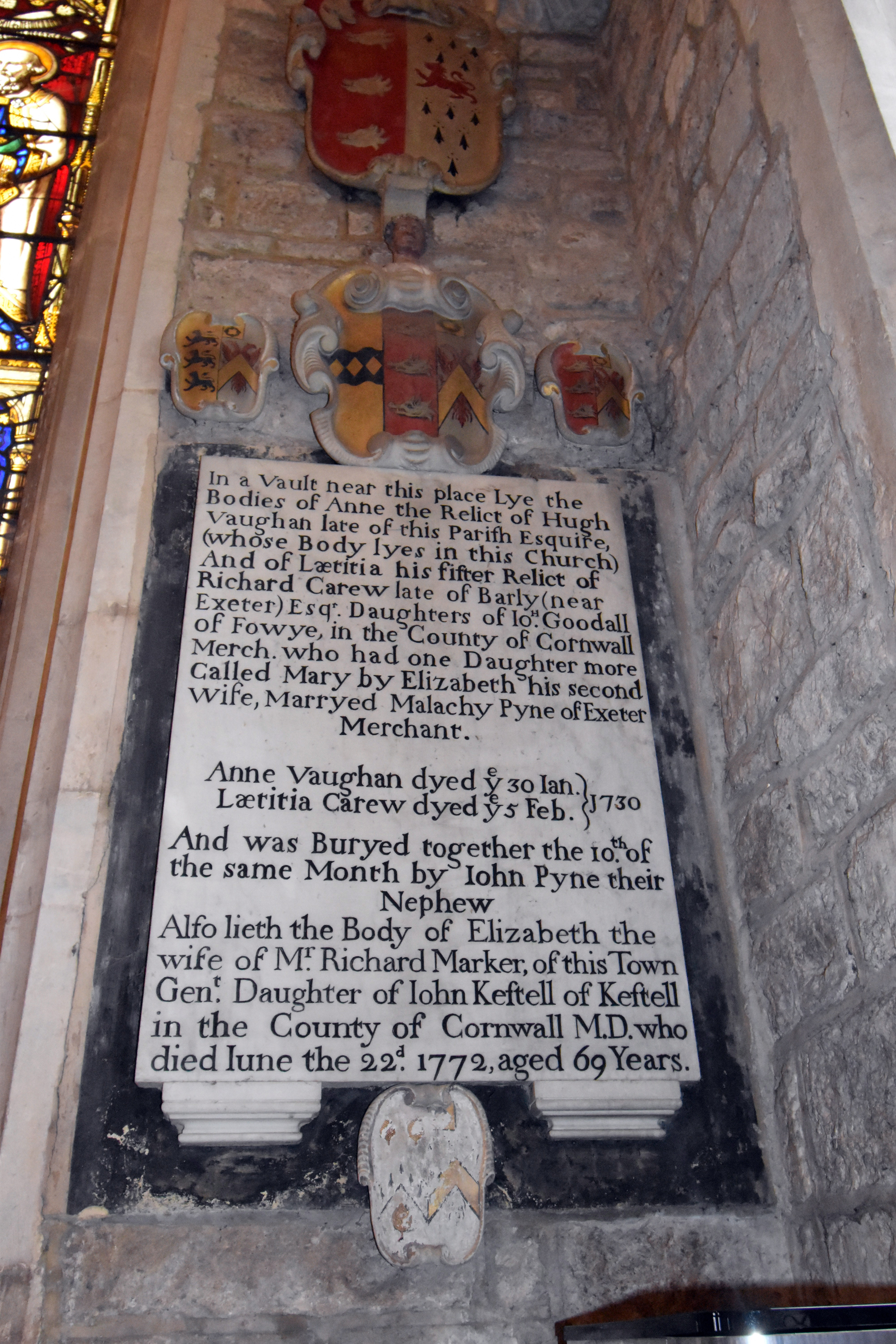
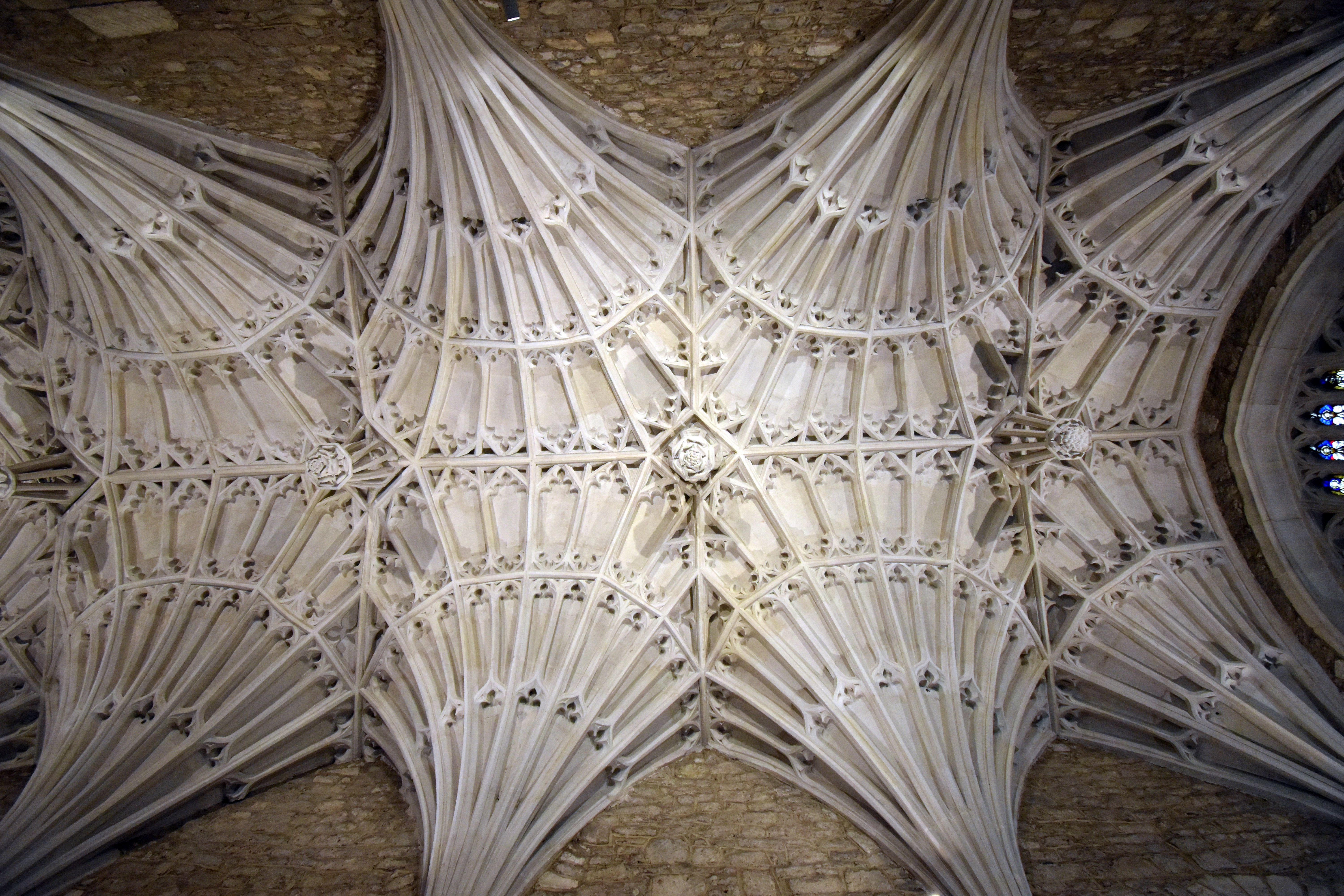
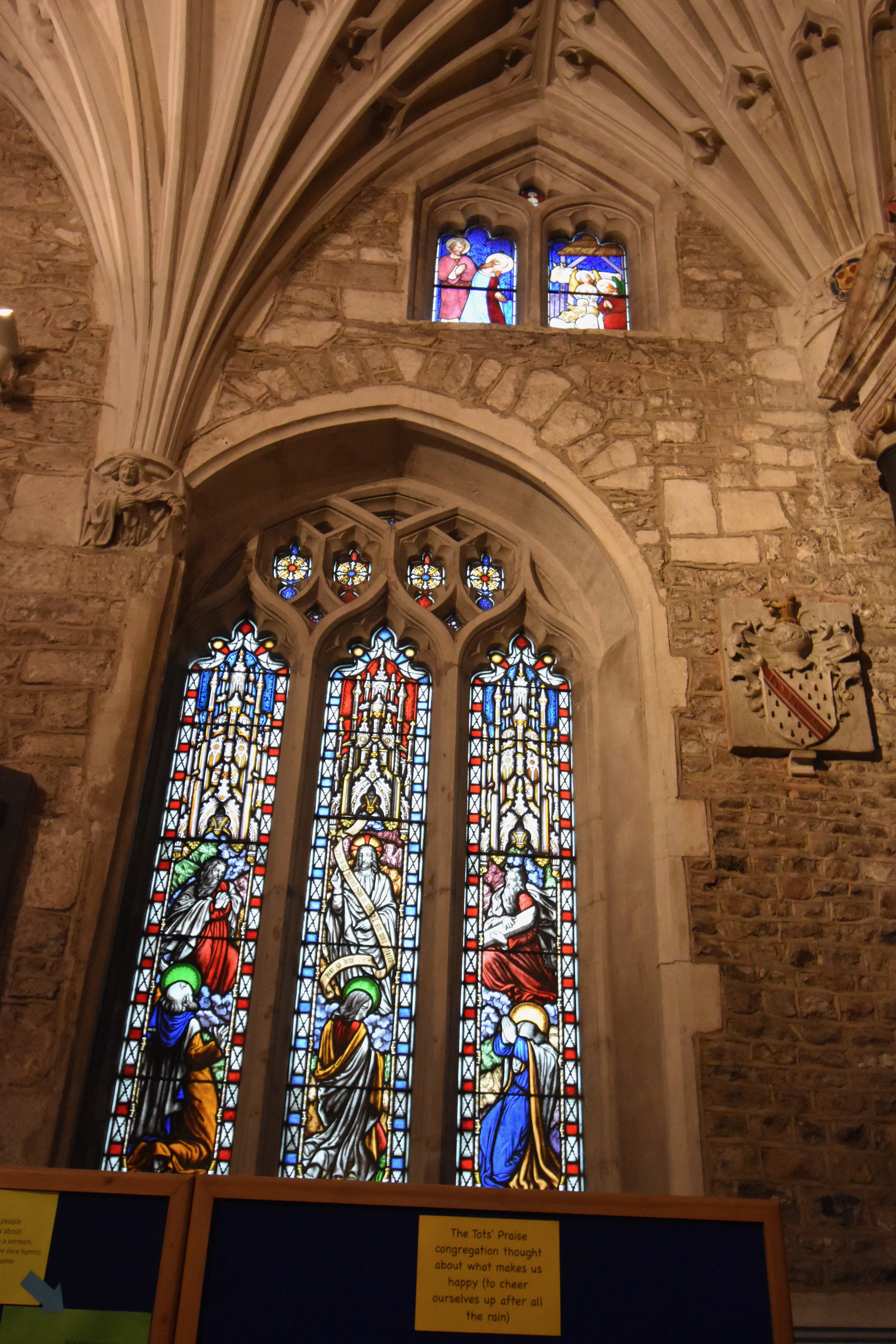
The Maiwand memorial to Lieutenant **Clement George Whitby**, H.M. 17th Regiment — killed at the Battle of Maiwand, Afghanistan, on 27 July 1880, aged 25. The plaque records him as the eldest son of **Charles and Beatrice Whitby** of this parish. The stained glass window at the western end of the **Dorset Aisle** — part of the 1520 extension funded by **Lady Cecily Bonville**, showing a series of saints beneath rich Gothic tracery. The memorial to **Anne Vaughan** and **Laetitia Carew**, daughters of John Goodall of Fowey, Cornwall — recording their burials in 1730, along with a later inscription for **Elizabeth Marker**, who died in 1772. The fan‑vaulted ceiling of the **Dorset Aisle**, added by **Lady Cecily Bonville** — one of the finest late‑medieval features of the church, with ribs spreading from clustered shafts in the English Gothic style.
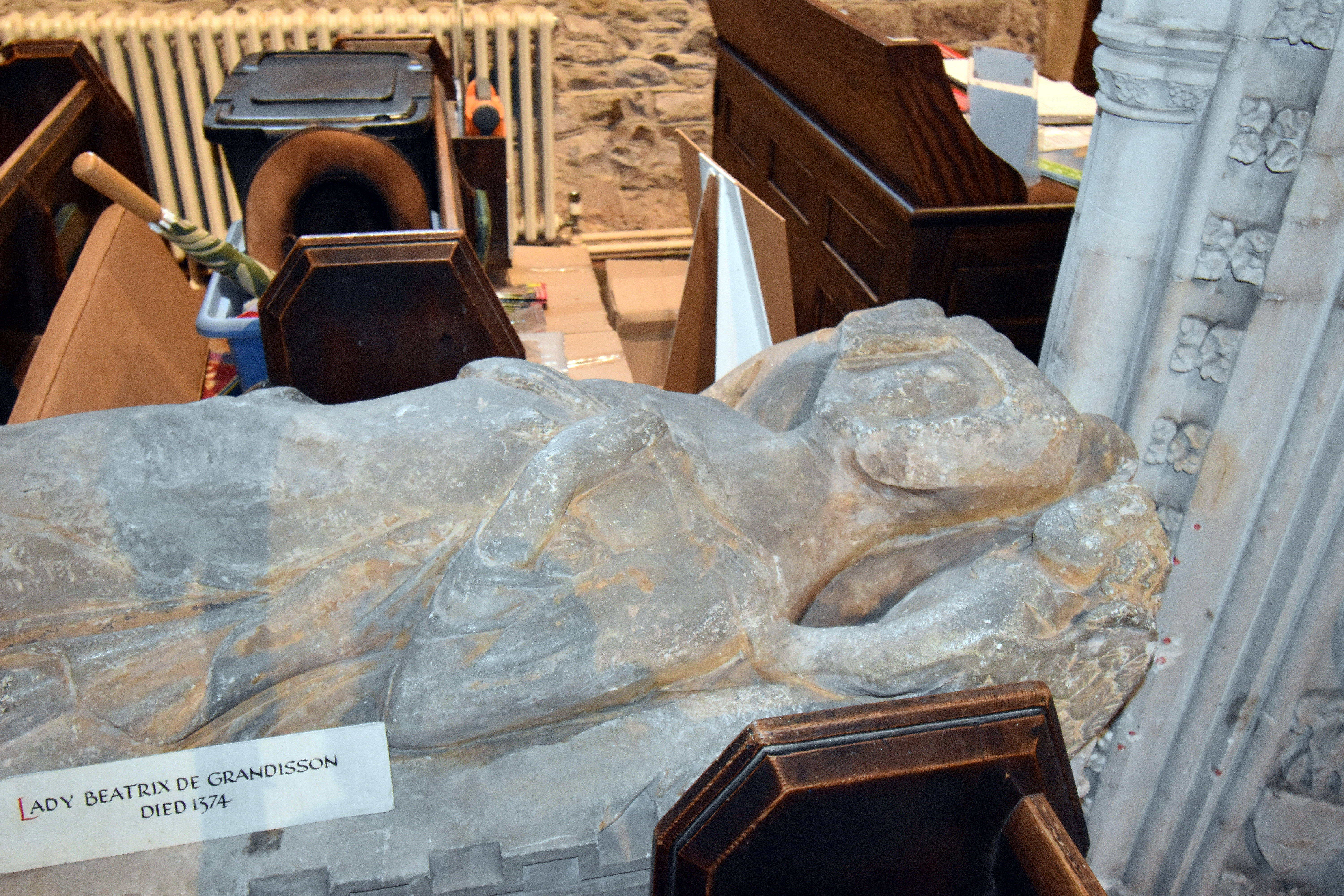
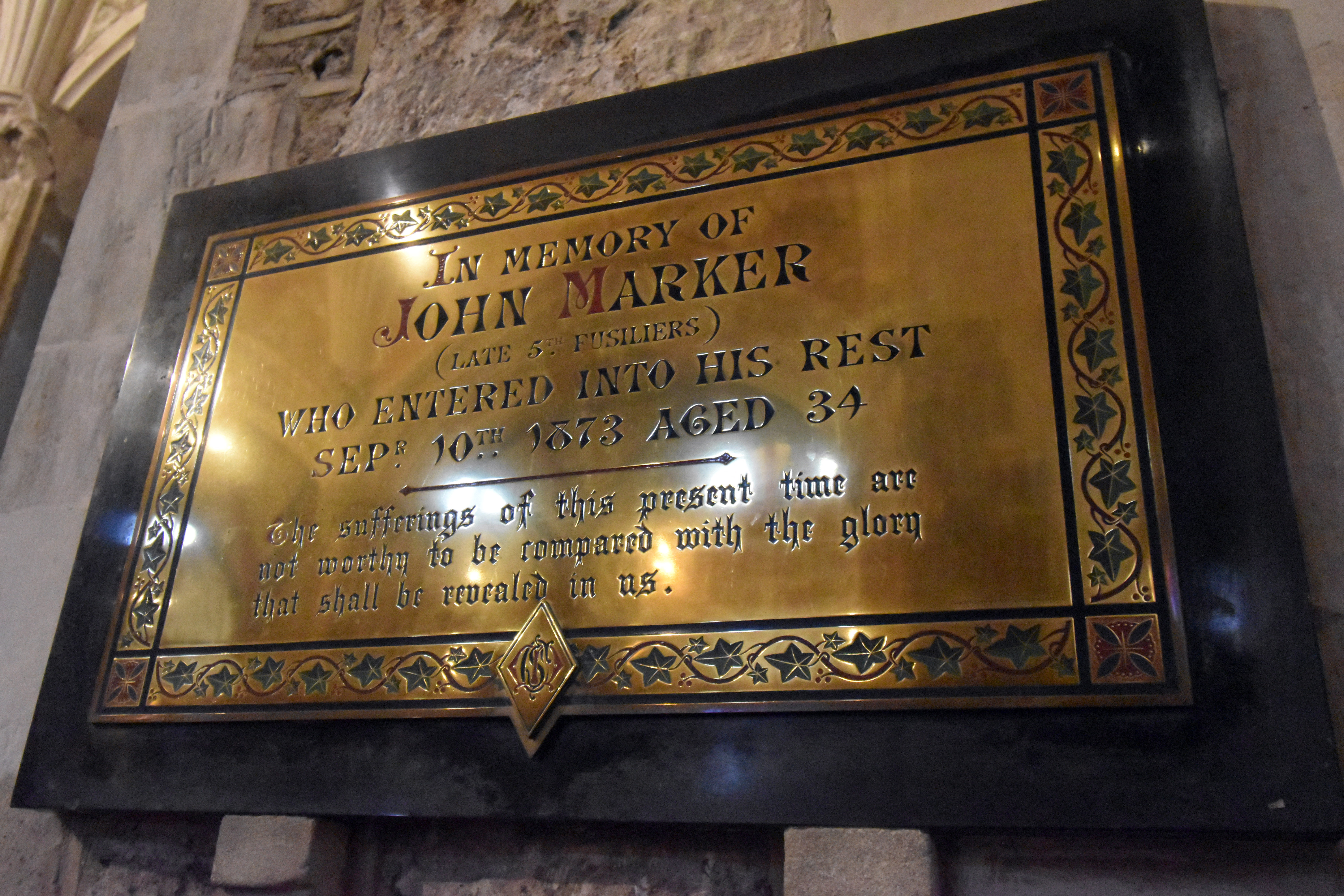
Ceiling of the main nave at St Mary’s Effigy of Sir Otho de Grandisson, died 1359 Effigy of Lady Beatrix de Grandisson, died 1374 Memorial to John Marker of the 5th Fusiliers
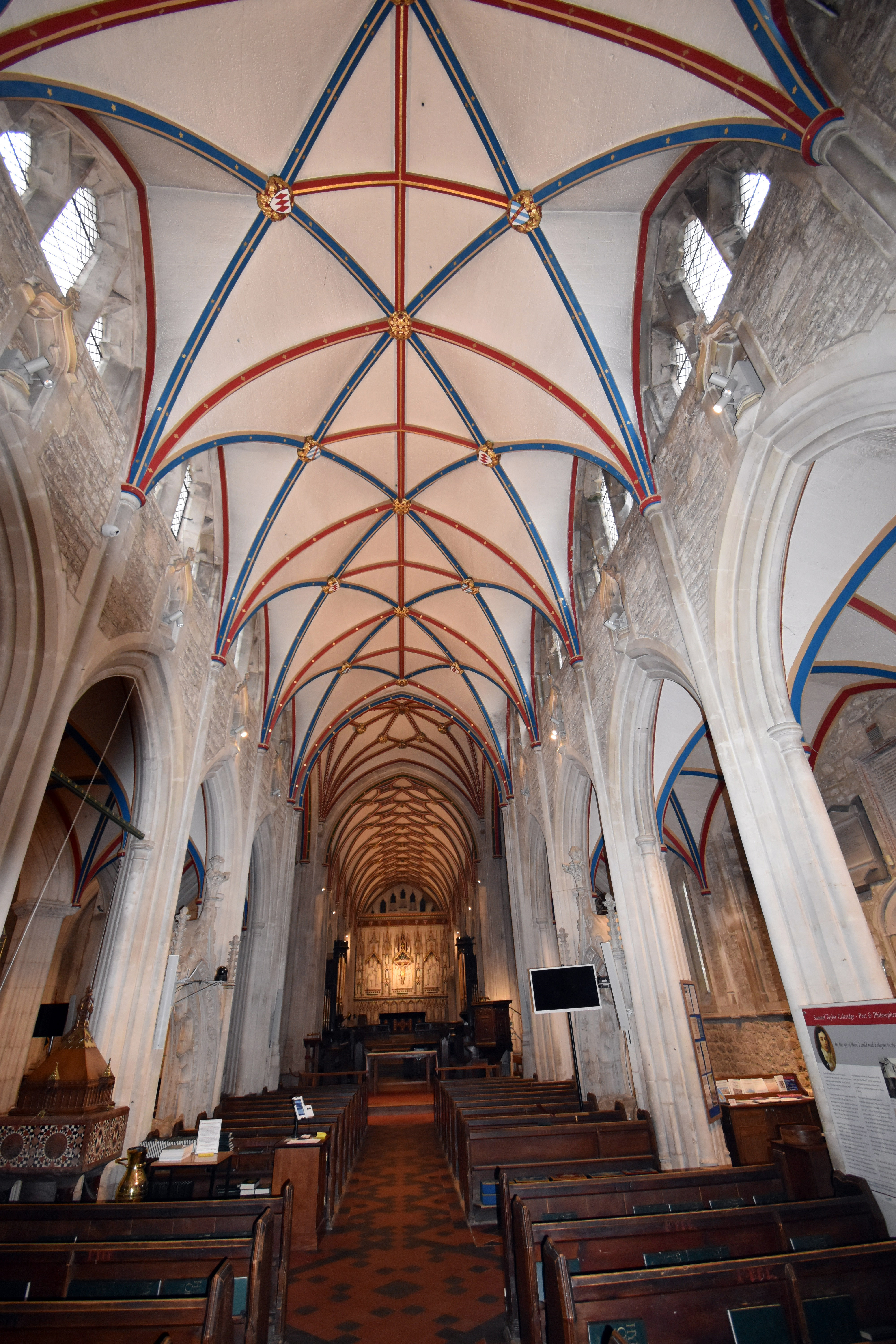
The painted ceiling of the main nave — a mixture of medieval structure and later colour, with bosses marking the rib intersections. The effigy of **Sir Otho de Grandisson** (d. 1359) — brother of Bishop John Grandisson, whose rebuilding shaped much of the present church. The effigy of **Lady Beatrix de Grandisson** (d. 1374) — shown with distinctive 14th‑century headgear typical of high‑status women of the period. The memorial to **John Marker**, late of the 5th Fusiliers, who died on 10 September 1873 aged 34 — inscribed with a verse on suffering and hope.
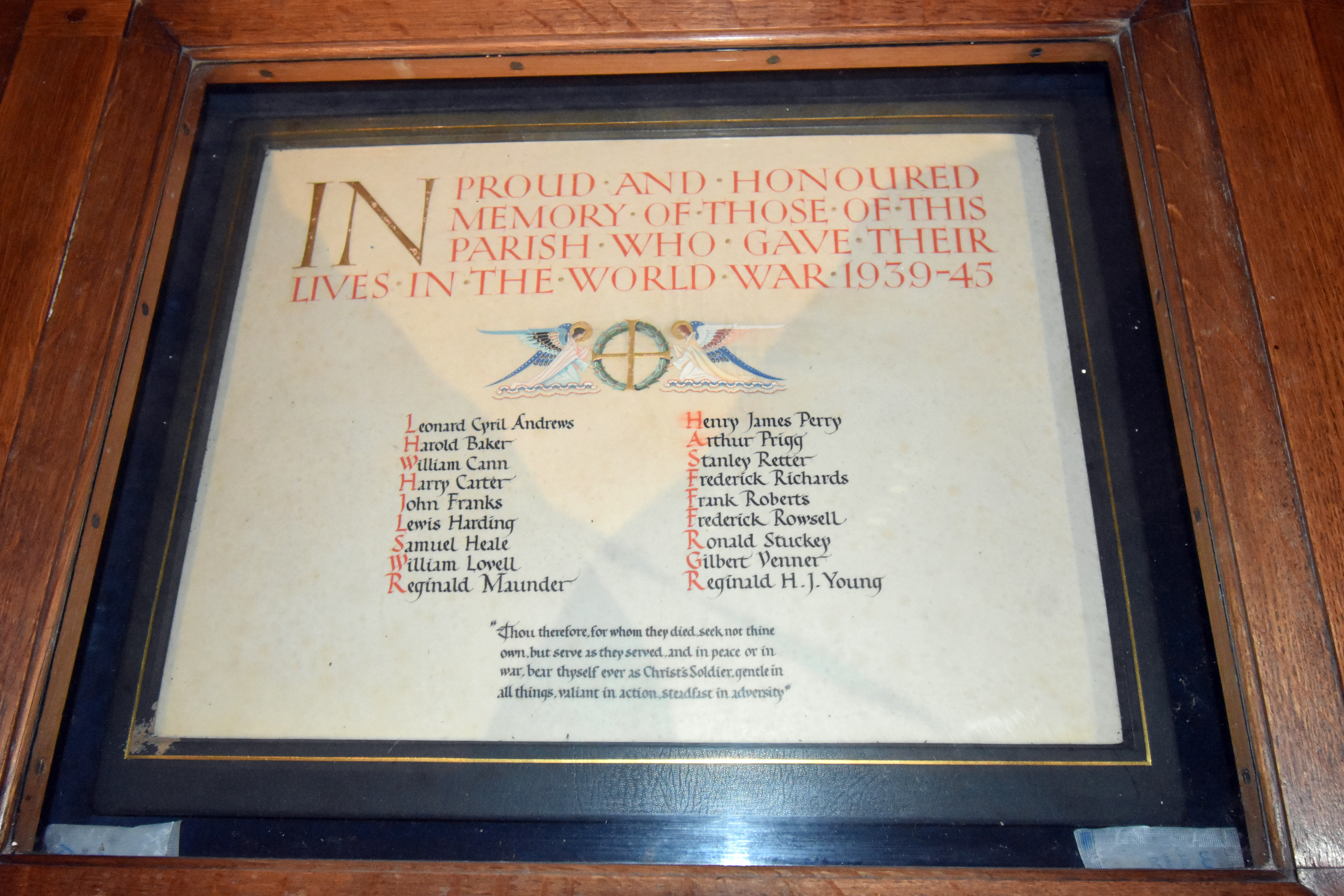
Memorial to parish members killed in the Second World War Memorial to parish members killed in the First World War View toward the Astronomical Clock in the south tower Coleridge family dedication with recumbent figure of Jane Fortescue Baroness Coleridge
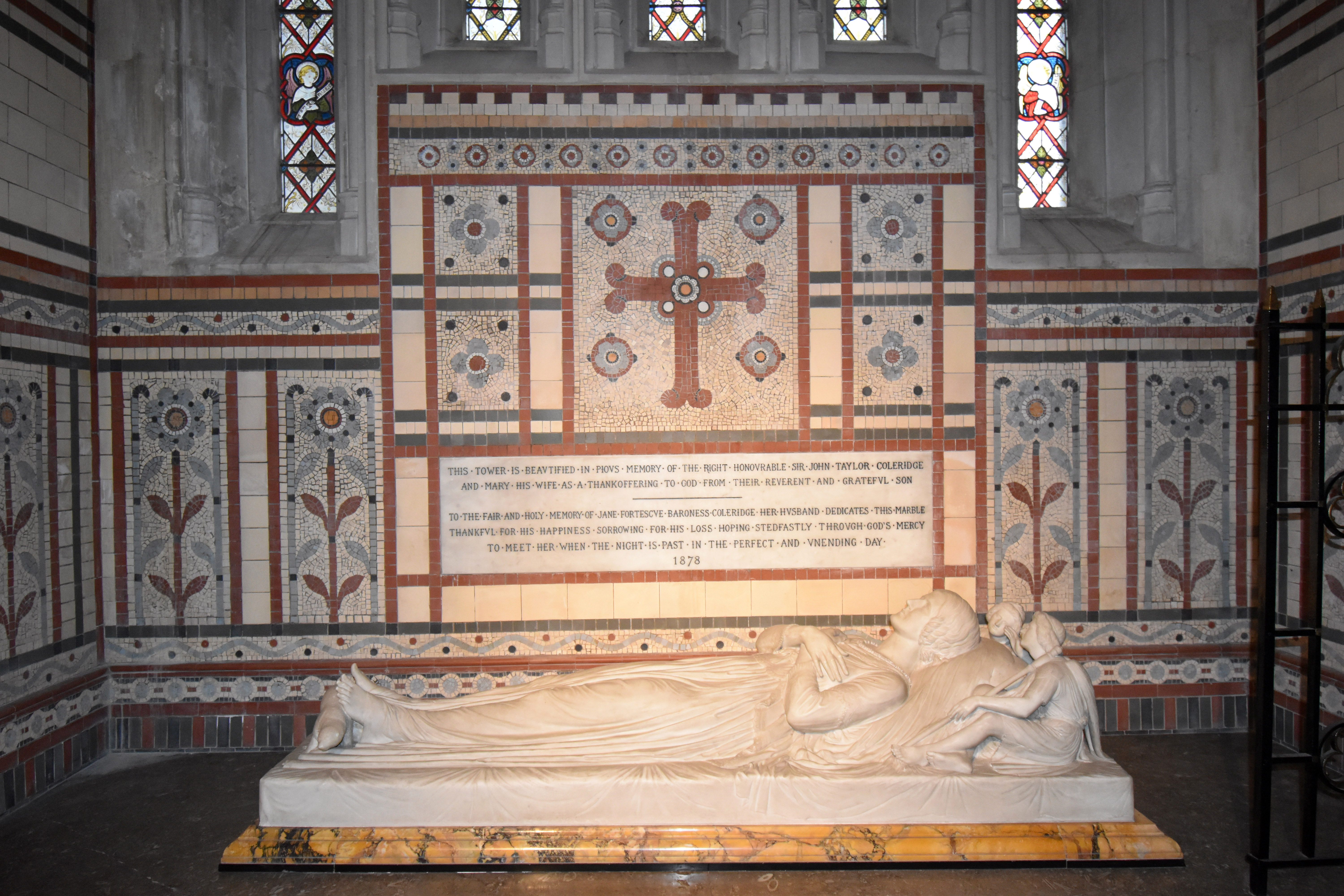
The memorial to parishioners who died in the Second World War — nineteen names recorded from Ottery St Mary between 1939 and 1945. The First World War memorial — far longer, with more than eighty names, reflecting how many more local families were affected before the rural population declined between the wars. A view toward the Astronomical Clock in the south tower — one of the oldest surviving mechanical clocks in the country, showing the sun and moon in their medieval positions. The Coleridge family dedication, including the white marble recumbent figure of **Jane Fortescue, Baroness Coleridge**, commemorated by her husband **John Duke Coleridge** in 1878.
Coleridge memorial with stained glass window above Ceiling with heraldic bosses in St Mary’s Church Side chapel once used in the days of the College Brass memorial to Sir Ernest Mason Satow
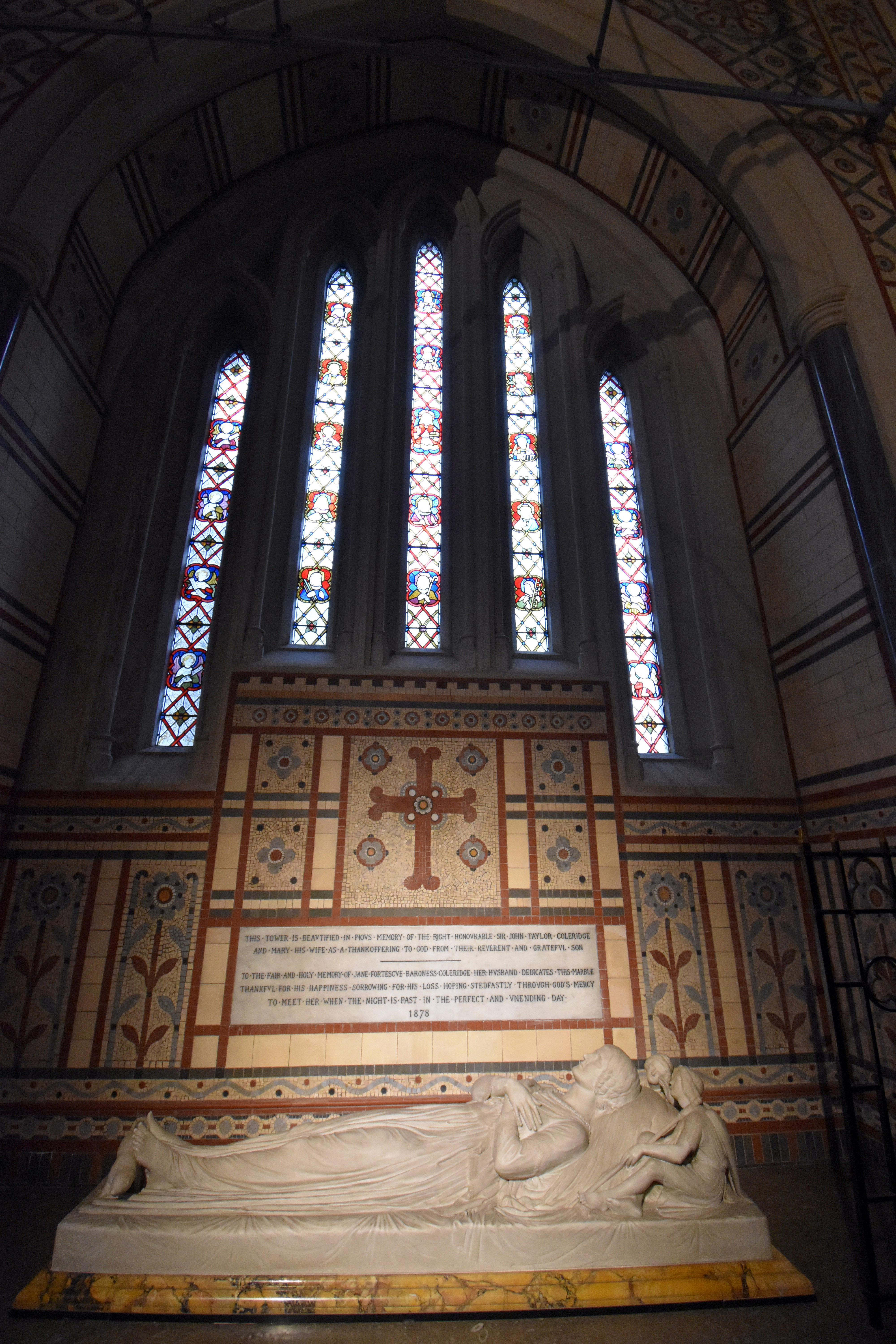
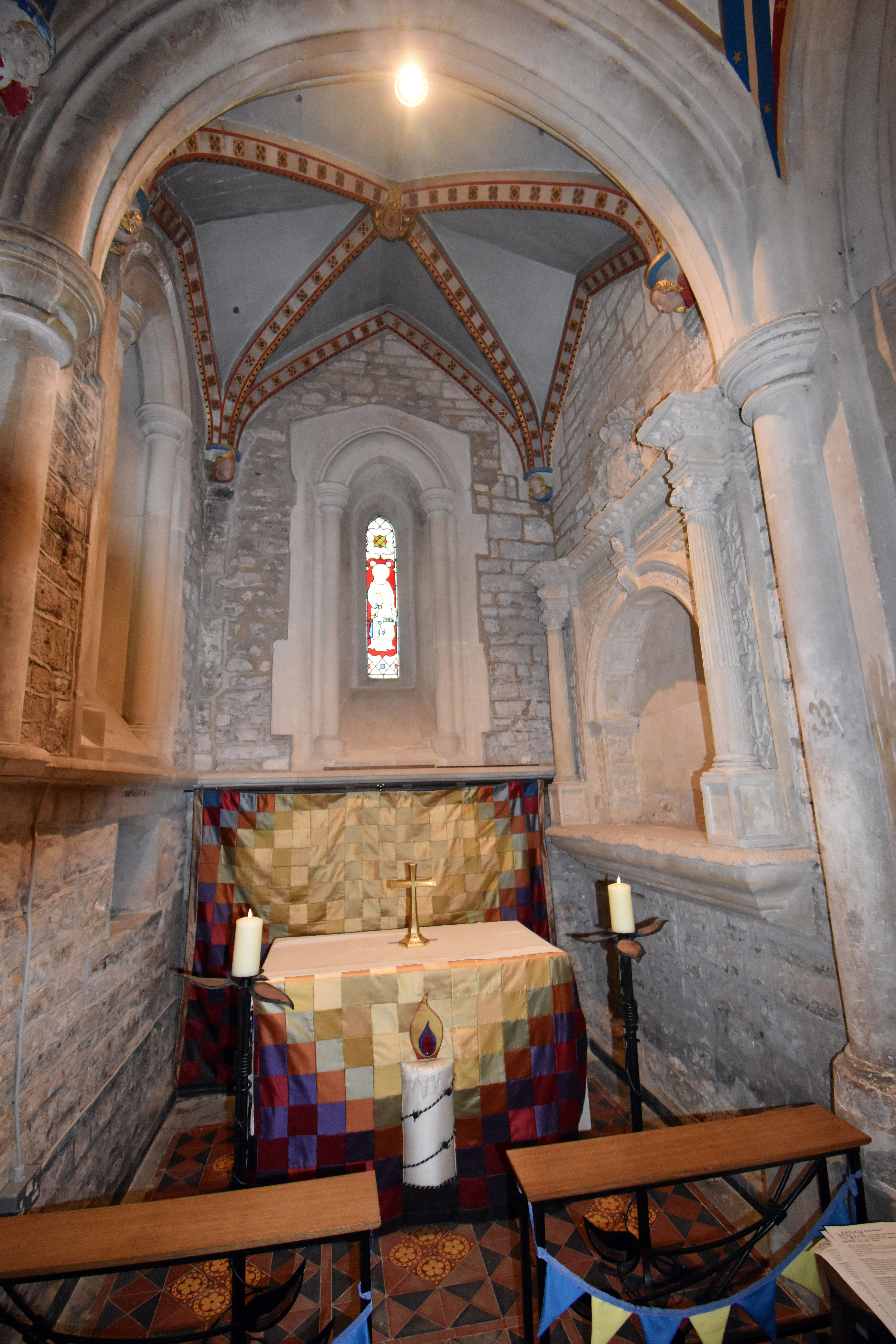
The Coleridge memorial with the stained glass window above — commemorating Sir John Taylor Coleridge, Mary his wife, and Jane Fortescue Baroness Coleridge, with the 1878 inscription set beneath the tower windows. One of the church ceilings with heraldic bosses — part of the rich decorative scheme that survives from the medieval rebuilding under Bishop John Grandisson. A side chapel that would have been used during the time of the College — retaining its vaulted ceiling, stonework and stained glass typical of the collegiate layout. The brass memorial to **Sir Ernest Mason Satow G.C.M.G.** — recording his long diplomatic career in Japan, Bangkok, Montevideo, Tangier, Tokyo and Peking, erected by colleagues who remembered him from his years in China.
Lady Chapel on the east side of St Mary’s Church Main altar of St Mary’s Church Magnificent painted and ribbed ceiling of St Mary’s Church Ceiling and nave looking west toward the great window
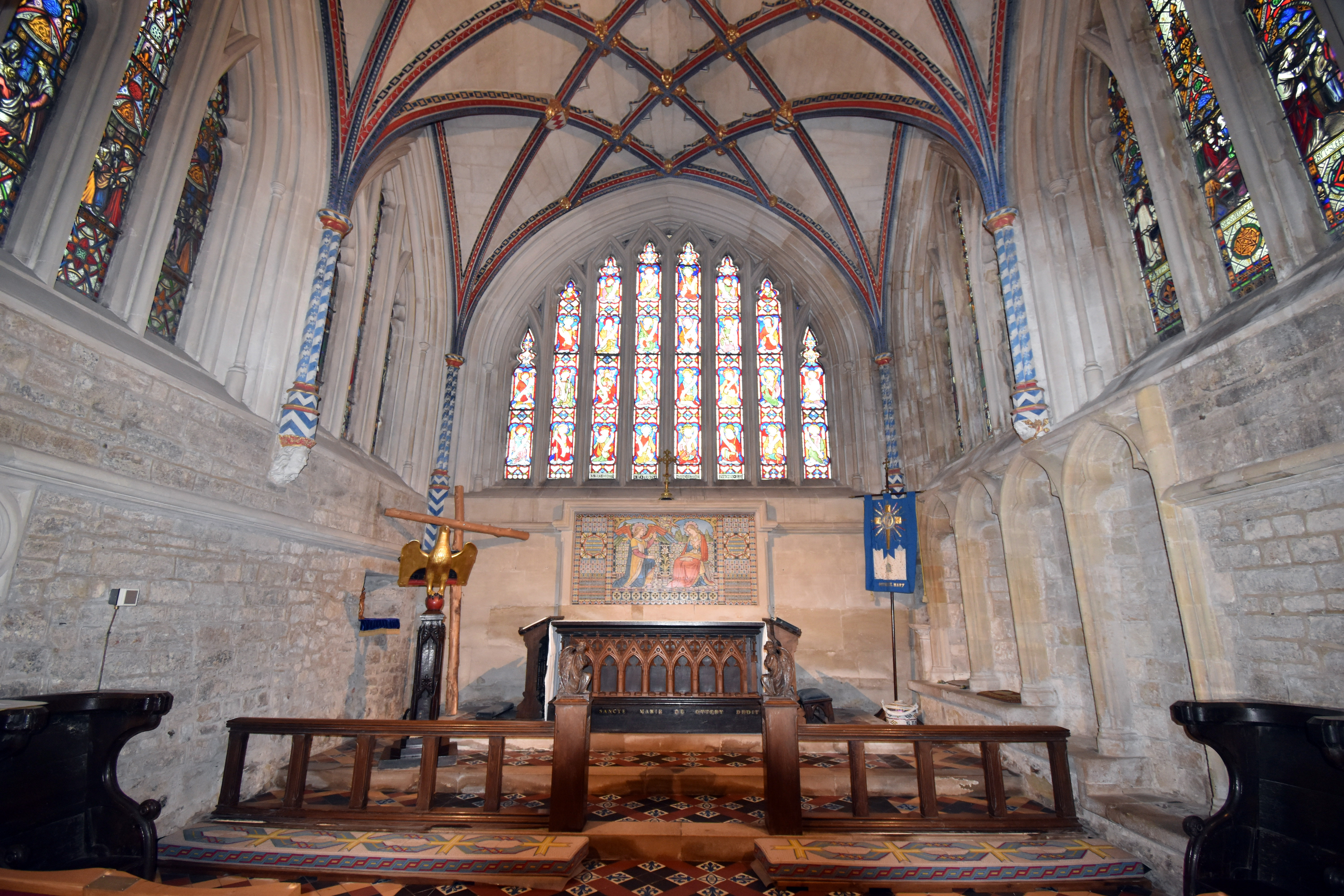
The Lady Chapel on the east side of the church — a quiet space with its own vaulted ceiling, stained glass and decorative stonework. The main altar — richly carved and set beneath the painted vaulting, with stained glass forming the backdrop to the chancel. The magnificent ceiling — a complex pattern of ribs, colours and bosses that reflects the ambition of the medieval rebuilding. The same ceiling viewed looking back down the nave — showing the full sweep of the vaulting toward the west window.
Elephant carving with small ears on a column capital View from the nave into the chancel toward the altar Altar restored in the 1930s Memorial to John Coke, said to have been murdered by his younger brother in 1632
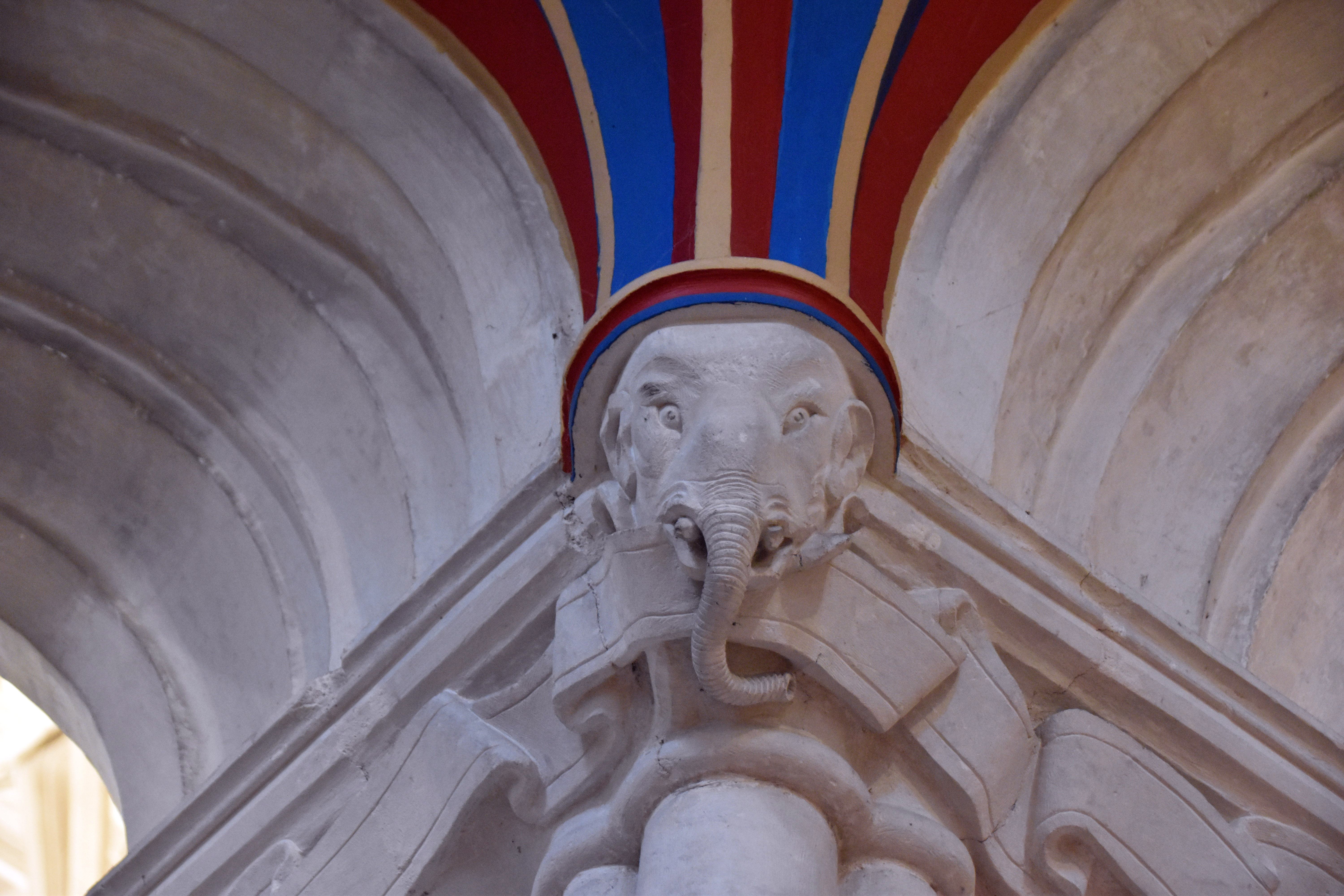
An elephant carved by a mason who had never seen one — the tiny ears are the usual giveaway in these medieval attempts at exotic animals. A view from the nave into the chancel, looking toward the altar beneath the painted vaulting. The altar as restored in the 1930s — retaining the medieval setting but with later decorative work added during the refurbishment. The memorial to **John Coke**, who died in 1632 and is said to have been murdered by a younger brother..
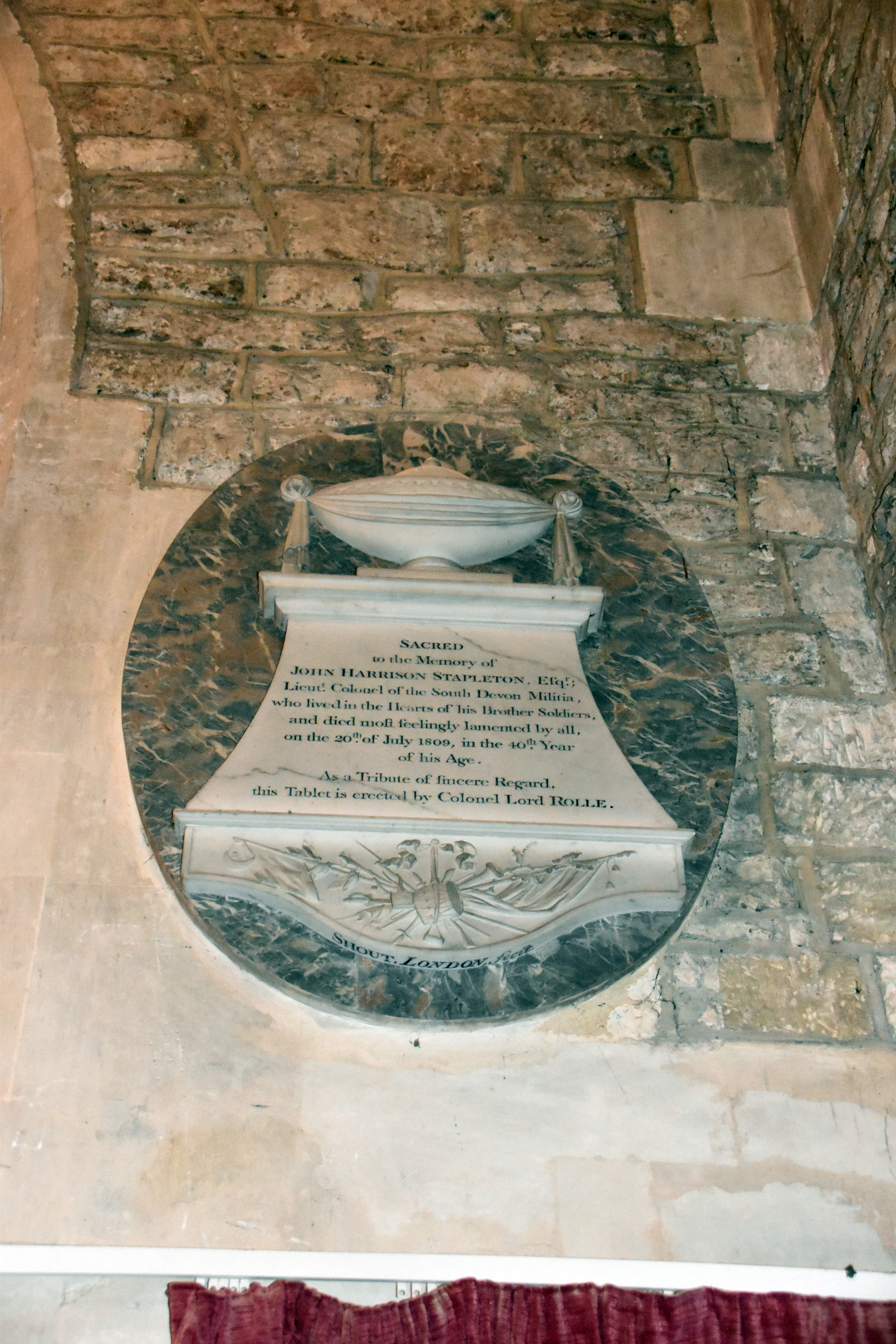
Memorial to Lieutenant Colonel John Harrison Stapleton, South Devon Militia, 1809 Memorial to Bishop William Hart Coleridge and his son William Rennell Coleridge Memorial to Luke Frederick Rennell Coleridge, killed at Givenchy La Bassée in 1914 Astronomical clock showing the sun and moon indicators
The memorial to Lieutenant Colonel **John Harrison Stapleton**, South Devon Militia, who died in 1809 aged just forty — a Regency tribute erected by Lord Rolle, complete with the martial trophies fashionable in the period. The striking plaque to **Bishop William Hart Coleridge**, first Bishop of Barbados and the Leeward Islands, whose efforts helped hasten emancipation across his diocese — and to his son **William Rennell Coleridge**, a prominent county figure at Salston. The memorial to **Luke Frederick Rennell Coleridge**, 2nd Lieutenant, Coldstream Guards, killed on the parapet of the enemy’s trench at Givenchy La Bassée in 1914 — an early‑war epitaph still steeped in Edwardian ideals of heroism. The church’s remarkable **astronomical clock**, one of the oldest mechanical clocks in the country, showing the sun and moon circling an earth‑centred universe — a miniature echo of Exeter Cathedral’s own famous clock.
Chancel seen from the pulpit Nave seen from the pulpit Memorial to several members of the Coleridge family Stained glass window on the north wall with nearby coat of arms
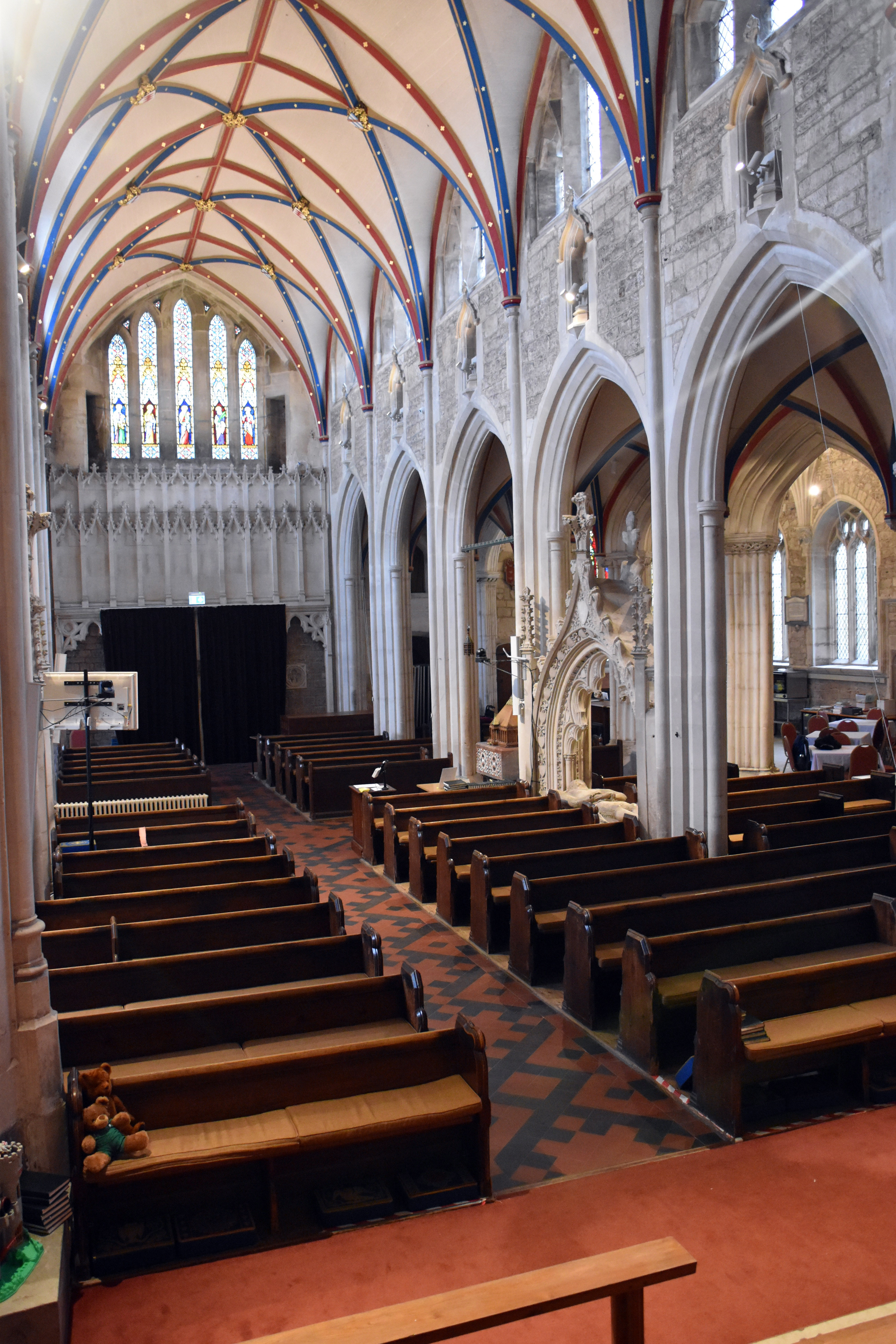
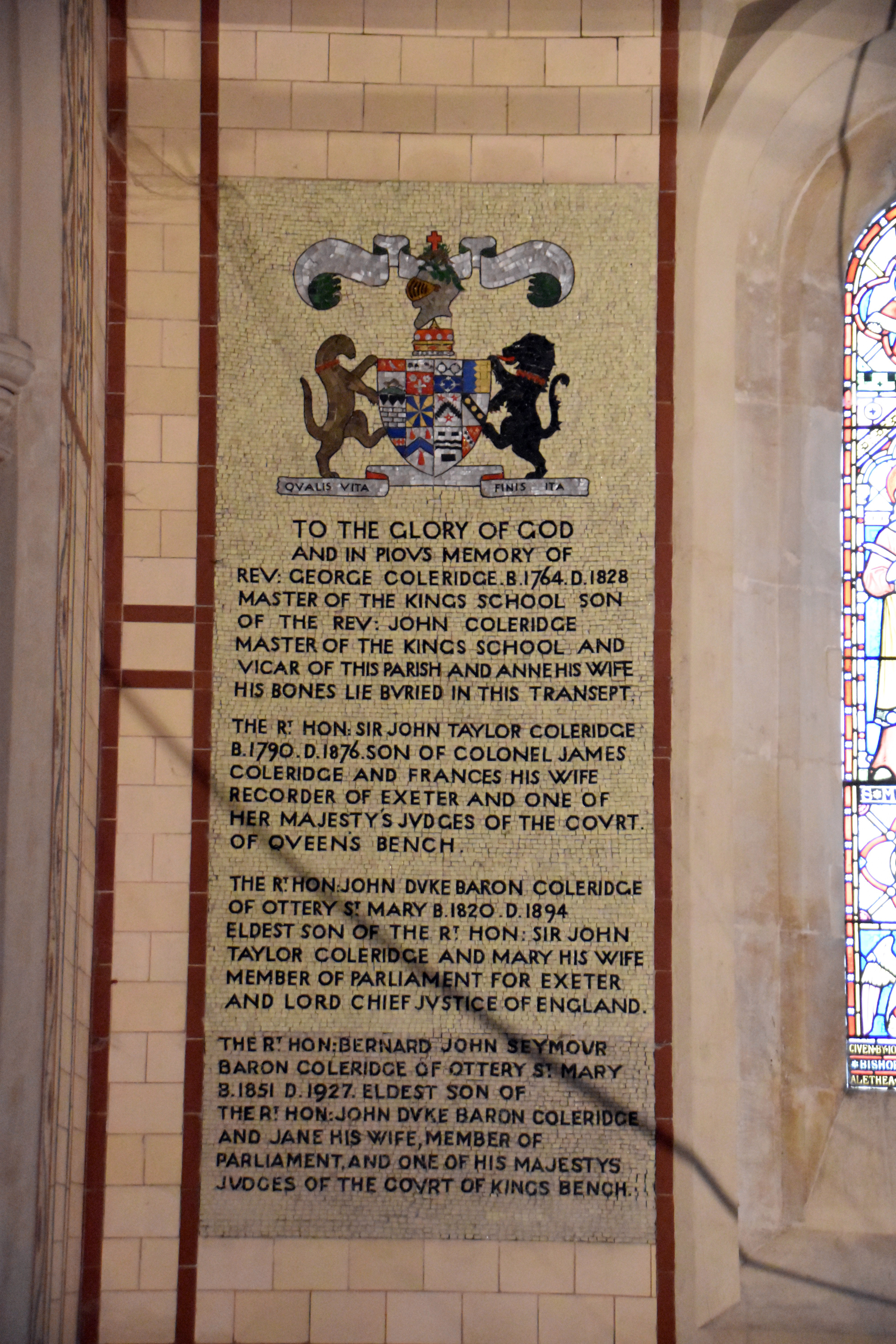
The chancel from the pulpit, showing the painted vaulting, the reredos and the twin organs that give this end of the church its cathedral‑like scale. The nave from the pulpit, looking west along the tiled central aisle with the arcades and vaulting clearly visible. A memorial to several generations of the Coleridge family, including schoolmasters, judges and a Lord Chief Justice — a reminder of how closely the family’s history is tied to the parish. A stained glass window on the north wall, with a carved coat of arms set into the stonework beside it.
Carved face with wide mouth used as a bell rope hole Memorial to Commander Frederick Abraham Smith, Royal Navy Painted ceiling boss showing crowned Virgin and Child Herbert Read reredo from the 1930s
One of the church’s unusual bell‑rope holes — a carved face with its mouth left open for the rope to pass through, showing the stonemasons’ sense of humour. The memorial to Commander **Frederick Abraham Smith**, Royal Navy, who served on the West Africa Squadron during the anti‑slavery patrols and helped rescue the boy who became Bishop Crowther. A painted ceiling boss of the Virgin and Child, one of the church’s finest — and the design used by the Royal Mail for a Christmas stamp in 1974. Herbert Read’s 1930s reredo, with its carved and painted figures set beneath the star‑spangled canopy added during the restoration.
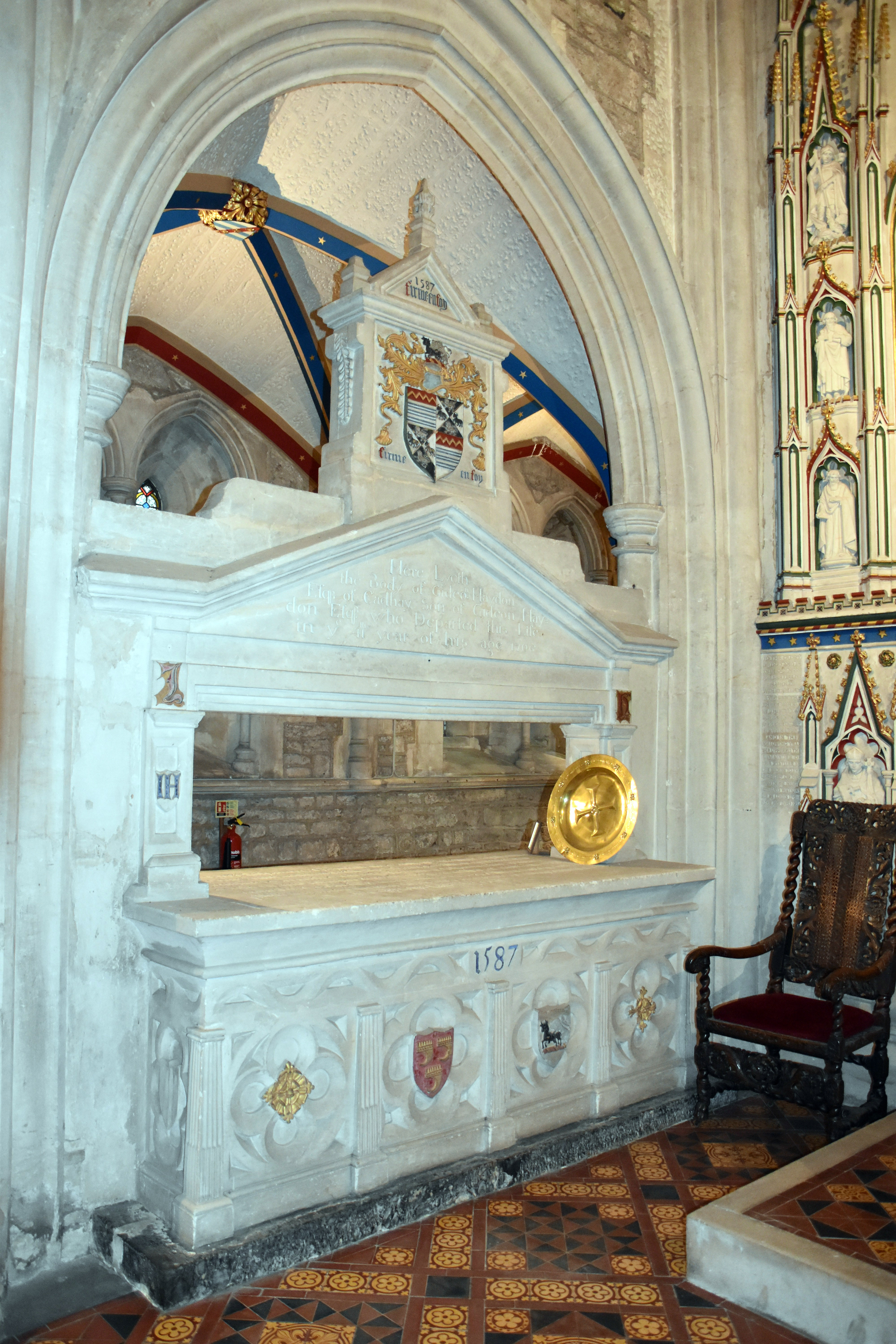
Painted figure of Christ at the centre of the reredo Full view of the 1930s reredo Tomb of John Haydon of Cadhay, dated 1587 Memorial to the Coleridge family listing ten children
The painted figure of Christ at the centre of the reredo, shown in the crucifixion scene with the surrounding figures carved in white stone. The reredo as a whole, Herbert Read’s 1930s work with its Gothic canopy, painted details and rows of carved figures. The tomb of John Haydon of Cadhay, dated 1587 — the first governor appointed to oversee the church after the Reformation, with his heraldry set above the arch. The memorial to the Coleridge family, listing the ten children of the Revd John Coleridge and Ann, including Samuel Taylor
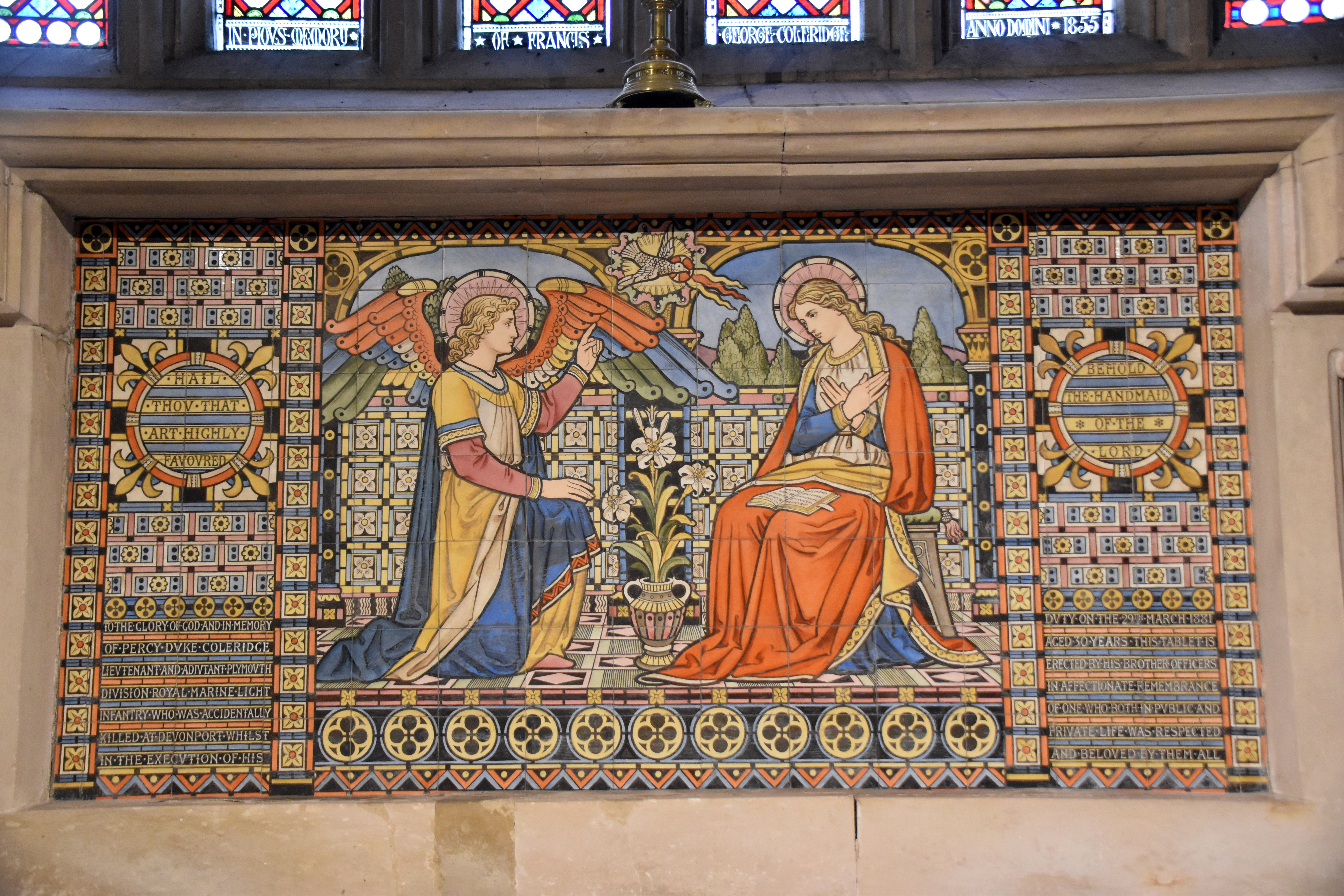
Memorial to Lieutenant Percy Duke Coleridge, Royal Marine Light Infantry Stained glass window in the Lady Chapel Another stained glass window in the Lady Chapel List of vicars of St Mary’s from the 13th century onwards
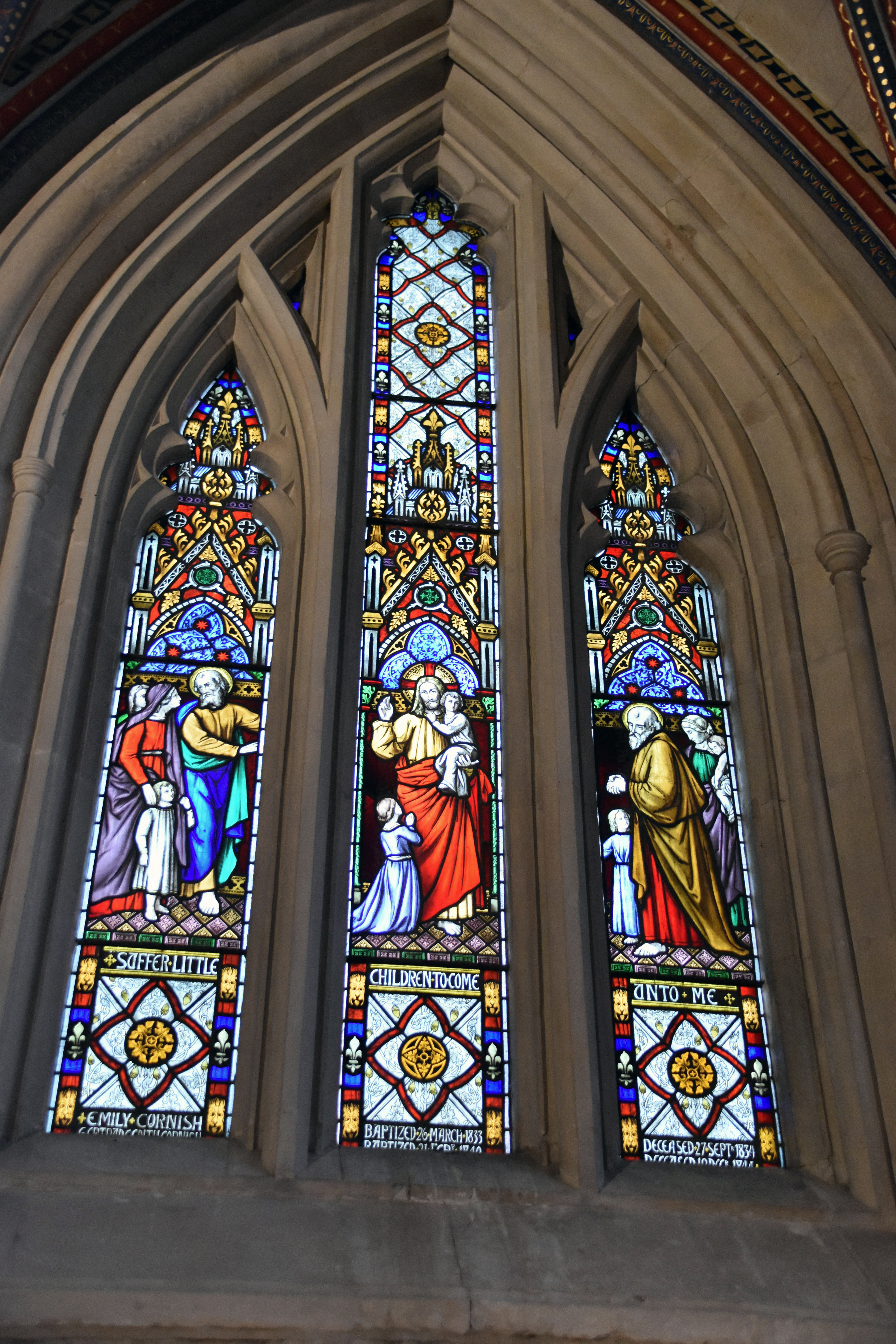
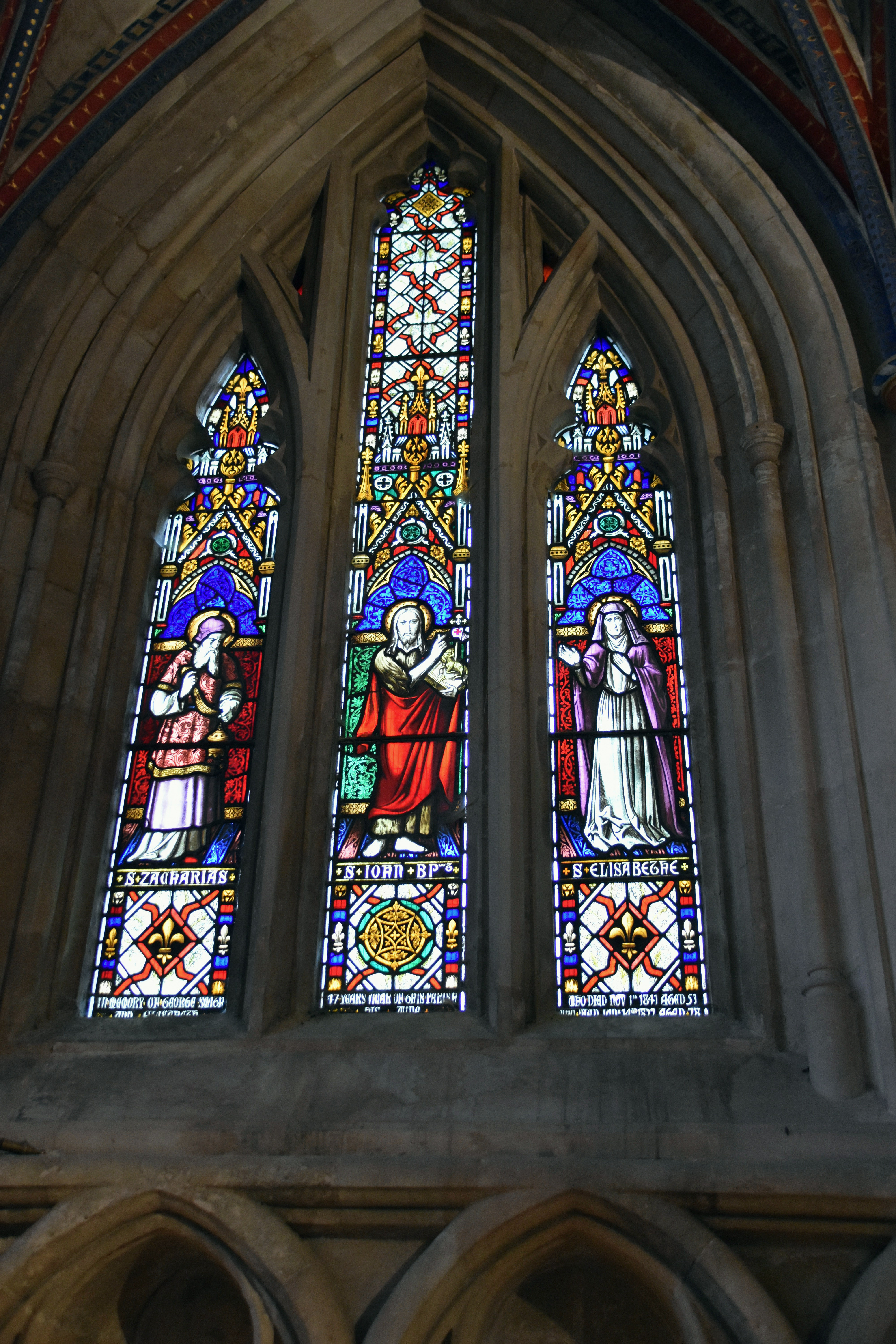
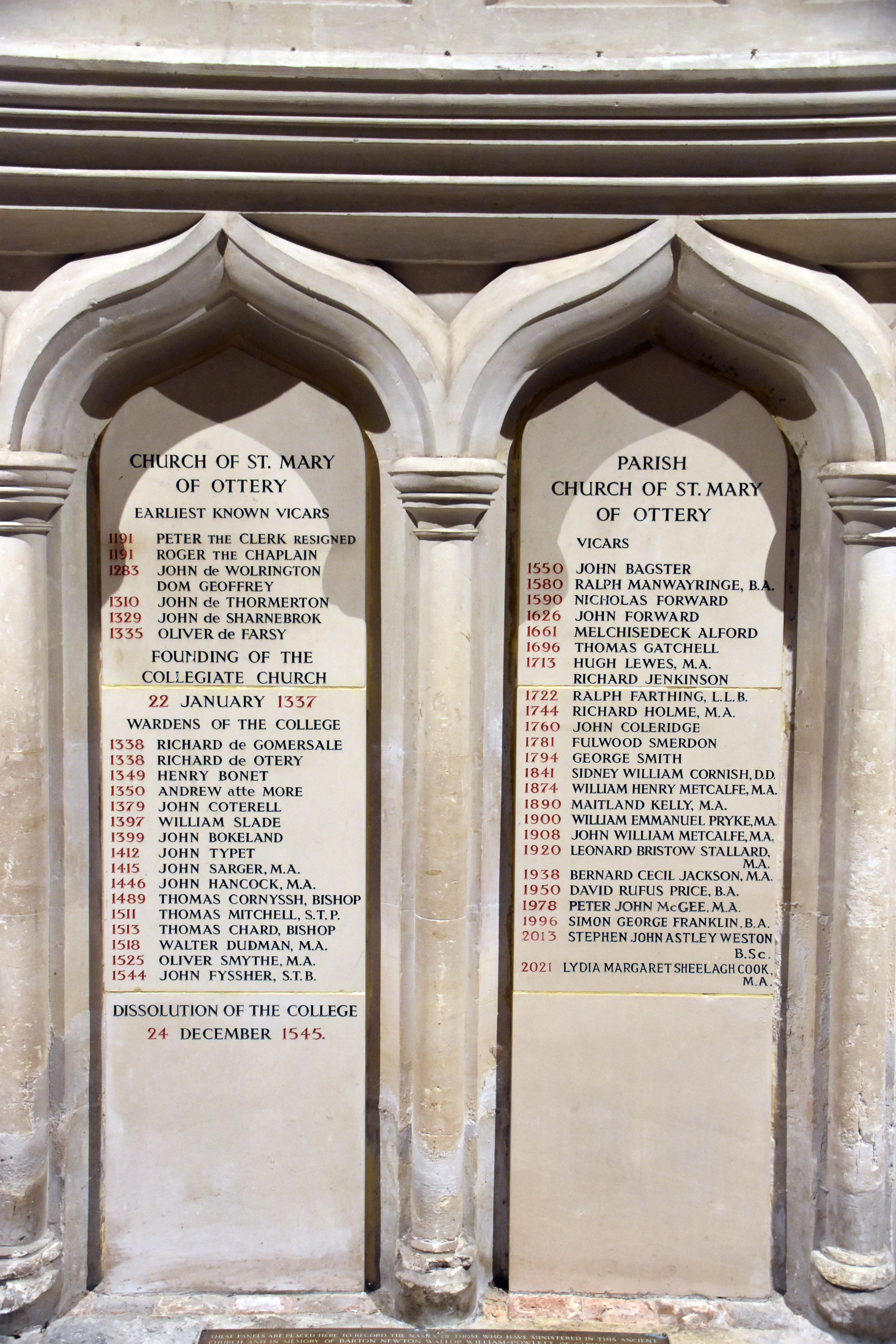
The memorial to Lieutenant Percy Duke Coleridge of the Royal Marine Light Infantry, killed at Devonport while carrying out his duties. He was the son of John Duke Coleridge A stained glass window in the Lady Chapel, showing biblical figures and dedicated to members of the Smith family of the parish. Another Lady Chapel window, this one commemorating three young children with the text from ‘Suffer little children to come unto me’. The full list of vicars of St Mary’s, beginning with the earliest known names in the 12th and 13th centuries and continuing unbroken to the present day.
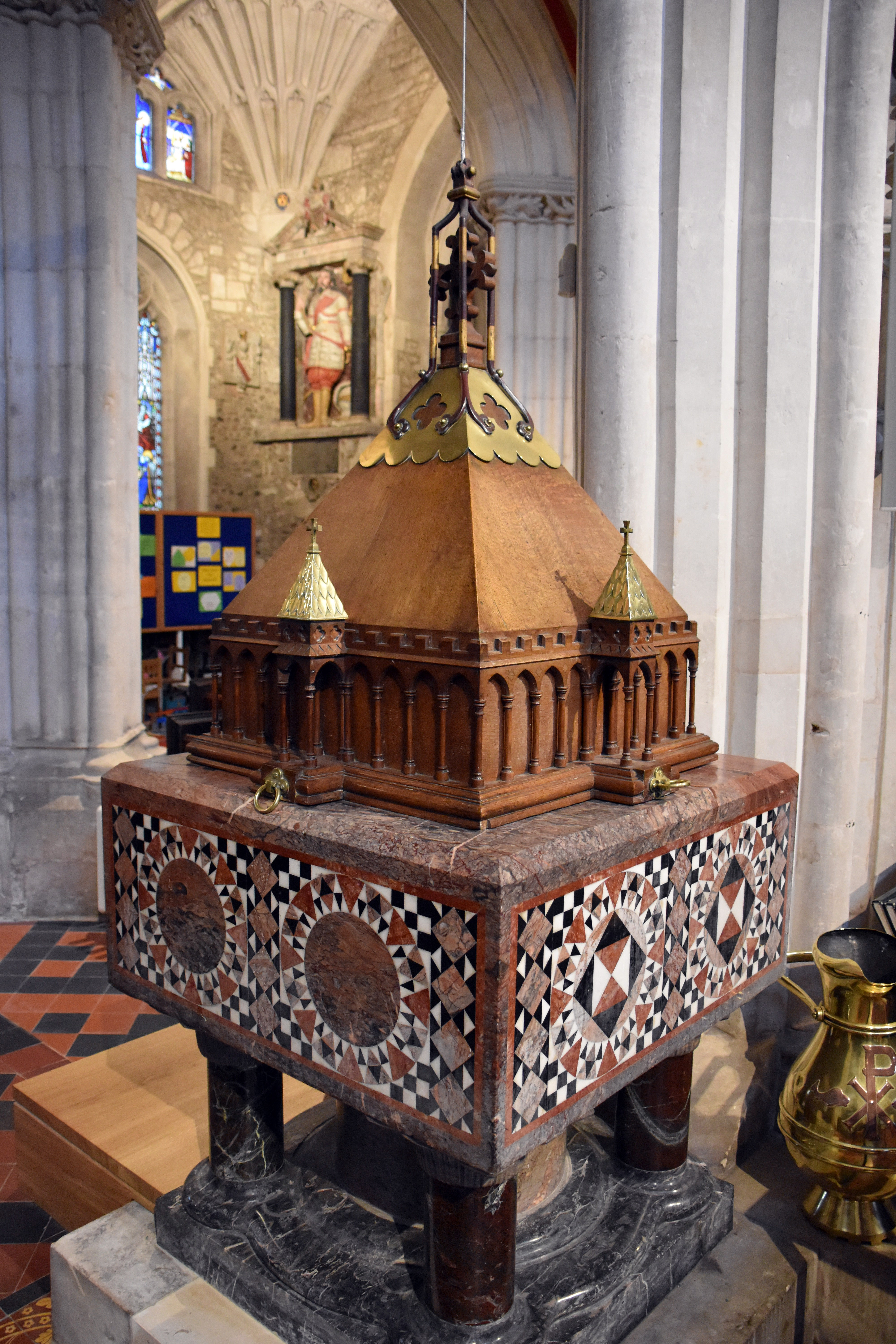
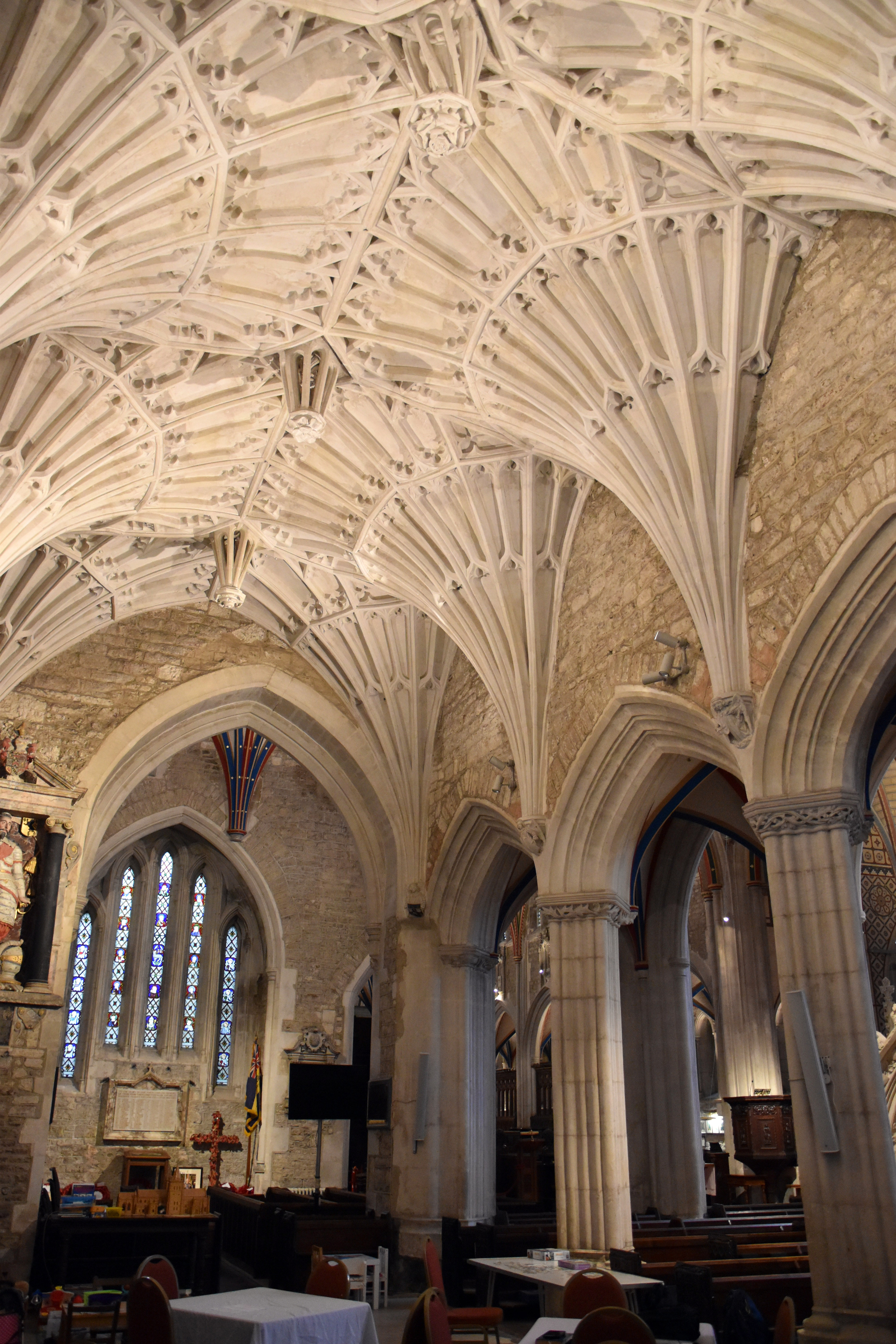
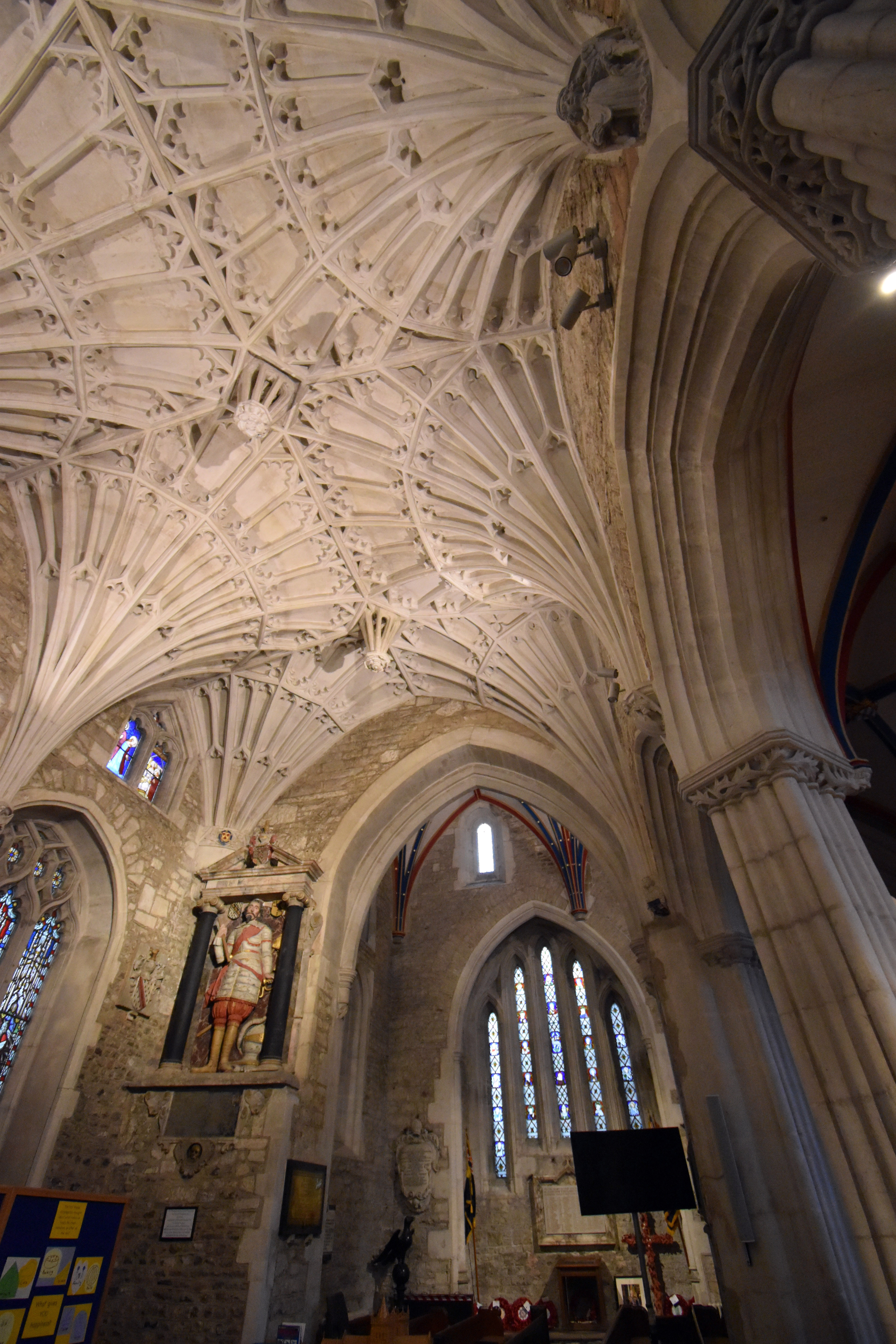
Painted carving on the east wall Victorian font with ornate wooden cover Vaulted ceiling in the Dorset Aisle Vaulted ceiling of the Dorset Aisle looking toward the effigy of John Coke
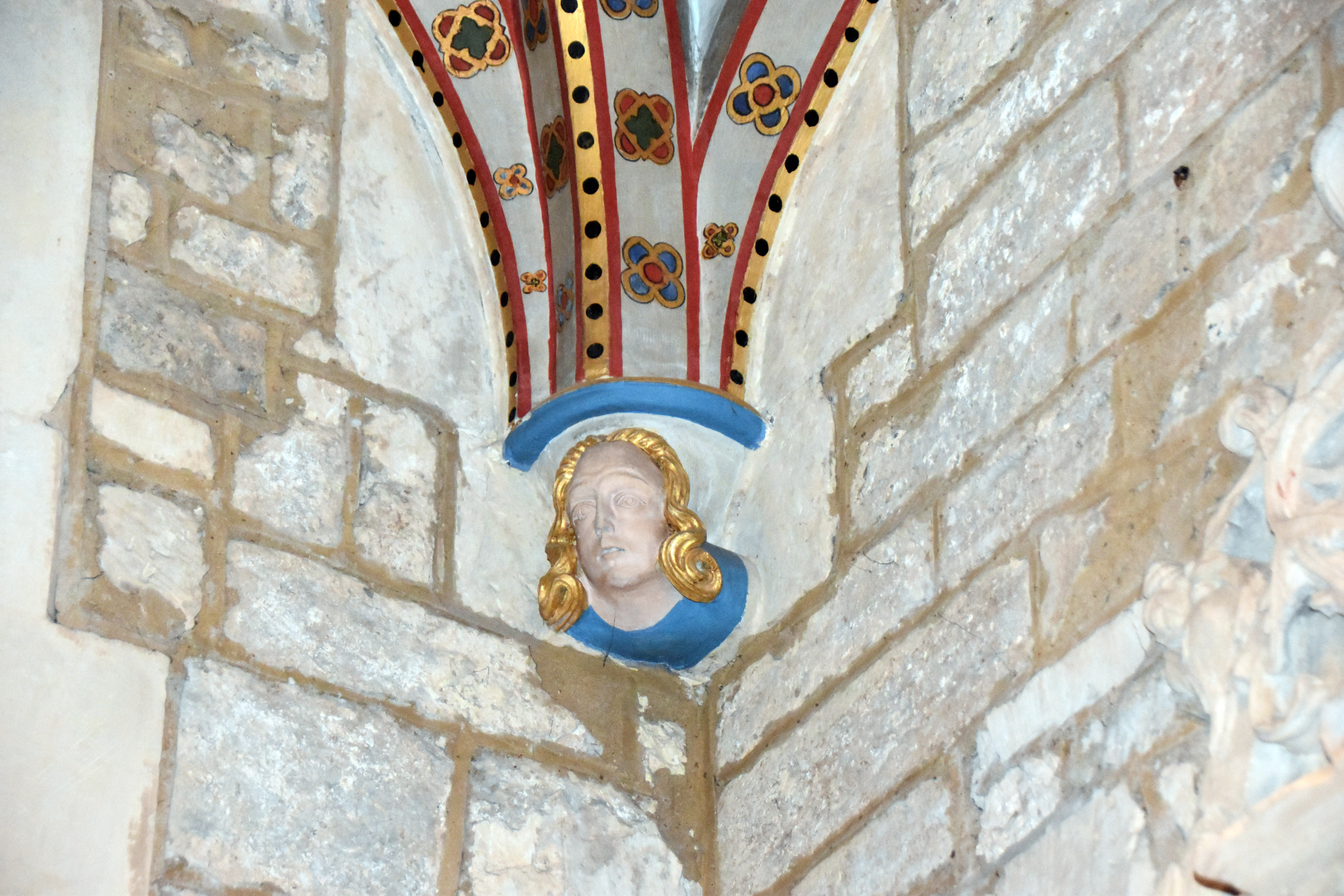
A painted carving on the east wall, set beneath the ribbed vaulting and typical of the decorative work added during the church’s later restorations. The Victorian font, with its mosaic‑patterned bowl and elaborate wooden cover designed in the style of a miniature spired canopy. The fan‑vaulted ceiling of the Dorset Aisle, one of the most striking architectural features added by the Bonville–Grey connection in the early 16th century. Another view of the Dorset Aisle vaulting, looking toward the effigy of John Coke, who local tradition claims still walks the church at night.
Vaulted ceiling in the Dorset Aisle Bequest plaque of Thomas Axe in the porch Coleridge family vault in the churchyard View of St Mary’s Church from the northwest
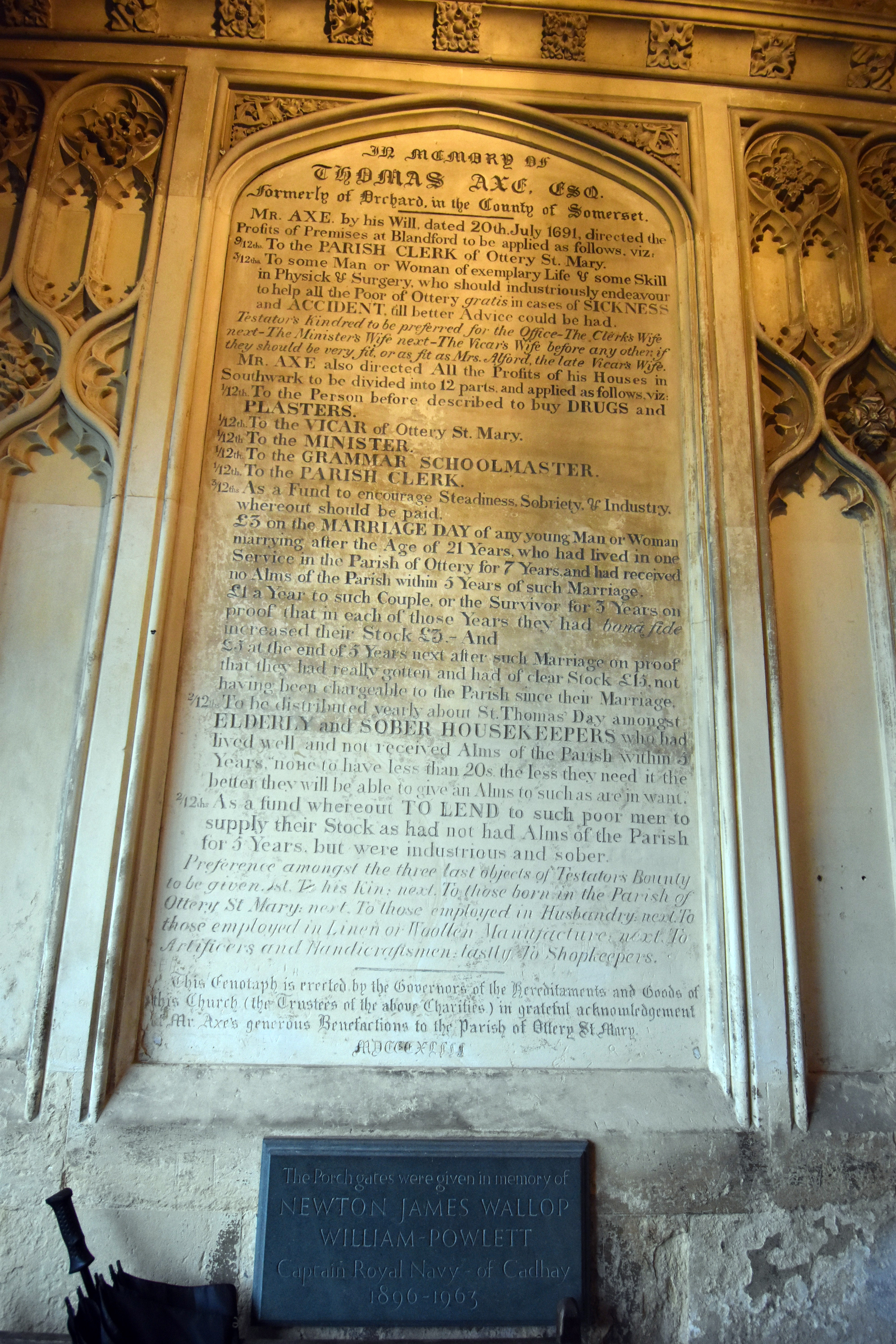
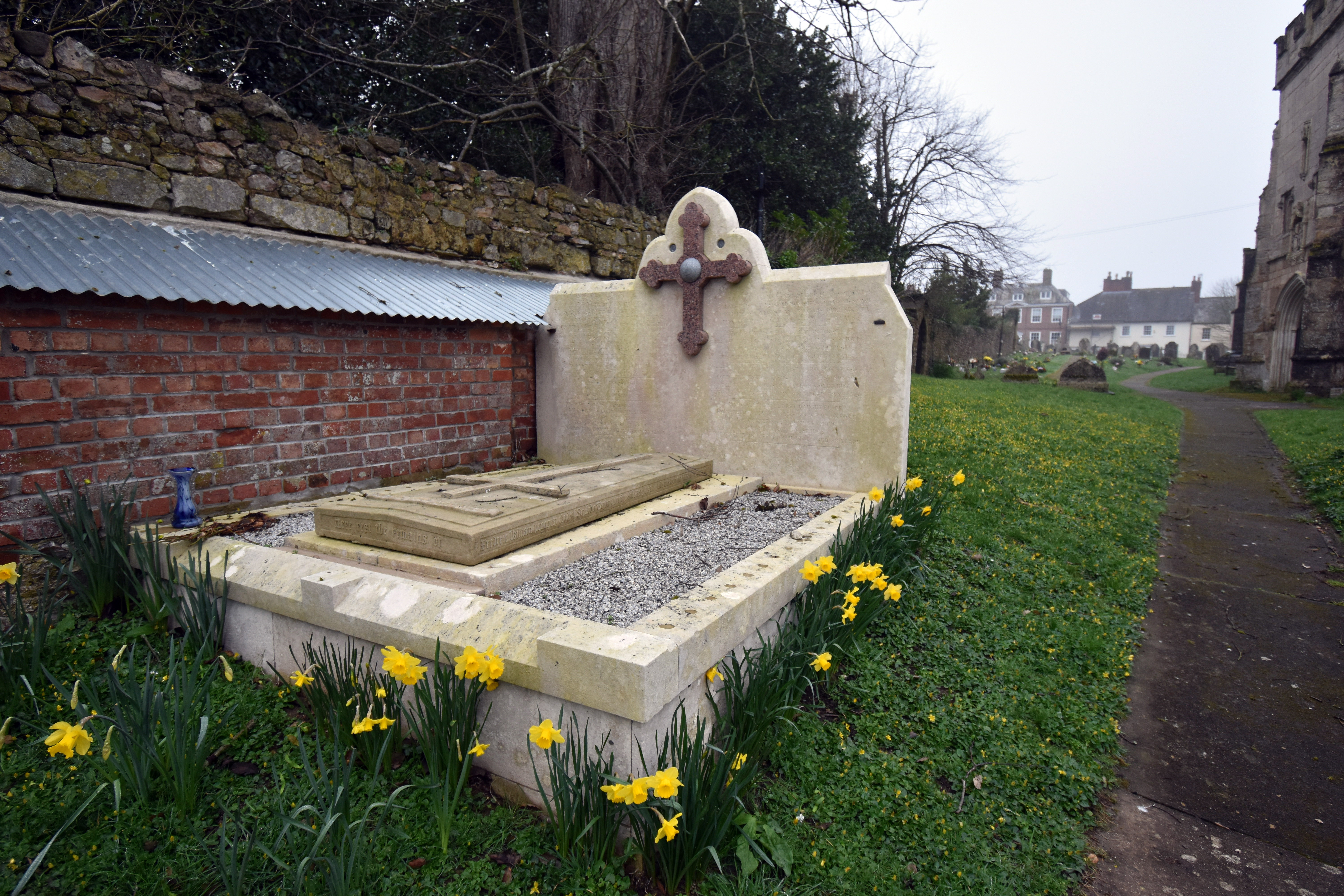
The fan‑vaulted ceiling of the Dorset Aisle, one of the finest architectural features of the church and a reminder of the Bonville–Grey patronage. The detailed bequest of Thomas Axe, dated 1691, setting out his charitable provisions for the parish — still displayed in the porch. The Coleridge family vault in the churchyard, marking the resting place of several members of the wider family connected with the parish. St Mary’s seen from the northwest, showing the twin towers and the churchyard that surrounds this remarkable building.
Grave of Mary Frances Keble Coleridge View of Chanters House, former home of James and John Duke Coleridge Cross in memory of John Coleridge, vicar of St Mary’s View of the old town hall from the churchyard
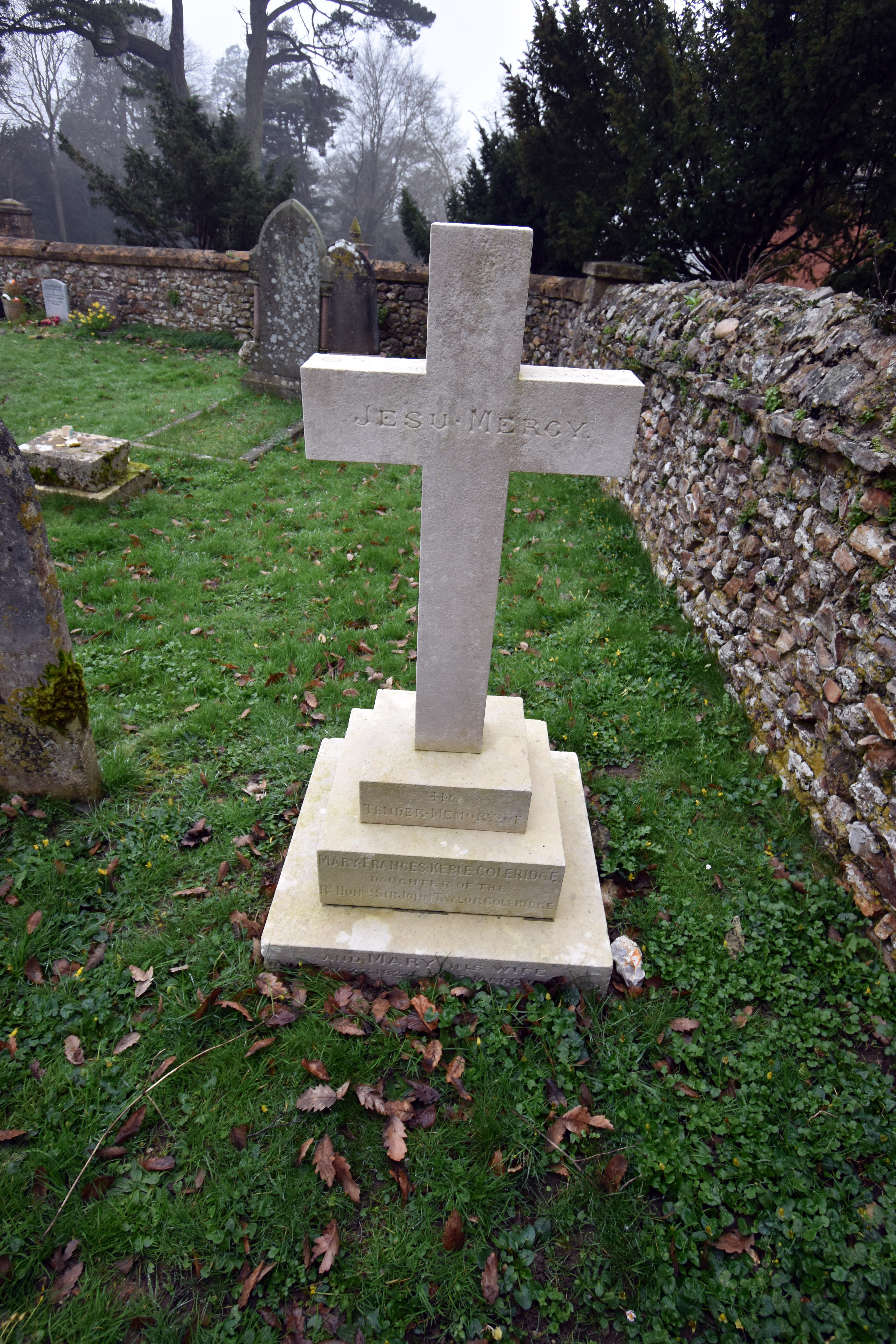
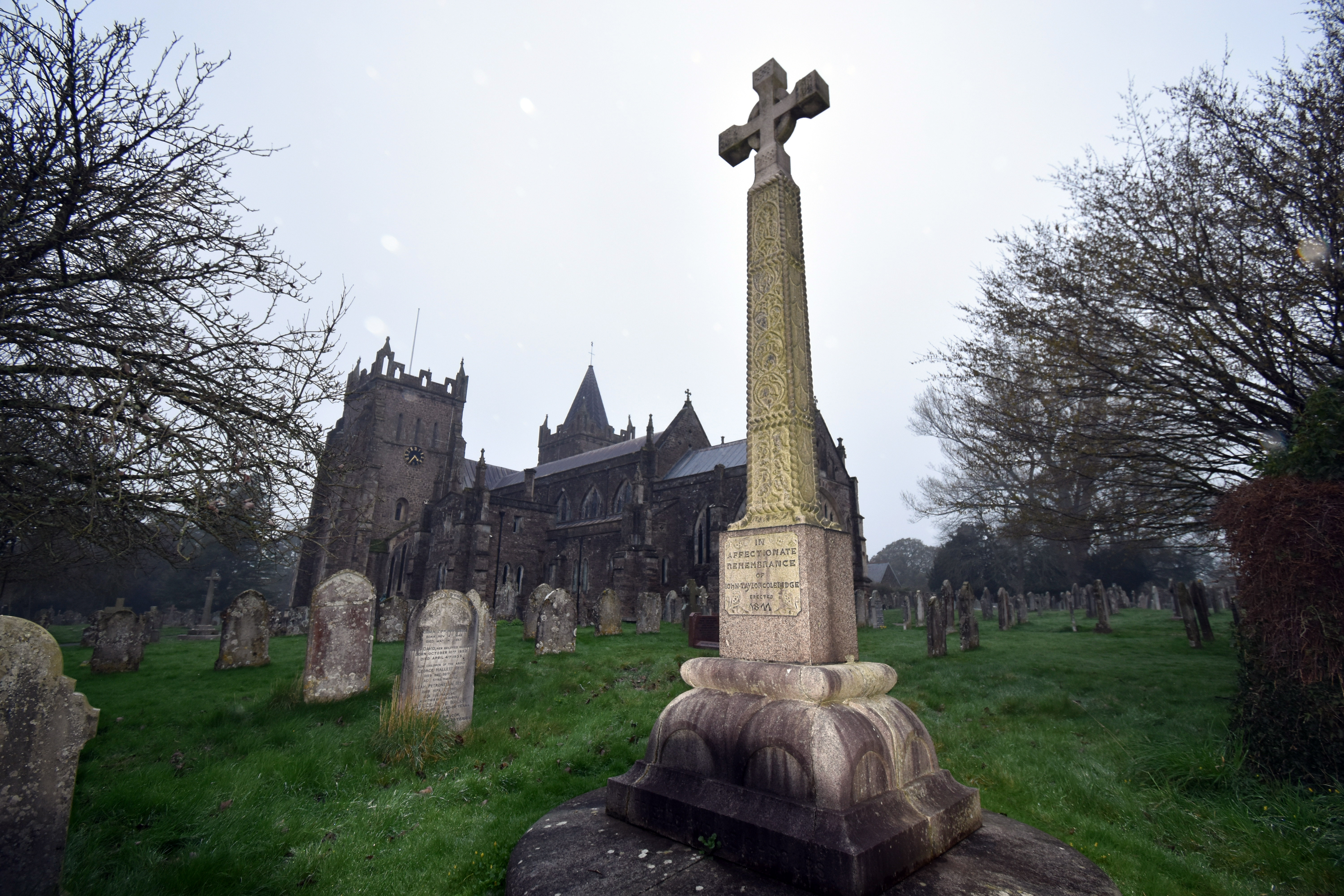
The grave of Mary Frances Keble Coleridge, daughter of the Revd John Taylor Coleridge and Mary Keble. Chanters House next door, bought by James Coleridge and later home to John Duke Coleridge; it also served as headquarters for Cromwell and Fairfax during the Civil War. The cross in memory of John Coleridge, long‑serving vicar of St Mary’s and father of Samuel Taylor Coleridge, standing prominently in the churchyard. A view of the old town hall from the churchyard.
Grave of the Prigg family including George Arthur John Prigg Covered village stocks View from the church past the Diamond Jubilee memorial toward the town Blue plaque marking the birthplace of Samuel Taylor Coleridge
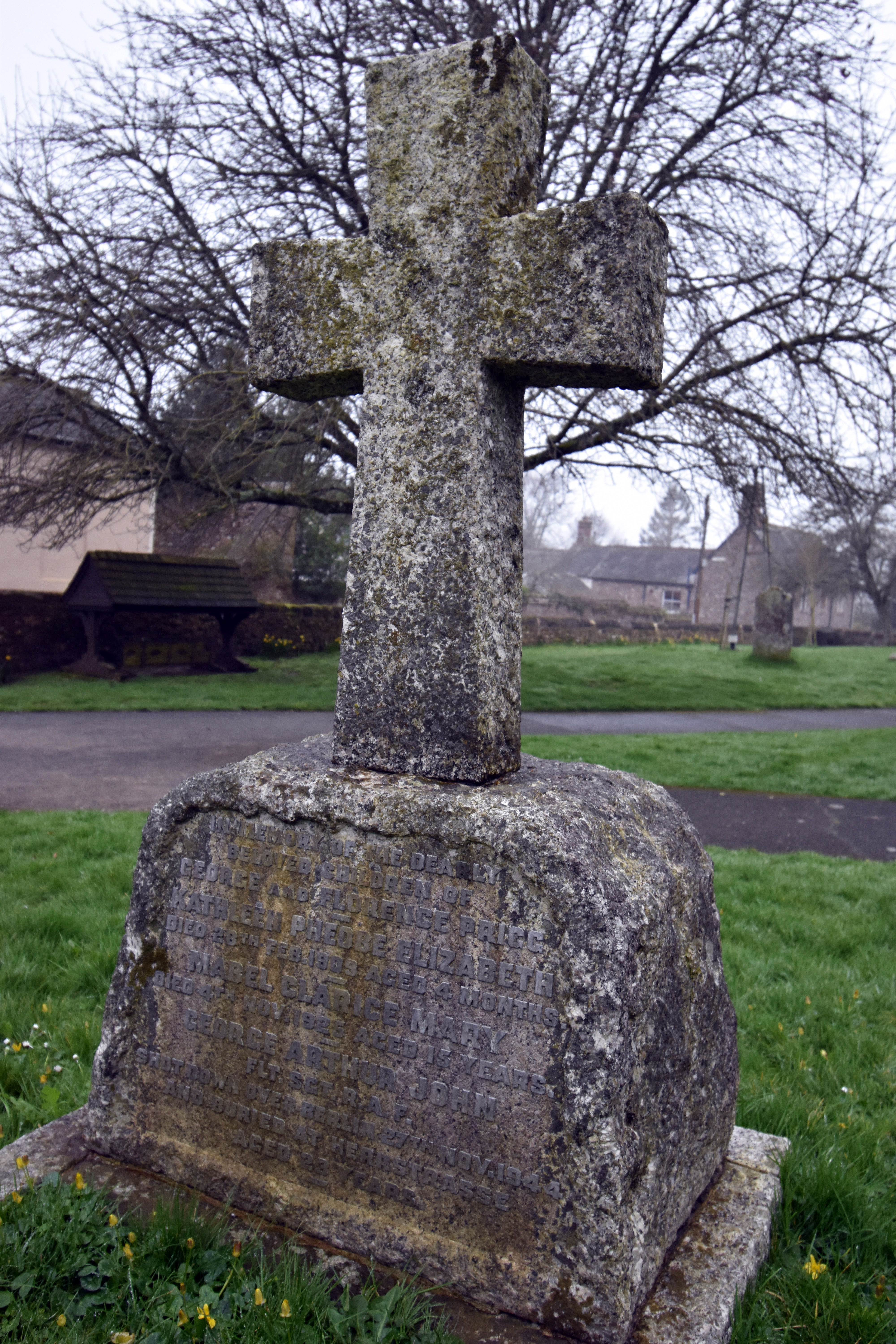
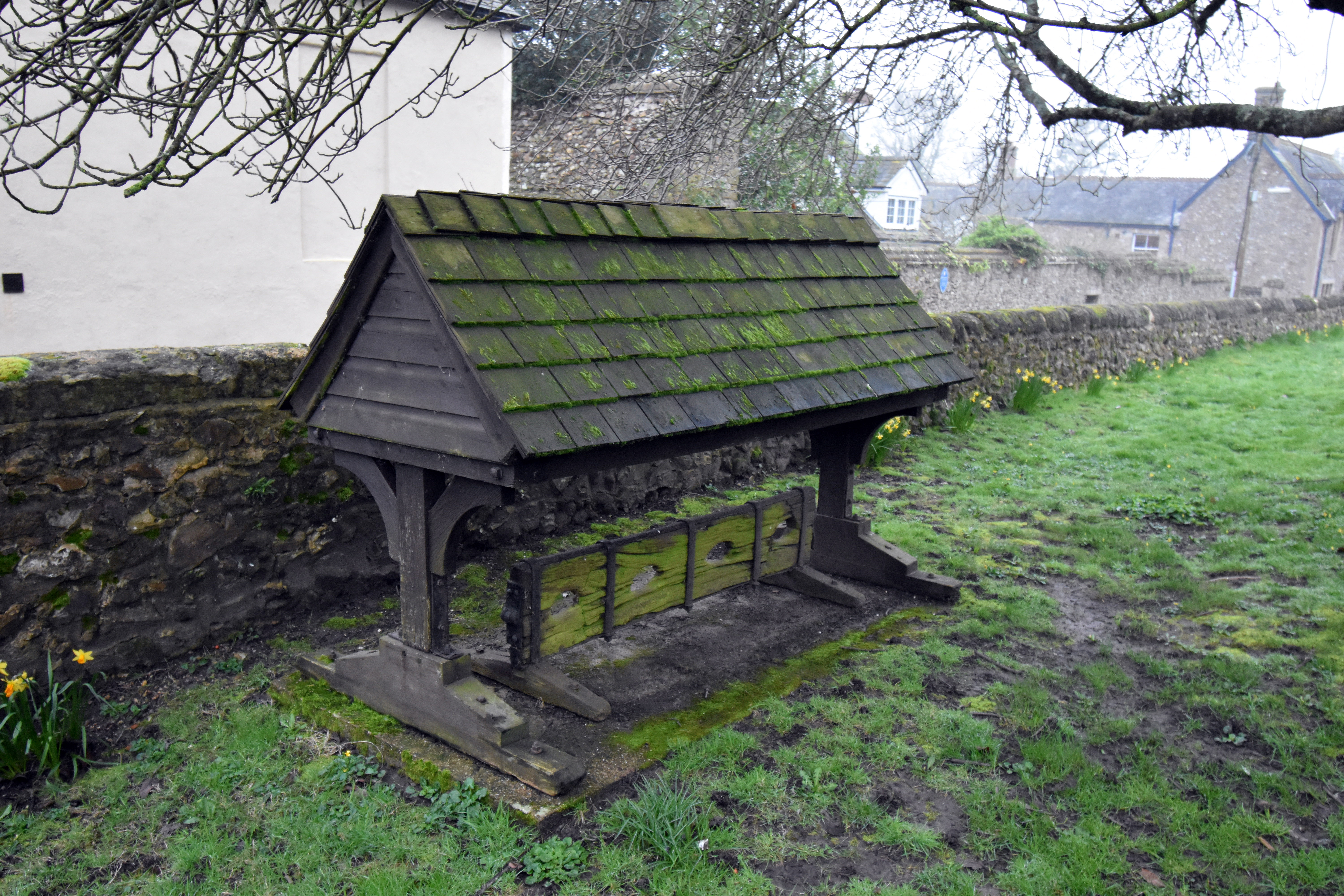
The Prigg family grave, including the dedication to their son George Arthur John Prigg, who was shot down over Berlin on 27 November 1944. The old village stocks — unusually, these are covered, which has helped preserve them. A view from the church looking down past the Diamond Jubilee memorial toward the centre of the town. The blue plaque marking the site of the Old School House where Samuel Taylor Coleridge was born in 1772.

Walks by the Westcountry Walker
Armed Forces | Art and Culture | Articles | Biographies | Colonies | Discussion | Glossary | Hiking | Home | Library | Links | Map Room | Sources and Media | Science and Technology | Search | Student Zone | Timelines | TV and Film | Wargames
Donate by Stephen Luscombe