|
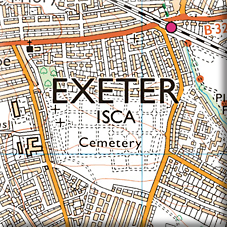
Cemeteries can seem off-putting and melancholy places but I find them fascinating time capsules, and often they hint at the fascinating lives of the people interred within them. On Monday Rupert and I had a little time to explore Exeter’s Higher Cemetery which neither of us had ever visited before. Given my interest in Imperial History it is perhaps noteworthy to say that the cemetery was opened in 1866 by the Bishop of Colombo, Ceylon. Apparently the Bishop of Exeter claimed that he was too sick to attend, but it is believed that actually he was more than a little irked to find out that this cemetery was accepting burials from non-Anglican denominations. The Bishop of Colombo used to living and working in a multi-denominational environment had no such scruples.
Previously most burials had taken place in Exeter Cathedral’s Yard but this was more than full to bursting, so an alternative site was located in what was then quite a distance from the city. This rural idyll suited Victorian sensibilities of a place to rest, although many thought it a bit too far away from the hubbub of the city and perhaps more than a little inconvenient to visit the graves of loved ones. Over time though the city edged ever closer to Higher Cemetery and now over 70,000 bodies have been interred there. With no particular plan, Rupert and I serendipitously wandered around and stumbled across some fascinating graves.
|
|
|
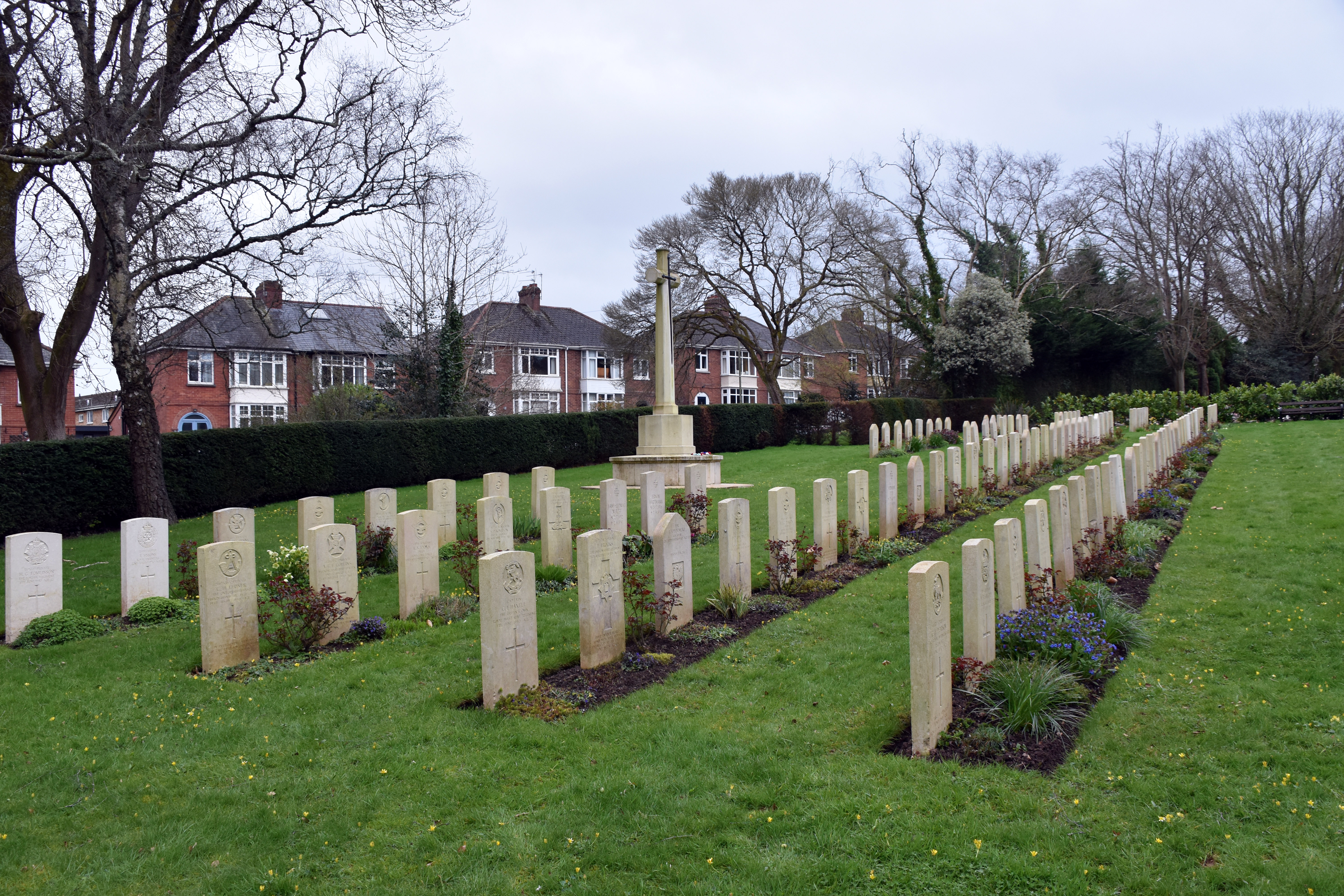
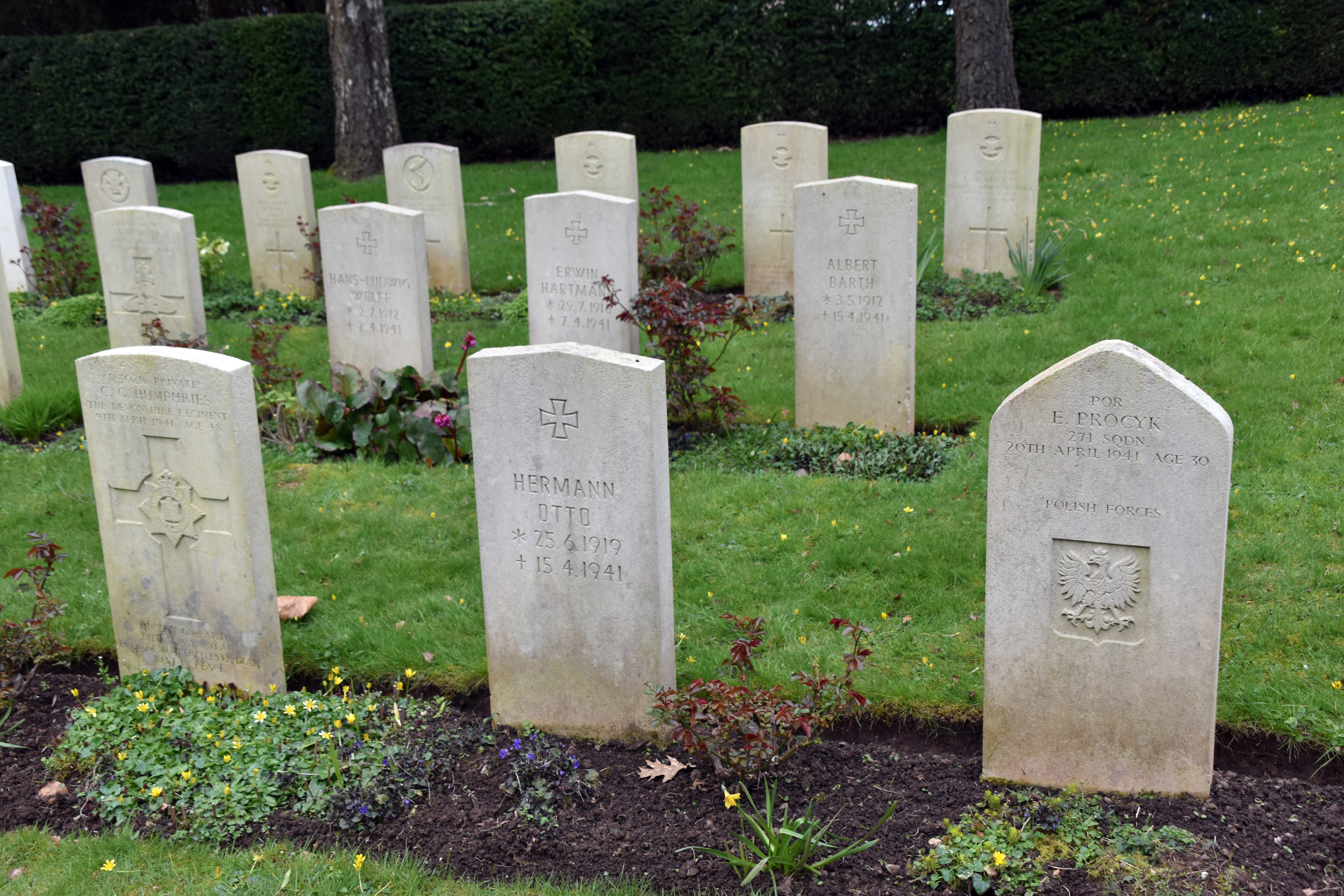
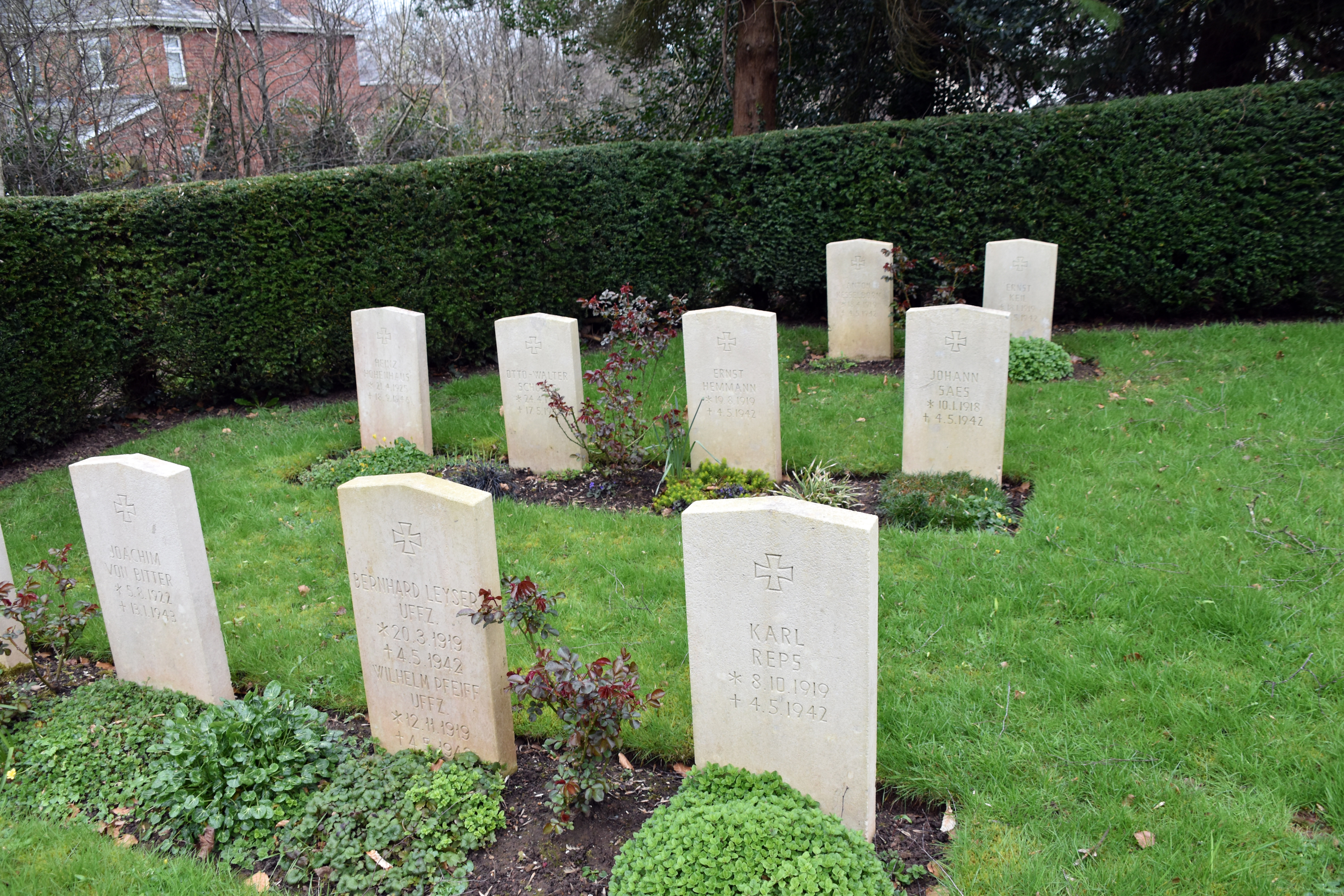
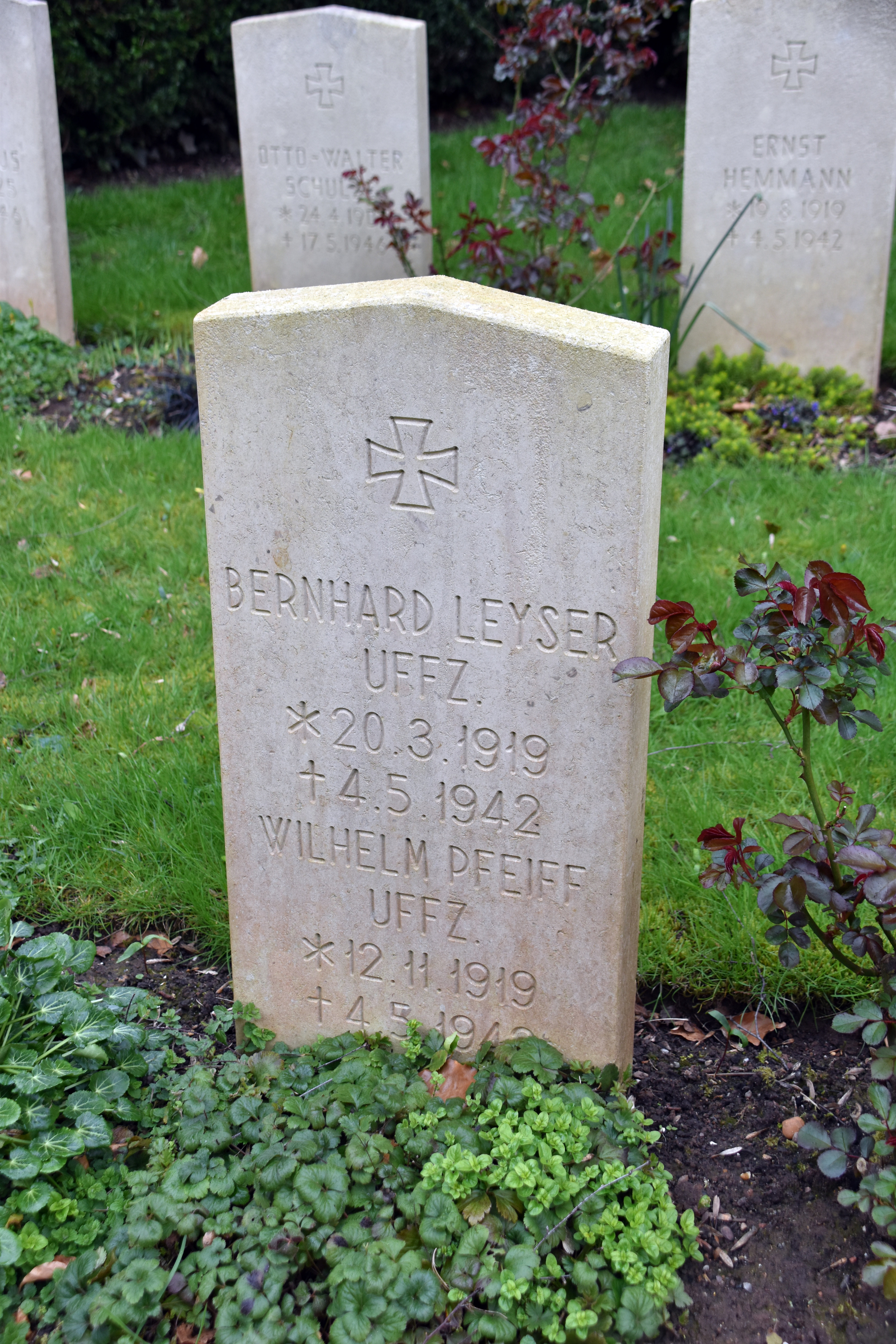
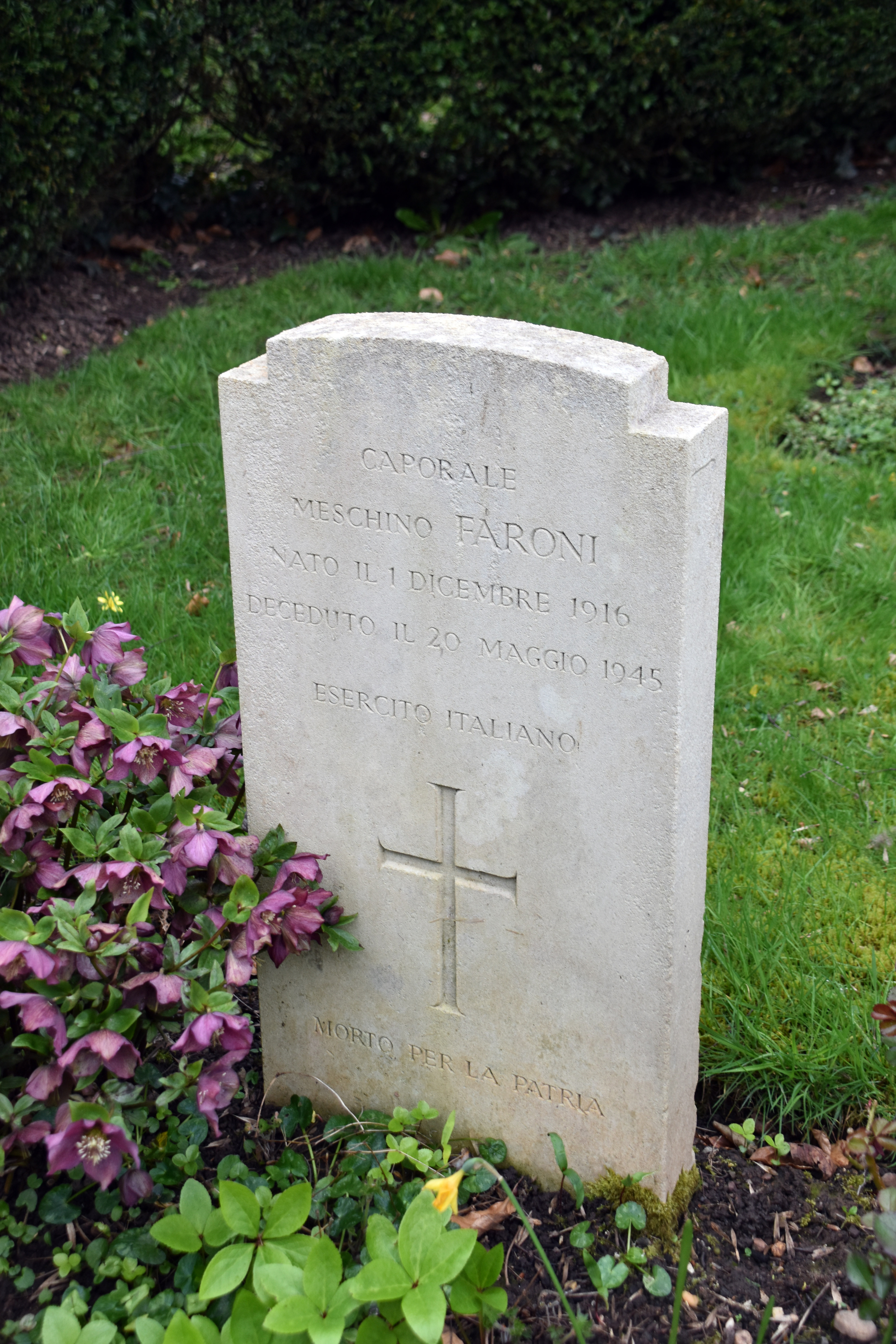
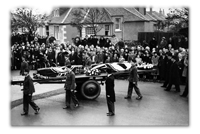
We started in the top North East Corner and were almost immediately surprised by seeing war graves, but not of British and Imperial victims, but of Axis-powered ones. Obviously it is fitting to honour all war dead and Germany showed remarkable respect to British and Imperial servicemen who were killed over or on German soil. The vast majority of these enemy graves in Exeter were of German aircrew, but an Italian grave did sneak in as well. Many of them are sited together in the top corner but not all of them, and it can appear a little incongruous to see enemies buried side by side and intermingled with one another. In general though most German war dead in the UK were from downed aircrew, with a few sailors and submariners being washed ashore and some soldiers dying in captivity. In the early stages of the war, German aircrew were invariably buried with military honours in local churchyards close to where they fell. As the bombing campaign intensified, the ‘honours’ were toned down but they were still buried with respect. The problem was that the Germans were often spread out all over the countryside, so in the 1950s an agreement was hatched between the government of West Germany as it was then and Britain to create a purpose-built German and Austrian cemetery at Cannock Chase in Staffordshire. Then began the task to consolidate them there and also to add new graves which were still being uncovered, with airframes being discovered by chance over the years. However, in some locations like that of Exeter, which had a high concentration of German graves already being tended by the Commonwealth War Graves Commission, it was decided to leave them in place. So Exeter Higher Cemetery is somewhat unusual in still having Axis graves buried side by side with their foes. It was also interesting to note the dates of the deaths and to marry these up with the big raids on Exeter during the war and of course bombers had crews of quite a few, so some of the graves include more than one name on them and many share the same date when big operations saw multiple bombers shot down. You really do feel as if you are staring at the consequences of war, even more so when you realise that the victims of those bombing raids are buried only a couple of hundred yards away from their tormentors.
|
|
|
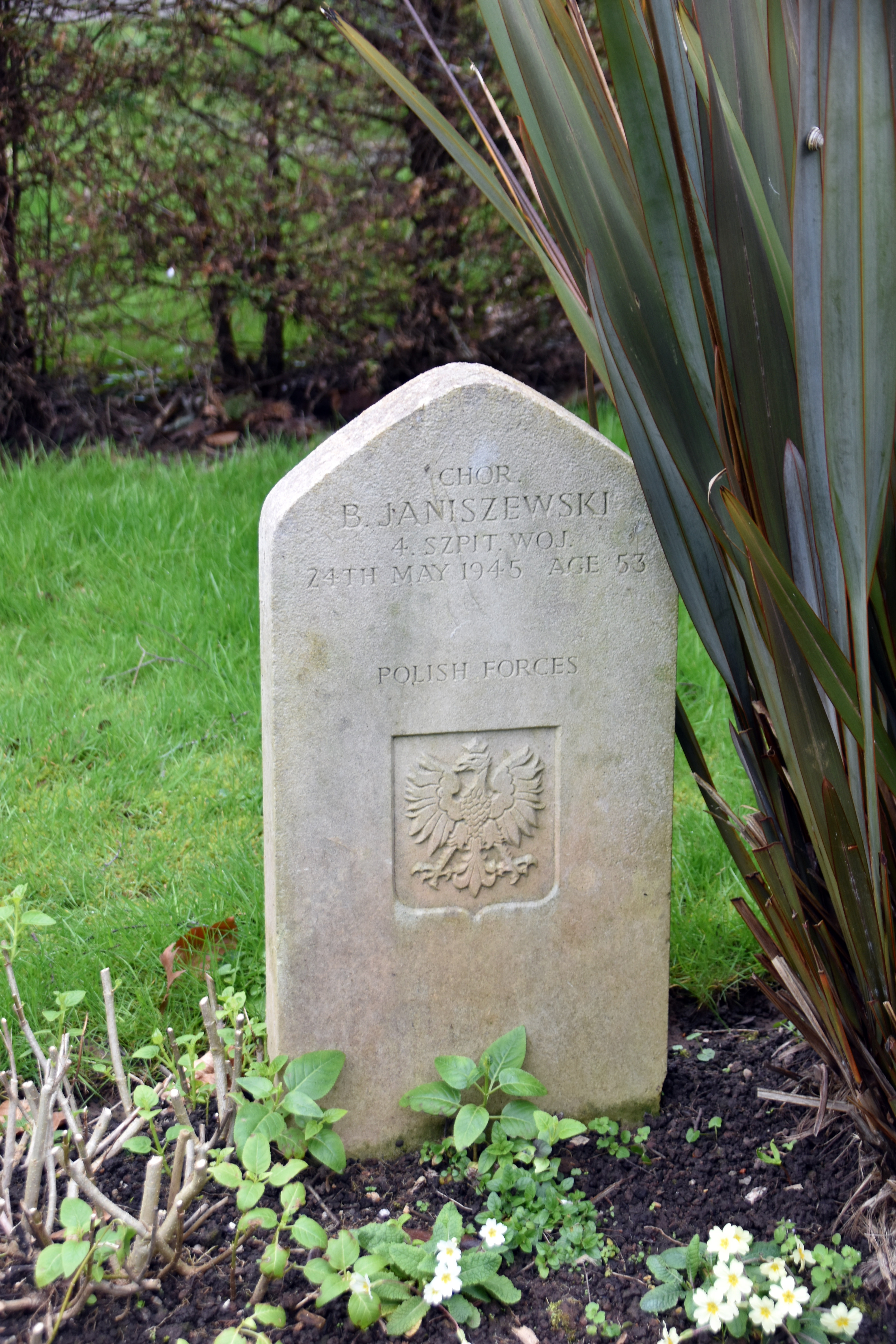
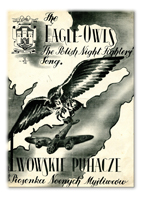
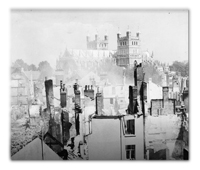
I was also searching out the war graves of the Polish 307 Squadron who were based nearby at RAF Clyst Honiton (now Exeter Airport) and provided the bulk of local defence against the Blitz as pretty much the only night fighting squadron for the entire South West of England for the early stages of the war. Known as the Lwów Eagle Owls they flew the anachronistic Boulton Paul Defiant at first before switching to Beaufighters and ultimately ended up flying Mosquitoes. Sadly they were to find real issues with the Beaufighter engines and lost quite a few brave pilots to engine trouble and particularly vibration when landing with just one engine. These problems meant that when the German so-called Baedeker raids occurred against Exeter in April and May of 1942, they only had 3 planes available to try and intercept the incoming bombers, but they still managed to down 4 enemy planes and earned the admiration of the citizens of Exeter and were renamed locally as “Exeter’s Guardian Angels”. For those who don’t know, the Baedeker raids were Hitler’s response to the RAF attack on the ancient and beautiful German port of Lübeck which did actually have a number of shipyards and submarine production but was renowned for its beautiful medieval architecture and wooden buildings. Hitler was so incensed that a major German cultural centre had been targeted he demanded the Luftwaffe take revenge on similarly beautiful and culturally important British towns and cities using the famous Baedeker Guide books to identify cultural gems in Britain. Sadly this meant that Exeter joined York, Bath, Canterbury and Norwich amongst other places as targets with almost no strategic military value but a great cultural loss to the nation. You can still catch glimpses of the old magnificent medieval Exeter with the odd surviving building, but sadly the timber buildings burnt all too well. Firefighters arrived from all over the West Country but they all had their own appliances and struggled to hook up the Exeter mains system to help fight the fires. This would lead to a major overhaul of the fire defences, but that was a lesson learned the hard way.
|
|
|
I was also looking for the graves of Jan Michałowski and his navigator Stanisław Szkop who are buried side by side. Michałowski was the Squadron Commander in March 1943 when trying to land their Mosquito on one engine as a demonstration to the squadron on how to land safely if their other engine develops a fault. Sadly they were killed when another plane from a different squadron taxied onto the runway that they were attempting to land at. Having only one engine they didn’t have the power to abort and rather than crash into the plane on the runway they overran it and crashed into the countryside. Jan Michałowski had been a highly decorated and highly regarded pilot and his loss was a great loss to the squadron.
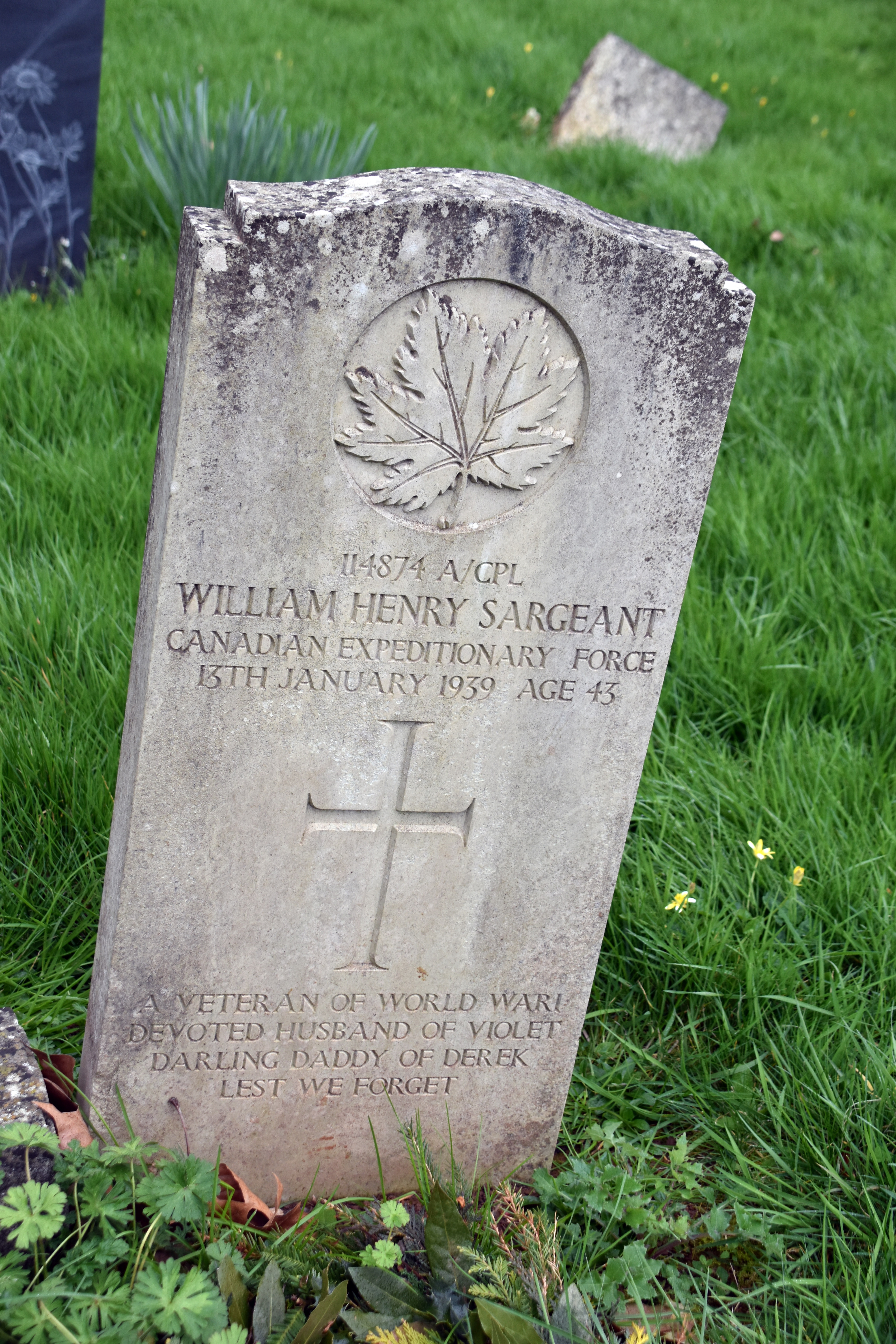
Of course, there are many other RAF and other Commonwealth pilots and aircrew from countries like New Zealand, Australia, South Africa, Canada and Newfoundland (which of course was not part of Canada during WW2 — it was its own colony). Near to the official World War Two section I did see one Lieutenant Colonel who died in his bed in 1946: Frederick John Powell of the Ordnance Corps. He was a veteran of the First World War and was important in the Territorial Army in the Interwar years, ultimately being awarded an O.B.E. for his services. I was intrigued to see that he started his career in the Cycle Battalion when the Edwardian Army thought that bicycles might make a possible replacement for the horse for their troops. The static nature of the trenches of World War One quickly disabused them of this line of thinking, although the Germans did persist with the idea in the early Blitzkrieg stages of the Second World War, if only as they had a shortage of trucks to keep up with their armour.
|
|
|
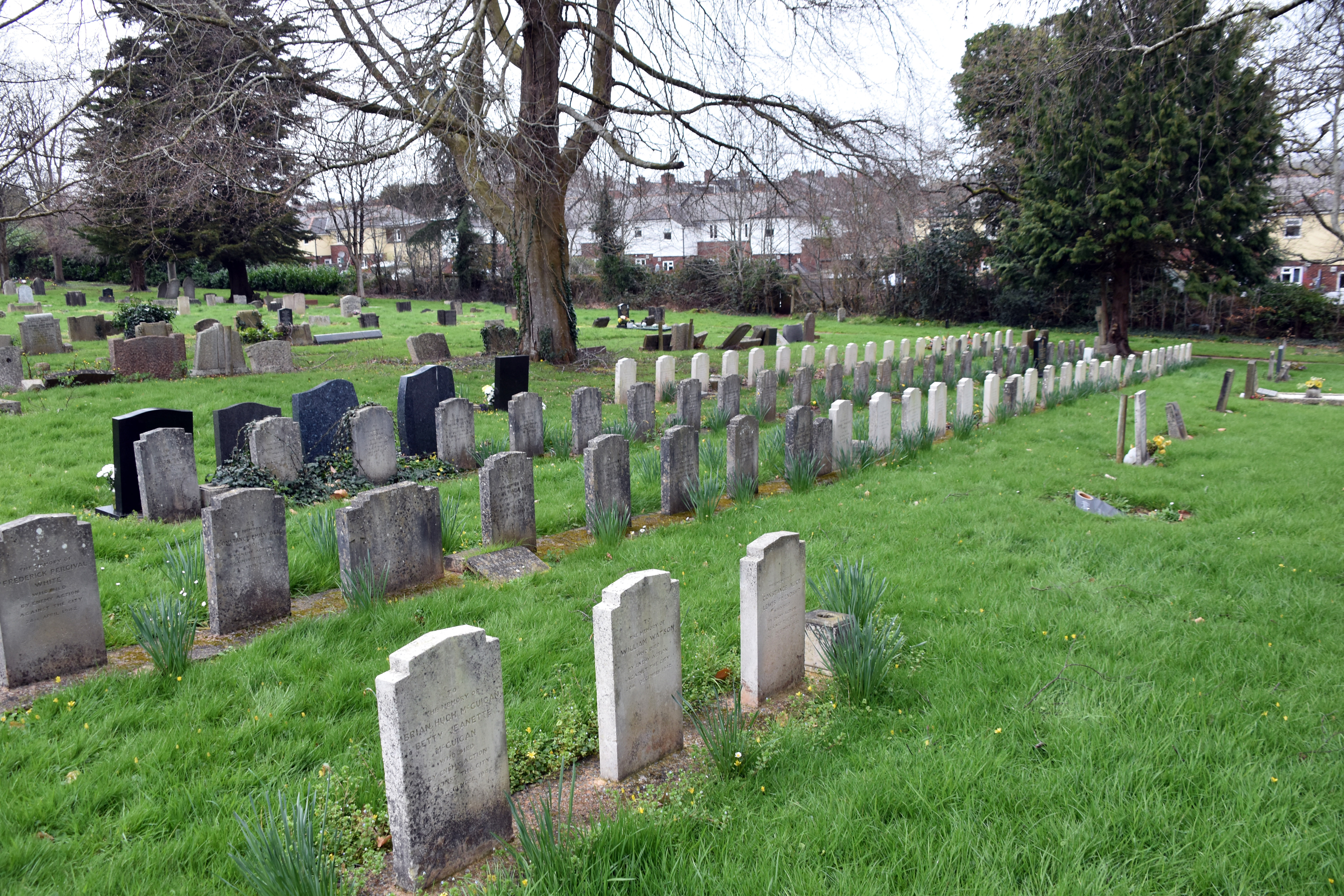
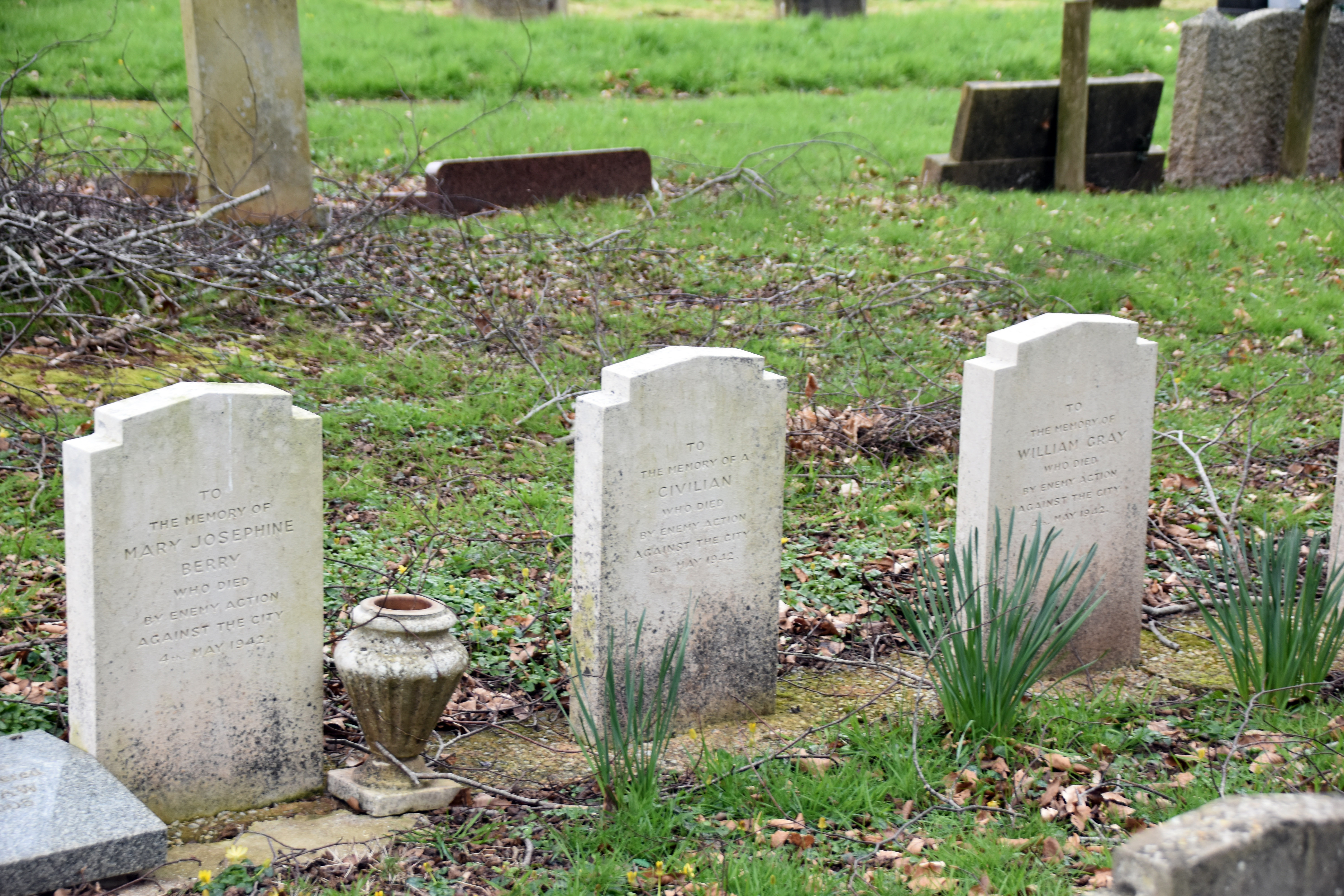
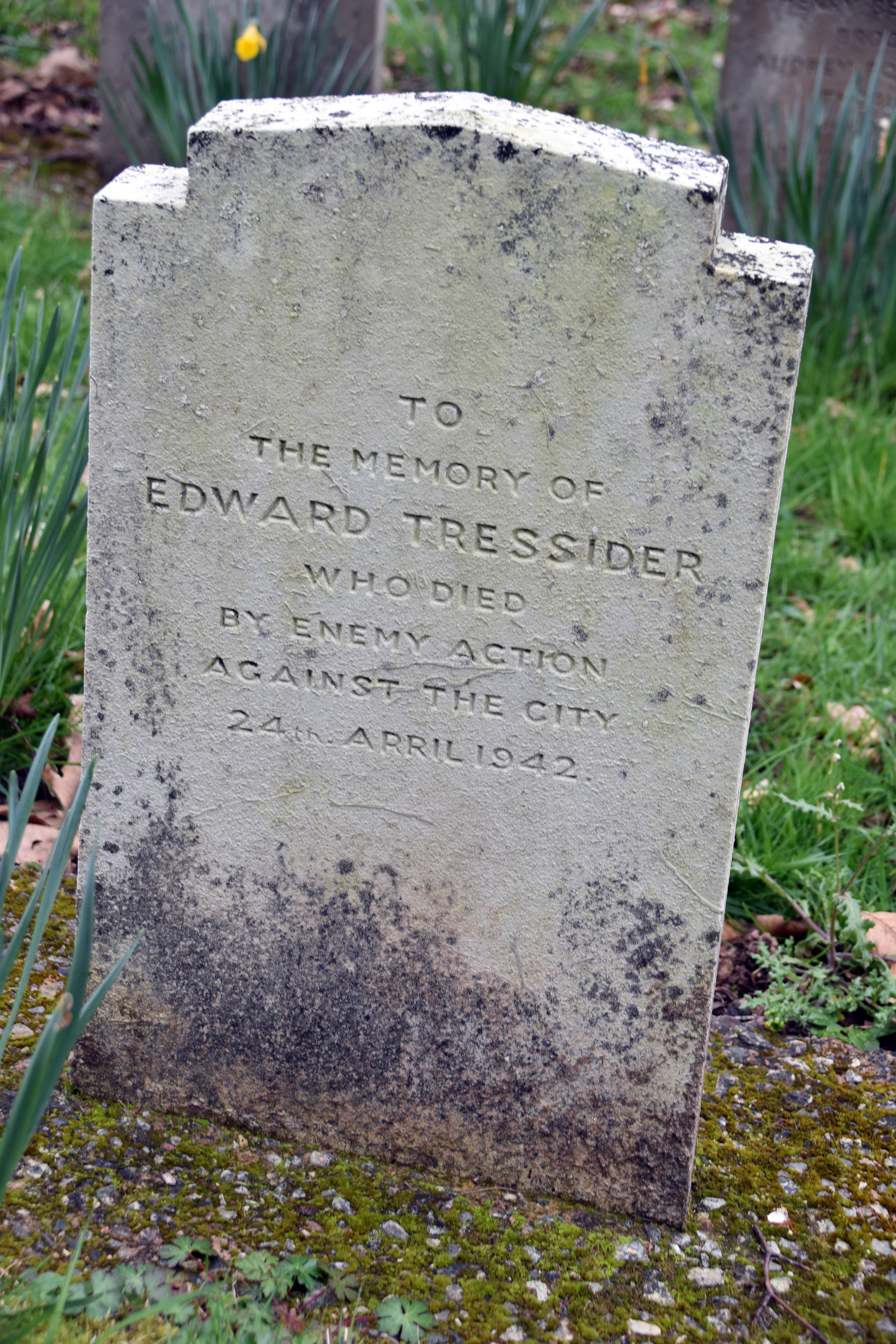
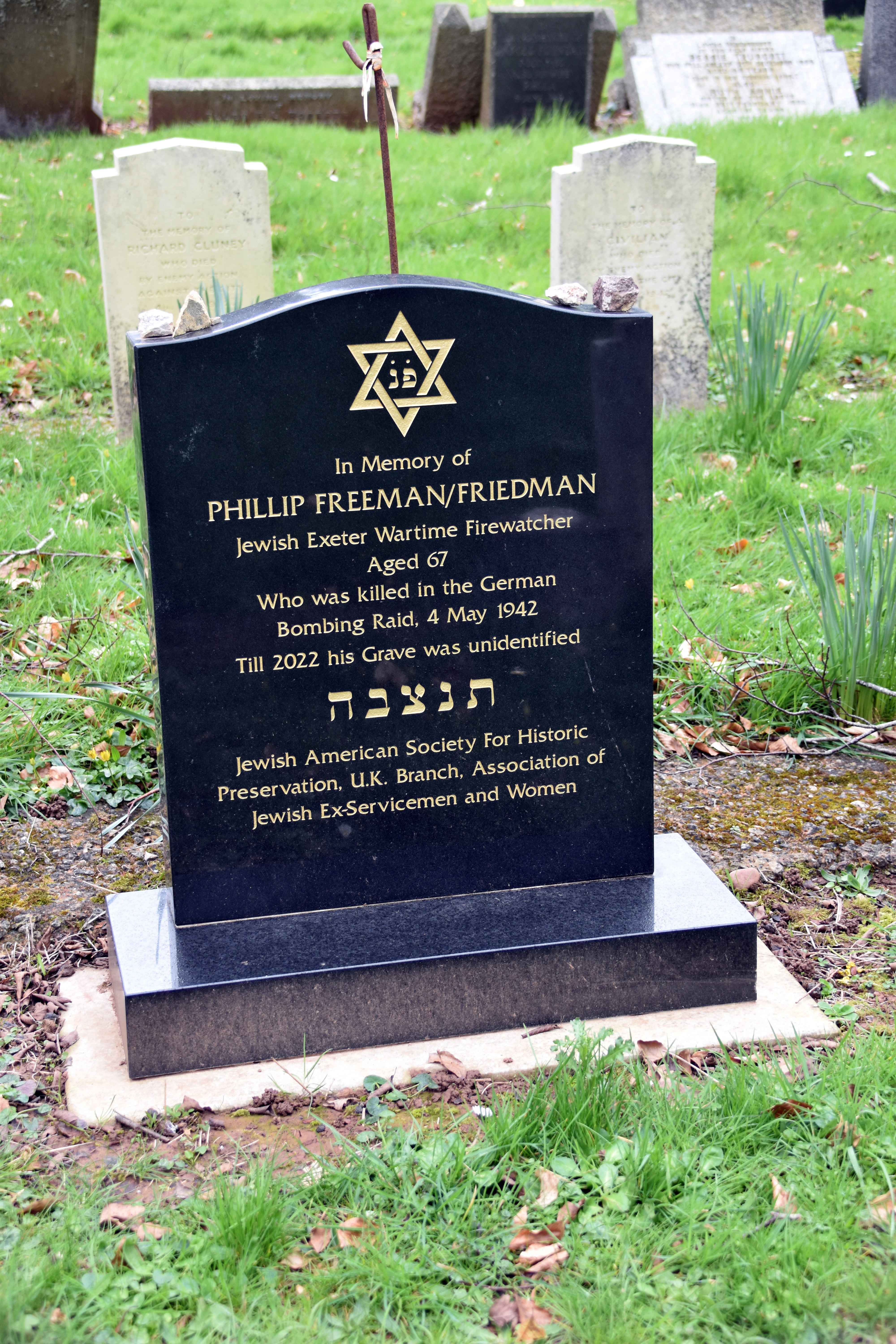
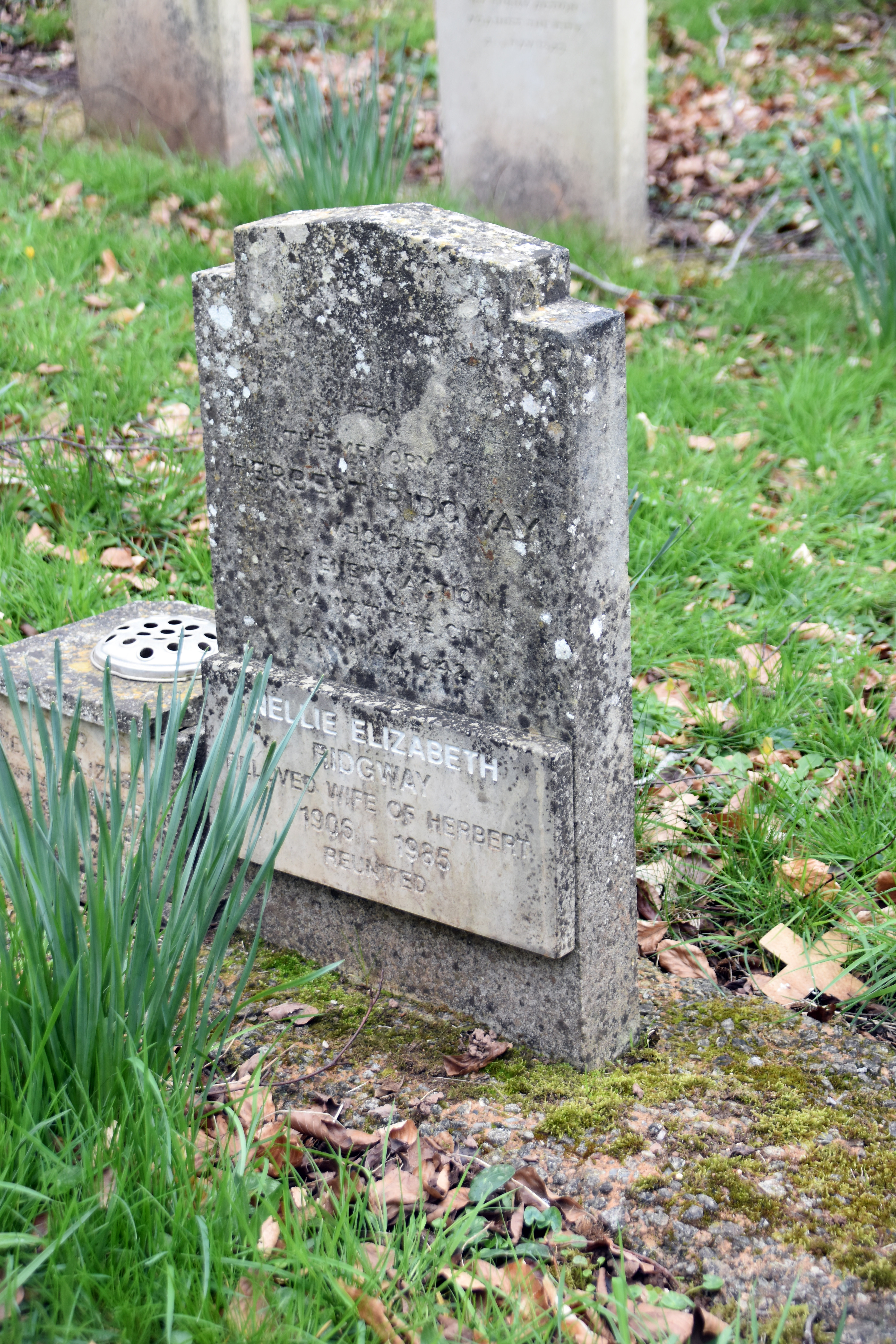
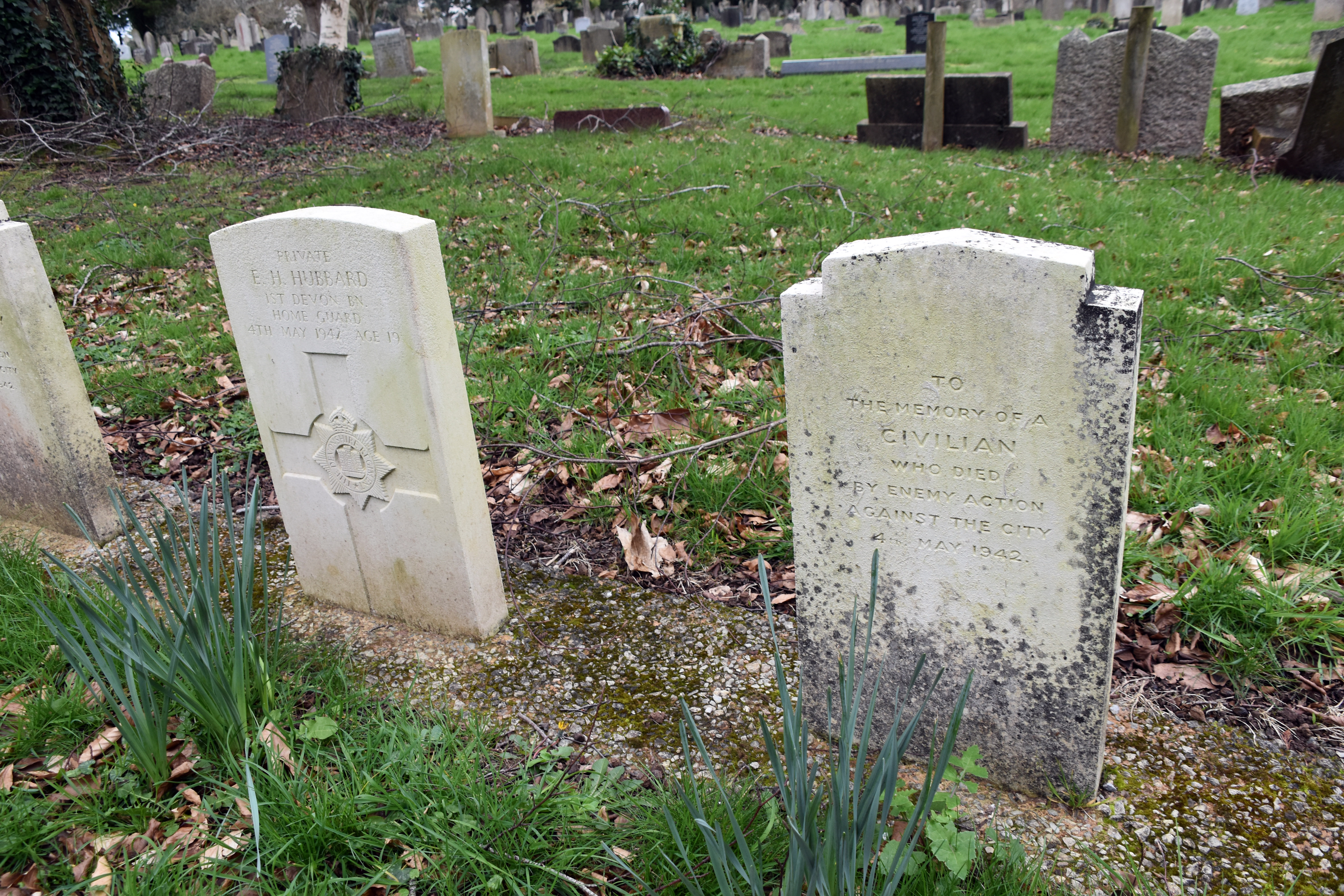
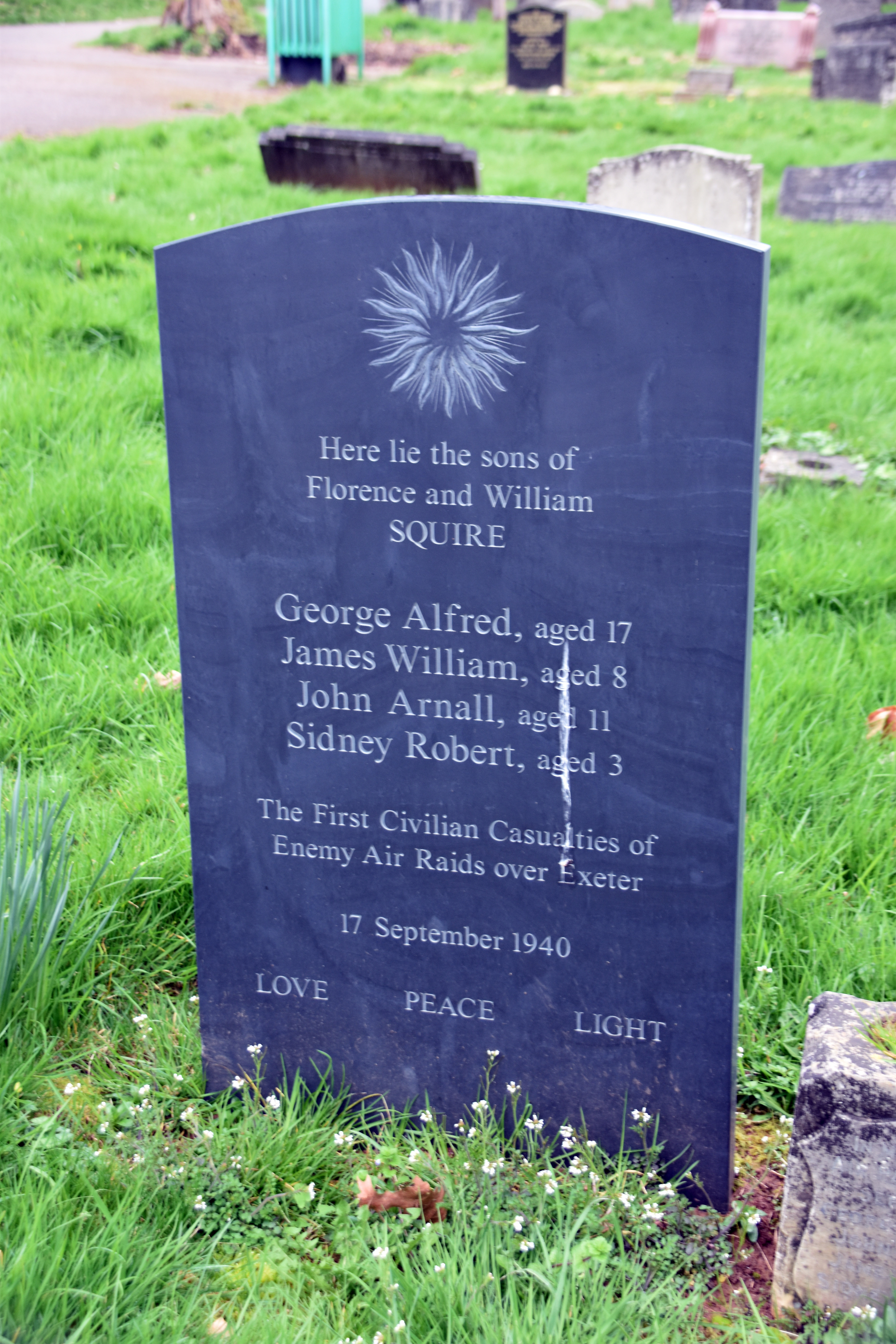
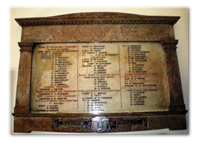
But as we walked westwards we quickly saw another line of uniform graves that threatened to reveal another tragedy. In this case it was the victims of the Exeter Blitz. Most of them were buried side by side with headstones provided by the local authority. You see the occasional private headstone, especially from the earlier and smaller raids. There were 19 separate raids in total, although most of the damage was done in April and May 1942 as the headstones grimly remind you. The vast majority are named, but 18 of the graves are sadly marked only by the term ‘civilian’ as they failed to identify whose body had been disfigured or burnt beyond recognition in the inferno. Of course it was not just civilians who were killed; they were joined by firemen, Home Guard trying to rescue people and gunners from the Royal Artillery who were firing anti-aircraft guns at the attacking Germans. A few of the graves have attachments or are joined by later headstones when spouses or parents joined their loved ones. There was one brand new one when an anonymous civilian victim was identified as being that of Philip Freeman / Friedman who had been a fire-watcher. These were people assigned to specific buildings to try and throw off incendiary bombs before they could ignite and start a fire in earnest. What makes his grave especially poignant is that he was a Jewish gentleman at the age of 67 but still doing his bit to protect his community. Sadly, the youngest victim was a mere 9 days old and there is also a particularly sad grave of the Squire family noting the deaths of 4 sons aged 3, 8, 11 and 17 who it remarks were the very first civilian casualties of enemy air raids over Exeter on 17th September 1940 in the midst of the Battle of Britain.
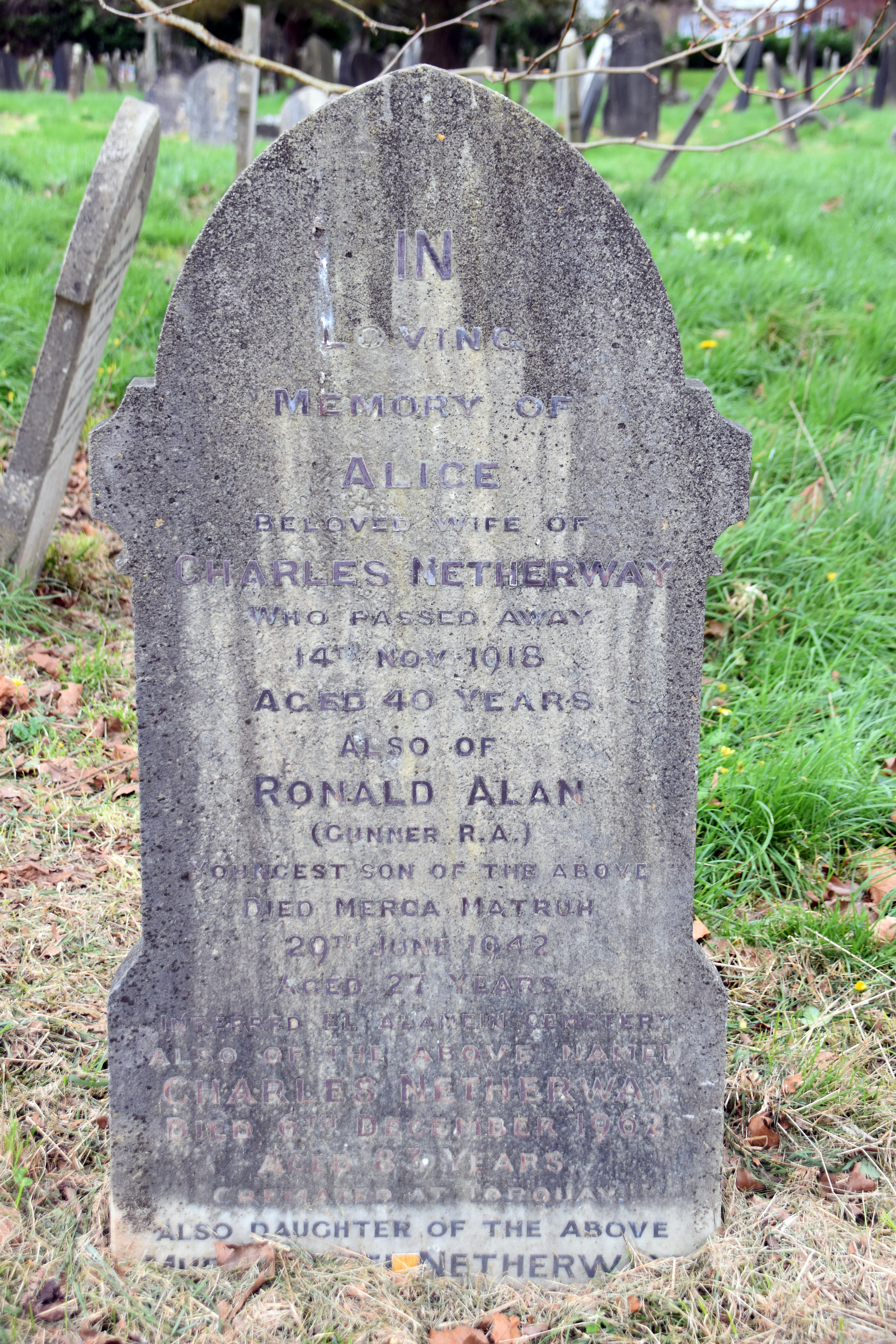
Sadly not all servicemen remembered are buried in the churchyard with their families but some graves still remember them. One such was that of Gunner Ronald Alan Netherway who died at the fortress port of Merca Matruh (modern spelling Mersa Matruh) on 29th June 1942 as the Allies were pushed back after the Battle of Gazala and days after the devastating Fall of Tobruk. Merca Matruh was surrounded by Rommel and his Italian allies as he raced after the retreating British. The British dithered over whether to defend Merca Matruh or pull back to El Alamein — in the end they did the worst of both worlds, pulling back some of the troops whilst sacrificing others in the port. Large numbers of British and Commonwealth soldiers were captured and all-important supplies abandoned. It really was a disastrous defeat that would see Auchinleck relieved of his command in August. The defeat also convinced the Americans that Egypt and the Suez Canal would fall imminently and they began preparing their own evacuation. Fortunately, as the British supply shortened, the Axis supply line lengthened and the thirsty Axis tanks would be painfully short of fuel. This would give the British time to build up the defensive line at El Alamein. Merca Matruh and soldiers like Gunner Ronald Alan Netherway were sacrificed so that the British could rebuild the Eighth Army in a better defensive position.
|
|
|
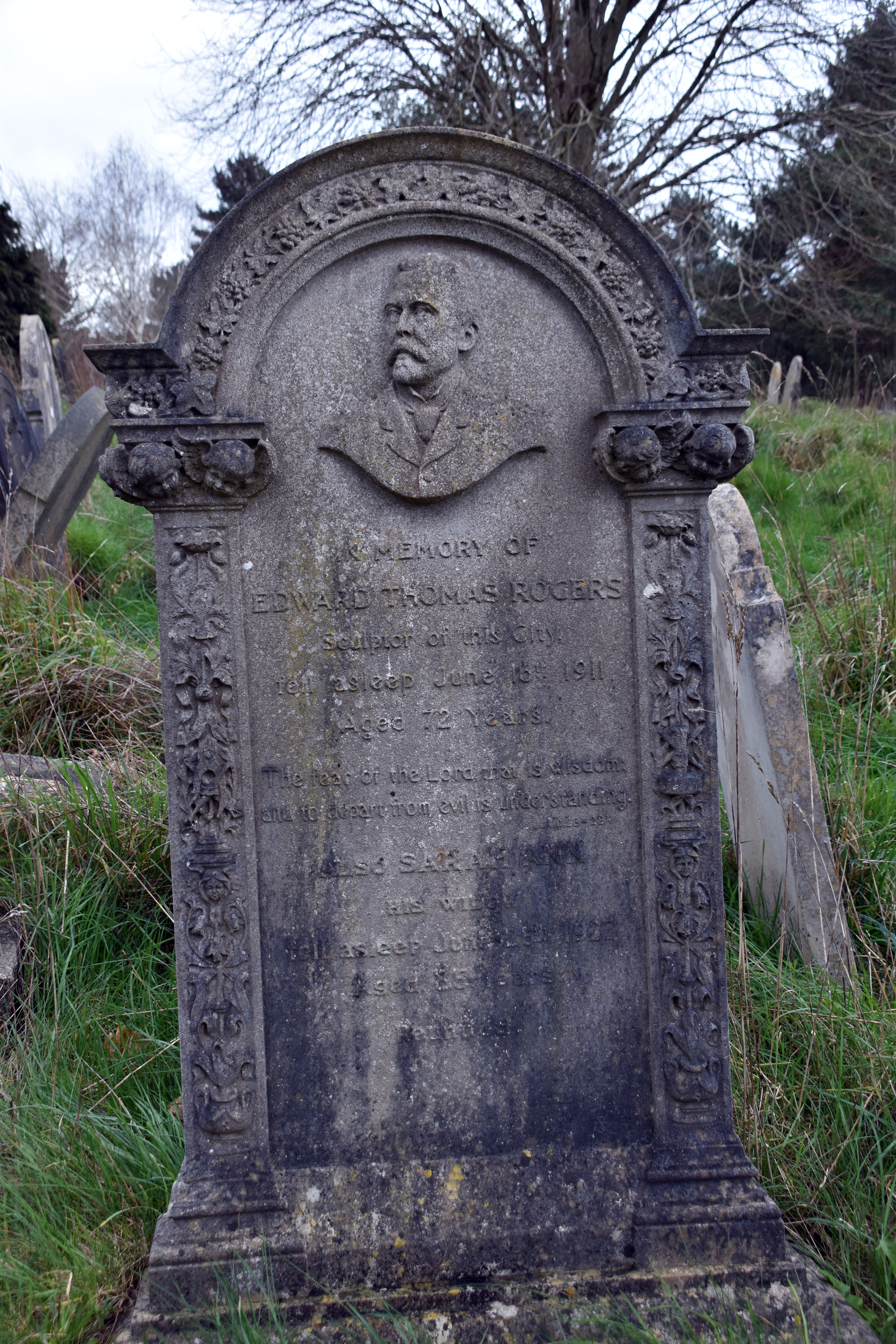
The grave of Edward Thomas Rogers literally jumps out at you as it has a fine sculpt of the deceased on it. This isn’t too surprising as he was a sculptor by profession who had worked on church fittings and fixtures including the new tower of nearby St Michael’s and All Angels church and the Boer War Memorial in Exeter Guildhall. These Boer War memorials marked a transformation in the state realising that they needed to honour the soldiers who died in the country’s wars. They were yet to take responsibility for the graves of soldiers lost on campaign but the fact that so many volunteers died so far from home definitely pricked the consciences of the early Edwardians in a way that had not manifested itself previously. The slaughter of World War One would only escalate the need to create a dedicated organisation which eventually became the Imperial War Graves Commission.
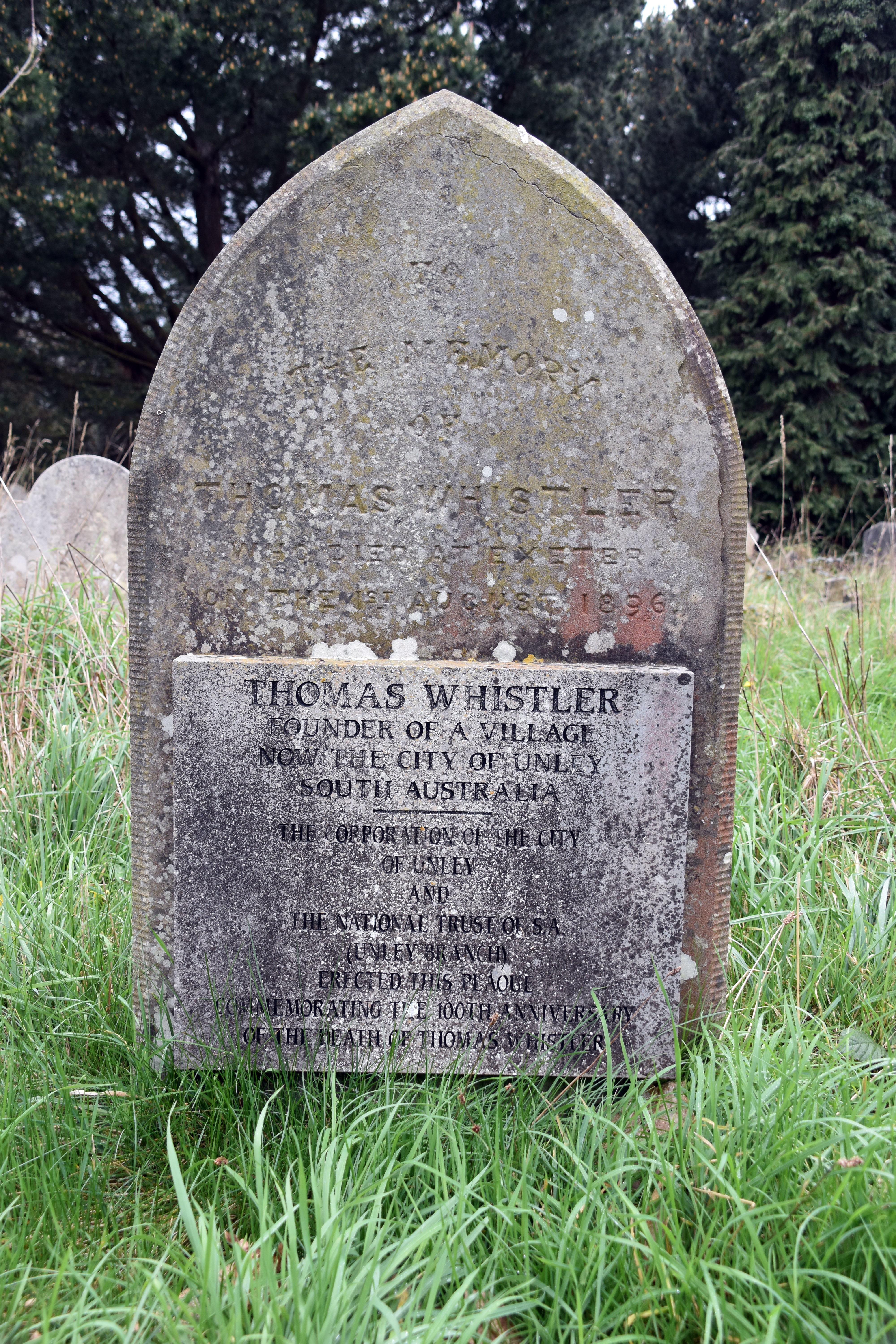
Not far away I stumbled across another intriguing Imperial-related grave. This one belonged to Thomas Whistler who died in Exeter in 1896. But attached to it was another slab detailing that Thomas Whistler had been the founder of a village in South Australia that eventually became the City of Unley. And this dedication was added on the centenary of the founding of their community by this Westcountry man. It is also instructive that the Empire was a very fluid organisation — you did not even need passports to move within the colonies and people did move in both directions. I don’t know why he returned to England, but it shows that links across thousands of miles were created and communities built that would have astounded their original founders.
|
|
|
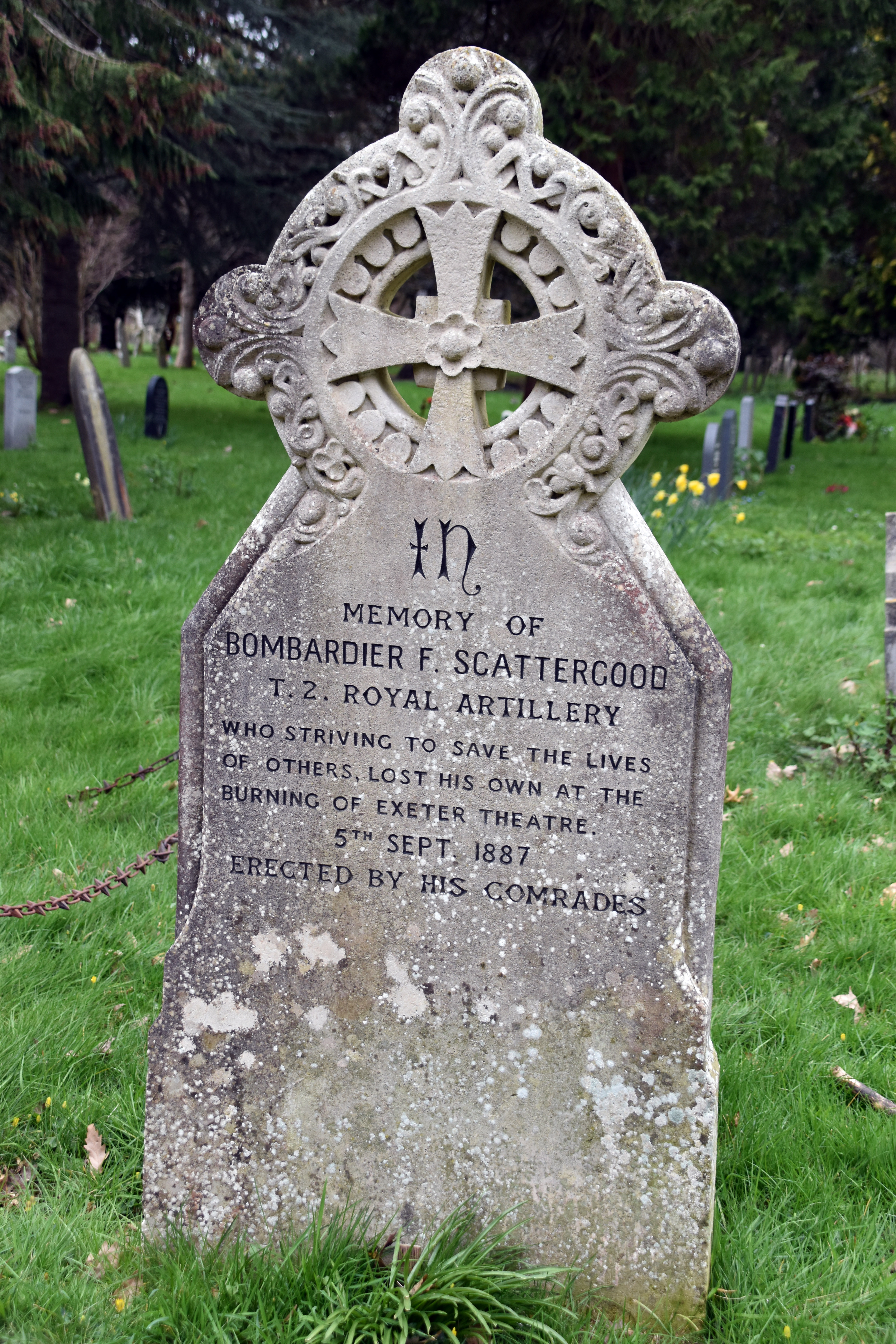
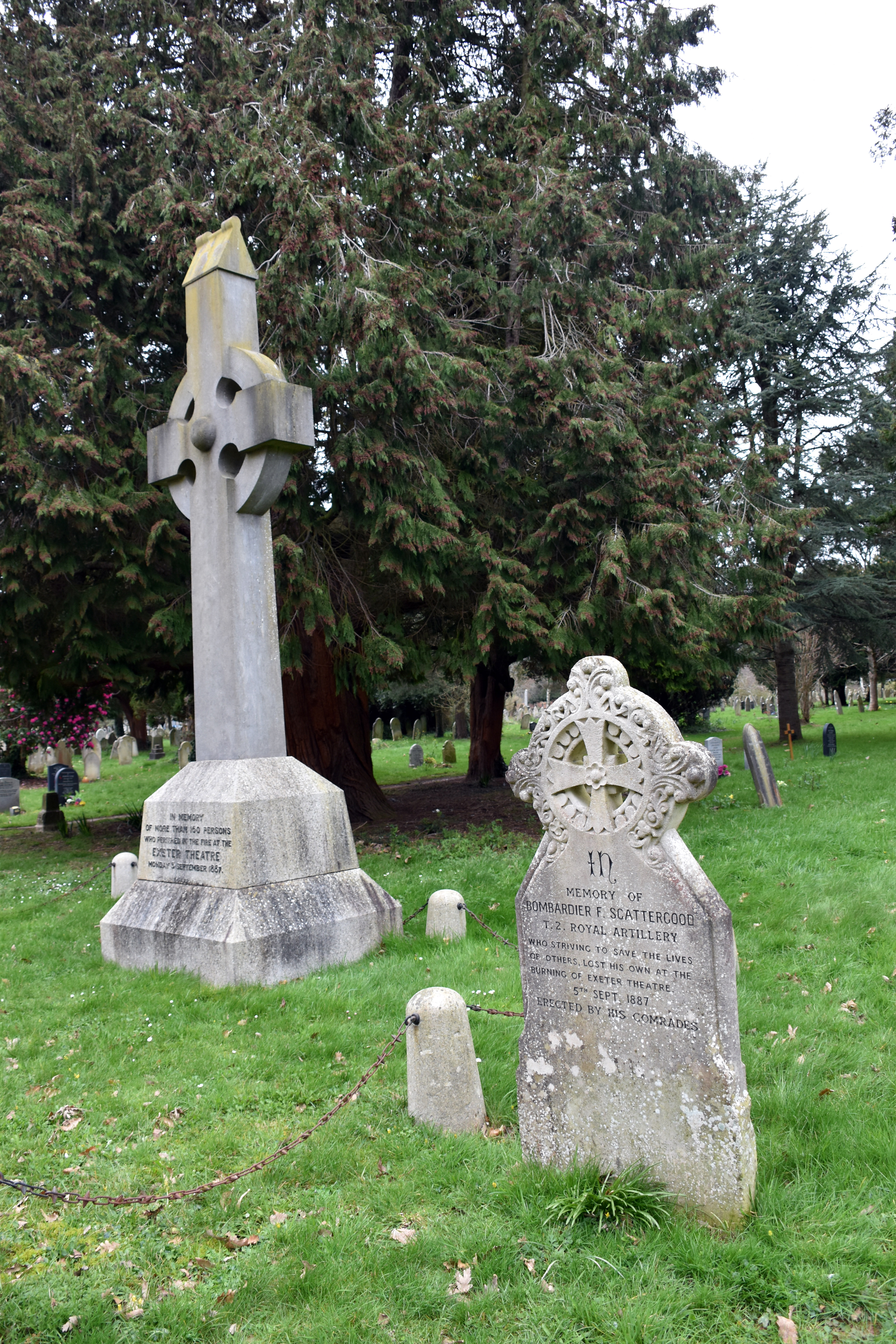
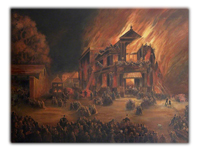
We then stumbled across two very famous memorials in Exeter and ones whose consequences you have probably noticed more than you realise, especially if you go to the theatre at all. In 1887 during the interval of a play entitled ‘Romany Rye’ at the Exeter Theatre one of the audience members accidentally knocked over a gas light which ignited the stage curtains. Those in the stalls managed to depart largely without incident, but those upstairs soon found themselves trapped with smoke billowing and flames rising. The narrow staircase led to a door which opened inwards and the resulting surge of panicking people made it impossible to open. Some people were able to make their way to the roof and jump to firefighters with stretched tarpaulins below and survive but some 186 people were to perish. The grave next to this memorial to the victims highlights the actions of Bombardier Scattergood of the Royal Artillery who was one of the heroes of the night but sadly died of burns incurred whilst trying to carry people to safety. He received a posthumous award for his bravery and had this gravestone paid for by his fellow gunners. Apparently his horse was one of the attendees of his military funeral and cut a sad and pathetic vision without its owner. Now the reason that the consequences of this incident may have been noticed by you is because as a direct result of this tragedy new laws were brought in to govern health and safety at all theatres in the country. The most important were that Fire Curtains had to be introduced to separate the auditorium from the stage, all fire exit doors had to have illuminated signs showing their location and that all outer doors from the theatre had to have a release bar to open them and that they must always open outwards onto the street. Sadly we always seem to have to learn the hard way, but at least we did learn these lessons back in 1887. Next time you see a fire curtain descend perhaps think a little of the sad sacrifice of these 186 audience members that led to ‘lessons being learned!’
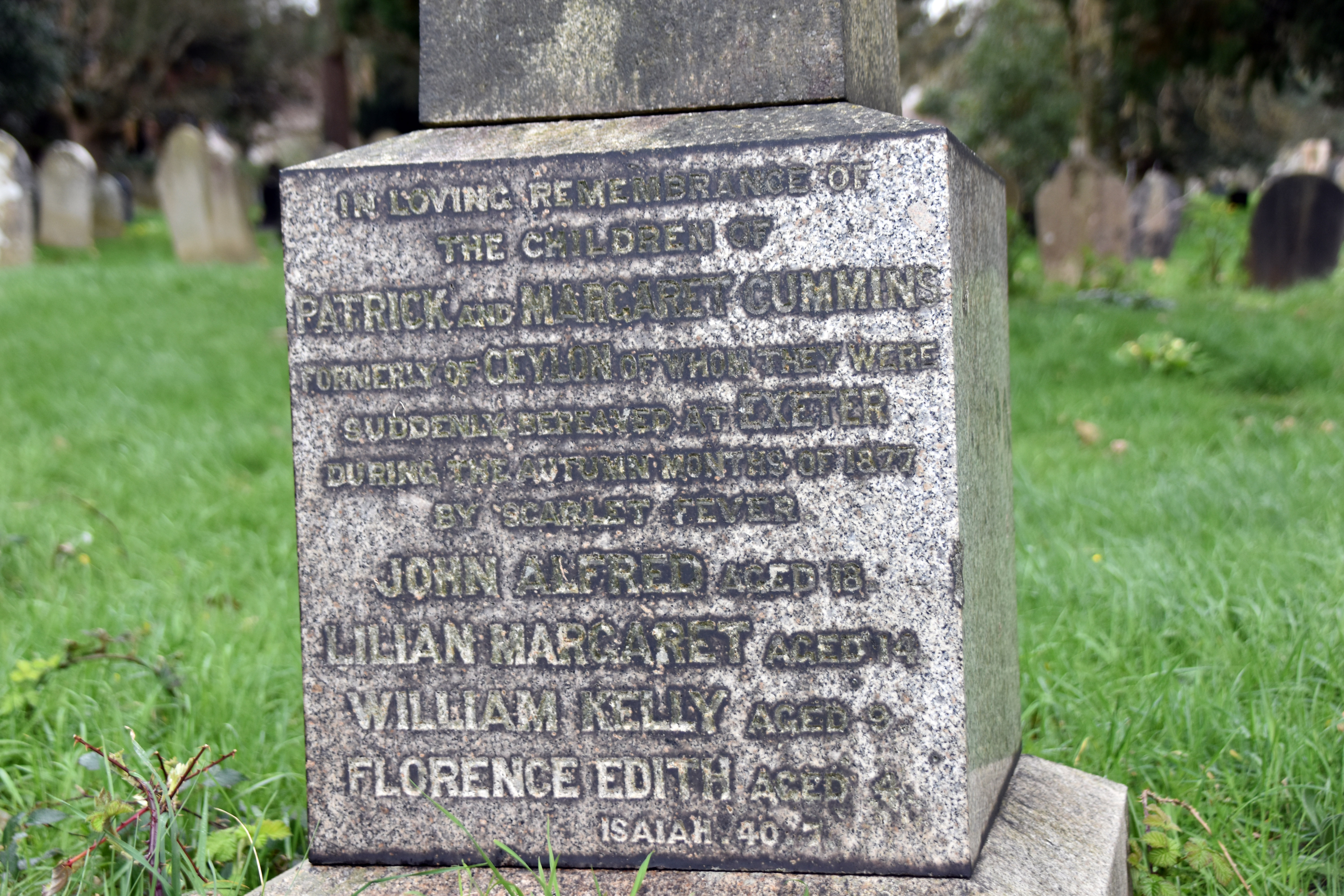
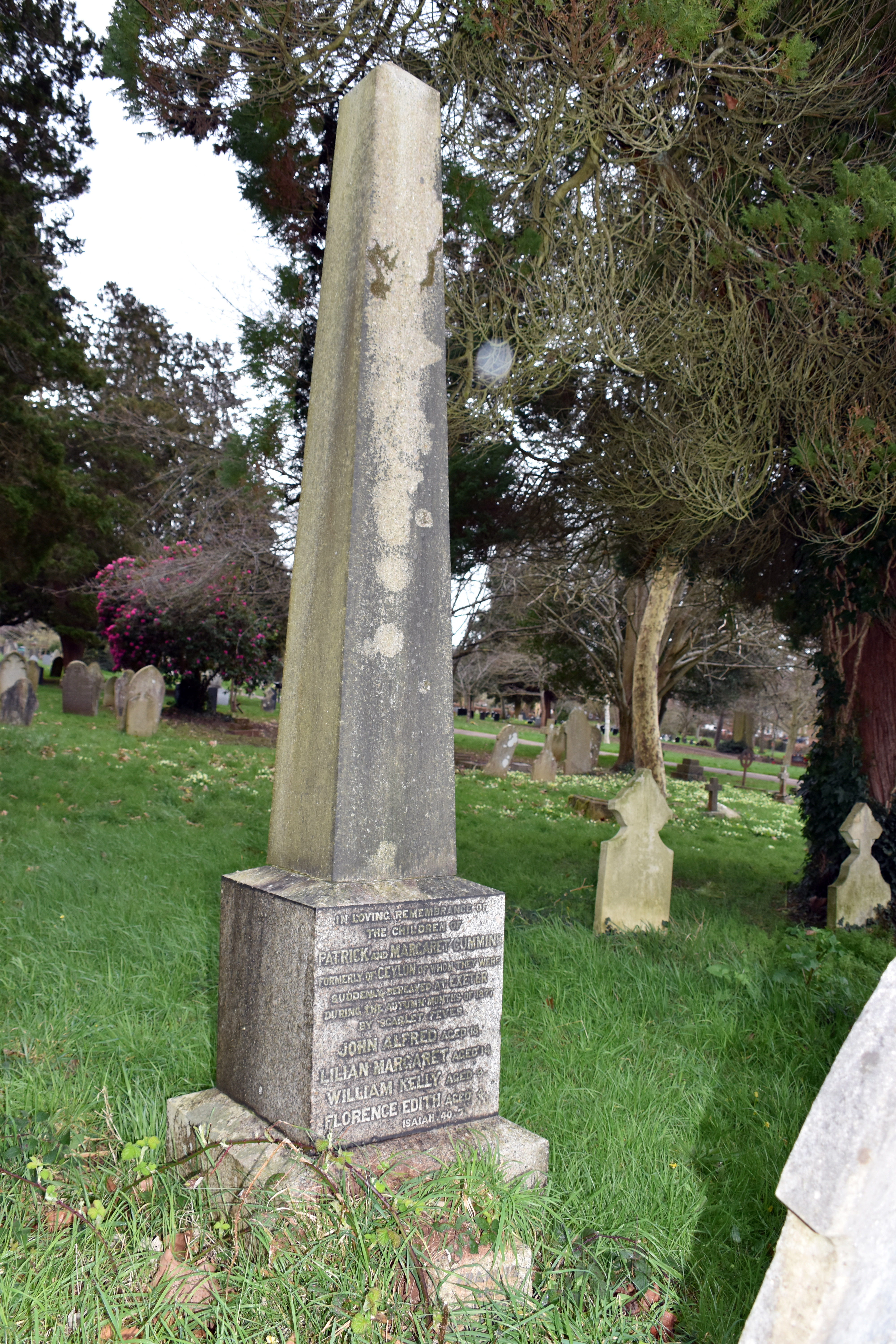
Another imperial grave caught our eye — it was quite a large needle but it revealed a desperately sad tale for Patrick and Margaret Cummins. The inscription tells us that they had lived in Ceylon and returned to Exeter for some reason. It goes on to tell us that they lost four of their children to Scarlet Fever in the autumn months of 1877 aged 4, 9, 14 and 18. To lose one child is heartbreaking but to lose four in such a short period of time is totally devastating. One can only imagine the depth of sadness that led to this magnificent memorial to their cherished offspring. It is another indication that death from disease was far from consigned to the tropics in the 19th century. It is a cruel irony that they came from a place where disease might have been expected to where they might have assumed a safer environment.
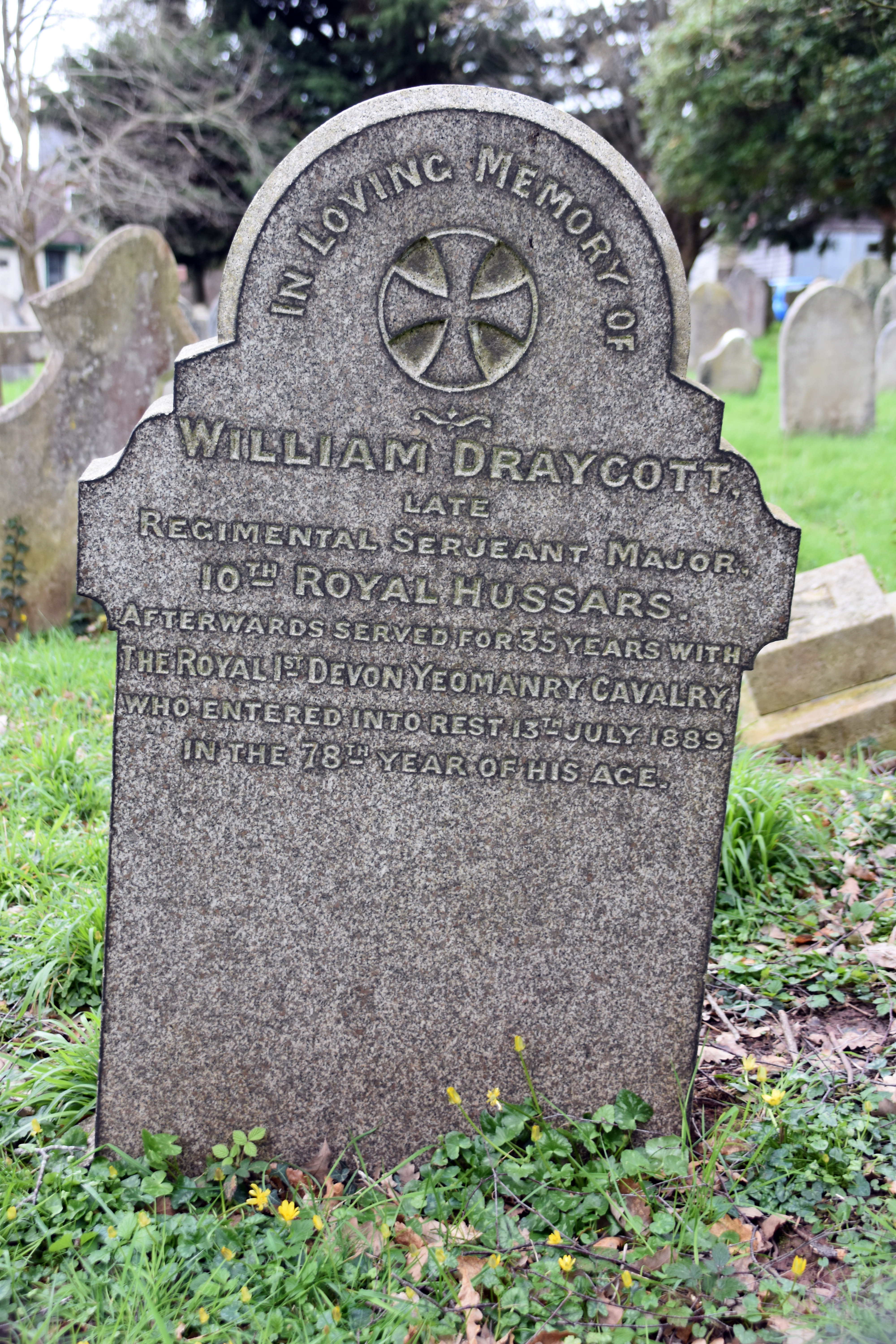
Nearby was the grave of William Draycott who one must assume was a formidable character as it says that he was the Regimental Sergeant Major of the 10th Royal Hussars and then went on to serve an additional 35 years with the Royal 1st Devon Yeomanry Cavalry. I’m not entirely sure of his service record but there is a good chance he served in India and possibly in the Crimean War. But this soldier passed away at the comfortable age of 78.
|
|
|
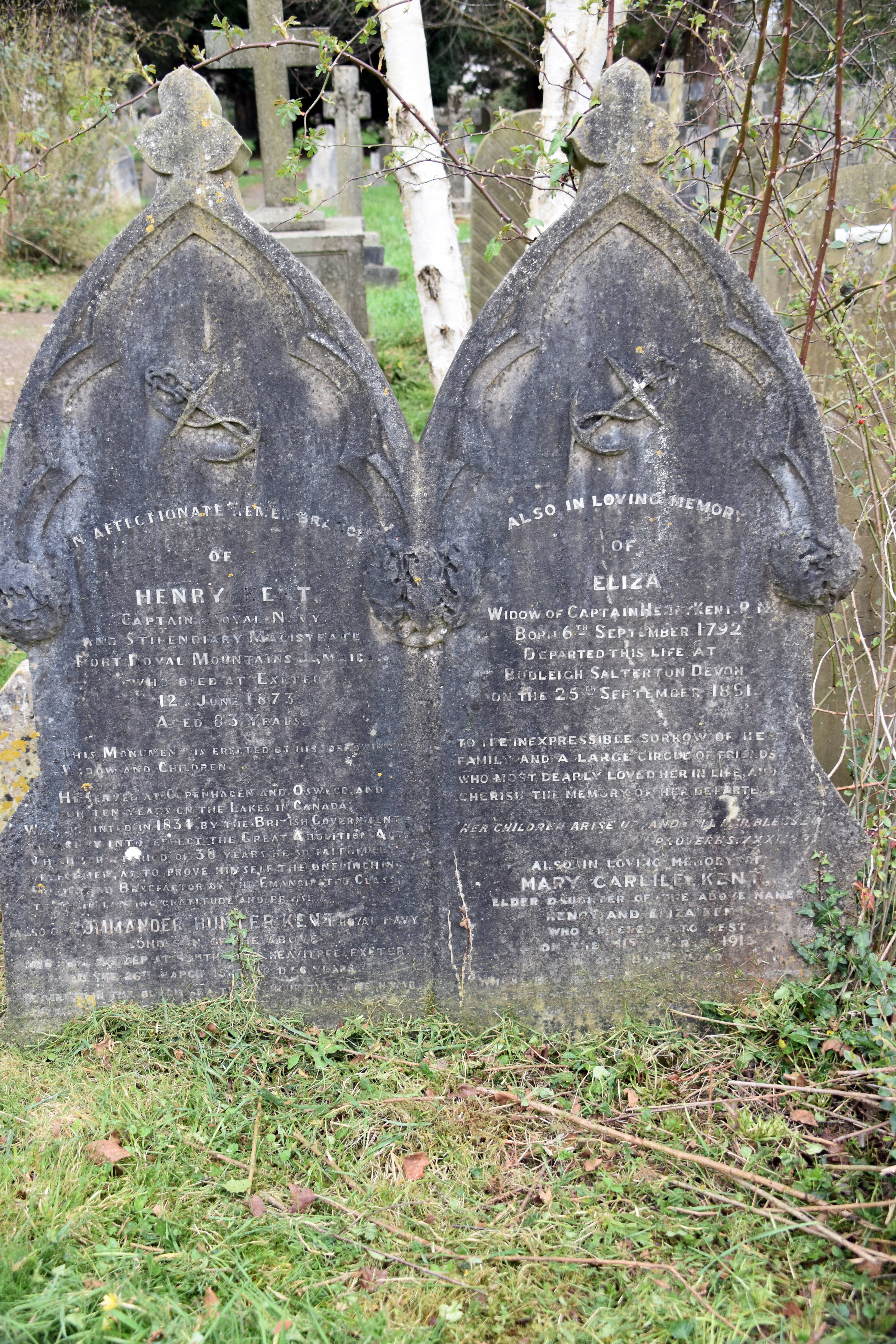
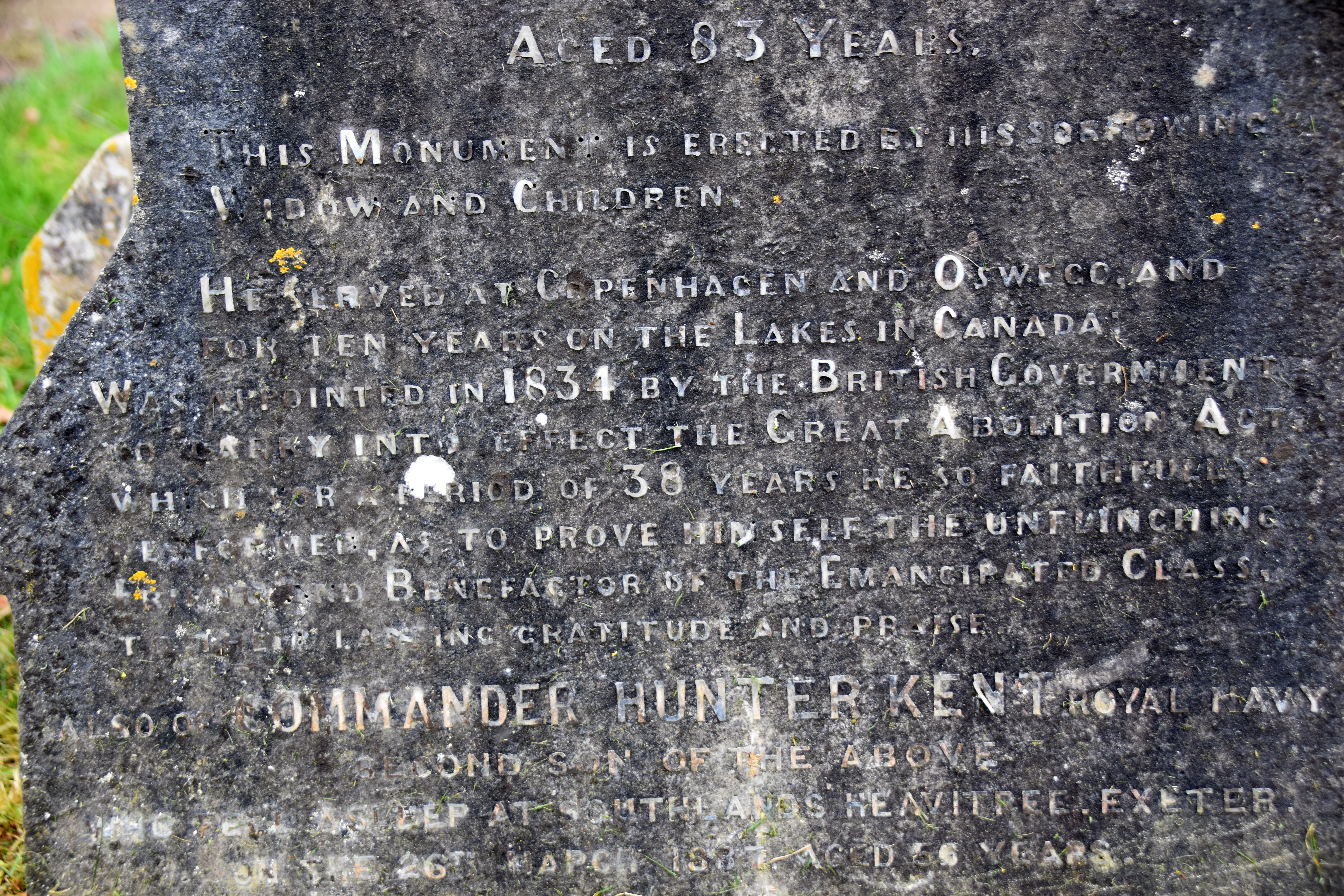
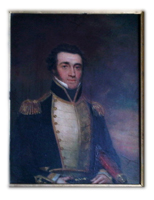
Then we stumbled on a fascinating double grave (triple even as the son is added to it) to Captain Henry Kent and his wife Eliza. I love it when graves divulge something of the history of the person interred and this one reveals more than most. It says that the 83-year-old had been present at the Battle of Copenhagen in 1801 (where Nelson famously turned a blind eye and said “I see no Ships” when ordered to call off the attack). He was also present at the Battle of Oswego in 1814 where the British assaulted and seized an American fort on the Great Lakes during the War of 1812 to 1814. Indeed it would appear that Captain Kent would remain on the Great Lakes to deter any future American incursions for ten years according to this gravestone. But he seemed most proud of the events of 1834 which I think are worth spelling out in full: He “was appointed in 1834 by the British Government to carry into effect the Great Abolition Acts which for a period of 38 years he so faithfully performed, as to prove himself the Unflinching Friend and Benefactor of the Emancipated Class, Earning their lasting Gratitude and Praise!” The Great Abolition Act of 1834 refers to the British Empire outlawing slavery throughout the British Empire. A Royal Navy Captain he was also appointed as a Stipendiary Magistrate in Jamaica in which role he helped oversee the transition of the local population from slavery to freedom. He may well have spent the rest of his naval career endeavouring to prevent slave ships from delivering their sad cargoes to the Caribbean. The Royal Navy did not just stop British ships carrying slaves but would expand through diplomacy the rights to search Spanish, Portuguese and French ships and even went to war with Brazil in an attempt to frustrate their continued use of slavery. Just like the memorial we found to Commander Frederick Smith in Ottery St Mary the previous week, these sailors were very proud of their role in stamping out slavery — as well they should be. I will add that his son Commander Hunter Kent followed him into the Royal Navy and appeared to have an equally enriching career. In his case it says that he served in the Black Sea in the Crimean War and was involved in the assault on Odessa in what was then the mainland of Russia (now in Ukraine). It does say other places he served but the grave was so low to the ground it was hard to make out. But what a revealing grave to tell us so much of the careers of father and son in the 19th-century Navy in the heyday of the Royal Navy.
It should be said that we really only touched the surface of this graveyard. There are still so many graves for us to go back and find including a Governor of Hong Kong, some Titanic victims and a Victoria Cross winner from the Indian Mutiny amongst others. But there is also a joy to serendipitously wandering around cemeteries and seeing what they reveal to you. Exeter Higher Cemetery did not disappoint in showing us the varied lives of some fascinating human beings.
|