|
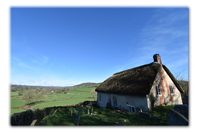
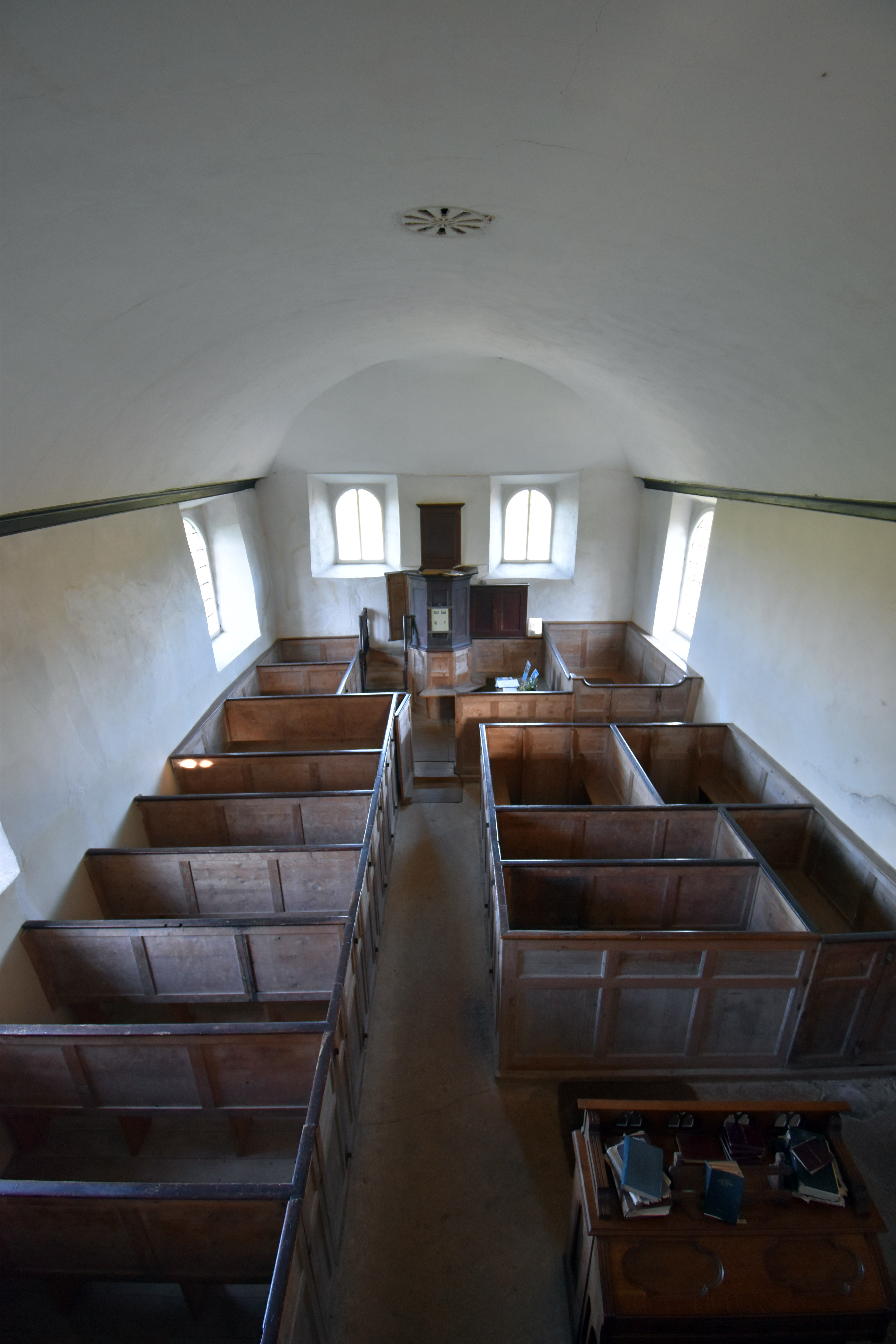
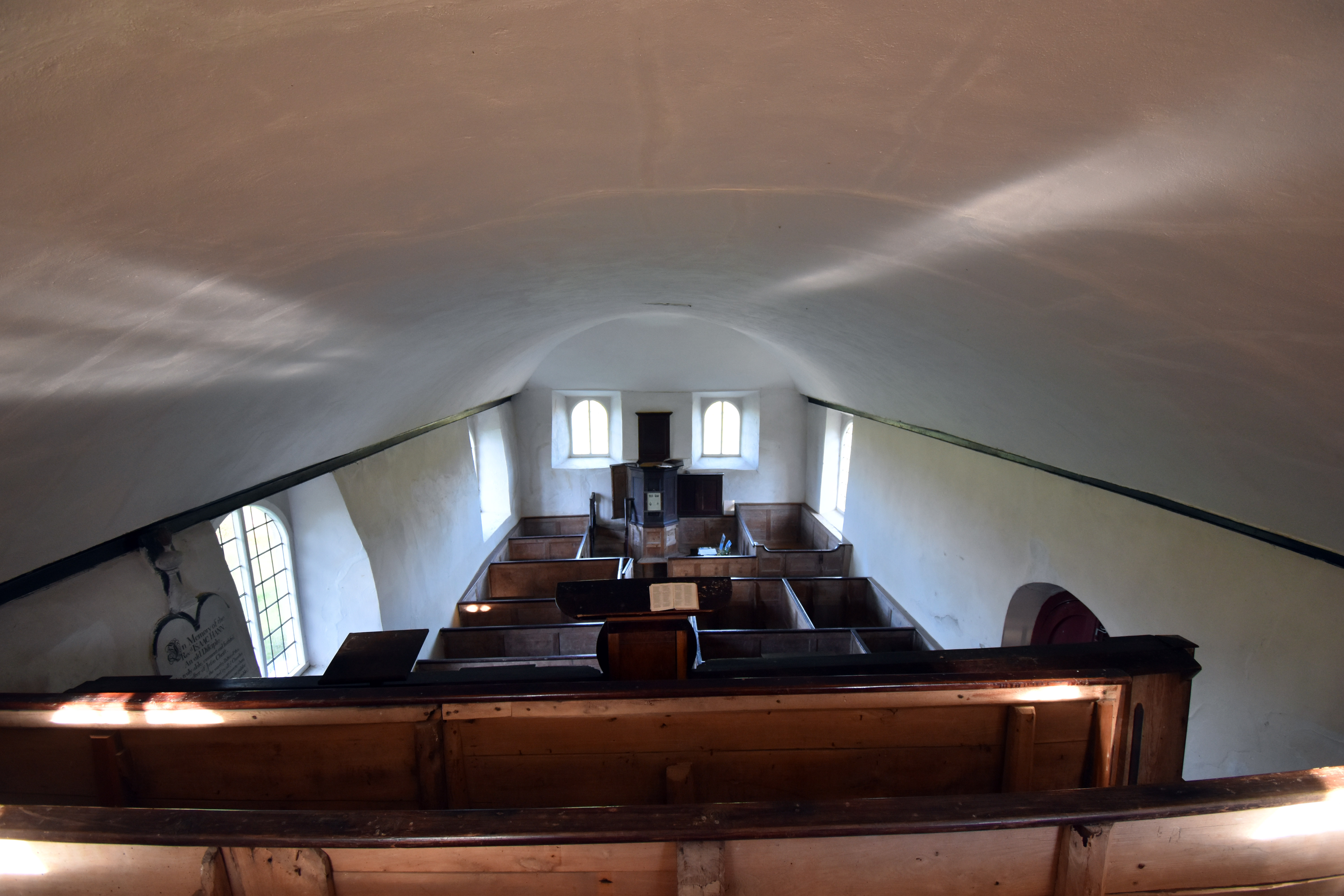
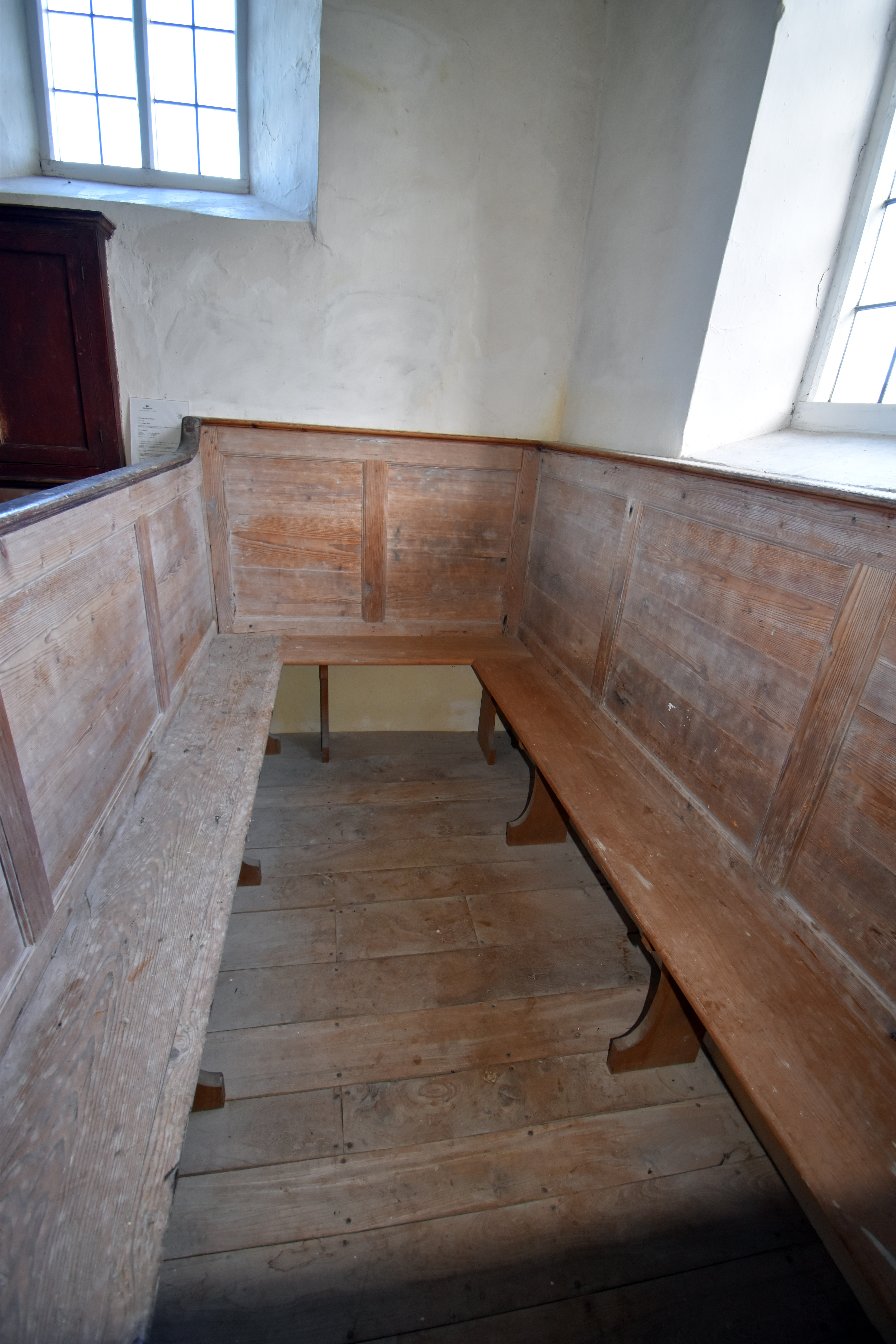
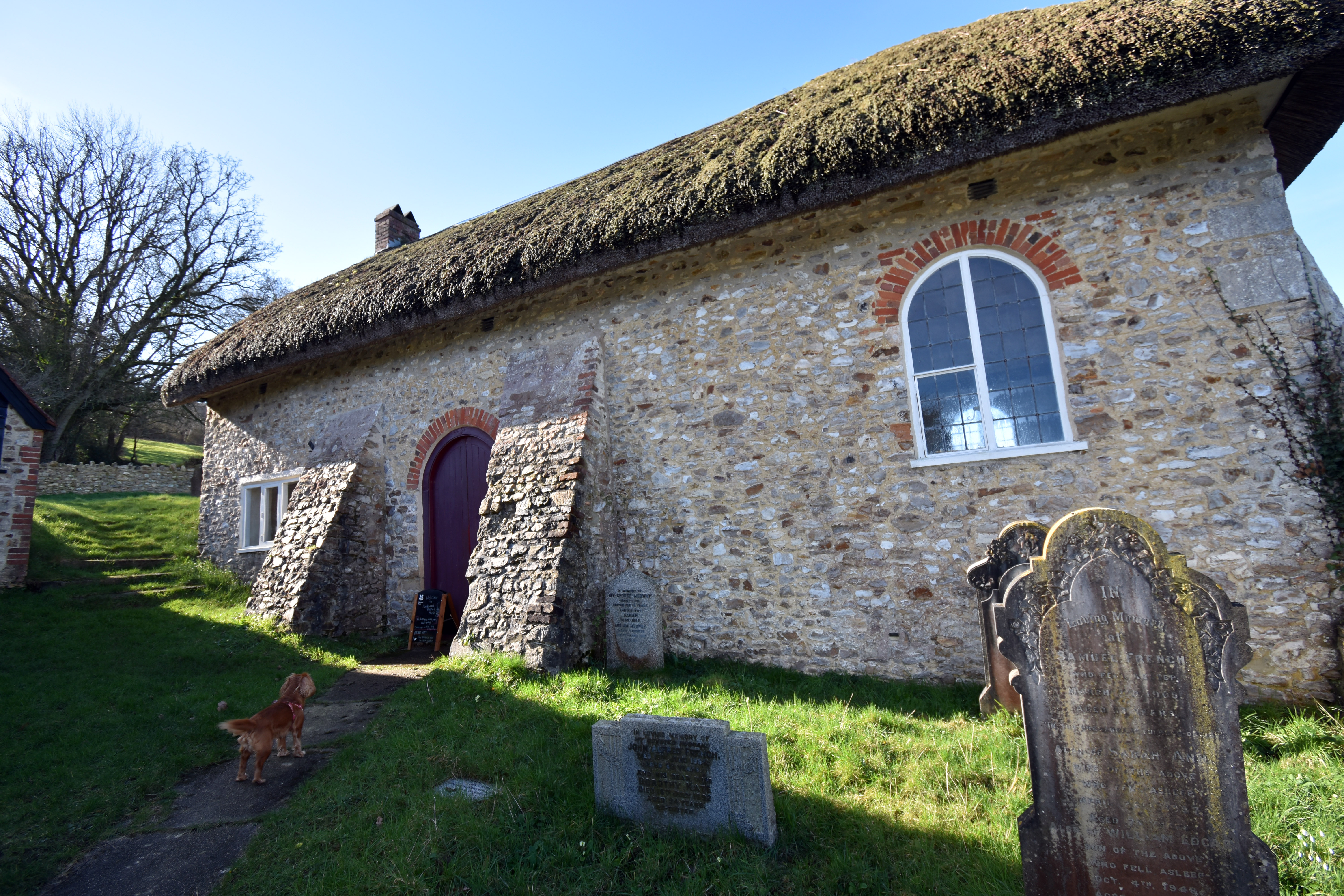
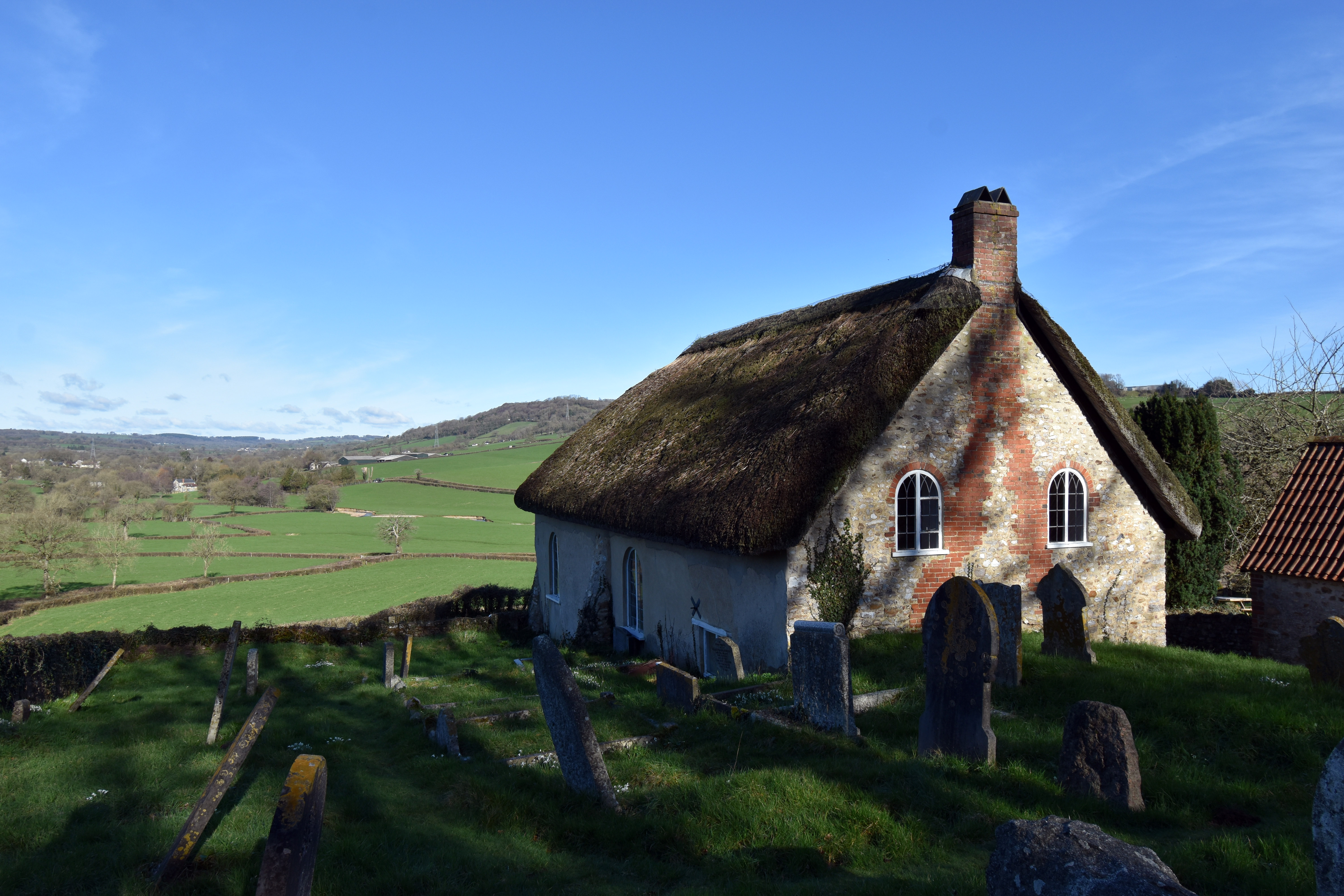
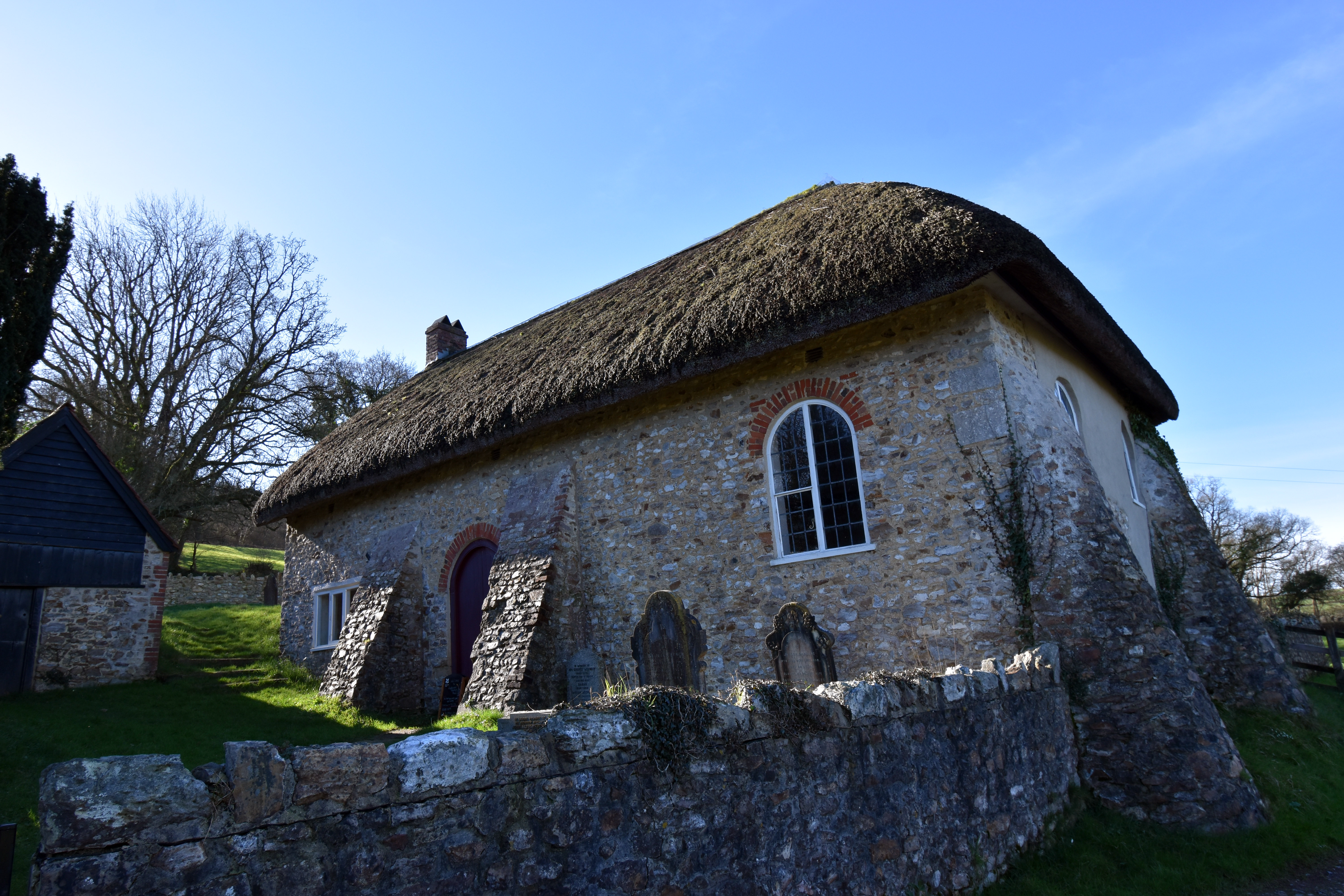
This walk brought us into contact with a very different part of our country’s religious heritage. We visited Loughwood Baptist Chapel, the oldest Baptist church in Devon and one of the oldest in Britain, first thought to have opened in 1653. Its architecture, inside and out, and its location are strikingly different from Anglican churches. This Baptist church is all about function over form. There is almost no decoration whatsoever. There are private boxes and balcony seats, all facing the towering pulpit that dominates the building. For non‑conformists the word of God was (and indeed still is) everything. The Bible and its words are the only items of value; everything else is subservient to that message. Other than the pulpit, there was also a place on the balcony to rest a Bible for readings. There is but one dedication in the entire building, to Reverend Isaac Hann, a minister at the church.
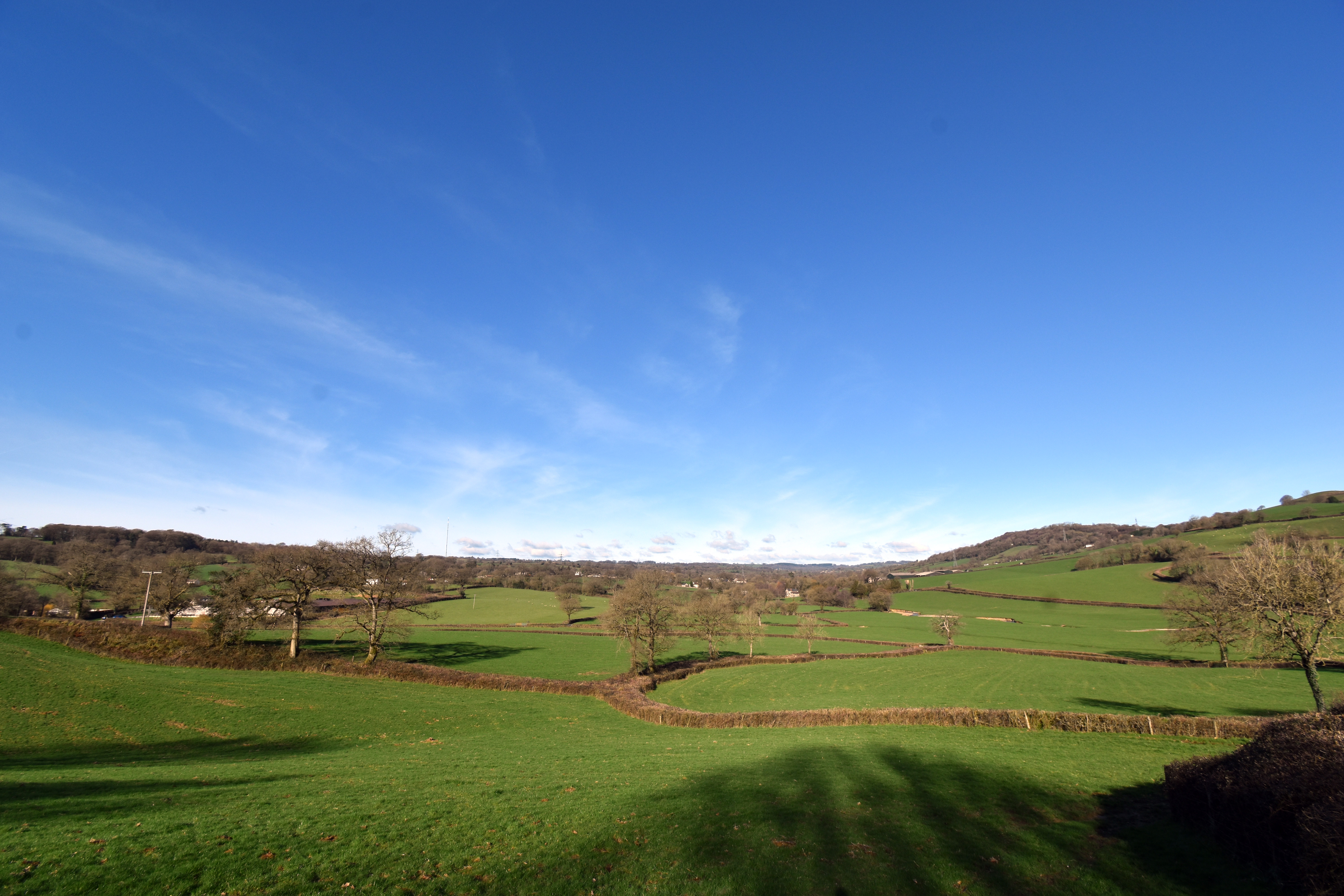
Its location in the beautiful Devon countryside is also deliberate. It was built during the years of the Commonwealth, but despite the Parliamentarian victory over the King, there was still deep suspicion towards sects like the Baptists. It was constructed some miles outside Kilmington on purpose so that nobody could easily see who was or was not practising as a Baptist. Guards were regularly posted so that the congregation could escape if soldiers were seen approaching. Baptists could be regarded with deep suspicion and might be ostracised or ridiculed at best, imprisoned, transported or even executed at worst. They were regarded as radicals — and with good reason. In the 1650s some members of the congregation came to the attention of Oliver Cromwell’s spymaster, Sir John Thurloe, thanks to their support for the Fifth Monarchists. This was a group who believed that the Messiah would return and should be the next King of England. They thought they might need to hasten this process by overthrowing the government themselves. They were deeply hostile to the idea of Cromwell becoming Head of State and unimpressed by the Restoration of King Charles II. They wanted to live solely by the laws of scripture, which alienated them from Anglicans and even other non‑conformists. In 1661 an order was issued for the arrest and banishment of two members of the congregation, although it appears they managed to avoid this fate — perhaps by hiding in remote locations like this one.
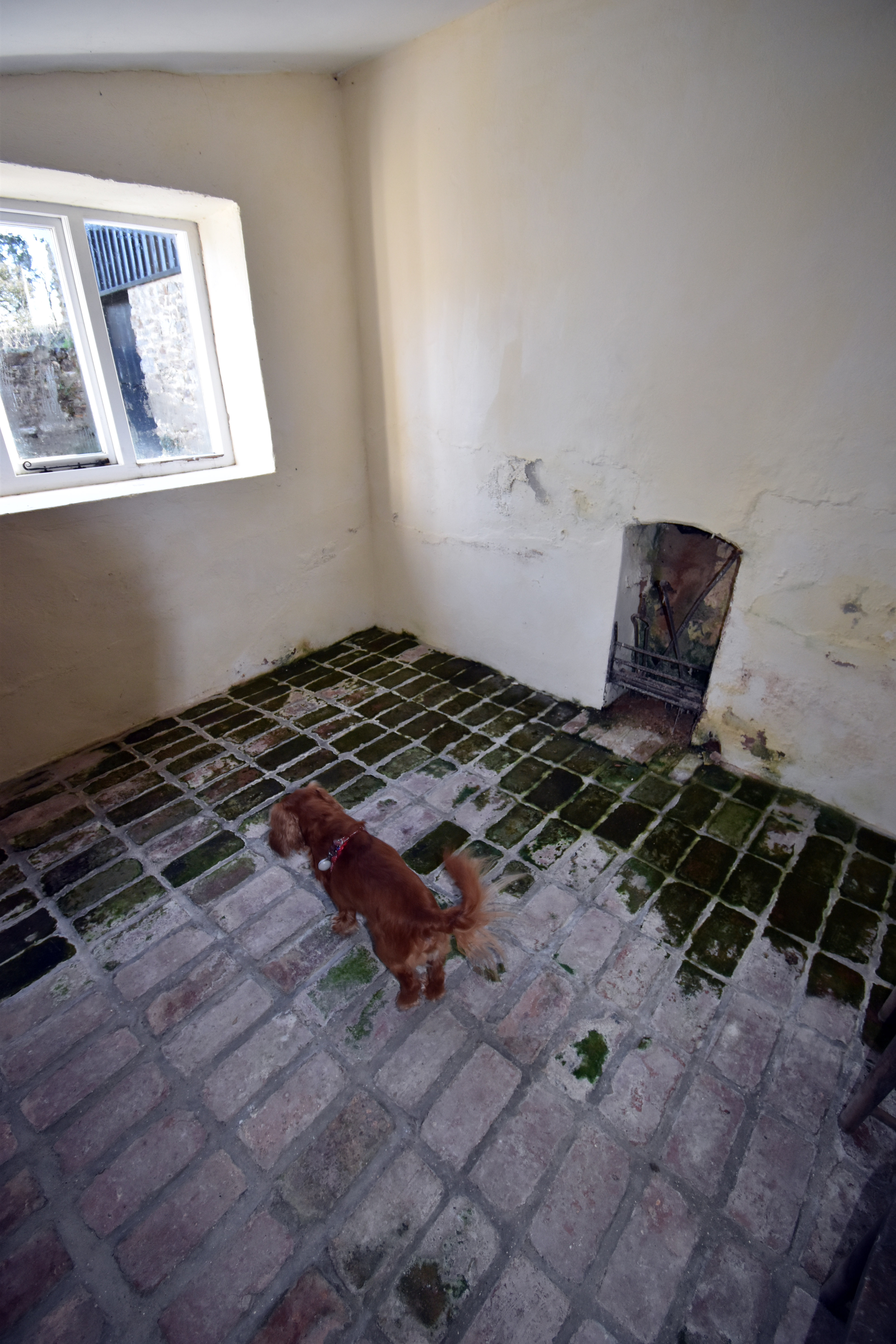
There were two rest rooms beneath the balcony, complete with furniture and a fireplace. These were intended for those who had travelled many miles so they could rest and eat before returning home. Some travelled on horseback as far as 65 miles to be here. This remarkable church is now cared for by the National Trust. It shows an alternative route the country might have taken in the 17th century had the more radical elements triumphed in the tumultuous years after Parliament’s victory over the King. The Restoration in 1660, however, saw Anglicanism return to these isles with renewed vigour — although it is ironic that the right to attend these churches was only confirmed in 1688 through the Toleration Acts introduced during the reign of William and Mary.

|
|
|
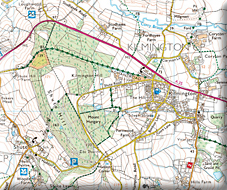
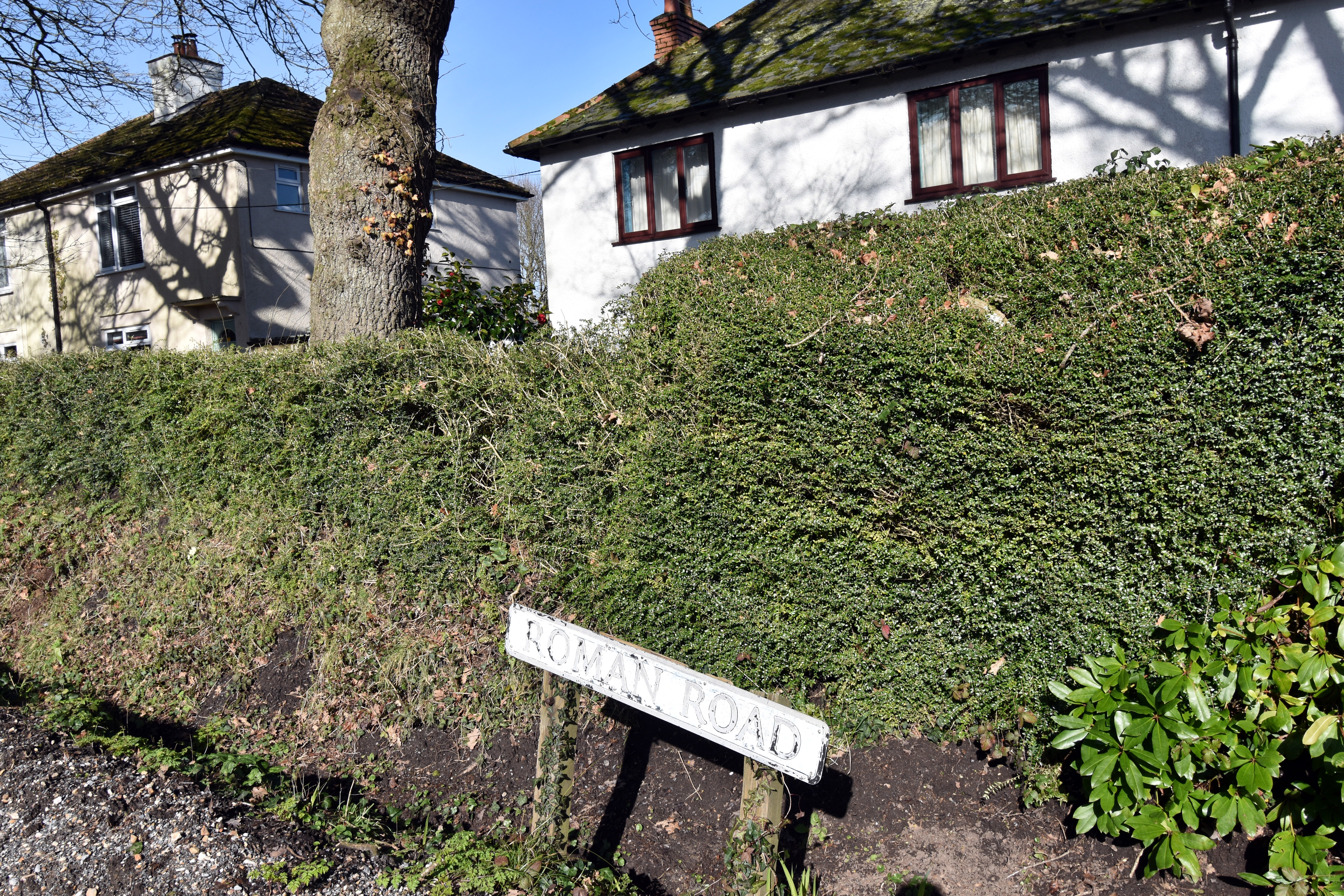
From here we headed due south to intercept a Roman road at an old county boundary stone marking where the parishes of Kilmington, Shute and Dalwood met. We then walked due east to follow the ancient road into Kilmington. Most people know that the Fosse Way was a Roman road linking Lincoln in the north‑east to Exeter in the south‑west, and indeed large stretches of it are still in use today. The Romans are famed for their ‘straight’ roads, but in the case of the Fosse Way it isn’t quite as straight as one might expect. It runs straight from Lincoln to Leicester and then to Cirencester, but rather than heading directly for Exeter it takes a hockey‑stick route down towards Ilchester and then to this area near Axminster, where it meets another Roman road linking to London via Dorchester. The original Fosse Way actually continued to the important port of Axmouth further down the Axe valley, but Axminster became an important junction for crossing the river.
Why didn’t the Fosse Way run straight from Lincoln to Exeter? The answer lies in the recent rains we have had over this very wet winter — the Somerset Levels. These were essentially an enormous swamp and marshland, unsuitable for road building. The Roman route had to skirt around these low‑lying marshes and follow the higher, firmer ground of Somerset and Devon. From here the route leads to Honiton and then to Exeter via Clyst St Mary, which we visited just last weekend. It is intriguing that the Cornish and Devonian rebels followed an ancient Roman road to express their dissatisfaction to their king — although they did not quite make it to Honiton, as I will explain elsewhere. We were also close to Shute Barton, which was sacked by Thomas Courtenay after his victory over Lord Bonville during the Wars of the Roses — but alas it was closed for winter.

|
|
|
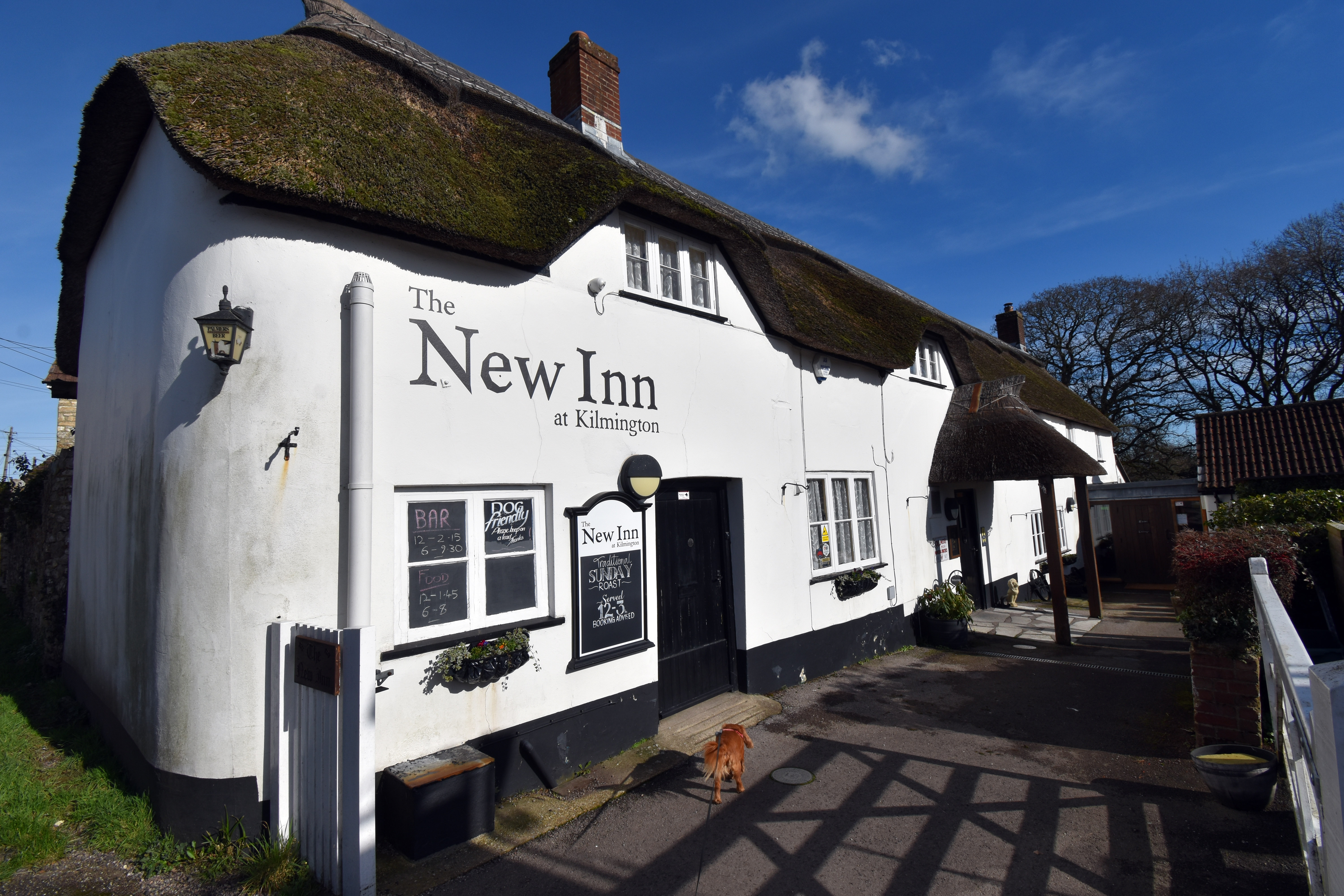
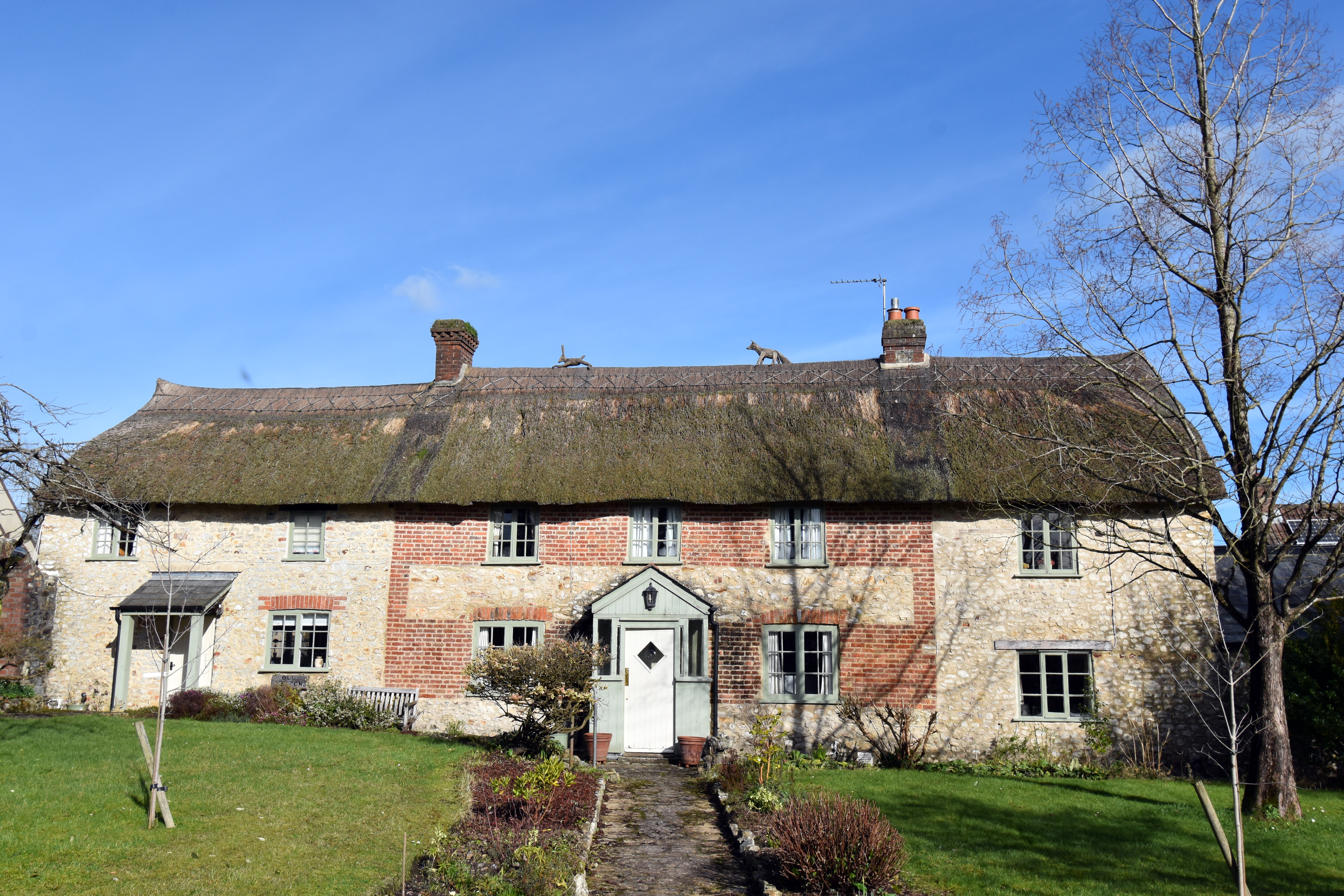
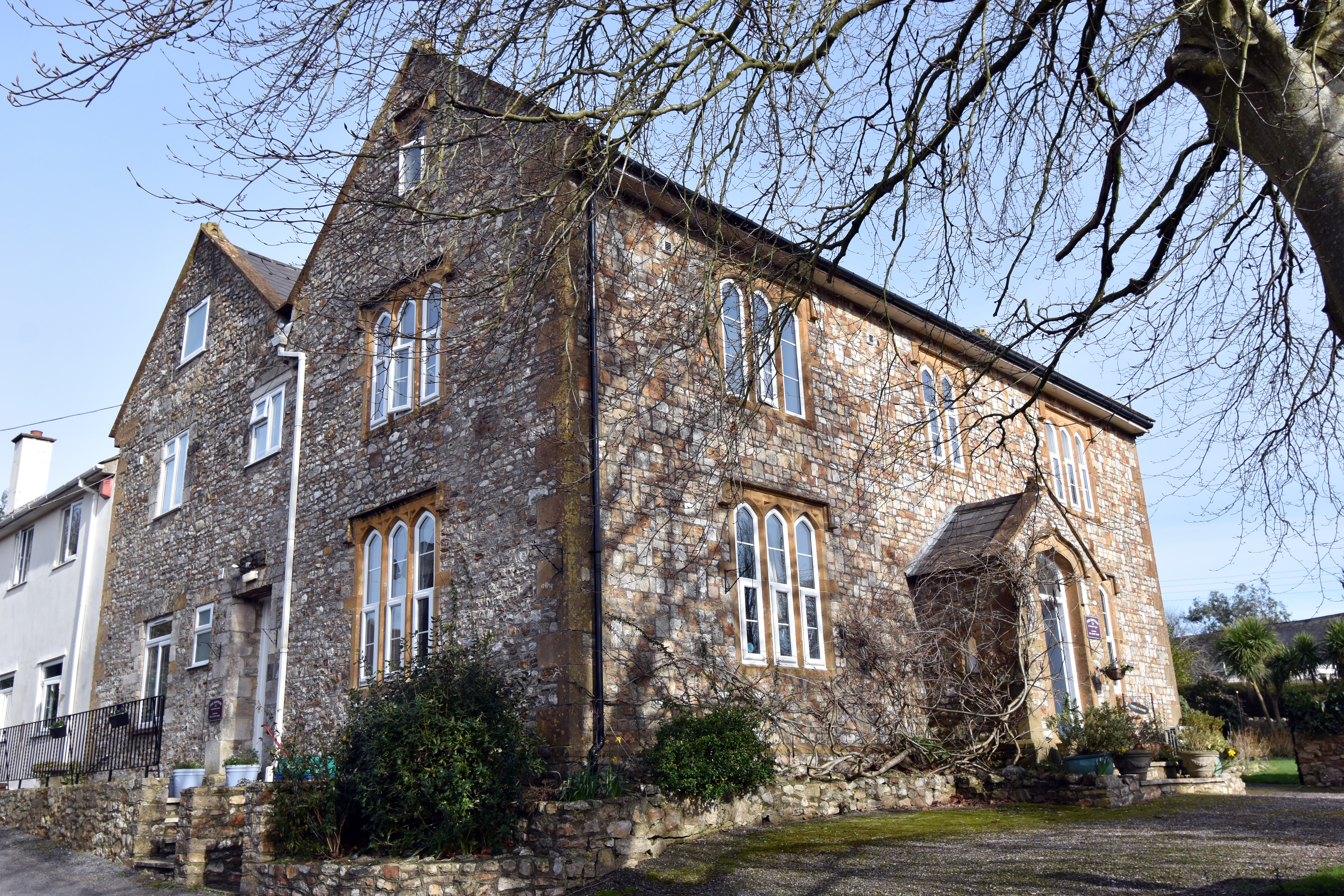
We followed the Roman Road (conveniently called “Roman Road”) into Kilmington on one of the first spring‑like days of the year — warm, with birdsong and blooming flowers. Kilmington is another charming Devon village with a variety of houses and cottages, many of them thatched and all unique. However, the origin of its name is anything but gentle — the kil prefix is a clue. It means “the place of slain men” and is thought to refer to a great slaughter of Danes by Saxons near here during the reign of Athelstan, regarded as the first real King of England. The Danes had landed in force at Axmouth in 937 AD and were decisively defeated just over the river at Musbury. Tradition holds that many of those warriors were buried here in a mass grave in the churchyard, with a yew tree planted to commemorate the burial. The Devon Fyrd were renowned as some of the most ferocious Saxon warriors, and names like this only added to their reputation.
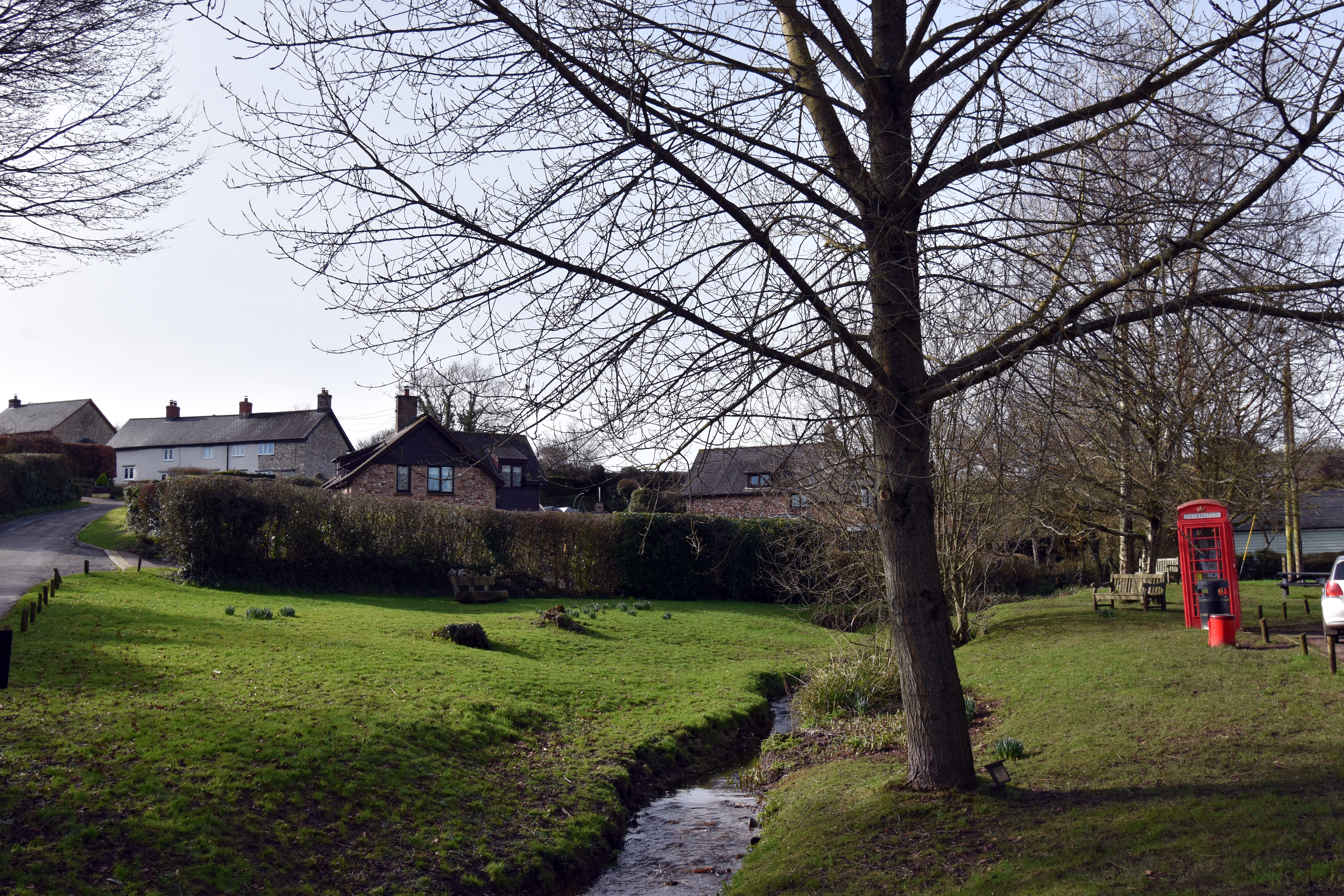
We, on the other hand, stopped for lunch in the sunshine beside budding flowers outside a tiny red phone‑box library. It is heartening to see these icons of our countryside finding community use. It was quite charming and hard to believe that a great slaughter could once have taken place in such a peaceful spot.
The old Roman communication lines were used by Saxons and Normans alike, making the region unusually busy and well travelled. A Cistercian abbey was built at Newenham just over the River Axe from Kilmington in the 13th century. These monks were often known as “white monks” thanks to their distinctive robes. A telling statistic is that they lost 23 of their 26 monks and 88 of their servants during the Great Plague of 1349, almost certainly because they were the ones administering care to the afflicted and offering both spiritual and practical help.
Earlier, the Wars of the Roses saw Shute Barton sacked, and the sole survivor of the Bonville family was an infant, Cicily Bonville, who married into the Grey family. This did not end well: her great‑great‑granddaughter Lady Jane Grey was made Queen for nine days, much to the chagrin of Mary, who later had her executed and gave her lands to her Secretary of State, Sir William Petre, who promptly sold them to the Pole family.
Like Colyton, which proudly calls itself the most rebellious town in Devon, many people in Kilmington likely joined the Duke of Monmouth when he rebelled against King James in 1685 and landed at nearby Lyme Regis. They marched to Axminster and followed the Axe valley to Whitelackington and then towards Bridgwater and Westonzoyland, where they were defeated. The aftermath saw the infamous Judge Jeffreys impose savage victor’s justice on many communities whose volunteers had fought for Monmouth.
We walked past Old Ruggs Farm, where — bizarrely — George Harrison of the Beatles apparently lived for a while in the 1960s. He had many happy childhood holidays in Devon with his family.
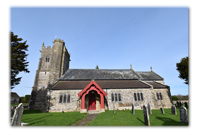
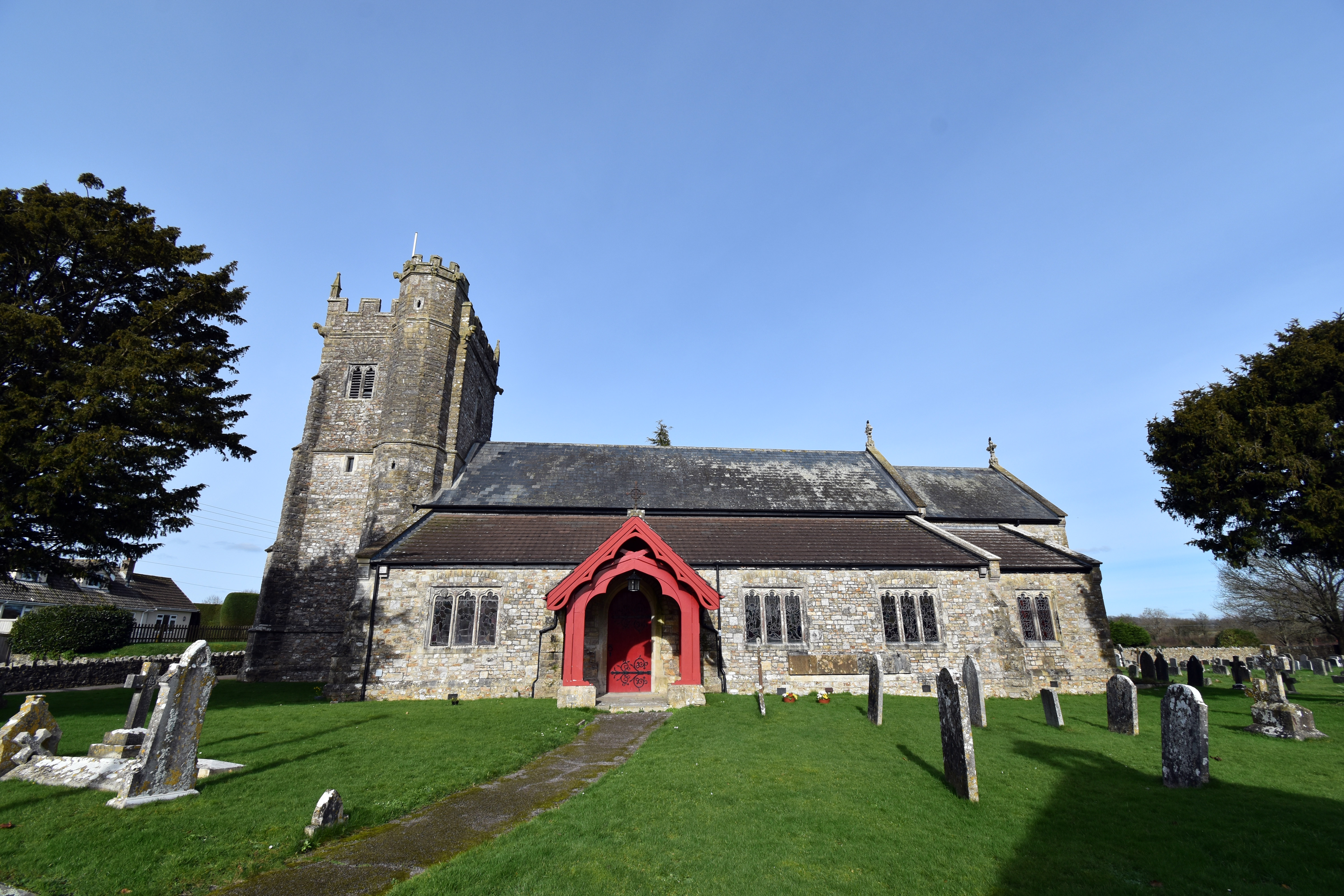
We were headed to St Giles, a beautiful Victorian church. A stone church and tower had been built in the 15th century, but all except the tower was demolished and a new church built from scratch in 1862. I particularly like the red doors, which make it look quite picturesque. We arrived on a day when they were preparing a service for people with special needs, with interesting decorations and food being arranged. It was nice to find a vibrant church.
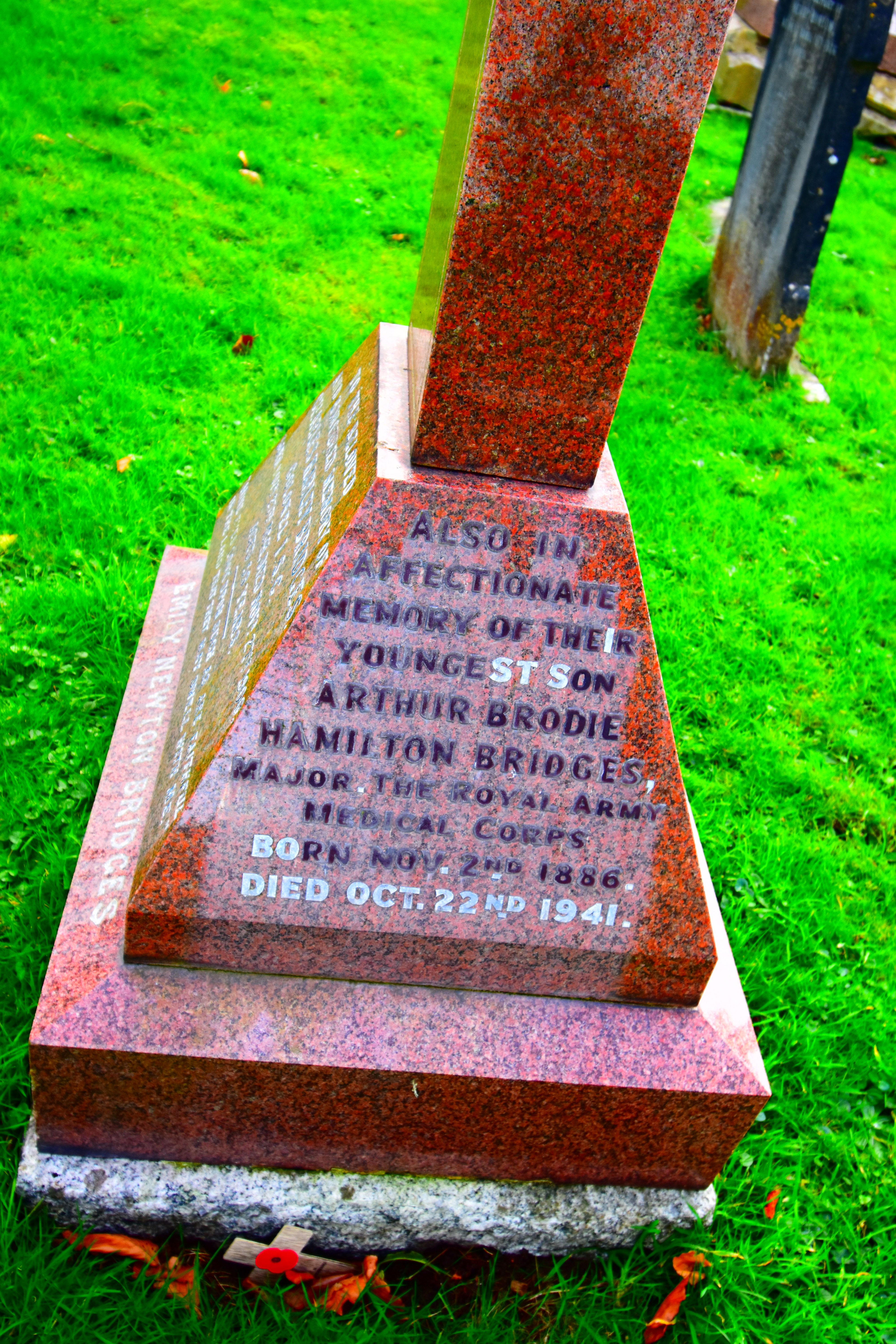
In the churchyard were some interesting graves, two of them cared for by the Commonwealth War Graves Commission. One is dedicated to Reverend Edward Keightley Botwood, who had been a vicar at St Giles but went out with the soldiers and, as the grave records, died in 1916 on the Channel Islands from an illness contracted while serving in France. He was a relatively old soldier at 44. The other is to Major Arthur Brodie Hamilton Bridges, who died in 1941 and came from an illustrious military family, as I shall explain shortly. A third war‑related grave records a particularly tragic case for the Woodman family, who remembered six children who predeceased them, three of whom died in the First World War at Festubert, Loos and in Mesopotamia. Another son died far from home in Ontario, Canada. That is a great deal of tragedy for one family to bear.
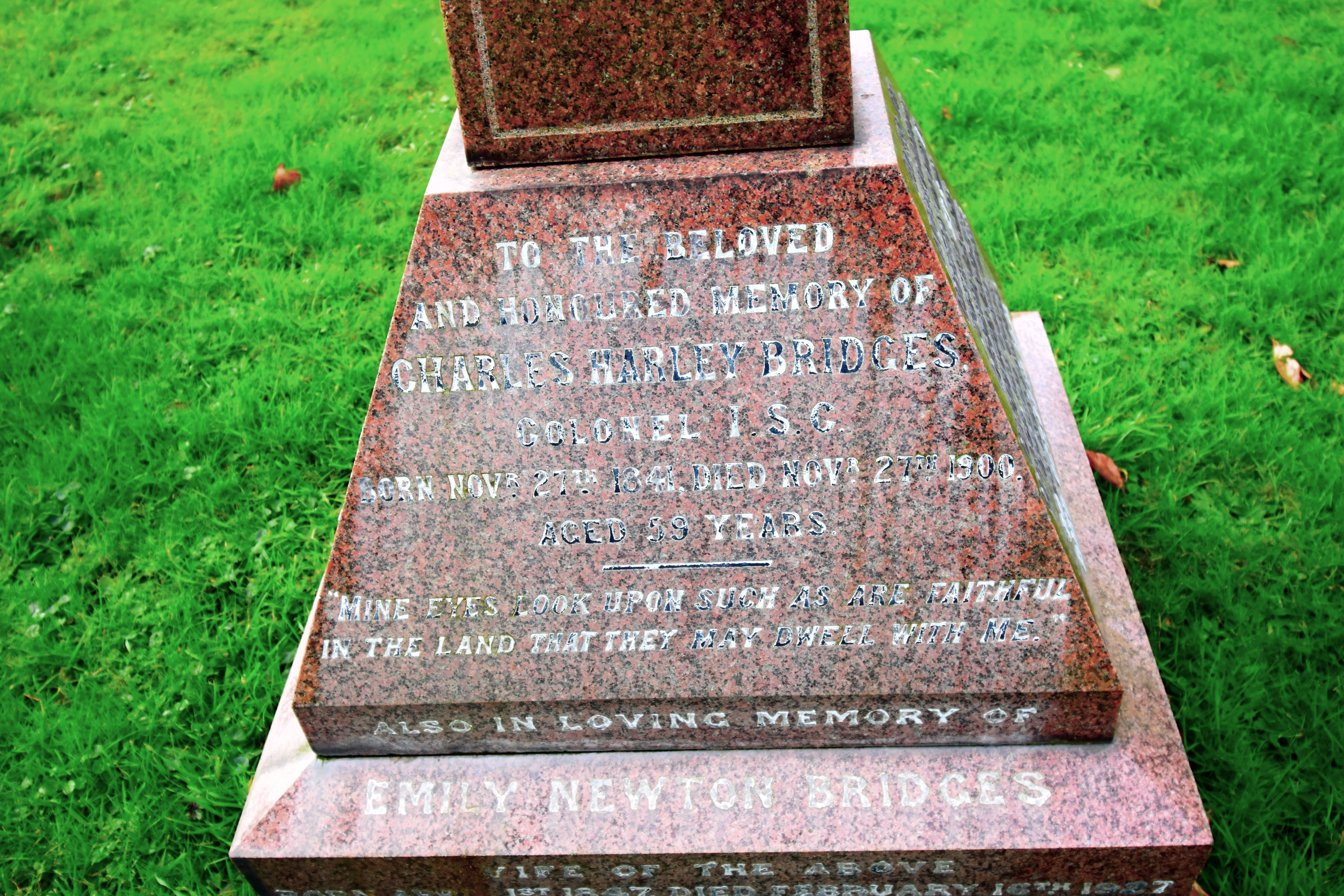
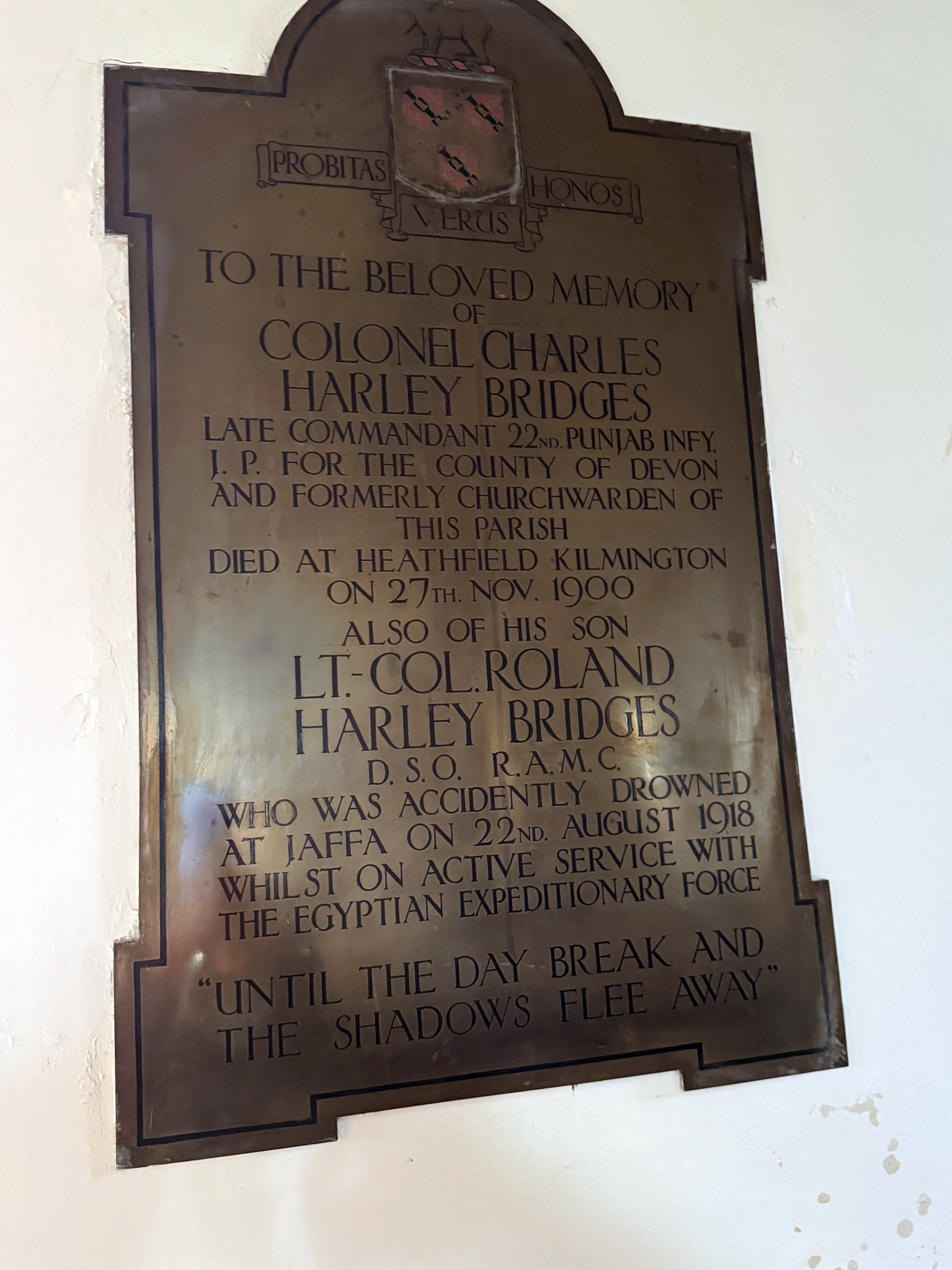
The Bridges family also commemorated other soldiers both on the grave and in the church on a memorial. Lieutenant Thomas McGhie Bridges of the Loyal North Lancashire Regiment is remembered. He and Arthur were sons of Colonel Charles Harley Bridges, who had served in the Indian Army with the 22nd Punjab Infantry. Charles lost a third military son, as another memorial in the church records: Lieutenant Colonel Roland Harley Bridges of the Royal Army Medical Corps, who was accidentally drowned at Jaffa in August 1918 while serving with the Egyptian Expeditionary Force fighting the Ottoman Turks. This military family lived at nearby Heathfield House.

|
|
|
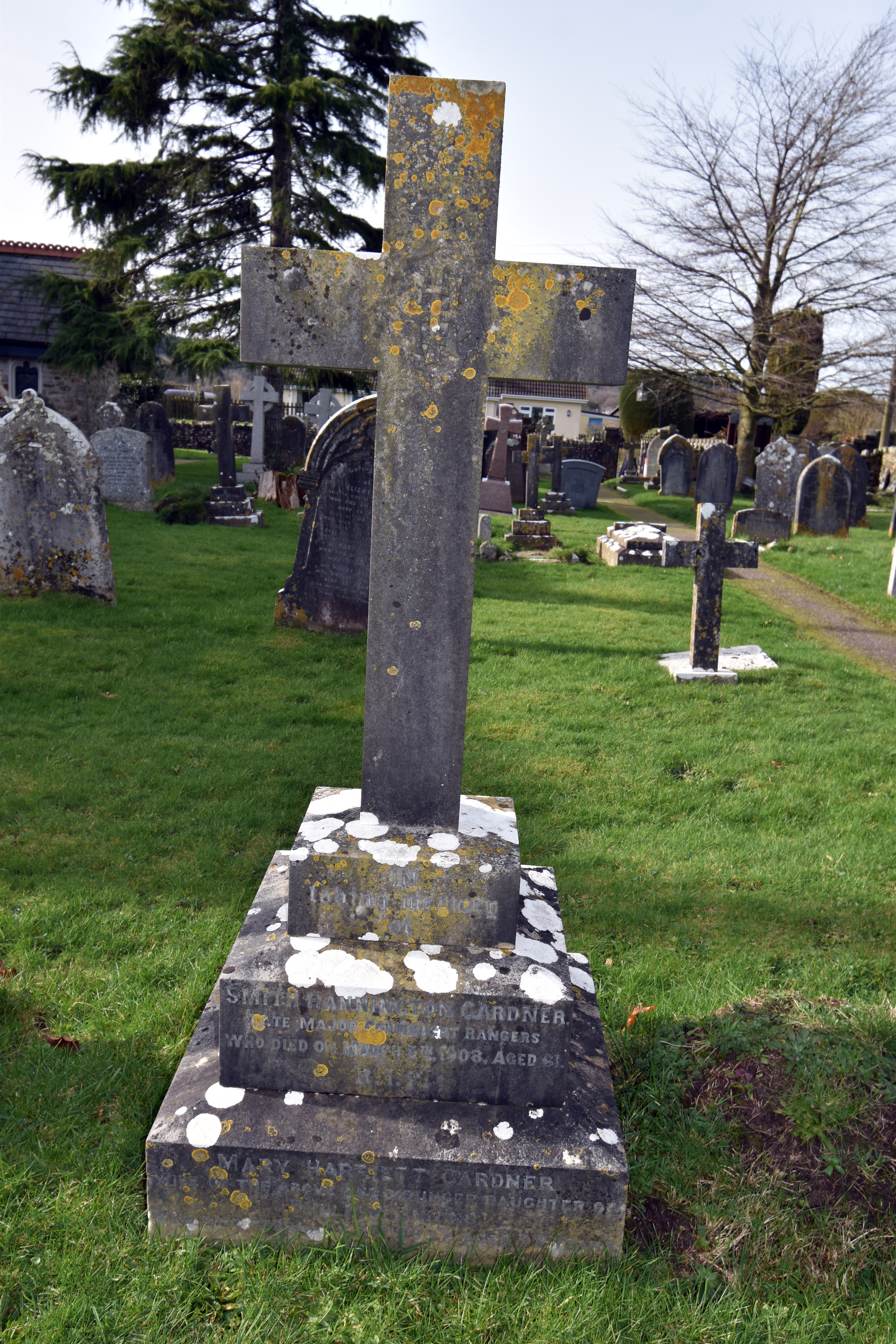
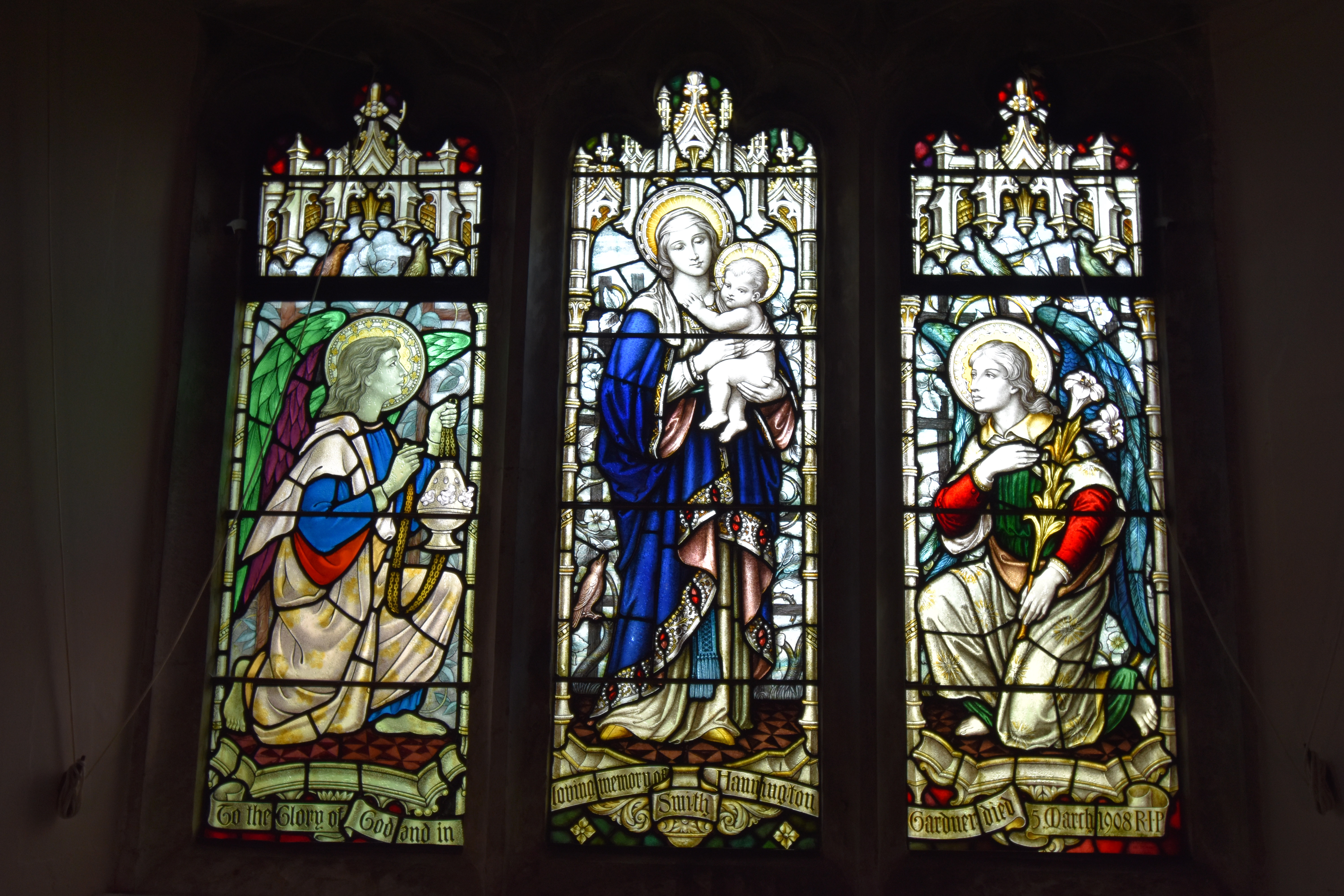
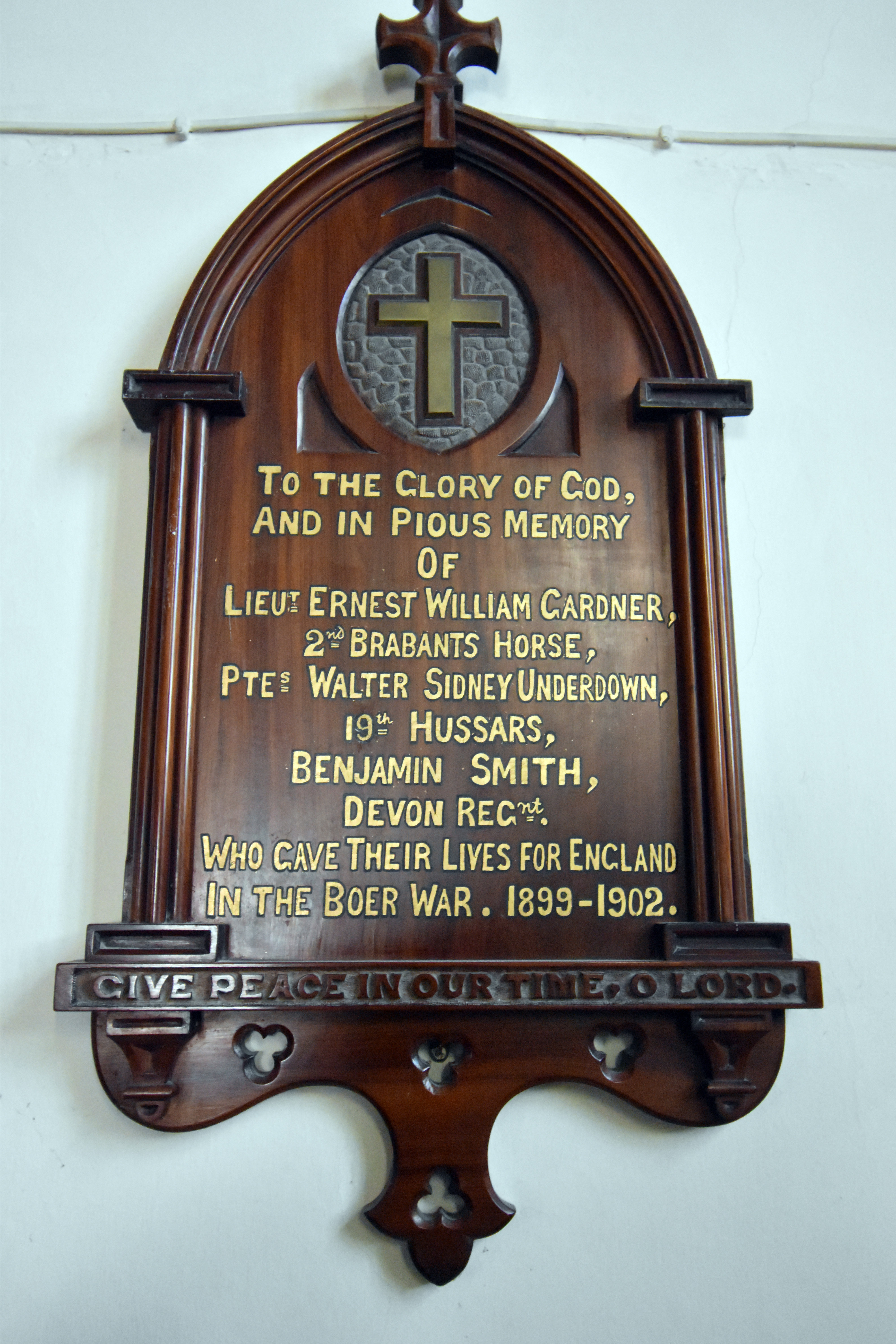
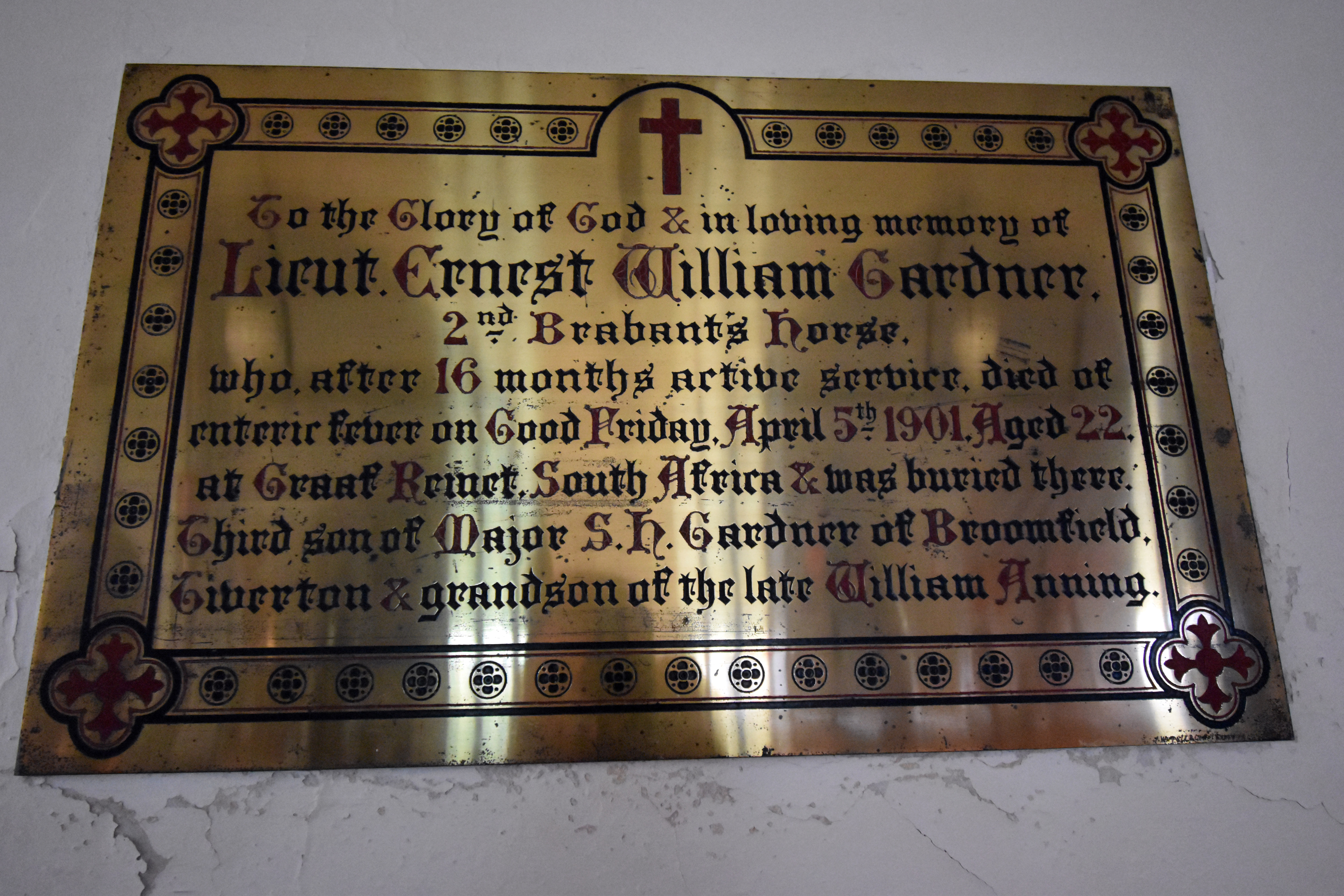
There is a grave of Major Smith Hannington Gardner of the Connaught Rangers who served in the 1879 Anglo-Zulu War and may well have been involved in the burial of the Prince Imperial who was killed on the campaign. Major Gardner also has a stained glass window dedicated to him inside the church. There is also a plaque to his son who predeceased him on campaign in the Boer War. Lieutenant Ernest William Gardner of 2nd Brabant’s Horse who died after 16 months of active service from enteric fever at the age of just 22 in 1901. Indeed the Gardners apparently had strong connections to South Africa as Smith Hannington Gardner started his military career in the Cape Mounted Rifles in 1868 before transferring into the British Army two years later. This plaque also connects him to the local prominent family of the Annings, who have several interesting plaques and stained‑glass windows dedicated to them. This might also explain why the Gardners are buried here rather than in their family home of Broomfield in Tiverton. Lieutenant Ernest William Gardner is also mentioned alongside two other local soldiers on a memorial for the Boer War.
|
|
|
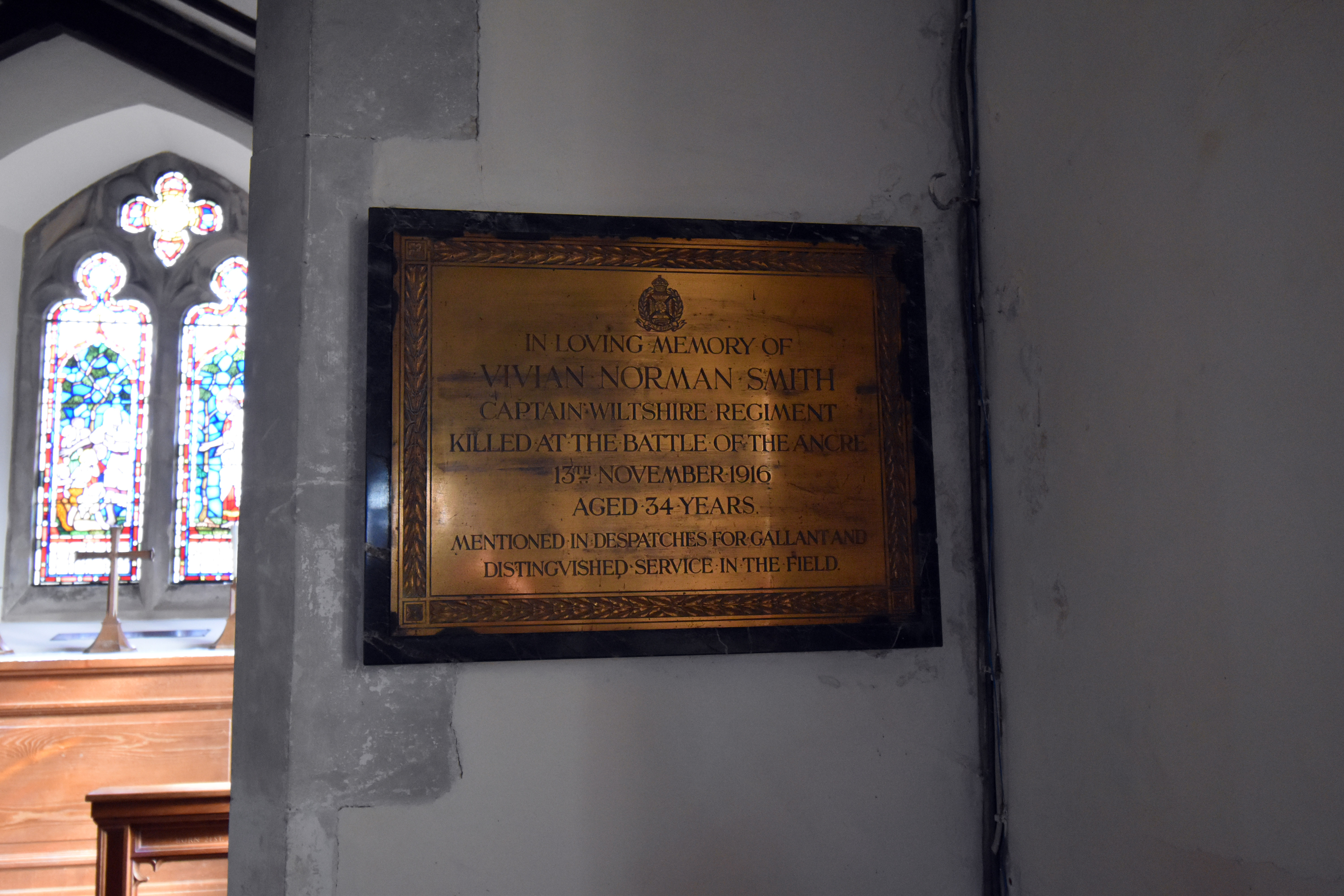
There is another First World War brass memorial tablet dedicated to Captain V. N. Smith, killed in action at the Battle of the Ancre in 1916. He had been an art teacher at Gresham School but lived at Beechcroft here in Kilmington which explains why he was commemorated in the church here.
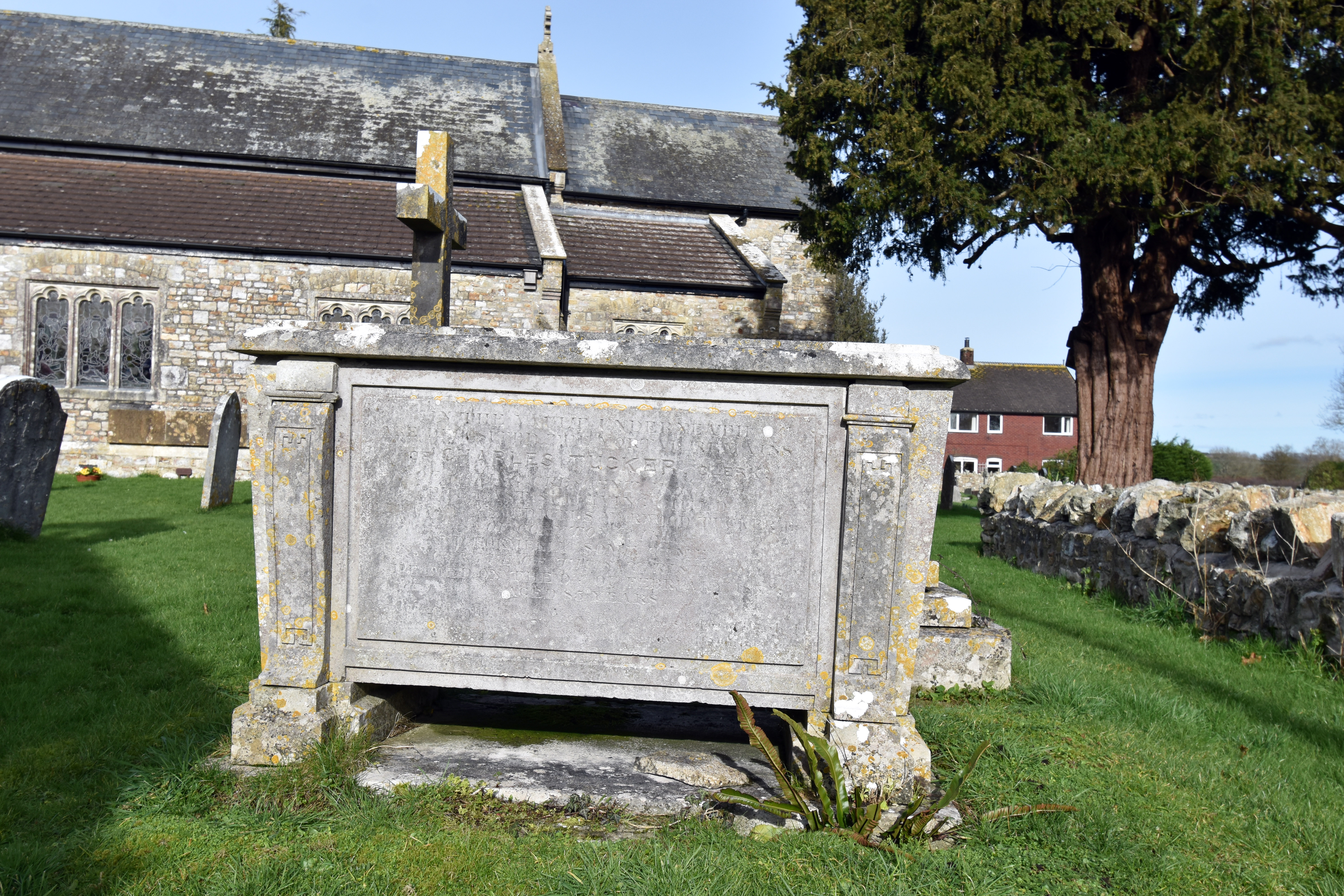
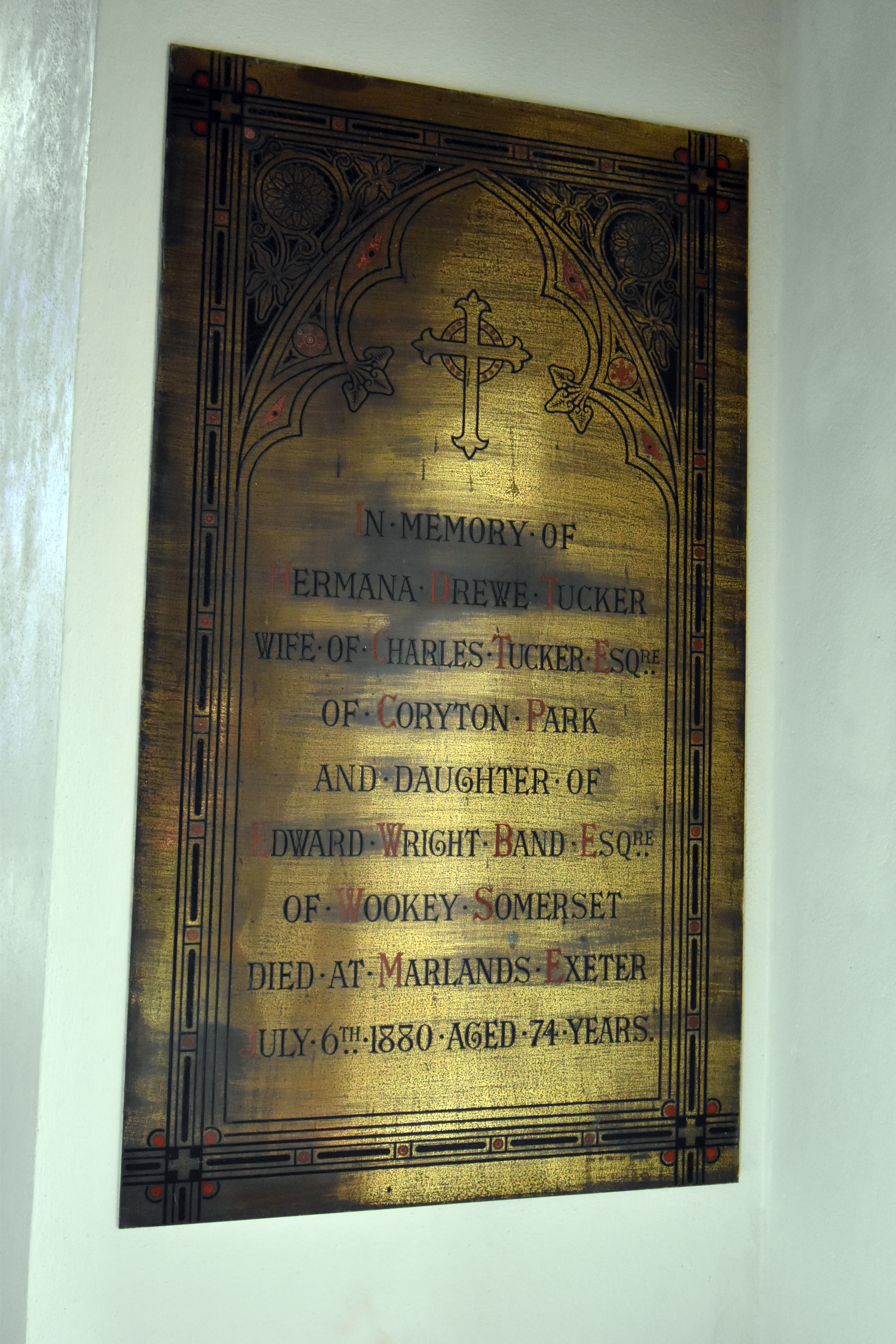
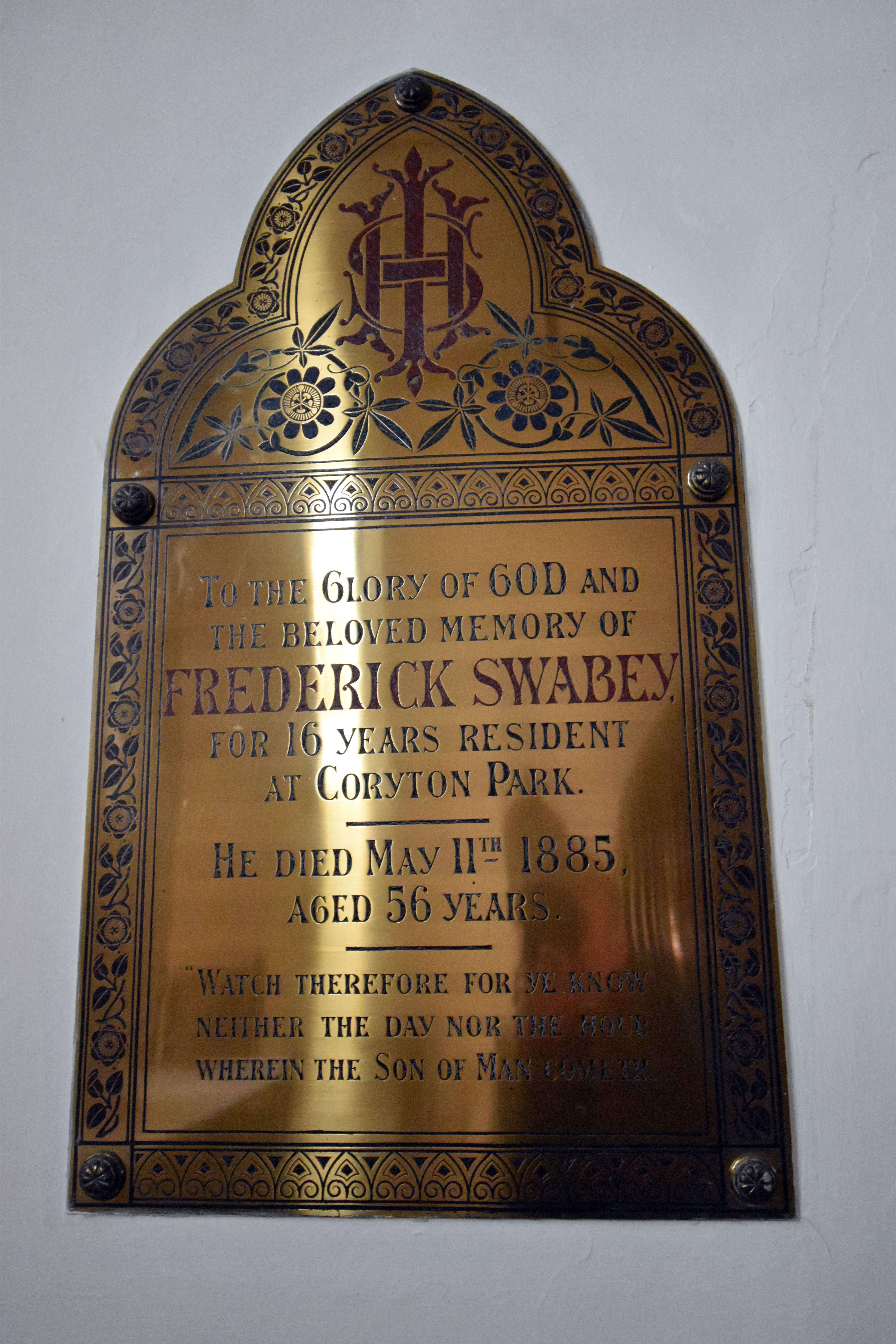
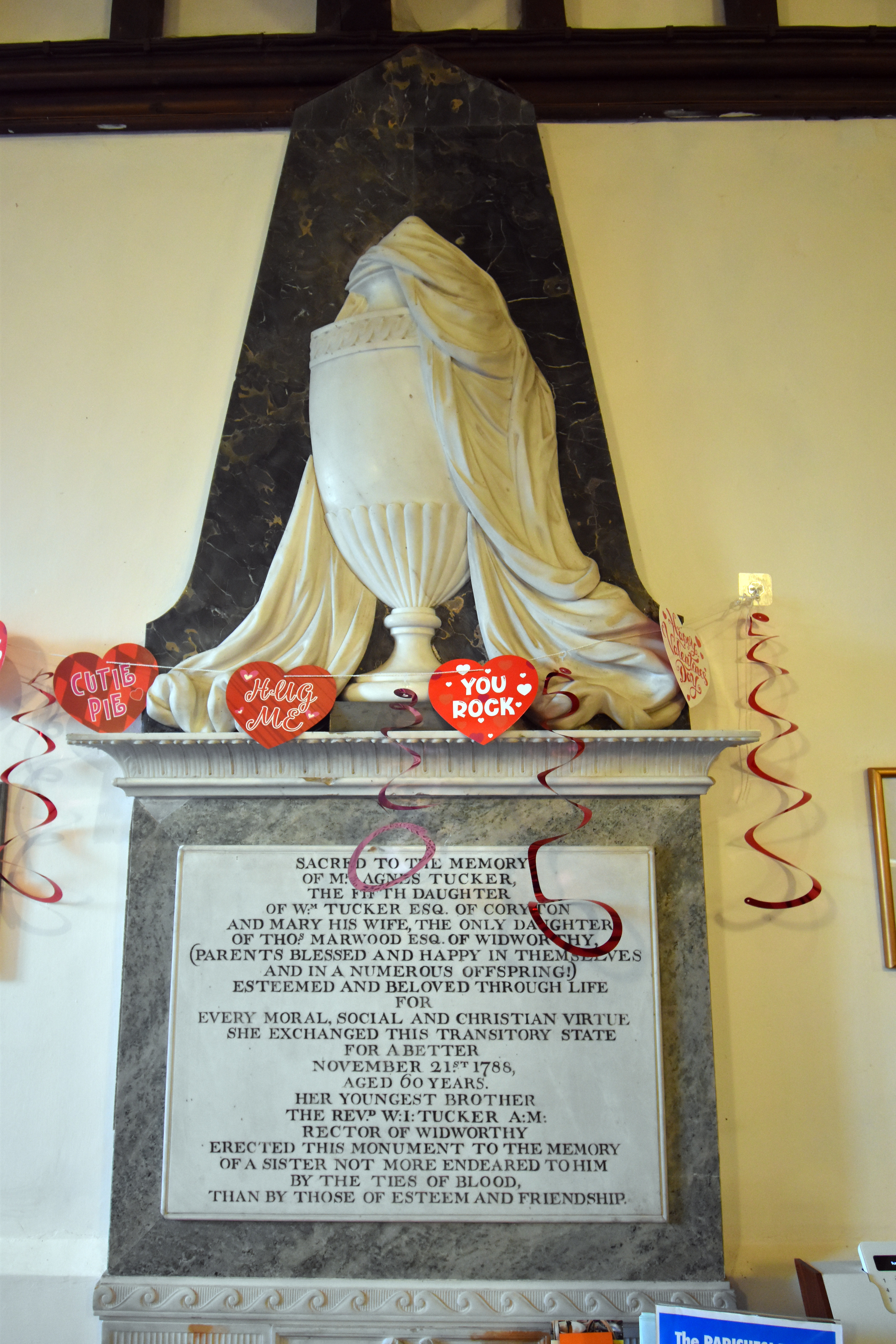
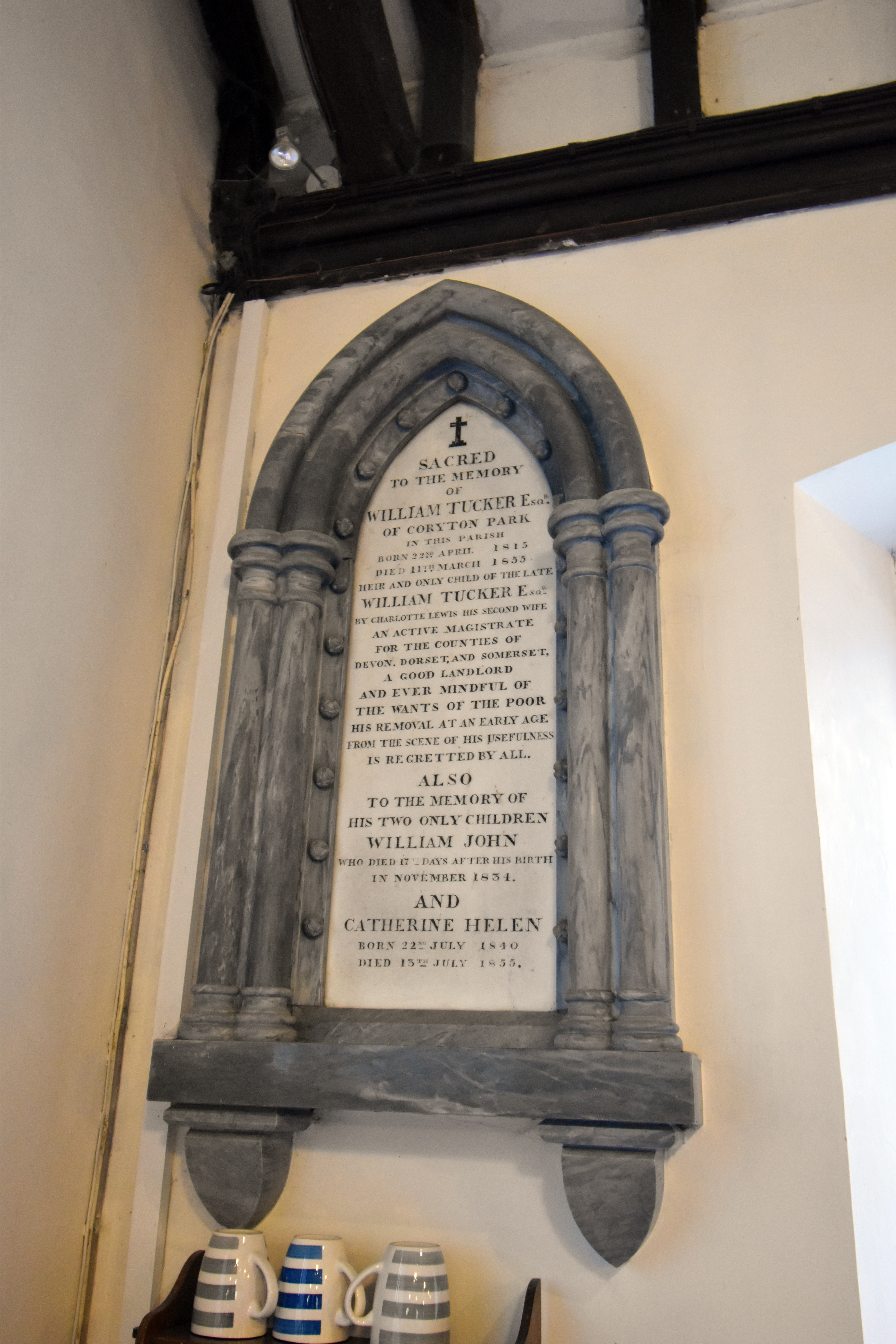
A further prominent local family were the Tuckers of Coryton Park House. They rose from humble beginnings to become the de facto lords of the manor, only for it all to collapse again — a rags‑to‑riches‑and‑back‑to‑rags story. Their legacy lives on in this church through their memorials, stained‑glass windows and impressive tombs in the graveyard. You notice, though, that the Tuckers of Coryton Park give way to the Hope Halls of Coryton Park.

|
|
|
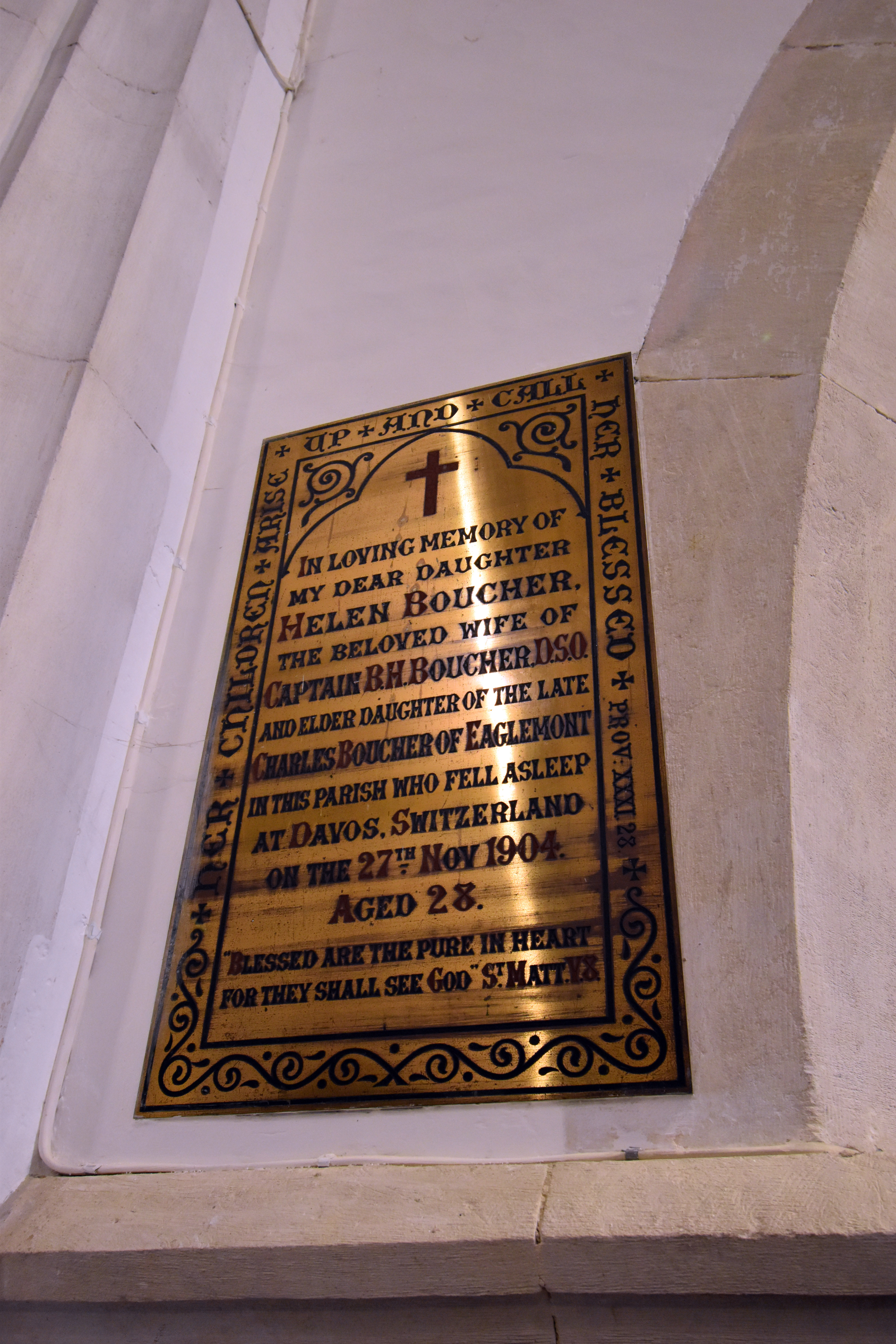
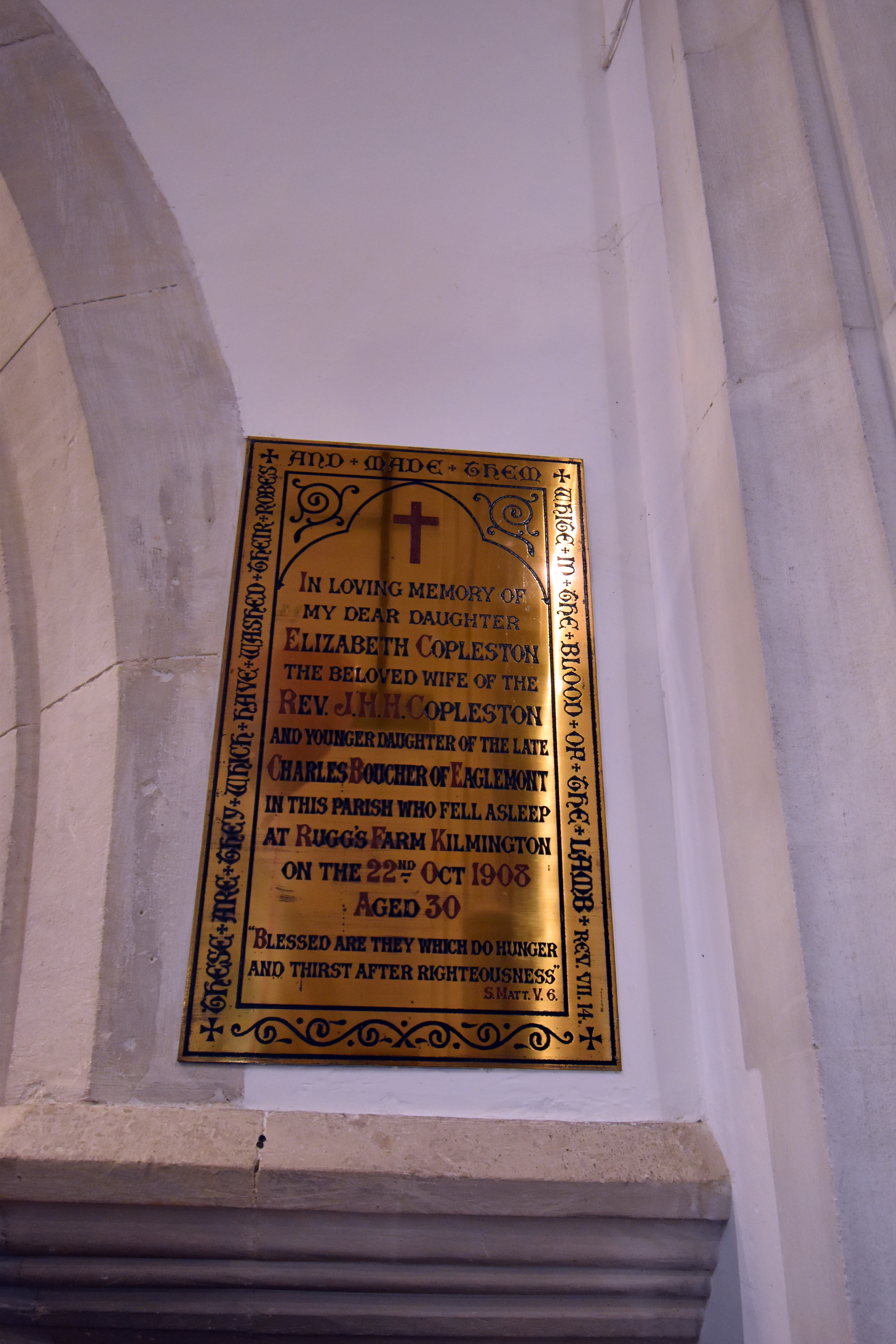
A recurring family name is the Bouchers. Charles Boucher of Eaglemont House lost two daughters: one at the age of 30 at Rugg’s Farm, and one at the age of 28 in Davos. The latter, Helen Boucher, I suspect died of tuberculosis. This was a horrible disease with no cure before penicillin. The best sufferers could hope for was to relieve pressure on their lungs, and high altitudes helped. Davos became a favourite destination for tuberculosis patients, with many sanatoriums built specifically for them. The fact that her sister died at 30 just four years later could also point to tuberculosis — once introduced into a household it often spread, though it could take years to claim its victims.
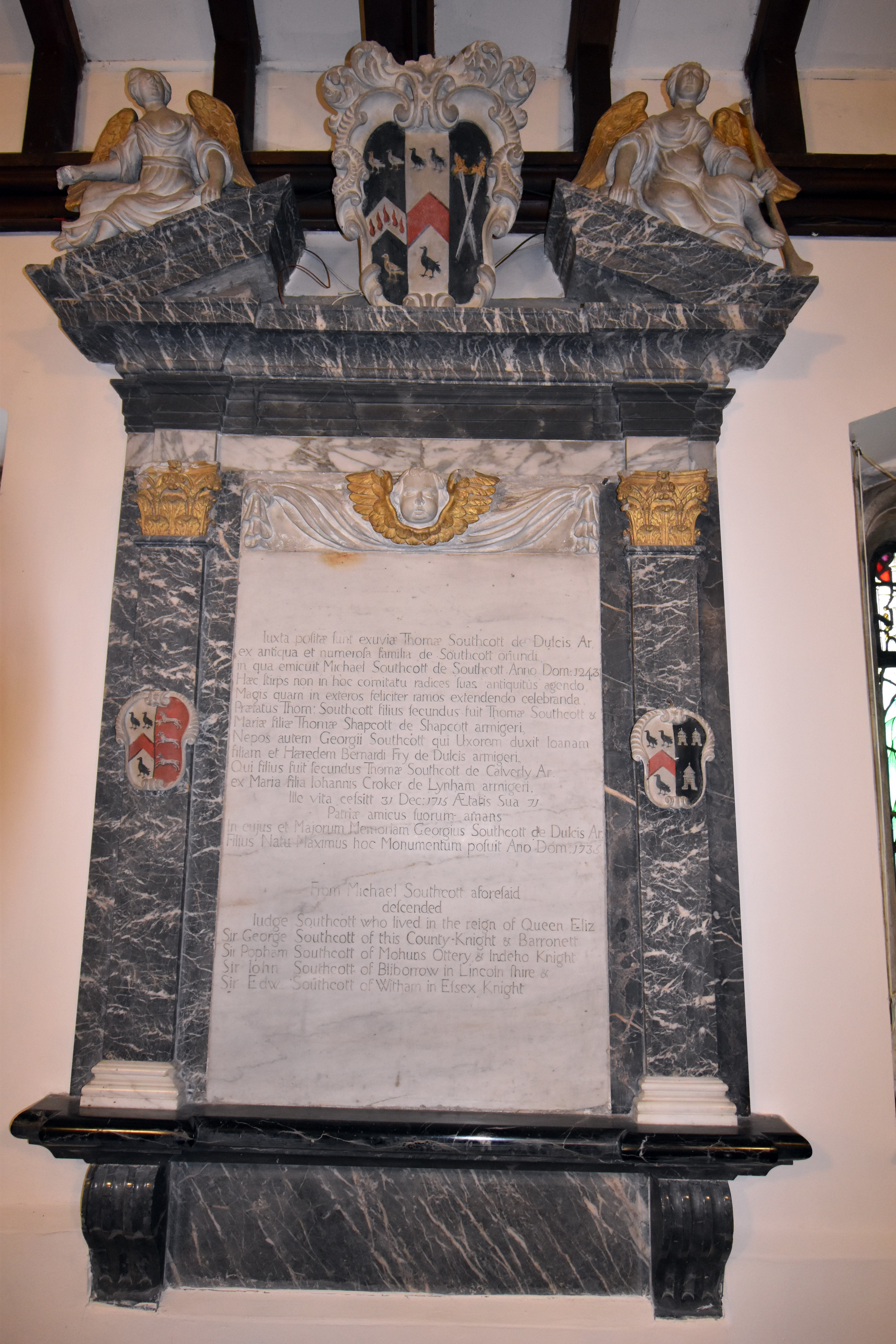
The most impressive monument of all is to Thomas Southcott of Dulcis. It is in Latin and keen to link the family back to a long line of knights and barons, beginning with Michael Southcott of Southcott in the 13th century. One descendant was John Southcott of Bovey Tracey, whose house at Indio we saw a few weeks ago. He acquired this house as a result of the Dissolution of the Monasteries. It helped that he had been steward to Thomas Cromwell himself, who was busy dismantling church lands and property. Somewhat paradoxically, he must have regretted this to some extent, as he was one of the Westcountrymen who balked at the Duke of Somerset’s reforms of the church and joined wholeheartedly with the Prayer Book rebels. He must have had friends in high places, as he avoided execution and later received a full pardon — after Somerset’s own downfall, of course.
It is striking how all our exploring connects manor houses, churches, families and events into a fascinating weave. The more you explore, the more you see these connections for yourself. History becomes less abstract when you can see the places where these people lived, worshipped and fought. You can see how families married into one another or fell out with one another.
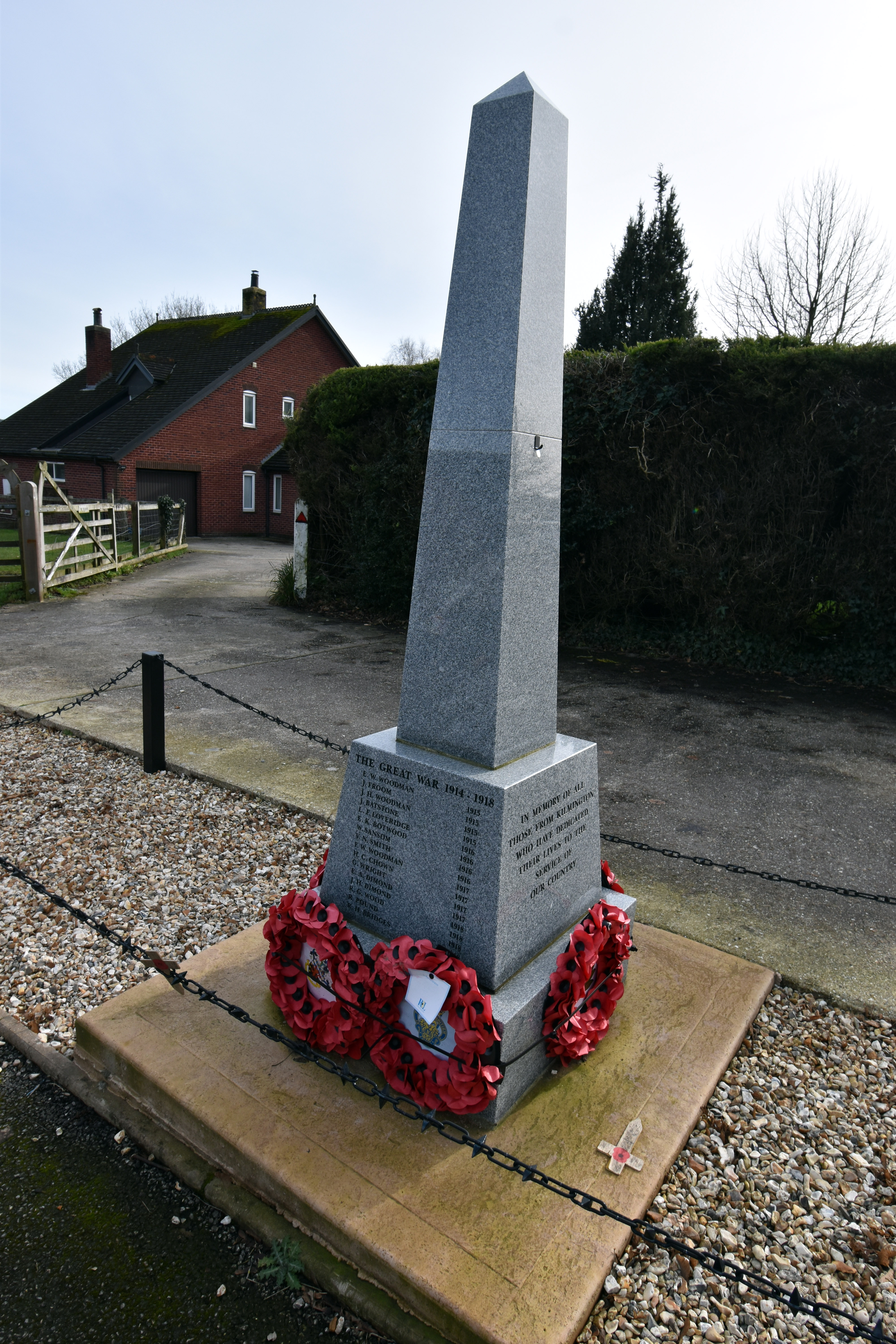
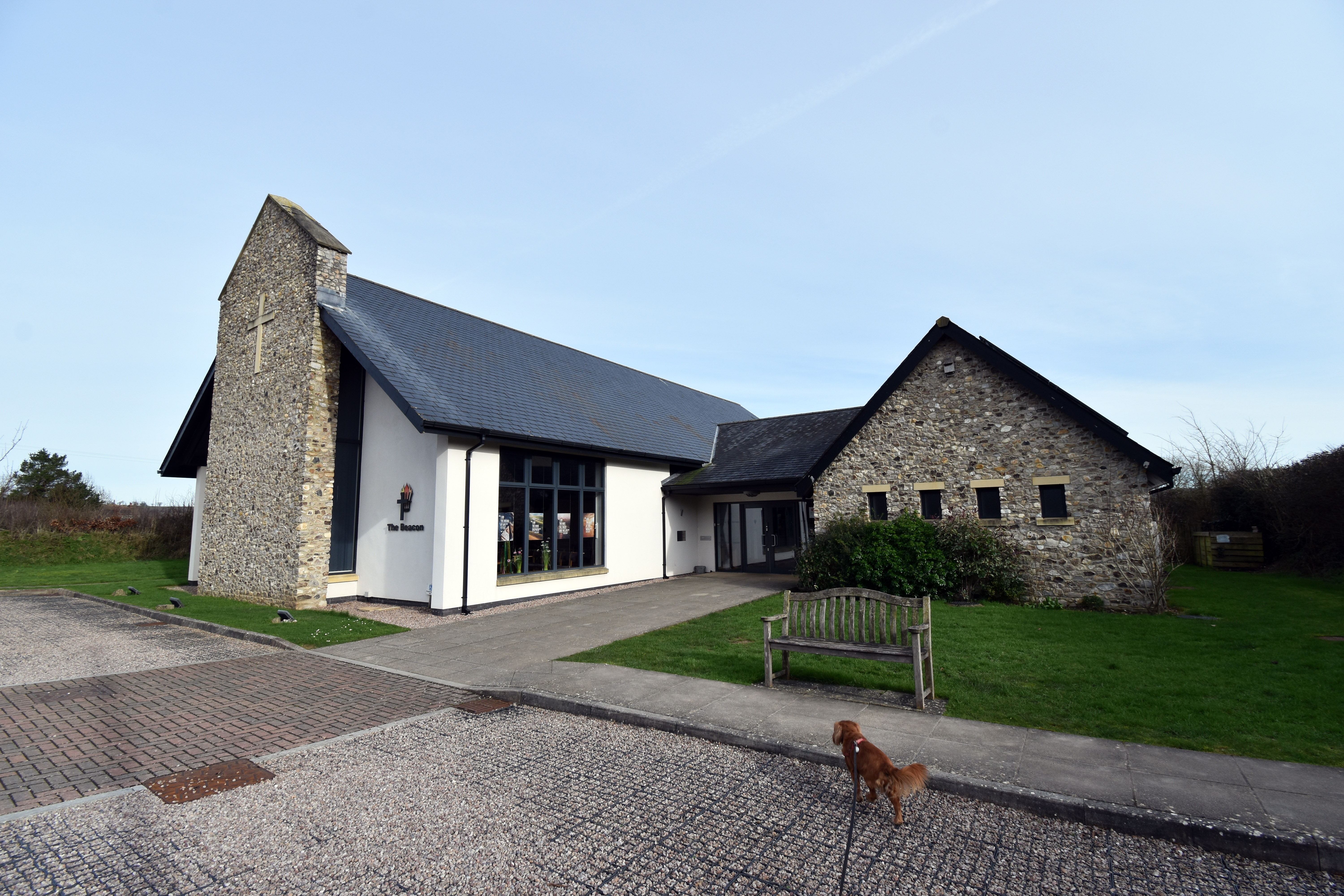
Kilmington, on the old Roman road and lying along the important Axe valley, is one of those places that saw more than its fair share of history. We made one more connection when we visited the modern Baptist church on the other side of the village hall, next to a brand‑new war memorial commemorating soldiers killed in the two world wars (the old one is on the far too busy A35). The new Baptist church made a lovely link to the oldest one we had started at. Separated by centuries, you can still see the shared emphasis on the word of God and minimal decoration. The concessions to modernity include comfortable chairs rather than wooden benches, modern instruments for the band, and no doubt a sound system rather than relying on a powerful pastor’s voice. But the essentials are the same all these centuries later: the Bible and the people gathered around it are the church. We have such a rich religious history, with Anglicans, Catholics and various non‑conformist churches all having their own traditions and stories. The Reformation unleashed change, but could not predict how faith would splinter and evolve from that point onwards. These church buildings hint at different visions of how best to worship God. Loughwood Baptist is at the extreme end of simplicity, while St Giles shows how the Victorians perfected an elegant environment while keeping it distinct from the Catholic tradition. Our walk today revealed those differences but without the hostility and competition that once separated these different sects of Christianity. We could enjoy them all without rancour on this beautiful spring day.
|