Smith Hannington Gardner was born on 24 October 1846, the son of Edward Bensley Gardner, a London bookseller, and his wife Martha Hannington. The 1851 census places him in Hackney as one of eight children in a large Victorian household. His siblings included Helen Mary, Miriam, Gertrude, Edith, Caroline, Herbert and Frank. By 1871 he was staying with his sister Helen Mary and her husband Thomas Frederick Wells, and was already serving as an officer of the 88th Regiment, the Connaught Rangers.
His military career began when he was appointed Cornet in the Cape Mounted Rifles on 1 February 1868. When that corps was disbanded he transferred to the 11th Foot on 31 March 1870, and later the same year, on 12 September 1870, to the 88th Foot. Promotion followed steadily: Lieutenant on 28 October 1871, Captain on 17 May 1879, and Major on 28 October 1883. From November 1879 he served as Adjutant of the Auxiliary Forces attached to the 4th Battalion, Connaught Rangers. His active service included the South African War of 1879, where he took part in the Zulu Campaign and received the medal with clasp.
One detail of his career stands out. His obituary records that he was one of the pall‑bearers at the funeral of the Prince Imperial at Durban in 1879. The Prince, son of Napoleon III, had been killed while serving with British forces in Zululand. Only a small number of officers were chosen for the honour guard, and Gardner’s inclusion marks him as a respected and trusted officer within the Connaught Rangers during a difficult campaign. However, Napoleon III was actually buried in England, so the reference to Durban may well have been to an honour guard escorting the body to a ship that took him to England via St. helena in 1879.
On 18 December 1873 he had married Mary Harriett Anning at St. Michael and All Angels, Paddington. She was the younger daughter of the late William Anning of Stockwell, Surrey. Their family grew to include five sons: Percy Anning Gardner, Neville Edward Anning Gardner, Ernest William Gardner, Arthur Bensley Gardner and Francis Anning Gardner. The 1891 census shows the family living at Hensleigh House, Tiverton, with five servants, and by 1901 they were at Broomfield, Tiverton, again with several servants and Mary’s sister Frances Anning in residence.
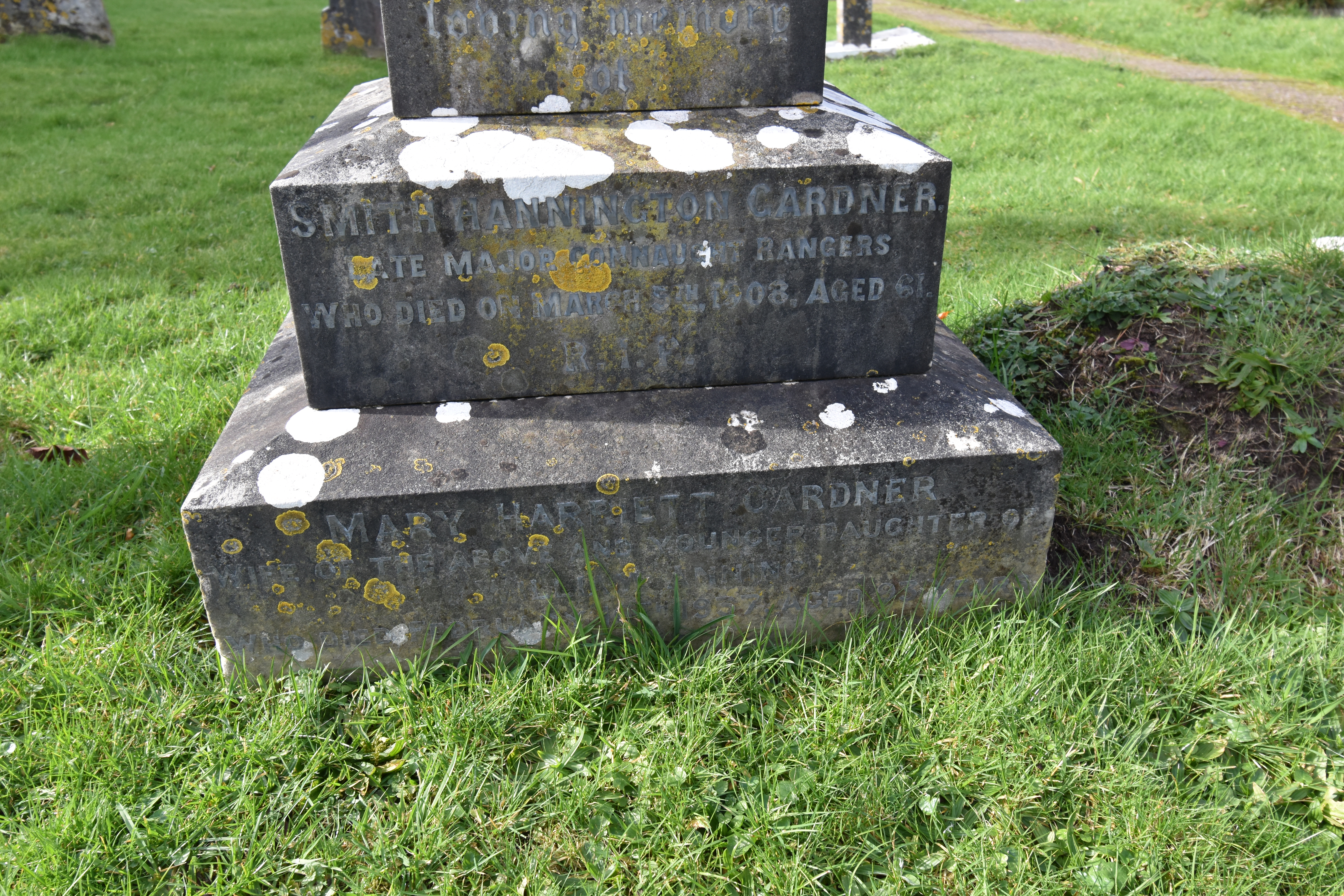
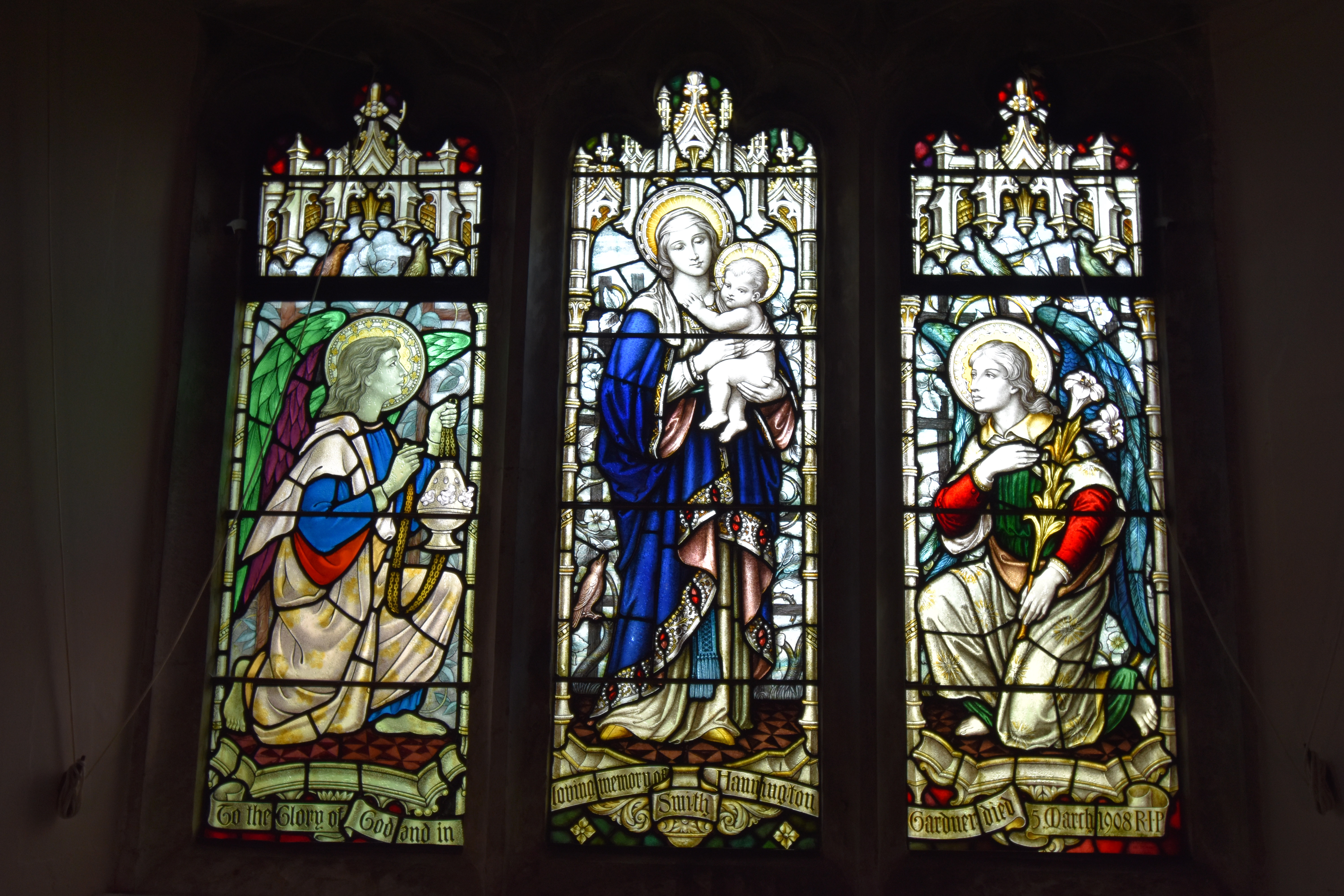
Gardner’s later life followed the pattern of many Victorian officers who retired to the West Country. It should be said that a number of retired military men made their homes in the Axe Valley. Probate records show that he died on 5 March 1908 at 3 The Esplanade, Seaton, aged 61. His widow Mary Harriett and William Anning acted as executors. He was buried in the churchyard of St. Giles’ Church, Kilmington, where his grave remains. Inside the church a memorial window commemorates him.
His presence in Kilmington has attracted renewed interest from the village history group, particularly after the discovery of his obituary confirming his role at the Prince Imperial’s funeral. Gardner’s life links London, South Africa, Ireland and East Devon, and his grave and memorial window form part of the wider military heritage woven through the parish.