|
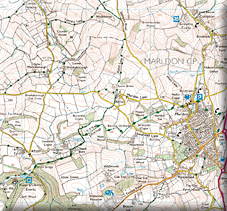
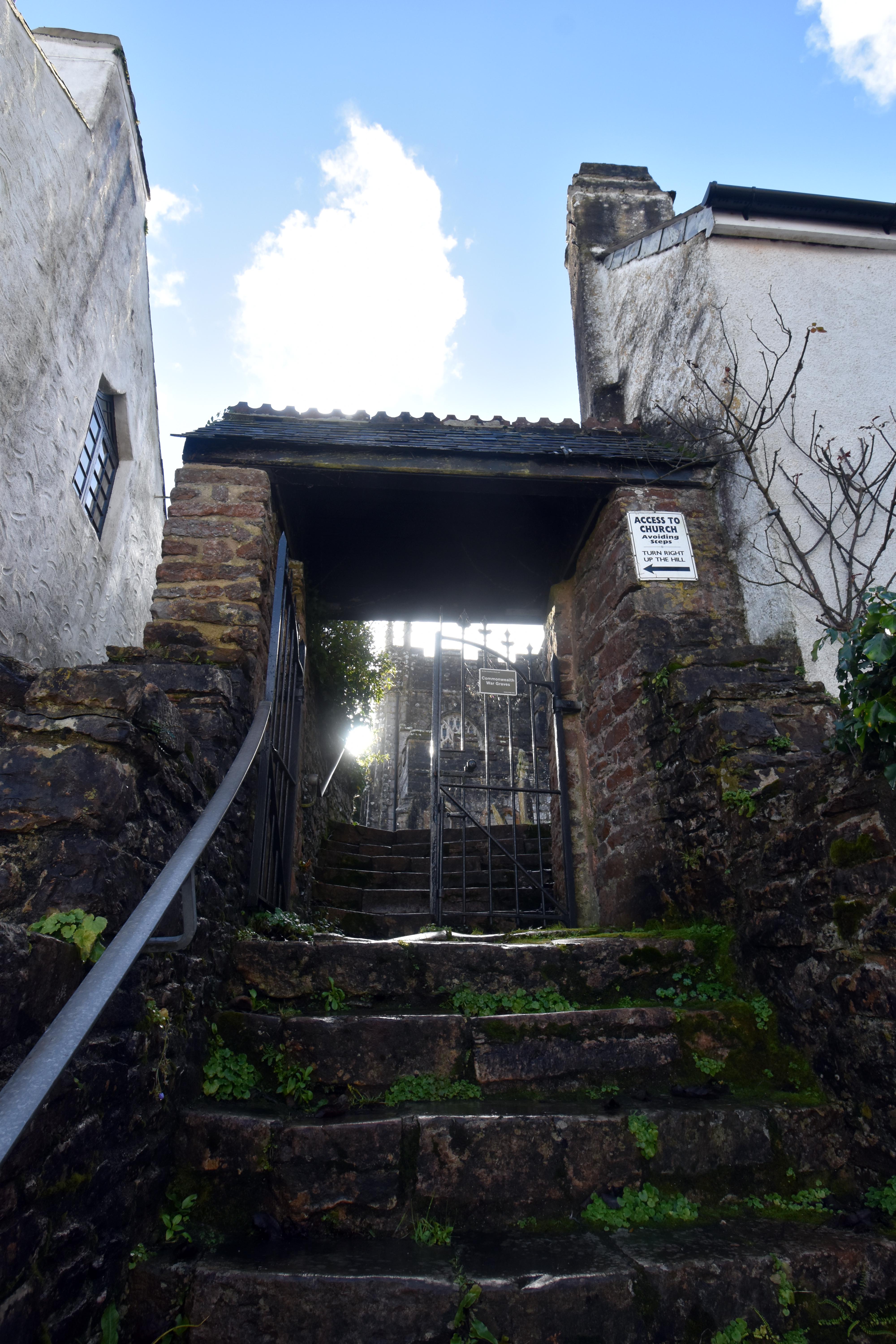
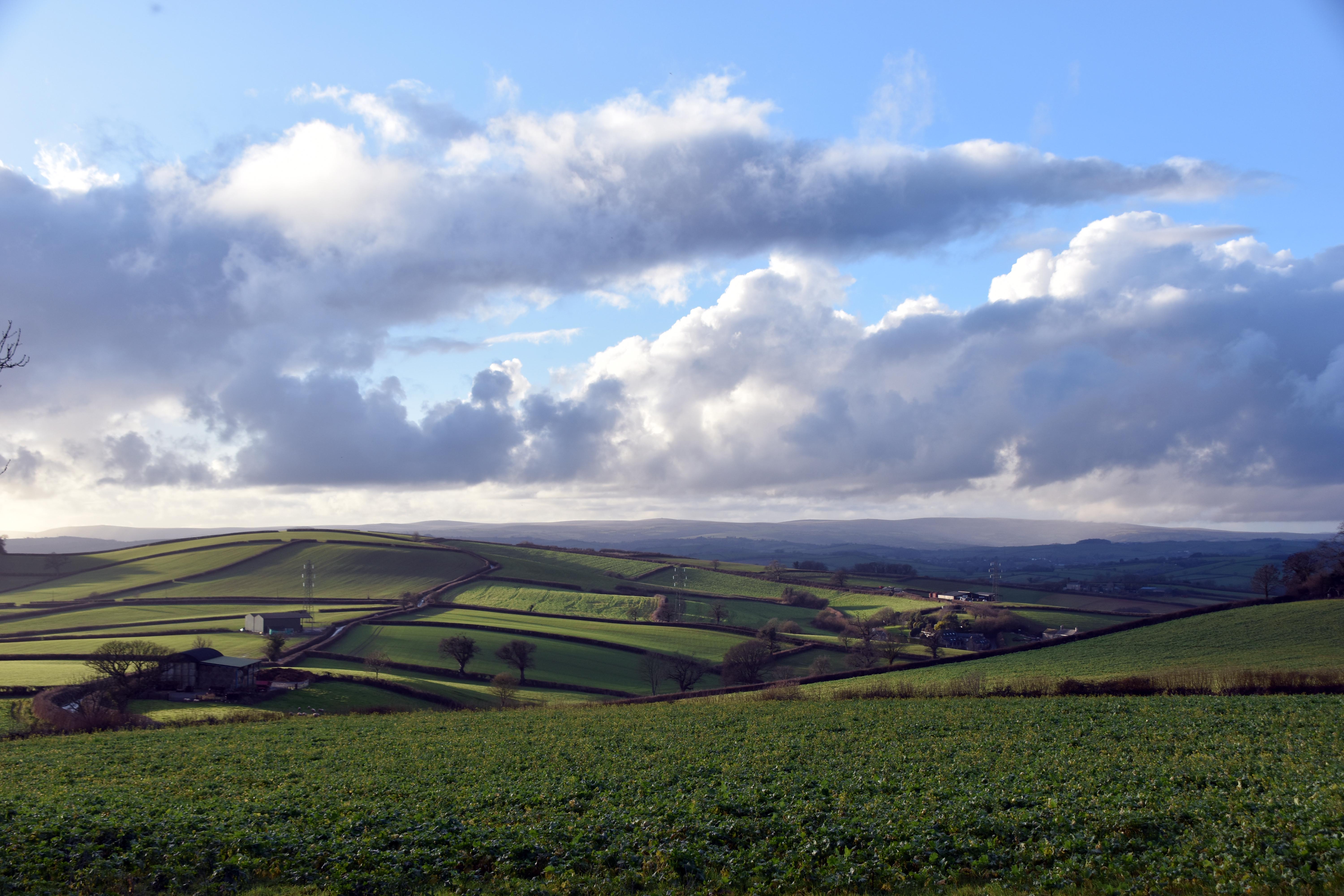
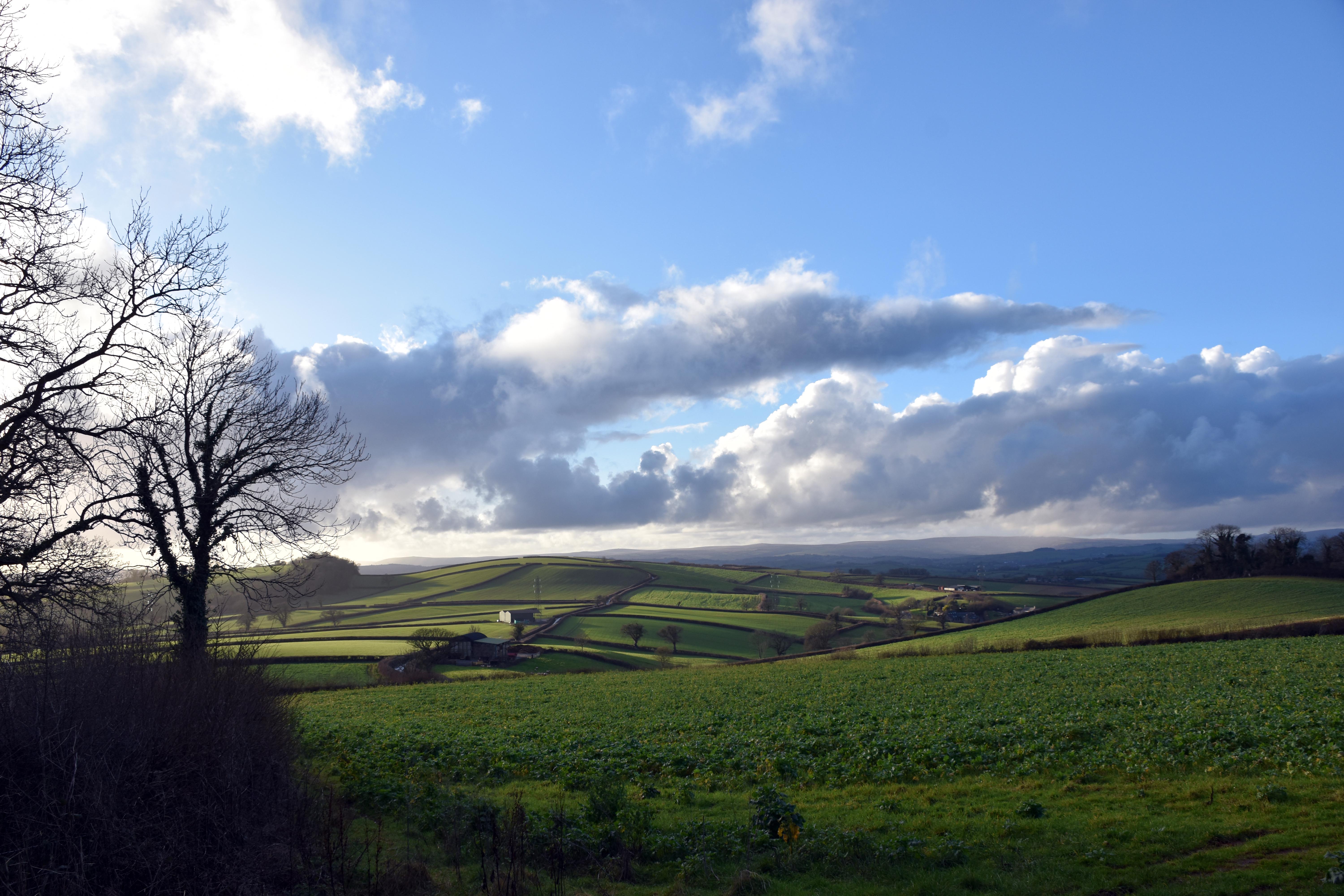
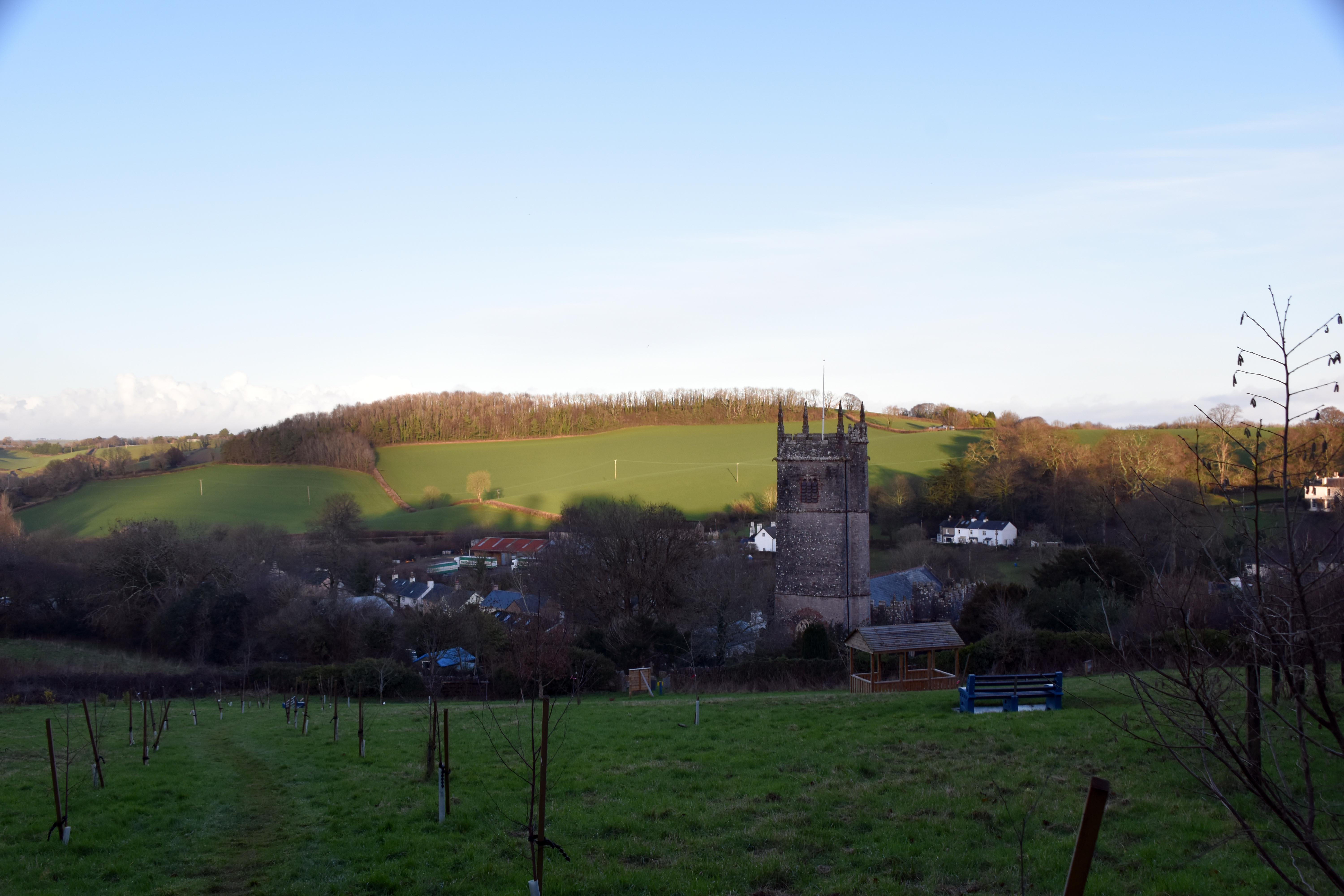
Tucked away surprisingly close to the major population centres (at least by Devon standards) of Paignton and Torquay is the village of Marldon. It is very close to the sea and yet faces in the complete opposite direction, with lovely views over South Hams all the way to the heights of Dartmoor. Walking all day long we could not catch a glimpse of the sea, which we knew to be just on the other side of the ridgeline to the east of the village. The parish church of St John the Baptist is sunk deep on the side of a hill, with the winter sun struggling to find it, nestled as it is at the northern end of the village. It stands next to the appropriately named Church House Inn, linked by a stairway whose steps were seriously worn by centuries of use. The whole scene looked picturesque and apart, as if the view had changed relatively little since the medieval period.
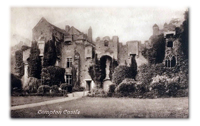
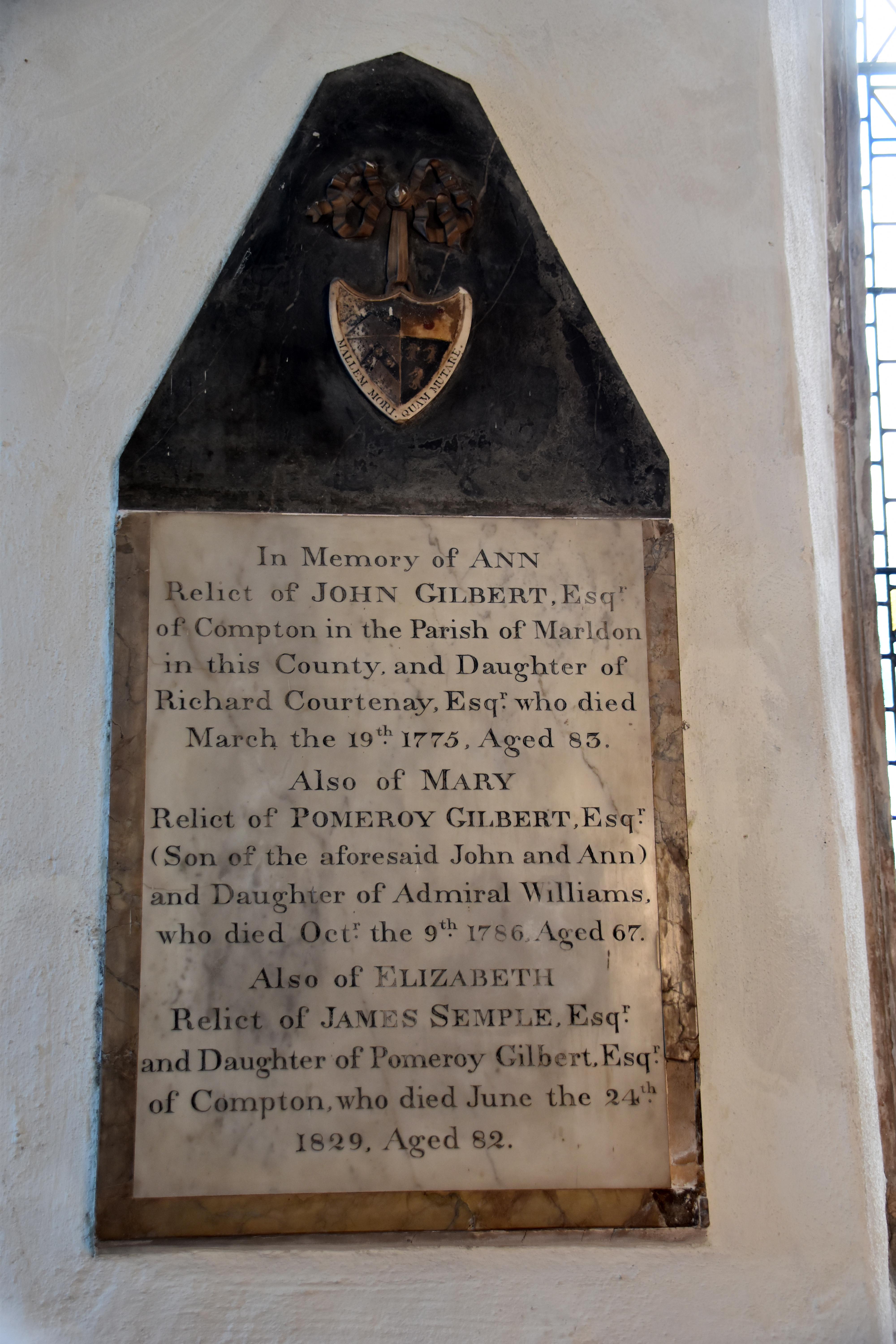
Marldon is interesting in that it has not one but two fascinating castles within walking distance, both of which have influenced the village in many ways over the years. The most important is Compton Castle, which has been in the hands of the Gilberts for centuries and, despite being owned by the National Trust, still houses descendants of the great Gilbert family. There are some fascinating literary connections: before the Gilberts, a famous Norman family, the de Poles, lived there. The daughter of Geoffrey Chaucer married into the Pole family and became the Duchess of Suffolk. She gave the house to a relative named Peter de Pole, who decided to take on the name of Compton from the castle itself, and we saw plenty of Compton names in the church alongside those of Gilbert. The mariner Geoffrey Gilbert married into the Compton family in the early 14th century. He had been living in Greenway House, which would later be the home of Agatha Christie no less — a pleasing coincidence of literary history.
The Gilberts were very much a Devonian Merchant Adventurer family, organising trade with Iberia and providing ships for the king to fight the French. In recognition of their importance to the realm, the king made Otho Gilbert the Sheriff of Devon with responsibility for its defence. This was no idle responsibility, and it was his son who significantly increased the fortifications to make Compton Castle a more formidable place to defend. As I mentioned, the house was not far from the sea, and a determined effort by the enemy to decapitate the main defender of the seafaring county of Devonshire may well have been a consideration. The French had tried something similar at Blackpool Sands near Dartmouth as recently as 1404.
 |
|
|
The most famous Gilbert by far, however, is Sir Humphrey Gilbert, who could be seen as the unlikely founder of the British Empire — not because he built anything lasting, but because he insisted on planting England’s flag on a cold, fog‑bound shore in the appropriately named Newfoundland. His 1583 expedition was a shambles from the moment he left Plymouth: ships lost, crews mutinous, supplies inadequate, and his own judgement as wayward as the weather. Yet Gilbert possessed that peculiarly Elizabethan mix of bravado, optimism, and sheer obstinacy. He believed the New World was England’s destiny, and he behaved accordingly. So when he finally staggered into St John’s harbour and proclaimed the land for Elizabeth I — after running aground in front of an audience of unimpressed fishermen — he carried out the first formal act of English overseas possession. The “colony” amounted to little more than itinerant fishermen who carried on regardless; his ships were wrecked soon after, and he himself vanished beneath the Atlantic on the return voyage, reportedly reading Utopia in a chair on deck as the waves closed in on him. Yet the gesture mattered. Gilbert’s failure lit the fuse: it inspired his half‑brother Sir Walter Raleigh, encouraged further ventures, and established the idea that England could claim and settle lands across the ocean. In that sense, the empire began not with triumph but with Humphrey Gilbert’s stubborn, theatrical insistence that England belonged in the New World — even if this Devonian Merchant Adventurer from this valley did not survive to see it himself.
 |
|
|
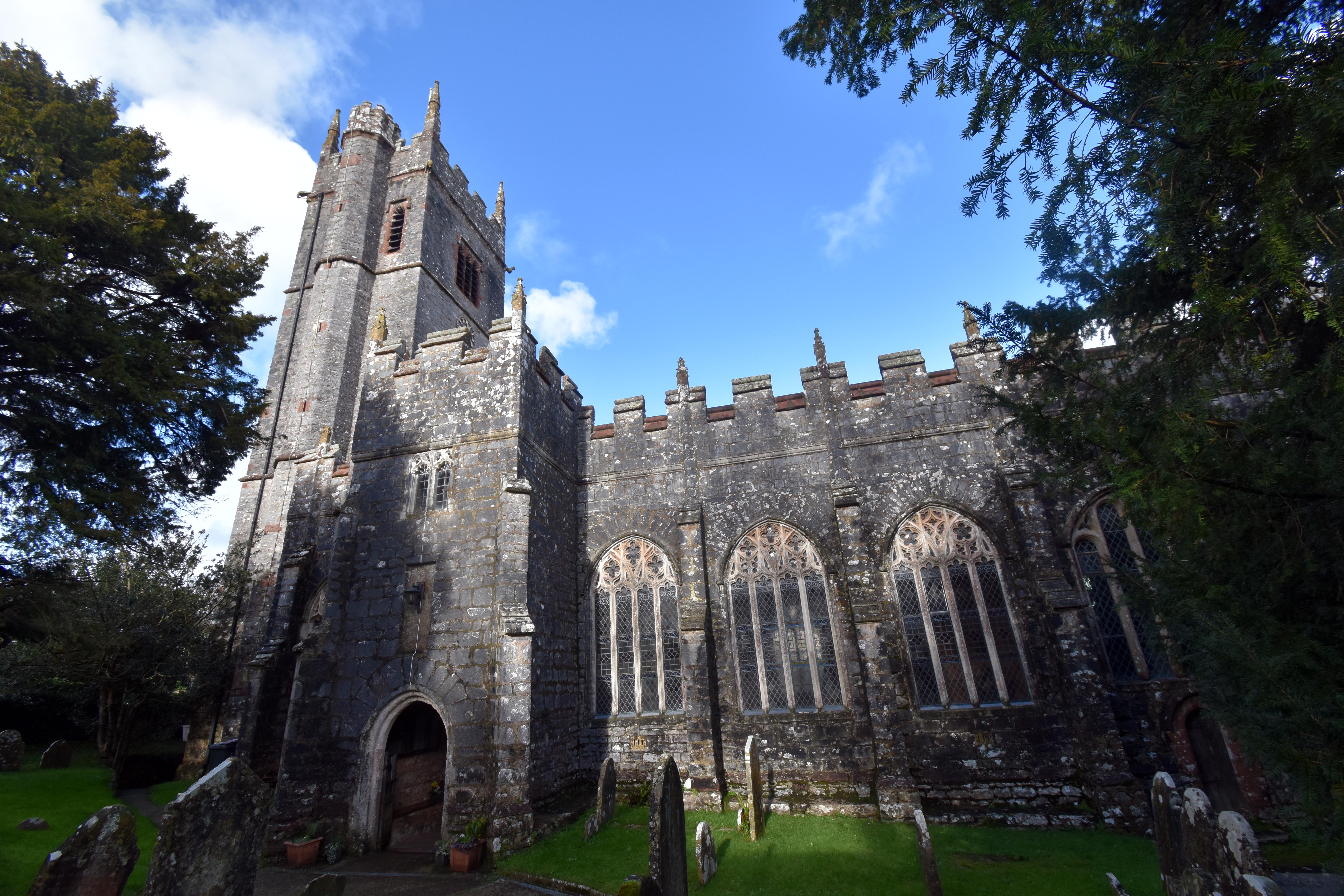
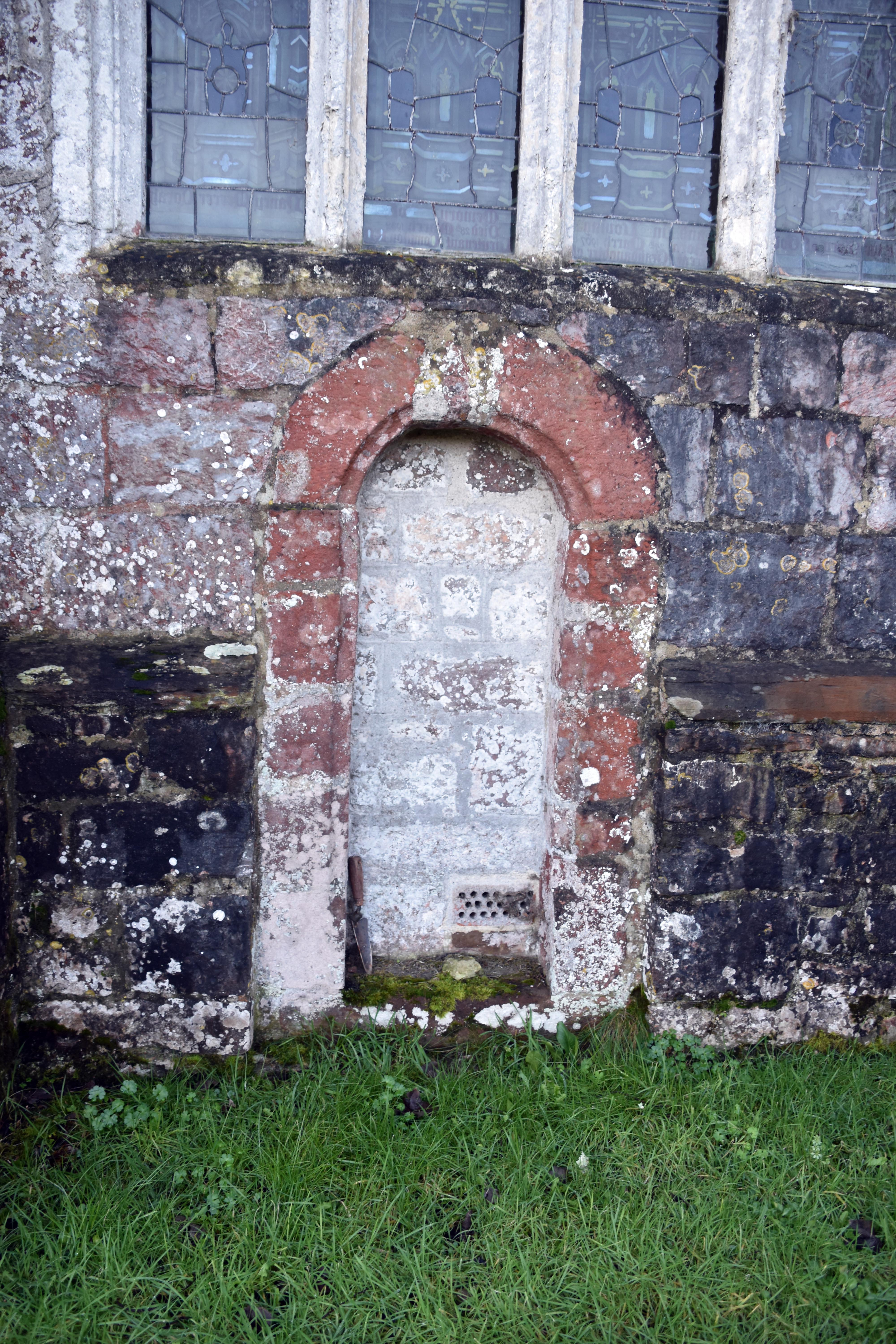
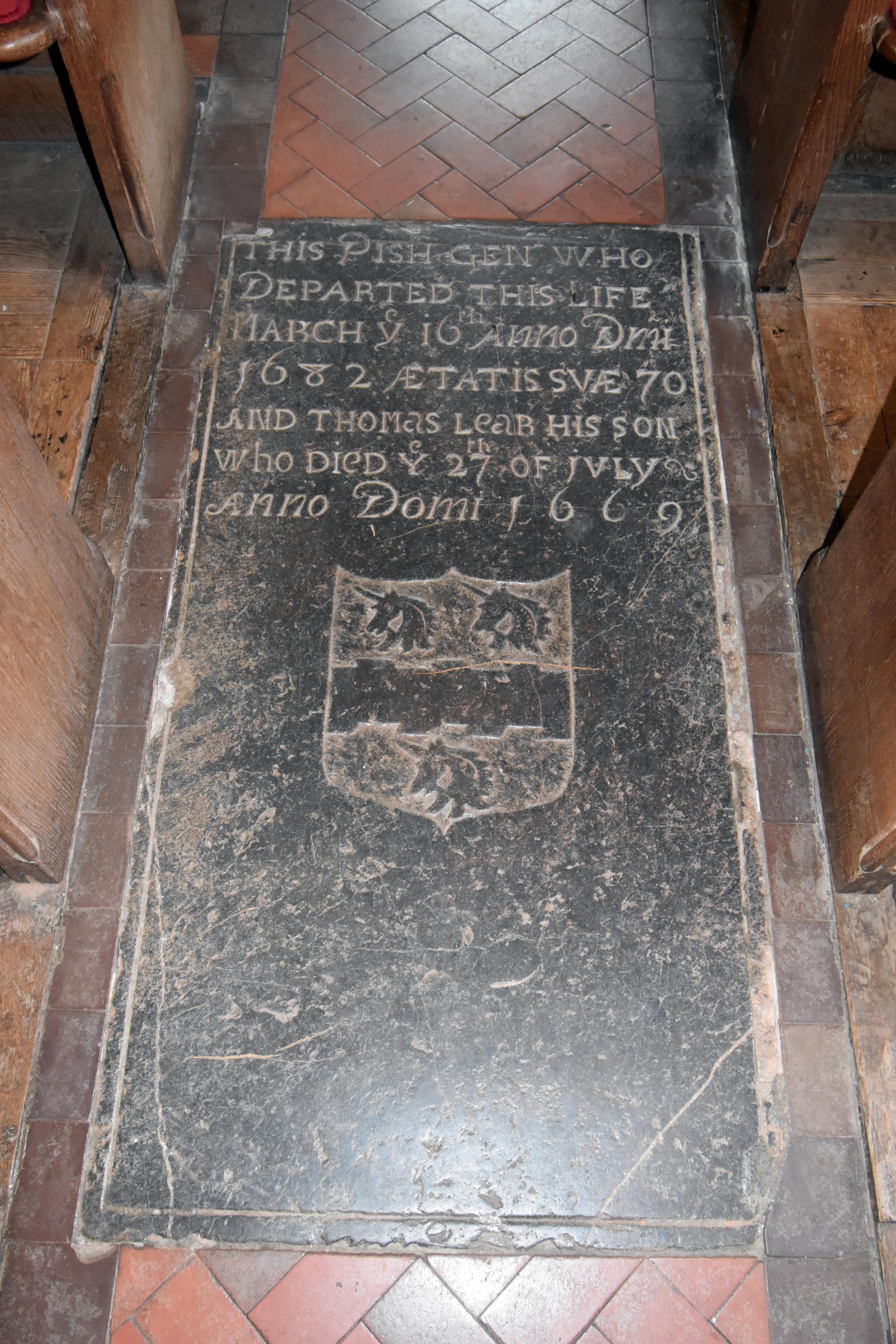
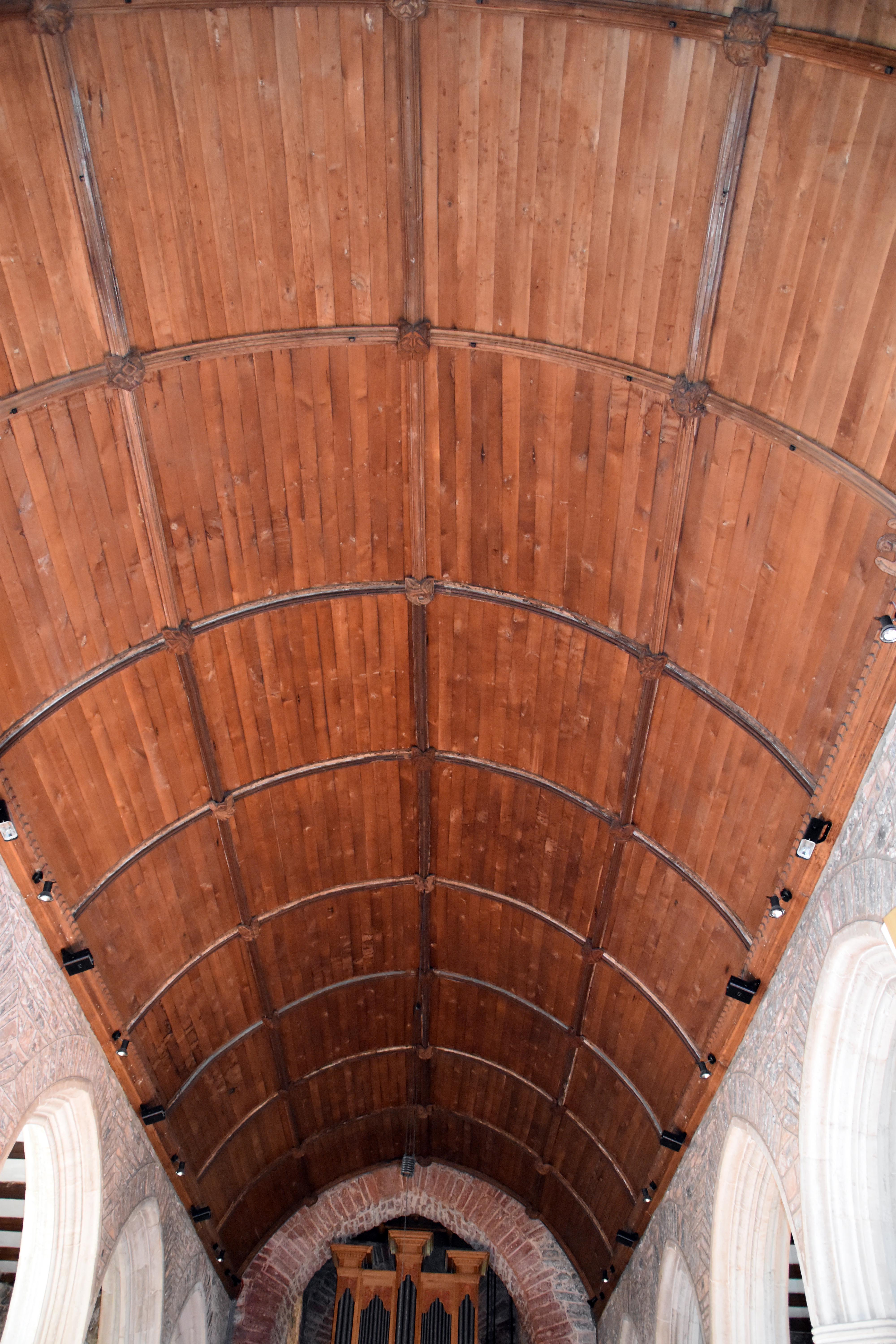
The Gilberts were also responsible for building the church — both its 14th‑century original structure, the fascinating and oddly shaped tower, and the replacement church when it was significantly renovated in the 15th century in the late medieval Perpendicular style. The tower has no buttresses but has an unusual stair turret attached to its south side, which effectively gives it the strength to remain standing for over six centuries and counting. Algae, lichens and mosses in the dark and damp conditions have taken a terrible toll on the gravestones — it was quite hard to read many of the memorials. Slate graves appeared to fare better than any others.
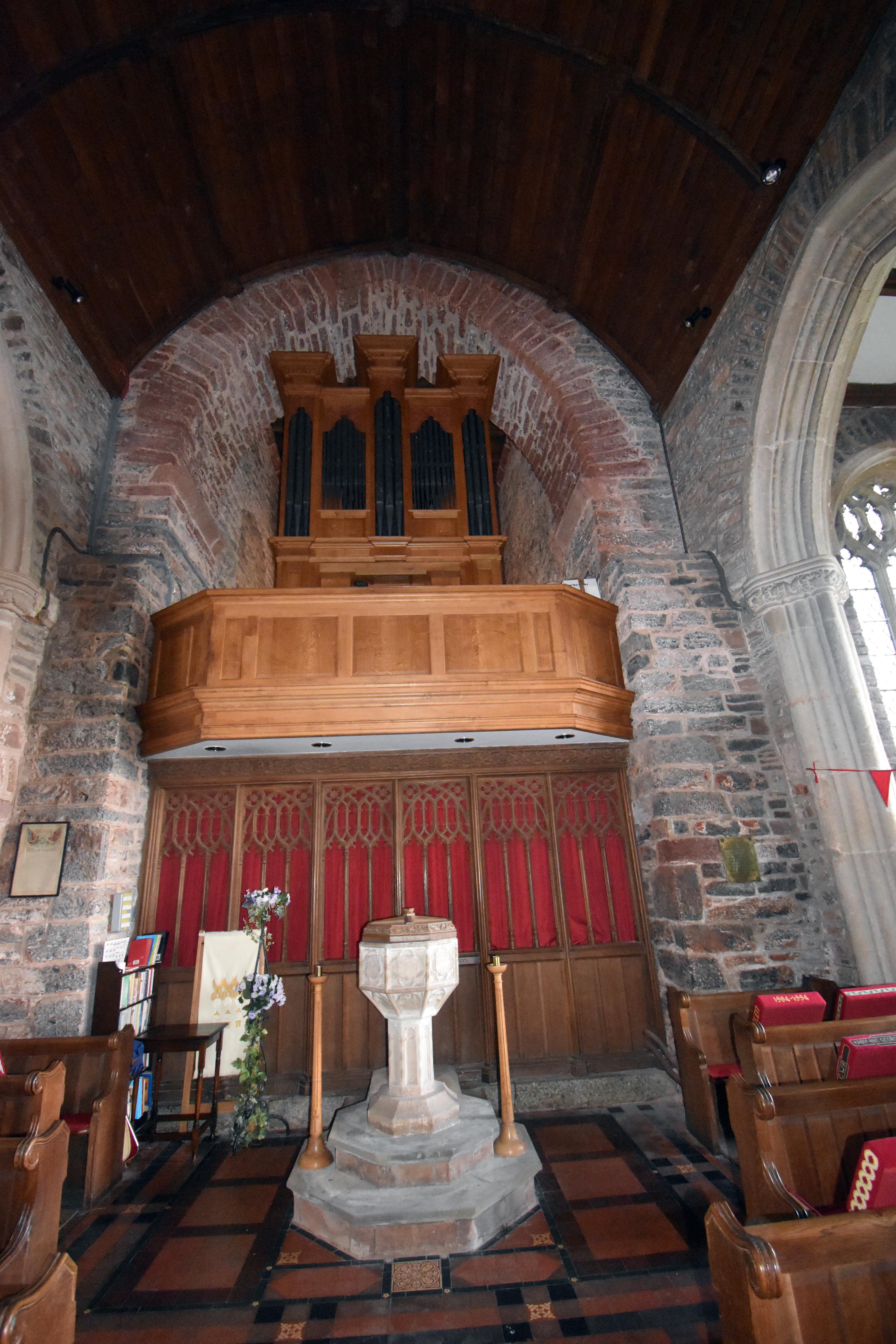
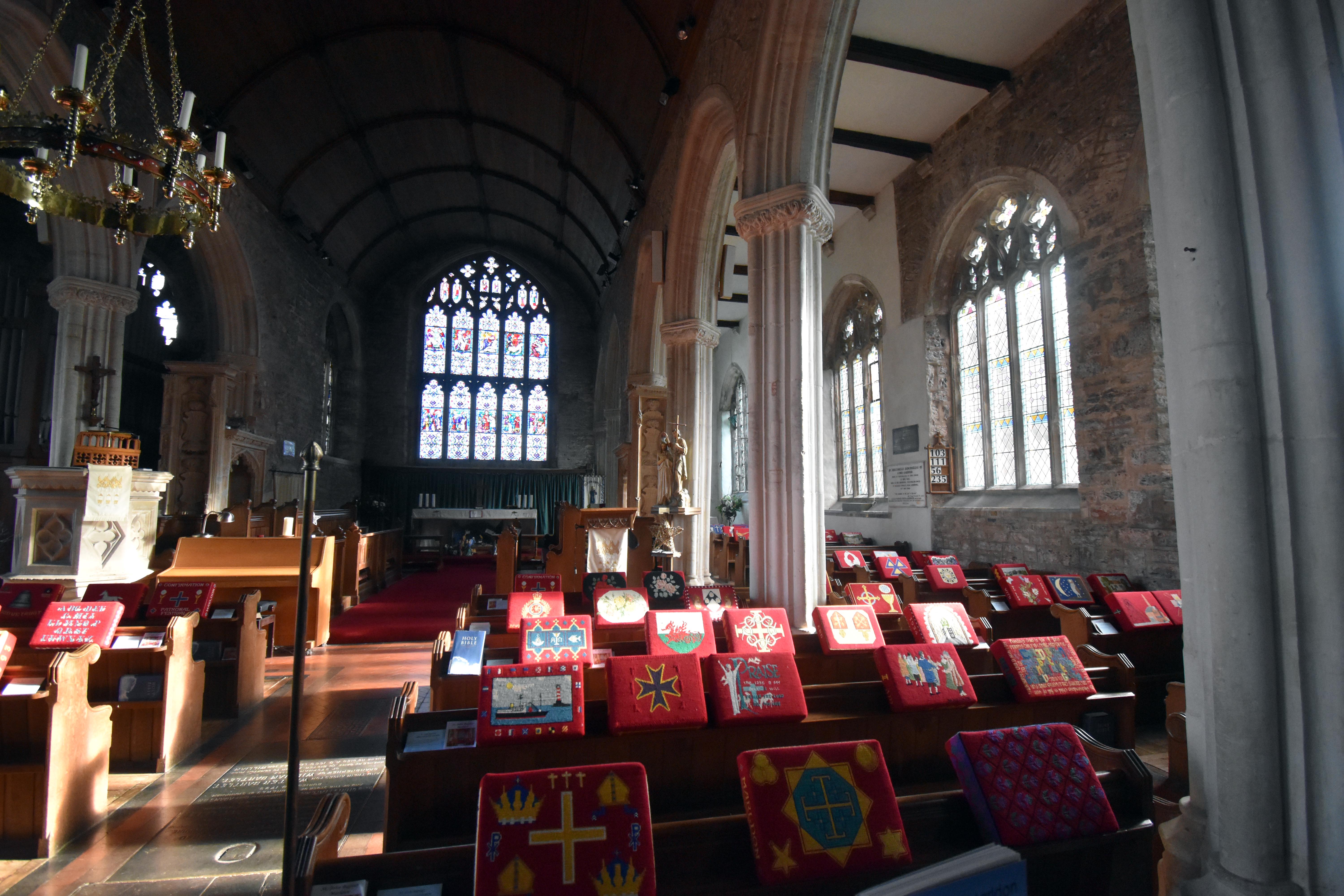
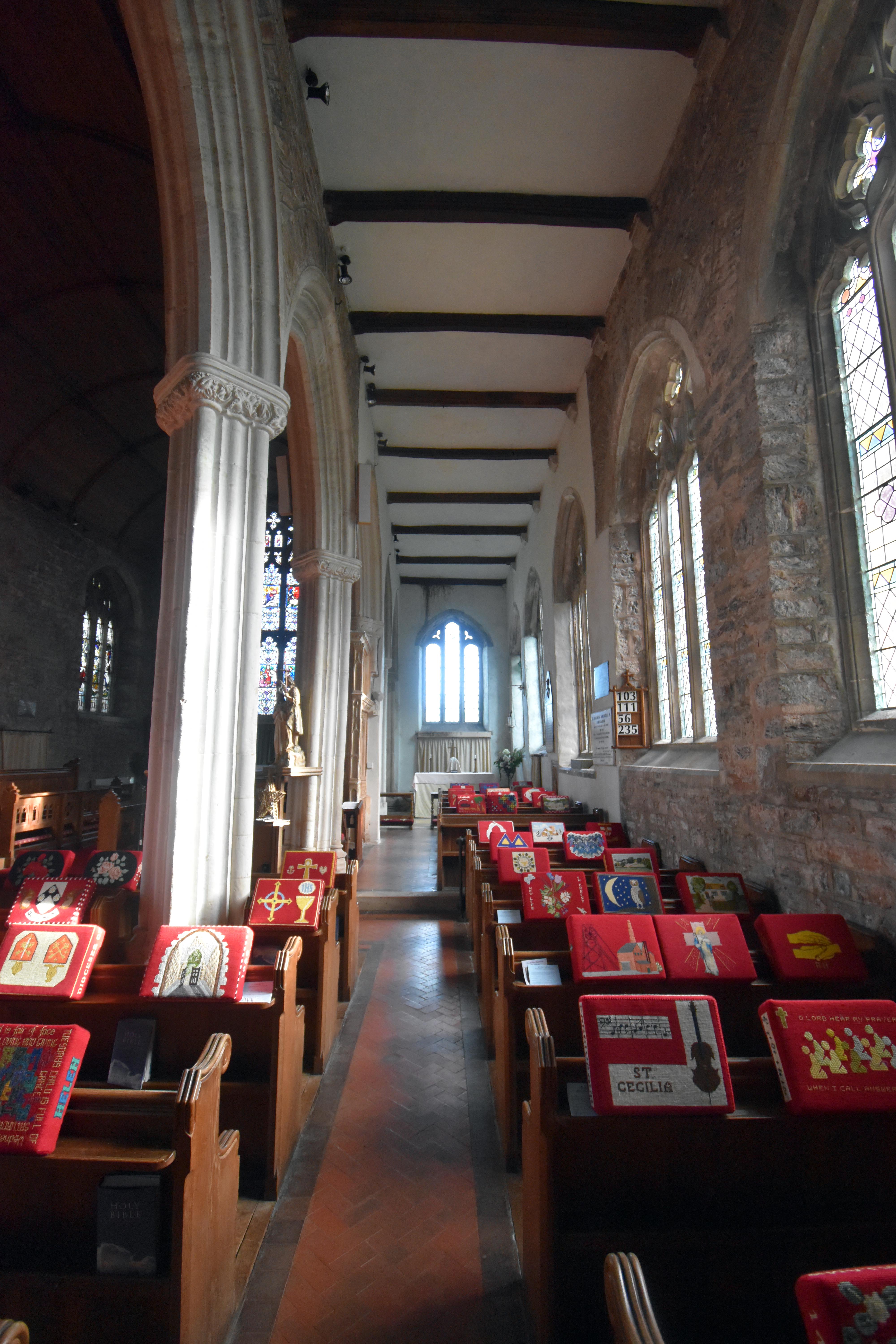
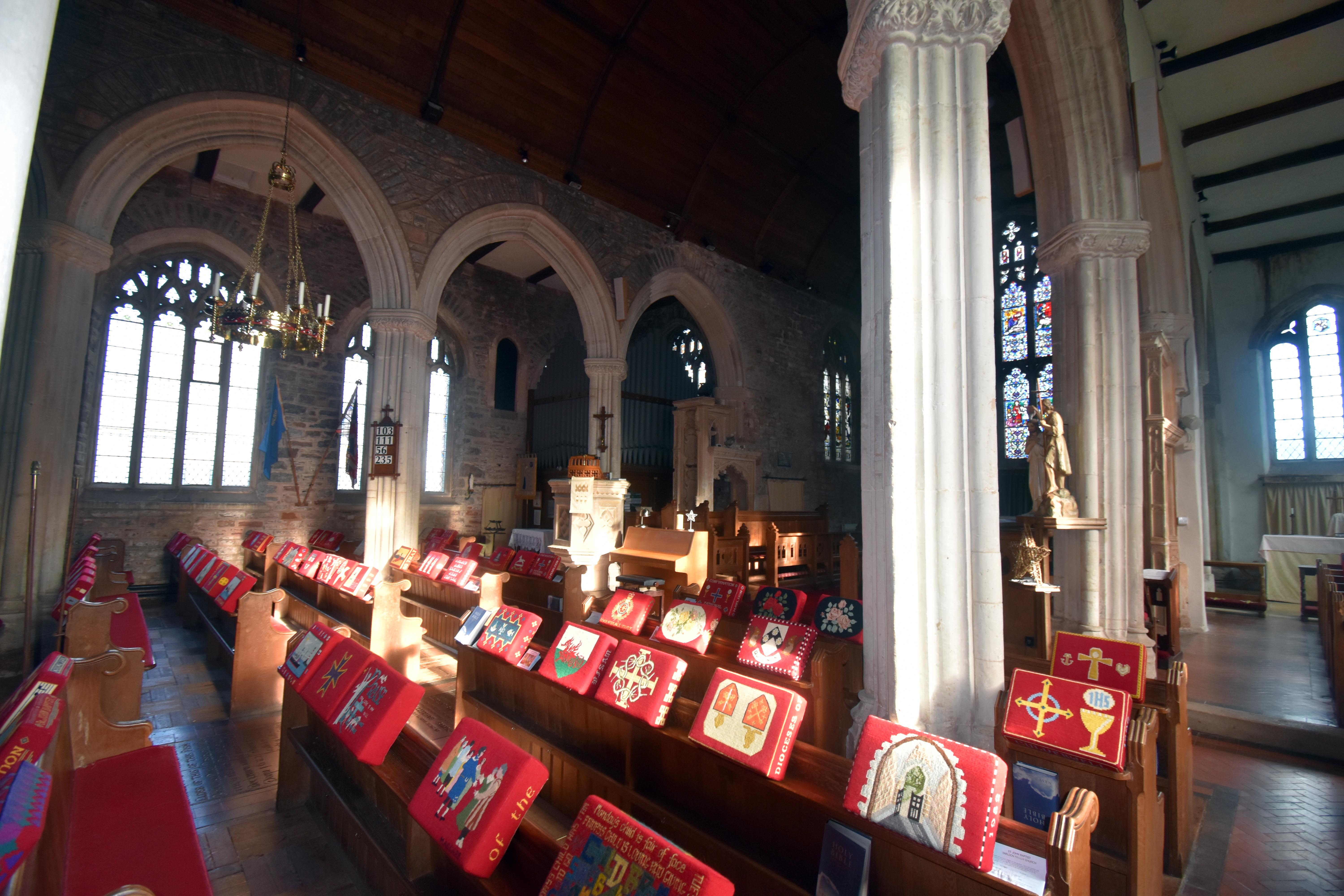
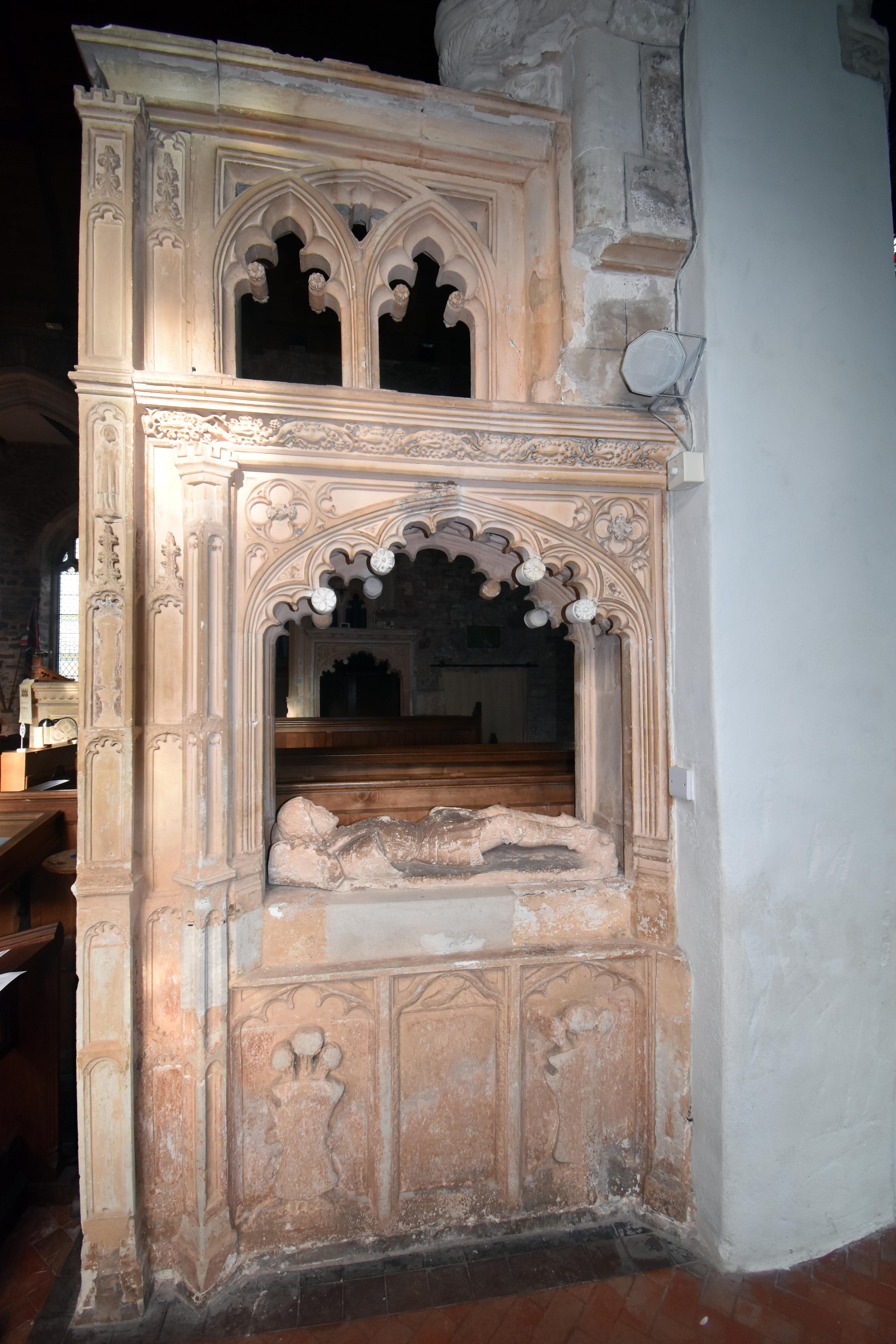
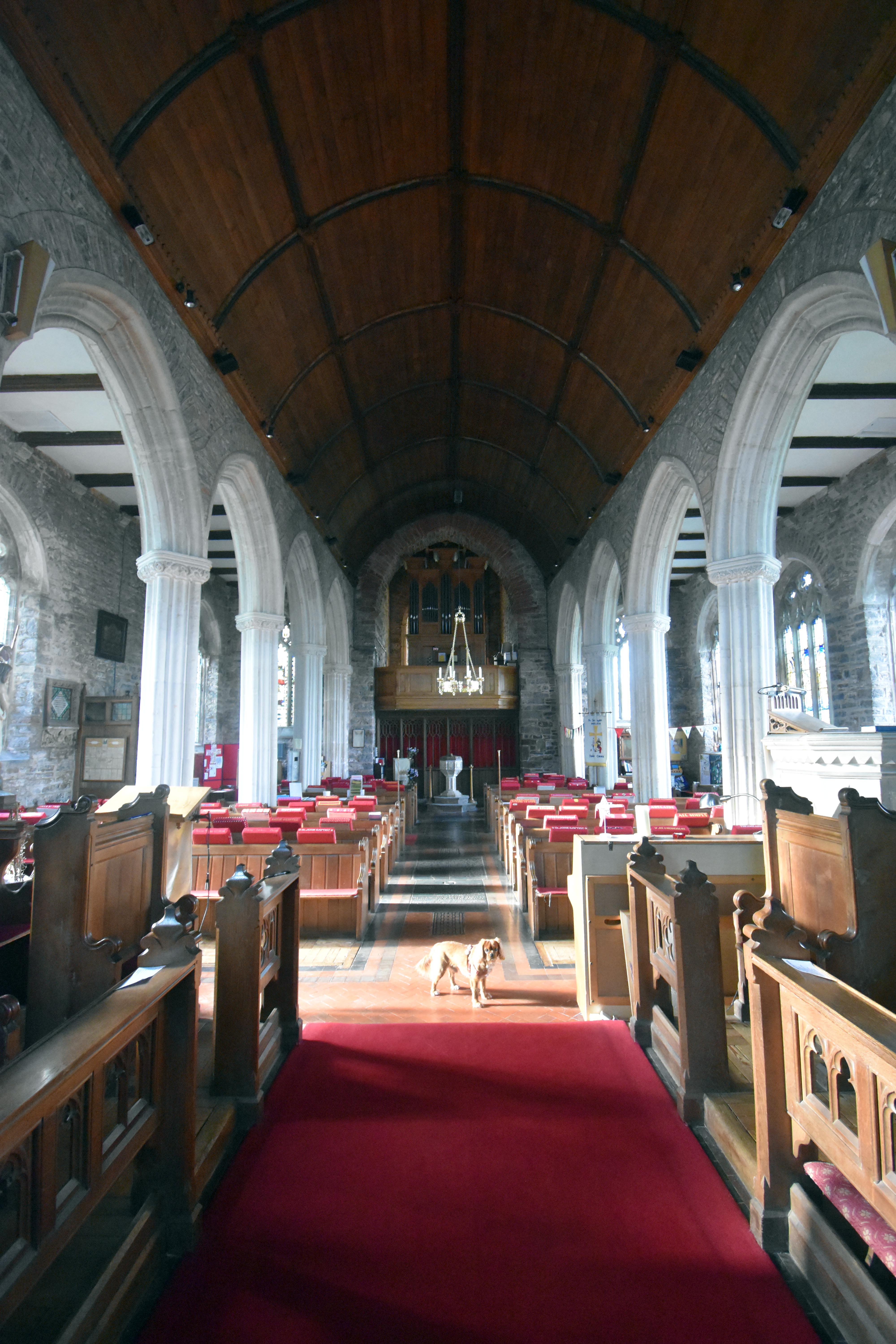
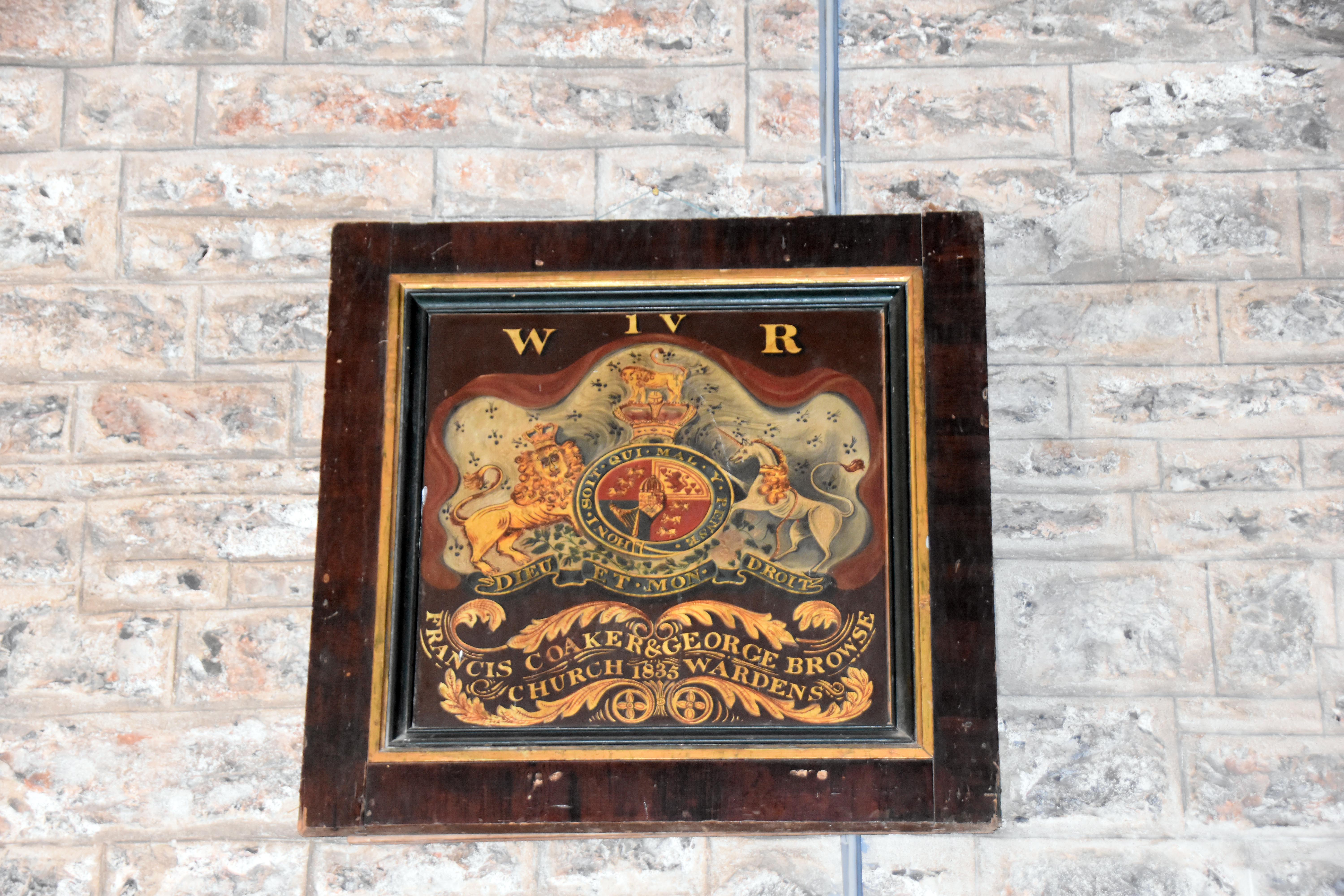
Entering St John the Baptist, you are met by a beautiful sea of red kneeler cushions which, when combined with sun coming in the southern windows, give a very warming effect to the appearance of this wide church. It was the Gilberts again who subsumed the chancel into a much wider space by adding the ‘Gilbert Chapel’ on the south aisle in the reign of Henry VIII. This is also one of the few churches that still has a chantry cenotaph tomb. The recumbent effigy is probably Otho Gilbert (although it may well be his son William, who died as a mere child of 13). The other cenotaph probably held an effigy of Otho’s wife Elizabeth but is now empty. Chantry chapels were where prayers could be said to hasten family members’ journey through purgatory. Most of these were ripped out of churches upon the Reformation, but as this was a family chapel until surprisingly recently — it was only in 1912 that the church was set up with its own vicar and parish — this bureaucratic quirk almost certainly saved the chantry cenotaph from destruction. The family, being in ultimate control of the building for most of its history, would have been reluctant to rip out family installations even if they did hark back to Catholic traditions.
 |
|
|
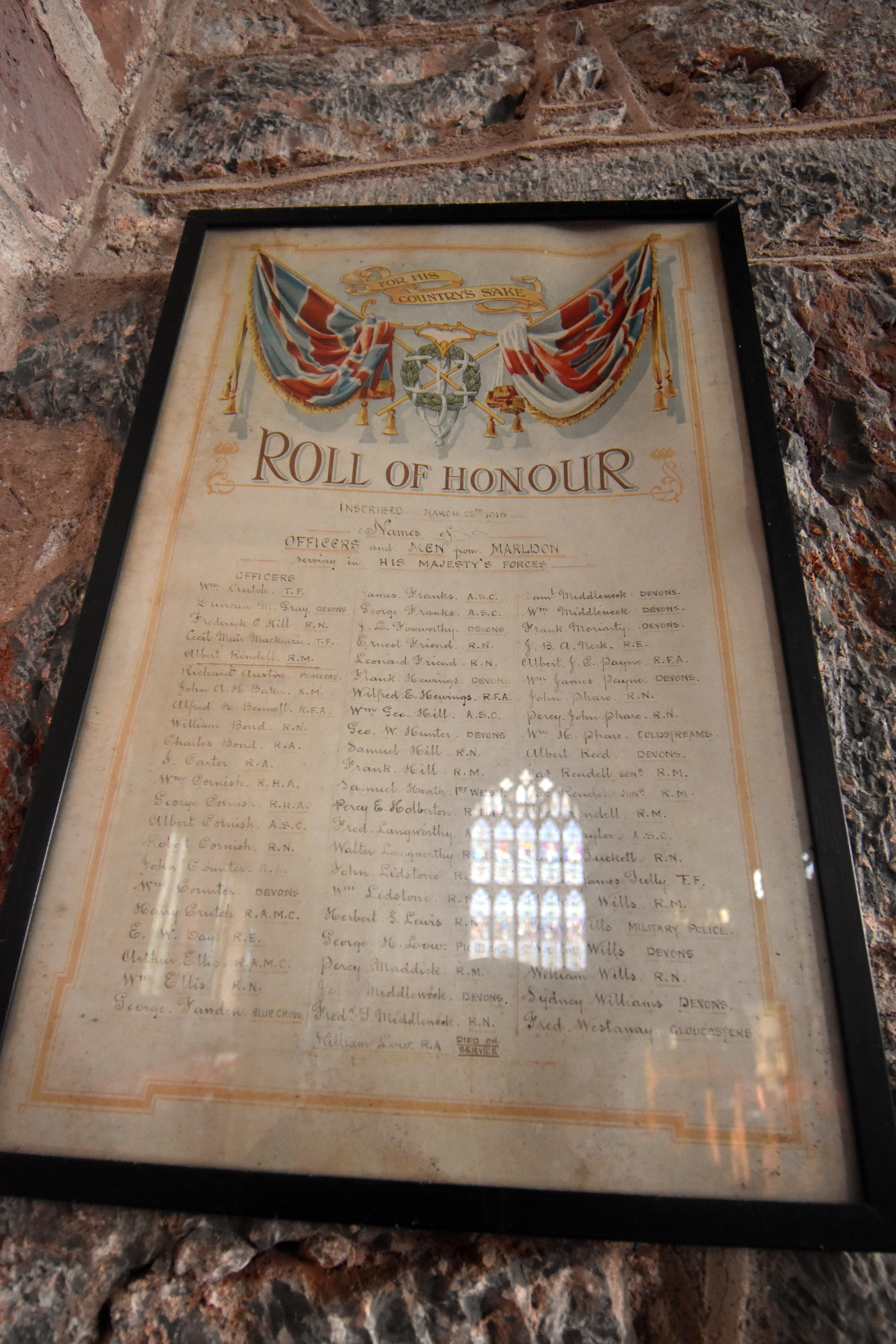
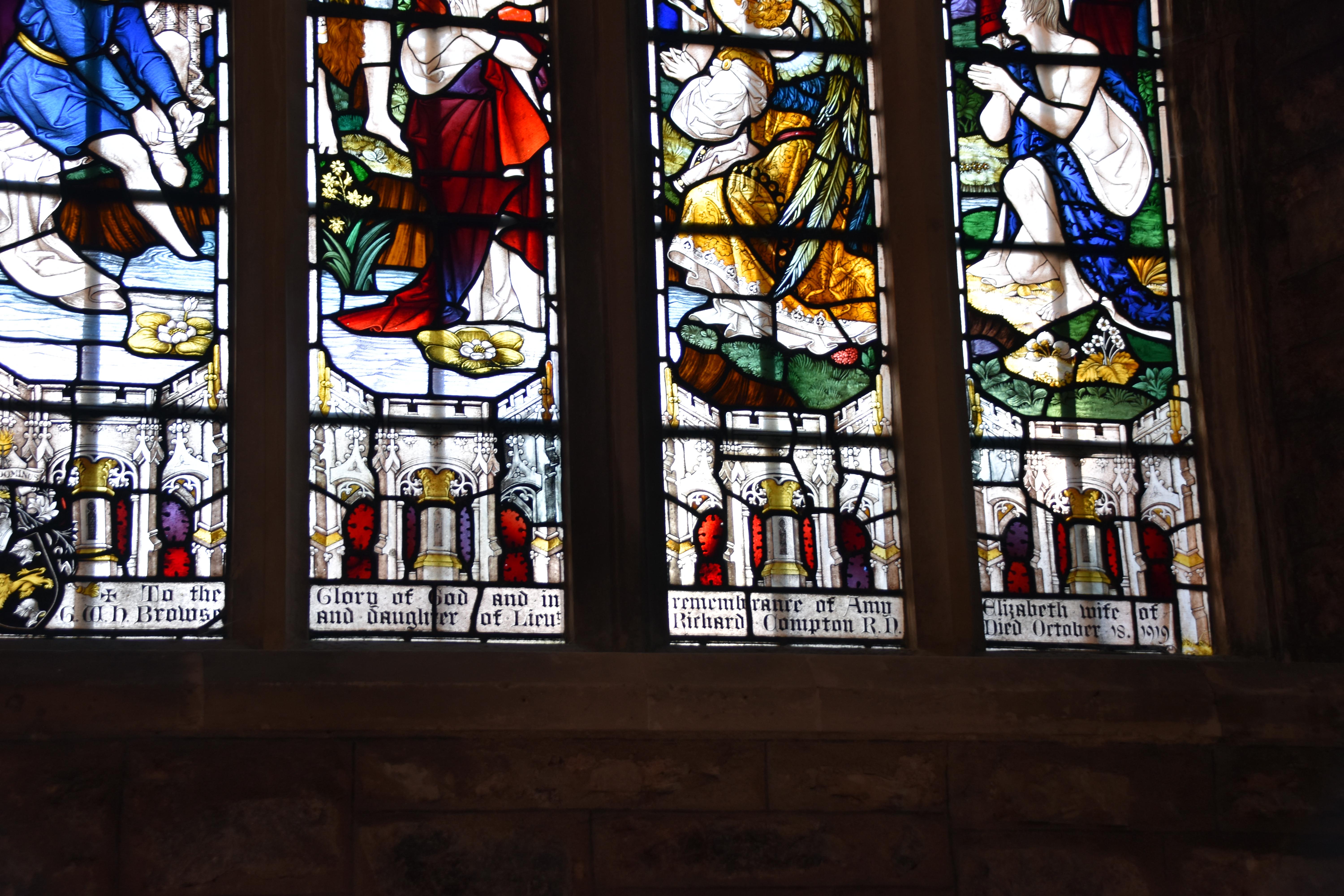
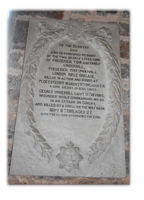
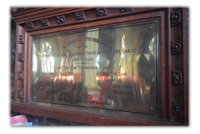
The church became a parish church just in time for the sad task of commemorating the war dead from the Great War. In addition to the formal plaque of the war dead, there is a very sad private memorial to the two sons of Frederick Tom and Emily Underhill. Even before war had broken out, the family had known tragedy with the death of Frederick Tom and a young daughter within weeks of each other. At the outbreak of war, the patriotic older brother joined at the first opportunity but was sadly killed at the critical battle of Ypres in 1915. The younger brother joined the Devons and became a Lieutenant in their 9th Battalion. The plaque very poignantly points out that he had commanded an attack at the Battle of Ginchy as part of the Somme Operation but was “killed by a shell on the way back”. He died on 6 September 1916. The fact that this was a rare victory for the British can have been little solace to Elizabeth Underhill, who had lost her entire family to war and disease.
 |
|
|
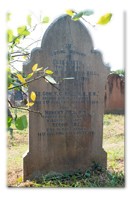
The main war memorial lists Lieutenant Sir Robert Cecil Muir‑Mackenzie, Bart. M.C., at its head. The “Bart.” means that he was a Baronet, and the “M.C.” illustrates that he won the Military Cross for bravery. Sir Robert had been born in Marldon, the son of Lieutenant Colonel Sir Robert Smythe Muir‑Mackenzie of Marldon House, literally just opposite the church. He had become the 5th Baronet of Delvine in February 1918, just two months before he lost his life. He was serving with the Durham Light Infantry and must have been a remarkable man, as his Military Cross citation reads: “For conspicuous gallantry and devotion to duty. During a raid he, with great gallantry, kept his guns firing throughout the whole action, despite the very heavy barrage which the enemy put down in the vicinity, and the successful shooting of his gun teams was mainly due to his admirable example in a heavily shelled area devoid of any cover. Subsequently he performed excellent work in rescuing five out of six men from a blown‑in dug‑out.” Sadly, within a month of his bravery, the 26‑year‑old was dead.
 |
|
|
Lieutenant Sir Robert Cecil Muir‑Mackenzie is not the only soldier with a Military Cross commemorated on the war memorial. There is also Lieutenant Commander Frederick Charles Hill M.C. on the same plaque. He had been in the RNVR and died in 1919, and so is buried in the churchyard itself. He came from a much more modest family, living in the Royal Oak Inn. He had joined the Navy back in 1898 and trained in Plymouth. Despite being trained as a sailor, the desperate lack of soldiers saw the British Army raise a Royal Naval Division to serve on the Western Front. As a Royal Naval soldier he served in the Antwerp operation in 1914 and took part in the Gallipoli campaign — again on land. After their successful evacuation, the Division returned to France, where he won the Military Cross in 1916 fighting in the Ancre Drive part of the Somme campaign as it drew to a close. The by‑now renamed 63rd (Royal Naval) Division was fighting with tanks and artillery many miles from the sea. There was no pretence that this division was anything other than an army division composed largely of sailors. He was officially diagnosed with ‘heart disease’ in 1918 and had been sent back to Britain for rest and recuperation in February. He volunteered to return again as the war came to a close. However, the medical issue had obviously not been resolved, and he died in Paignton Hospital in August 1919 — a sailor who fought as a soldier for the entirety of the war.
 |
|
|
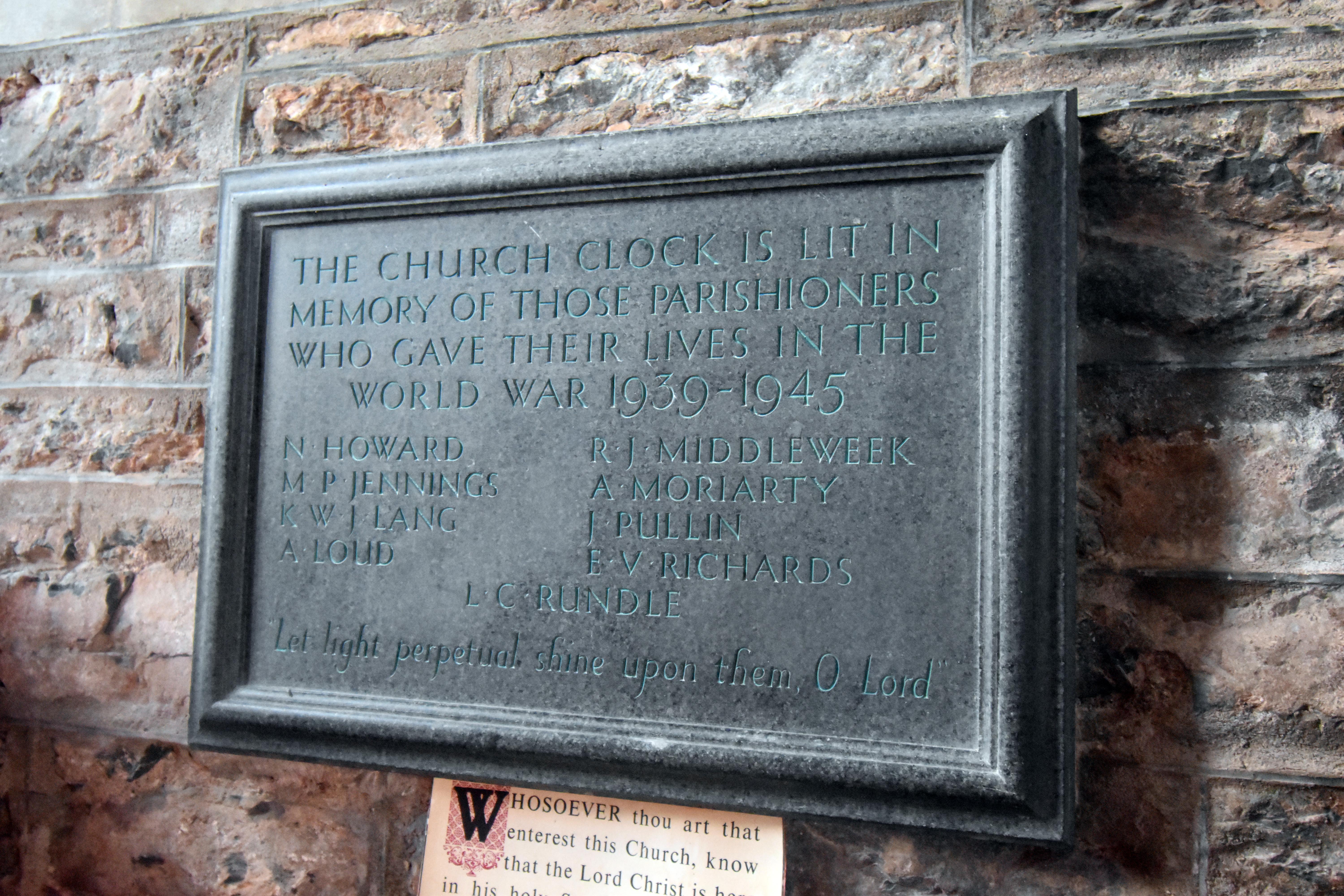
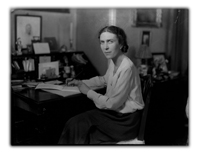
Leaving the beautiful church behind, we turned right to start walking up Marldon Tor. Nearby in World War Two close to Marldon Cross would have been a US Army camp which slowly expanded throughout the war. Marldon, being close to Paignton, Torquay and not that far from Dartmouth, was in a prime location for the Americans preparing for the D‑Day invasion. There is a lovely description of the friendliness of American soldiers by the famous author Elizabeth Goudge, who had made Marldon her home in 1939 with her mother upon the death of her father. They were not to realise that they were moving to a war zone in the summer of 1939 and, despite being a tiny village, it did actually have bombs dropped on it on at least two occasions. It was thought to be planes jettisoning their loads after failing to drop them on Plymouth for some reason. Marldon and Paignton would have been the last available targets before going back out over the Channel. She wrote children’s and adult books, many of which were set in this rural Devon idyll. Whilst in Marldon she wrote Smoky House, The Castle on the Hill, The Little White Horse and Gentian Hill, all based on the locality. She also wrote her greatest commercial success here, Green Dolphin Country, which was made into a major film by MGM. It was on the back of her fame that one enterprising American sailor sought her out. She recorded this delightful encounter: “Opening the door to a knock, I found an American sailor on the doorstep. He was the largest young man I have ever seen, with a face like the rising sun and a beaming ear‑to‑ear smile. He had walked all the way from Dartmouth to express his pleasure that an English woman had won an American prize. We had a delightful conversation over coffee, but he was reluctant to eat too much, being convinced that the British rations scarcely supported life in a human being. Indeed he dived into a pocket and produced a slab of chocolate to augment my ration, and having ascertained through kindly enquiry that I had an invalid mother in bed in the house, he dived into another pocket and produced an orange for my mother. Then he said good‑bye and left to walk back to Dartmouth, leaving me with an experience of American kindness and generosity that I shall never forget.”
 |
|
|
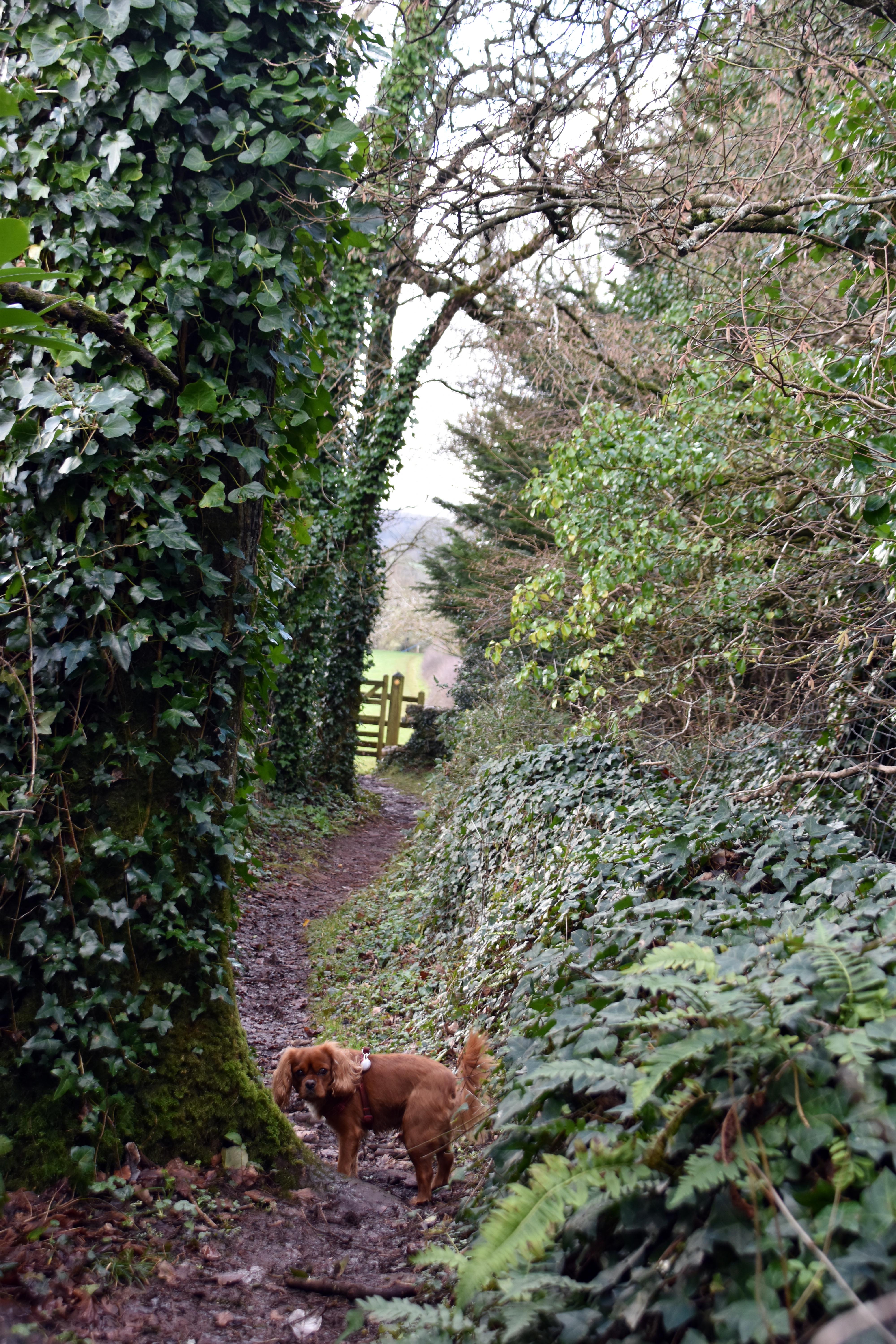
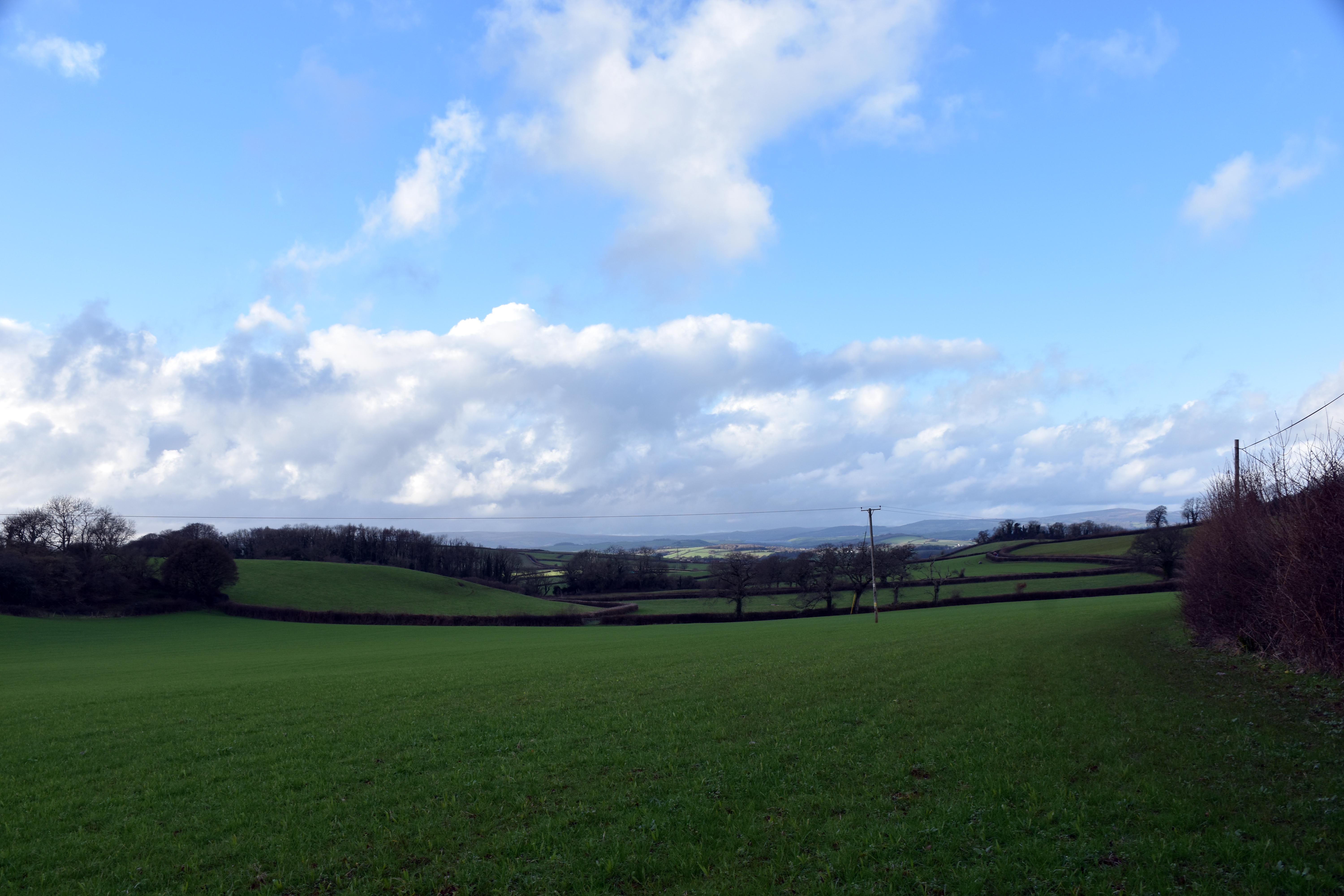
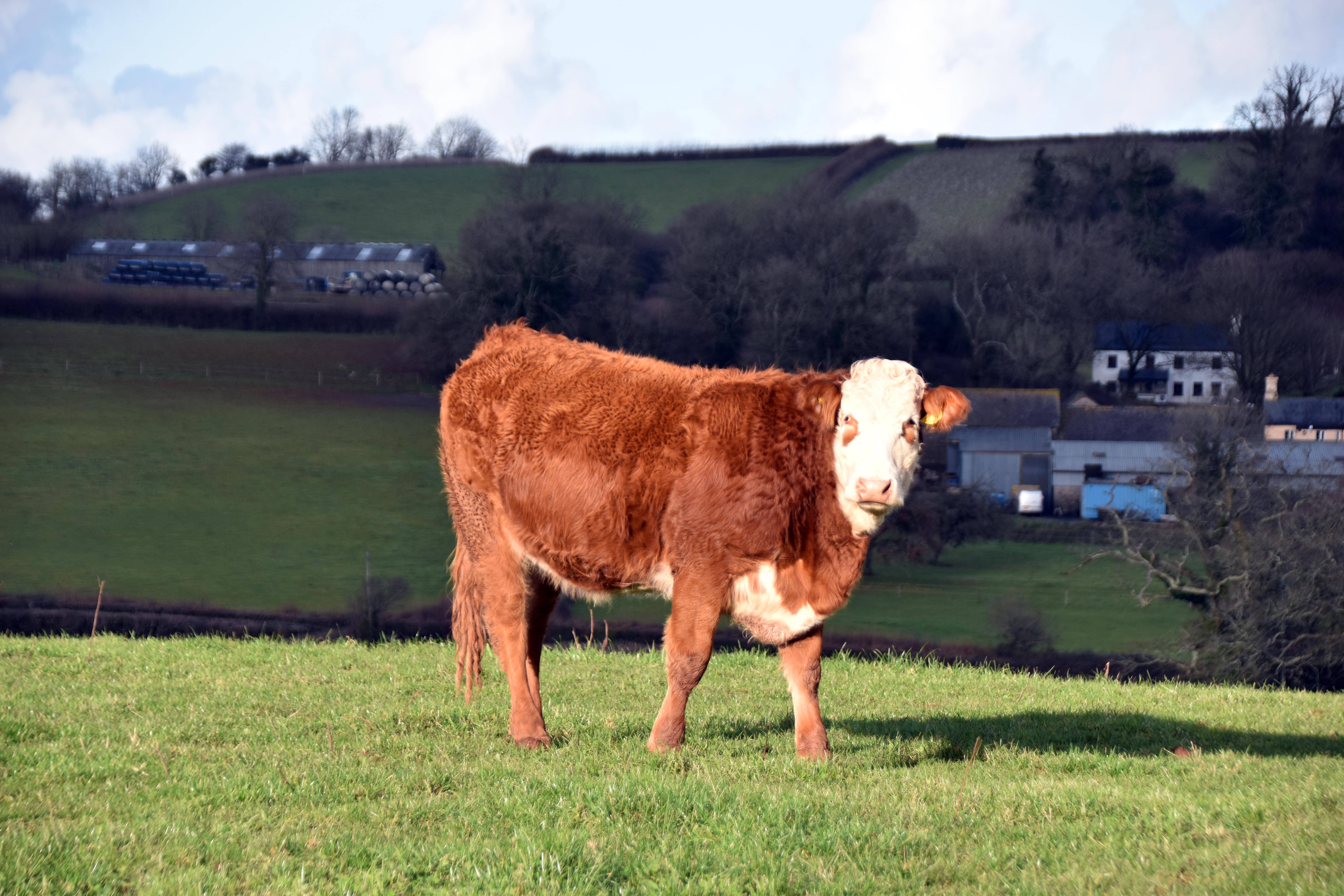
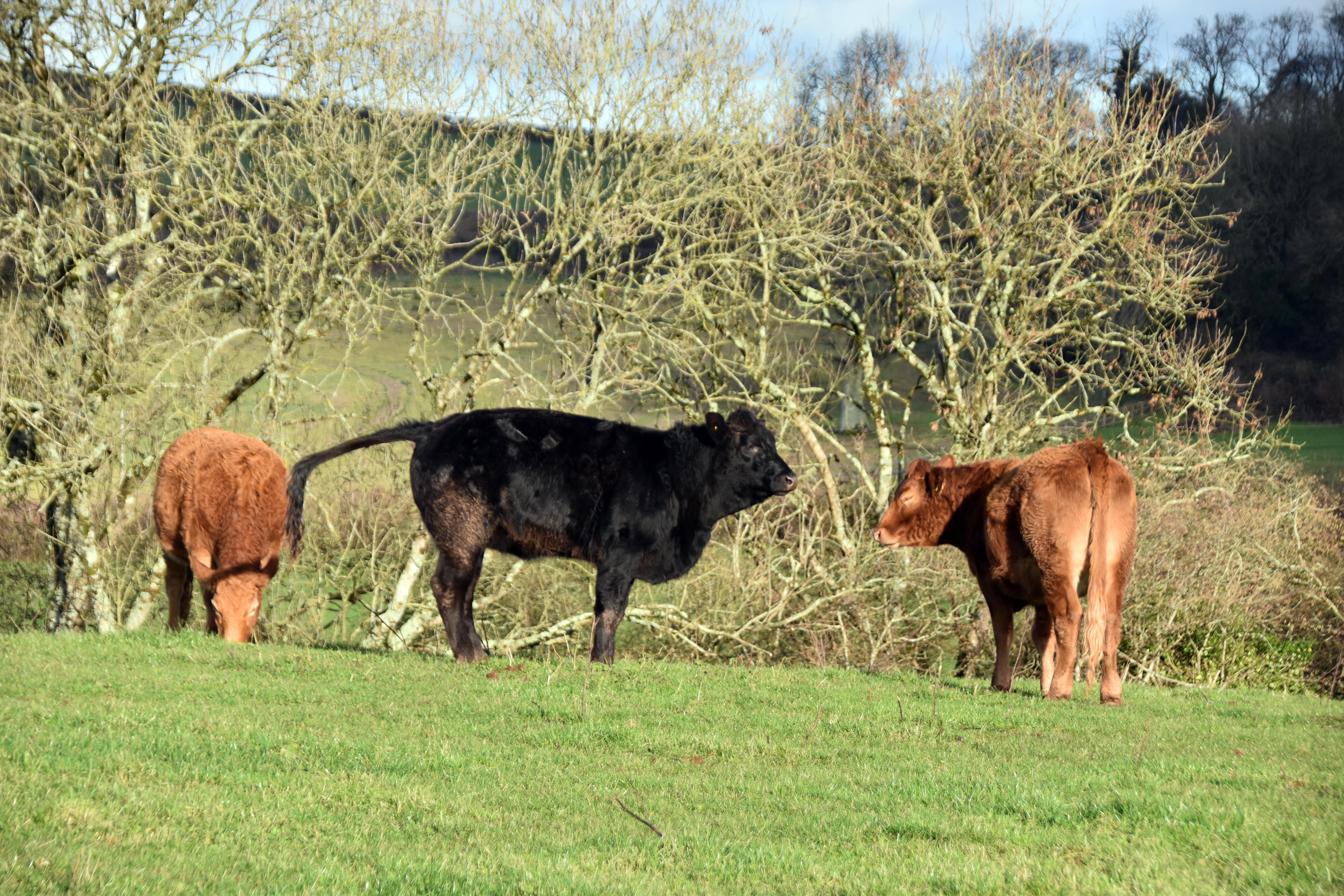
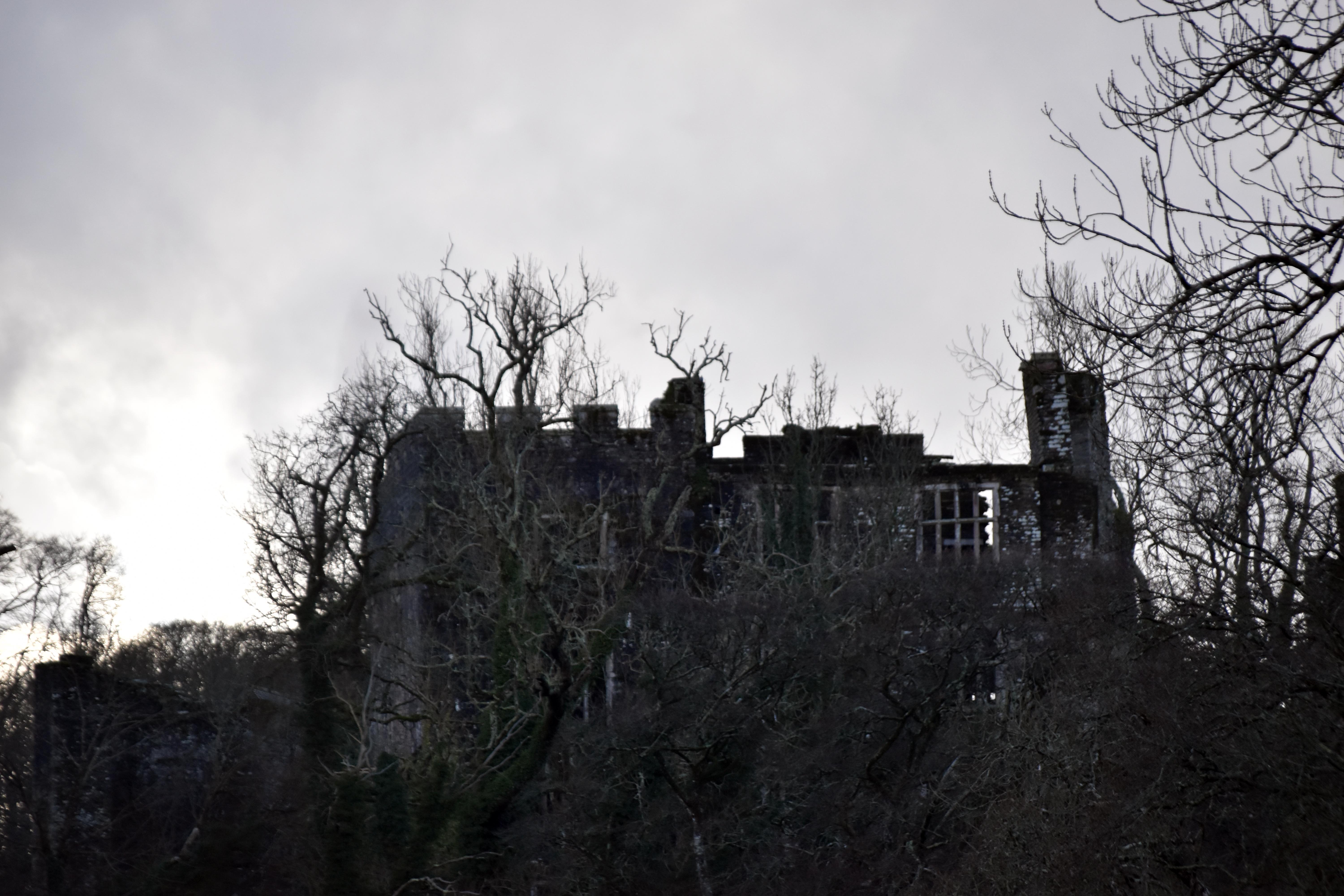
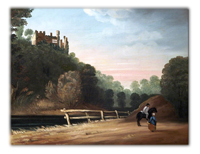
Her stories were infused with local history and places, and the title The Castle on the Hill provided the inspiration for our destination. This was not the Compton Castle of the Gilberts, which was closed for winter anyway. It refers to the far more haunting (if not haunted) castle of Berry Pomeroy due west from Marldon. The walk there was beautiful. As you climbed out of Marldon you soon got to appreciate the magnificent vistas northwards towards Dartmoor, with its brooding clouds inflicting far more greyness on the moors than we were suffering from. For us it was a surprisingly warm January day, with beautiful winter sun breaking through the clouds with increasing regularity. We headed up to Marldon Tor and then started a descent through Strainytor Copse. We then had to walk through a field with young bulls in it — not my favourite moment. Fortunately we saw a family coming the opposite direction through the same field. Rupert and I thought, well, we don’t have to outrun the bulls, we just have to outrun the small children. One of the bulls did get a bit jumpy when he saw another dog (not Rupert) who was straining at the leash, but fortunately they went the opposite way. This allowed us to follow the John Musgrave Heritage Trail due west. We passed the imposing‑looking Loventor Manor, which is now a mostly Georgian building used as a hotel. Originally it was thought to be a robber’s tower allowing thieves to spy travellers moving along the old high road to Exeter and move to intercept them. It was in the lands originally owned by Ralf de Pomaria, who gives his name to the Pomeroy family and also to Berry Pomeroy itself. Indeed it was not too long before we were to catch a glimpse of The Castle on the Hill as Elizabeth Goudge wrote about in her book (and a long poem about it too). It really is a spooky building jutting out above the winter trees, and it has plenty of claims for being haunted.
 |
|
|
The original manor house was not fortified until the 15th century. It was probably fortified in the late 15th century, much like Compton Castle was upgraded due to the chaos of the Wars of the Roses. The Pomeroys were very active backers of the Yorkist claim to the throne. Of course they ultimately backed the wrong horse, and in the reign of the Lancastrian Tudors the Duke of Somerset bought out the by‑now impoverished Sir Thomas Pomeroy. Edward Seymour had been the brother of Henry VIII’s favourite third wife Jane Seymour and, in 1547 when he bought the property, was Lord Protector of his 9‑year‑old nephew — which to all intents and purposes made him King. With his newfound wealth and power, he built a mansion house within the courtyard of the hitherto austere defensive structure. It would have had magnificent views out towards Dartmoor and down the valleys — in fact it is the ruins of that mansion that mostly protruded above the trees, making it a very eerie Castle on the Hill indeed. The Seymours’ power was to wax and wane over the next century, but they kept loyal to the Crown during the Civil War and were active backers of Prince Maurice as he led an expedition into Devon and may well have been entertained at the house as St Maurice’s army passed Bovey Pomeroy en route from capturing Exeter to invest and ultimately capture Dartmouth. Notwithstanding this strong support to the Royalist cause, the Seymours managed to hang on to the house through the turbulent Commonwealth years. They were rewarded for their loyalty at the Restoration of Charles II, although paradoxically this was to be the undoing of the house, as the son moved to London to take up the post of Speaker of the House of Commons. He had never got on with his parents and made his life in London, and took perverse pleasure in dismantling the house. Interestingly, the decaying property remained in the Seymour family and their successors as the Dukes of Somerset. In the Romantic age, the decaying mansion house within a castle provided inspiration for painters and poets alike. It is now owned by English Heritage, although strangely I believe it looks better from below than it does from within.
There are two ghost stories in particular attached to the Berry Pomeroy ruins, and both have wrapped themselves so tightly around the broken towers that visitors half‑expect to meet them on the stairs. The first is the Blue Lady, said to be the restless spirit of a medieval Pomeroy girl who killed her own child after a life of abuse; she appears to men, calling for help, and is blamed for luring the unwary toward the castle’s most dangerous drops. Her blue‑cloaked figure, or a hovering blue light in St Margaret’s Tower, has been reported for centuries — from Sir Walter Farquhar’s suspiciously early 18th‑century sighting in a room that no longer existed, to modern visitors who describe an overwhelming sense of hostility and the feeling of being pushed toward a fall. The White Lady is the second, supposedly the ghost of a wronged Pomeroy sister starved in a dungeon that never was, a tale invented in 1806 but stubbornly alive in the imaginations of those who swear they’ve seen her. She is described as a tall woman in a long white gown with black plaited hair, radiating a cold, invasive dread; witnesses speak of her watching from ruined windows, gliding along the wall walk, or flickering through the trees as they flee the tower. All great ways of petrifying young children if they look like they are getting bored on an obligatory visit. You would be amazed at how many people have claimed to see these even into the present day (I’m looking at you, social media).
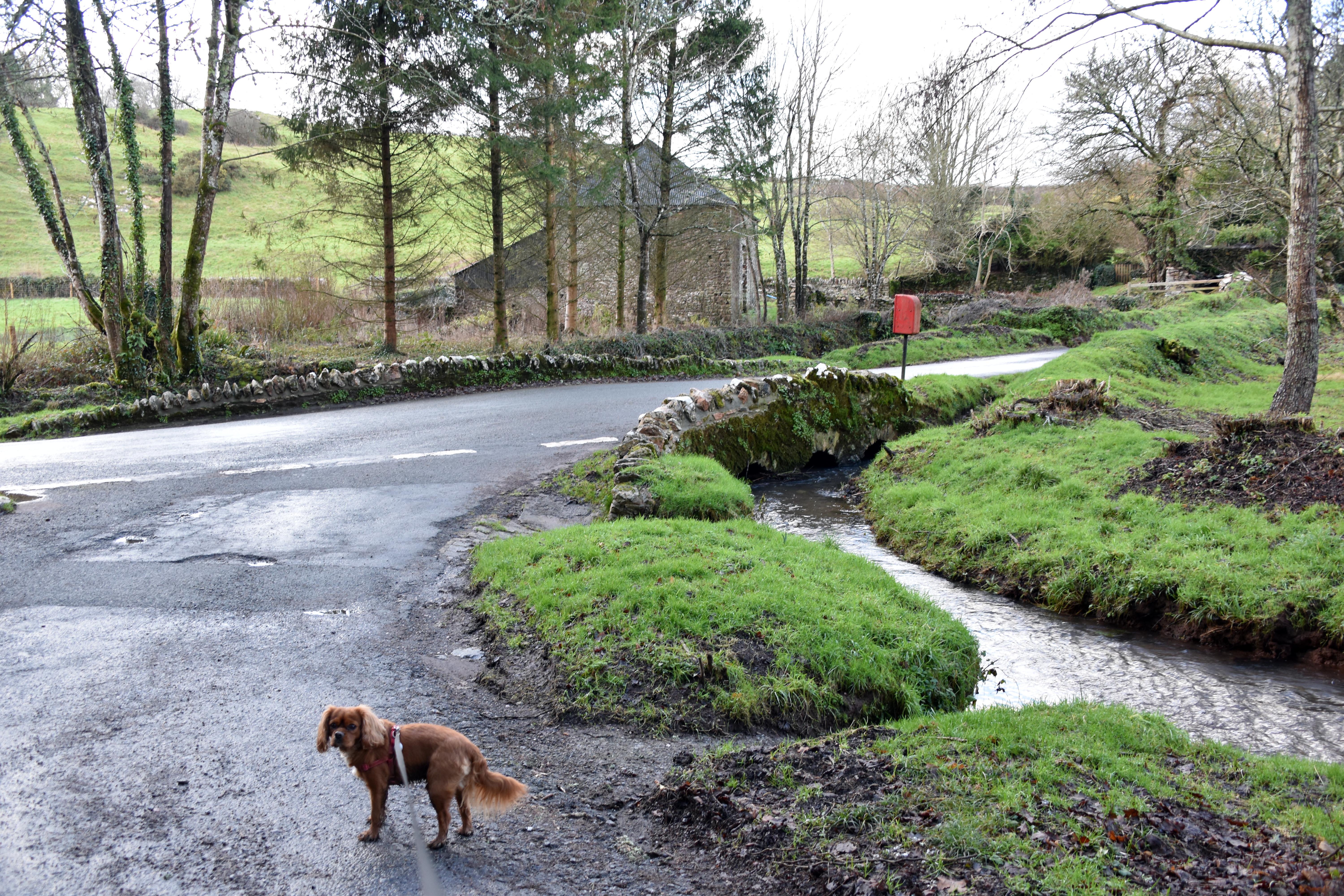
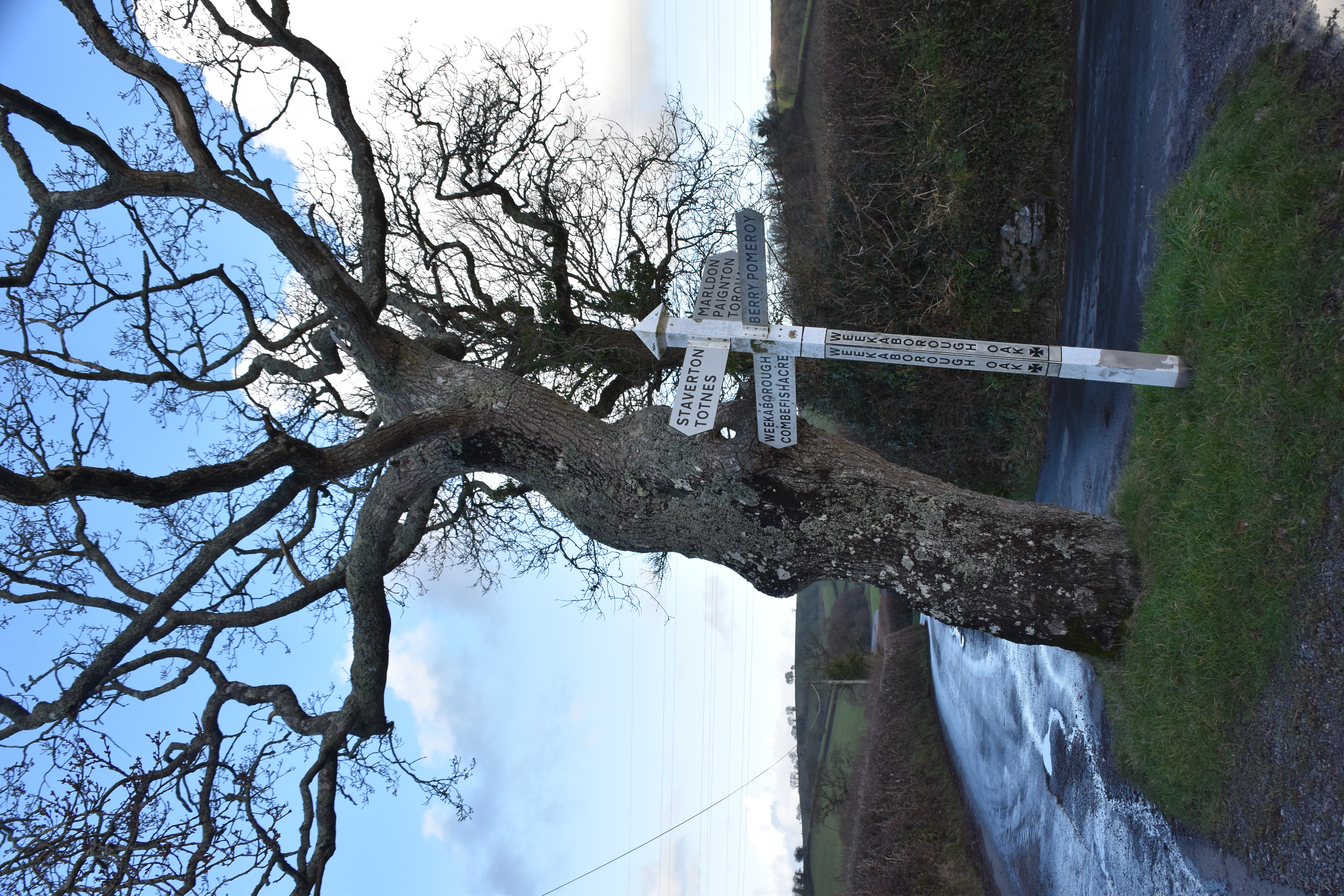
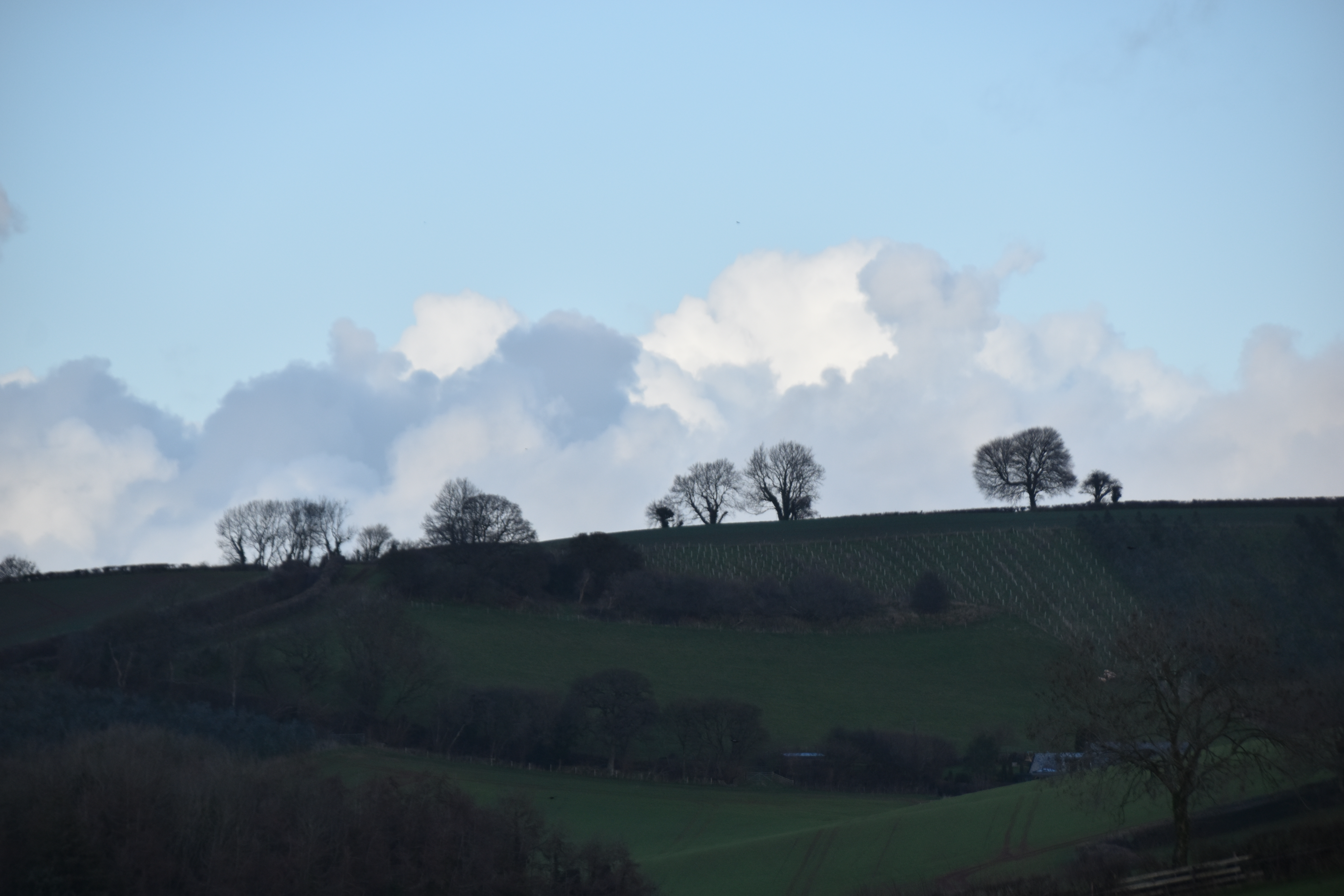
We did not have the time to explore the building itself (and there is a charge to enter, sadly). Given all the mud and bulls, we decided to return via the country lanes, which offered new beautiful vistas and views as the sun began to lower itself in the sky. We had one more seeming obstacle to cross when a river appeared to have burst its banks and turned the road into a lake. Fortunately, there was just enough verge to make it over without getting our feet too wet — not that Rupert seemed bothered in the slightest as he plodded straight through it not worrying about his wet feet. There was also a chorus of shotguns, which could be a little disconcerting as pheasant and grouse flew hither and thither to escape being someone’s lunch or dinner. At times it sounded like a war zone. We bumped into a local man at one point who said that the shooting sometimes stirred interesting wildlife to escape, in particular hares, which he said are far more common than they have been for years. Sadly we did not catch sight of a hare, although we did see deer high‑tailing it away from the cacophony. As we climbed up to Aptor Brake we took a last look north towards Dartmoor, with the low sun providing lovely shadows of trees and hedges in the foreground. It really was a magnificent view. …We then closed our circle on Marldon Tor and descended back into Marldon, this time entering the church through its commemorative garden, catching a last glimpse of Marldon Church and Marldon House before returning to the Church House Inn for a hot drink. We do need to come back here to visit Compton Castle itself due north and also to visit the home of Elizabeth Goudge at Westerland and see some of the places that inspired her writings. As I said before, it is surprising how close this village is to the tourist areas of Paignton and Torquay and yet it feels as if you are miles off the beaten track, almost in a mythical landscape of castles, churches, ghosts and, of course, centuries of rural history. This is definitely somewhere we want to return to explore yet further.
|