|
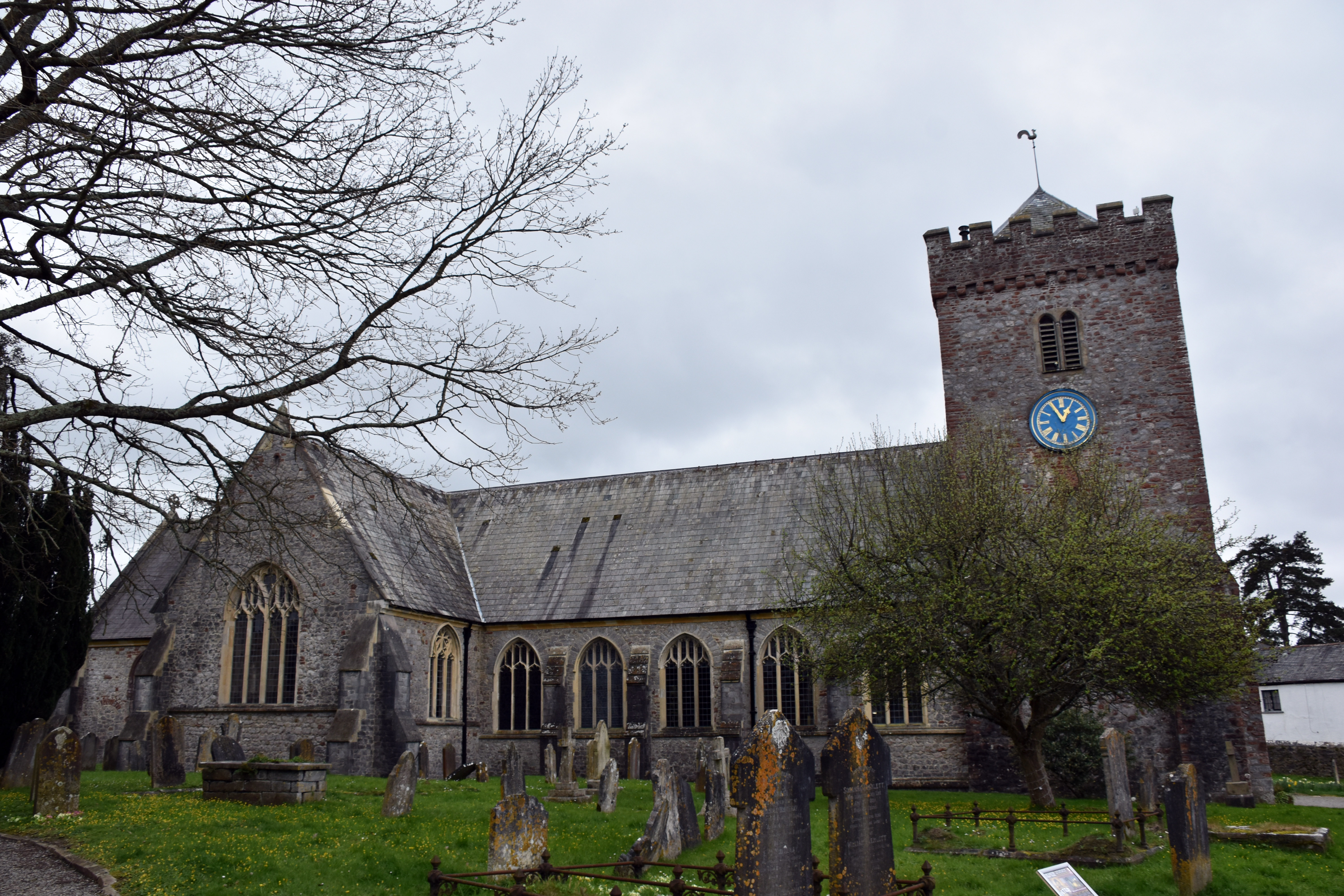
Recently we had visited a Bishop’s Palace near Sowton and Clyst St Mary, and just before that we visited the site of another one in Paignton. Clearly the Bishops of Exeter were fond of their palaces — as today we were searching for yet another — this one being at Chudleigh. Before searching for this lost palace in Chudleigh, though, we parked in Chudleigh Knighton and began our journey by looking at the beautiful church of St Paul’s.
|
|
|
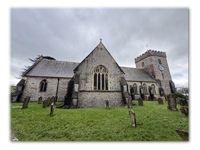
St Paul’s is another early Victorian chapel‑of‑ease dating from the 1840s. One very unusual feature strikes you almost immediately: the church is clad in Haldon flint and finished in Plymouth limestone, probably from the West Hoe quarries that nearly consumed all of Plymouth Hoe before it was curtailed. The church was designed by a young Sir George Gilbert Scott, who shortly after this commission would design the tallest building in the world at the time; St Nicholas’s Cathedral in Hamburg. He became one of the leading figures of the Victorian Gothic Revival and worked on many English cathedrals as well as Westminster Abbey, where he was later buried. He was only twenty‑nine when he designed this church.
Another notable feature outside the church is the gateway into it, incorporating the names of Chudleigh Knighton’s servicemen who died in the Great War. It was opened in 1922 by Colonel Harold St Maur of Stover House, with 150 ex‑servicemen in attendance. It is one of the more unusual First World War memorials, but very effective in that everyone sees it whenever they enter the churchyard and your eyes cannot help but be drawn to the names of the soldiers who lost their lives from this community.
Serendipitously, as we approached the church from the gateway, we could hear organ music from inside. There was no service taking place, but the organist was practising. There is something lovely about hearing a church full of music. The organ is actually upstairs at the back of the church, and would be very visible to anyone in the pews who might turn around to look up there. Usually organists are tucked away coyly in a corner somewhere. The organ sounded in fine fettle too.
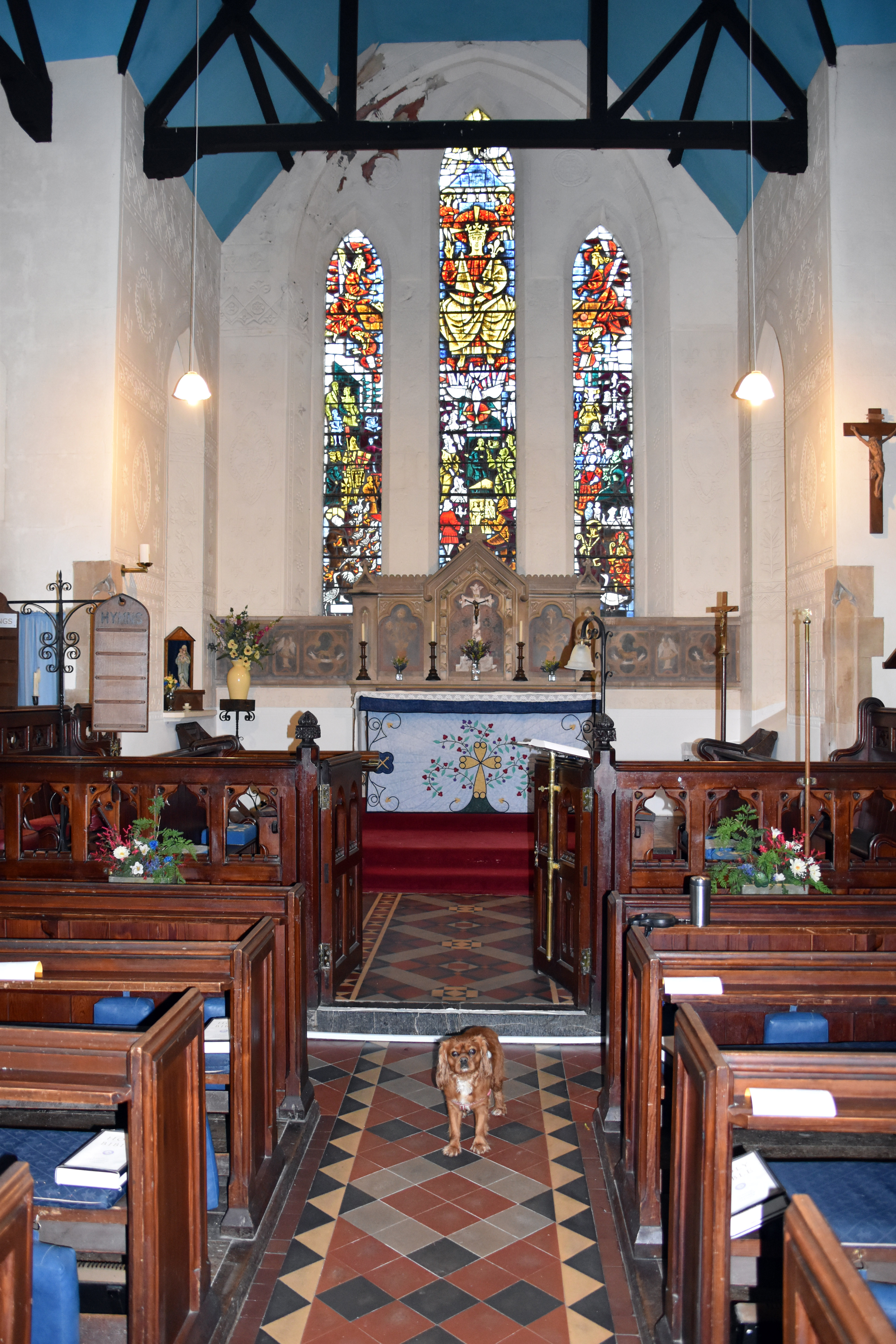
The interior is very delicately done with some beautifully understated engraved walls and some interesting stained‑glass windows. The east one is a fairly modern one dating from 1961 showing the Trinity but alluding to all sorts of local history and the surrounding community. There really is a lot to see in this one.
|
|
|
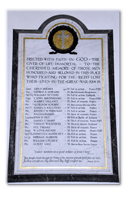
The church has a beautiful memorial inside the church to its war dead to complement its lovely entranceway. Unlike many memorials it also explains their rank, age, place and year of death, and also the manner of their death, for example, one of them stating that the 19‑year‑old Alfred Perry died a prisoner after the Siege of Kut (in Mesopotamia). It never ceases to amaze that such a small community can lose so many of its young to a single war — in this case 18. It is also satisfying to see that someone has gone to a lot of effort to create a book detailing the service of each of these men commemorated. It is always a pleasure to see the stories behind the names on these memorials.
There is a further memorial to William Loyd Milton, a Sergeant in the Devonshires who, it says, after seeing almost the entire war in Gallipoli, Egypt and Palestine, finally fell on 10th September in 1918 just two months before the war ended at the age of 33. Almost certainly the reason for this additional private memorial is that he was the only son of Loyd and Helen Milton who lived at Beal Farm which is literally just over the road from the church. William was with the 16th Devons as they approached the famous Hindenburg Line near Epehy in France. In many ways this was the last line of the German defences and they fought particularly ferociously. The Devons here took so many casualties they were pulled out of the line for a few days to rest and recover. But this wasn’t to last long and soon they were back on the assault. They took 300 casualties in September alone — including poor William. So near to the end of the war yet so far.
There is a memorial to a soldier who lived out his life and actually became a Colonel in the 13th Lancers of the Indian Army. Michael Edwin Fell (1889–1979). He had a fascinating and long life but not without its tragedies. He appears to have joined the Connaught Rangers before the First World War in 1909. During the war he served in Africa, the Western Front and towards the end he seems to have transferred to that new‑fangled Tank Corps with the 28th Tank Battalion in 1918. He was to earn the Military Cross for his troubles and later a CBE. After the war he transferred to the Indian Army joining the 13th Lancers who also came under the name of the 13th Duke of Connaught's Own Lancers, continuing his Connaught connections but through the cavalry rather than the infantry. He got married in Calcutta to Margaret Mary King in 1930, who had sadly just lost her father who had been a Westminster MP who died in an infamous shipwreck at Lantivet Bay in Cornwall. He and his wife retired to Devon but sadly this brave warrior was killed prosaically by being hit by a van in Newton Abbot, albeit at the ripe old age of 88.
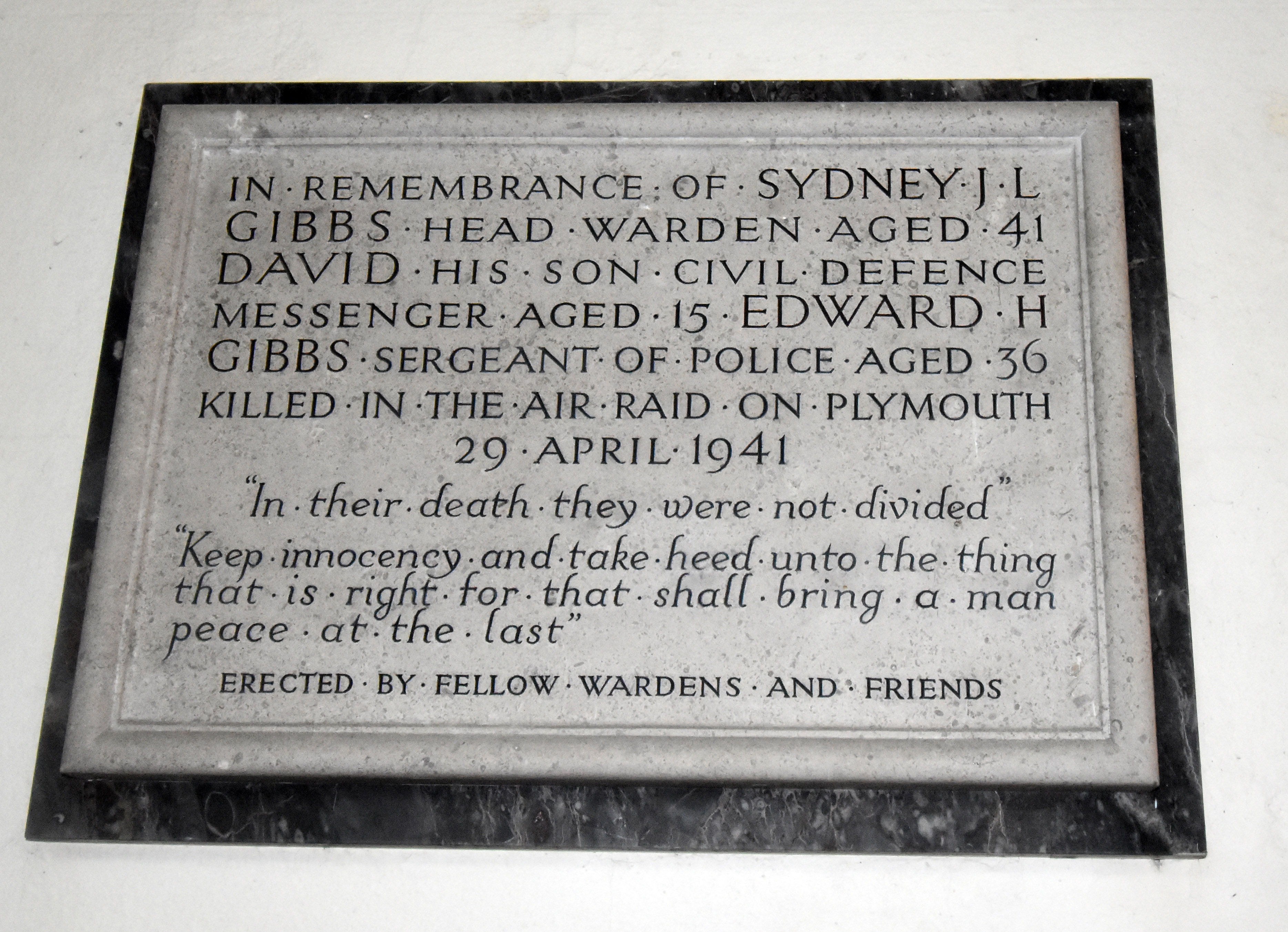
There is one memorial that is particularly sad and despite being in Chudleigh Knighton pertains to my neighbourhood in Plymouth. In fact very close to my house indeed. The sad story revolves around three members of the Gibbs family born and brought up in Chudleigh Knighton but all of whom lived in Plymouth during the Blitz. Edward Gibbs was a Police Sergeant who lived in Beacon Park, Plymouth. Sydney Gibbs lived very close to his brother and was the Head Warden of Air Raid Precautions and David Gibbs was his 15‑year‑old who also acted as a messenger boy for the ARP during the Blitz. Tragically all three of them died on the same night of 29th April — the heaviest day of the Plymouth Blitz. All three were killed when a bomb landed close to them on the corner of Corondale Road and Beacon Park Road close to both their homes but whilst they were all on duty trying to coordinate rescue attempts. In addition to being remembered in their home village of Chudleigh Knighton they are also remembered on the Plymouth Blitz Memorial in Ford Cemetery. These three men (and the 15‑year‑old was acting like a man) were as brave as any servicemen who donned a uniform — but what devastation for the rest of the Gibbs family to bear.
|
|
|
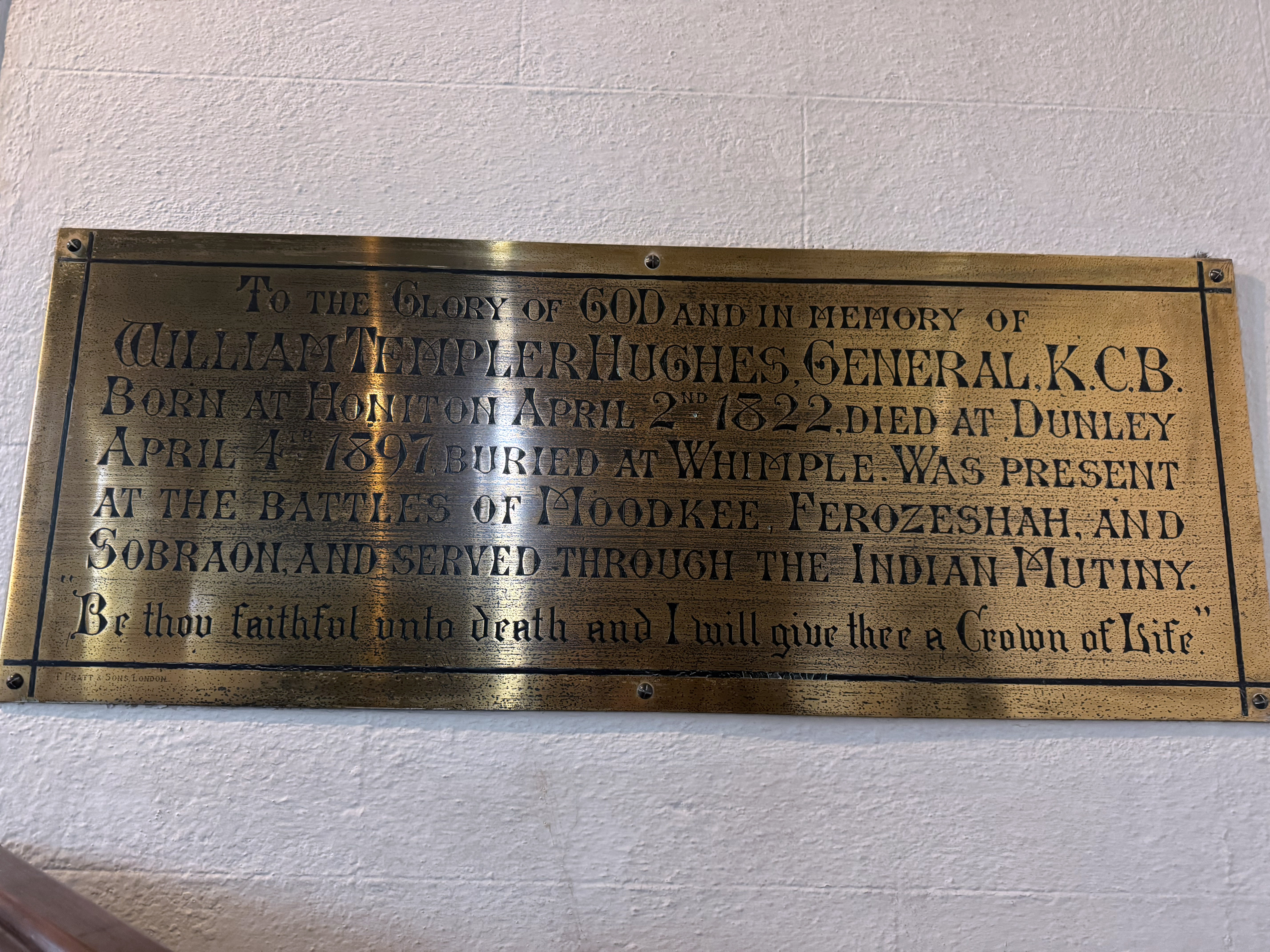
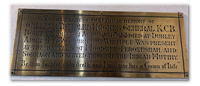
There was one more fascinating memorial in the church from an earlier era. This was of General William Templer Hughes who was born in 1822 and died in 1897. He joined the Bengal Army in 1842 and was involved in many campaigns but his memorial points out his service in the important battles of Moodkee (Mudki), Ferozeshah, Sobraon and throughout the Indian Mutiny, taking over one of the most famous units of that campaign: Hodson’s Horse when William Hodson was killed whilst storming Lucknow. William Hodson was a larger‑than‑life character who was one of the most famous actors of the Indian Mutiny. He had personally apprehended the last Mughal Emperor after they recaptured Delhi. Those first three battles were all part of the First Anglo‑Sikh War by the East India Company and all three of them were huge and bloody battles. The Sikhs were no primitive army but a well‑trained and well‑armed and crucially well‑motivated army. The resulting battles were bloody but both sides came to respect one another’s performance on the battlefield. Ironically, the Sikhs would soon become some of the most loyal troops to the British in the Indian subcontinent and their intervention in the Indian Mutiny of just a few years later was critical indeed. He had served with the 1st Punjab Cavalry, Hodson’s Horse, the Central India Horse and the Punjab Frontier Force. He retired in 1870. In many ways he was the quintessential Victorian soldier who served overseas his entire professional life. In his case he rose to become a very senior rank indeed.
|
|
|
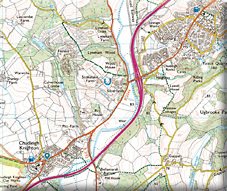
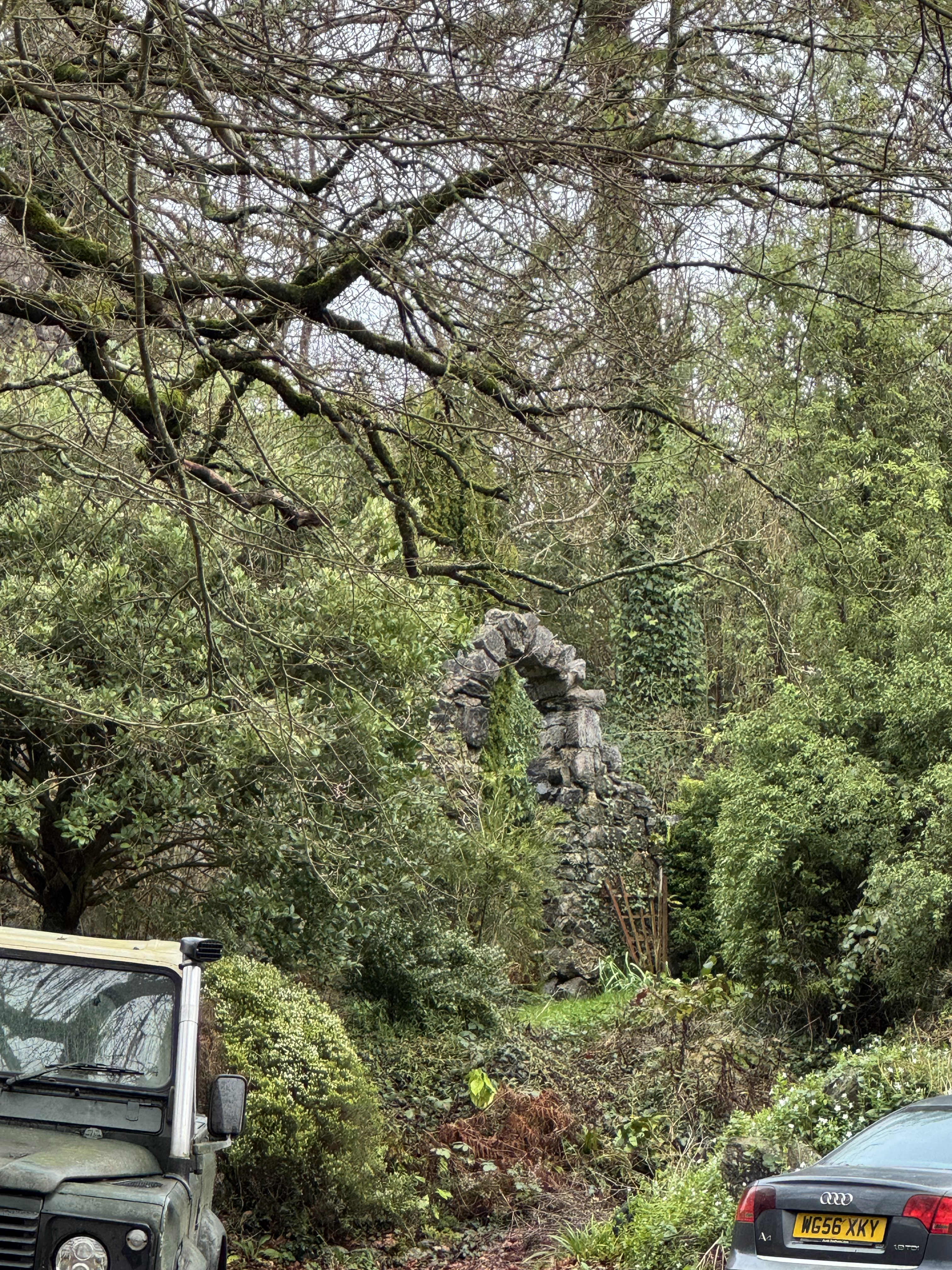
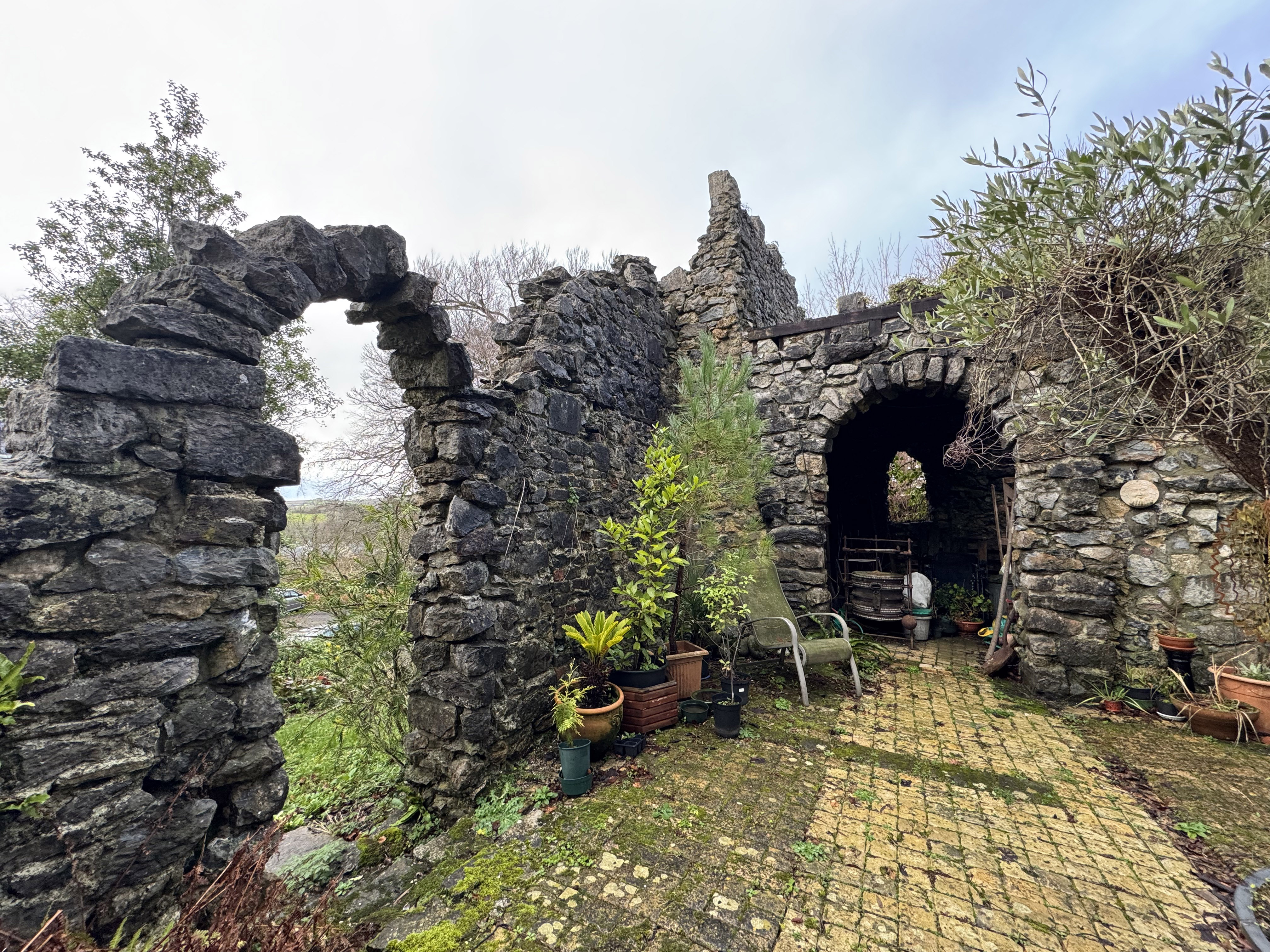
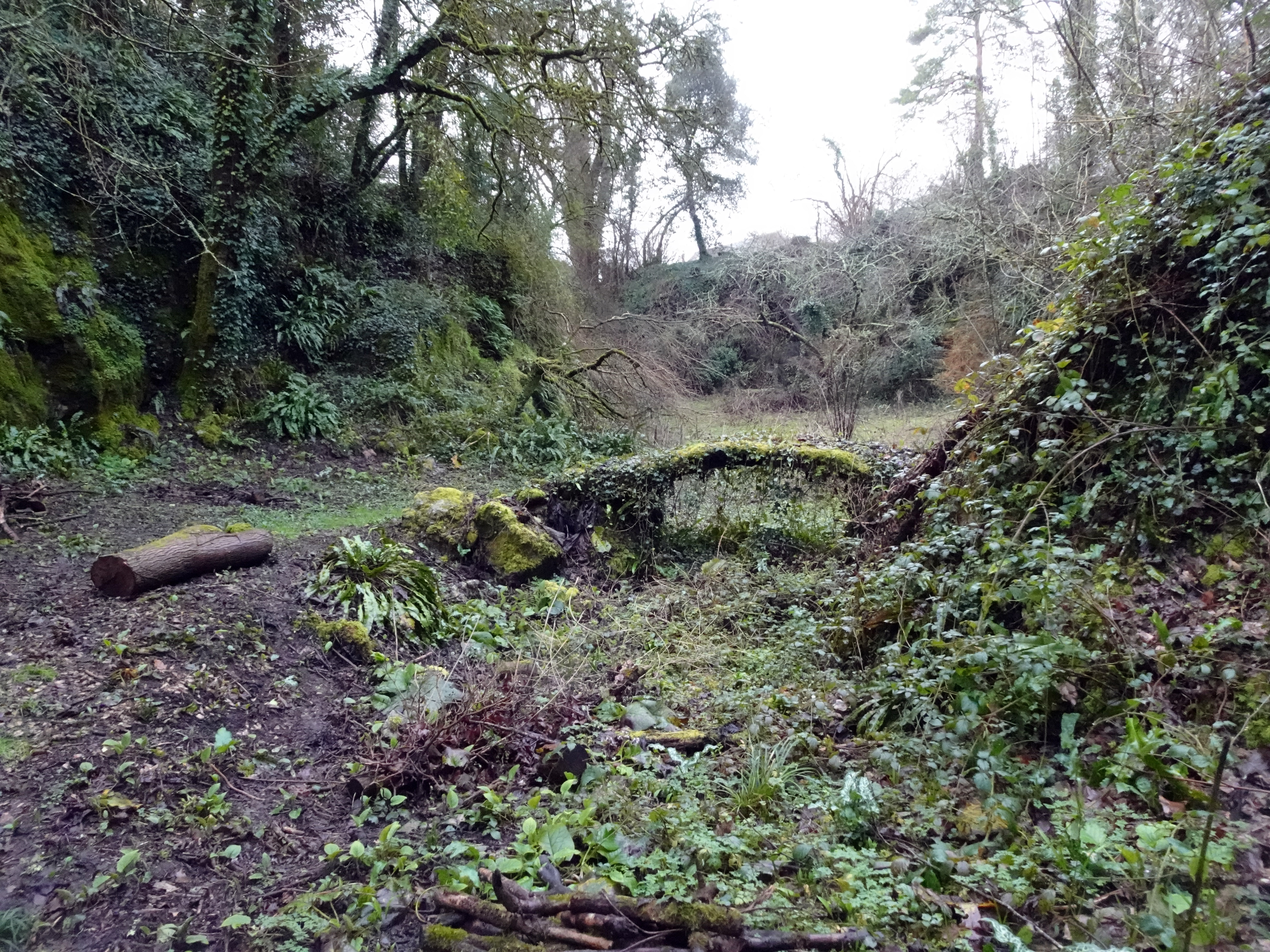
After rummaging around the cemetery we then headed to Chudleigh to search for the Bishop’s Palace. It is marked very prominently on the Ordnance Survey Map but it is located on private land within the grounds of Rock House. We did ask someone if we could take a little peek and we were glad we did so, as we accidentally stumbled not just on the remains of the palace but also some quite impressive hidden gardens, an old quarry rock face and a somewhat intriguing collection of some very, very old‑looking junk. It felt as if we had stumbled on a lost world. Appropriately for the quarry the house whose grounds they are located within is called Rock House. Rock House is a Victorian house itself with wonderful views northwards to Dartmoor. No wonder the Bishops wanted a palace on this site. Rock House was used by American soldiers in the Second World War but after the war became a hotel then a market garden and eventually formal gardens open to the public. Sadly this closed to the public in 2016 but you can still see the outline of what must have been quite an idyllic place to visit.
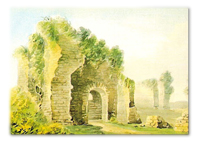
As for the Bishop’s Palace we know that it was set up very early in the Norman reign at 1080 and was in use an unusually long time until the Reformation some half a millennium later. Counter‑intuitively its construction actually predates Exeter Cathedral’s which wasn’t started until the start of the 12th century — and only took a mere 267 years to complete — I’ve had builders like that before. The palace was set up by Bishop Osbern from Normandy. It had a dual role of being a private residence but could be used for official business. Being on the road from Exeter it would have been relatively easy for the Bishop of Exeter to get to and escape the hubbub of the city for the tranquillity of the Devon countryside. It must have been quite a popular residence for so many Bishops to have used it over the centuries. But, come the Reformation, Edward Seymour the Duke of Somerset took it over as part of the Manor of Chudleigh. Now we have come across the Duke of Somerset frequently on our travels as he was to be Edward VI’s regent and played a major role in provoking the 1549 Prayer Book Rebellion. Eventually he was executed in the Tower of London. The palace though began to fall into serious disrepair not unlike the abbeys and monasteries. Artists started to paint the decaying splendour and over the years nature reclaimed much of it. It is a real shame that these remains are not easily accessible as they were once upon a time a very important part of our landscape and a critical part of our ecclesiastical history. Its fortunes rose and fell with Norman Catholicism.
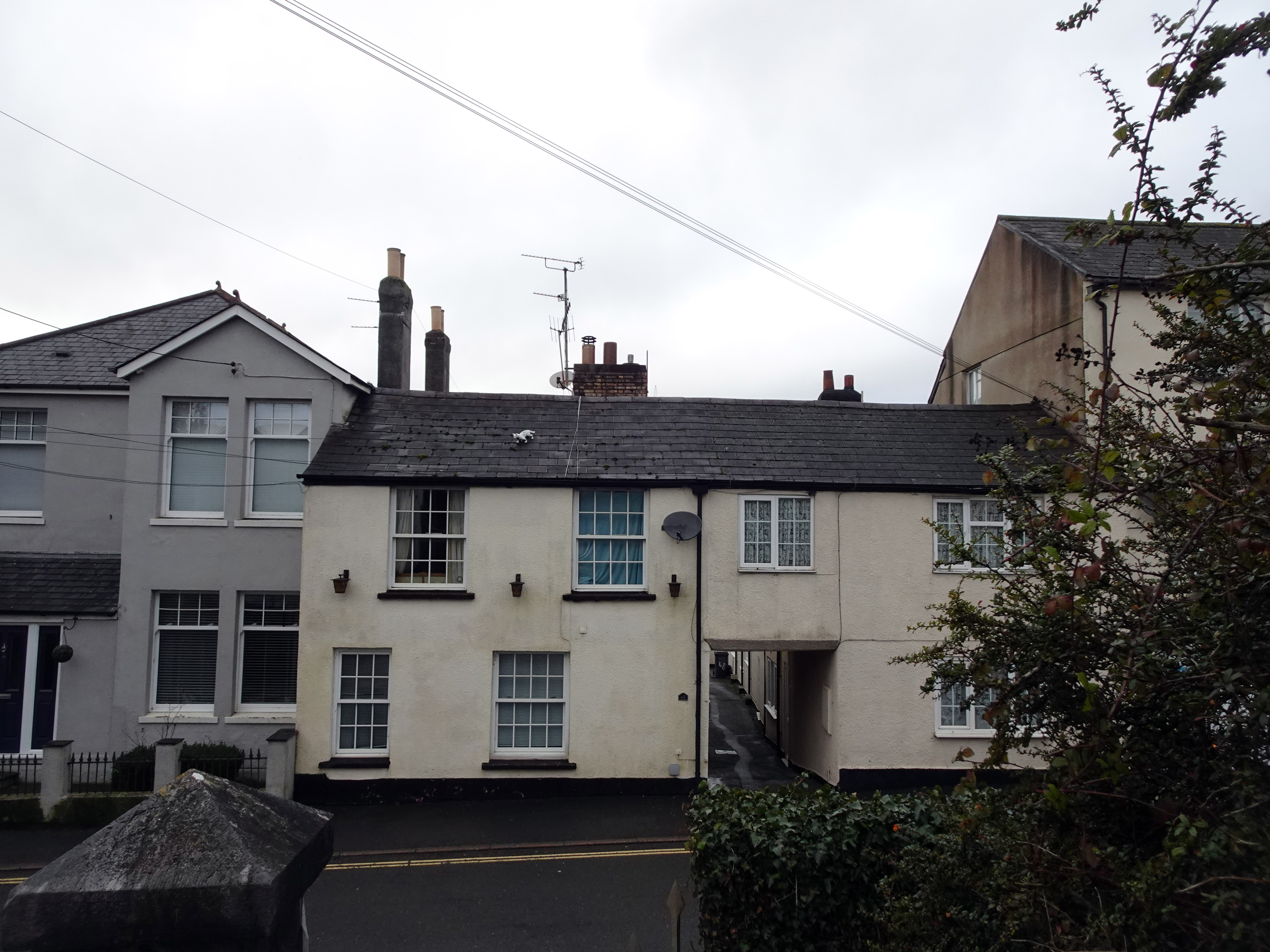
Rupert and I had never been to Chudleigh before and loved seeing all the different styles of house, many revealing the town's relative wealth and importance enhanced by the fact that it lay on a major transportation link between Plymouth and Exeter. With the creation of Plymouth Dock in 1691 and the subsequent rise of the Royal Navy the traffic would increase substantially on this road as Plymouth ballooned in importance in the 18th and early 19th centuries. It is for this reason that as you walk up the Parade and Fore Street many of these buildings would have been inns with lodging or more importantly coaching inns where horses could be changed and long‑distance passengers could rest. Chudleigh still has a lot of the old archways signifying where horses and carts could be led around the back to stables, giving the town something of an old‑fashioned rural air. The development of the railways in the 19th century saw the death knell for stagecoaches which had always struggled with Devon’s hills and valleys. The main lines from Exeter to Plymouth initially avoided Chudleigh although in the 1880s a Teign Valley branch line finally connected Chudleigh to the rail network at least for the next 80 years. But it was the A38 which finally saw long‑distance travel give Chudleigh a wide berth. And the town reverted to its rural beginnings serving the local farming community.

|
|
|
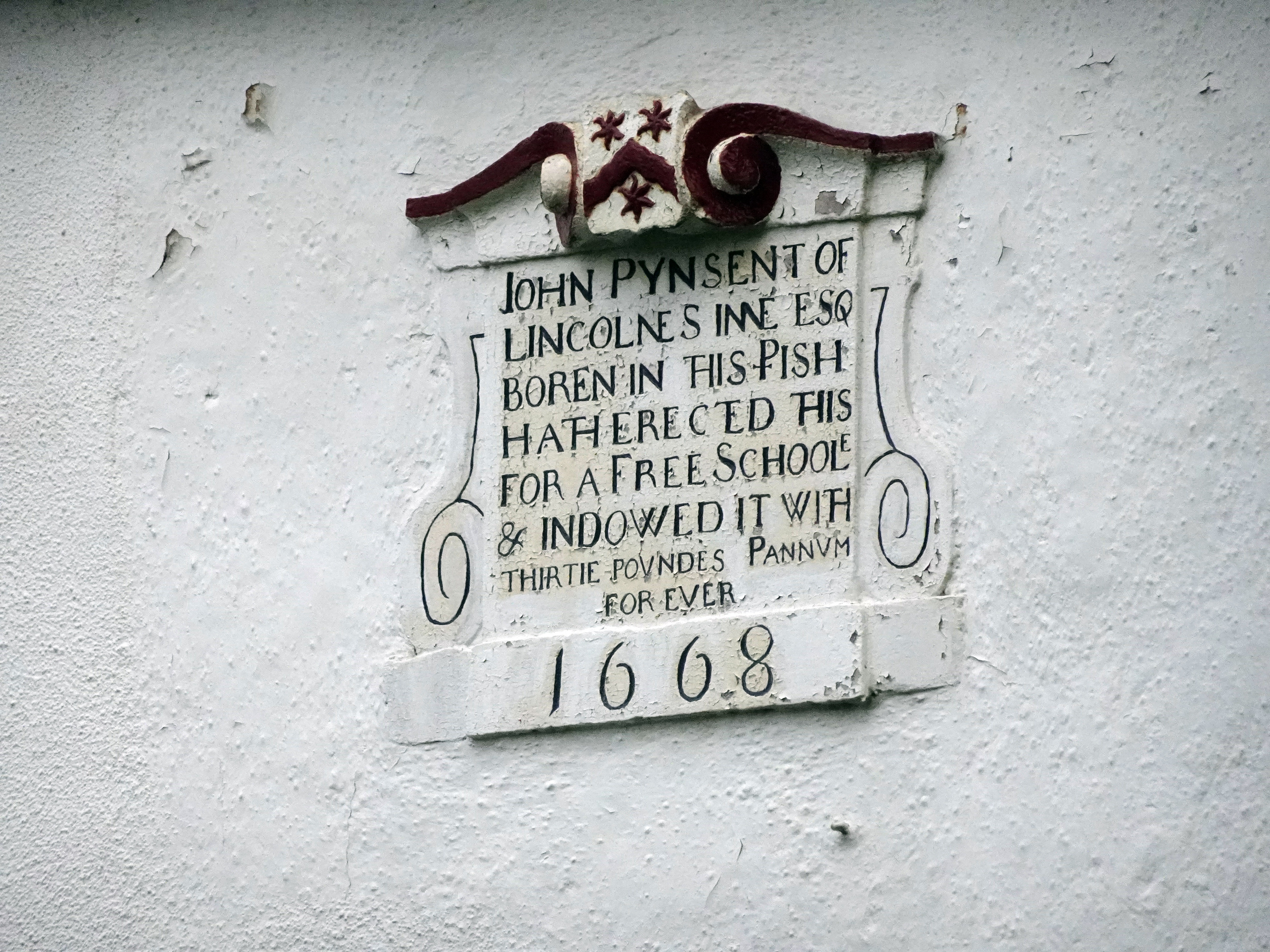
Just before you get to the imposing St Martin and St Mary Church you catch a glimpse of a plaque on a beautifully old building which, as the plaque explains, used to be Pynsent's Free School. In the 17th century John Pynsent trained as a lawyer, married well and became an influential civil servant in the tumultuous years of civil war and its aftermath. Scarred by the divisions of his time in the early years of the Restoration he decided to establish a school in his native Chudleigh to connect education and religion. He created a fund to build a school and to hire “a schoolmaster of good name, manners and teaching and conformable to the Doctrine and Discipline of the Church of England”. Clearly he wanted to help ensure that future generations might not return to the sectarian divisions he had experienced only too well and yet also he was a keen Protestant who wanted the established church to thrive. Its location next to the church is no accident. The school actually functioned until just before the First World War broke out. Sadly John died before the school opened but his will left money to provide free education for the children of the parish as the plaque proudly proclaims: ‘John Pynsent of Lincoln’s Inns Born in this Parish hath erected this for a Free Schoole endow’d it with Thirtie Poundes Per Annum forever’. The school building could accommodate 20 boys (there was no provision for girls) and lodgings for the schoolmaster. Protestants were particularly keen on promoting education. Most well‑to‑do families hired governesses and masters to teach their children at home. This is an early example of educational philanthropy expanding educational opportunities to a wider section of society. He himself had come from relatively modest means although his wife was from a significantly richer family and indeed his father‑in‑law helped purchase the land and property for the endeavour. But still it is a heartening story of someone genuinely trying to give the children of his community better life options.
Now we had intended to look around the church next door, but sadly it was locked. But we would get in touch with the very helpful and responsive vicar who would arrange for it to open for us on our next visit. Which we will share with you shortly: here. But for this adventure we had seen various stages of church influence on our landscape from the Bishops of Exeter wishing to spend time in the serene surroundings of Devon to the philanthropist who wanted education and religion to provide healing in a divided nation and to a unique Victorian church that provided the training and experience for one of the most important Gothic architects of the Victorian era which would see many of our church buildings transformed in their appearance on both the inside and on the outside. Quite a remarkable historical journey spanning nearly a millennium in the short walk from Chudleigh Knighton to Chudleigh itself.
|