"They have wakened the timeless Things; they have killed their father Time;
Joining hands in the gloom, a league from the last of the sun.
Hush! Men talk today o'er the waste of the ultimate slime,
And a new Word runs between: Whispering, 'Let us be one!'"
In the annals of nineteenth-century innovation, few technologies rival the telegraph in its transformative impact. It revolutionised communication, collapsed distances, and gave the British Empire a decisive edge in military coordination, governance, and commerce. What steam power did for mobility, telegraphy did for information—delivering messages across vast territories in minutes rather than weeks.
The telegraph was not born of a single mind, but of a collaboration emblematic of industrial Britain’s fusion of science and enterprise. In 1837, William Fothergill Cooke, an entrepreneur with a keen eye for commercial application, joined forces with Charles Wheatstone, a physicist and inventor. Together, they developed the “needle telegraph,” a device that used galvanised wires to deflect magnetic needles, pointing to letters on a grid. Wheatstone provided the technical ingenuity; Cooke secured the practical deployment, persuading railway companies to run telegraph lines alongside their tracks.
The first experimental line was installed by the Great Western Railway on 25 July 1837, connecting Euston Square to Camden Town over a distance of 2.4 kilometres. The demonstration was a triumph. Victorians marvelled at its speed and precision, and its utility was quickly proven. News of royal births, criminal pursuits, and market movements could now be transmitted in real time. One early success involved the apprehension of a fugitive who had attempted to escape by train—his description telegraphed ahead, his arrest swift.
Yet the system had limitations. The original code was cumbersome, using only twenty letters of the alphabet and requiring multiple needles. Simplification came from across the Atlantic, where Samuel Morse, driven by personal tragedy and evangelical zeal, devised a more elegant solution. After missing his wife’s funeral due to delayed communication, Morse committed himself to creating a universally accessible system. His innovation—sending pulses of electricity in two fixed lengths, dots and dashes—became the foundation of Morse code. It was intuitive, efficient, and easily taught.
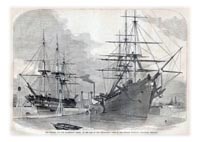
Like Cooke, Morse recognised the strategic logic of following railway lines. Telegraph poles became a familiar sight along expanding rail networks, their wires stretching across continents. But the true challenge lay in crossing oceans. The Atlantic, in particular, represented both a technological frontier and a symbolic divide. In the 1850s, American financier Cyrus Field undertook the audacious task of laying a submarine cable between Europe and North America. He chartered two warships — Agamemnon and Niagara — to meet mid-ocean and drag the cable to opposing shores.
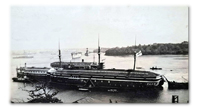
In 1858, the first transatlantic cable succeeded. Queen Victoria and the President of the United States exchanged formal greetings. But the triumph was short-lived. The cable failed after just two weeks, unable to withstand the high voltages required for long-distance transmission. It would take seven years to overcome the technical hurdles. The solution came in the form of the SS Great Eastern, a leviathan of maritime engineering. Launched in 1858 and repurposed for cable-laying, she was the only vessel large enough to carry the new, thicker, better-insulated wire. In 1866, she completed the task with ease, permanently linking the continents.
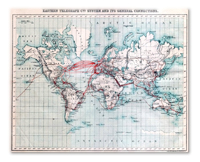
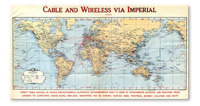
From that point forward, submarine telegraphy expanded rapidly. The British government, recognising its strategic value, invested heavily in global cable infrastructure. By 1890, only a handful of inhabited British territories—Fiji, British Honduras, Tobago, the Falkland Islands, the Turks Islands, and New Guinea—remained unconnected. By 1914, Britain controlled 75% of the world’s submarine cable mileage, a dominance that underpinned its imperial reach.
The power of this network was dramatically illustrated at the outbreak of the First World War. Within hours of hostilities being declared, a German merchant vessel attempting to leave Melbourne was fired upon by coastal batteries. The crew had no idea war had begun. That such an event occurred on the opposite side of the globe from London underscored how telegraphy had compressed the empire into a single communicative sphere. The sun may never have set on the British Empire, but now, neither did its messages.
Before the advent of this technology, the British government had had to entrust a great deal of local powers to its representatives across the world. When it took three months for a message to travel from a colony back to the capital, waiting for a reply was a luxury that frequently could not be tolerated. The man on the spot was a very powerful figure indeed. With the advent of the telegraph, London could have virtually instantaneous contact with the capitals of her colonies and dominions and conduct business from afar.
Despite all of the advantages, the value of Britain's worldwide telegraphic system actually contributed to Britain's strategic worries too. The cables were kept in British colonies or under British-controlled seas as much as possible, but this was not always feasible and often had to cross other countries' coastal waters or the open sea. Whenever this occurred, the British worried about interceptions of messages or of cutting the link altogether. For example, the link to Australia passed over Dutch Java, the South American cable ran through Portuguese Madeira, but probably the biggest headache of all to Britain's strategic thinkers was the cable that ran from London to Calcutta. In fact, there were three such cables. One ran from Lowestoft to Germany, through Russia, Persia and into India. Apart from the strategic nightmares of this essential line of communication was the fact that the Germans and Russians were in a position to keep the costs of using this cable artificially high. The second cable was not much better. It ran across Europe to Constantinople, across Turkey to the Persian Gulf and then by cable to Karachi. Little reliance could be placed on the Ottoman Empire. The third cable ran from London to Gibraltar to Malta, Egypt to Aden and then on to Bombay. This looked secure enough, but still relied on using Spanish relay stations to boost the signals. Besides, it was generally more economic to send the messages up over France from Malta.
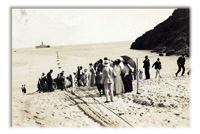
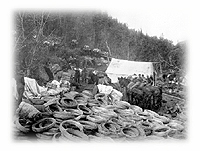
To add to the strategic difficulties, the vagaries of the currents and weather caused yet further headaches. Storms, winds, silt, even fishermen could all accidentally disrupt the sending of messages. Combined with the distances involved, it is little wonder the tariffs could be so high—four shillings per word to India, and six shillings and ninepence to Australia. And yet, the British were convinced that the value of the system was worth the price. All over the world, Englishmen were employed laying or maintaining cables or operating booster stations along the line. The cable manager often became a key member of society for the further-flung outposts of imperial society. In Australia, Alice Springs came to life as the central station for the overland 2,000-mile Telegraph Line stretching from Adelaide to the North. The 36,000 telegraph poles were built years before any road or railway line crossed the continent. But it could be dangerous working in these stations too. In 1874, two cable men were speared to death by Aboriginal Australians.
The laying and maintaining of this enormous network must rank as one of the most important achievements of the British Empire. Its scope and utility are hard for us to imagine in a world where instantaneous communications are taken for granted. Before the invention of the telegraph, the speed of communication had changed little since the time of the Romans. Within thirty years of the first twitchings of Cooke and Wheatstone's needle telegraph, the world had been made substantially smaller.
By the early twentieth century, Britain’s telegraph network had become both a marvel and a liability. Its global reach—spanning continents and oceans—was unmatched, but its strategic importance made it a target. The very infrastructure that had once enabled imperial command now demanded constant vigilance. Telegraphy had become not just a tool of governance, but a theatre of espionage and sabotage.
The British government was acutely aware of the risks. Submarine cables, though buried beneath oceans and routed through colonial waters where possible, could not avoid foreign jurisdictions entirely. Lines to India, Australia, and Africa often passed through or near rival territories. In peacetime, this raised concerns about tariff manipulation and message interception. In wartime, it posed existential threats.
At the outbreak of the First World War in 1914, Britain acted swiftly. One of the first military operations was not on land or sea, but underwater. British cable ships, operated by the General Post Office and the Royal Navy, were dispatched to sever Germany’s international telegraph connections. Within days, German cables in the English Channel and the Atlantic were cut, isolating Berlin from its overseas colonies and diplomatic partners. Britain, by contrast, retained control of its own network, allowing it to coordinate imperial forces from Melbourne to Mombasa with remarkable speed.
Yet even as Britain wielded this wired empire, a new technology was emerging: wireless telegraphy. Unlike submarine cables, wireless signals could be transmitted through the air, bypassing physical infrastructure and territorial constraints. The British Admiralty and Marconi Company began experimenting with long-range wireless stations in the early 1900s, establishing links between naval bases and colonial ports. Wireless offered flexibility, but also introduced new risks. Signals could be intercepted, jammed, or misdirected. Unlike the buried cables that offered physical security and territorial control, wireless transmissions travelled openly through the ether, vulnerable to eavesdropping and manipulation. This posed new challenges for imperial communications, especially in times of war or diplomatic tension.
Despite these risks, Britain recognised the strategic potential of wireless telegraphy and moved quickly to integrate it into its imperial infrastructure. During the First World War, wireless stations were established across the empire—from Gibraltar to Singapore—to supplement the cable network and ensure redundancy. Naval vessels equipped with wireless sets could coordinate convoys, track enemy movements, and relay intelligence across vast distances without relying on fixed lines.
In the interwar years, Britain formalised its wireless ambitions through the creation of the Imperial Wireless Chain, a network of high-power radio stations designed to link London with key colonial capitals. Stations were constructed in Leafield (Oxfordshire), Cairo, Nairobi, Bombay, and Perth, among others. These installations allowed for direct communication between the metropole and its dominions, bypassing foreign-controlled cables and reinforcing imperial cohesion.
Wireless also enabled Britain to maintain contact with remote outposts and mobile units, from desert patrols in Sudan to survey teams in the Canadian Arctic. It proved especially valuable in regions where cable-laying was impractical or prohibitively expensive. The technology was still evolving, but its reach and adaptability made it indispensable.
By the late 1930s, Britain’s global communications system had become a hybrid of submarine cables and wireless stations. Messages could be routed through secure cable corridors or broadcast via radio depending on urgency, location, and strategic need. This dual system gave the empire resilience in the face of sabotage, natural disruption, or geopolitical instability.
Wireless telegraphy did not replace the cable network—it complemented it. Together, they formed the nervous system of the British Empire, enabling governance, diplomacy, and defence across continents. As the Second World War loomed, this integrated network would prove critical once again, allowing Britain to coordinate with Commonwealth allies and maintain global reach under extraordinary pressure.
As the British Empire gave way to a network of independent nations, the infrastructure of imperial telegraphy did not vanish—it evolved. The cables, stations, and protocols that once served colonial governance were repurposed to support the emerging Commonwealth, providing continuity in communication even as political structures shifted.
The Imperial Wireless Chain, launched in the 1920s, had already begun this transition. Designed to complement the submarine cable network, it connected London to key dominion capitals—Cairo, Nairobi, Bombay, Perth—via high-power radio stations. These stations became hubs of diplomatic, commercial, and military coordination, and many remained operational well into the postwar period. In Australia, Canada, and India, former imperial relay stations were absorbed into national telecommunications systems, often retaining British technical standards and training regimes.
During the Second World War, the Commonwealth’s shared communications infrastructure proved invaluable. Britain coordinated troop movements, supply chains, and intelligence across continents using a hybrid system of cables and wireless. In Canada, the transatlantic cable stations in Newfoundland became critical nodes for wartime messaging. In Australia, the Overland Telegraph Line—originally built to connect Adelaide to Darwin—was integrated into military planning and later upgraded for civilian use.
After 1945, as decolonisation accelerated, Britain retained a strategic interest in maintaining global communications. The Commonwealth Telecommunications Board, established in 1948, formalised cooperation among member states. It oversaw shared cable maintenance, technical standards, and training programmes, ensuring that the legacy of imperial telegraphy continued to serve a multilateral purpose. The board’s work extended into satellite communications in the 1960s, marking a shift from wires and waves to orbital relays.
In many former colonies, British-built cable stations and wireless towers remained in use for decades. In Kenya, the Mombasa cable station operated until the 1980s. In India, the Bombay wireless station—once part of the Imperial Chain—was integrated into All India Radio’s infrastructure. In the Caribbean, relay stations in Barbados and Trinidad continued to serve Commonwealth traffic, linking island nations to London and Ottawa.
The legacy was not merely technical. British telegraphy had established a culture of standardised messaging, timekeeping, and protocol that shaped Commonwealth diplomacy and administration. Telegraph codes, signal books, and routing conventions persisted long after independence, creating a shared communicative grammar across diverse nations.
By the late twentieth century, fibre optics and satellite networks had eclipsed the old cable routes. Yet the foundations of global British communication—laid in the age of Cooke, Wheatstone, and Marconi—remained embedded in the Commonwealth’s infrastructure. The empire’s wires had become the Commonwealth’s threads, binding nations not by rule, but by signal.
Suggested Reading
History of Telegraphy
by Beauchamp, Ken – Institution of Engineering and Technology, 2001