John Carden (13 May 1870 – 10 August 1915) was a colonial officer and soldier whose career spanned the formative years of British South Africa Company rule and the First World War. Born at Kineton, Warwickshire, the son of Captain Charles Wilson Carden of the 36th Foot and Jane his wife, he was educated at the Royal Naval School, New Cross. On 13 July 1890 he attested as Trooper no.543 in the British South Africa Company’s Police, newly raised for the occupation of Mashonaland, and took part in the Pioneer Column’s march from Macloutsie to Mashonaland. He was promoted Corporal in C Troop in May 1891 and Sergeant in A Troop in November that year.
In July 1892 Carden was appointed sub‑inspector in the Umtali Municipal Police, which he left to become a scout for the Salisbury Horse and later a Remount Officer in the Matabele War of 1893. He was promoted Captain that December and acted as Commissioner of Police in Matabeleland in 1894. He was appointed Adjutant and Chief Staff Officer of the Rhodesia Horse Volunteers and Adjutant of the Bulawayo Field Force during the Rebellion of 1896. In May 1899 Captain Carden led his troop of the British South Africa Police across the Zambezi at Walker’s Drift to relieve Captain Drury’s troop at Fort Monze in North‑Western Rhodesia. In August 1900 he handed over the fort to Colonel Harding, Commandant of the newly raised Barotse Native Police, and led the remnant of his fever‑ridden troop back across the Zambezi.
After service in the South African War, Carden was appointed Second in Command of the Barotse Native Police, succeeding Harding as Commandant with the local rank of Lieutenant Colonel on 1 November 1906. He continued as Commandant of the Northern Rhodesia Police until 18 December 1912 when, having recently married, he retired to Russell Cottage, West Lavington, Wiltshire. From 20 October 1907 to February 1908 he also served as Acting Administrator of North‑Western Rhodesia, bridging the gap before the appointment of Robert Edward Codrington.
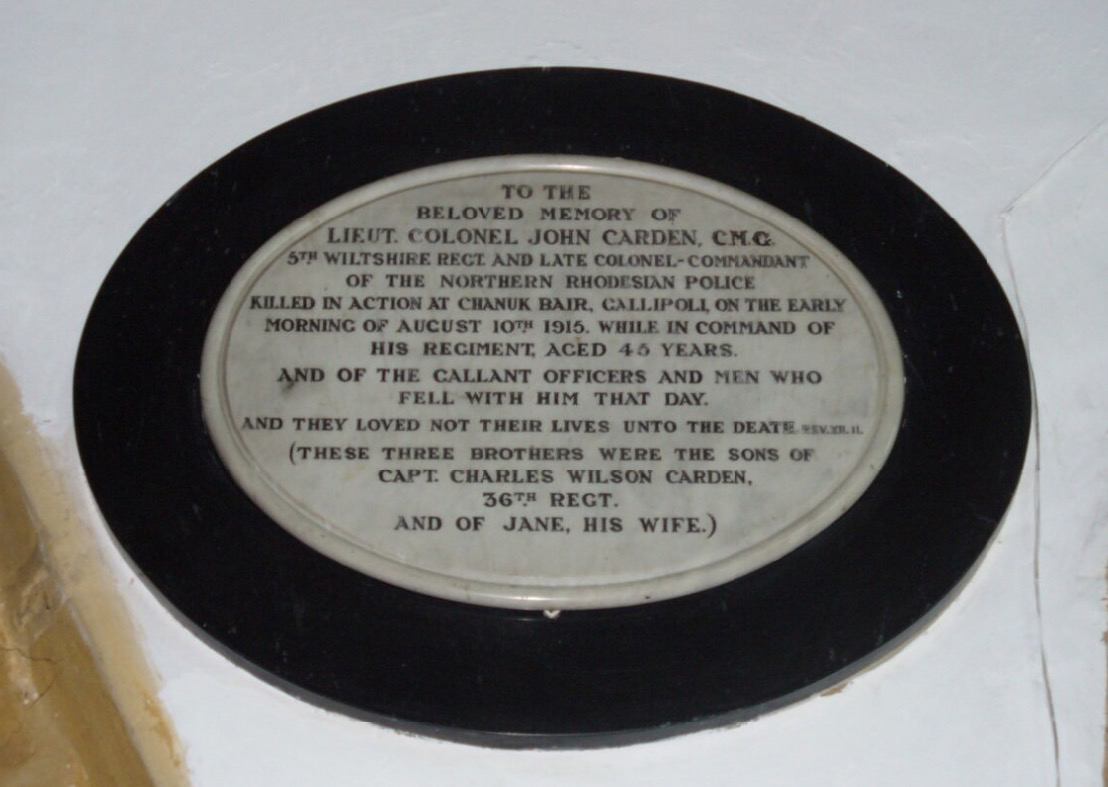
Carden was not to enjoy retirement or married life for long. On 30 September 1914 he became temporary Major and Second in Command of the newly raised 5th (Service) Battalion of the Wiltshire Regiment. Succeeding to the command, Lieutenant Colonel John Carden CMG took his battalion to Gallipoli where he fell at its head during the Turkish counterattack on Chunuk Bair on 10 August 1915. He was 45 years old and has no known grave. He is commemorated on the Helles Memorial in Turkey and on a marble plaque in Brixworth, Northamptonshire, which honours his service as Colonel‑Commandant of the Northern Rhodesian Police and his sacrifice at Gallipoli.
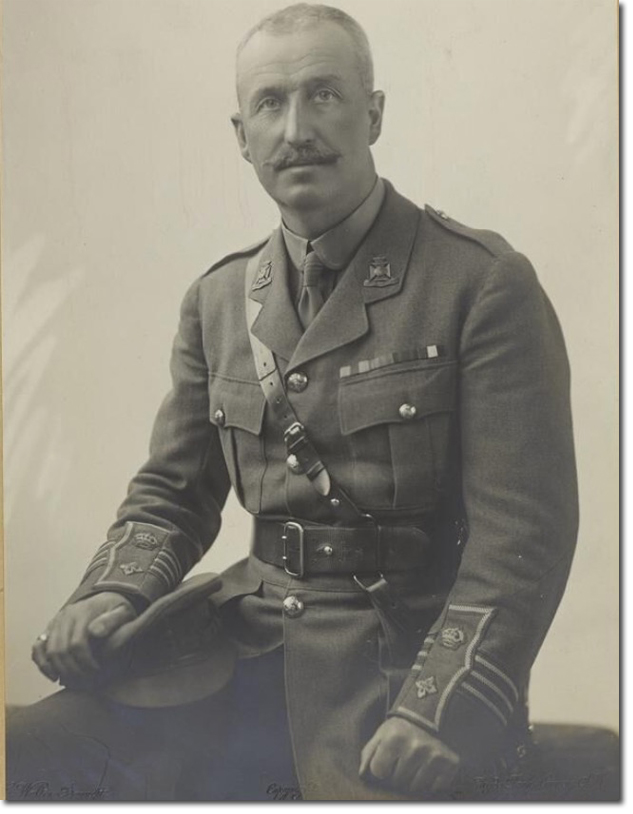
Picture: John Carden, Acting Administrator of North‑Western Rhodesia, 20 October 1907 – February 1908.Lieut. Colonel John Carden CMG, 5th Wiltshire Regiment and former Colonel‑Commandant of the Northern Rhodesian Police. Killed in action at Chunuk Bair, Gallipoli, 10 August 1915. Image courtesy of the Imperial War Museum. Memorial plaque below courtesy of the Brixworth Parish Archive.