British Empire Title


Brief History
The BSIP Police Force

The Solomon Islands entered the European record in 1567 when the Spanish navigator Álvaro de Mendaña sighted the archipelago during an expedition launched from Peru. Although it is uncertain whether he was the first European to see the islands, Mendaña believed he had found a land of great natural wealth and named them Islas de Salomón. His expedition charted parts of the southern group, assigning names such as San Cristóval, Guadalcanal and Ysabel. On returning to Peru he attempted to organise a second voyage to establish a colony, but it was not until 1595 that he sailed again with Pedro Fernandes de Queirós. This expedition discovered the Marquesas and the Santa Cruz Islands, but delays, illness and internal disputes undermined the venture. Mendaña died on Santa Cruz, and the mission collapsed soon afterwards.

With the Spanish suppressing detailed accounts of the voyages in order to protect their claims, the islands effectively disappeared from European knowledge. Even their approximate position became uncertain. They were not encountered again until 1767, when Philip Carteret sighted Gower Island and passed along the eastern fringe of the group without realising he was near Mendaña’s discoveries. In the following year Louis Antoine de Bougainville charted the northern islands—Buka, Bougainville and Choiseul—and sailed through the channel that now bears his name. In 1769 Jean-François de Surville made the first extended European stay in the islands despite hostile encounters with local communities. He applied French names to several islands and referred to the region as Terre des Arsacides, but French geographers soon recognised the connection with Mendaña’s Islas de Salomón.

British interest followed. In 1788 Lieutenant John Shortland charted the southern chain, mistakenly believing it to be a single landmass and naming it New Georgia. In 1792 Captain Edward Manning sailed through the strait dividing Ysabel and Choiseul, which now carries his name. Traders attempted to establish a presence in the islands during the early nineteenth century, but their efforts were sporadic and often violent. Missionaries also viewed the Solomons as a potential field of work, though with limited success. In 1845 the French Marist Fathers landed on Isabel, where Mgr Jean-Baptiste Épalle, the first Vicar Apostolic of Melanesia, was killed shortly after arrival. The mission was abandoned three years later, though it resumed in 1851.
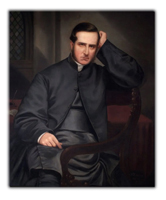
John Coleridge Patteson

A more sustained Anglican presence began in the 1850s. In 1856 John Coleridge Patteson, later Bishop of Melanesia, made his first visit to the islands. His method relied on removing small groups of young men to the Melanesian Mission’s central school in the New Hebrides, training them there, and returning them to their home islands as teachers. This avoided the immediate confrontations that had marked earlier Catholic attempts, though the risks remained considerable. Patteson travelled widely through the Solomons and neighbouring island groups, often alone or with a small crew, and became a familiar figure in many communities.

The dangers of the region increased sharply as the labour trade expanded. From the late 1860s recruiters for plantations in Queensland and Fiji—some legitimate, many not—operated throughout the Solomons. Kidnapping, coercion and retaliatory violence were common, and islanders often could not distinguish between recruiters and missionaries. On 20 September 1871, when Patteson landed on Nukapu Island in the Reef Islands, he was killed by local men. The act was almost certainly a reprisal for earlier abductions carried out by labour vessels, one of which had recently taken several Nukapu islanders. His body was placed in a canoe and pushed out to sea, a gesture suggesting ritual rather than random violence. The killing caused widespread anger in Britain and forced the government to take a more active role in regulating the labour trade, increasing naval patrols and strengthening its presence in the western Pacific.

By the 1870s the labour trade had extended its influence from the New Hebrides into the Solomons, bringing further instability. British concern centred less on territorial ambition than on the behaviour of British subjects in the region and the inability of existing arrangements to protect either islanders or missionaries. In 1893 Britain declared a protectorate over the southern Solomons—Malaita, Marovo, Guadalcanal and San Cristóval—to control the labour trade and prevent rival colonial powers from gaining a foothold. The northern islands remained under German influence until the Anglo-German Convention of 14 November 1899, which finalised the division of the archipelago. Germany ceded its remaining Solomon Islands to Britain in exchange for recognition of its interests elsewhere in the Pacific.

Under British rule the protectorate developed slowly. Administration was thin, infrastructure minimal, and colonial authority often limited to coastal areas. Missionaries—Anglican, Catholic and others—played a significant role in education, health and local governance. The islands became strategically important during the Second World War. From 1942 to 1945 the Japanese occupied parts of the archipelago, and the ensuing Allied counter-offensive, particularly the Guadalcanal campaign, was one of the major Pacific operations of the war. The conflict brought new infrastructure, increased external contact and the beginnings of political consciousness. After the war the protectorate moved gradually toward self-government, and the Solomon Islands achieved full independence in 1978.

flag
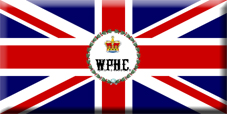
Western Pacific High Commission Flag
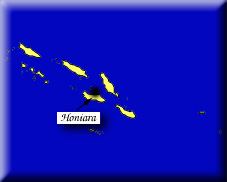
map of Solomon Islands
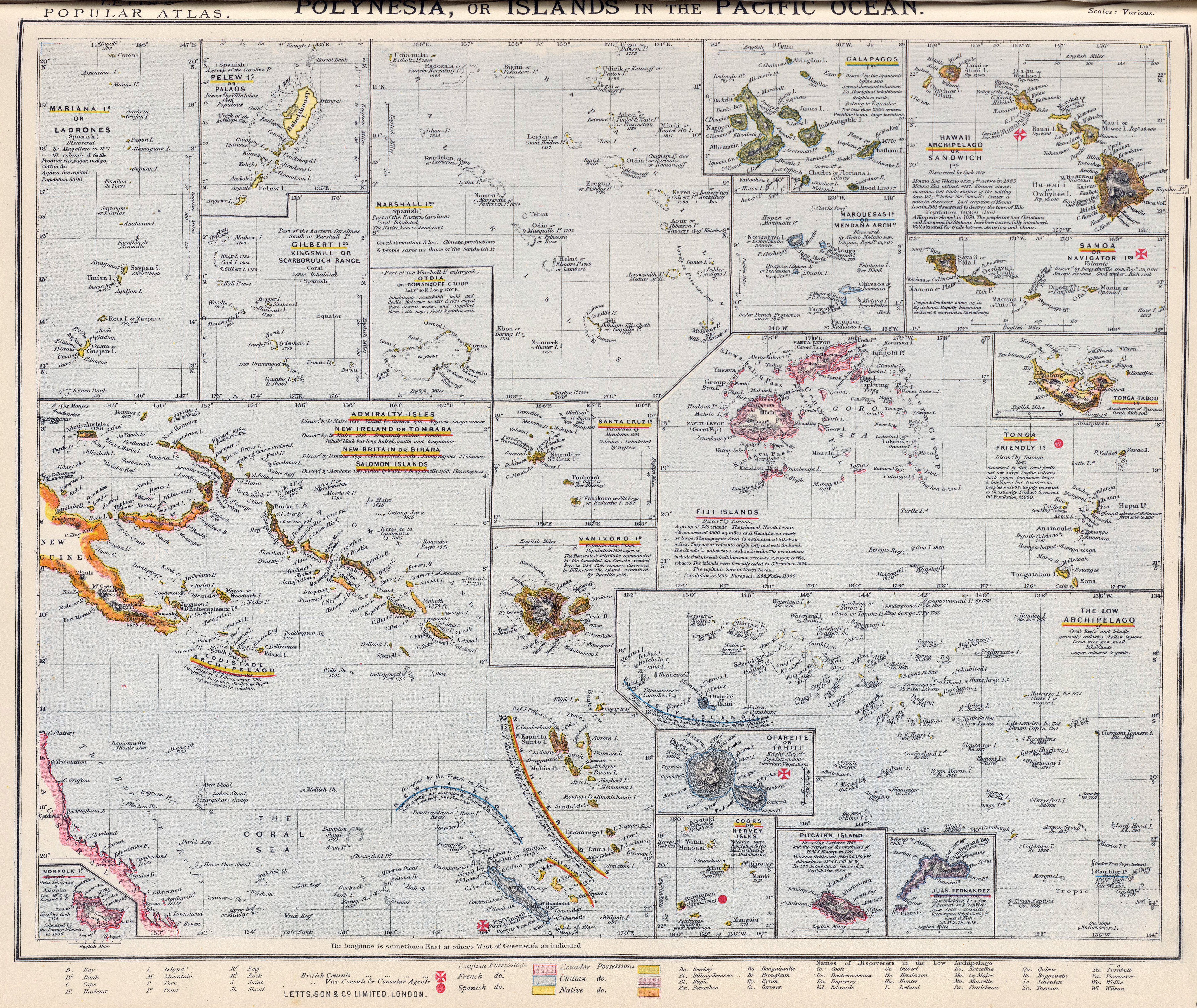
Map of Polynesia, 1883

Oceania Map, 1912
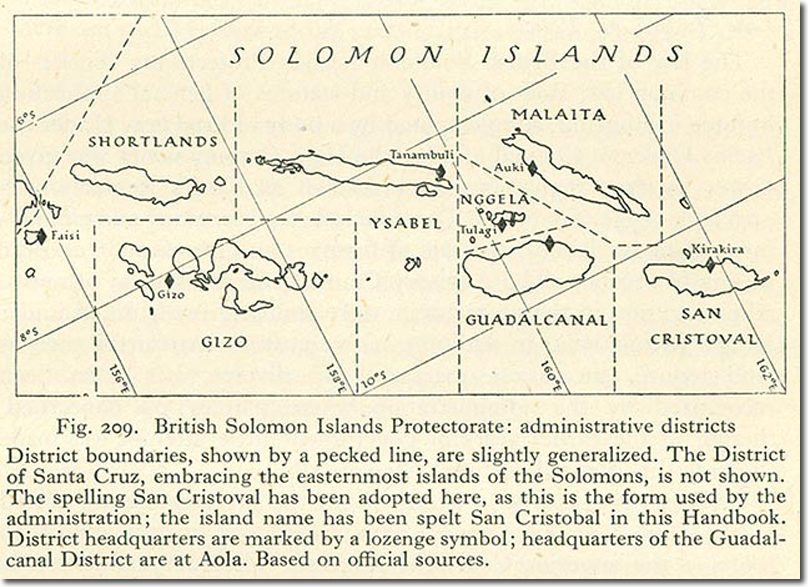
Administrative Districts Map 1918
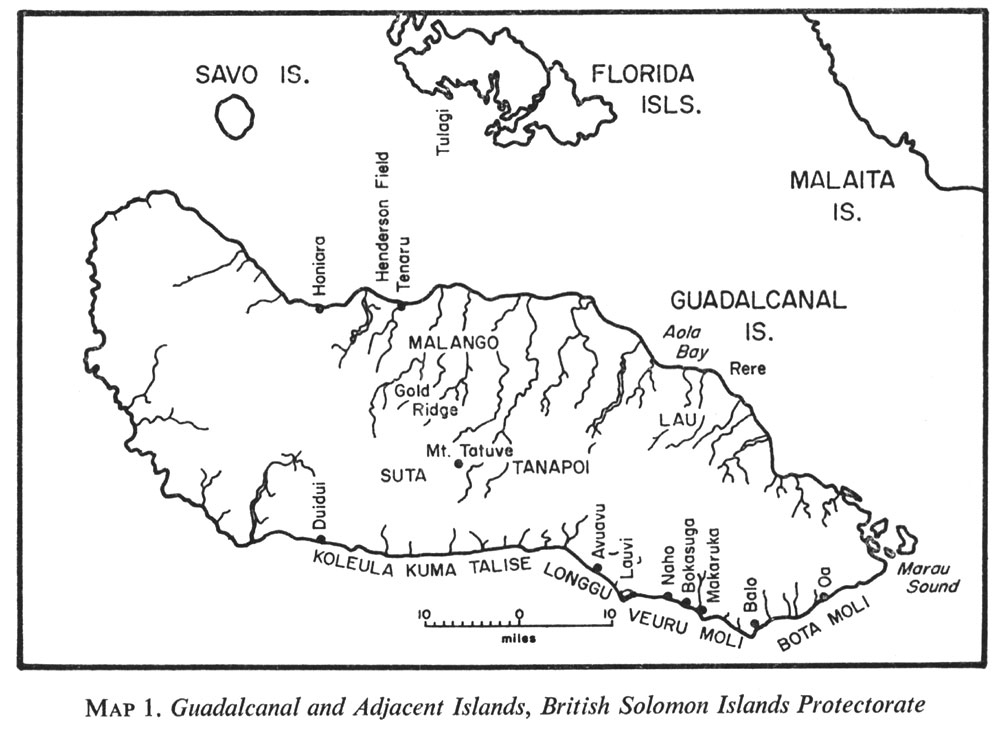
Guadalcanal 1930 Map
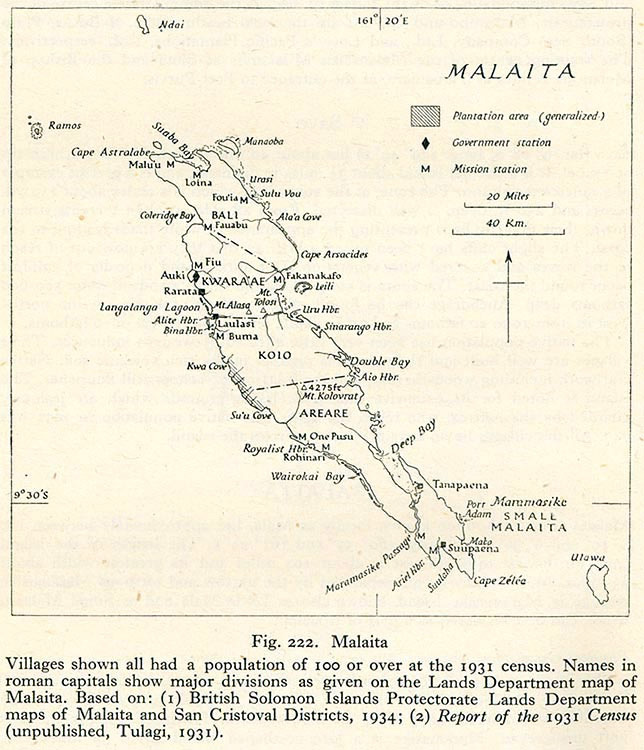
Malaita 1930s Map
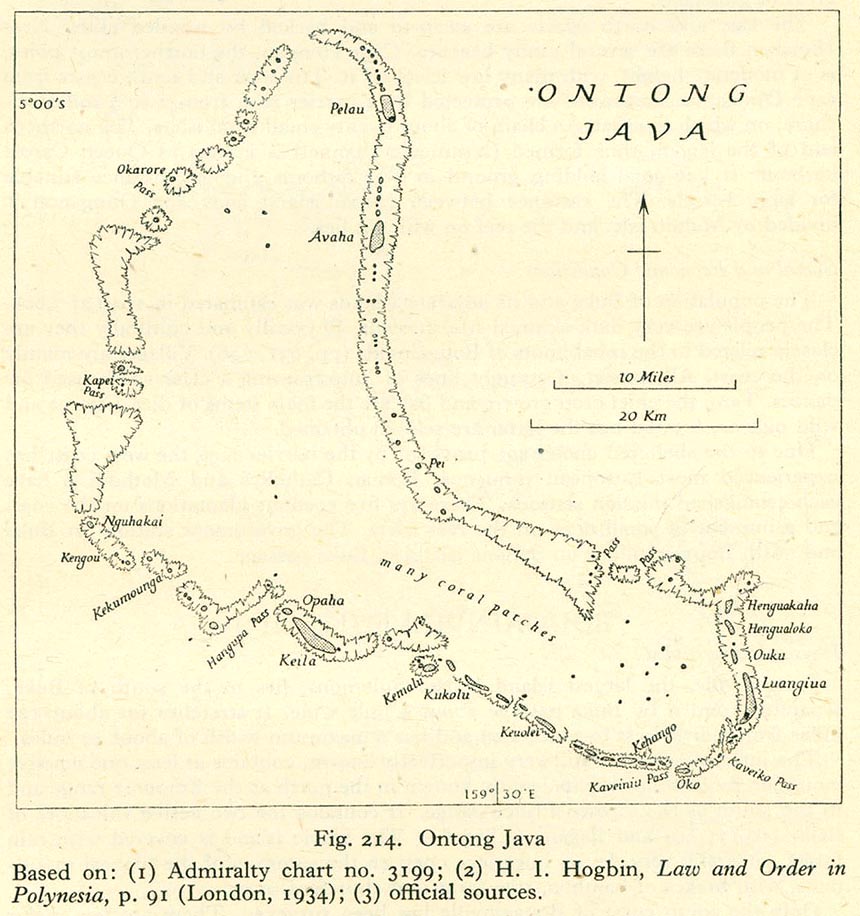
Ontong Java (Lord Howe) Atoll, 1934 Map
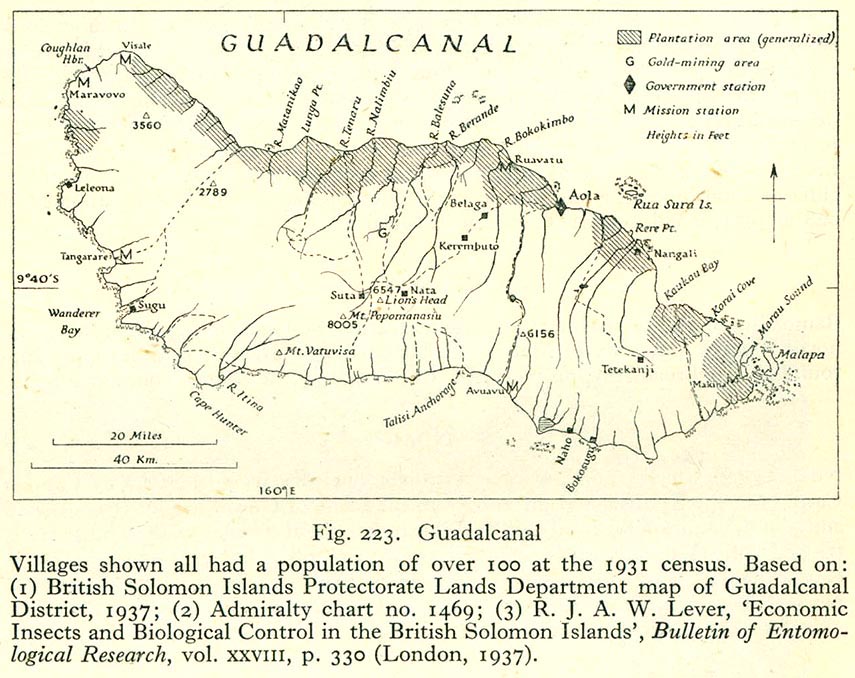
Guadalcanal 1931 Map
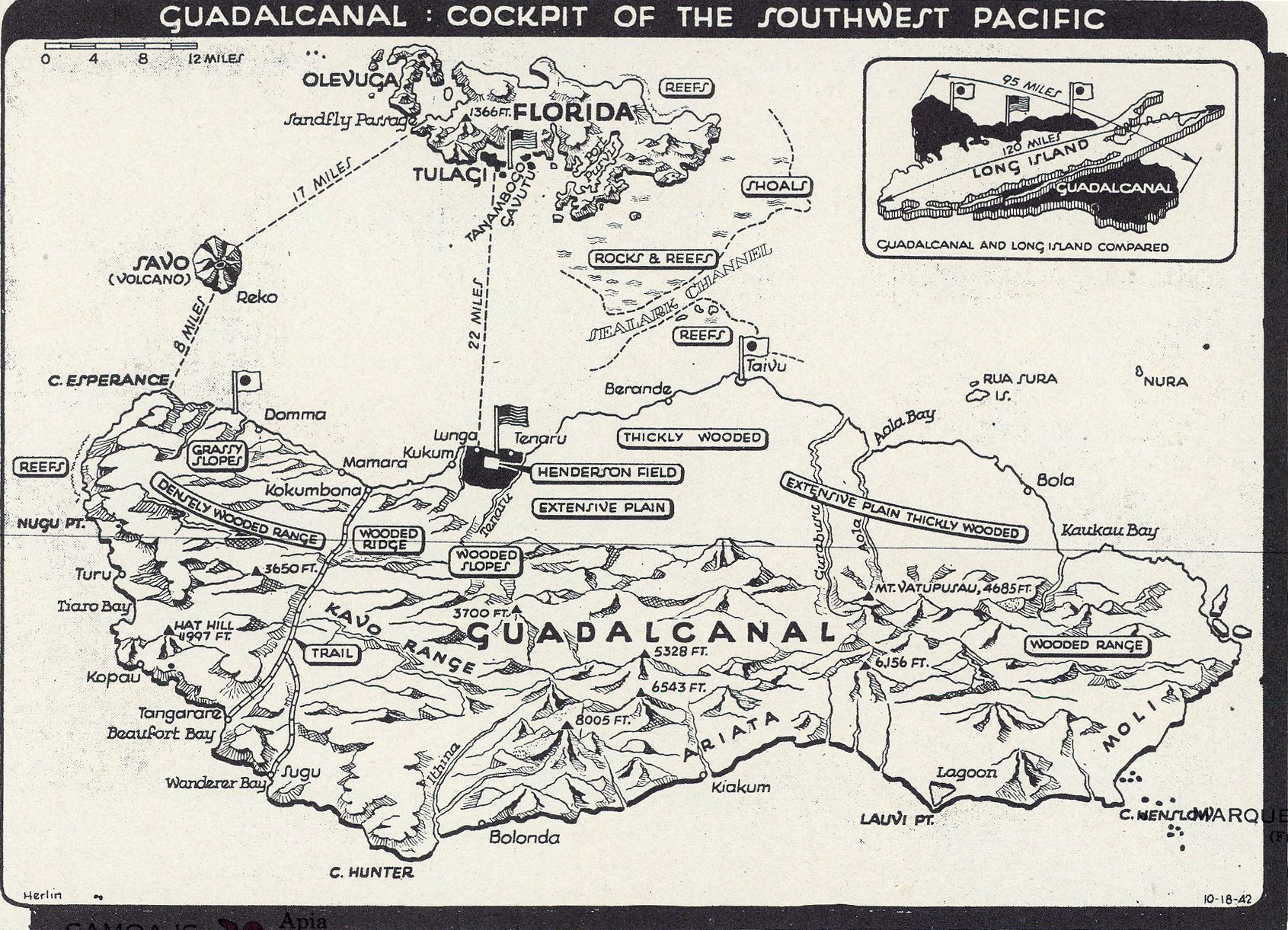
Guadalcanal 1942 Map
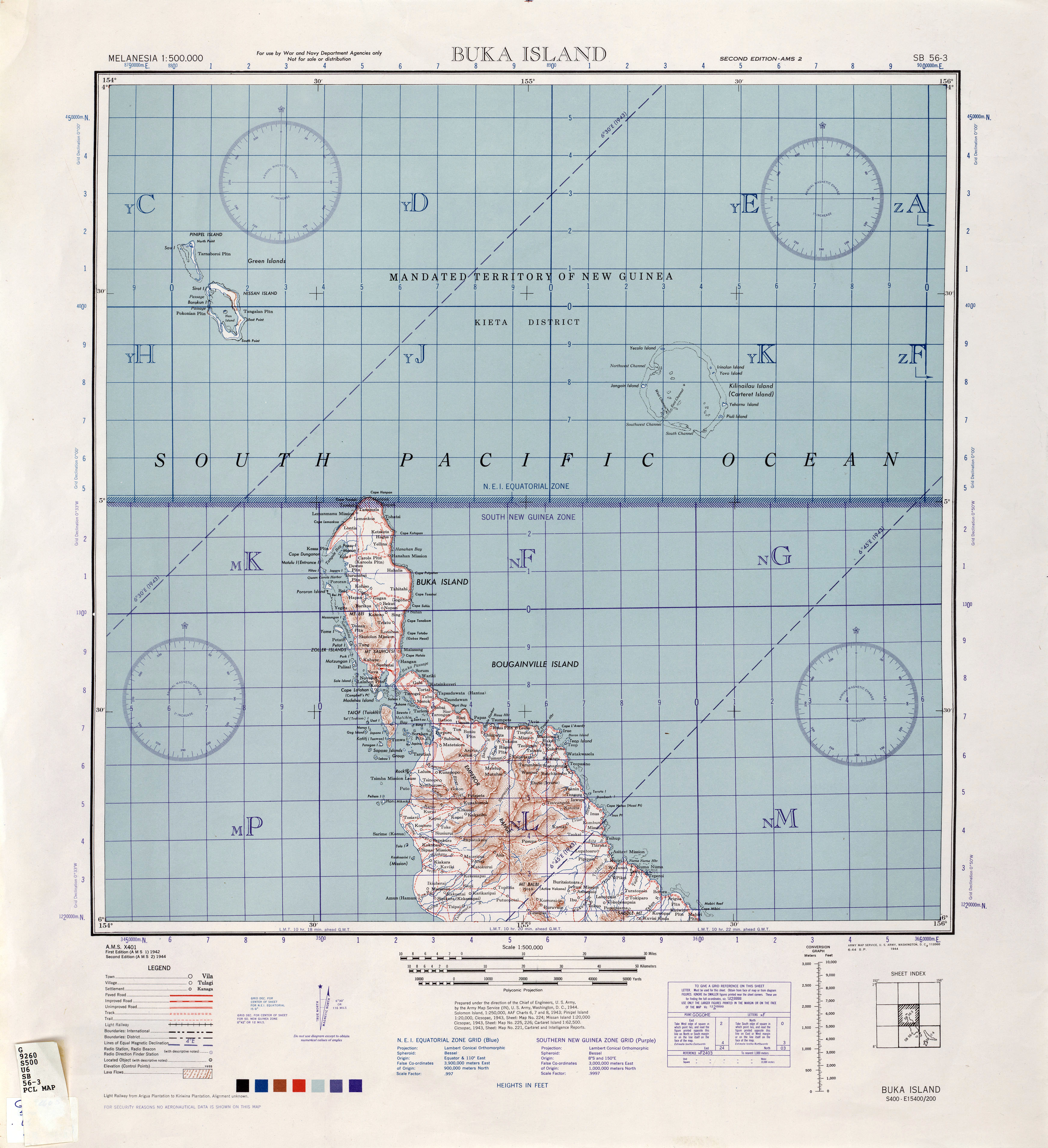
Buka Island Map 1944
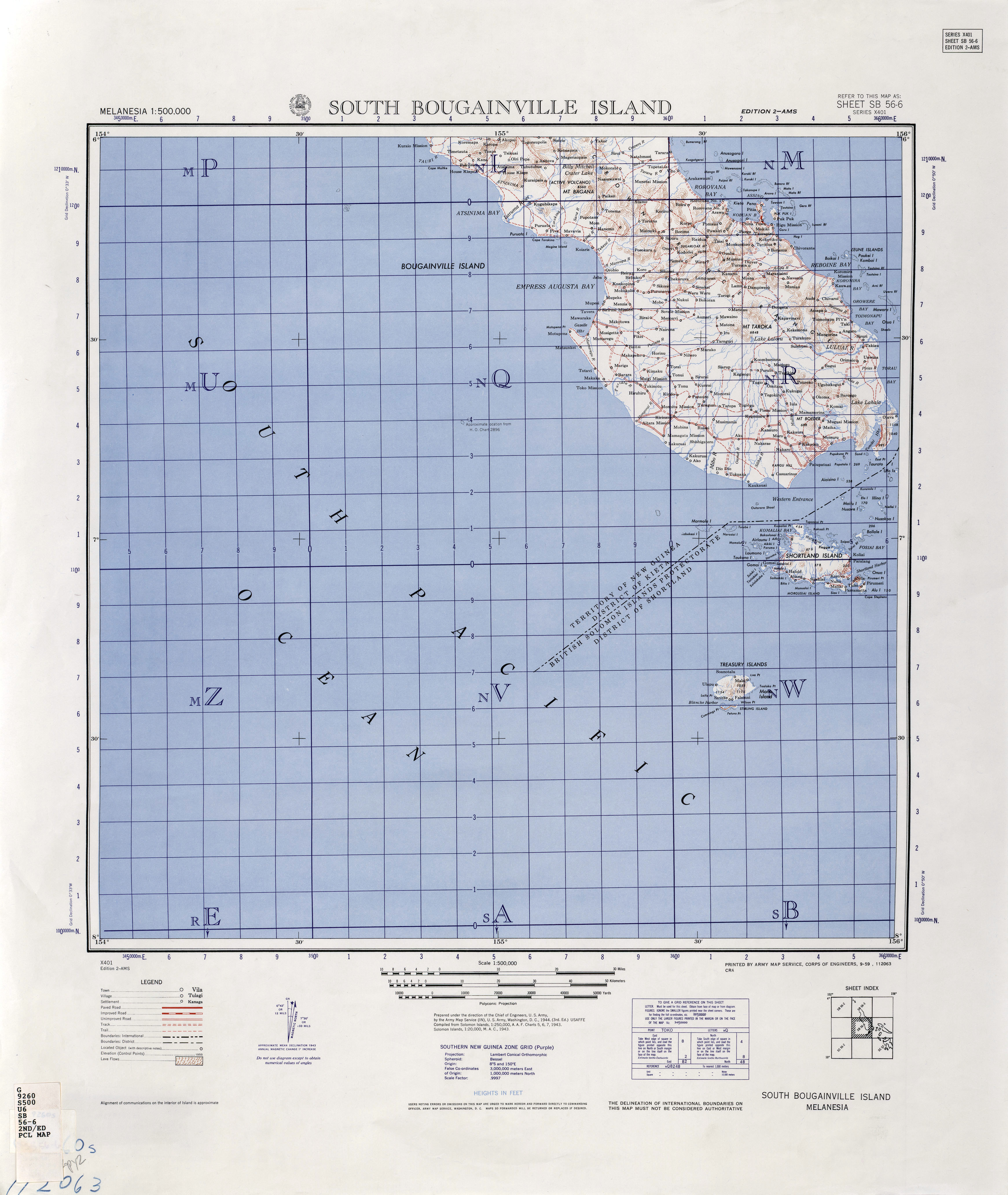
Bougainville Island Map 1944
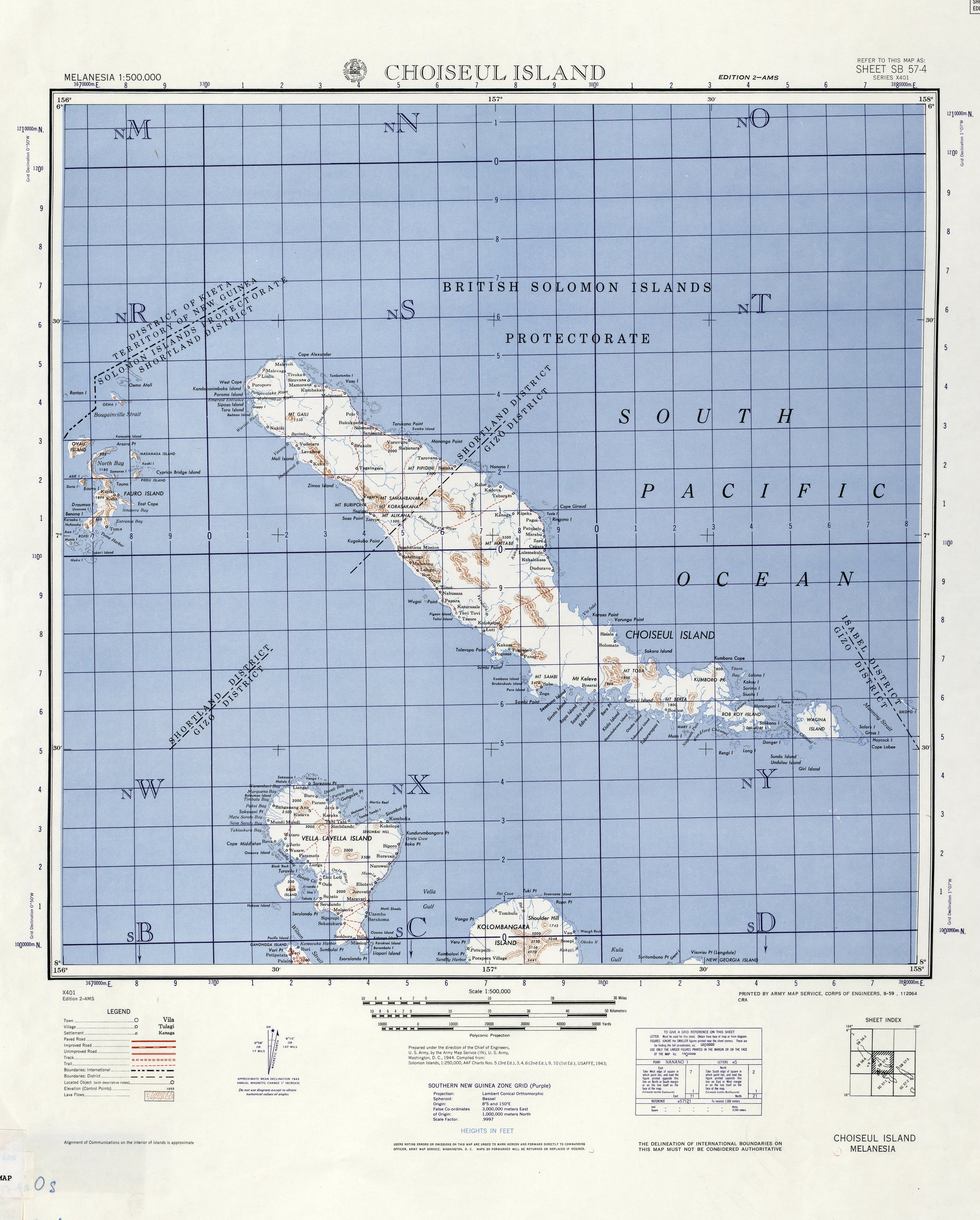
Choiseul Island Map 1944
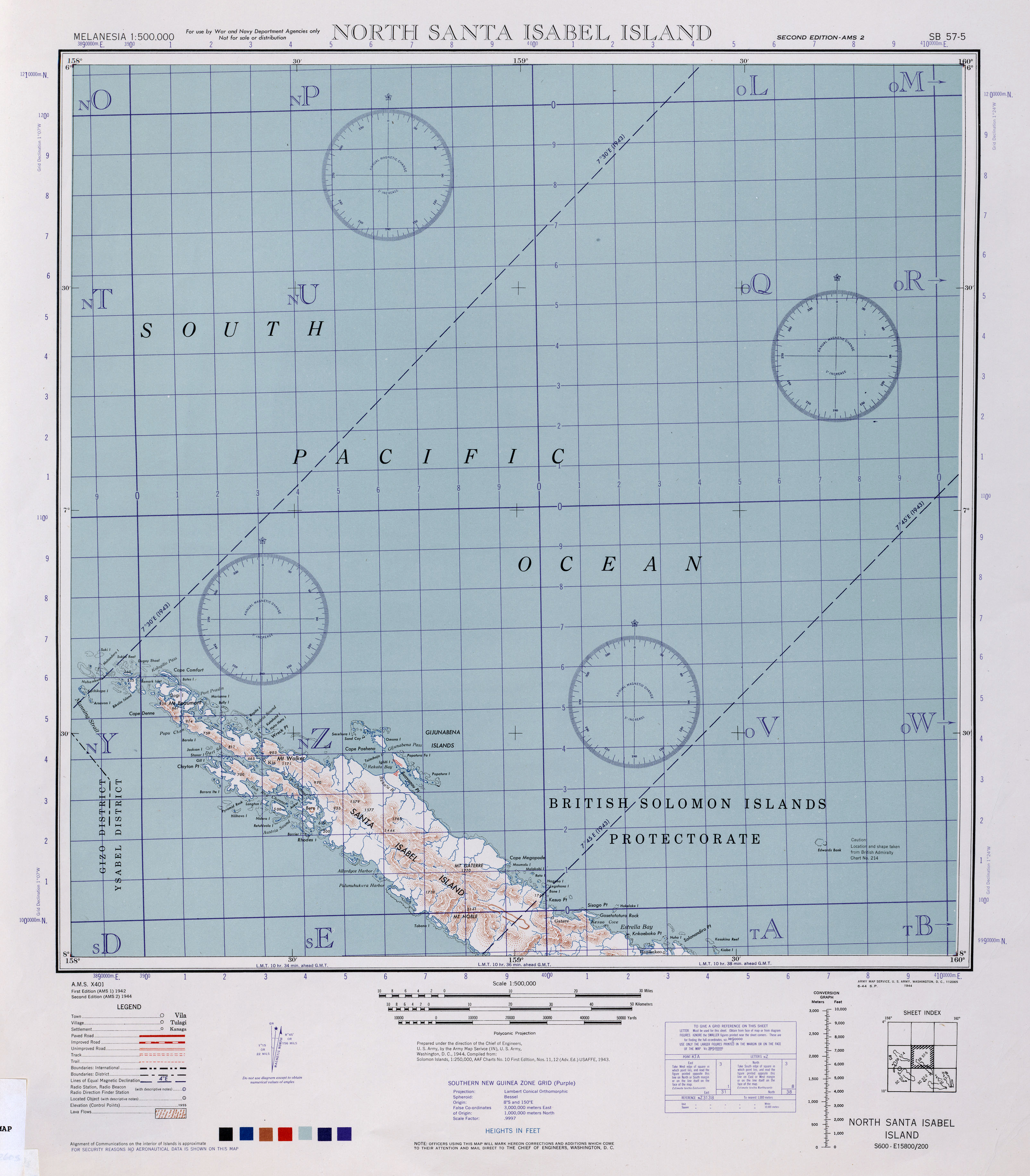
North Santa Isabel Island Map 1944
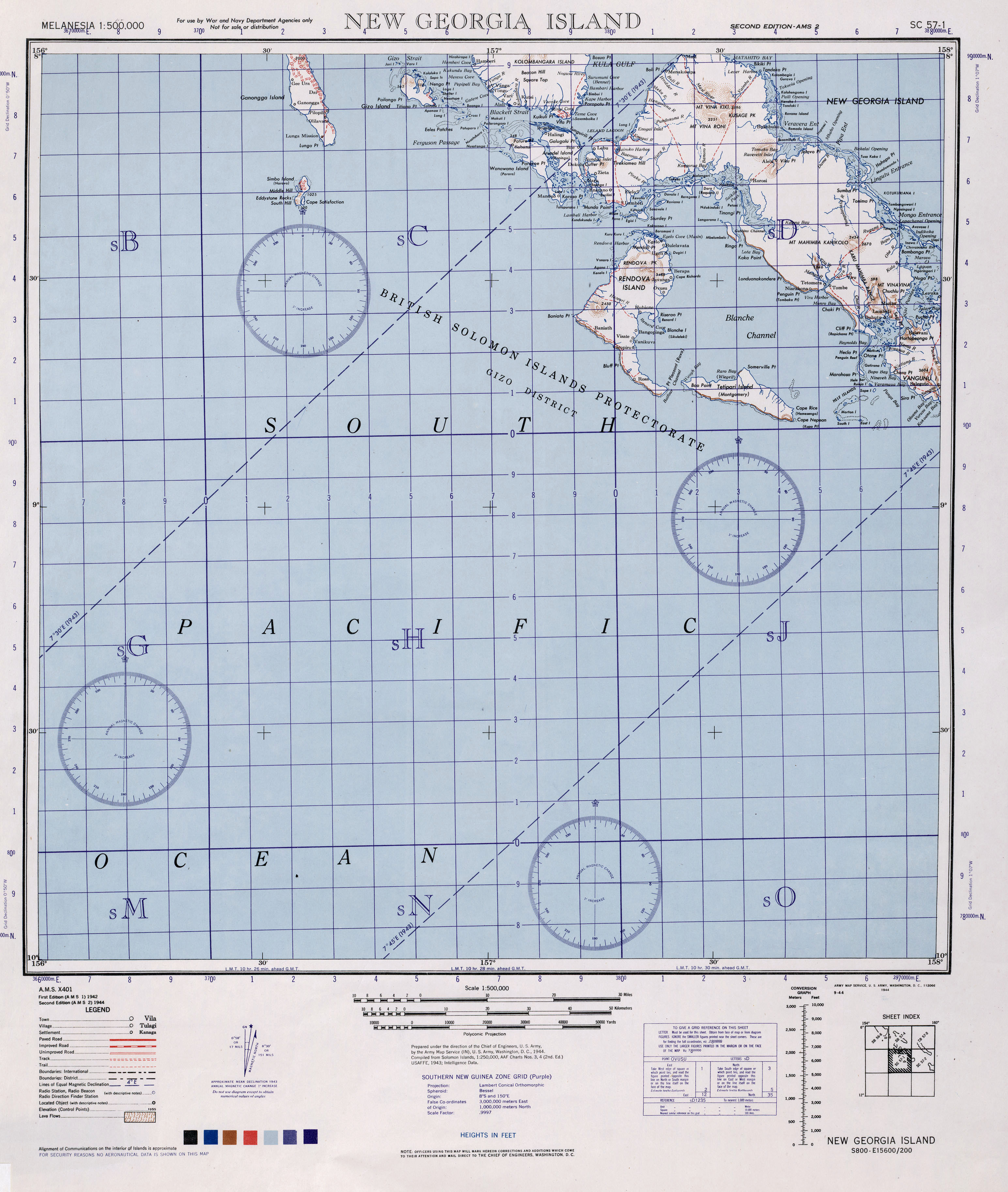
New Georgia Island Map 1944
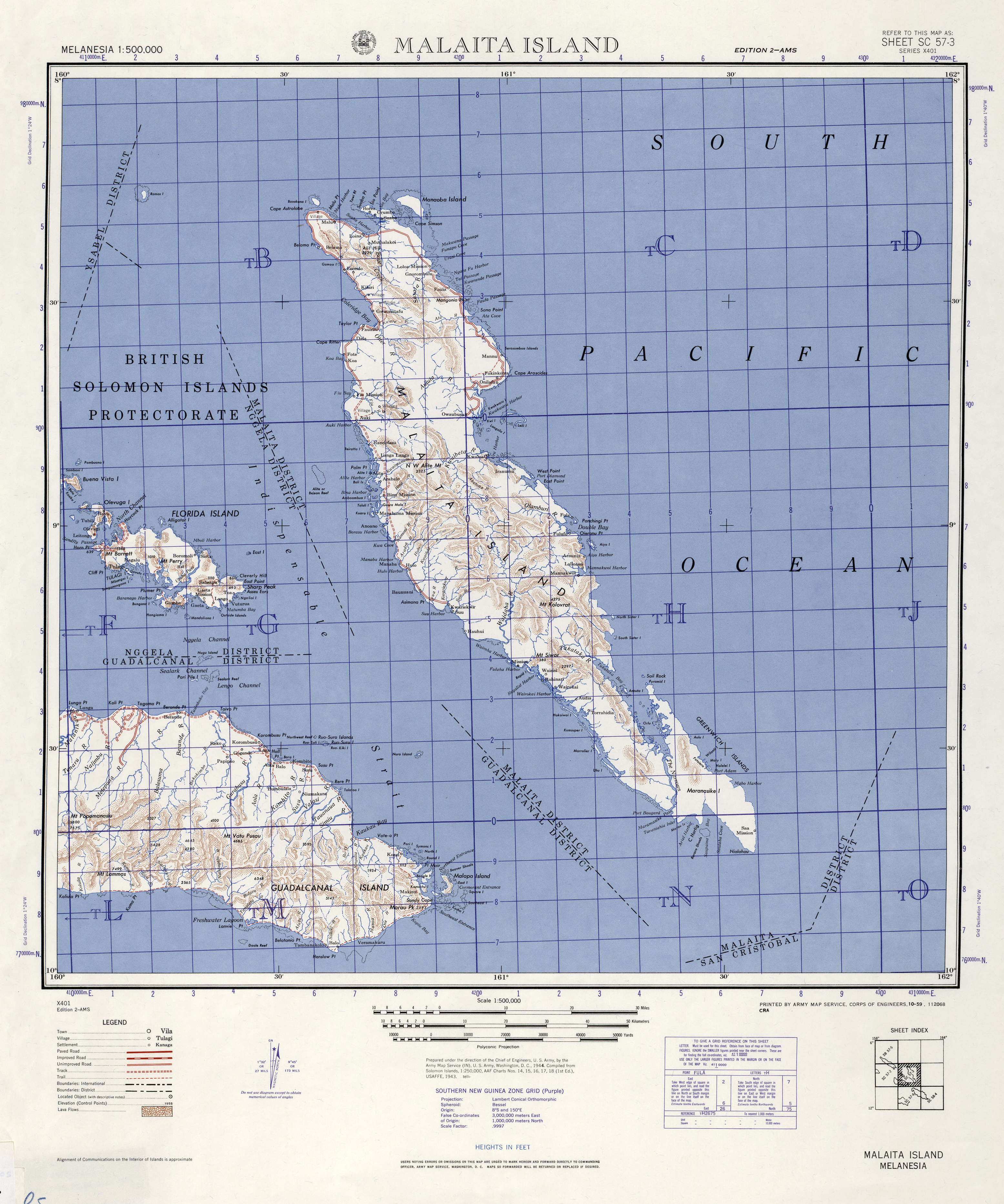
Malaita Island Map 1944
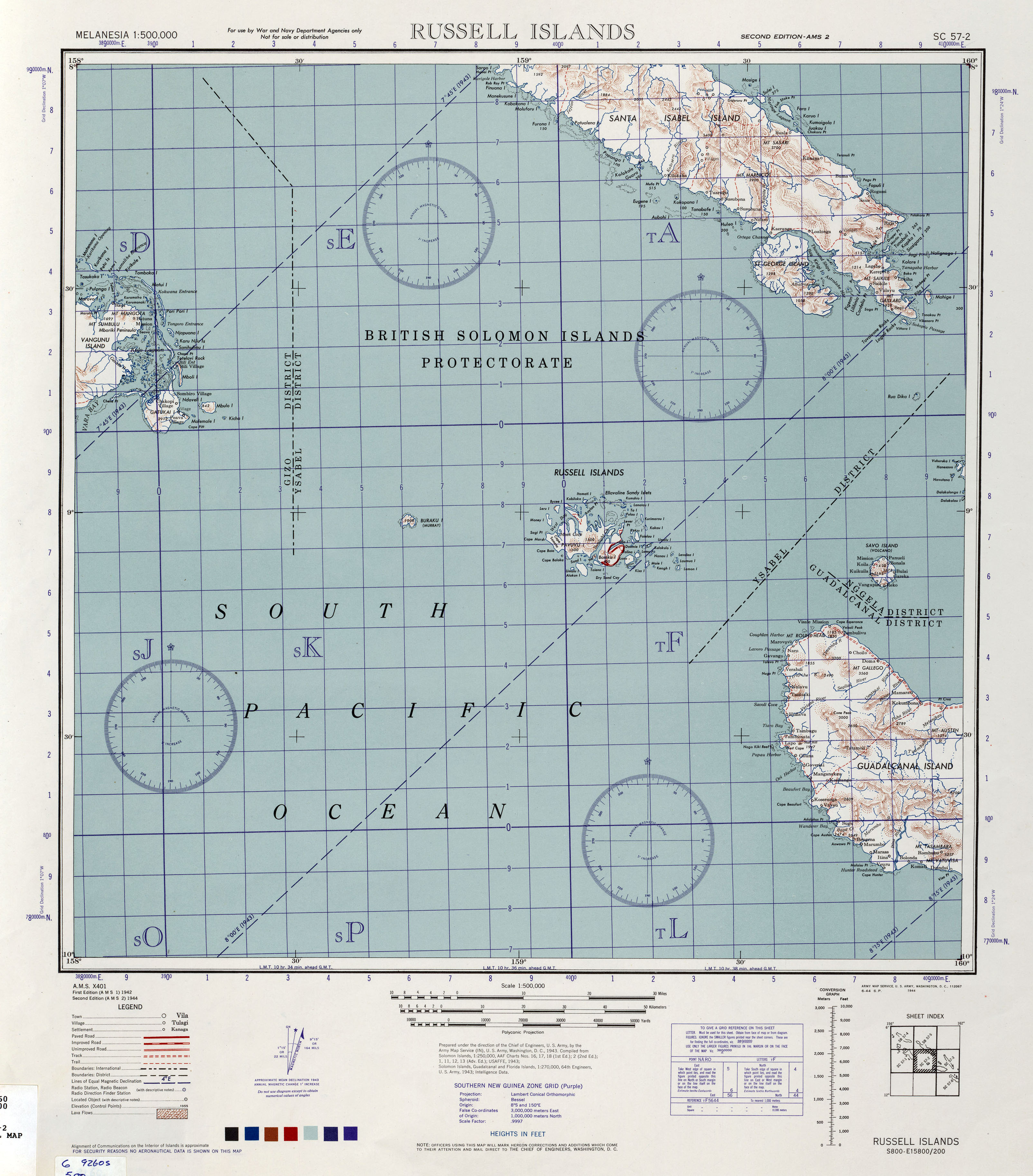
Russell Islands Map 1944
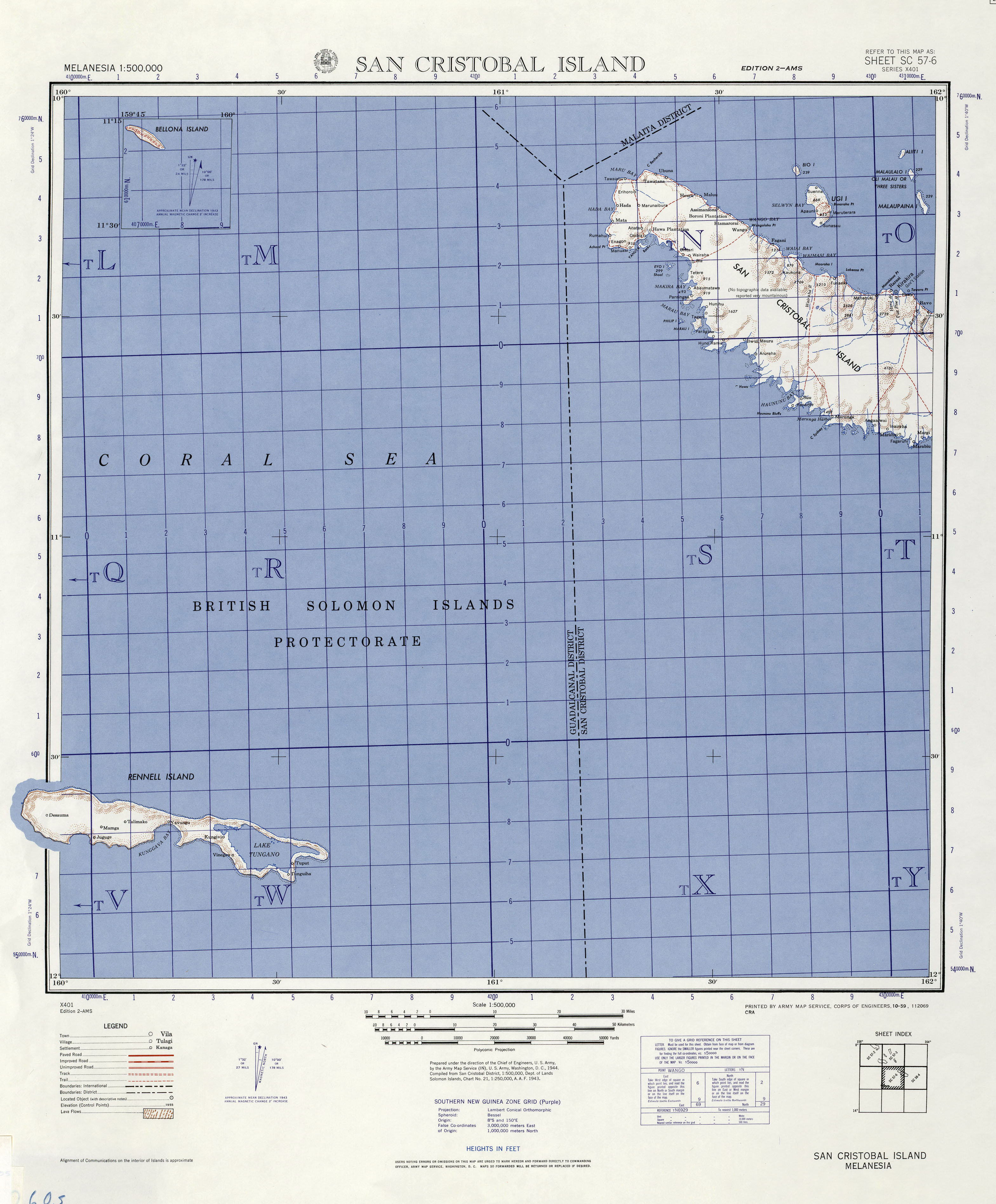
San Cristobel Island Map 1944
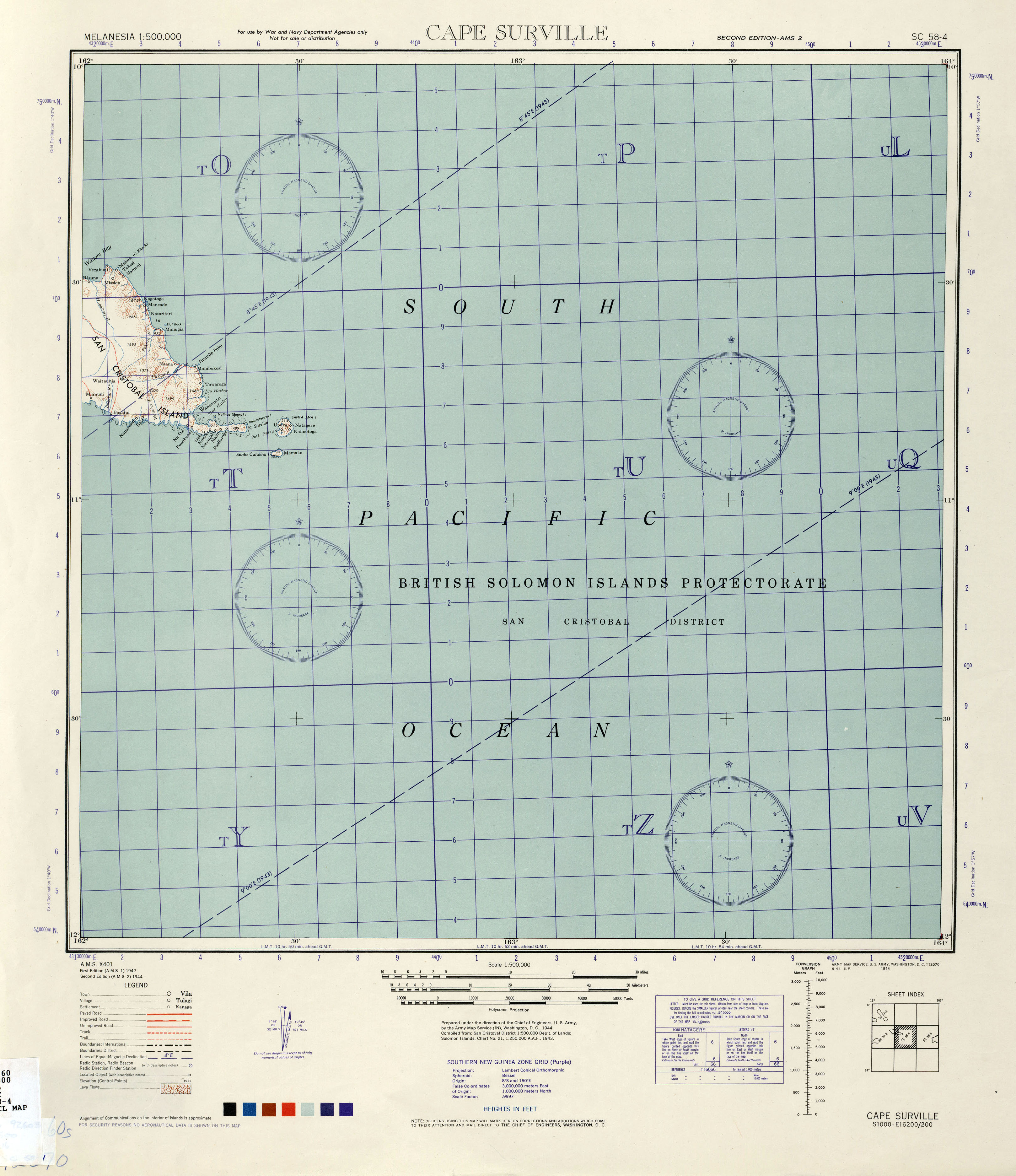
Cape Survile Map 1944
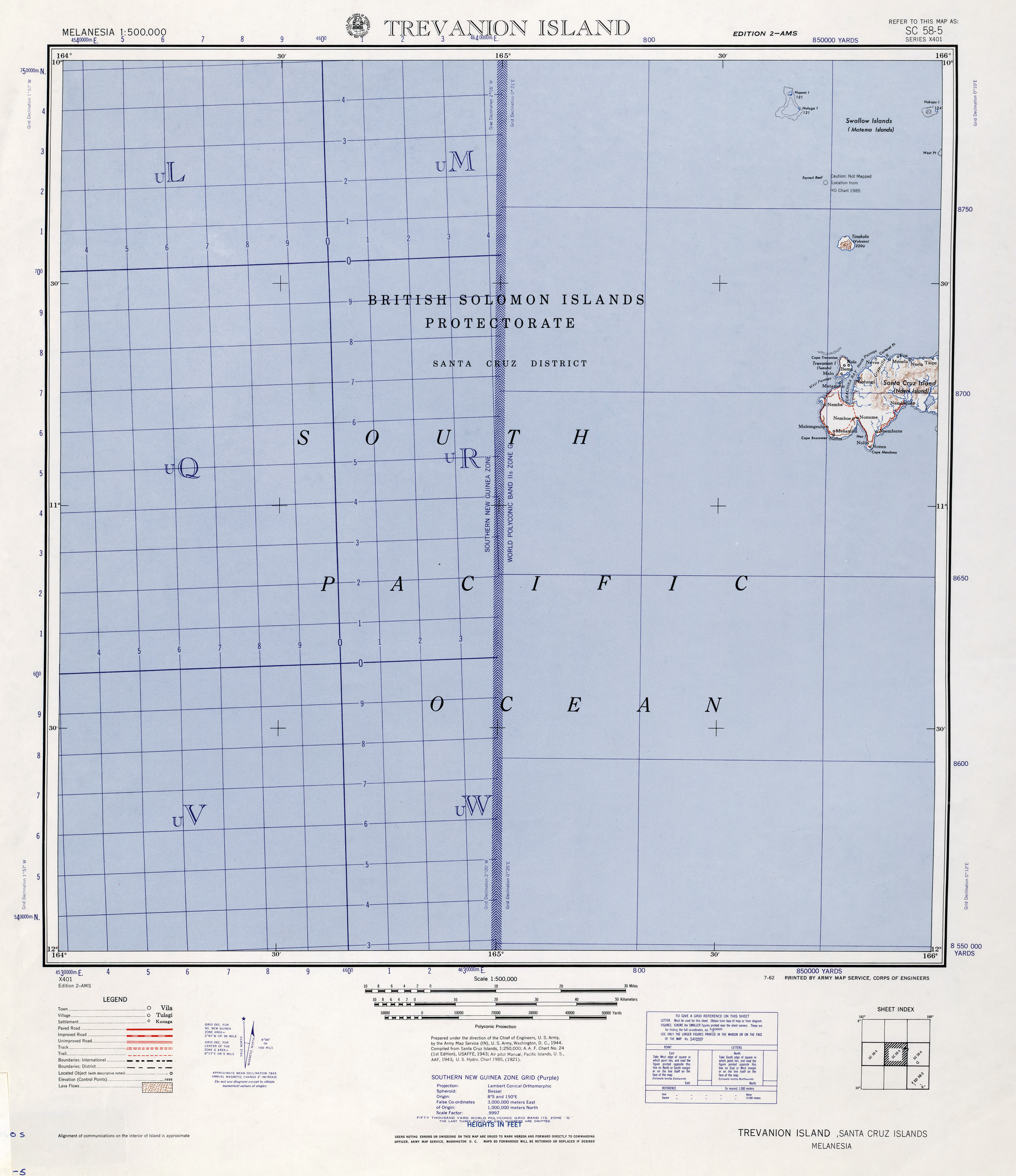
Travanion Island Map 1944
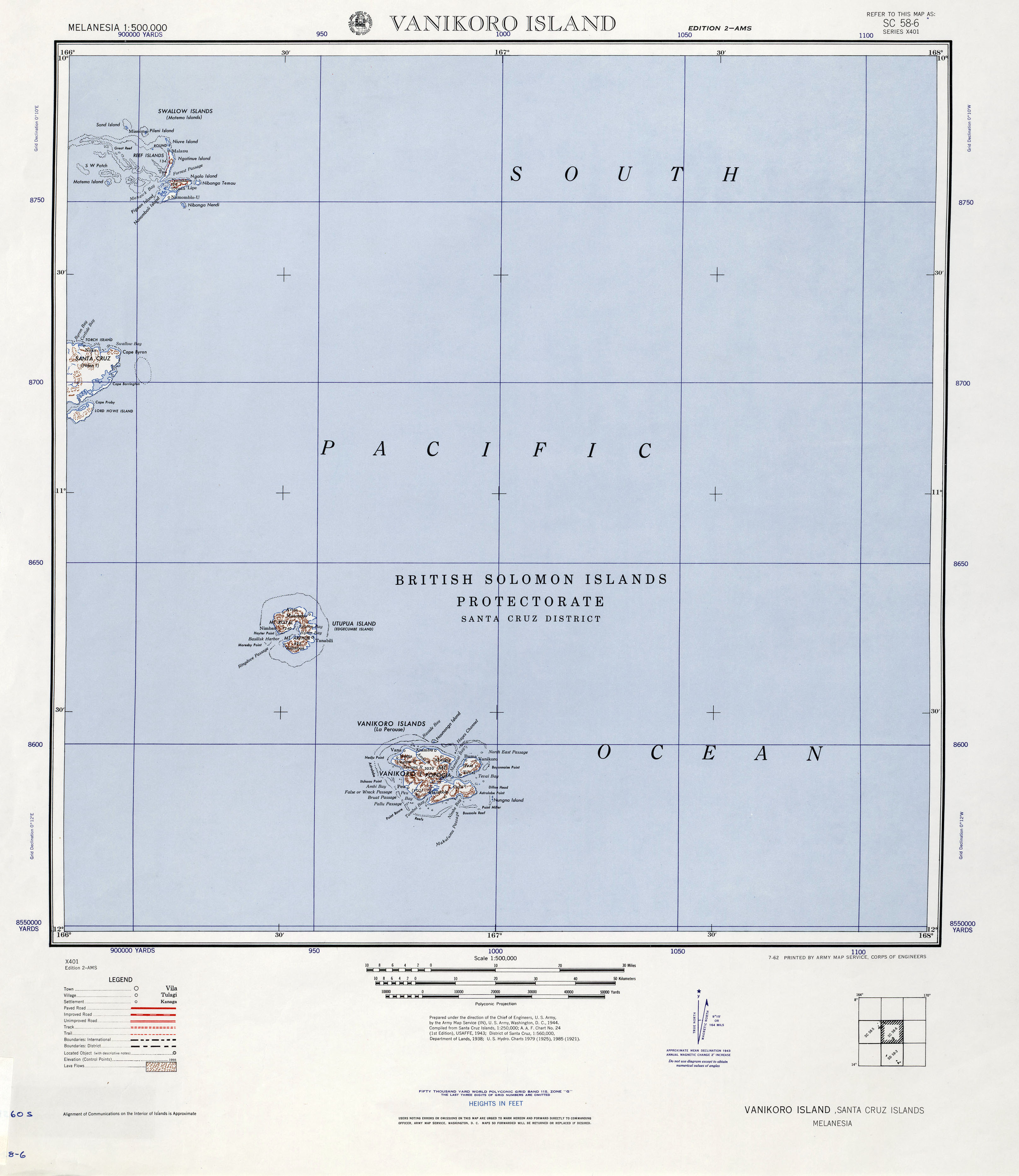
Vanikoro Island Map 1944
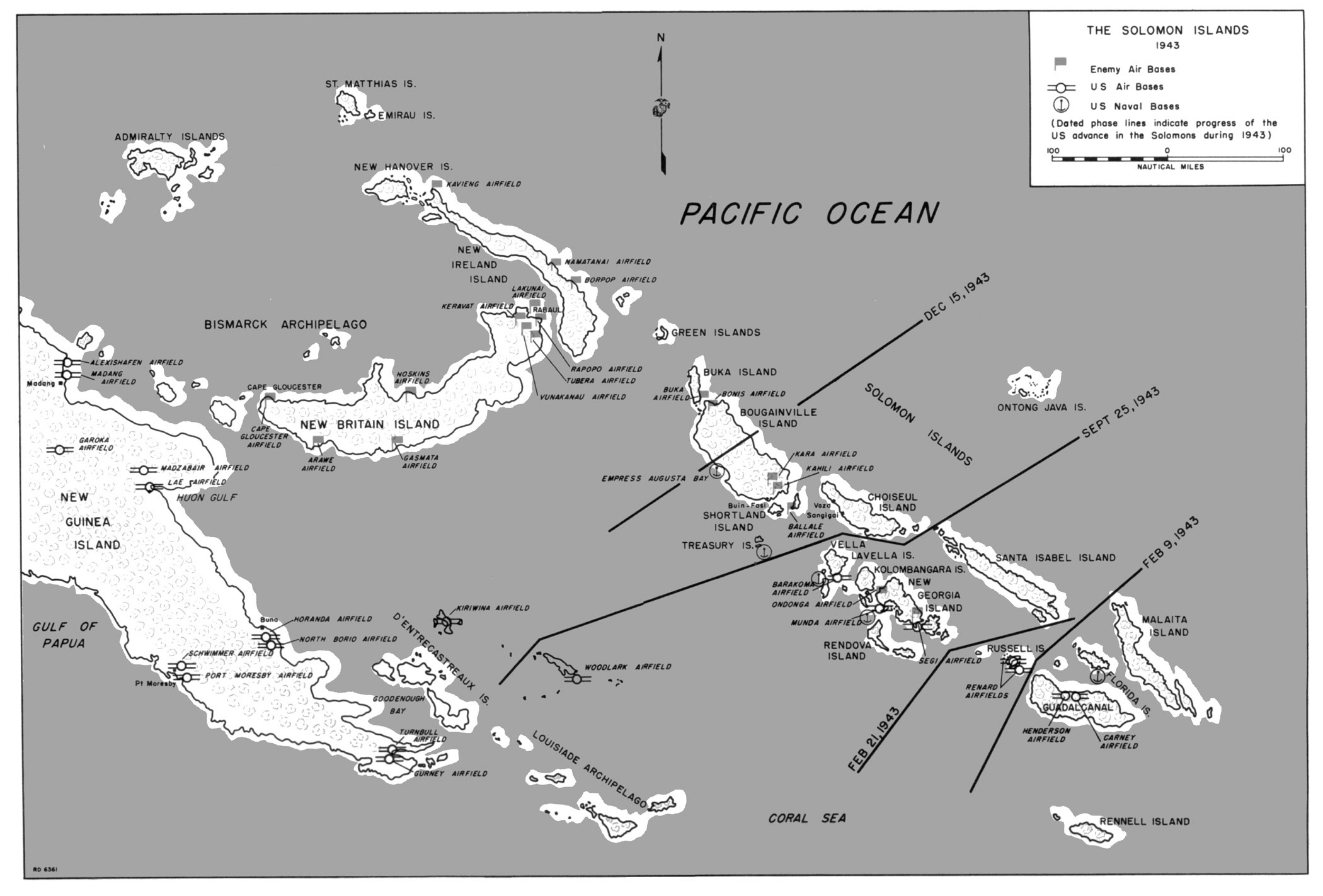
Solomon Islands Military Campaign Map
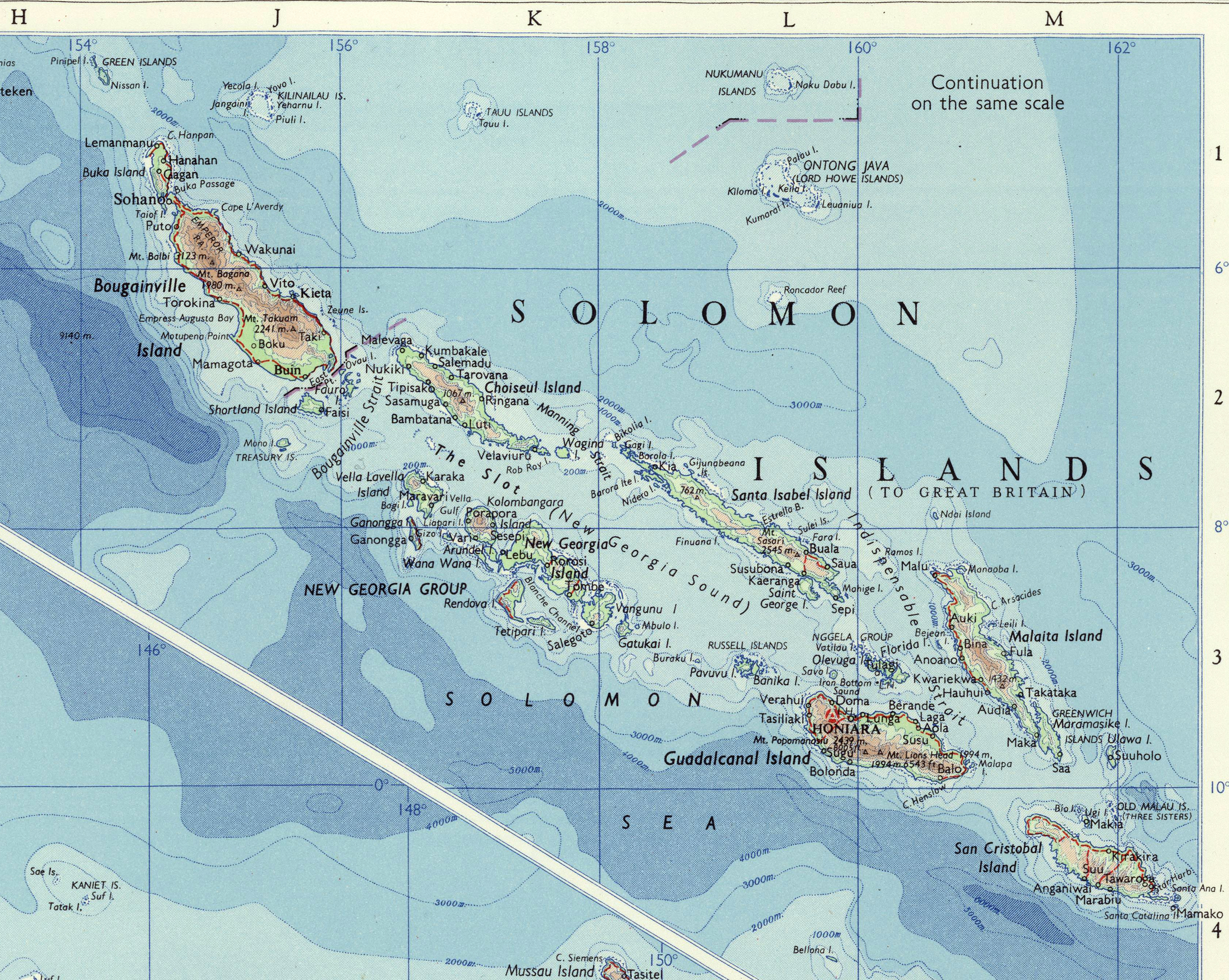
Solomon Islands 1958 Map
Guadalcanal 1967 Map
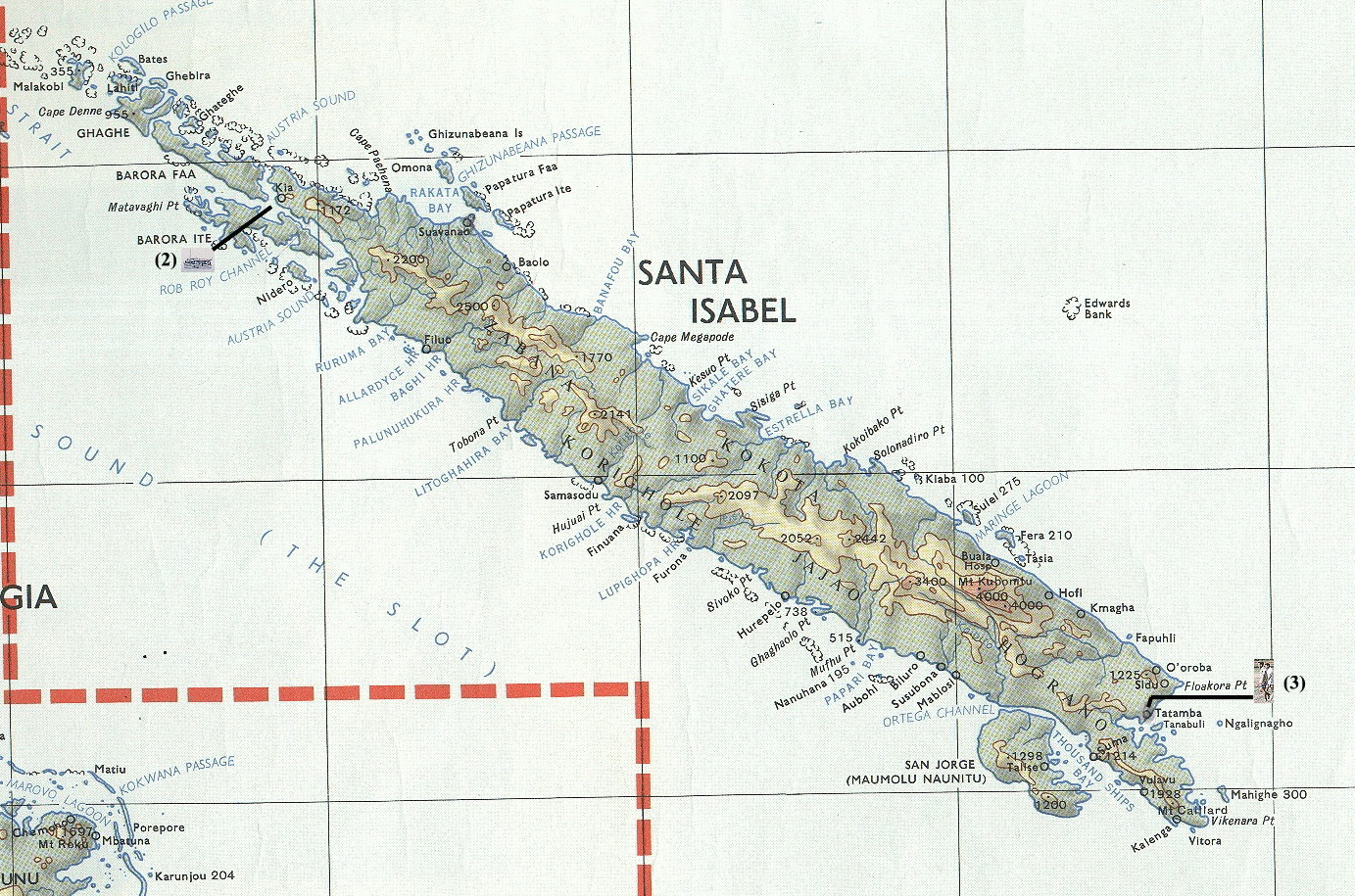
Santa Isabel Map, c1970
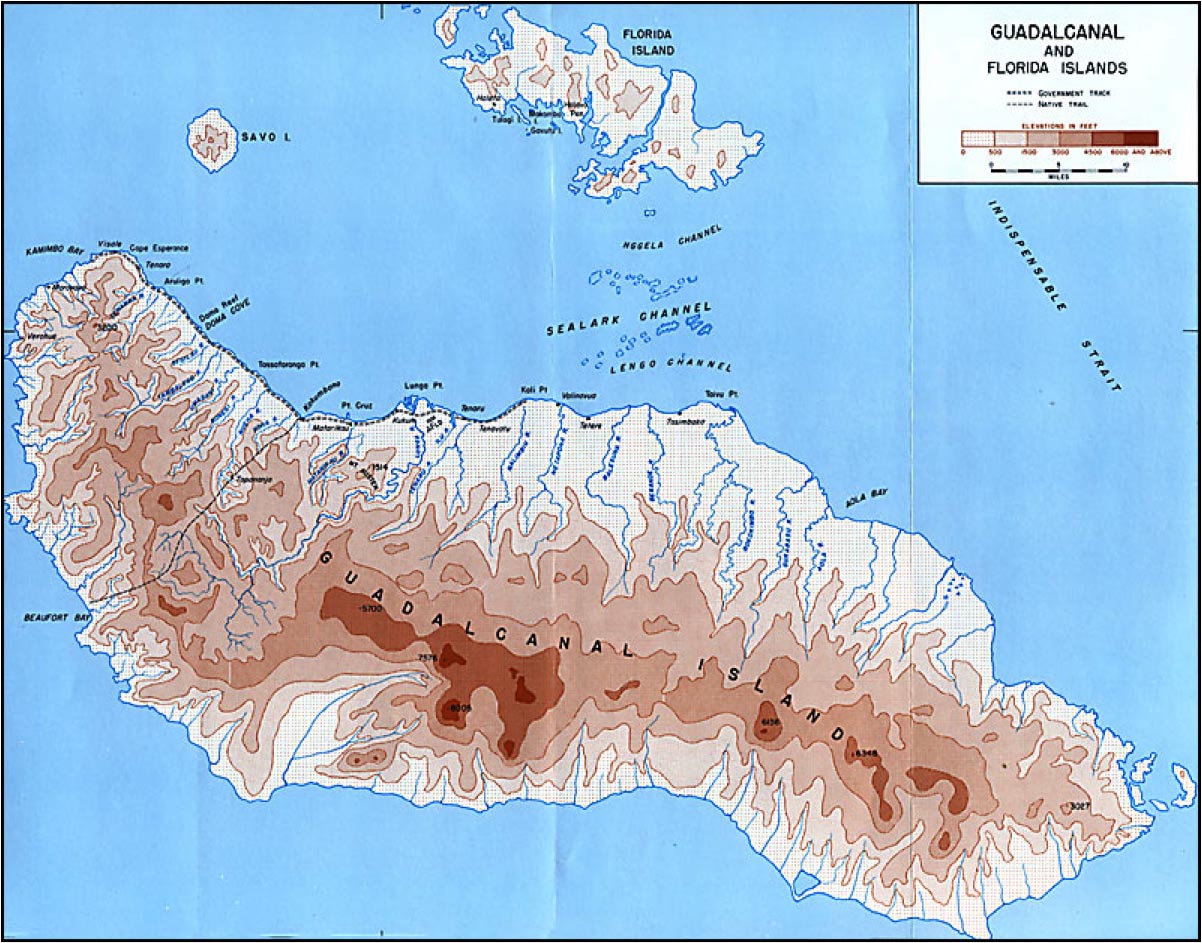
Guadalcanal Elevation Map
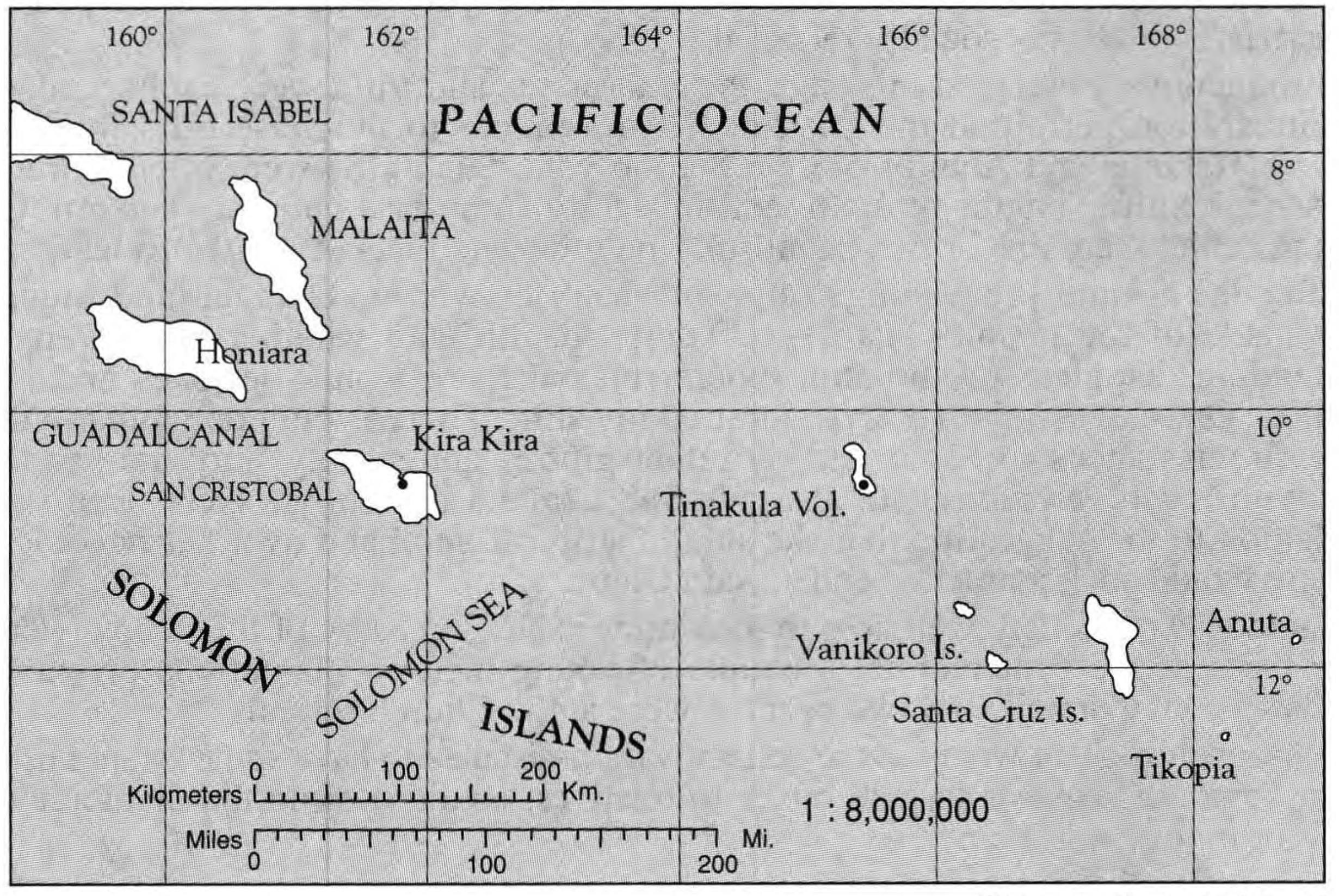
Solomon Islands Map
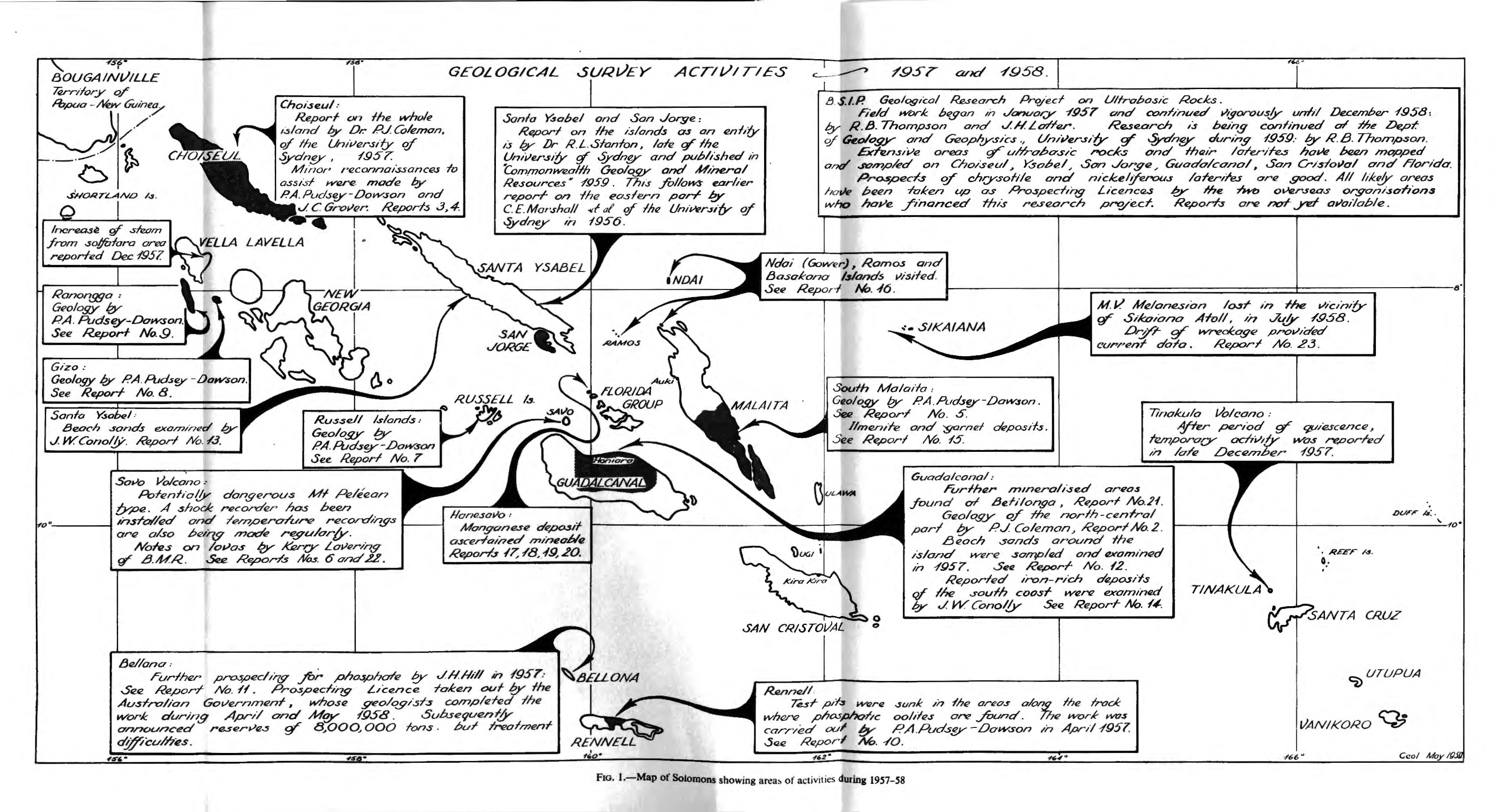
Solomon Islands Geological Survey Map 1958
Historical solomons
Images of Solomons
National Archive Solomon Islands Images
Articles
Letters from the Solomon Islands
John Proctor recalls his time with the VSO in the British Solomon Islands Protectorate and his role in establishing a Community Education Project in Makaruka and Balo Villages on Guadalcanal in 1966-1967.

Volcanoes, Earthquakes and Crocodiles
David Bell recalls the variety of work undertaken as a Geological surveyor in the British Solomon Islands Protectorate in the 1950s. Apart from the challenging topography, it is an area of substantial geological activity. He also recalls the legacy of the Second World War was still playing itself out over a decade after it had finished.

The Marching Rule Rebellion in the Solomon Islands from 1944 to 1955/56
Chris Cochran recalls the difficult years for British rule of the Solomon Islands in the wake of the upheaval of the Second World War. Many Solomon Islanders were reluctant to see the return of British rule after the American military had swept through the region. There was however one small island which remained determinedly loyal even in a sea of rebels. The rebellion lasted a decade before cooperation replaced confrontation, but it did take a toll on the population and administrators alike before its resolution.

My Service in Solomons
by Martin Lewis

The Solomon Islands in the Early and Middle Thirties
R.A. Lever gives a broad overview of living and working in the Solomon Islands during the depression years of the 1930s and before it was transformed by the events of the Second World War

Tulagi: The Capital That Was Abandoned
R.A. Lever explains how a capital was chosen in 1893 for the Solomon Islands but also goes on to explain its development and then how and why it was dismantled as it lost its administrative status to a rival settlement on a completely different island in the archipelago.

Big Trouble
James Tedder explains the perils of sea tranport in a diffuse archipelago and how 20th century means of transport could be rescued by the timeless technology of the local population.

Canoe Capers
James Tedder recalls the time he had to resort to the centuries old tradition of canoe transport - with all its concomitant hazards - in order to reach some of the outermost parts of the Solomon Islands.

Sports Day
James Tedder explains how he instigated a good old-fashioned Sports Day as a way to attempt to repay the hospitality of Solomon Islanders on the remote Reef Islands when he had been sent on tour there.

A Stomach Ache in the Solomons
James L O Tedder recalls how a suspected case of appendicitis could be a hugely complicated medical procedure to deal with amongst the dispersed islands of the Solomon Islands with basic facilities and expertise at best being on hand.

Anuta - An Island from Paradise?
James Tedder thought that he had been posted to one of the most isolated districts in one of the most isolated colonies of the British Empire. However, he was to find out that even this isolated district had it's own isolated islands to which he had to travel and administer.

Airstrip at Avu Avu (Haimarao)
James Tedder explains the process and stakeholders involved in building an airfield on the geographically isolated and challenged 'Weather Coast' of Guadalcanal in the Solomon Islands.

The BSIP (a "complicated country") Police Force
Alan L. Lindley explains what it was like to serve as a police officer in the British Solomon Islands Protectorate in the 1950s. He details the diversity and cultural sensitivities required in working in such a diverse archipelago.

Love and Mixed Marriage in 1970 in the British Solomon Islands Protectorate
C.D.A. Cochran explains what it was like in 1970 in the British Solomon Islands Protectorate for a Briton to marry the grand-daughter of a renowned local chief.

Mail Day in the British Solomon Islands Protectorate
James Tedder explains the importance and relative reliability of the mail system in even the furthest flung and remotest part of Britain's Empire.

Supermarket - Island Style
James Tedder explains the practicalities and processes of getting access to food and shopping in the British Solomon Islands Protectorate.

Solomons and Ships
James Tedder gives a potted history of the ships and vessels that enabled trade and administration to be undertaken throughout the Solomon Islands archipelago over time.

An Introduction to Ysabel
John D. Field recounts being sent to reopen a government office in the war ravaged and isolated island of Santa Ysabel in the Solomon Islands in 1950.

How the Road came to Choiseul
John D. Field explains the somewhat chicken and egg problem of what to do with a new Landrover on an island with no roads!

Further Reading
Solomon's Safari, 1953-58
by by Colin H. Allan

Beyond the Reef: A Story of the Solomon Islands
by John David Bee

The government is the district officer: An historical analysis of district officers as middlemen in the British Solomon Islands Protectorate, 1893-1943
by James A. Boutilier

"...When The Long Trick's Over". Donald Kennedy In The Pacific
by Mike Butcher

From Kaduna to Kirakira: Letters Home from Overseas: A Record of Nine Years in Northern Nigeria and the British Solomon Islands Protectorate
by Jennifer Cawte

Good Second Class: (But Not Even C3) Memories of a Generalist Overseas Administrator
by Trevor Clark

Alone on Guadalcanal: A Coastwatcher's Story
by Martin Clemens

This Island's Mine
by W Fowler

Gentleman Pauper
by Sir Ronald Garvey

A Forester in the Solomon Islands: Diary and Letters 1953 to 1958
by Chris Hadley

Fire Over the Islands: Coast Watchers of the Solomons
by D.C. Horton

The Happy Isles: A Diary Of The Solomons
by D.C. Horton

Colonial Window: A View from the Past Being the diary of a doctor in HM Colonial Medical Service 1951-1975
by Dr J D Macgregor

Vouza and the Solomon Islands
by H MacQuarrie

I Have The Honour To Be
by Tom Russell

An Island In The Autumn
by John Smith

Solomon Island Years: A District Administrator in the Islands 1952-74
by James L O Tedder

Nowhere Near Greenland
by Barry Weightman


Armed Forces | Art and Culture | Articles | Biographies | Colonies | Discussion | Glossary | Hiking | Home | Library | Links | Map Room | Sources and Media | Science and Technology | Search | Student Zone | Timelines | TV and Film | Wargames

Donate by Stephen Luscombe