|
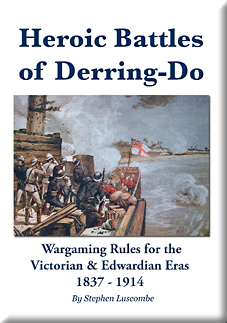
Heroic Battles of Derring‑Do is a great system for recreating the majority of conflicts from the late 18th century through to the turn of the 19th century, and it handles many types of engagements across these periods. You could even push it earlier if you wanted to try the American Revolution.
The rules are robust, with plenty of options to adjust and customise armies to fit your needs, and the pre‑made lists are very good for running a quick game. There is enough flavour for the armies to feel significantly different without becoming so complex that you need to stare at a chart every five minutes. Whether you want to run a Colonial conflict or a more conventional war, the game handles both equally well. While I haven’t yet had the opportunity to play with a fully mounted army for the Great Plains Wars, I believe the rules would do an excellent job of handling it without any issues. As it is more of a regiment‑versus‑regiment system, it excels at presenting a snippet of a battle rather than a full‑scale engagement—though you could certainly run a massive convention game with multiple regiments if you wished. Think more Rorke’s Drift or the scene in Gettysburg where Cumberland holds back a Confederate push.
Terrain-wise, the game really allows for the right feeling in skirmishes. I am very excited to try a Seminole War game, with Maroons popping out of the thick foliage and swamps of Florida. Adding to that is the possibility of random events—bad weather, sudden fires, and so on—which creates a very thematic experience. I think you could even run an urban game with these rules, and it would be very interesting to see how street fighting would play out.
The real gem of this game is the combat and the command units. Heroic Battles of Derring‑Do handles 19th‑century combat extremely well, as it simulates a key aspect of warfare in the period: it takes a lot to actually kill someone with black‑powder weapons, and most losses come from attrition and morale. Units can lose combat effectiveness long before they are wiped out, and it is far more common to see a unit take flight or be driven back than to be killed to the last man. That feels absolutely right.
The command unit is very well thought out and feels organic in play. You can feel its presence on the table as it reinforces damaged units, takes in men from broken sections, and recycles them into other flanks. In one game, my left flank of Mahdist‑fighting British was slowly being worn down, and I had to bring my command unit up behind them to drop off fresh models to hold the line. As units finally fell to the horde of Mahdists, they would return to the command unit only to be sent off again to fight. It was very entertaining to watch models fall and be immediately replaced until, eventually, the British were able to weather the storm of fanatical Mahdists.
In conclusion, I highly recommend this system to anyone interested in wargaming the 19th century. When I next plan a project in this period, Heroic Battles of Derring‑Do will be my system of choice.
|