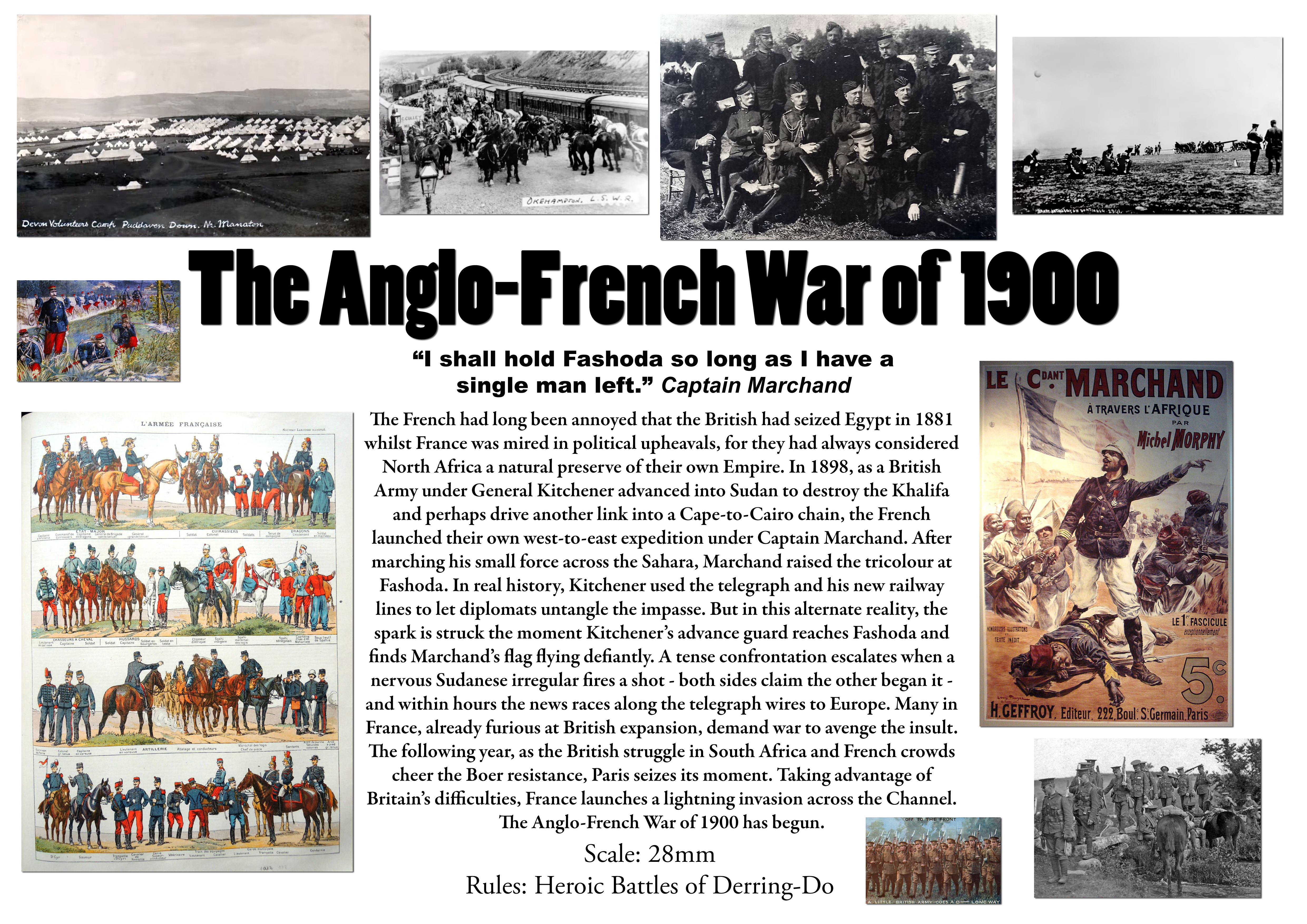
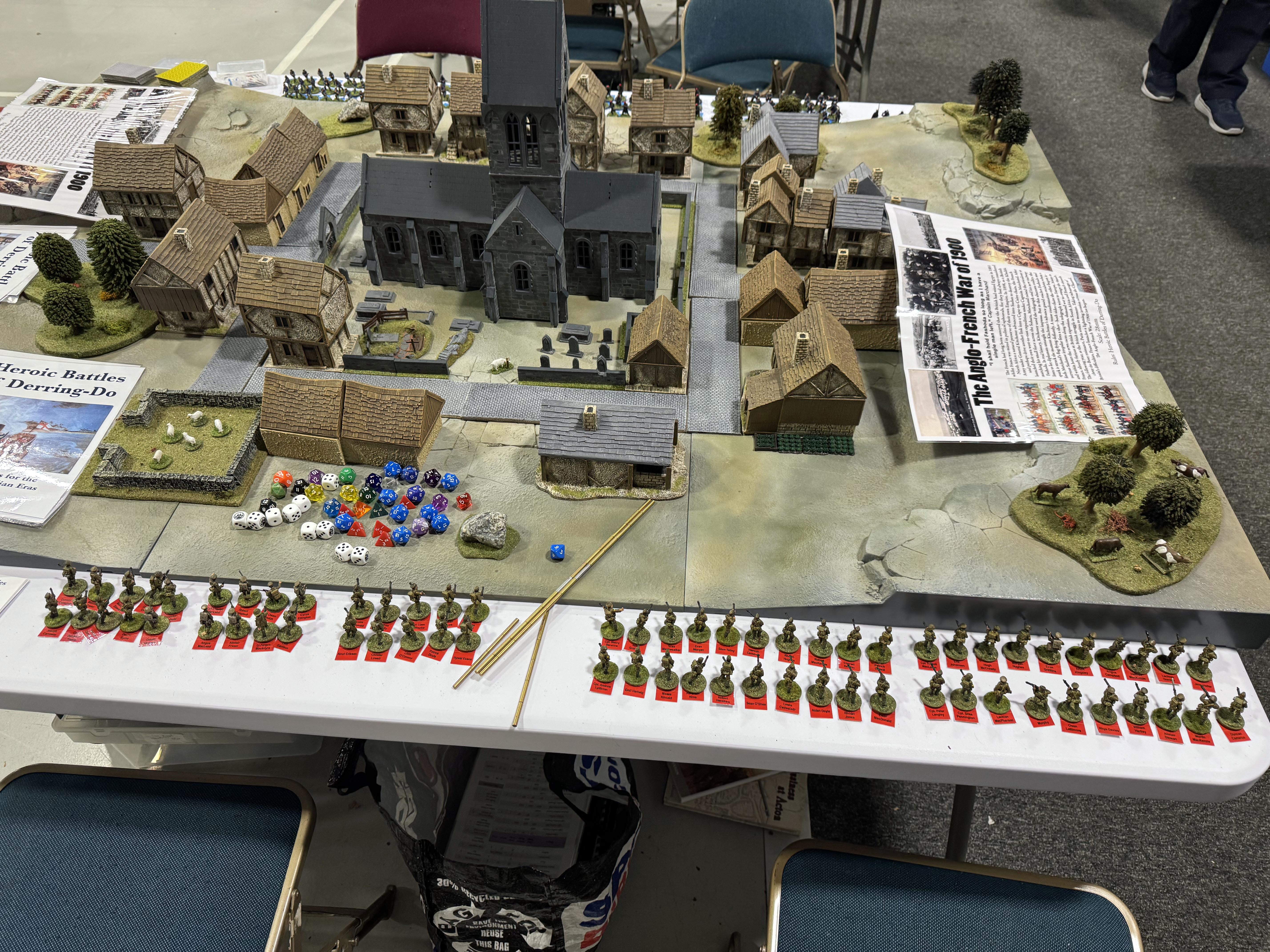
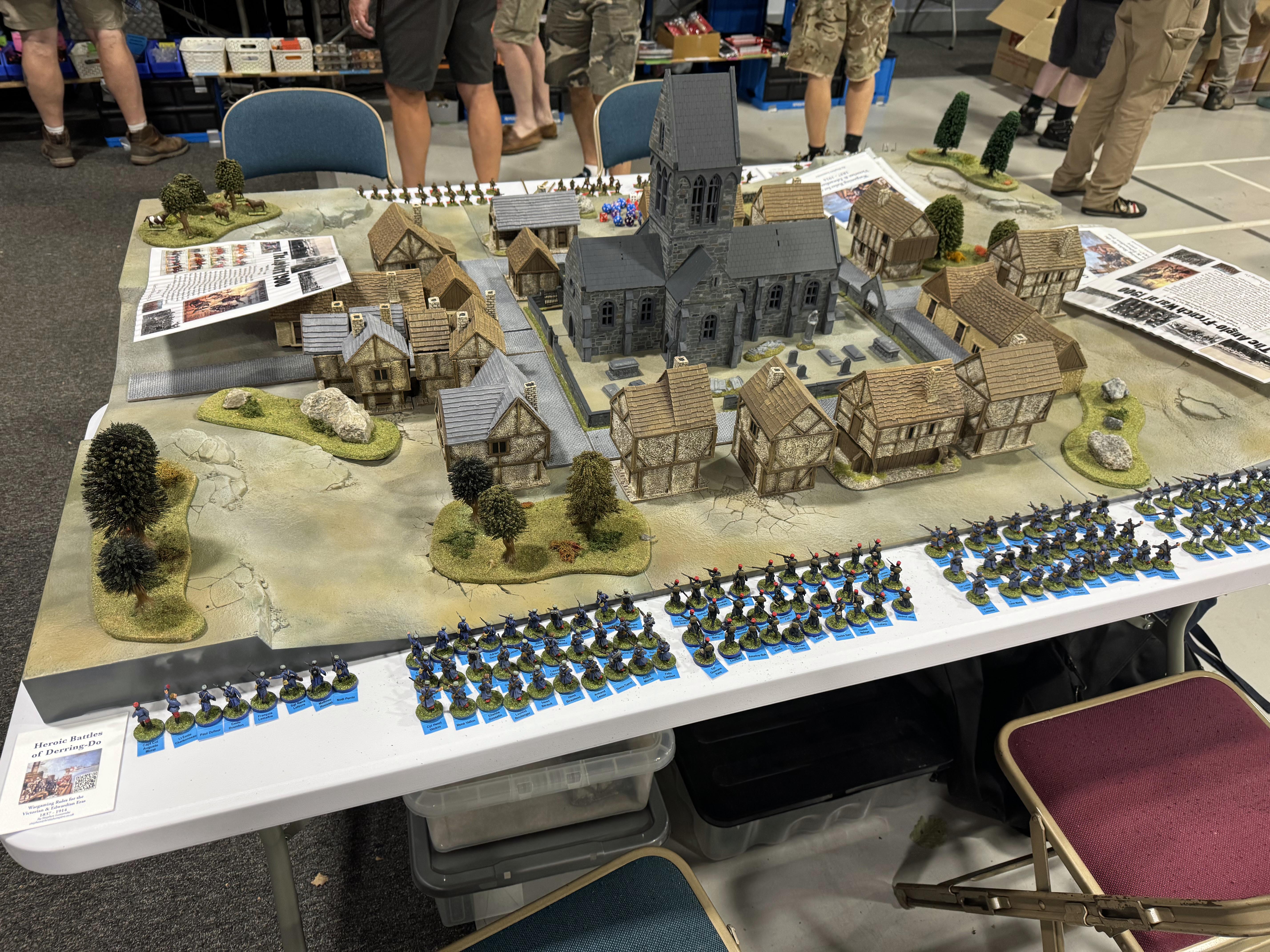
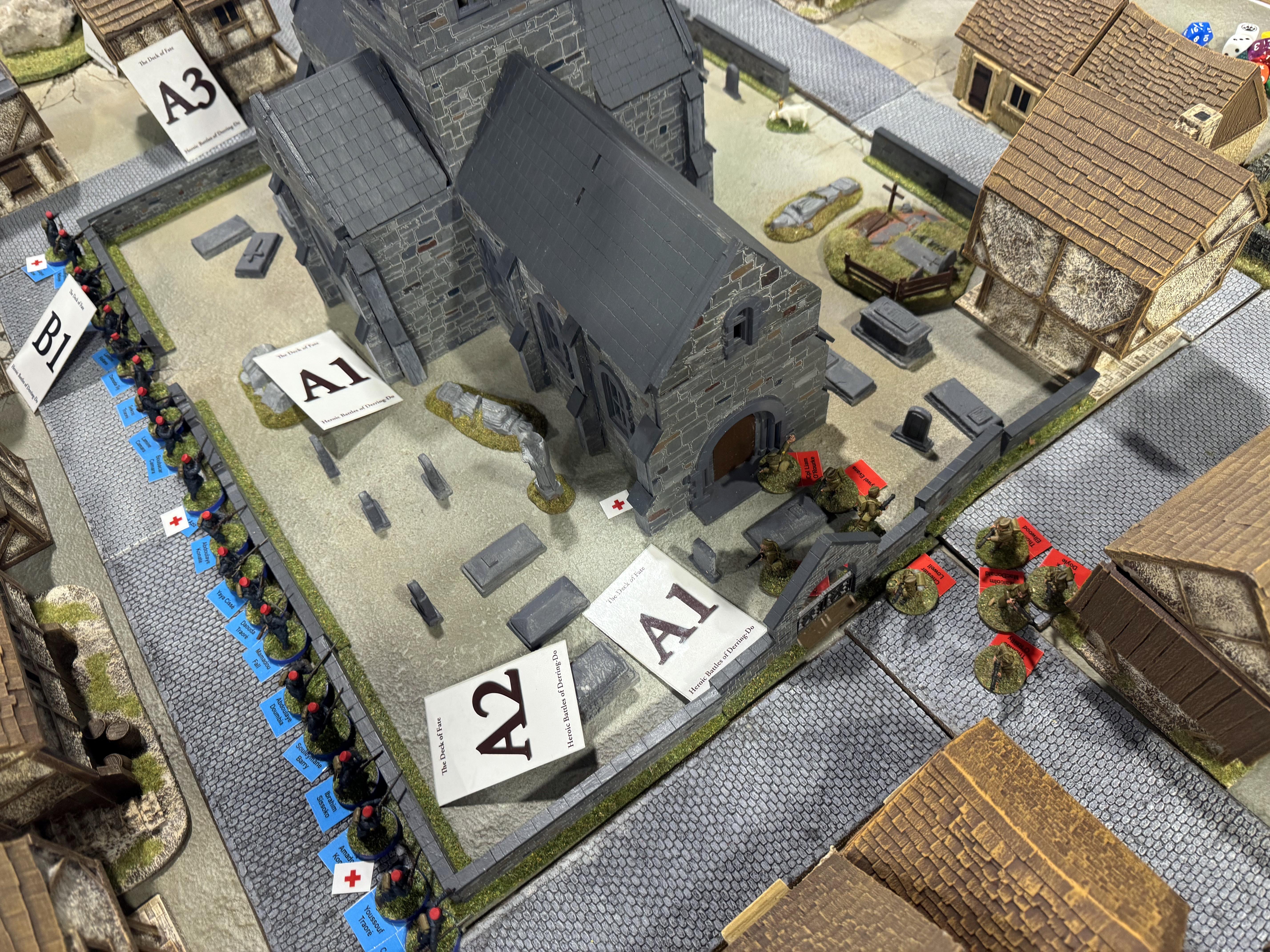
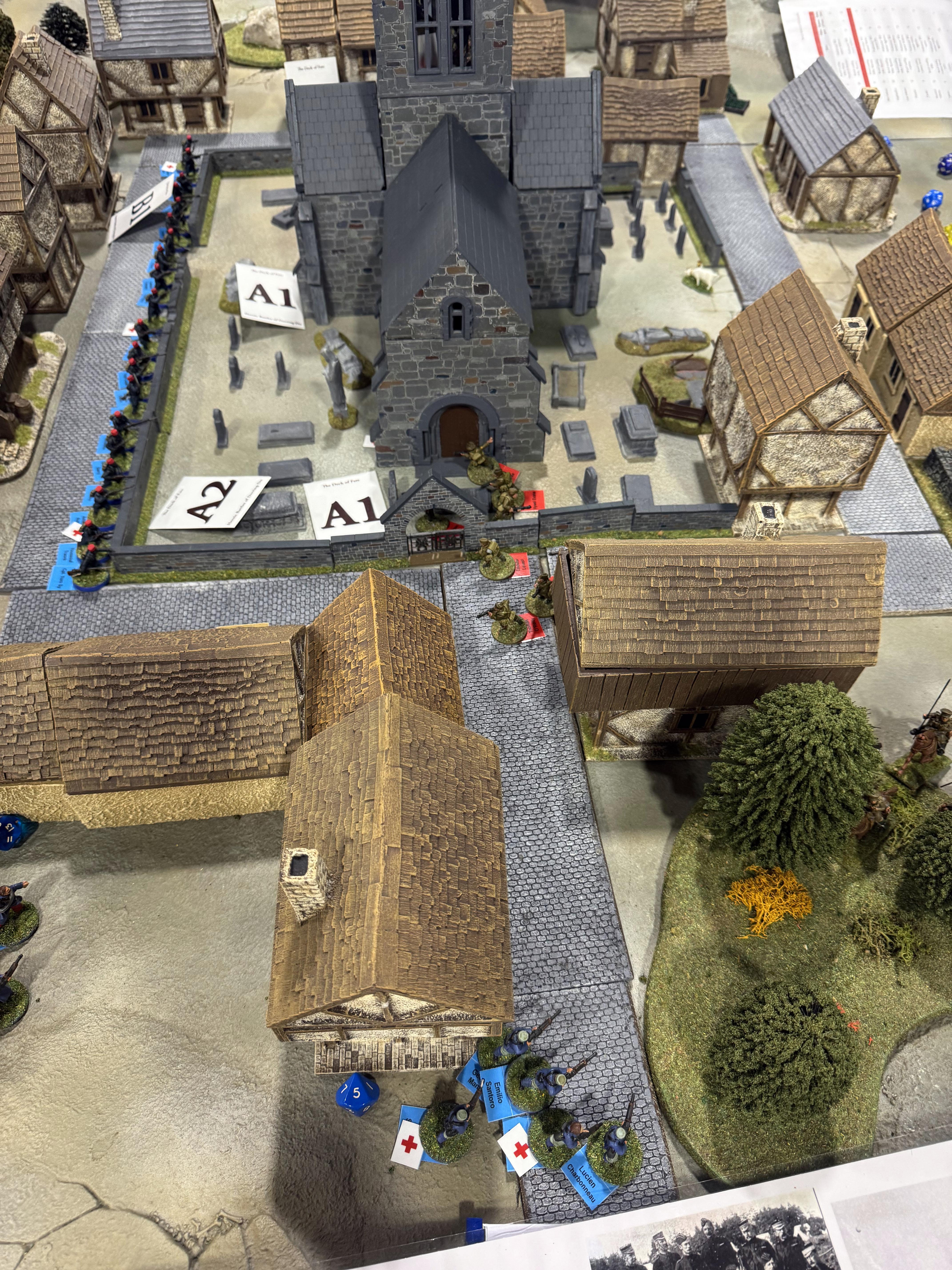
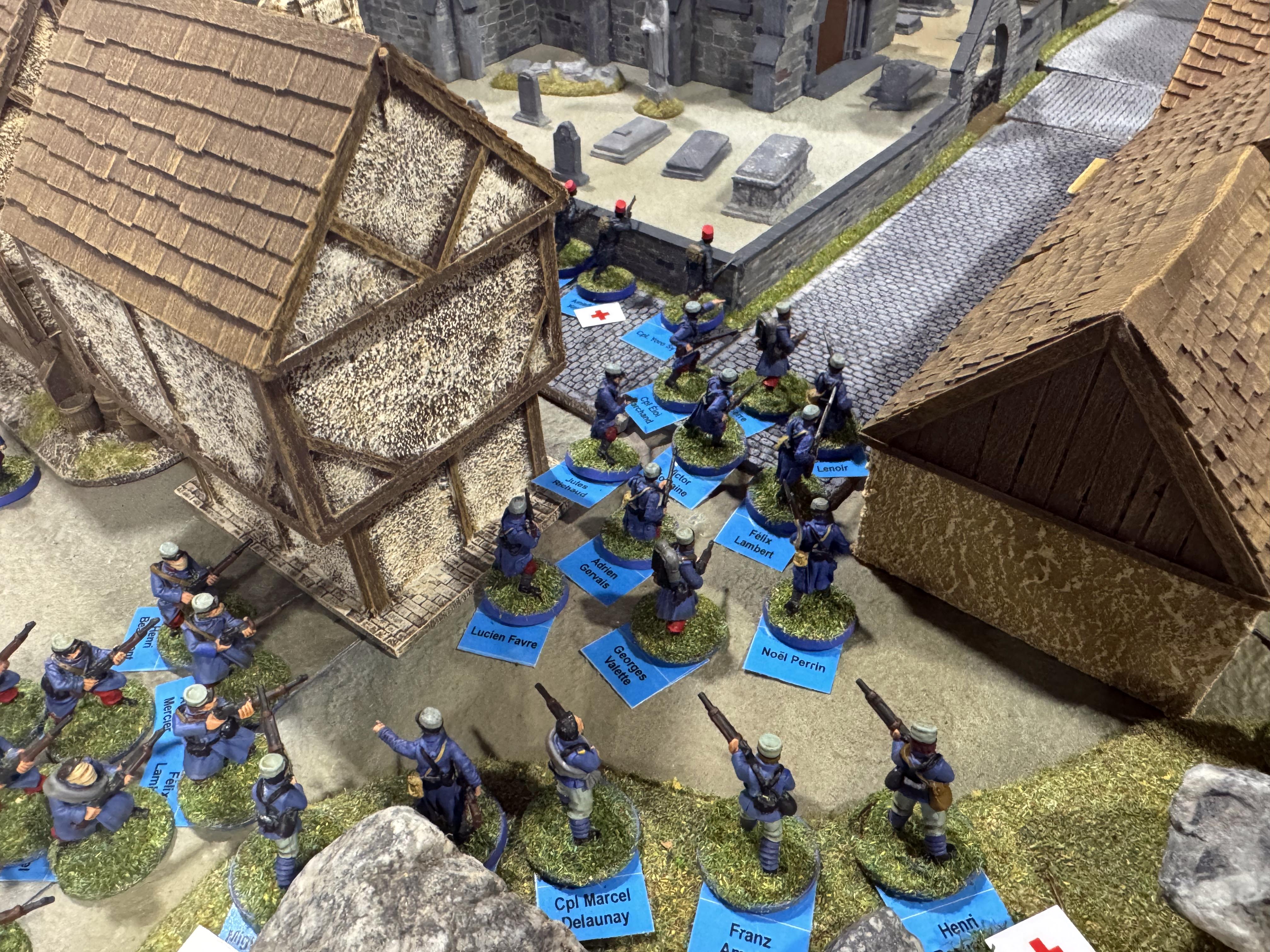
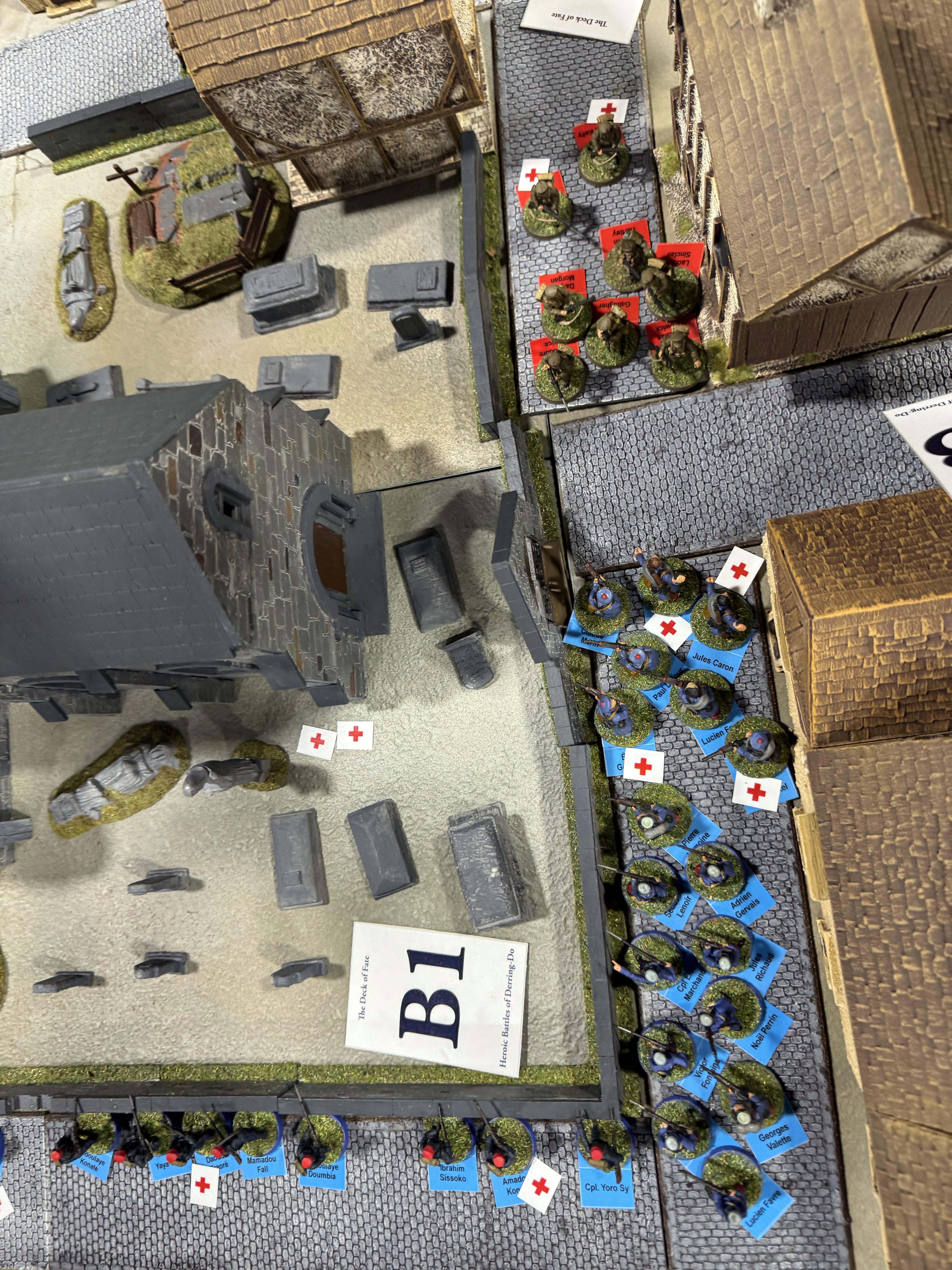
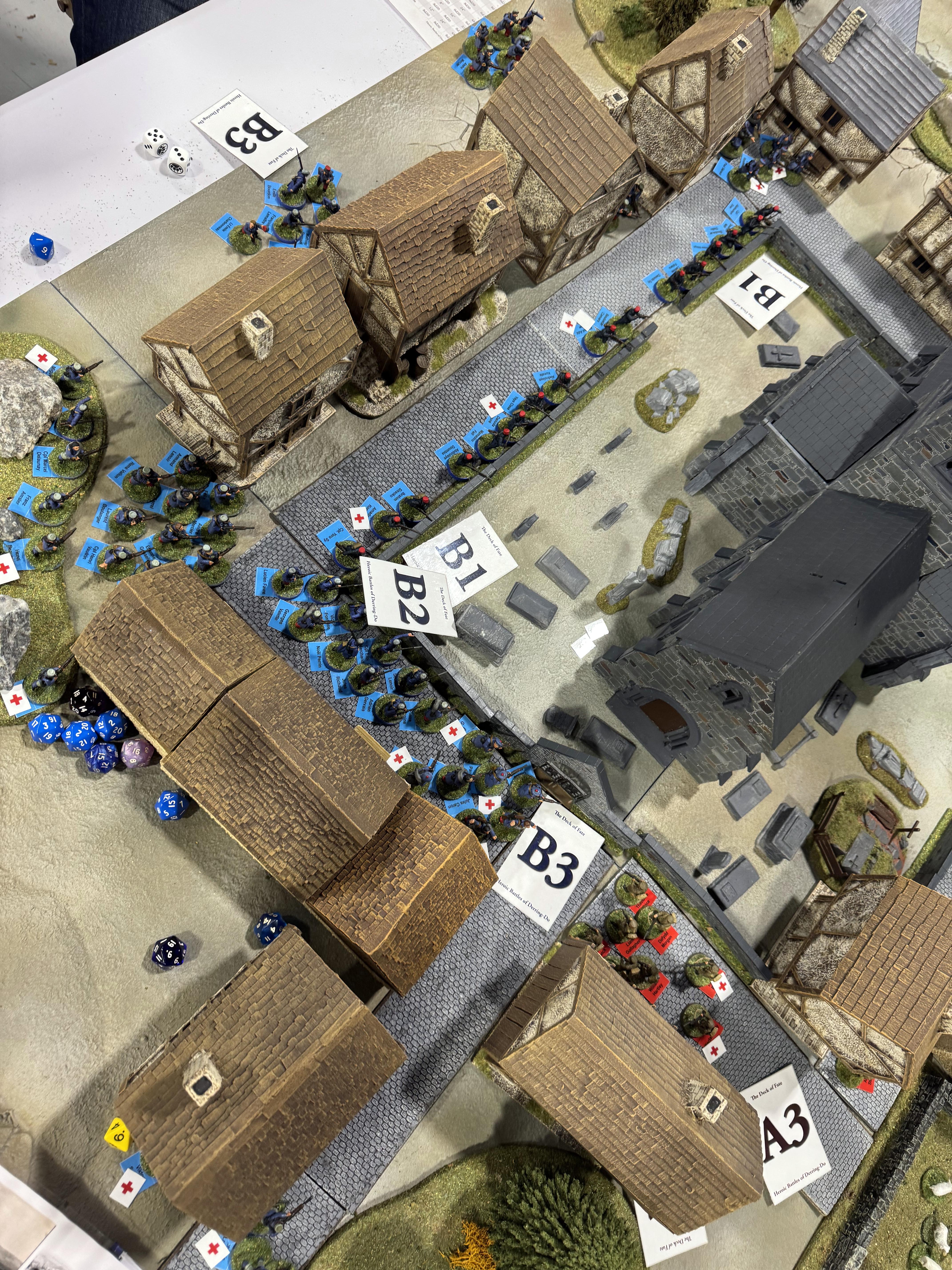
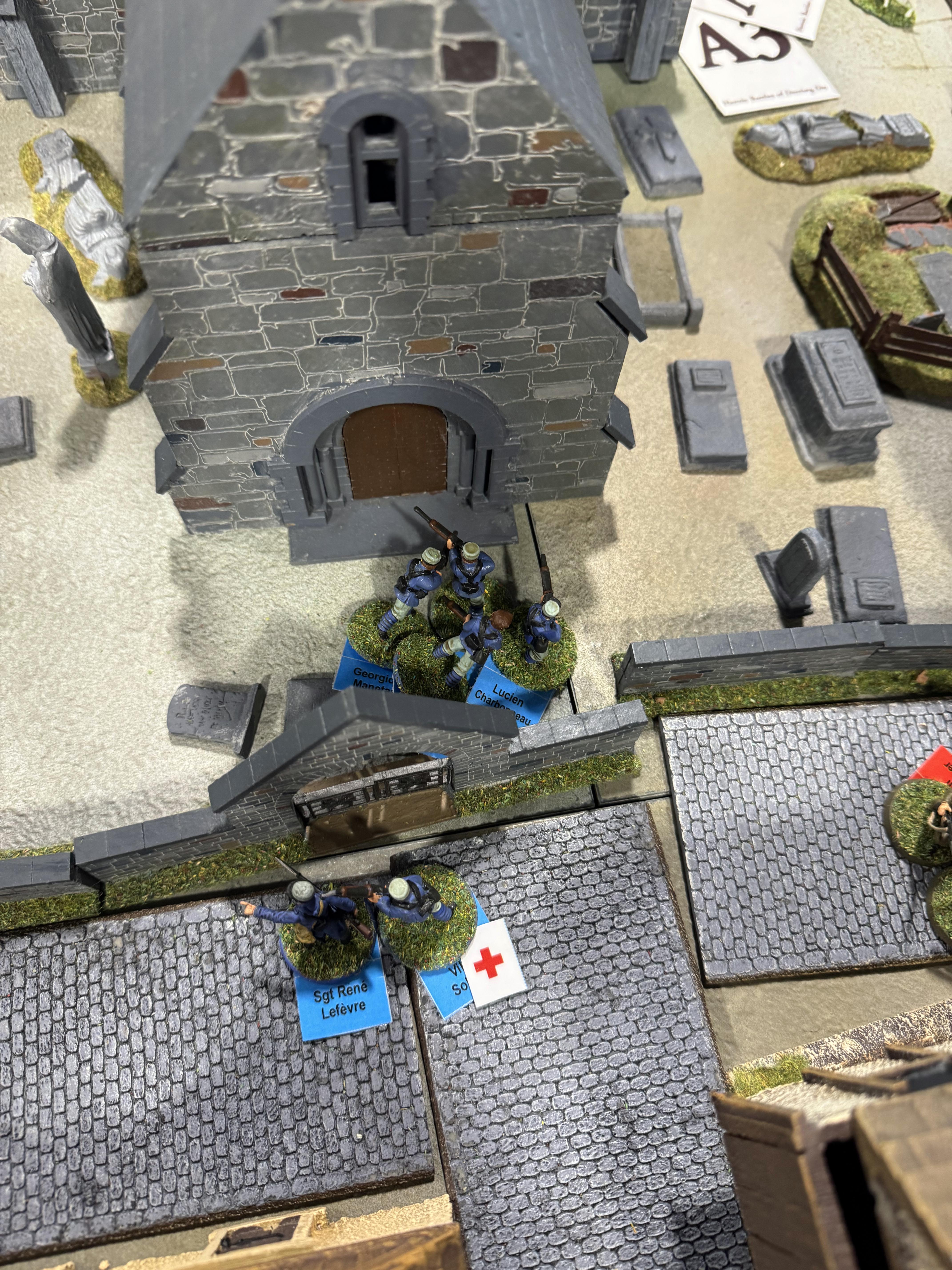
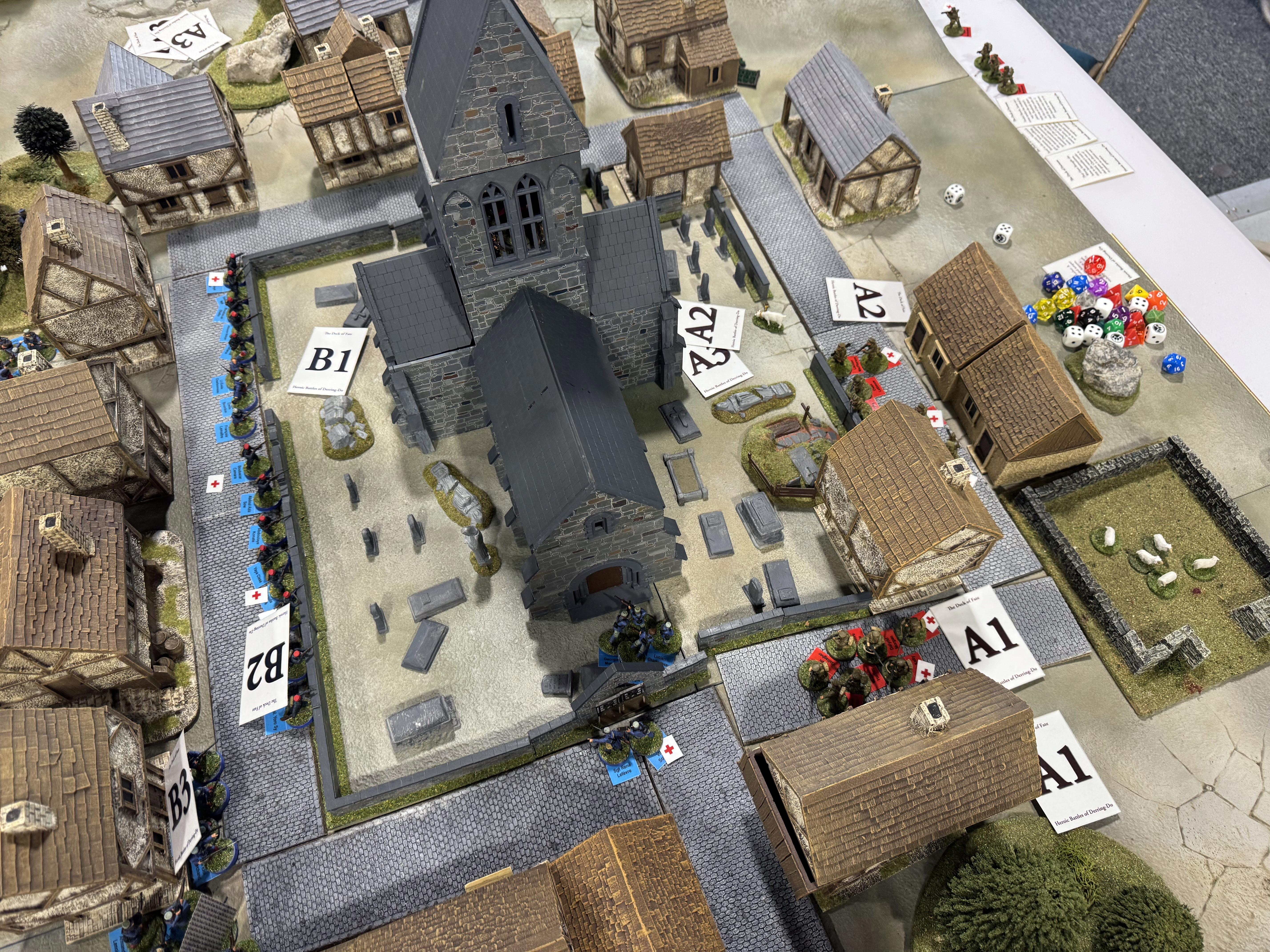
It was in those anxious days, when our strength was scattered across the distant veldt and the home counties lay exposed to whatever bold enemy might seize the hour, that the French descended upon the southern shires in their bright, insolent uniforms. The villages and lanes of Surrey, so lately peaceful, found themselves the theatre of an enterprise whose consequences, had Providence not intervened, might have proved fatal to the capital itself. At Dorking, where the spire of St Martin’s rises above the clustered roofs, Captain MacLeod, with such fragments of force as remained to him, resolved to make a stand. He knew well that the church commanded the approaches to London, and that its loss would open a clear artery for the invader.
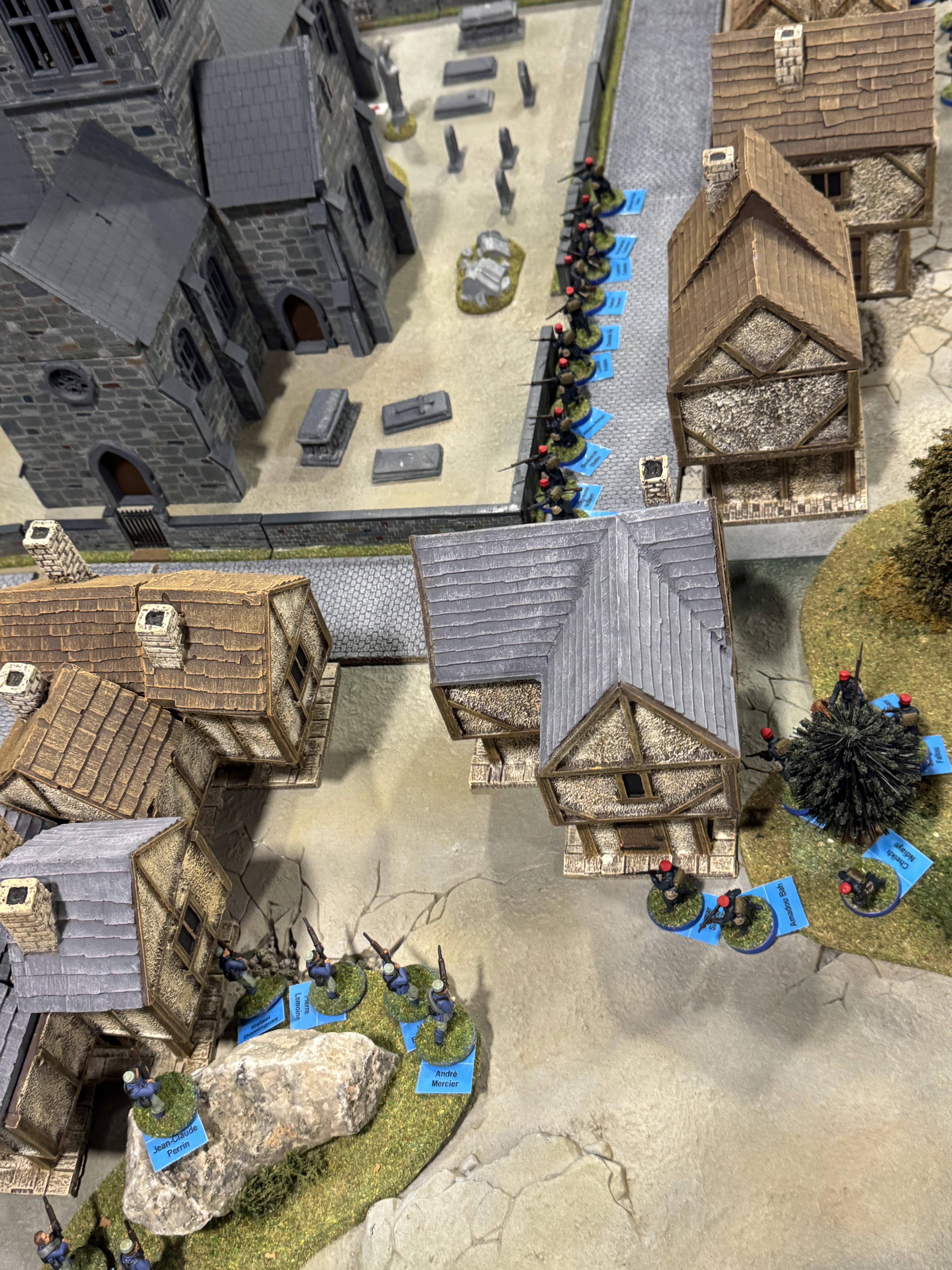
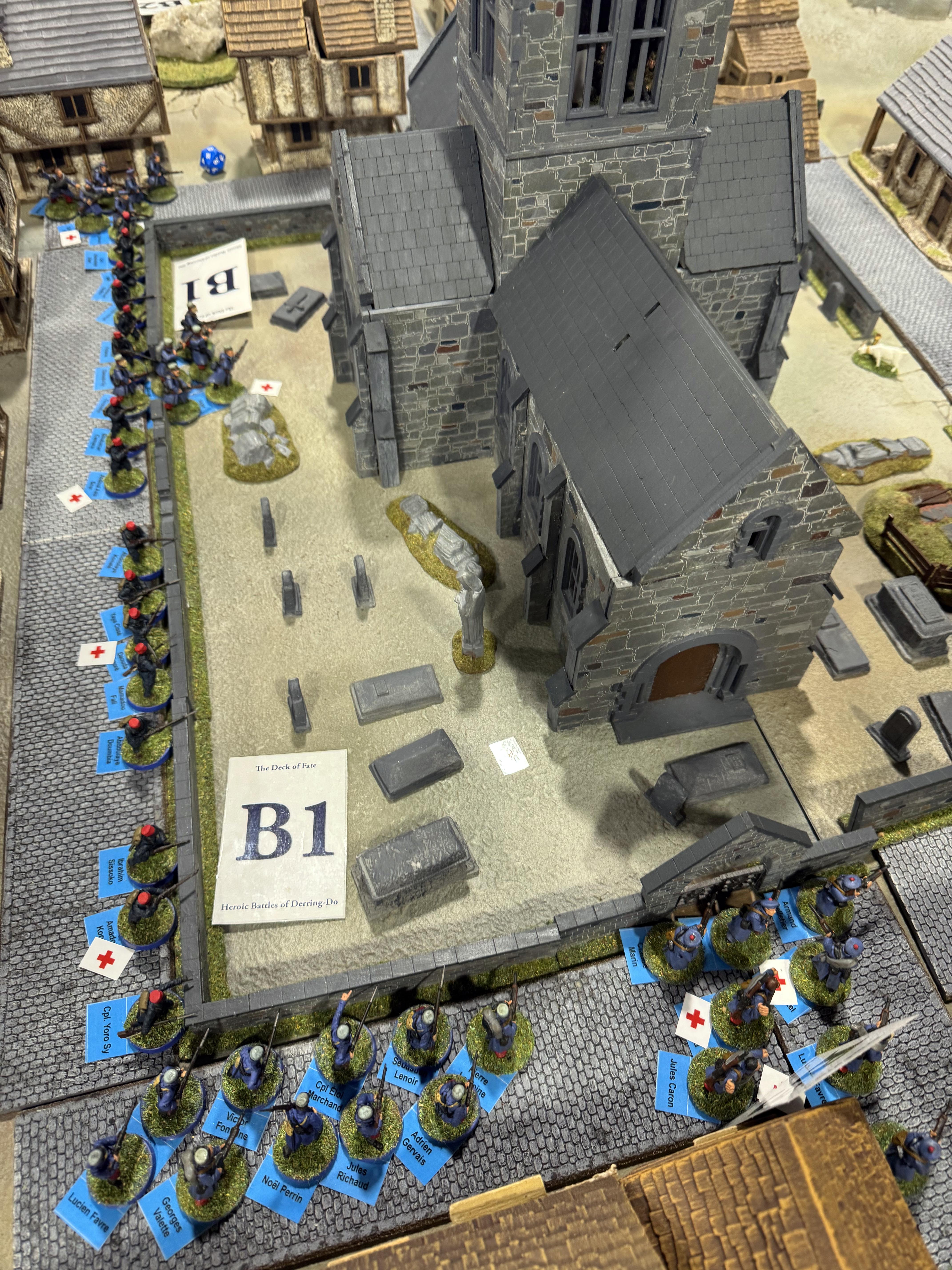
His dispositions were made with the coolness of a man who understood both the gravity of his charge and the slenderness of his means. Two sections he placed within the nave, one in the chancel, and one in the tower, whose height offered a rare vantage in that broken ground. Another section he concealed in an outbuilding, bidding them lie close until the moment came to strike. A final reserve he held behind the church, ready to be thrown where the line might waver. A troop of Lancers had been sent to reconnoitre the countryside; their absence weighed upon him, for he could not know whether they had been cut off or whether they might yet ride to the sound of the guns.
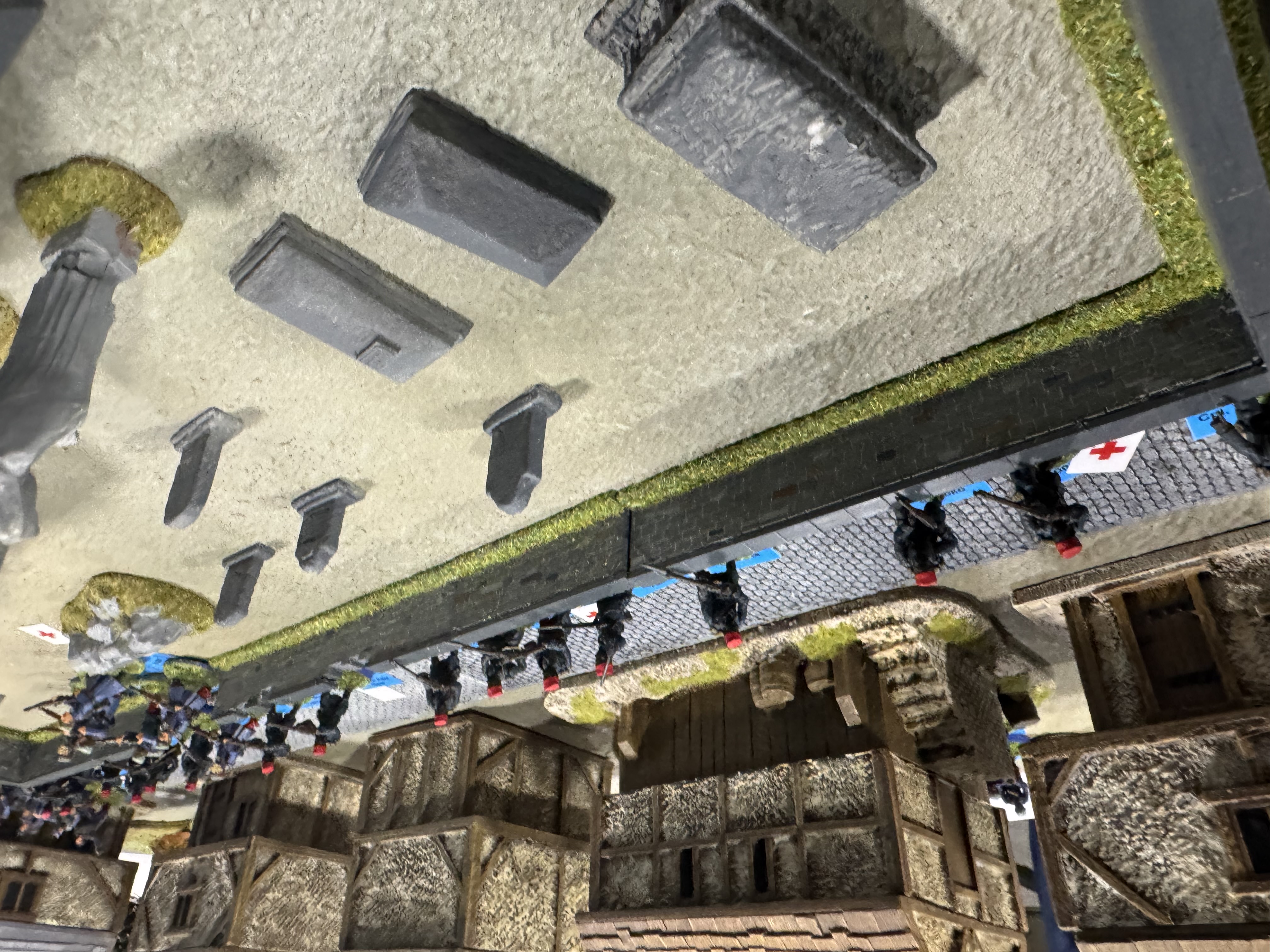
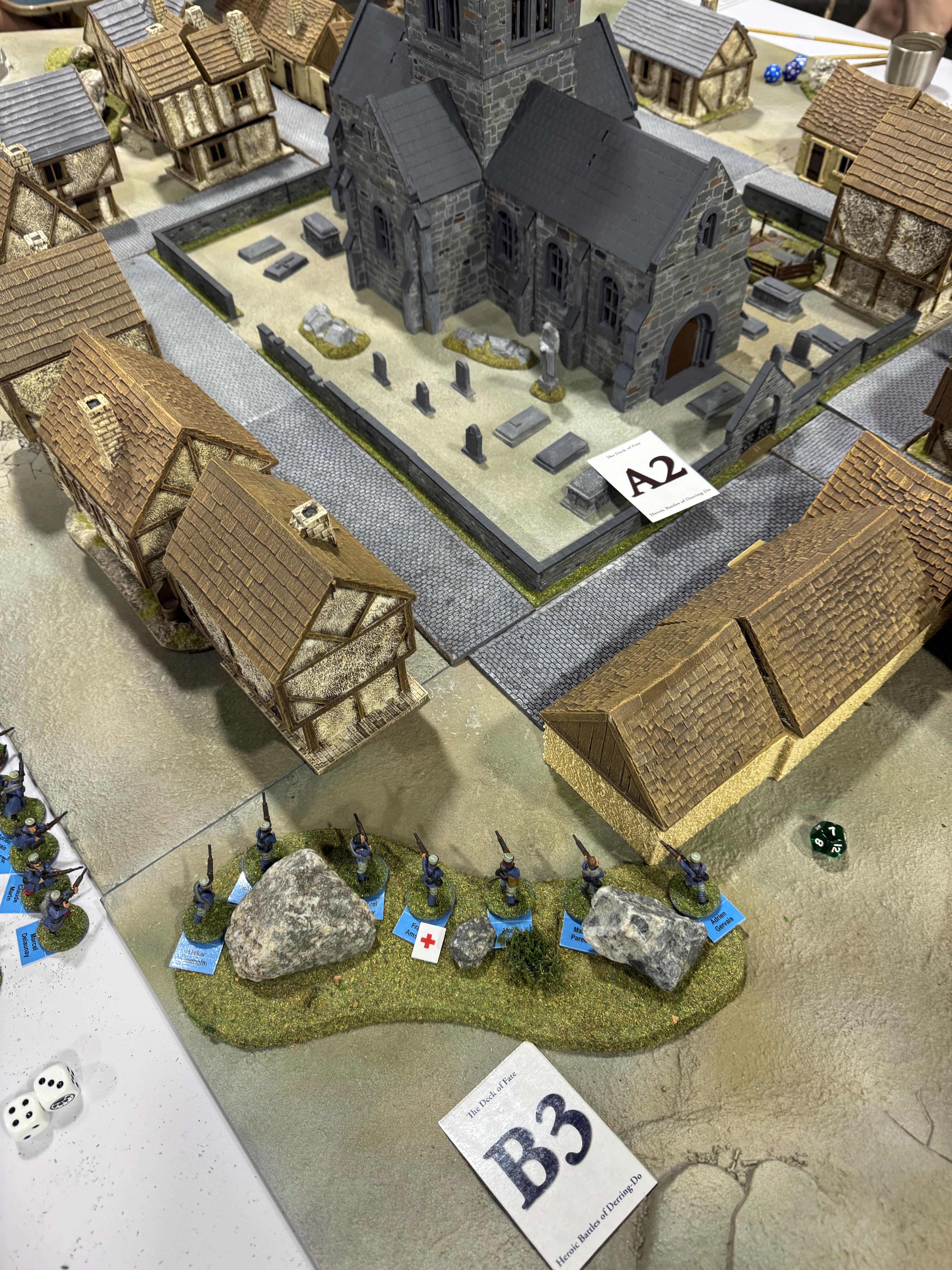
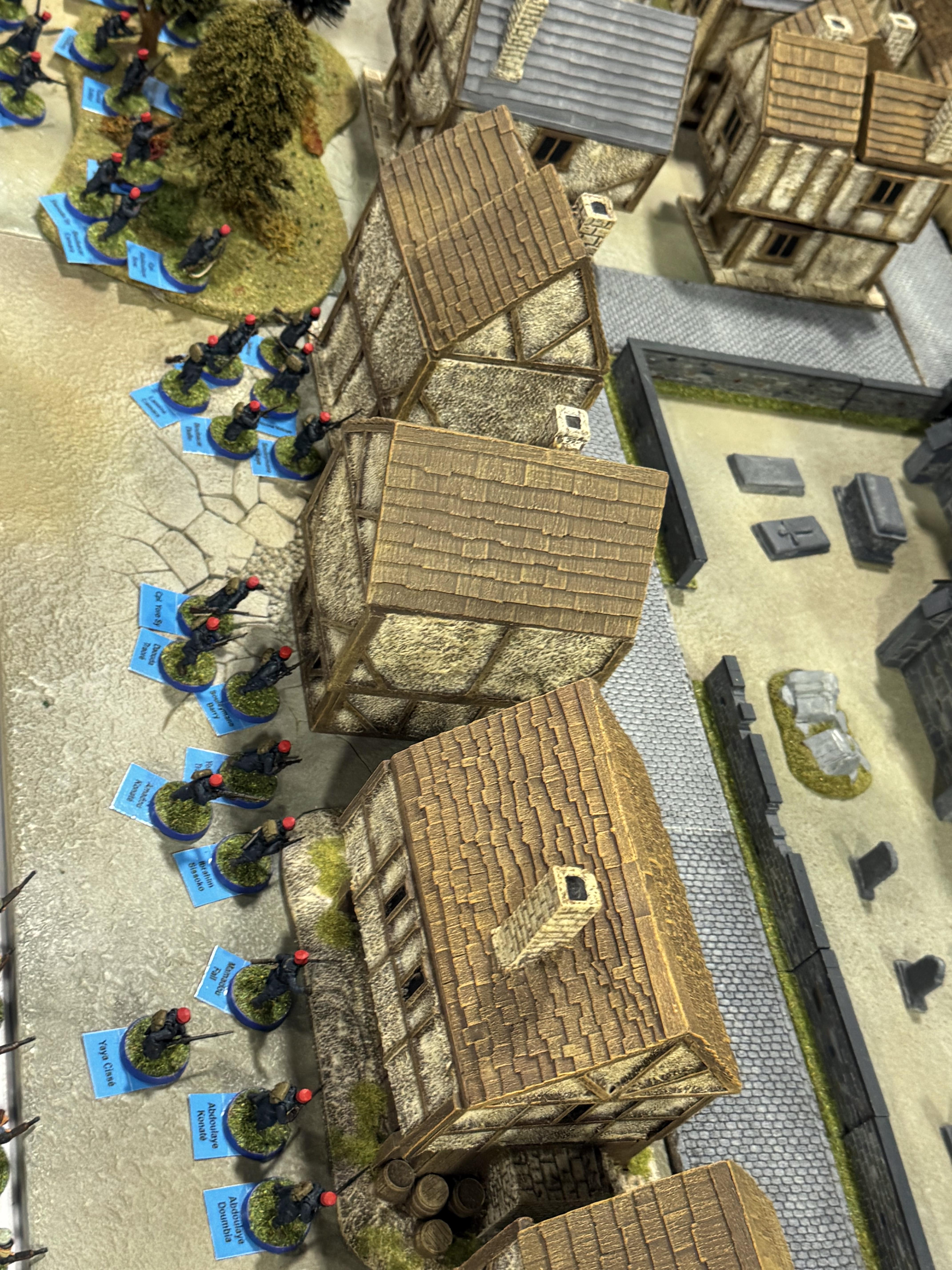
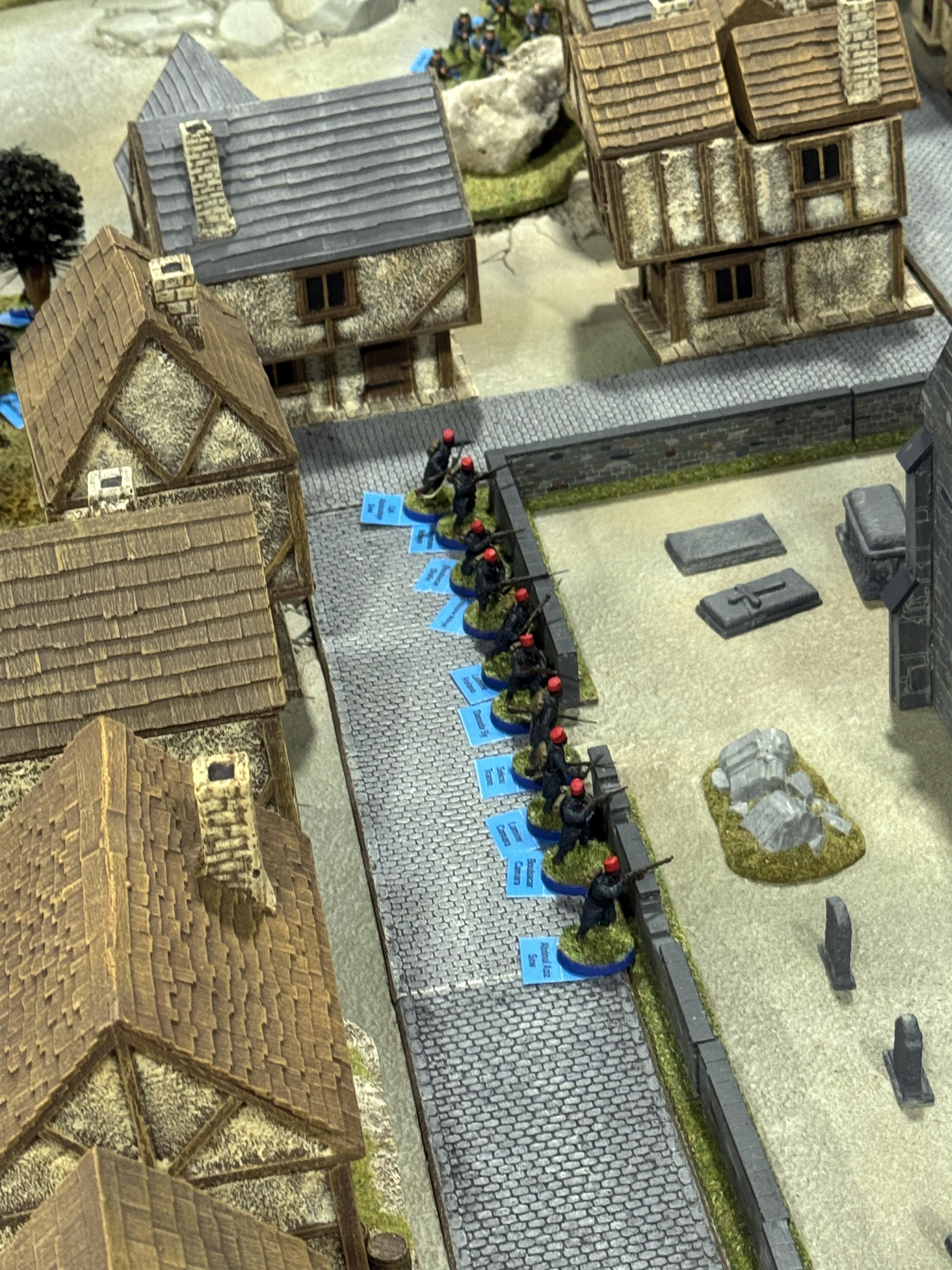
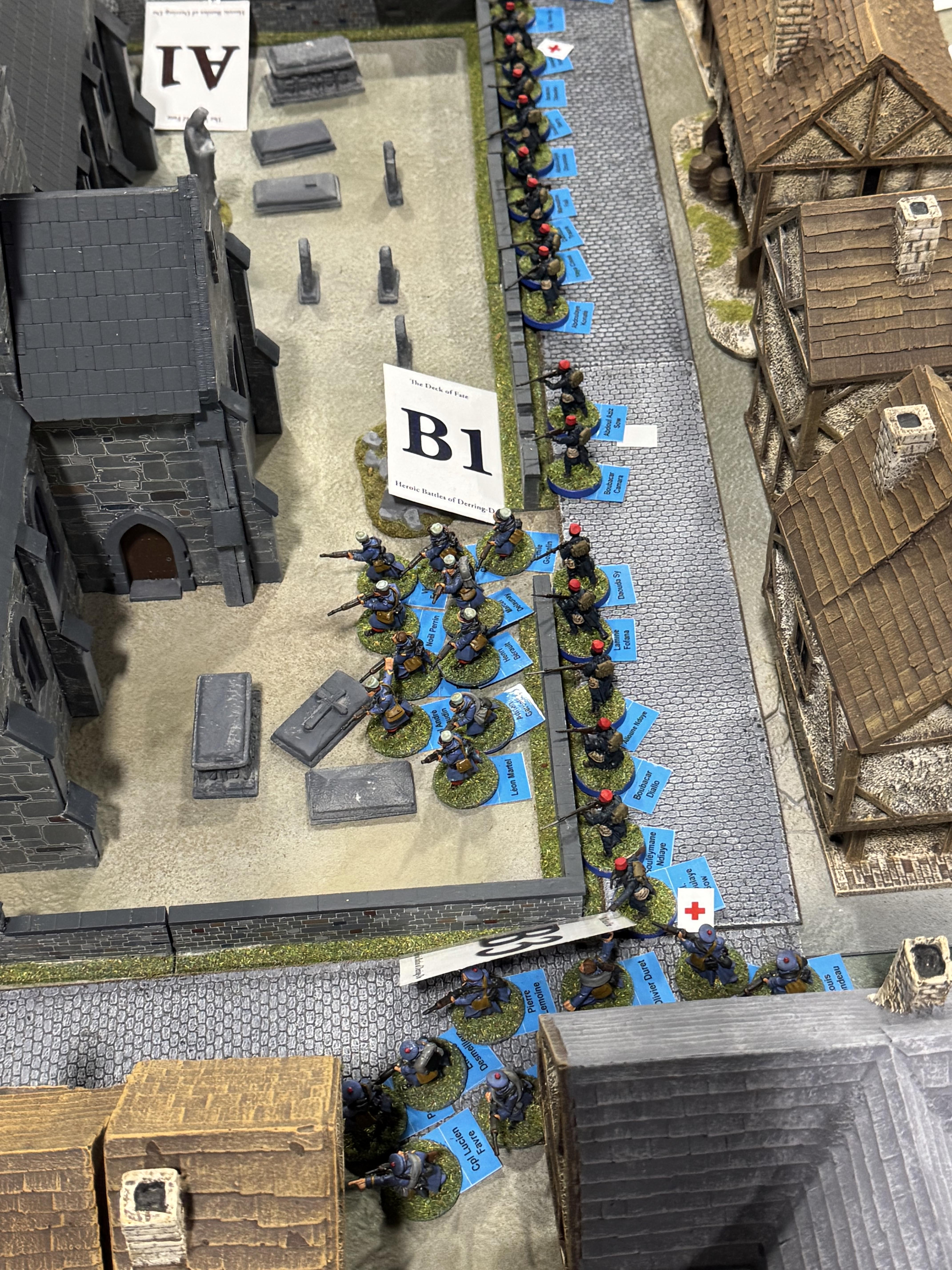
The enemy, under Captain Morel, advanced in considerable strength. Three sections of Foreign Legion light infantry moved first, feeling their way across the fields and hedgerows, followed by three waves of regulars—line infantry, marines, and Senegalese auxiliaries whose dark faces and unwavering courage made them conspicuous among the French ranks. Their main body pressed from the south, while the light troops, with the cunning of practised skirmishers, sought the flanks. It was from the tower that the first shots rang out, and the French, startled by the unexpected fire, scattered for cover.
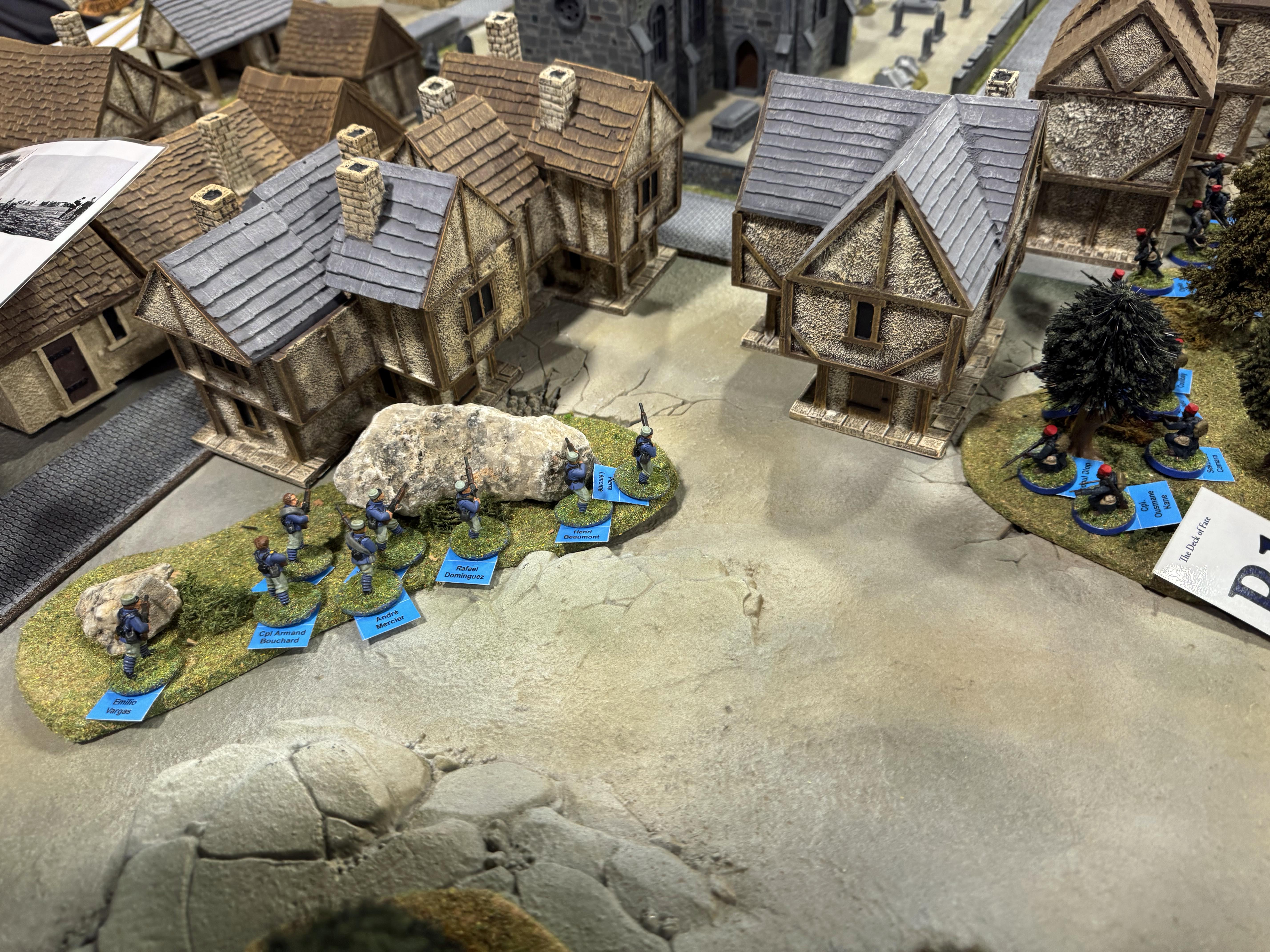
On the eastern flank one party of light infantry pushed deep into the woods, hoping to turn the British reserve. A brisk exchange soon followed, for our men, though few, were not slow to answer. A corporal fell wounded, and for a moment the section faltered; yet the line held, and the battle, which had begun almost tentatively, now declared itself in earnest.
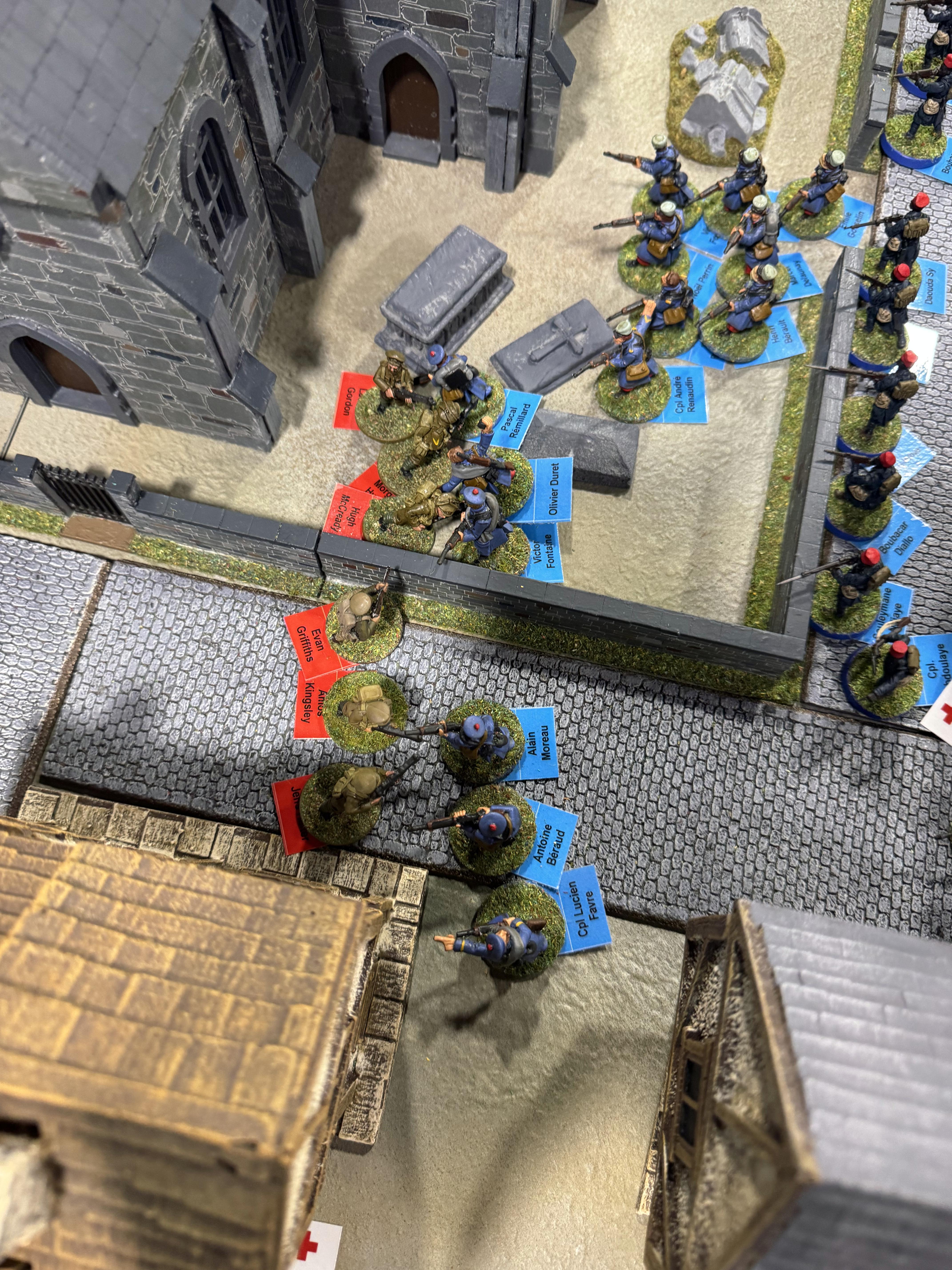
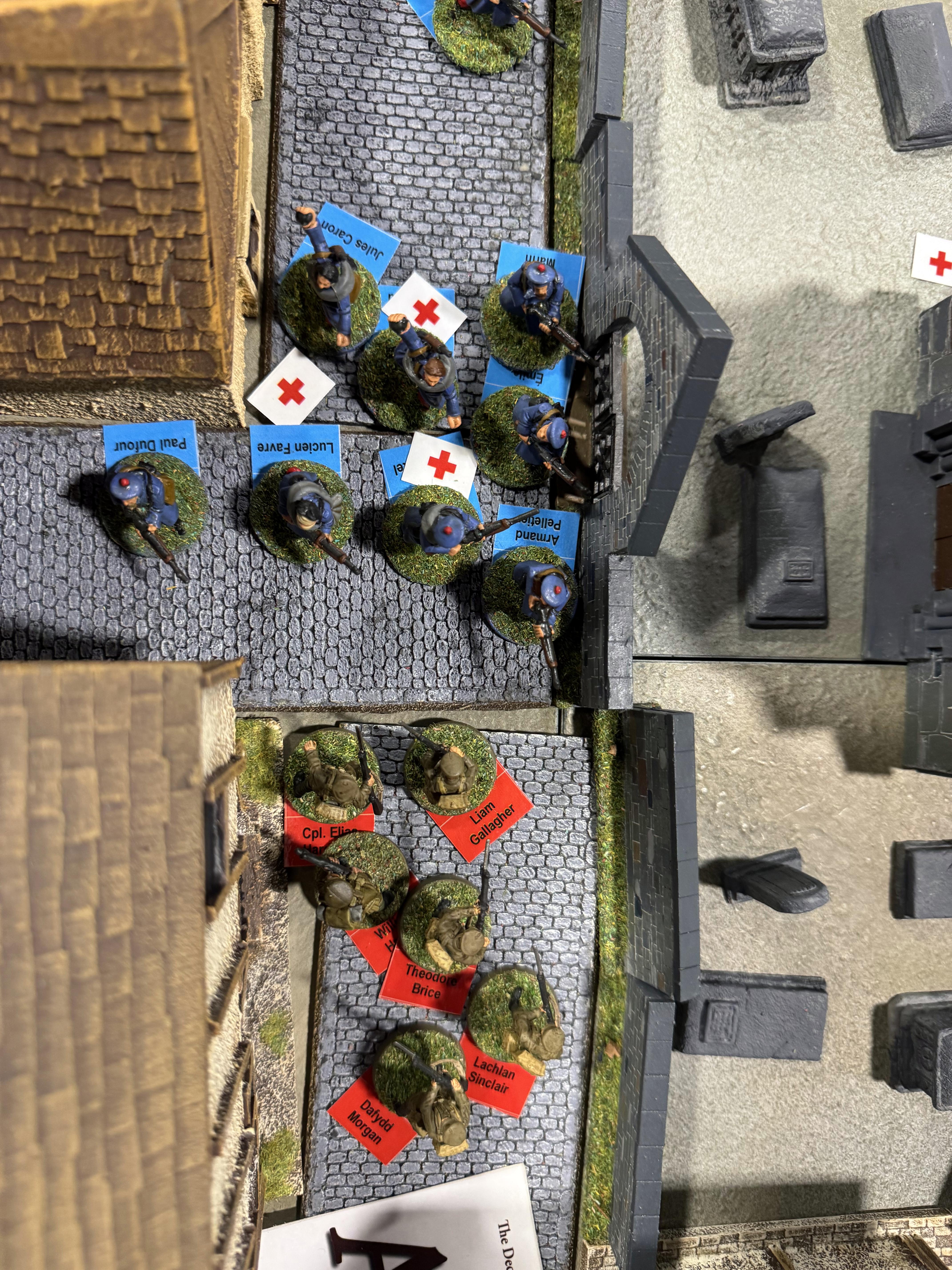
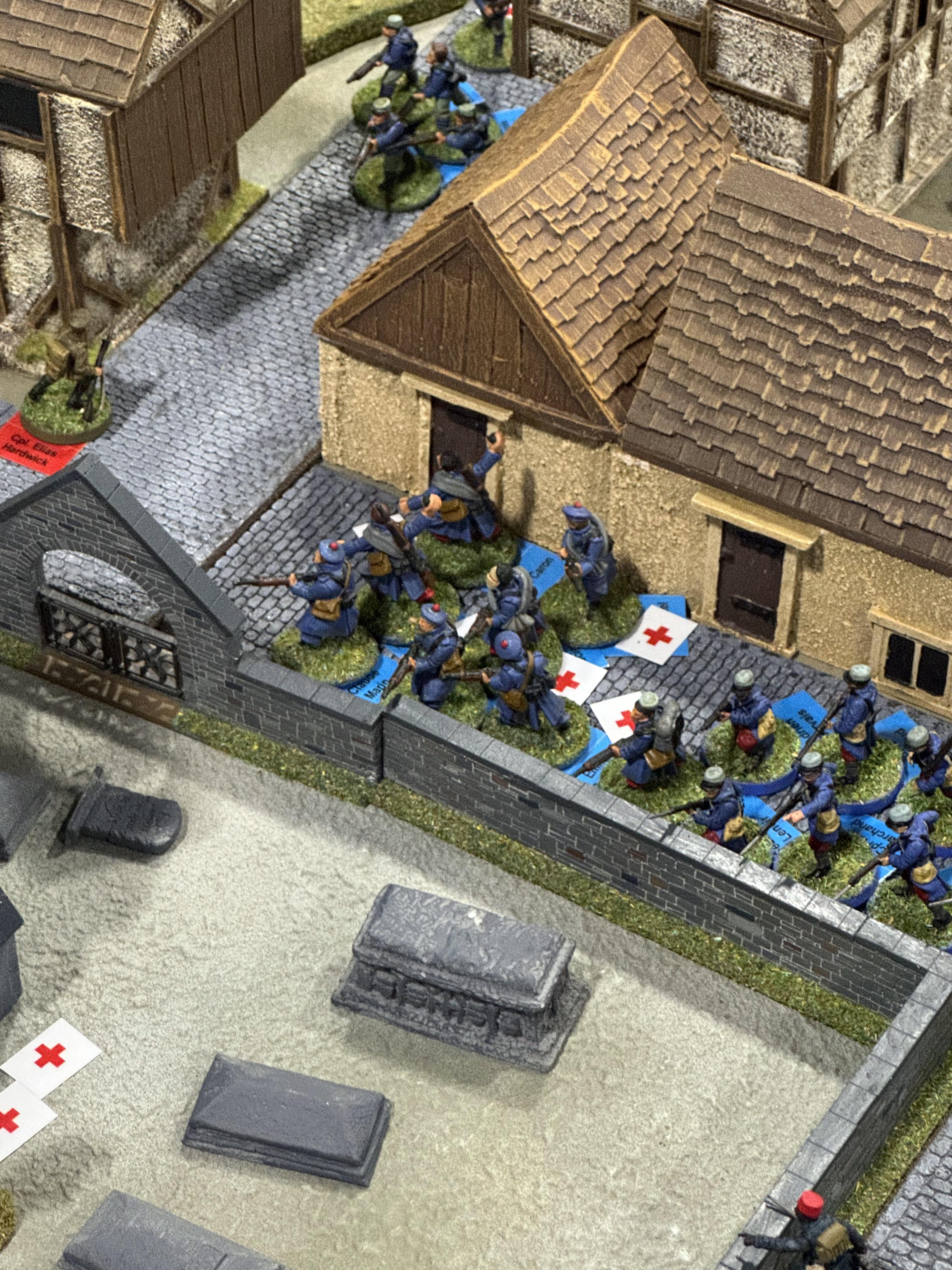
Within the church the defenders smashed the stained glass—those cherished memorials of Victorian piety—in order to command the approaches. Through the jagged apertures they saw the Senegalese pressing forward with admirable resolution, their heads rising and falling as they sought the shelter of the wall. The firing was sharp and continuous, though the Africans, unable to see the effect of their volleys upon the men behind the masonry, fought on with a grim perseverance. On the western flank they and the light infantry discovered the hidden British section in the corner house, and there ensued a fierce contest from window and doorway. Though outnumbered, our men had the advantage of surprise and made the enemy pay dearly for every yard.
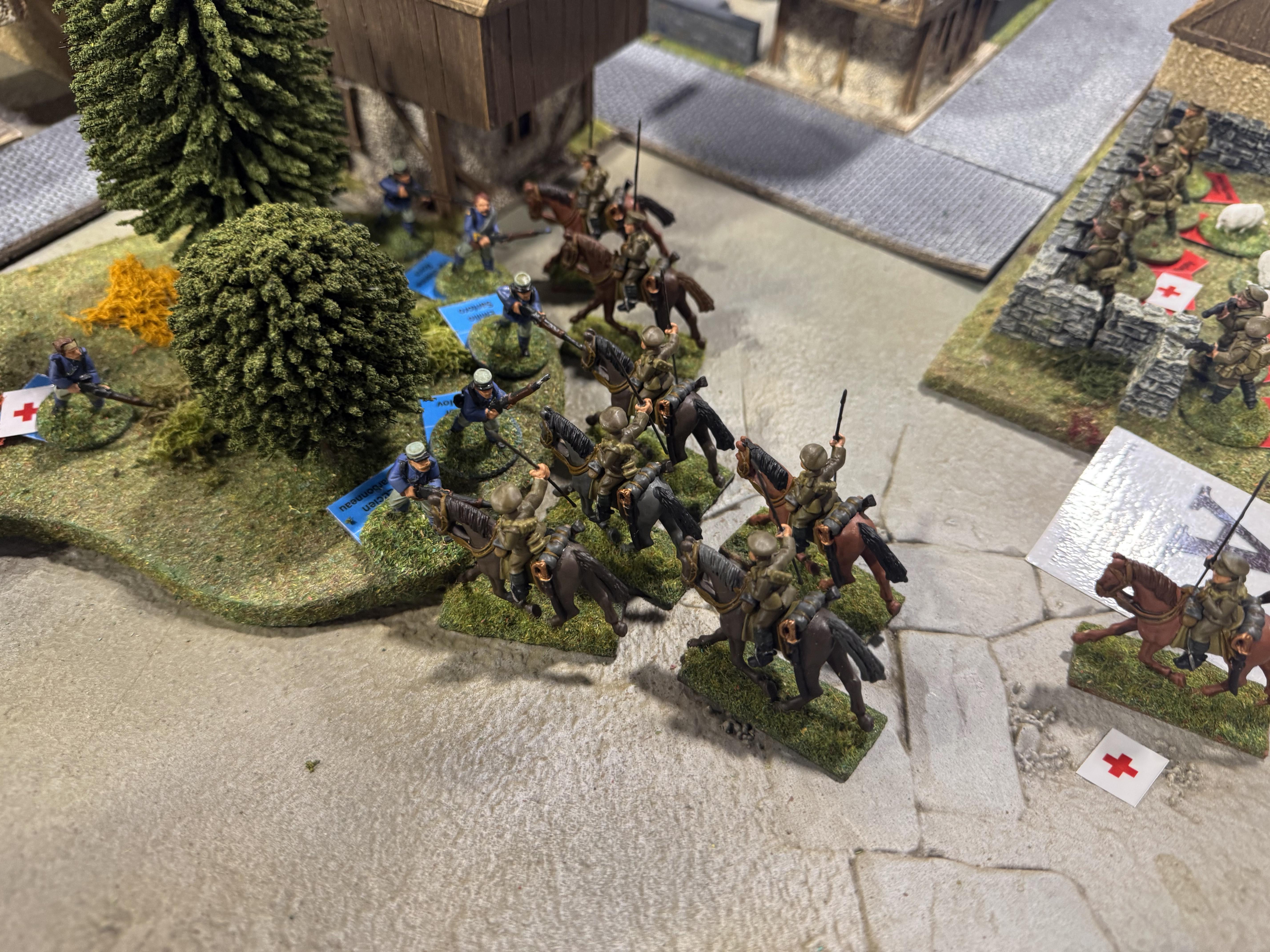
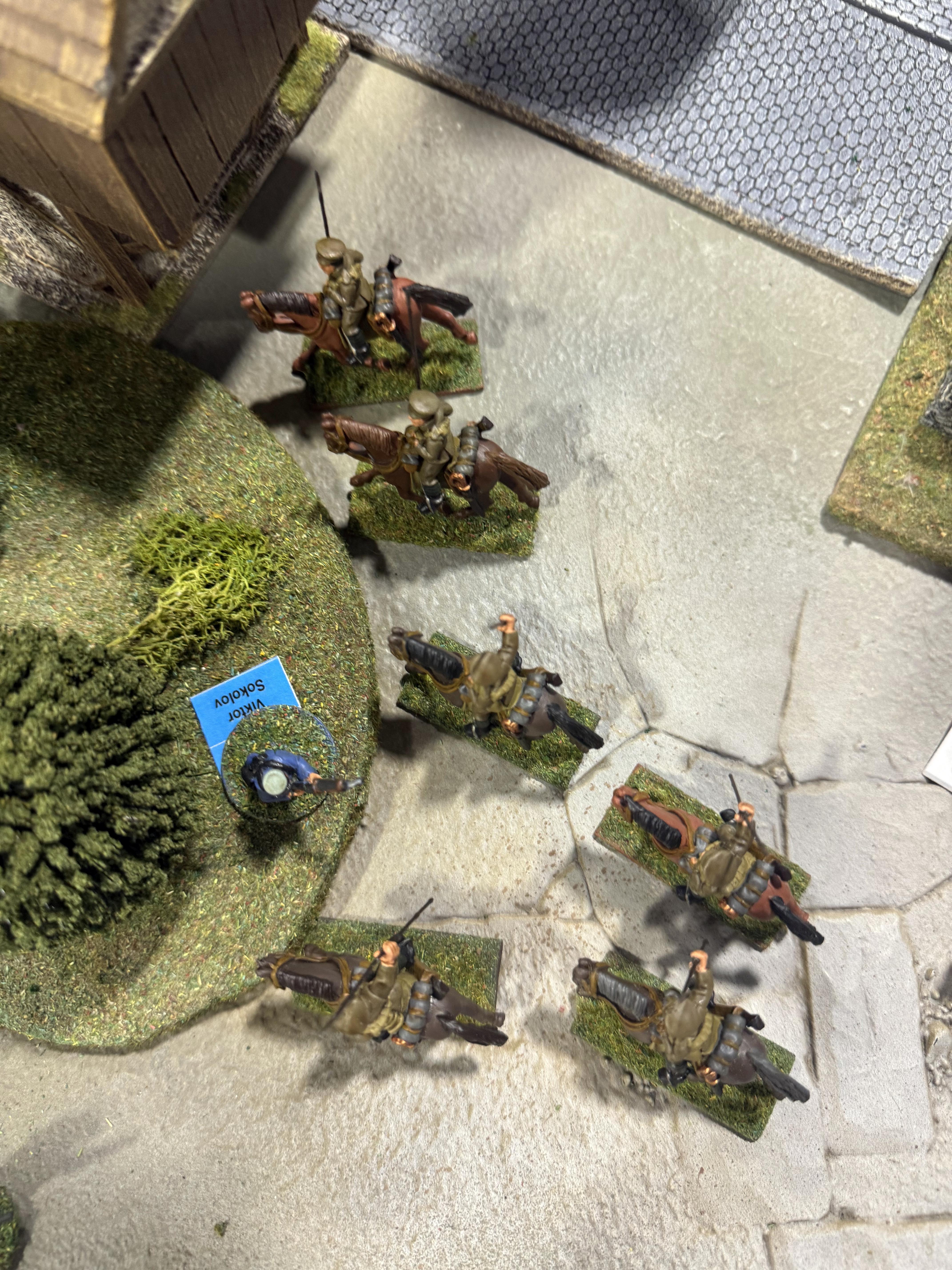
It was then that a sound, faint at first but swelling rapidly, reached the French skirmishers in the eastern wood—the unmistakable thunder of cavalry. The Lancers, having heard the distant crackle of musketry, had ridden back at the gallop, eager to strike a blow. They swept in from the north, and the infantry pointed out the enemy who, though partially concealed by the trees, found little protection against the oncoming horsemen. A few hasty shots were fired, but nothing could check the charge. It seemed for a moment that the French light infantry would be annihilated, but one man, a Russian émigré named Viktor Sokolov, fought with a ferocity bordering on madness. Swinging his rifle like a club, he brought down three troopers and slew another outright. Bloodied, staggering, scarcely knowing whether the gore upon him was his own or his foes’, he at last broke away and rejoined the remnants of his section.
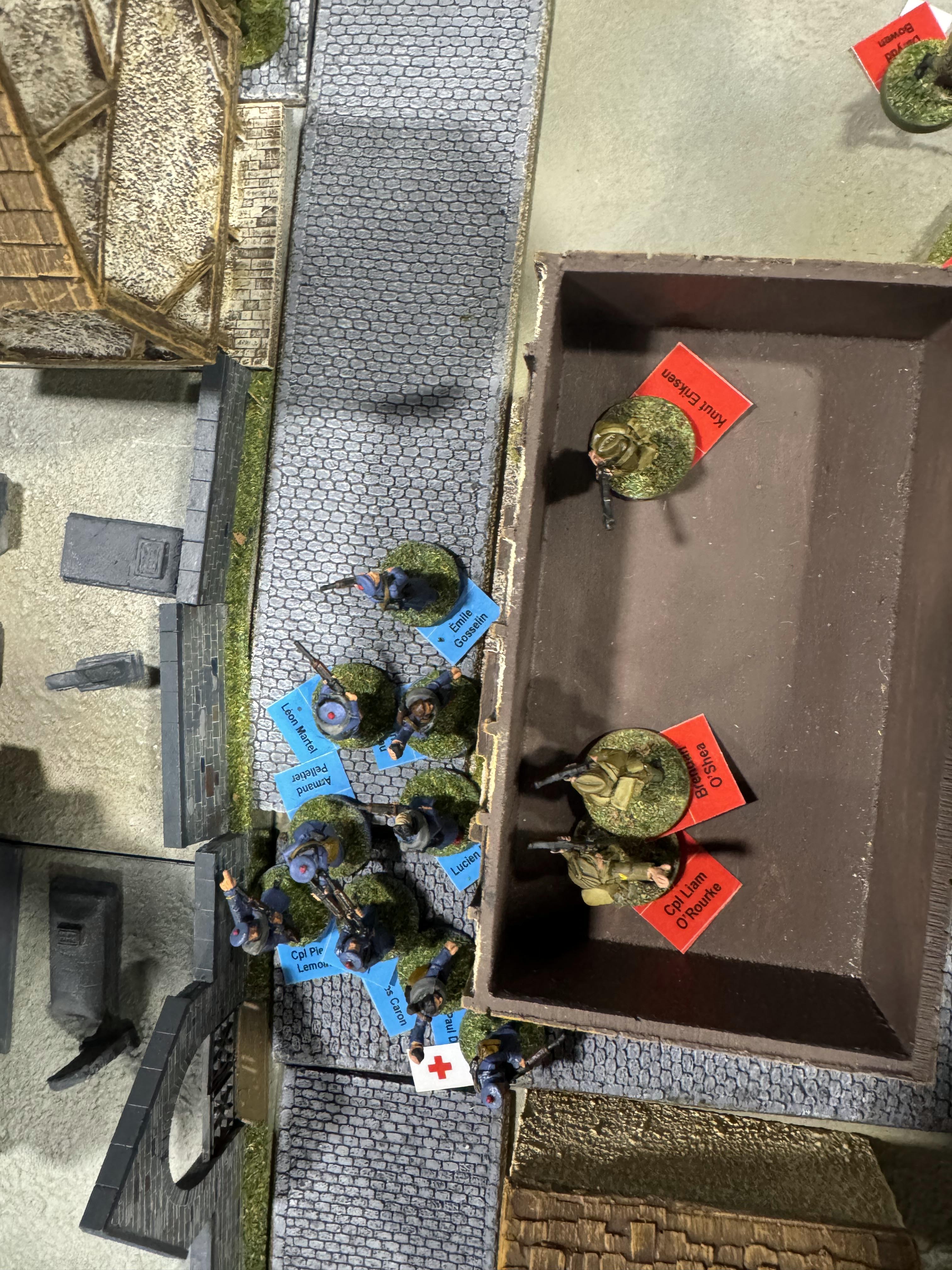
Meanwhile the fire upon the church increased. Corporal O’Rourke, finding more men than windows, was ordered to take his section outside and occupy a nearby house. They dashed across the open like men pursued by fate, loosing a few shots as they ran, and gained the building, whose numerous apertures offered a better field of fire. The French marines, impatient at the slow progress of their comrades, attempted to storm the western house, but were repulsed after a desperate struggle, Corporal Favre’s force falling back in disorder. Yet the British defenders, though victorious, were sorely tried, for the Senegalese and light infantry maintained a punishing fire upon their position.
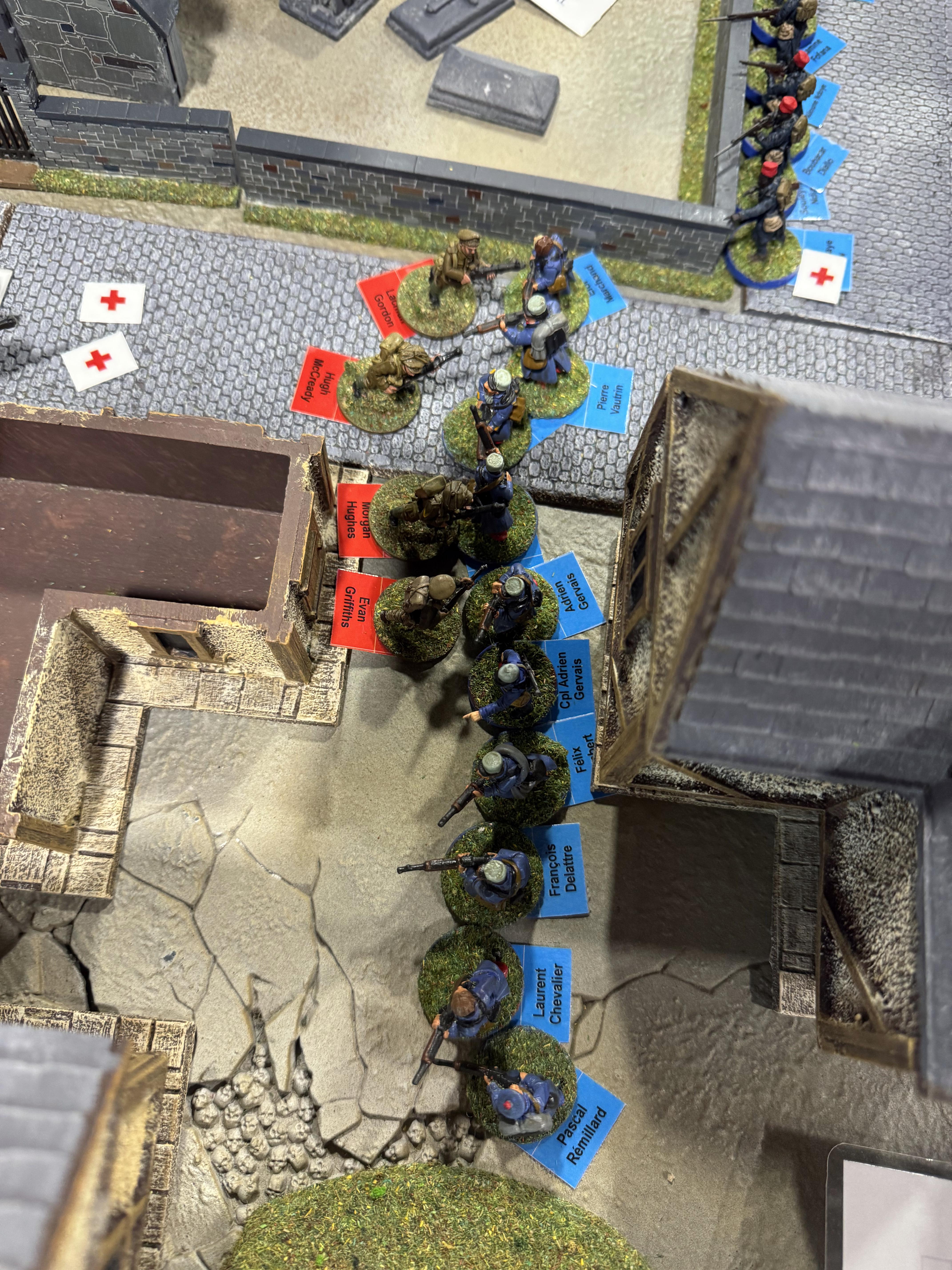
The marines who advanced through the graveyard fared no better. The volleys from the nave and chancel were so heavy that they were driven back before reaching the doors. On the right flank more French rifles were brought up to silence the tower, whose fire had become intolerable. Another assault was launched upon the eastern house, and once again the British, though reduced to Corporal O’Rourke and Private O’Reilly alone, contrived to beat off the attack.
Seeing their exhaustion, the Lancers dismounted and took position along the roadway, firing steadily and finally charging the marines on foot. They proved themselves as formidable without their horses as with them, and the French were forced to yield.
On the western flank yet another assault was attempted, and yet again the British, though now scarcely able to stand, met it with a stubborn courage that bordered on the miraculous. At last, however, the continuous fire from the Senegalese and light infantry compelled them to abandon the house. They had done their duty; the French probe on that side had been blunted and precious time gained.
Within the church the situation had grown grave. Casualties mounted in the nave and tower, and Captain MacLeod, moving among his men with calm authority, sent reinforcements to the threatened points. Sergeant Meredith was placed in command of the shaken section, and under his stern guidance they returned to their posts. It was none too soon, for Sergeant Lefévre, believing the defenders spent, led a final assault upon the eastern entrance. He expected to find a broken, exhausted foe; instead he met a fully restored line whose fire tore through his ranks before they could close. The result was never in doubt. The French fell back, their last effort spent.
Thus St Martin’s was held. Captain MacLeod’s men, strained to the very edge of endurance, had clung to their posts with a tenacity that saved the day. The French, thwarted and bloodied, were forced to seek another road to the capital, and England, for that hour at least, was spared the calamity that had threatened her.