Fighting Withdrawal Across the Sahara Heroic Battles of Derring‑Do Wargames Rules
With the melancholy tidings that Khartoum had fallen, the British force commenced its long and lonely return across the desolate sands of the Sahara towards Egypt. Yet scarcely had they begun their retreat when the Mahdi, flushed with triumph, despatched his warriors to harry the column and press upon its rear.
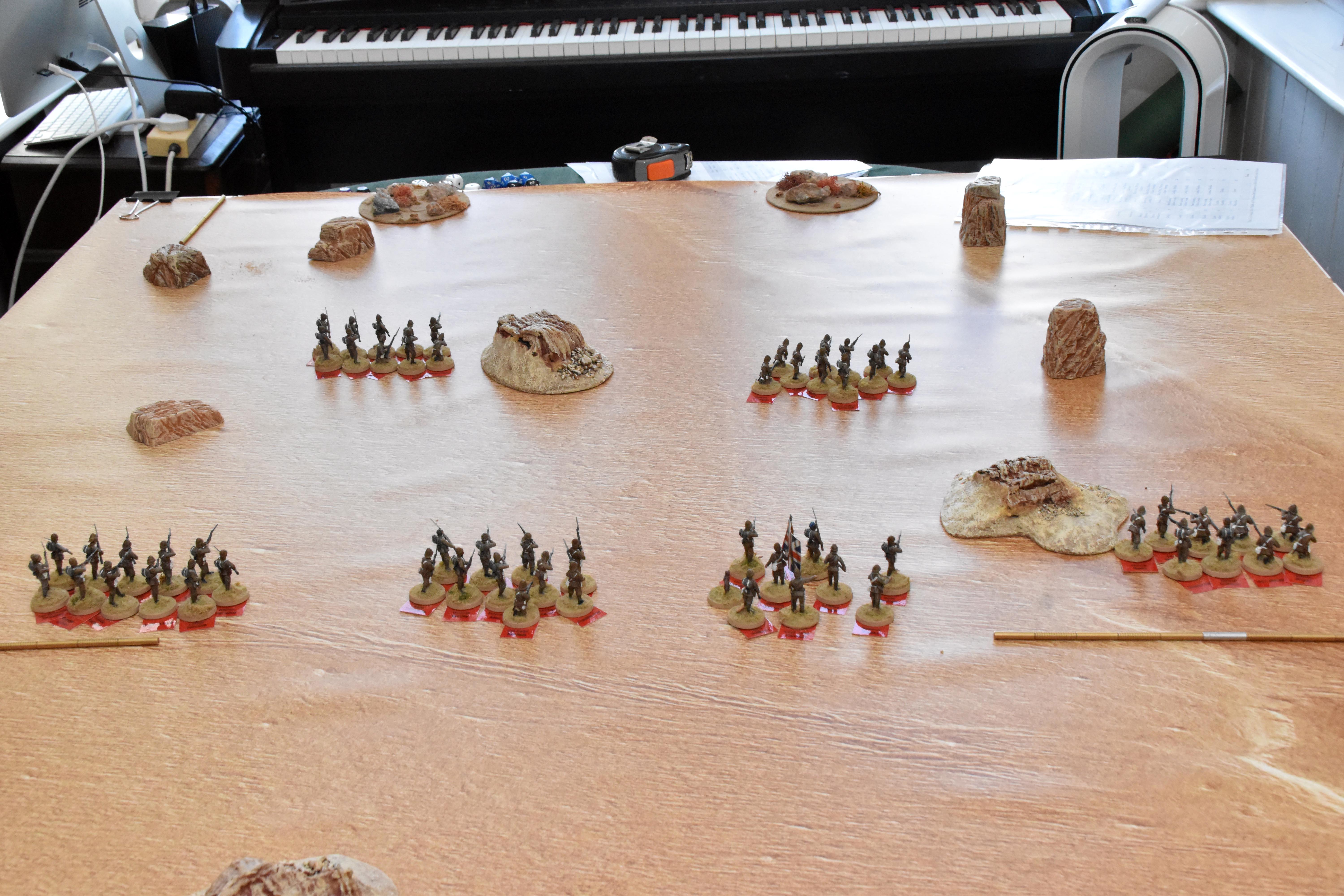
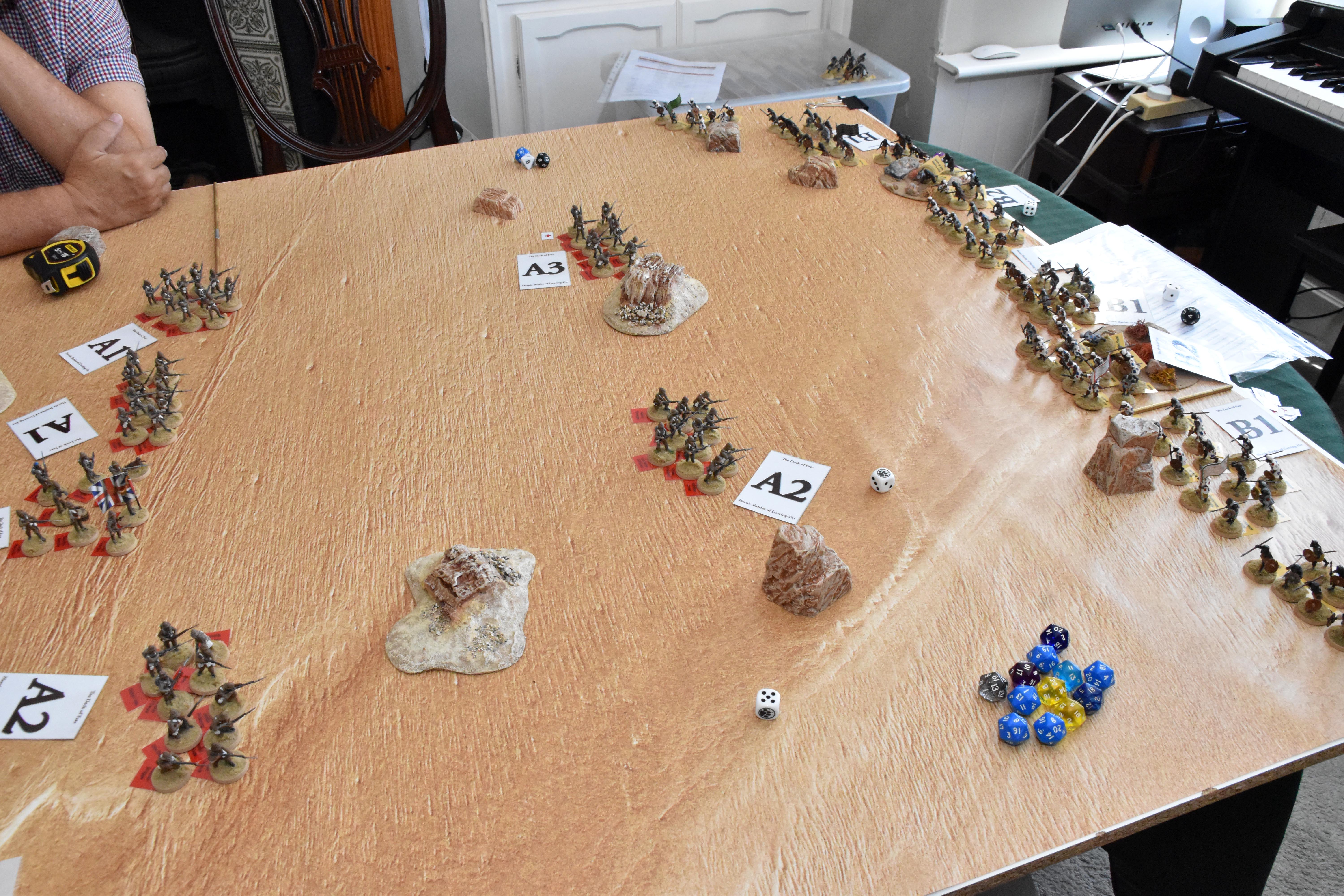
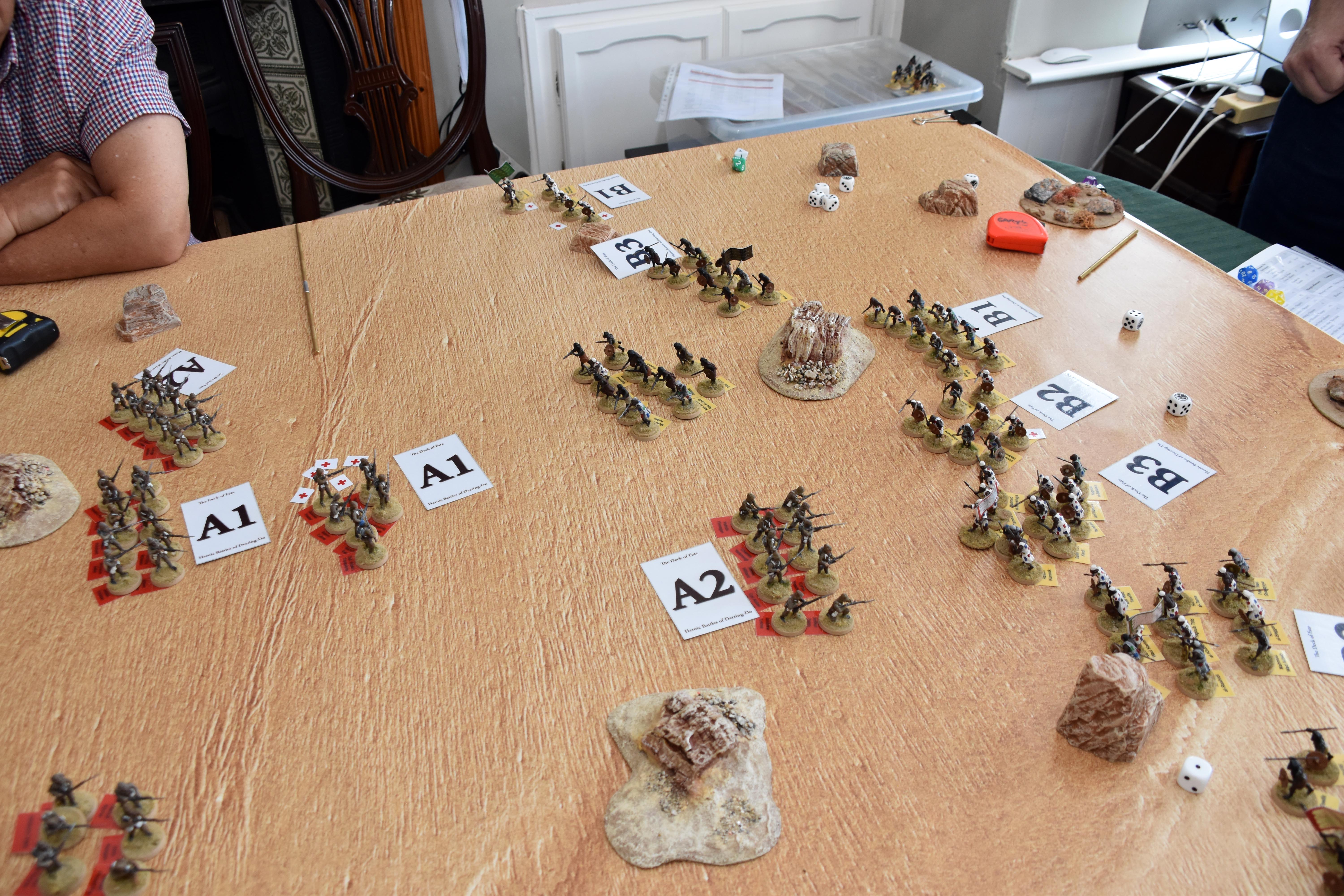
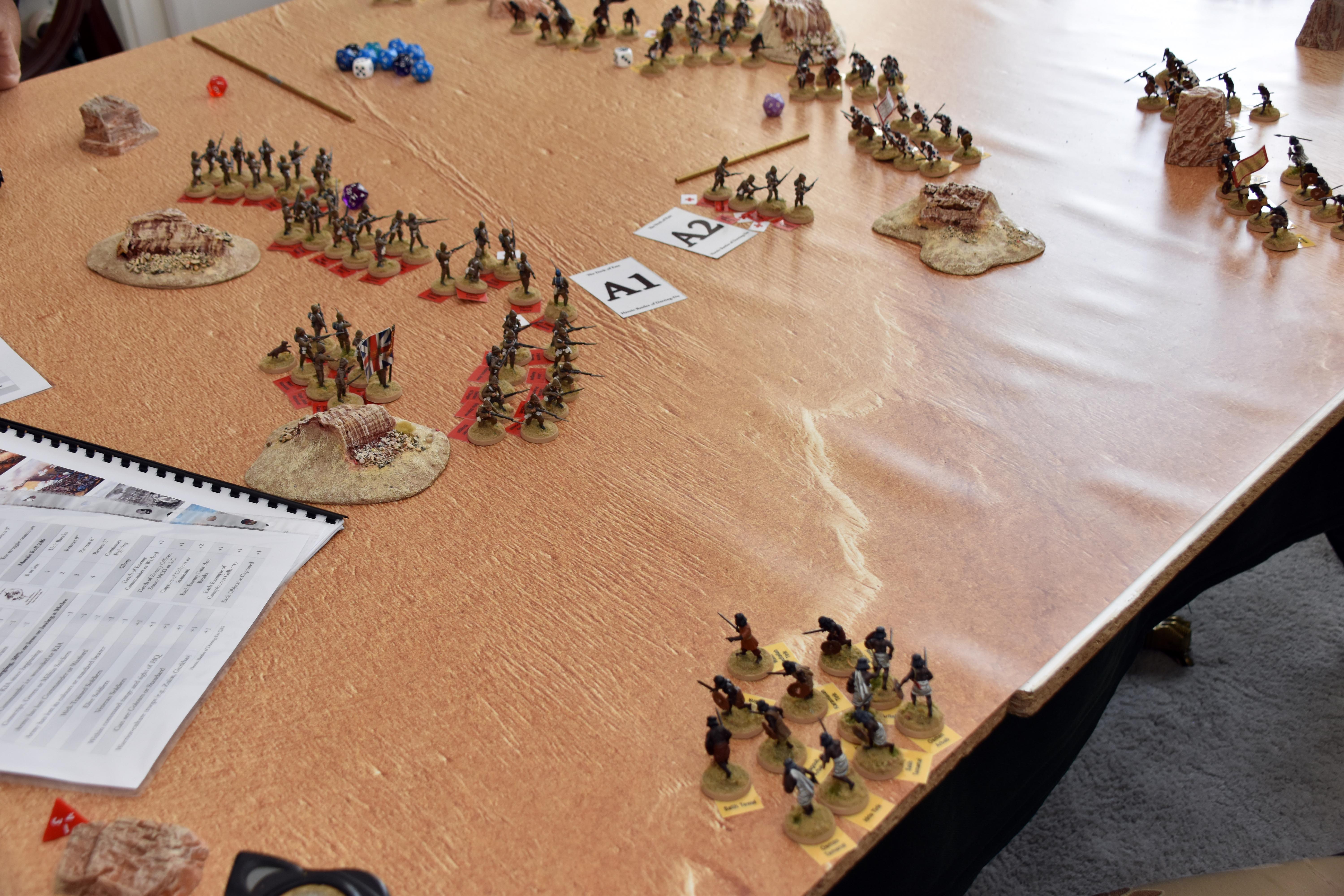
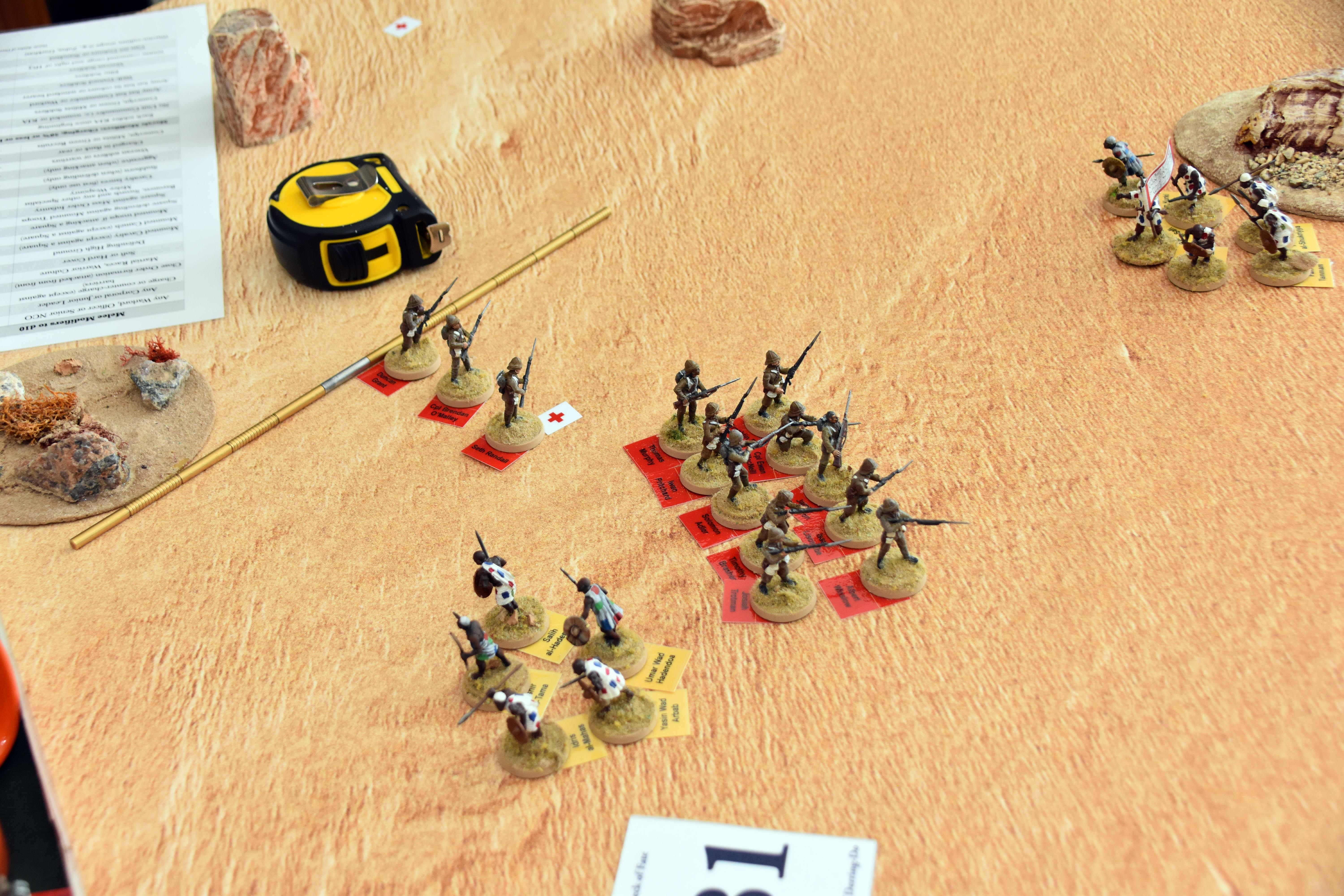
A withdrawal conducted with the enemy snapping at one’s heels is among the most arduous operations known to military science. Captain John Harcourt, a man of steady nerve, threw out two small detachments as a Forlorn Hope, their duty being to keep the Ansar and Hadendowah at arm’s length whilst maintaining a compact core of close‑order troops to effect a slow but orderly retirement.
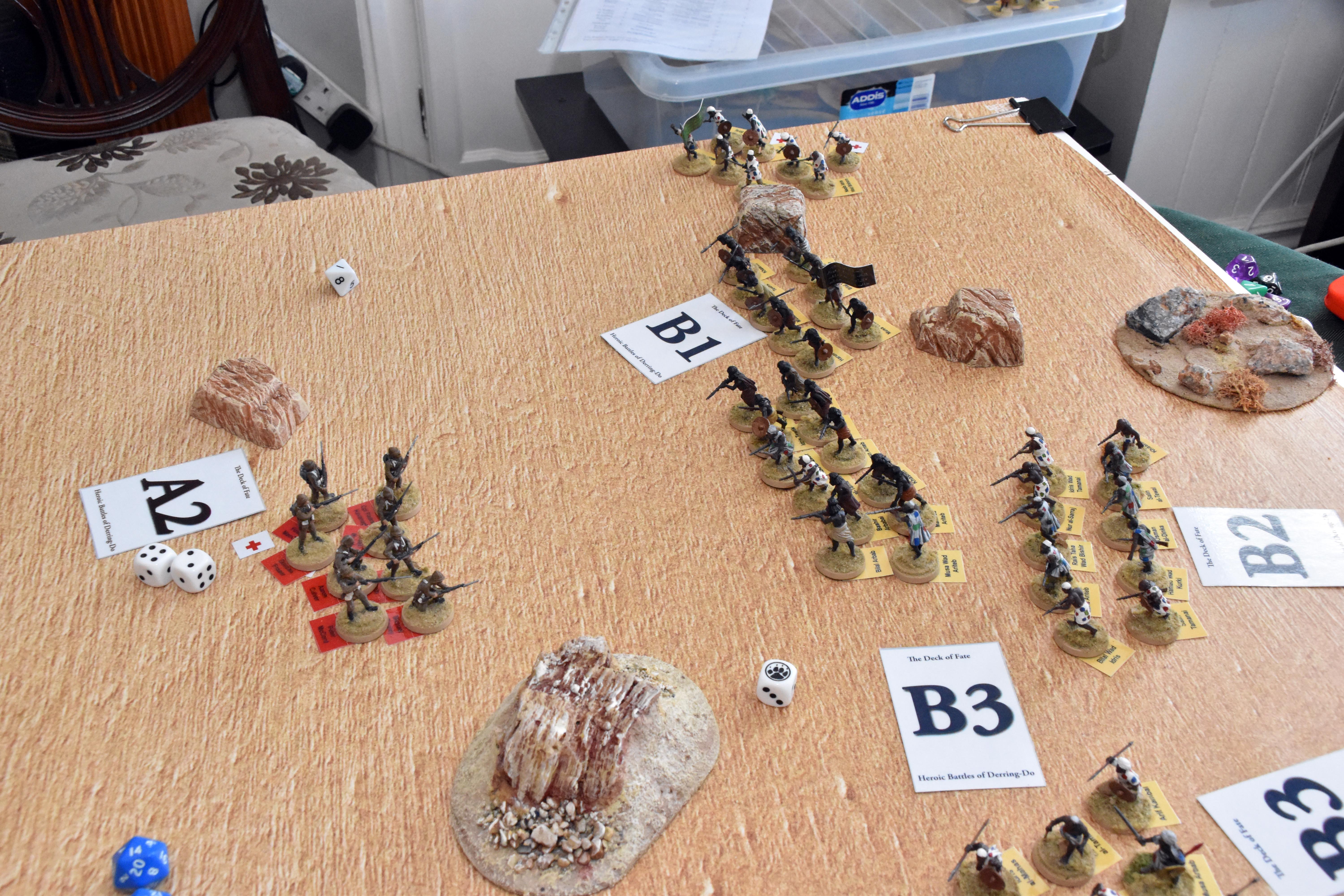
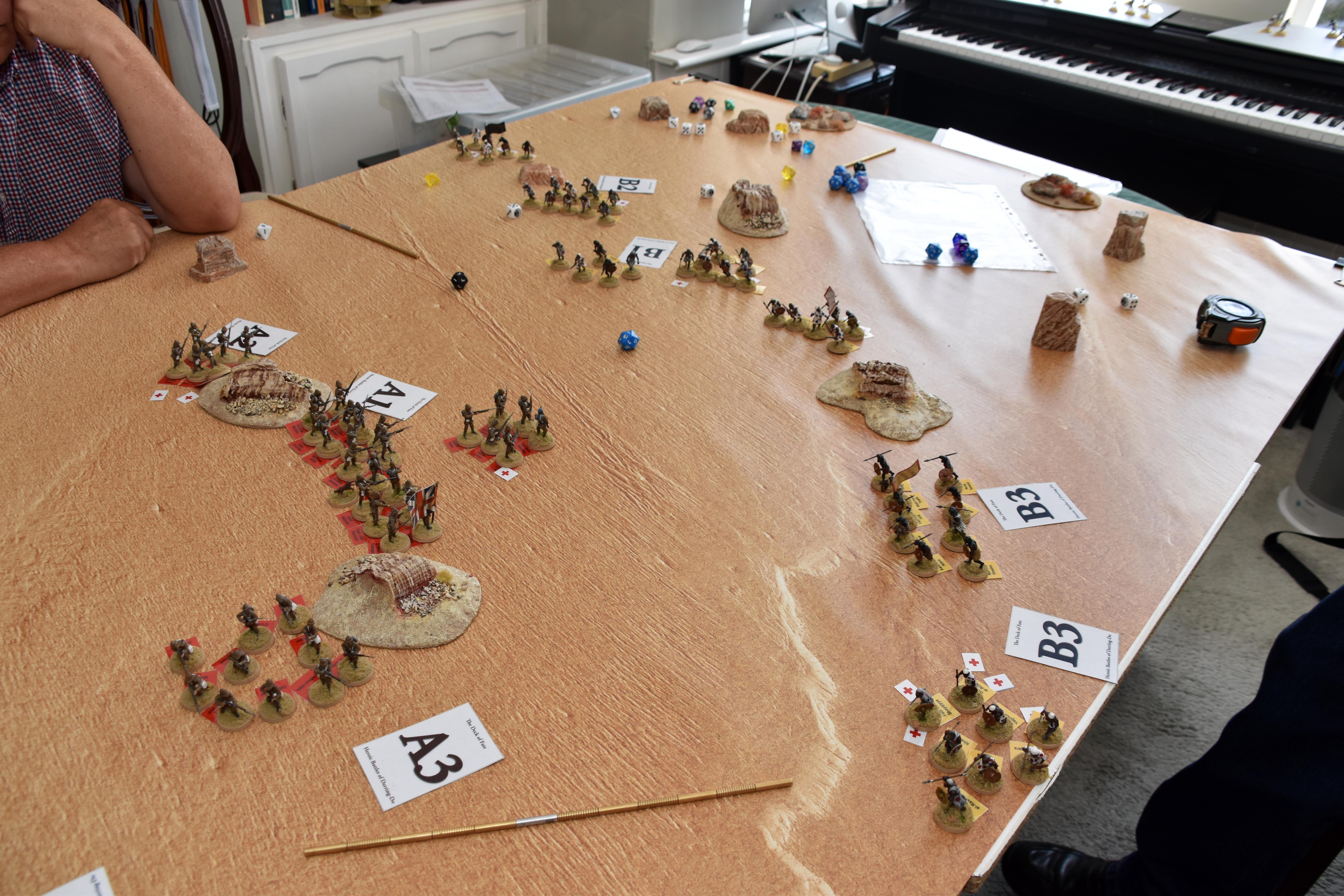
The Emir Osman al‑Khatib sent forward his captured rifles to trouble the Forlorn Hope, but their training was inferior to that of the Europeans, and though they vexed the British line, they achieved no decisive mischief. They directed their attentions chiefly upon Corporal Kavanagh’s squad on the left flank, composed largely of Irishmen who returned fire with admirable spirit and indeed inflicted more than they received. Yet the Ansar host grew in number and menace, and at length Corporal Kavanagh himself was wounded, compelling his men to fall back upon the main line. Sergeant Trelawny was sent out by Captain Harcourt to shepherd the battered squad home as best he could.
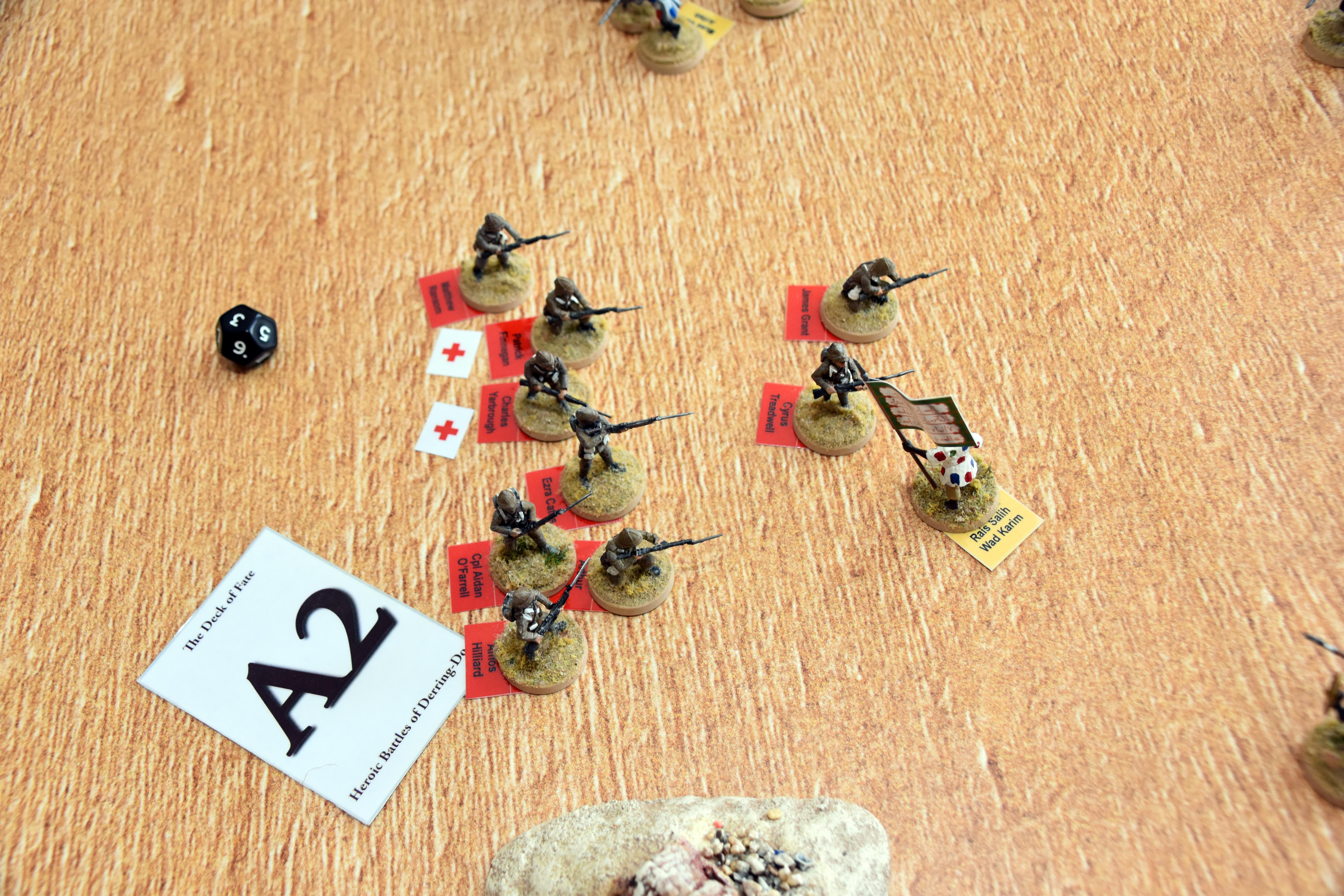
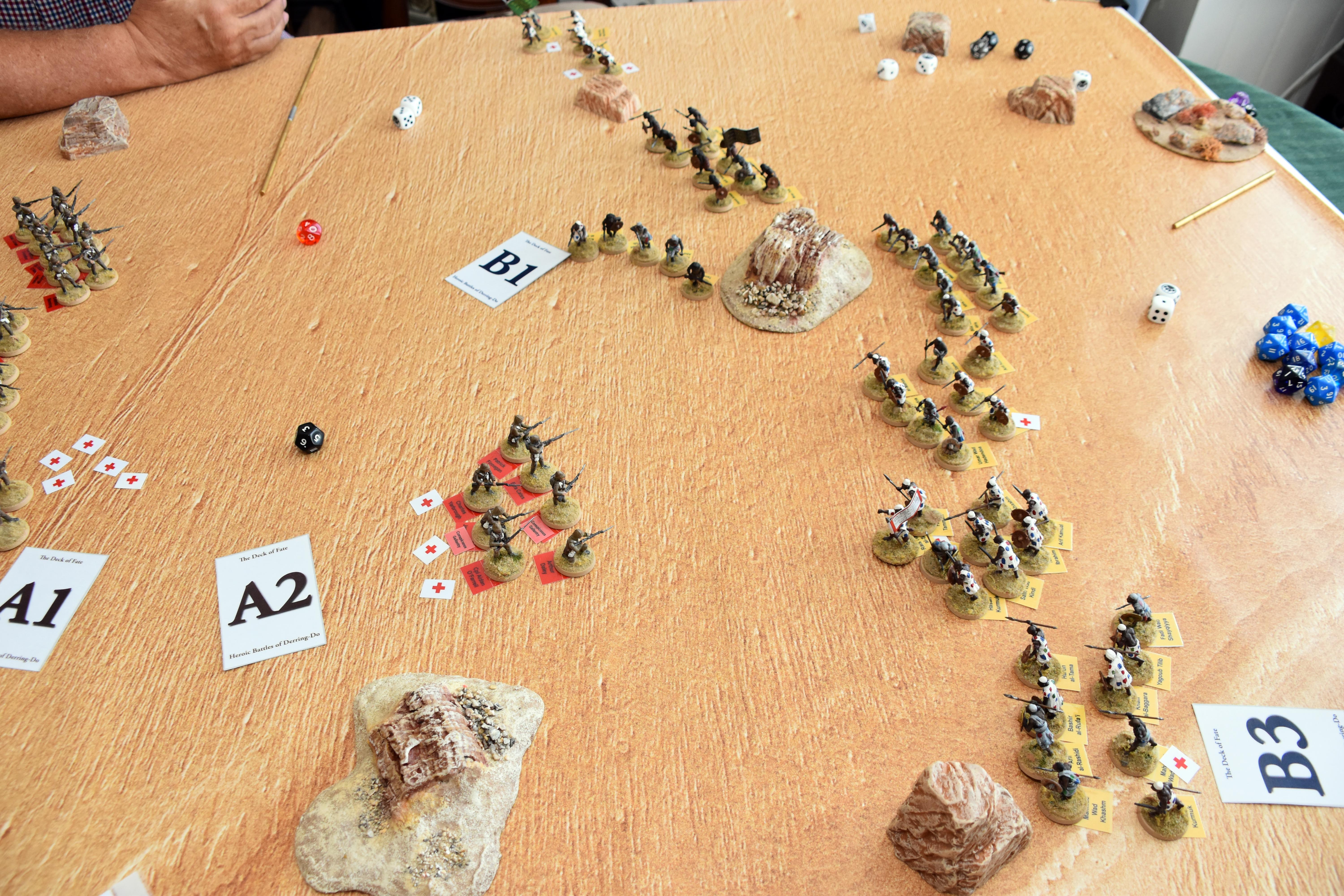
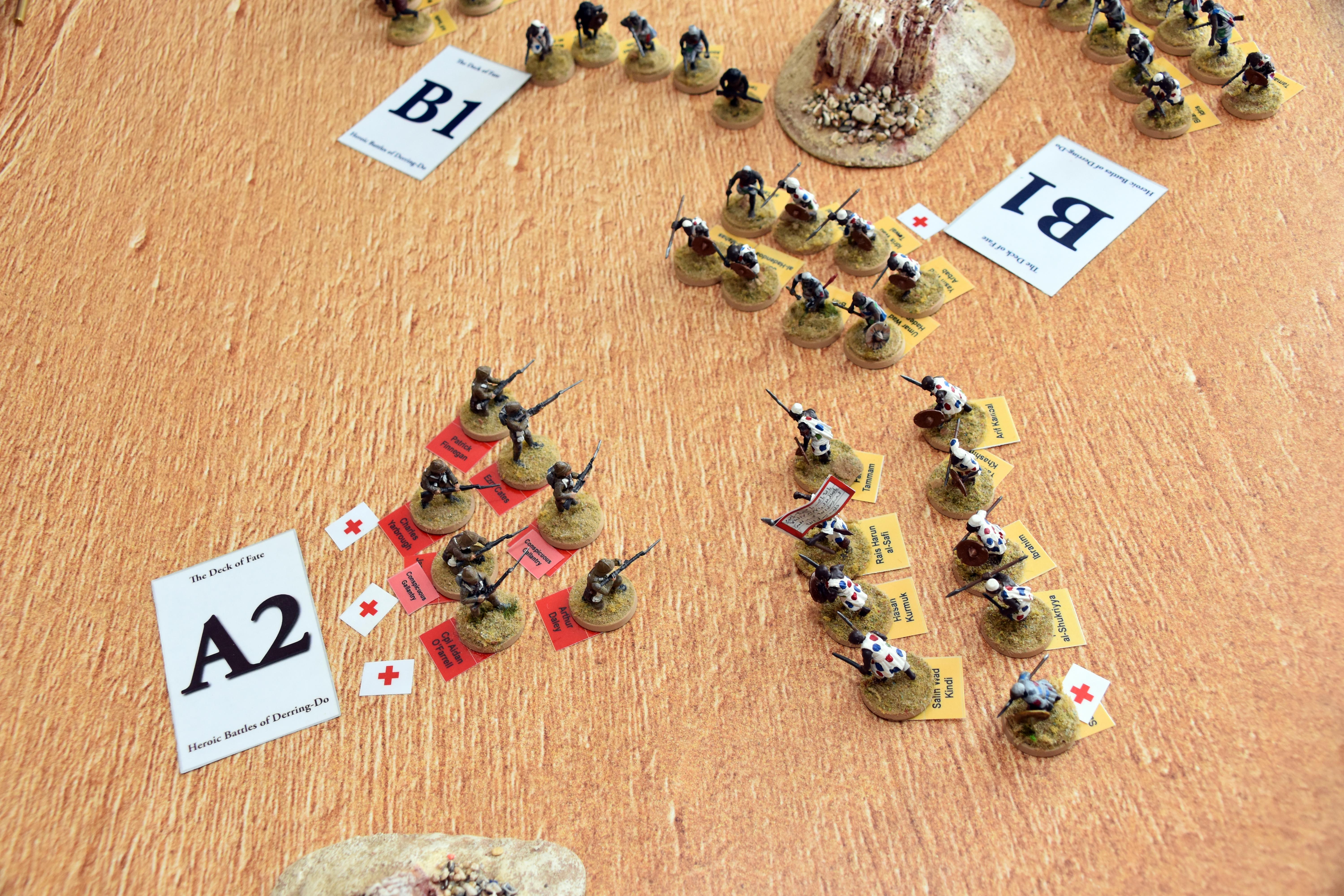
Meanwhile the second Forlorn Hope, under Corporal O’Farrell, strove valiantly to lay down fire, but the multiplicity of targets left them scarcely knowing where next to turn their rifles. At one moment Arthur Daley tapped the Corporal’s shoulder and pointed out that Hadendowah riflemen were slipping past on their left flank; but O’Farrell had more pressing concerns, for Ansar spearmen were at that instant charging straight upon them. The spears took their toll as the warriors struck home. The British braced themselves, but for a dreadful moment it seemed that nothing could stem the ferocity of the assault. Many were slain, wounded, or fled in terror, leaving but two men to stem the tide and cover the retreat of their comrades.
But these were no ordinary soldiers. James Grant and Cyrus Treadwell, their blood aflame, had no intention of dying that day. With phlegmatic resolve they received warrior after warrior, bayoneting, butting, shooting, employing whatever method came to hand. Standing back to back, they turned their desperate courage into a kind of grim sport, each urging the other to fresh feats of martial prowess. The Sudanese had never encountered such men, and at length those who survived retreated lest they too become martyrs. Grant and Treadwell had saved the day, at least for a time.
Scarcely had talk of medals begun when the Hadendowah riflemen, perceiving an opportunity, attempted to charge the pair in the flank and finish them off. Exhausted though they were, the infantrymen rose to fight again, this time without the advantage of preparation. Fortunately their assailants bore no hand‑to‑hand weapons, and thus the contest was not quite so one‑sided as feared. The struggle bore remarkable resemblance to the earlier melee: at first the Sudanese took heart, but as their numbers dwindled, the British defence thickened. Once again James Grant fought to the last, joined now by Arthur Daley, while the exhausted Cyrus Treadwell was forced to catch his breath. Yet again the British held. Their numbers were reduced, but they remained—barely—a functioning unit.
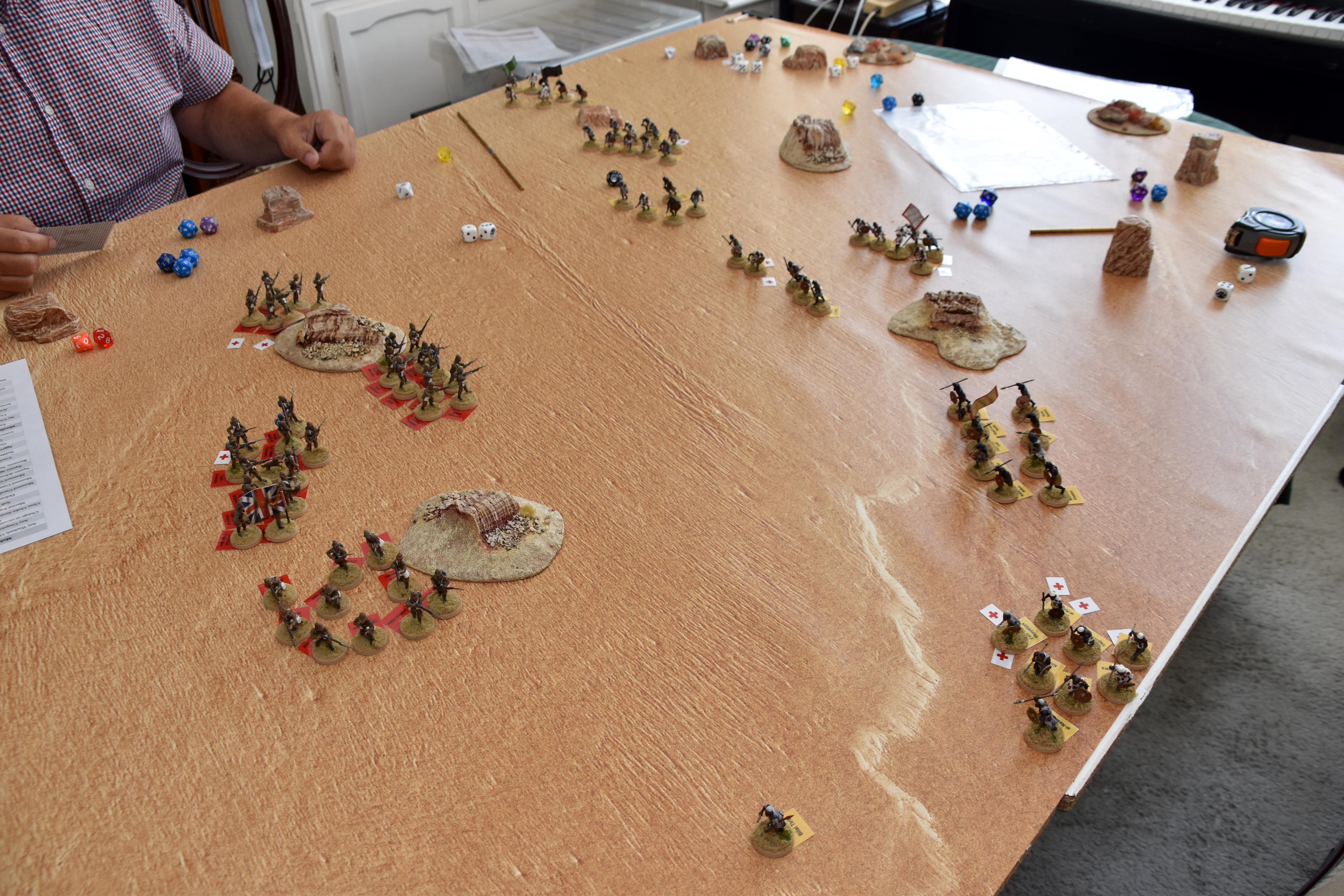
It soon became evident that the Forlorn Hope had served its purpose, and the remnants began to withdraw with increased urgency. But now the Sudanese riflemen, where the melee experts had failed, poured fire upon the retreating British. All were injured; the squad at last broke, and three survivors took cover as best they could, Heaven alone knowing where.
Fresh alarm greeted the British when a unit of Fuzzy Wuzzy swordsmen appeared upon their flank. Turning to deny that flank, the British delivered a well‑timed volley which, though it struck down but a single foe, proved decisive, for the fallen man was the enemy leader, gravely diminishing the swordsmen’s offensive spirit.
On the opposite flank the British infantry performed peculiarly ill, firing two volleys without striking a single enemy. Perhaps seeking to redeem himself in the eyes of his officer, the Corporal led a simultaneous charge, as dictated by the Deck of Fortune. It was a messy affair, and both sides withdrew to lick their wounds. The surviving Sudanese riflemen now found a fresh target for their attentions.
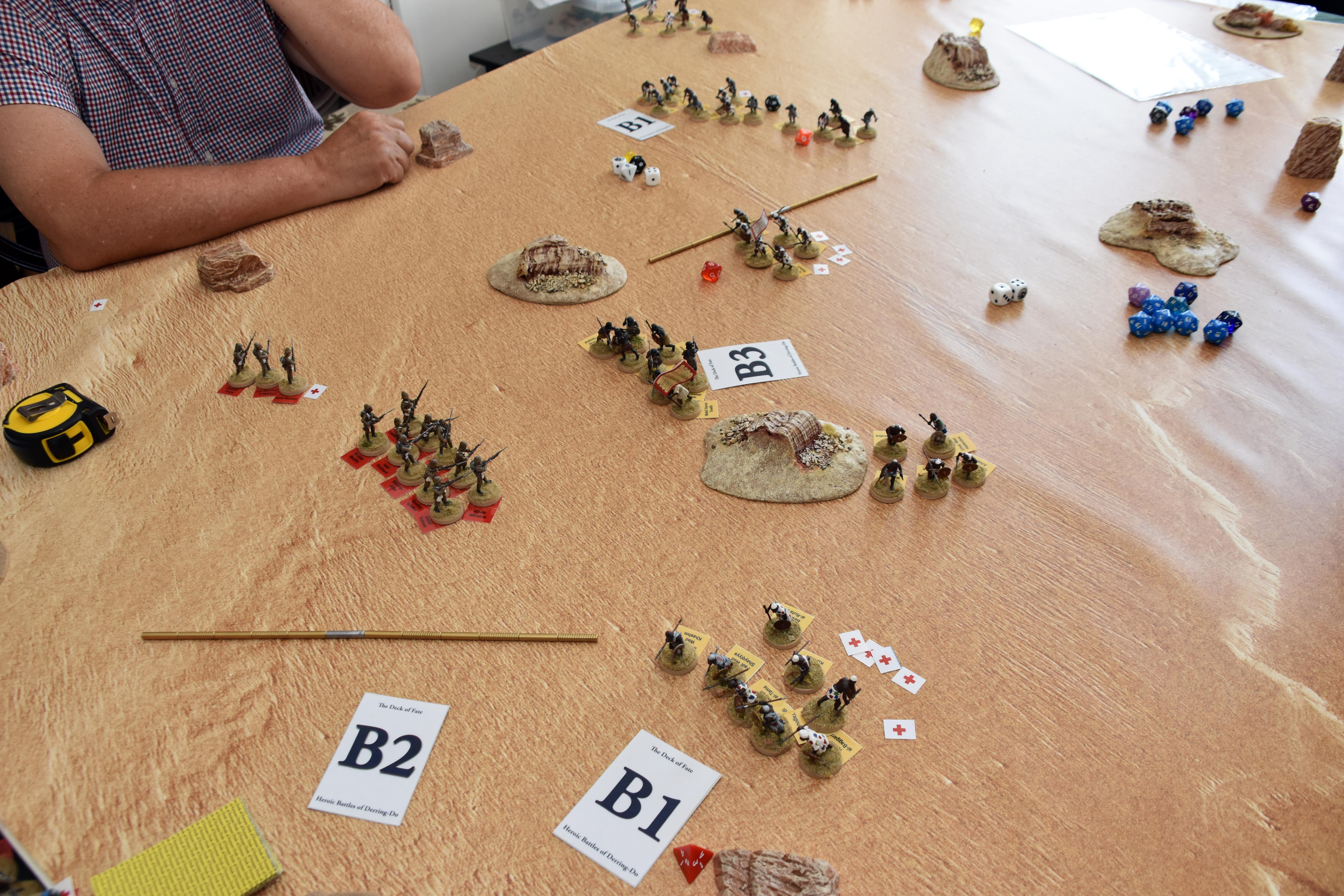
Yet the core defensive line held firm—retreating slowly, but holding nonetheless. Soon, however, the Sudanese quickened their pace, running down the flanks. This compelled the British to abandon further firing and intensify their retreat. It remained orderly, but was undeniably accelerated. Several near‑charges were shot back at breath’s distance, but the order was clear: evacuate at once.
Corporal MacNeil’s squad now became the covering force, maintaining remarkable steadiness whilst chaos reigned around them. Their neighbouring, diminished squad under Corporal O’Malley was reduced to pitiful numbers before fleeing. But Corporal MacNeil, cool as a cucumber, withdrew his men in good order, keeping the enemy warriors snapping at their heels yet never daring to bite such well‑disciplined troops.
Thus the fighting withdrawal was accomplished—with three medals earned upon the field, though all posthumous. Yet Captain Harcourt, by steadfast leadership, preserved a core force intact against overwhelming odds.