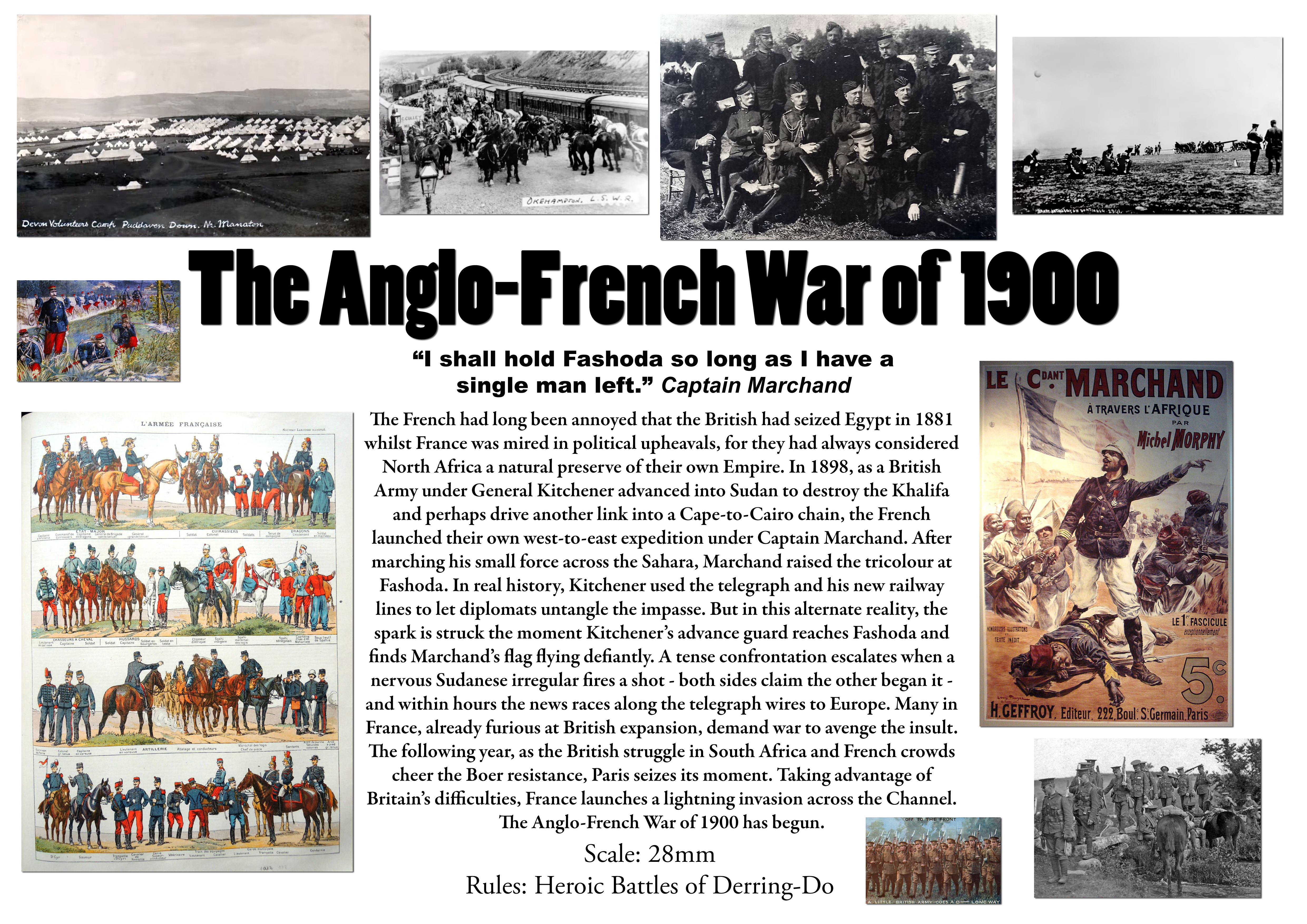
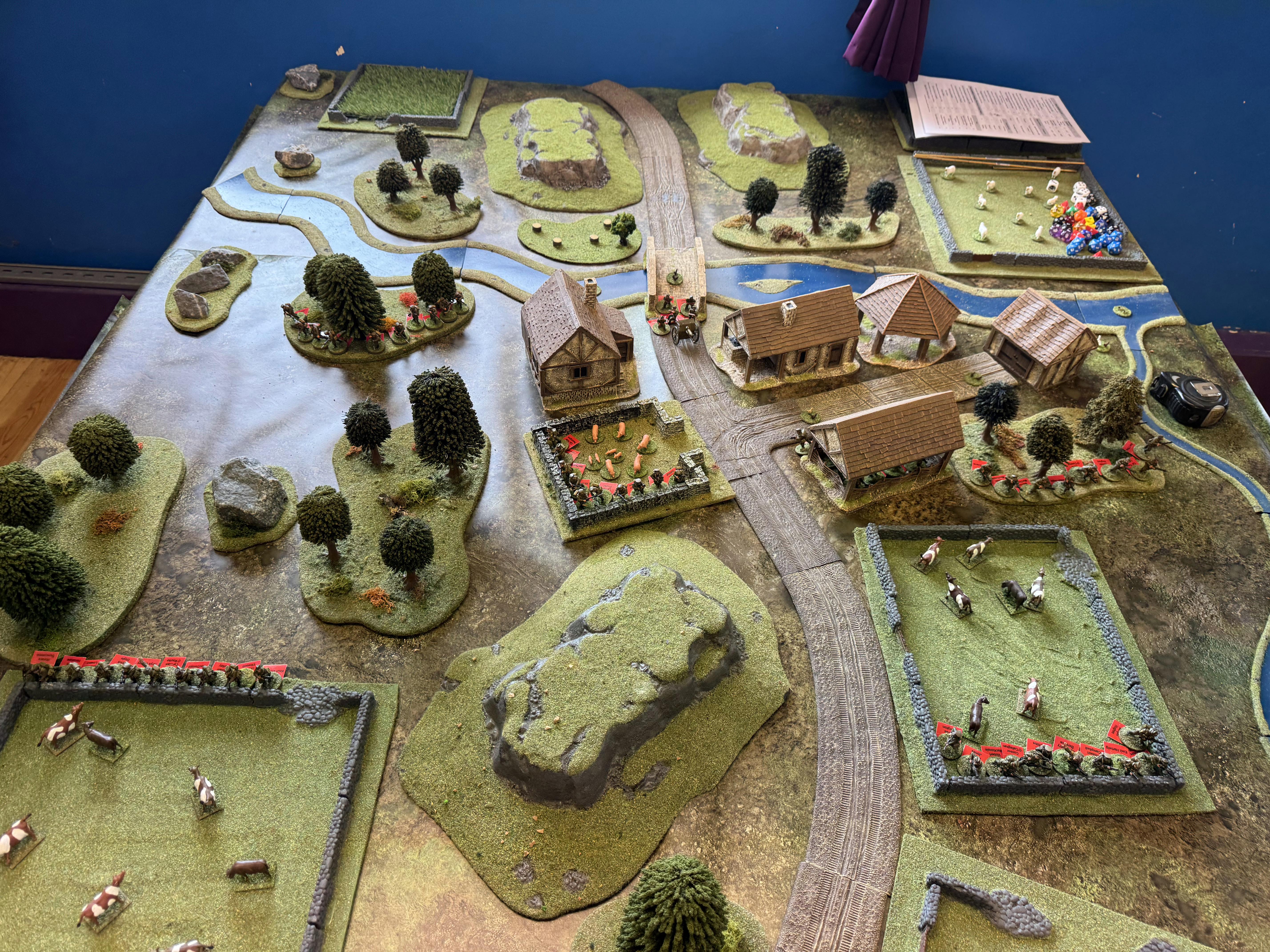
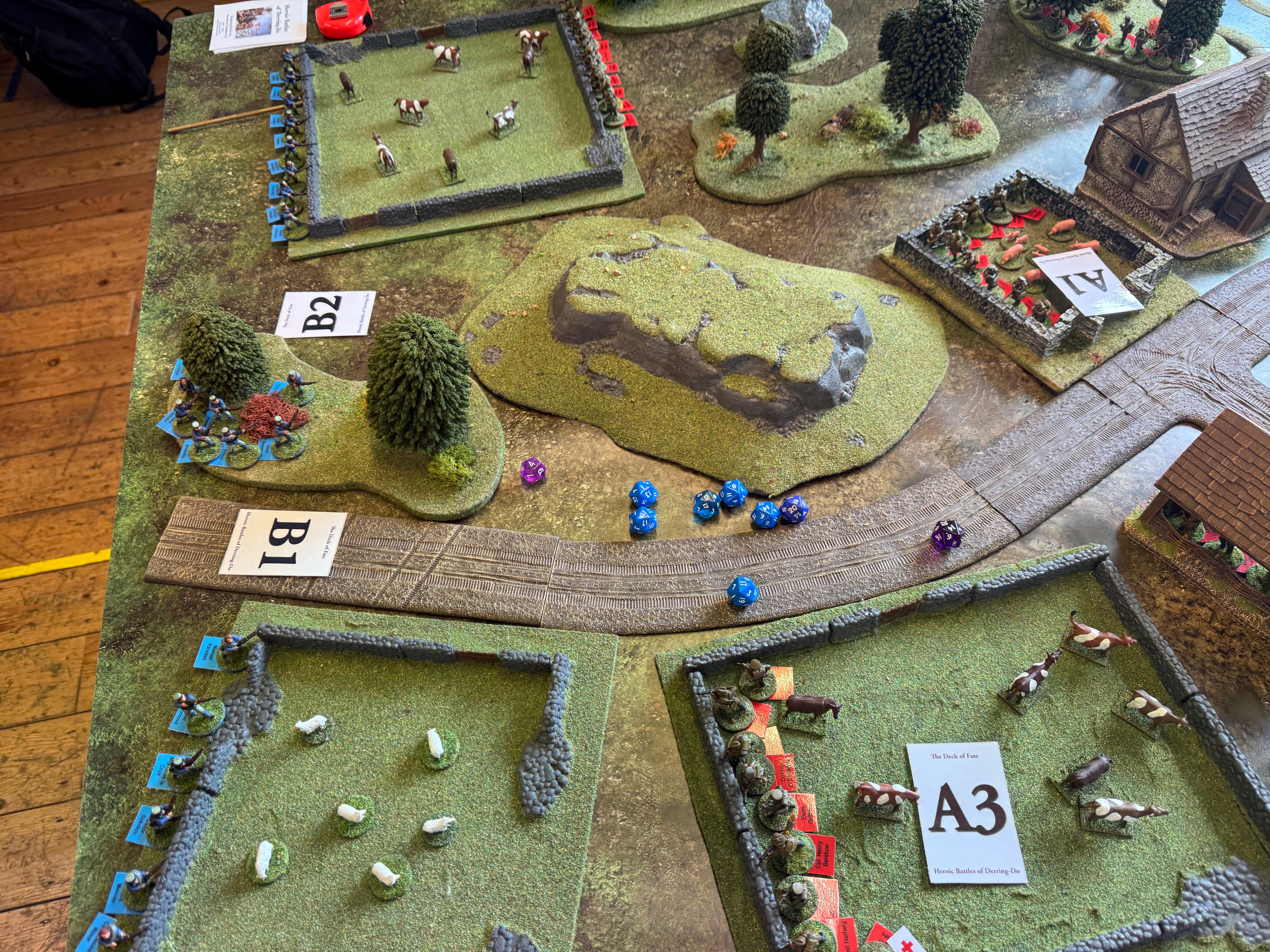
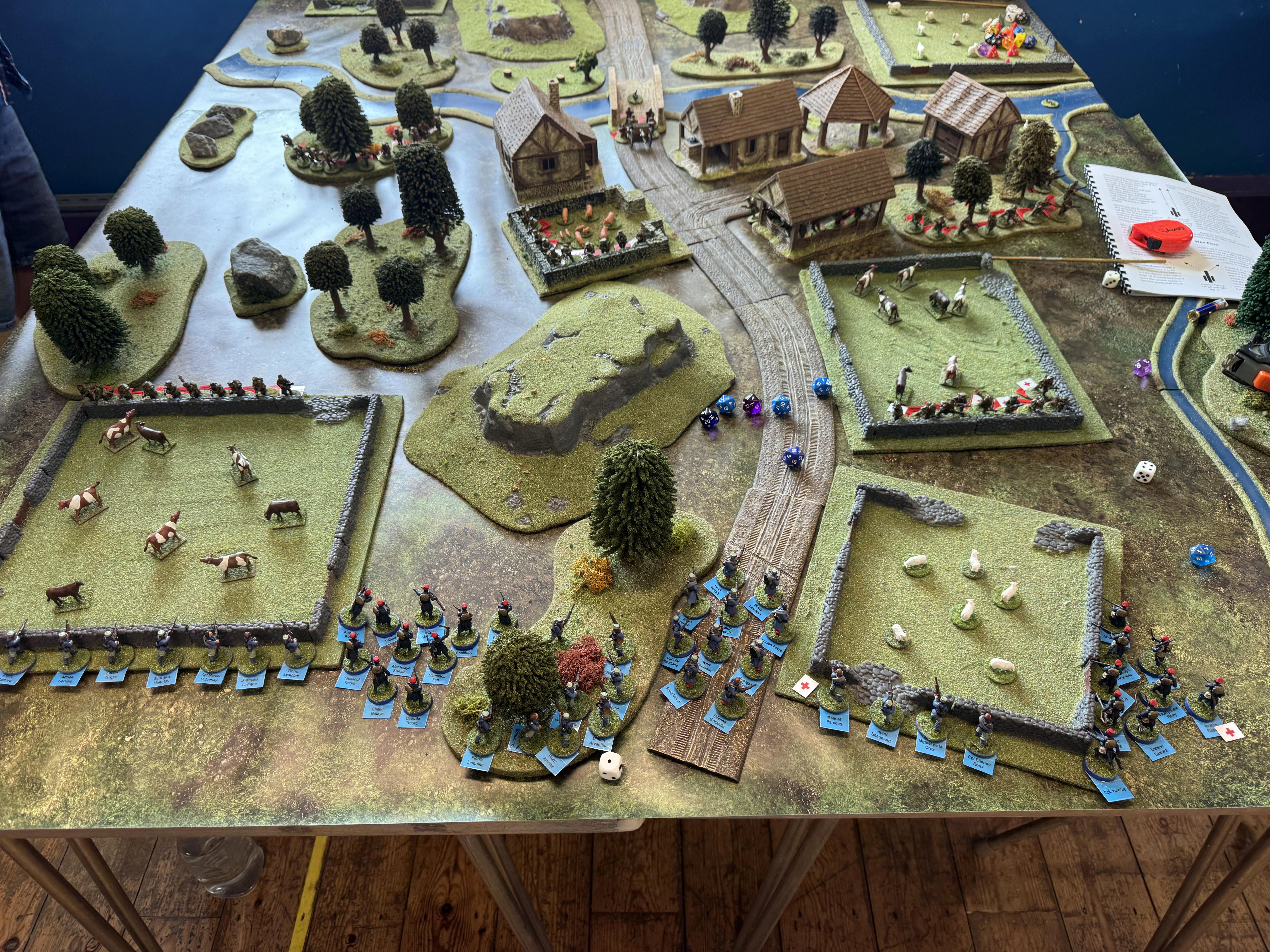
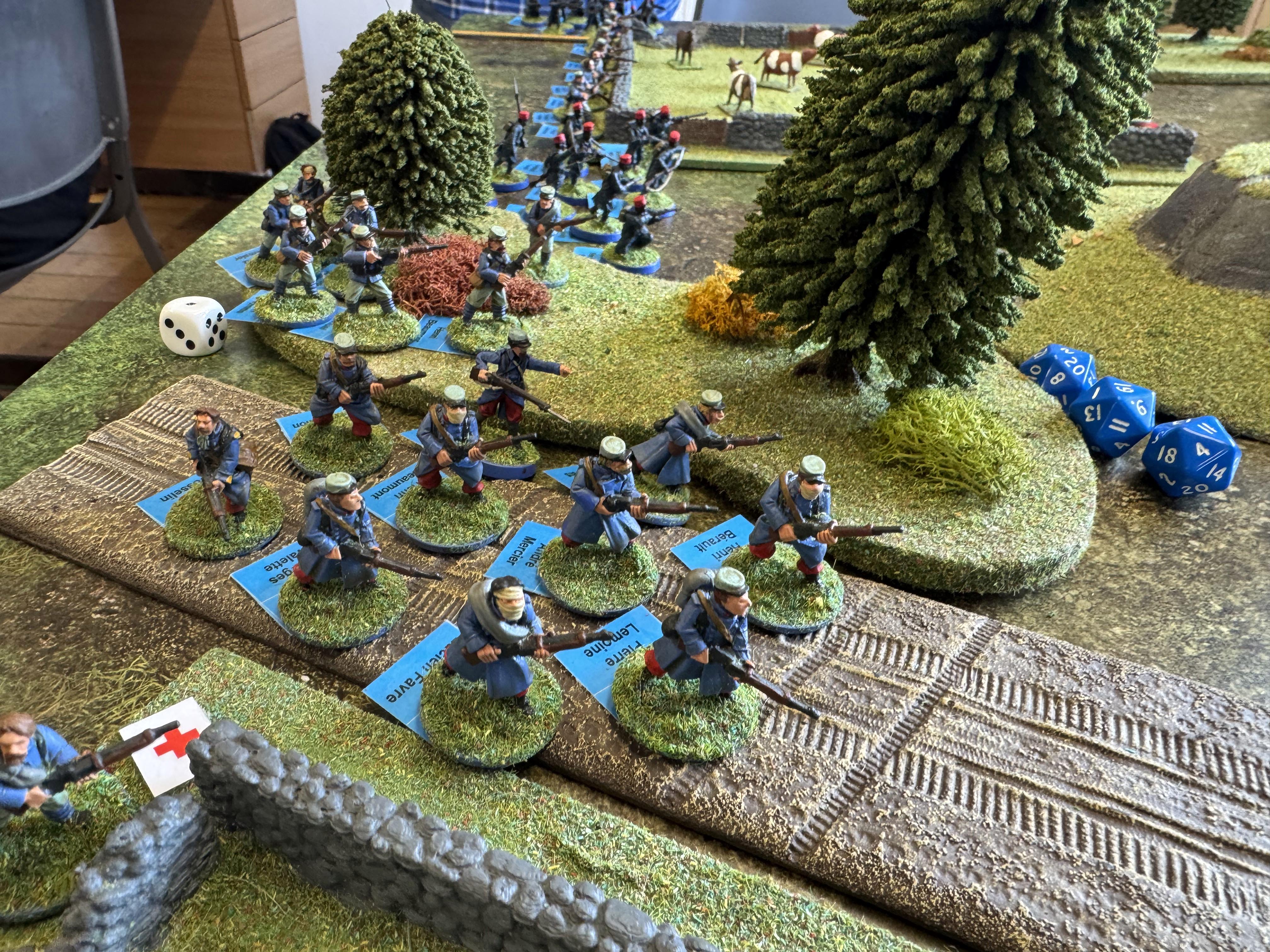
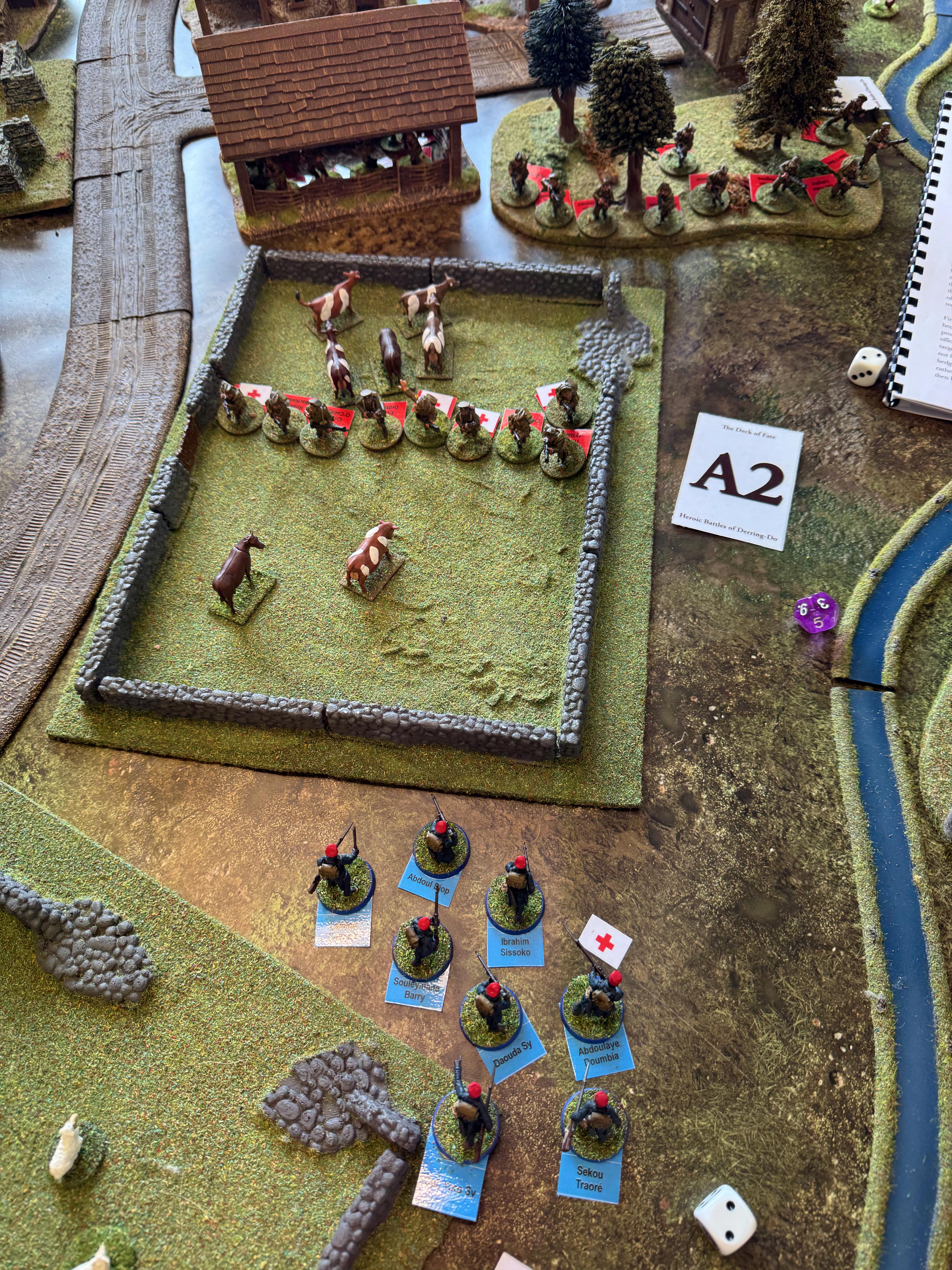
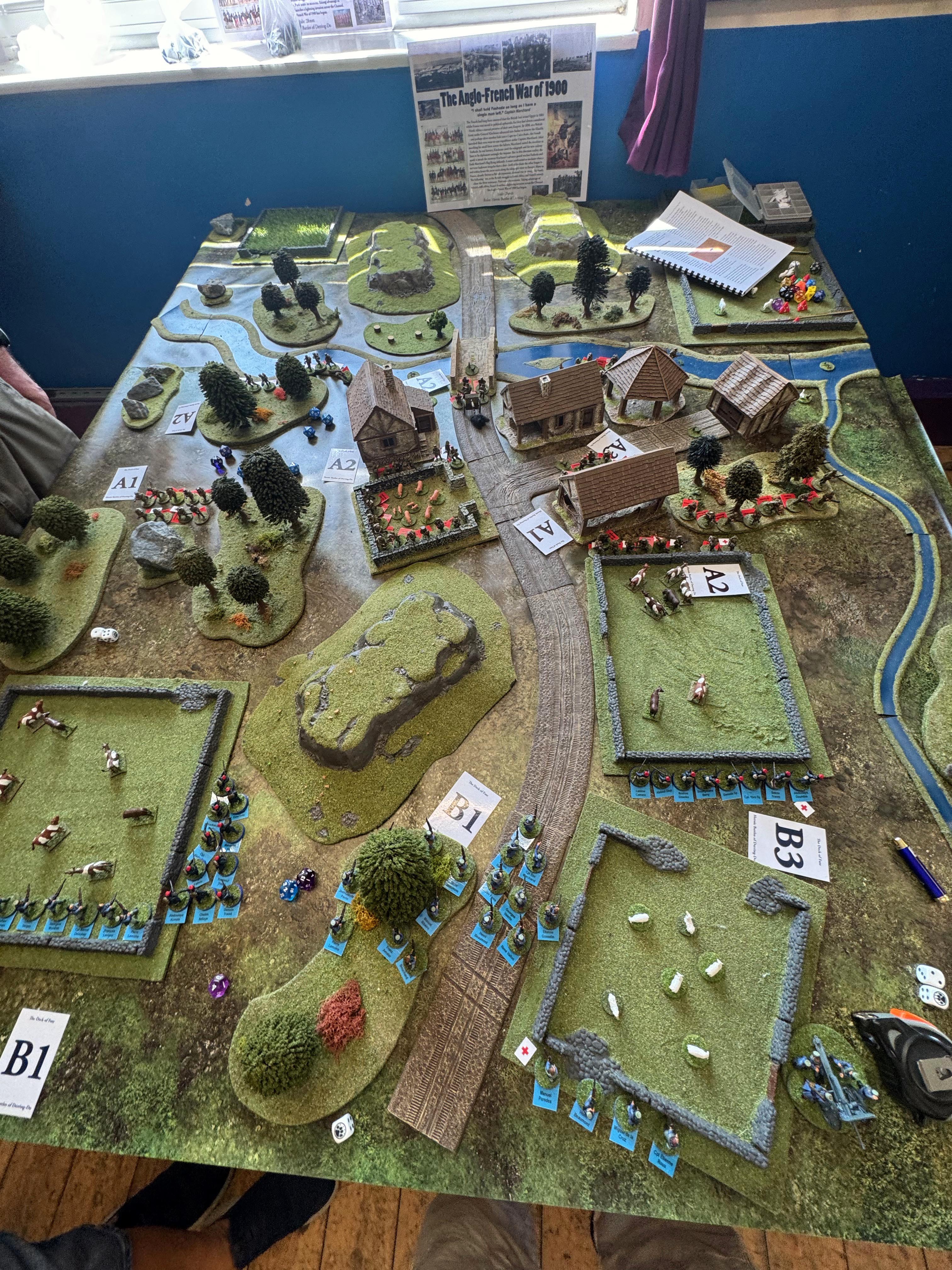
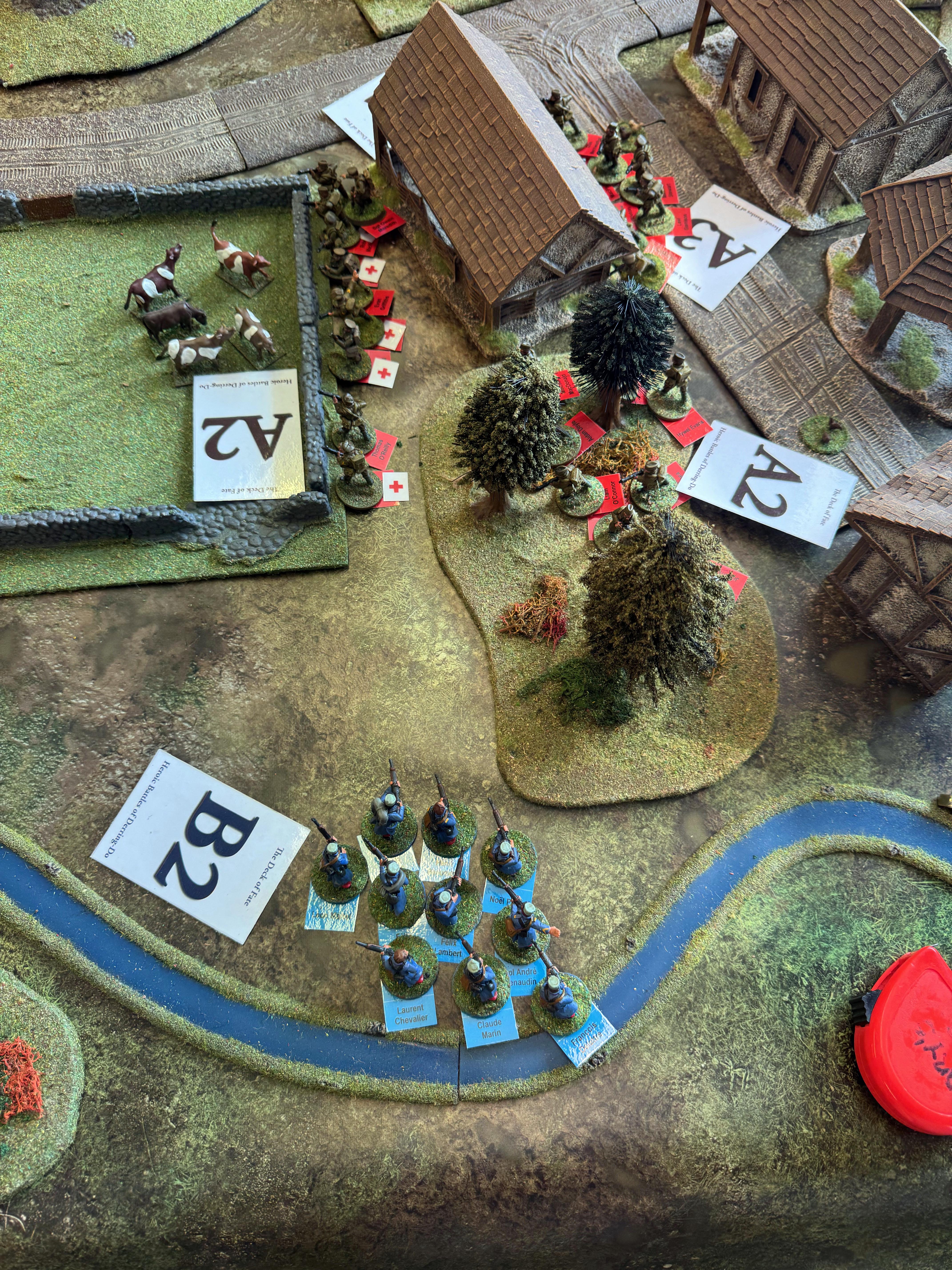
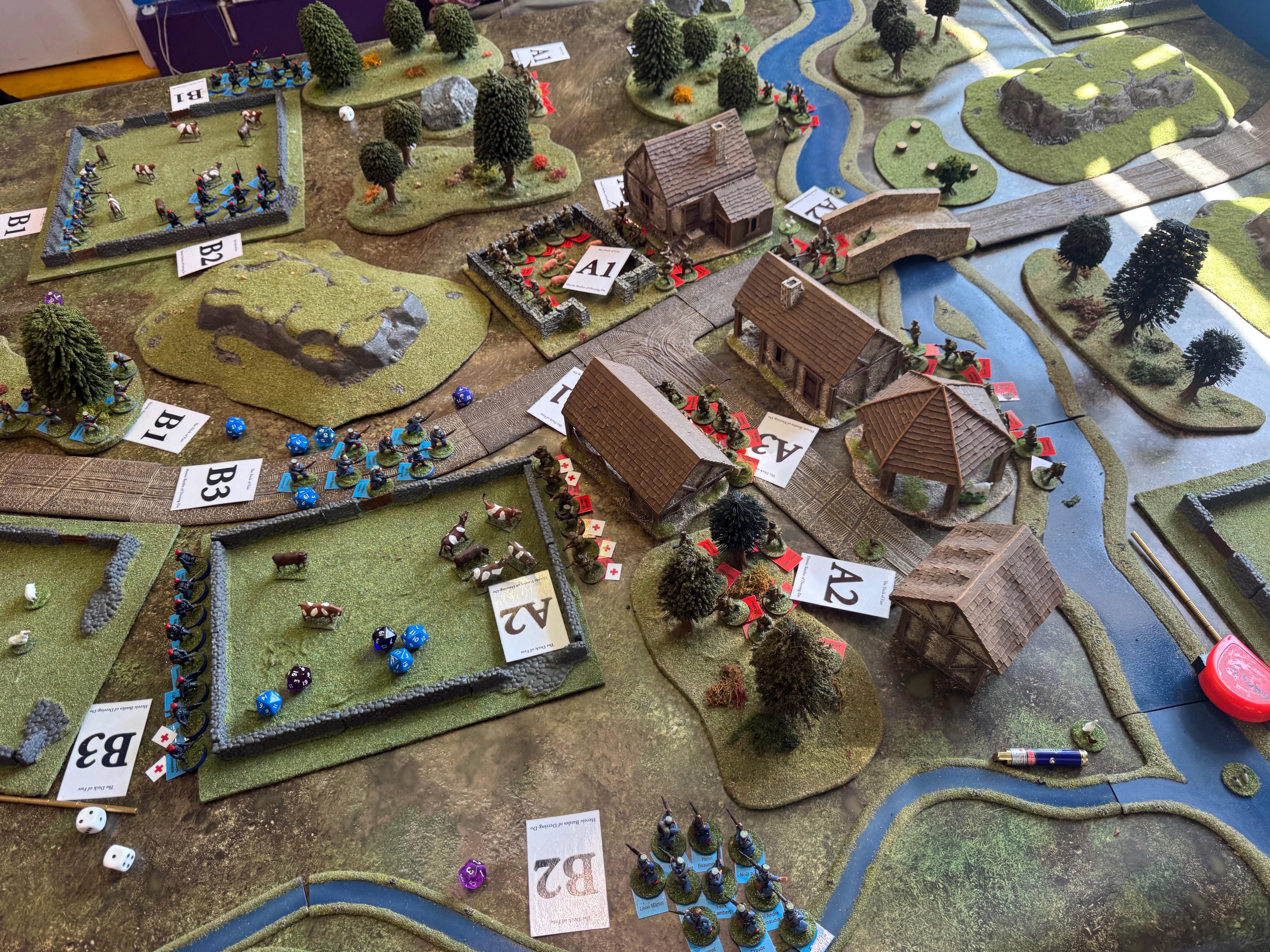
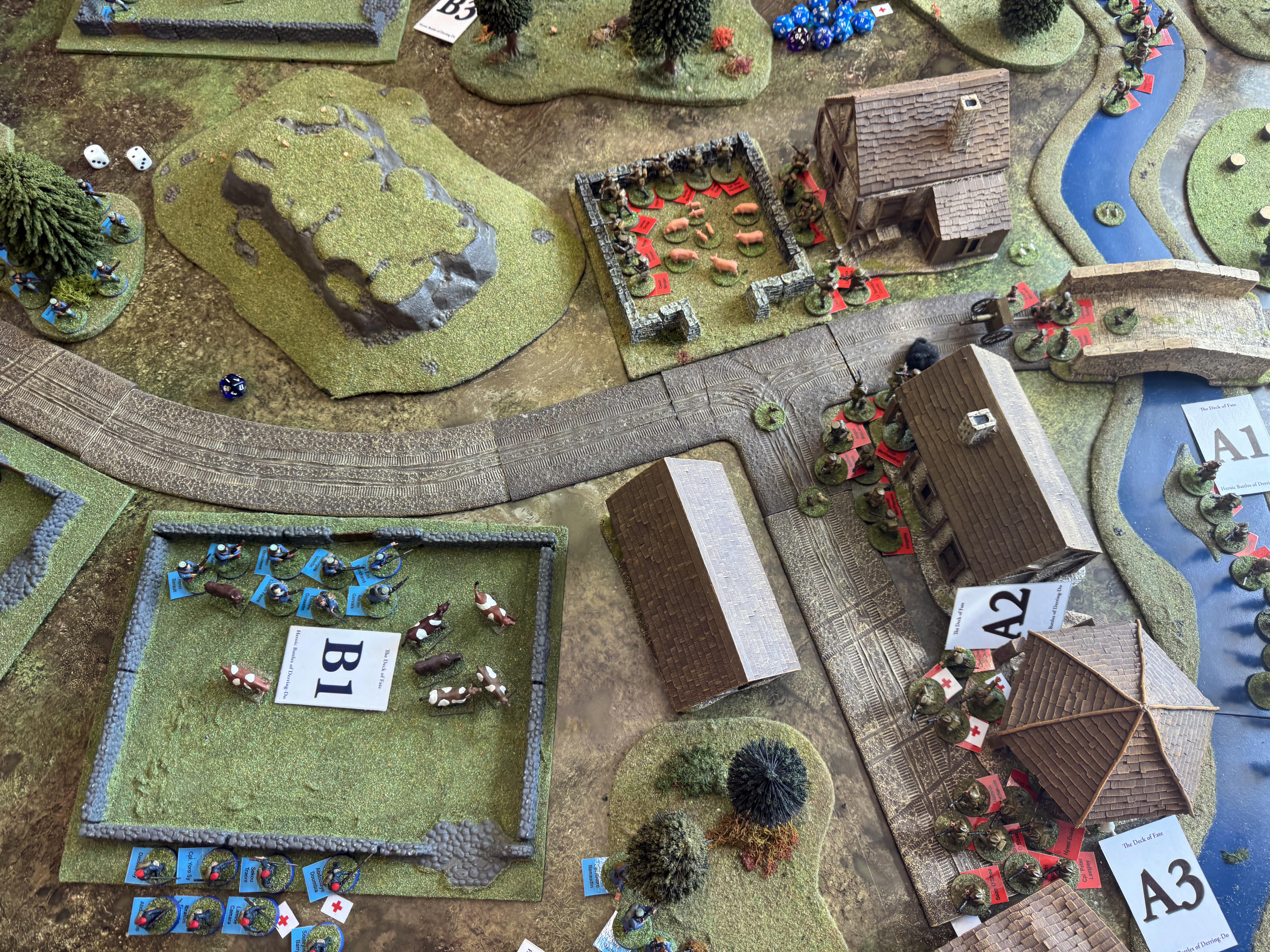
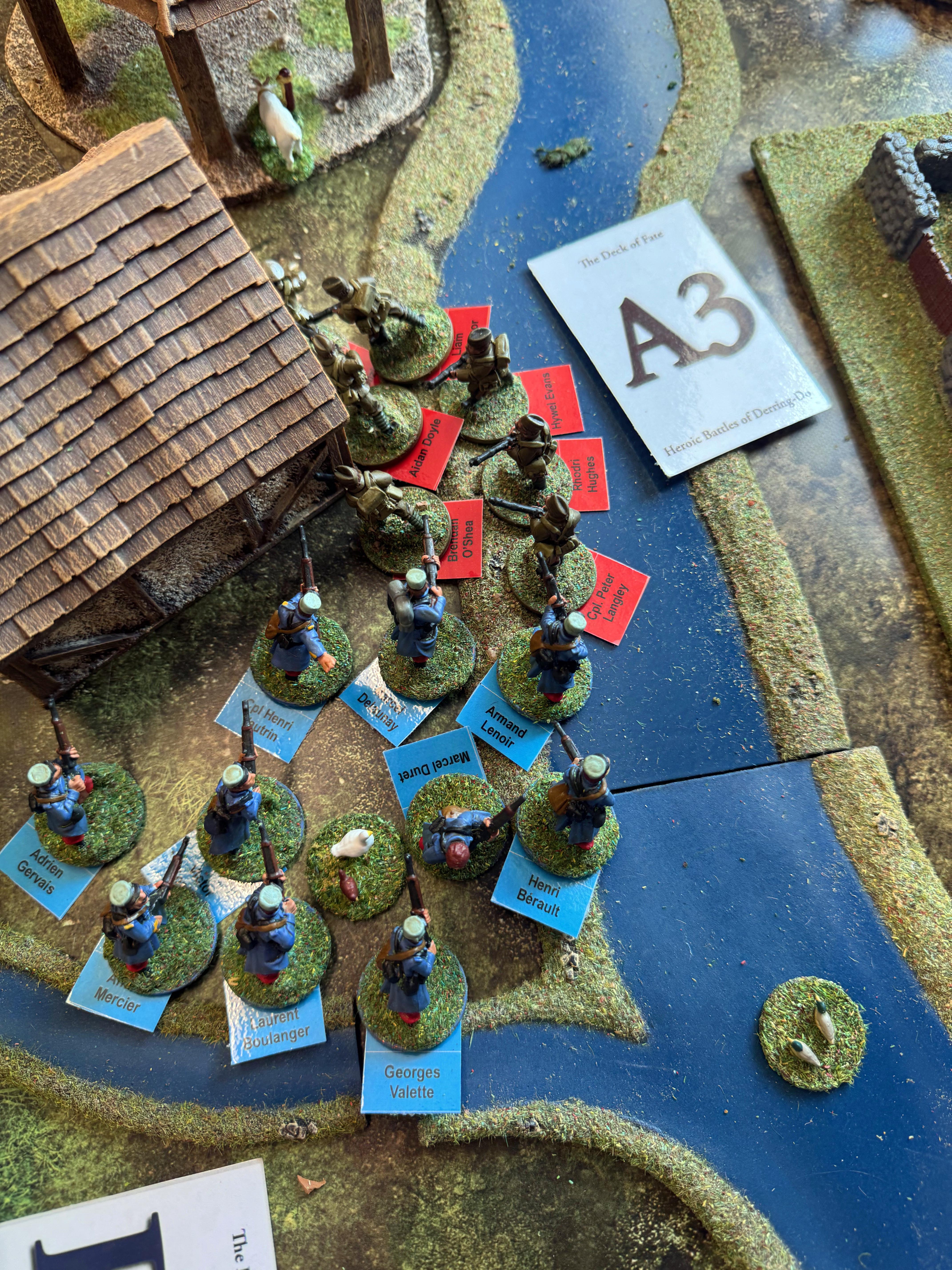
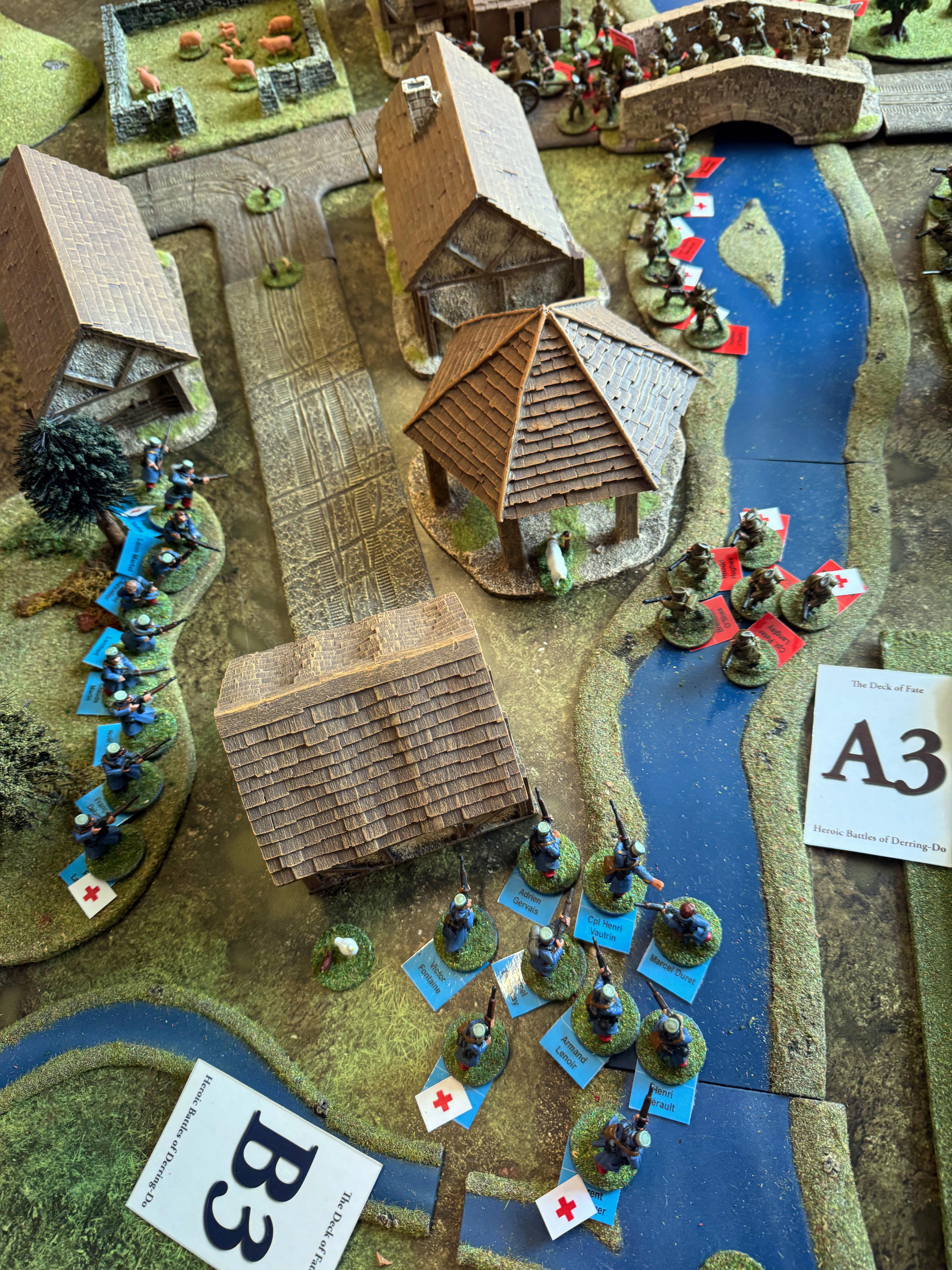
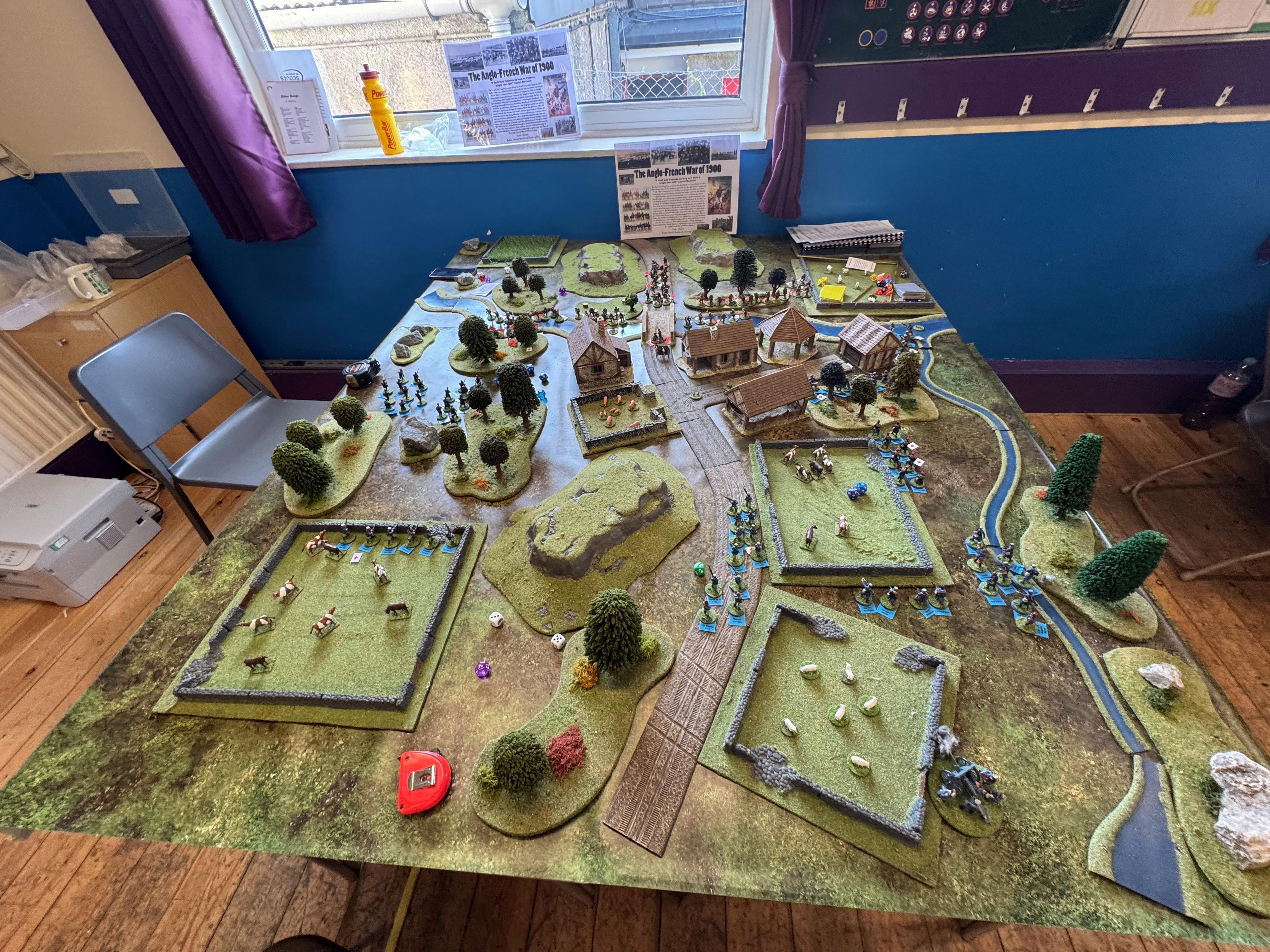
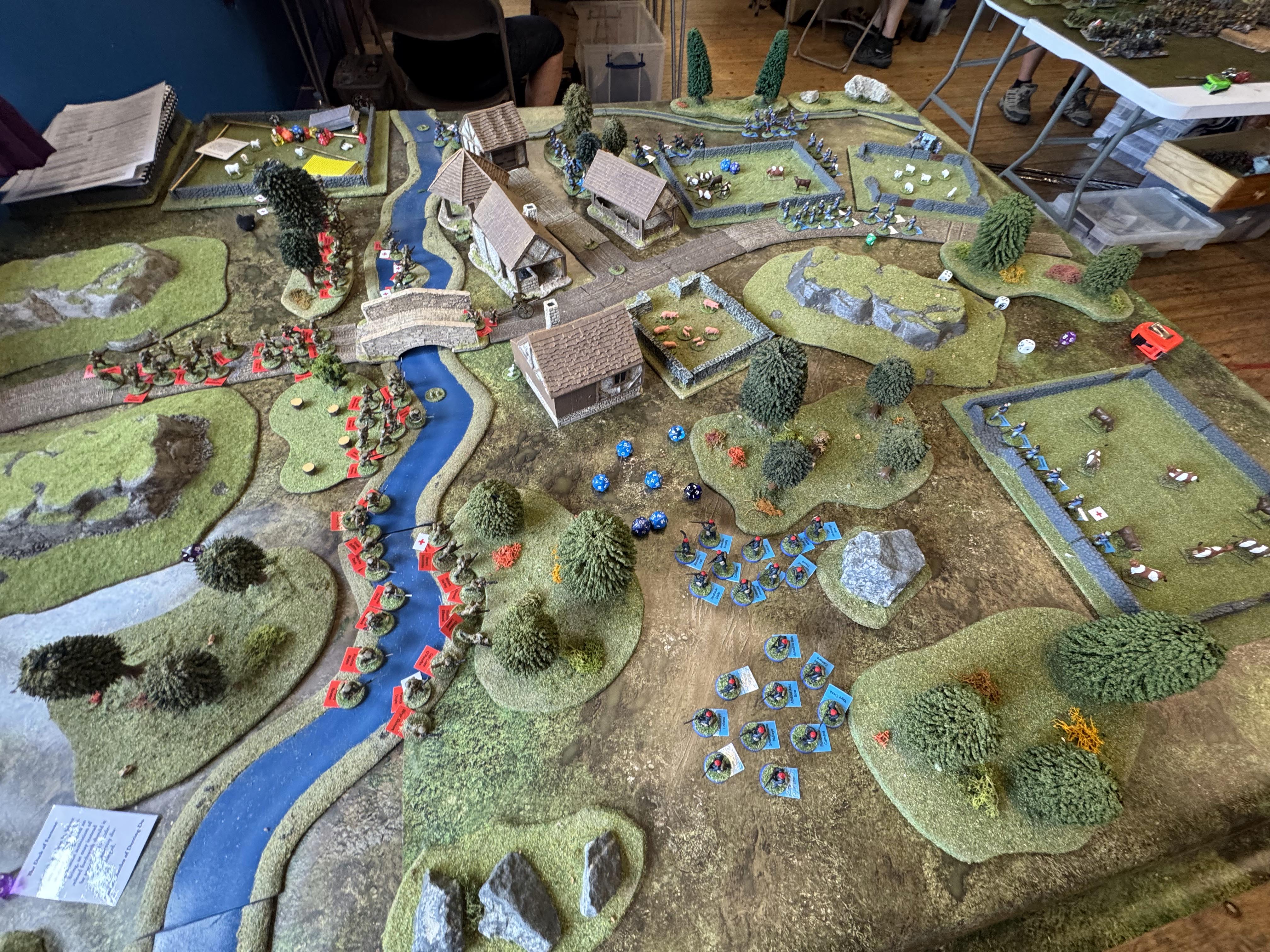
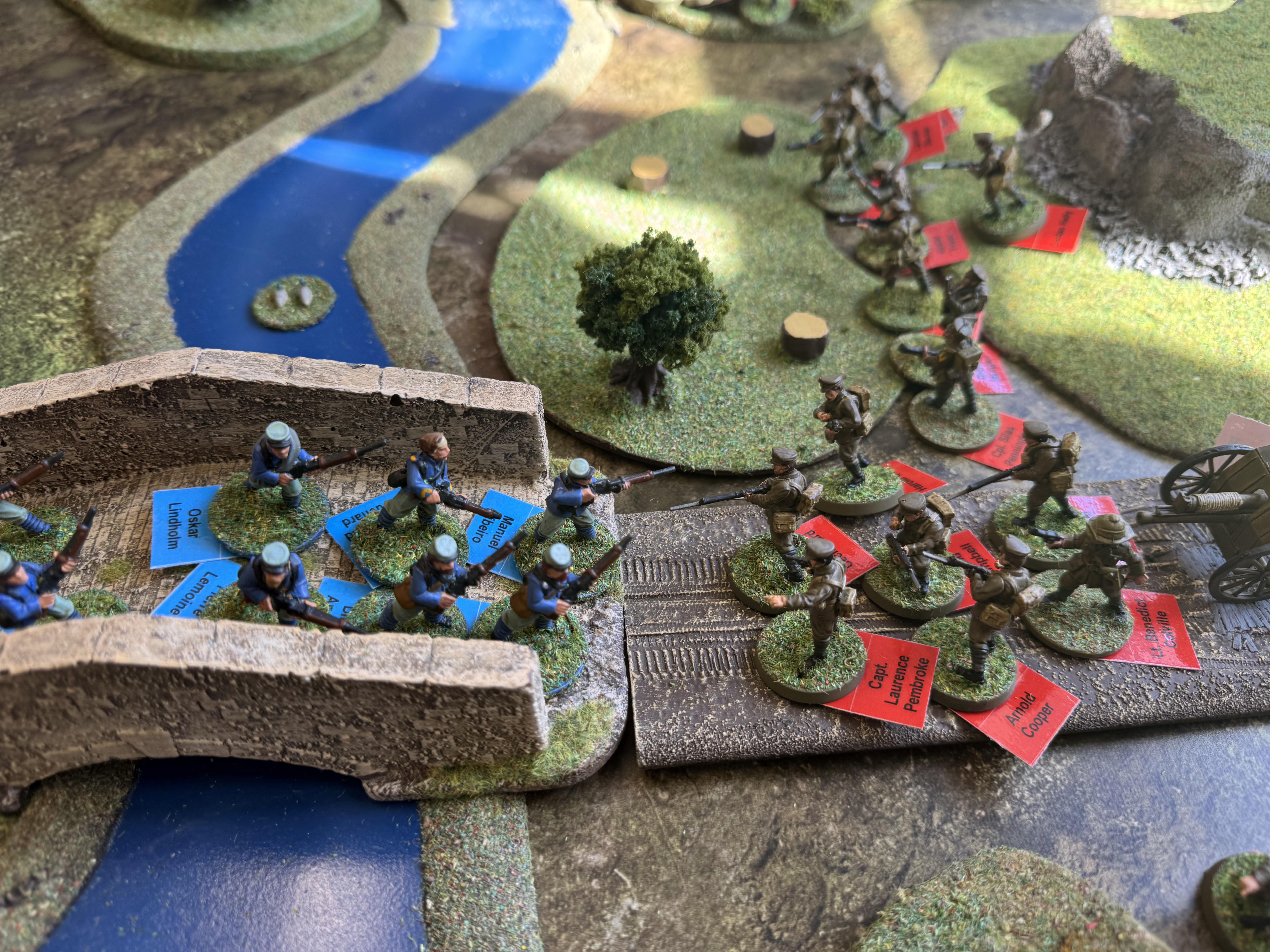
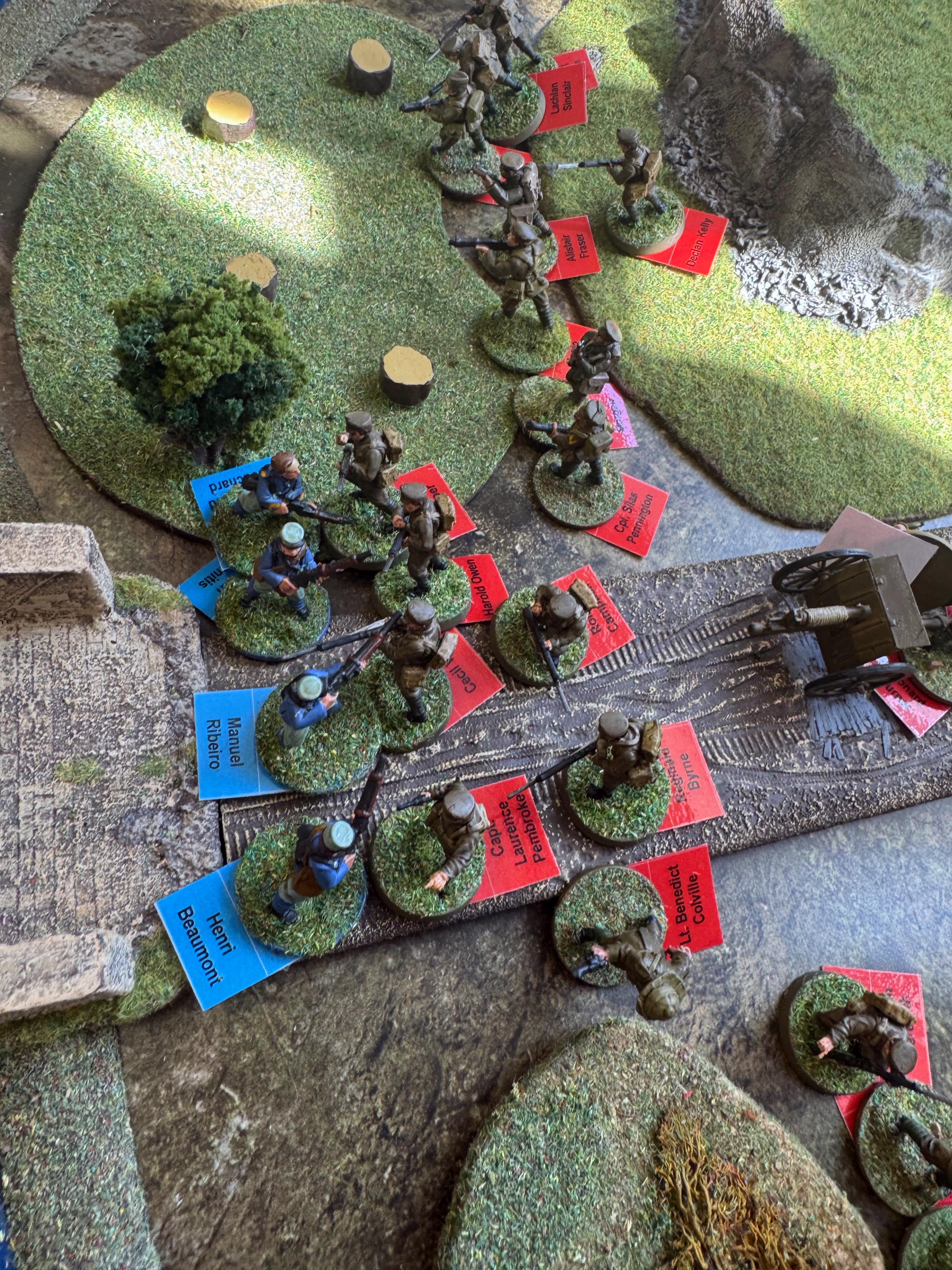
It was during those strained hours upon the Downs, when every ridge and hollow seemed to conspire with the enemy’s purpose, that Captain Pembroke received orders to fall back upon a more defensible line. The injunction was clear: retire, but in good order, and permit no French breakthrough. The foe, emboldened by earlier successes, pressed forward in considerable strength, Captain Morel himself directing two bodies upon a wide flanking sweep while his main column advanced behind a screen of light troops whose skirmishing fire never ceased.
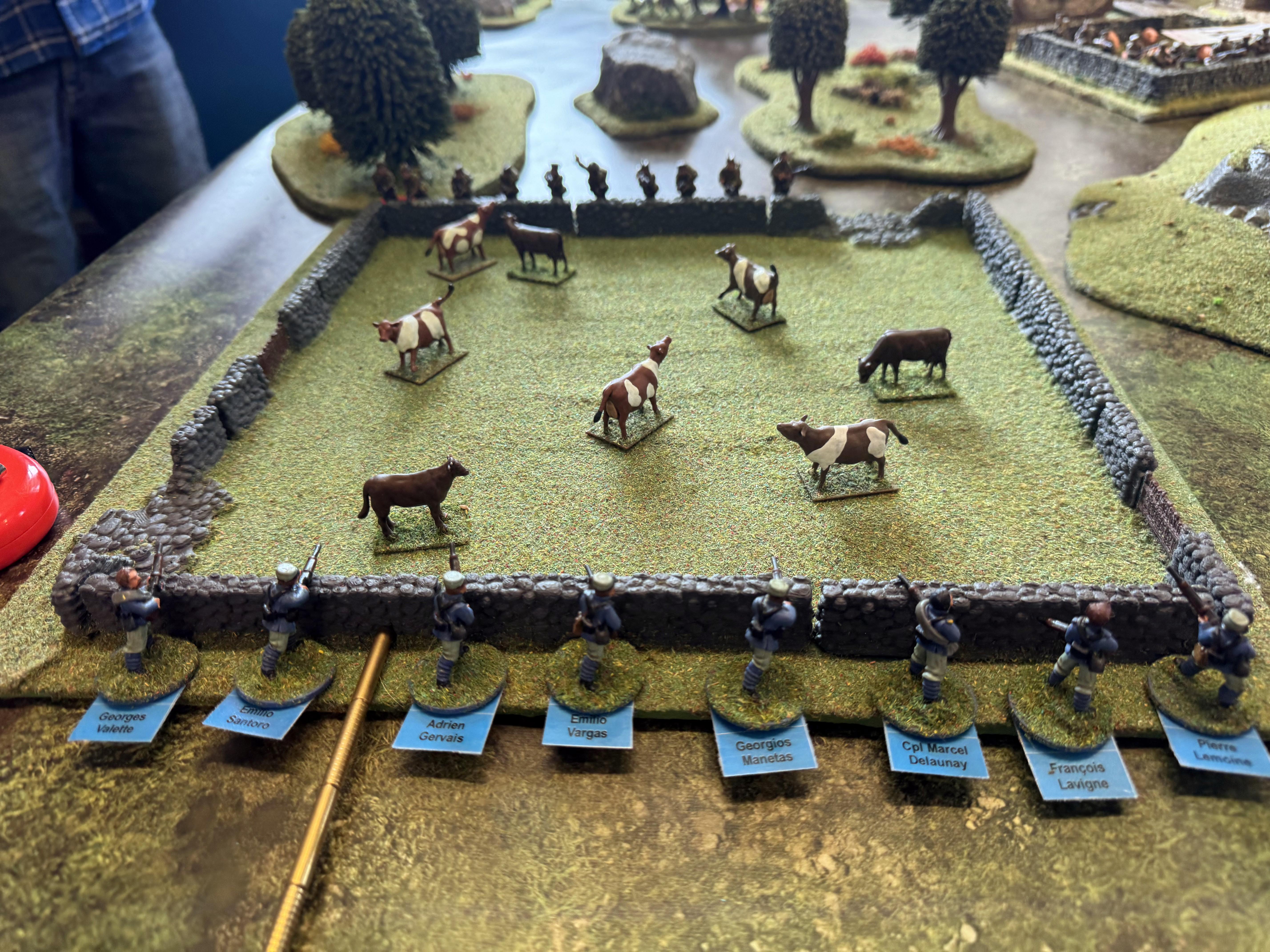
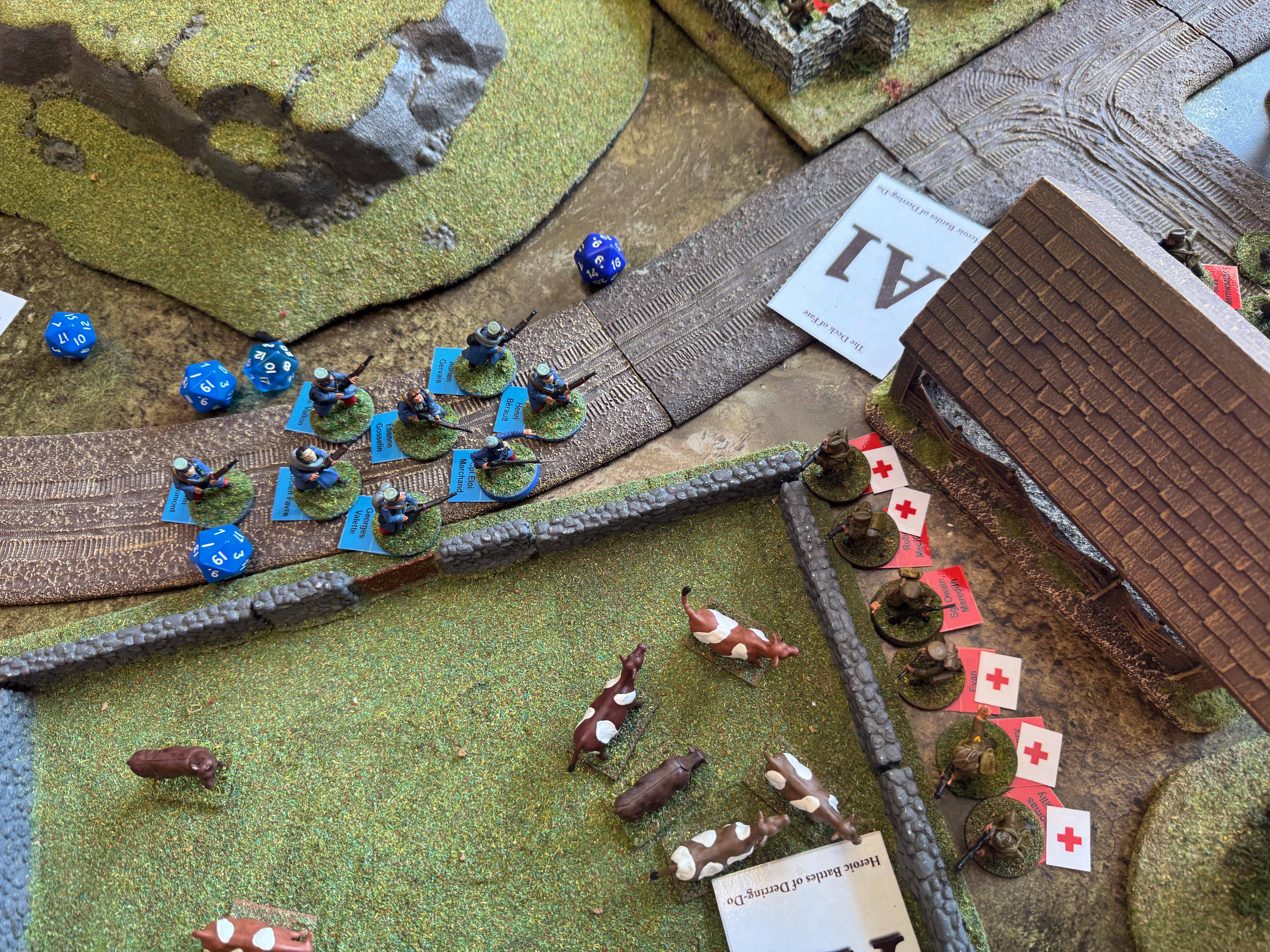
On our left the first weight of the storm fell upon Corporal O’Rourke’s section. The air grew thick with hostile bullets, and the men, seeing the blue masses drawing ever nearer, began to waver. They held long enough to deliver a final volley, then withdrew—barely in time, for the African auxiliaries were already closing with a speed that made the retreat more urgent. O’Rourke was struck down during this movement, and Captain Pembroke, perceiving disorder in the ranks, dispatched Sergeant Meredith to restore cohesion and bring the shaken men back into line. His arrival was greeted with a relief that could scarcely be concealed.
A similar anxiety arose upon the right, though the section posted there had suffered fewer losses and the ground favoured a more measured retirement. They fell back step by step, keeping just ahead of the advancing blue coats, whose persistence was admirable but not decisive.
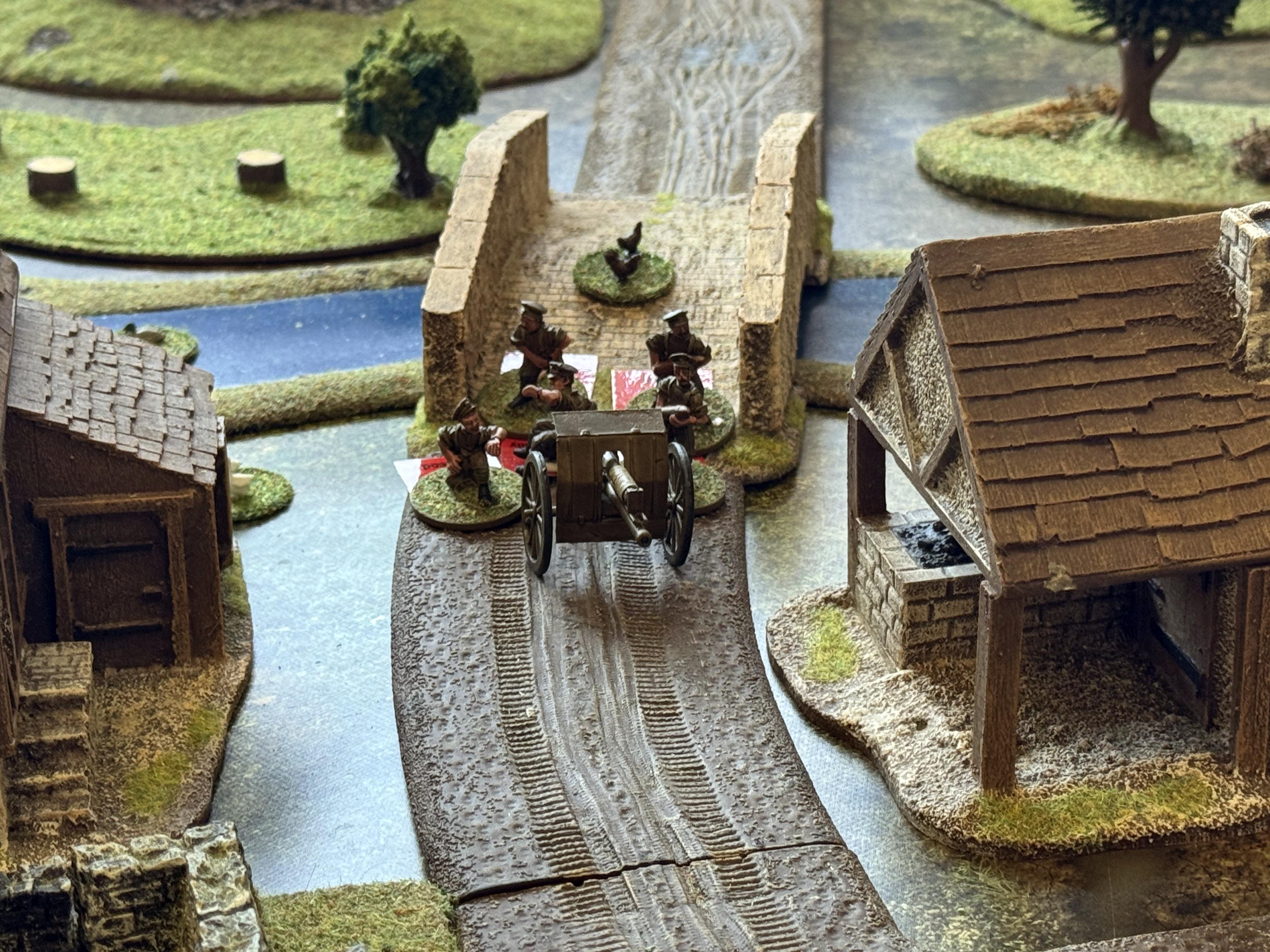
It was while Meredith was steadying the left that fresh danger revealed itself. French infantry, having worked around the flank, poured a deadly enfilade along the British line, striking down several men. Almost simultaneously another French body came running down the road to engage them from the opposite side. For a moment the sergeant stood between two fires, with little hope of extrication. A few well‑timed rounds from the 18‑pounder thinned the enemy’s ranks, and once more the battered section withdrew, this time covered by steadier comrades who had not yet been severely tried.
The French, sensing opportunity, surged again upon the left. Fortune, however, intervened. Corporal Renaudin, who had been directing the attack with notable vigour, fell wounded at a critical instant, and the French command—too far in rear to act swiftly—failed to rally or replace him. The momentum faltered, even though another flanking detachment arrived to lend weight to the assault. This latter body succeeded in crossing the river at a shallow ford and drove off certain retreating British; but scarcely had they gained the far bank when a charge burst from the trees and sent them flying in disorder.
On the right the Senegalese pressed with equal determination. They caught a British section struggling to cross a more treacherous part of the river and forced a melee which, though won by the Africans, left them exposed and exhausted. British fire from the opposite bank soon punished them severely and drove them back from the water’s edge.
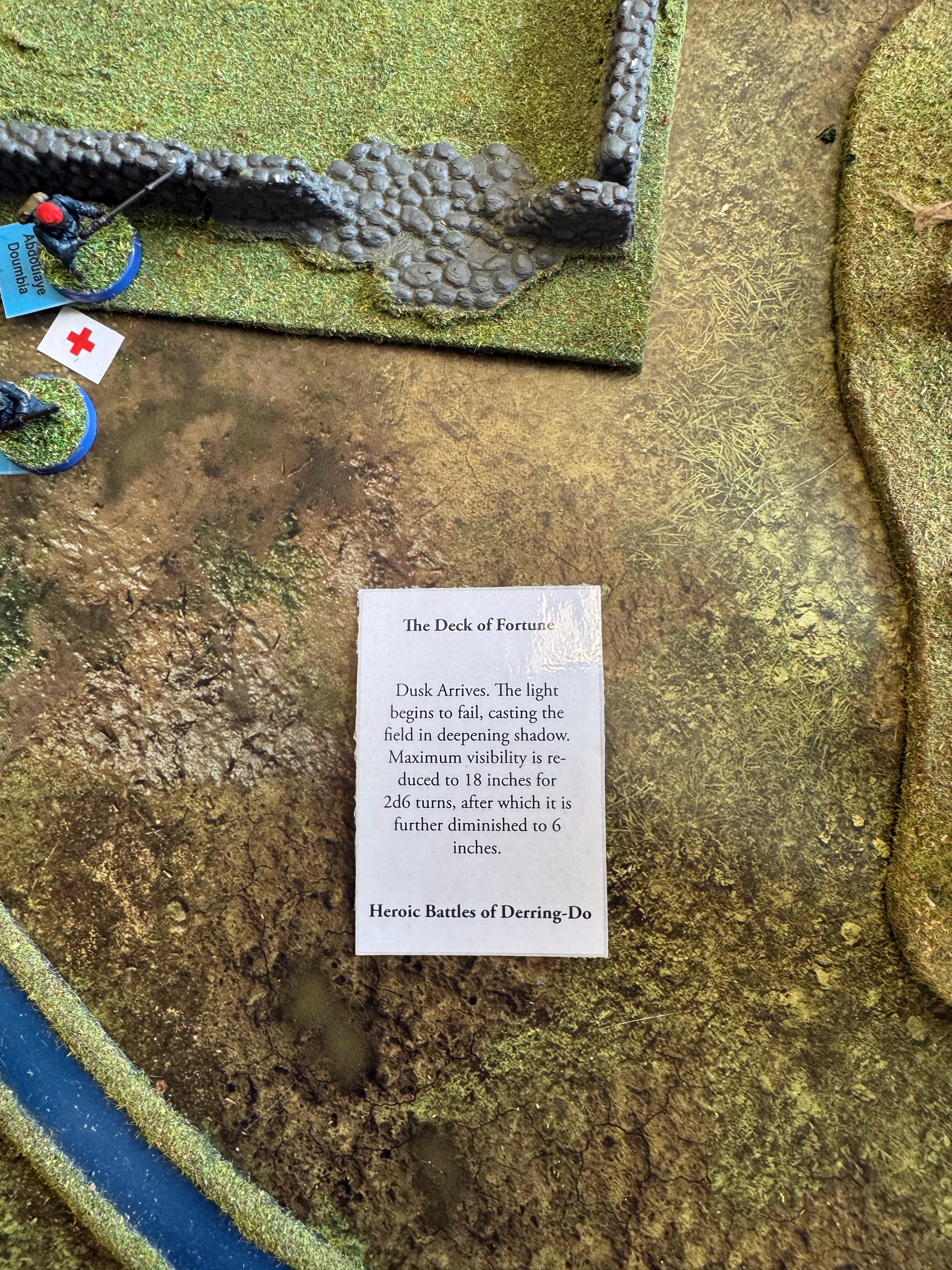
By now the light was failing, and the British, praying for the shelter of night, shortened their ranges and fought with the grim patience of men who know that darkness alone may complete their salvation. A defensive line was forming along the river; the artillery piece was withdrawn; and Captain Pembroke’s headquarters, having directed the retirement throughout, were among the last to cross to the safer side.
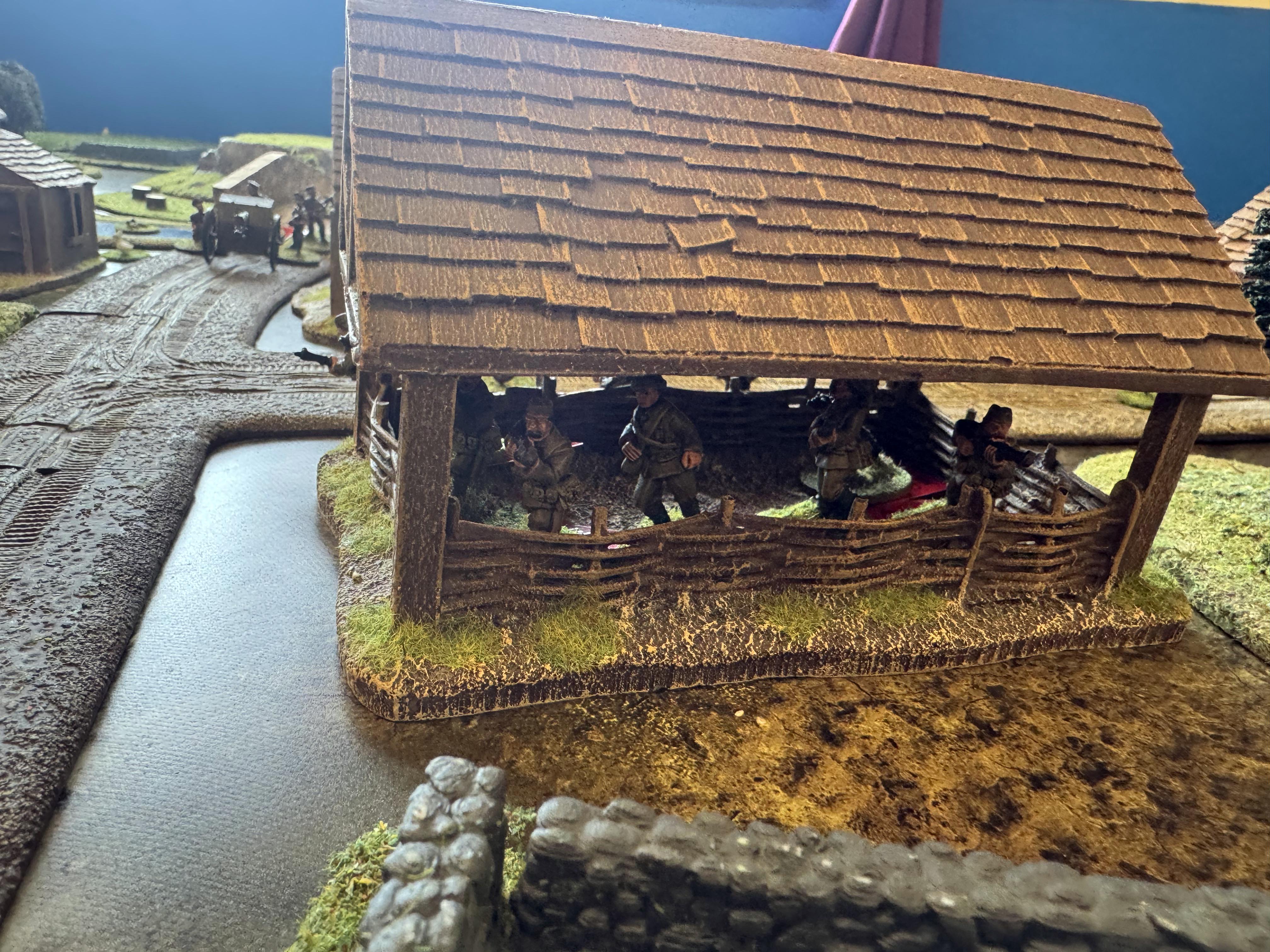
The French, their numbers dwindling and their formations disordered, made one final effort. A body of light infantry rushed the bridge in hopes of striking down the British command. Pembroke and his men met them with a desperate volley—pistols flashing, rifles cracking—and three of the attackers fell, a loss that proved decisive. The survivors, though outnumbered, fought with commendable spirit and even claimed their highest prize of the day when Henri Beaumont slew Lieutenant Colville. Yet the headquarters guard, rallying around their captain, drove the assailants back and secured the crossing.
Thus the withdrawal was completed. It had been a close‑run thing, and had the French light troops reached the bridge unscathed, the result might have been grievously different. As it was, the British retired steadily thereafter, firing as they fell back, with only scattered shots snapping at their heels. Captain Pembroke had accomplished one of the most difficult manoeuvres in war: a retreat under fire, in order, with his command still coherent. The losses were painful, and the letter to Lieutenant Colville’s parents would be hard indeed to write; but the young officer had died in the execution of his duty, and Pembroke resolved to recommend him for distinction. It was the least he could offer for so gallant a life.