

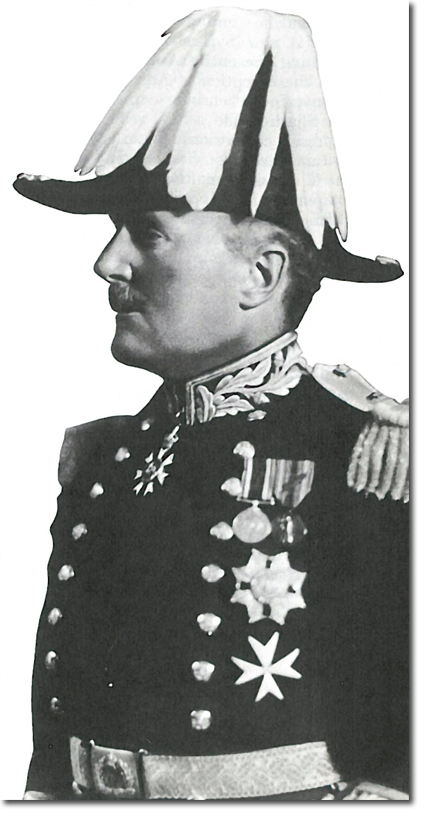
Sir (Eubule) John Waddington, an experienced colonial administrator who had previously served in Kenya, Bermuda, British Guiana, and Barbados, was appointed Governor of Northern Rhodesia in October 1941. His tenure lasted until 1947, a period dominated by the Second World War and its immediate aftermath. Waddington’s administration was marked by the mobilisation of Northern Rhodesia’s resources for the Allied war effort, the management of labour unrest in the Copperbelt, and the gradual expansion of African political representation.
During the war, Northern Rhodesia’s copper mines became a strategic asset. Agreements with the British Ministry of Supply ensured that copper was provided at fixed prices to support munitions and industrial production. Waddington oversaw the colony’s contribution to the war effort, balancing the demands of London with local concerns about wages, working conditions, and taxation. Labour tensions, already evident in the 1935 strike, resurfaced during the war years, culminating in the violent strike of 1940 and further unrest in 1942. Waddington’s government responded with commissions of inquiry and modest reforms, but African miners remained dissatisfied with low pay and exclusion from skilled jobs reserved for Europeans.
Politically, Waddington presided over cautious constitutional change. The Legislative Council, which had been dominated by nominated officials and elected Europeans, began to acknowledge the need for African voices. In 1945, three unofficial European members were designated to represent African interests, and by 1946 the African Representative Council was established, composed of members nominated by Provincial Councils. Although these institutions were largely advisory, they marked the first steps towards African participation in colonial governance. Waddington’s administration thus laid the groundwork for later reforms that would accelerate in the 1950s.
Waddington also had to manage the colony’s relationship with the British South Africa Company, which still held extensive mineral rights. Settler politicians, including Roy Welensky, pressed for greater government control over these resources, and Waddington’s government began negotiations that would eventually lead to the Company ceding a share of its revenues to the Protectorate. His administration was therefore caught between settler demands for economic autonomy and African demands for political equality, both sharpened by wartime pressures.
By the time Waddington left office in 1947, Northern Rhodesia had been transformed by the war. Lusaka, which had become the capital in 1935, was consolidating its role as the administrative centre. Copper production had expanded dramatically, tying the colony more closely to global markets. African political organisations, though still limited in scope, were beginning to articulate nationalist aspirations. Waddington’s governorship was not marked by dramatic innovation, but it was a period of consolidation, in which the structures of colonial administration were adapted to meet the challenges of war and the stirrings of post-war change.
Picture courtesy of National Portrait Gallery

