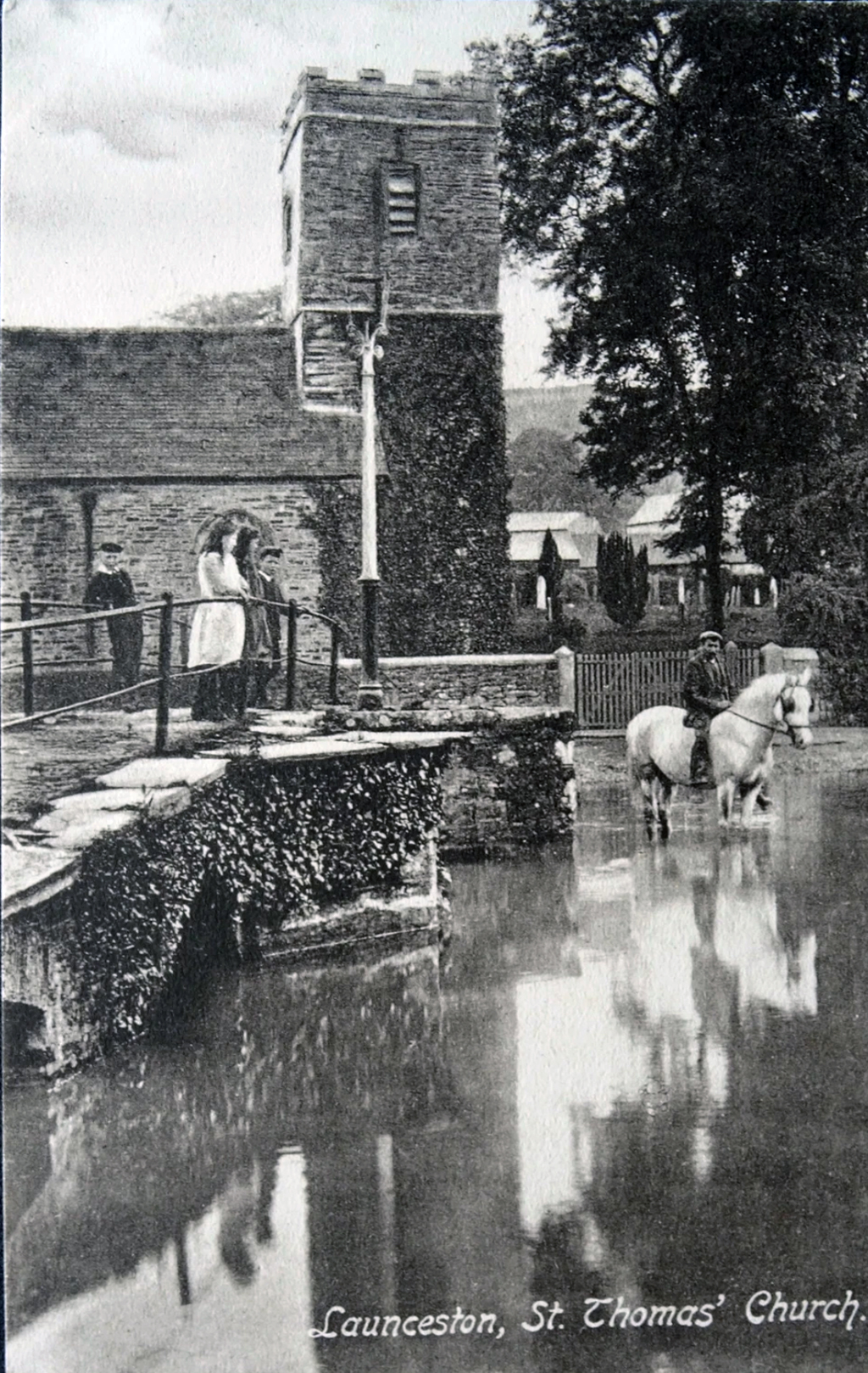
St Thomas’ Bridge at Launceston is a late‑medieval packhorse bridge built to provide a reliable crossing of the River Kensey for the Augustinian Priory at St Thomas. Its construction reflects the practical requirements of a working ecclesiastical institution that needed dependable access to its lands, tenants and outlying responsibilities.
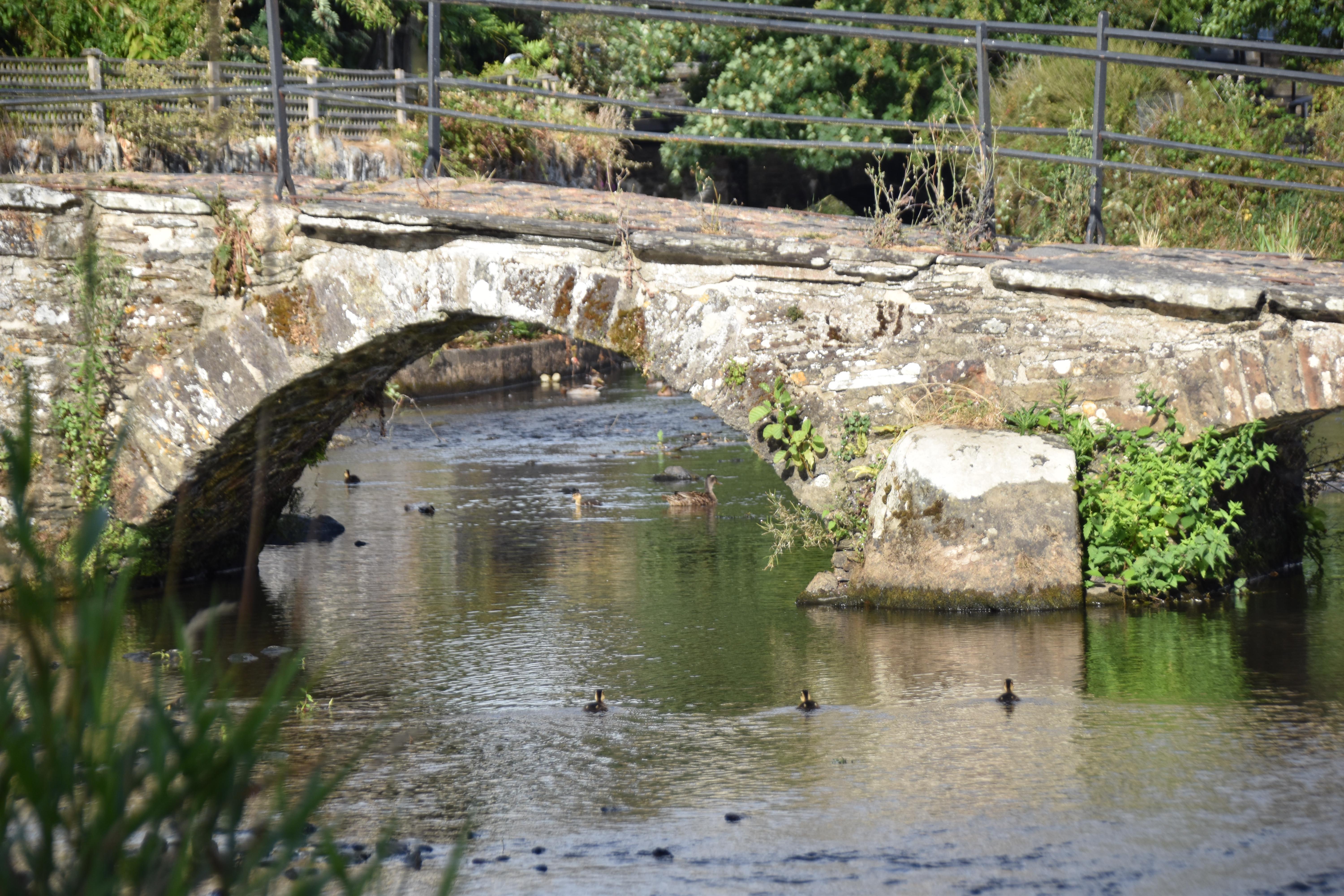
The bridge is built of slatestone rubble with large slate dressings, forming five arches with cutwaters on both sides. The arches are four‑centred, a typical late‑medieval design that allowed a low profile while maintaining adequate water clearance. The cutwaters reduce hydraulic pressure on the piers and narrow the flow, improving stability during periods of high water. This was essential for a priory whose personnel travelled regularly for administrative, pastoral and medical duties.
The structure’s narrow width confirms its original purpose: pedestrian traffic and packhorses rather than carts. Monastic houses frequently constructed and maintained such bridges, and the Augustinian Canons at Launceston would have required a durable crossing to link the priory precinct with the northern approaches and the wider road network. The bridge therefore functioned as part of the priory’s logistical infrastructure, supporting movement of goods, rents, supplies and personnel.
Following the Dissolution of the Monasteries, the priory was dismantled and its lands redistributed, but the bridge remained in use. Over time the riverbed rose through silt deposition, leaving only the upper portions of the arches clearly visible. Victorian additions included wrought‑iron railings and a central cast‑iron lamp, reflecting contemporary concerns for safety and civic improvement. These elements sit on top of the medieval fabric without altering its structural logic.
A later vehicular bridge on St Thomas Road now carries modern traffic across the Kensey. This newer structure complements rather than replaces the medieval bridge, which continues to serve as a pedestrian crossing. The coexistence of both bridges illustrates how a single crossing point can be adapted across centuries to meet changing transport requirements while preserving earlier engineering.