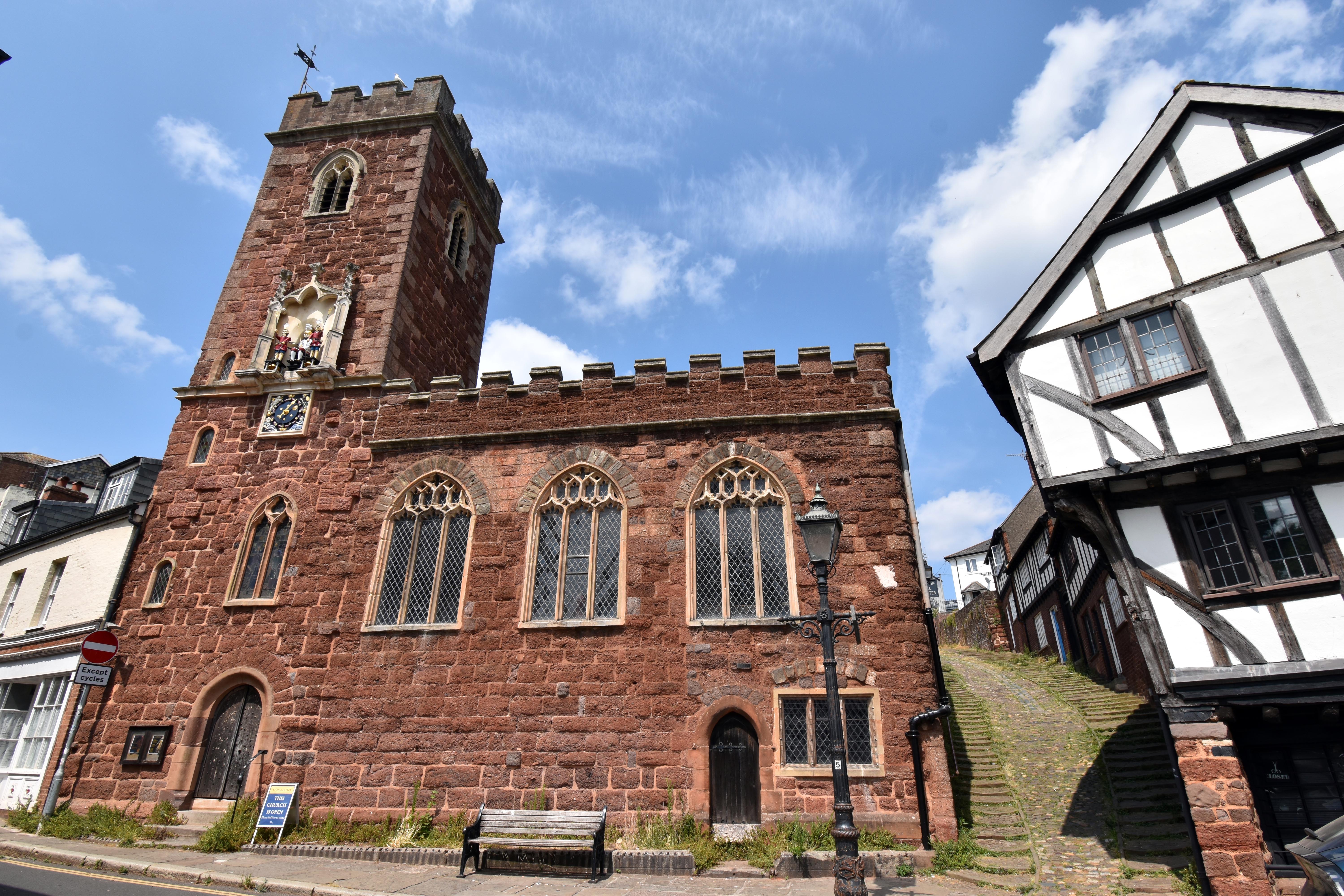
St Mary’s Steps Church stands on the western side of Exeter’s historic centre, close to the line of the old city wall and overlooking West Street. It is one of the most distinctive medieval survivals in the area, its position on the steep descent giving rise to the name. The church is first recorded in the thirteenth century, though its present form reflects later rebuilding and alteration. The tower, with its characteristic clock and figures, is a familiar landmark. The church was long associated with the parish of St Mary Major, and its proximity to the West Gate made it a notable point of reference for travellers entering the city from the west.
The church’s most striking feature is the clock and its accompanying figures, known locally as “Matthew the Miller” and his companions. They strike the quarter hours, a tradition that has continued for centuries. The mechanism has been repaired and renewed many times, but the figures themselves retain their historic appearance. The churchyard, now small, once extended further before nineteenth-century road improvements altered the surrounding layout. The building’s position beside the medieval wall emphasises its antiquity, and the surviving masonry of the wall can still be traced behind the church.
St Mary’s Steps has witnessed many changes in the surrounding neighbourhood. West Street was once a busy thoroughfare lined with inns, workshops and small houses, and the church served a densely populated parish. The decline of the area in the nineteenth century, followed by slum clearance and later redevelopment, altered the character of the district, but the church remained a constant presence. Its survival through periods of neglect and alteration is notable, particularly as many nearby medieval buildings were lost.
During the Exeter Blitz of 1942 the church escaped serious damage, though the surrounding streets suffered heavily. Fires and explosions destroyed many buildings in the West Quarter, and the church stood amid widespread devastation. Its endurance added to its reputation as one of the city’s more resilient medieval structures. Later restoration work ensured its continued use, and although the parish was eventually united with others, the building retained its identity and historical significance.
Today St Mary’s Steps Church remains an important reminder of Exeter’s medieval topography. Its tower, clock figures and position beside the old wall make it one of the most recognisable landmarks in the West Quarter. Although no longer the centre of a large parish, it continues to attract interest from visitors exploring the city’s older streets. The church stands as a testament to the layers of history that characterise this part of Exeter, surviving centuries of change while retaining its distinctive presence on the steep descent of West Street.