

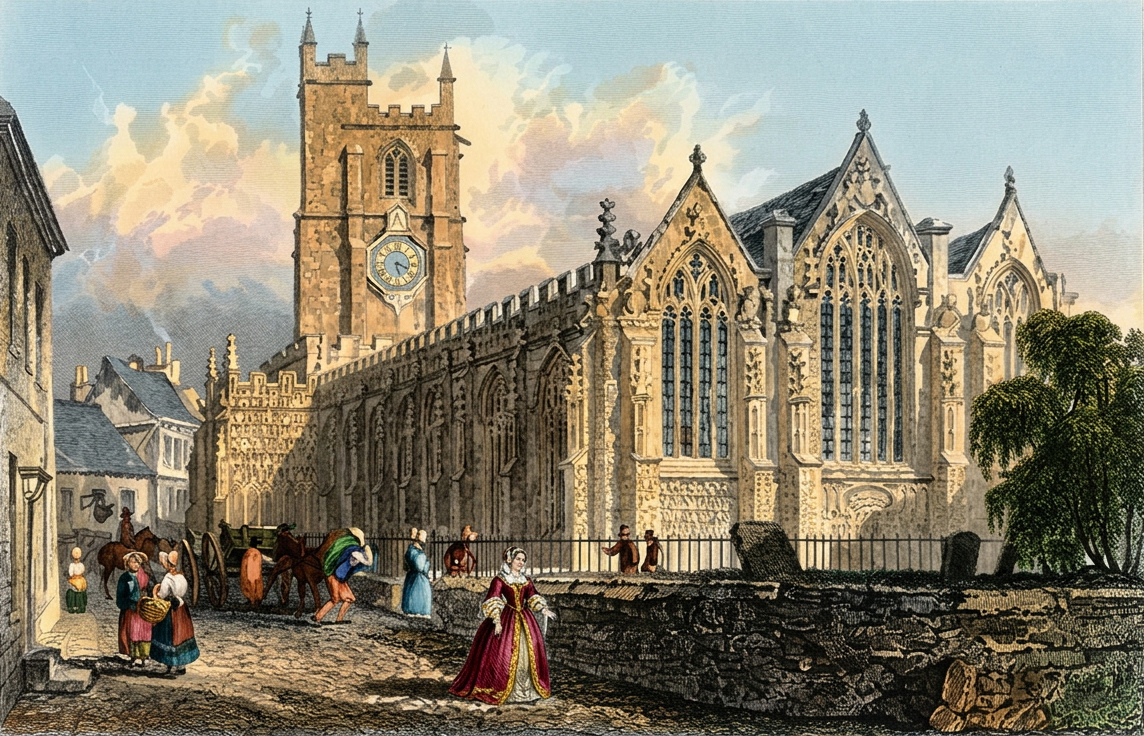
St Mary Magdalene Church is one of the most distinctive parish churches in Cornwall, recognised immediately by its remarkable exterior of carved granite. Standing on the slope below Launceston Castle, the church occupies a site associated with worship since at least the thirteenth century. The present building dates largely from the early sixteenth century, rebuilt and ornamented during the reign of Henry VIII, and its fabric reflects both the wealth of the town and the ambitions of its benefactors.
The carved granite façade is its defining feature. Unlike the plain stone typical of Cornish churches, St Mary Magdalene is covered with elaborate panels of foliage, shields, tracery, and biblical scenes cut directly into the granite. This level of external decoration is almost unique in Cornwall. The craftsmanship suggests a combination of local skill and significant financial backing, likely connected to Launceston’s status as an administrative and trading centre during the late medieval period.
The tower, rising above the south side, is more typical of Cornish parish architecture: solid, functional, and built for endurance rather than display. The contrast between the ornate walls and the plain tower gives the church a distinctive profile. Inside, the building contains a mixture of medieval and later work. The carved rood screen fragments, the stone font, and a range of slate and marble memorials reflect centuries of parish life. Among the most notable monuments are the kneeling effigies of Colonel Sir Hugh Piper and his wife Sibella, prominent figures in Launceston’s seventeenth‑century history.
The church’s position within the town is central to its identity. It stands just below the castle, forming part of the historic core that shaped Launceston’s development. For centuries it served not only as a place of worship but also as a civic landmark. Markets, gatherings, and local administration took place in the surrounding streets, and many of the memorials inside the church commemorate mayors, merchants, clergy, and soldiers whose lives were tied to the fortunes of the town.
St Mary Magdalene also preserves the military history of Launceston. Several memorials record the service and deaths of local men in conflicts ranging from the Civil War to the First World War. The detailed inscription to Captain Douglas Eckley Langdon of the Duke of Cornwall’s Light Infantry, killed near Lens in 1917, is one of the most striking. Such memorials give the church a role not only as an architectural landmark but also as a repository of local remembrance.
The interior retains the atmosphere of a building shaped by long use. The light from the traceried windows, the mixture of slate and marble memorials, and the arrangement of pews all contribute to a sense of continuity. The churchyard, with its slate headstones and views toward the castle, reinforces the connection between the ecclesiastical and secular histories of Launceston.
St Mary Magdalene remains one of the most architecturally unusual churches in Cornwall. Its carved granite exterior sets it apart from its neighbours, while its position within Launceston’s historic centre ensures that it continues to play a role in the town’s identity. The building stands as a testament to local craftsmanship, civic pride, and the long continuity of worship on the hillside below the castle.

