

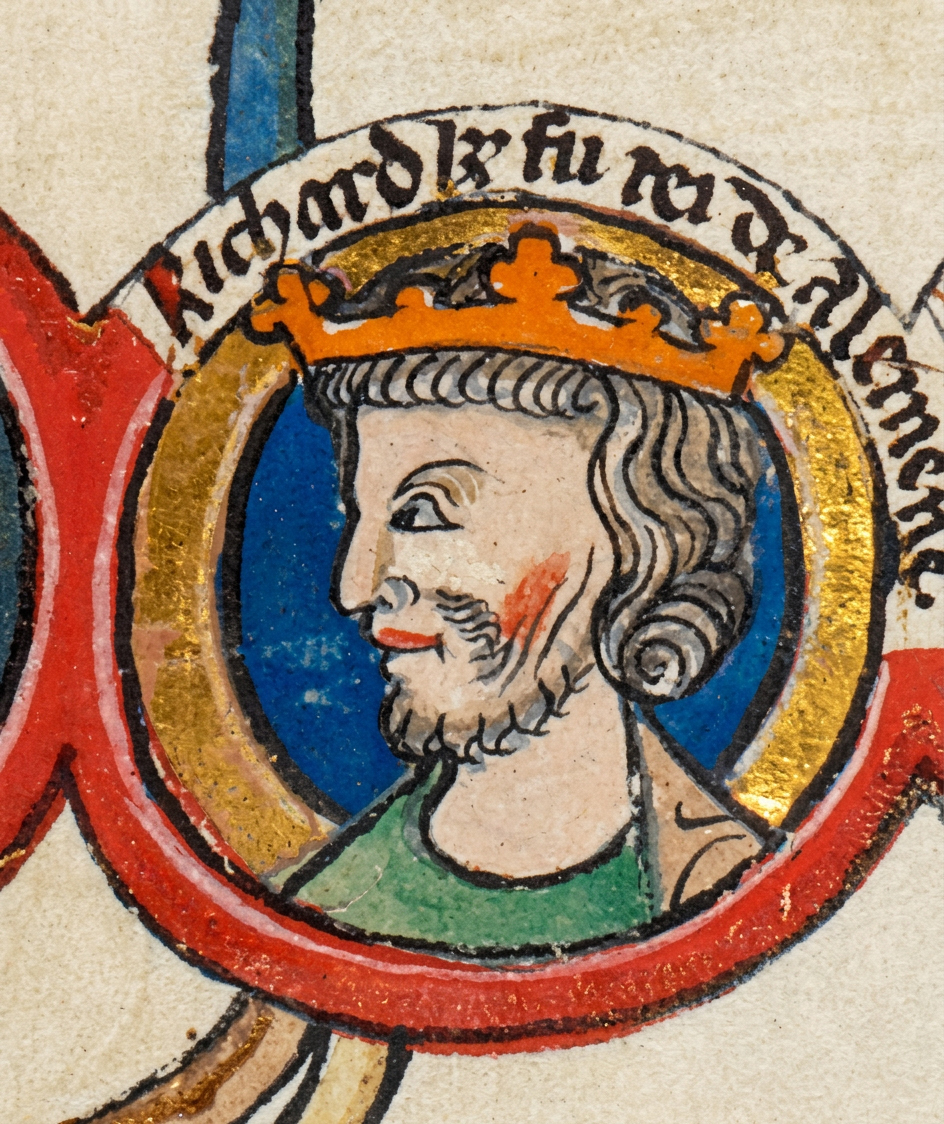
Richard of Cornwall (1209–1272) was one of the most powerful men ever to hold the earldom, and his influence on Cornwall was direct, sustained, and measurable. As the second son of King John and younger brother of Henry III, he inherited Cornwall not as a ceremonial appendage but as a functioning territorial lordship with its own revenues, courts, and administrative machinery. Richard treated it accordingly: as a serious political and economic asset.
His connection to Cornwall was practical rather than romantic. The earldom’s wealth came chiefly from the stannaries, and Richard managed them with a level of competence that made him one of the richest men in Europe. Tin production, coinage, and the regulation of the miners brought in enormous sums, and Richard ensured that the systems governing them were efficient and profitable. Cornwall under his control was not a backwater but a revenue engine, and he used its income to fund his wider political ambitions.
Launceston was the administrative centre of his authority. The castle served as his chief stronghold in the county, and Richard invested in its maintenance and its role as a judicial hub. The town’s importance in the thirteenth century owes much to his stewardship: charters, courts, and the machinery of local governance all operated under his direction. His rule shaped the development of the settlement and reinforced its status as the focal point of the earldom.
Richard’s ambitions, however, extended far beyond Cornwall. In 1257 he was elected King of the Romans — effectively the chosen ruler of Germany and the designated successor to the Holy Roman Emperor. The election was not a ceremonial flourish; it reflected his immense wealth, his diplomatic manoeuvring, and the support he secured among the German princes. His authority within the empire was uneven, contested by rival claimants and constrained by local politics, but he did exercise real power: issuing charters, holding courts, and attempting to impose order on a fragmented political landscape.
Yet even while dealing with German electors and imperial factions, Richard remained anchored to Cornwall. He continued to draw its revenues, maintained his estates, and used the earldom’s wealth to sustain his continental position. His dual identity — Cornish magnate and European monarch — is unusual in English history. Few figures have combined such a localised territorial base with such an expansive international role.
Richard died in 1272, but the structures he reinforced in Cornwall endured. The prosperity of the stannaries, the administrative prominence of Launceston, and the political coherence of the earldom all owe much to his tenure. His life demonstrates that medieval Cornwall was not peripheral but integral to the finances and politics of the English crown.

