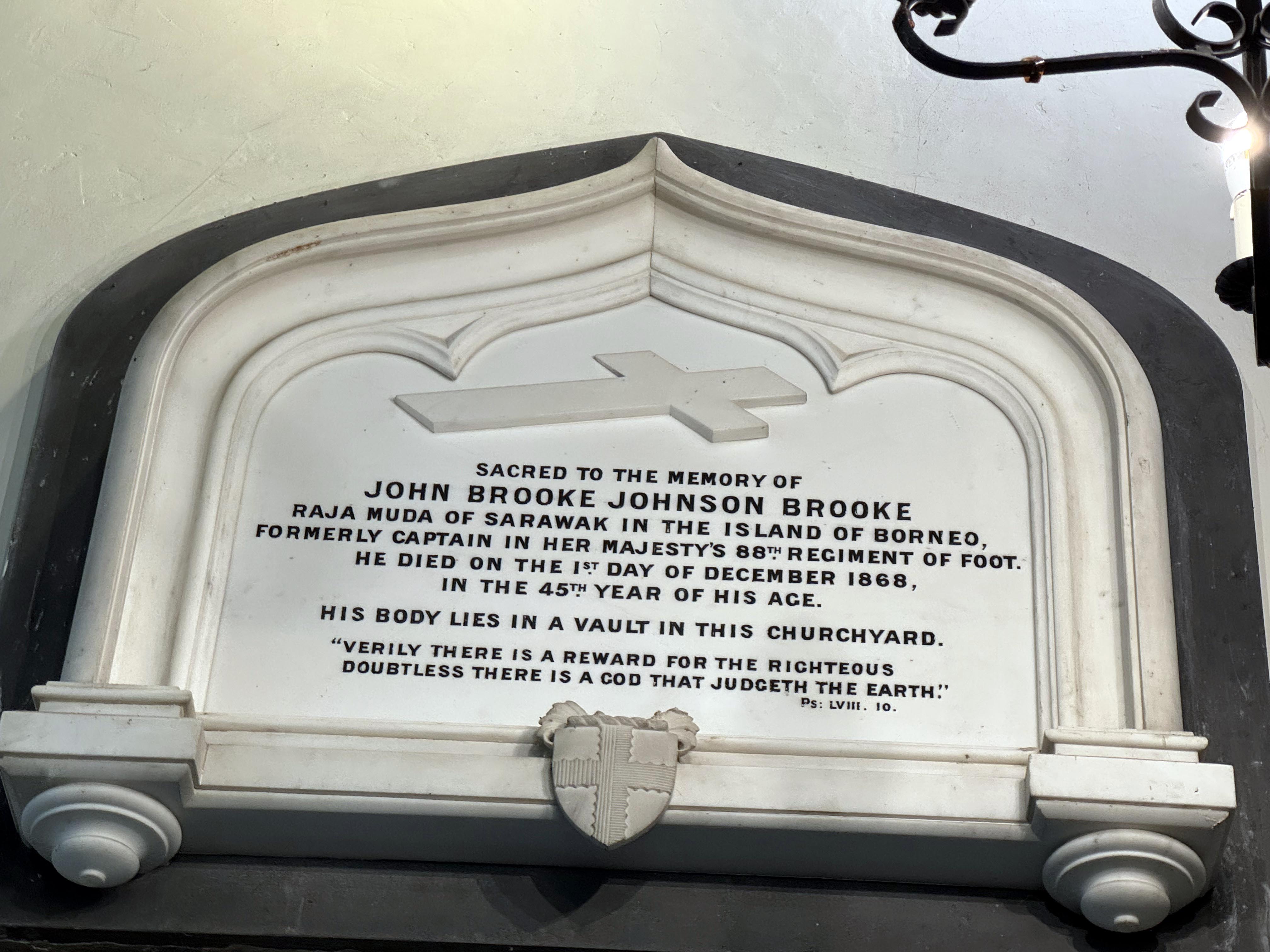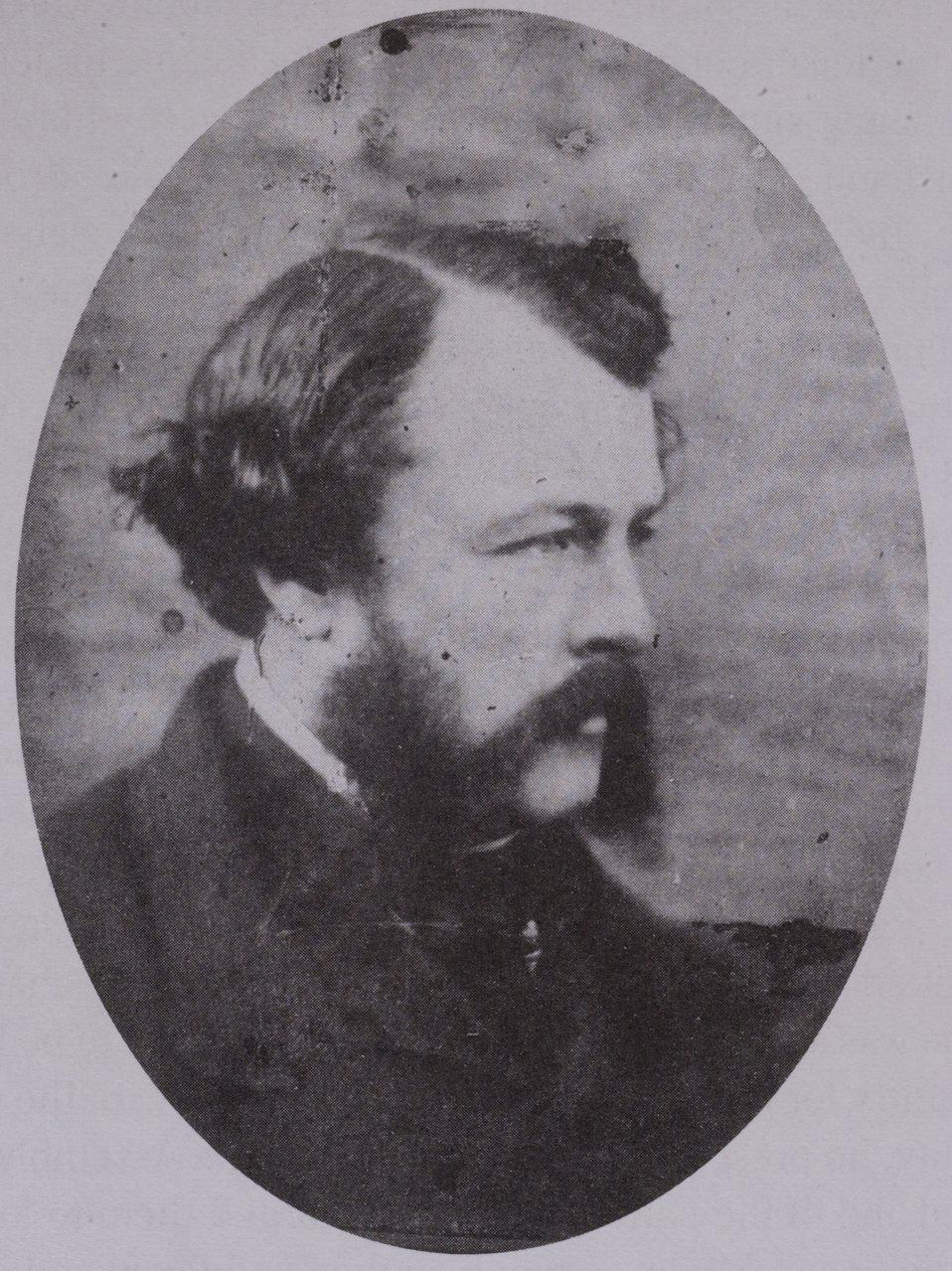
In the quiet church of Whitelackington lies a memorial to John Brooke Johnson Brooke, once heir apparent to the kingdom of Sarawak. His story connects the lanes of Somerset with the jungles of Borneo, and reveals how local families could find themselves entangled in the drama of empire. John was the son of Reverend Francis Charles Johnson, vicar of Whitelackington for nearly fifty years, and it was here that his family’s presence anchored him to the parish. When his uncle James Brooke became the first White Rajah of Sarawak, John adopted the Brooke name and was styled Rajah Muda — the designated successor to rule a distant land.
Whenever James Brooke returned to Britain he generally left his elder nephew in charge of Sarawak. For a time it seemed certain that John would succeed him. Yet his career was marked by turbulence. In 1858 both James and John were back in England, tussling with the government — and with each other — over the legal status of Sarawak and lobbying for protection in the wake of the Chinese insurrection and the shocking slaughter of the Indian Mutiny. Their absence left the regime vulnerable. Local Malay chiefs moved against the administration around the sago port of Muka, and tensions flared along the Brunei–Sarawak border after the murder of two officials at Kanowit. Charles Brooke tried to reassert control, but the situation was worsened by the intervention of the British Governor of Labuan, G.W. Edwardes, who was far less sympathetic to Sarawak than Consul St John had been. When the rebel leader Masahor sought refuge in Brunei, Edwardes gave him a sympathetic hearing and even ordered the Brookes to withdraw when they attempted to reopen Muka by force. This humiliation undermined Sarawak’s prestige across Borneo.
News of Edwardes’ intervention reached London, where St John lobbied the Foreign Secretary to reverse the decision. James Brooke returned east with renewed authority, backed by Prime Minister Palmerston and the Royal Navy. Negotiations with the Sultan of Brunei led to the cession of Muka and its surrounding lands to Sarawak in return for cash and a pension. James Brooke sailed to claim the territory aboard HMS Charybdis with 200 Royal Marines, and Masahor was sent into exile in Singapore. It was the largest single transfer of land between Brunei and Sarawak, and though Brunei shrank, it gained income and stability. Sarawak’s prestige was restored, but the episode revealed the fragility of its position and deepened the rift between James and his heir.
The Indian Mutiny, the Chinese War, and French ambitions in the region all weighed heavily on James Brooke. He lacked the wealth to secure Sarawak’s future, but found support from Angela Burdett Coutts, one of the richest women in Britain, who lent him money and even purchased a steam gunship for Sarawak’s defence. Yet James still sought foreign guarantees, considering Dutch or French protection. This alarmed John Brooke Johnson Brooke, who feared losing his inheritance. Distraught by the death of his wife and child, he went so far as to call upon the people of Sarawak to recognise him as rightful ruler. In a fateful letter he declared: “I hesitated not one moment, but resolved to take my own course, and assert my rights and those of the people of Sarawak… we must try our relative strength.”
The letter electrified James Brooke, who hurried east to confront his nephew. They met in Singapore, where John, chastened, admitted he had overstepped. James relieved him of his position as heir and appointed his younger nephew Charles instead. John Brooke Johnson Brooke had always been more sympathetic to the Malays, while Charles bonded more closely with the Dyaks and proved a decisive military leader. James judged Charles’ steady temperament better suited to rule. In time Charles would lead 15,000 Dyaks to suppress a revolt on the Rejang River and later govern Sarawak for half a century. John, meanwhile, returned to England, his mental state deteriorating. He died in 1868 — the same year as his uncle — and was buried at Whitelackington, where his father had been vicar for nearly fifty years. His memorial in St Mary’s Church recalls him as Rajah Muda of Sarawak, a poignant reminder of the heir who never ruled.
For the traveller, it is striking to stand in Whitelackington and read this memorial. Here, in a quiet Somerset parish, the story of Sarawak’s contested succession is preserved. The stones of the church recall not only local rebellion and devotion, but also the ambitions and failures of a family whose reach extended from Sedgemoor to Borneo. John Brooke Johnson Brooke’s life reminds us how the drama of empire could end in the stillness of an English churchyard, where history and memory converge. And by an extraordinary coincidence, the rest of the Brooke family are buried at St Leonard’s Church in Burrator, Sheepstor — in graves that lie next to my own ancestors, the Luscombes of Sheepstor, an unexpected if delightful connection for me.