

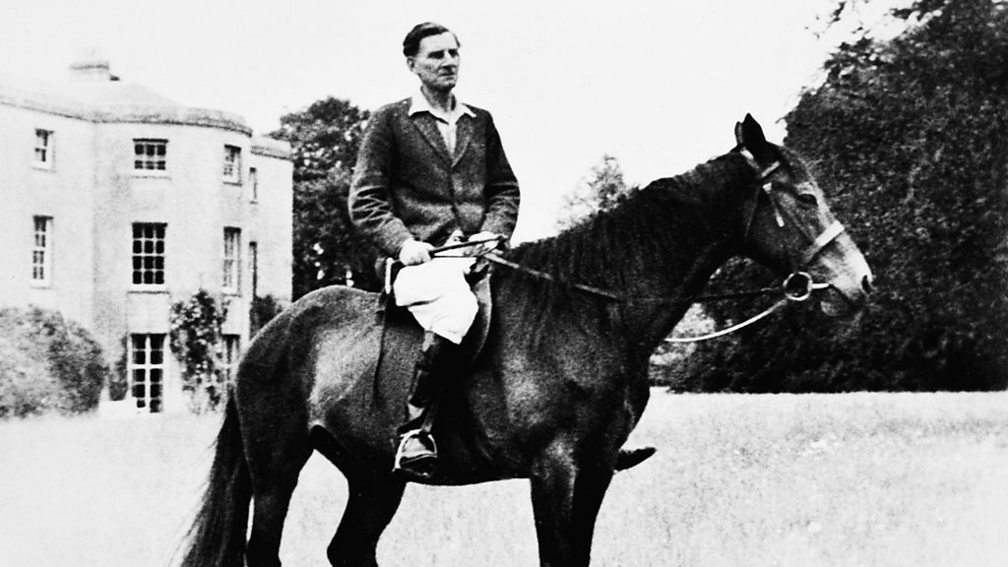
Drivers on the A36 between Salisbury and Warminster may not realise that one of Britain’s greatest war poets once lived just beyond the hedgerows. Siegfried Sassoon, decorated soldier, trenchant critic of the First World War, and reluctant celebrity, made his home at Heytesbury House from 1933. The Georgian manor came with all the trappings of landed life — gardens, gamekeepers, and, most importantly for Sassoon, a cricket pitch. For a man who had faced bombs and medals, the gentle rhythm of leather on willow became his chosen refuge.
Local memories recall Sassoon’s enthusiasm for the game. Nets were erected in the garden, and he would emerge after long nights of writing to summon the estate boys from their work, insisting they bowl at him. His passion was greater than his skill; quick bowlers had to slow their deliveries lest they topple him too easily. Yet the poet’s imperious streak meant that when he fancied a match, someone else would be displaced from the team so that “Siggie” could take his place at the crease, surveying the estate as much as the fielders.
For Sassoon’s family, cricket was more than pastime. His step‑grandson Robert Pulvertaft remembers him describing the war as a legacy that left him “treading water” for the rest of his life. Cricket, with its rules and rituals, offered catharsis — a form of combat without chaos, where certainty replaced the horror of trenches. Robert’s home still holds fragments of Sassoon’s life: an unfinished portrait by his wife Hester, abandoned after their marriage collapsed in 1947; the hat from that painting, discovered decades later in a dusty barn; and, surprisingly, a Short Muzzled Lee Enfield rifle, bought for his son George to hunt in Heytesbury Wood. To those who know Sassoon for his anti‑war protest, the rifle seems a contradiction. Yet Robert insists it was not war itself he opposed, but its mismanagement by politicians and generals.
Heytesbury House thus became a place of paradox. Within its walls lived a man who had written searing verses against slaughter, yet who still cherished patriotism and tradition. Outside, on the pitch, he found solace in cricket’s ordered battles. The estate boys remembered him fondly, even if they chuckled at his batting. The villagers of Heytesbury saw in him not only a famous poet but a neighbour who shared their Saturday games.
Sassoon’s later poetry often reflects the Wiltshire landscapes around Heytesbury. In On Scratchbury Camp (1942), written about the Iron Age hill fort visible from his home, he evokes the timeless downs:
“Along the grave green downs, this idle afternoon,
Shadows of loitering silver clouds, becalmed in blue,
Bring, like unfoldment of a flower, the best of June.”
Here the serenity of the chalk hills is suddenly broken by the sound of warplanes:
“Now, through that song, a fighter squadron’s drone I hear
From Scratchbury Camp, whose turfed ramparts crown the view.”
The poem captures the tension between ancient peace and modern conflict, a theme that haunted Sassoon in his Heytesbury years.
Other poems from this period, such as Vigil, reveal his inner conflict: “In me the tiger sniffs the rose / Longing for peace, yet fierce for fight.” In At the Grave of Henry Vaughan, though set in Wales, he voices the same yearning for rural calm that he found in Wiltshire: “Here I shall find the peace I crave, / Among the hills, beside the wave.” These lines resonate with his retreat into the Wylye Valley, where the ordered rituals of cricket and the quiet of the downs offered respite from memory.
Today, the pitch remains, still used by the Heytesbury & Sutton Veney cricket team, a living reminder of Sassoon’s time here. The house itself, with its memories of unfinished canvases and relics of war, continues to whisper of a man caught between worlds: soldier and pacifist, poet and sportsman, haunted veteran and whimsical landowner. So the next time you pass the modest sign for Heytesbury on the A36, imagine Sassoon at the crease, bat in hand, facing down a bowler with more courage than technique — a war poet seeking peace in the simple pleasures of cricket, while the hills around him echoed with both larksong and the drone of warplanes.

