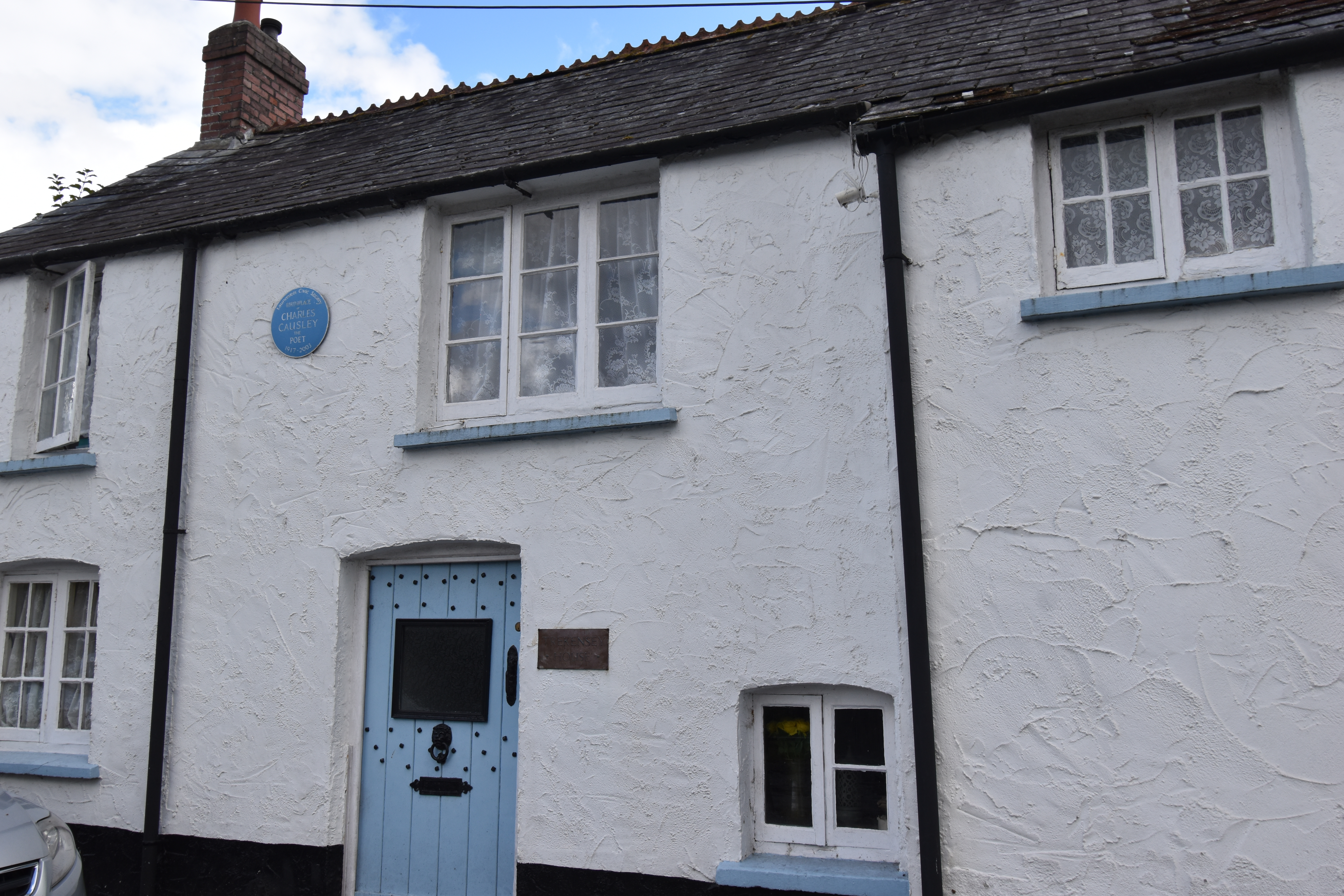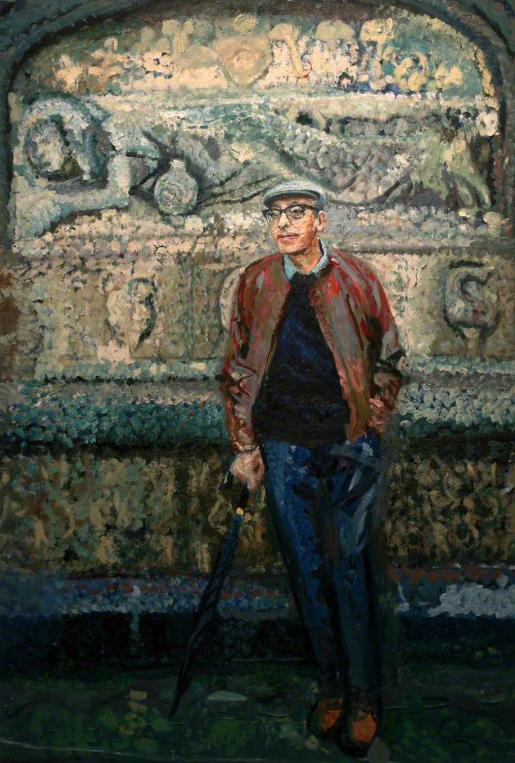
Charles Causley was born in 1917 at Riverside, Launceston, in a modest household shaped by the aftermath of the First World War. His father, a soldier who had been gassed in France, died when Causley was seven. This early experience of loss, combined with the close-knit character of Launceston’s streets, influenced the tone and subjects of his later poetry. He attended Launceston College and worked briefly as a clerk before entering wartime service.
During the Second World War Causley served in the Royal Navy as a coder aboard destroyers and aircraft carriers. His naval service took him to the Atlantic, the Mediterranean and the Pacific. The discipline, danger and camaraderie of wartime life provided material for many of his later poems, which often combine plain language with precise observation. His war poetry avoids sentimentality and focuses instead on duty, memory and the human cost of conflict.
After demobilisation Causley trained as a teacher and returned to Launceston, where he taught at North Hill and later at Launceston College. He remained in the town for the rest of his life, choosing not to relocate to London or other literary centres. This decision shaped his reputation as a poet rooted in place. His work draws on the geography, folklore and speech rhythms of Cornwall, but without romanticising the landscape. He wrote about ordinary people, local history and the continuity of community life.
Causley’s poetry is notable for its use of traditional forms. He employed ballad metre, rhyme and song-like structures at a time when much modern poetry had abandoned them. His interest in folk tradition was technical rather than nostalgic; he used established forms to create clarity and narrative drive. This approach made his work accessible without sacrificing depth. He wrote for adults and children with equal seriousness, producing verse that was widely anthologised and broadcast.
His children’s poetry became particularly well known. Causley believed that children responded to strong rhythm, clear imagery and narrative coherence, and he wrote poems that respected their intelligence rather than simplifying ideas. His work was used extensively in schools and became part of the national curriculum. He also wrote plays, radio scripts and libretti, contributing to BBC broadcasts and regional theatre productions.
Causley’s reputation grew steadily from the 1950s onwards. He published numerous collections, including Farewell Aggie Weston, Survivor’s Leave and Union Street. His work was praised for its craftsmanship, moral clarity and ability to connect local experience with universal themes. He received the Queen’s Gold Medal for Poetry in 1967 and was appointed a Fellow of the Royal Society of Literature. Despite these honours he continued to live quietly in Launceston, maintaining close ties with local schools, churches and community groups.
His later work often returned to themes of memory, mortality and the passage of time. He wrote about the changing character of Launceston, the decline of traditional industries and the persistence of local identity. His poems frequently reference specific streets, buildings and landmarks, making his work a record of the town’s social history as well as a literary achievement. He remained active as a writer into old age, publishing new work and giving readings across the Westcountry.
Causley died in 2003 and was buried at St Thomas Church, close to the priory ruins and the river he had known since childhood. His legacy is preserved through the Charles Causley Trust, which supports writers and maintains his former home at Cyprus Well. His work continues to be studied for its technical precision, narrative strength and distinctive voice. He is regarded as one of the most important British poets of the twentieth century and the most significant literary figure to emerge from Cornwall in modern times.
Image courtesy of Launceston Town Hall