|
Overview
|
|
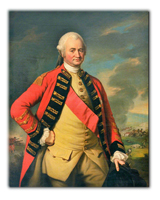
Robert Clive was born on 29 Sep 1725, at Styche. His father, a bad-tempered man, was Richard Clive who owned the family estate near Market Drayton, Shropshire. His mother was Rebecca (née Gaskell). The family had a long association with the British Government. Robert was the eldest of 13 children, 7 sisters and 5 brothers, although 6 of them died in infancy. As a toddler, Robert was sent to live with Rebecca’s sister in Manchester. He was said to be fearless and ‘addicted to fighting', making trouble at school, leading a gang of petty criminals.
He was educated at Market Drayton Grammar School and Merchant Taylors. He was a difficult pupil but he wrote well and was a gifted speaker. In 1744 he was given a job as a clerk for the East India Company. His voyage to India somehow went wrong and the ship reached Brazil, taking 9 months to be repaired. During his time there, Clive learned Portuguese which proved useful when he dealt with the Portuguese colonists in the subcontinent. On reaching India he spent 2 years at Fort St George, Madras.
In 1746 the French attacked and captured the fort, but Clive and others refused to surrender. They were kept captive but escaped to Fort St David, 50 miles away. Here, Clive joined the Company’s army and took part in the defence against a French assault on 11 Mar 1747. He was rewarded with a commission as an ensign. He distinguished himself at the siege of Pondicherry in 1748. Major Stringer Lawrence was impressed by Clive, and, although his next military action, to Tanjore, was a failure, Clive was given command of a force of 30 British and 700 Indian troops to capture the fort of Devikottai. This was successful, but only because reinforcements arrived in time. Clive’s personal bravery was noted by Lawrence.
|
|
Arcot 1751
|
|
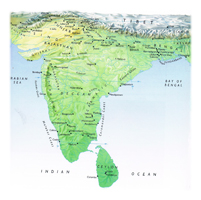
Robert Clive’s reputation was greatly enhanced by his determined seizure and defence of Arcot against the French during the 2nd Carnatic War. In 1751 Chanda Sahib marched out of Arcot to besiege Trichinopoly which was the city of Muhammed Ali Khan Wallah, the last major ally of the British.
Clive persuaded the Madras authorities to give him a captain’s commission and enough men to capture the fort at Arcot, a move he hoped would distract Chanda from his siege of Trichinopoly. He cajoled his force of 500 to make a forced march mostly in pouring rain, dragging three small guns. When the astonished French garrison of the fort heard of this exploit they gave up and surrendered. The French camped at a distance from Arcot and were reinforced by 2,000 men sent from Trichinopoly by Chanda Sahib. However, Clive led his force of 500 in a surprise night attack and caused the enemy to flee in panic. The siege continued and Clive was relieved to hear that heavy artillery was on its way to him. He sent out 400 of his men to escort them in, but while he was undermanned, the fort was attacked. He managed to deceive the attackers that he in fact had more men than they thought and the attack failed.
Clive’s men spent a week building up the dilapidated defences. He was worried about an enemy attack on Madras so was obliged to send 200 men there to help, but Chanda’s son Reza Sahib was leading another force of 4,000 together with some French troops, from Pondicherry. Clive’s formidable enemy was, from 23 Sep, in control of the town surrounding the fort and his garrison was down to 300. He made a night sortie to capture the enemy guns but it ended in heavy casualties, 15 of his men killed and 15 wounded. The next days were fraught with disease and further casualties from snipers. There was a large force of Marathas on its way to help Clive but it was held up by a dispute over payment. Reza Sahib made an all-out assault on the fort on 14 Nov, but by clever defensive work the garrison inflicted hundreds of casualties and the assault was beaten off. Clive’s remaining 200 men had suffered only 6 men killed.
Clive’s reputation was established by this battle. He was praised by the PM, Pitt the Elder, as a ‘heaven-born general’. The East India Company offered him the gift of a sword worth 700 pounds. The British and French came to an agreement and the 2nd Carnatic War ended in 1754. Mohammed Ali Khan Wallajah was recognised as Nawab of the Carnatic, formerly recognised later by the Treaty of Paris in 1763.
In the years from 1753 to 1755 Clive was married, and was offered the command of the army in North America. But he turned it down and returned to England for a brief spell as a politician, sitting as MP for St Michael’s in Cornwall. He returned to India in July 1755 with the rank of lieutenant-colonel and the job of deputy governor of Fort St David at Cuddalore. But he suffered a great loss on the voyage, as one of his ships sank off South Africa, losing his chest of gold coins worth 33,000 pounds (six and half million by 2025 value). But Clive was not materialistic, as demonstrated when he took part in the successful capture of the Maratha Fort Gheriah in early 1756. The captured treasure was divided up amongst the victors but Clive refused his share.
|
|
The Black Hole of Calcutta 1756
|
|
In 1756, Siraj ud-Daulah became Nawab of Bengal and captured Calcutta from the EIC. This was not only a huge financial loss to the Company but 64 British prisoners were thrown into a confined dungeon of Fort William where heat and suffocation caused most of them to die. This atrocity occurred on the night of 20 June 1756. The 64 prisoners were stripped and forced into a space 4.3m x 5.5m. The next morning the dungeon was opened and only around 23 prisoners were found to be alive.
Clive was in Madras at the time, but was sent, with Admiral Charles Watson, to Calcutta to avenge the massacre and remove the Nawab from Calcutta. The recapture of Calcutta was achieved quite easily by 2 Jan 1757, and a further battle occurred on 5 Feb, called the Calcutta Gauntlet because Clive, together with Sir Eyre Coote, marched their small army through the Nawab’s camp where a huge army of 40,000 cavalry and 60,000 infantry were waking up. They were fired on from all sides but reached Fort William after suffering heavy casualties. The boldness of this move unnerved the Nawab and he surrendered control of Calcutta on 9 Feb and promised to compensate the EIC.
The Seven Years War with France began in 1756 so that the competing French and British in India were once more fighting each other. Clive and Watson’s fleet attacked and captured the French colony of Chandannagar in March. Meanwhile the Nawab was the subject of a plot of court officials led by Mir Jafar. Clive and Watson made a gentleman’s agreement with Mir Jafar to make him viceroy of Bengal, Bihar and Odisha. The agreement required Jafar to pay huge amounts to compensate the EIC and residents of Calcutta for their losses. The agreement and payments were to be organised by a Bengali trader called Umichand. This man demanded a huge sum for himself which Clive avoided paying by making a fictitious agreement with him.
|
|
Plassey 23 June 1757
|
|
The battle of Plassey has gone down as the most important event in the history of British India. As decisive as it was, the actual battle was not as impressive as Clive’s achievements at Arcot and the Calcutta Gauntlet. Clive moved his army from Chandannagar towards Murshidabad, capital of the Mughal viceroys of Bengal. The battlefield of Plassey was nearby, covered in mango trees. Clive’s army consisted of 1,100 Europeans and 2,100 Indian troops, with 9 field guns. They faced the army of the Nawab who was at that time in cahoots with the French. The enemy had 18,000 cavalry, 50,000 infantry and 53 heavy guns operated by French gunners.
Clive held a council of 16 officers to work out the best course of action, whether to attack straight away or wait for reinforcements from a friendly Mughal viceroy. Eyre Coote urged immediate action but Clive was one of nine who voted for caution. After much soul-searching Clive changed his mind. Following heavy monsoon rain, his men crossed the River Hooghli and the guns were brought to bear on the enemy. The Nawab’s artillery was less effective in replying because of damp gunpowder. The foot soldiers had little to do in the way of fighting. Clive’s victory was helped by the removal of a large portion of the army loyal to Mir Jafar who had betrayed the Nawab and made a pact with Clive. The 39th regiment was able to charge and disperse the remains of the Nawab’s dispirited army.
Casualties were light: Seven artillerymen killed, 12 wounded. The 39th Dorset regiment got off lightly with 2 killed, 4 wounded. The Bengal European Regiment (Royal Munster Fusiliers) had one killed, 3 wounded, the Madras European Regiment (1st Royal Dublin Fusiliers) lost one killed, 3 wounded, and the Bombay European Regiment (2nd Royal Dublin Fusiliers) had one man wounded. The Bengal sepoys lost 9 men killed, 11 wounded, and the Madras sepoys lost 4 killed and 10 wounded. The Nawab fled the field and was later assassinated. Clive was offered a fortune by the new Nawab, Mir Jafar, and accepted 160,000 pounds (modern equivalent: 27 million). He asked for 500,000 pounds (80 million) to be distributed amongst the army and navy, and 24,000 (4 million) to each member of the EIC committee.
The French were pursued as far as Benares by Major Eyre Coote, and Lieut-Colonel Francis Forde defeated the French at the Battle of Condore on 9 Dec 1758. This military activity allowed Clive to concentrate on his duties as Governor of Bengal. He improved the organisation and drill of the Indian army after the European model and enlisted Muslims from the more northerly regions. He strengthened the defences of Calcutta and appointed able subordinates to key jobs. The young Warren Hastings was made Resident of the Nawab’s court. Unfortunately corruption was widespread and the lower caste people of rural areas were taxed heavily. The Nawab, Mir Jafar, engaged in extortion to replenish his depleted treasury. Clive, however, was in need of a good rest and in 1760 he returned to England.
|
|
East India Control
|
|
In 1762 Robert Clive was awarded an Irish peerage, created Baron Clive of Plassey, County Clare. He was MP for Shrewsbury from 1761 and continued to sit in the Commons after his title was conferred because it was an Irish peerage. He was also made a Knight of the Order of the Bath (KB). In India, trouble was brewing because of Mir Jafar’s refusal to pay any more to the EIC. The British replaced him with his son-in-law, Mir Qasim, who did not last long, but treacherously ordered the massacre of 150 British officials at Patna in October 1763.
The bad state of affairs in Bengal prompted the Court of Proprietors to order the Directors to recall Lord Clive as Governor and Commander-in-Chief of Bengal. In October 1764 Hector Munro defeated a combined Indian force at Buxar, including Mir Qasim’s troops. This put Clive in a good position to take control of Hindustan, but he remained governing Bengal and returned provinces to the Awadh viceroy. For this he was rewarded by the Emperor Shah Alam II who, in August 1765, granted Clive the diwani rights to Bengal, Bihar and Odisha. The East India Company thus became the real sovereign rulers of Bengal, recipients of huge revenues. On the same date, 12 Aug 1765, Clive obtained the Emperor’s charter for the Carnatic, and for the Deccan. This was the birth of the British Raj in India.
Clive worked hard to strengthen the administration, by raising the salaries of civil servants and clamping down on the acceptance of gifts from wealthy Indians. This was resented by British Officers and they mutinied in 1766, the Mongyr Mutiny, which was put down by Clive, and the worst offenders cashiered. The reorganisation of the army had been neglected in his absence but he renewed his efforts which were welcomed by the Indian officers. The army was divided into three brigades, each one strong enough to fight an Indian army.
The Dual System of Government was introduced whereby the Company was responsible for taxation in Bengal and Bihar, but the administration and law and order were the prerogative of the Nawab. The system proved to be ineffective and was abolished by Clive.
Clive was a controversial figure who is regarded as being responsible for the Bengal Famine of 1770, although he had left India for the last time in February 1767. It is said that the famine killed a third of the population of Bengal, figures range from one million to ten million. This was brought about by taxation and changes to agricultural methods in order to maximise profits for the EIC. He was also accused of acquiring great personal wealth from gifts and bribes. Clive insisted that he had the opportunity to become even wealthier if he was truly avaricious. If Robert Clive was accused of corruption and mismanagement to a degree that he had no compassion for the suffering of the lower caste people, then it has to be said in his defence that forbidding the acceptance of gifts and bribes made to British officials and army officers, and changing farming practices to make them more efficient are not the actions of a corrupt and heartless administrator.
From 1768 to 69 he lived in Pézenas in Southern France. In 1769 he bought Claremont in Esher, Surrey. He had Vanbrugh’s house pulled down and rebuilt by Capability Brown. But Lord Clive never lived there as he died before completion. He also owned land in County Limerick, purchased in 1762.
He had been married on 18 Feb 1753 in Madras, to Margaret Maskelyne, sister of the Astronomer Royal. They had nine children, the eldest was Edward, 1st Earl of Powis (1754-1839). The next three children died in infancy. After that, Hon Rebecca Clive (1760-95), Hon Charlotte Clive (1762-95), Hon Margaretta Clive (1763-1814), the next daughter died in infancy. The ninth child was Lt-Col Hon Robert Henry Clive (1769-1833).
Lord Clive died at his home in Berkeley Square, London on 22 November 1774, aged 49. He suffered from severe stomach pain and gout but it was reported that he cut his own throat, either accidentally or in a fit of depression to which he was prone. He was buried in St Margaret’s Church at Moreton Say, Shropshire.
His reputation as the cause of mass starvation in Bengal and the fact that he was a prime mover of the British Empire have caused him to be cancelled and reviled in some circles in post-colonial Britain and India. Merchant Taylors, the school where he was educated, has removed his name from their history by changing the name of Clive House to Raphael House, named after a person who made his name in sport. Haberdashers Adams School in Newport, Shropshire has done something similar. Petitions have been signed to have his statue removed in Shrewsbury and in Whitehall.
|
|
|