The memorials to the Swete family inside All Saints Church, Kenton, form a remarkable record of how one Devon household was drawn into the service of empire. Carved in stone, they commemorate sons who died in India, Mauritius, and China, as well as those who lived longer lives in Devon. Together they tell a story of opportunity, sacrifice, and the global reach of the nineteenth‑century gentry.
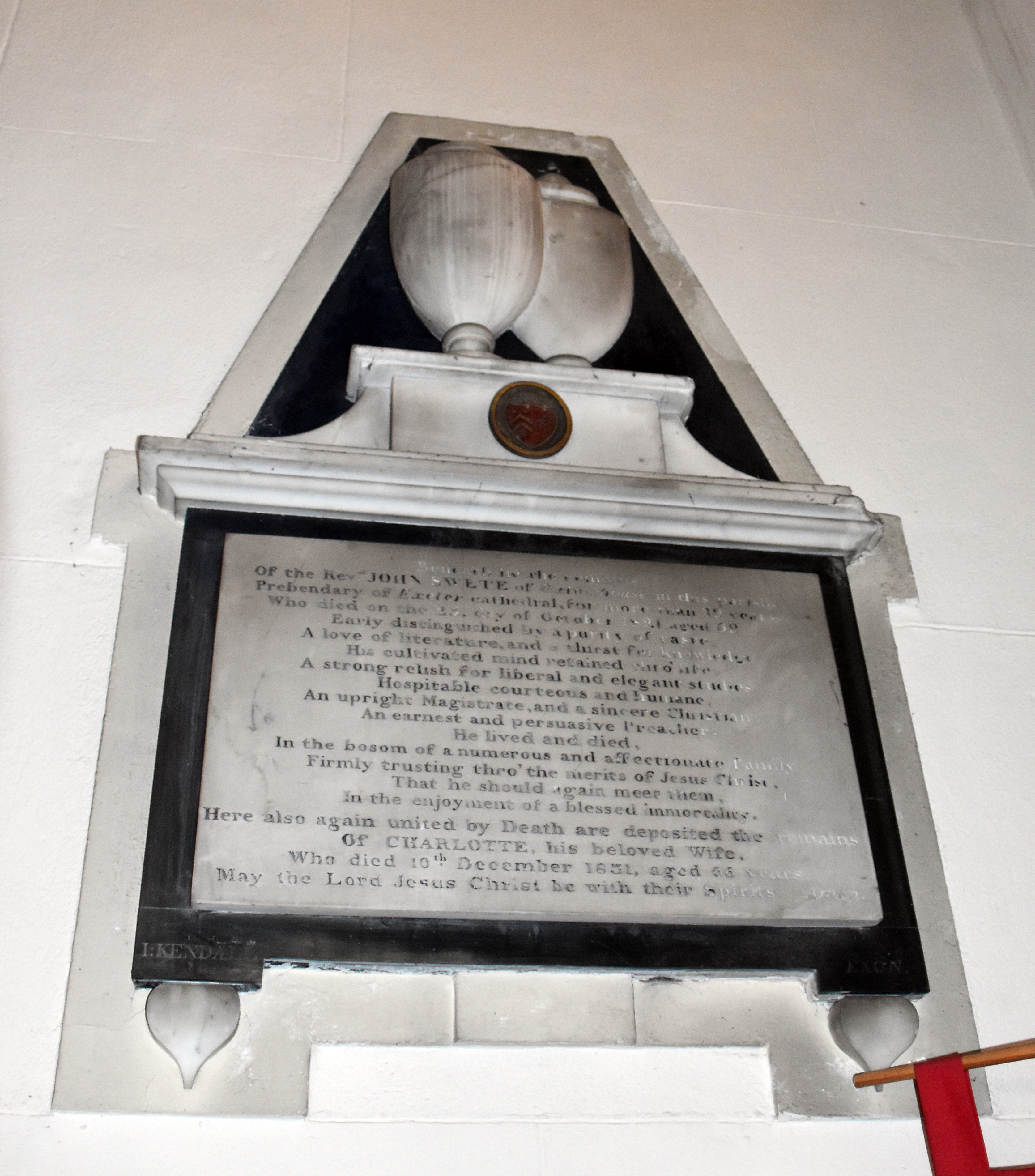
The lineage remembered here begins with the Reverend John “Tripe” Swete (1752–1821), clergyman, antiquarian, and artist. His memorial in Kenton describes him as “the Reverend and Learned John Beaumont Swete of Oxton,” and was erected by his widow Julianna. Though his illustrated journals were not published in his lifetime, they remained in the family until 1959, when seventeen surviving volumes were donated to the Devon Record Office. Published in 1997 as Travels in Georgian Devon – The Illustrated Journals of the Reverend John Swete, they reveal nearly 1,000 watercolours of the county’s landscapes, churches, and manor houses, many now held in public collections. He was also a member of the Exeter Literary Society, giving a Presidential Address in 1793 describing his first tour of Devon. His work anchors the family’s presence in the parish, celebrating Devon itself even as later generations were drawn far beyond it.
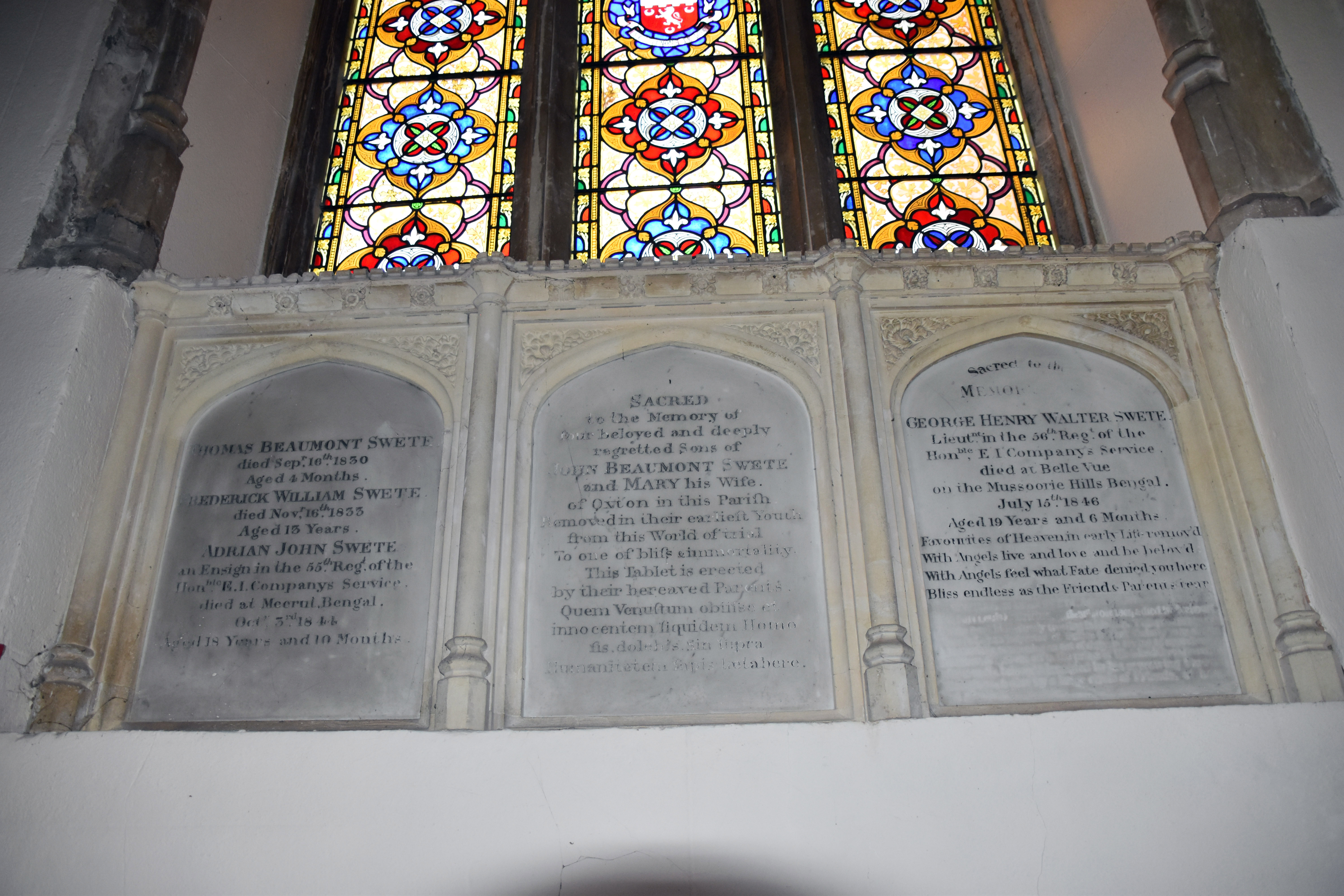
His eldest surviving son, John Beaumont Swete (1787–1867), inherited Oxton Manor and married Mary Templer of the influential Stover family in 1817. Together they raised fifteen children, eight sons and seven daughters, between 1819 and 1839. Six of their sons are commemorated on the walls of Kenton church, their memorials reflecting both the promise and the peril of imperial service.
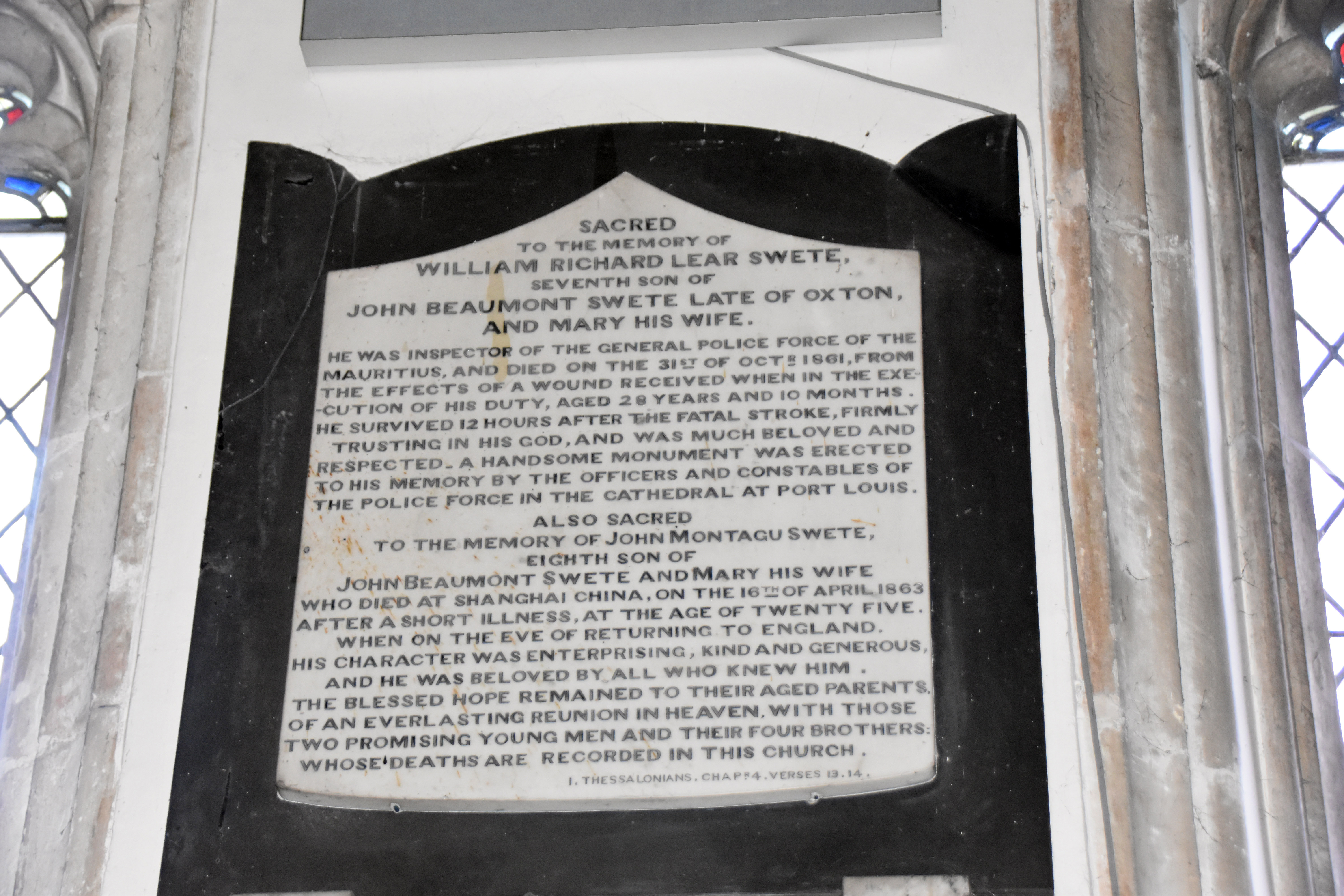
One of the most striking inscriptions is to William Richard Lear Swete (1832–1861), Inspector of the Police Force in Mauritius, who died at just twenty‑eight from wounds received in the execution of his duties. His colleagues erected a memorial to him in Port Louis Cathedral, and the Kenton plaque records both his service and his sacrifice. Nearby is the dedication to his younger brother John Montague Swete (1837–1863), who died in Shanghai while serving in the Imperial Maritime Customs Service. This institution, founded during the Taiping Rebellion, became one of the most powerful arms of the Chinese state, responsible for a third of its revenue. John’s death at twenty‑seven, after a short illness, reflects the fragility of life for Europeans in treaty‑port China.
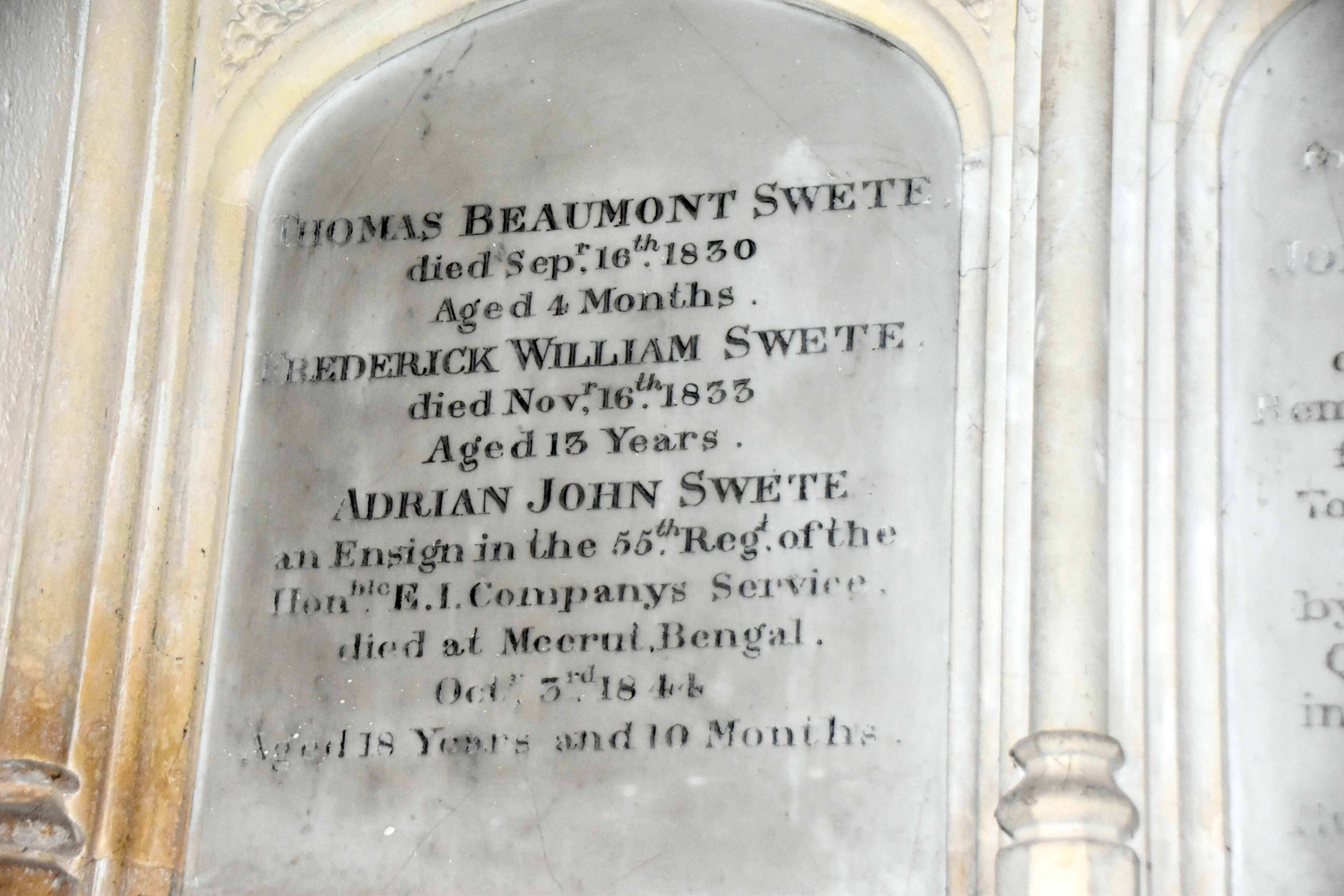
Other brothers are remembered for their service in India. Adrian John Swete (1825–1844), an Ensign in the 55th Regiment of the East India Company, died at Meerut aged only eighteen. George Henry Walter Swete (1827–1846), a Lieutenant in the 56th Regiment, died in the hill station of Mussoorie, Bengal, at nineteen. Their memorials stand as reminders of the hazards of Company service, where disease and climate were often as deadly as combat. A further tablet records Thomas Beaumont Swete (1830), who died in infancy, and Frederick William Swete (1821–1834), who died at just thirteen.
Not all the sons died young. John Beaumont Swete (1831–1895) served in the Royal Artillery in Madras, retiring as a Lieutenant Colonel before settling in Dawlish. Frederick George Buller Swete (1839–1919) became a banker, living in Torquay and later Oswestry, and died wealthy though unmarried. Their lives, too, are part of the Kenton story, showing how some branches of the family remained in Devon while others were scattered across the empire.
The sisters—Charlotte Blanche, Ellen, Louisa Mary, Mary Templer, Gertrude Sophia Frances Caroline, and Frances Dorothea—lived longer lives, many remaining in Devon or marrying into other families. Their presence ensured that the Swete name remained tied to the parish even as their brothers’ careers carried them abroad.
Together, the memorials in Kenton church form a family chronicle in stone. They show how the sons of Oxton Manor were drawn into the service of empire—policing in Mauritius, soldiering in India, customs in China—while their sisters maintained the family’s presence at home. And above them all, the memorial to their grandfather, the Reverend John “Tripe” Swete, reminds us that this was also a family of deep local roots, whose love of Devon’s landscapes was as enduring as their service overseas. In their quiet way, the plaques illustrate the personal cost of empire: youthful promise cut short, families bereaved, and lives scattered across the world, yet remembered still within the walls of a village church.