

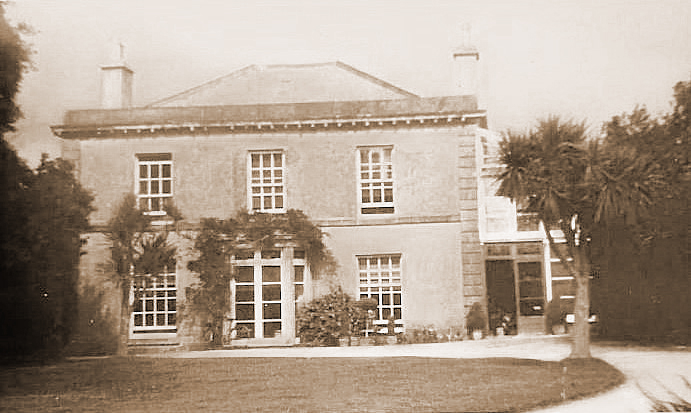
Preston House was built around 1792, one of the early villas of Preston‑by‑Paignton when the district was still a small hamlet on the northern edge of the town. It stood on the site now occupied by the car park beside the Preston Conservative Club on Torquay Road. The house has long since disappeared, but its former garden survives as Preston Gardens, which still follows the outline of the original grounds.
In the 1850s the house became Paignton School, offering “Education by the Seaside” for young gentlemen. Charles Halloran, newly arrived from Heavitree, Exeter, ran the school and styled himself a licentiate of the Royal College of Preceptors. He was followed by the Rev. W. Bell and later J. Walker. For several decades Preston House functioned as a modest private academy, one of several that appeared in Paignton during the Victorian period.
By the 1890s the property had passed to the Butland family, who had been in Paignton for centuries. Their name appears regularly in the parish registers of St John the Baptist from the seventeenth century onwards, and several of their memorials remain inside the church today. These include plaques commemorating members of the family who lived through the eighteenth and nineteenth centuries, a reminder that the Butlands were not newcomers but part of the long‑established fabric of the parish. Their presence in the church mirrors their presence in the landscape: steady, local, and spread across the Preston and Hollicombe area.
By the late nineteenth century the Butlands owned a patchwork of fields, orchards and building plots in Preston and Hollicombe, the sort of holdings that later became valuable as Paignton expanded. Preston House served as their main residence, and the family appears in local directories, rate books and property transactions of the period. Their association with the house lasted until the mid‑twentieth century, when Paignton Urban District Council purchased the property and its grounds.
The house was demolished soon afterwards, part of the post‑war clearance of older buildings considered impractical to maintain. The garden was retained and opened to the public as Preston Gardens. The car park now occupies the footprint of the house, but the surviving green space still marks the extent of the Butlands’ former grounds, and the memorials in St John the Baptist Church remain the most tangible link to the family who lived there in its final private phase.

