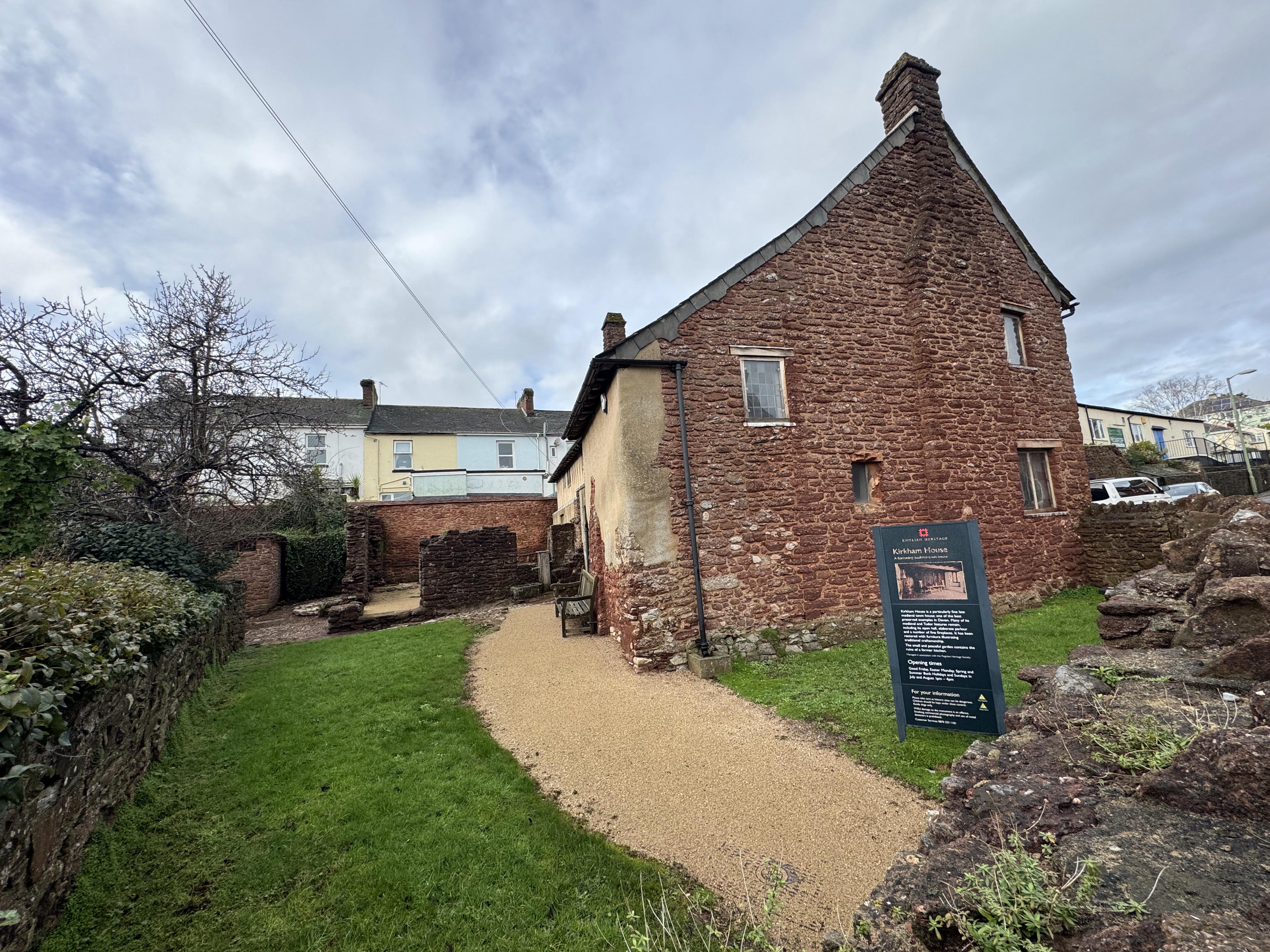
Kirkham House sits slightly apart from the bustle of Paignton, tucked beside the old road and looking as though it has been waiting for the town to catch up with it. It is one of the best‑preserved late‑medieval town houses in Devon, built of the familiar red sandstone and retaining a plan that has changed remarkably little since the fourteenth or fifteenth century. The house was probably built for a local landowner or a prosperous merchant, the sort of person who needed a presence in the town but not a grand one.
The building shows the usual medieval arrangement: a hall at the centre, with service rooms at one end and private chambers at the other. Later alterations were surprisingly restrained, and the house escaped the heavy Victorian “improvements” that disfigured so many older buildings. Archaeological work in the 1960s revealed earlier phases beneath the present structure, suggesting that the house may have grown from an even older core. The restoration that followed was careful rather than imaginative, which is why the building now reads so clearly as a medieval survival rather than a pastiche.
The small garden behind the house contains the remains of a medieval garden room — a modest structure, but an unusual one to survive in an urban setting. It gives a sense of how the property once extended beyond its walls, with a little private space screened from the street. The garden today is quiet enough to imagine the house in its original context, before Paignton expanded and the surrounding plots were built over.
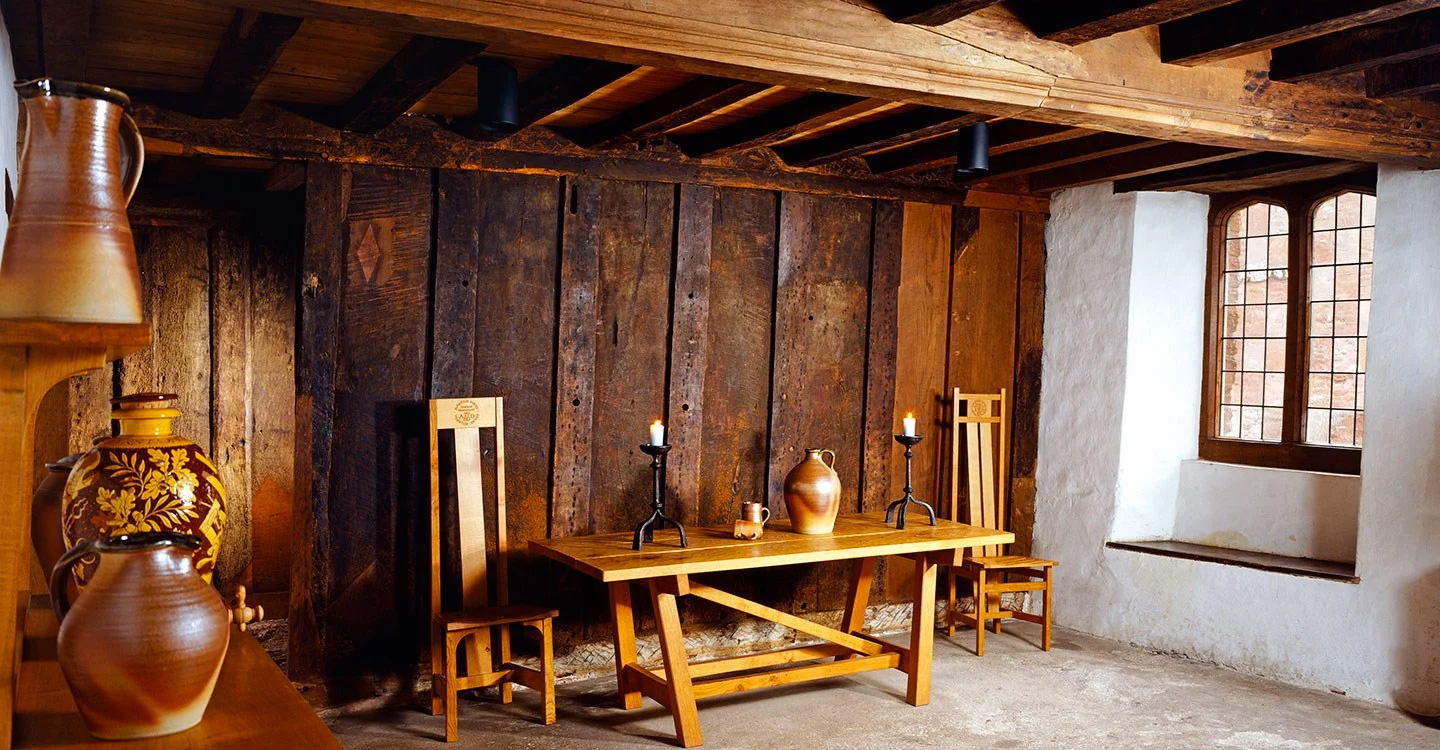
English Heritage now cares for the building, furnishing the interior to reflect the life of a reasonably well‑to‑do household in the fifteenth century. The rooms are small, the ceilings low, and the timberwork plain rather than decorative, which is exactly what one would expect from a house of this type. It is not a manor, nor a farmhouse, nor a grand residence — simply a rare example of a medieval town house that survived by accident, use, and a lack of enthusiasm for modernisation.