Colonel Eugene St. John Birnie OBE, FRGS—known to friends and fellow climbers as “Bill”—was born in 1900, the son of Cyril Montague Birnie of Melbourne, Australia, and Margaret Mary Dannatt of Lincolnshire. His parents had married in Yokohama, Japan, in 1897, and Eugene’s early family story already reflected the global connections of the age. His father, Cyril, lived until 1958, dying in Japan, while his mother passed away there in 1914. Against this backdrop of international ties, Eugene’s own life would prove no less wide-ranging.
Educated at Charterhouse and the Royal Military College, Sandhurst, he joined the Indian Army in 1919 and saw immediate service in the Third Afghan War. Commissioned into Sam Browne’s Cavalry, he became a captain in 1925 and a major with the Guides Cavalry in 1937. A fluent speaker of Hindi and a keen polo player, Birnie was very much the archetype of the Indian Army officer of his generation. His career advanced steadily: assistant military secretary in 1939, private secretary to the Commander-in-Chief, India, in 1941 (for which he was mentioned in despatches), and later senior staff appointments in the Middle East, Italy, and South East Asia during the Second World War. In 1947–48, as the British withdrew from the subcontinent, he served as military secretary to the Governor-General of Pakistan. Retiring from the army soon after, he turned his energies to service of a different kind, becoming Secretary of the Church of England Children’s Society from 1949 until 1965.
Alongside his military career, Birnie was also a noted mountaineer and explorer. He took part in the 1931 Kamet expedition, helping Frank Smythe to his successful ascent of the 25,447-foot Himalayan peak. For his reconnaissance work in Tehri Garhwal he was awarded the MacGregor Memorial Medal in 1932. Two years later he joined the celebrated 1933 Mount Everest Expedition as transport officer. In the annals of Everest, Birnie is remembered not only for his logistical role but also for a sharp disagreement with fellow climber Wyn-Harris, which delayed the establishment of Camp V at 25,500 feet by two days—an episode some later judged to have cost the expedition its chance of success. Despite this, his place in the history of Himalayan exploration is secure, and his membership of the Royal Geographical Society reflected his standing in the field.
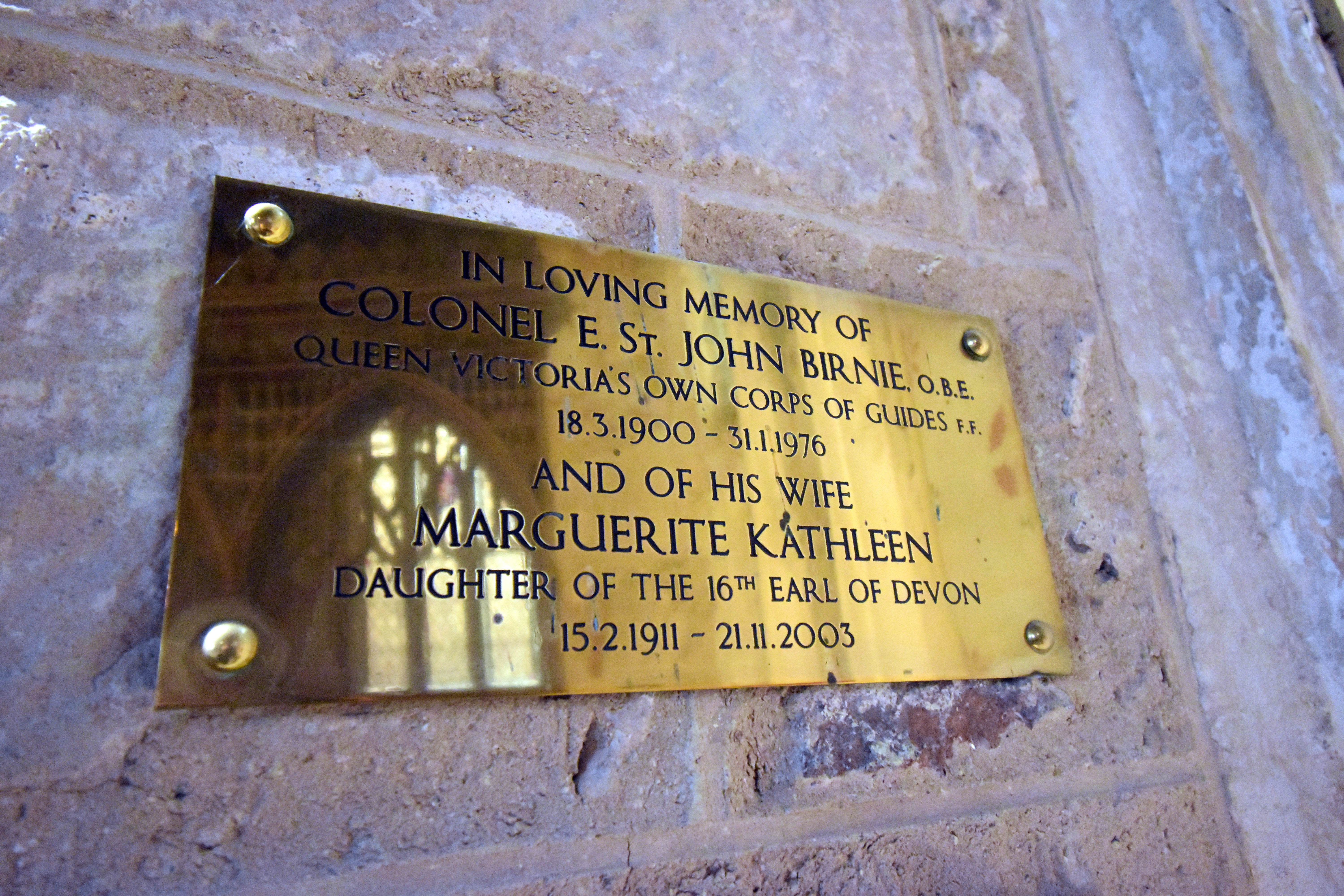
In 1933 Birnie married Lady Marguerite Kathleen Courtenay, daughter of the Reverend Frederick Leslie Courtenay, 16th Earl of Devon, and Marguerite Silva. Their marriage tied him to one of Devon’s most historic families, long associated with Powderham Castle and St Clement’s Church. Together they had two daughters: Marguerite Susan, born in 1934, and Angela Patricia Jane, born in 1936. His connection to the Courtenays ensures that his name, like theirs, is part of the story of Powderham.
Colonel Birnie died in 1976, closing a life that had spanned continents and careers: soldier, explorer, administrator, and family man. His memorial, like those of the Fiddians in the same churchyard, reminds us that the parish of St Clement’s, Powderham, holds stories that reach far beyond Devon. From the Afghan frontier to the slopes of Everest, from the courts of India and Pakistan to the quiet lanes along the River Exe, Birnie’s life was one of service, adventure, and connection across the globe.
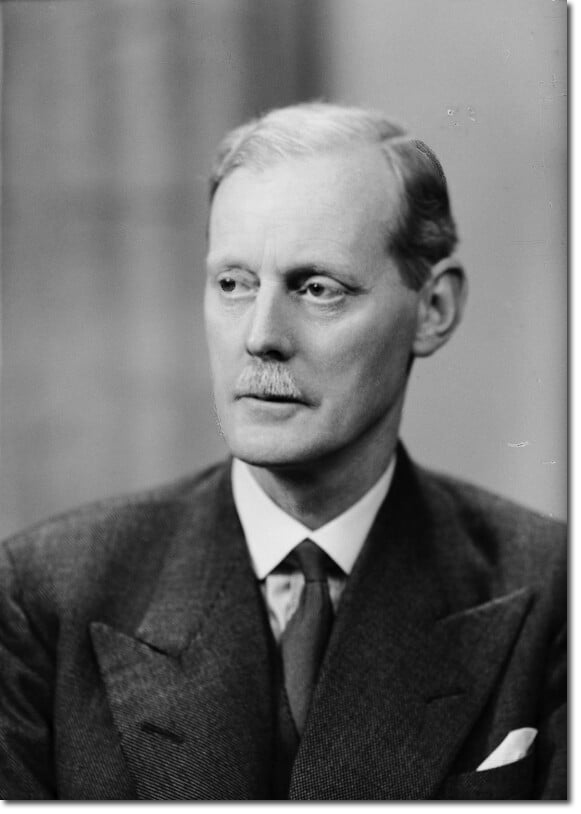
Image above courtesy of National Portrait Gallery