

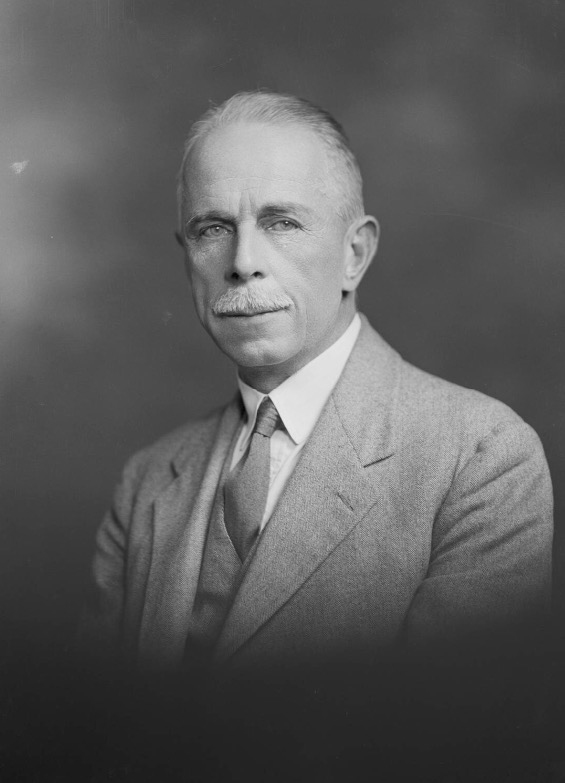
In the quiet churchyard at Alfington lies the grave of Colonel John Cunningham Moore Hoskyn, a man whose life traced the wide arcs of the British Empire. Born in Barbados, married in Bombay, and buried at last in rural Devon, he belonged to that generation of imperial officers whose careers carried them across continents and through the shifting frontiers of the early twentieth century. His service with the 44th Merwara Infantry Regiment took him into some of the most demanding theatres of the First World War: Mesopotamia, Persia and the Caucasus. For his work he received both the Distinguished Service Order and the C.B.E., distinctions that speak to long experience and steady leadership in difficult conditions.
The 44th Merwara Infantry was one of the smaller and more unusual regiments of the Indian Army. Raised from the Merwara tribes of the Aravalli hills in Rajasthan, it had a reputation for toughness, endurance and loyalty. The regiment’s origins lay in the East India Company’s efforts to stabilise the hill country in the early nineteenth century, and by the time Hoskyn served with them they had become a compact, reliable infantry battalion accustomed to hard campaigning in difficult terrain. Their service in the First World War took them far from their home hills into the deserts and river valleys of the Middle East.
The Indian Army’s role in the Mesopotamian campaign is one of the great, often overlooked stories of the war. Indian troops formed the majority of the British Empire’s forces in the region, fighting along the Tigris and Euphrates in a gruelling campaign marked by extremes of heat, disease and supply difficulties. They endured the disastrous siege of Kut, the long struggle to retake Baghdad, and the slow advance northwards through Ottoman territory. Regiments like the 44th Merwara Infantry were used for everything from river‑bank assaults to the protection of long, vulnerable supply lines. Their officers, including men like Hoskyn, had to manage not only the fighting but the immense logistical challenges of keeping their battalions alive in some of the harshest conditions of the war.
From Mesopotamia the Indian Army was drawn into operations in Persia, where British and Indian troops attempted to counter German and Ottoman influence and to protect the vital oilfields and supply routes that sustained the war effort. These operations were fluid, often improvised, and conducted across vast distances with limited resources. The Caucasus campaign, into which Indian units were later drawn, was even more complex: a shifting mosaic of collapsing empires, advancing and retreating armies, and local forces struggling for control in the aftermath of the Russian Revolution. Officers like Hoskyn found themselves navigating not only military operations but the political uncertainties of a region in upheaval.
Little survives in the public record about Hoskyn’s personal experiences, but the outline of his career is clear enough to place him among the seasoned officers who held the Indian Army together during its most demanding campaigns. His decorations suggest distinguished service under fire and the steady competence expected of a senior officer in the field. That he ended his days in Devon, far from the Caribbean island of his birth and the Indian subcontinent where he spent his working life, is characteristic of many imperial careers: men who travelled widely, served long, and finally settled in the quiet landscapes of home or adopted home.
His grave at Alfington, simple and unassuming, sits not far from the memorials to the Coleridge family and to John Coleridge Patteson, the martyred Bishop of Melanesia. Together they form a small cluster of imperial stories in a rural Devon churchyard: a missionary bishop killed in the Pacific, a Lord Chief Justice who shaped Victorian law, and an Indian Army colonel who served across the Middle East and Central Asia. Each represents a different thread of the nineteenth‑ and early twentieth‑century world, now gathered quietly among the yews and gravestones of a village church.
For the walker passing through Alfington, Hoskyn’s grave is a reminder of how far the lives of local people and distant places were once intertwined. The 44th Merwara Infantry, the deserts of Mesopotamia, the mountains of the Caucasus and the oilfields of Persia may seem remote from Devon lanes, but through men like Hoskyn they form part of the same story. Another child of Empire, resting at last in a quiet corner of East Devon.

