

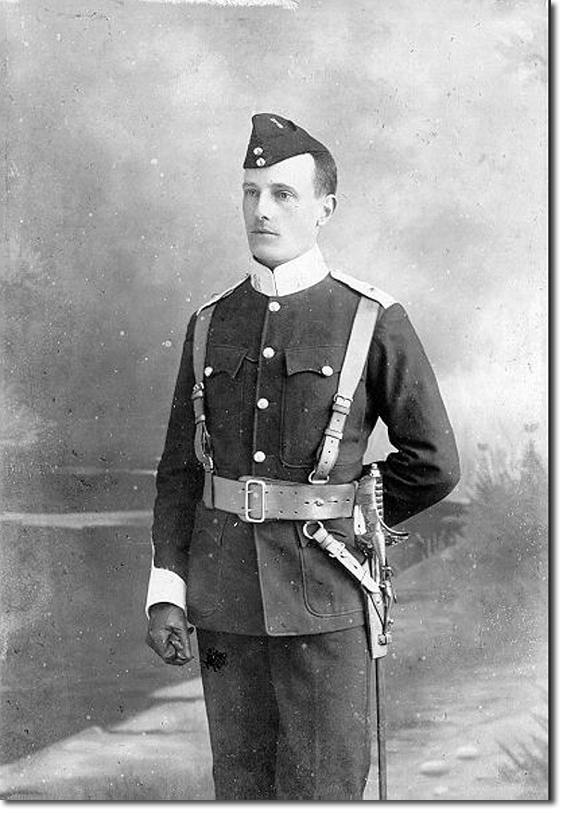
This photo, borrowed from the Norfolk Museums Collection, is Lieutenant C G Taylor of B Company, 2nd Volunteer Battalion. However, after 1878 there was little difference between the uniforms of the Volunteers and the Regular army apart from the buttons, lace and braid which were silver for Volunteer officers as opposed to gilt. Lieutenant Taylor wears the scarlet undress frock which was made of ‘Angola, tartan or serge, according to climate.’ The collar, cuffs and shoulder straps are white. He has silver metal Britannia badges on his collar. A rank badge of one star, or pip, can be seen on each strap, denoting lieutenant. The four pockets have pointed flaps and are lined with chamois leather. There were also four inside pockets ‘with hole and button’ but not lined.
The brown leather Sam Browne belt at this stage, had two shoulder straps which crossed over at the back. A frog was attached to the left side for his infantry pattern sword, which for this order of dress had a brown leather scabbard. His leather gloves are brown and his field service cap is blue with a silver regimental badge on the left side. The trousers were blue cloth with a scarlet welt down the side, worn with leggings, or gaiters, which were about 9 inches high.
The Volunteer battalions were raised in 1859 and wore grey uniforms until 1877-78 when they adopted scarlet. In 1881 there were 4 battalions of Norfolk Volunteers. This officer was in the 2nd Battalion, based at Great Yarmouth.

