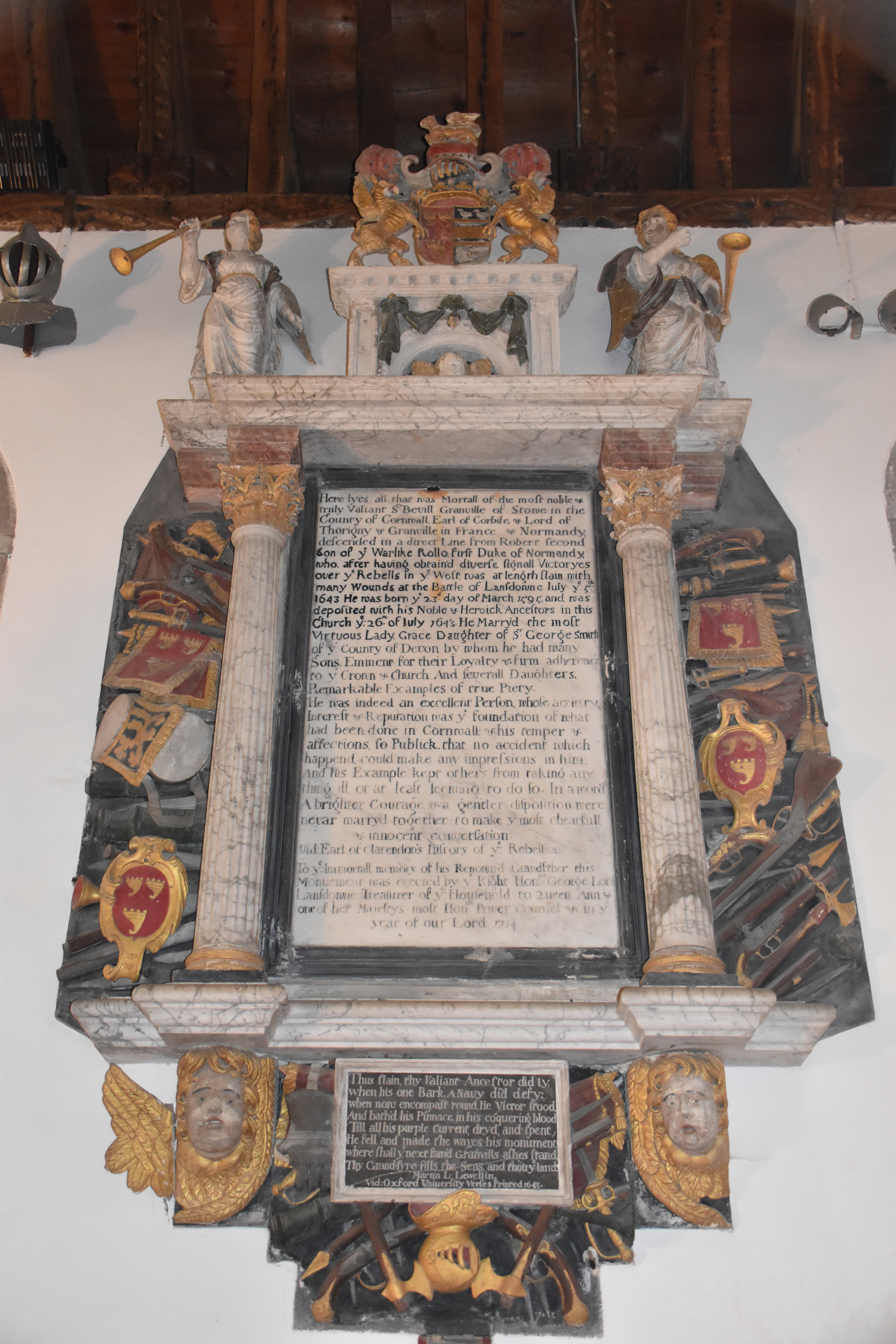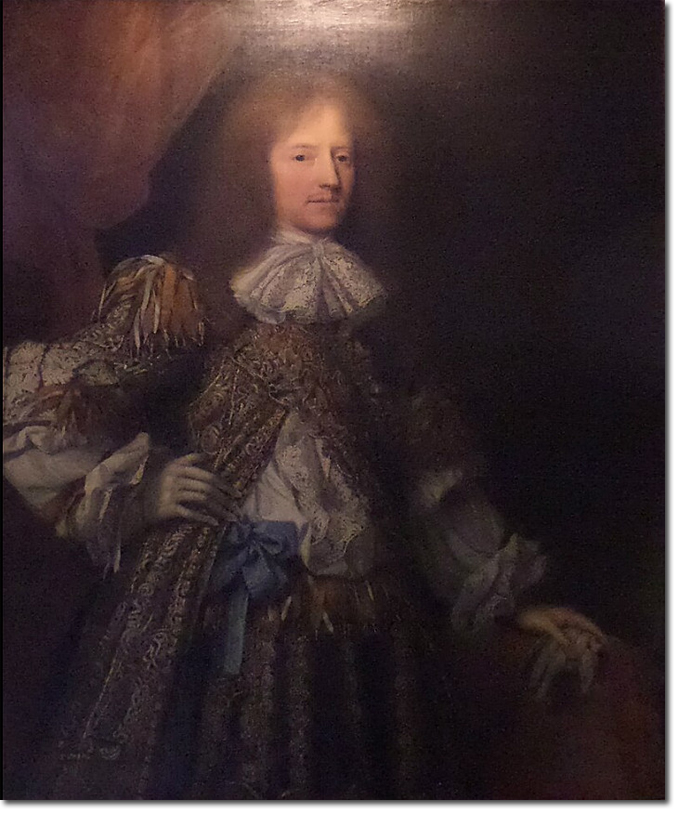
John Granville was born on 29 Aug 1628 at Kilkhampton Castle, Cornwall. He was the third son of Sir Bevil Grenville and Grace Smythe. Although Sir Bevil was a Member of Parliament he fought for King Charles I in the English Civil War (1642-48) and raised a regiment in which young John was an officer. His two elder brothers died prematurely so John inherited the estate when Sir Bevil was killed at the battle of Lansdowne on 5 July 1643. John distinguished himself at the storming of Bristol in July 1643 and was created a knight.
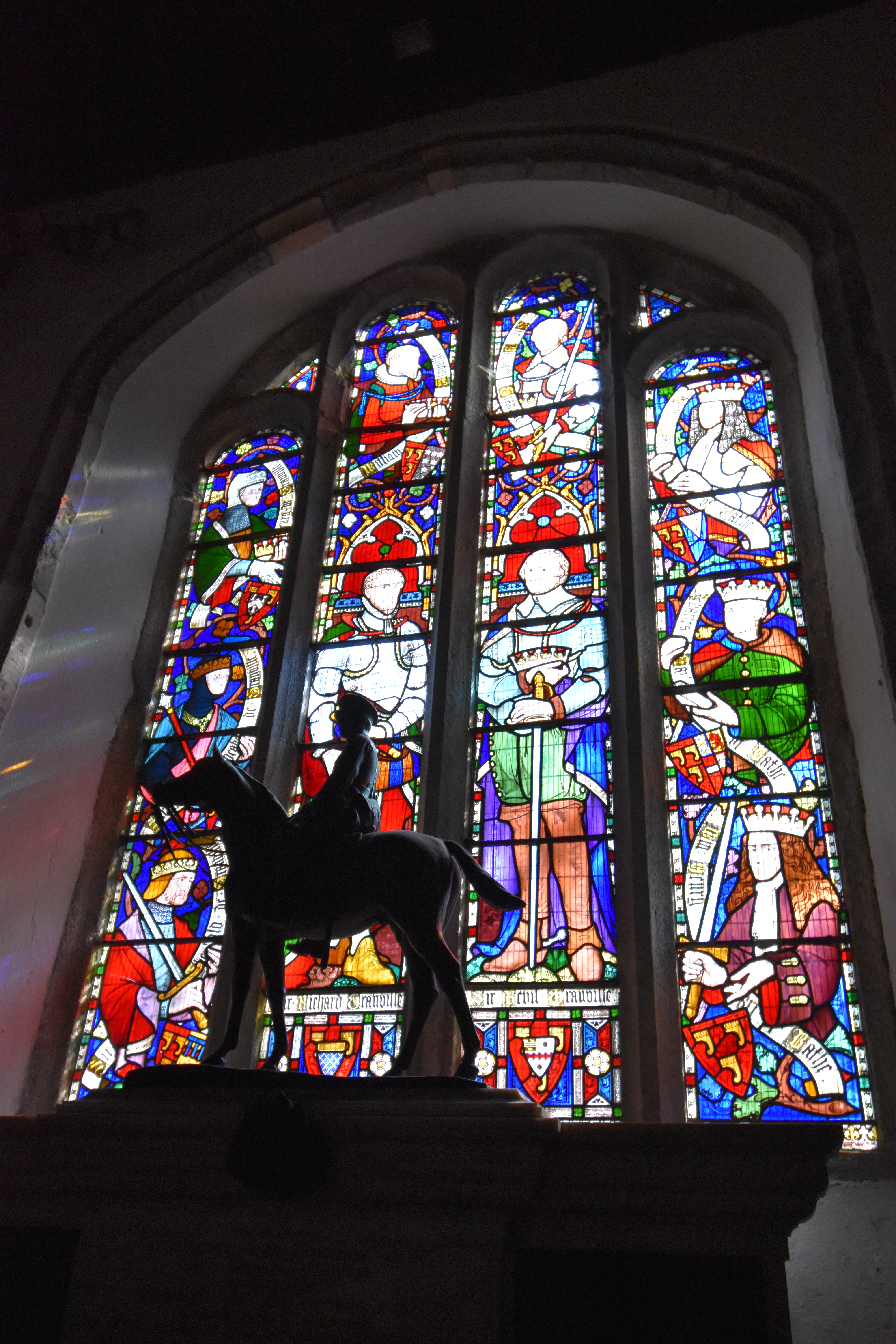
John Granville’s great-grandfather was Sir Richard Grenville, the famous captain of ‘The Revenge’ which held off 53 ships of the Spanish fleet in 1591, so giving time for the other English ships to escape. He and his crew of 100 men fought a suicidal last stand, at the end of which Grenville ordered the Revenge to be scuttled. However his men defied his order and surrendered. Grenville died of his wounds, cursing his mutinous crew. The curse had its effect as a storm sank the Spanish fleet, along with the Revenge and the captured crew. The incident inspired a well-known poem by Tennyson.
When Prince Charles went into exile in 1648, John Granville accompanied him as Gentleman of the Bedchamber. When the Scilly Isles rebelled against Parliament John was appointed Governor there and used it as a base for attacking English and Dutch ships to create funds for the Royalist cause. However, in may 1651 the Scilly Isles were captured by Parliamentary forces and Granville was captured.
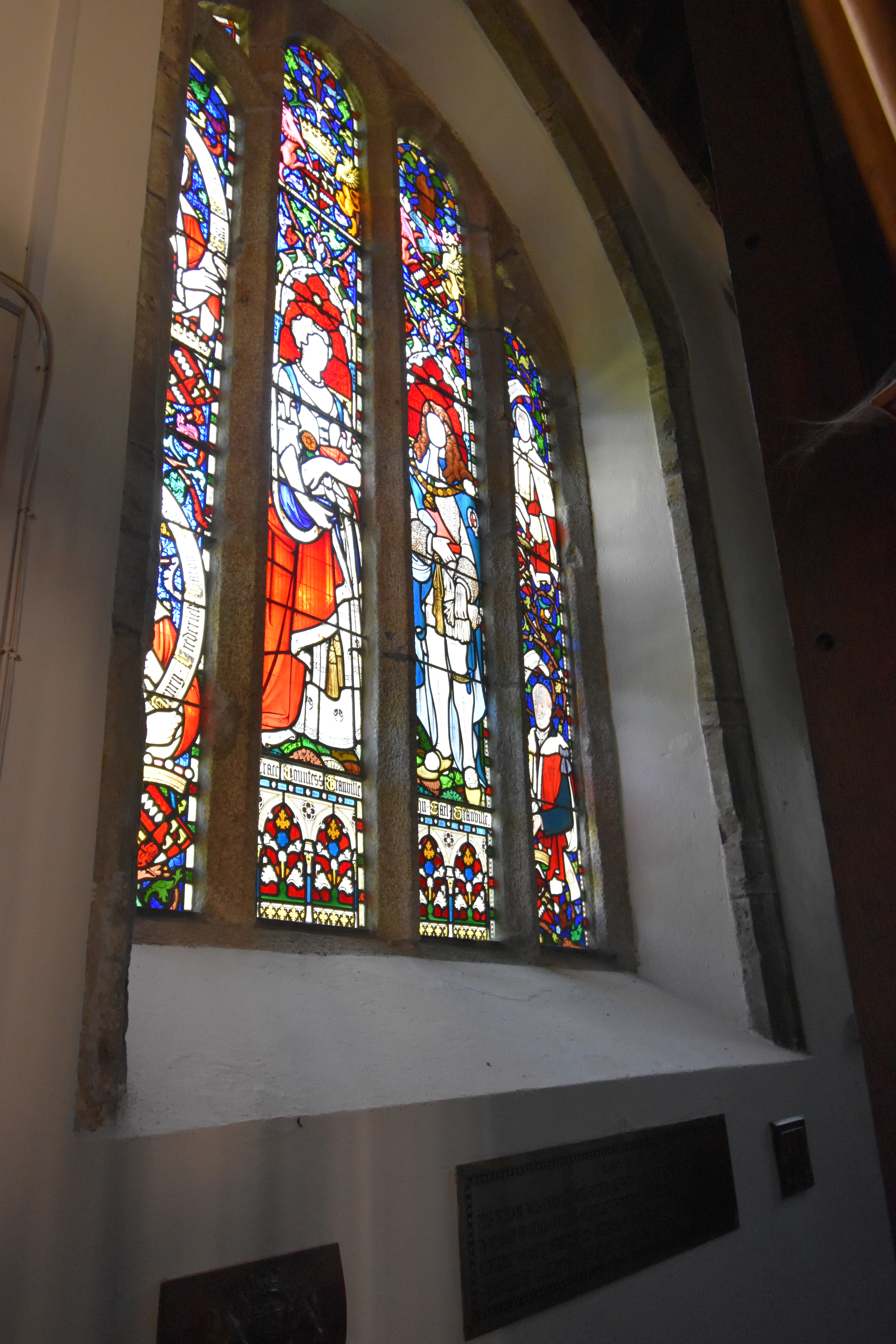
After his release he served as an intermediary between Prince Charles and George Monck, his mother’s nephew. He played a prominent part in the Restoration and was rewarded with the titles of Baron Granville, Viscount Granville and Earl of Bath in 1661, as well as a seat on the Privy Council in 1663. In 1665 he was appointed Lord Lieutenant of Ireland but never went there. His time and money was spent on rebuilding the family home of Stowe House in Cornwall.
The Earl was a signatory to ‘The Several Declarations of The Company of Royal Adventurers of England Trading into Africa’ published in 1667. He was a friend of the CEO of the Royal Africa Company, the Duke of York, future James II. When King James raised extra regiments to fight the Monmouth Rebellion, the Earl of Bath was appointed Colonel, tasked with raising one of the regiments which bore his name and that of subsequent Colonels until it was numbered 10th in 1751. Granville was also governor of Plymouth, and Exeter. However, he was a Protestant and colluded with the Prince of Orange to replace his former friend King James in the Glorious Revolution of 1688. James punished him by removing him from his positions but within 3 weeks he was reappointed after James fled the country.
King William III appointed Granville Lord Lieutenant of Devon. He had long held resentment that his cousin, George Monck, the previous Lord Lieutenant, was rewarded with the title Duke of Albemarle for his part in restoring Charles II to the throne. Monck died in 1670 and his son became the second Duke, but died childless in 1688. Granville attempted to gain the title of Duke of Albemarle and spent a fortune on legal fees. He had already lavished a huge amount on Stowe House so that when he died in London on 22 August 1701 he left a mountain of debt which overwhelmed his son Charles who died of a gunshot wound two weeks later, probably suicide. Charles’s only son, William Henry Granville, 3rd Earl of Bath, died of smallpox, aged 19 and the title became extinct.
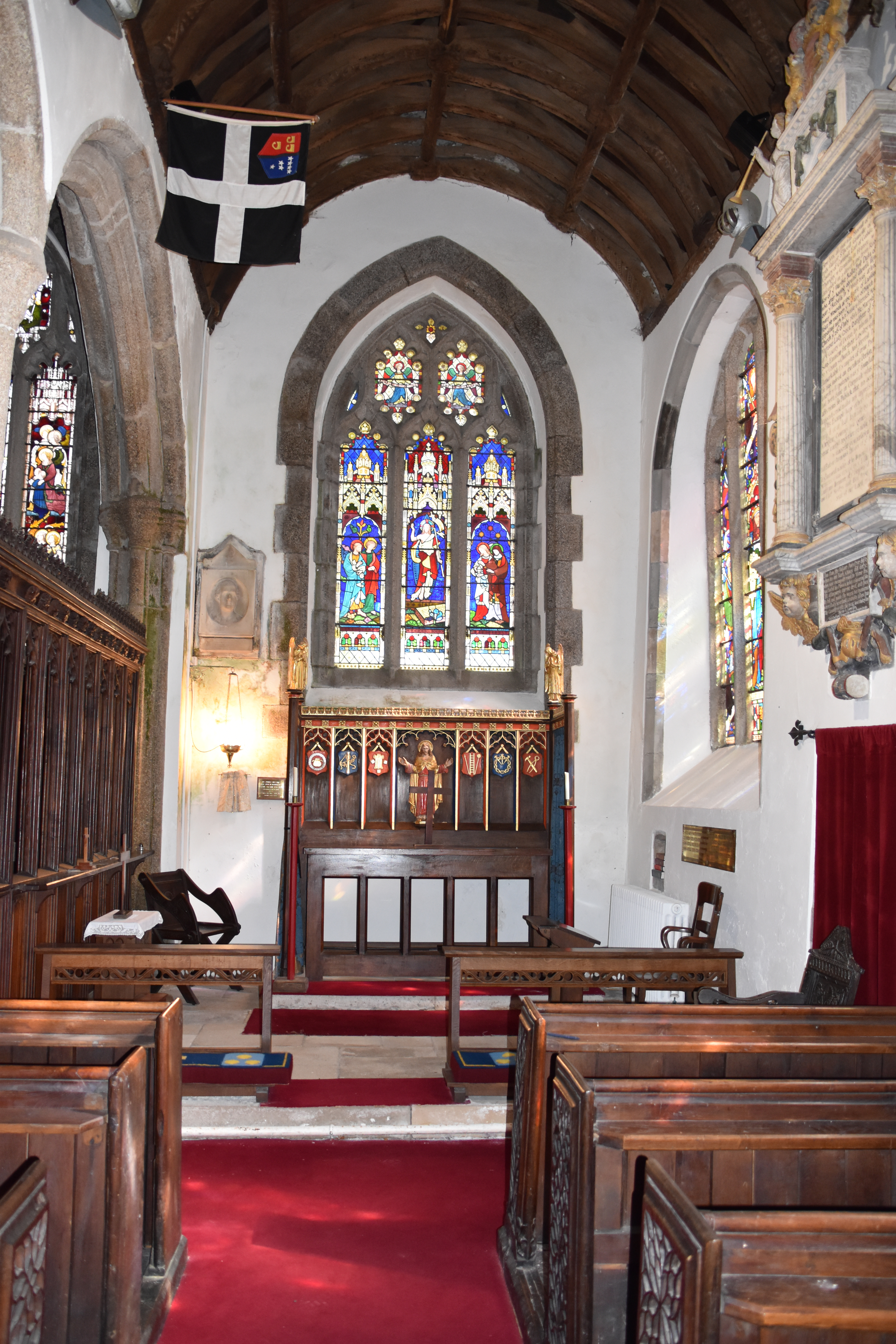
The Church of St James the Great, Kilkhampton, commemorates the Granville family, including Sir Richard Grenville. Stained glass windows in the Granville chapel depict family members including the 1st Earl of Bath. (see below)