

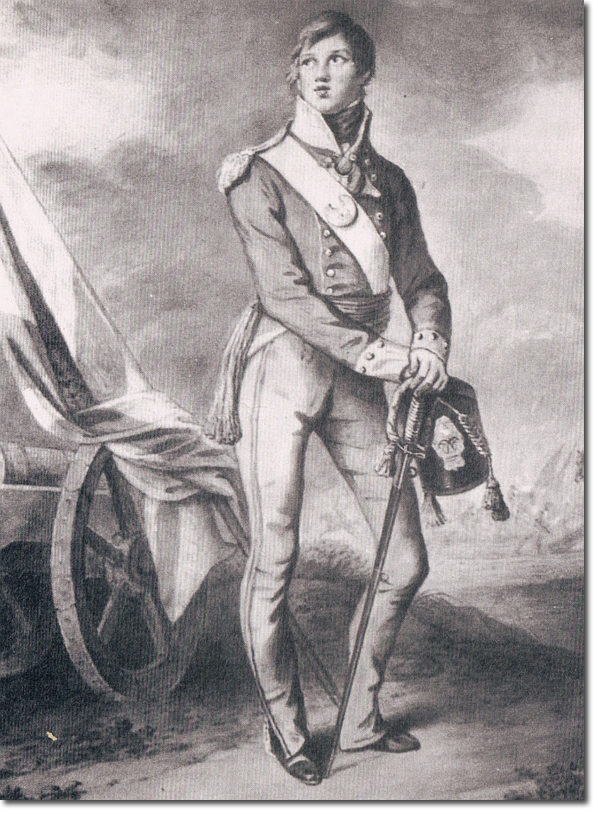
The double-breasted scarlet jacket worn by this young officer is shown buttoned almost to the neck but with one lapel folded down. The lapel is obscured by a silver gorget. The high open collar is yellow and appears to be plain, devoid of the button seen on the 1801 miniature portraits. There is one silver epaulette on his right shoulder and he has a broad white leather shoulder belt to carry his sword scabbard. The distinctive shaped silver belt plate is still worn at this stage. Within a few years this would change to a silver rectangular plate with the crescent shape placed on it.
The shoulder belt is kept in place by tying the officers’ crimson silk sash around his waist. In the 1790s this was worn under the coat but in this painting it is tied over the coat. The yellow cuffs have three buttons each, probably with button-holes indicated by twists of yellow thread. In dress order he would have white breeches and black hessian boots, but the more normal dress was grey overalls with red stripes down the side. He holds his 1812 shako, usually known as the Waterloo shako which has gold and crimson plaited cords and tassels.
The rank of ensign was the most junior officer rank, so named because they were selected to carry the Colours. The King’s Colour is behind him, leant against a gun. The 1st Battalion served in Spain from 1812 to 1814.

