

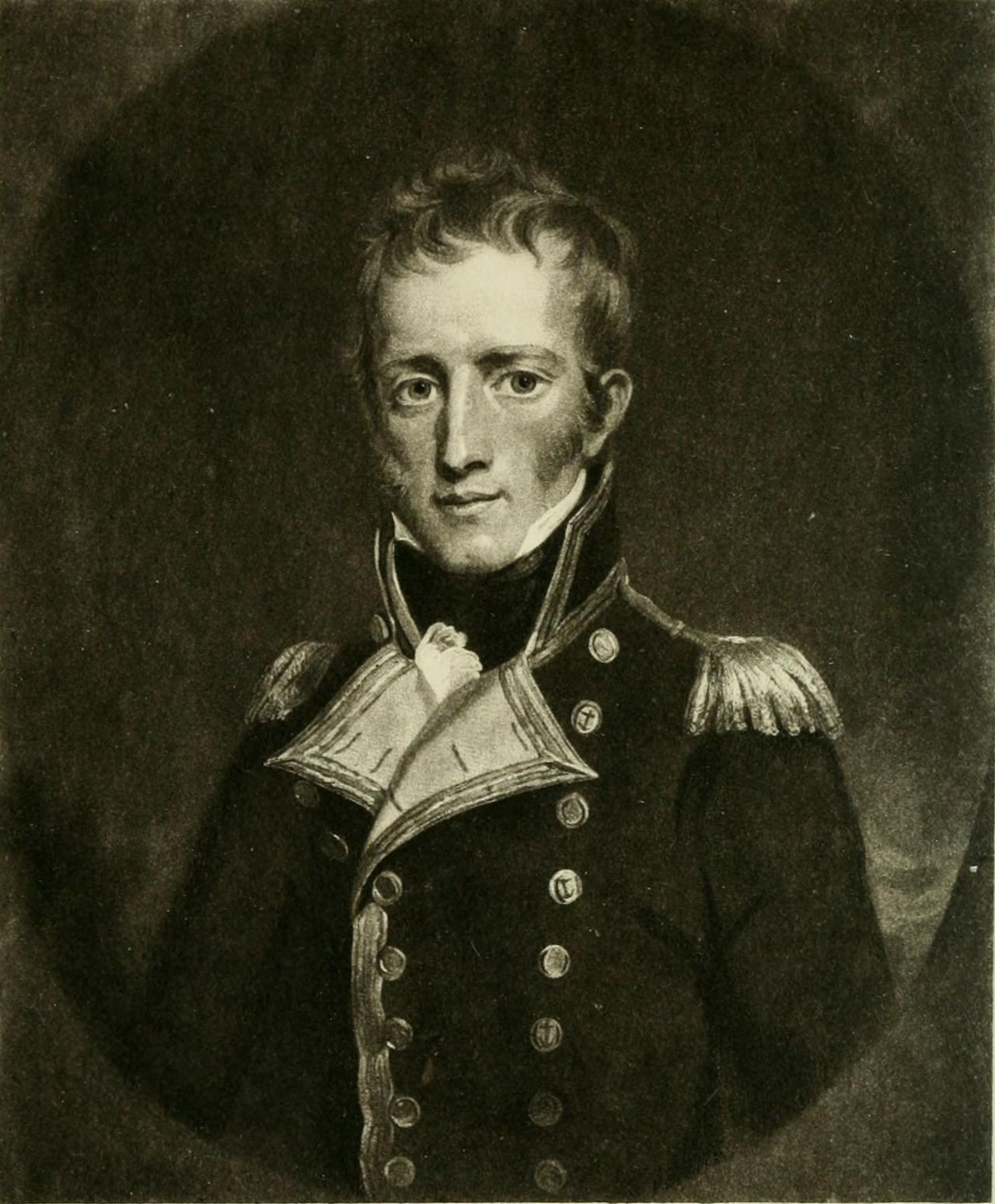
Rear-Admiral Sir Frederick Lewis Maitland, KCB (1777–1839), occupies a distinctive place in naval history for his role in the final act of Napoleon Bonaparte’s career. Though his service record encompassed the Glorious First of June, the Mediterranean campaigns, and later commands in the East Indies, it was his captaincy of HMS Bellerophon in 1815 that brought him into direct contact with the Emperor and into the public imagination of Plymouth.
Maitland was born in Fife, the son of a distinguished naval officer, and entered the service at an early age. By the time of Waterloo he had risen to command the Bellerophon, a 74‑gun ship of the line stationed off Rochefort. It was here, in July 1815, that Napoleon—seeking to escape to America—found his path blocked by the British fleet. Maitland’s vigilance ensured that every port was covered, and when negotiations opened on 10 July, he refused to allow Napoleon safe passage across the Atlantic. Instead, he offered to convey him to England. On 15 July Napoleon surrendered formally to Maitland and embarked on the Bellerophon with his entourage.
Maitland’s conduct during this episode was marked by professionalism and restraint. He placed his own cabin at Napoleon’s disposal, treated him with courtesy, and maintained the discipline of his ship despite the extraordinary circumstances. The Bellerophon sailed first to Torbay and then to Plymouth Sound, where the Emperor’s presence created scenes of unprecedented public interest. Crowds numbering in the thousands hired boats to view the ship, while sailors chalked messages announcing Napoleon’s movements. Maitland, obliged to enforce Admiralty instructions, kept Napoleon aboard and ensured that he did not set foot on British soil, thereby avoiding the legal complications of habeas corpus and Magna Carta.
In Plymouth, Maitland’s role was both practical and symbolic. He was the officer who had accepted Napoleon’s surrender, and now he was the custodian of Britain’s most famous prisoner. His ship became the focal point of public spectacle, with boatmen advertising trips “to see the Bonny Party” and newspapers reporting daily on the Emperor’s condition. Maitland himself remained in command, balancing the demands of security with the courtesies expected of a gentleman officer. He was present when Lord Keith and senior officials deliberated Napoleon’s fate ashore, and he carried out orders with precision when the decision was made to exile the Emperor to St Helena.
On 7 August 1815, off Start Point, Maitland oversaw the transfer of Napoleon from the Bellerophon to HMS Northumberland, which would carry him to his final exile. The episode marked the culmination of Maitland’s most famous command. He later published a detailed narrative of Napoleon’s time aboard the Bellerophon entitled The Surrender of Napoleon (1826), providing historians with a valuable primary account of the Emperor’s demeanour, conversations, and the atmosphere aboard ship during those weeks in Plymouth Sound.
Maitland’s role in Plymouth thus combined the duties of a naval captain with the responsibilities of a custodian of history. He ensured that Britain’s greatest adversary was treated with dignity yet prevented from exploiting legal loopholes. His ship became the stage upon which Napoleon’s transition from power to exile was enacted, and his narrative remains a crucial source for understanding the human dimension of that moment. In the annals of Plymouth, Maitland stands as the officer who received the surrender of the Emperor and managed his brief captivity with firmness, courtesy, and fidelity to duty.
After the dramatic summer of 1815, when Napoleon’s surrender aboard the Bellerophon defined Maitland’s reputation, his career continued with distinction across several theatres of service. In October 1818 he took command of the 74‑gun Vengeur, sailing to South America and later conveying Lord George Beresford from Rio de Janeiro to Lisbon. He was entrusted with royal duties, carrying Ferdinand I of the Two Sicilies from Naples to Livorno in 1820, for which he was invested with the insignia of a knight commander of the Order of St Ferdinand and Merit. Subsequent commands included the guardship Genoa at Portsmouth and HMS Wellesley in the Mediterranean, where he was promoted to Rear‑Admiral of the Blue in 1830 and Rear‑Admiral of the Red in 1837. His later service culminated in appointment as commander‑in‑chief of the East Indies and China Station, where he cooperated with the army during operations in Bombay and Karachi. Maitland died in 1839 aboard the Wellesley off Bombay, closing a career that had spanned from the Glorious First of June to the apogee of Britain’s imperial expansion in Asia.

