|
The Inspiration
|
 |
|
|
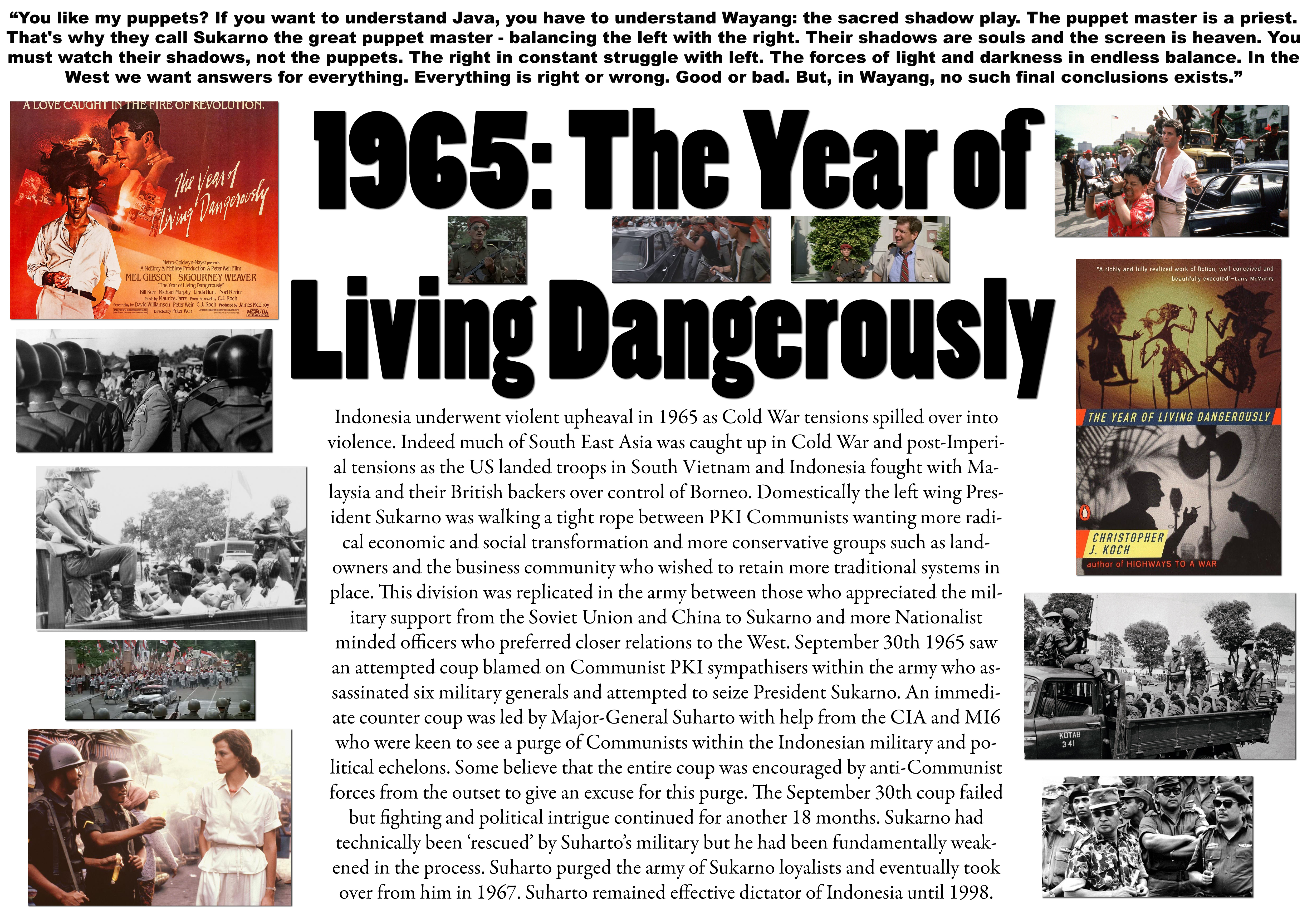
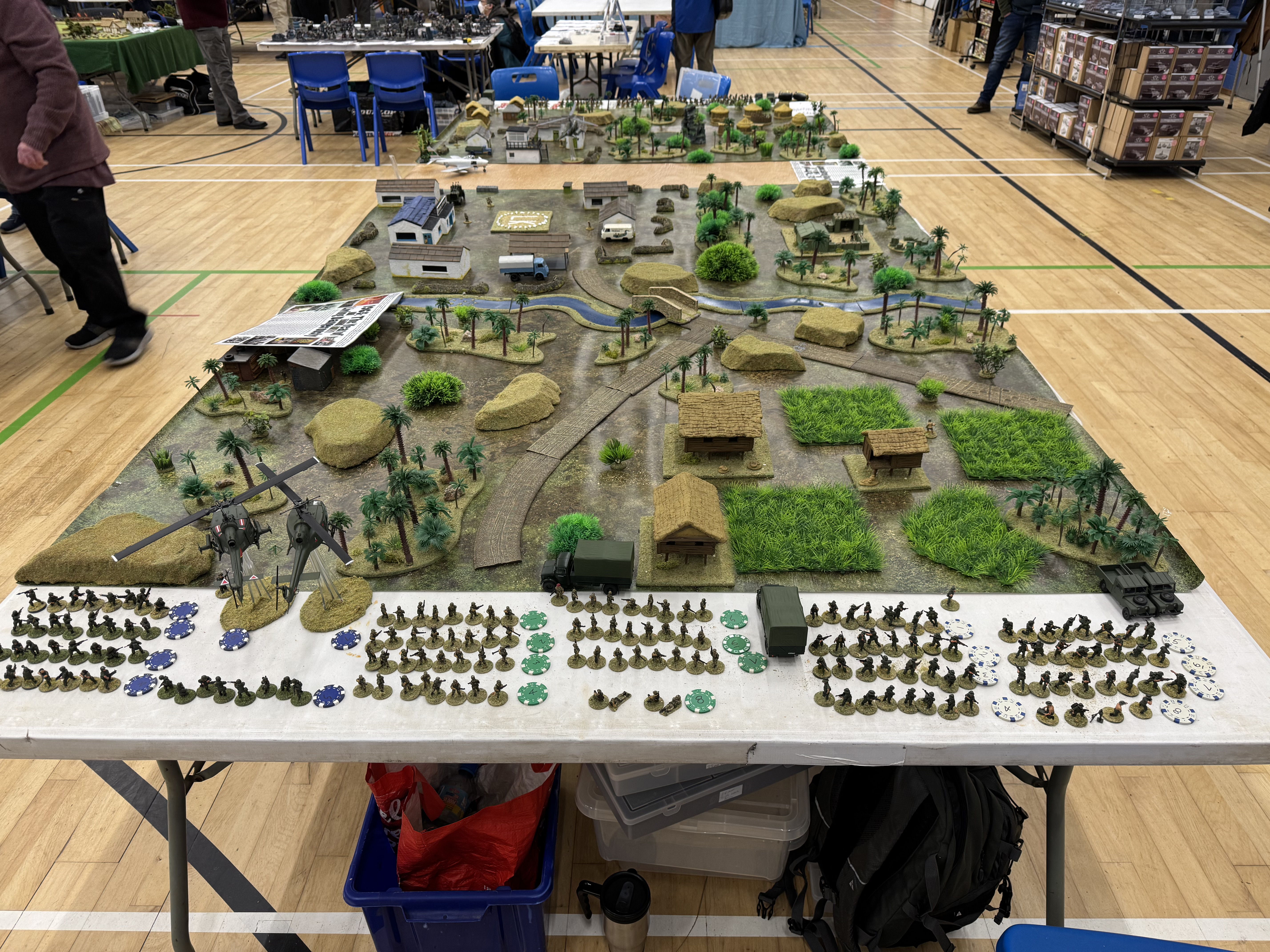
At PAW2025 (Plymouth Association of Wargamers Convention) on the first weekend in February we put on a monster game for 6 players and an umpire that was based around the chaos of 1965 in Indonesia which became known as “The Year of Living Dangerously”.
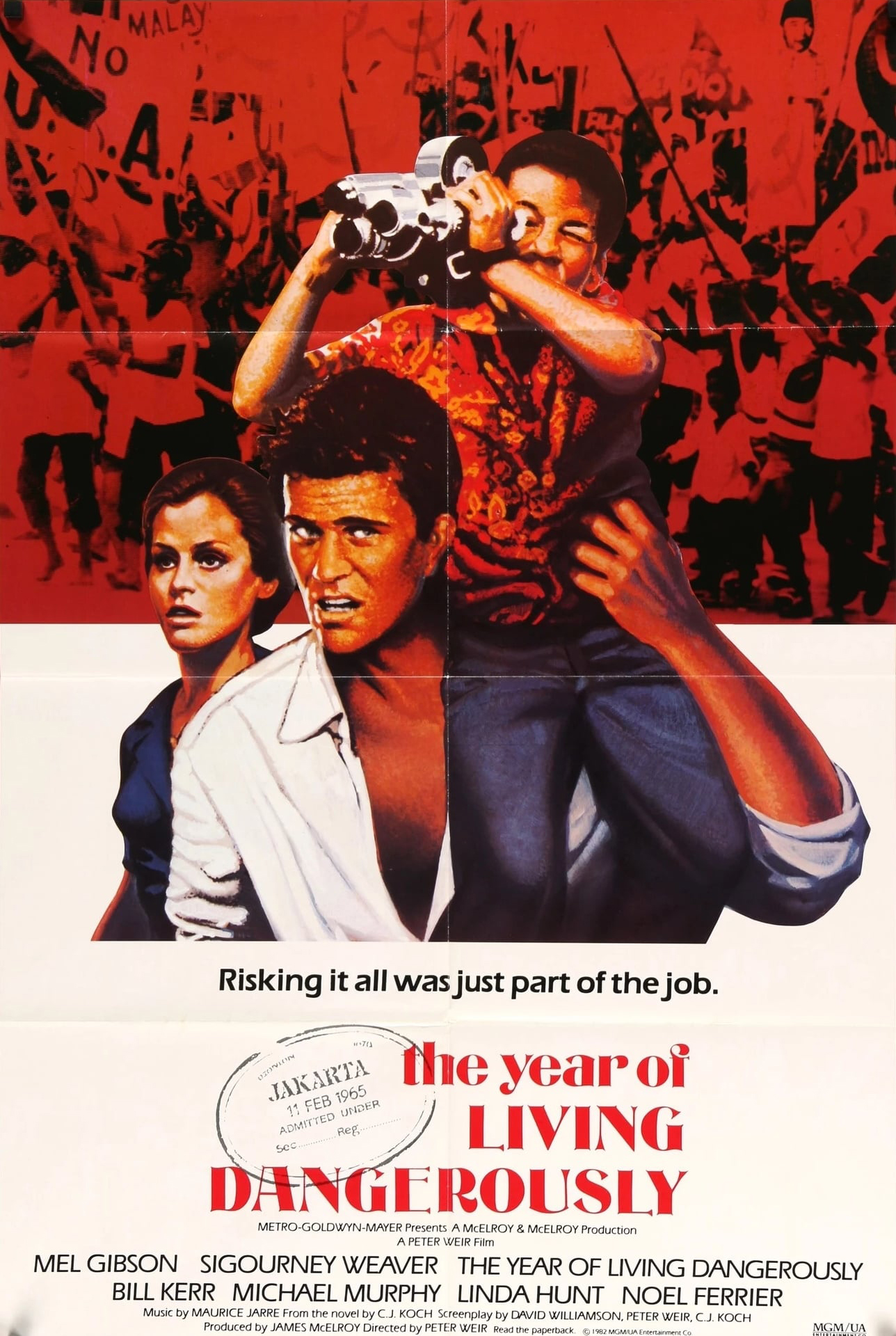
Most people who have seen or participated in the games that I put on down here in conventions in the South West of England know that I take some kind of perverse pleasure in trying to find new and obscure conflicts or battles to wargame; all kinds of battles from the Cornish fighting West Saxons to the Irish War of Independence and a myriad of equally less well trodden conflicts over the years - oh and the bigger the table the better! What is amazing is that I never seem to run out of ideas for bizarre and little known wars or clashes. This year’s inspiration came from a 1982 Peter Weir movie I watched as a teenager and for some reason it made quite the impression on me. The film was entitled “The Year of Living Dangerously” and it starred a young up and coming actor by the name of Mel Gibson who depicted Australian journalist Guy Hamilton. It also starred Sigourney Weaver as a British Embassy official and most intriguingly of all Linda Hunt as Billy Kwan who is Guy’s all round fixer and guide to a chaotic 1965 Indonesia. A good pub quiz fact is that Linda Hunt has the fascinating distinction of being the only person ever to have won an Oscar for playing somebody of the opposite sex to their own! The film depicts the political intrigue and uncertainty at a time of coup and counter-coup as the Cold War found a new venue for conflict and where the Domino Theory was becoming more than just a theory. What is even more fascinating is that the film made allegations of collusion and intrigue that at the time were mere speculation but which later historians have found to have been largely based in fact. Needless to say that the film was banned from being shown in Indonesia until the ultimate victor of the The Year of Living Dangerously was himself overthrown in 1998.
|
|
The Historical Background
|
|
At the start of 1965 the President of Indonesia was the left leaning President Sukarno who made a name for himself through denouncing colonialism and leading the Non-Aligned Movement. Under his autocratic rule Indonesia drifted away from the Western orbit and towards closer relations with the Soviet Union and Communist China. His anti-colonial rhetoric spilled over into conflict with Britain in Borneo. President Sukarno did not recognise the historic British colonies of Sarawak nor of British North Borneo and hence disputed their being granted their independence as part of the Malaysian Federation in 1963. Indonesia tried to destabilise the new Malaysian territories on Borneo but Britain as part of its defence obligations to the newly created Malaysia supplied substantial military forces to fend off these incursions aided by Australian and New Zealand forces. A low intensity war continued over the next few years between British and Commonwealth forces and an increasingly Soviet supplied Indonesian military. Western Cold War planners were becoming perturbed that a domino might be falling fully into the Communist camp.
Britain was not the only Western power concerned at the increasing Communist interest in South East Asia in the 1960s. The USA under new defence obligations signed by President Kennedy (Operation Beef Up) and carried out even more vigorously by his successor President Johnson were becoming embroiled in the affairs of nearby South Vietnam. Indeed in March of 1965 (The Year of Living Dangerously as President Sukarno termed it) the US had put ground forces ashore to fight for the first time in South East Asia. The Cold War had turned hot.
 |
|
|
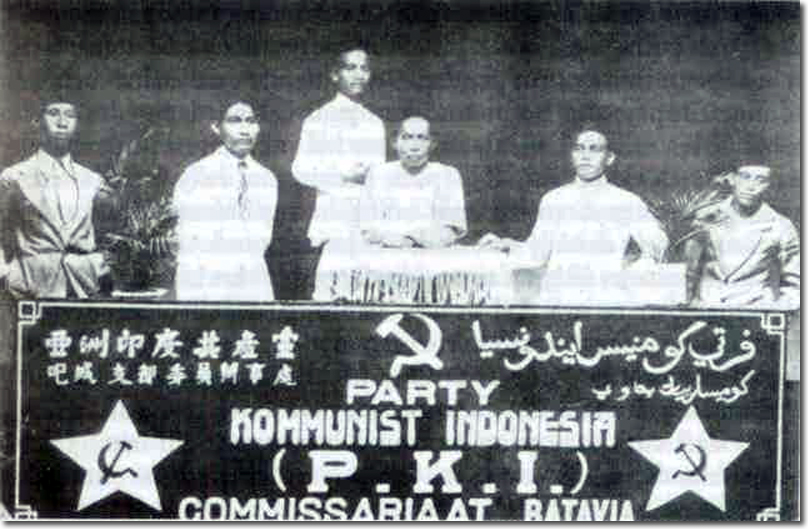
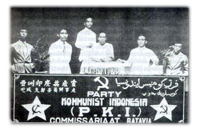
The political intrigue in Indonesia burst into open conflict on the night of September 30th 1965. It appeared that the more militant Communist Party of Indonesia (PKI) thought that President Sukarno was not left-wing enough for them and was not implementing radical land and redistribution policies.. Some were inspired by Chairman Mao’s radical policies being implemented in China, others thought they needed to ally more directly to the USSR and leave the non-aligned movement behind. They were aided by elements of the Indonesian Air Force who were keen to see their service displace the resources of the Indonesian Army. PKI activists had infiltrated elements of the Indonesian Army and led sympathetic units to assassinate six known anti-Communist Generals in the Indonesian Army in the early hours of October 1st. The also attempted to capture key facilities around the capital of Jakarta and other regional capitals and claimed to have seized President Sukarno himself.
After a night of chaos, more Nationalist and Western oriented officers in the Indonesian Armed Forces looked to Major-General Suharto to lead a counter coup. Unsure of the loyalty of many troops he confined all soldiers to barracks except a small coterie of forces he knew to be loyal to him personally. He would receive significant intelligence and advice from both the CIA and MI6. There was genuine confusion over the location and status of President Sukarno but there was a rumour he had moved closer to the airport “so he could be near an aircraft should he need to leave Jakarta!” This statement from that chaotic first day would form the basis of our wargaming scenario!
The original coup had been poorly planned and executed and Major-General Suharto was able to subdue it over the coming days with clashes against rebel units and communist insurgents as his troops recaptured radio stations, printing presses and transport infrastructure. He was able to track down and take President Sukarno into ‘Protective Custody’ ostensibly to protect him from the Communist rebels. Suharto would then launch a lethal purge of the armed forces and of all levels of government. The figures of how many went missing or were executed have been disputed but could be as high as one million Indonesians. The Peter Weir film captures the uncertainty and chaos of this period very well indeed. It also hints that the not all was as it seemed as Billy Kwan implied:
“You like my puppets? If you want to understand Java, you have to understand Wayang: the sacred shadow play. The puppet master is a priest. That's why they call Sukarno the great puppet master - balancing the left with the right. Their shadows are souls and the screen is heaven. You must watch their shadows, not the puppets. The right in constant struggle with left. The forces of light and darkness in endless balance. In the West we want answers for everything. Everything is right or wrong. Good or bad. But, in Wayang, no such final conclusions exists.”
This rushed and ill coordinated coup may not have been a grass roots PKI operation after all. Subsequent historians have claimed that the PKI themselves were infiltrated by CIA and MI6 operatives keen to overthrow President Sukarno who seemed to be drifting further into the Soviet orbit of influence. Britain was keen to find a way to draw the expensive war against Indonesia in Borneo to a close in Borneo whilst the USA wanted to concentrate all its effort on destroying the Communist insurgency in South Vietnam and did not wish to be distracted by another Communist Insurgency in this sprawling archipelago. Encouraging a Communist coup that was doomed to failure would give Western leaning generals in the Indonesian Army the excuse they needed to seize power, take control and bring Indonesia firmly back into the Western bloc. President Sukarno’s power ebbed away as Suharto increased his political and military control through purging his enemies and promoting his supporters in their place. Sukarno was formally deposed and replaced in 1966 by Suharto who promptly signed a peace agreement with Britain and recognised the borders of Malaysia in Borneo. He broke off military relations with China and the USSR and Indonesia began receiving significant American financial and military aid. He remained President until 1998.
|
|
The Objective
|
|
The scenario is based on the idea of finding President Sukarno and then placing him in ‘protective custody’ and escorting him off the table to the respective player’s starting zone. This can get quite interesting if the Communists intercept the President before he leaves the opposite side of the board and then has to begin the long trek to the other side of the table! President Sukarno is not allowed to fire on his fellow Indonesians and will surrender once he has had any bodyguards dealt with. He must have at least one guard at all times who may not fire or operate any vehicles as he dedicates himself to guarding the President. The President can be moved once under custody whenever the squad that has control of him has been activated – as if he were a member of that squad. He can be placed in a waiting vehicle, helicopter or other form of transportation.
The game will be a lot more interesting if the players have no idea where the President is located. If you can provide an umpire then this will be easy to do. Another possibility is to ask a non-player to hide the President in a building and out of sight before the game begins. A third option if neither of these is feasible, is to use a dice to determine if he is within any building searched. For example roll a d20 in each building and on a 20 you have found him. Obviously you can only search each building once and if you have not found him by the time there is only one building on the table then he must be in that last building!
|
|
The Table Required
|
|
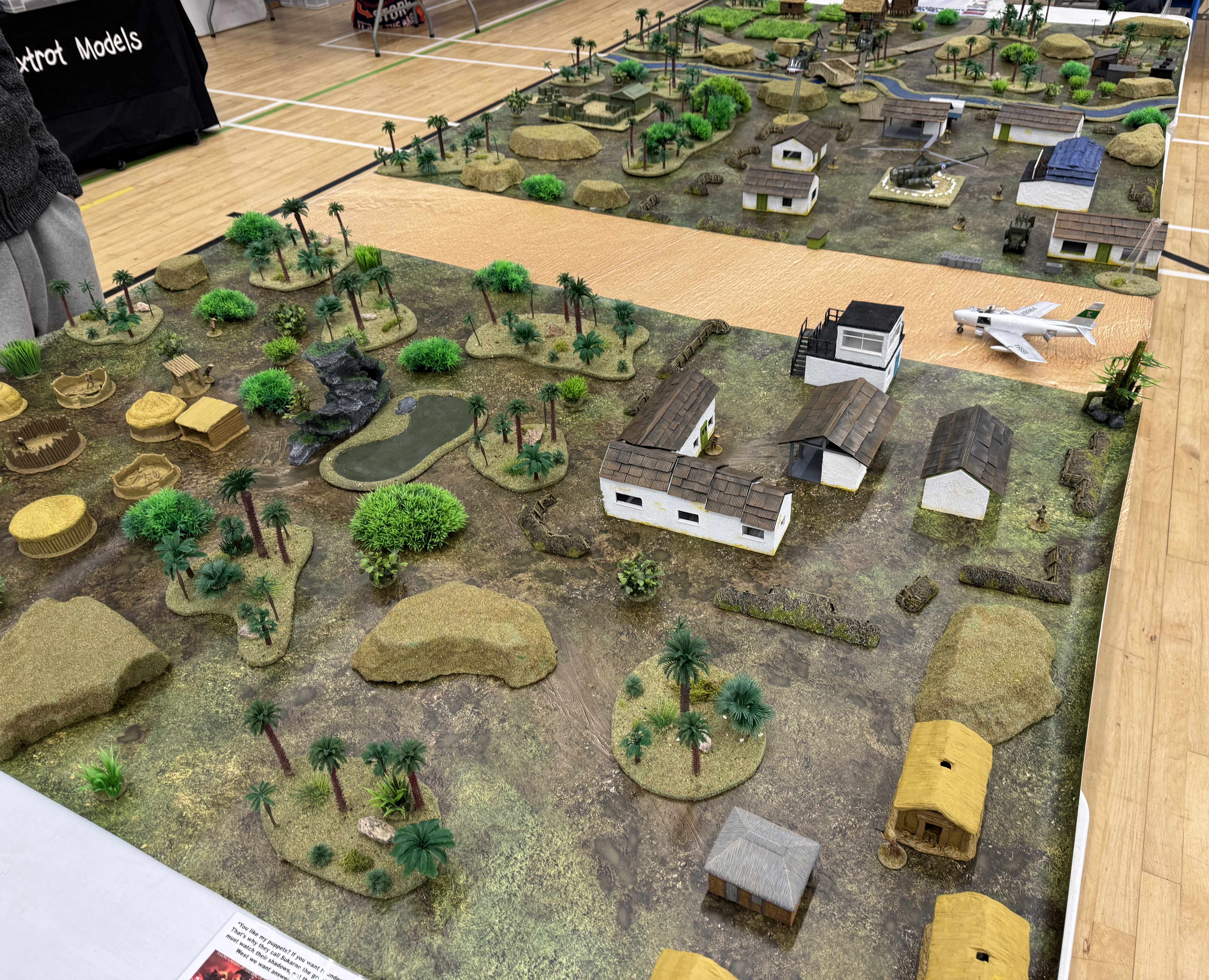
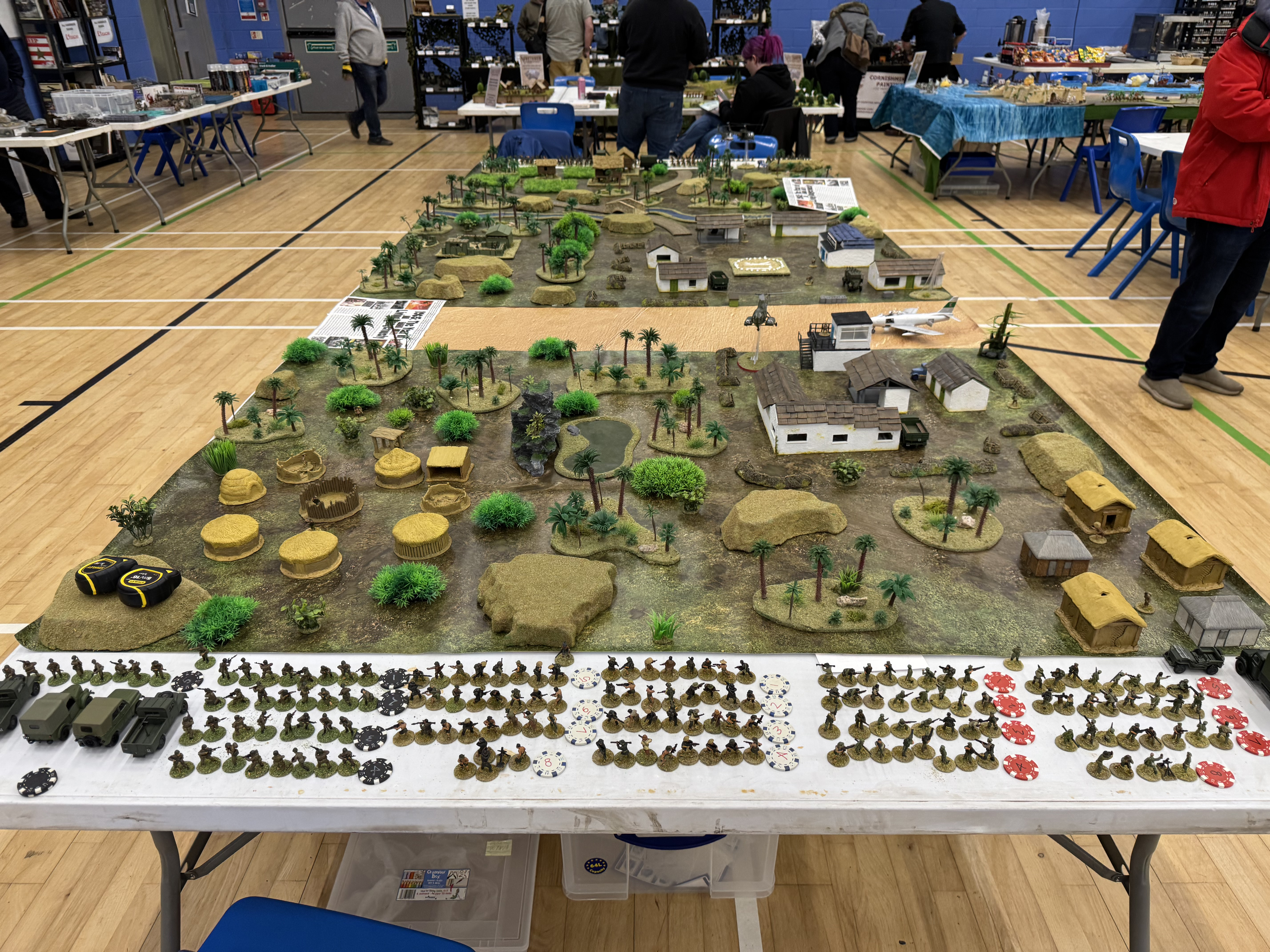
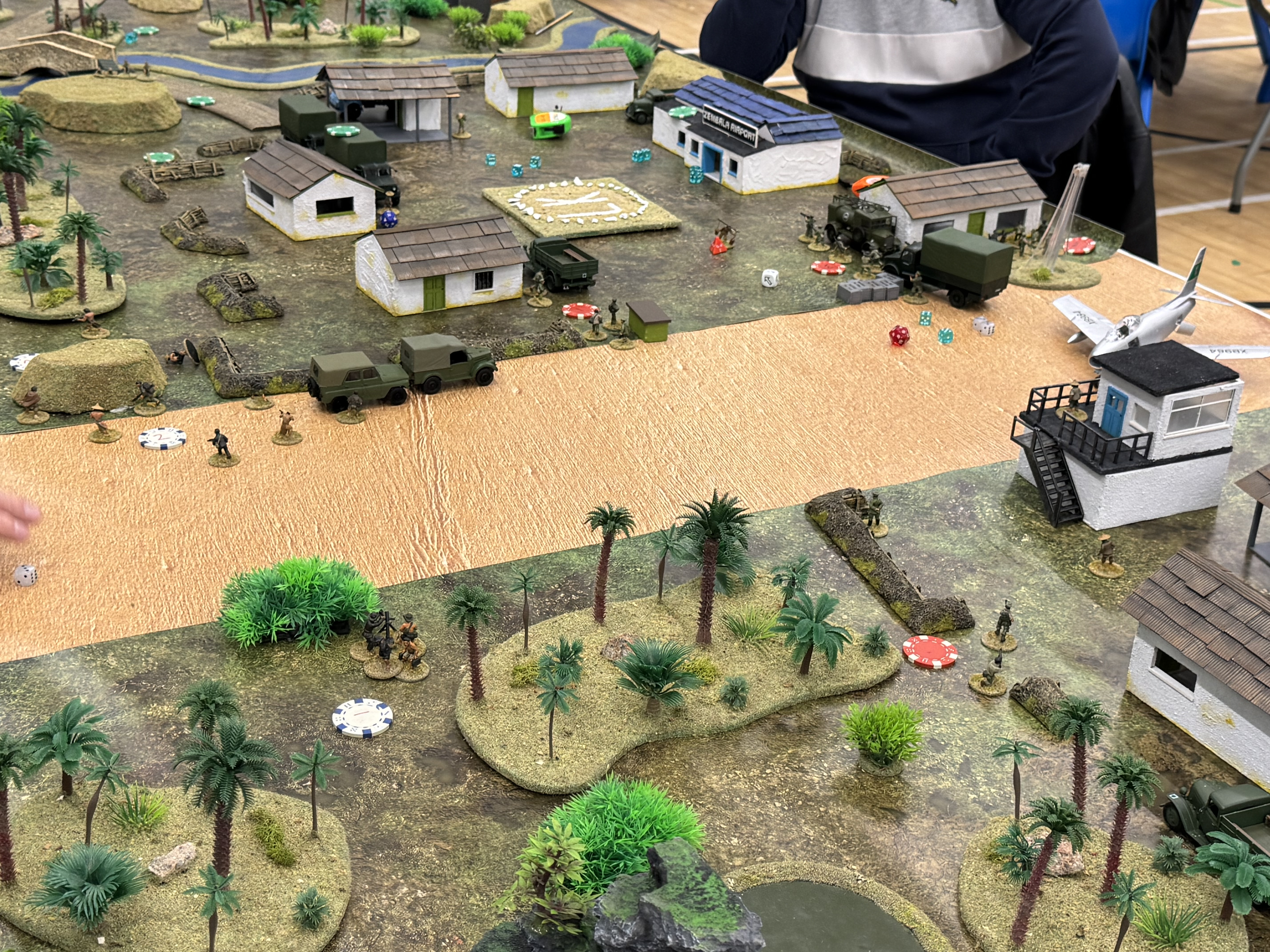
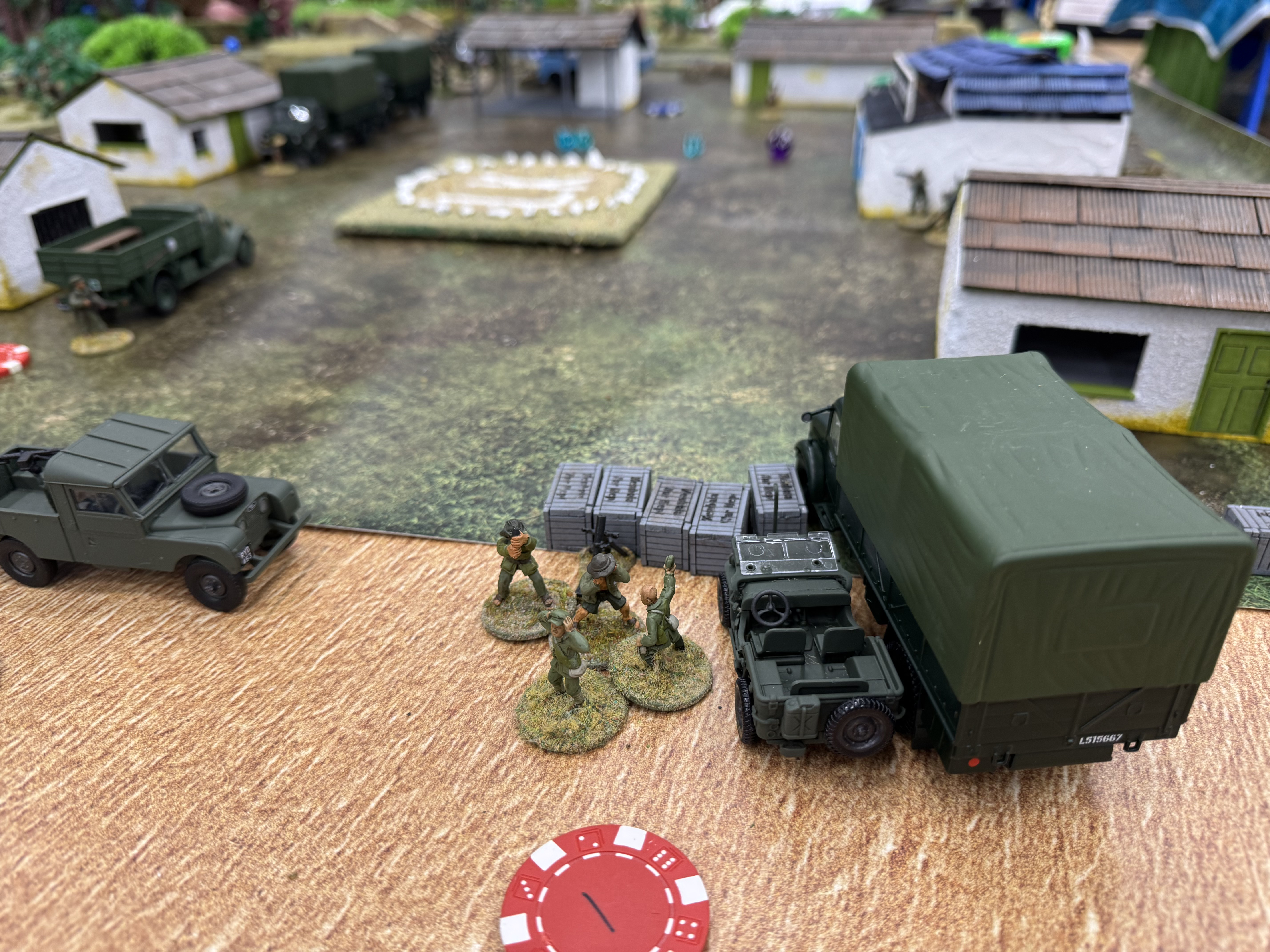
The bigger the table the better. Our playing surface at the convention was 6’ by 13’ which was actually three regular 6 by 4 wargaming mats and an additional 4th mat of a desert complexion placed between two of the other mats to represent the runway of the airfield where President Sukarno was hiding. This also provides an interesting empty space for troops to have to navigate but it also can provide a useful roadway for vehicles to traverse and for helicopters to land upon. You will need some buildings to represent the airport buildings and any aircraft, vehicles and paraphernalia you might have to create the idea of a functioning airfield in a tropical location. In addition to the airfield buildings it would be ideal to have several villages set up around the table to increase the possibility of President Sukarno hiding somewhere unexpected and to give more places for the forces to search and bicker over. At least one military installation should be on table to provide a place for at least some of the small group of troops loyal to Sukarno to be positioned.
Place a river parallel to the runway – about the same distance away from the opposite edge. The Communist Forces arrived from one side and the Capitalist Forces from the opposite – however as there were three factions on each of these two sides they each arrived on one side of the table on their respective sides of the airfield for one side and of the river for the other. So three sides are close but each have their own distinct entrance points. Roll randomly for the first person to activate – d6 and on a 1-2 North as far as the runway, 3-4 East and 5-6 South as far as the runway. The other side would be 1-2 North as far as the river, 3-4 West and 5-6 South as far as the river. Second person to activate rolls a d6 and on a 1-3 and 4-6 must go to one of the remaining locations. And the last player on each side takes the remaining entrance side.
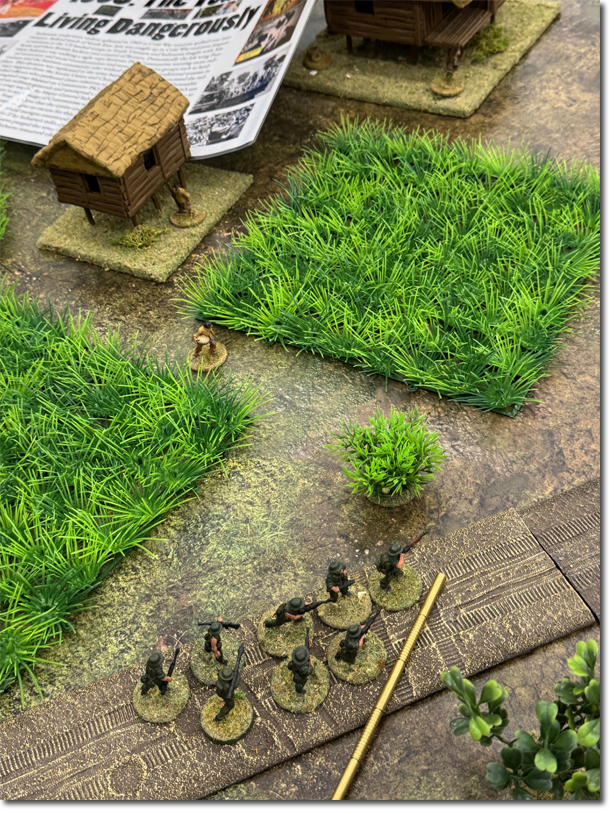
And this being Indonesia use plenty of jungle terrain. In the Wars of Insurgency rules we used (which are discussed below) they have a very simple movement mechanic for moving through terrain. The default infantry movement is 8 inches a turn. However if going through jungle (in our case the templated jungle pieces), crossing barriers, entering buildings through windows rather than doors, wading rivers, etc you roll a d6 and subtract that many inches. They do have another option of going half speed but gaining light cover. In effect this represents them using what natural cover and undulations that they can. Even out in the open they could move 4” and count as in light cover which gives an extra save roll in combat which can be very useful indeed. These movement rules are very simple but very effective and ideal for even non-experts and non-wargamers to grasp.
|
|
The Forces
|
|
Most importantly you will need a figure to represent President Sukarno who is classified as a Professional soldier meaning that he is better trained than Regular troops and receives an extra saving dice in case of errant grenades or explosions going off around him!
There is also a loyal bodyguard of 8 soldiers with small arms. The umpire can place these anywhere on the board and they do not have to remain together. Any number of these can be placed with the President or place them elsewhere to throw the players off the scent of the President. They always move last and always fire at any and all enemies in their Line of Sight.
I wanted to create the confused chaos of coup and counter coup and nobody was to be really sure who was on whose side. So I decided to have six different factions vaguely grouped into the two groups of Communist forces on one side and Western forces on the other. Of course you could adapt it quite easily for less players)
|
Communist Forces
|
|
Force
|
Commander
|
Troop Type
|
Troops
|
|
PKI
Communist Infiltrators within Indonesian Armed Forces
|
D.
N. Aidit nicknamed “Amat”
Professional
|
Regular
Indonesian Troops
|
6
Squads of 8 Infantry. Each Squad with at least one LMG or one RPG-7,
One
Medium Mortar
|
|
Maoist
Communists
|
Lieutenant
Colonel Untung Syamsuri
Professional
|
Regular
Insurgents
|
6
Squads of 8 Infantry. Each Squad with at least one LMG or one RPG-7, One
Medium Mortar
|
|
Soviet
Communists / Indonesian Air Force
|
Air Vice Marshal Omar Dani
Professional
|
Regular
Insurgents
|
4
Squads of 8 Infantry. Each Squad with at least one LMG or one RPG-7,
2
armed vehicles – eg HMG
armed Jeeps, Helicopters or lightly armoured vehicle
|
|
Capitalist Forces
|
|
Indonesian
Paratroopers
|
Major
General Suharto
Professional
|
Regular
Indonesian Troops
|
6
Squads of 8 Infantry. Each Squad with at least one LMG or one RPG-7, Two
Small Mortars
|
|
MI6
backed Indonesian Soldiers
|
General Abdul Haris Nasution
Professional
|
Regular
Indonesian Troops
|
6
Squads of 8 Infantry. Each Squad with at least one LMG or one RPG-7, One
Medium Mortar
|
|
CIA
backed Indonesian Soldiers
|
Colonel
Sarwo Edhie Wibowo
Professional
|
Regular
Indonesian Troops
|
4
Squads of 8 Infantry. Each Squad with at least one LMG or one RPG-7,
2
armed vehicles – eg HMG
armed Jeeps, Helicopters or lightly armoured vehicle
|
Although not entirely historically accurate, these competing forces evoke the forces and ideologies involved and create the tensions required for some interesting table diplomacy. As a referee I just kept repeating the mantra ‘there can be only one winner!’
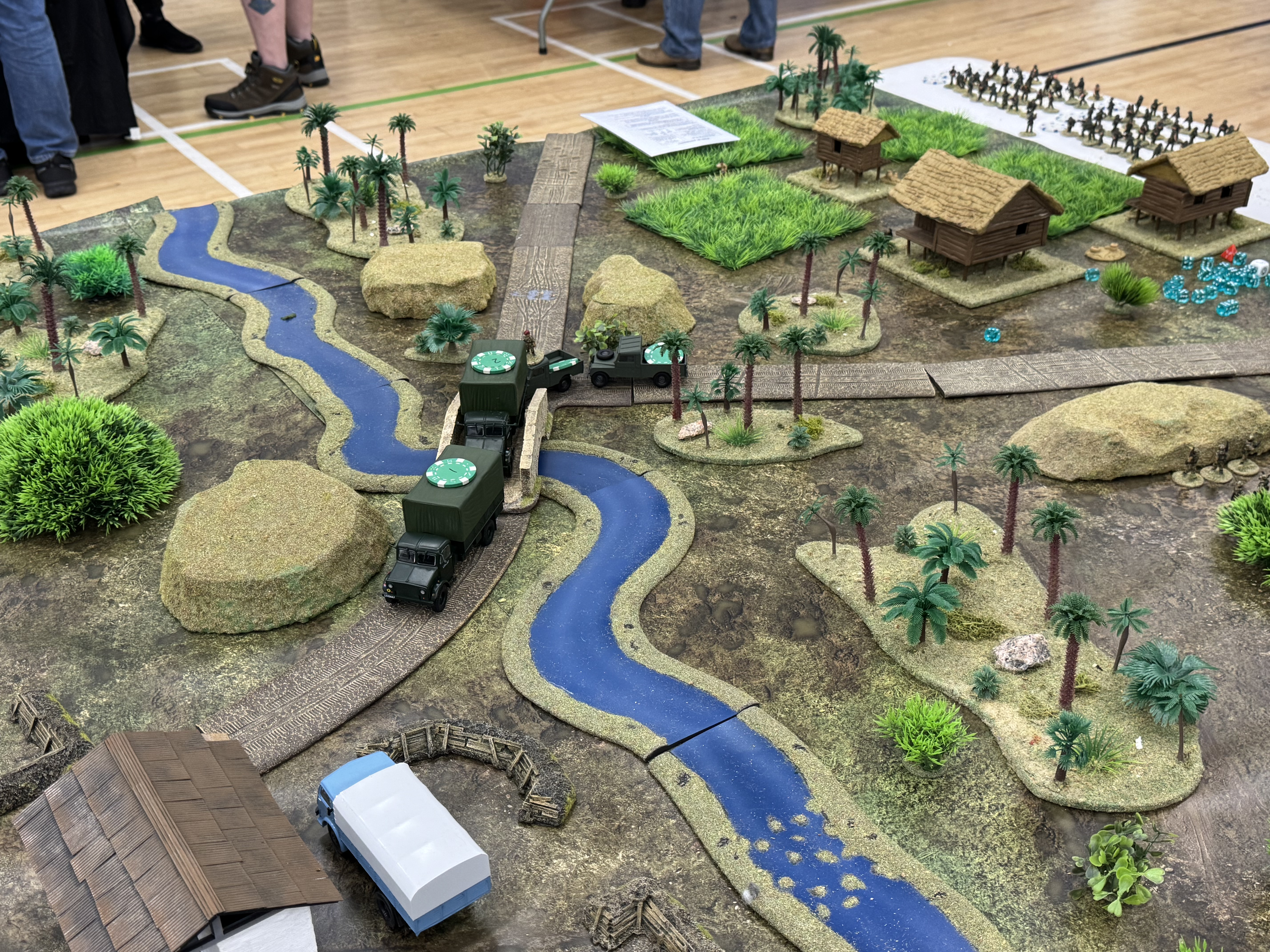
The infantry only factions should be given access to trucks and jeeps – although there should not be too many roads on the board so that they are vulnerable to ambushes and predictable in their movements. In our rules, the trucks off road are slower than infantry (only 6” a move) although 4 by 4 vehicles are a slightly more respectable 9” although that it still only 1” faster than the infantry can walk – other than on roads where they can both do a health 18” move although these can be quite vulnerable the closer they get to the fighting!
|
|
The Rules
|
|
Obviously there are many sets of rules you could use for this scenario but I found that First Command’s “Wars of Insurgency” was a particularly good system for a large multiplayer convention game with its innovative use of chips or counters to determine the order in which units move. It also has some very simple combat mechanics that make it easy for anyone to pick up the basics of how to move and fight even if they have never war-gamed before. Basically each player assigns numbered chips in the numerical order that they would like to move their units. You then roll for initiative and whoever wins that roll moves their chip number 1, then the next player moves their chip number 1 and so on until all six players have moved their first chips and then the player who won initiative moves his chip number 2 and so on. There is the ability to change a couple of chips around through the use of your officers if required. For further simplicity I made all the troops involved regular in their quality - they roll 2 dice to shoot a small arm (more for LMGs and HMGs) hitting on 4s on d6s. The defender can then save these hits by rolling 5s on 2d6 for regular troops although the number of dice they roll can be modified by light, medium or heavy cover. I should note that commanders are classified as professional and so get an additional dice to hit and to save (i.e. 3 dice rather than 2). It is a very simple system but it works surprisingly well.
I did add three house rules not in the rules as written. One was that I added a scatter dice for grenades, RPG7s and mortars that missed - just because I like the chaotic results they produce and it added some interesting peril. In this case we rolled a d4 and added 2” for RPG-7s and grenades and d4+3” for mortars. The other rule I added was reserve fire. Basically when activated a soldier who did not move could reserve his firing dice until a target presented itself later that turn. This worked well for guards and anticipating attacks. The only other rule we modified is that if you failed your morale twice instead of running away we just just took the figure off the board so that we didn’t have lots of single figures littering the table. It was just to simplify the big game that we were playing and worked well.
http://www.firstcommandwargames.com/wars-of-insurgency.html
Another option to these rules might be Bolt Action. Obviously you would need six different order dice for the six different factions, but that would also be helpful in sorting out the order as to who moves when. Bolt Action is designed for World War Two but if you limit the equipment to LMGs and just classify RPG-7s as Bazookas it should flow nicely. I have used Bolt Action for large games before and it is certainly a viable option to players used to the system. It is a little more involved than the Wars of Insurgency above but can definitely be adapted for a 1960s style coup.
For the helicopters we used the rules from the authors of Wars of Insurgency. Basically they are soft vehicles with extra saving throws when moving over 10” in a turn or when airborne. They obviously lose the speed saving throw when hovering to land, or in the process of taking off. And they lose the airborne saving throws when on the ground making them just another soft target on the ground. They can be armed with rockets and HMGs which are treated as multiple RPG-7s or HMGs as per the normal rules.
|
|
Time Limit
|
| This is very much an objective led game. There is no time limit as such. Just find, capture and remove the President from the board on the respective player’s starting point. |
|
Diplomacy
|
|
Encourage any table diplomacy. All six sides can fire upon one another at range. However, if at close quarters, close combat could be conducted but if you are fighting factions on the same ideological side as yours, you can specify whether the wounds are lethal or non-lethal. This would represent more fisticuffs between the various Communist factions or between the various Capitalist factions. Any troops ‘killed’ are ‘stunned’ instead for d6 turns. |
|
The Figures available
|
|
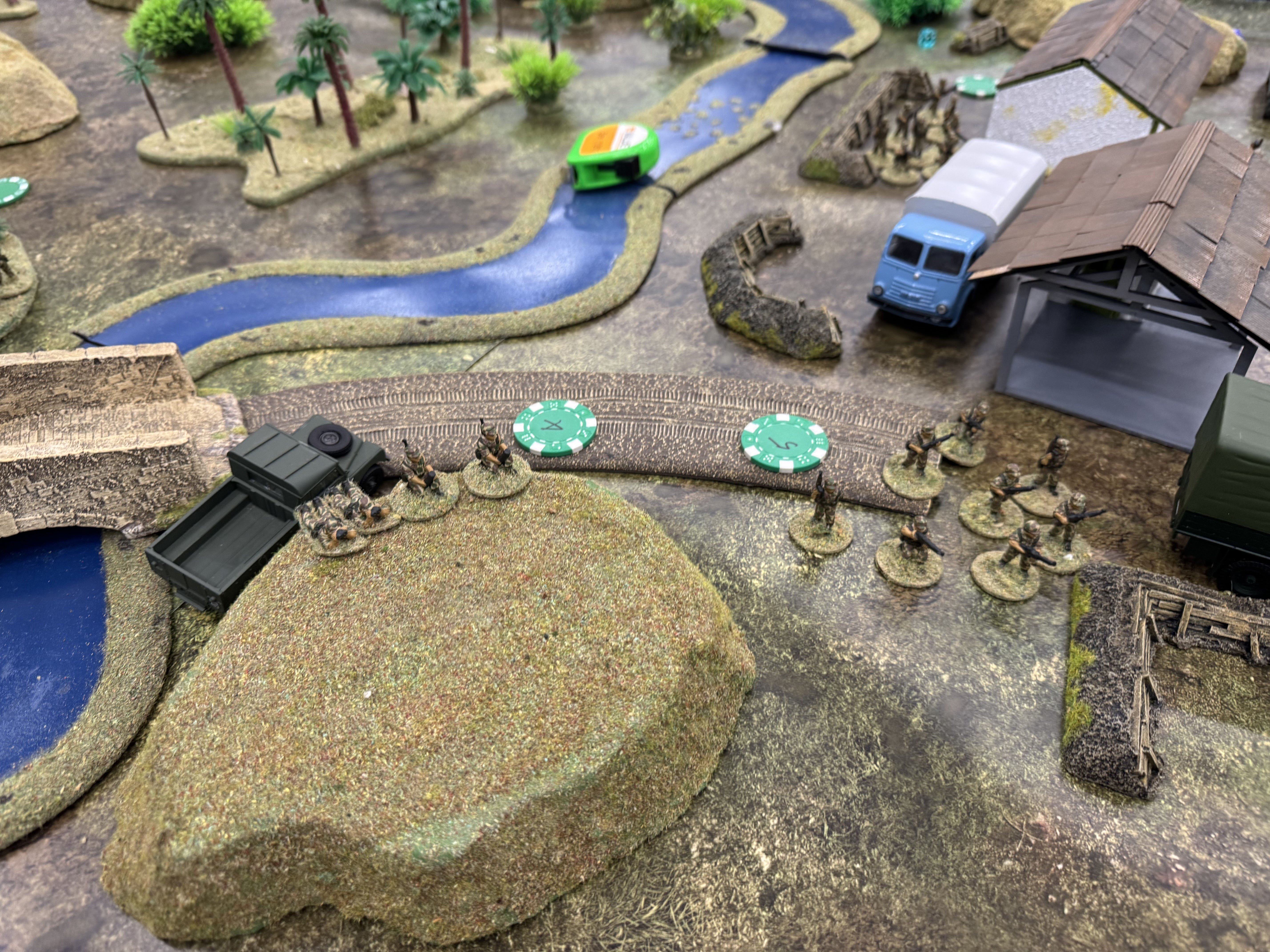
As you might see from the photographs of our game I am not precious about using the precise figures. There were plenty of substitutes that I felt were close enough to evoke the troops from the period. The core of the soldiers we used though were from the Commando Miniatures range of troops which were designed to fight the British and Indonesian Confrontation of the 1960s. They make specific Indonesian paratroopers who were perfect for General Suharto to command in battle. I used the British and Commonwealth forces from that range to represent the MI6 backed Indonesian troops although Rubicon now produce plastic Commonwealth Forces from the Vietnam War. For the CIA backed troops you could use any American Cold War troops as they supplied at least some of the initial uniforms in post independent Indonesia but perhaps the best ones to use might be the new Rubicon 28mm plastic ARVN troops which are better proportioned and equipped to represent the more slight regular Indonesian soldiers.
President Sukarno’s own guards were actually members of the Royal Malay Police (but don’t tell him) from the Britannia range.
For the Communist forces I used what I had but feel free to be equally creative. For the PKI who had infiltrated the Indonesian Army I used a mixture of Chinese Warlord figures from their Korean War range (or at least those in their summer uniforms) and Britannia Miniatures Malayan National Liberation Army insurgents. President Sukarno’s own guards were actually members of the Royal Malay Police (but don’t tell him) from that same Britannia range.
For the Maoists I used Vietcong and NVA figures from any number of Vietnam 28mm ranges. And then perhaps the most anachronistic for the Soviet backed troops I actually used Soviet Cold War troops but maybe you could separate the Vietcong from the NVA if you have enough figures available. As you can tell I am no rivet counter, you just want troops to evoke the period and be believable enough.
|
|
The Course of the Game Played at PAW2025 February 1st/2nd
|
|
Rumours abounded that President Sukarno was aware that his position was under threat from various factions in the Indonesian Armed Forces and other rebel groups and so headed for the airport in case he needed to fly to safety at short notice. He did have a small cadre of loyal soldiers who accompanied him but they were armed only with small arms. General Suharto heard from informants amongst the President’s inner circle that he was in the vicinity of the airfield and sent his best Indonesian Paratroopers to search and seize him at the earliest opportunity to put him into ‘Protective Custody’ for his own safety. However, Communist PKI sympathisers within the Indonesian Army were also aware of his approximate location of the left-wing President who was not left wing enough for them and began searching the nearby villages and outbuildings for the missing President. They were most surprised to bump into Maoist Communists who were also searching for the President and indeed these Maoists would soon turn aggressive and open fire on the Indonesian PKI soldiers and a firefight broke out between the two rival left wing factions.
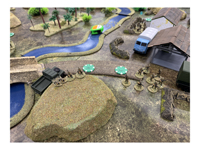
All the while Indonesian Paratroopers were scouring the local jungle and advancing on the airfield. They were soon joined by an MI6 backed cadre of soldiers who headed for the nearby barracks to see if they were guarding the president there. These loyal soldiers soon found bullets winging their way from Communists on one side and Indonesian soldiers on the other side. This British backed faction was making heavy weather through the jungle and crossing the river but were heavily concentrated and slowly but surely gained ascendency over the military outpost and would convert it to a base camp of their own…. They trained their guns on the treeline they knew to be teaming with Maoist guerrillas but their size and organisation kept the insurgents at bay here at least.
 |
|
|
It was a different matter over on the airfield, Paratroop mortars rained down on Communists scurrying across the wide runway with no cover on its wide expanse. It became something of a three way killing field as Indonesian PKI/Maoists and Paratroopers all turned on one another with increasing deadliness. But it was to be the Paratroopers who would strike gold whilst searching an unassuming building in the airport complex. Unfortunately for them, the President still had a loyal guard who shot the first man coming through the door and barricaded the President in the corner of the room - a short range fire fight broke out with the bodyguard ultimately being neutralised but not until he had incapacitated several Paratroopers.
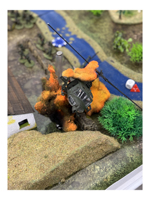
Whilst this was happening the PKI got wind of the firefight and started moving towards the building. It was soon covered on three sides and there was no door or window on the fourth and only clear side for those inside to escape from! A vague Communist truce broke out once their quarry had been located and a Maoist fired an RPG-7 into the offending building killing many of the remaining Paratroopers there. The President was well and truly bottled up with the front door covered by PKI machine guns and assault weapons and the back windows covered by equally menacing Maoist weaponry. The President and his captor cowered in the corner awaiting reinforcements.
 |
|
|
After a disastrous charge across the helicopter landing zone, the Paratroopers decided to work more methodically down through the buildings and outhouses and thinning out the Communist aggressors as best they could, although not without losses of their own. The President was secure in the building and although he could not leave it, it was far too dangerous for any Communists to get to him.
Seeing an opportunity now that the hard yards had been done, a Soviet backed faction entered the fray to bang Communist heads together definitively and to swoop in and tip the balance to the glory of the workers. They brought fresh disciplined troops and some HMG armed vehicles leading driving down the runway. However they were not the only new entrants as a CIA backed faction sent some helicopters in with troops to try and snatch the president and whisk him away to safety with other troops of theirs slogging through the jungle and up the tropical river.
The helicopter landing zone was a deadly killing ground as soldiers fired across it from all sorts of angles. Soon though the PKI were able to nudge up to the main Terminal and started dropping some grenades into windows of the heavily defended building. General Suharto would see one of his squads liquidated here and had to join another squad further up the same building. This Terminal soon settled into a deadly impasse as the protagonists heard the steady whump whump, whump of helicopters above.
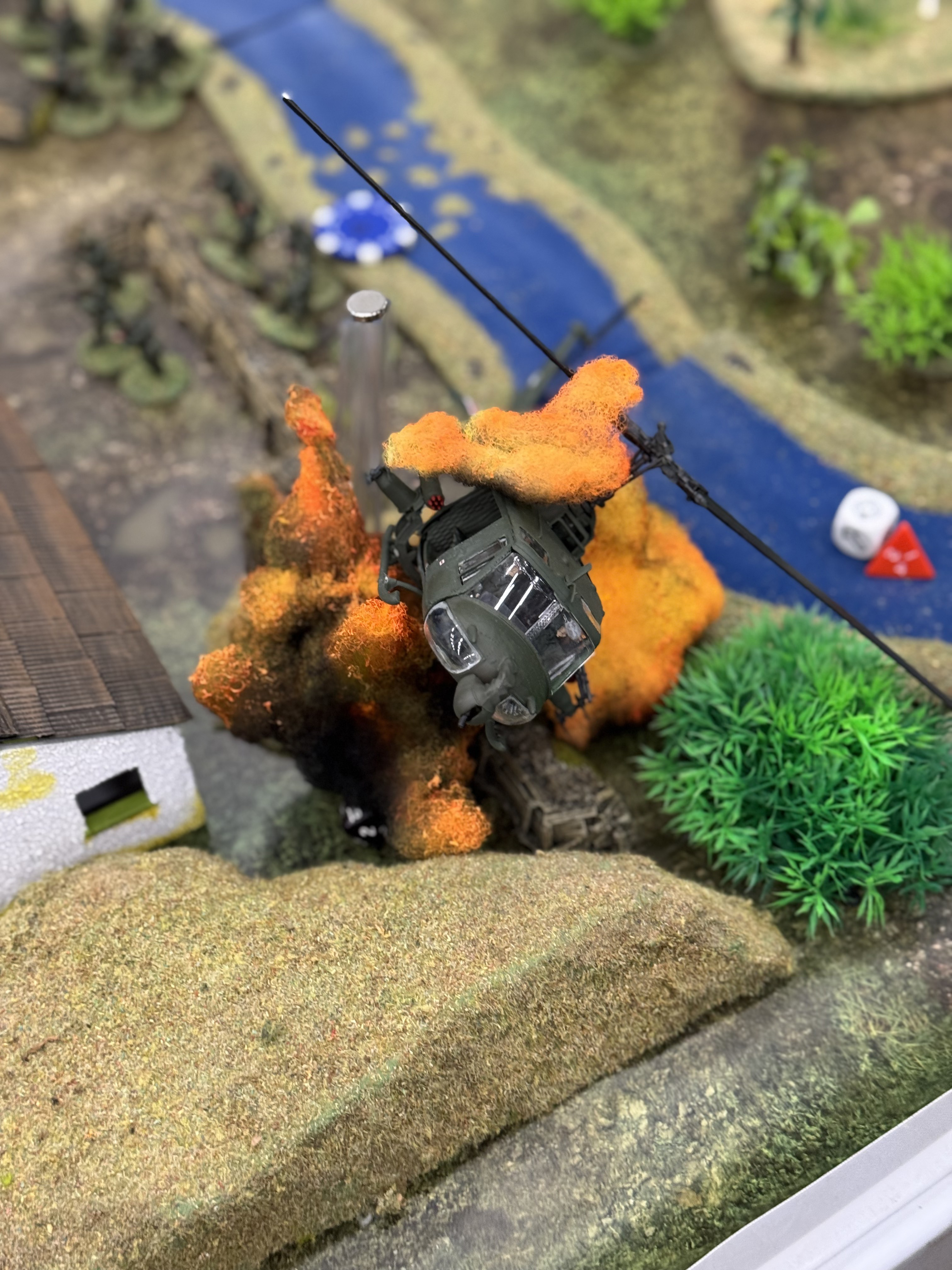
The first helicopter launched rockets at the PKI insurgents whilst the second helicopter sprayed the landing zone with machine gun fire. But disaster befell the first helicopter when a PKI RPG-7 armed soldier clambered on the roof of a building and fired a deadly accurate rocket propelled grenade at the chopper destroying it outright, nobody could have survived that strike. The second chopper was receiving a lot of attention from long distance RPG-7s and machine gun fire but seemed to lead a charmed life. It hovered and slowly descended. Fortunately the Paratroopers saw a window of opportunity to get the President out of the building as CIA backed troops, Paratroopers and the chopper activity quietened down the Communist activity just enough to get the President out of his besieged prison and back behind the building to wait for the helicopter.
 |
|
|
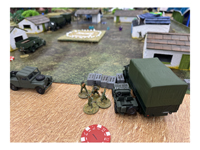
However, the MI6 troops decided they wanted to escort the President back to safety in a conveniently parked Land Rover. Fighting broke out between the two factions but the Paratroopers were determined to hold on to their prize. What shifted the balance of negotiations was the arrival of the CIA backed troops who disgorged from the chopper or emerged out of the jungle and provided an overwhelming local superiority in firepower. Bullets were flying everywhere, mortar rounds popping all over the place and RPG grenades flying hither and thither, but the President was bundled if somewhat reluctantly onto the chopper.
But the battle was not over, as the helicopter rose, it became a bullet and RPG magnet for a far larger array of adversaries who previously could not see the target. RPG-7s whistled overhead and underneath, holes appeared in the helicopter skin but it seemed as if the cool pilot was going to get away with it…. until the Soviet backed HMG armed vehicle opened up - hitting with every shot it fired, the big rounds pounded through the engines and superstructure and the rotors struggled to keep the machine aloft. It fell back to the ground although amazingly the President was to emerge from the wreckage alive (very lucky dice roll). The MI6 faction were ready and waiting to usher the President into their waiting Landrover… But a Maoist mortar crew thought otherwise and thought that if they could not have the President then nobody could. A round dropped pretty much slap on top of President Sukarno and the hapless President was no more.
General Suharto was quick to blame the death of the President on the merciless and pitiless Communist insurgents and declared himself the new President of Indonesia. The President is dead…. Long live the President (He would remain President until 1998).
|
|
|