|
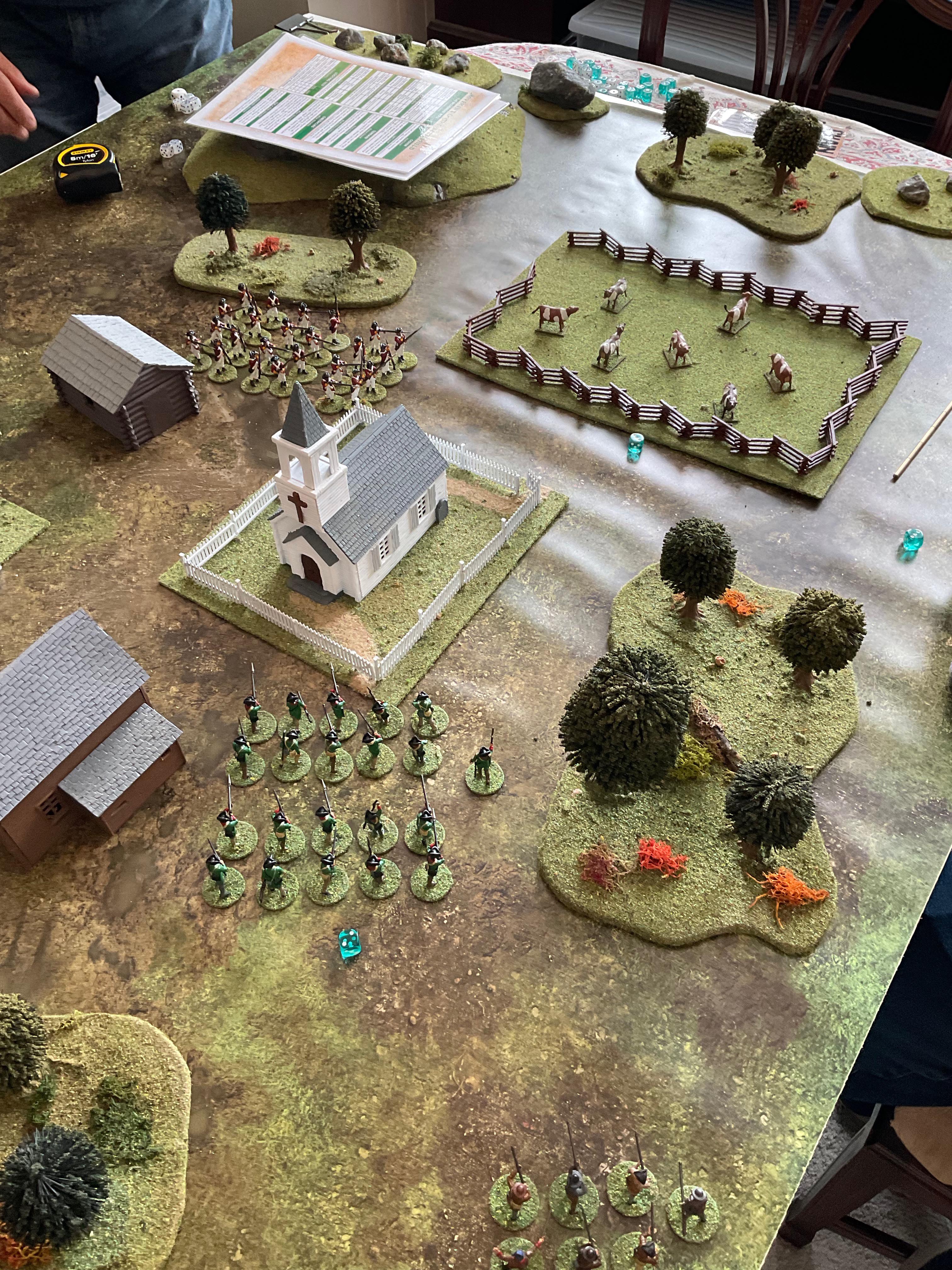
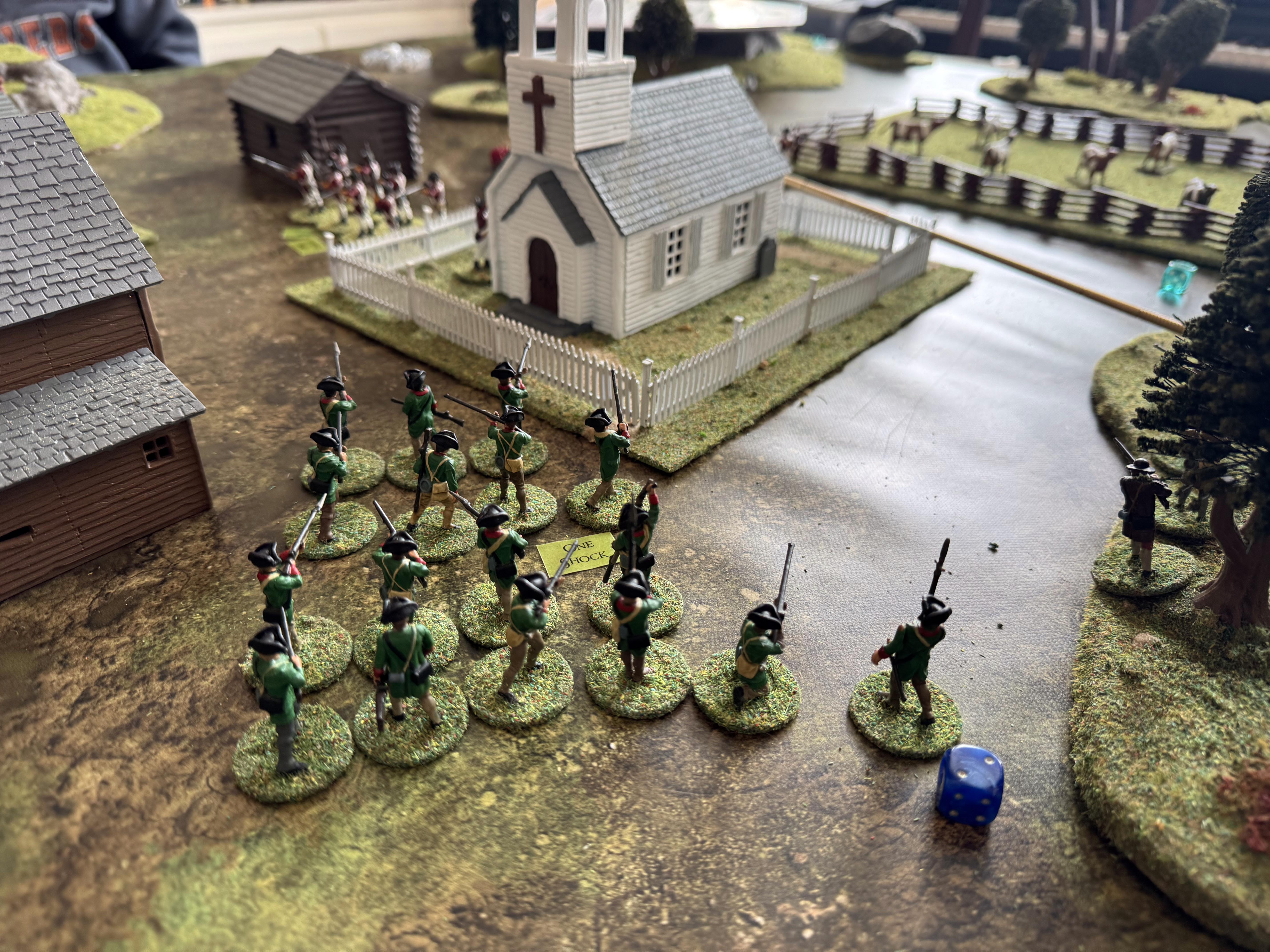
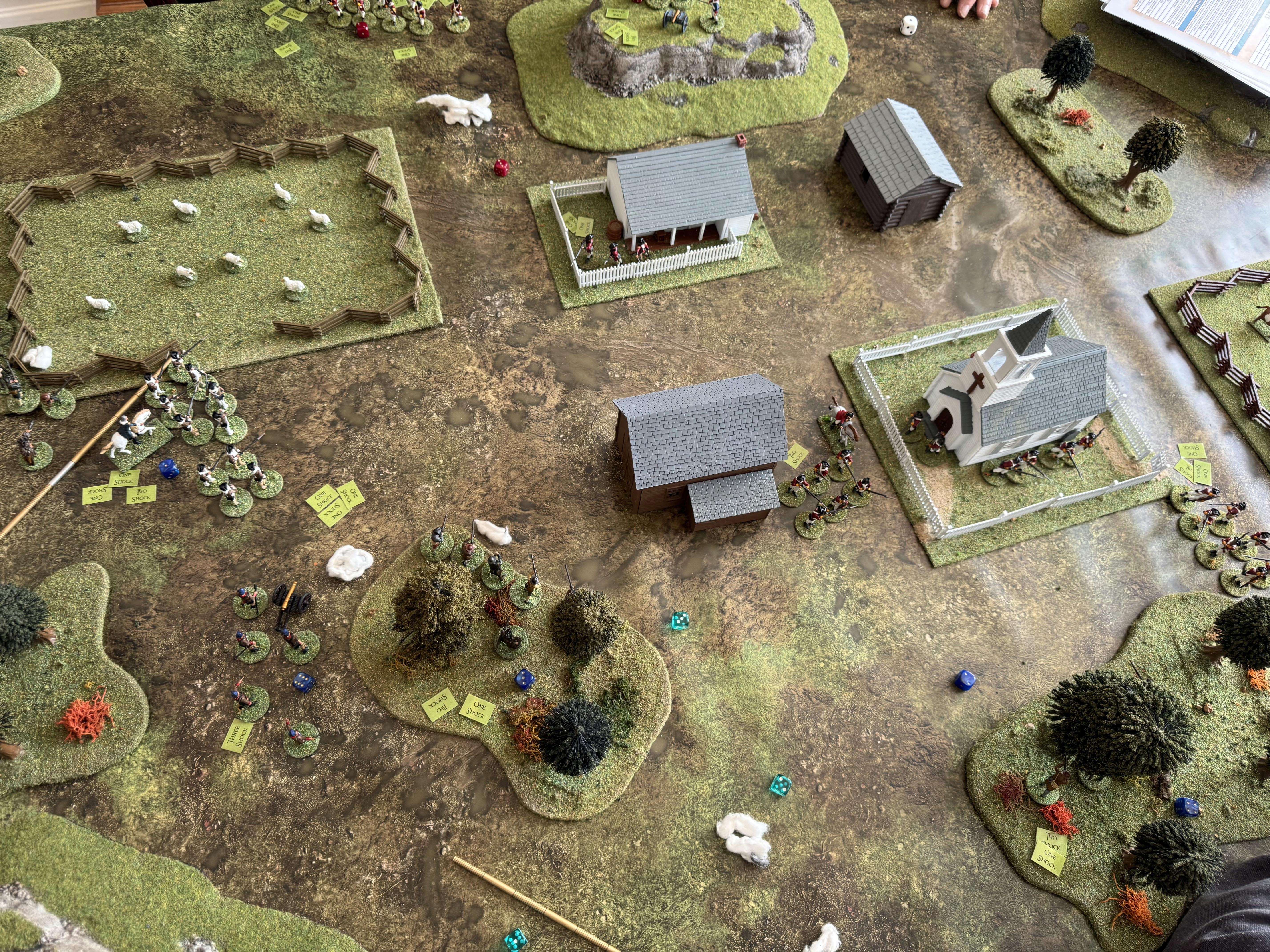
The morning broke with a pale light upon the valley, and from the South‑West the American rebels first appeared, their ranks fanning out across the fields with the cautious confidence of men hardened by frontier life. They moved with the stealth of hunters, their rifles cradled as though they were extensions of their own limbs, and their eyes fixed upon the village whose spire rose above the clustered roofs like a sentinel of fate. Among them strode Captain Nathaniel Briggs of the militia, a man whose broad shoulders and weathered face bespoke years of toil upon the land. His voice carried easily over the din, urging his men forward with a mixture of rustic humour and stern resolve. Though his troops were untrained in the arts of war, they followed him with the devotion born of shared hardship, and in his presence they found courage enough to stand against the scarlet tide of empire.
From the North, the British Light Infantry entered the village with measured tread, their bayonets gleaming in the morning sun. At their head marched Subaltern Henry Ashford, scarcely more than a boy, his features still bearing the softness of youth. Yet beneath that youthful countenance lay a spirit of iron. When the first shots rang out from the American skirmishers concealed behind fences and trees, a ball struck Ashford in the shoulder, staggering him. Blood stained his coat, but he refused to yield. With grim determination he pressed on, his voice steady as he called his men to order. Though wounded, he became the very embodiment of British resolve, his courage inspiring his soldiers to fight with renewed ferocity. Throughout the day, Ashford’s presence was felt like a beacon amidst the smoke, a reminder that honour demanded endurance even when flesh faltered.
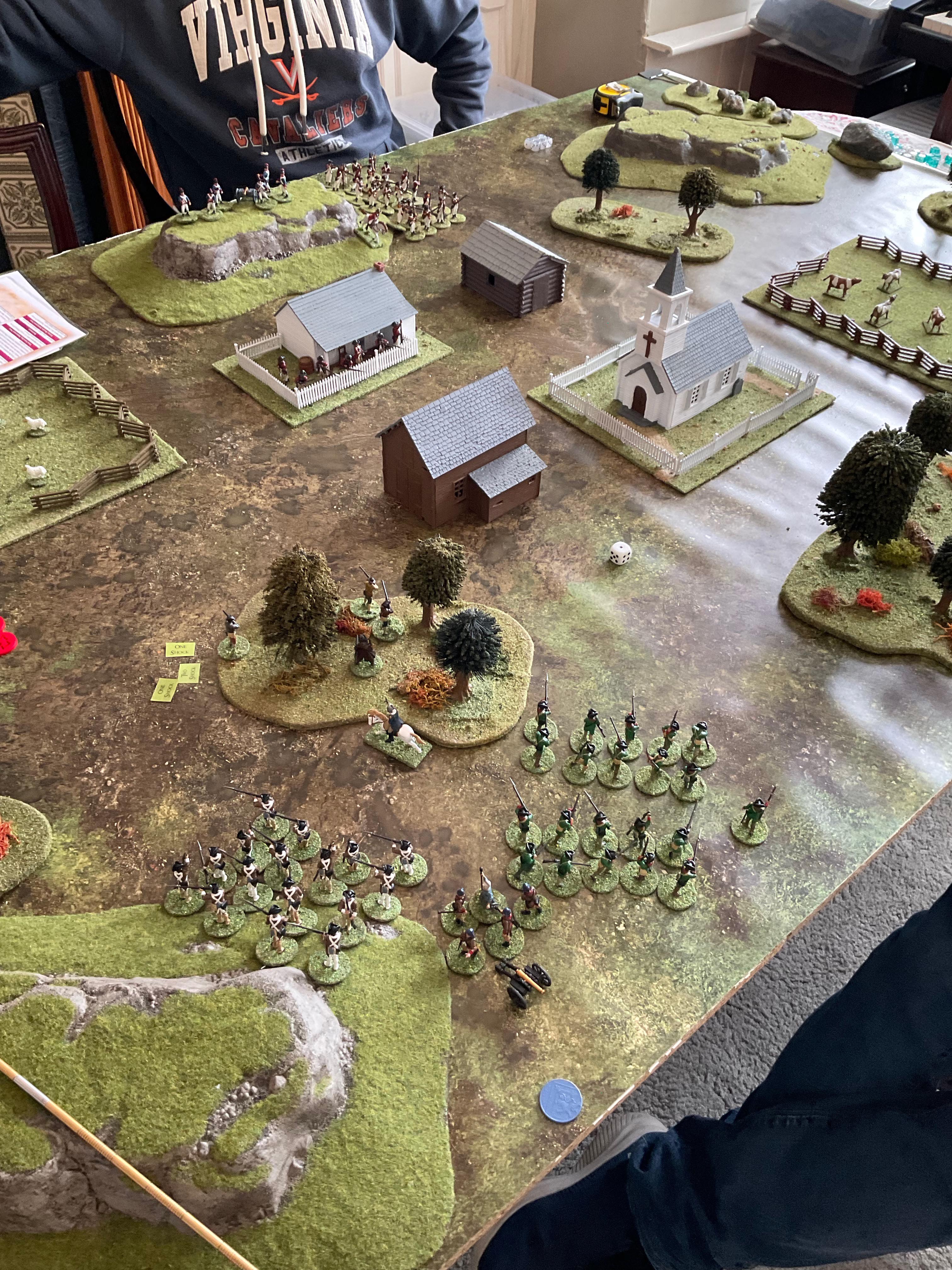
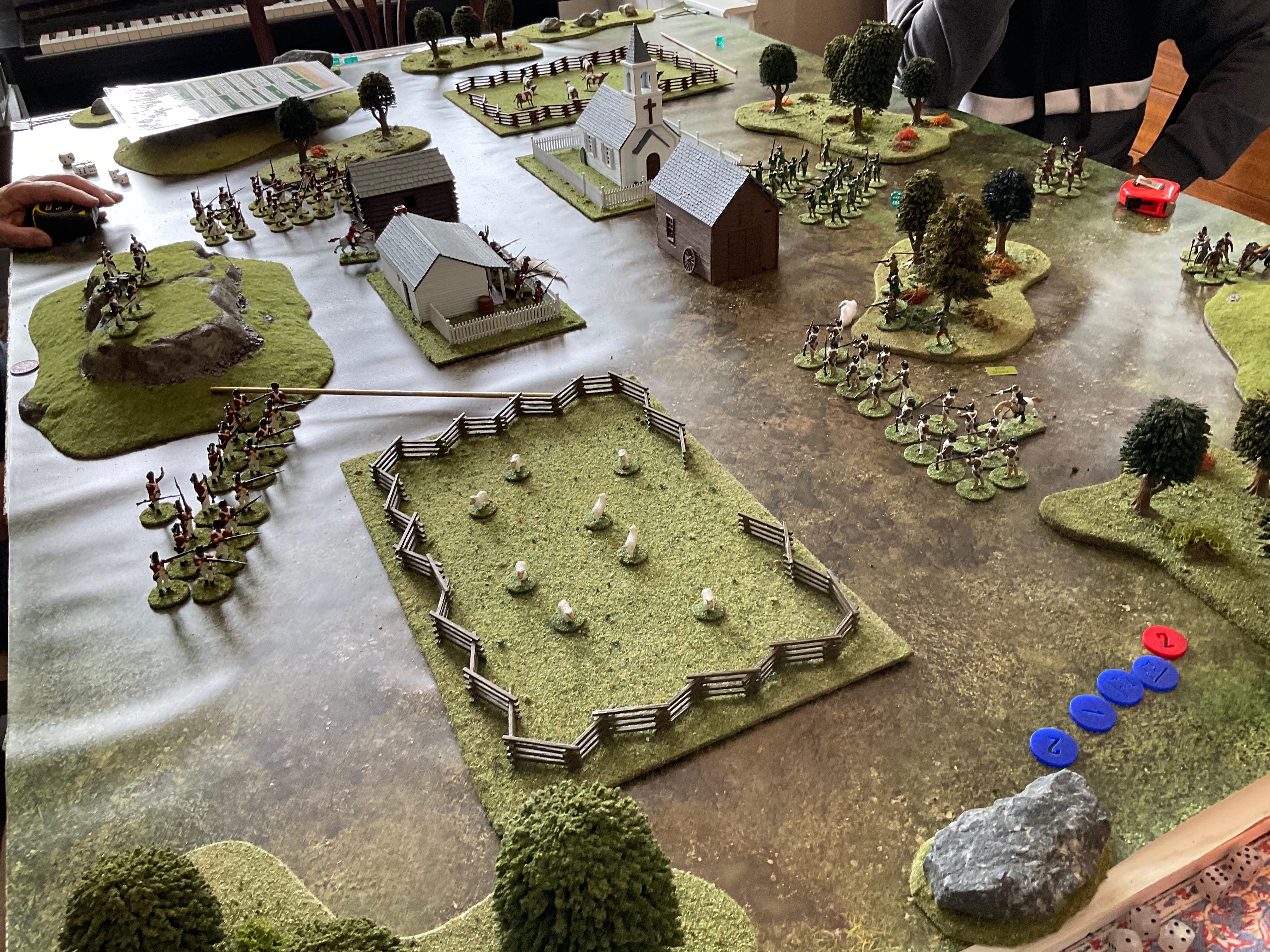
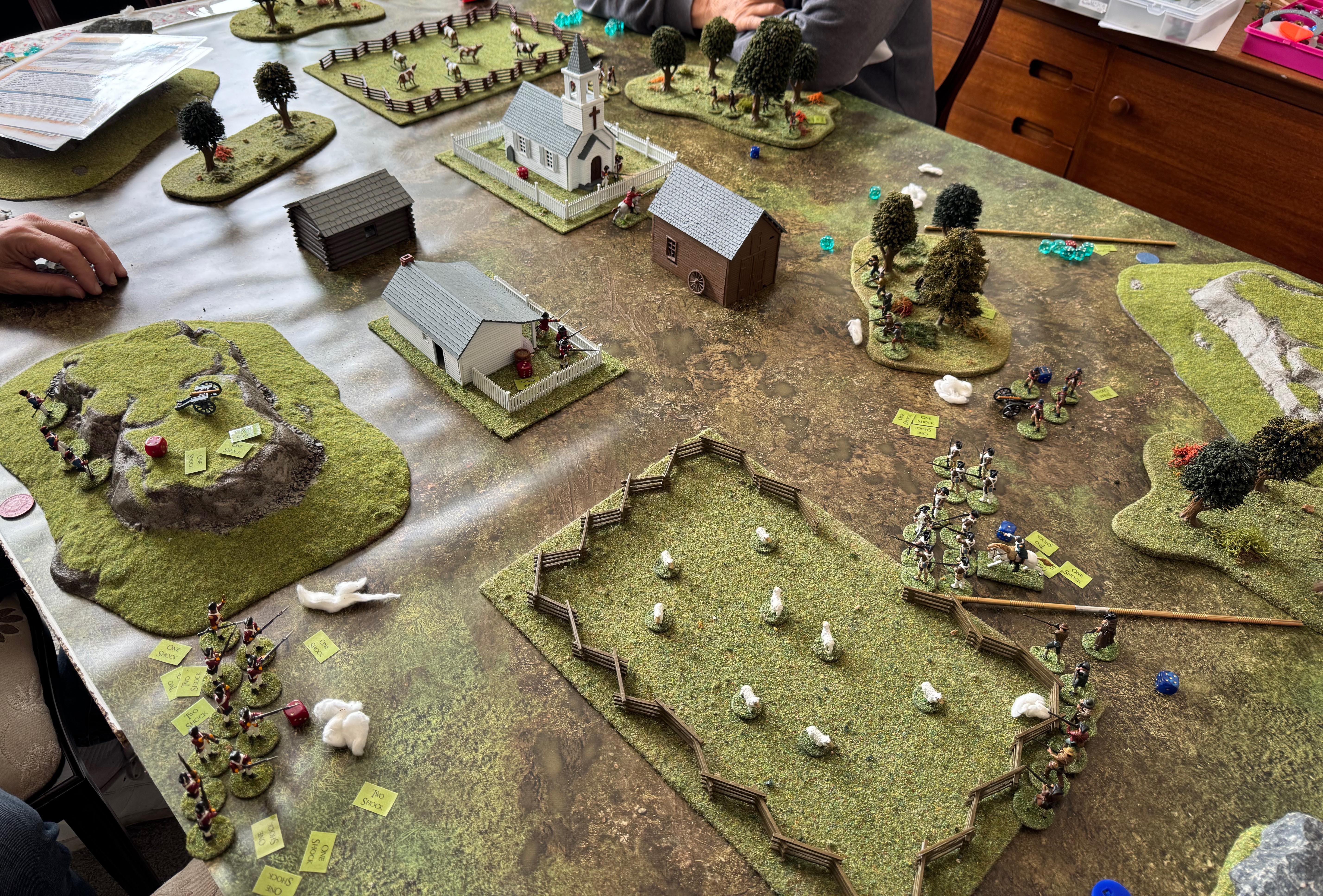
The battle widened as British regulars advanced from the North‑East, their drums beating the cadence of empire, while the Americans surged from the opposite corner, their State Line leading the way with banners unfurled. Upon a hill, the Royal Artillery opened their grim work, sending iron shot into the rebel ranks. Yet among the Americans crouched a figure of singular determination: Elias Turner, a rebel gunner whose hands were calloused from years at the forge. Turner’s eyes gleamed with the fire of liberty as he sighted his cannon, his every movement deliberate, his every breath a prayer for accuracy. When the British Grenadiers joined the fray with volleys of musketry, Turner’s gun answered with thunder, tearing gaps in their proud ranks. In one moment of comic absurdity, the Royal Artillery, having loosed a volley, inexplicably advanced down the hill, leaving Turner with no target at the very instant his cannon was primed to fire. He laughed aloud, a sound half mirth and half defiance, for Providence seemed to mock the rigid mechanics of war and favour the cause of freedom.
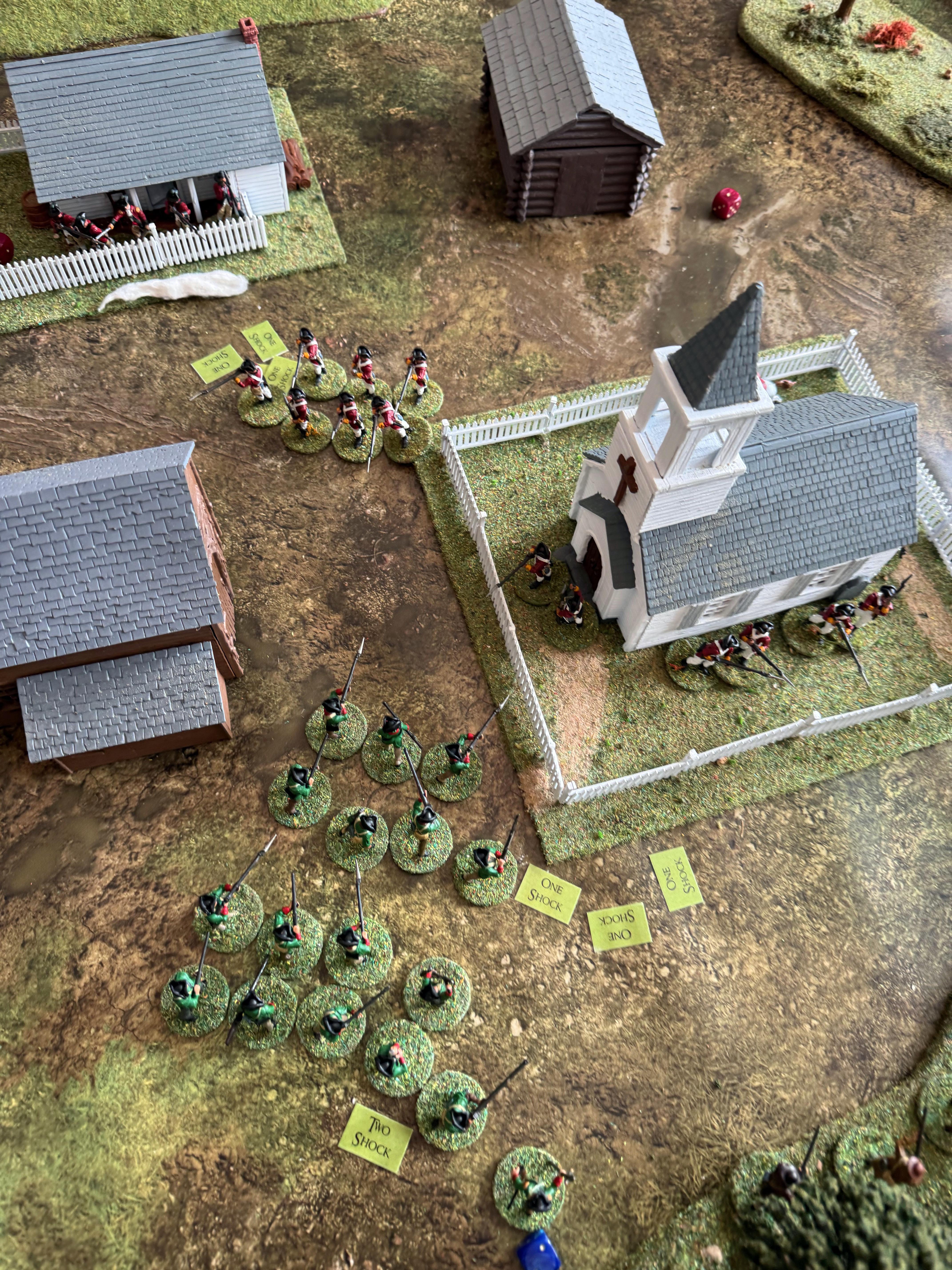
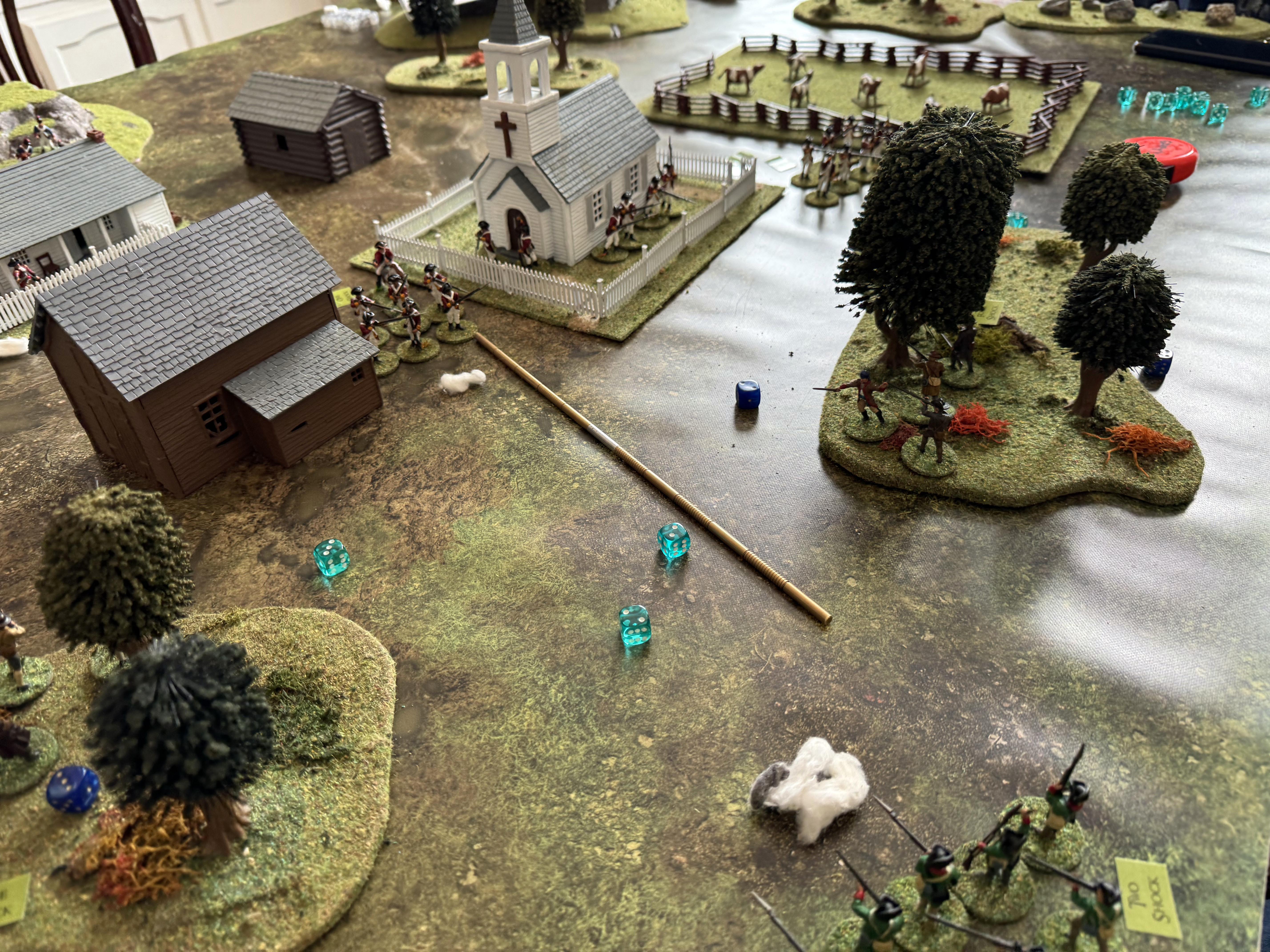
The struggle grew fiercer around the church and the woods that hemmed the village. The British commander, a man of iron will, directed his troops to seize the sacred ground, his sword flashing as he urged them forward. American skirmishers lingered like shadows, pouring fire upon the advancing redcoats, now joined by Briggs and his militia. The militia captain fought with the desperation of a man defending his hearth, his musket cracking as he stood shoulder to shoulder with farmers and tradesmen. Yet the British absorbed the punishment, their discipline unbroken. Slowly, inexorably, they pressed forward, turning the tide. At last, the commander himself led a charge against Briggs’s militia. The clash was brutal, and though Briggs fought valiantly, his men were driven back, scattered to the farthest edges of the field. For a moment, it seemed that Britain’s triumph was assured.
But war is a fickle mistress. On the Western flank, the Americans poured relentless fire upon the exposed Grenadiers, their shots striking with deadly precision. The proud Grenadiers, symbols of British might, faltered beneath the storm and were at last driven from the field altogether. Turner’s cannon roared again, its iron voice silencing the Royal Artillery and forcing them from their hill. The British Light Infantry, though valiant under Ashford’s wounded command, could not stem the tide alone. Slowly, reluctantly, the redcoats withdrew, their commander grim but unbowed, his men bloodied yet unbroken in spirit. The rebels, though victorious, stood amidst the wreckage of their triumph, their joy tempered by the heavy butcher’s bill that lay upon the field. They had cleared the battlefield, but at a cost that weighed upon every heart.
Thus ended the struggle in the village, a contest of valor and sacrifice. Subaltern Ashford, wounded yet steadfast, embodied the iron discipline of Britain. Captain Briggs, rustic and resolute, gave his militia the courage to stand against the empire’s might. Elias Turner, the rebel gunner, lent his thunder to the cause of liberty, his laughter echoing amidst the smoke as a symbol of defiance. And as the sun set upon the scarred earth, both sides carried with them the memory of a day when courage and fate met upon the field, and history was written in musket fire and cannon smoke.
|