|
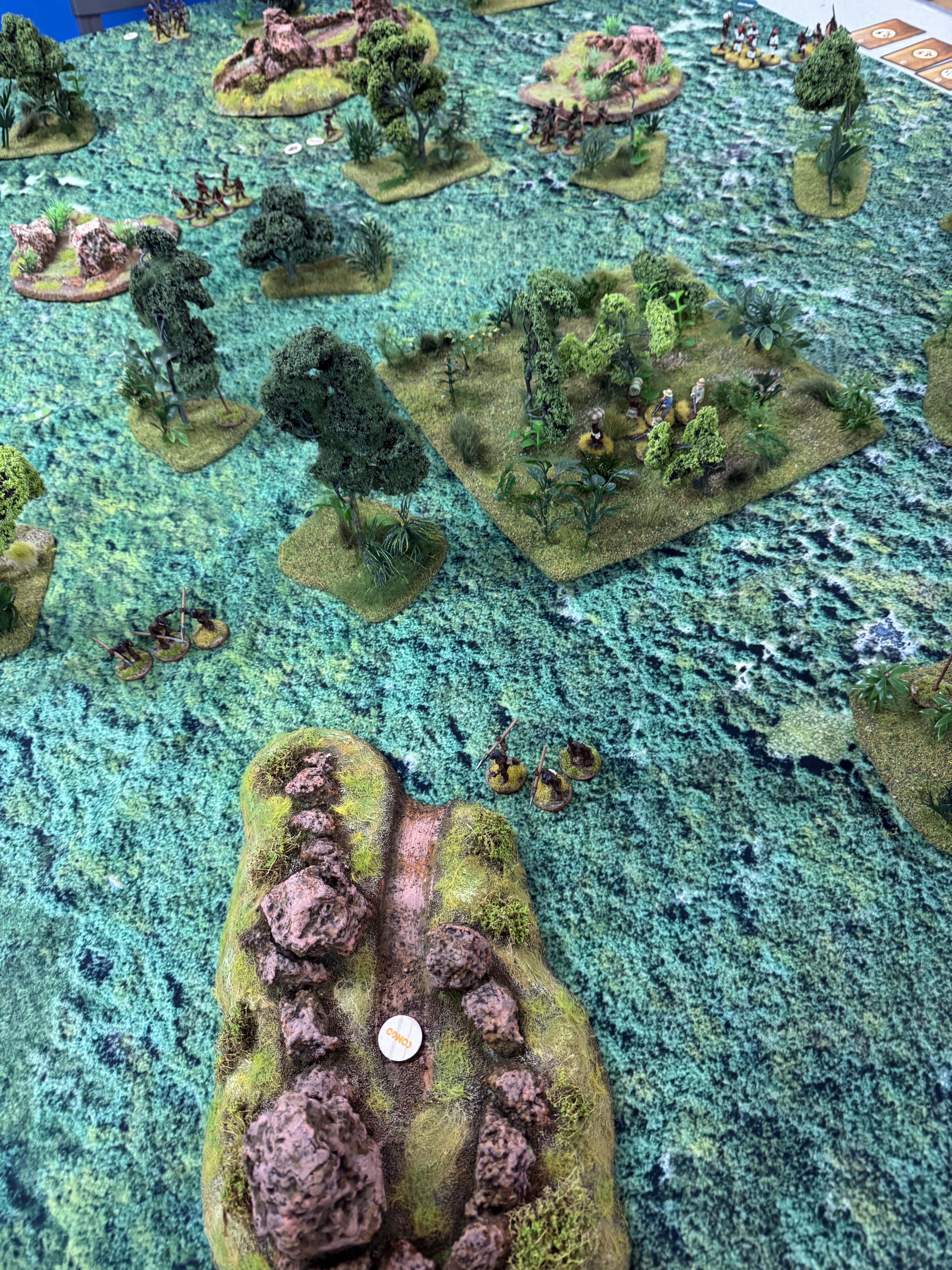
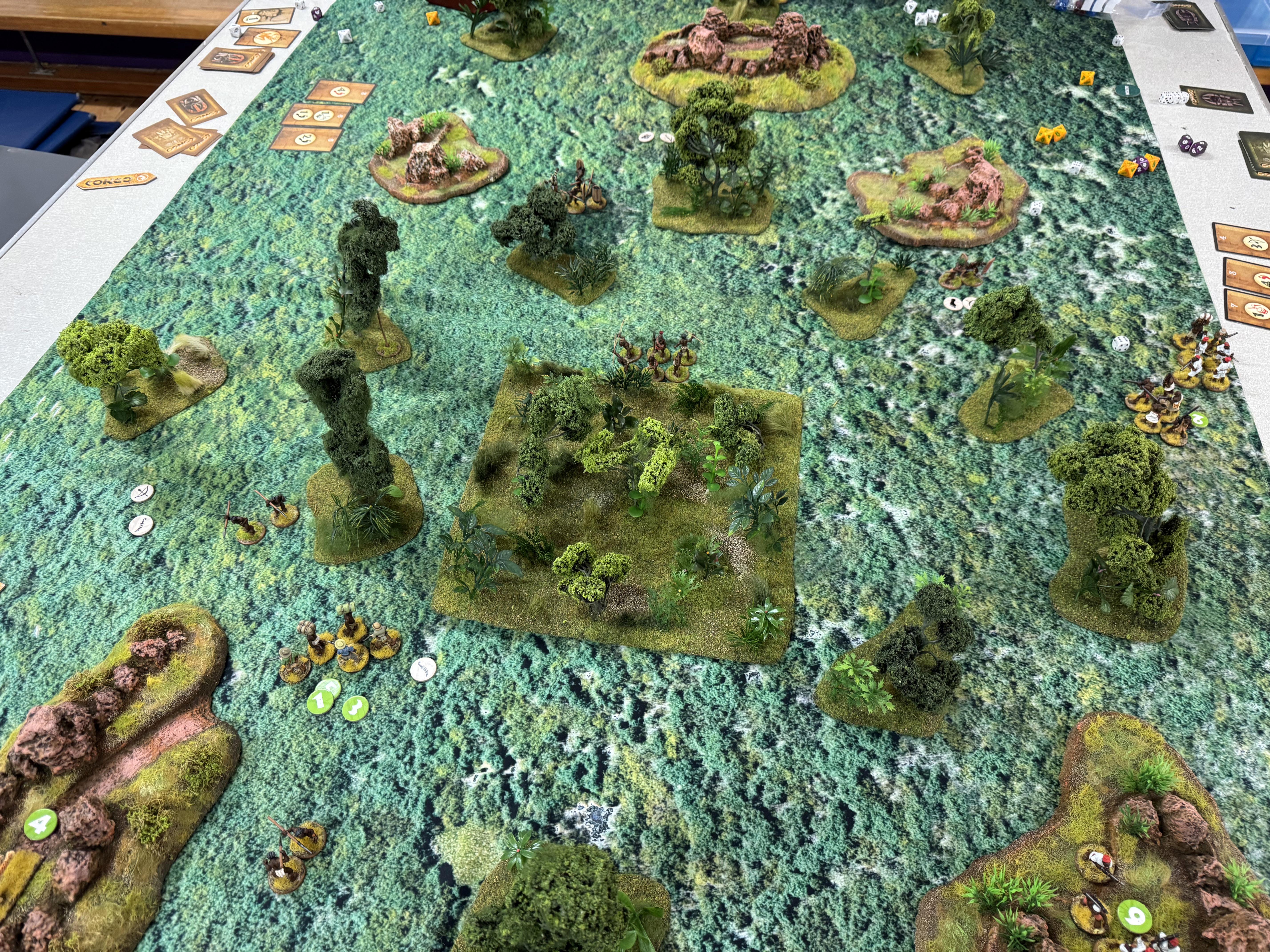
Somewhere in the vast and brooding heart of Africa, where the forests whisper secrets older than man, Samuel Baker was tipped off about the resting place of certain artefacts—objects of strange and ancient power, which he believed might be bound to the legend of the Queen of Sheba herself. Fired by the thought of bearing them back to Britain for study, he set forth. Yet fate is ever cruel: a local chief, cunning and ambitious, learned of their worth and resolved that such treasures should adorn his own collection. Thus began the race for artefacts, a contest of men, beasts, and destiny.
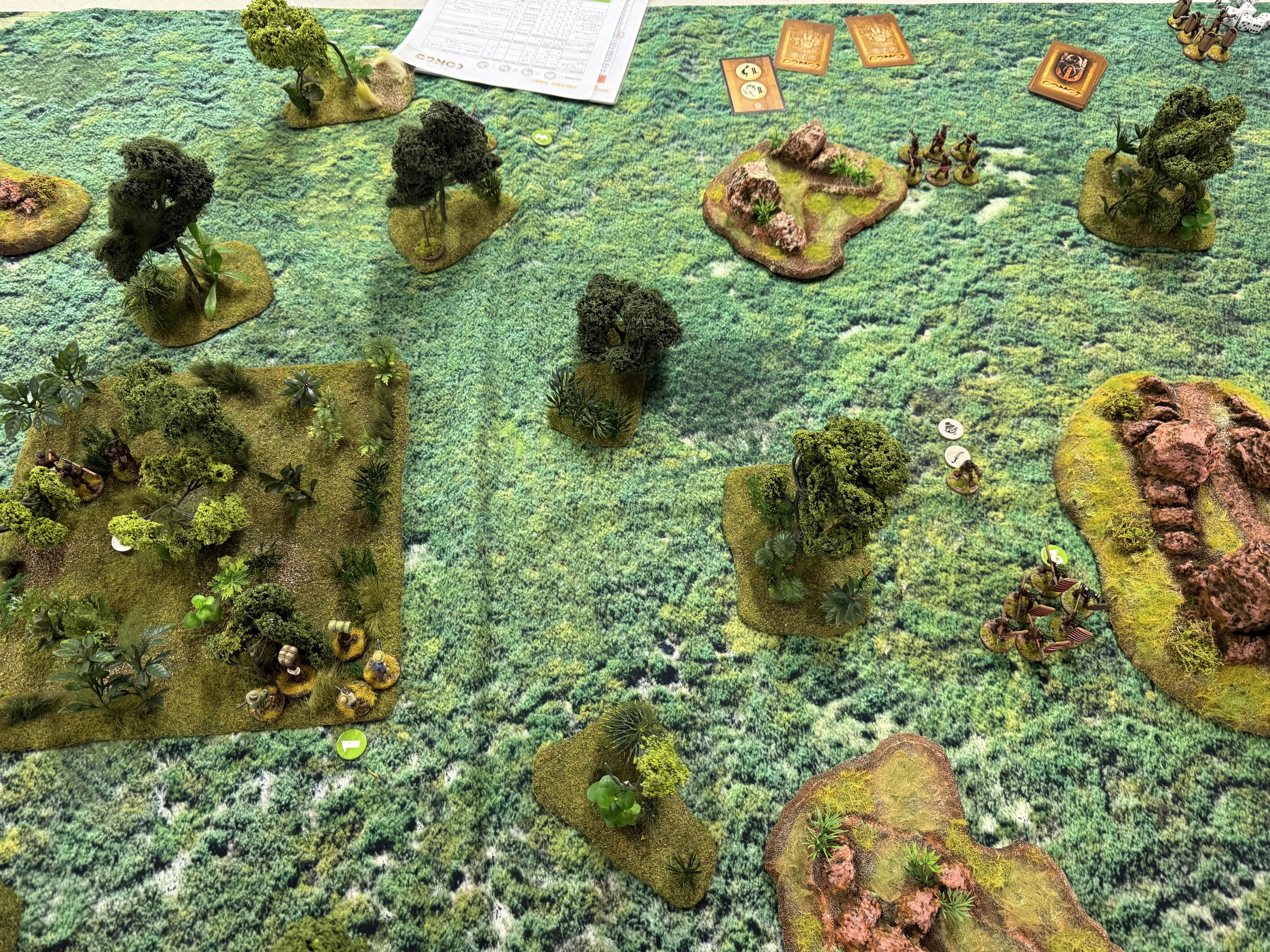
The heavens opened in torrents, and driving rain, together with exhaustion, weighed upon both columns ere they had even commenced their search in earnest. Death stalked them early: one man per column fell prey to the savage fauna—one to the venom of a serpent, another to the jaws of a crocodile. Yet Baker and the Chief, each proud and unyielding, pressed on.
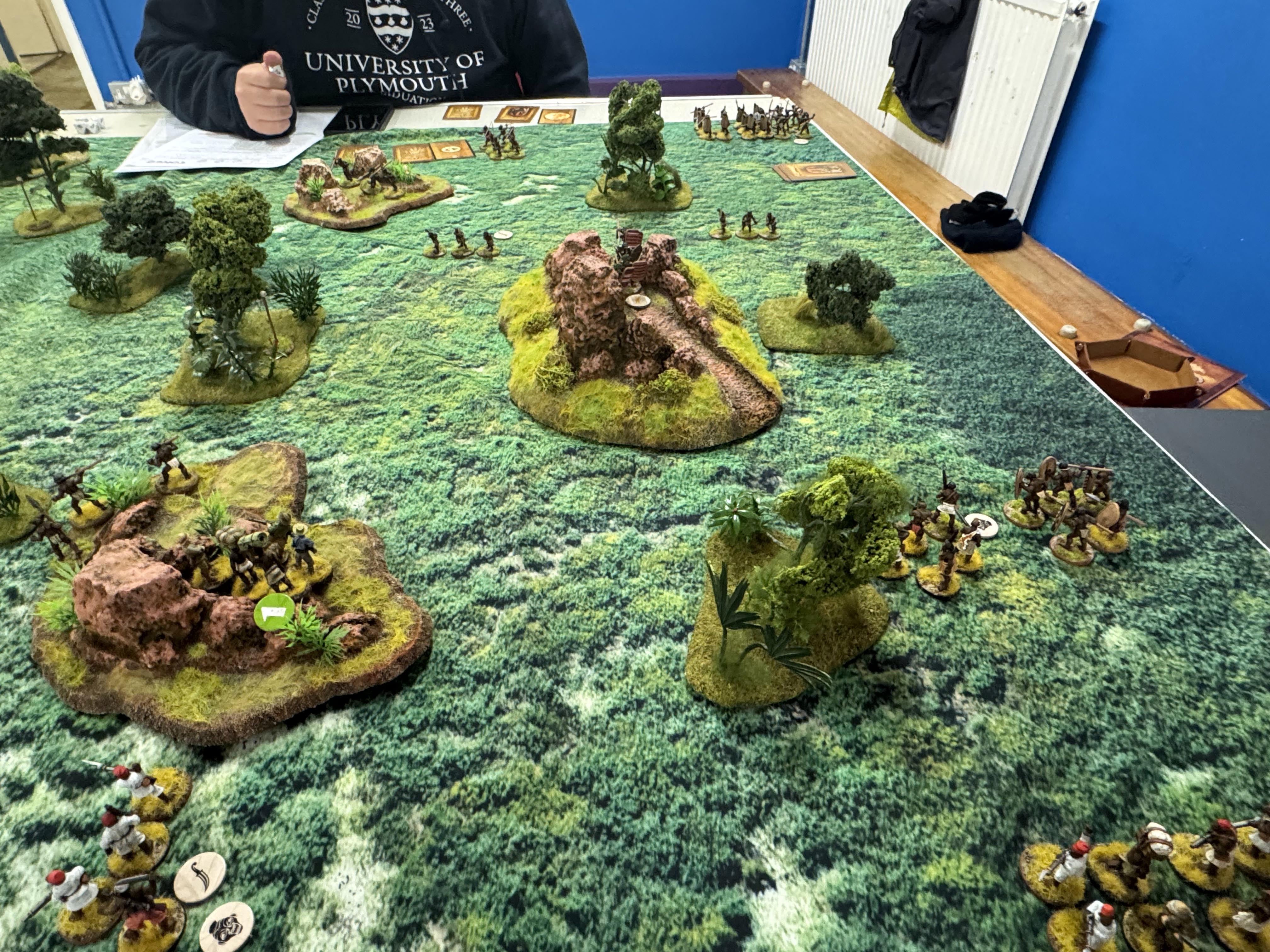
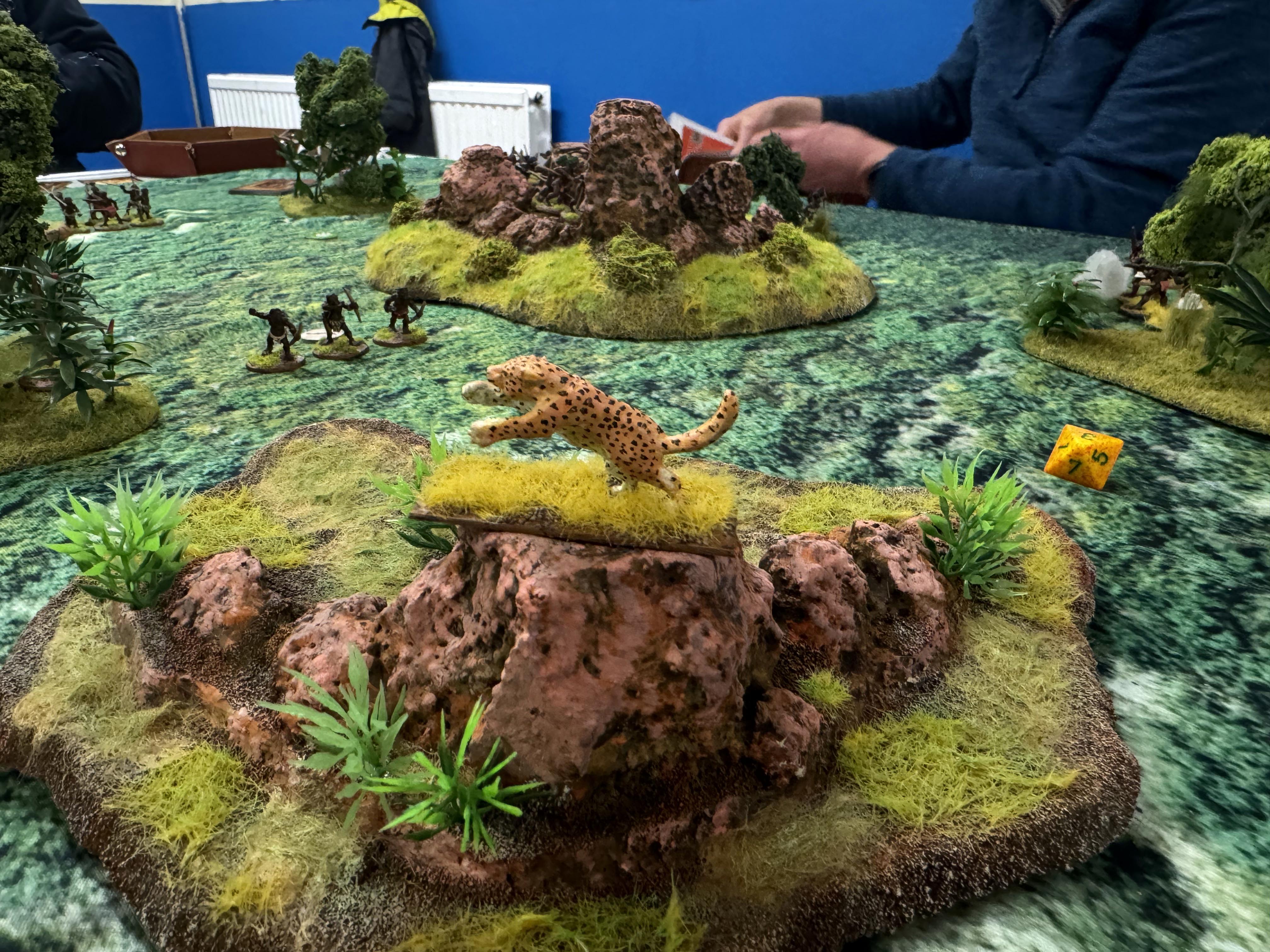
The Chief’s scouts were the first to stumble upon something of import, though they knew not its nature, and bore it onwards in ignorance, seeking more. Baker’s scouts, on the other hand, led their master north‑westwards, guiding his Europeans to the artefact. His bearers seized it and scuttled away, not a moment too soon—for scarcely had they quitted the place when a leopard roared behind them, a dreadful herald of the wilderness.
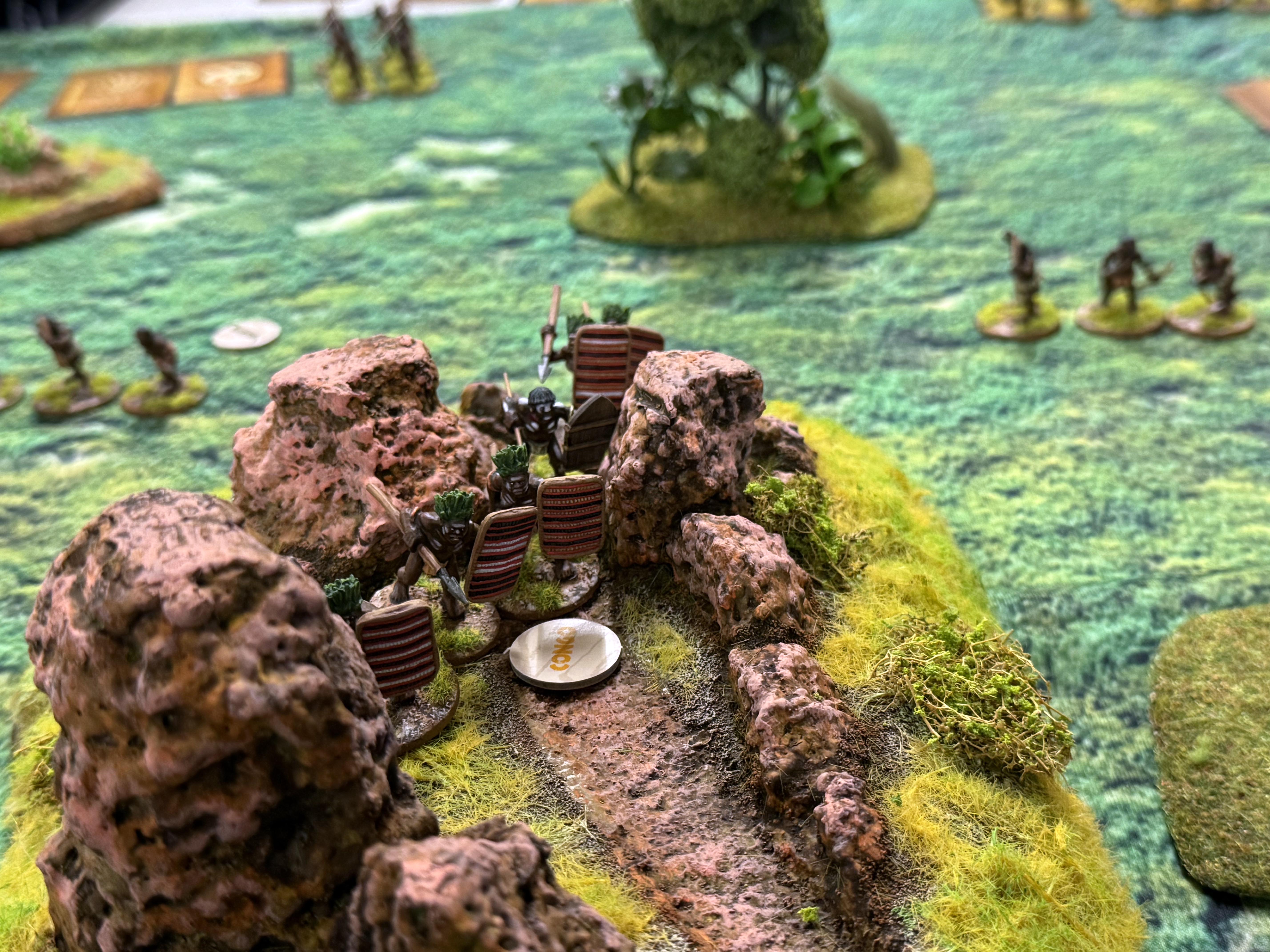
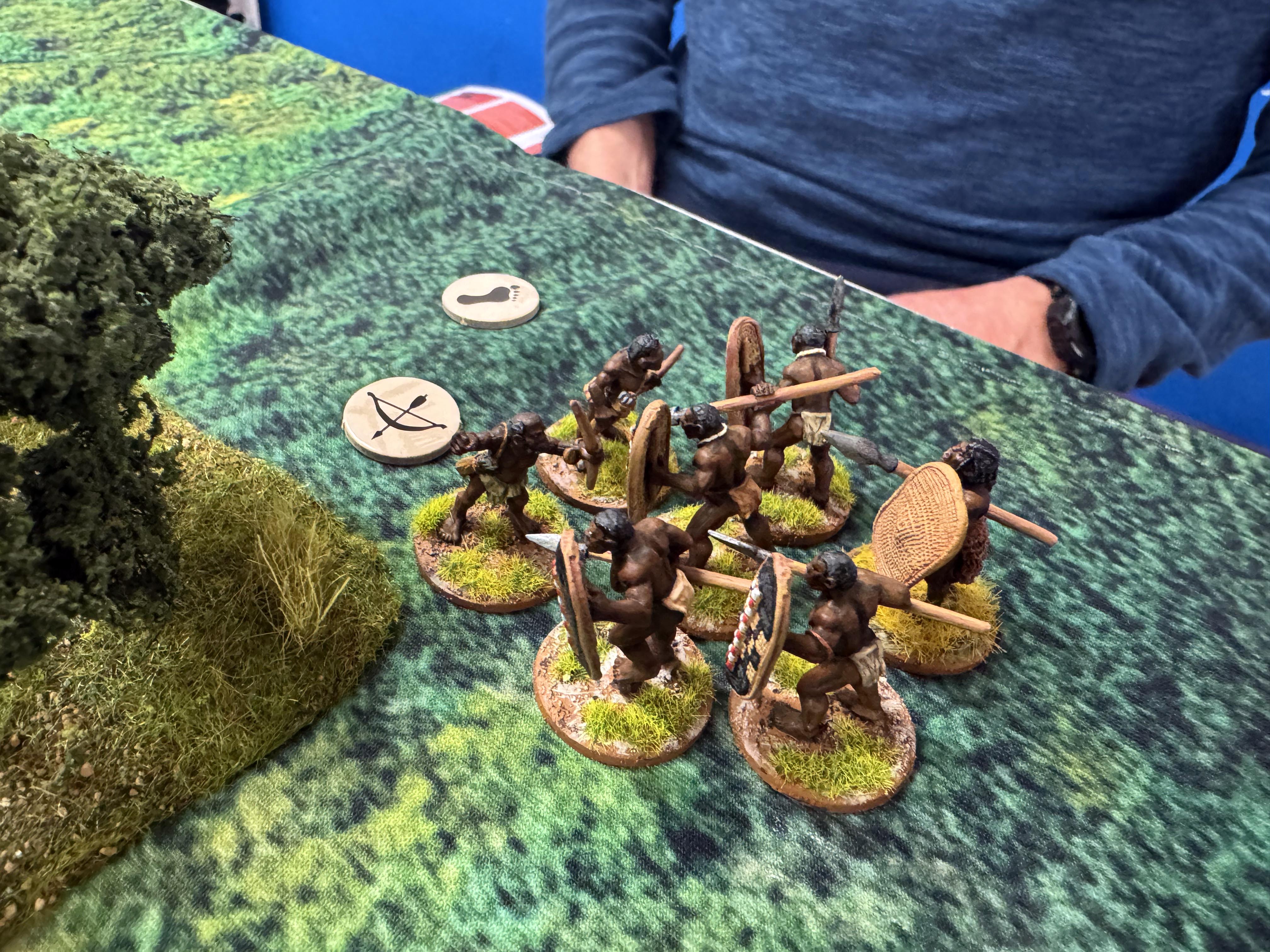
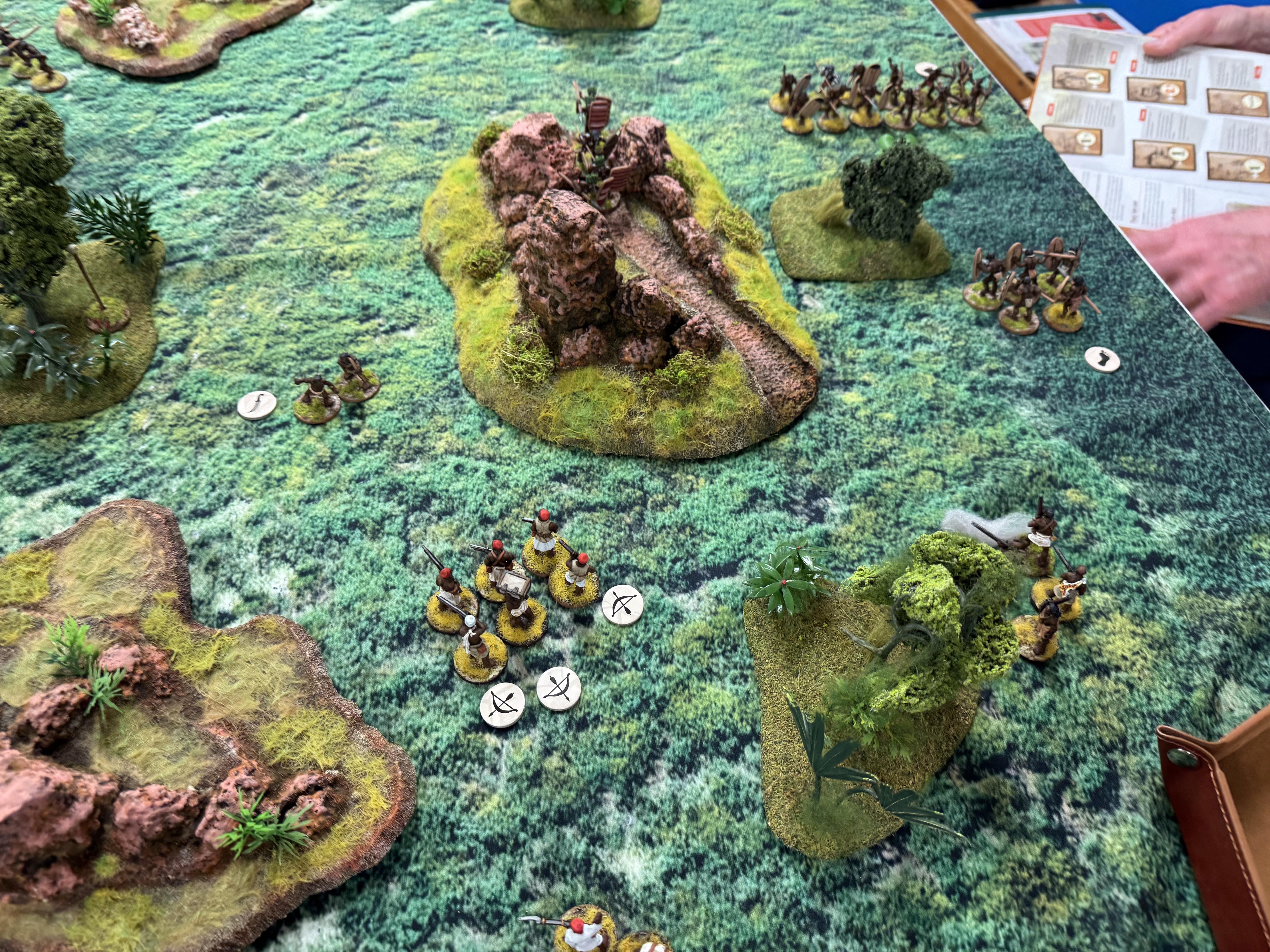
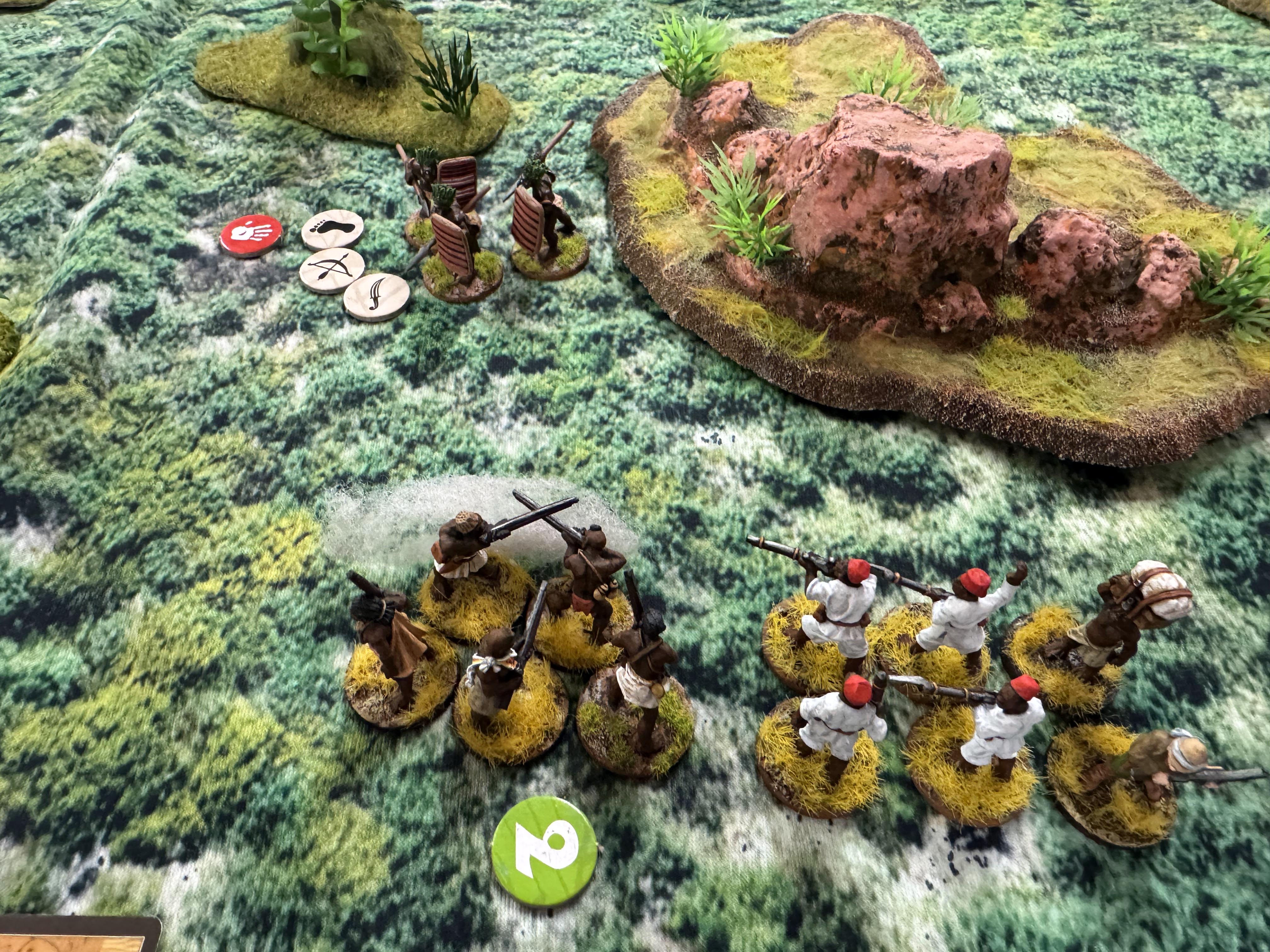
Between the two columns, the Chief’s youthful warriors snatched the artefact before Baker’s Ruga Ruga could arrive. Those mercenaries, together with Baker’s other African warriors, had been marching thither, but their path was suddenly beset by pygmies, who darted through the undergrowth with poisoned arrow tips gleaming. Not wishing to fall victim, the Ruga Ruga loosed a musket volley, while Baker’s Africans charged to finish the little blighters. Yet this delay proved costly, for it gave the Chief time to hurl more of his warriors into the fray. Spears flew, and then came the rush, devastating Baker’s mercenaries, who were despised by the Chief’s men. Realising the peril, the Ruga Ruga hightailed it, chasing after Baker’s main force.
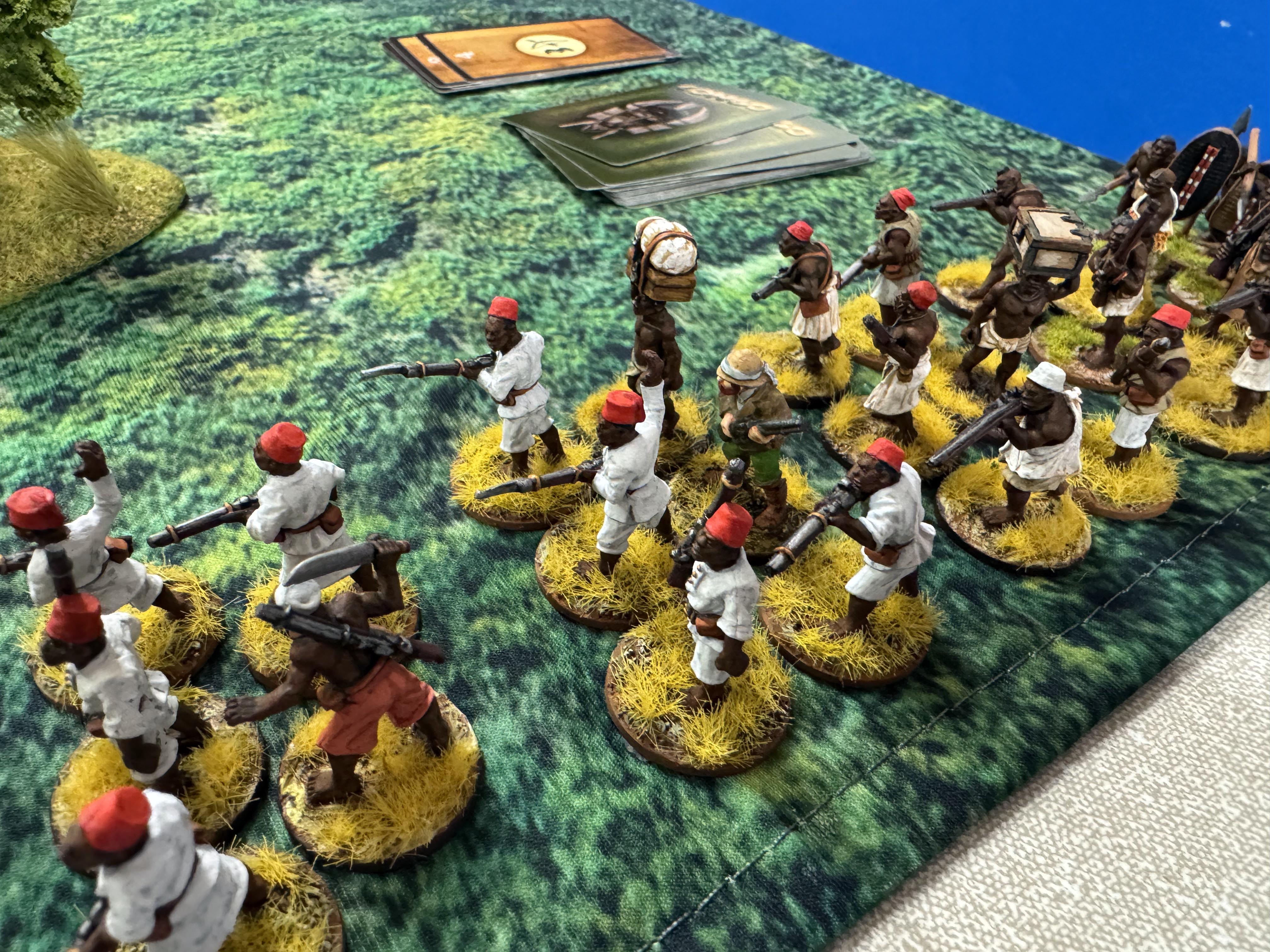
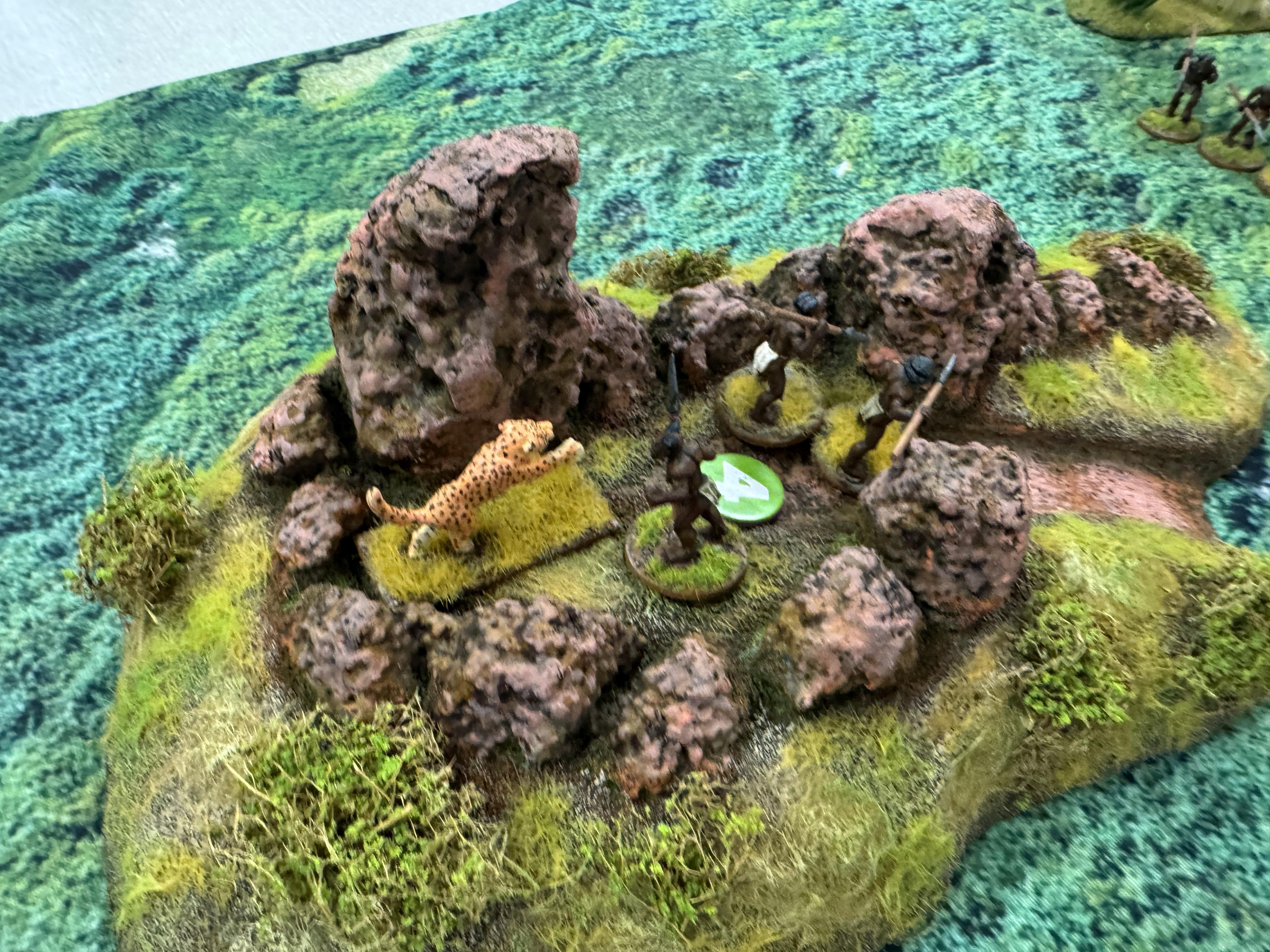
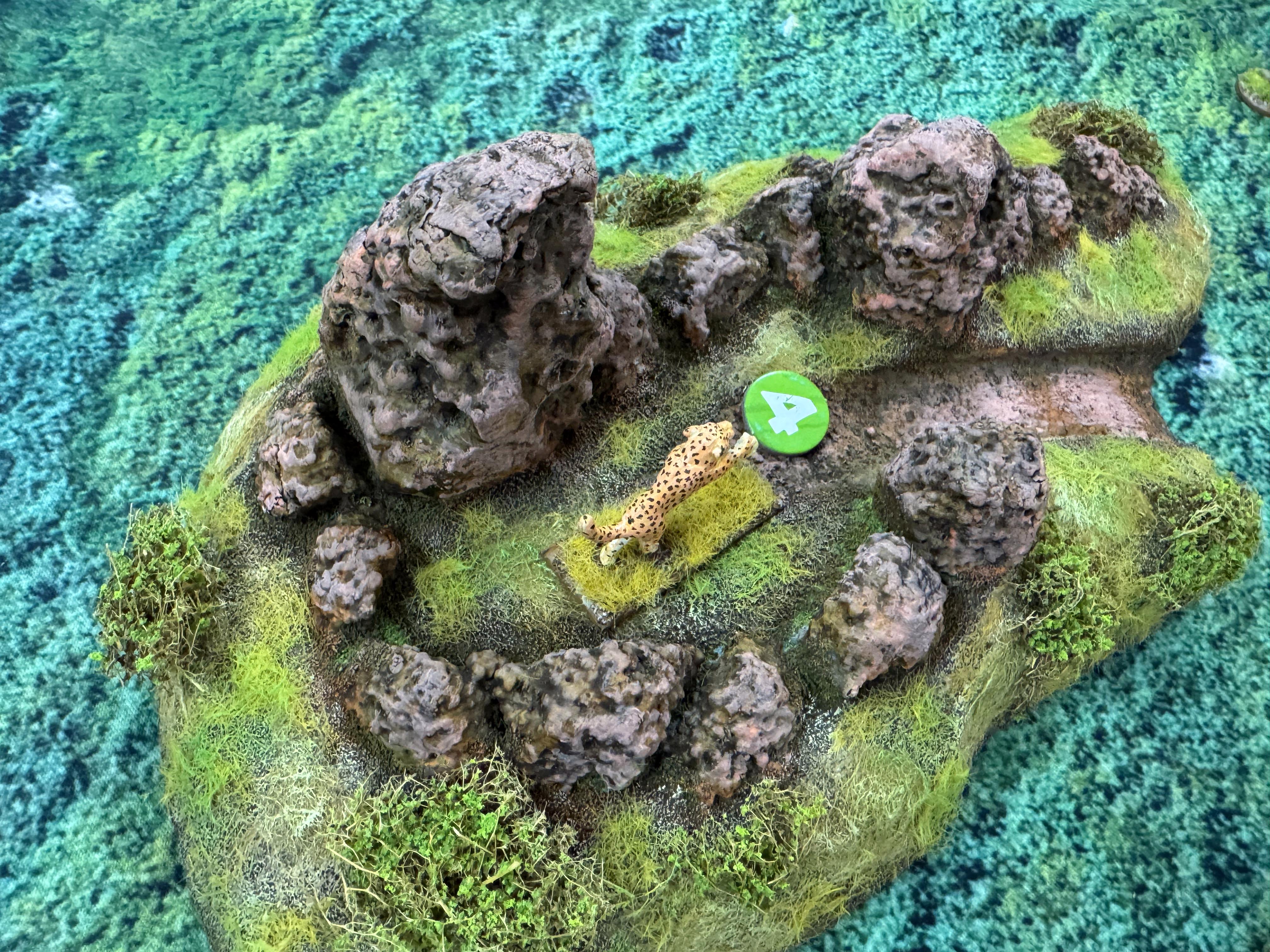
Meanwhile, Baker’s Askaris were sorely pressed by pygmies of their own. Arrows, tipped with poison, rained upon them, forcing the Askaris to fire their muskets in defence, leaving them powerless to return fire. Thus they charged, desperate, against the diminutive foe. The battle see‑sawed, uncertain, for a time, yet it allowed Baker’s other forces to spread out. His scouts guided the Europeans to another discovery, while his Askaris found yet another artefact—but could not seize it, for a leopard guarded it with savage devotion.
Meanwhile, back at the melee of Askaris and pygmies, more of the Chief’s warriors joined the slaughter, and soon the Askaris were cut to pieces. Emboldened, the Chief’s men sought to swing round and crush Baker’s rifle‑armed section and the Ruga Ruga. Fortune favoured Baker: the charge fell short. Coolly, he ordered a short‑range volley, followed by a furious charge of his Ruga Ruga. Not only did they hurl back the Chief’s warriors, they even contrived to drop the artefact into Baker’s lap.
Far to the north‑west, Baker’s scouts discovered the last artefact, racing against the Chief’s scouts. Baker’s men won the race, but fate struck cruelly again: a leopard lay in wait, mauling one scout and scattering the rest. The Europeans, close behind, pressed forward, but the Chief’s scouts, reckless in desperation, launched a final assault to seize the Europeans’ two artefacts. A violent brawl ensued, yet the European mercenaries prevailed, fending off the savage attack and, most importantly, securing the last artefact from the Chief’s possession.
Thus, at the end, Samuel Baker held five of the six artefacts. The leopard, grim guardian of the wild, claimed the last. The poor Chief, though he had fought fiercely, possessed nothing for his pains, though Baker had paid dearly in blood for his pursuit of archaeology and distant legend. Yet Baker, triumphant, sent word to his beloved Florence at base camp, declaring that he would return in glory—and that she might, upon his arrival, be adorned with the very jewels of the Queen of Sheba herself.
|