|
In the sultry heart of Central East Africa, rumour reached the minions of the Sultan of Zanzibar concerning a woman of surpassing beauty amongst the Masai. The Sultan, ever desirous of swelling his harem, dispatched his retainers to seize her and convey her to the coast. Yet this maiden was already betrothed to a young Masai warrior, who, with all the ardour of his race, was determined to preserve his bride-to-be. Several of her kinsmen were likewise taken captive, and thus began the melancholy march towards the sea.
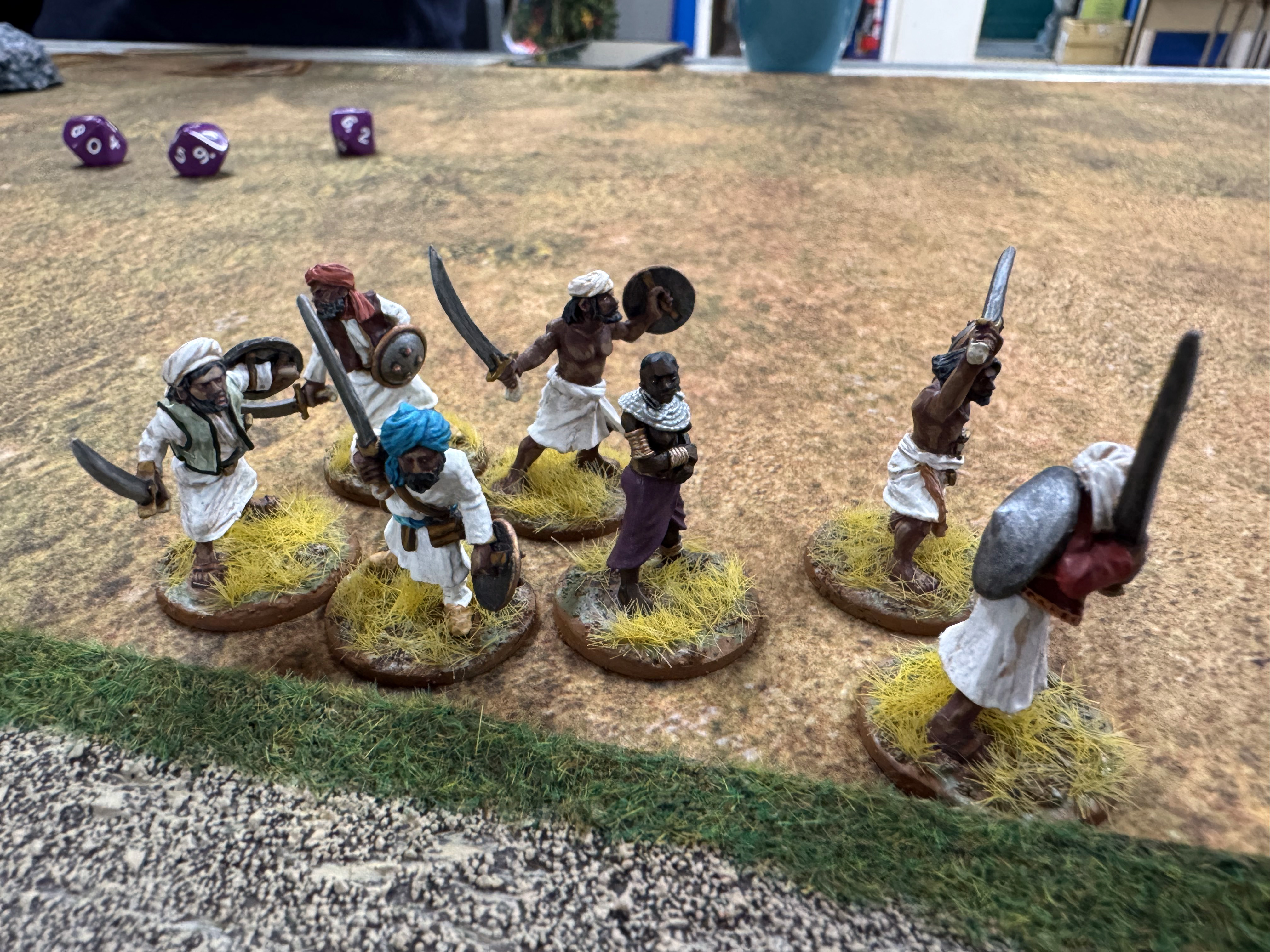
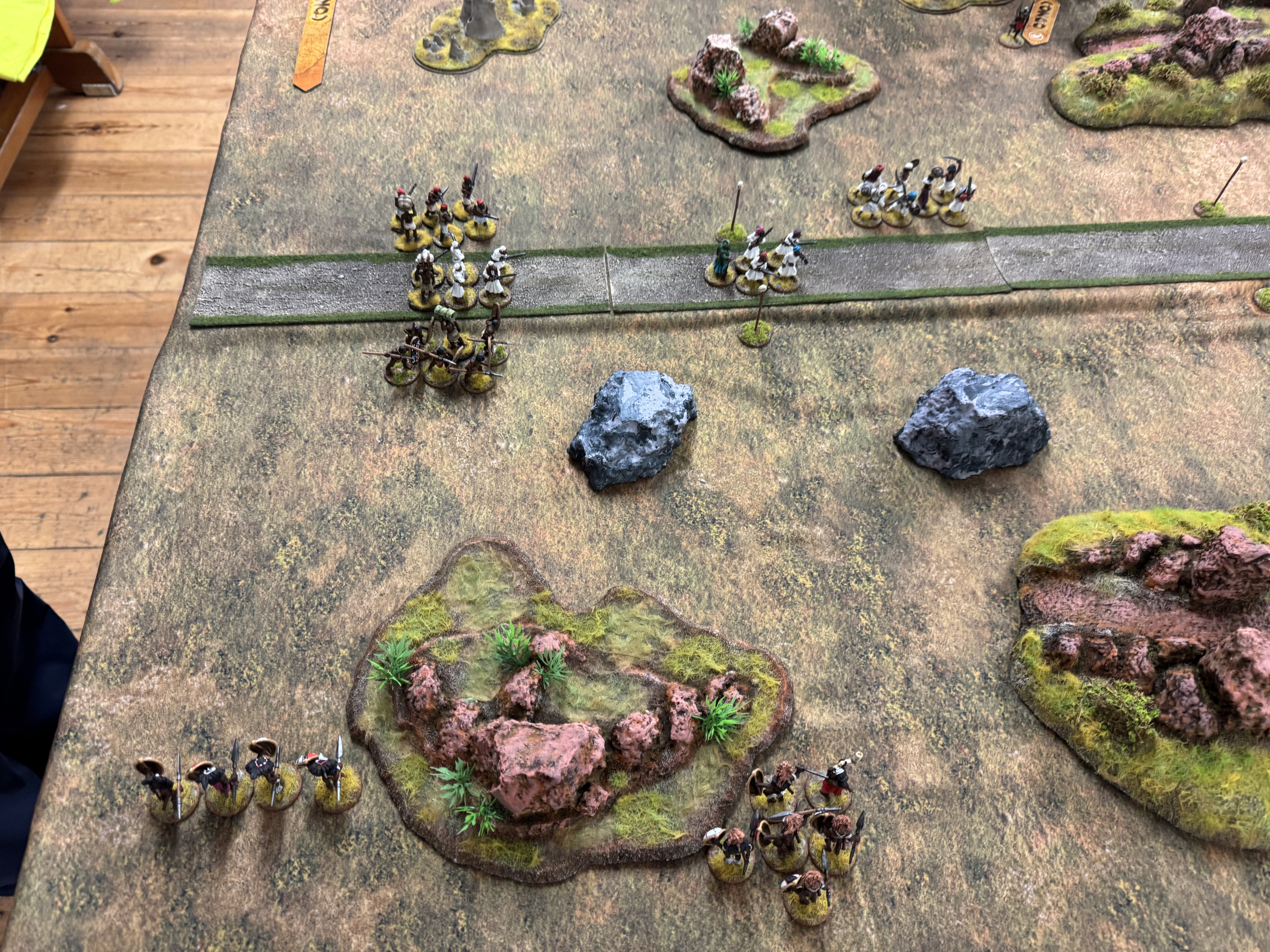
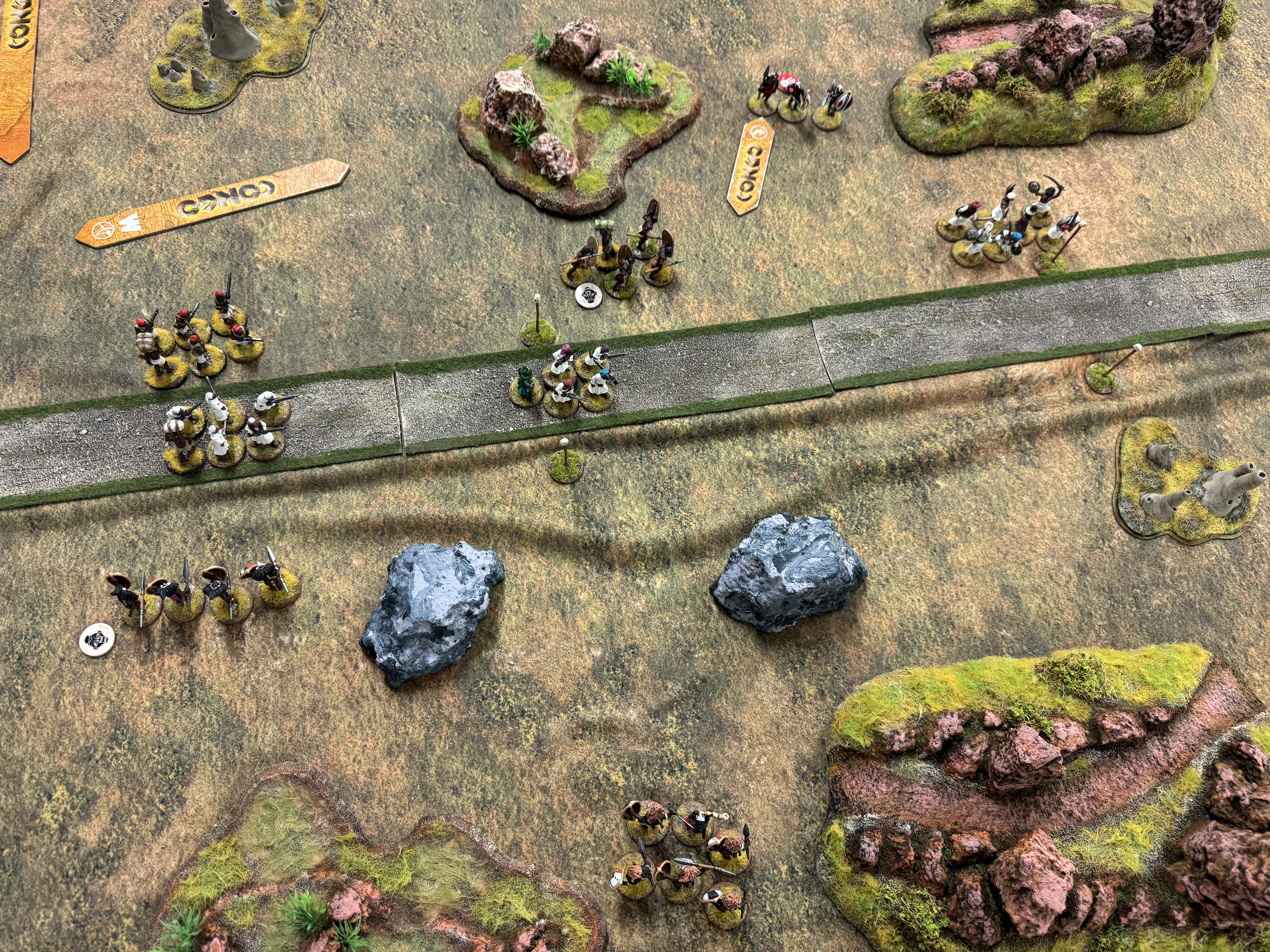
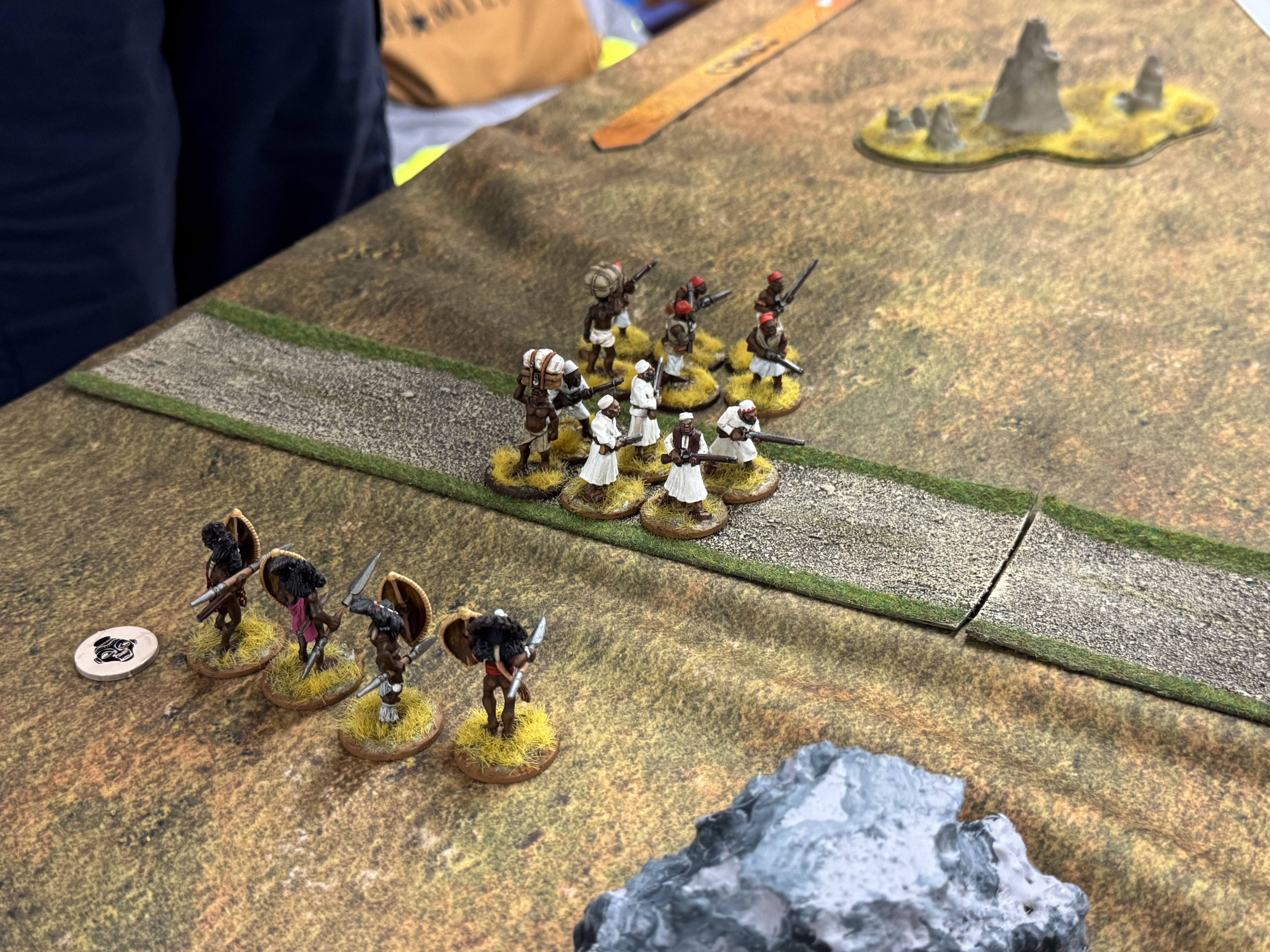
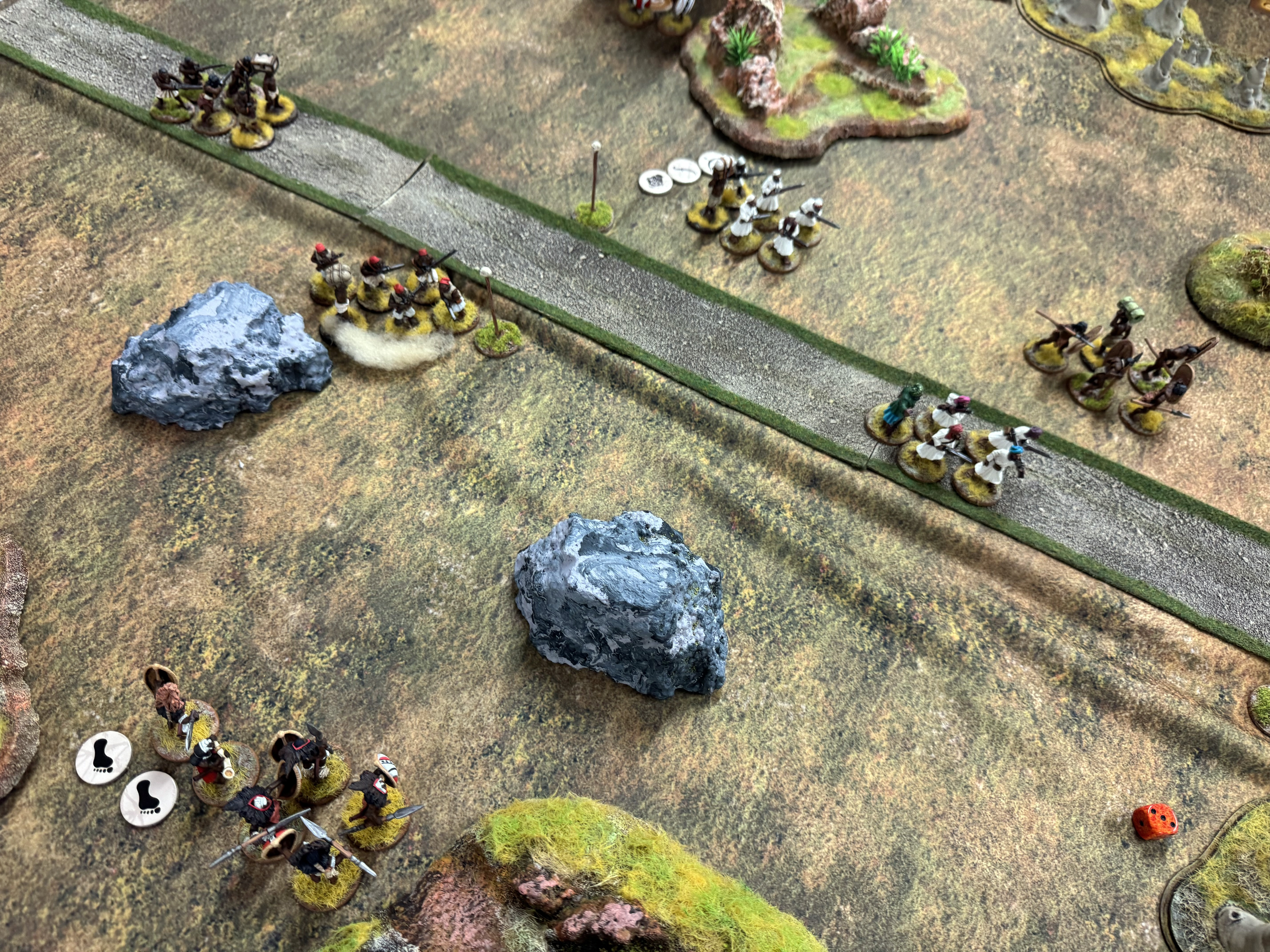
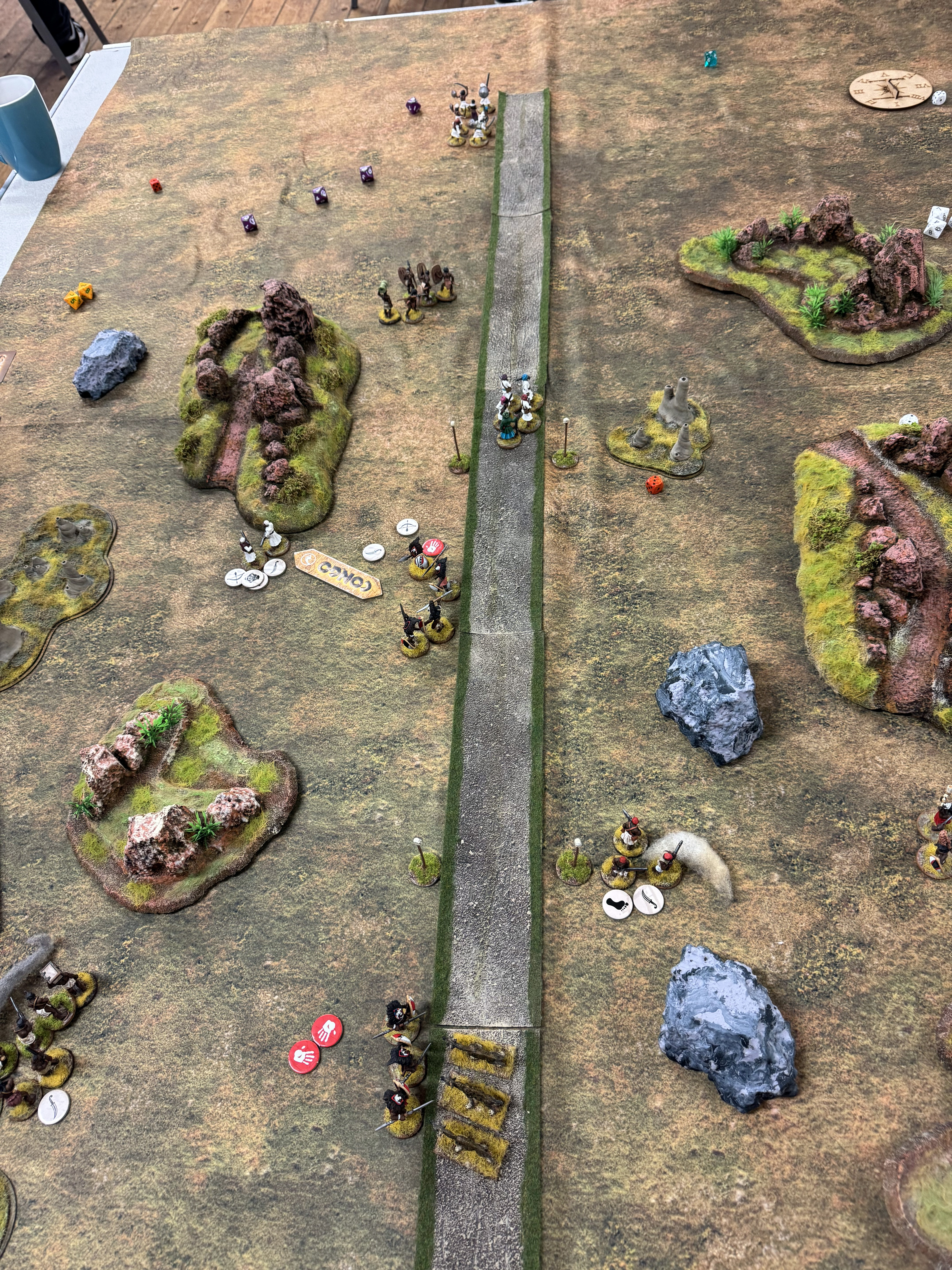
The Masai, however, fleet of foot and fierce of spirit, hastened overland to intercept the bridal abductors. Concealed in the elephant grass, they prepared an ambuscade. The Sultan’s column advanced warily: Baluchi sharpshooters, armed with their long jezails, formed the van; “The Brute,” a hulking guardian, escorted the Bride amidst the Baluchis; whilst Zanzibaris, youthful warriors, and the dreaded Ruga Ruga brought up the rear.
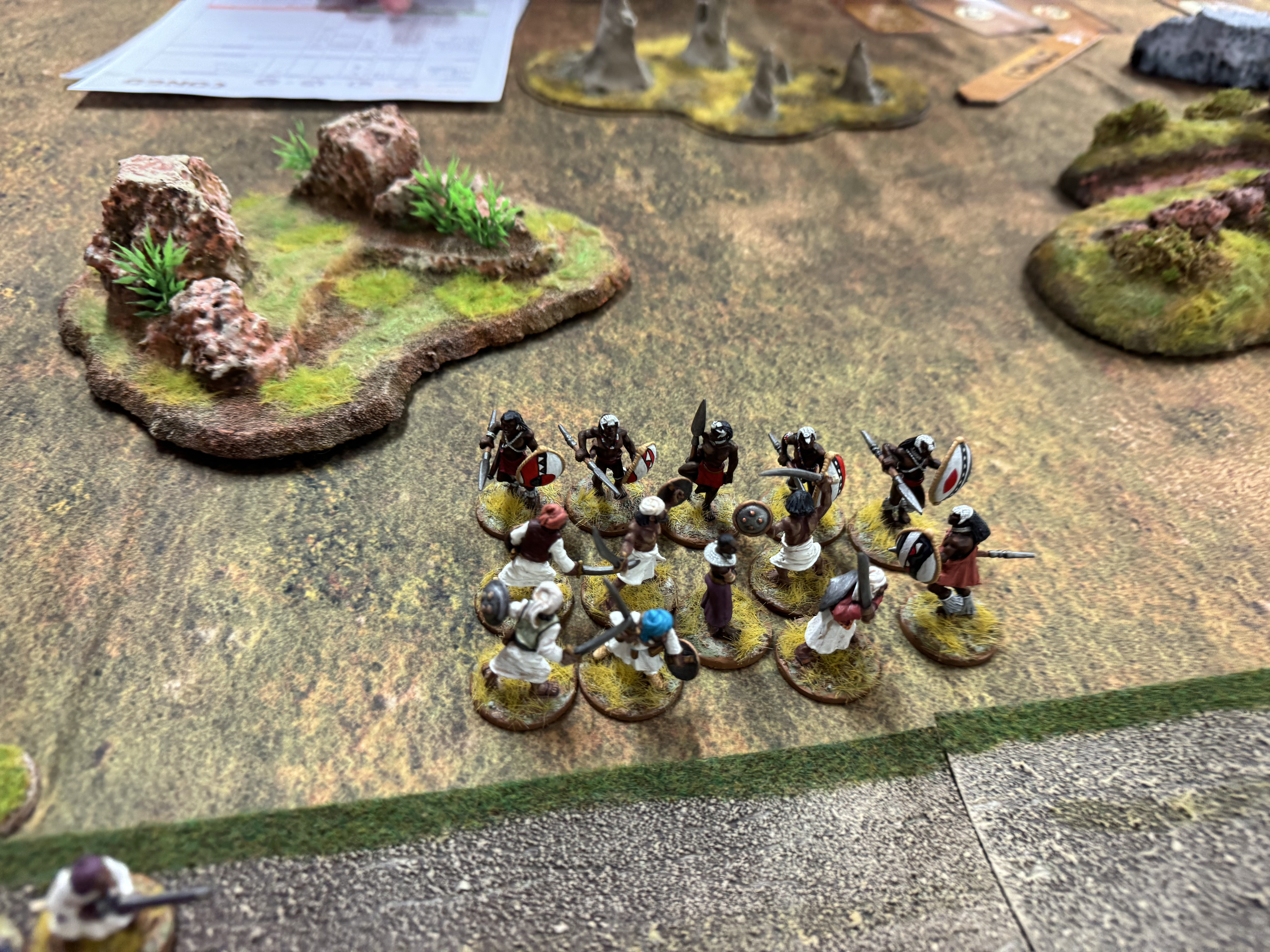
Yet the Masai found coordination troublesome, their impatience betraying them. The groom himself, aflame with passion, led his Young Warriors in a headlong charge upon the Baluchis who held his beloved. The Brute, however, proved immovable, felling one Masai with brutal ease, whilst the Baluchis dispatched another. The groom recoiled in dismay. Further down the track, Masai fanatics sprang from the grass upon the Sultan’s youthful warriors, compelling them to flee—ironically towards safety.
Worse fortune awaited the Masai. The ambush now revealed, jezails and muskets spoke with thunderous voice, their reports striking terror as much as their leaden balls. The married warriors of the Masai suffered grievous loss beneath the Sultan’s firepower.
The Sultan’s men pressed forward relentlessly, eager to escape the trap. The Masai arrived piecemeal, and by the time many had gathered, the Brute had already borne the Bride beyond reach. The remainder of the Sultan’s force struggled to maintain cohesion whilst advancing.
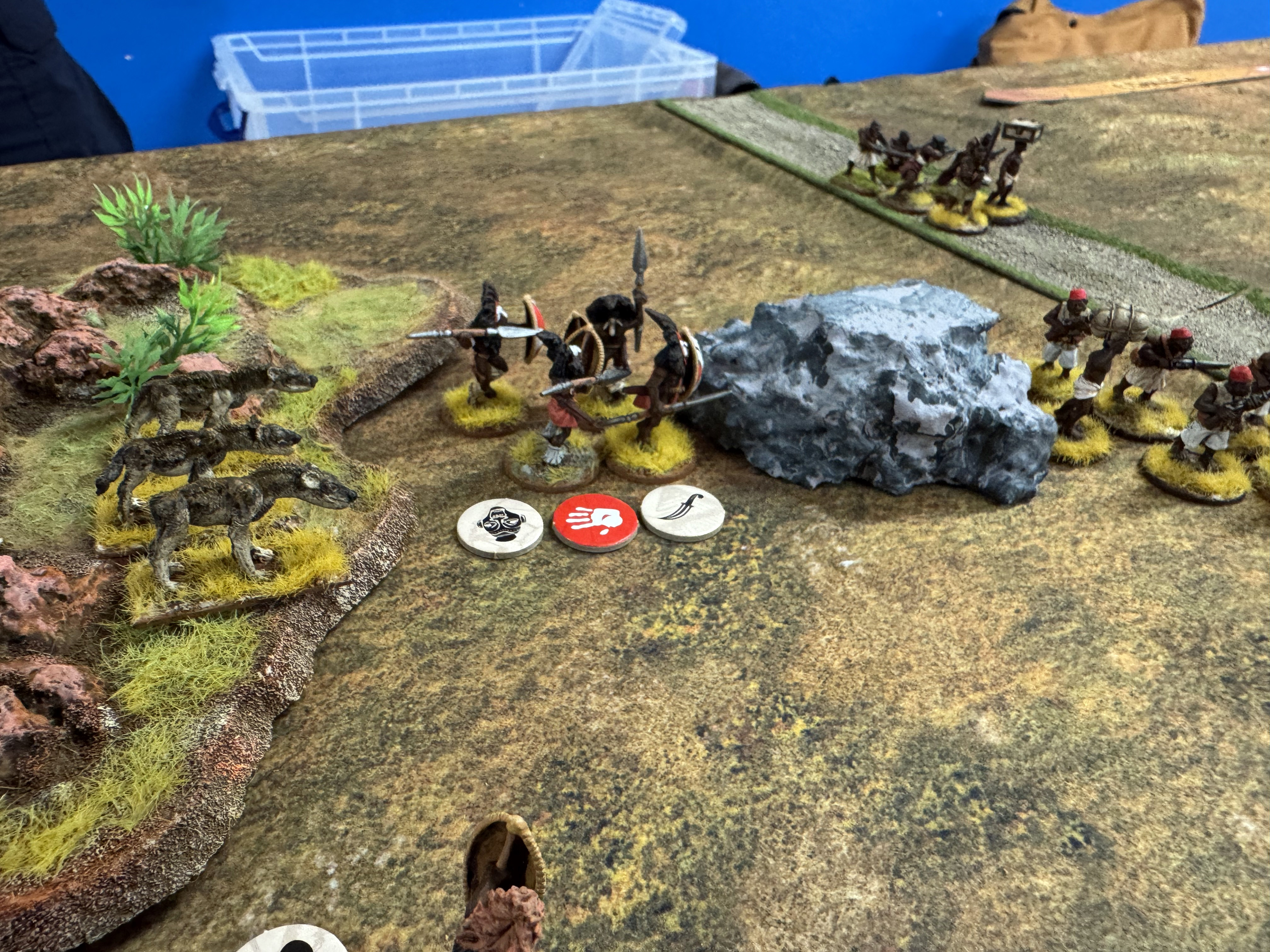
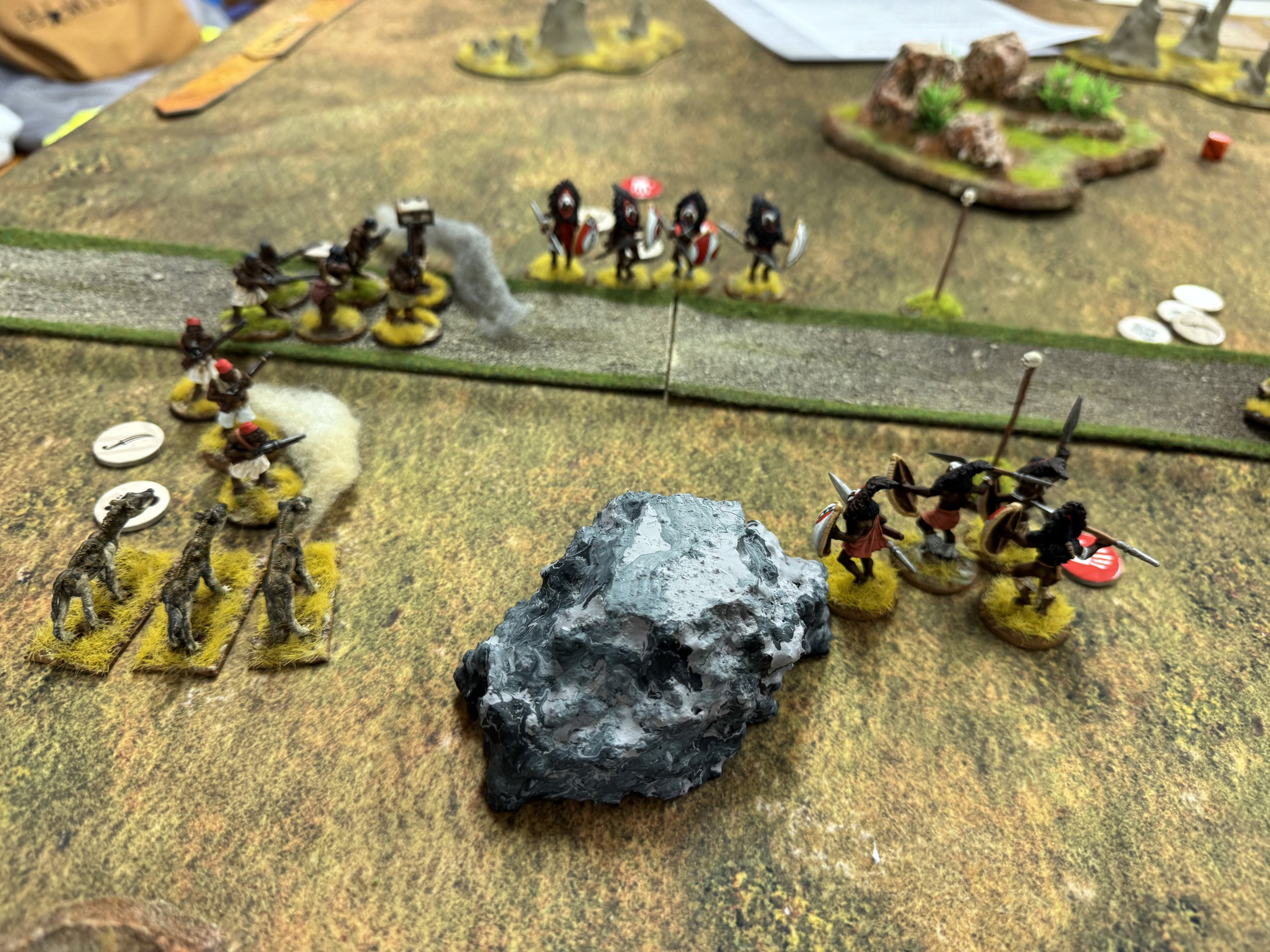
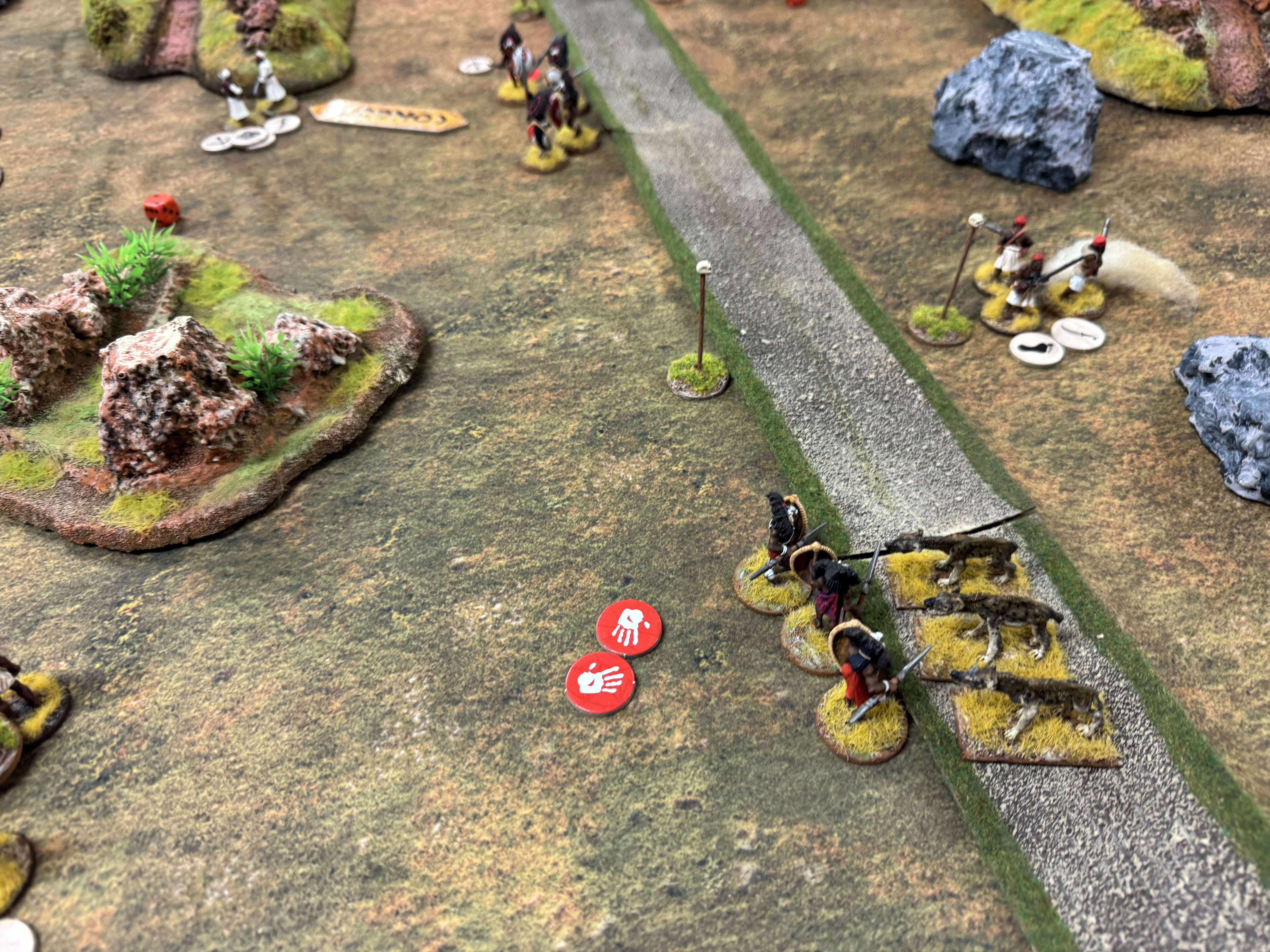
In the rear, the Ruga Ruga and Zanzibaris encountered fanatical Masai. Relief came momentarily when hyenas burst from the rocks, yapping at the lurking foe. The Zanzibaris, perhaps too amused by this spectacle, were twice assailed by Masai warriors from either flank. Defeated in both encounters, they lost their captive slave, and fled—straight into the jaws of the hyenas, who awaited a free repast. The Zanzibaris, perceiving their peril, fled anew, leaving the scavengers to fall upon the Masai and bring down one warrior, which sufficed for their day’s nourishment. Meanwhile, the Ruga Ruga attempted escape through the elephant grass, pursued pell-mell by surviving fanatics. In this running fight, the Masai whittled down their quarry, though in tragic error slew another of the slaves they sought to liberate. At last, pressed hard, the Ruga Ruga turned at bay and fought the Masai to a bloody standstill.
Elsewhere, the Sultan’s young warriors hunted down the groom and his surviving companions, neutralising the threat. Maddened by ceaseless musketry, the Masai charged a Zanzibari musket group, driving them to flight—though again the hapless slave they sought to rescue perished. The remaining Zanzibaris rallied and fought their way forward. The Baluchi jezails, deeming their task accomplished, pressed on with the youthful warriors.
Thus it fell to the Zanzibari musketeers and Ruga Ruga to extricate themselves as best they might. For the Masai, the enterprise ended in bitter failure. One slave alone was freed; the Bride was borne away beneath their very gaze; and the groom himself perished in the attempt. Disheartened, the warriors returned to their kraals with naught to show but loss. They had fought valiantly, yet the Sultan’s mercenaries and their infernal muskets proved the decisive arbiters of fate.
|