

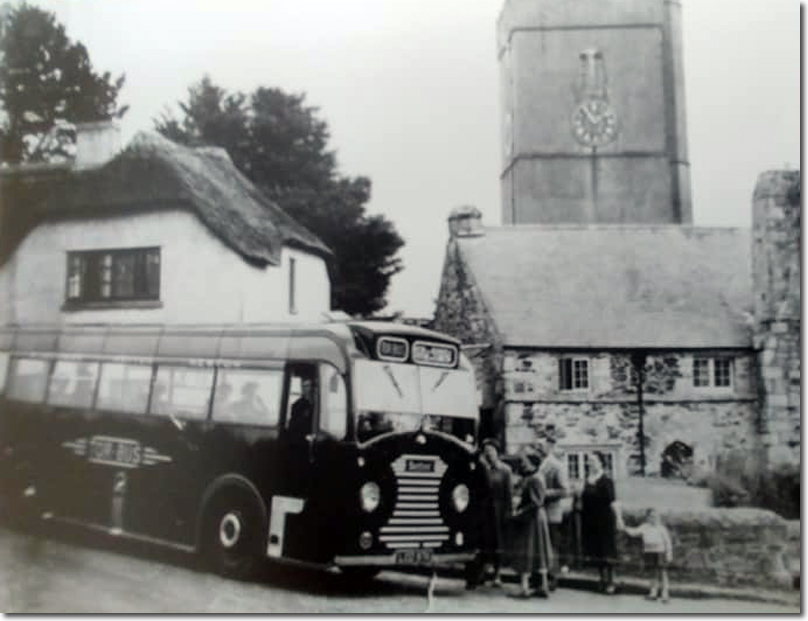
The Tor Bus Company was one of those small Dartmoor operators that kept going long after similar firms elsewhere had been swallowed by larger fleets. It was run by the Potter family from their garage at Haytor, which meant they were operating more or less on top of the destination they served. The fleet was small, the routes were limited, and the paperwork was minimal, but they provided the basic service that got people up to the tor before private cars took over the job.
Wilfred Potter was part of that family business. The vehicles carried the simple fleetname “Tor Bus Service” and were exactly what you would expect from a rural operator in the middle decades of the twentieth century: Duple‑bodied single‑deckers, second‑hand coaches, and whatever else could be kept running without too much drama. They worked the usual pattern of stage services to Bovey Tracey and Newton Abbot, school runs from the farms, and summer trips for visitors who wanted Dartmoor without having to navigate it.
Haytor was the obvious selling point. Long before the modern “honeyspot” label, the tor had been a standard stop for charabancs and coach tours. The Potters simply continued the tradition with more modern machinery. A Tor Bus coach parked under the granite outcrops was a familiar sight: passengers tipped out to climb the rocks, take photographs, or sit on the grass, and then rounded up again for the next leg of the trip. It was a straightforward operation and it worked because the demand was always there.
The company never grew beyond the scale of a family garage. It did not need to. The routes were local, the distances short, and the timetable flexible enough to cope with whatever the day produced. Enthusiasts’ magazines occasionally recorded the fleet, and Buses Illustrated published a short history and list in 1959, which is about as much documentation as most rural operators ever received.
The end came the same way it did for many similar firms. Private car ownership increased, the larger bus companies rationalised their networks, and the small independent operators either sold up or closed down. Tor Bus disappeared quietly, leaving behind a few photographs, some old tickets, and the memory of a time when reaching Haytor meant catching a local coach rather than driving yourself.
Wilfred Potter’s contribution was practical rather than dramatic. He kept a small fleet running from a moorland garage and provided the transport that allowed people to reach Dartmoor before the car parks filled the landscape. The photographs of Tor Bus vehicles at Haytor are a reminder that the “most visited tor on Dartmoor” did not become popular by accident; someone had to bring the visitors up there.

