

Sir Peveril William-Powlett served as Governor of Southern Rhodesia from 1954 until 1959, a period defined by the creation, operation, and early tensions of the Federation of Rhodesia and Nyasaland. His appointment followed a long naval career, but his governorship placed him at the centre of one of Britain’s most complex late-colonial experiments. Southern Rhodesia was the senior and most economically powerful territory within the Federation, and the Governor’s role required balancing settler political expectations with the wider federal framework and the rising demands of African nationalism.
Southern Rhodesia in the mid‑1950s was dominated politically by its white settler community, whose Legislative Assembly operated with responsible government status. Economically it was the strongest of the three federal territories, with mining, agriculture, and manufacturing forming the basis of its growth. Salisbury and Bulawayo expanded rapidly, and major infrastructure projects—most notably the Kariba Dam—were promoted as symbols of federal ambition. The Federation itself, established in 1953, attempted to bind Southern Rhodesia, Northern Rhodesia, and Nyasaland into a single political and economic unit, though the arrangement was contentious from the outset. African political movements in the northern territories viewed the Federation as a mechanism for Southern Rhodesian settler dominance, and opposition increased steadily during William-Powlett’s tenure.
As Governor, William-Powlett operated within a constitutional structure that gave significant authority to the elected Southern Rhodesian government while requiring him to represent British interests and maintain federal cohesion. His period in office coincided with growing African political organisation, early nationalist demonstrations, and increasing pressure on the federal authorities to address constitutional inequalities. Although Southern Rhodesia remained politically stable during these years, the underlying tensions between settler expectations, federal policy, and African aspirations were already shaping the trajectory that would later lead to the dissolution of the Federation in 1963 and the unilateral declaration of independence in 1965.
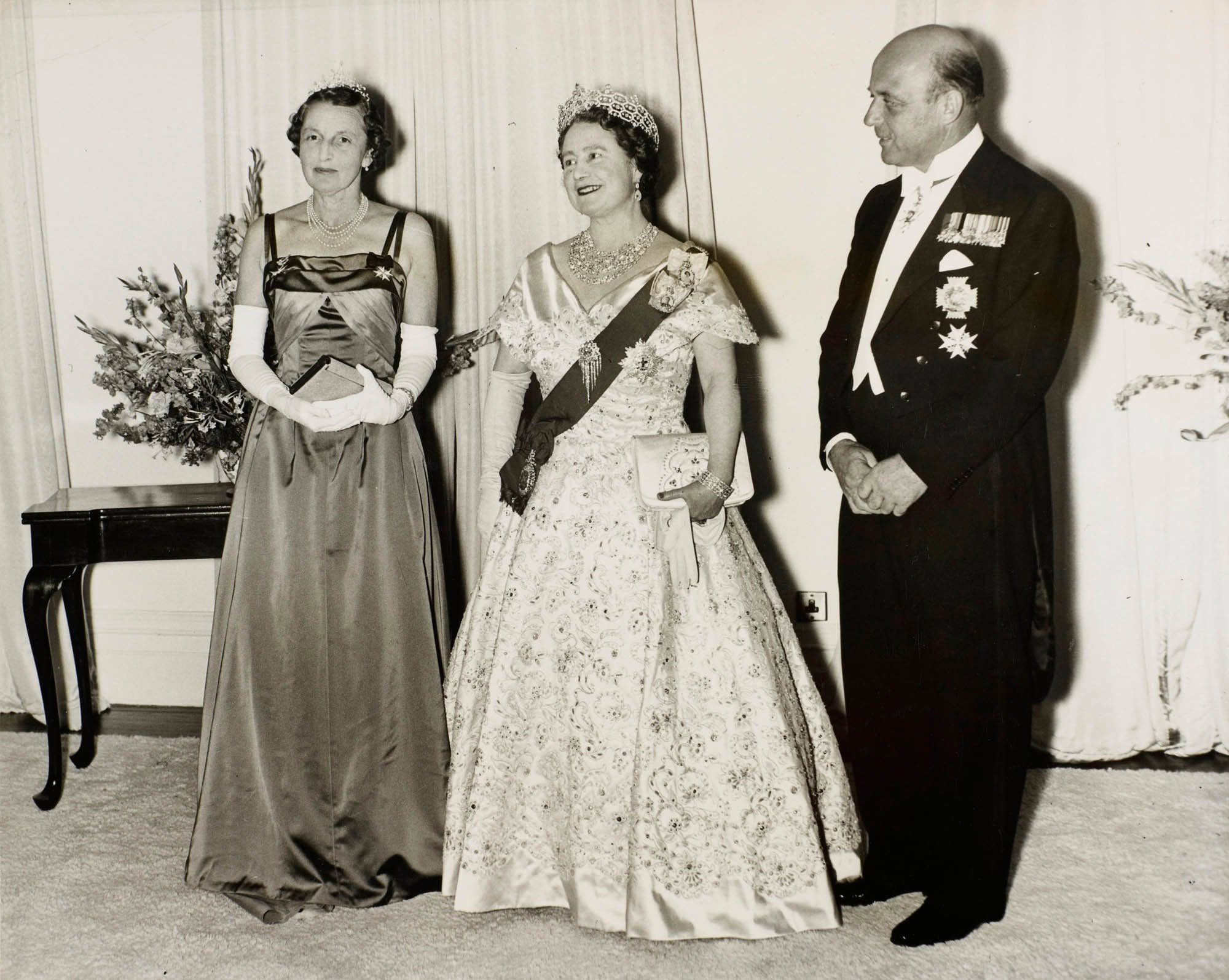
William-Powlett’s governorship was marked by extensive ceremonial duties, federal conferences, and visits from senior members of the Royal Family. One of the most notable occasions was the visit of the Queen Mother, during which Sir Peveril and Lady William-Powlett acted as hosts at official engagements in Bulawayo on 11 July 1957.. The photograph of the Governor, his wife, and the Queen Mother reflects the prominence of Southern Rhodesia within the Commonwealth at that time and the importance attached to royal visits in reinforcing constitutional and imperial links.
Sir Peveril left office in 1959, shortly before the political pressures within the Federation became unmanageable. His tenure represents the high-water mark of Southern Rhodesia’s confidence within the federal structure, a period of economic expansion and ambitious development projects set against the early rise of nationalist movements that would ultimately reshape the region. His governorship forms a significant chapter in the final phase of British colonial administration in central Africa.

