

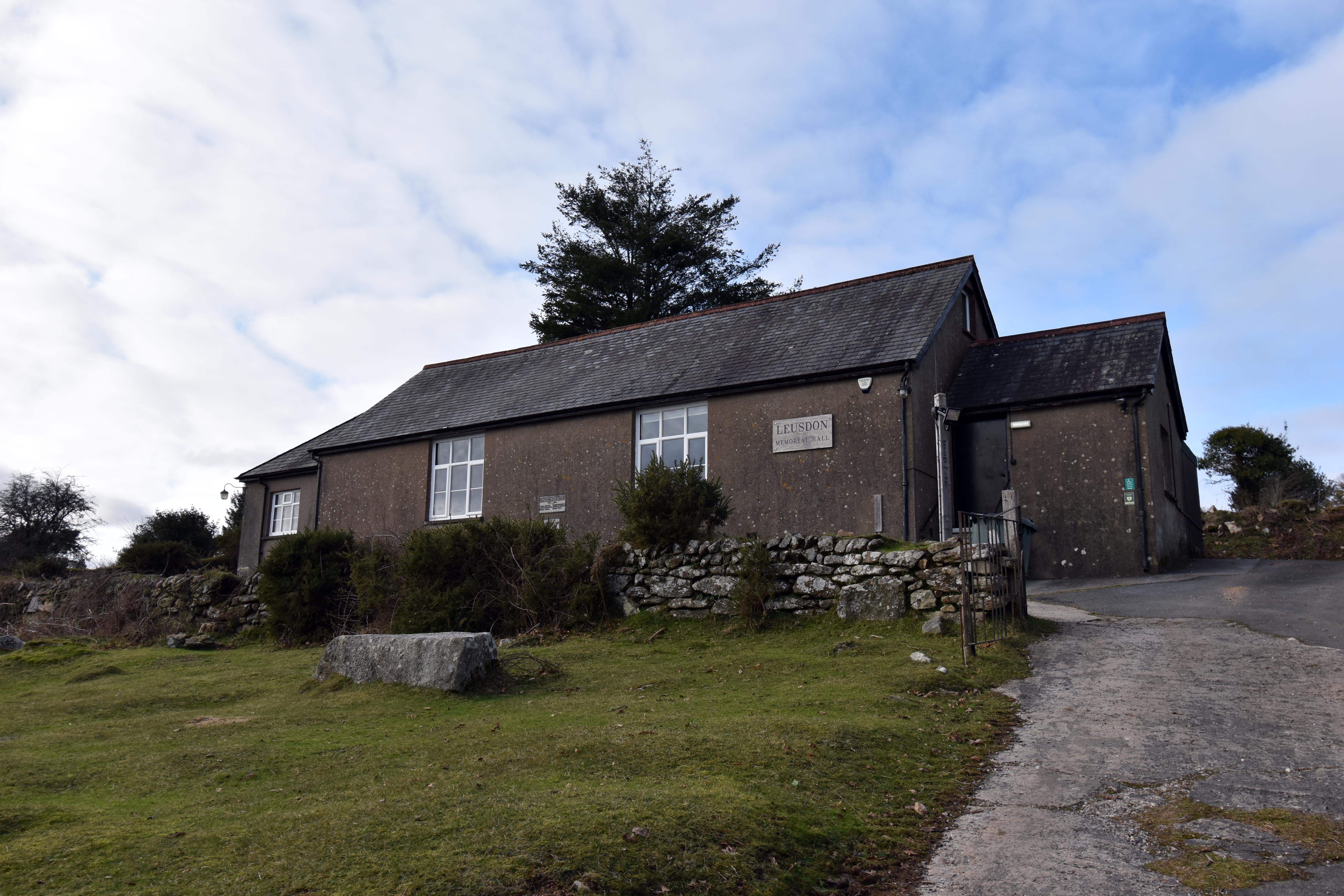
Leusdon Memorial Hall is one of those Dartmoor buildings that you could easily walk past without realising just how much history is wrapped up inside it. From the outside it looks like a simple 1920s village hall — functional, modest and built to serve a rural community. But its origins lie in the aftermath of the First World War, and its story reaches far beyond the quiet lanes of Leusdon.
The hall was built in 1923 by the family of Leicester Struben, a young officer who had grown up at nearby Spitchwick Manor. The Strubens were not a typical Dartmoor family. Leicester’s father, Frederick Struben, had made his fortune in South Africa after he and his brother were the first to strike gold in Johannesburg in the 1880s. With that wealth he bought the Spitchwick estate and settled into the life of a Devon country gentleman. Leicester, born into this new chapter of the family’s story, volunteered early in the war and served with the Cheshire Regiment, the 7th Royal Dragoon Guards and later the Royal Flying Corps.
In 1916, while observing enemy movements above Bapaume, his aircraft was shot down behind German lines. He was just twenty‑one. His family, devastated, chose to commemorate him not with a private monument but with something that would benefit the whole community he had grown up among. The result was Leusdon Memorial Hall — a place for gatherings, meetings, concerts and social life in a parish that had few such facilities.
The hall’s design reflects its purpose. It is plain, sturdy and unpretentious, built to last and to be used. Inside, the walls still carry photographs and memorabilia connected to Leicester and to the wider wartime service of local men. Even viewed through the windows, the sense of a community remembering its own is unmistakable. The hall stands not as a grand statement but as a practical gift — a building intended to be lived in, not merely looked at.
Its location is striking. Set on the hillside above the Dart valley, the hall enjoys sweeping views across the moor, a reminder of the landscape that shaped the lives of those it commemorates. It also sits close to the church where Leicester Struben is remembered again in a more formal memorial, linking the hall to the wider network of local remembrance.
What makes Leusdon Memorial Hall particularly interesting is how it ties together local and global histories. The Strubens’ South African background, their connection to the early goldfields of Johannesburg, and their later life as Devon landowners all converge in this quiet building. It is a reminder that even in the most rural corners of Dartmoor, the ripples of empire, migration and war reached deep into village life.
A century after it was built, the hall continues to serve the community — a testament to the Struben family’s intention that Leicester’s memory should be woven into the everyday life of Leusdon rather than set apart from it. It stands as a small but meaningful landmark on the walk through the village, linking the landscape to the people who lived, served and were remembered here.

