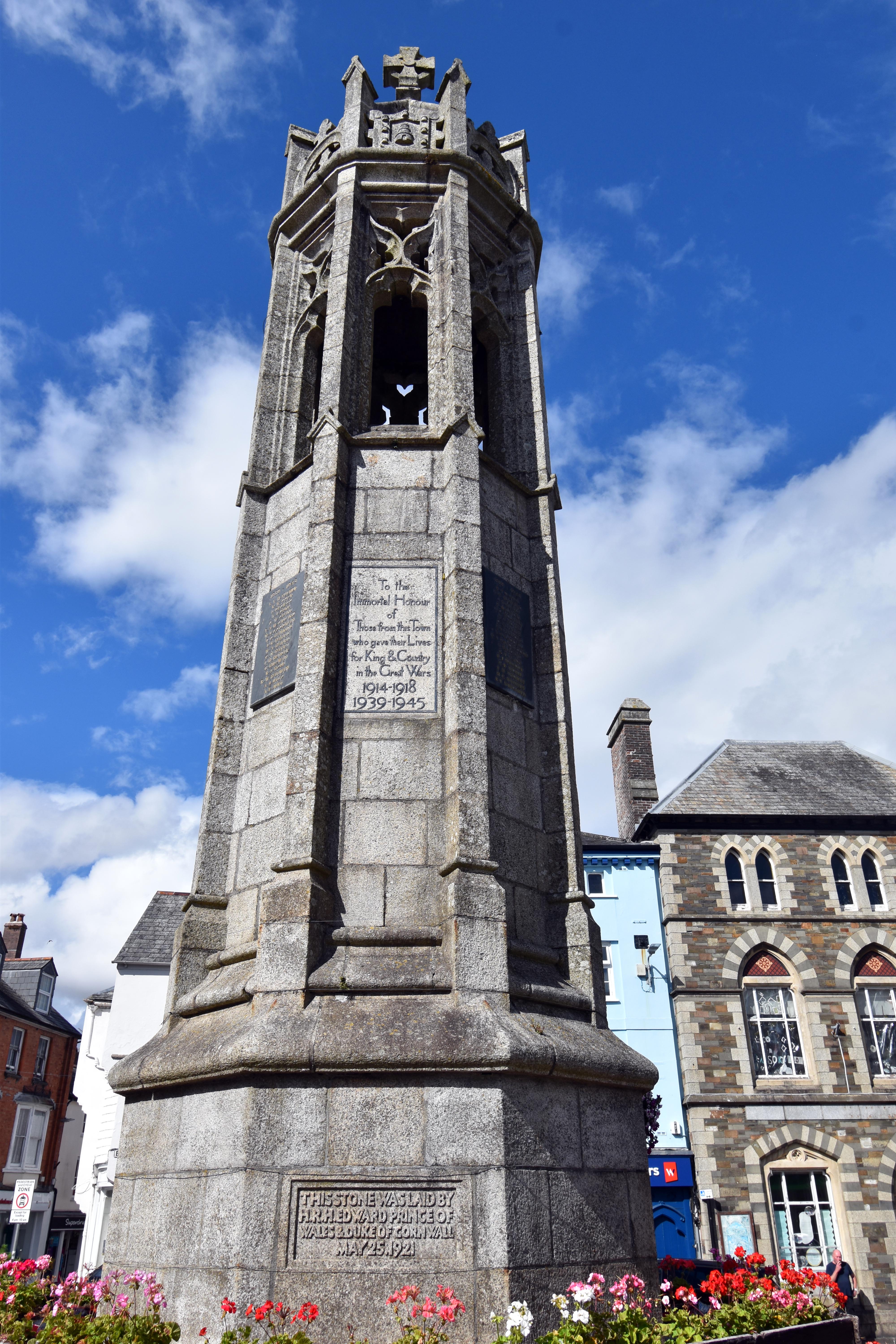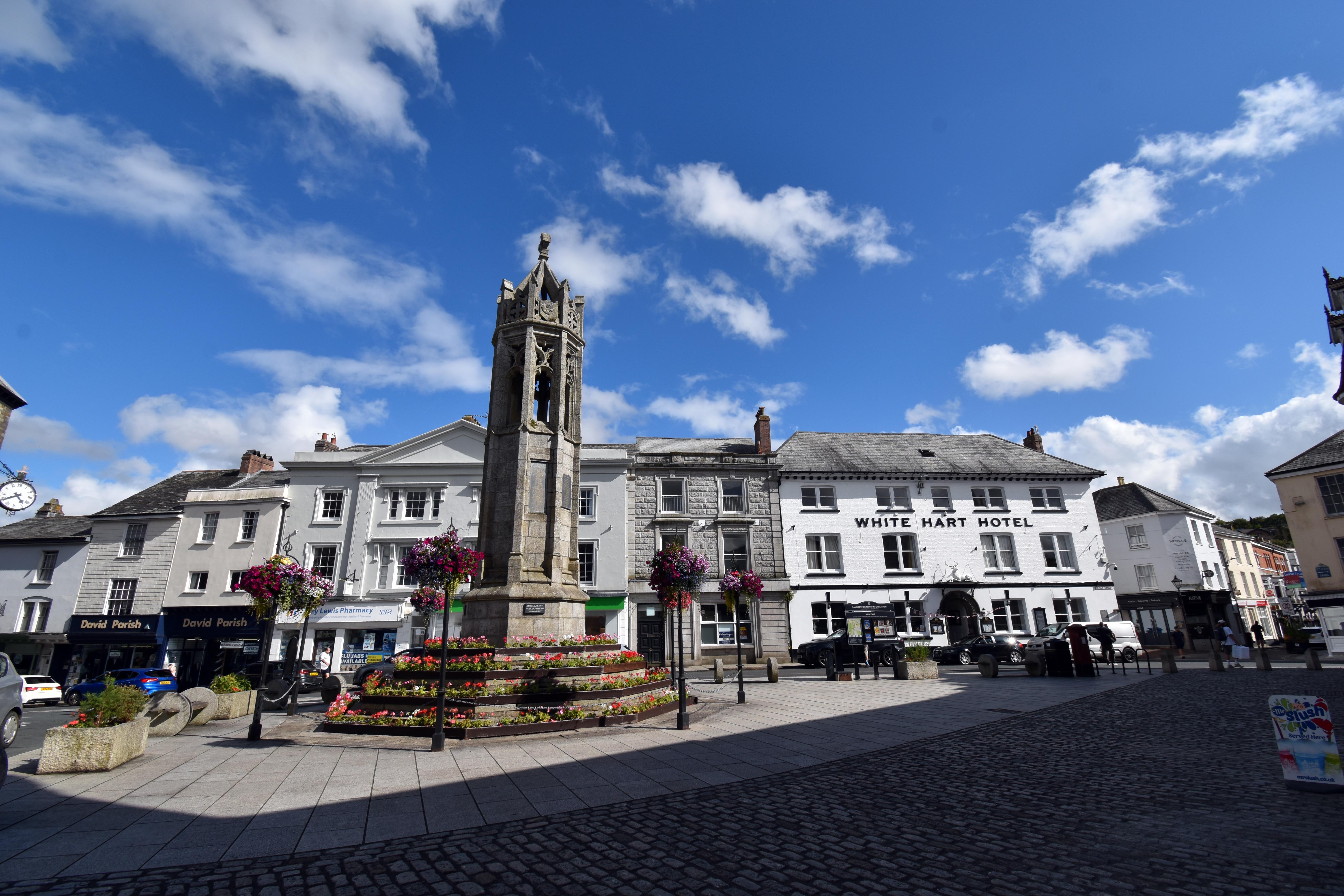
The Launceston War Memorial records the names of men from Launceston, St Thomas, St Stephen’s, Newport and nearby hamlets who died during the First World War. Their service covers almost every major theatre of the conflict and represents infantry, artillery, engineers, medical units, naval forces and Dominion armies. The memorial provides a concise record of the town’s contribution to the war and the range of units in which local men served.
A large proportion of the men served in the Duke of Cornwall’s Light Infantry, including Charles Bickle of Holborn Terrace, who died of wounds in 1917, and Edwin Philp, killed in action in Macedonia in 1916. Others joined the Devonshire Regiment, such as Archibald Cudlipp of Northgate Street, killed in Greece in 1917, and Bertram Murton of Church Street, killed on the Somme in 1916. These units formed the core of Westcountry infantry recruitment.
Several men served in specialist units. William Henry Adams of Westgate Street was a Pioneer in the Royal Engineers Road Troops Depot and died in 1918 after being discharged with severe wounds. Douglas Cavey of Race Hill Terrace served in the Royal Army Medical Corps and was killed while collecting casualties in 1917. James Fitze of St Stephen’s served with a Casualty Clearing Station and died in 1914. Their service reflects the hazardous work of non‑combatant units operating close to the front.
Launceston men also served in Dominion forces. Stanley Bartlett, born in Launceston, enlisted in Vancouver and died of influenza in 1918 while serving with the Royal Canadian Engineers. Claude and Ernest Jones, brothers born in Launceston, served in the Canadian Expeditionary Force; Claude died of pneumonia in Devonport in 1916, while Ernest was killed in action in France in 1917. Richard Medland, also born in Launceston, served with the Canadian Mounted Rifles and was listed as missing in 1916. These cases illustrate the town’s links with emigration and overseas service.
Naval casualties appear throughout the roll. James Hill of Tower Street and Edwin Howe of the Passmore Edwards Institute were both killed at the Battle of Jutland in 1916 while serving aboard HMS Indefatigable. John Orchard of the Launceston Arms Hotel was killed aboard HMS Queen Mary in the same battle. Their names represent the Royal Navy’s heavy losses during the war’s major fleet engagements.
Some men died of wounds after evacuation. John Bridgeman of Tower Street died in 1917 at No. 25 General Hospital in Hardelot. Cecil Coombe of Newport died after being wounded in France in 1917. Others died of illness, including Frank Clarke of Southgate Place, who died of malaria in Egypt in 1917, and Stanley Doidge of St Thomas Road, who died of bronchopneumonia in 1918. These cases reflect the medical risks faced by soldiers serving in varied climates and conditions.
A number of men were killed in lesser‑known theatres. George Hockin of Castle Street, serving with the 7th Gurkha Rifles, was killed at Ctesiphon in Mesopotamia in 1915. Herbert Luke of Egloskerry died of wounds in France in 1918 while serving with the Military Foot Police. Samuel Marks of Hurdon Hill died in Greece in 1916 while serving with the Royal Field Artillery. Their service demonstrates the global reach of the conflict.
The memorial also includes men who died after returning home. Ernest Couch of Launceston died in 1919 after discharge from the Royal Defence Corps. William Owen of Tower Street died of nephritis in 1917 after evacuation to the UK. These names reflect the long‑term effects of wounds and illness sustained during service.
Taken together, the names on the Launceston War Memorial represent infantrymen, artillerymen, engineers, medics, sailors, Dominion volunteers and officers. Their service spans France, Flanders, Gallipoli, Mesopotamia, Salonika, Palestine, the North Sea and the home front. The memorial stands as a record of the town’s losses and the breadth of its contribution to the First World War.