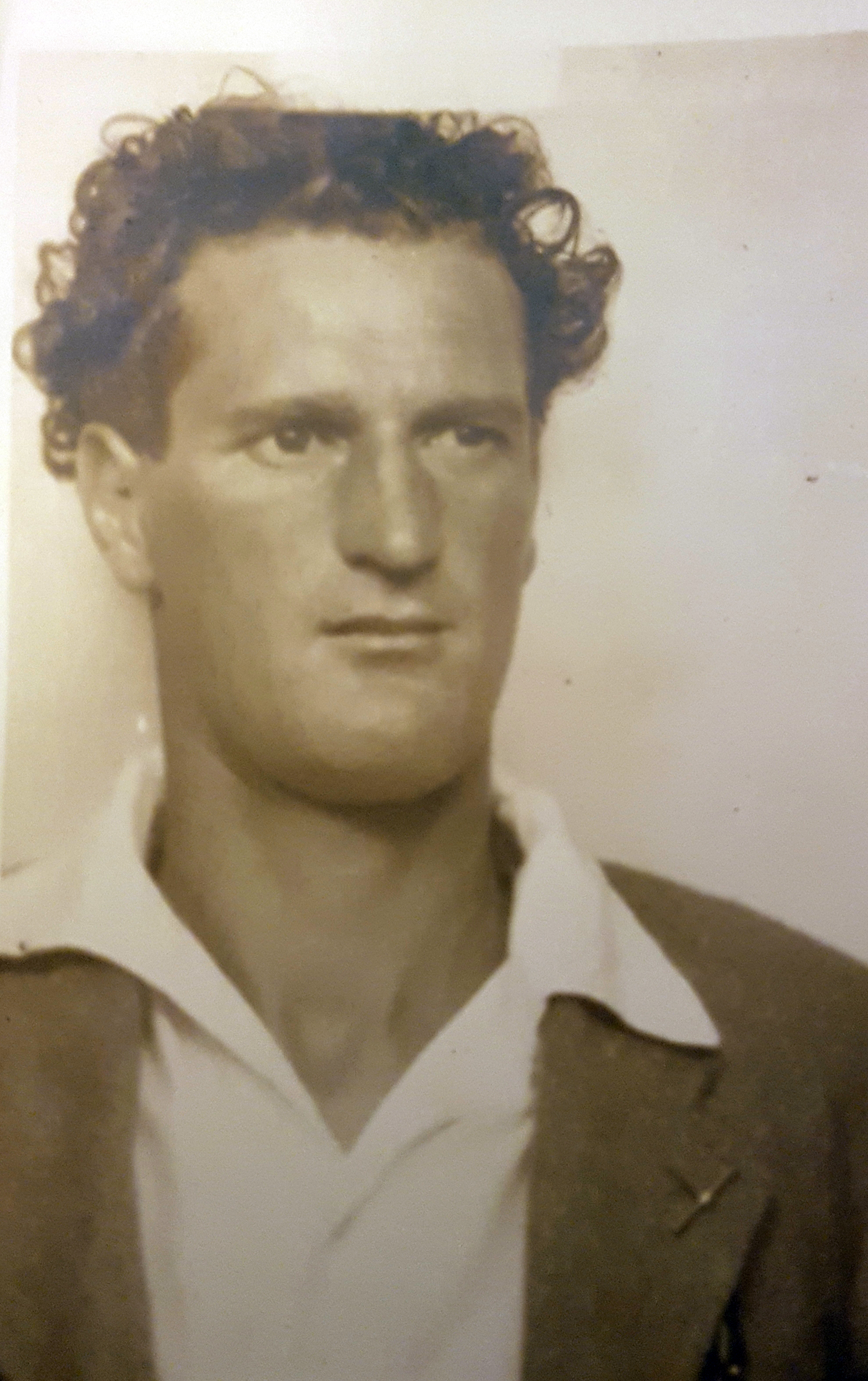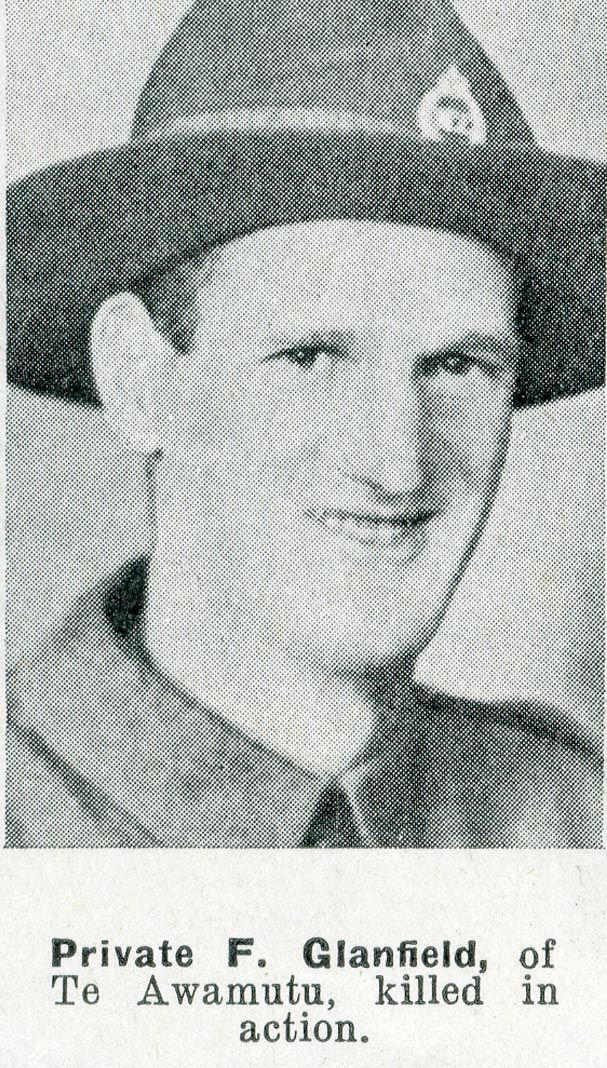
Among the names remembered in St Mary the Virgin, one stands out for the distance his life travelled. Private Frederick Clarkson Glanfield was born in Belstone in 1904, the son of George and Minnie Glanfield of West Lake. He grew up in the familiar pattern of small Dartmoor farms: livestock, seasonal work, and the steady routines that shaped rural life on the edge of the moor. Nothing in his early years would have suggested that he would one day be buried in Libya, remembered in New Zealand, and commemorated back home in Belstone.
In 1926, like many young men from rural Devon, Frederick emigrated to New Zealand. The years after the First World War were difficult for agricultural workers. Wages were low, opportunities were limited, and the old system of farm labour was changing. For men who knew livestock, fencing, shearing and the practical skills of small mixed farms, countries like New Zealand offered something Britain increasingly did not: steady work and the chance to build a future. The Dominion actively encouraged British migrants, especially those with rural experience, and Frederick would have arrived into a world where his skills were valued and immediately useful.
When war broke out in 1939, Frederick enlisted in the New Zealand forces. By then he was a New Zealand citizen, part of the large community of British emigrants who had made new lives abroad but still felt a strong connection to home. His unit was drawn into the Western Desert campaign, where the New Zealand Division played a major role in the attempt to break the siege of Tobruk. On 24 November 1941, during Operation Crusader, the New Zealand battalions were fighting around the Sidi Rezegh ridge — a barren, exposed stretch of desert that became the centre of some of the fiercest fighting of the entire campaign.
That date is not incidental. The 24th was one of the worst days of the battle. German armoured counter‑attacks hit the New Zealand positions hard, and the front line shifted so quickly that many casualties were recorded simply as “killed on active service,” with no further detail. The area where Frederick fell was only a short distance — roughly ten to fifteen kilometres — from the site that later became Knightsbridge War Cemetery at Acroma. In other words, he now lies almost exactly where he fought, in the same desert landscape that claimed so many men of the New Zealand Division during those days.
Belstone, however, did not lose sight of him. His name is recorded in the church, alongside those of other villagers who served and died. The memorial is simple, but it keeps him part of the community he came from. For a man whose life crossed continents, that quiet acknowledgement feels appropriate. His story is not dramatic, but it is representative of a generation who left rural England because the work that had sustained their families for centuries could no longer sustain them.
The wider pattern behind Frederick’s journey is easy to overlook now. In the early twentieth century, many young men from villages like Belstone left for New Zealand, Australia and Canada. They were not adventurers in the romantic sense; they were practical workers following the work. Their skills — especially with sheep and cattle — were in demand overseas. New Zealand’s farming economy relied heavily on people who understood stockmanship, land management and the rhythms of rural life. A Devon upbringing was, in many ways, an ideal apprenticeship.
Frederick’s life followed that path: a childhood shaped by the moor, a move to a country that valued the skills he carried with him, and service in a war that drew him back towards the world he had left. His death was one of thousands in the North African campaign, but his remembrance in Belstone gives his story a local anchor. It ties him back to West Lake, to the church where his name is read, and to the village that shaped his early years.
There is nothing elaborate about the way Belstone remembers him, and that is part of what makes it meaningful. His name sits among neighbours and relatives, part of the quiet record of a small community that has always known how to hold on to its own. For someone who travelled so far, that simple act of remembrance is enough.