|
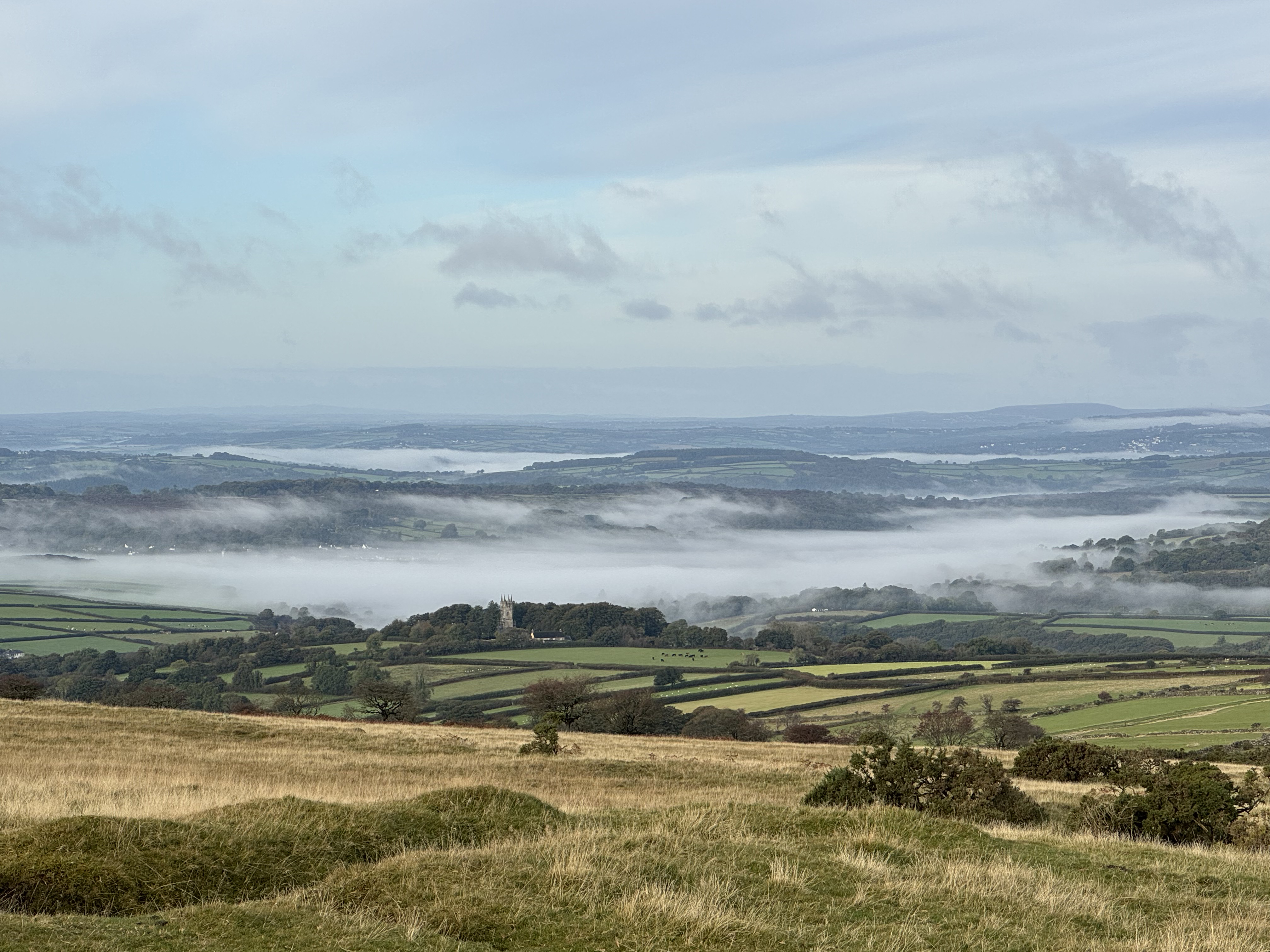
On this particular Sunday Rupert and I had intended to visit another two of the lovely churches along the Eden Way. Unfortunately, we had to defer one of them for reasons I’ll explain shortly. Still, what a glorious drive we had to the Teign Valley over Dartmoor that morning, with inverted clouds lying in the valleys surrounding the Moors. It was so stunning that we pulled over several times simply to admire the views.
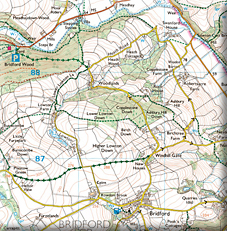
We then drove to Steps Bridge with the plan of walking first to St Mary’s Church in Dunsford and then to St Thomas Becket’s in Bridford. Rarely have I used such an inaccurate OS map as the one covering this area (and I was using the OS App too, which you would think had been updated). Our first problem was that the public footpath from Steps Bridge was completely overgrown. That wasn’t OS’s fault, but it was frustrating, and we had to backtrack and try a different path—one that frequently disappeared from the maps. We also kept coming across substantial forestry roads that weren’t marked at all.
 |
|
|
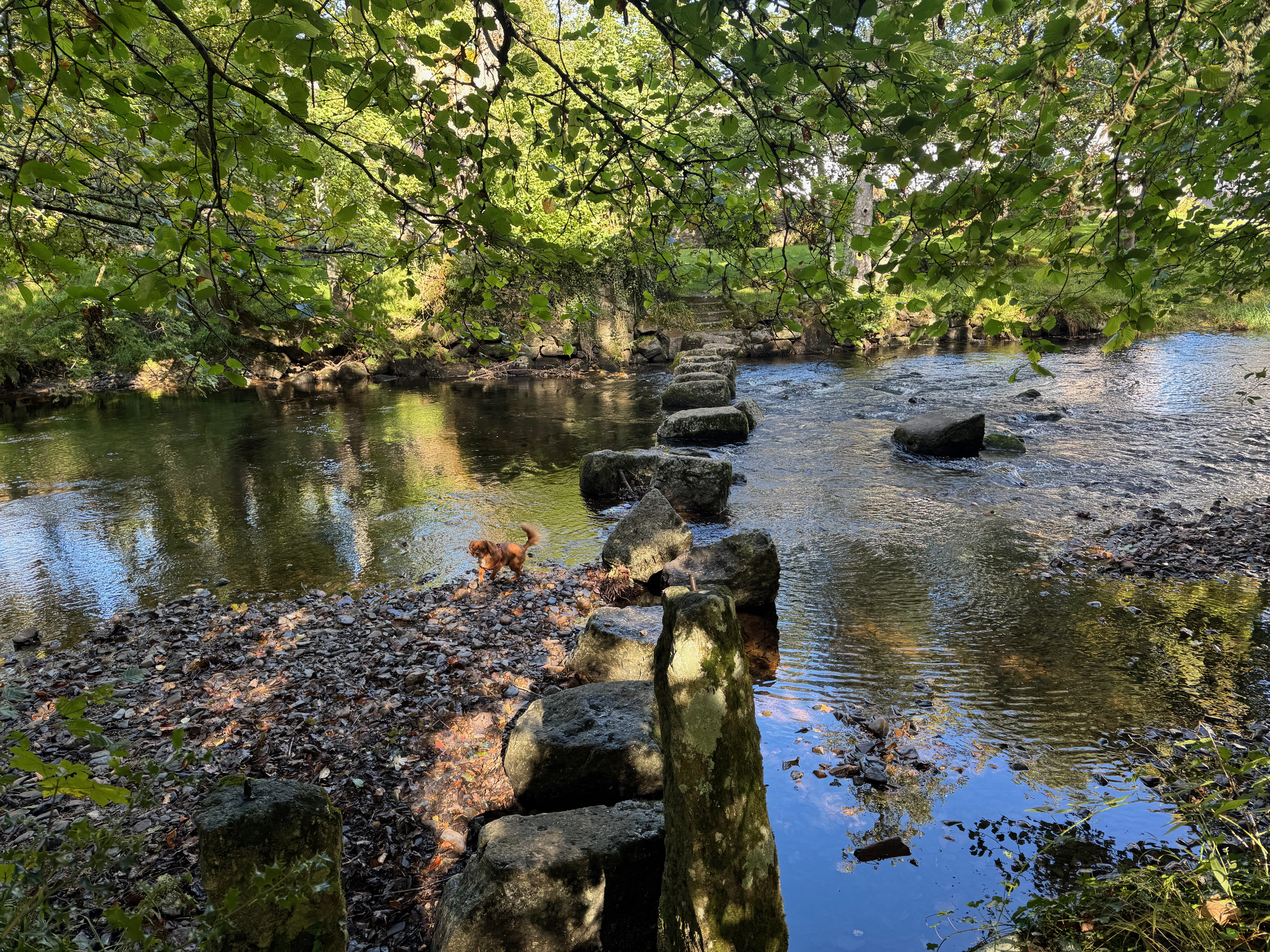
The real obstacle came when we reached the river crossing. On the map it was marked as a footbridge, but in reality the bridge was (A) on private land and (B) padlocked. The only alternative was to cross via stepping stones, but one of the essential stones in the middle had been washed away by recent heavy rain. We searched for other options (and even half‑joked about finding a crowbar for the padlocked bridge) before coming across two hapless families attempting the stepping stones with children. Thanks to their efforts we discovered that even the remaining stones were unstable. What began with laughter and encouragement soon descended into farce, and before long into heated arguments verging on threats of divorce. That convinced us to abandon the pilgrimage to Dunsford and turn instead towards St Thomas Becket. We had no desire to spend the rest of the day with soaking wet feet, however fine the weather.
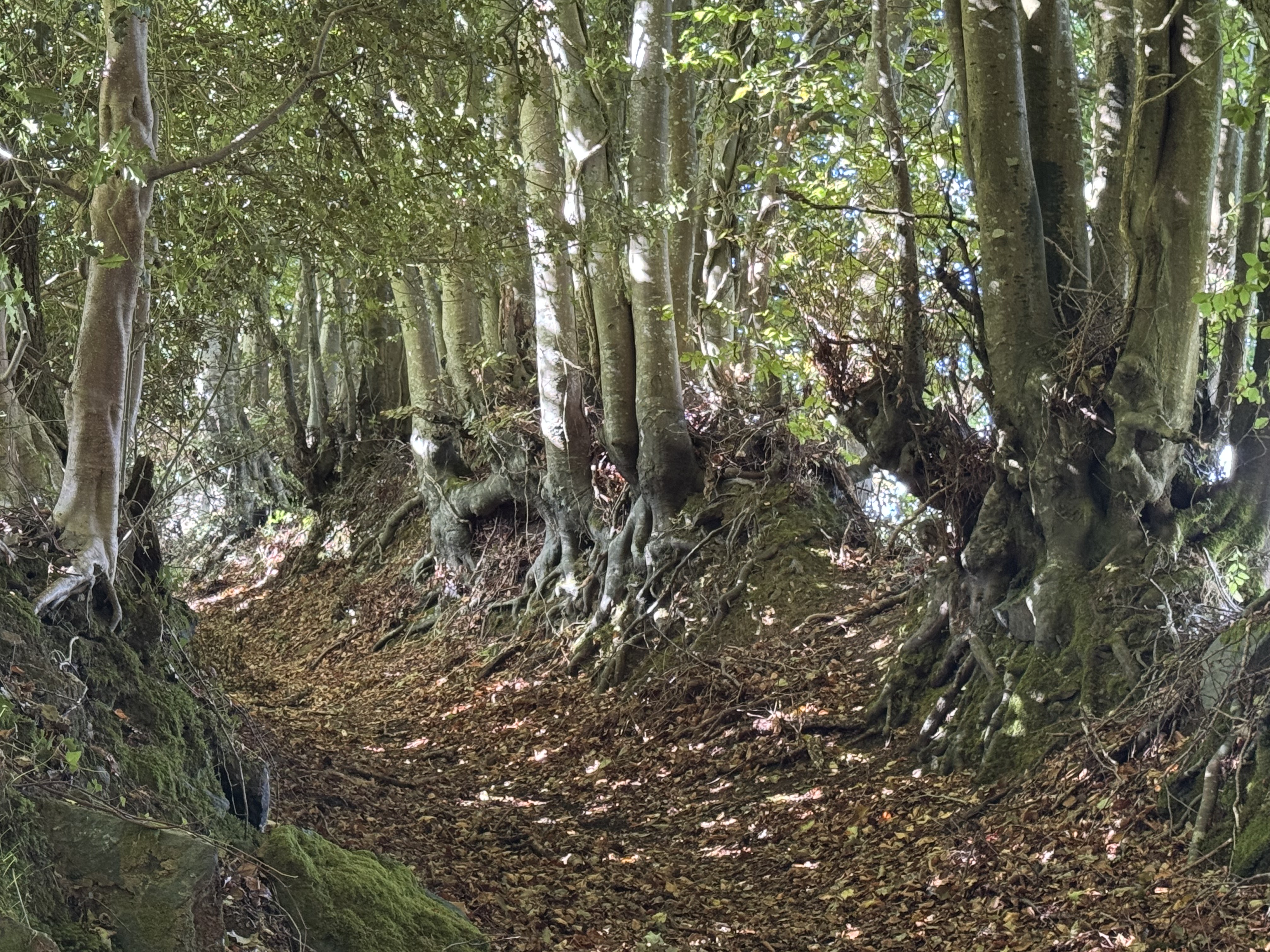
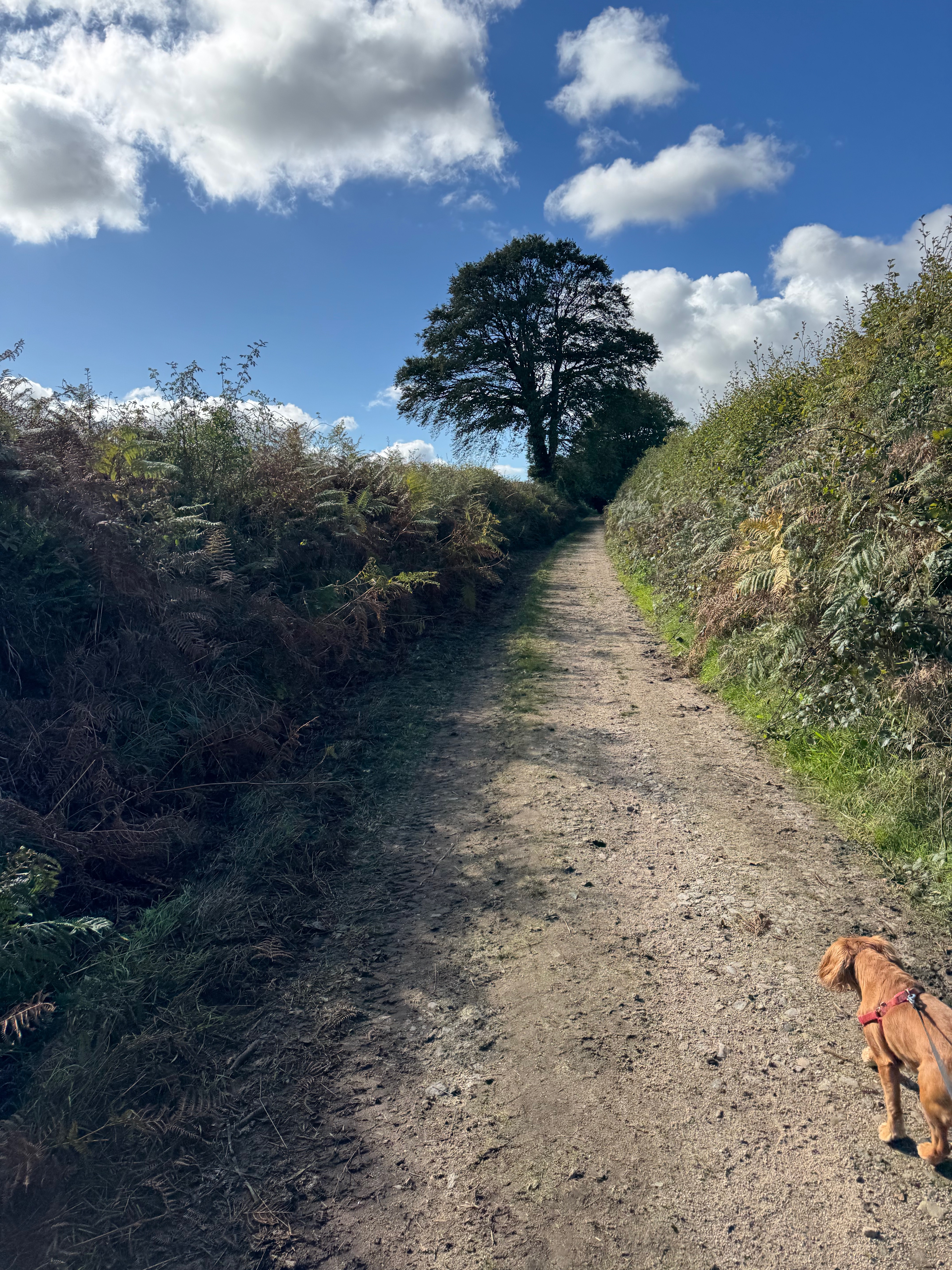
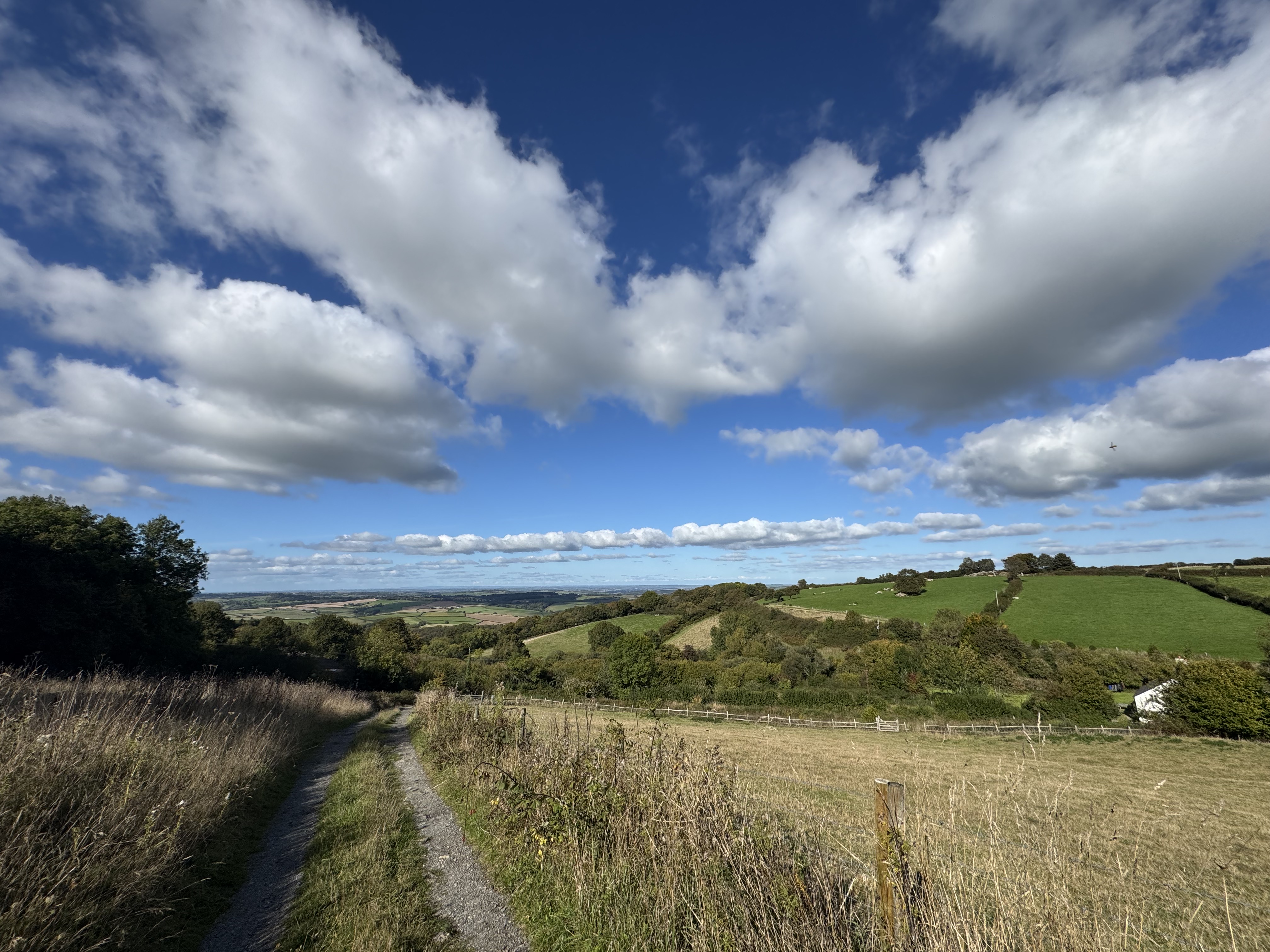
The climb up to Bridford is formidable, an almighty hill that seems to go on forever. It passes first through lovely woodland and then into idyllic farmland, following ancient and beautiful pathways. As we gained height the views became more spectacular, and the sun began to break through as the steep slopes gave way to a gentler ascent. Just before reaching Bridford we stumbled upon a delightful woodland park—unmarked on the OS map, which insists it is just a field. In fact it had toilets, a covered walkway, an amphitheatre, trails, and apple trees laden with fruit low enough for me to reach (though Rupert struggled). It was clearly a well‑used community asset, with a steady stream of families and dog walkers arriving, as if it were a local secret.
 |
|
|
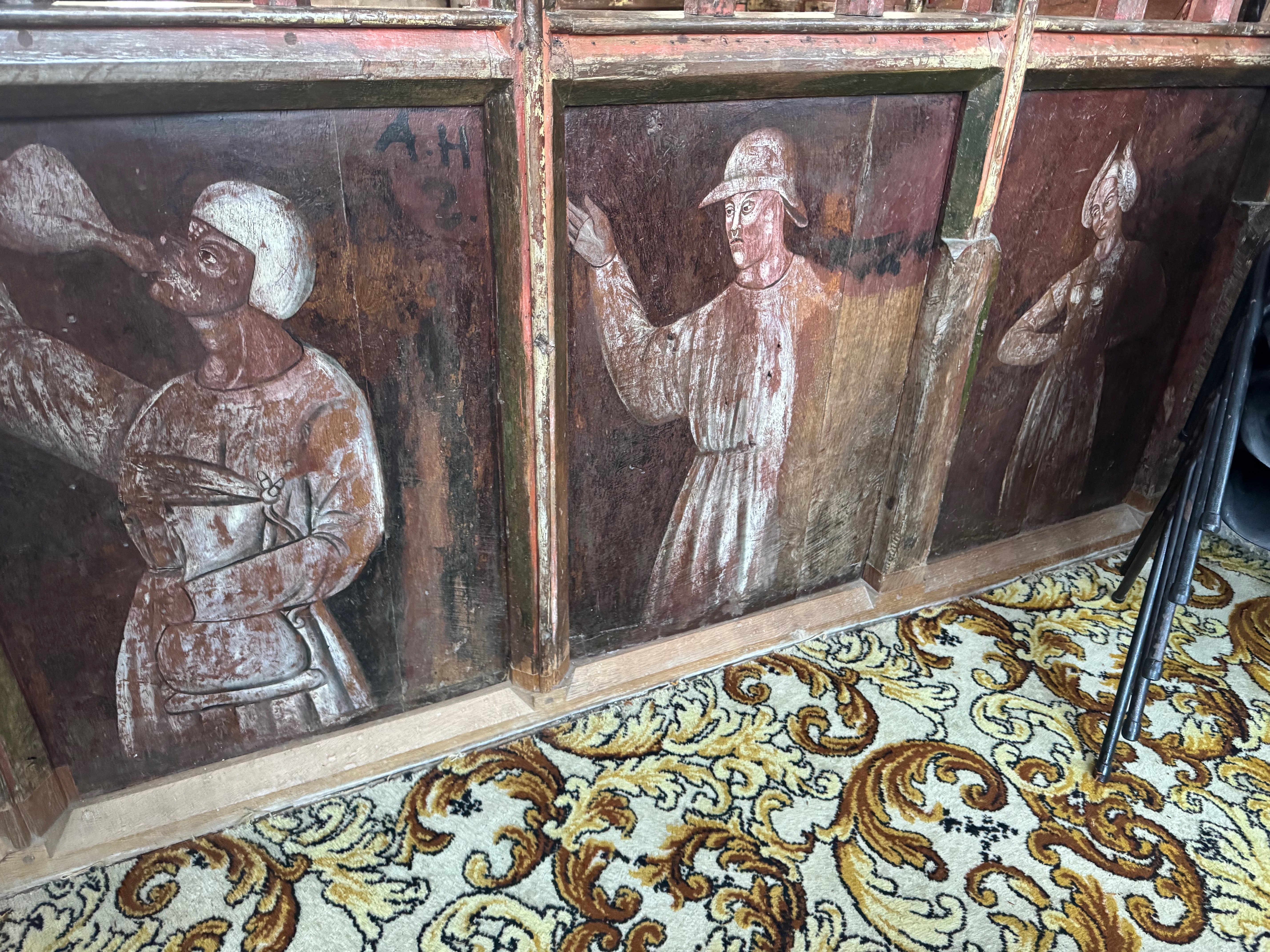
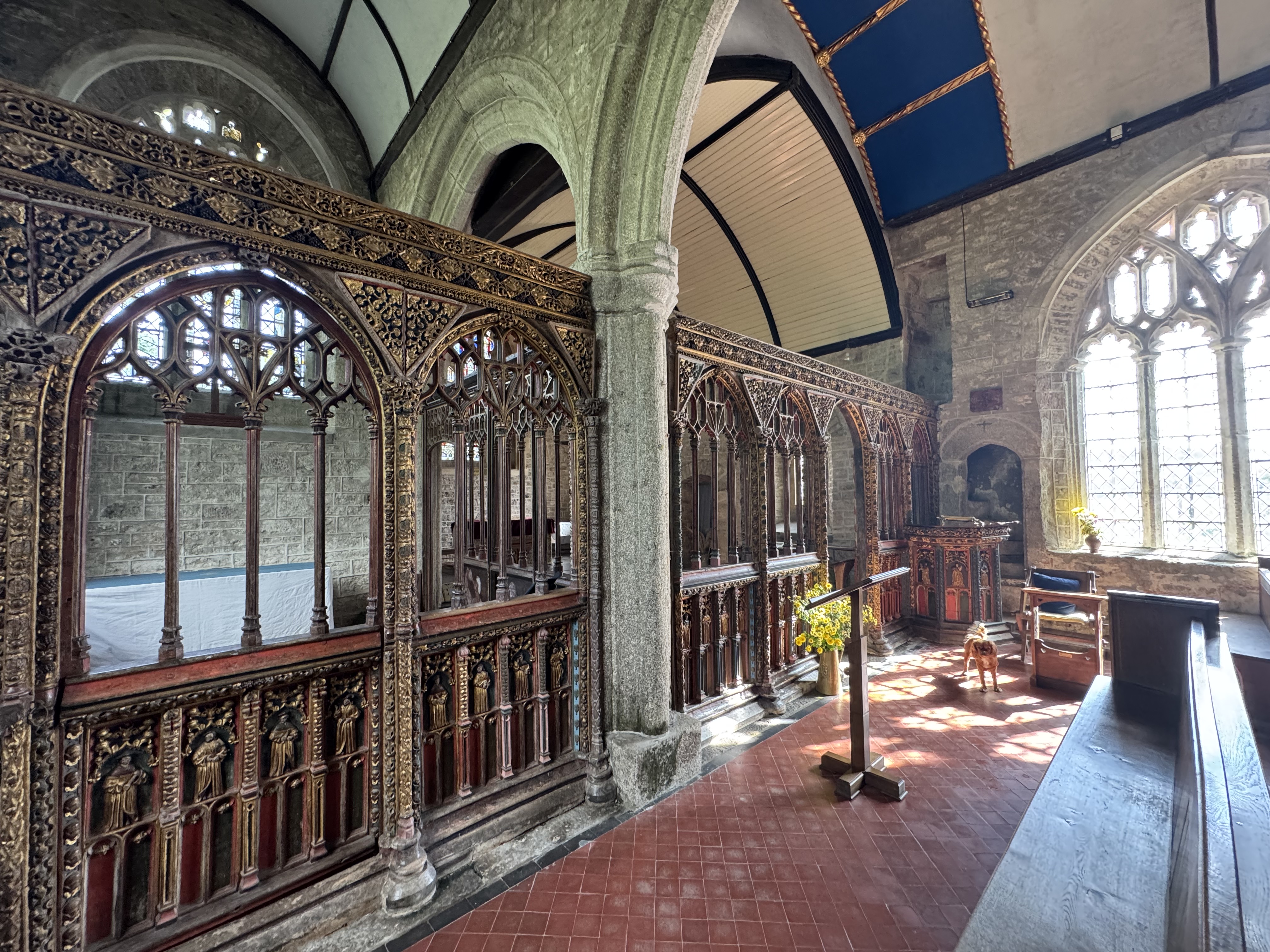
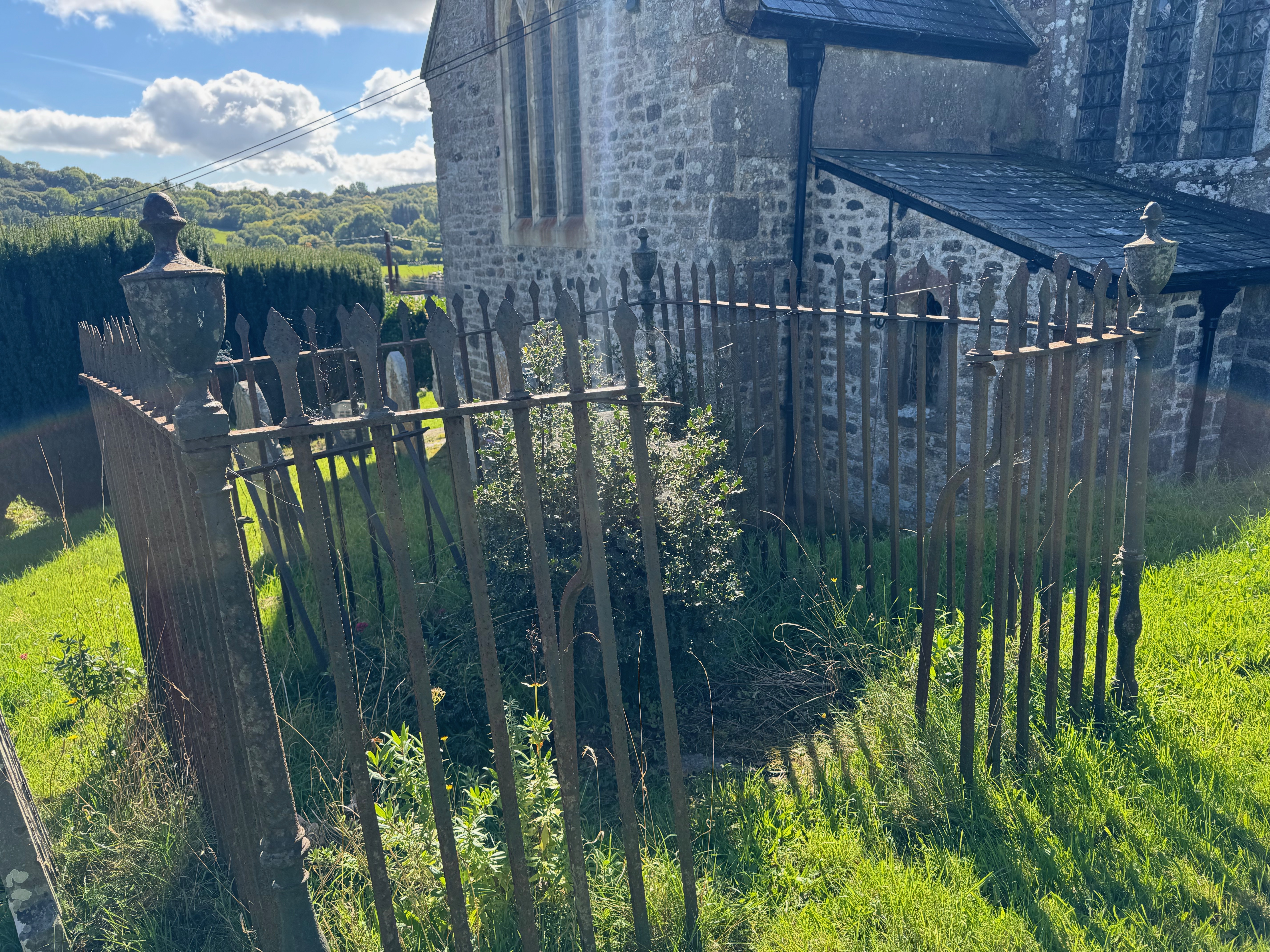
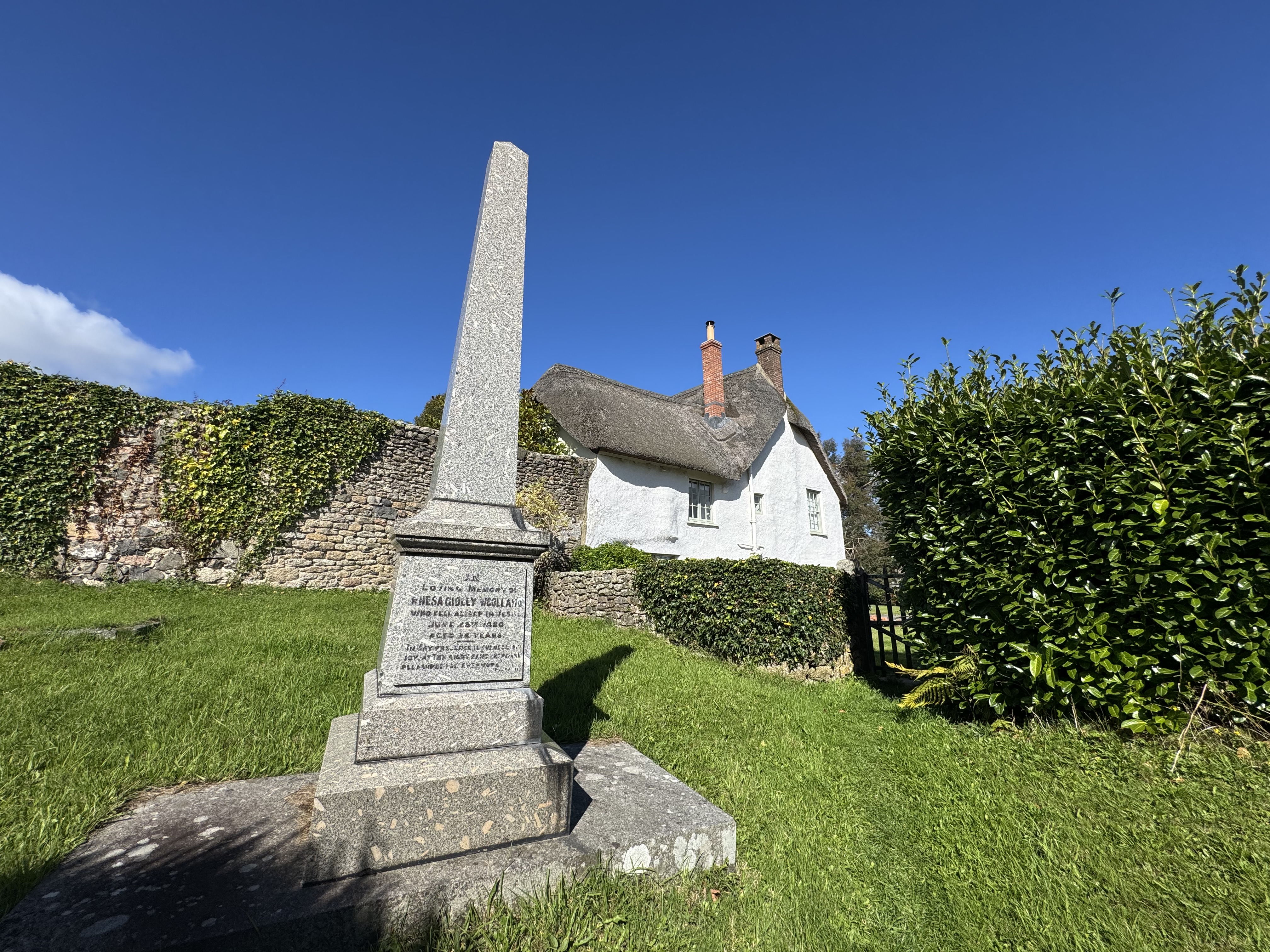
The church at Bridford is tucked away down very narrow lanes and paths, delightfully crammed in on a steep incline that leaves the surrounding graveyard at a noticeable angle compared with the church itself. It is quite different from the others on the trail, despite being within walking distance. This church transports you back to pre‑Reformation times through its early Rood Screen, dating to the reign of Henry VII. As I mentioned previously, most such screens were painted over or removed entirely. A few, in remote rural churches, survived the Puritan zeal and the later depredations of Civil War Roundheads. Bridford’s is unusual in that its decorations are carved in wood, making them difficult for reformers to obliterate with paint. Sadly, there was still intervention: the eyes of virtually every figure have been gouged out. The Puritans, vehement iconoclasts, hated depictions of saints and biblical figures. If they could not remove the entire image, they would at least destroy the eyes. Yet this destructive act ironically preserved 99% of the artwork, and even the gouged eyes are now part of our religious history.
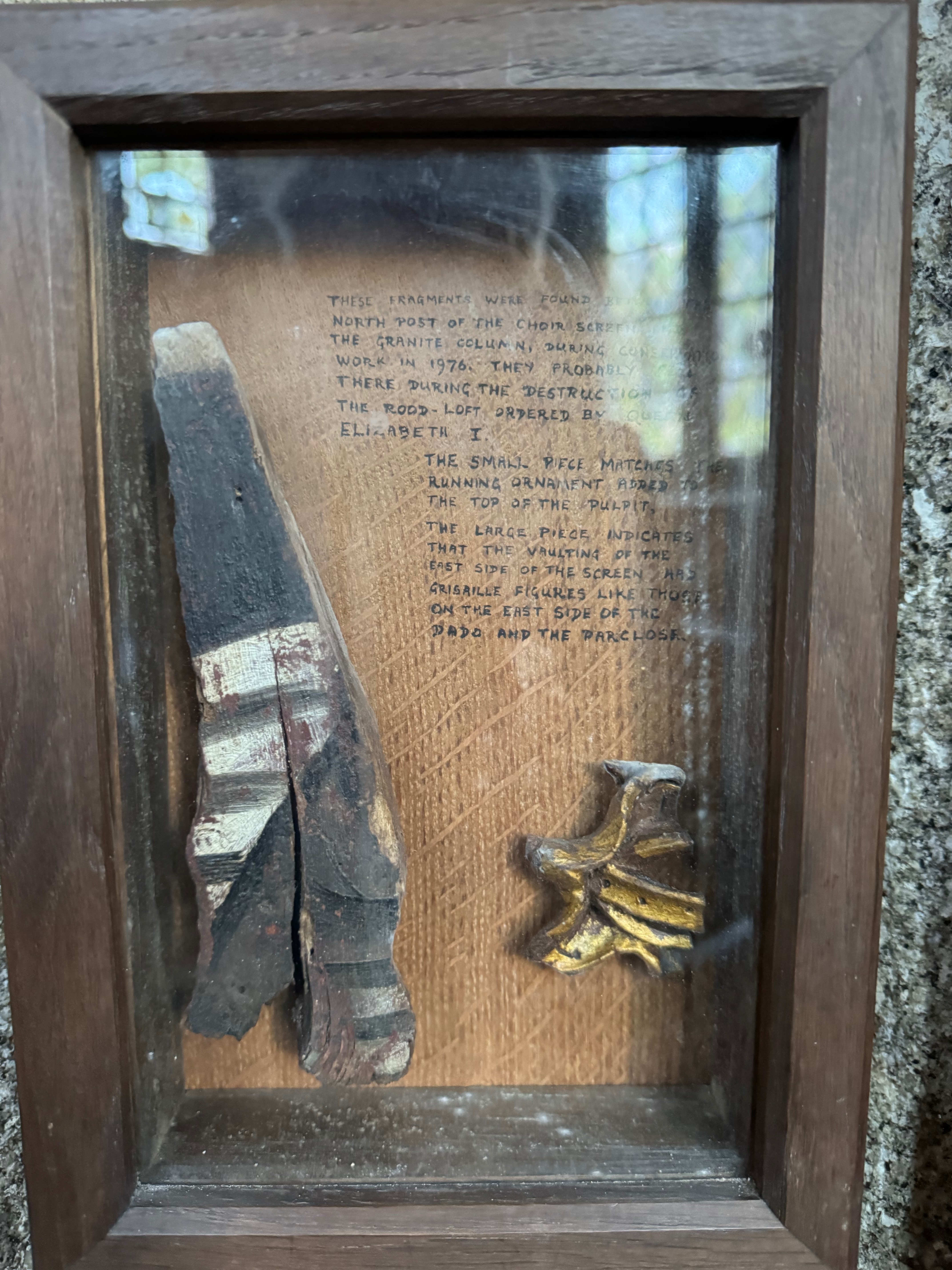
Fragments have also been found from the Rood Loft that once stood above the screen—a decorated wooden platform that enclosed the space below and was sometimes used by minstrels, hence the “stairways to nowhere” often seen in churches. This loft was destroyed during Elizabeth I’s reign, part of her “Middle Way” compromise between Protestant plainness and Catholic ornament. The Rood Screen was retained, but the loft was lost.
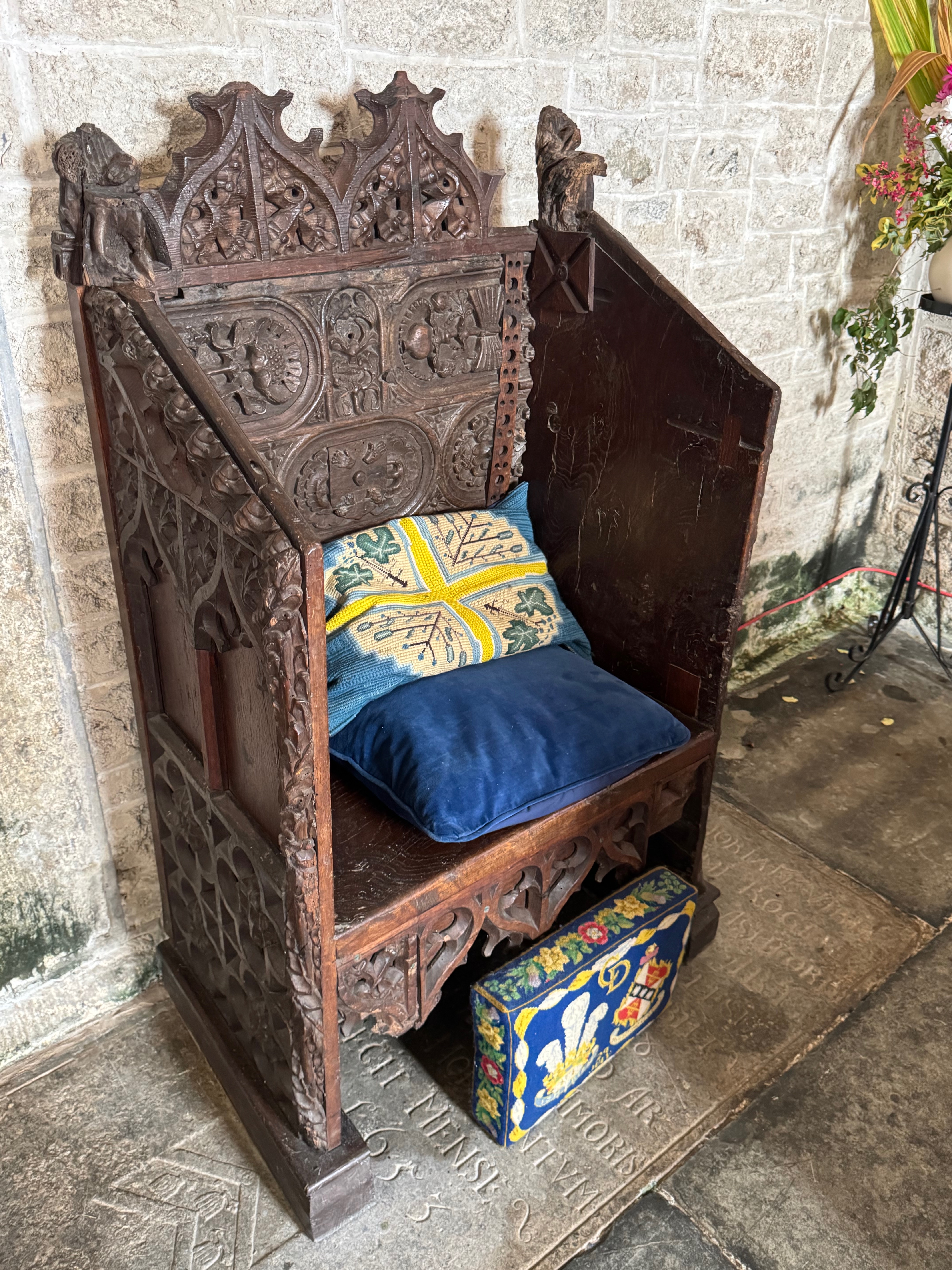
Intriguingly, the reverse of the screen still bears painted figures whose eyes remain intact. These were not saints but depictions of real people and professions, often found in pre‑Reformation chantries and chancels where prayers were offered for the souls of local parishioners. It offers another glimpse into the religious mindset of the time. The church also contains a very old wooden chair, repurposed from medieval carved timber—perhaps a small concession to Protestant ideals of utility.
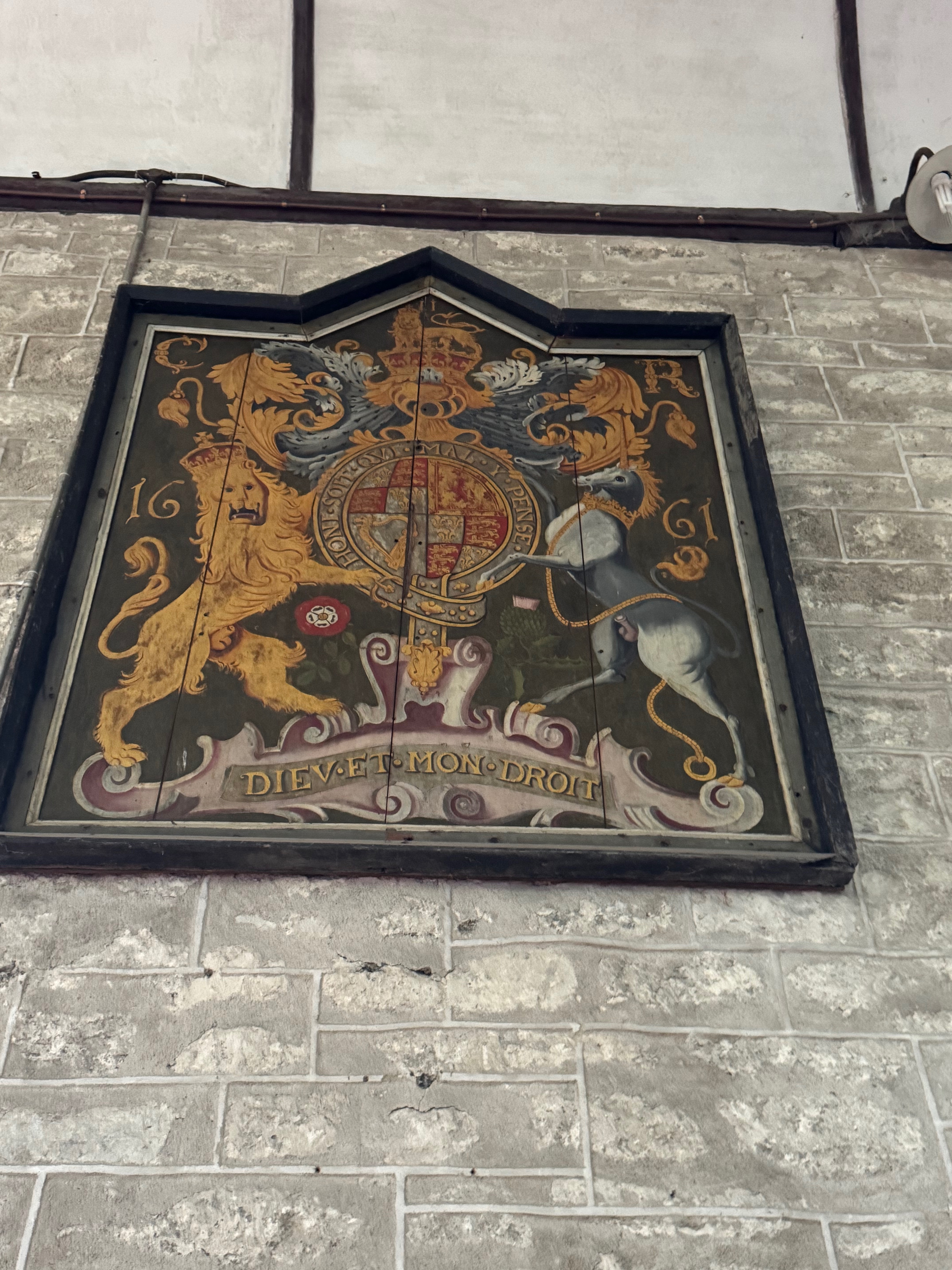
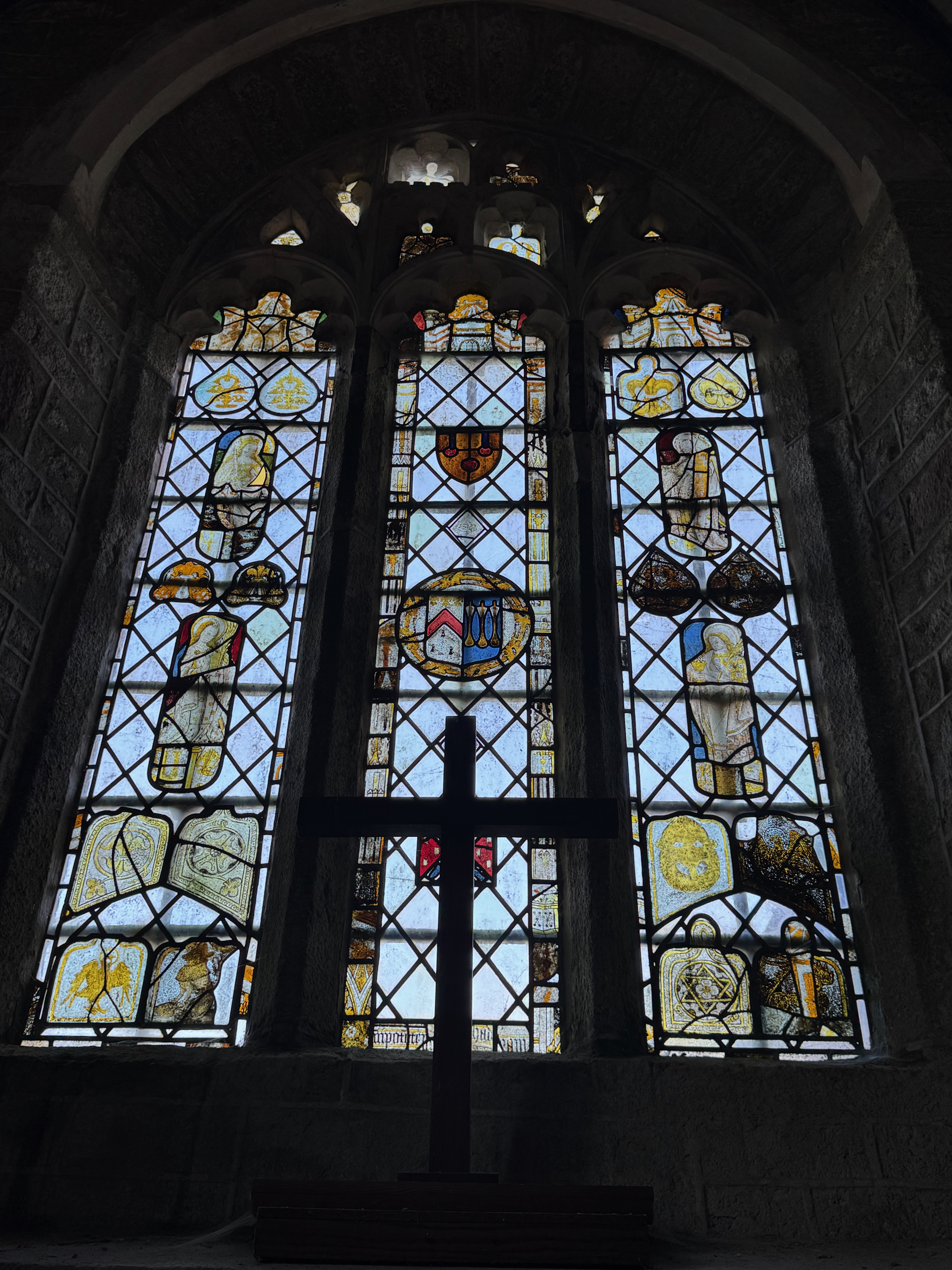
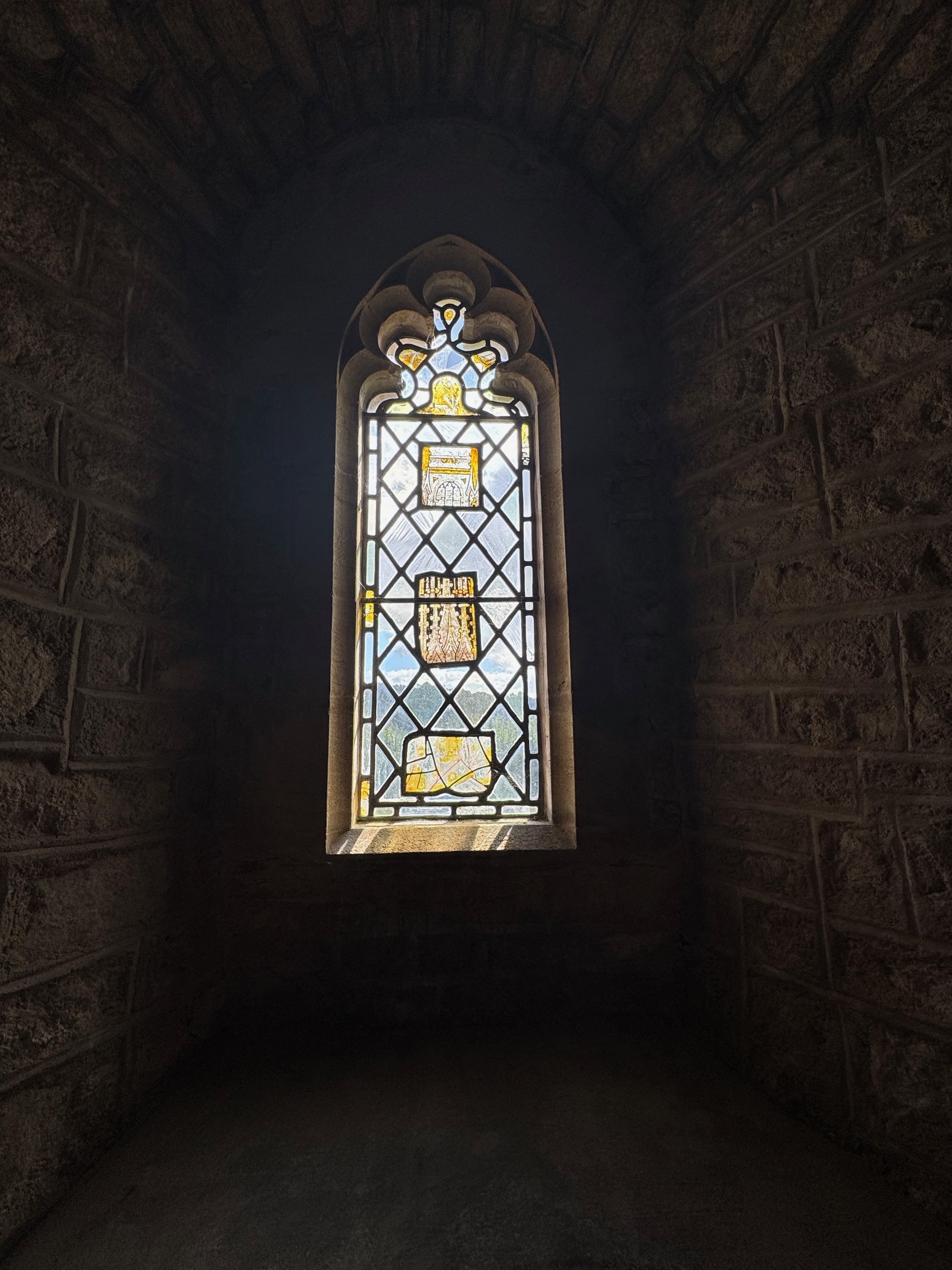
Other features include a Royal Coat of Arms dated 1661, from the reign of Charles II, a fitting symbol of loyalty in the years immediately after the Restoration. The main Victorian stained‑glass window is dedicated to Henry Palk, son of Sir Lawrence Vaughan Palk. You may recall from a few weeks ago that Sir Robert Palk, who made his fortune with the East India Company, bought and expanded nearby Haldon House (mostly demolished in 1923). The name Lawrence was used in memory of Sir Robert’s close friend, Major‑General Stringer Lawrence. In the primogeniture culture of the day, the eldest son inherited the estate, while younger sons were expected to enter the clergy, the army, or the navy. If there were too many sons, some might even have to go “into trade.” This window illustrates the importance of the clergy in local communities and how aristocratic families sought such positions for their younger sons. The church also retains some medieval stained glass—less vibrant than the Victorian examples, but fascinating in its imagery and decoration.
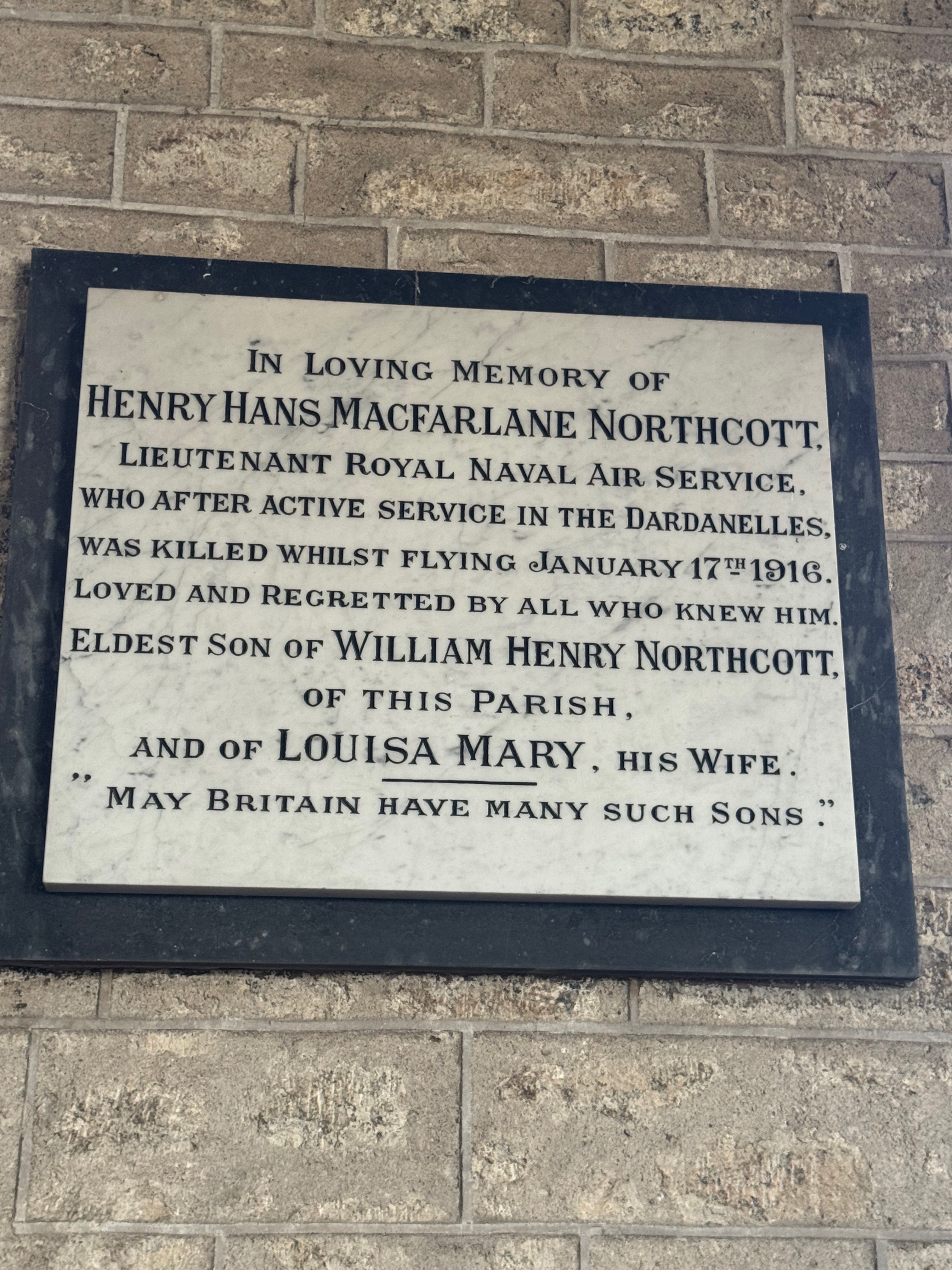
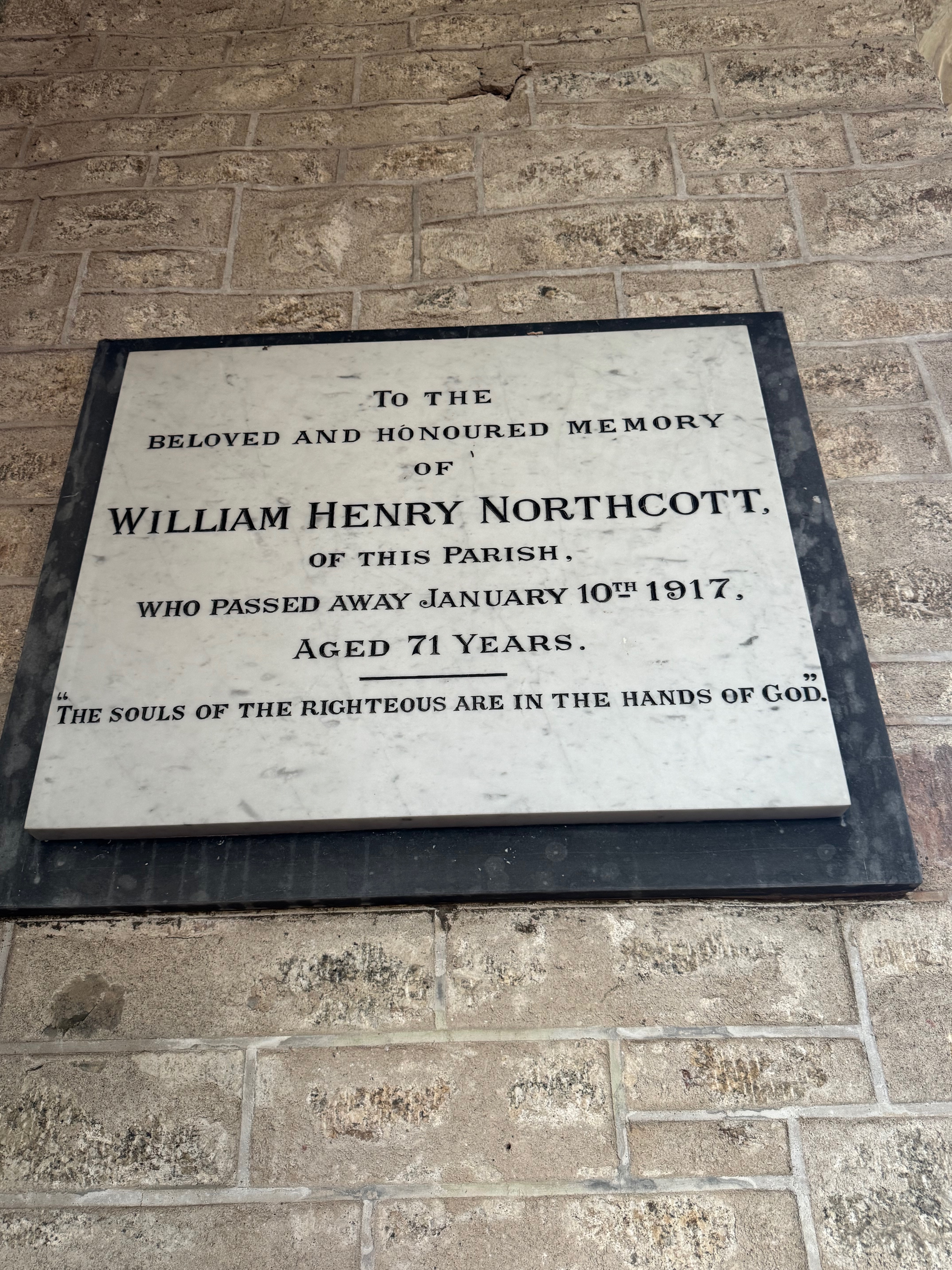
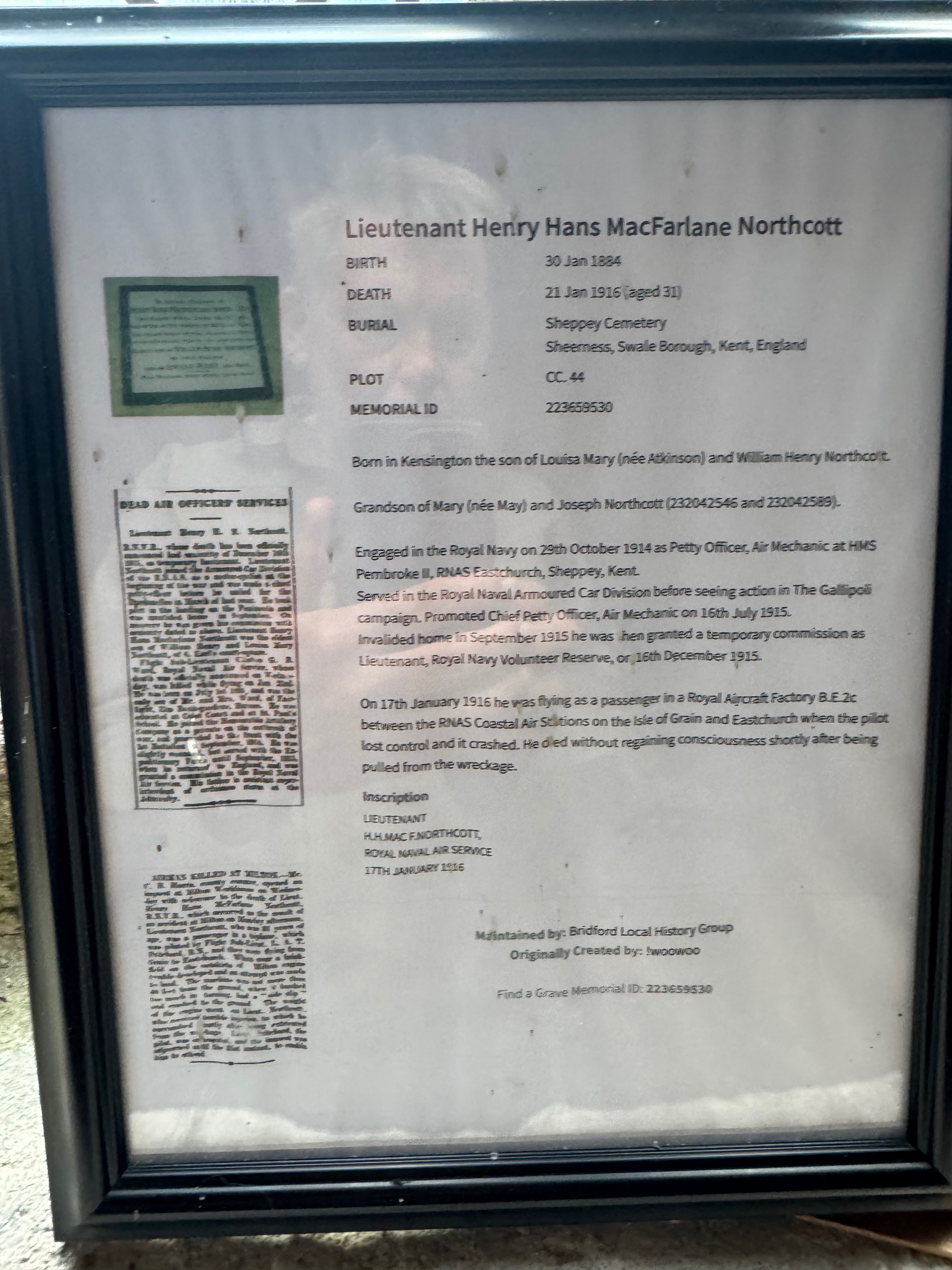
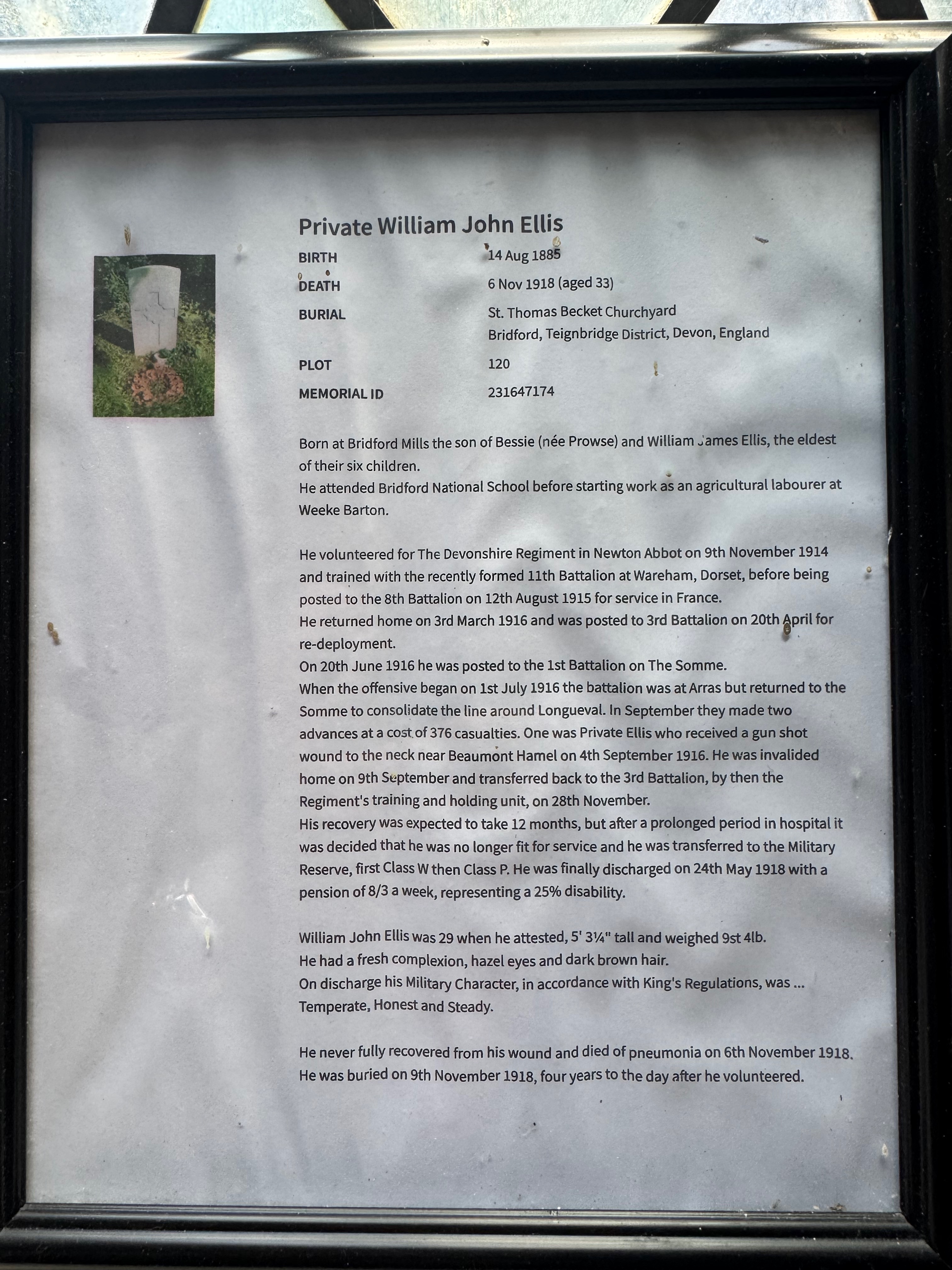
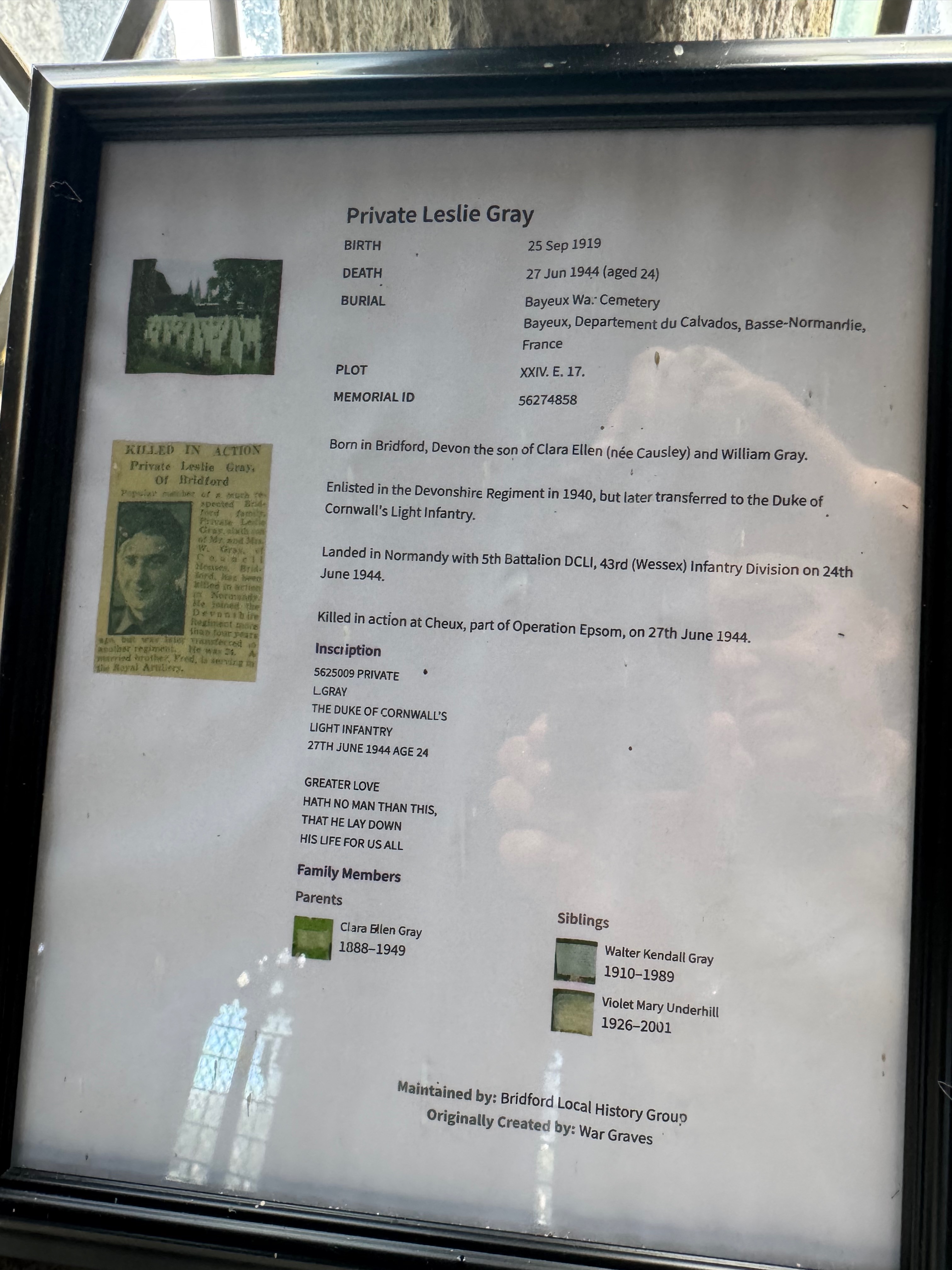
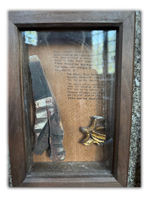
I particularly appreciate when churches commemorate those who died on active service. Here there is the poignant story of William Ellis, a Devonshire soldier who died of wounds sustained at Beaumont Hamel in the Somme campaign, just days before the war ended. He was buried at the church on 9 November 1918, two days before its bells rang for victory. There is also a memorial to an early pioneer of the Royal Naval Air Service, who had served at Gallipoli but died in a flying accident in England in early 1916 when the pilot lost control of the aircraft.
After exploring the graveyard, Rupert and I walked towards Heltor, though sadly we did not have time to ascend it. As we had missed Dunsford church, we intend to return and add Heltor to our list of summits. The walk back down through the woods to the car park at Steps Bridge was lovely, rounding off yet another stunning outing—even if we only managed to mark off one church this week.
|