Charlotte Rosamund Larpent is one of those Victorian figures whose influence is still felt long after her name has faded from everyday memory. To walk through Leusdon today — past the school she founded, the teacher’s house she built, and the church she paid for entirely out of her own pocket — is to walk through the legacy of a woman who quietly reshaped life in this remote Dartmoor parish.
Charlotte was born into a well‑connected Kentish family in the early nineteenth century. Her brother, Lieutenant Colonel Robert Arnold, served with distinction in the Bengal Cavalry and was killed in Kabul, while her husband, Francis Seymour Larpent, had been Judge‑Advocate General under Wellington during the Peninsular War and at Waterloo. Through him she entered a world of military, legal and administrative service, and after his death in 1845 she was left a wealthy widow with both the means and the inclination to support causes she believed in.
For many years she lived in Torquay, then a fashionable resort for the well‑to‑do. But it was the condition of rural education that increasingly drew her attention. The upland communities around Leusdon and Poundsgate were isolated, scattered across steep lanes and moorland farms. Children often had to walk miles to reach any form of schooling, and in winter the journey could be impossible. Charlotte saw this not as an abstract social problem but as a practical injustice she could remedy.
Her first major act of philanthropy in the area was the founding of Leusdon School. She paid for the building, funded the teacher’s salary, and even provided a residence — Leusdon House — for the schoolmaster. Over time she spent more and more of her own life there, gradually shifting her centre of gravity from Torquay to this small Dartmoor community. The more she lived among the people of Leusdon, the more she understood the challenges they faced.
One of those challenges was the distance to the parish church at Widecombe‑in‑the‑Moor. For families living on the high ground above the Dart valley, the journey was long, steep and often treacherous in winter. Charlotte recognised that this was not simply inconvenient but a barrier to community life. So she resolved to build a new church — not a chapel of ease, but a fully fledged parish church that would serve the people where they lived.
The result was St John the Baptist Church, Leusdon, completed in 1863. Charlotte paid for everything: the land, the construction, the fittings, the vicarage, and the ongoing costs of ministry. It was an extraordinary act of generosity, but also a deeply practical one. She wanted the people of Leusdon to have access to worship, education and community without having to battle the moor to reach them.
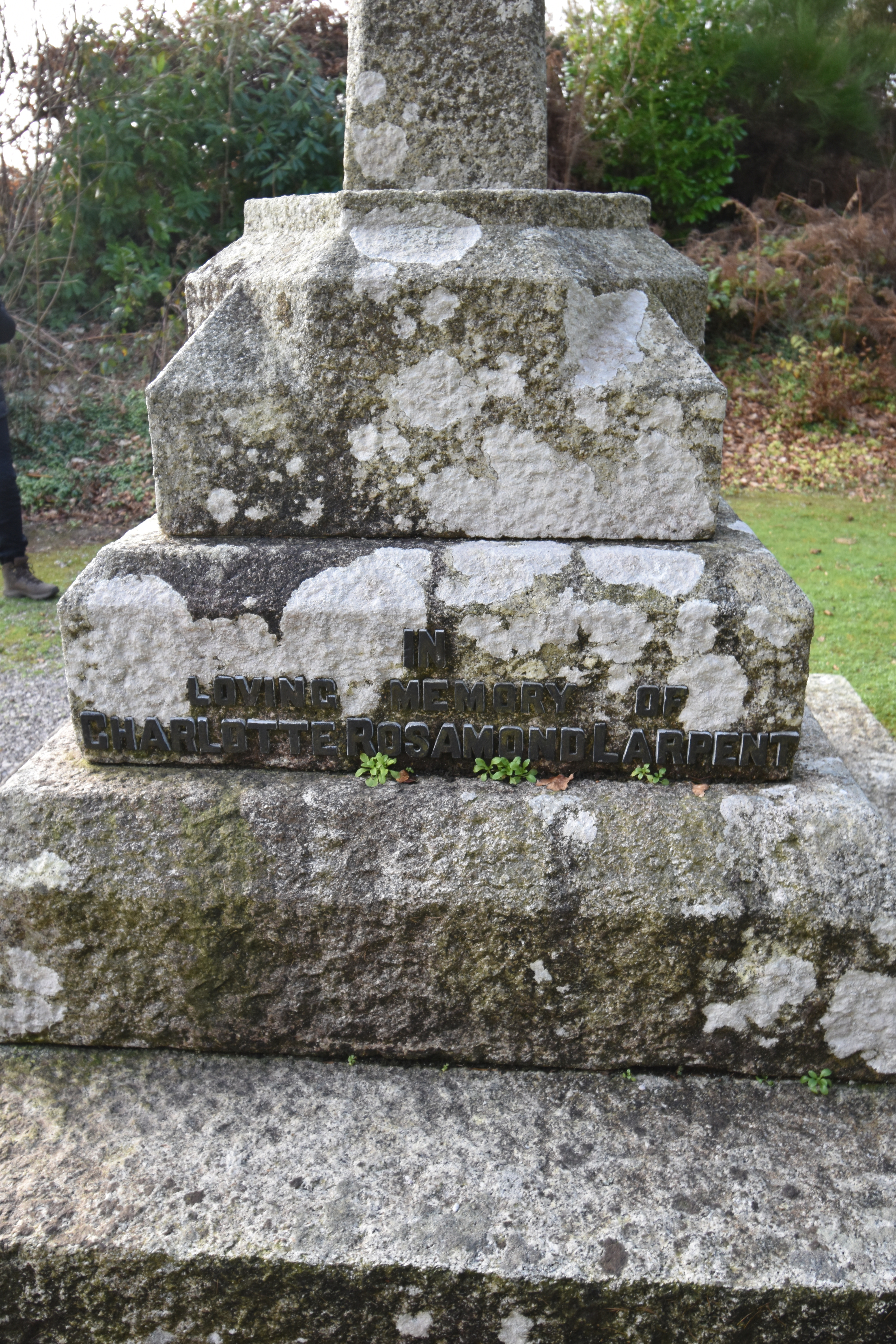
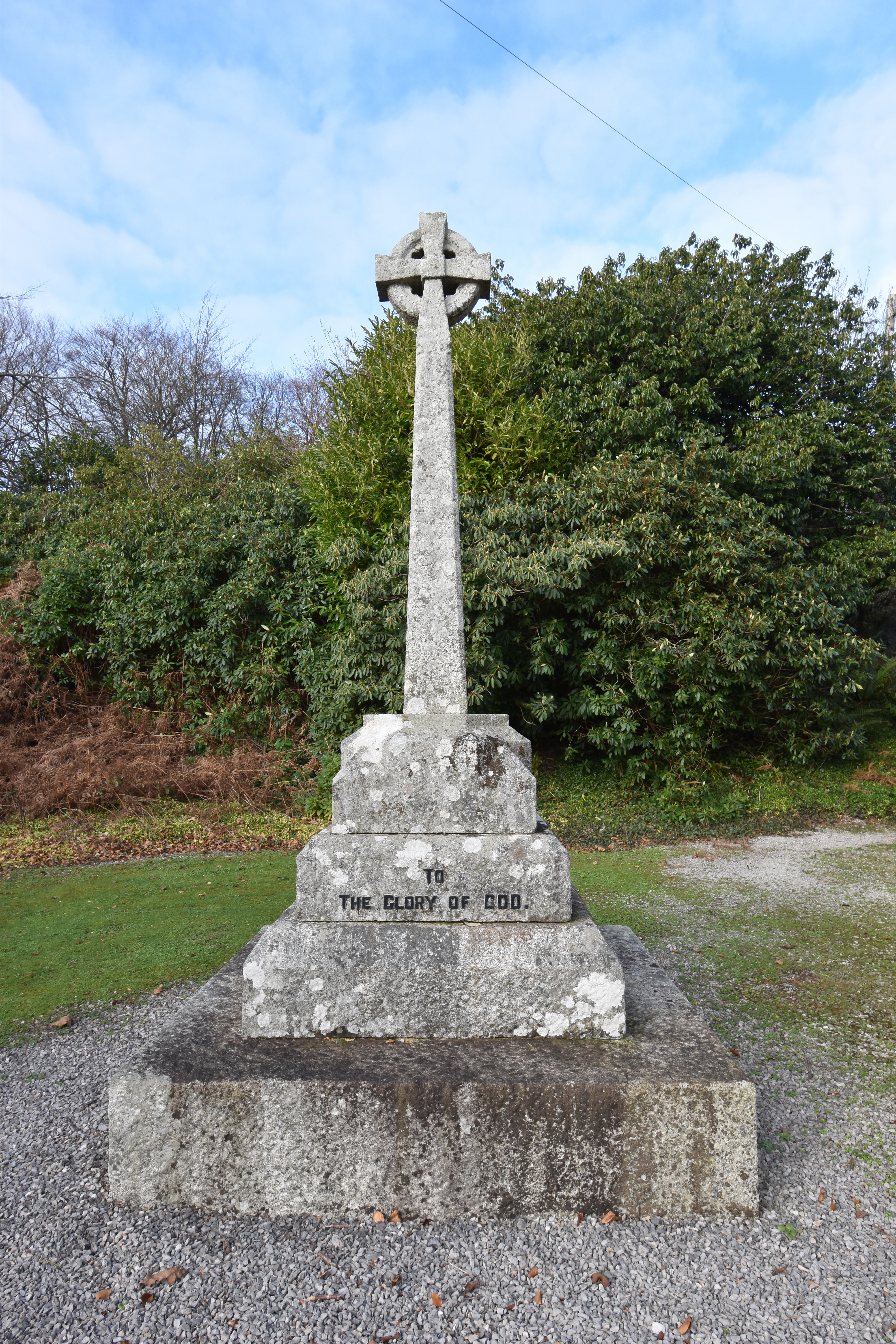
Her influence is still visible today. The church stands in one of the most beautiful positions in Devon, looking down the Dart valley; the school and teacher’s house remain part of the village fabric; and the Celtic cross erected in her memory near the church testifies to the affection in which she was held. Inside the church, a commemorative plaque beside the west window records her many good deeds, noting that over one hundred friends and fellow parishioners contributed to the tribute. A portrait of Charlotte survives alongside it — a rare image of the woman whose quiet determination helped shape the life of this Dartmoor parish.
Charlotte did not simply donate money — she embedded herself in the life of the community, understood its needs, and used her resources to meet them. What drew her to Leusdon was not grandeur or prestige, but the simple fact that this was a place that needed help. She saw the isolation, the lack of facilities, and the difficulty of daily life on the moor, and she responded with a combination of compassion and Victorian practicality.
Charlotte Rosamund Larpent may not be a household name, but in Leusdon she is woven into the landscape — in the schoolchildren who once learned in her classroom, in the congregation that still gathers in the church she built, and in the quiet Dartmoor lanes she chose to call home.