During the 1920s the number of people attending Sacred Heart Catholic Church in South Street Exeter increased. Therefore in 1930 it was decided to form a new parish called Blessed Sacrament in Heavitree. Heavitree House and grounds were purchased from Mr Woodgates; the Georgian house was used immediately as chapel and presbytery, and the grounds provided sufficient space for a permanent church and the forecourt now used for parking. The new parish was created to serve Heavitree and the growing eastern suburbs, part of the wider pattern of Catholic expansion from the city centre into the new estates at Heavitree and Pinhoe.
On 7 June 1931, in rain, the Right Rev. John Patrick Barrett, Bishop of Plymouth, laid the foundation stone. In a cavity beneath it a leaden casket was placed containing an inscription, coins and a copy of The Universe. Owing to the weather the sermon was dispensed with; the Bishop gave Benediction at an improvised altar elsewhere in the garden while representatives from across the county filed past the stone and placed offerings upon it. The church took a year to build and cost £15,000. Much of this was provided by the Robinson family, in particular the two Misses Robinson who, in the 1930s, paid for five new churches, the first of which was Heavitree, followed by St Peter’s, Crownhill; St Paul’s, St Budeaux; Chelston in Torquay; and Bishopsteignton.
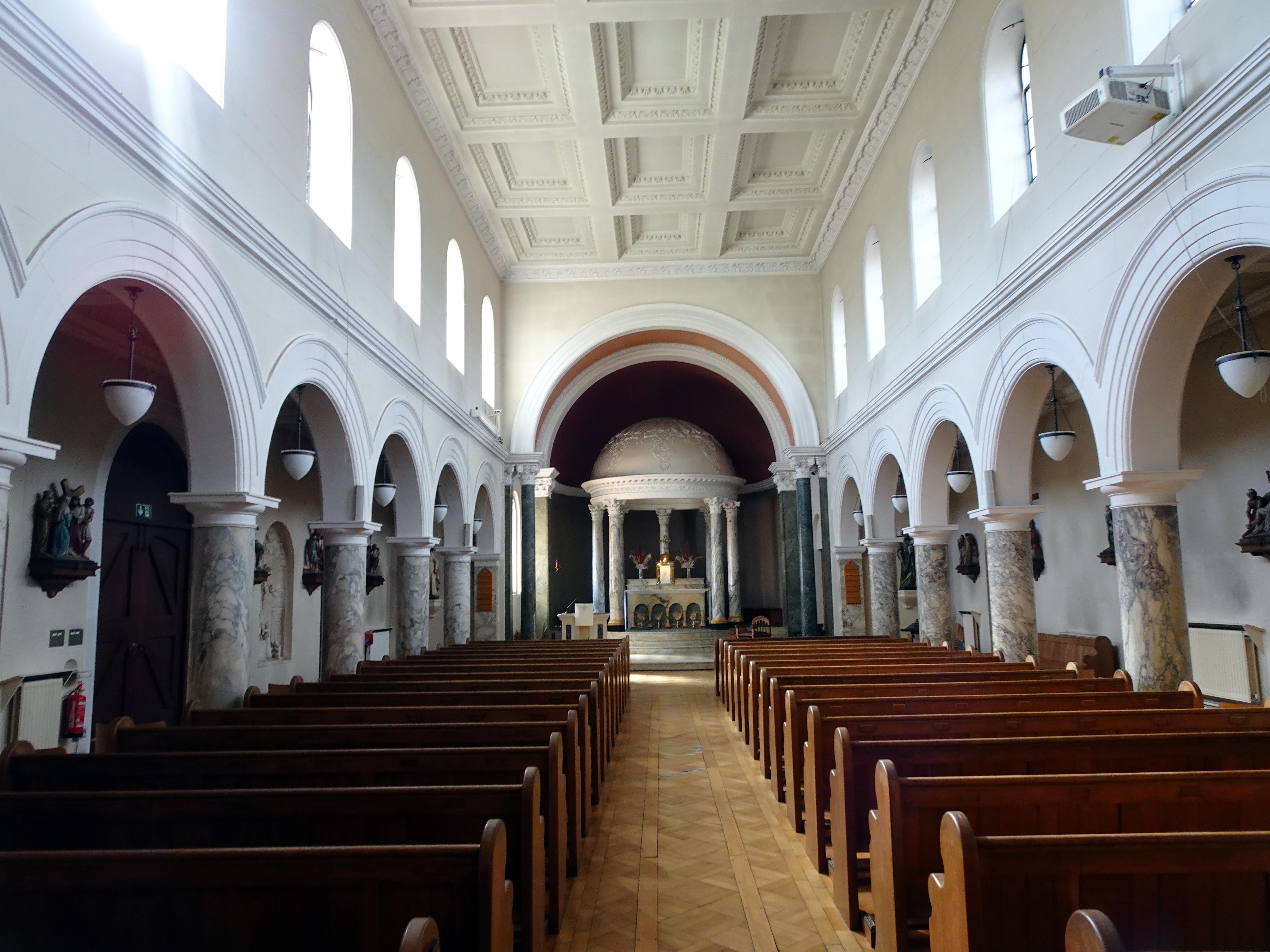
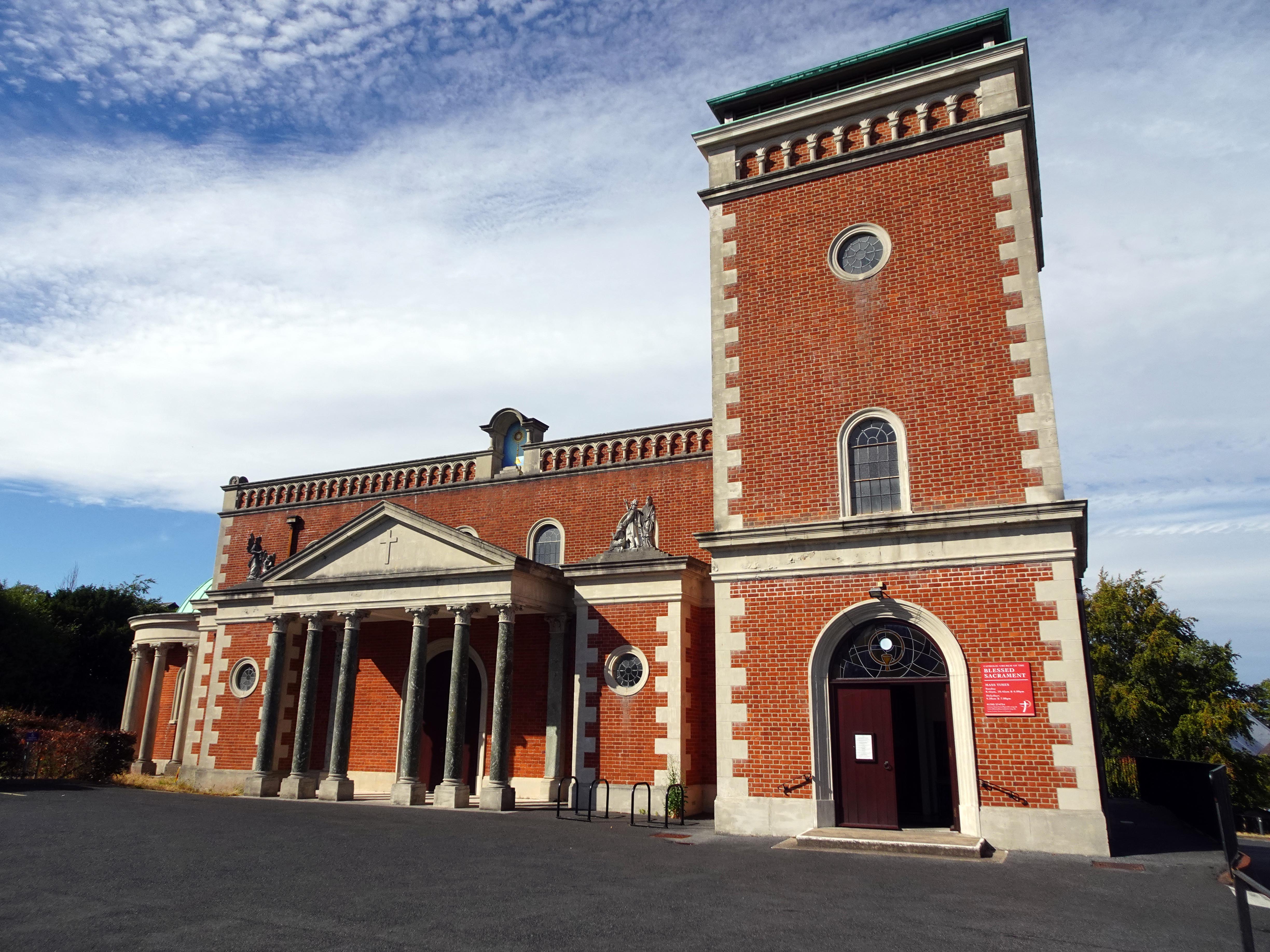
On 28 May 1932 the Bishop returned to open the church. He perambulated around the grounds before entering, supported by clergy from as far afield as Calcutta and as near as Buckfast. The service was relayed to the crowd by amplifier, and tickets were required to attend the Latin Mass the following day. The church is said to be based on the design of the basilica of St Paul Outside the Walls in Rome and was built by Mr E. B. Wheatley. It is constructed of red brick with Portland stone corners, window surrounds and roof parapet, and has a portico entrance with six green marble columns.
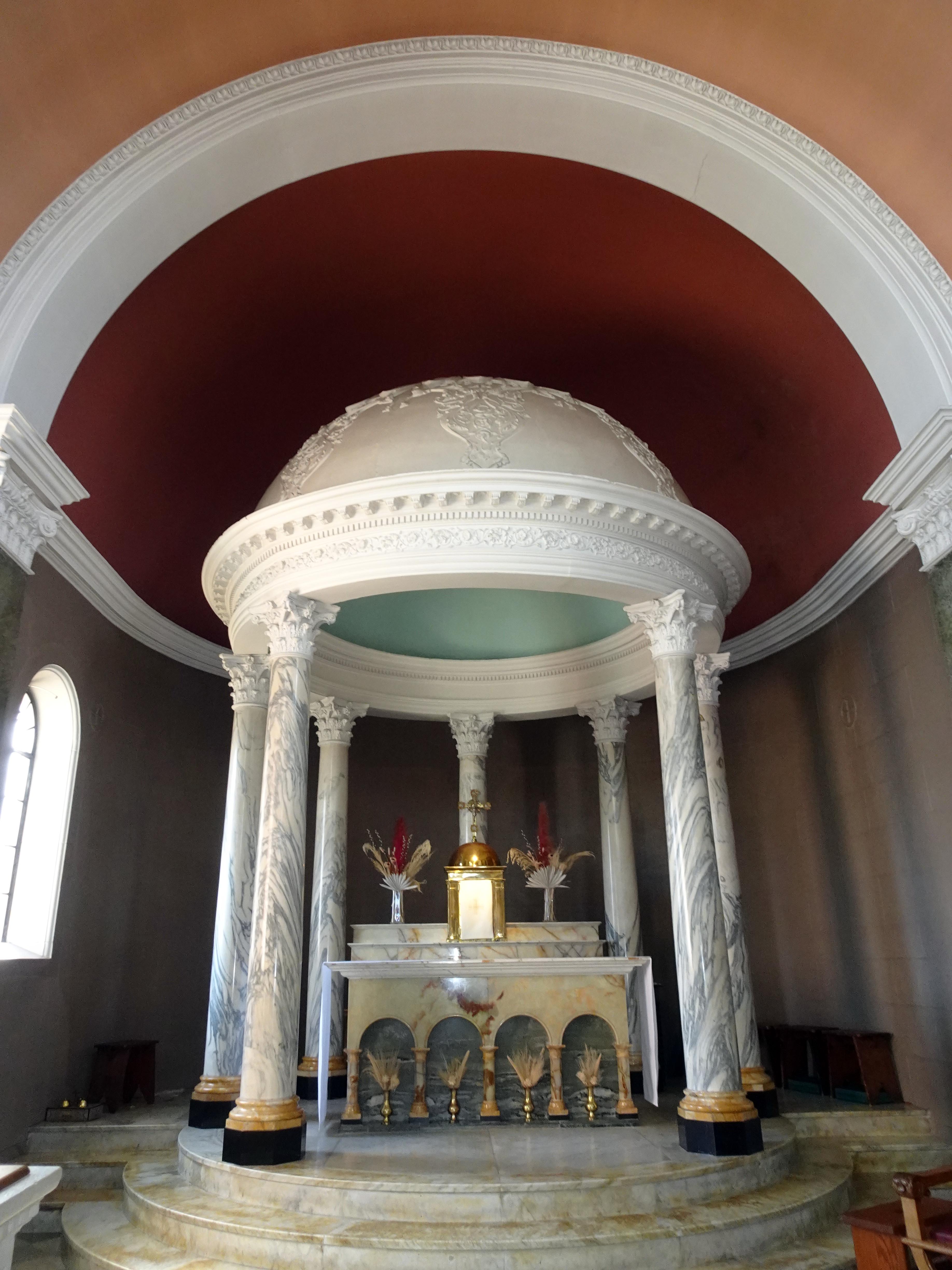
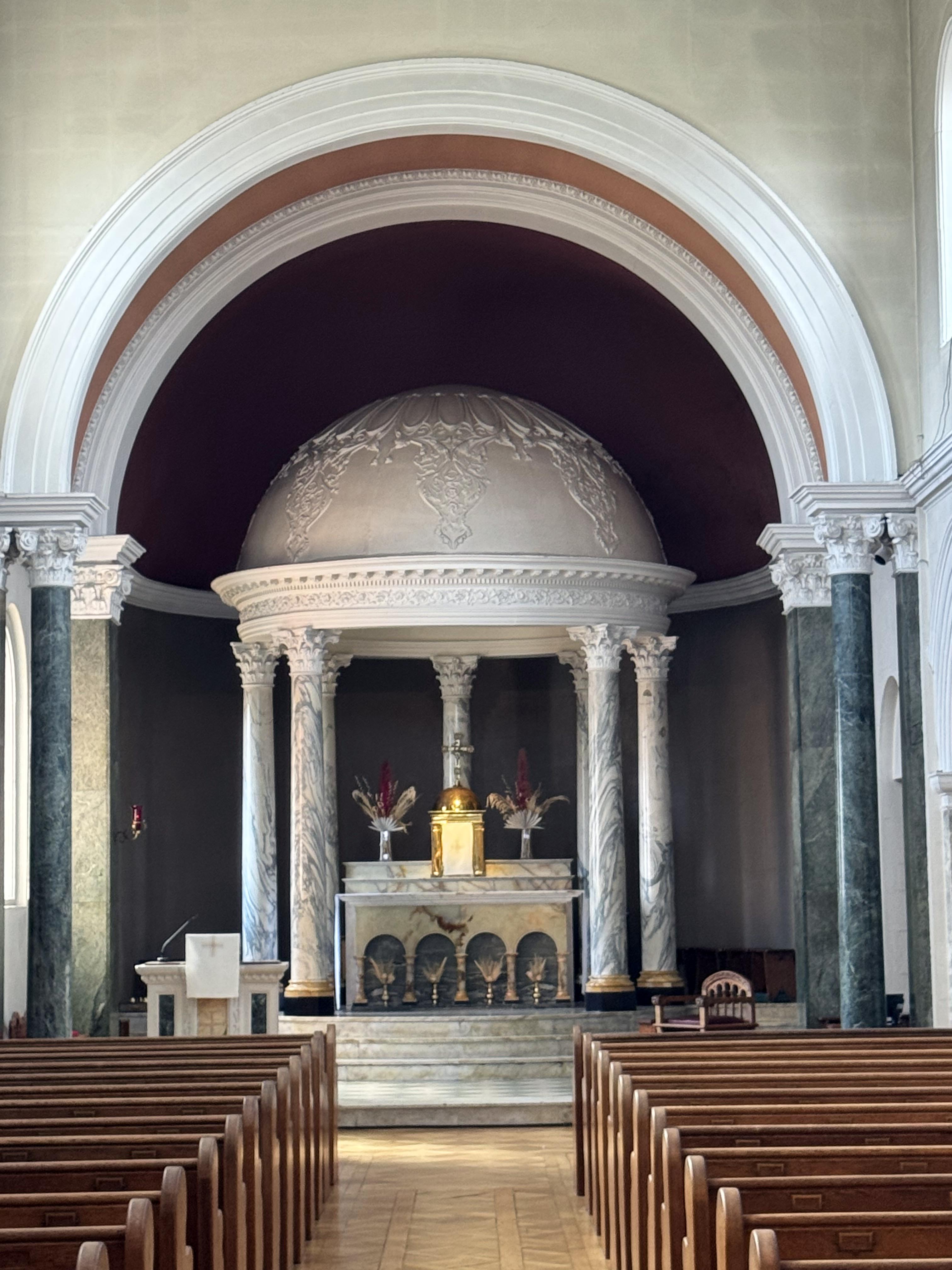
Inside, the sanctuary is distinguished by a large white arch which carries the baldachino or canopy, supported on seven columns of Italian cipollino marble. The altar is of green onyx and the tabernacle of polished brass. There is extensive use of marble saved from the demolition of Marley House on Woodbury Common, used for the setting of the Virgin and Child and the fourteen Stations of the Cross. The campanile or bell tower was originally ninety feet high. On 4 May 1942 a bombing raid on Heavitree delivered a glancing blow which reduced the height to about sixty feet; another bomb completely destroyed the presbytery and the original stained glass windows. Father Tyman escaped because he had gone over to the church shortly before the bomb struck. The tower has not been restored to its original height but now houses a four-ton bell named Emmanuel, the third largest in South West England.
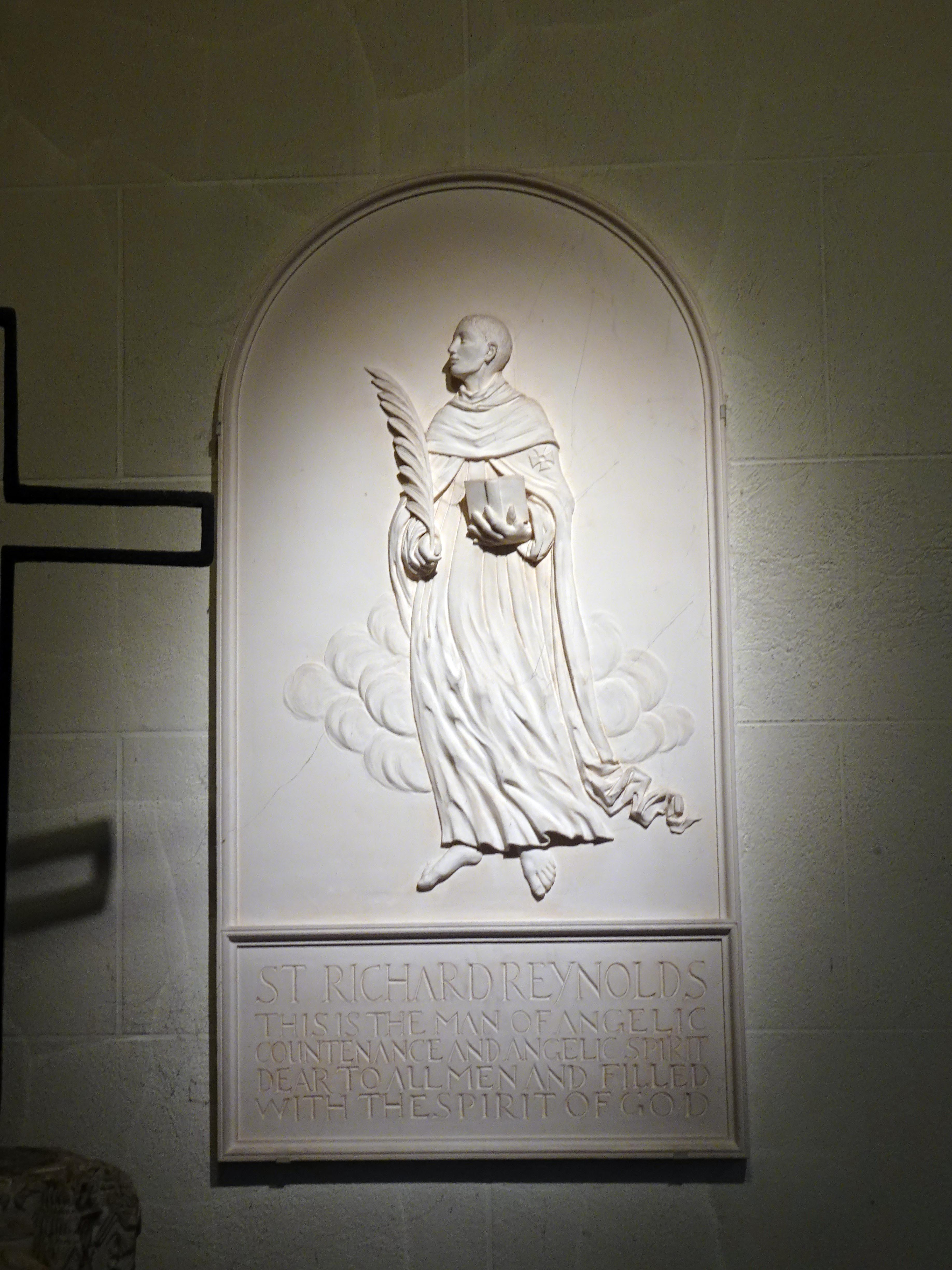
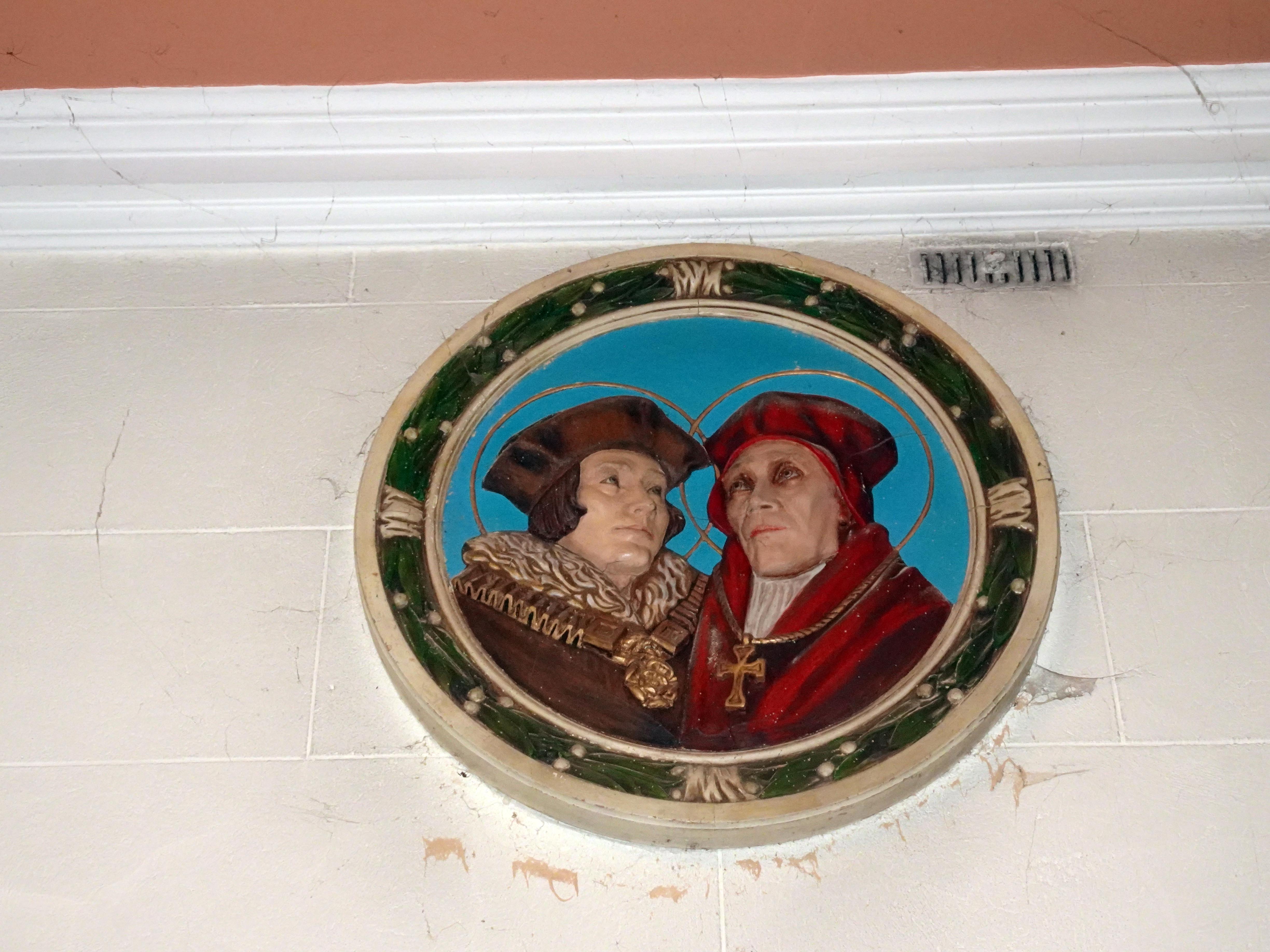
When the presbytery was rebuilt, a flat for the priest and a parish hall were added. The hall is now named the Saint Richard Reynolds Centre and is used for parish activities and can be let to outside groups. Richard Reynolds was born in 1492 and is thought to have come from the Pinhoe area of Exeter. He was a Bridgettine monk of Syon Abbey at Isleworth, reputedly the only English monk of his time well versed in Latin, Greek and Hebrew. In 1535 he refused to acknowledge Henry VIII as head of the Church after the king’s marriage to Anne Boleyn. He was imprisoned in the Tower in mid-April 1535 and executed by hanging, drawing and quartering at Tyburn on 4 May 1535. He was canonised as one of the Forty Martyrs of England and Wales on 25 October 1970. Within the church there is a Martyrs’ Chapel dedicated to St Richard Reynolds.
The English branch of the Bridgettine Order was founded in 1415 to follow the discipline laid down by St Bridget of Sweden and recruited both men and women under an abbess. After the Reformation they went into exile and later returned to England when restrictions were lifted in the nineteenth century. Their final home was a converted Georgian stable block at South Brent in Devon. As numbers fell to three, the community arranged for their medieval manuscripts and other artefacts to be placed in safe keeping; in 2004 their remaining medieval manuscripts were loaned to the University of Exeter.
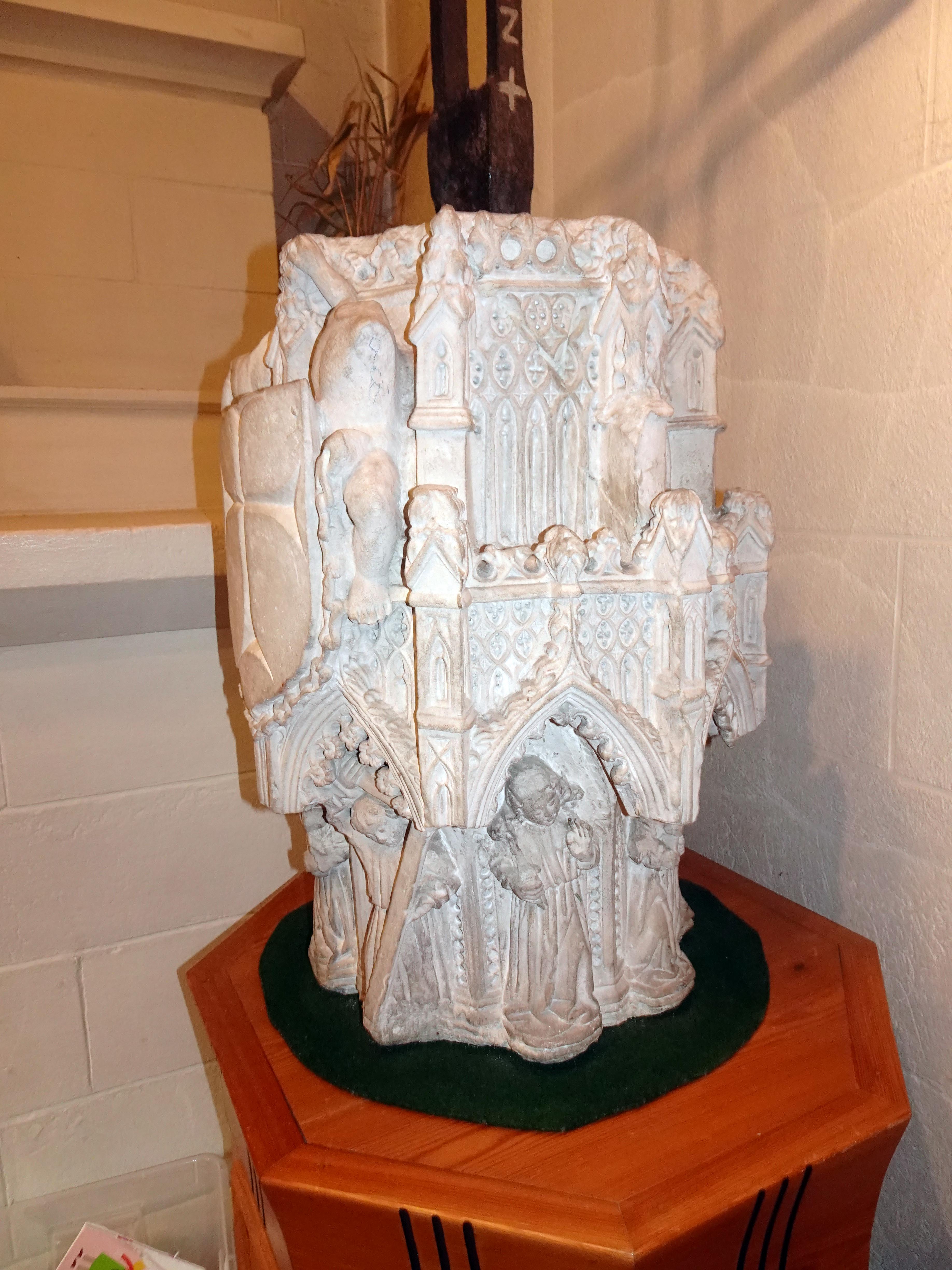
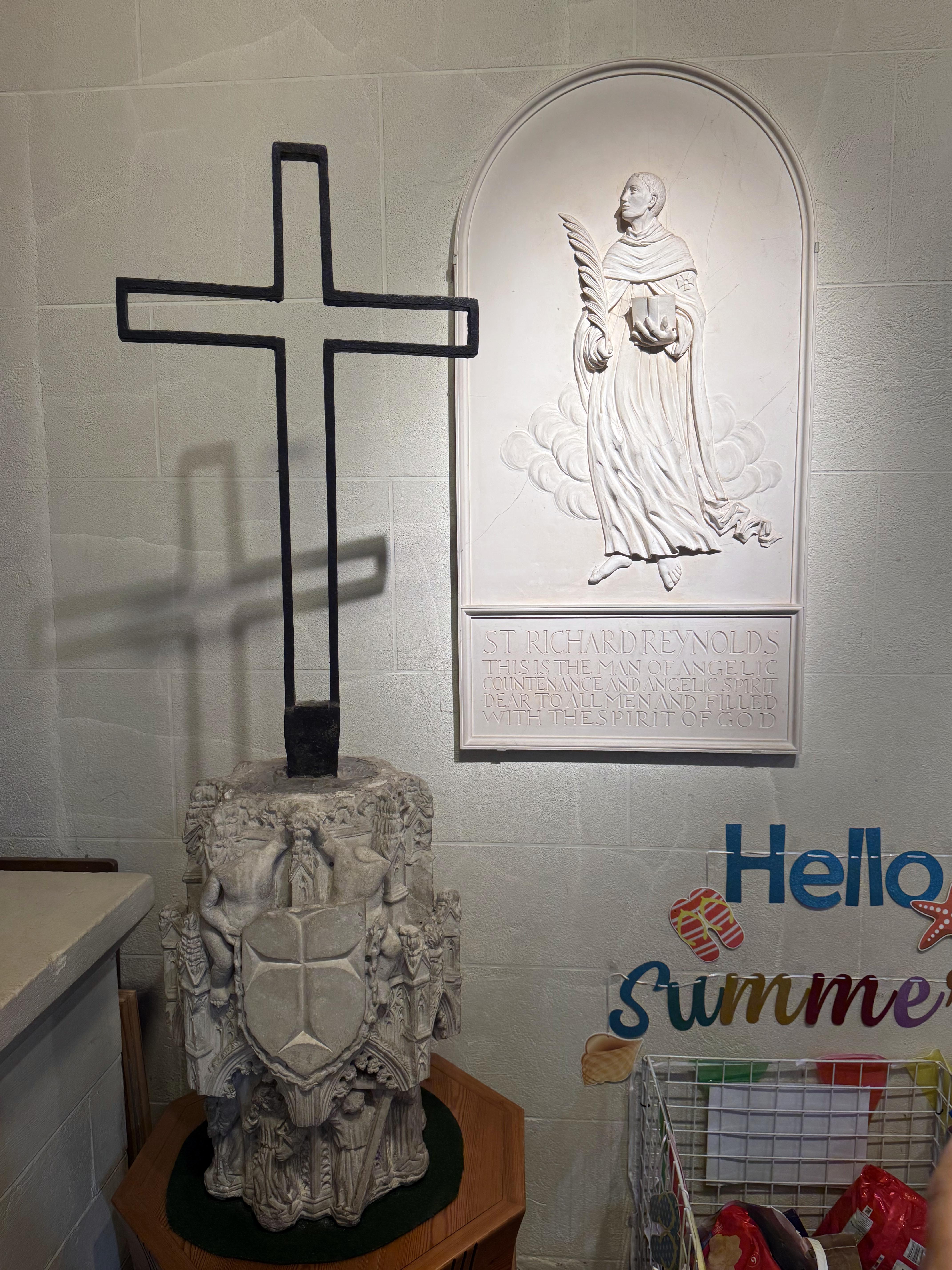
In June 2011 the Abbess and Sisters of Syon Abbey came to Blessed Sacrament with a gift of items relating to St Richard Reynolds, including a carved stone column head from pre-Reformation Syon, vestments for his feast day, and a painting depicting the martyrdom. It was thought that as this church already had a plaque of the saint, who had an active part in the life of the church, it was the most suitable resting place for these other relics. The nuns subsequently moved to Catholic-run premises in Plymouth and put their former house on the market. The carved capital from Syon is now set at the back of the church, close to the Martyrs’ Chapel and the Saint Richard Reynolds Centre.
Contemporary accounts from Syon Abbey record that Reynolds was publicly displayed and attached to one of the great stone pillars of the abbey church when he was arrested and taken from his community, before his removal to the Tower. The capital now in Heavitree is a surviving head from one of those medieval pillars. While it is not possible to identify it as the exact stone to which Reynolds was bound, it is a documented fragment of the same structural range and period. On that basis it is treated as a contact relic: a piece of fabric from the abbey where Reynolds lived and from whose pillars he was exhibited, and therefore a secondary physical link with his martyrdom. In Blessed Sacrament, the history of the parish, the Bridgettine order, and the cult of St Richard Reynolds converge in that single carved stone at the rear of the church, giving the building a precise and verifiable connection to the medieval Syon Abbey and to one of the Forty Martyrs of England and Wales.