

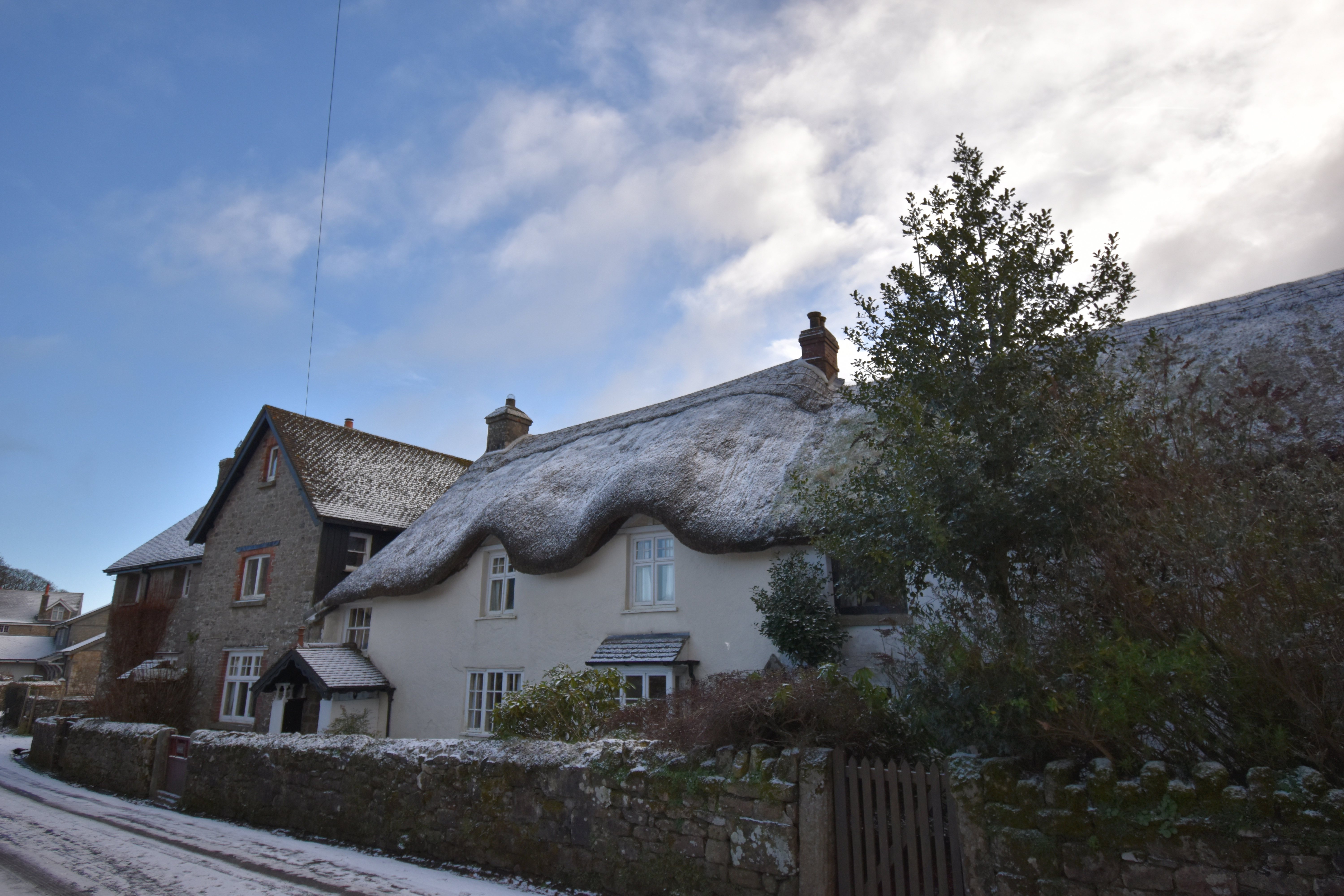
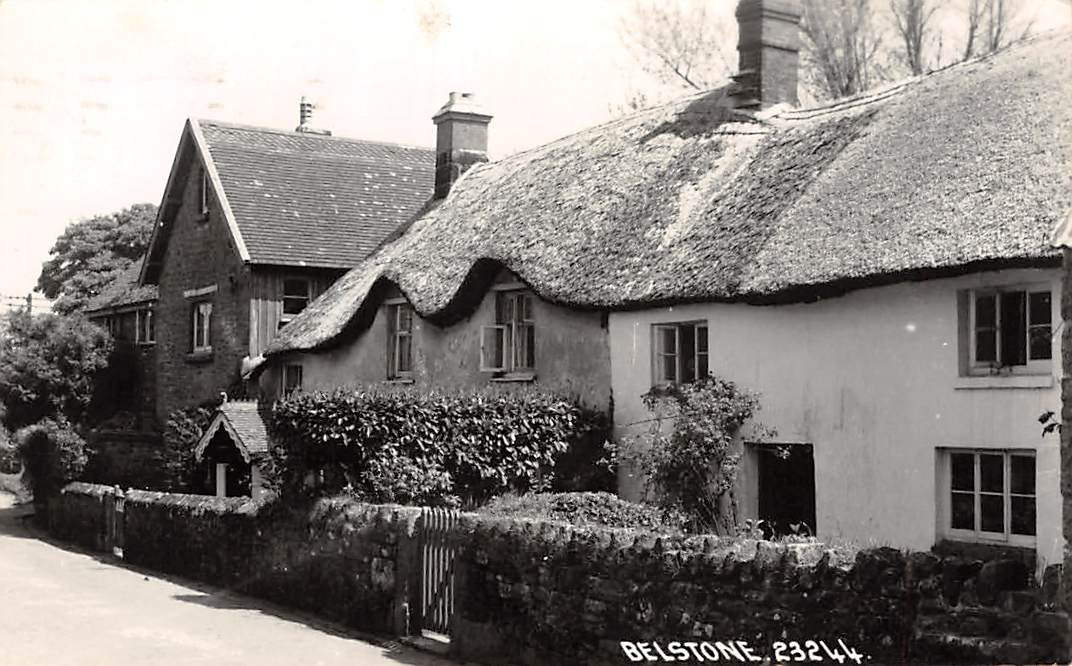
Belstone is one of those Dartmoor settlements that seems to have grown out of the ground rather than been built upon it. You approach it from the moor and it appears almost shyly, a scatter of roofs and chimneys tucked against the slope as if trying not to draw the weather’s attention. Yet for all its modesty, the place has roots that run deeper than many of the grander towns around it. Belstone has been lived in, worked in, prayed in and argued over for more than a thousand years, and the land around it carries the marks of people who were here long before the idea of a village even existed.
Long before Belstone had a name, the high ground above it was already a place of ceremony. The Nine Maidens stone circle still stands on the ridge, a ring of low granite uprights that once formed part of a Bronze Age ritual landscape. It is easy to imagine the people who raised them moving across the moor with their cattle, lighting fires on the slopes, and marking their dead with cairns and circles. Dartmoor was not the bare, windswept plateau we know today; it was a patchwork of woodland and heath, gradually opened by grazing and burning. The stones are what remain of that world – not ruins, exactly, but reminders of a time when the moor was a place of meaning as well as survival.
The medieval farmers who followed them inherited a landscape already shaped by centuries of grazing. Belstone’s position between the Taw and the East Okement made it a natural place for a small agricultural community to take root. By the time the Norman surveyors arrived in 1086, Belstone was already a functioning settlement. Domesday describes a modest holding – a few households, a patch of arable, and a great deal of rough pasture – but that balance of marginal field and extensive grazing never really changed. Belstone was never a market town or a manor of consequence; it was a place where people coaxed a living from thin soils, hardy livestock, and the rhythms of the moor.
Even its name carries the feel of the landscape. Victorian writers, never ones to resist a dramatic theory, insisted it came from “Baal’s stone”, a relic of Phoenician traders who supposedly hauled a sacred idol to the tor and worshipped it there. It is a wonderful story, full of sea‑roads and ancient rites, but it has very little to do with reality. The Domesday Book is more prosaic: it records the settlement as Bellestan or Bellestam, probably meaning “bell stone” – perhaps a reference to a logan stone on the tor that once rocked with a resonant note when pushed. Sabine Baring‑Gould, who knew the moor as well as anyone, claimed local boys used it to crack nuts before quarrymen finally destroyed it. If so, the village may owe its name not to Phoenician priests but to a granite toy.
The pattern of the village still reflects its early economy. The cottages cluster tightly around the green, as if for warmth, while the farms sit just beyond, each with its own relationship to the commons. The open moor was not a scenic backdrop but a working resource: summer grazing for cattle and sheep, peat for fuel, bracken for bedding, and the occasional rabbit or trout to supplement the pot. The rights to these things mattered, and they were defended with the quiet stubbornness that rural communities specialise in. Even today, the parish boundary stones stand like sentinels, reminders of a time when knowing exactly where your land ended and your neighbour’s began was not a nicety but a necessity.
Belstone Cleave, that steep wooded gorge carved by the East Okement, played its own part in the village’s rural life. The river powered small mills, watered livestock, and provided a natural barrier that shaped the pattern of fields and lanes. Early writers praised the cleave’s “wild massings of rock”, but for the people who lived here it was never just picturesque; it was part of the working landscape. Wood was cut there, sheep sheltered there, and children learned the shape of the land by scrambling over it long before they learned their letters. The cleave, like the moor above, was woven into the practical, everyday life of the parish.
Nearby, the now‑vanished chapel of St Michael of Hatstock once stood near Chapel Ford, a small religious outpost serving those scattered farms that lay away from the village centre. Its disappearance is typical of Belstone’s quiet history: no great ruin, no dramatic fall, just a steady fading of a building whose work had passed to the parish church. Yet the name lingers in the landscape, one more layer in the palimpsest of fields, tracks and stories that make up the parish.
The farms themselves tell the story of Belstone’s rural continuity. Many of the names – Skaigh, Higher Sticklepath, Tor Down – appear in records centuries old. Their fields follow the same medieval boundaries, their barns and linhays built from the same granite that litters the moor. The rhythm of the year was set by lambing, shearing, haymaking, and the long winter months when the wind came down from the high tors and the cattle were brought into shelter. It was a hard life, but not an unhappy one. Rural Dartmoor has always produced people who are both independent and deeply rooted, and Belstone is no exception.
For all its apparent timelessness, the village did not escape the wider currents of rural change. The nineteenth century brought enclosure pressures, shifts in tenancy, and the slow decline of small‑scale tin streaming and stone cutting on the fringes of the parish. The twentieth century added mechanisation, the loss of labour to the wars, and the gradual move from subsistence farming to mixed rural livelihoods. Yet Belstone changed less than most. Its population barely moved, its farms remained small, its lanes stayed narrow. The moor remained the moor.
What is remarkable is how much of that rural past is still visible. Walk from the village green toward the tor and you pass the old pound where stray livestock were once held. Follow the lane to the cleave and you can still see the terraces where medieval farmers scratched out their crops. Look across the fields and the pattern of long, narrow strips – relics of early agriculture – is still faintly there beneath the grass. Even the soundscape is rural: sheep calling on the slopes, the river in the cleave, and the wind moving through the gorse in a way that has not changed in a thousand years.
Belstone does not shout its history. It doesn’t need to. The place has the confidence of a settlement that has endured everything the moor can throw at it – storms, winters, fires, legends, and the slow erosion of time. The cottages still huddle close to the green; the holy well still trickles; the moor still begins at the village edge with no ceremony at all. You can stand by the old chapel, or on the lane out towards the tor, and feel the centuries layered around you – Bronze Age stones on the ridge, Saxon names in the soil, Norman record‑keepers, medieval farmers, Victorian storytellers, and the quiet persistence of those who live here now.
Belstone’s history isn’t something the village puts on display; it simply sits there in the shape of the lanes, the pattern of the fields, and the way the moor begins without warning at the end of the street. You don’t need plaques or guided trails to understand the place. A walk up to the tor, or down into the cleave, tells you more about how people have lived here than any archive could. The village has changed, of course, but not so much that you can’t still sense the older rhythms beneath the modern ones. It remains what it has always been: a small community on the edge of the high ground, shaped by weather, work and the long familiarity between people and landscape. That quiet continuity is part of its charm. Belstone doesn’t try to impress you; it just gets on with being itself, and that is more than enough.

