

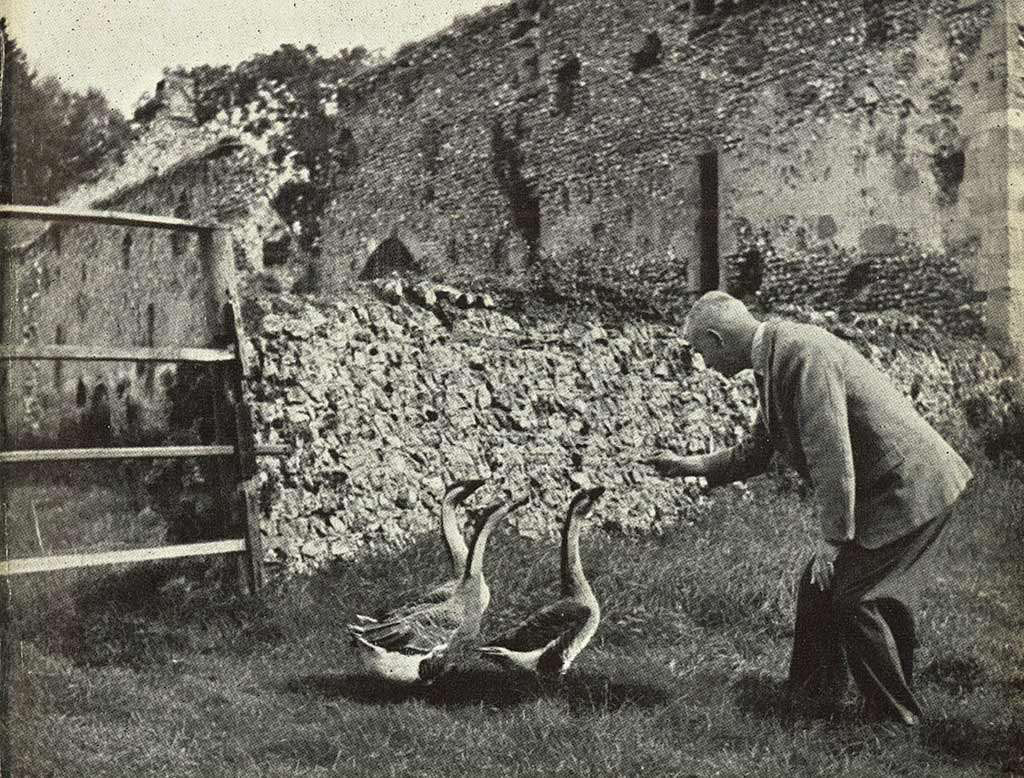
Admiral of the Fleet Andrew Browne Cunningham, Viscount Cunningham of Hyndhope, was one of the most capable and strategically important naval commanders Britain produced in the twentieth century. His career spanned the transition from the pre‑Dreadnought era to the age of naval aviation, and at every stage he demonstrated a combination of technical competence, operational nerve and political reliability that made him indispensable to successive governments. His association with Bishop’s Waltham, where he stayed whenever on leave and later retired, gives the town a direct connection to the major naval decisions of the Second World War.
Cunningham entered the Royal Navy in 1891 and served across the Mediterranean, West Indies and South Atlantic before specialising in gunnery, then the intellectual core of naval warfare. During the First World War he commanded destroyers in the Dardanelles and the Adriatic, gaining a reputation for aggressive handling of light forces and for maintaining discipline and cohesion under pressure. Between the wars he held a series of senior appointments, including command of HMS Rodney and leadership of the Mediterranean destroyer flotillas. These roles honed the tactical instincts that would define his wartime command style: rapid decision‑making, willingness to close with the enemy, and an insistence on maintaining the initiative.
His appointment as Commander‑in‑Chief Mediterranean in 1939 placed him at the centre of Britain’s most strategically exposed theatre. Italy’s entry into the war in June 1940 created an immediate threat to British control of the Suez Canal, the Middle East and the supply routes to India and the Far East. Cunningham’s response was characteristically direct. In November 1940 he authorised the Fleet Air Arm’s attack on Taranto, the first successful carrier‑borne strike against a battle fleet in harbour. The operation disabled three Italian battleships and demonstrated conclusively that naval air power had overtaken the battleship as the decisive arm. The Japanese study of Taranto before Pearl Harbor underlines its global significance.
In March 1941 Cunningham secured a decisive victory at Cape Matapan. Using radar‑equipped battleships and destroyers in a night action — a capability the Italians lacked — he destroyed three heavy cruisers and two destroyers, inflicting losses from which the Regia Marina never recovered. The battle effectively removed Italy as a serious surface threat in the eastern Mediterranean and allowed British convoys to operate with greater freedom.
Cunningham’s responsibilities extended far beyond fleet engagements. He directed the evacuation of Crete in May 1941, a costly operation conducted under continuous air attack. His refusal to abandon the Army, despite heavy naval losses, became emblematic of his command philosophy. He also oversaw the long struggle to keep Malta supplied, coordinating convoys through waters dominated by Axis aircraft and submarines. The survival of Malta — and its ability to strike at Axis supply lines to North Africa — was central to the eventual defeat of Rommel’s forces.
From 1943 Cunningham served as Allied Naval Commander for the invasions of Sicily and mainland Italy. This required the integration of British and American naval forces, the coordination of amphibious landings on a scale not attempted since the First World War, and the maintenance of supply lines across a contested sea. His ability to work with American commanders, while retaining operational control of British forces, was a major factor in the success of the Mediterranean campaign.
Cunningham’s connection to Bishop’s Waltham was unusually close for a serving wartime commander. When on leave he returned to the town and stayed near the Bishop’s Palace. His presence there was considered so strategically important that Winston Churchill ordered a dedicated telephone line to be installed, ensuring that Cunningham could be summoned instantly and recalled to duty without delay. This arrangement — highly unusual for a field commander — reflects the degree of trust placed in him and the centrality of his command to British strategy.
After the war Cunningham served as First Sea Lord from 1943 to 1946, guiding the Royal Navy through the transition from wartime expansion to post‑war contraction. He was elevated to Viscount Cunningham of Hyndhope in 1945. His later years retained a strong connection to Bishop’s Waltham: in 1952 he transferred the ruins of the Bishop’s Palace to the Ministry of Works, securing their preservation and public guardianship. He lived nearby until his death in 1963, after which he was buried at sea off Portsmouth in accordance with naval tradition. His memorial in St Peter’s Church marks him as the town’s most distinguished modern resident.

