

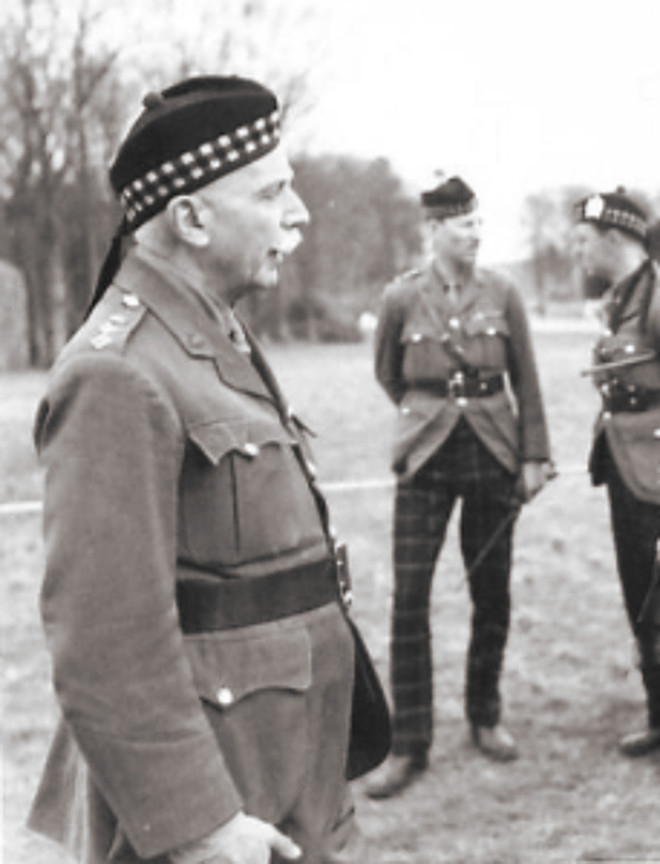
Edward Nicholson Broadbent was born on 5 May 1875. His father was Colonel John Edward Broadbent RE CB JP and his mother was Dora Nicholson. He entered the 2nd Battalion King’s Own Scottish Borderers as a second lieutenant on 28 Sep 1895.
1895 Second Lieutenant 28 Sep
1897 Lieutenant 26 Oct
1901 Captain 18 May
1905 Egyptian Army 19 Oct
1911 Commandant Camel Corps School 19 May
1916 Major & Brevet Lt-Colonel DSO (Gazette 23 Nov)
1918 CMG
1930 Major-General
1934 Lieutenant Governor of Guernsey
1937 Knight Commander of the British Empire (KBE)
1838 Colonel of the KOSB
Edward Broadbent was a lieutenant when he fought on the Northwest Frontier in Sir William Lockhart’s campaign. He was with the Tochi Field Force and the Tirah Expeditionary Force. He served in the 2nd Battalion in the operations around Dwatoi and the Bara Valley.
In the Boer War he was with the 1st Battalion and took part in the operations in the Orange Free State from February to May 1900, including the battles of Paardeberg, Poplar Grove and Karree Siding. In the Transvaal he was in operations east and west of Pretoria, including the battle of Vlakfontein.
In World War One he was with the Egyptian Expeditionary Force in his capacity as Commandant of the Camel Corps School. Troops from Britain, Australia, NZ and India were trained in camel-mounted tactics for desert operations in the Sinai to defend the Suez Canal. He later served on the staff in Palestine, involved in rail repair, supply depots and auxiliary artillery support.
He was appointed Lieutenant Governor of Guernsey in 1934 and had responsibility for troops on the island as well as Alderney. He directed pre-war defensive preparations, coordinating military exercises and improving fortifications. He was 65 when he relinquished command in the Channel Islands in 1939.
Major-General Sir Edward Nicholson Broadbent was not married. He died on 18 June 1944 and was buried in Magdalen Hill Cemetery, Winchester. The photo of Major-General Broadbent was taken in 1940 when Princess Alice, the Duchess of Gloucester visited the King’s Own Scottish Borderers at Berwick-on-Tweed.

