
Over 110 years ago, Cornwall was rocked by the murder of a retired army surgeon who was killed by his own son. Kingsand, a fishing village adjoining Cawsand near Plymouth, became the focus of national attention when Surgeon-Major James Hamilton Nicholas, late of the Royal Army Medical Corps, was found dead in the drawing room of his holiday home, Cliff House. The case, with its threads of imperial service, mental illness, and a Hindu dagger taken from a wall display, would haunt the community and the courts alike.
A fifty-five-year-old Surgeon-Major, James Hamilton Nicholas had had a distinguished career in the Indian Medical Corps, which took him overseas to India, Afghanistan and other places within the British Empire. After this, he was looking forward to retirement at Southfields, St James’s Road, Croydon, where he maintained a small but select private practice, a brass plate affixed to the railing advertising the fact. He and his family were respectable, comfortably off, and outwardly unremarkable, save for the shadow that hung over his eldest son.
Ironically, the surgeon’s son – also called James Hamilton Nicholas, and born in 1884 – had inherited the name but not the robust health or settled mind of his father. As a youth he suffered from a heart condition and had been operated on in his teens. He also had mental problems. In 1903 he emigrated to New Zealand, living and working on a sheep farm or ranch. He wrote home regularly, and the family were reassured. But in 1909 he suffered sunstroke, religious melancholia and brain fever, and was for a time in an Auckland asylum. A stroke, followed by fever and religious mania, led to a series of telegrams. By August 1909 he had shown signs of paranoia and melancholia, and his desperately worried father travelled out to New Zealand.
On that first journey the father returned without him, but after January 1910 he went to New Zealand a second time to fetch his son. James junior was again admitted to an asylum near Auckland for a while, and was eventually released on the understanding that his father would take responsibility for him. In February, the younger James’s sister, Yvonne, travelled to New Zealand and returned home to Croydon with her brother on 20 May. During the voyage home he improved for a time, then relapsed; it was necessary to keep an eye on him throughout the journey, and a keeper accompanied him on board ship. Since his return to Croydon he had never been allowed to go out by himself: two members of the family always accompanied him. At Croydon he was always locked in at night and had wooden shutters to the windows. He resented being watched and, though he would not always say anything if things did not please him, he had a worried, haunted look.
The family decided that having a keeper was sound and wise, but this became a point of tension. One of the keepers from Auckland Asylum had returned to England a short time later, and Mrs Nicholas prepared a bed for him in the house. Her husband, however, believed that he could manage his own son and would not have it. There had already been a family row when a keeper had been suggested for another relative, and Mrs Nicholas had been offended at any suggestion that her own son might need such a keeper. Despite this, she continued to beg her husband to secure proper supervision for James junior, fearing that something might happen.
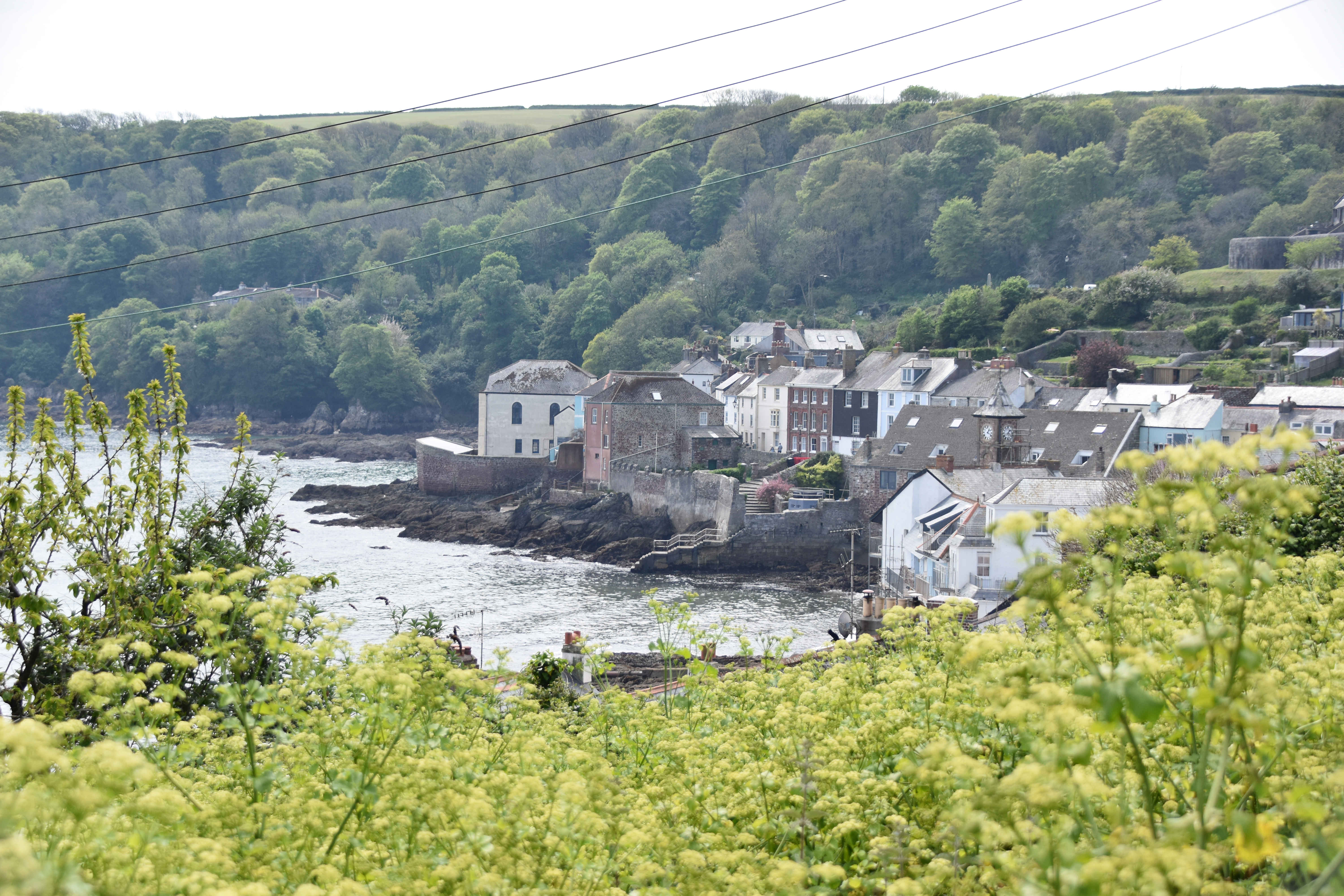
On 28 July 1910 the family travelled from Southfields, Croydon, to Kingsand for an extended summer holiday. They took a small semi-detached villa called Cliff House, described in newspaper reports as being in the higher part of Kingsand, not far from an open space called “The Green” on the path – locally known as “the road” – to Maker. The two-storey villa, with a verandah and a view over Cawsand Bay, was owned by Mr P. Palmer of Looe. Major Nicholas arrived with Mrs Nicholas, his youngest son and two daughters. After a week the other member of the family circle arrived: the eldest son, James, who had spent several years on a sheep farm in New Zealand.
Nearly every day the major and his sons went fishing, occasionally being joined by the ladies of the party. The major quickly became a favourite with the local fishermen, speaking cheerfully to them on all occasions. The sons too were liked, although it was noticed that the eldest was very quiet and reserved. The whole family were held in high respect, and the community was greatly shocked when it later became known that a charge of wilfully murdering his father was made against the eldest son, James Hamilton Nicholas, described as a tall, thin, dark-complexioned man with a black moustache, aged 26 years.
During their first week at Cliff House, James junior seemed better and brighter, but after that he went back to his old ways. He had fits of sudden temper when thwarted, and his father, in despair, would turn his back and say he was not going to put up with that sort of thing any longer. One of the things James particularly resented at Kingsand was not being allowed to bathe, which was prohibited because of his weak heart. He also disliked being told he was not to smoke at certain times or to eat between meals. He brooded on these restrictions and seemed to spend time in a state of bitter resentment.
Yvonne later told the inquest that, in her view, her brother had been insane since his return to England. The family had all been afraid of him and were always expecting something to happen. Her mother had repeatedly urged her father to get a keeper for him, especially as she saw that James was “turning against his father”. On the Monday morning before the tragedy, she again warned her husband that he ought to have a keeper because of this change in attitude. The major, however, still believed he could manage his son.
On the evening of Monday 15 August 1910, all the family went for a walk to Anderton. On returning home at about 9.40 p.m., James went to bed in his room, which adjoined that of his parents. The household retired for the night. Shortly before 3 a.m. on Tuesday 16 August, the house was awakened by a noise. Yvonne described hearing a sound like someone falling downstairs, followed by a second sound as if someone had dropped to the floor. Looking over the landing, she saw her brother James going downstairs. She heard her father make a remark, to which her brother replied, “Coming.” She next heard her father say, “Bring a light.”
Yvonne went into the drawing room, where there was the faint light of a candle. There she saw her mother wiping blood from the face of her father, who was lying on the floor in his pyjamas. Her brother was bending over him, and her mother was trying to pull him away. Yvonne realised that her brother, who did not appear angry or excited, was throttling their father. As she tried to pull him away, her brother called out, “Let go,” before his arm relaxed. In that moment she saw that he had a Hindu dagger in his hand.
There had been several similar weapons – Indian or “Hindu” daggers – hanging on the wall of the drawing room as ornaments, relics of the major’s imperial service. Yvonne testified that her brother then uttered the words, “That’s done.” Her mother left the drawing room and returned with a servant, who told James to go to his room, which he did without a word. Yvonne took the dagger from her brother and later recalled that he looked dazed when told to go to his room, as though he were in a dream. Some of the furniture in the room had been knocked over, and there was a vacant space on the wall where one of the weapons had hung with others as an ornament.
At about 3 a.m., the police at Kingsand were contacted, and Police Constable Mitchell went at once to Cliff House. When he arrived, he found Major Nicholas lying dead on the floor of the drawing room, dressed in his pyjamas. There was a long horizontal wound on the chin and a terrible gash to the throat. A small amount of blood was on the floor. The knife handed to him by Miss Nicholas was covered with blood. Earlier accounts also mentioned a candlestick lying beside the body, and a doctor later speculated that the major had been knocked down by a blow on the chin, rendering him unconscious, and that his throat had then been cut with the dagger taken from the wall.
PC Mitchell went upstairs and found James Nicholas in his bedroom. When he spoke to the prisoner, James replied, “I believe I have done it,” and on being cautioned and charged with the murder of his father he said, “Yes, I did it.” Mrs Nicholas telephoned for a doctor, and Dr J. T. Chivers (or Treharne in some reports) arrived at about 6.30 a.m. He confirmed that Major Nicholas was dead and described the injuries: the long horizontal wound on the chin, the deep gash in the throat, and the signs of a struggle in the room. He believed the throat had been cut after the major had been knocked down by the blow on the chin.
On the afternoon of Tuesday 16 August, James Nicholas junior was taken in custody from Millbrook to Torpoint Police Station, where at 5.30 p.m. he was charged before Mr W. H. Turrell with feloniously and wilfully, and with malice aforethought, killing and murdering one James Hamilton Nicholas. His quiet response to the charge was, “That’s right.” No further evidence was offered at this preliminary hearing, and he was remanded to Plymouth Prison until 24 August.
On Wednesday 17 August 1910, The Western Morning News reported that “Kingsand, a fishing village, adjoining Cawsand, near Plymouth, was the scene of a terrible tragedy in the early hours of yesterday morning.” The report described the family’s recent arrival at Cliff House, the major’s popularity with local fishermen, and the shock felt in the community when it became known that the charge of wilful murder had been made against his eldest son. The case quickly became known as the “Kingsand Tragedy”.
On Wednesday 18 August, an inquest into the death of Surgeon-Major Nicholas was held at Kingsand. Mr A. Venning, the Deputy Coroner, presided, and Mr E. Elliot Square, solicitor, appeared for the Nicholas family. Evidence was given by Miss Yvonne Nicholas, Dr Chivers, PC Mitchell and others. Yvonne’s detailed account of the events of the night, her brother’s history of mental illness, and the family’s fear of him formed the core of the inquest narrative. The Coroner, in summing up, said that the question of the mental condition of the accused would be considered at another court. The inquest jury returned a verdict of “wilful murder” against James Hamilton Nicholas and expressed sympathy with the family.
Further evidence at the inquest and in subsequent reports elaborated on James’s mental state. Yvonne stated that since his return to England he had never been allowed out alone, that he was always locked in at night, and that she and her sister were so afraid of him that when they took him for a walk they chose routes where there were tram lines or police, so that assistance could be called immediately if anything happened. She said she had no doubt that her brother had been insane since his return, and that the family had always been expecting something to happen. In answer to Police Superintendent Gadd, she explained that her brother had been allowed to leave the asylum in Auckland on her father’s promise to look after him.
The case eventually came before the Cornwall Assizes at Bodmin on 18 November. The trial of James Nicholas for the murder of his father attracted considerable attention. The defence argued that James was insane at the time of the killing and that he had been suffering from delusions and mental instability for some time. Evidence was given regarding his behaviour in New Zealand, his confinement in an asylum, his deterioration during the voyage home, and his conduct after his return to England and at Kingsand. The prosecution accepted that the accused had been mentally unwell but maintained that the act itself was deliberate.
The judge, Mr Justice Bankes, in summing up, directed the jury to consider whether the accused was capable of knowing the nature and quality of his act at the time he committed it. The jury retired for only a short time before returning a verdict that the prisoner was guilty of the act but insane at the time he committed it. He was ordered to be detained during His Majesty’s pleasure, which in practice meant confinement in a criminal lunatic asylum such as Broadmoor at Crowthorne, Berkshire.
Newspaper reports, including those in the Western Morning News and the national press, described the incident as the “Kingsand Tragedy” and spoke of a “pathetic story unfolded at the inquest”, with particular emphasis on the evidence as to the mental state of the son. The image of a retired imperial surgeon, killed in his Cornish holiday home by a troubled son wielding a Hindu dagger taken from a display of colonial weapons on the wall, lingered in the public imagination as a stark reminder of how the shadows of empire, mental illness and domestic tragedy could converge in a single, terrible night.